
Apr 25, 2015

Crackdown on sale of expired, adulterated food items in Ooty

Food safety officials emptying the contents of soft drink bottles that were sold beyond the expiry date in Ooty on Friday.
On Friday, officials from the Department of Food Safety conducted a surprise raid on fast food outlets on the premises of Boat House here.
Among other things, the outlets were found selling soft drinks beyond the expiry date. The officials seized them and destroyed the contents. They also raided the distributor and seized the bottles.
Speaking to The Hindu, Food Safety Officer D. ivakumar said that the total value of the food items seized and destroyed on Friday was over Rs. 1.50 lakh.
Adulteration
Another officer, R.V. Ravi, said that the unscrupulous traders were taking tourists for a ride by not only selling expired and adulterated items but also compromising on hygiene. Items not fit for consumption are being passed off as fast food, he said.
In a number of places the tea being offered both in packets and cups were adulterated.
Pointing out that the raids would continue not only in Ooty but also in other parts of the district like Coonoor, Gudalur and Kotagiri, he regretted that the authority did not have enough staff. Though different kinds of commercial establishments including road side stalls are targeted during the raids, focus was o hotels because in addition to the local people a large number of tourists from various parts of India and abroad depend on them.
To a query, Mr. Ravi said that apart from destroying the adulterated or time barred items, the erring traders were also cautioned.
‘Items not fit for consumption are being passed off as fast food’
Similar raids to continue in Ooty, Coonoor, Gudalur and Kotagiri


கலப்பட உணவு பொருட்கள் தயாரித்த 7 நிறுவனங்களுக்கு ரூ1.30 லட்சம் அபராதம்

ேகாவை, ஏப்.25:
கோவை யில் கலப் பட உணவு பொருட் கள் தயா ரித்த 7 நிறு வ னங் களுக்கு ரூ1.30 லட் சம் அப ரா தம் விதிக் கப் பட்டுள் ளது.
கோவை மாவட்டத் தில் உணவு பாது காப்பு துறை அதி கா ரி கள் பல் வேறு இடங் களில் கலப் ப டம், போலி உணவு பொருட் கள் குறித்து ஆய்வு செய் த னர். இதில், கடந்த ஆகஸ்ட் மாதம் முதல் நடத் தப் பட்ட ஆய் வில் ஒரு டீதூள் கம் பெனி, மில்க் ஷேக் கம் பெனி, மைதா, ரவை தயா ரிப்பு மற் றும் விற் பனை கம் பெ னி கள், கலப் பட இட்லி பொடி தயா ரித்த கம் பெனி உள் பட 7 நிறு வ னங் களின் மீது வழக்கு பதிவு செய் யப் பட்டு டிஆர்ஒ தலை மை யில் விசா ரணை நடத் தப் பட்டு வந் தது. இந் நி லை யில், நேற்று மாவட்ட வரு வாய் துறை அலு வ லர் கிறிஸ் து ராஜ் கலப் ப டம் மற் றும் போலி உணவு பொருட் கள் தயா ரித் த தில் நிறு வ னங் களில் பங் களிப் புக்கு ஏற்ப அப ரா தம் விதித் தார். அதன் படி, 7 நிறு வ னங் களுக் கும் ரூ1.30 லட் சம் அப ரா த மாக விதிக் கப் பட்டுள் ளது.
லாரி யில் கடத் திய ரூ.50 ஆயி ரம் புகை யிலை பொருள் பறி மு தல் அதி கா ரி கள் நட வ டிக்கை
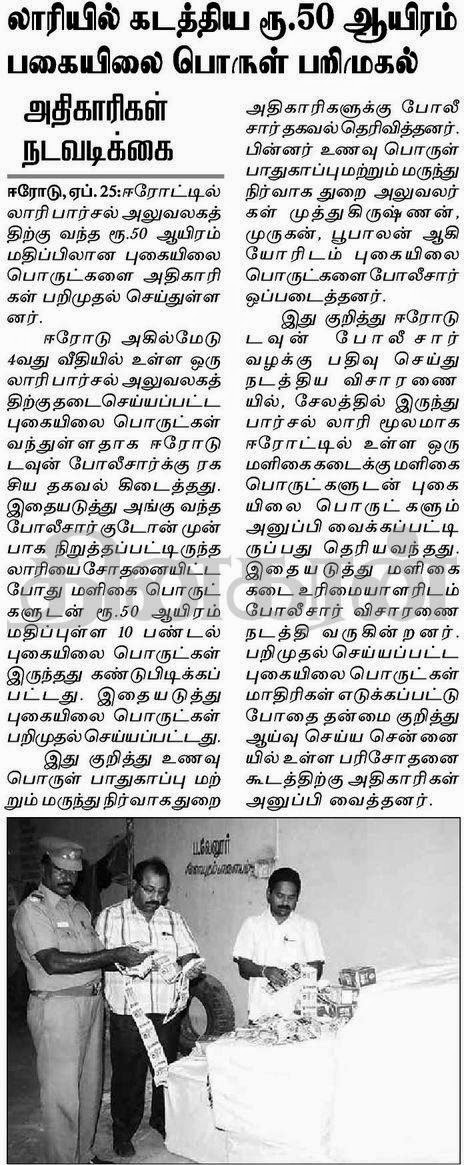
ஈரோடு, ஏப். 25:
ஈரோட்டில் லாரி பார் சல் அலு வ ல கத் திற்கு வந்த ரூ.50 ஆயி ரம் மதிப் பி லான புகை யிலை பொருட் களை அதி கா ரி கள் பறி மு தல் செய் துள் ள னர்.
ஈரோடு அகில் மேடு 4வது வீதி யில் உள்ள ஒரு லாரி பார் சல் அலு வ ல கத் திற்கு தடை செய் யப் பட்ட புகை யிலை பொருட் கள் வந் துள் ள தாக ஈரோடு டவுன் போலீ சார்க்கு ரக சிய தக வல் கிடைத் தது. இதை ய டுத்து அங்கு வந்த போலீ சார் குடோன் முன் பாக நிறுத் தப் பட்டி ருந்த லாரியை சோத னை யிட்ட போது மளிகை பொருட் களு டன் ரூ.50 ஆயி ரம் மதிப் புள்ள 10 பண் டல் புகை யிலை பொருட் கள் இருந் தது கண் டு பி டிக் கப் பட்டது. இதை ய டுத்து புகை யிலை பொருட் கள் பறி மு தல் செய் யப் பட்டது.
இது குறித்து உணவு பொருள் பாது காப்பு மற் றும் மருந்து நிர் வாக துறை அதி கா ரி களுக்கு போலீ சார் தக வல் தெரி வித் த னர். பின் னர் உணவு பொருள் பாது காப்பு மற் றும் மருந்து நிர் வாக துறை அலு வ லர் கள் முத் து கி ருஷ் ணன், முரு கன், பூபா லன் ஆகி யோ ரி டம் புகை யிலை பொருட் களை போலீ சார் ஒப் ப டைத் த னர்.
இது குறித்து ஈரோடு டவுன் போலீ சார் வழக்கு பதிவு செய்து நடத் திய விசா ர ணை யில், சேலத் தில் இருந்து பார் சல் லாரி மூல மாக ஈரோட்டில் உள்ள ஒரு மளிகை கடைக்கு மளிகை பொருட் களு டன் புகை யிலை பொருட் களும் அனுப்பி வைக் கப் பட்டி ருப் பது தெரி ய வந் தது. இதை ய டுத்து மளிகை கடை உரி மை யா ள ரி டம் போலீ சார் விசா ரணை நடத்தி வரு கின் ற னர். பறி மு தல் செய் யப் பட்ட புகை யிலை பொருட் கள் மாதி ரி கள் எடுக் கப் பட்டு போதை தன்மை குறித்து ஆய்வு செய்ய சென் னை யில் உள்ள பரி சோ தனை கூடத் திற்கு அதி கா ரி கள் அனுப்பி வைத் த னர்.
Banned tobacco seized

Officials of Food and Drug Administration examining the seized banned tobacco products during a raid in Erode on Friday.
Food Safety officials seized ten bundles of banned tobacco product from a parcel booking office in Town Station limits on Friday.
The package of chewable tobacco was a part of consignment sent in a van from Salem to a grocery shop in Erode.
The bundles were noticed while unloading.
Acting on information, police officials took possession of the bundles worth about Rs. 50,000 and handed them over to Food Safety Department officials.
No arrest has been made in this connection by the police.
On Kerala High Court fiat, hotels demand fines back

Health department officials conducting a raid as part of the Safe Kerala programme in Thiruvananthapuram in April.
Thiruvananthapuram: The Commissionerate of Food Safety has landed in a fix with the hotels and restaurants across the state demanding return of the fine compounded from them during the various raids held in the past couple of years.
The High Court has ruled in favour of the Hotels and Restaurants Association and rapped the commissionerate for collecting huge fines without improvement notices.
Kerala Hotels and Restaurant Association (KHRA) president Jose Mohan said that the food safety authorities had compounded fine to the tune of Rs 18 lakh.
“We have filed an appeal in the HC to get back the fines collected from us illegally. The court has already criticised the food safety authorities and asked them not to compound the fines without giving 14 days’ time to rectify the problems. If the conditions are not improved, they can cancel our licence,” said Mr Jose Mohan.
He said that the authorities were not following the guidelines of the Food Safety and Standard Authority of India.
“They cannot just come and confiscate the food items based on their intuition. They should collect the statutory samples first, get them tested at an authorised lab and action can be taken only after getting the result,” he added.
A top official of the commissionerate said that they had valid documents to prove that fine was compounded legally. “Initially, there were around 15 cases where we compounded fines without documents. But all other cases were registered with valid proof,” said the official.
FDA raids stalls selling ‘unhygienic’ food
MAPUSA: Food and Drugs Administration (FDA) is conducting checks at all the interstate bus stands in the state to crack a whip against the alleged sale of unhygienic food at stalls during the night time.
Sources informed that safety of food sold at these stalls, which have increased in number over the last couple of years, is a cause of concern for locals as well as interstate travellers.
On Thursday night at Porvorim, three unauthorized unhygienic street food stalls were closed or directed to discontinue their business till they rectify certain defects and obtain licences.
On the same night, food safety officers of FDA proceeded to Mapusa and found several unauthorized road stalls selling food items to passengers on interstate buses. FDA team led by Raju Korde, Rajaram Patil, Shailesh Shenvi and Yuvraj Naik immediately stopped four unauthorized stalls and confiscated their food articles. They were directed to apply for licences.
"FDA will conduct such inspection visits on all interstate bus stops at Panaji, Margao etc as there were complaints of unhygienic food items which are being sold there," FDA director Salim Velji Told TOI.
Similar raids were also conducted on April 17 at Margao bus stand on the omelette pao vendors and gobi manchurian vendors which were operating under unhygienic conditions. "Such inspection drive will continue across the state," Velji said. It has been revealed that a joint at the Mapusa interstate bus stand is always full with over 20 kiosks allegedly selling food in unhygienic conditions. The stalls are open till late night with many customers. Houseflies, mosquitoes and unhygienic water is seen flowing in the vicinity of the food stalls.
Akshaya Patra Foundations opens food safety laboratory in Ahmedabad
The Akshaya Patra Foundation, which serves Mid Day Meals (MDMs) to children studying in government and government-aided schools across ten states, inaugurated its first Food Safety and Quality Control Lab (FSQC Lab) in Ahmedabad, a statement issued by Akshaya Patra Foundation said here.
The statement further said that the state-of-the-art microbiology laboratory is equipped with the latest and modern technology and high precision testing instruments for evaluating the food products right from the farm to plate and has been established in technical collaboration with Mysuru-based Central Food Technological Research Institute (CFTRI).
Speaking on the occasion, Madhu Dasa, chairman, Akshaya Patra Foundation said, "It is indeed a great moment to have a state-of-the-art food safety lab being inaugurated in Ahmedabad. All the kitchens of Akshaya Patra follow a standard process for preparing the mid-day meals. This process is charted out to ensure hygiene and quality of the cooked meal and also to adhere to the food safety standards.”
Among the feature of the laboratory, the statement highlighted, is the microbiology lab, which is equipped with the latest technology instruments in enumerating the microbial count, using filtration techniques with pre-sterilised membranes of 0.45 microns. The air sampler instrument evaluates the environmental quality in few hours and additionally, the laboratory is equipped with imported Duran-make glass wares to carry out physical and chemical analysis to the maximum accuracy level, the statement pointed out.
காலாவதியான பின்னரும் விற்பனை குளிர்பானம் வாங்கும்போது கவனம் தவை

நாகர் கோ வில், ஏப்.24:
மாவட்டம் முழு வ தும் காலா வ தி யான பின் ன ரும் குளிர் பா னங் கள் உள் ளிட்ட உணவு பொருட் கள் விற் பனை செய் யப் ப டு வ தால் பொது மக் கள் அவற்றை வாங் கும் போது கவ னத் து டன் இருக் க வேண் டும் என்று மாவட்ட உணவு பாது காப்பு அலு வ லர் எச் சா ிக்கை விடுத் துள் ளார்.
குமரி மாவட்டத் தில் கோடைக் கா லம் தொடங் கி யுள் ளது. மதி யத் திற்கு மேல் மழை பெய் தா லும் சில நாட் களில் காலை வேளை களில் வெயில் வறுத் தெ டுக்கி றது. இத னால் இள நீர், தர் பூ சணி, சர் பத், நுங்கு சர் பத், பத நீர், ஐஸ் கி ரீம் மற் றும் ரசா யன குளிர் பா னங் களின் விற் ப னை யும் அதி கா ித் துள் ளது. இதே போல் பழங் களின் விற் ப னை யும் அதி கா ித் துள் ளது.
இந் நி லை யில் குக் கி ரா மங் களில் உள்ள சாதா ரண கடை கள் மட்டு மின்றி பொிய வணிக நிறு வ னங் களி லும் காலா வ தி யான குளிர் பா னங் கள் விற் பனை செய் யப் பட்டு வரு வ தாக உணவு பாது காப்பு அலு வ லர் அலு வ ல கத் திற்கு புகார் கள் சென் றுள் ளன. இத னை ய டுத்து மாவட்ட உணவு பாது காப்பு அலு வ லர் சாலோ டீ சன் உத் த ர வின் ேபரில் நேற்று முன் தி னம் திங் கள் சந்தை பஸ் நிலை யத் தில் இருந்து அதி ரடி சோதனை தொடங் கி யது. அம் மாண் டி விளை, மண வா ளக் கு றிச்சி, மண் டைக் காடு, குளச் சல் பகு தி களில் உள்ள கடை களில் திடீா் சோதனை நடத் தப் பட்டது.
இதில் சாதா ரண கடை கள் முதல் பொிய கடை களில் வரை காலா வ தி யான பிர பல நிறு வ னங் களின் குளிர் பா னங் கள் இருப் பது கண் ட றி யப் பட்டு பறி மு தல் செய்து அழிக் கப் பட்டன. இதே போல் சுகா தா ர மற்ற முறை யில் தயா ரிக் கப் பட்ட வடை வகை கள் போன் ற வை யும் அழிக் கப் பட்டன. பழக் க டை களில் கார் பைட் கல் பயன் ப டுத்தி பழுக்க வைக் கப் பட்ட பழ வகை களும் பறி மு தல் செய் யப் பட்டன.
இது பற்றி உணவு பாது காப்பு அலு வ லர் சாலோ டீ சன் கூறி ய தா வது: படித் த வர் கள் உள் பட பெரும் பா லான மக் கள் பொட்டல பொருட் கள் வாங் கும் போது அதில் உள்ள உற் பத்தி தேதி, ேசர் மான பொருட் கள் உள் ளிட்ட விப ரங் களை பார்ப் ப தில்லை. இத னால் காலா வ தி யான பொருட் களை வாங்கி உண்டு உடல் நலம் பாதிப் ப டை யும் நிலை ஏற் ப டு கி றது. தற் போது கோடை யில் குளிர் பா னங் கள் வாங் கும் போது உற் பத்தி தேதி, காலா வதி நாள் போன் ற வற்றை கவ னிக்க வேண் டும்.
இதே போல் பத நீரில் கலப் ப டம் செய் யப் ப டு வ தால் பத நீர் அருந் தும் போது கவ னம் தேவை. சுகா தா ர மற்ற முறை யில் தயா ரா கும் தின் பண் டங் கள் வாங் கு வதை தவிர்க்க வேண் டும். காலா வதி பொருட் கள் விற் பனை செய் யும் கடை வியா பாரிகளுக்கு 3 முறை எச் ச ரிக்கை விடுக் கப் ப டும். அதன் பின் ன ரும் விற் பனை தொடர்ந் தால் சம் பந் தப் பட்ட விற் ப னை யா ளர் கள் மீது சட்டப் படி நட வ டிக்கை மேற் கொள் ளப் ப டும். இவ் வாறு அவா் கூறி னார்.
6 ேபர் கொண்ட குழுக் கள் அமைப்பு
உணவு கலப் ப டம், காலா வதி குளிர் பா னங் கள் மற் றும் உணவு பொருட் கள் விற் பனை செய் யப் ப டு வதை கண் கா ணித்து, தடுக்க ஒவ் வொரு வட்டத் தி லும் 6 பேர் கொண்ட குழுக் கள் மாவட்ட உணவு பாது காப்பு அலு வ ல ரால் நிய மிக் கப் பட்டுள் ளன. இக் கு ழு வி னர் வாரத் திற்கு 2 நாட் கள் திடீர் சோத னையை அந்தந்த வட்டத் தில் உள்ள கடை களில் நடத் து வார் கள்.
கரூரில் ரசாயன முறையில் பழுக்க வைக்கப்படும் மாம்பழங்கள் - அதிகாரிகள் தொடர் நடவடிக்கை எடுக்க கோரிக்கை

கரூர், ஏப்.24:
கரூ ரில் ரசா யன முறை யில் பழுக் க வைக் கப் ப டு வதை தடுக்க அதி கா ரி கள் நட வ டிக்கை எடுக் க வேண் டும் என பொது மக் கள் எதிர் பார்க் கின் ற னர்.
கரூர் மாவட்டத் திற்கு தர் ம புரி, கிருஷ் ண கிரி, திண் டுக் கல் மாவட்டங் களில் இருந்து மாம் ப ழங் கள் விற் ப னைக் காக கொண் டு வ ரப் ப டு வது வழக் கம். 10க்கும் மேற் பட்ட மாம் பழ ரகங் கள் விற் ப னைக் காக வரும். இந்த ஆண்டு மாம் ப ழம் சாகு படி செய் யப் பட்ட இடங் களில் போது மான மழை யில் லா தால் விளைச் சல் குறை வாக இருந் தது. இத னால் மாம் ப ழங் கள் வரத் தும் வழக் க மான அள வில் இல்லை. முதல் சீ ச னில் விளைச் சல் குறை வாக இருப் பி னும், ஏப் ரல் கடைசி மற் றும் மே மாதத் தில் விளைச் சல் அதி க மாக இருக் கும். ஜூனில் பல ரகங் களில் மாம் ப ழங் கள் விற் ப னைக் காக வரும் என வியா பா ரி கள் தெரி வித் த னர்.
தற் போது கரூர் மாம் பழ குடோன் களுக்கு இமாம் ப சந்த், பங் க ன பள்ளி, செந் தூ ரம் ஆகிய ரகங் கள் விற் ப னைக் காக வந் துள் ளது. இவற் றில் அதிக வரத்து உள் ள தாக செந் தூ ரம் பழம் உள் ளது. திண் டுக் கல் மாவட்டம் நத் தம் பகு தி யில் விளை யும் பழங் கள் அதிக அள வில் விற் ப னைக் காக வந் தி ருப் ப தாக மொத்த வியா பா ரி கள் தெரி வித் த னர். குடோன் களில் இருந்து மாம் ப ழங் களை ஏலத் தில் எடுத்து சில் லரை வியா பா ரி கள் விற் பனை செய் கின் ற னர்.
மாம் ப ழக் க டை களில் இமாம் ப சந்த் கிலோ ரூ.100, பங் க ன பள்ளி ரூ.60, செந் தூ ரம் ரூ.50 என்ற அள வில் விற் ப னை யா கி றது. கடந்த ஆண்டு விலை யை விட தற் போது விலை அதி க ரித் துள் ளது. வரத்து மேலும் அதி க மா கும் பட் சத் தில் மாம் ப ழம் விலை குறைய வாய்ப் பி ருக் கி றது.
மாம் ப ழங் களை விரை வில் பழுக்க வைப் ப தற் காக கார் பைட் ரசா ய னக் கல் மூல மாக பழுக்க வைக் கப் ப டு கி றது. சில இடங் களில் இம் மு றையை பின் பற் று கின் ற னர். மாம் ப ழங் களை பொறுத் த ள வில் இயற் கை யாக எத் தி லின் வேதி யி யல் மாற் றத் தி னால் பழுக் கி றது. ஆனால் ரசா ய னக் கல் மூலம் பழுக்க வைப் ப தால் மேல் பு றம் தோல் நிறம் மாறி னா லும், உள் ப கு தி யில் பழுக் கா ம லும், சுவை யற் ற தா க வும் இருக் கும். ரசா ய ன மு றை யில் பழுக் க வைத்த பழங் களை சாப் பி டும் போது, வாந்தி, வயிற் றுப் போக்கு, தொண்டை புண், ஆகி யவை ஏற் ப டும் புற் று நோய் ஆபத் து கூட உள் ளது டாக் டர் கள் தெரி வித் துள் ள னர். இது குறித்து பொது மக் களுக்கு போதிய விழிப் பு ணர்வை ஏற் ப டுத்த வேண் டும். சுகா தா ரத் து றை யி னர் பெய ர ள வுக்கு கரூ ரில் உள்ள மாம் பழ குடோன் களில் சோதனை நடத் தி விட்டு போய் வி டு கின் ற னர். தொடர்ந்து கடும் நட வ டிக் கை களை மேற் கொள் ள வேண் டும் என பொது மக் கள் எதிர் பார்க் கின் ற னர்.


Apr 24, 2015
மாம்பழம் சாப்பிடப் போறீங்களா? இதை கொஞ்சம் படிங்க...

முக்கனிகளில் முதல் கனி என்ற சிறப்பு கொண்டது மாங்கனி. அதன் பெயரைச் சொன்னாலே வயது வித்தியாசமன்றி அனை வரின் நாக்கிலும் எச்சில் ஊறும். சேலத்து மாம்பழம், மல்கோவா, ராஸ்பூரி என்று மாம்பழம் வகை வகையாய் வந்துகுவியும், மாம்பழ சீசனில். தாய் ஊட்டாத சோற்றை மாம்பழம் ஊட்டும் என கிராமப்புறங்களில் சொலவடை கூட உண்டு.
கோடைக்காலம் வந்துவிட்டது. இப்போது வீதிக்கு மாம்பழங்கள் கொட்டிக்கிடக்கின்றன. எல்லாமே நல்ல பழங்கள் இல்லை என்பதுதான் அதிர்ச்சி தரும் தகவல்.
நல்ல மாம்பழத்தை எப்படி காண்பீர்கள்...?
தமிழகத்தில் மாம்பழ சீசன் களை கட்டத் துவங்கியுள்ள நிலையில், மாம்பழங்களின் விற்பனை படு ஜோராக சூடுபிடிக்க துவங்கிவிட்டது. கைநிறைய காசு பார்க்கும் ஆசையில் சில வியாபாரிகள், வாய்ப்பை பயன்படுத்திக்கொள்ள நினைத்து செயற்கை முறையில் கார்பைடு கல் மூலம் பழுக்க வைத்து விற்பனை செய்து வருகின்றனர். இந்த மாம்பழங்களை வாங்கி சாப்பிடுபவர்கள் வயிற்றுவலி, அஜீரண கோளாறு உள்ளிட்ட உடல்ரீதியான அவஸ்தைகளை சந்திக்கவேண்டும் என்பதுதான் வேதனை.
இதுகுறித்து உணவு பாதுகாப்புத் துறை அதிகாரிகள் ஒவ்வொரு ஆண்டும் எச்சரித்தாலும், வியாபாரிகள் சிலர் தொடர்ந்து கார்பைட் பழங்களை விற்கின்றனர். திருச்சி காந்தி மார்க்கெட் பகுதியில் உள்ள மாம்பழக் கடைகளில், உணவு பாதுகாப்புத்துறை நியமன அலுவலர் ராமகிருஷ்ணன் தலைமையிலான குழுவினர் நடத்திய அதிரடி சோதனையில், 2 கடைகளில் கார் பைடு கல் வைத்து மாம்பழங்கள் செயற்கையாக பழுக்க வைக்கப்படுவது தெரியவந்தது.
இதையடுத்து ரூபாய் 50 ஆயிரம் மதிப்புள்ள 1 டன் மாம்பழங்கள் பறிமுதல் செய்யப்பட்டன. இவை வாக னம் மூலம் எடுத்துச் செல்லப்பட்டு அரியமங்கலம் குப்பைக் கிடங்கில் கொட்டப்பட்டன. அதிகாரிகள் ஏன் கார்பைடு மாம்பழத்திற்கு கறார் காட்டுகிறார்கள்? என விசாரித்தோம்.

கார்பைடு கல் மூலம் பழுக்க வைக்கப்படும் பழங்களே இந்த சீசனில் மிகவும் அச்சுறுத்தக்கூடிய உணவுப் பொருள். ஏனெனில், கார்பைடு கல்லில் இருக்கக்கூடிய அசிட்டிலீன் வாயு. இந்த வாயுவின் மூலம் மா, வாழை போன்றவை 12 முதல் 24 மணி நேரத்துக்குள் பழுக்க வைக்க முடிகிறது. காய்களில் இயற்கையாக உள்ள எத்திலின் வாயு மூலம் அவை 48 முதல் 72 மணி நேரத்துக்குள் பழுத்துவிடும்.
எனினும், அவசர அவசரமாக கல்லா கட்டும் நோக்கத்தில் வியாபாரிகள் செயற்கையாக பழங்களை பழுக்க வைக்கின்றனர் என்று சொல்லும் உணவு பாதுகாப்புத்துறை அதிகாரிகள். கடந்த காலங்களில் தமிழகம் முழுவதும் மார்க்கெட்களில் நடத்தப்பட்ட சோதனைகளில் கார்பைடுகல் வைத்து பழுக்க வைக்கப்பட்ட 50டன் மாம்பழங்கள் பறிமுதல் செய்யப்பட்டுள்ளதாகவும். தொடர்ந்து சோதனை நடத்திட அனைத்து மாவட்ட அதிகாரிகளுக்கும் உணவு பாதுகாப்புத்துறை அறிவுறுத்தியுள்ளதாக கூறினர்.

கேன்சர் வரும் எச்சரிக்கை
இந்த மாம்பழத்தை சாப்பிட்டால் நேரும் விபரீதம் புரியாமல் பொது மக்களும் வாங்கிச் செல்கின்றனர். வெல்டிங் பட்டறைகளில் பெரும்பாலும் பயன்படுத்தப்படுவதுதான் கார்பைடு கற்கள், இந்த கற்களில் உள்ள அசிட்டிலீன் வாயு மூலம் பழங்கள் மிக விரைவாக செயற்கையாக பழுக்க வைக்கப்படுகிறது.
பொதுவாக செயற்கையாக பழுக்க வைக்கப்பட்ட பழங்கள் நல்ல கனமாக இருக்கும். தோல் பகுதி வெளிர் மஞ்சள் நிறத்தில் இருக்கும். தோலை நீக்கி பார்த்தால் உள்ளே காய்வெட்டாக இருக்கும். முகர்ந்தால் மாம் பழம் வாசனையாகவும், ருசியாகவும் இருக்காது. காம்பு பகுதியில் லேசாக கீறினால் புளிப்பு சுவைக்கான மணம் வீசும். இவைதான் உடலுக்கு தீங்கு விளைவிக்கும் கார்பைடு பழங்கள்..

இந்த மாம்பழங்களை சாப்பிட்டால், தோல் அலர்ஜி, வயிற்றுவலி, வயிற்றுப்போக்கு, வாந்தி ஏற்படும். அதி கமாக சாப்பிட்டால் புற்றுநோய் வருவதற்கும், தொடர்ந்து உண்பதன் மூலம் நரம்பு மண்டலம் பாதிக்கும். கல்லீரல், குடல், இரைப்பையும் பாதிக்கும்.
குழந்தைகள், முதியவர்கள் இதுபோன்ற பழங்களை அதிகம் உட்கொண்டால், அவர்களுக்கு கடும் வயிற்றுப் போக்கு, ஒவ்வாமை ஏற்படலாம் எனவும் பொதுமக்கள் இயற்கை முறையில் பழுக்கும் மாம்பழங்களை மட்டுமே வாங்கி உண்ண வேண்டும் என்கிறார்கள் சமூக ஆர்வலர்கள்.
நல்ல பழங்கள் நம் உடலுக்கு நண்பன். நல்ல பழங்களை சாப்பிடுவோம் நலமாய் வாழுவோம்
Mango dealers trained to use ‘ethylene’ to ripen fruit
TRICHY: The rampant use of carbide stones for artificial ripening of mangoes has prompted the Tamil Nadu Food Safety and Drug Administration in Trichy to embark on a move to train wholesale dealers to use the harmless 'ethylene' to ripen the fruit.
Being a climacteric fruit, mango can ripen naturally. But the time it takes for ripening naturally is not attractive to the wholesale dealers who procure tonnes of raw mangoes from the farms in and around Trichy and other parts of the state. Normally, a naturally ripening would take seven days which the dealers don't want to wait as they have to meet the demand. The easy way, the farmers found, to overcome the problem is artificially ripening using carbide stones which cause serious health complications to the consumers.
Unfazed by the actions by the food safety officials who used to seize the artificially ripened mangoes and bury them, the wholesale dealers continued to go on with the banned method.
In order to put an end to the concerning trend, the food safety department led by designated officer Dr A Ramakrishnan of Trichy roped in the wholesale dealers for attending a training programme to get to know about the 'ethylene' which helps mango ripen within 12 to 24 hours.
In Thursday's training programme, Dr Ramakrishnan explained to the various methods of ripening using ethylene. "The acetylene produced when using carbide stones mimic ethylene and change the colour of the mango from green to yellow leaving the pulp solid which is harmful to health but helpful for transportation. However, the use of ethereal which produces ethylene gas will ensure change of colour and ripening in short period," said Dr Ramakrishnan.
However, the traders are still reluctant to adopt the method citing physical damages to the semisolid pulp in the mangoes ripened using the ethylene gas.
Apr 23, 2015
Traders booked for attacking food official
GREATER NOIDA: Three shopkeepers have been booked for allegedly attacking a food safety officer in Bisrakh on Wednesday. Police said the officer, Shivnath Singh, was beaten up as he and his team was collecting samples in the area.
"An FIR has been registered against Ajay, Sanjay and Dinesh, all local shop owners, for interrupting a government servant while he was on duty," said a senior police officer.
Singh also alleged that shopkeepers had torn the papers in which the team was noting down the records for future references.
Following the incident, a team was rushed to the spot but the attackers had fled. Manhunt has been launched to nab the culprits," the official added.
ஓமலூரில் காலாவதியான குளிர்பானங்கள், உணவுப் பொருள்கள் அழிப்பு
ஓமலூர் பேருந்து நிலையம் உள்ளிட்ட பகுதிகளில் புதன்கிழமை ஆய்வு மேற்கொண்ட சேலம் மாவட்ட உணவுப் பாதுகாப்புத் துறை அதிகாரிகள், காலாவதியான குளிர்பானங்கள், உணவுப் பொருள்களை கைப்பற்றி அழித்தனர்.
சேலம் மாவட்டம், ஓமலூர் பகுதியில் உள்ள கடைகளில் பாதுகாப்பற்ற முறையில் உணவுப் பொருள்கள், குளிர்பானங்கள் விற்பனை செய்யப்படுவதாக உணவுப் பாதுகாப்புத் துறை அதிகாரிகளுக்கு புகார்கள் சென்றன. இதனையடுத்து, மாவட்ட உணவுப் பாதுகாப்புத் துறை நியமனஅலுவலர் டி.அனுராதா தலைமையிலான குழுவினர் பேருந்து நிலையம், அதனைச் சுற்றியுள்ள கடைகளில் திடீர் ஆய்வு மேற்கொண்டனர்.
உணவு விடுதிகள், சிற்றுண்டிகள், குளிர்பான நிலையங்கள், பழக்கடை, பலகார கடைகளில் இந்த ஆய்வுகள் நடைபெற்றன. உணவு விடுதி, சிற்றுண்டிகளில் இரு நாள்கள் பழைமையான இறைச்சிகளைப் பதப்படுத்தி விற்பனை செய்வதும், மனித உயிருக்கு ஆபத்தை ஏற்படுத்தும் வகையில் பழைய எண்ணெய் மூலம் உணவுப் பண்டங்கள் தயாரிப்பதையும் அதிகாரிகள் கண்டறிந்தனர். இதையடுத்து, அனைத்தையும் பறிமுதல் செய்து அவர்கள் முன்னிலையிலேயே அழித்தனர்.
இதைத் தொடர்ந்து, குளிர்பான கடைகளில், வைக்கப்பட்டிருந்த காலாவதியான குளிர்பானங்கள் பறிமுதல் செய்யப்பட்டு அழிக்கப்பட்டன.
மேலும், கார்பைடு கல்களைப் பயன்படுத்தி பழுக்க வைக்கப்பட்ட மாம்பழங்கள், அழுகிய நிலையில் இருந்த பழங்களை பறிமுதல் செய்து அழித்தனர். மேலும், பேருந்து நிலையப் பகுதியில் விற்பனைக்காக வைக்கப்பட்டிருந்து, தடை செய்யப்பட்ட புகையிலைப் பொருள்கள் அடங்கிய இரண்டு மூட்டைகளும் பறிமுதல் செய்யப்பட்டன. மக்கள் உடல் நலத்திற்கும், உயிருக்கும் ஊறு விளைவிக்கும் வகையில் உணவுப் பொருட்கள் விற்போர் மீது கடும் நடவடிக்கை எடுக்கப்படும் உணவுப் பாதுகாப்புத் துறை நியமன அலுவலர் டி.அனுராதா தெரிவித்தார்.
Ban on 4 more coconut oil brands
The Commissioner of Food Safety has banned the sale, distribution, and stocking of four more brands of coconut oil in the State as tests show these brands as adulterated.
The brands which have been banned are Kera Nanma, Copra Naad, Coconut Naad, and Kerasree. So far, 12 brands of coconut oil have been banned in the State by the Food Safety Commissioner because of quality issues or adulteration.
An official release said that Sections 18 (1), 26 (2) (ii), 27 (1) and 36 (3) (b) of the Food Safety and Standards Act (FSSA) were being applied, in the interest of public health, in banning these brands from the market.
Any attempt to sell these brands or continuing to stock these for sale was punishable under the FSSA, with a fine of up to Rs.2 lakh, the statement said.
The public can inform the toll free number of the Food Safety wing, 1800 425 1125 FREE, if they spot the banned brands for sale anywhere in the market.
10 tonnes of chemically ripened mangoes seized in Goa
Panaji: Nearly 10 tonnes of artificially ripened mangoes were seized in Goa during a raid on Wednesday, an official said. The mangoes were later destroyed.

Food and drugs administration officials destroyed the mangoes
The mangoes, mainly of Ratnagiri Alphonso, Pairi and Mancurado varieties, had been artificially ripened using a chemical called Ethrel and were stored in a godown at Sirsaim village, located 25 km north of Panaji.
Food and drugs administration officials destroyed the mangoes, he said.
“The lot was seized from a vendor and would have been transported to the market for sale in a few days. About 10 tonnes of mangoes of several varieties were destroyed,” food safety officer Rajiv Korde said.
Mangoes are the staple fruit with the advent of summer along the Konkan region, which includes Goa.
FDA destroys 12 tonnes of force-ripened mangoes
MAPUSA: The food and drugs administration (FDA) on Wednesday seized and destroyed about 12 tonnes of mangoes which were allegedly ripened artificially. Based on a tip-off, the FDA inspectors raided a godown at Sirsaim, and seized three varieties of mangoes - Pairi and Afonso - procured from Ratnagiri and Mancurad bought locally.
Rajeev Korde, senior food safety inspector, FDA, said vendor Sham Dhargalkar bought mangoes in bulk to sell them during the five-day Shirgao zatra that starts today.
Korde said they had to destroy the seized mangoes at Ganeshpuri, Mapusa, on Wednesday itself, as they had no place to store them. The chemical used to ripen the mangoes was Ethrel, which is harmful for human consumption. Korde said that while the chemical is used to encourage plant growth, it can't be applied after the crop is harvested.
The FDA team comprising Flavia D'Souza, Sudhakar Parsekar and Sudit Naik also seized chemical bottles- four empty and two full-used to ripen mangoes. Mangoes dipped in Ethrel ripens within 48 hours and any trader selling artificially matured fruit is set to gain as decay of the fruit is delayed. It doesn't turn soft or soggy like a natural mango foes two or three days later after maturity. Also, mangoes ripened artificially look attractive and have no creases," he said.
The FDA has registered an offence against Dhargalkar and further investigation is under way. Two years ago, in a major raid in Vasco, FDA had seized 25 tonnes of mangoes ripened artificially.
FDA seizes 10 tonne of artificially-ripened mangoes

The mangoes which were seized at Sirsaim.
MAPUSA: The food and drug administration (FDA) on Wednesday seized around 10 tonne of mangoes at Sirsaim, Bardez that were being chemically ripened in violation of food laws.
“Around 10 tonne of mangoes of various varieties including Ratnagiri Hapus, Pairi and Mancurad, that were being chemically ripened in violation of food laws, were seized at Sirsaim by the food and drug authority,” said senior food safety officer Rajiv Korde.
“The mangoes were ripened using a chemical which is a plant growth regulator. Through this treatment of chemical, mangoes get artificially ripened in 24 hours with a yellowish colour while the natural ripening process takes around four to five days,” the officer said.
He said the etheryl treatment, a chemical solution like carbide, used in the artificial ripening of mangoes, could be harmful for consumers.
The artificially-ripened mangoes were allegedly brought from the neighbouring state of Maharashtra, according to the information available from sources. These mangoes were seized by senior food safety officer Rajiv Korde, who was assisted by officer Flavia D’Souza and staff Sudhakar Parsekar and Sudip Naik.
The person carrying out artificial ripening of fruits could get punishment upto 3 years of imprisonment or fine of upto Rs 5 lakh or both under the Food Safety and Standards Act, 2006,” the senior food safety officer said, adding that, “the seized chemically ripened mangoes will be destroyed and buried so that the animals don’t consume such mangoes.”
Apr 22, 2015


பழக் கடைகளில் அதிகாரிகள் சோதனை கார்பைடு கல்லில் பழுக்க வைத்த 100 கிலோ மாம்பழம் பறிமுதல்


சேலம், ஏப்.22:
சேலத் தில் கார் பைடு கல் மூலம் பழுக்க வைக் கப் பட்ட 100 கிலோ மாம் ப ழங் களை அதி கா ரி கள் பறி மு தல் செய் த னர்.
மாம் பழ சீசன் தொடங் கி யுள் ளதை அடுத்து சேலம் சின்ன கடை வீதி பகு தி யில் உள்ள பழக் குடோன் களில் மாம் ப ழங் கள் பழுக்க வைக் கப் ப டு கின் றன.
இங்கு சில குடோன் களில் மாம் ப ழங் கள் கார் பைடு கல் வைத்து பழுக்க வைக் கப் ப டு வ தாக புகார் கள் எழுந் தது. இதை ய டுத்து சேலம் மாவட்ட உணவு பாது காப் புத் துறை நிய மன அலு வ லர் அனு ராதா தலை மை யில் உணவு பாது காப் புத் துறை அலு வ லர் கள் பாலு, திரு மூர்த்தி, இளங் கோ வன் ஆகி யோர் அடங் கிய குழு வி னர் நேற்று சின் னக் கடை வீதி, பழைய பஸ் ஸ்டாண்ட் பகு தி யில் உள்ள பழ குடோன், சாலை யோர பழக் க டை களில் சோதனை நடத் தி னர்.
5க்கும் மேற் பட்ட குடோன் களி லும், 20க்கும் மேற் பட்ட சாலை யோர கடை களி லும் நடந்த சோத னை யில், 3 சாலை யோர பழக் க டை களில் மாம் ப ழங் கள் கார் பைடு கல் வைத்து பழுக்க வைக் கப் ப டு வது தெரிந் தது. இதை ய டுத்து கார் பைடு கல் வைத்து பழுக்க வைத்த, 100 கிலோ மாம் ப ழங் களை அதி கா ரி கள் பறி மு தல் செய் த னர். பின் னர் அந்த கடைக் கா ரர் களுக்கு நோட்டீஸ் வழங் கப் பட்டது.
இது கு றித்து உணவு பாது காப் புத் துறை அதி கா ரி கள் கூறு கை யில், “ கார் பைடு கல் மூலம் பழுக்க வைக் கப் ப டும் மாம் ப ழங் கள் வாச னை யின்றி இருக் கும்.
இந்த பழங் களை சாப் பிட்டால் உடல் நலம் பாதிக் கும். இந்த சோதனை தொடர்ந்து நடத் தப் ப டும். கார் பைடு கல் மூலம் பழங் களை பழுக்க வைக் கும் பழக் க டைக் கா ரர் கள் மீது கடும் நட வ டிக்கை எடுக் கப் ப டும்,” என் ற னர்.
சேலத்தில் கார்பைடு கற்கள் மூலம் பழுக்க வைத்த 100 கிலோ மாம்பழங்கள் பறிமுதல்


சேலம், ஏப்.22-
சேலத்தில் சில வியாபாரிகள் தங்களது குடோன்களில் செயற்கையான முறையில் அதாவது கார்பைடு கற்கள் மூலம் மாம்பழங்களை பழுக்க வைத்து விற்பனை செய்வதாக சேலம் மாவட்ட உணவு பாதுகாப்புத்துறை ஆணையாளர் குமாருக்கு புகார் சென்றது.
இதையடுத்து பழக்கடைகளில் சோதனை மேற்கொள்ளுமாறு அதிகாரிகளுக்கு அவர் உத்தரவிட்டார். அதன்பேரில், உணவு பாதுகாப்பு துறை நியமன அலுவலர் அனுராதா தலைமையில், அலுவலர்கள் பாலு, திருமூர்த்தி, இளங்கோவன், ஜெகன்நாதன் ஆகியோர் சேலம் சின்னக்கடை வீதியில் உள்ள பழக்கடைகளில் சோதனை மேற்கொண்டனர். அப்போது அங்கு பழங்கள் வைக்கப்பட்டிருந்த கூடைகளை அதிகாரிகள் சோதனை செய்தனர். இதில் 2 பழக்கூடைகளில் மாம்பழங்களுக்கு இடையே கார்பைடு கற்கள் வைத்திருப்பது தெரியவந்தது. அதன்பின் அதிகாரிகள் அந்த 100 கிலோ மாம்பழங்களை பறிமுதல் செய்தனர். மேலும் பழங்களின் இடையே வைக்கப்பட்டிருந்த 9 கார்பைடு கற்களையும் பறிமுதல் செய்தனர்.
இதைத்தொடர்ந்து தேர் வீதி பகுதியில் உள்ள வாழைப்பழம், சப்போட்டா, மாம்பழம், ஆரஞ்சு, பப்பாளி, முலாம்பழம் ஆகிய குடோன்களிலும் அதிகாரிகள் ஆய்வு செய்தனர். அங்கு அழுகிய நிலையில் இருந்த பழங்களை அப்புறப்படுத்தும் படி குடோன் உரிமையாளர்களுக்கு அதிகாரிகள் அறிவுரை வழங்கினர்.
100 கிலோ மாம்பழங்கள் பறிமுதல்

சேலத்தில் கார்பைடு கல் மூலம் செயற்கையாக பழுக்க வைக்கப்பட்ட 100 கிலோ மாம்பழங்களை உணவுப் பாதுகாப்பு துறை அதிகாரிகள் பறிமுதல் செய்தனர்.
சீசனையொட்டி மாம்பழங்கள் வரத்து தற்போது அதிகரித்துள்ள நிலையில் சேலத்தில் உள்ள மொத்த பழ வியாபாரக் கிடங்குகளில் மாம்பழங்கள் பழுக்க வைக்கப்பட்டுள்ளன.
இதில் சிலர் மாம்பழங்களை விரைவாக பழுக்க வைப்பதற்காக கார்பைடு கல்களை பயன்படுத்தி செயற்கையாகப் பழுக்க வைப்பதாக புகார் எழுந்தது.
அந்த வகையில், சின்னக்கடை வீதியில் உள்ள பழக் கடைகளில் உணவுப் பாதுகாப்புத் துறையின் மாவட்ட நியமன அலுவலர் அனுராதா தலைமையில் அதிகாரிகள்
குழுவினர் ஆய்வு மேற்கொண்டனர். சாலையோர கடைகளிலும் இந்த ஆய்வு நடைபெற்றது.
இதில் கார்பைடு கல்களைப் பயன்படுத்தி செயற்கையாக பழுக்க வைக்கப்பட்ட 100 கிலோ மாம்பழங்களை உணவுப் பாதுகாப்புத் துறை அதிகாரிகள் பறிமுதல் செய்து அழித்தனர். மேலும், கார்பைடு கல் வைத்து மாம்பழங்களை செயற்கையாகப் பழுக்க வைத்து விற்பனை செய்தது குறித்து நோட்டீஸ் வழங்கப்பட்டுள்ளதாக அதிகாரிகள் தெரிவித்தனர்.
தற்போது, மாம்பழ சீசன் தொடங்கிவிட்ட நிலையில் இதுபோன்ற ஆய்வுகள் தொடர்ந்து நடத்தப்படும் என உணவுப் பாதுகாப்புத் துறை நியமன அலுவலர் டி.அனுராதா தெரிவித்தார்.


100 kg of artificially ripened mangoes seized in Salem

Food safety official inspecting a mango godown in Salem on Tuesday.
Officials of the Food Safety and Drug Administration Department have raided godowns and retail shops in the city and seized 100 kg of mangoes that were artificially ripened using calcium carbide.
A team led by District Designated Officer T. Anuradha and Food Safety Inspector visited wholesale godowns in Chinna Kadai Veedi in the city.
Retail shop
During inspection they found calcium carbide kept in-between mangoes and sold at a retail shop.
The workers and traders were asked not to use the banned chemical.Officials said that seven teams conducted checks at various parts of the district.
Packaged drinking water, fresh juices, beverages too would be monitored.


Online registration of food businesses gets poor response
The online licencing and registration of food businesses in the district has got very poor response till now. As per the officials concerned the reason behind this poor response is the extension of last dates for registration by the Food Safety and Standards Authority of India (FSSAI) again and again.
As per the records of the civil surgeon’s office, Ludhiana, 725 licence and 850 registration have been made through online mode in Ludhiana till now. The number is too less even from the offline registration done till February 4, 2014. At that time, 2,150 food business operators in the city had got licence, and 14,750 operators had got registered.
Under the Food Safety and Standards Act 2006, it was made compulsory for all the food business operators to get registered with state authority. If a food business operator has an annual turnover of more than Rs 2 lakh, he has to take a licence from the state authority.
The pace of registration and making licences by the food business operators in Ludhiana is very slow, as there is a notion among the operators that deadline for registration will be extended again. Till now, the deadline for registration and licences have been extended in 2012, 2013, two times in 2014 and two times in 2015. Now, August 4 has been set as the new deadline for registration or licencing of food businesses.
District health officer Dr Abnash Kumar said, “Now, the process for registration and licencing has become totally online. The FSSAI has extended the deadline, but we can’t force anyone to get registered earlier.”
School college canteens remain a miss Under the Food Safety Act, canteens in schools and colleges also need to get registration or licence from the authorities. But, not many school or college canteen contractors have got themselves registered yet. This has worried the parents, whose children most of the time prefer to eat from canteen.
Besides, in the past health department also didn’t pay much heed to collect samples from school or college canteens. Recently health department collected samples of cornflakes and sandwiches from Sacred Heart Convent School, Sector 39, after a person filed a complaint with the civil surgeon.
Fruit importers allege delay
Business houses importing fruits through the Kochi port have alleged delay in clearance of consignments by Food Safety and Standards Authority of India, forcing them to route cargo via Kochi’s neighbouring ports.
In a complaint to the Kochi port authority, an importer said fruit consignments reaching the Kochi port took seven to nine days to get No-Objection Certificates whereas at other ports NOCs were issued in three days.
Improve facilities at Sabarimala: HC
Directive issued on the basis of Special Commissioner’s report

A Division Bench of the High Court has issued a set of directives to improve pilgrim facilities at Sabarimala.
The court issued the order on April 9 after taking note of the final report submitted by Special Commissioner K. Babu on the conduct of the previous Mandalam-Makaravilakku pilgrimage.
The Bench comprising Justice T.R. Ramachandran Nair and P.V. Asha said the Special Commissioner had made certain important suggestions.
The court said there was a need to improve sanitation facilities and drinking water supply at Sabarimala, Pampa, Nilackal, and on the trekking paths. Sufficient number of free toilets should be provided at these places. The TDB should explore the possibility of installing more e-toilets for woman pilgrims on the trekking path, the court said.
Water kiosks should be set up to check the exploitation of pilgrims by vendors. The Public Works Department (PWD) and the TDB should complete the annual repair and maintenance of various buildings at Sabarimala and at various base camps before the commencement of the next pilgrim season.
The court lauded the Food Safety Department for the ‘bold stand’ it had taken to ensure the quality of Appam, Aravana, and other food articles during the previous pilgrim season.
The PWD had been directed to complete the repair of all roads leading to Sabarimala before October 31. The Special Commissioner’s report put the total number of pilgrim casualties on the Sabarimala trekking path at 30.
The court directed the government to deploy trained volunteers to help pilgrims on the trekking path. The court stressed the need to extend the Safe Zone project of the Motor Vehicles Department to more areas. The court made special references to the services rendered by Sunil Babu, Safe Zone Nodal Officer; P. Vijayan, Deputy Inspector General of Police, who launched the Punyam Poonkavanam cleaning drive; C.P. Gopakumar, Superintendent of Police in charge of the Vigilance and Security wing of the TDB; volunteers of the Akhila Bharatha Ayyappa Seva Sanghom and the Amritanandamayi Math.
Work of food safety wing lauded
Ensure better sanitation facilities, TDB told
IPAK urges to follow Food Safety directives
Imphal, April 21 2015 : Indigenous People's Association of Kangleipak (IPAK) Manipur has urged Hotel and Bakery owners especially with the commencing of summer season to follow the food safey recommendations by the department concerned.
IPAK in a press release issued by General Secretary, W Santa states that any Hotel and Bakery found going against the directives of Food Safety Department will be banned immediately in consultation with Food Safety Department.
Hence, it urged to sell quality commodities/ ingredients in food making procedure and avoid selling expired products or infected food items.
Further, IPAK appealed to all to be cautious with outside foods items as the death rate has been comparatively high with birth rate of 1.5% while the total indigenous group of people is only 0.2% of the total population of the Nation.
Apr 21, 2015


திருச்சியில் கார்பைட்டில் பழுக்க வைத்த 1 டன் மாம்பழம் பறிமுதல்


திருச்சி, ஏப். 21:
திருச்சி காந்தி மார்க் கெட்டில் கார் பைடு கல் வைத்து செயற் கை யாக பழுக் க வைக் கப் பட்ட 1 டன் மாம் ப ழங் கள் பறி மு தல் செய் யப் பட்டன.
தமி ழ கத் தில் மாம் பழ சீசன் தற் போது களை கட்டத் துவங் கி யுள் ளது. திருச் சி யி லும் மாம் ப ழங் களின் விற் பனை படு ஜோ ராய் நடந்து வரு கி றது.
இதை பயன் ப டுத் திக் கொள் ளும் வியா பா ரி கள் பழுக் காத மாம் ப ழங் களை செயற்கை முறை யில் கார் பைடு கல் வைத்து பழுக்க வைத்து விற் பனை செய்து வரு கின் ற னர்.
இந்த மாம் ப ழங் களை வாங்கி சாப் பி டு ப வர் கள் வயிற்று வலி, அஜீ ரண கோளாறு உள் ளிட்ட பல் வேறு தொல் லை களுக்கு ஆளா கின் ற னர்.
உணவு பாது காப் புத் துறை அதி கா ரி கள் எச் ச ரித் தும் வியா பா ரி கள் சிலர் தொடர்ந்து கார் பைட் பழங் களை விற் கின் ற னர். திருச்சி காந்தி மார்க் கெட் பகு தி யில் உள்ள மாம் ப ழக் கடை களில் உணவு பாது காப் புத் துறை நிய மன அலு வ லர் ராம கி ருஷ் ணன் தலை மை யில் உணவு பாது காப்பு துறை அதி காரி செல் வ ராஜ் மற் றும் ஊழி யர் கள் நேற்று அதி ர டி யாக ஆய்வு மேற் கொண் ட னர்.
இதில், 2 கடை களில் கார் பைடு கல் வைத்து மாம் ப ழங் கள் செயற் கை யாக பழுக் க வைக் க ப டு வது தெரிய வந் தது.
இதை ய டுத்து ரூ.50 ஆயி ரம் மதிப் புள்ள 1 டன் மாம் ப ழங் கள் பறி மு தல் செய் யப் பட்டன. இவை வாக னம் மூலம் எடுத் துச் செல் லப் பட்டு அரி ய மங் க லம் குப் பைக் கி டக் கில் நக ராட்சி பணி யா ளர் க ளால் கொட்டப் பட்டு ஜேசிபி இயந் தி ரம் மூலம் அழிக் கப் பட்டன.
Officials raid godowns, seize ripened mangoes

A worker loading the mangoes seized by food safety officials at Gandhi market in a truck on Monday.
Officials of the Tamil Nadu Food Safety and Drug Administration Department raided fruit godowns in Gandhi Market area here on Monday and seized one tonne of mangoes which were being artificially ripened using carbide stones.
Acting on a complaint, a team led by Designated Officer A. Ramakrishnan and Food Safety Officers raided 12 godowns and seized 1.5 kg of carbide stones kept in one of the godowns.
The carbide stones were kept in the godown ahead of stocking mangoes which were expected to arrive on Monday night, Dr. Ramakrishnan said. The team raided another godown and seized one tonne of mangoes which were ripened using carbide stones kept in several packets. The seized mangoes were destroyed later in the Ariyamangalam compost yard. Dr. Ramakrishnan said a Food Safety Officer had been asked to regularly monitor the godowns in view of the heavy arrival of mangoes in the next few days to check artificial ripening of the fruit.
Carbide stones are used to induce ripening and for better appearance, he said and added that consumption of artificially-ripened mangoes would pose health-related problems.
Fruits merchants cry foul
The campaign against the use of toxic substances to artificially ripen fruits, including mangoes, is part of a conspiracy to stunt the growth of fruits sale by creating a fear psychosis in consumers, the All Kerala Fruit Merchants Association has alleged.
Speaking at a press meet here on Monday, the association office-bearers, who maintained that the people’s fear was completely misplaced, said their members were selling fruits to customers only in complete adherence to all the food safety laws existing in the State.
Loss
State president of the association P. Hamza, who spoke on the occasion, said that the ‘smear’ campaign had cost them around 25 per cent of their annual sale compared to that of last year.
The association members also said that consumers were welcome to take the issue to the Food Safety Commissioner if any such cases were reported from any part of the State.
Hoteliers to move court seeking return of fine
Forum says food safety inspectors collected Rs.18 lakh ‘arbitrarily’
The Kerala Hotel and Restaurant Association on Monday said that it would move the High Court to realise the estimated Rs.18 lakh collected “arbitrarily” by the office of the Food Safety Commissioner from hoteliers in the State last year.
In a statement here, association general secretary Moideen Kutty Haji claimed that the High Court had upheld his organisation’s contention that food safety officers had no right to impose fines.
The court had deemed illegal the practice of slapping “improvement notices” and fines on hoteliers at the same time, he said.
He said that the court upheld the association’s argument that as per the provisions of the Food Safety and Standards Act, only the “adjudication officer” could impose fines.
The law bestowed no such authority on food safety inspectors.
Mr. Moideen said the ‘capricious action’ by food safety inspectors had caused huge losses to the hospitality industry and bankrupted hoteliers.
Many establishments burdened by huge fines were forced to shut shop. He said the State was morally bound to pay back the fines it had collected in such a fashion.
DFCO realises Rs. 2.19 lakh as fine from erring traders
SRINAGAR: An amount of Rs. 2.19 lakh was imposed as fine on 21 food business operators under Food Safety and Standards Act for manufacturing/selling sub-standard/misbranded food articles of spices, milk, beverages and sweets. The erring traders were warned not to indulge in such kind of malpractice in future or else their licenses will be cancelled.
Meanwhile, food analyst of Public Health Laboratory Kashmir had declared two samples of Biryani and Chicken Tika unsafe, as synthetic colour was detected in them. The Food Safety Wing of Drugs and Food Control Organization Srinagar warned such hoteliers, restaurant owners and Dhabawalas, who use synthetic colours in the preparation of food to desist from such malpractice otherwise action as warranted under Food Safety and Standards Act will be taken against them which may include closure of their business.
‘Beef ban contravenes Central laws’
Petitioners challenging Maharashtra’s controversial beef ban law told the Bombay High Court that the provision criminalising consumption of beef obtained by the legal slaughter of animals in other States was in contravention of Central laws.
Appearing for the petitioners, senior advocate Aspi Chinoy told the court that Section 5 (d) of Maharashtra Animal Preservation (Amendment) Act, which prohibits possession and consumption of meat of cow, bulls and bullocks even if the animals have been slaughtered outside Maharashtra, was in conflict with Food Safety and Standards Act, 2006 and Livestock Importation (Amendment) Act, 2001.
He said whereas the Food Safety Act allowed the consumption of canned meat, the Livestock Importation Act had a category for “live-stock products’ including meat from bovine animals.
“Even though the Maharashtra Bill has got presidential assent now, the Bill was passed in 1995. Whereas these are Central Laws passed by Parliament and came into being much later,” he submitted.
On how Section 5 (D) caused a conflict, counsel said the Act criminalises consumption or possession of meat obtained legally. Also, the clause was not in consonance with the other provisions of a law whose purpose was ensuring the safety of agricultural assets in Maharashtra.
“Meat brought from other States would have no impact on the livestock here but this, in effect, is saying people not to consume beef at all. This, in effect, violates one’s freedom to eat what he or she likes and hence the right to privacy,” he said, responding to an affidavit filed by the government justifying the ban.
Beef ban law is 'reasonable restriction', does not violate fundamental rights: Maharashtra govt to HC
MUMBAI: The Maharashtra government on Monday justified its new beef ban law before the Bombay high court claiming it was a ''reasonable restriction''.
An affidavit of the state animal husbandry department, submitted to the court by advocate general Sunil Manohar, denied that the law, which criminalizes even possession of beef, violates any fundamental rights. ''It cannot be said that simply because the possession of meat of cow progeny is banned so as to give complete effect to the directive principles of the Constitution, the right of citizen under Article 21 (right to life) to have his own choice of food stands violated or stultified,'' the affidavit said.
The state said that the cow, and its progeny were the backbone of Maharashtra's agrarian economy and to protect it and also to prevent cruelty to animals the law was brought into effect. The government also clarified that the ban was only on the slaughter of cows, bulls and bullocks and the possession of flesh of these animals. ''There is no total ban on import of meat or livestock. The only ban is for the possession of meat/flesh of cow progeny within the state of Maharashtra and there cannot be trade or commerce of meat/flesh of cow progeny. All other kind of meat including that of buffalo is permitted to be possessed,'' added the affidavit. ''Though the provision may result in affecting the import of cow progeny flesh, the same is only incidental to the real nature and character of the enactment and hence cannot affect the competence of the legislature to enact (the law),'' the state said.
The government opposed any stay and pointed out that the law had received the President's assent and was ''in public interest''.
The petitioners, who have challenged the beef ban law questioned section 5D of the Act that criminalizes possession of beef and in turn its consumption. Senior advocate Aspi Chinoy, contended that the beef ban law was contrary to central laws like the Food Safety and Security Act and the Livestock Import Act that treats beef as a ''wholesome, and permissible food''.
The division bench of justice VM Kanade and justice MS Sonak has scheduled the case for further hearing on Tuesday April 21, 2015.
In 1976, the Maharashtra government enacted a law banning the slaughter of cows. In 1995, the government makes changes to the law by the Maharashtra Animal Preservation (Amendment) Act, which banned the slaughter of bulls and bullocks as well. Twenty years later in February 2015, the President of India grants sanction to the law. The Maharashtra government notifies the law in March 2015 and it comes into force across the state.
Food safety is a must for sustainable development
Food safety is a theme having high priority and relevance among governments, civil society, the private sector and intergovernmental agencies across the globe. Changing consumer preferences, changes in production and distribution methods, evolving trade and travel, shifts in climatic and environmental factors, and growing anti-microbial resistance are some of the factors that increase the probability of occurrence of food hazards and food safety incidents. Unsafe food is a major public health issue and restoring food trust with the consumer is now becoming an important area of concern among governments, regulators and enforcement agencies, and large multinational companies.
In India, increasing agricultural exports have long been an integral part of the government's sector-development strategy. However, there have been serious challenges faced by exporters in order to streamline exports with the ever-changing food quality and safety norms of major importing countries. There have been incidences in which Indian export products have not complied with international food quality and safety norms leading to restrictions in market access to the importing countries.
There have been concerns over pesticide residues in horticultural produce (EU's ban on India's mango exports in 2014, Saudi Arabia's ban on India's chillies' export in 2014, the Indian Grape Export Crisis in 2003), aflatoxin contamination and the use of prohibited food colorants in spices' export (Indian dry chili exports faced rejection in Germany, Italy, Spain and the UK due to the presence of aflatoxin in 2004-05, EU banned fish and fish exports from India in 1997 due to salmonella detection).
Sudden changes in the import norms, stringent food safety and quality norms followed by major importing countries have increased challenges for food exporters in gaining access to these markets. Even for large multinational companies disruption in food supply is a major concern for loss of brand value among its consumers.
Apart from dealing with the challenges in getting access to the international market, the food industry has to deal with various intrinsic issues impacting food quality and safety across the supply chain. The existing extension system does not focus on food quality and safety domain as a result of which there is limited awareness among farmers towards these areas. Further, limited training avenues and support infrastructure, coupled with high cost of certification, creates a disincentive for adoption of standard practices by small holders and marginal farmers. This poses serious challenges to product quality standardisation for food companies engaged in cross border procurement and trade.
Further, quality and safety management systems, product certification and standardisation regarding food safety and quality are still in their infancy and need immediate attention. The government should provide an integrated legal framework and platform to facilitate implementation of food quality and safety management systems. To further harness the potential of the agriculture and food industry, robust policy strategies on food quality and safety are absolutely imperative, with emphasis given on a holistic farm-to-fork approach, as an effective means of reducing probable food hazards. In addition, focused approach towards improving areas such as tax incentives, skill development and education programmes, stakeholder awareness campaigns, international cooperation and related policies can improve the level of food safety and quality in India and gain the much-needed Food Trust among consumers.
Concerted efforts are required both by the government and the private sector at policy and implementation levels, respectively. There is a need to go beyond compliance to improve standards and secure greater market access of our food products in the developed markets. Enabling transparent integration of knowledge, technology and information across the food supply chain, coupled with effective risk monitoring, could lead to improved traceability and increased supply chain resilience, ensuring food safety and security at the national level.

PwC considers food safety an important precursor to ensuring food security. Food safety is a vital constituent to achieve sustainable development - it must be systematically assimilated into all policies and interventions to improve nutrition and food security. It is also quintessential for the food value chain stakeholders to assess and mitigate food safety risks throughout the supply chain to maintain trade competitiveness and to ensure sustainability in the long run.
Food Safety Standards Act of India, Training on Statutory & Regulatory Requirements, Food Safety & Quality – Best Practices
Event Description
The Food Safety and Standards Regulations, 2011, notified in the Gazette of India dated 1st Aug 2011 have come in force since 5th Aug 2011 which subsequently got amended as Food Safety and Standards (Amendment) Act, 2014. It is thus important for all concerned stakeholders to get sensitized on the requirements & challenges they will face, with the enforcement of new Rules and Regulations.
Food processors, Food Service industry, Regulators, Exporters need to immediately start training their workforce for working towards implementation of Basic Hygiene Practices in their processing units and Supply Chain and simultaneously build in-house capability for conducting audits to identify the gaps for improvement.
In Schedule 4 of the Regulations “General Hygienic and Sanitary Practices need to be followed by All Food Business Operators”, the requirements have been detailed in Part II. While the entire document is important for all the Food Businesses Operators, it is this part which provides requirements significantly different from the earlier PFA & where Food Business Operators are most likely to falter if they do not gear up now.
To quote this part of the regulation “The establishment in which food is being handled, processed, manufactured, packed, stored, and distributed by the food business operator and the persons handling them should conform to the sanitary and hygienic requirement, food safety measures and other standards as specified below……………”
With this background, CII is organizing a one day Workshop for the Ready to Eat Sector on Food Safety and Standards: Preparing for the New Regulatory Regime on 22 April, 2015 at Park Hotel, Kolkata.
Date and Venue
Start Date:Apr 22, 2015
Venue: Park Hotel, 17 Park Street, Kolkata, West Bengal, India


Subscribe to:
Posts (Atom)