Mar 27, 2014

கிருஷ்ணகிரி வழியாக வடமாநிலங்களுக்கு செல்லும் கலப்பட மரவள்ளிக்கிழங்கு மாவு - விவசாயிகள் சங்கம் புகார்

கிருஷ்ணகிரி, மார்ச் 27: 
கிருஷ்ணகிரி மாவட்டம் வழியாக கலப்பட மரவள்ளிக் கிழங்கு மாவு வடமாநிலங்களுக்கு கொண்டு செல்லப்படுகிறது என தமிழக விவசாயிகள் சங்கம் புகார் தெரிவித்துள்ளது. 
தமிழக விவசாயிகள் சங்க மாநில பொதுச் செயலாளர் ராமகவுண்டர் கிருஷ்ணகிரி மாவட்ட கலெக்டர் ராஜேஷிடம் அளித்துள்ள புகார் மனுவில் கூறியிருப்பதாவது: 
தமிழகத்தில் சேலம், நாமக்கல் மற்றும் தர்மபுரி மாவட்டங்களில் லட்சக்கணக்கான விவசாயிகளால் மரவள்ளி கிழங்கு சாகுபடி செய்யப்படுகிறது. இவை, அந்தந்த மாவட்டங்களில் உள்ள மரவள்ளி கிழங்கு அரவை ஆலைகளுக்கு தரமான கிழங்கு மாவு ஜவ்வரிசி மற்றும் ஸ்டார்ச் தயாரிப்பதற்காக அனுப்பப்படுகிறது. 
இவ்வாறு அனுப்பப்படும் மரவள்ளி கிழங்குடன், சில ஆலைகளில் மக்காச்சோள மாவு கலப்படம் செய்து, அத்துடன் அரசால் தடை செய்யப்பட்ட விஷத்தன்மை உள்ள ரசாயனங்களையும் சேர்த்து கிழங்கு மாவு ஜவ்வரிசி மற்றும் ஸ்டார்ச்சுகளை தயாரிப்பதாக தெரிகிறது. 
இவ்வாறு தயாரிக்கப்படும் கிழங்கு மாவு ஜவ்வரிசி, அரசு உணவு தரக்கட்டுப்பாடு அனுமதி பெறாமல், கிருஷ்ணகிரி மாவட்டம் வழியாக வணிகவரி மற்றும் எந்த விதமான பரிசோதனையும் இல்லாமல் வடமாநிலங்களுக்கு கொண்டு செல்லப்படுகிறது. இந்த பொருட்களை உண்பவர்களுக்கு ரத்த அழுத்தம், சர்க்கரை நோய், புற்றுநோய், ஆண்மை இழத்தல் மேலும் பல மோசமான நோய்கள் உண்டாகும். மேலும் இதனால் அரசுக்கும் வரி இழப்பு ஏற்படுகிறது. 
இதை தடுக்கவில்லை என்றால், வருங்காலத்தில் மரவள்ளிக்கிழங்கு மதிப்பூட்டப்பட்ட பொருட்களுக்கு கெட்ட பெயர் ஏற்பட்டு, நுகர்வோர்கள் இதை ஒதுக்கித்தள்ள வேண்டிய நிலை ஏற்படும். இதனால் மரவள்ளிக்கிழங்கு விவசாயிகள் பாதிக்கப்படுவார்கள். 
எனவே, தமிழக அரசு மற்றும் மாவட்ட நிர்வாகம் கலப்பட பொருட்கள் வெளி மாநிலங்களுக்கு கொண்டு செல்லப்படுவதை கண்டறிந்து, தடுக்க நடவடிக்கை எடுக்க வேண்டும். தரமான பொருட்கள் மட்டுமே கொண்டு செல்ல அனுமதிக்க வேண்டும். இவ்வாறு அந்த மனுவில் கூறப்பட்டுள்ளது.

சவுகார்பேட்டையில் இரண்டரை டன் குட்கா பொருள் பறிமுதல்

சென்னை, மார்ச் 27: 
சென்னை முழுவதும் அரசால் தடை செய்யப்பட்ட பான்பராக், ஹான்ஸ் உள்ளிட்ட போதை பொருட்கள் கடைகளில் விற்கப்படுவதாக உணவு பாதுகாப்பு அதிகாரிகளுக்கு தகவல் கிடைத்தது. இதைதொடர்ந்து, சவுகார்பேட்டை பந்தர் தெருவில் நேற்று முன்தினம் உணவு பாதுகாப்பு அதிகாரிகள் செபராஜ், சுந்தரேசன், இளங்கோ ஆகியோர் தலைமையில் சோதனை நடத்தப்பட்டது. அப்போது, அங்கிருந்த குடோனில் அரசால் தடை செய்யப்பட்ட பான்பராக், ஹான்ஸ், புகையிலை உள்ளிட்ட போதை பொருட்களை பறிமுதல் செய்தனர். மேலும் அங்குள்ள கடைகளில் சோதனை நடத்தியதில் மேலும் சில புகையிலை பொருட்கள் பறிமுதல் செய்யப்பட்டன. 
தொடர்ந்து இரு தினங்களாக நடத்திய சோதனையில் 2,500 கிலோ புகையிலை பொருட்கள் பறிமுதல் செய்யப்பட்டு, கொடுங்கையூர் குப்பை கொட்டும் வளாகத்துக்கு கொண்டு சென்று, ராட்சத குழிகள் தோண்டி புதைக்கப்பட்டன.

சென்ட்ரல் ரயில் நிலையத்தில் ஆந்திராவுக்கு கடத்த முயன்ற 22 மூட்டை பான்பராக் பறிமுதல்

சென்னை, மார்ச் 27: 
தமிழக ஆளுநர் ரோசய்யா, நேற்று மாலை 4.45 மணிக்கு சென்ட்ரலில் இருந்து ஐதராபாத் எக்ஸ்பிரஸ் ரயிலில் ஆந்திராவுக்கு புறப்பட்டுச் சென்றார். 
இதனால் முன்னெச்சரிக்கை நடவடிக்கையாக சென்ட்ரலில் டிஎஸ்பி தில்லை நடராஜன் தலைமையில் இன்ஸ்பெக்டர் அழகர்சாமி மற்றும் ரயில்வே பாதுகாப்பு படையினரும், ரயில்வே போலீ சாரும் இணைந்து, நேற்று காலை முதல் தீவிர கண்கணிப்பில் ஈடுபட்டிருந்தனர். பாதுகாப்பு ஏற்பாடுகளுடன் சோதனை களையும் செய்தனர். 
அப்போது பார்சல் அனுப்பும் இடத்தில் 22 மூட்டைகள் இருந்ததை பார்த்து சந்தேகத்தின்பேரில் அவற்றில் ஒன்றை பிரித்தனர். அதில் தடை செய்யப்பட்ட பான்பராக், புகையிலை பொருட்கள் இருந்தன. விற்பனைக்கான பாக்கெட்களில் அடைக்காமல் மூட்டையில் மொத்தமாக திணித்து வைக்கப்பட்டிருந்தது. ஆந்திர மாநிலம் விசாகப்பட்டினத்திற்கு அனுப்ப பதிவு செய்யப்பட்டிருந்த ஒவ்வொரு மூட்டையிலும் 55 கிலோ பான்பராக், புகையிலை பொருட்கள் இருந்தன. 
சுமார் 10 லட்சத்துக்கும் அதிகமான மதிப்புள்ள பான்பராக் மூட்டைகளை கைப்பற்றி ரயில்வே போலீசார் வழக்கு பதிவு செய்து விசாரித்து வருகின்றனர். இந்த மூட்டைகளை பதிவு செய்ய கொடுத்திருந்த சென்னை முகவரி போலியானது என்று கண்டுபிடிக்கப்பட்டு உள்ளது. மேலும் விசாகப்பட்டினம் முகவரி குறித்தும் விசாரணை நடத்தப்படுகிறது. பறிமுதல் செய்த மூட்டைகள் நீதிமன்றத்தில் ஒப்படைக்கப்பட்டன.

Food labelling requirements – Date of Manufacture or Packing and Best Before or Use By Date : Module 7

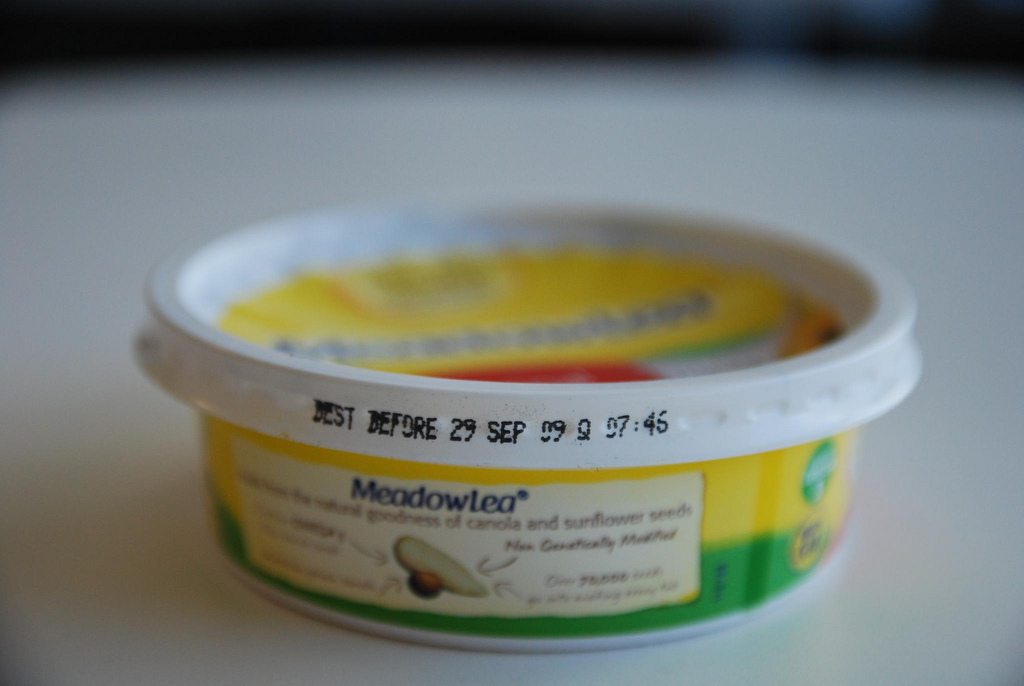
Best Before

Date of Manufacture or Packing and Best Before or Use By Date 

Information about dates on pre-packaged food product is a valuable source of information about the life of the packaged food product for the consumers. Date of manufacture or packing on the labels provides an information about the age of the product and from this date the consumer can assess, how old the product is ? Whereas, the Best Before Date or Use by Date indicates the remaining healthy life of the unopened product. Best Before Date is the date by which it is expected that the unopened food, when stored under appropriate conditions, will retain its freshness, taste, nutritional value and all other claimed qualities. A “best-before” date, tells when the potential shelf-life period of the unopened foods ends. One can consume foods after the “best before” date has passed.
However, when this date has passed, the food may lose some of its freshness and flavour, or its texture may have changed. Some of its nutritional value, such as vitamin C content, may also be lost. Remember that “best before” dates are not indicators of food safety, neither before nor after the date. They apply to unopened products only. Once opened, the shelf life of a food may change. 
“Best before” dates do not guarantee product safety. However, they do give you the information about the freshness and potential shelf-life of the unopened foods you are buying. 
The Indian Food Law, FSS (Packaging and Labelling ) Regulations,2011,notified by FSSAI, defines the terms like , Date of Manufacture , Date of Packing, Best Before Date and Use by Date . The Regulation makes it mandotary that the information about the Date of manufacture or packing and Best Before or Use By Date has to be mentioned on the label on the package of the food product. 
The regulations define: 
a.“Date of manufacture” means the date on which the food becomes the product. 
b. “Date of packaging” means the date on which the food is placed in the immediate container in which it will be ultimately sold; 
c. “Best before” means the date which signifies the end of the period under any stated storage conditions during which the food shall remain fully marketable and shall retain any specific qualities for which express claims have been made and beyond that date, the food may still be perfectly safe to consume, though its quality may have diminished. However the food shall not be sold if at any stage the product becomes unsafe.
d.“Use – by date” or “Recommended last consumption date” or “Expiry date” means the date which signifies the end of the estimated period under any stated storage conditions, after which the food probably will not have the quality and safety attributes normally expected by the consumers and the food shall not be sold.
7.1 Date of manufacture or packing: 
The date, month and year in which the commodity is manufactured, packed or pre-packed has to be given on the label in the prescribed manner : 
In case the Best Before Date of the product is more than three months then only the month and the year of manufacture, or prepacking is required to be mentioned. 
In case the packaged food product has a short shelf life of less than three months than the date, month and year in which the food commodity is manufactured, prepared or pre-packed is required to be mentioned. 
7.2 Best before and Use By Date: 
The month and year in capital letters up to which the product is best for consumption has to be mentioned on the label, as given below :— 
“BEST BEFORE ……..MONTHS AND YEAR 
OR 
“BEST BEFORE ……..MONTHS FROM PACKAGING 
OR 
“BEST BEFORE …………MONTHS FROM MANUFACTURE 
In case of packages containing the food commodity of perishable nature which has a short shelf life i.e. pizza, doghunts,khoya, paneer etc. The date, month and year in capital letters up to which the product is best for consumption has to mentioned on the label as given below. 
“BEST BEFORE ……….DATE/MONTH/YEAR” 
OR 
“BEST BEFORE……..DAYS FROM PACKAGING” 
OR 
“BEST BEFORE …….. DAYS FROM MANUFACTURE” 
In case of Aspartame and Infant milk substitute and Infant Foods, Use by Date/recommended last consumption date/expiry Date has to be mentioned. Best Before Date is not required to be given on such packages.
In case of wines liquors and alcoholic beverages containing more than 10% of alcohol, Best Before Date, Use by Date or Expiry Date is not required to be mentioned. 
From the manufacturer or packers point of view it is important to note that he has to ensure that his unopened pre-packaged food , when stored under appropriate conditions, retains its freshness, taste, nutritional value and all other claimed qualities , atleast upto its Best Before Date. 
If there are any particular storage conditions for the product to maintain its shelf life, these must be pointed out. However, as a rule it is recommended to always describe the necessary storage conditions for a food product. 
Shelf life should be established for all products by conducting planned and carefully executed shelf life studies. 
To make sure food lasts until its date, it’s important to mention storage instructions, such as ‘Keep refrigerated’ and ‘Store in a cool, dark place’ on the label. 
A consumer will always be interested to know about the life of a packaged food product, so the label should have the information about the date of manufacture or packing and best before or use by date.

Online facility launched under Food Safety Act

Those dealing in food business in the state will no more have to visit the office of civil surgeon or district health officer to apply for registration or to obtain licence under the Food Safety and Standards Act, 2006, as the health department has launched an online facility for the purpose. 
The department has already organised official training for its food safety officers and other health staff to facilitate people. A team of experts has also held an exercise for them in districts recently. 
The health department would soon send computers, scanners and printers to the headquarters besides an operator who will be assigned by the department to handle online applications. 
The food safety officers have been ordered not to entertain any application regarding food licence through offline mode this week. 
For the online facility, applicants can log on to the designated website foodlicensing.fssai.gov.in, where they will have to register as users after furnishing details of the business. After that a fee has to be submitted as per the government order. Then, the applicant would have to fill up the form for seeking registration/issuance of licence and upload scanned copies of the required documents on the website. 
Even after the facility goes online, applicants will also have to send documents and receipt through registered post to the office of district health officer. 
After getting the application through online mode, health workers will visit the shops or manufacturing units for physical verification of the premises. 
Food business operators with an annual turnover of above Rs. 12 crore it is must to have a licence and those who earn less than Rs. 12 crore a year must get a registration certificate, as per the Food Safety and Standards Act, 2006. 
Sources said till date, nearly 1,600 eateries have got licences and nearly 8,200 joints, including stall holders, hotels, restaurants, canteens, dhabas, food carts, sweetshops, tea stalls, grocery stores, meat sellers and milk sellers, have got themselves registered with the department. 
Sources added that if the Centre has been continually putting pressure on the state health department to start online facility as eight states have already implemented this system. 
They said due to general elections, the Centre had extended the deadline from February 4 to August 4. The health department would start issuing challans to those, who fail to enroll under this Act. 
They added that earlier, the deadline for registration and getting licences were extended two times, from August 5, 2012, to February 4, 2013, and then from February 4, 2013, to February 4, 2014 and later to August 4. 
"Once the code of conduct ends, the department will also publicise the online facility," they said. 
Earlier, the district health officials held camps asking shopkeepers and other outlet owners to apply for licence or registration manually. 
According to the Act that was implemented in August 2011, a food business with an annual turnover exceeding Rs. 12 lakh requires a licence, while those earning below that need registration only. 
The fee for registration is Rs. 100, and for a licence it varies from Rs. 2,000-Rs 3,000 and Rs. 5,000 depending on the category of the business. 
When contacted, state food safety commissioner Hussan Lal said, "As of now, application for licence will be taken through online facility and after few weeks application for registration will also be accepted online."

Mar 26, 2014

MoFPI issues guidelines to implement HACCP, ISO 22000 & qty mgt system


The Ministry of Food Processing and Industries (MoFPI) issued the revised grant guidelines for the implementation of hazard analysis and critical control points (HACCP), International Organisation for Standardisation (ISO) 22000 and 9000, good hygiene practices (GHP), good management practices (GMP) and quality management systems during the 12th Five-year Plan period.
Under this scheme, grant-in-aid is provided to set up food testing laboratories, upgrade quality control mechanism and implement of HACCP/ISO22000/ISO14000/GHP/GMP and TQM systems in food processing units.
In this regard, proposals for financial assistance for the total quality management (TQM) system have to be submitted to the ministry. The revised guidelines will come into effect from April 1, 2014, and are aimed at motivating the food processing industry to adopt food safety and quality assurance mechanisms to enable adherence to stringent quality and hygiene norms, and thereby protect consumer health.
MoFPI also wants to prepare industry to face global competition in the post-World Trade Organisation (WTO) regime and to enhance product acceptance by overseas buyers, besides keeping the Indian industry technologically abreast of international best practices.
The grant would be reimbursement of expenditure incurred to acquire these certifications. For the consideration of the grant, the preference would be given to proposals for units processing perishable items such as fruit, vegetables, milk, meat and poultry. The reimbursement of expenditure will be released by MoFPI in one installment after obtaining necessary certification and submission of requisite documents.
Pattern of assistance 
According to the notification by the ministry, all implementing agencies [namely Central and state government organisations, the Indian Institutes of Technology (IIT), universities and the private sector] would be eligible for reimbursement of 50 per cent of the cost of consultancy fees, fees charged by the certification agency, plant and machinery, technical civil works (TCW) and other expenditure towards the implementation of the TQM system in general areas subject to maximum limit of Rs 17 lakh, and 75 per cent in difficult areas subject to a maximum of Rs 22 lakh. 
The difficult areas include Jammu and Kashmir, Himachal Pradesh, Uttarakhand, Sikkim, the north-eastern states, the Andaman and Nicobar Islands, Lakshadweep and Integrated Tribal Development Project (ITDP) areas of states.
Eligibility criteria 
The Central and state government organisations, IITs, universities and the private sector will be eligible for reimbursement of expenditure towards the implementation of the TQM. 
The scheme provides one-time reimbursement only against an industrial entrepreneur memoranda (IEM)/permanent small-scale industry (SSI) registration/industrial licence and FSSAI licence. 
The applicant should not have obtained/applied for grant/subsidy from any ministry and department of the Central government, government organisations and agencies and state governments for the purpose of adoption of the TQM system. 
And the expenditure incurred on the project for the TQM system after the date of receipt of application and proposal by the MoFPI for grant-in-aid will be considered for reimbursement. 
Meanwhile, further, the ministry has also issued revised guidelines for setting up food testing laboratories and the upgradation of quality control and for the remaining period of 12th Five-year Plan. 
Tariq Anwar, minister of state, MoFPI, informed that the ministry implemented the scheme for quality assurance, Codex standards, research and development and other promotional activities.

Food labelling requirements for declaring Food Additives : Module 6


Declaration regarding Food Additives 

Food additives are substances which are technologically required for the manufacturing of food and also added to food to preserve flavour or enhance its taste and appearance. They include antioxidants, preservatives, coloring and flavouring agents, and anti-infective agents. Most food additives have little or no nutritional value. 
If any additives are added to the food, it shall be mentioned on the label in accordance to the Food Safety and Standards (packaging and Labelling) Regulations 2011, notified by FSSAI. 
When the food additives are used in the food , class titles of the food additives are mentioned together with the specific names or recognized international numerical identifications or ISN of the food additives. 
The classes of the additive are as acidity regulator, color preservative etc. 
Addition of colors and/or Flavours— 
(a) If color has been added to any article of food, it shall be mentioned in capital letters, just beneath the list of the ingredients on the label as 
CONTAINS PERMITTED NATURAL COLOUR(S)
OR
CONTAINS PERMITTED SYNTHETIC FOOD COLOUR(S)
OR
CONTAINS PERMITTED NATURAL AND SYNTHETIC FOOD COLOUR(S) 
After mentioning it along with the name or INS no of the food color, the name of the color need not be mentioned in the list of ingredients. 
If flavouring agent has been added to the food, it shall be written just beneath the list of ingredients on the label attached in capital letters as below: 
CONTAINS ADDED FLAVOUR (specify type of flavouring agent) 
(c) If both color and flavour are used in the product, a combined statements shall be mentioned, as 
CONTAINS PERMITTED NATURAL C0LOUR(S) AND ADDED FLAVOUR(S)
OR
CONTAINS PERMITTED SYNTHETIC FOOD COLOUR(S) AND ADDED FLAVOUR(S)
OR
CONTAINS PERMITTED NATURAL AND SYNTHETIC FOOD COLOUR(S) AND ADDED FLAVOUR(S) 
In case, artificial flavouring substances, has been attached then the common name of the flavours or ISN No. shall be given. In case of the natural flavorings substances or nature identical flavouring substances has been added then the class name of flavours shall only be mentioned 
Though it is accepted that for selling a food product, additives like antioxidants, preservatives, colouring and flavouring agents, and anti-infective agents are required to give taste, flavour, appearance etc, but the consumer has to be informed of all above discussed in this article.

Mar 25, 2014

Nestle opens food safety research centre in Beijing

LONDON: Nestle, the world's largest food company, has opened a food safety research centre in Beijing aimed at supporting Chinese authorities as they strengthen food safety policies and standards, the company said on Tuesday. 
Food safety is a huge issue in China after scandals involving tainted milk, recycled "gutter oil" used for cooking and donkey meat found to contain traces of fox meat. 
Nestle said the new operation will provide early management of food safety issues and collaboration with local universities, research institutes and government agencies, while also helping to run food safety training programmes. 
The centre is located within Nestle's existing research and development operation in Beijing.

Seminar on 'changing role of diet' held

CHANDIGARH: PGI's School of Public Health and Govt Home Science College's Department of Foods and Nutrition hosted an ICMR seminar on "Updating the knowledge and skills about recent advances in nutrition: Changing role of diet in 21st century in India". The seminar was organized by Dr Ravneet Kaur, under the guidance and supervision of Dr Amarjeet Singh. 
The participants comprised of Community Medicine residents and dieticians from Govt. Medical College Sector 32 and Govt. Multi Specialty Hospital Sector 16 -1, Faculty and students of Govt Home Science College Sector 10, Chandigarh Institute of Hotel Management Sector 42 and Selected food Business Operators form Chandigarh. Approximately 100 participants attended. 
Anil Kumar, Commissioner Food Safety and Home Secretary attended as a special guest to address the delegates about food safety issues. He brought out that with the increase in eating out culture of our society food safety has become an important concern. He emphasized that food safety is a shared responsibility which needs to be shared by all. 
Dr Nancy Sahini updated the audience on recent advances in renal nutrition. Dr Puja Dudeja discussed nanotechnology in food processing. Sukhwinder Singh, FSO, UT Chandigarh address issues related to licensing and registration of eating establishments. Apart from updating the participants on various aspects of diet and nutrition, the conference focused to bring all the relevant stakeholders who are dealing with food safety on one platform.

Chinese develop colour-coded gel-like smart tag to detect spoiled food


Chinese scientists developed a colour-code-based gel-like smart tag to detect the freshness of such food items as milk, juices and canned meat even without opening the containers. It could be customised for other food and beverages products also.
Chao Zhang, the study’s lead researcher, is a Peking University scientist. She and other researchers had been working on the system for the last three years, and presented the report on the colour-changing food deterioration tags at the recent meeting of the American Chemical Society (ACS).
Consumers can find whether a carton of milk has turned sour or has spoiled without opening the containers with the colour code-based tag. The colours signify a range between 100% fresh and 100% spoiled. 
If the tag is red or reddish-orange in colour, it means the food item is fresh. Over time, its colour changes to orange, yellow and finally green, which indicates that the food is spoiled. The tag is inexpensive and safe.
It could be widely programmed to mimic almost all ambient-temperature deterioration processes in foods. The use of the tags could potentially solve the problem of knowing how fresh packaged perishable foods remain over time. 
“Even if manufacturers, grocery-store owners and consumers do not know whether the food has been unduly exposed to higher temperatures (which could cause unexpected spoilage), the tag still gives a reliable indication of the quality of the product,” the report said. 
Technology 
“The whole idea is to use a chemical reaction to track, mimic and indicate the deteriorative processes (like microbial growth) in perishables.” Zhang said. 
“The kinetics of both microbial growth and chemical reactions are temperature sensitive, so if we could somehow manage to make them parallel to each other, then you could tell the quality of the perishables by checking how far the chemical reaction has proceed,” she added.
”And some information about this particular chemical reaction we used for the tag, namely silver overgrowth on gold nanorods. Metallic nanostructures can impart very intense colours, which are affected by their chemical composition, size and shape,” Zhang stated. 
“The gold nanorods we used here are red in colour. During the reaction, silver is deposited on their surface, changing their composition, size and shape. As the silver layer thickens, the tag evolves from the initial red colour to orange, yellow, green, and even blue and violet,” she added. 
”We found simple methods to control the kinetics of this reaction. For example, the red-to-green duration at room temperature can be widely tuned from minutes to months, covering the kinetic features of a wealth of perishables,” Zhang said. 
She added, “So for a specified perishable, we could customise a tag by altering the recipe to make sure it has the same kinetic features as the perishable.”
“We hope to put this smart tag into real-world applications. This technique has been patented in China, and we are seeking possible collaborations with people in the industry. And quite excitingly, we have got a few contacts since the ACS meeting,” Zhang added.

DINAMALAR NEWS


Food labelling requirements for declaration of Veg & Non-Veg : Module 5


Declaration of Veg Non veg 
India has a large audience for both Veg & Non-Veg food, but some of the communities are restricted by religion where Non-Veg food is not entertained, also there are people who have their personal preference for ‘Veg only’ food items. To safeguard the interests and the sentiments of such people a food product label must have the identification mark “Veg” or “Non-Veg” for the category of food. 
It is mandatory for all food manufacturers to indicate as to whether the food item contains any non-vegetarian ingredients or not. To enable the consumer to know whether any packaged food is vegetarian or non-vegetarian, this will be indicated in the form of a brown circle in square or green circle in a square on the package. A brown circle is to indicate the presence of non-vegetarian ingredients in the food item, while a green circle indicates that the food item is vegetarian. The green circle and brown circle in a square are indicated as veg & non-veg logos respectively. 
Let us first understand as per food laws what is a non-vegetarian food and what is vegetarian food. 
“Non- Vegetarian Food” means an article of food which contains whole or part of any animal including birds, fresh water or marine animals or eggs or products of any animal origin, but excluding milk or milk products, as an ingredient. 
“Vegetarian Food” means any article of Food other than Non- Vegetarian Food. 
The Veg , Non veg logo should be placed near the product name so that consumer can easily identify the product that the product is vegetarian or contain any non-vegetarian content. 
(i) The size of the logo depends upon the size of the product. The size of the logo i.e. the diameter of the circle and side of the square shall be in accordance to the size of the label. 
(ii) The package of “Non Vegetarian” food shall have a symbol and color code as given below to indicate that the product is Non-Vegetarian Food. The symbol shall consist of a brown color filled circle having a specified diameter at the centre of the brown square. 
BROWN COLOR 
Logo for Non veg 
If any article of food contains egg only as Non-Vegetarian ingredient, the manufacturer, or packer or seller has to mention the same along with the said symbol. 
The package of Vegetarian Food shall bear a symbol and color code as given below to indicate that the product is Vegetarian Food. The symbol shall consist of a green color filled circle, having a specified diameter not less than the minimum size inside the square with green outline having specified size. 
GREEN COLOR 
Logo for Veg 
There are some products like carbonated water and liquid milk which are exempted from this provision, hence these markings are not required on these products. 
So, it is mandatory that labeling of every food product should indicate “Veg” or “Non-Veg” element in the ingredients through recommended marks on the label enabling the user to make a choice.

Mar 24, 2014

Local players take on cola big boys

Guwahati-based company launches range of carbonated soft drinks 
Guwahati, March 23: Local aerated drinks will share shelf space with multinational brands this summer. 
Less than a year after a local beverage company forayed into the aerated drinks market for the first time in the Northeast, Guwahati-based New Era Food and Beverages today launched its range of carbonated soft drinks in Assam. 
“We have come up with four flavours — Coke Star, Orange Splash, Lemon Pie and Lichi Punch — in 170ml to 2-litre pet bottles. The products have been launched in the Assam market and very soon we will expand our operations to Meghalaya, Manipur and Arunachal Pradesh,” Narendra Sharma, chief executive officer of New Era Beverages, told The Telegraph. 
Assamese singer Bornali Kalita unveiled the products here today as the brand ambassador. 
Amingaon-based Sakshi Agro Beverage, a sister concern of Silver Drop Foods and Beverages Private Ltd, had in May last year entered the non-cola segment with three varieties — Jeera Masala, Clear Lemon and Orange — under its Ohlay brand. 
New Era, which launched its operations this year, said more varieties are in the pipeline. “In April we are coming up with mineral water while a mixed fruit beer and a digestive drink, Fusion Bull, will be launched in May,” Sharma said. 
The company has a state-of-the-art manufacturing plant near Rangia on National Highway 31, about 50km from here. The plant has a production capacity of 10,000 litres per day. “We have invested Rs 3 crore on equipment procured from Gujarat,” Sharma said. 
The company said it would rely on product quality and a sustained marketing strategy to penetrate the market. 
“We have laboratories approved by the Bureau of Indian Standards and Food Safety and Standards Authority of India and appointed a team of experienced chemists and microbiologists to conduct tests on the raw materials. The Changsari-based Central Institute of Plastics Engineering and Technology helps us with advice as well,” he said. “We will step up our marketing campaign in the run-up to Rongali Bihu and during June-July.” 
The processing of water is carried out in a reverse osmosis plant that has advanced technologies such as dual media filter, anthracite filter, iron remover, softener, micron cartridge filter, ultraviolet systems and EMF (electro-magnetic field). 
On pricing, Sharma said they have kept the rates lower than the multinational brands by at least Rs 4 to Rs 6. 
New Era has recruited over 40 local workers in its Rangia plant. “All of them are from Assam and have been trained in manufacturing and allied processes,” he added. 
The bib cola companies like Coca-Cola and PepsiCo have a combined market share of over 95 per cent in the Northeast. So, the entry of local companies into the carbonated beverages industry can be considered a bold yet calculated step. 
Sakshi Agro, for instance, has in the past 10 months made “slow and steady” progress. “The progress so far has been slow and steady. This month, we forayed into the cola segment with Cola Cool and came up with another variety, Cloudy Lemon,” K.K. Bajaj, the managing director of Sakshi Agro Beverage, told this correspondent today. 
SPARKLING STATISTICS 
The Rs 60-billion carbonated soft drinks industry in India is growing at 5% annually 
Consumption is the highest in the cola segment, followed by the non-cola and energy drinks segment 
According to industry body Assocham, the non-carbonated drinks industry in India is growing at a compound annual growth rate of about 35% and the market is likely to touch Rs 54,000 crore by 2015 
Greater disposable incomes, particularly in urban areas, and health consciousness are factors fuelling the growth of the non-carbonated drinks segment

ASCI reduces average complaint processing time to 12 days

It has also achieved over 90 per cent compliance of its decisions. This achievement has come even though the number of complained against ads has increased more than 10 times
The advertising content self-regulatory body, the Advertising Standards Council of India (ASCI), now delivers its Consumer Complaints Council’s (CCC) decision on a complaint against an objectionable advertisement within an average of just 12 days from the date complaint is received.
With the public and regulators demanding that ads which are a) misleading or make false claims, b) indecent , c) showing hazardous activities and d) unfair to competition should be promptly removed or modified, ASCI has taken effective action to reduce the complaint processing turnaround time from 45 days two years ago to just 12 days currently. Some of the actions taken by ASCI to achieve this drastic lowering of the turnaround time are:
1) From monthly meetings two years ago, CCC now meets weekly by having two CCCs instead of one earlier and total number of CCC members going up from 21 to 28;
2) The turnaround time taken at ASCI to process a complaint and time provided to the advertiser to respond to the complaint has been significantly reduced with the use of email and technology;
3) Intra-industry complaints among ASCI members are being resolved in just seven days via Fast Track Complaint (FTC) process which was introduced in 2012. FTC, which handled 30 complaints in 2013-14, has been very popular among ASCI members who are seeing real time and cost savings by not taking the matter to the courts on intra industry ad content disputes;
4) In the recent past ASCI also introduced ‘Suspension Pending Investigation’ (SPI) by which ASCI can order an extremely objectionable ad to be removed immediately pending investigation and CCC decision.
Under its National Advertising Monitoring Service (NAMS), ASCI has started tracking in print and TV all ads against which complaints have been upheld. The results show that over 90 per cent of such “upheld complaints” ads do not reappear or are appropriately modified. ASCI has now started reporting non-compliant upheld ads (i.e., upheld ads which reappear) to regulatory authorities such as the Ministry of Information & Broadcasting (MIB), the Drug Controller General of India (DCGI), the Medical Council of India (MCI), the Ministry of Health and Family Welfare, and the Food Safety & Standards Authority of India (FSSAI) for taking action as per the law of the land.
The faster complaint turnaround time and improved compliance upheld complaint decisions by ASCI has taken place at the same time when the number of complained against ads processed by ASCI has increased more than 10 times. In 2011-12, the number ads processed by ASCI were 176 which, post the NAMS initiative in 2012-13, increased to 784 and for April 2013 to February 2014 (11 months), ASCI has handled complaints against 1,833 ads.
Commenting on these developments, ASCI Chairman Partha Rakshit said, “ASCI’s effectiveness and credibility as an advertising self-regulatory organisation has increased several fold with speedy redressal of complaints and high compliance of CCC’s decisions by advertisers. Regulatory bodies like MIB, DCA, FSSAI and FDA now recognise and support our self-regulation work with the inclusion of ASCI in the Inter-Ministerial Monitoring Committee formed to review misleading ad content.”

State regulators asked to boost efforts to monitor drug quality


India's drug regulator has asked state-level watchdogs to increase efforts aimed at monitoring the quality of medicines sold in the country, a top official has said.
"We have told the state drug controllers to keep a close watch on the quality of medicines being made and marketed in India," G.N. Singh, the Drugs Controller General of India (DCGI), told Business Today recently. "They (the state drug controllers) are taking extra care and I am in touch with them on this on a regular basis."
Singh, who heads the Central Drugs Standard Control Organization, said that efforts were being made to increase monitoring across the country and wherever required, the DCGI would get involved and support state regulators. He said that 2014 will be dedicated to "patient and animal safety". He added that all drug manufacturers have been told that if at any time, a watchdog in a highly regulated market like the US flags any concern over the practices of a company, the manufacturer should bring it to the notice of the concerned state drug controller and the central regulator.
The remarks gain significance in the light of some leading Indian drug companies such as Wockhardt and Ranbaxy coming under the scanner of the US Food and Drug Administration over manufacturing practices at several factories. FDA Commissioner Margaret A. Hamburg, in her recent visit to India, had also announced plans to work closely with Indian drug regulatory authorities.
Meanwhile, the Food and Drug Administration of Maharashtra has issued three show-cause notices to Wockhardt between February 11 and March 14. The notices relate to issues such as handling and storage of raw material, data integrity and possible violation of some provisions of the Indian Drugs and Cosmetics Act and licencing conditions, Viraj T. Paunikar, Joint Commissioner at the state regulatory agency, told BT. 
The notices were issued to the company's three units in Aurangabad-two at Waluj and one at Chikalthana. Wockhardt Chairman Habil Khorakiwala, when contacted over the phone, said he was not aware of any such development, though Paunikar pointed out that the company had responded to some of the earlier notices, which were being examined.
R.L. Meena, the drug controller in Andhra Pradesh, said that, six months ago, a committee on good manufacturing practices had been formed under the initiative of the DCGI with some drug controllers like those in Orissa, Chandigarh and Hyderabad as its members. This committee, he said, had last month submitted its recommendations to the DCGI.

Declaration of “Nutritional Facts” on food labels : Module 4


Nutritional Facts
Nutritional Facts
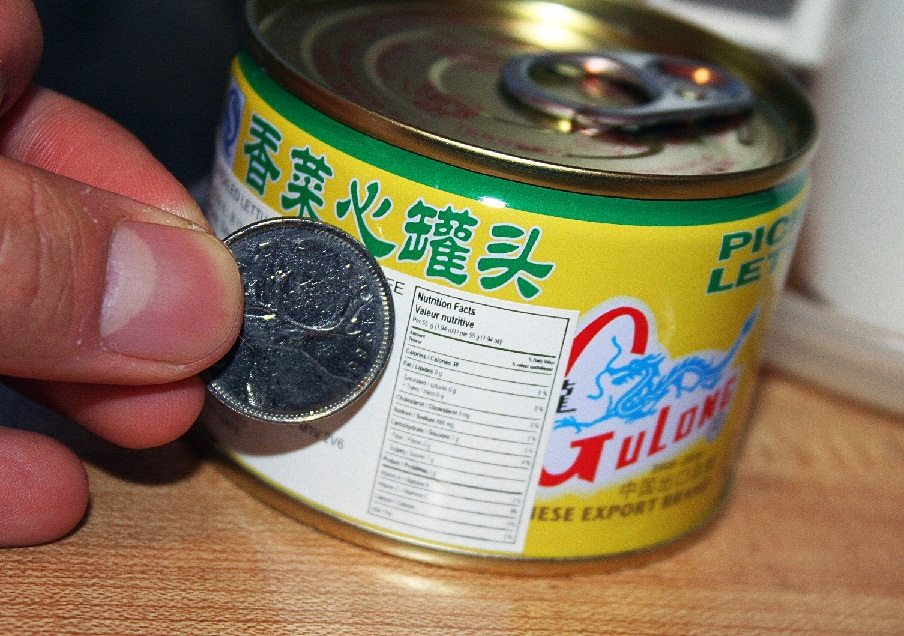
The Nutritional Information labeling is a description intended to inform the consumer of the nutritional properties of the food. The Nutritional Facts on the label provides detailed information about a food’s nutrient content, such as the amount of Protein, carbohydrates, Sugar, fat and Calories.
This information available on the label enables the consumer to compare the nutritional value of similar food products and on comparing the relevant nutritional value of different food products, the consumer can make the healthy choice of food.
The growing children or the sports person who need high calorie, diet rich in proteins and other nutrients or the people who are obese or suffering from diabetes or high blood lipid, need to follow a special or restricted diet. In such conditions the label declaration regarding nutritional facts makes it easier to select the appropriate food and can also help to compare similar foods to decide which is a healthier choice.
From the manufacturer point of view the relevant Nutritional Value helps to attract the consumers towards the product and requirements for nutrition information on food labels would encourage improving the nutrient profile of their product.
The label of nutritional value creates ideal conditions for both the consumers and food business operators.
The Indian Food law, The Food Safety and Standards (Packaging and Labeling ) Regulations ,2011, notified by the FSSAI, requires to mention nutritional value or Nutritional Information or nutritional facts per 100 gm or 100ml or per serving of the product is required to be given on the label as mentioned below :
(i) Energy value in kcal;
(ii) The amounts of protein, carbohydrate (quantity of sugar), and fat in gram (g) or ml;
(iii) If a special claim is made regarding nutritional value or health benefit then the amount of other nutrient according to which the claim has been made shall also be mentioned on the label.
If a claim is made regarding the amount or type of fatty acids or the amount of cholesterol, the amount of saturated fatty acids, monounsaturated fatty acids and polyunsaturated fatty acids in gram (g) and cholesterol in milligram (mg) and the amount of trans fatty acid in gram (g) shall be mentioned in addition to the other requirement mentioned above.
If the food product contains less than 0.2 gram/serving of trans fat/serving, then it can be mentioned as trans fat free. In case of saturated fat if it is less than 0.1/100gm or 100ml of food it can be mentioned as saturated fat free.
It is better; the nutritional facts are mentioned in a tabular form. If a consumer has health conditions, such as high blood pressure or high cholesterol, and need to follow a special diet , it is convenient for him to read and compare the nutritional facts of similar foods when given in the tabular form.
Nutritional facts per 100 gm
Energy
k.cal
Protein
g
Carbohydrate
g
Sugar
g
Fats
g
Saturated Fatty Acids
g
Monounsaturated Fatty Acid
g
Polyunsaturated Fatty Acids
g
Cholesterol
mg
Some of the food articles like wheat, rice, pickles etc. and the single ingredient foods are exempted from this provision.
A food label with facts on nutritional value may serve as an important source of information to the consumers especially in case of children or people seeking a food product to fulfill their specific needs. Nutritional facts on the label may serve as a competitive edge while proposing a food product for sale.

Food laws are not tools of harassment, says official


320 herbal water manufacturing units had been ordered to be closed 
The Food Safety and Standards Act was essentially aimed at protecting the interests of consumers and not intended to harass traders engaged in food business, said B. Vasakumar, Additional Food Safety Commissioner, Tamil Nadu, here on Saturday.
The Act is applicable not only to private traders but also to all government agencies, including ration shops and anganwadi centres. Of the five lakh food business operators in the State, about 2.22 lakh operators have been registered and another 33,000 issued licences under the Act accounting for 52 per cent coverage, he said.
Food business operators with a turnover of up to Rs. 12 lakh a year are required to register under the Act and those with more than Rs. 12 lakh turnover should obtain licence. The registration could be done online.
Speaking at a seminar on Food Safety and Standards organised by the Consumer Protection Council, Tamil Nadu, in association with the Department of Civil Supplies and Consumer Protection and Tamil Nadu State Society for Consumer Protection and Empowerment here, Mr. Vasakumar said the Department of Food Safety and Drug Administration has established six food labs across the State to conduct checks of food samples collected from traders. 
About 950 packaged drinking water units have been inspected and the report has been submitted to the government. Around 320 herbal water manufacturing units had been ordered to be closed and asked to obtain permission from the Union government.
The department was organising various awareness initiatives to persuade the food business operators to register and obtain licences under the Act before the deadline of August 4. A training programme for cooks of hotels and tea shops was under way in Tiruchi and Chennai. Six batches of cooks would undergo the training on food safety and hygiene. 
Collector Jayashree Muralidharan said about 16,000 food business operators were required to register in Tiruchi district and so far 7,000 have done so. Of the 3,500 operators who require licences, 1,500 had obtained the same. 
As consumers were becoming increasingly dependent on packaged food products, the implementation of the Act assumed importance to protect the interests of the poor, she said.
S. Pushpavanam, Secretary, Consumer Protection Council, Tamil Nadu, emphasised on creating awareness about the Act and its provisions as even members of consumer organisations did not know much about it. The Act has an essential role in ensuring hygiene and safety and in preventing adulteration of food products, he said.

Mar 22, 2014

Name & trade of the Food product and the List of Ingredients : Module 3


packaged food on shelves
Name of Food and List of Ingredient
Name of Food: The name and trade name of the food shall be mentioned on the label.
List of the Ingredients: The list of all food articles i.e. ingredients added in the manufacture of food products are to be mentioned on the label with the title “Ingredients”.  Any substance including food additives, color, preservatives added in the manufacture of food product shall be added in the list of ingredients.
The name of ingredients shall be given in descending order that means the ingredient used in higher quantity will be mentioned first than the substance used in lower quantities. Specific name of each ingredient shall be mentioned on the label.
However in some cases the class name of the food ingredient is allowed to be mentioned in place of specific name of the ingredient .For example,.if turmeric powder or chilles powder or both or any other single spice or more than one spices in combination have been used in the preparation of any food product then in place of mentioning the names of all spices used ,the class name as “spice and condiments” may be mentioned in the list of ingredients.
The ingredients falling in the respective classes, the class title as mentioned in the table may be used.
Table containing the Ingredients and Class Title
Classes
Class Titles
Edible vegetable oils/Edible vegetable fat

Animal fat / oil other than milk fat


Starches, other than chemically modified starches

All species of fish where the fish constitutes an ingredient of another food and provided that the labelling and presentation of such food does not refer to a species of fish
Edible vegetable oil/ Edible vegetable fat or both hydrogenated or Partially hydrogenated oil

Give name of the source of fat. Pork fat, lard and beef fat or extracts thereof shall be declared by specific names

Starch

Fish

All types of poultry meat where such meat constitutes an
Poultry meat

ingredient of another food and provided that the labeling


and presentation of such a food does not refer to a specific


All types of cheese where cheese or mixture of cheeses
Cheese

constitutes an ingredient of another food and provided that


the labelling and presentation of such food does not refer to


a specific type of cheese


All spices and condiments and their extracts

Spices and condiments or mixed spices/ condiments


as appropriate
All types of gum or preparations used in the manufacture of
Gum Base

gum base for chewing gum


Anhydrous dextrose and dextrose monohydrate
Dextrose or Glucose

All types of Caseinates

Caseinates
Press, expeller or refined cocoa butter

Cocoa butter
All crystallized fruit

Crystallized fruit
All milk and milk products derived solely from milk
Milk solids

Cocoa bean, Coconib, Cocomass, Cocoa press cakes,
Cocoa solids

Cocoa powder (Fine/Dust)


If the ingredient used in the product, itself is the product of one or more ingredients then such a compound ingredient shall be mentioned in the list of ingredients with a list of its ingredients in descending order within the brackets.
In some cases percentage of the ingredients added has to be mentioned. Where a food product is a mixture of two food products or the ingredient of food product, is shown as present on the label or through words or pictures then the percentage of the ingredients shown in the picture have to be mentioned.
The ingredients need not to be mentioned in a single ingredient food.
To summarize, the brand name should clearly appear on the label along with the information about all classes of ingredients and their percentage quantity used in the manufacturing of the product.

How the past gives food for thought about quality

During the French period, government doctor would inspect the kitchen and the staff
At a time when the Government of India is encouraging food business owners to register with the Food Safety and Standards Authority of India till 1973, the eateries in Puducherry had a completely different set of rules to abide by to ensure food quality.
The municipality permit issued by the French still hangs on the walls of the Café Lune on Suffren Street, almost 50 years after it was issued.
In those days, the rules were different and the people were willing to obey them. Now, very few of the restaurants and cafes that were run during the French time are still open, and even if they are, the original owners have passed away and the people who run it now do not remember how things were back then, owner of the café G.M. Anwardeen says. 
Until 1973, the Pondicherry Municipality under the mayor was in control of the issue of licences to the various restaurants, bars and cafes. It was only after 1973 that the Union Territory started following the Indian Government’s rules, retired municipality official Rajkumar Gupta said. 
Medical certificate
Unlike what is required today, during the French period, if one wanted to run a hotel establishment, they would have to get a medical certificate from a Government doctor who would not only inspect the kitchen but also the staff.
These doctors would check the eyes, finger and toe nails, hair and skin of the employees. If anyone on the staff had filariasis, which was very common during the time, the entire premises would be sealed. 
Similarly, the establishment would not get a permit if the employees had skin problems, and many times if the nails of the employees were too long, the doctors would have to conduct another visit before issuing the permit. 
According to Ramani, who used to run a tea stall during the French period on M.G. Road said, the rules were different for roadside stalls and for restaurants. 
For roadside restaurants, even if they served food, they would only have to pay tax for the area and there were no special inspections, he said.

Keep your kids away from nicotine gums


BANGALORE: Padma M (name changed), a resident of Koramangala and banker by profession, was shocked to see some children from her son's school walk with a nicotine chewing gum packet, which they had bought from a small shop near the institution. She later checked with her son studying in class 6, and to her horror, learnt that he too had consumed it once. It tasted like any other gum, the 11-year-old said.
Padma further asked some parents who said that their children had complained of dizziness after consuming the gum and had been warned not to have it again. Later, Padma took the help of a few child rights activists and lodged a complaint with the food safety commissioner.
After authorities banned the gutka, manufacturers are now pushing nicotine in the form of chewing gum. This despite food safety laws in India clearly prohibiting the sale of nicotine or tobacco in the form of food products. And the most vulnerable consumers of these illegal products happen to be kids.
Various brands of gum with attractive packaging are being sold in malls, super bazaars and even paan shops. Many such outlets are in the vicinity of schools. Gums are available at Rs 30 for a pack of 6 and Rs 50 for a pack of 10 chewing gums. And since they look similar to normal chewing gum, unsuspecting kids get hooked to them.
In fact, food authorities have received six such public complaints and related memoranda by child welfare activists seeking to keep nicotine-based chewing gum away from children. Following such complaints, the public health institute (a body under the directorate of health and family welfare) on March 3 issued an order to field officers to collect samples of such products and take necessary action against those violating the law.
The department order, dated March 3, 2014, a copy of which is with TOI, says they have received complaints against some organizations about the sale of chewing gums containing nicotine. "There is possibility of children consuming it and getting addicted to this food substance, resulting in ill-effects on children's health," adds the order.
Speaking to TOI, Dr Jaya Kumar, joint director (public health institute), said they have already warned the manufacturers against production. "We will also do random raids on shops and other outlets to ensure there is no sale of such products," he added.
A reality check by TOI in and around MG Road areas showed that nicotine gums were easily available in most shops. Also, shop owners had no idea that it could not be sold to kids.
Turning kids into addicts
Sindhu Naik, member, Karnataka State Council for Child Welfare, an NGO, said, "Consumption of nicotine gums can push children to nicotine addiction. Long-term use of such products can lead to regular cold, flu, shortness of breath, lung diseases and heart problems as well. Since gums don't emit the cigarette smell, parents or teachers may not be able to detect that the child is using it," she added. Dr S Raghu, a nutritionist, said parents should closely monitor what children eat outside school. "Effects of nicotine gum differ from one kid to another and age factor also matters. If the children complain about dizziness, vomiting sensation and so on, more questions should be asked about what they eat. Awareness among teachers and school authorities about the sale of such products within school zones is also a key factor," he added.
Banned but blatantly sold
Chewing gum is considered as food material under Column 3 j of Food Safety and Quality Act 2006. As per Sections 2.3.4 of the Rules of the said Act 2011, any food material containing nicotine and tobacco is banned in the state. Pramodini K, a child welfare activist, says the problem is with monitoring. "A single department like health can't implement such rules. A multi-departmental approach, including education and police wings, is the need of the hour. And manufacturing companies too have found many ways to violate the law. In case of nicotine gums, even though the literature inside some packets warn of the adverse effects on children, there are no statutory warnings and pictures on these chewing gum packs unlike on cigarette packs.
TIMES VIEW
Children are most vulnerable to substance abuse and addiction. It's appalling that after the gutka ban, manufacturers are resorting to seemingly innocuous methods to trap kids by selling nicotine-laced chewing gum. The health department's move to conduct regular raids on manufacturers and shops selling such products in the vicinity of schools is welcome but not enough. Schools must team up with parents and alert children on such negative influences. Authorities must also realise that without strong deterrents in place, manufacturers will find more inventive methods to make and peddle their products.

Govt regulator paves way for field trials of GM food crops including wheat, rice and maize

NEW DELHI: Taking a major step forward to scientifically assess 'risk' and 'safety' aspects of transgenic crops, the government's top regulator — Genetic Engineering Appraisal Committee (GEAC) — on Friday revalidated 10 varieties of GM crops including wheat, rice, maize and cotton and allowed multi-national seed companies to go for "confined field trials" of these varieties. 
Companies like Monsanto, Mahyco and BASF whose applications got revalidation will, however, be able to go for field trials only after getting the state's mandatory nod. 
Revalidation of these varieties was required as their "validity period" lapsed due to state government's stand of not allowing them to go for field trial. The GEAC had given its clearance in those 10 cases way back in 2011 and 2012. 
The committee, which met under the chairmanship of additional secretary in the ministry of environment and forests (MoEF) Hem Pande, however, did not take decision on any new cases in its meeting on Friday. It will meet again on April 25 to take a call on the fate of 70 fresh applications. 
The revalidation of 10 cases on Friday would allow the seed companies, which developed these varieties, to go for "confined field trials" (called Phase-II trial) in bigger area as compared to their tests in a very small tract of land during Phase-I. 
The move comes barely a month after the ministry had given its nod to "confined field trials" of over 200 transgenic varieties of GM crops which got GEAC's clearance in its 117th meeting in March last year. 
Though the regulatory body had given its go ahead to those 200 varieties, the then environment minister Jayanthi Natarajan had kept this in abeyance. The ministry had then felt that the companies should not be allowed to go for field trials unless the Supreme Court takes a final view on a pending PIL on the contentious issue of GM crops. 
The MoEF had, however, under the present minister M Veerappa Moily, last month allowed the GEAC to hold its 118th meeting on Friday, taking in view demands of scientist community from across the country. 
Agriculture scientists from research institutions including IARI, ICAR and various Universities have been demanding "field trials" for GM crops for long, arguing that "confined field trials are essential for the evaluation of productivity performance as well as food and environmental safety assessment". 
A group of prominent scientists had met under 'father of green revolution' MS Swaminathan here at National Academy of Agricultural Sciences (NASA) in February and issued a 15-point resolution in favour of GM crops. 
Pitching for the field trials, the resolution said, "The non-conductance of regular field trials is a handicap as well as disincentive in harnessing the benefits of a wide array of transgenic material available with different research organizations". 
Anti-GM activists have, however, taken strong objection to the GEAC's decision on Friday to revalidate those 10 cases of transgenic varieties which will pave the way for their field trials. 
Protesting field trials, convenor of Coalition for GM Free India, Rajesh Krishnan said, "The bio-safety tests can be done in a greenhouse or glass house. The field trials are mostly for agronomic purposes. The industry wants to reduce the period of regulation and hence wants to run these things simultaneously". 
He said, "It is, in fact, ridiculous to simultaneously do assessment of risks and open up the experiment for contamination, which often happens in the case of a field trial, before the risk assessment is done". 
The coalition as well as Greenpeace India had also requested the ministry not to take any decision on field trials of GM crops unless the Supreme Court takes its final call on the matter. The apex court is scheduled to hear the matter on April 14. 
The industry body — Association of Biotech Led Enterprises- Agriculture Group (ABLE-AG) — has, however, welcomed the GEAC's move, calling it "a progressive push to the march of GM technology in India". 
"We welcome this and hope that the rest of the applications too shall be expeditiously cleared," said Ram Kaundinya, chairman of the ABLE-AG.

European Food Safety Authority declares aspartame safe for consumption


Aspartame, one of the most commonly used artificial sweeteners in the world, has been declared totally safe for human consumption at the current levels of exposure by the European Food Safety Authority (EFSA).
The Authority based its findings on one of the most comprehensive risk assessments of aspartame and its breakdown products ever undertaken. It involved a rigorous review of all the available scientific research, including both animal and human studies.
After a detailed analysis and taking into consideration all available information, EFSA experts concluded that the current acceptable daily intake (ADI) of 40mg/kg of body weight daily does not pose any long- or short-term health concerns for people.
The ADI level is an estimate of the amount a person can consume each day over a lifetime without risking their health.
EFSA experts firmly ruled out the possibility of aspartame causing damage to genes and inducing cancer. They also concluded that the substance neither harms the brain or nervous system nor affects behaviour or cognitive functions in adults.
Dr Rajeev Chawla, senior consultant diabetologist and director North Delhi Diabetes Centre, New Delhi, said, “Safety concerns have been aired on and off about the consumption of aspartame in the 25 years since it was approved as a food additive.” 
“It has proved to be a boon to people who need to avoid table sugar. I hope that this comprehensive review of aspartame by EFSA experts would finally put the controversy about its safety to rest,” he added. 
“This should also strengthen the consumer confidence in the aspartame based products,” Dr Chawla said.
Aspartame is an intense low-calorie, non-saccharide sweetener, which is used in yoghurts, chewing gum, diet foods, soft drinks and other low-calorie or sugar-free foods across the globe. It is a white, odourless powder, approximately 200 times sweeter than sugar.

Mar 20, 2014

General Requirements of Food Labelling applicable to all products : Module 2

General

General Requirements of Food Labelling applicable to all products
The FSS Packaging and Labelling, Regulations intends, when a consumer buys any food product in pre-packaged containers, he gets all the necessary information about the food product on the label affixed on the container, so that the consumer can make his choice to buy it or not to buy it.
The information on the label should be clear, visible and in simple and understandable language to the consumer. To ensure that the labelling is not done just for compliance of the Regulations, but it actually serves its purpose to provide the necessary and correct information to the consumer, the Regulations prescribe the general requirement of labelling and manner of declaration on the labels to be followed by the concerned Food Business Operators.
2.1 General Requirements of Food Labelling
  1. Every pre-packaged food shall carry a label containing the required information. The particulars of declaration on the label shall be in English or Hindi in Devanagari script.
  2. The use of any other language in addition to English and Hindi languages is also allowed.
  3. Pre-packaged food shall not be labelled in a manner that is false, misleading or deceptive or is likely to create an erroneous impression regarding its character in any respect.
  4. The Label in pre-packaged foods shall be applied in such a manner that they will not become separated from the container during transportage or other wise.
  5. Contents on the label shall be clear, prominent, indelible and readily legible by the consumer under normal conditions of purchase and use.
  6. Where wrapper covers the container, the wrapper shall carry the necessary information or the label on the container shall be readily legible through the outer wrapper.
  7. As per the latest amendment, the license number has to be displayed on the principal display panel.

Manner of declaration:
1. Any information or pictorial device written, printed, or graphic matter may be displayed in the label, only if it is not in conflict with the requirements of these Regulations.
2. Every declaration, which is required to be made on package, shall be:
(i) definite, plain and unambiguous
(ii) the font size of the letters should be appropriate and in colour contrast with the background of the label.
3. No declaration shall be made so as to require it to be read through any liquid commodity contained in the package.
4. Labels should not to contain false or misleading statements: A label should not contain any statement, claim, design, device, fancy name or abbreviation which is false or misleading in any particular concerning the food contained in the package, or concerning the quantity or the nutritive value or in relation to the place of origin of the said food:
The established trade or fancy names of confectionery, biscuits and sweets, such as, barley, sugar, bull’s eye, cream cracker or aerated waters, such as, Ginger Beer or Gold-Spot or any other name in existence under the international trade practice are exempted from this clause.
5. The information required shall be given on the principal display panel /label of the package or container and such information may be grouped together and given at one place.
6.Area of the principal display panel or size of the label should be in proportion to the size of the packaging or the container.
(a) In the case of a rectangular container ,the area of principal display panel or the size of label shall not be less than forty percent of the product of height and width of the container.
(b) In case of cylindrical or , round or , oval or nearly oval container, , the area of principal display panel/ label shall not be less than twenty percent of the product of the height and average circumference of such container; or
(c) In the case of container of any other shape, it shall be not less than twenty percent of the total surface area of the container
7. The letters and numerals used in the label declaration should be of proper height and width in accordance to the size of the packaging. The minimum size of the letter prescribed for the smallest size of packaging of up to 50 g or 50 ml. is, height-1 mm. and minimum width 0.33 mm.
Overall purpose of this study is to make sure the information provided on the food label can easily be read and it is not too small to be properly recognized. No false or misleading claims are to be mentioned on the label.