Mar 8, 2013

Kalewadi food poisoning caterer was unlicenced

FDA officials issue show-cause notices to caterer, organiser of event; will conduct awareness workshop for caterers in city


A victim of the Kalewadi food poisoning incident being taken to hospital
The food poisoning case at the Kalewadi temple that left two dead and more than 150 ill has now got a new twist – the caterer who prepared the ‘prasad’ did not have a Food and Drugs Administration (FDA) licence.

FDA officials have sent a show-cause notice to both the caterer and organiser and are organising a workshop for caterers in the city on Sunday afternoon, aimed at making them aware of FDA guidelines, as well as punishments in case of noncompliance.

S S Desai, FDA assistant commissioner (Food), said, “The caterer had been in this business for around 10 years, and yet not applied for a licence. We have sent a showcause notice to Ramesh Prabhu Bhalerao of Mauli Caterers, and will be filing a case against him for not having a licence.”

Shashikant Kekare, joint commissioner, FDA, Pune division, said, “We have also sent a show-cause notice to the organiser, as it is compulsory to keep a record of all food items purchased, including the name of the grocery shop and their contact number, which they did not have.

The prasad should have been prepared in clean surroundings, covered adequately and consumed without too much delay, which was not paid heed to.” Caterer Bhalerao said, “As caterers, our job was to prepare food.

Raw materials were either bought by the temple trust or donated by devotees. I have been in this business for over 10 years now, but most of my orders used to be from Khedgaon.

This was the first time I took an order in the city, as it was for a religious cause. I am illiterate and don’t know about legalities. I had tasted the food myself before serving it, and hope God helps me.”

FDA mandates that caterers with an annual turnover of Rs 12 lakh and above need to obtain a license, while those garnering less need to get registrations. As many as 310 caterers have sought licences in the district, while registration has been granted to over 124 food business operators and caterers so far.

“We have contacted the president of the Caterer’s Association and invited all caterers for a workshop. There will be a presentation on precautions and hygiene by Dr Abhay Desai, director of the Food Hygiene and Health Laboratory,” added Desai.


►   Our job is to prepare food. Raw materials were from the temple or devotees. I am illiterate and don't know about legalities

- Ramesh Prabhu Bhalerao, Mauli Caterers

Govt initiates action against water bottlers

KATHMANDU: The government has filed 33 cases against water bottling plants in the first four months of current fiscal year 2012-13. Bottled water is a major problem sector with regards to public health, said senior food officer of Department of Food Technology and Quality Control (DFTQC) Promod Koirala.

DFTQC filed 25 cases and Department of Commerce and Supply Management (DoCSM) filed eight cases in the period. The regulators have taken action according to the Food Act and Consumer Protection Act, respectively.

Bottled water is one of the major problem sectors, and there were lots of incidents of substandard water in the market. “We identified them and filed cases against them,” he said, adding that DFTQC filed cases at the District Administration Office according to the Food Act. DoCSM filed eight cases at the District Administration Court.

DFTQC examined 79 samples of bottled water in fiscal year 2011-12, and found 52 samples contaminated with either fungi or coliform, a harmful bacteria. Similarly, pH value was also not maintained in bottled water. The best pH value is seven but drinking water can be between pH 6.5 and 9.5, according to World Health Organisation.

According to clause 5 of the Food Act, bottling industries not meeting basic standards or ignoring consumer safety must be fined Rs 1,000 to Rs 5,000 or six months to one year imprisonment or both. However, the Consumer Protection Act has a more stringent fine and punishment provision. Clause 18 (c) of the law has a provision of up to Rs 50,000 fine or three years imprisonment or both.

DFTQC has decided to introduce a provision of issuing a licence to only those water bottling plants that maintain basic standard. The department has drafted directives to enforce the provision in February.

Unsafe drinking water is major cause of diseases among people living in urban areas. According to public health experts, about 80 per cent to 90 per cent of people living in cities suffer from water borne diseases. Therefore, controlling unsafe drinking water will not only help reduce public health risk but also save millions spent in treatment.

In Lok Sabha Today

Iodized Salt

Iodized Salt Coverage Study 2010 conducted by Salt Commissioner, GOI along with some International Organisations has revealed that 47.2% rural households were consuming adequately iodated salt (>15 ppm), 42.2% households were consuming inadequately iodated salt (<15 ppm) and 10.5% households were consuming salt with no iodine.

The Iodized Salt Coverage Study 2010 was conducted in eight states i.e. Andhra Pradesh, Karnataka, Madhya Pradesh, Orissa, Rajasthan, Tamil Nadu, Uttar Pradesh and Uttarakhand while the Coverage Evaluation Study (CES) conducted by M/o Health &Family Welfare, Government Of India and UNICEF covering 30 states of the country has revealed that 66.1% of rural households were consuming adequately iodated salt (>15 ppm), 22.6% rural households were consuming inadequately iodated salt (<15 ppm)and 10.5% rural households were consuming salt with no iodine.

In order to prevent & control Iodine Deficiency Disorders (IDD) Government of India is implementing National Iodine Deficiency Disorders Control Programme (NIDDCP) in the country for entire population. Financial assistance is provided to all States/UT’s for establishment of IDD Cell and IDD Monitoring Laboratory, conducting district IDD surveys, health education and publicity to create awareness amongst people to use only iodated salt. In addition, funds are provided to Salt Commissioner’s Office for quality control of iodated salt at production level.

Regulation 2.9.30 (1)(2)(3) of Food Safety and Standards (Food Product Standards and Food Additives), Regulation, 2011 prescribes the standard for edible common salt including iodized salt, iron fortified common salt and iron fortified iodized salt (double fortified salt).

Regulation 2.3.12 of Food Safety and Standards (Prohibition and Restriction on Sales), Regulation, 2011 restricts the sale of common salt for direct human consumption unless the same is iodized

This information was given by Minister of State for Health & Family Welfare Shri Abu Hasem Khan Choudhury in written reply to a question in the Lok Sabha today.

To curb the menace of Food Adulteration

To curb the menace of food adulteration, regular surveillance, monitoring & sampling of food products are undertaken by State/UT Governments under Food Safety and Standards Act, 2006 and Rules & Regulations made thereunder. Food Safety and Standards Authority of India (FSSAI) issues advisories also from time to time to State/UT Governments to check the adulteration in food products. FSSAI also conducts awareness workshop / training programme on Food Safety, involving Non-Government Organisations (NGOs), Public Health Departments of State Governments. A national Food Safety Helpline (1800 11 21 00) has also been started for having direct interface/ communication linkages with all the stakeholders in the food chain including the regulators, other government agencies, manufacturing associations, municipal bodies, NGOs, consumers, etc.

This information was given by Minister of State for Health & Family Welfare Shri Abu Hasem Khan Choudhury in written reply to a question in the Lok Sabha today.

Karnataka creating awareness among FBOs to ensure compliance with FSSA

Karnataka is now working to ensure that the food business operators (FBOs) comply with Food Safety Standards Act (FSSA), 2006, in total. In this regard, they have been conducting massive awareness drives at regular intervals.

According to a senior government official, FBOs in the state have an understanding of the Act and are keen to adhere to the same as it will only depict the quality standards.

There are efforts for registering the food and beverage units and eating joints. The state is also doing the needful to grant the licenses after they undertake the necessary inspections.

A senior official from the department of health and family welfare, Government of Karnataka, said, “By and large Karnataka units are known for good manufacturing practices (GMPs) and the state has been reporting a high level of self-adherence to regulations.”

While the extension of the deadline for registration and seeking licenses has been extended by the Union government to February 4, 2014, it will see a big relief for the small and unwieldy FBOs.

The official said, “However, Karnataka is yet to receive the intimation on this and once we get the confirmation from the FSSA, our officials will not book cases of non-registration of units although it is an offence as per FSSA, going by the extension given till February 4, 2014.”

“But if the units fail in adhering to quality and safety norms, which are mandated as per the state food safety authorities keeping in mind the health of the public, warnings would be issued and action will be taken if the necessary steps are failed to be taken by the FBO,” he said.

The Society for Indian Bakers, a national initiative, has issued 26 good manufacturing practices. Karnataka is now working to ensure that the food business operators refer to the ‘ABC of FSSAI’ for the scores of bakery outlets in the state.

There are also several private initiatives like for instance the recently concluded Akshaya Patra Foundation & Karnataka government seminar to highlight safety and hygiene in mid-meals.

Most city hotels found flouting rules

In first-round inspections being carried out in Mumbai since April 2012, Maharashtra FDA has found more than half the 1,060 hotels and food manufacturers flouting Food Safety and Standards Regulations, 2011.
FDA has issued notices to the establishments to comply with norms. Failure to do so will result in suspension/ cancellation of licences, said Suresh Deshmukh, joint commissioner (food), FDA.
"In the first phase that ends in March, we have to inspect 1,320 (establishments), of which we have covered 1,060 across Mumbai. So far, we have found 600 (establishments) are not complying with rules and regulations and we have sent them improvement notices. They have 30 days to comply with the norms. After that, there will be another round of inspections and if we find they are still flouting regulations, they will face suspension or cancellation of licences," he said.
There are 43,000 hotels and food manufacturers in Mumbai licensed by/registered with FDA.
"We have to inspect all under the new rules," said Deshmukh.
Food Safety and Standards Regulations, 2011, finalised by Food Safety and Standards Authority of India, came into effect on August 5, 2011.
The regulations look at licensing and registration of food businesses, food product standards and additives, packaging and labelling, contaminants, toxins and residues. Establishments with annual turnovers of Rs 12 lakh or more are being examined in Mumbai.
Officials said FDA was shortstaffed and it had asked the state government to sanction more posts.
"Some 265 posts of food safety officers were sanctioned in 1972. But now, we have to cover thousands of establishments. This is a massive task and we are grossly understaffed. We have submitted our requirements to the state and have asked to sanction 2,000 posts of food safety officers for Maharashtra. In Mumbai, of the 66 sanctioned posts for food safety officers, only 22 have been filled," Deshmukh said.

Haryana to be 'medical intoxicants free' state in 2013-14

All out efforts are being made to make Haryana a 'medical intoxicants free' state in 2013-14.
Stating this here today, a spokesman for the Haryana Food and Drugs Administration (FDA) department said the state had already emerged as the first 'Hookah Bar free State' in the country during the financial year 2012-13.
He said Haryana was also the first state in the country to implement the provisions of Infant Milk Substitute, Feeding Bottle and Infant Food (Regulation of Production, Supply and Distribution) Act, 1992/Amendment Act 2003.
The Act aims at discouraging promotion of infant milk substitute products and promotes breast feeding in the state.
He said online licensing and registration of Food Business Processors under Food Safety and Standards Act 2006 would also be introduced.
He said in Haryana, the conviction for violations under Drugs and Cosmetic Act was more than 75 per cent which was the highest in the country.
He said outlay of the Department had been raised from Rs four crore in 2012-13 to Rs 14.42 crore in 2013-14 to further strengthen it and enhance its efficiency.

Dinamalar


Mar 7, 2013

Dinakaran


Nashik FDA takes steps to curb use of calcium carbide to ripen mangoes

During the mango season, it is not uncommon for mango retailers and wholesalers to resort to the artificial ripening of the fruit, and one of the methods to do so is the usage of carbide. Keeping this in mind, the Nashik division of Food and Drug Administration (FDA) Maharashtra has called all mango traders for a meeting on March 7, 2013 to create awareness about the adverse impact carbide could have on the consumers' health, and warn them that strict action will be taken against them if they do not stop using carbide to ripen the fruit.

Mahesh Zagade, commissioner, FDA Maharashtra, has issued a circular to all food safety officers (FSOs), instructing them to roll up their sleeves and make sure no amount of artificially-ripened mangoes makes their way to markets across the state this year. Chandrakant Pawar, joint commissioner of the state food regulator's Nashik division, about the crackdown on the artificial ripening of the fruit and said the first step is to hold meetings with mango retailers and wholesalers.

“The objective of our meetings with the mango traders is to explain the ill-effects of using calcium carble to ripen the fruit. If they continue this unhealthy practice after the meetings, the FDA will take strict action against them,” Pawar added, recommending the use of safer ripening methods, such as using ethylene gas and keeping the fruit be kept in a box containing hay. Incidentally, the state FDA had raided the premises of several mango traders who used calcium carbide to ripen the fruit last year, seizing and destroying over 100kg of the mangoes.

Dinamalar


Watch out for that expiry date!

Departmental stores continue to sell expired products beyond their shelf-life despite raids by the Food Safety department a few weeks ago. “Shops still sell expired products in spite of checks,” said C. Rajan, Secretary General, Consumer Association of India (CAI).
Recently, consumable goods were seized when CAI, at the behest of the Food Safety and Standards Authority of India, conducted a consumer awareness programme for the first time in five districts across Tamil Nadu. A consumer had complained to a member of CAI, Kalyani Rajaram, about a retail chain in Royapuram. When Kalyani went to investigate, she made some “shocking” discoveries.
“This retail chain was found selling “healthy” biscuit packets and juice concentrate that were manufactured more than ten years ago at a 50 per cent discount,” said Rajan. A week later, they were selling spice powder that had expired months ago.
“We have sent a letter to the owner of the chain demanding an explanation and they have responded saying they will look into the issue. It’s outrageous,” Rajan added.
Shoppers elaborated instances when they had stumbled upon old deodorants, bad dairy products and powdered chips among other items. While some said that they always checked the expiry dates, others admitted that they overlooked them.
“I check the expiry dates of only some products, not all,” said Sruthi, an analyst with Mckinsey Knowledge Centre. “I hardly check the dates for edible items because I trust the shop to keep fresh stock.”
“I am always in a hurry so I don’t check the date,” said another shopper at Spencers Daily.
Mohan, an owner of a departmental store admitted that owners could be callous in replacing expired products.
“We are very careful with edible items but we are not very careful with cosmetic products. We’ve received complaints from customers about deodorants leaving white patches on clothes. In such cases, we allow the customers to exchange the product,” he said.
It is not only small stores that commit these mistakes. Larger stores have also been blamed by customers for being irresponsible.
There were also many shoppers at smaller stores who said that they did not know how to check expiry dates. This ignorance, said Rajan, was not very surprising.
“A responsible consumer is not one who picks up an expired product, puts it back on the shelf and buys another one. He should complain to the manager and demand that the product be removed,” Rajan added.

Staff shortage bane of anti-adulteration drive

Govt says new posts in offing; meanwhile, traders and manufacturers flout norms at will
Jammu, March 6

The drive against adulteration seems to have lost its sheen, as the government has failed to provide adequate technical staff for the laboratory of the Drug and Food Control Organisation (DFCO). Under Food Safety Act 2011, the government has said new posts will be created to strengthen testing facilities.
While a new modern laboratory is nearing completion at Patoli, it does not have the required staff to deal with the samples lifted during the inspections.
Till date, hundreds of samples are being handled by the overburdened Indian Institute of Integrative Medicine (IIIM) laboratory, as the lab of Drug and Food Control Organisation (DFCO) does not have a full-time scientist or other staff.
"Though the organisation’s new modern laboratory is nearing completion at Patoli, it does not have the required staff to deal with the samples lifted during the inspections. Due to the delay, most of the cases remain pending for months together and traders engaging in adulteration escape the clutches of law by paying a fine," said an official.
Accepting that manpower shortage is an issue, Drug Controller Satish Gupta said steps have been taken to fill posts. “The government has created 36 new posts in various categories to supplement food regulations and the process has been initiated. We hope the process will be completed on a fast-track basis,” he stated.
Gupta said an awareness campaign has been started to make officials aware of the new laws and get them to know how to deal with challenges, keeping in view the emergence of fast food culture in the city.
“There is an Act, but no consideration is given to creation of manpower and filling of sanctioned posts. The fight against adulteration cannot be won only with laws; there is need for evidence to take legal action against the culprits. We have been approaching the government for filling of the posts, but as of now, nothing much has come out,” said a senior officer of DFCO.
Though the number of adulteration cases has shot up in recent years, Jammu Municipal Corporation is still dependent on one Public Analyser (food tester) to deal with the samples lifted by the field teams during routine checks.
When it comes to adulteration, prohibited substances are either added or partly or wholly substituted in eatables. During the festival period, there is always the threat of poor quality material being used in manufacture of sweets and other eatables for profit.
As per Food Safety Act, all food business operators were directed to get their existing licences renewed and registration was granted under the repealed Food Act/Order under the Food Safety & Standards Act 2006 and Food Safety and Standards (Licensing & Regulation of Food Business) Regulations 2011.

Gutkha banned in state

Jammu, March 6
Jammu and Kashmir government today banned the sale and transportation of gutkha in the state, hours after the Finance Minister Abdul Rahim Rather announced the decision in Legislative Assembly.

The notification was issued by Commissioner Food Safety, Manoj Dwivedi under clause (a) of sub-section 30 of the Food Safety and Standards Act, which bans manufacture, storage, sale transportation, display or distribution of gutkha in the state.
As per the notification number HD/Drug/58/2012 issued today, the Commissioner of Food has prohibited distribution of gutkha by whatever name and pan masala or zarda containing tobacco or nicotine as ingredients by any name.
The notification read that SRO-68, regulation, 2.3.4 of the Food Safety and Standards (Prohibition and Restriction on sales) Regulations, 2011 made by the Food Safety and Standards Authority of India in exercise of the powers conferred by Section 92 of the Food Safety and Standards Act, 2006 (Central Act 34 of 2006) prohibits articles of food, in which tobacco or nicotine are used as ingredients.
Dwivedi said as gutkha of any type contains tobacco or nicotine as major ingredient, it is practical to impose a ban on its manufacturing, storage, sale, transportation or distribution in the state.
This order was issued immediately after the Budget announcement in this regard where the Finance Department has agreed to impose the ban on such products in the interest of health care of the citizens of the state.

Mar 6, 2013

உணவுப் பொருளில் கலப்படத்தை கண்டறிய செயல்முறை விளக்கம்

உணவுப் பொருளில் கலப்படத்தை கண்டறிவது குறித்து காரைக்காலில் பொதுமக்களுக்கு செயல்முறை விளக்கம் அளிக்கப்பட்டது.
 காரைக்காலில் திருவள்ளுவர் வாழ்வியல் பயிற்சி நடுவம் சார்பில் 69-வது பயிற்சி கூட்டம் வியாழக்கிழமை நடைபெற்றது. பயிற்சி நடுவத்தின் பணிக் குழுத் தலைவரும், திருவள்ளுவர் தமிழ் பள்ளியின் தாளாளருமான முத்துகிருஷ்ணன் பயிற்சியின் நோக்கம் குறித்து விளக்கிப் பேசினார்.
 மயிலாடுதுறையை சேர்ந்த வணிகர் மீ. முத்துச்செல்வன் சிறப்பு அழைப்பாளராக கலந்து கொண்டு, உணவுப் பொருளில் கலப்படம் குறித்தும், தீர்வு முறைகள் குறித்தும் விளக்கிப் பேசினார். நுகர்வோர் பெரும்பாலானோர் விலையை பார்த்தும், பேரம் பேசியும் வாங்கிச் செல்வதில் கவனம் செலுத்தாமல், தரத்தை சோதித்துப் பார்த்து வாங்குவதில் விழிப்புணர்வு பெற வேண்டும்.
 கலப்படம் மிக்க பொருள் சந்தையில் பெருகியுள்ளதால் பொதுமக்கள் உடல் நலத்தை பேணும் பொருட்டு மிகுந்த கவனத்துடன் செயல்பட வேண்டுமென வலியுறுத்திப் பேசினார்.
 நிகழ்ச்சிக்கு பயிற்சி நடுவத்தின் பணிக் குழுச் செயலர் பா. குணசேகரன் தலைமை வகித்தார். பொதுமக்கள் எழுப்பிய பல்வேறு சந்தேகங்களுக்கு முத்துச்செல்வன் விளக்கமளித்தார். பயிற்சியில் சுமார் 100 பேர் கலந்து கொண்டனர். பயிற்சிக்கான ஏற்பாடுகளை டாக்டர் உமாமகேஸ்வரி செய்திருந்தார்.

Pepper contract with all statutory quality parameters soon

The new pepper contract conforming to fulfill specifications of all statutory bodies is set to be introduced for trading on the futures platform soon.
The launch of the last pepper contract for delivery in June 2013 was earlier postponed indefinitely by the National Commodity & Derivatives Exchange (NCDEX), India’s largest agri-centric commodity exchange, due to quality related issues.
Early last month the exchange had postponed the scheduled launch of pepper contract for delivery in June 2013 till further notice. The revised launch date is expected to be announced in due course. Pepper contract for delivery in March 2013, however, is available for trading.
“We are in the process of applying afresh the specimen of new pepper contract to the Forward Markets Commission (FMC) which would be completed soon. On approval from the commodity markets regulator we would commence futures trading in pepper again," said Ananda Kumar, Chief (Corporate Services) of the NCDEX.
Finding traces of mineral oil, the Food Safety and Standard Authority (FSSAI) officials sealed around 8000 tonnes of pepper demated in six NCDEX-accredited warehouses in Kochi on December 18, 2012. This raised serious quality issues with the pepper stored in these godowns.
Traders used mineral oil to polish pepper to improve appearance of the commodity and therefore hiding inferiority of it. Use of such  mineral oil is a prohibited substance globally. A tasteless and odorless, mineral oil is a common ingredient in baby lotions, cold creams, ointments and cosmetics. Following global norms, the government of India has also prohibited use of mineral oil in food articles.
Since, mineral oil testing was not made mandatory by the FMC as per the current quality parameters, the commodity was conforming to the existing futures market guidelines. But, the same was found violating the mandatory requirement by other statutory bodies including FSSAI.
Understandably, the new contract specifications, therefore, would incorporate all mandatory requirements by major statutory bodies including FSSAI, Spices Board, Bureau of Indian Standard, Agricultural and Processed Food Products Export Development Authority (APEDA) and others.
The FMC, meanwhile, has also compiled quality specifications set by statutory bodies in India. The quality standard set by the commodity derivatives market regulator would be at par with global norms and, most importantly, acceptable to all. Exporters and domestic processors would also be able to ship pepper without any quality checking hassles.
The FMC had earlier asked commodity exchanges to incorporate quality specifications laid out by all statutory bodies across the country.
“The new contract, therefore, would incorporate all statutory requirements in terms of quality," said Kumar.

Corporation canteens serve it up, but lack licence

Mar 6, 2013 CHENNAI: Chennai Corporation, which used to inspect eateries across the city for food safety, should put its house in order. None of the 39 canteens recently launched by the civic body has a food safety licence. Another 40 such canteens will be added to the string on Wednesday.

The Food Safety and Standard Act, 2006, had set new licensing and registration norms for food business units in the country. The responsibility of food safety was taken over from municipal corporations and given to the state food safety department after the act came into effect. Eateries with a turnover of more than 12 lakh should obtain license from a designated officer and those below this limit should register themselves with the food safety officer, the Act states. However, of the identified 22,441 food outlets in the city, only 7,000 were enrolled with the food safety department. Following the poor response, the government has extended the deadline of license till next year. Data sourced by TOI from the food safety department shows that no budget canteens of the corporation has been enrolled with the state food safety department. Sources said that the canteen at the state secretariat and also the herbal canteen in Ripon Buildings are also not enrolled with the food safety department.

A senior food safety official said: "Food license is a mandatory requirement for all the food operators under the Food Safety and Standards Act, 2006. Several government canteens are also violators". The corporation is planning to start one canteen in each of the 200 wards of the corporation. The budget canteens have been selling idli (100gram) at Re 1, sambar rice (350g) at Rs 5 and curd rice (350 gram) at Rs 3. These places are being patronised mostly by daily labourers, migrant workers and slum dwellers.

When TOI pointed out the deficiency of licence, a senior corporation official cited the extension: "We have time till February 4, 2014. We will register before the deadline". R Desikan, founder trustee of Consumer Association of India (CAI) said the civic body should be setting an example by registering early.

Seminar on emerging trends in food safety organised in Allahabad

A two-day national seminar on emerging trends in food safety was organised by Ethelind School of Home Science, Sam Higginbottom Institute of Agriculture, Technology & Sciences (SHIATS) in Allahabad recently.

The seminar was inaugurated by Devesh Chaturvedi, divisional commissioner, Allahabad. As chief guest of the session, he spoke on consequences of food adulteration on human health. He suggested that research needed to be carried out in the field of food safety and food standards and sensitised the house towards steps to be taken to stop wastage of food.

He suggested that signs reading 'don't waste food' be put up in all restaurants of the country.

The seminar provided insightful details by experts across the industry on the concept of food safety, the rules and regulations for foods, awareness on hazards pertaining to adulteration, and prevention measures to be taken.

Use of Banned Chemicals for Ripening Fruits

Clause 2.3.5 of the Food Safety and Standards (Prohibition and Restrictions on Sales) Regulations, 2011, prohibits sale of fruits which have been artificially ripened by use of acetylene gas commonly known as carbide gas produced from Calcium Carbide. There is no provision of use of ripening hormones under the Food Safety and Standards Act/ Rules/ Regulations. However, the Ministry of Agriculture has recommended the use of ethylene gas in low concentration exogenously to trigger ripening of fruits.

There are certain reports suggesting the use of the chemicals like calcium carbide, ethylene and ethion for the use of early ripening of fruits. However, no scientific validated published information is available on the same.

Following the reports of use of the artificial coloring/ ripening agents in vegetables/ fruits, a Joint Committee for Research on Food Safety, was formulated in August, 2010 under Co-Chairmanship of the Director General, Indian Council of Medical Research (ICMR) and the Director General, Indian Council of Agriculture Research (ICAR) to address the various issues relating to the safety of using ripening and coloring agents, and any other relevant issues in nutrition & food safety which emerge from time to time. The Committee has recommended further research studies to generate information/ data regarding the extent of use and effect of artificial ripening agents and other chemicals in fruits and vegetables.

Implementation of the Food Safety and Standards Act/ Rules/ Regulations rests with State/U.T. Governments. The Commissioners Food Safety/ Food (Health) Authority of States/ UTs who are responsible for implementation of Food Safety and Standards Act, 2006 and its Rules/ Regulations in their States/ UTs, have been requested from time to time to keep a strict vigil on use of carbide gas and other hazardous chemicals for ripening of fruits and to take legal action for violation of the above provision of the Act/ Regulations. The State Governments have also been advised to educate the public through print and electronic media against consumption of such artificially ripened fruits and vegetables. State Governments have taken measures in this regard, such as ordering the Food Safety Officer (FSOs)/ Designated Officers (DOs) to keep watch on fruit markets, inspection of fruit market, fruit stalls/ godowns, taking samples of fruits, vegetables & milk, educating fruit vendors to refrain from using these chemicals, etc.

This information was given by Minister of State for Health & Family Welfare Shri Abu Hasem Khan Choudhury in written reply to a question in the Rajya Sabha today.

Fruit ripening plant coming up

 
Ethylene-based plant in vegetable market will ensure fruits are free from toxicity
Bathinda, March 5
Bathinda will get fruits free from toxicity with the setting up of an ethylene-based ripening chamber at the local vegetable market. The Punjab Mandi Board is constructing a pack house at the local vegetable market behind Government Rajindra College where the fruits will be ripened without using the toxic calcium carbide, known as "masala" amongst the fruit vendors.

The project is being set up at a cost of Rs 1.20 crore and is expected to bring health benefits not only to the consumers but to the farmers as well.
"The pack house will have eight lighting (ripening) chambers of 10 tonne capacity each and two cold rooms of 50 metric tonne capacity each," said the District Mandi Board Officer Gursewak Singh. He added that the pack house would be ready over a period of next six months.
As per a rough estimate, the per day consumption of bananas alone in the district is around 180 tonne. Currently, fruits like mango, banana, sapota and papaya are ripened using calcium carbide. The chemical is wrapped in a newspaper and kept under the fruits. On reacting with the moisture in the fruits, it starts ripening them and releases toxic gases.
Though the use of calcium carbide is banned, under Section 44-A of the Prevention of Food Adulteration Act and many states like Delhi and Gujarat have effectively implemented the ban, the practice finds its adherents in Punjab. In Delhi and Gujarat, the use of calcium carbide also attracts punitive action.
In chambers coming up at the Bathinda vegetable market, ethylene gas will be used for ripening the fruits. It is close to ripening fruit naturally as ethylene gas has been declared safe by the Food Safety and Standards Authority of India (FSSAI).
Already the centre is being run in Ludhiana and has been a huge success. The fruits ripened in these chambers not only have better taste and look fresh but are also sold at a higher price in Ludhiana.
Besides being beneficial for the consumers, it will be a boon for the farmers who can store their additional produce in the cold rooms. Jagtar Singh Brar, afarmer from Goniana, said the cold stores would be used by the farmers to store their additional produce.
"The Container Corporation of India Limited (CONCOR) runs a similar post-harvesting infrastructure of Rs 100 crore at Panipat, which is highly beneficial for the farmers. Having a similar centre at Bathinda will enable us to sell produce at far off places," he said.
Gursewak Singh said once the pack house is set up, the Mandi Board will come out with rates for the cold store as well as the ripening chambers.
It may be mentioned that eating of fruits ripened by calcium carbide can have adverse effects on human health. It can affect the functioning of the liver and kidney, cause vomiting and diarrhea. It is especially harmful for the expectant mothers.

Dinamalar


Dina Thanthi

«ï£Œ A¼Ièœ Üð£ò‹:

Fø‰î G¬ôJ™ MŸèŠð´‹ àí¾ ªð£¼†è¬÷ õ£ƒè‚Ã죶

àí¾ ð£¶è£Š¹ ܽõô˜ â„êK‚¬è


F¼ñ¼è™, ñ£˜„.6-
«ï£Œ ðó¾‹ Üð£ò‹ Fø‰î G¬ôJ™ MŸèŠð´‹ àí¾ ªð£¼†è¬÷ õ£ƒè‚ Ã죶 â¡Á àí¾ ð£¶è£Š¹ ܽõô˜ Ü¡ðöè¡ â„êK‚¬è M´ˆ¶œ÷£˜.
àí¾ ð£¶è£Š¹ ܽõô˜
è ñ£õ†ì‹ F¼ñ¼è™ ܼ«è àœ÷ «ñôŠÌîÛ˜ õ£ùAK ï«ìêŒò£ Üó² àîM ªðÁ‹ ï´G¬ôŠðœOJ™ ªî£ŸÁ «ï£Œèœ °Pˆî MNŠ¹í˜¾ ºè£‹ ï¬ì ªðŸø¶. ðœO ªêòô£÷˜ ó£ñA¼wí¡ î¬ô¬ñ Aù£˜. ðœO î¬ô¬ñ ÝCKò˜ ºˆ¶‚°ñ£óê£I õó«õŸø£˜. ܬùõ¼‚°‹ è™M F†ì «ñŸð£˜¬õ ò£÷˜ èô£õF, F¼‚è‡íŠ ¹ó‹ Ýó‹ð ²è£î£ó G¬ôò ñ¼ˆ¶õ ܽõô˜ ²î£è˜ ÝA«ò£˜ º¡Q¬ô õAˆ îù˜. F¼ñ¼è™ õ†ì£ó àí¾ ð£¶è£Š¹ ܽõô˜ Ü¡ðöè¡ èô‰¶ ªè£‡´ «ðCù£˜.
ÜŠ«ð£¶ Üõ˜ ÃPòî£õ¶:-
èôŠðì ¯ˆÉœ
èôŠðì ¯ˆÉ¬÷ è‡ìP»‹ º¬øèœ ðŸP ñ£íõ˜èœ ÜP‰¶ ªè£œ÷ «õ‡´‹. ¯ˆÉ¬÷ cK™ «ð£´‹«ð£¶ Üî¡ ê£ò‹ îQ«ò Iî‰î£™ Ü‰î ¯ˆÉœ èôŠðìñ£ù¶ â¡ð¬î ÜP‰¶ ªè£œ÷ô£‹. Þ¶«ð£ô èôŠðì ªð£¼†è¬÷ è‡ìP»‹ âOò «ê£î¬ùèœ ðŸP ñ£íõ˜èœ ÜP‰¶ ªè£œõ ݘõ‹ è£†ì «õ‡´‹. ܶðŸP ªðŸ«ø£Kì‹ â´ˆ¶‚Ãø «õ‡´‹.
è¬ì‚°„ªê¡Á 𣂪膴èO™ ܬì‚èŠ ð†ì ªð£¼†è¬÷ õ£ƒ°‹ «ð£¶, ܉î 𣂪膴èO™ Ü„CìŠð†´œ÷ õ‡íŠðìƒè¬÷ ñ†´‹ 𣘂è£ñ™, ÜF™ °PŠHìŠð†´œ÷ CPò õ£êèƒè¬÷»‹ ؉¶ èõQŠð¶ ÜõCò‹. Cô àí¾ ªð£¼†èO¡ 𣂠ªè†´èO™ ܬî ðò¡ 𴈶‹ º¬ø CPò ⿈¶ èO™ °PŠHìŠð†®¼‚°‹. ܬî ð®ˆî£™  Ü‰î ªð£¼¬÷ âŠð® ðò¡ð´ˆî «õ‡´‹ â¡ð¬î ªîK‰¶ ªè£œ÷ º®»‹.
àí¾ ðôè£óƒèœ
¯‚è¬ìèœ, æ†ì™èœ àœO†ìõŸP™ àí¾ ðôè£óƒèœ Fø‰î G¬ôJ™ MŸð¬ù‚° ¬õ‚èŠð†´œ ÷ù. ܶ«ð£¡ø Fø‰î G¬ôJ™ Þ¼‚°‹ àí¾ ð‡ìƒèO™ A¼Ièœ Þ¼ŠðîŸè£ù ꣈Fò‚ ÃÁèœ ÜFè‹. âù«õ ܬî õ£ƒè‚Ã죶.  Þšõ£Á Üõ˜ ÃPù£˜.
ºè£I™ áó£†C ñ¡øˆ î¬ôõ˜ Cõ²ŠHóñEò¡, Aó£ñ è™M‚°¿ î¬ôõ˜ ²ŠHóñEò¡, ªðŸ«ø£˜ ÝCKò˜ èöè HóFGF C.²ŠHóñEò¡, ᘠHóºè˜èœ îõCºˆ¶, «ü£F𣲠àœðì ðô˜ èô‰¶ ªè£‡ìù˜. º®M™ ÝCKò˜ óM„ê‰Fó¡ ï¡P ÃPù£˜.

Mar 5, 2013

Loopholes in system allow units to escape regulation

COIMBATORE: The next time you buy packaged drinking water, you might actually be giving business to an illegal manufacturing unit. Recently, the city has seen a spurt in the number of illegal drinking water packaging units. Thirty such illegal units have been identified in Coimbatore, that function without any ISI certification or food safety standards licence.

Officials say the reason behind this increase is the ambiguous description of packaged water by Bureau of Indian Standards (BIS) and Food Safety and Standards Act. According to section 3 (1) (j) of the Act, "Food" means any substance, whether processed, partially processed or unprocessed, which is intended for human consumption and includes packaged drinking water. Sources say, these illegal packaged drinking water units identify themselves as makers of herbal water or flavoured water to bypass the BIS and food safety rules.

"When they claim their packaged water to be herbal or flavoured, their unit is outside the purview of BIS or food safety wing," says Dr R Kathiravan, designated officer, food safety wing, Tamil Nadu food safety and drug administration. Appealing to the public to be cautious about such packaged water, Dr Kathiravan said that till the Act gets amended, both BIS and food safety officials cannot penalise these illegal units, as they cannot be regulated due to the loopholes in the Act. "This does not mean that we will be mute spectators. We will take action against such units if we get complaints," he informed.

Dr Kathivaran said officials can send the water from such illegal units for lab testing so that appropriate action can be taken. "They might or might not add herbs or flavours to it," Dr Kathiravan said. Public can file a complaint by calling 0422-2220922, if they come across any such illegal unit. It may be noted that ISI certification is a must for packaged drinking water. When contacted, Ganesan, joint secretary general, Tamil Nadu packaged drinking water manufacturers association acknowledged that many such units exist and that it was the responsibility of the government to take action. "Another factor that leads to the increase in number of such units is when ISI certification is cancelled by authorities due to any discrepancy on the part of the manufacturer," he said. Noting that the spurt in such units would affect public health, Ganesan called for immediate steps so that genuine units can stay in the market.

Advances in Honey Adulteration Detection

By Vlasta Pilizota, Ph.D., and Nela Nedic Tiban, Ph.D.
Advances in Honey Adulteration Detection Honey is defined as a naturally sweet mixture produced by bees (Apis mellifera) from the nectar of flowers, from secretions of parts of the living plants or excretions of plant-sucking insects on the living part of plants that the honey bees collect, transform and combine with specific substances of their own (such as enzymes), deposit, dehydrate, store and leave in the beeswax honeycombs to ripen and mature. Physically, honey is a viscous material, where all the sugars (33.3–43.0% fructose, 25.2–35.3% glucose, 0–2% sucrose, maltose as well as more complex sugars and trace polysaccharides) are present in an amorphous, devitrified state.

All components (carbohy-drates, water, enzymes, amino acids, pigments, variable amounts of sugar-tolerant yeasts, pollen, traces of vitamins, organic acids and wax and probably crystals of dextrose hydrate) are due to maturation of the honey; some are added by the bees, and some are derived from the plants. However, honey from the same floral source can also vary due to seasonal climatic variations or to a different geographic origin.
Aside from the definition of honey in the Codex Alimentarius (1981), there are additional definitions in the regulations of many countries and the European Union (EU). Various physical types (pressed, centrifuged and drained) and forms (comb, chunk, crystallized or granulated, creamed and heat-processed) of honey are on the market.

The European Commission (EC) has adopted a proposal to amend the Council Directive 74/ 409/EEC concerning honey.[1] This Directive, which lays down common rules for the composition and manufacture of honey, will provide information about the product’s “floral or vegetable origin, being stated if the product comes essentially from the indicated source and possesses its organoleptic, physicochemical and microscopic characteristics; regional, territorial or topographical origin, if the product comes entirely from the indicated source; specific quality criteria.” The EC is encouraging the development of harmonized analytical methods to permit the verification of compliance with the quality specifications for different types of honeys.

Among the compositional criteria prescribed in the existing EC honey directive are requirements relating to the concentrations of acidity, apparent reducing sugar (calculated as invert sugar) and apparent sucrose, 5-hydroxymethylfurfural (HMF) content, mineral content (ash), moisture and water-insoluble solids.

Consumption of honey and honey products has grown considerably during the last few decades. However, at the present time, the traceability of this food is limited to the quality of each processor’s documentation. In case of doubt or fraud, there is no standardized analysis available that can discriminate or determine the botanical (floral or vegetable) and geographical (regional or territorial) origin of the honey. Counterfeiting and product adulteration are now commonly practiced in the global food marketplace.

Because of its high nutritional value and unique flavor, the price of natural bee honey is relatively much higher than that of other sweeteners. Honey is susceptible to adulteration with cheaper sweeteners; those that have been detected in adulterated honeys include sugar syrups and molasses inverted by acids or enzymes from corn, sugar cane, sugar beet and syrups of natural origin such as maple. Adulteration of pure honey with synthetic honey (based on C4 plant sugars) has become much more prevalent in recent years. In addition, there has been a recent major adulteration problem in honey from the Far East.

It should be emphasized that the adulteration of pure honey is one issue and concern about the botanical and geographical origin of honey or its authenticity is another, but the two can overlap, as in the case of adulteration by honey of other geographical origin, from a country where quality measures are not as stringent and the honey price is much lower.

Many foods have the potential to be deliberately adulterated, but those that are expensive and are produced under wide fluctuations in weather and harvesting conditions are particularly susceptible; honey is one such material.

Adulteration usually refers to mixing other matter (substance) of an inferior and sometimes harmful quality with food or drink intended to be sold. With companies concerned about the bottom line, the temptation to cheat is considerable, and unfortunately, the adulteration of honey is a serious economic and regulatory problem. As usual, the losers are the consumers and the processor or re-processor seeking to provide a wholesome product that meets regulatory standards. From an economic point of view, food product adulteration can destabilize the market by bringing in unfair competition.

Authentication of pure honey is of primary importance for both consumers and honey processors. Additionally, honey processors do not wish to be subjected to unfair competition from unscrupulous processors who would gain an economic advantage by misrepresenting the honey they are selling.

Honey adulteration appeared on the world market in the 1970s when high-fructose corn syrup was introduced by the industry. As the sugars (60.7–77.8%) are the major components of honey and the most dominant are the monosaccharides fructose and glucose (accounting for 85–95%), the actual proportion of glucose to fructose in any particular honey depends largely on the source of the nectar. The average ratio of fructose to glucose is 1.2:1. The amount of glucose in honey is usually at a supersaturated level at normal temperatures. With reduction in temperature or water content, the glucose can crystallize out. Saccharose (sucrose) is present in honey at approximately 1% of its dry weight. Normally, honey contains 12.4–24.5% moisture. Unless the moisture content is below 17%, no fermentation takes place.

The processing of honey includes controlled heating to destroy yeast and dissolve dextrose crystals, combined with fine straining or pressure filtration. Most honey will crystallize during some period of time unless action is taken to prevent it. Generally, when honey is stored below 10 °C, crystallization can be prevented or delayed.

Honey is usually warmed to a temperature of 32±40 °C to lower its viscosity, which facilitates extraction, straining or filtration. This temperature is similar to that in beehives and does not affect the honey very much during the relatively short processing period. However, some honeys are heated to a higher temperature for liquefaction or pasteurization reasons.

Adulteration Detection
All food products targeted for adulteration are high-value commercial products, including honey. The detection of adulteration can pose a technical problem. The quality of honey is mainly determined by its sensorial, chemical, physical and microbiological characteristics. Analytical methods applied to honey generally deal with different topics: determination of botanical or geographical origin, quality control according to the current standards and detection of adulteration or chemical residues.

At present, a variety of analytical techniques have been developed to detect adulteration of honey, such as isotopic (stable isotope methodology), chromatographic, spectroscopic, trace elements techniques and thermal analysis. Some of these methods are time-consuming, and some are expensive. Although there are powerful methods to prove honey adulteration, they have to be further improved in order to ensure honey quality.
Due to the limitations of classical analytical methods, which measure chemical parameters to detect adulteration, many experiments have been carried out using new indicators derived from physical analysis, such as thermal analysis.

Differential Scanning Calorimetry
Differential scanning calorimetry (DSC) is a thermal analysis method with a broad field of application. It is an efficient method for characterizing pure food compounds as well as their mixtures. DSC analysis is fairly rapid and simple, requires a small amount of sample (< 100 mg) and does not use solvents. It has been used in monitoring thermal behavior in different foods, as well as in cases where no heat exchange occurs. DSC can monitor and determine heat flows resulting from various structural modifications (phase transformations and transitions, glass transition, etc.) or decomposition of food compounds, during temperature-programmed scans. These phenomena allow the determination of the type of transformation occurring in the studied food product (e.g., granulation in honey) as well as its thermodynamic and kinetic properties. DSC can be a useful technique to complement chemical analytical methods which show the limitations of the physicochemical determinations (i.e., pH, acidity, water activity and conductivity).

DSC has been investigated for the detection of alteration or adulteration, and for quality control of food. This technique was used to determine thermal behavior, energy variation during phase transition (crystallization or/and fusion), transition temperatures (such as glass transition temperature) and water content relationship in honey. Proper understanding of honey’s thermal properties is essential for defining honey quality and detecting its alteration or adulteration.

Honey is a viscous, heterogeneous material, which consists mostly of sugars (present in an amorphous, devitrified state) and water (> 95%) and demonstrates certain thermal behavior during heat exchange. The thermal behavior of honey is influenced by several factors, including composition, temperature and amount and size of crystals. Knowledge of honey’s thermal behavior is critical during processing, handling and storage. Addition of syrups produces commercial honey of lower quality. When sugar syrups are added to authentic honeys, adulteration can be determined easily, since the syrups and honeys show significant differences in thermal phenomena, as well as in their amplitudes and positions on the temperature scale.

Honey and sugar syrups demonstrate several thermal or thermo-chemical parameters (phenomena), such as the glass transition temperature (Tg), along with their respective changes in enthalpy of fusion (?Hfus), and heat capacity (?Cp) which could be determined by DSC. The glass transition temperature (Tg) is an important physical parameter for determination of food adulteration and has been defined as the midpoint temperature in the range over which the transformation from liquid to amorphous state occurs at a given scan rate. This parameter is specific to each food component and product, although it may vary slightly depending on the thermal history of the material (as in the case of honey that has been warmed to a certain temperature to lower its viscosity). Tg values are strongly dependent on the amorphous phases of the material and respond to modification caused by the addition of an exogenous compound.

Water decreases the Tg. Most amorphous food components are miscible with water, which acts as a plasticizer, causing a decrease in transition temperature as water content increases. The glass transition is accompanied by a change in heat capacity, which can be observed as the base line change (shifts) on the heat flow of the thermo-analytical DSC curve (thermogram).

Addition of syrups to honey can result in a decrease in glass transition temperatures and an increase in the enthalpies of fusion. The Tg position and intensity in honey and syrups are different and can be used to distinguish between them. Pure substances can be characterized by a unique and sharp melting point, which is not the case for honey since it has a complex composition. Experiments showed that the effect that adulterating honey with syrups has on the enthalpy of fusion follows a linear relationship.

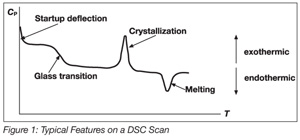
Figure 1 shows some typical features that may be observed on a DSC temperature scan.

Applied to honey samples artificially adulterated with different industrial syrups, DSC measurements, under laboratory conditions, showed a detection level of 5–10% depending on the type of syrup and the measured parameter.

Conclusion
Different parameters, such as Tg and enthalpy changes, can be used to detect the effects of certain adulterants. DSC provides valuable information about the thermal behavior of honey and facilitates detection of adulteration in commercial honey, as well as honey’s physicochemical and structural properties. DSC is an analytical technique that is capable of accurate and precise measurements and can be applied to routine analysis.   

Quality Control of Botanical Ingredients

Quality Control of Botanical Ingredients


Partnerships with dependable, quality-conscious suppliers are key to a manufacturer’s reputation and success.

As the nutrition science industry grows, so do the questions and concerns regarding quality. Most, if not all, quality-related questions can be answered by evaluating the cultivation and harvesting practices, the manufacturing practices and the quality control program adopted by the ingredient suppliers.

One of the challenges the industry faces today is the lack of standardized methods for product assessment. Using different methodologies produces different test results. Therefore, a product that may meet all the requirements using a certain method may not meet the requirements using a different method. Several industry organizations are currently working toward standardization of processing and testing methodologies.

Manufacturing Practices
Manufacturing processes affect the quality of herbal ingredients. Cross-contamination with other products, environmental contamination, mix-ups and mislabeling can lead to poor-quality material. These can be avoided by implementing Good Manufacturing Practices (GMPs). Quality-conscious ingredient suppliers have adopted some form of GMPs, whether the product is a drug, a food, a proposed dietary supplement or a combination of the three. Manufacturers also must contend with the challenge that ingredients are sourced from diverse geographic locations. Although most of these locations have some form of GMPs, the standards and enforcement are not the same as those in the manufacturer’s home market. It is therefore important to check and evaluate the manufacturing practices of suppliers to ensure high-quality botanical products.

Ingredient Specifications
A quality botanical ingredient is one that uses the correct plant species and plant part, is unadulterated, safe for human consumption and has the potency (level of chemical constituents) it claims.

Different types of identification methods, such as macroscopic, microscopic, organoleptic, thin-layer chromatography (TLC), high-pressure (HP) TLC, HP liquid chromatography (HPLC) and Fourier transform infrared spectroscopy, may be used to identify the genus, species and plant part. Each of these identity tests has advantages and limitations. At the very least, the type of identification method(s) used should be specific enough to differentiate between species and plant parts. In most cases, different methods must be combined to identify the plant species and plant part beyond a reasonable doubt.

Other than identity, botanicals should be tested for adulterants such as heavy metals, pesticides and ethylene oxide residues. Most countries have regulatory guidelines related to adulterants, and products must meet these guidelines.

Aflatoxin and microbiological testing are required to ensure the product is free of pathogenic bacteria and is safe for human consumption. Raw ingredients usually have a high microbial load and thus require some form of sanitization. Several sanitization options are available, but it is important to understand the regulatory and quality impact of such sanitization processes before choosing one that is appropriate for the specific product.

Chemical tests are required to confirm that the material meets the claimed potency of active or marker chemical constituents. Depending on the constituent, different instrumental methodologies, such as HPLC, gas chromatography or ultraviolet spectrophotometry, may be used to quantify these chemical constituents.

One of the very first things needed to ensure the quality of botanicals is to create an ingredient specification sheet detailing identity (genus, species, plant part), physical (appearance, particle size, density), chemical (chemical constituents, marker compounds), heavy metal, pesticide and microbiological requirements as well as the preferred sterilization process. Since using different methods could lead to different test results, it is important to identify the sterilization and test method on the specification sheet.

In the case of botanical extracts, the ingredient specification should also list the raw herb-to-extract ratio, extraction solvents used and any excipients and/or carriers that may have been used in the production of the herbal extracts.

Certificate of Analysis (COA)
The ingredient supplier should provide a COA with all shipments. The results of identity, physical, chemical, heavy metal and pesticide residues testing as well as microbiological testing results should be listed on the COA along with the specifications and methods of analysis. The COA should be a guarantee that the product is what it claims to be, is unadulterated and is safe for human consumption. However, the COA provided by the ingredient supplier should be verified and the test methods used should be evaluated. It is important for suppliers and customers to agree on test methodologies prior to accepting COA results.
Ingredient Supplier Selection

A key step in ensuring the quality of finished products is choosing an ingredient supplier that will provide material that meets all of the requirements. The vendor should be provided with the detailed ingredient specification—which should be part of the contract with the customer—so that they can fully understand the customer’s requirements. The supplier should review the specification thoroughly and provide feedback to the customer in the form of comments or ask for further clarification. The customer and supplier should agree on the ingredient specification before placing or accepting orders.

It is very important to review and evaluate the vendor’s capabilities and expertise. Some areas that need to be evaluated are the vendor’s quality unit, including but not limited to the education, training and experience of the quality unit staff. The vendor’s Standard Operating Procedure programs, testing capabilities (including certification of any third-party testing labs used), laboratory equipment, sanitation programs, process control and pest control programs are some of the areas that should be evaluated. It is necessary to assess whether the vendor follows some form of GMPs and Good Laboratory Practices in terms of product and document traceability. A site visit and audit of the vendor facility provide critical information regarding vendor quality.

Since the ingredient supplier receives material from diverse geographic regions, a vendor qualification program is essential to have in place to ensure the quality of raw botanicals received.

Conclusions
It is essential to partner with vendors that understand your quality requirements and are capable of meeting them. It is only through this partnership that we can provide high-quality finished products to consumers. 

உணவு பொருட்களில் கலப்படம் பற்றி மாணவர்களுக்கு விளக்கம்


Groceries’ deadline ending tomorrow - Dubai Food Safety News

5 March 2013: The Abu Dhabi Food Control Authority (ADFCA) announced on Monday that the grace period for registration for the ‘baqala’ (grocery) reform project in Abu Dhabi and the suburbs is coming to an end on March 6.

Grocery shop owners who want to remain in business will have to register before March 6 or close shop once and for all. Those who have registered within the grace period are granted a period of four months until the end of June to implement the new standards and specifications for their stores.
The government committee for regulating the retail (grocery) sector in Abu Dhabi called upon grocery owners to rush to register and avoid closing down their businesses. They can begin the process for registration at the technical support office for the project at ADFCA.
Earlier this week, ADFCA’s Dr Mohamed Al Farsi won the top prize of Shaikh Khalifa International Date Palm Award in the research and development category for his studies on strengthening dates paste.
Using the momentum, Rashid Mohamed Al Shariqi, director-general of ADFCA, said that research in food sciences and technology has become “crucial” for Abu Dhabi. He pointed out that it was in recognition of the strategic importance of research and studies that the authority had set up a separate division for research and development, focusing attention on various aspects of food safety, agriculture and animal wealth.
“We encourage our staff to take part with their studies and research in local, regional and international forums so they not only contribute their knowledge, but also bring back valuable knowledge and information that would contribute to the strengthening of the local knowledge base,” he stressed.
The research of Dr Al Farsi revolved around the manufacturing of dates’ paste, a key ingredient in various food products.

Shabir for proper check on food adulteration

Jammu, March 4 -Minister of State for Health, Shabir Ahmad Khan, has underscored the need for further intensifying market checking to keep a strict vigil over food adulteration in the markets.
The Minister was speaking at the inaugural function of a 5 day orientation programme for Food Safety Officers here on Monday.
Shabir said that the training programme is a pact of mandate of new Food Law aimed at sensitizing the statuary functionaries appointed by the government for effective implementation of the provisions of this new Law introduced in the State in 2011.
The Minister said that the new Act stresses upon self-regulation to achieve its objectives. He highlighted that the new law empowers the common man to get any food item tested from food testing laboratories. He said that the law further provides that the person who has lifted the sample for test shall not have to run from pillar to post to book the offenders as this would be the responsibility of functionaries who have been appointed for the purpose.
The programme has been organized by the State Drug and Food Safety Organization in collaboration with Food Safety and Standards Authority of India, aimed at to sensitize the Food Safety Officers of the State about effective implementation of provisions of new Food Act.
As many as, 82 Food Safety Officers are participating in the workshop who would get an opportunity to learn from the eminent food experts of the country on various topics associated with food safety.
The Minister impressed upon the participants to avail maximum benefit from the programme and adopt a proactive approach to perform their legitimate duties. He also shared with the participants measures of the government for effective implementation of Food Laws. He said that Food Testing Laboratories would be strengthened through a capacity building programme and it shall be ensured that reliability of tests performed by these institutions is enhanced so that the same withstand the audit of appellate institutions.
The Minister said that government has already created 36 new posts in various categories to supplement food regulations. He, however said that the level of enforcement is required to be geared up to meet National index. He expressed satisfaction over the initiatives taken by the Drug and Food Safety Organization in recent times and hoped the good work shall continue with the renewed zeal. He impressed upon the field functionaries to work without any pressure and ensure tangible results in implementation of requisite drug and food Acts for welfare of the people.
The Minister stressed on lifting maximum samples of edibles from the markets for testing to ensure that no adulteration is made. He directed the officers to fine those manufacturers and shopkeepers who indulge in such malpractices and book them under the law without giving any concession. The Act also envisages seal of units and cancellation of their licenses.
The Minister assured the officials of the organization that all their genuine demands would be mitigated in time. He instructed Controller drug and Food Control to ensure that no attachment of the staff is made at any level which affects the working of the area.
Controller Drug and Food Organization, in his address, threw a detailed light on the functioning of the Organization.

Mar 4, 2013

Dinakaran


Akshaya Patra Foundation to focus on safety & hygiene in mid-day meals

In a major effort to ensure safety and hygiene in mid-day meals, the Akshaya Patra Foundation and the Department of Public Education, government of Karnataka teamed-up to organise a seminar titled Suraksha, highlighting the importance of the Food Safety and Standards Act (FSSA), 2006. Experts deliberated on the implications of the mid-day meal scheme and the challenges in its implementation at the seminar, in which 170 mid-day meals from all over the state participated.

"The seminar has been organised to educate officials at the taluk and district levels about hygiene and other factors they should take into consideration, when it comes to mid-day meals. We are also educating them about the implications of ignorance under the Food Safety and Standards Act (FSSA)," said Vinay N Kumar, general manager (operations), Akshaya Patra Foundation.

"Although the Act has been in place since 2006, there is not much awareness among the stakeholders. There is no clarity on how can it be used, from the consumer's point of view. But it strictly talks about implications that one might have to face as a food establishment in case of any injury," said Mamatha Mishra, chief executive officer, Health First, a service providing organisation looking into the mid-day meal process to make it time, health and cost-effective through automation.

The mid-day meal quality manual, which was launched at the seminar, will be distributed to all government schools which receive mid-day meals from the foundation. The quality manual has guidelines for teachers and other implementing authorities on precautionary methods to be adopted, safety procedures to be followed while handling a mid-day meal and necessary action to be taken during an emergency.

Alcohol manufacturers may move court over unacceptable licensing rules

The standards set for licensing and registration under the Food Safety and Standards Act (FSSA), 2006, by the Food Safety and Standards Authority of India (FSSAI), the country's apex food regulator, are not acceptable to alcoholic beverage manufacturers.

The head of an Indian trade body representing multinational alcohol brands has termed the licensing and registration norms proposed by FSSAI and the proposal to set nationwide alcohol limits in beverages a waste of time, adding that it would create good governance issues.

State excise departments will not have a problem with the new licensing and registration procedure and there will be no clash of interest between them and FSSAI, in which the powers to pull alcohol manufacturers and those in the beverage industry up have been vested.

Apart from licensing and registration from alcohol manufacturers, wholesalers, suppliers and traders, FSSAI has set draft standards for the whole spectrum of alcohol beverages (defined by the Act as food) to set the maximum permissible alcohol limits on the grounds of public safety.

One of the opponents of FSSAI's licensing and registration standards for the alcohol industry is Pramod Krishna, president, Confederation of Indian Alcoholic Beverage Companies (CIABC), which represents Diageo, Bacardi, Martini and Beam Global.

He said, “We will take legal action to stop FSSAI from regulating alcoholic drinks. In relation to FSSAI's regulations, we have filed a writ in the Bombay High Court, because the Constitution mandates that alcoholic beverages are a state subject.”

“And for all practical purposes, they are governed by the excise laws of the states. If FSSAI comes into the picture, all the players in the alcohol industry would be harassed and would face a lot of problems,” Krishna added.

He added, “The Food Safety and Standards Act, 2006, was implemented by the health ministry, and our concern was that if our industry had two regulatory authorities, it would create problems of good governance.”

Rushabh Bhayani, partner, Nagindas Hiralal Bhayani, informed, “We are not at all aware about FSSAI's licensing and registration for the alcoholic beverage industry. But we are already under the state excise department's regulations. Regulations by other bodies will create chaos for the alcohol industry.”

Although FSSAI is ready to bring all FBOs selling alcoholic beverages under the purview of licensing and registration, most FBOs have not obtained licences or registered, and are vehemently opposing the standards laid down by the apex food regulator.

Food safety champions

Chennaites should have tasted cookies, hot cakes or at least loaf of bread from Adyar Bakery, but the student members of Citizen Consumer Club, D.G. Vaishnav College, had the opportunity to visit their manufacturing unit to see how things work from the initial baking of bread to the final product of a rich creamy cake. We could see the raw material used, storage, types of utensils used, ventilation and hygienic practices followed in the unit. This was part of a four-day residential training organised by Food Safety & Standards Authority of India (FSSAI) and Consumer Association of India (CAI). This training-cum-workshop was aimed at creating an awareness on Food Safety and Standards Act 2006.
FSSAI, in association with CAI, has partnered with Consumer Club of D.G. Vaishnav College to train 20 students into Food Safety Champions (FSC). They will in turn conduct a mass awareness campaign in Chennai in February, 2013.
This residential training gave students an all-round exposure about the Act. This major responsibility of sensitising the masses about this new Act is now shouldered upon FSC, and the training is the first of its kind initiated by Government of India. As part of the training programme, we also visited Food Business Operators at the Elliot Beach and conveyed the importance of the Act.
The writer is a second-year M.Com D.G. Vaishnav College

Food safety workshop held

IMPHAL, Mar 3: A one-day workshop on 'Food Safety and Regulations: Are We Prepared for a Safe Food', organised by Society for Agriculture, Food and Innovation (SAFI) in association with the North Eastern Finance Development Corporation (Nedfi) was held today at the Food Processing Training Hall, Porompat.
Keirao AC MLA Thamarjit Karam and Principal Secretary (Commerce & Industries) Oinam Nabakishore attended the inauguration programme as the chief guest and president respectively while state Nodal Officer (Food Safety) Ch Sanajaoba, Nedfi branch manager (Imphal) Rajiv Khaidem and Managing Director of Food Safety Training & Research Centre, Maharashtra Durga Prasad Panda were the guests of honour. Regretting that a number of Central sponsored schemes continue to fail miserably in the State rather than benefit the common people as the welfare programmes intent to, MLA thamarjit opined that judicious implementation of the schemes and sincerity of implementing agencies/officials are two essential components for a scheme to be successful.
Highlighting that misuse of scheme funds and materials by corrupt officials has been one of chief factors for the people unable to reap the benefits, he suggested that the scheme implementing departments ensure assistance to self help groups and industrious individuals/entrepreneurs.
In his presidential address, Nabakishore said that along with increasing awareness of the consumers regarding food safety, there should be equal responsibility by the manufacturers to maintain standard food safety norms.
While conveying that a State Mission Authority would be set up very soon for judicious implementation of projects allotted to Manipur under the Ministry of Food Processing, the Principal Secretary also called upon the targeted beneficiaries to utilise the fund and material provision in a sincere and productive manner.
Rajiv Khaidem in his comment exuded confidence that there would certainly be development in Manipur as there has been increase in the number of educated and industrious entrepreneurs.
Informing that Nedfi had already provided Rs 50 crore loan to set up various industries in the State, the branch Manager assured to sustain the financial institution's endeavour to spur industrial development in Manipur.
According to State Nodal officer Ch Sanajaoba, it is mandatory for food manufacturing units to register as per provisions of the Food safety Act, passed by the Parliament in 2006.
He also asked food unregistered manufacturing units to comply with licensing regulations within 2014 to avoid shut-down of their respective units.

Mar 3, 2013

Orientation prog for food safety officers from March 4

Jammu Tawi: A five days Orientation Programme for Food Safety Officers notified by the State under the Provisions of Food Safety & Standards Act, 2006(FSSA) will be conducted from 4th to 8th March, 2013 in the Auditorium of Indian Institute of Integrative of Medicines, Canal Road, Jammu by this Department of Drugs & Food Control Organisation in collaboration with FSSAI.

The programme will be inaugurated by Minister of State for Health Shabir Ahmed Khan at 12.30 pm on 4th March. The programme is a part of the ambitious capacity building undertaken by FSSAI (Food Safety and Standards Authority of India) for implementation of the FSS (Food Safety and Standards) Act.

Chefs, food operators trained in hygiene, safety

The Food Safety and Drug Administration Department with support from non-governmental organisations, has intensified its efforts to ensure that residents have access to healthy food.
On Saturday, master chefs from hotel kitchens and workers of food business operators participated in a training session that focussed on the preparation and sale of hygienic, healthy food. Data collected through legal sampling has revealed the urgent need to focus on hygiene, when it comes to making food in the city.
As a number of complaints have been received about the quality of packaged drinking water in the city, the department has also collected samples from over 45 drinking water bottling plants in the district. The results will be ready in a few days. Most of the bottling plants are in Kancheepuram and Tiruvallur districts, officials said.
Complaints about unhygienic food and drinking water in a number of hotels have also been bothering the food safety department. However, since most consumers fail to register their complaints to the authorities concerned, the department has decided to intensify its education and awareness drive.
The education and awareness programme by the food safety department will continue for one more year. Over 22,000 food business operators are in the district, and a chunk of them are yet to get their licences from the department and complete registration procedures.
Licenses issued to traders under the Prevention of Food Adulteration Act of 1954 have already expired, but the deadline to get new ones has now been extended.
The Food Safety and Standards Authority of India was established under the Food Safety and Standards Act, 2006 to lay down scientific standards for food products and to regulate their manufacture, sale and import.

Meet the hidden nasties in your Food


MEET THE HIDDEN NASTIES IN YOUR FOOD

Forsaking chicken tandoori for a ham sandwich in the name of a healthy diet may actually be doing the opposite. Read on...

Saadia S Dhailey


    In recent years, most of us have begun making healthier choices. But are these choices, often based on general understanding, really as healthy as we think they are? Well, yes, and no. While we may have been successful in shunning foods high salt content and bad fats, there is still a lot more of unhealthy content sneaking in. Most of us don’t realise how much salt, sugar and saturated fat is present in our every day food.
    The Department of Health in Britain found that despite most people wanting to improve their health, a majority had no idea about the level of hidden nasties in their meals. A study of 2,000 adults found 77 percent got more basic questions about their diet wrong than right.
    With lifestyle diseases on the rise, it’s important to be aware of what hidden nasties may be in your
food, and to know what you are putting in your and your family’s bodies. Some of our favourite meals, takeaways and snacks contain high amounts of salt, sugar and saturated fats. For instance the majority did not realise a pre-packed ham and cheese sandwich had more salt than a chicken tikka masala ready meal.
SIMPLE CHANGES YOU CAN MAKE Prepare food from fresh ingredients Read labels to check for saturated fat content and cut down on such foods Swap high sugar options for lower ones Watch out for hidden salt and sodium content in packaged and frozen foods

LABEL ALERT Biscuits, khaari, khakra, matri, chips, margarine, frozen foods, all these contain hydrogenated fats. While it gives food its structure, and makes it crispy, these trans-fatty acids clog arteries and impede hormone production, and replace good, necessary fats like Omega 3 and 6.
Certain foods may be marked as zero cholesterol. But check for the saturated fat content in the nutrition information table. It’s unlikely to be zero. When our liver processes saturated fat, it releases cholesterol. So don’t be guided by marketing gimmicks.
Canned fruits and vegetables, and chips contain high levels of sugar and salt, which is bad for health. Using fresh ingredients may take 10 extra minutes, but you can be assured that you and your family’s health are not at high risk.
Many foods sold as ‘low fat’ are loaded with hydrogenated fat, and extra sugar. Check the nutrition information table, and you’ll know that what you are eating will only make you put on more weight and is bad for your system.
Dairy products like cheese slices and cheese spread and sauces also contain high amounts of saturated fat, cholesterol and sodium, similar to most processed foods. While you may indulge yourself with layers of cheese in sandwiches, the good old homemade paneer, chutneys and sauces are much good for your health.
    With inputs from nutritionist Dr Nupur Krishnan
MAKE RIGHT CHOICES

TANDOORI AND ROTI VS NAAN AND PARATHA
>> Go for a tandoori or a plain roti or chapati made from wheat flour instead of refined flour options like naan. Hollywood’s holistic health coach Alex Jamieson compares it with the paste used in papier-mâché projects. ‘Made of white flour and water, the sticky, gooey paste worked like glue that hardened in no time. That’s what refined flour, moistened with your saliva, is like: a gummy, nutrient-poor glob of starch.’ Also avoid parathas in a restaurant. The ghee used is unlikely to be of a good quality and you may ingest high levels of bad fats.


DARK CHOCOLATE VS MILK CHOCOLATE
>> Dark chocolate contains more antioxidants and less fat while milk chocolates high levels of saturated milk fat. Dark chocolate with a cocoa content of 70% or higher contain resveratrol, which has been found to lower blood sugar. Truffles, soufflés and even hot chocolate can be a good source of resveratrol and cocoa phenols (flavonoids) as long as dark chocolate with a high content of cocoa is used.


Check the nutrition information table before buying packaged and frozen foods