Jul 23, 2015

Would Samosa, bhel need prior approval for sale too, Bombay HC asks FSSAI

MUMBAI: A bench of the Bombay high court comprising justices V M Kanade and B P Colabawalla asked Food regulator FSSAI to make a table for justification of action taken in banning the 2-minute Maggi noodles. 
Additional solicitor general Anil Singh who represented FSSAI said, "The regulator has power to ban a product on grounds of reasonable doubts." 
Singh said Sec 22 of the Food Safety Act prohibits sale of proprietary food without prior approval of the regulator. He said approval granted to Nestle for Maggi variants was on their application and information given. 
The bench sought clarity on the interpretation of section 22. It asked, "Would traditional food like Samosa and Bhel need prior approval for sale. These can also be categorised as proprietary food as standards are not set for them also." 
Justice Kanade also said, "alcohol should be banned immediately, going by the argument of proprietary and non-standardised food." 
Unrattled, Singh replied, "Maggi is consumed by more people across age groups. Alcohol cannot be legally consumed by those under 21 years." 
Defending its stance on the ban, Singh said, "if an officer have suspicion that any food has health hazard elements for human consumption, then appropriate action can be taken even in the absence of evidence ... we have collected samples from many states and we found the excessive Lead content," said Singh on Wednesday. He said it was the government's primary responsibility to ensure safe and wholesome food for human consumption. 
Nestle had earlier argued that laboratories where Maggi was tested were not accredited and hence the test results unrealiable. However, the counsel said under the act the regulator can send to accredited laboratory only upon request of product manufacturer.

Justify ban on Maggi noodles, HC tells food safety authority

The court will decide if banning Maggi noodles was reasonable, arbitrary or just, the Bombay high court (HC) told the Food Safety Standards Authority of India (FSSAI) on Wednesday, asking the latter to justify the validity of the ban on the product on Thursday.
A division bench of justice VM Kanade and justice BP Colabawalla was hearing a petition filed by Nestlé India, objecting to the FSSAI ban on all nine variants of Maggi.
The FSSAI has banned Maggi stating it has noted three violations — the presence of lead in excess of the maximum permissible level; misleading label reading ‘No added MSG’, and the release of a non-standardised food product, Maggi Oats Masala Noodles with Tastemaker, in the market, without risk assessment and product approval.
Additional Solicitor General Anil Singh, counsel for FSSAI, told the court that mere suspicion is enough for them to take action, and suspicion does not require evidence. He also said the lead content in Maggi noodles was beyond the permissible limit.
Responding to the contention raised by Nestle India that the laboratories that tested Maggi were not notified by the nodal body, National Accreditation Board for Testing and Calibration Laboratories (NABL), Singh said it is important for the laboratory to be recognised and authorised, even if it is not notified.
The court asked Singh to clarify his stand on calling Maggi a proprietary product. The HC asked if food categories can’t be manufactured or sold unless they are approved by the FSSAI and if only those items that are notified by the Centre can be banned.
Singh said the risk involved was high as Maggi noodles had a misleading label and was of substandard quality. He said the action was taken based on the available scientific information and the legal provisions.
The court has asked Singh to formulate answers and state the sections under which the decision to ban the noodles was taken. The court went on to say that they could test the executive and legislative actions under Article 226 of the Indian Constitution.

Bombay HC asks FSSAI to justify actions against Maggi

Court also asks for clarifications on terms such as accreditation, notification and recognition used in connection with labs

Mumbai: The Food Safety and Standards Authority of India (FSSAI) began its arguments in the ongoing Maggi ban case before the Bombay high court on Wednesday by saying it can act against products even if there is “mere suspicion” that the food may present a risk to human health.
The food regulator is empowered to issue directions for sale and distribution of safe and wholesome food, and can act on the basis of available information and pending scientific assessment, Anil Singh, additional solicitor general representing FSSAI, told the two-judge bench, citing various sections of the FSSAI Act 2006.
According to Singh, laboratories can even conduct the tests without being accredited by the National Accreditation Board for Laboratories (NABL) if they are recognized by the regulator.
However, the bench comprising justices V.M. Kanade and B.P. Colabawalla was not satisfied. It asked Singh to formulate the actions of the food regulator by validating and justifying them. It also asked for clarifications on terms such as accreditation, notification and recognition used in connection with labs.
“We are here to test the actions of the regulator as to whether they are reasonable, arbitrary, proper or wrong. Under Section 226, we have the authority to test executive action and also to test legislative action,” said justice Kanade, while noting that the food regulator has the authority to override legislative acts.
In its argument, Nestle India Ltd had called the ban on Maggi noodles illegal and arbitrary. “The authorities did not have any such power, nor does the state,” Nestle India’s lawyer Iqbal Chagla had told the court earlier.
Chagla had also questioned the validity of the tests as the government labs are not equipped to conduct the tests as they were not accredited by NABL to test either for lead or cereals and spices used in the product.
FSSAI banned Maggi noodles on 5 June following reports from various states about high levels of lead and the presence of taste enhancer monosodium glutamate. The food regulator termed the noodles “unsafe and hazardous” for human consumption.
Maharashtra, which had also imposed a ban on 6 June following its own tests, is also a respondent in the case along with the FSSAI. It will present its arguments later in the week.

Nestle misled authorities, FSSAI tells HC


Said the product approval given to Nestle, with respect to Maggi, was on the basis of the information provided by the company
Rebutting Nestle India's claim that the Maggi ban order of June 5 was arbitrary, the Food Safety and Standards Authority of India (FSSAI) said on Wednesday that the company had misled authorities about the contents of the product.
Appearing on behalf of FSSAI, Maharashtra's Advocate General Anil Singh said the product approval given to Nestle, with respect to Maggi, was on the basis of the information provided by the company. "But there were violations pertaining to labelling of food products by Nestle," Singh argued before a division bench headed by judges J M Kanade and B P Colabawala.
"The samples tested showed high lead content. Section 20 of the Food Safety & Standards Act, 2006, prohibits heavy metals. Lead is a heavy metal, which can have a grave effect on children," he said.
Singh also contended that FSSAI had first sent a showcause notice to Nestle India informing the company on why it sought to ban all nine variants of Maggi.
This came after test results from various states showed that lead content in Maggi was beyond the permissible limit. He also said that while Nestle India opted to withdraw Maggi stock from the marketplace including those of Maggi Oats, for which it had no product approval at all, the company chose not to respond to FSSAI's showcause notice. Therefore, Nestle's claim that the ban violated the principle of natural justice doesn't hold, Singh said.
The Advocate General also said that the chief executive of FSSAI had the powers of the Commissioner of Food Safety under the Food Safety & Standards Act, 2006. "The Food Authority (that is, FSSAI) can take action against any food product even on reasonable ground of suspicion of health hazard to consumers. Section 16 (g) of the Food Safety & Standards Act, 2006, says the entire product range can be banned. It is the duty of the authorities to ensure not only good, but also wholesome food is sold in the market," he said.
In response to Nestle's claim that the tests were not reliable, Singh said that laboratories could be authorised to carry out tests without being notified under Section 43 of the Act.
"Section 43 (1) is an enabling provision. Food authorities may notify laboratories and research institutions accredited by National Accreditation Board for Testing and Calibration Laboratories (NABL) to conduct tests, but it is not mandatory.
Also, samples need not be sent to an accredited laboratory unless request is made by a food business operator. In this case, Nestle did not make any such request. Hence, they were not sent to an accredited laboratory for testing."
The AG will continue his arguments on Thursday.

FSSAI can act on mere suspicion: ASG

Indian food regulator Food Safety and Standards Authority of India (FSSAI) told the Bombay High Court on Wednesday that authorities can take action against manufacturers on the basis of mere suspicion about the quality of their food products.
Referring to the Food Safety and Standards Act, Additional Solicitor-General Anil Singh representing the FSSAI said: “The scheme of the Act is that authorities can take action on mere suspicion. Suspicion does not require evidence. The Act gives wide powers to the authorities. They can act even despite conformity if the safety of food is suspect.”Three major violations
Mr. Singh said Maggi products were deemed unfair due to three major violations, misleading labelling on msg (monosodium-glutamate), presence of lead in excess and launching of oats tastemaker without assessment.
‘Not a product for adults’
“Samples were collected in various States and were found to exceed the limits for lead. Maggi is not a product for adults. Consider the effect of lead on children. Lead is a heavy metal,” Mr. Singh said. He refuted Nestle’s contention that labs which tested Maggi were not accredited. Labs which were recognised by the FSSAI did not need accreditation by the National Accreditation Board for Testing and Calibration Laboratories.
The court asked the regulator to furnish submissions about how to interpret Section 22 of the Act that deals with non-standard proprietary foods like Maggi.
“Does it mean that items notified by the Centre as proprietary foods cannot be sold and manufactured unless approved? For instance is ‘samosa’ or ‘bhel’ proprietary foods?” the Bench asked.
The FSSAI said that traditional foods like ‘samosa’ did not need approval.
The court pulled up the State and government authorities for delay in appearing before the court.
“We go around from country to country telling the world to do business but commercial matters remain pending. This is a sorry state of affairs. People prefer to go to Singapore and London because of this instead of coming to India,” a Division Bench of Justices V.M. Kanade and B.P. Colabawalla said.

Domino's outlet's license suspended for 'below standard' sauce

License of a Domino's Pizza outlet at NH-24 Gajraula in Amroha district was suspended today by the authorities for allegedly supplying "below standard" sauce, the District Food Safety authority said. 
"The decision came after samples taken from the outlet on failed a lab test," Amrohha Chief Food Safety Officer Anil Singh told PTI. 
Singh said he had sent the samples for testing at the state food laboratory and the report came yesterday. 
On the basis of the report the license of the outlet has been suspended till further decision, he said. 
Singh said that the report has been sent to Amroha District Magistrate Ved Prakash. "Domino's Pizza may go and appeal to the Food Safety Commissioner Lucknow. They can not supply till the decision (on the appeal)," he said. 
Domino's are yet to respond to the development.

Bar on Domino's Pizza UP Outlet After 'Below Standard' Sauce Detected


AMROHA: The licence of a Domino’s Pizza outlet at Gajraula area on NH-24 here has been revoked by the authorities after its sauce was found to be “below standard” in lab test.
The District Food Safety authority suspended the licence after the samples of tomato ketchup collected from the outlet failed to pass the lab tests.
“The decision came after samples taken from the outlet failed lab test,” Amrohha Chief Food Safety Officer Anil Singh told PTI.
However, Jubilant FoodWorks Ltd, which operates Domino’s Pizza brand in India and Sri Lanka, contested the findings and described the test as “invalid”.
“We are raising this case with the relevant respected authorities to check the validity of the suspension order, given this background,” Jubilant FoodWorks spokesperson said.
According to the company spokesperson, the tomato ketchup snack dressing product was procured by Domino's from a third party, which goes through regular testing for food safety from government accredited labs.
“The particular sample under question, was manufactured in September 2014 and collected for testing in October 2014. It failed test on ground of “package label non-compliance”, as the label was detaching from the package but “passed “on all other parameters of food safety.

Leave milk out of draft rules, panel tells FSSAI

‘It cannot be clubbed with other agri products given its perishable nature’
NEW DELHI, JULY 22: 
The fear of an ‘inspector raj’ created by the Food Safety and Standards Authority of India (FSSAI) clearly has the Centre worried.
After Minister for Food Processing Harsimrat Kaur Badal articulated the concern earlier this month, an inter-ministerial committee met with FSSAI officials here on Monday seeking exemption for dairy products.
Sources in the Agriculture Ministry told BusinessLine that the committee has suggested that milk and other dairy items not be clubbed with other commodities in the Draft Food Safety and Standards (Contaminants, Toxins and Residues) Amendment Regulation, 2015. It also suggested bringing back the Milk and Milk Products Order, 1992, (MMPO) that had been repealed in 2011.
“The committee said there needs to be a different regulation for milk and it cannot be clubbed with other agricultural commodities like corn and wheat given its perishable nature. The process of procurement, collection and processing is completely different,” a senior official said. “It was also suggested that the MMPO be treated as a separate regulation under the Food Safety and Standards Act, 2006 (FSSA). The order had shown good results with respect to milk standards and safety before it was repealed,” he added.
Those in the know pointed out that the MMPO had created a network of Milk Commissioners who were present in each State and worked closely with milk federations. Between them, these officials had decades of experience regarding the sector and quality control, but were made redundant after the order was repealed.
The draft regulations, issued on June 5, introduce a stringent permissible limit of 0.02 ppm for lead in milk, secondary milk products and infant formula. Objections and suggestions are to be conveyed to the FSSAI by August 24. Currently, the regulator prescribes a limit of 0.1 ppm of arsenic in milk and imposes ceilings on a range of crop contaminants like insecticides. It also prescribes limits for lead, copper, tin, zinc and cadmium, for infant milk substitutes.
Arbitrary change
While the move has been welcomed by analysts in the aftermath of the Maggi fiasco, the unpredictable manner of introducing amendments in regulations and methods of testing has the food industry concerned.
“Take the Mother Dairy case: the agency’s way of testing it was completely incorrect, and an apology was issued in four days,” the official added.

Maharashtra govt extends ban on gutkha, pan masala, tobacco products for another year

States that these products are detrimental to health, causing cardiac arrest, oral cancer, stomach cancer, affect fertility and cause respiratory ailments among other diseases
The Maharashtra government has extended the ban on gutkha, pan masala and related products for the fourth year in a row. The Food and Drugs Administration (FDA), Maharashtra State, issued a notification on Monday extending the ban for a period of one year effective from July 20, 2015.
The government has also included sale, purchase and storage of manufactured chewable tobacco in the ban.
“In the interest of public health, manufacture, storage, distribution or sale of tobacco and areca nut (betel nut) which is either flavoured, scented or mixed with any of the said additives and whether going by the name or form of gutkha, pan masala, flavoured scented tobacco, flavoured/scented supari, manufactured chewing tobacco with additives, kharra, mawa has been prohibited for a period of one year from July 20, 2015,” said Dr Harshadeep Kamble, Food Safety Commissioner, in the notification.
The ban notification states that gutkha, pan masala, supari, tobacco products etc are detrimental to health causing cardiac arrest, oral cancer, stomach cancer, affect fertility and cause respiratory ailments among other diseases.
Gutkha was first banned in the state in 2012 under the Food Standards and Safety Act, 2006. In the following year, the state expanded the embargo and banned khaini (flavoured tobacco), supari (processed betel nut) and mawa or kharra (a mix of processed tobacco, betel nut and lime).
In 2004, the World Health Organization had classified areca or betel nut as carcinogenic to humans even without the addition of tobacco to it.

DINAMALAR NEWS


DINAMALAR NEWS


DINATHANTHI NEWS


Jul 22, 2015

Maggi row: Counsel says FSSAI can act on mere suspicion

The government counsel reiterated the three aspects of its ban order in the Bombay HC, saying the violations found by FSSAI included excessive lead content, misleading labels and launch of the Maggi Oats noodles without prior approval.
In the ongoing tussle between Nestle and Food and Safety Standards Act of India (FSSAI), the government counsel on Wednesday argued in the Bombay High Court that the food regulator need not wait for a proper report from any accredited lab, before taking action on any company. 
The government counsel reiterated the three aspects of its ban order, saying the violations found by FSSAI included excessive lead content, misleading labels and launch of the Maggi Oats noodles without prior approval. 
It argued that mere suspicion was enough for FSSAI to take action against the brand as FSSAI had mandated to monitor manufacturing and distribution of safe, wholesome food. 
The next hearing for Nestle and FSSAI is slated for Thursday.

'FSSAI should form rules for nutraceuticals, diet supplements'

Food safety regulator FSSAI should at the earliest lay down rules for giving approval of dietary supplements and nutraceutical products manufactured and marketed in the country, an Assocham paper said today. 
Currently, there are no regulatory norms for the approval or monitoring of nutraceuticals, herbals and functional food. However to regulate this segment, Food Safety and Standards Authority (FSSAI) had set up a taskforce in May 2013, which submitted its recommendations in April this year. 
"Nutraceuticals are gaining popularity but its growth is restrained by lack of a solid regulatory framework which is crucial for medial credibility," Assocham National Council of Healthcare and Hospital and Ex-Chairman Sir Ganga Ram Hospital B K Rao said at an event here. 
The knowledge paper on this issue -- released by Delhi Health Minister Satyendra Jain -- noted that the FSSAI should come up with proper guidelines for manufacturing and marketing of neutraceuticals, herbal and functional foods. 
Presently, 'the draft regulation for nutraceuticals and foods for dietary supplements' is being vetted by the legal department. The early notification of these norms will help check counterfeit products, it added. 
Noting that the nutraceuticals and dietary supplements industry has potential to grow to USD 12.2 billion in the next five years, the paper said about 60-70 per cent supplements in the market are fake and such unregistered and unapproved products should be recalled. 
"Small committees should be built at block level to check counterfeit products in the market and immediately discard them," the paper added. 
Considering very low penetration of nutraceuticals in the country, the paper suggested that the government should provide special incentives and subsidies to emerging companies for the industry growth and create awareness about the health benefits of these products. 
The paper also suggested the government to introduce various functional foods and beverages in Midday Meal schemes to address child malnutrition. 
Nutraceuticals are the products that offer health as well as medicinal benefits, consisting of prevention and treatment of disease. Nutraceuticals are categorised into functional foods/beverages and dietary supplements. 
India accounts for 1.5 per cent of the global nutraceuticals market. 
Heinz, Kellogg's, Nestle, Hormel, Unilever, Johnson & Johnson and GlaxoSmithKline Pharmaceuticals are key players in this field.

உணவு பாதுகாப்பு துறை அதிகாரிகள் அதிரடி சுகாதாரமற்ற உணவுபொருட்கள் குப்ைப தொட்டியில் வீச்சு

சேலம், ஜூலை 22-
சேலம் அரசு மருத் து வ மனை அருகே சாலை யோ ரம் 10க்கும் மேற் பட்ட டிபன் கடை கள் உள் ளன. இந்த கடை களில் சுகா தா ர மற்ற முறை யில் உணவு விற் பனை செய் வ தாக சேலம் மாவட்ட உணவு பாது காப்பு துறை நிய மன அலு வ லர் அனு ரா தா வுக்கு புகார் வந் தது.
இதை ய டுத்து அனு ராதா தலை மை யில் அதி கா ரி கள் குழு வி னர், டிபன் கடை களில் இன்று அதி ர டி யாக ஆய்வு செய் த னர். அப் போது கடை களில் சுகா தா ர மற்ற முறை யில் உண வு களை மூடி வைக் கா மல் திறந்த வெளி யில் வைத் தி ருந்த, பூரி, பனி யா ரம், தோசை, வடை உள் ளிட்ட உண வு களை அதி கா ரி கள் பறி மு தல் செய் த னர். மேலும் கடை களில் பிளாஸ் டிக் கவர் களில் கட்டி வைக் கப் பட்டு இருந்த சாம் பார், சட்னி பாக் கெட்டு க ளை யும் பறி மு தல் செய்து குப்பை தொட்டி யில் கொட்டி அழித் த னர். தொடர்ந்து அரு கில் உள்ள ஓட்ட லில் ஆய்வு செய் த னர்.
அப் போது சமை யல் அறை யில் சமை யல் மாஸ் டர் அழுக்கு உடை யு டன் சமை யல் செய்து கொண்டு இருந் ததை பார்த்து உட ன டி யாக வேறு உடையை மாற் றி விட்டு வரும் படி அதி கா ரி கள் அறி வு றுத் தி னர். மேலும் அந்த கடை யில் மூடப் ப டா மல் வைக் கப் பட்டு இருந்த உண வு களை மூடி வைக்க வேண் டும் என அறி வு றுத் தி னர். பின் னர் அரு கில் உள்ள டீ கடை கள் மற் றும் அங் குள்ள உணவு பொருட் க ளை யும் அதி கா ரி கள் ஆய்வு செய் த னர்.

மானா ம து ரை யில் சுகாதாரமற்ற குடிநீர் பாக்கெட்டுகள் விற்பனை

மானா ம துரை, ஜூலை 22:
மானா ம து ரை யில் சுகா தா ர மற்ற குடி நீர் பாக் கெட்டு கள் அதிக அள வில் விற் பனை செய் யப் பட்டு வரு கின் றன.
சிவ கங்கை மாவட்டத் தில் கோடையை மிஞ் சும் அள வுக்கு கடந்த சில வாரங் க ளாக வெயி லின் தாக் கம் அதி க ரித்து காணப் ப டு கி றது. காற் றில் ஈரப் ப தம் குறைந் து ள் ள தால் உடல் உஷ் ண மாகி நாக்கு வறண்டு தண் ணீர் அதி க அ ள வில் குடிக் கும் நிலை ஏற் பட்டுள் ளது. குடி நீர் தேவை அதி க ரித் தி ருப் ப தால் சிலர் சாதா ரண பாக் கெட்டு களில் சுகா தா ர மற்ற தண் ணீரை அடைத்து பொது மக் களி டம் விற் பனை செய்து வரு கின் ற னர். கிரா மங் களை சேர்ந் த வர் கள் இந்த பாக் கெட்டு களை வாங்கி பயன் ப டுத் து கின் ற னர். இத னால் தொண்டை வறட்சி மற் றும் நோய் தொற் றால் பாதிக் கப் ப டு கின் ற னர்.
மானா ம து ரை யில் புது பஸ் ஸ்டாண்ட், அண் ணா சிலை, காந் தி சிலை, குண் டு ரா யர் வீதி, பைபாஸ் ரோடு, பழைய பஸ் ஸ்டாண்ட், டாஸ் மாக் கடை அருகே உள்ள தனி யார் பார் கள் உள் ளிட்ட இடங் களில் சுகா தா ர மற்ற மறு சு ழற்சி செய் யப் பட்ட பிளாஸ் டிக் கவர் களில் குடி நீர் விற் பனை தாரா ள மாக நடந்து வரு கி றது. இந்த பாக் கெட்டு களில் தயா ரிப்பு தேதி, காலா வ தி யா கும் தேதி கள் இல்லை. புதுப் புது பெயர் களில் தயா ரிக் கப் ப டும் இவற் றில் நிறு வ னத் தின் முக வ ரியோ, தொலை பேசி எண் களோ இருப் ப தில்லை.
சாதா ரண தண் ணீர் அடைக் கப் பட்ட பாக் கெட்டு களை வாங்கி குடிப் ப வர் களுக்கு குடல் மற் றும் இரை பையில் பாக் டீ ரியா, வைரஸ் கிரு மி கள் எளி தில் பர வும் வாய்ப் புள் ள தாக டாக் டர் கள் எச் ச ரிக்கை விடுத் துள் ள னர். இவ் வாறு விற் கப் ப டும் குடி நீர் பாக் கெட்டு களை பறி மு தல் செய் வ தற் கான நட வ டிக் கை களை சுகா தா ரத் து றை யி னர் மேற் கொள் வ தில்லை.
இது குறித்து தனி யார் ரத்த பரி சோ தனை நிர் வாகி ஒரு வர் கூறு கை யில்,‘மானா ம து ரையை சுற்றி குடிசை தொழி லாக தயா ரிக் கப் ப டும் குடி நீர் பாக் கெட்டு களில் கிரு மி களை சுத் தம் செய் யும் யூவி முறை, மெம் ப ரேன் கள் தர மற் ற தாக இருக் கின் றன. குடி நீர் நிரப் பப் ப டும் பிளாஸ் டிக் கவர் களும் மோச மான நிலை யில் உள் ளன. மேலும் பெரிய கேன் களில் விற் கப் ப டும் தண் ணீ ரும் சுகா தா ர மா ன தாக இல்லை. ரூ. 30 க்கு விற் கப் ப டும் இந்த கேன் கள் மிக வும் அசுத் த மாக இருக் கி றது. தண் ணீர் நிரப் பப் ப டும் கேன் களை கிரு மி நா சி னி கள் கொண்டு சுத் தம் செய் வ தில்லை.
சுகா தா ரத் து டன் பரா ம ரிக் கா மல் மீண் டும் மீண் டும் இவற் றில் நீர் நிரப் பி னால் அந்த கேன் களின் மூல மா கவே மனி தர் களுக்கு நோய் தொற்று கிரு மி கள் பர வும். பாக் டீ ரியா, வைரஸ் கிருமி பெரும் பா லும் காற்று மற் றும் குடி நீர் மூலம் எளி தில் பர வும். அத னால் சுகா தார அலு வ லர் கள், உண வு பா து காப்பு அலு வ லர் கள் தர மில் லாத குடி நீர் பாக் கெட்டு களை பரி சோ திக்க வேண் டும்,’ என் றார்.

தடை செய்யப்பட்ட பூச்சிக்கொல்லி மருந்து பயன்படுத்தவில்லை தமிழக காய்கறிகளுக்கு தர சான்று தேவையில்லை வேளாண் பல்கலைக்கழக துணைவேந்தர் தகவல்

கோவை, ஜூலை 22-
காய் க றி களில் தடை செய் யப் பட்ட பூச் சி கொல்லி மருந்து பயன் ப டுத்தி இருக் கி றதா என் பதை கண் ட றிய வரும் 24ம் தேதிக்கு மேல் தமி ழ கத் தில் இருந்து கேர ளா விற்கு செல் லும் அனைத்து காய் க றி க ளை யும் ஆய்வு செய்ய கேரள அரசு முடிவு செய் துள் ளது. மேலும், தகு தி சான் றி தழ் இருந் தால் தான் அனு ம திக் கப் ப டும் என கேரள அரசு தெரி வித் துள் ளது.
இது கு றித்து தமிழ் நாடு வேளாண் பல் கலை துணை வேந் தர் ராம சாமி கூறி ய தா வது:
அனைத்து காய் க றி களுக் கும் தரச் சான்று அளிப் பது என் பது முடி யாத காரி யம். மத் திய அரசு 9 பூச் சி கொல்லி மருந் து களை பயன் ப டுத்த தடை வி தித் துள் ளது. இந்த தடை வி திக் கப் பட்ட பூச்சி கொல்லி மருந்து தமி ழ கத் தில் பயி ரி டப் ப டும் காய் க றி களில் பயன் ப டுத் தப் பட்டுள் ளதா என் பது குறித்து ஆய்வு நடத் தப் பட்டது. மேலும், பூச் சி கொல்லி விற் பனை நிலை யங் களி லும் ஆய்வு நடத் தி னோம். இதில், தடை செய் யப் பட்ட 9 மருந் து களும் விற் பனை செய் யப் ப ட வில்லை என்று தெரி ய வந் துள் ளது.
தேசிய அள வில் 49 இடங் களில் அங் கீ கா ரம் பெற்ற பரி சோ தனை மையங் கள் செயல் பட்டு வரு கி றது. இந்த பரி சோ தனை மையத் தில் காய் க றி கள் தவிர சோம்பு, கிராம்பு, ஏலம் உள் ளிட்டவை பற் றி யும் தொடர்ந்து ஆய்வு நடத் தப் பட்டு வரு கி றது. தமி ழ கத் தி லும் காய் க றி களின் நிலைப் பாடு தொடர் பாக ஆய்வு நடத் தப் பட்டு வரு கி றது. எந்த மருந் து களை பயன் ப டுத் த லாம் என் பது குறித்து விவ சா யி களுக்கு அறி வு றுத் தி யுள் ளோம். அவர் கள், அதனை தான் பயன் ப டுத்தி வரு கி றார் கள். காய் க றி களின் தரம் நன் றாக உள் ளது. இதற்கு தரச் சான்று தேவை யில்லை. கேரள அர சின் இந்த செயல் ஏற் கக் கூ டி யது அல்ல.
இவ் வாறு ராம சாமி கூறி னார்.
பயிர் பாது காப்பு மைய இயக் கு னர் ராம ராஜூ (பொறுப்பு) கூறு கை யில், 11 மாவட்டங் களில் இருந்து காய் க றி களின் 117 மாதிரி பெறப் பட்டது. இதனை பரி சோ தனை செய் த தில் 96 சத வீத காய் கறி தர மா னது என முடிவு வந் துள் ளது. 4 சத வீ தம் காய் க றி களில் அங் கீ க ரிக் கப் பட்ட பூச் சி கொல்லி மருந் து களின் நச்சு தன்மை சற்று அதி க மாக இருந் தது.
மற் றப் படி, காய் க றி கள் பயன் பாட்டிற்கு உகந் த தாக உள் ளது. யார் எங் களி டம் காய் க றி களை அனுப் பி னா லும் ஆய்வு செய்ய தயார் நிலை யில் இருக் கி றோம் என் றார்.

Don't ban transport of wet sago starch: Food safety official

SALEM: The commissioner of Tamil Nadu Food Safety and Drug Administration Department (TNFSDAD), Kumar Jayant, has ordered collectors and designated officers of Salem, Namakkal, Dharmapuri, Erode, Trichy, Villupuram and Perambalur, not to impose the proposed ban on transportation of wet sago starch. The managing director of Sagoserve, V Santha, was also served the same order. According to TNFSDAD sources, the commissioner made it clear in the letter that the proposed ban does not apply to intermediate products.
On May 16 this year, the MD of Sagoserve had convened a meeting with various designated officers. of TNFSDAD, managing committee members, joint commissioner (enforcement) of Commercial Tax department, pollution control board engineer and sago manufacturers and traders.
The objective of the meeting was to come up with a plan to produce adulteration-free natural sago.
Five resolutions had been passed. Among them, sago should not be produced from dirty sago starch, maize starch should not be adulterated with sago starch, wet sago should not be transported, chemicals should not be used to make white sago and sales tax must be paid.
Subsequently, Sagoserve sent a recommendation letter to the state government to impose a ban on transport of wet sago. According to Sagoserve sources, the wet sago could easily be adulterated. Thus, they wanted a ban on its transport.
However, tapioca farmers and sago manufacturers submitted a petition to Namakkal collector V Dakshinamoorthy, condemning the proposed ban, on June 26. According to the petitioners, water is essential to extract sago starch from tapioca.
"Many s don't have sufficient water. On the other hand, sago producers have plenty of water. They would have no trouble extracting sago starch from tapioca and transporting the same to sago producing units. Thus, all sago makers would get sufficient business," said one sago producer on condition of anonymity. If the ban is imposed, only those units that have adequate water would be able to function, he added.
The collector received the petition and forwarded it to the commissioner of TNFSDAD for further action.
The food safety commissioner in turn ordered the collectors and Sagoserve not to impose the proposed ban.
In his letter, Kumar Jayant said that wet starch is an intermediate product and it can be used either as a food product or as an industrial product. He also directed the concerned officials to ensure that the sago is produced as per food safety and standards act norms.
Meanwhile, Tamil Nadu Tapioca and Natural Sago Manufacturers Association (TNTNSMA) strongly condemned the commissioner's order. "TNTNSMA has been struggling to curb adulteration in the sago industry. The commissioner's recent order would only encourage adulteration," said R Muthulingam, president of the association. He also said that any chemicals can be mixed with wet sago starch if they transported from one place to another. He also alleged that, using this decision, the sago starch producers will sale their produce illegally and will evade from sales and commercial taxes.

Sago makers reel under adulteration menace

Like tapioca farmers, sago manufac turers have also been facing a lot of problems. Their main issue is adul teration. While some of them produce pure sago, there's a group of manufacturers who adulterate their products. Manufacturers, in favour of producing pure sago, demand that the state government form a monitoring committee to prevent adulteration of tapioca starch and save the industry “Tapioca and starch manufacturing industry is worth over Rs800 crore in Salem and Namakkal districts. But due to adulteration of tapioca starch with maize starch, the entire industry is in trouble,“ said K Rajamanikam, a sago manufacturer in Salem district.
He said about 99% of traders pre ferred to sell adulterated sago and so didn't support the ones who produced unadulterated ones. Traders do not give higher prices for unadulterated ones, manufacturers said. As per the Food Safety and Standards Regulations, 2011, use of chemicals for whitening is poi sonous and banned. But some manufacturers mix maize starch along with chemi cal substances with sago.
“We have issued warnings to many sago manufactur ers for manufacturing adul terated sago. Many such cases are pending with the district revenue officer (DRO) of the Salem district. Even after that many unit owners continue to manufacture adulterated products,“ said T Anuradha, district designated officer of Tamil Nadu Food Safety and Drug Administrative Department (TNFSDAD).

Maggi ban: Proprietary food is not unsafe


Maggi noodles falls under the category of proprietary foods
The country's largest food company by revenue, Nestle India, has contested the ban on Maggi noodles, saying that Section 22 of the Food Safety & Standards Act, 2006, which was invoked by the country's apex food regulator when prohibiting its manufacture and sale in a June 5 order, could not be the basis of the ban. Arguing the matter in theBombay High Court on Tuesday, Nestle India's counsel Iqbal Chagla said Section 22 could not act as a bar.
Section 22, for the record, indicates that genetically-modified food, organic foods, functional foods and proprietary food, cannot be manufactured, distributed or sold unless notified by the central government. Maggi noodles falls under the category of proprietary foods.
Chagla impressed upon the court that there were no specific standards governing proprietary food, which constituted five per cent of the food categories covered under the Act.
"Proprietary food is not unsafe," Chagla told the division bench headed by V M Kanade and B P Colabawala. "If Section 22 is not a bar, then Section 16 is irrelevant," he said.
Arguments in the matter will continue on July 22.

Online registration facility for food business operators

Imphal, July 21 2015 : Government of Manipur on Tuesday launched an online registration facility for food business operations in the five districts of Manipur.
A statement issue by State food safety commissioner/ principal secretary health & family welfare Dr J Surush Babu said the State has adopted the centralized Online System for FBO- License/Registration and it is happy to announce the launching of Online Licence/Registration services for Food business operators in Five districts of the State namely Imphal West, Imphal East, Thoubal, Bishnupur and Churachandpur districts.
All the Food business Operators can avail themselves of the services for Licensing/Registration by logging onto the website:http://foodlicensing.fssai.gov.in.
Alternately, they can access www.fssai.gov.in and log on to FLRS link provided in the site.
The statement further said that the Government of India enacted food safety and standards Act (FSS Act 2006), to regulate and monitor the manufacture, process, pack, transport, store distribute, sell and import of any food ingredient so as to ensure availability of safe and wholesome food for human consumption and also to laying down science based standards.
FSS Regulations Gazette Notified on August 5, 2011 mandates that every Food Business Operation (FBO) must obtain License/ Registration Certificate.
Food Safety & Standards Authority of India (FSSAI) has created a Centralized Online System for FBO- License /Registration for use across the country, with the assistance of National Institute for Smart Government (NISG), Hyderabad.
The online Food licensing /Registration system (FLRS) enables the Food business operators at their comfort check for eligibility, apply for License/registration pay the appropriate fees, upload supporting documents, track the status of their applications License/Registration status, schedule inspections and receive alerts on the status and renewals.
Food business operators are encouraged to create their online user accounts to continue to receive SMS, e-mail alerts from authority, the statement added.

Here’s how you test milk and milk products at home

MEERUT: To ease the burden on government officials and enable households to check the purity of milk and milk products, the Food Safety and Standards Authority of India (FSSAI) has issued a chart that can be used to check the quality of these. Easily available chemicals can be used to assess the safety of the milk consumed, right at home. 
"Various bakeries and milk products sellers indulge in adulteration. These manufacturers often do not come under the scanner of the food department. That is why the FSSAI has issued this chart, so people can easily learn how to check the quality of the milk or milk products," said JP Singh, chief food safety officer. 
"Ordinary citizens can use the manual to check adulteration in milk and milk products. Government labs are already under pressure with so many samples, it is often difficult to deal with the large number of samples received in a timely manner. With this manual, people can conduct checks on milk on their own," read the order from Praveen Kumar Singh, commissioner, Food Safety and Drug Administration. 
This comes days after the state's food testing laboratories were thrown open to ordinary citizens. Someone who suspects adulteration in a food item is free to bring it for testing to the state lab, on payment of Rs 1,000 to test each sample. 
The manual issued by FSSAI can be used to test the presence of starch, water, urea, vanaspati, formalin and detergent in milk. The presence of vanaspati or starch in sweet curd, and sweets like rabdi or in khoa, paneer, chhana can also be tested at home using the chart. 
There are six food testing laboratories in Uttar Pradesh, at Lucknow, Varanasi, Meerut, Agra, Gorakhpur and Jhansi. Now, routine and easy checks can be conducted at home, using common chemicals. 
"We will publish pamphlets of the manual for distribution outside schools and at meetings of district officials, so people are more aware of how these tests can be conducted," JP Singh said.

DINAMALAR NEWS


'பூச்சிகொல்லி மருந்து கலந்த காய்கறிகளால் தமிழகத்துக்கும் பாதிப்பு'

தமிழக காய்கறிகளுக்கு கேரள அரசு தடை விதித்துள்ளதால், விவசாயிகள் பாதிக்கப்படுவர். இதை தவிர்க்க, வேளாண் பல்கலை, உணவு பாதுகாப்பு மற்றும் மருந்து கட்டுப்பாடு நிர்வாகத்துறை அதிகாரிகள் ஒருங்கிணைந்து, 
உணவு பொருட்களில் நச்சுத்தன்மை குறித்த சான்றை, உரிய நேரத்தில் கொடுக்க நடவடிக்கை எடுக்க வேண்டும்.தற்போது உற்பத்தி செய்யப்படும், உணவு பொருட்கள் மற்றும் இறைச்சிகளில் கூட, அனுமதிக்கப்பட்ட அளவைவிட அதிகளவு, பூச்சிக்கொல்லி மருந்துகள் பயன்படுத்தப்படுகின்றன. இதனால் தமிழக மக்களும் பாதிக்கப்படுகின்றனர்.

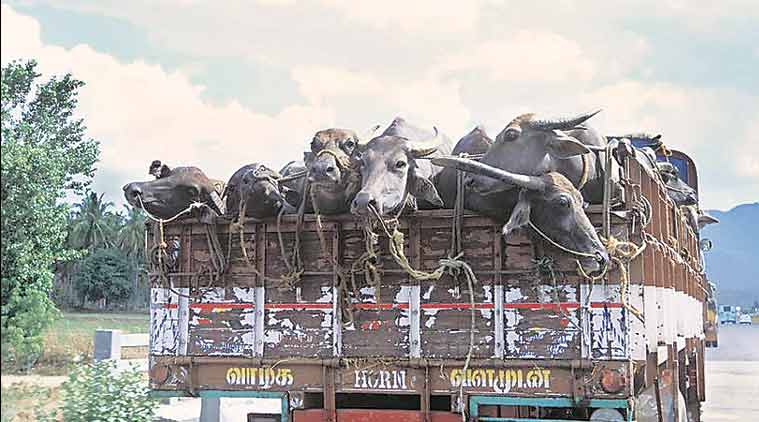
Govt lays down rules to ferry animals meant for slaughter

Since only two states — West Bengal and Kerala — allow cow slaughter, cows from all over India are transported to these two states for slaughter.
As per new norms, animals must be ferried on specially registered vehicles with welded cages.Four years after the Food Safety Act clearly laid down the conditions in which animals meant for consumption are to be kept and transported to the slaughterhouse, the Transport Ministry has finally laid down rules for the transportation of such animals.
Earlier this month, the ministry notified changes in the Motor Vehicles Act that require animal transportation vehicles to be registered as such with the respective Road Transport Offices (RTOs) and equipped with welded cages of specified sizes for transportation of specific animals. The move comes after a series of petitions from animal rights activists about the harsh conditions in which animals are transported. The notification issued on July 8 came after Union Women and Child Development Minister Maneka Gandhi took the issue up with Union Minister for Road Transport and Shipping Nitin Gadkari.
The notification that is to come into effect from January 1, 2016, requires animal transport trucks to adhere to standards set by the Bureau of Indian Standards and to have permanent cages to ensure that it cannot transport more than the allowed number of animals — six buffaloes or 40 goats per truck. It lays down cage sizes for transport of bovines, horses, sheep and goats, pig and poultry.
A motor vehicle that is registered as an animal carrying vehicle cannot carry other goods. If it does, it will lose its registration, apart from being made to pay a fine far heftier than those prescribed under the Prevention of Cruelty to Animals Act.
Since only two states — West Bengal and Kerala — allow cow slaughter, cows from all over India are transported to these two states for slaughter.
The long distance travel makes cows among the most abused during transportation, with animals sometimes stacked one on top of the other with their noses tied upwards to leave room for breathing. Many of these animals are pregnant as there is a belief that eating a pregnant animal helps produce babies.
While regulation of transportation of animals has been a long standing demand of animal rights activists, the regulations of the Food Safety Act (FSA) issues in 2011 clearly lay down that unnecessary stress to an animal during transportation may cause the quality of meat to suffer. It also requires livestock to be certified by a veterinary expert before slaughter.
“Livestock are transported en masse from the farm to the slaughterhouse, a process called ‘live export’. Depending on the journey’s length and circumstances, this exerts stress and injuries on the animals and some may die en route. Apart from being inhumane, unnecessary stress in transport may adversely affect the quality of the meat,” read the regulations under the FSA.
Injured animals, according to the regulations, are not to be slaughtered. This rule, however, is routinely violated.

Street vendors need proper skills for safer food: Paswan

Millions of street food vendors across India should be imparted proper skills to ensure hygiene so that people's health does not suffer, union minister Ram Vilas Paswan said on Tuesday.
The minister for consumer affairs, food and public distribution launched the 'Surakshit Khadya Abhiyan', a nationwide campaign for awareness on food safety, particularly among street food vendors.
Lauding Prime Minister Narendra Modi for his 'Skill India', which aims at developing skills among the people, Paswan said: "It is important to develop skills even among street vendors to ensure that there is hygiene and no adulteration in food."
"Food-borne diseases which have severe health and economic consequences, both in developed and developing countries can be prevented by food safety practices only," he added.
Launching the campaign's website and logo, he said: "Food safety is an inseparable part of food security and no nation can guarantee food security if food in not completely safe."
He said there can be no compromise over food safety.
From the president to a working class person, consumers comprise everyone, and hence there needs to be more emphasis on food safety and cleanliness, Paswan said.
The campaign, planned by the Confederation of Indian Industry (CII), National Association of Street Vendors of India and other consumer organisations, aims to create awareness on safe food across the country.
The initiative complements campaigns under the ministry like 'Jago Grahak Jago', for consumer awareness, the minister added.
For a street vendor who works for daily wages, livelihood was more important than quality of food, and therefore there needs to be more awareness among people, not just the educated class, about hygienic food and health, Paswan said.
The minister said the government will extend cooperation and support for infrastructure of the street food vendors.
At the initial stage, the campaign aims to target the cities of Delhi, Mumbai, Kolkata, Chennai, Bengaluru and Hyderabad and a few two-tier cities.
Nationwide sensitisation sessions on cleaning, hygiene and sanitation for safe food, walkathons and media dissemination programmes for consumers and the street food industry would be organised.

Nothing against Nestle, but awareness created: Paswan

Consumer Affairs Minister Ram Vilas Paswan on Tuesday said while the government had nothing against Nestle over the Maggi noodle controversy, which was probed by an independent watchdog on safety standards, the episode had created awareness among the public.
"Our priority is consumer health. From president to peon, everyone is a consumer. We don't want our people visit doctors after eating sub-standard food. The Maggi episode has created awareness on food safety," said Paswan who also holds food and public distribution portfolios.
"We want consumers to get safe food products. We also don't want to create panic in the market," said the minister, speaking to reporters at the launch of a national campaign to strengthen countrywide awareness and capacity building on safe and hygienic food for all.
Paswan also sought to clarify that he considered Nestle to be a responsible company.
"The Maggi issue was an isolated case. No one has to fear. But black sheep are everywhere. One thing is: No big company wants to sell sub-standard food products. And one wrong incident does not mean that the company is bad," he said.
Maggi noodles were banned by India's food regulator on June 5 after a allegedly high amount of lead and monosodium glutamate (MSG) were found in a sample. Following that, Nestle withdrew all the variants of the popular instant noodle but continued to maintain that its products were safe.
This was also confirmed by a host of other countries, including Britain, Singapore and Canada, found Maggi noodles that were imported there from India to be safe.
Paswan, nevertheless, sought to defend actions by Indian authorities.
"If something comes to the government's notice, it has to take action. If some complain about the product comes to the FSSAI (Food Safety and Standards Authority of India, the regulator), an investigation has to be done,"he said.
"That doesn't mean that the company is good or bad," he said, adding that it did not make any difference which was the nodal ministry for the food regulator as long as it was functioning properly.
Responding to demands of few states to shift FSSAI from the union health ministry to consumer affairs ministry, the minister added that FSSAI is an independent regulator and it does not make a difference if the authority is with health or consumer affairs ministry.

Jul 21, 2015

Maggi row: Paswan says govt has nothing against Nestle

Weeks after regulatory action forced Nestle to pull out popular snack Maggi, Food and Consumer Affairs Minister Ram Vilas Paswan today said the government has nothing against the Swiss food maker and was only probing the complaint. 
Paswan said consumer health is paramount and the Maggi controversy has created awareness about food safety in the country, even as he assured that the government was against any kind of "inspector raj". 
"The Maggi issue is an isolated case. There is nothing to fear. Black sheeps are there everywhere. No big company wants to sell sub-standard food products. One wrong incident/product does not mean that the company itself is bad," Paswan told reporters after the launch of a food safety initiative here. 
The regulator, Food Safety and Standards Authority of India(FSSAI) is investigating the Maggi issue as it has received complaints against the product, he added. 
Paswan further said, "If something comes to the government's notice, it has to take action. If some complain about the product comes to FSSAI, it has to be investigated. It does not mean that the company is bad or good." 
The Consumer Affairs Ministry has also received complaints against Maggi noodles and hence is filing a class action suit against Nestle India for the first time. 
The minister also observed that there is too much criticism against FSSAI if it takes strict action, while the authority is also blamed if it does not take any measures to curb sale of sub-standard food products in the market. 
"There is this dichotomy. Our priority is consumer health. From president to peon, everyone is consumer. We don't want people visit doctor due to consumption of sub-standard food. The Maggi episode has created awareness about food safety in the country," he said. 
On some states' demand to shift the FSSAI from the Union Healthy Ministry to the Consumer Affairs Ministry, the minister said: "FSSAI is an independent regulatory body. It does not make any difference if the authority is in Health or Consumer Affairs Ministry. The government's main concern is that FSSAI should ensure food safety." 
Last month, FSSAI had banned Maggi for being "unsafe and hazardous" for human consumption after it found excessive levels of lead and taste enhancer monosodium glutamate (MSG). Nestle India had to recall Maggi from markets, while some other companies also later withdrew similar products. 
"We want consumers get safe food products. Be it Maggi or any other product, we don't want to create panic in the market. We don't want to impose inspector raj," Paswan said. 
To protect consumers interest, Paswan said the government has proposed major changes to the existing Consumer Protection Act to protect consumer rights and simplify the judicial process to ensure speedy and inexpensive justice.

Over 12k samples found adulterated, misbranded in 2014-15

New Delhi, Jul 21, 2015 
12,077 samples were found adulterated and misbranded out of the 60,548 samples analysed by food safety watchdog FSSAI in all states and union territories in 2014-15, the government today said.
Taking action in the matter, the authority lodged 1,989 criminal and 7,241 civil cases, Union Health Minister J P Nadda said in a written reply in Rajya Sabha.
On the recent controversy over the detection of excess content of lead and MSG (monosodium-glutamate) in popular snack Maggi noodles, the minister said, "The FSSAI (Food Safety and Standards Authority of India) has issued an order directing M/S Nestle India Limited to withdraw and recall their products from the market."
"A show cause notice has been issued to the company giving 15 days' time as to why product approvals granted in respect of nine variants of Maggie Noodles should not be withdrawn," he added.
"The FSSAI has ordered recall of the food products and/or withdrawn the provisional 'No Objection Certificates' issued in respect of various food products manufactured by multi-national companies who violated the provisions of the FSS Act or Regulations. Some of the food products are Maggi instant noodles, Monster energy drink, Cloud 9 energy drink, Tzinga Energy drink and Akoaroma flavoured water," he said.

Check on Adulterated Food Items

As per reports from the States/UTs, samples of Nestlé’s Maggi noodles have been found to be containing more than the permissible limit of 2.5 ppm of lead. The samples have also been found to be violating the labeling requirements as far as presence of Monosodium Glutamate (MSG) is concerned. However, no report has been received by the Food Safety and Standards Authority of India (FSSAI) indicating the presence of detergent in Mother Dairy’s milk samples. 
The FSSAI has issued an order dated 5th June 2015 directing M/s Nestle India Limited to withdraw and recall their products from the market. Further, a show cause notice has been issued to the company giving 15 days’ time as to why product approvals granted in respect of 9 variants of Maggi noodles should not be withdrawn. 
The FSSAI has ordered recall of the food products, and/or withdrawn the provisional “No Objection Certificates” (NOCs) issued in respect of various food products manufactured by MNCs who violated the provisions of the FSS Act or Regulations there under. Some of the food products are Maggi Instant Noodles, Monster Energy Drink, Cloud 9 Energy Drink, Tzinga Energy drink and Akoaroma Flavored Water. Besides, safety standards of food items have been notified in respect of around 365 categories of food products. These standards are enforced by the Food Safety Departments of the States/UTs; however, details in this regard are not maintained centrally. 
The implementation and enforcement of Food Safety and Standards Act, 2006 primarily rests with the State/UT Governments. Samples of food items will continue to be drawn by the State Food Safety Officers and sent to the laboratories authorized by the FSSAI for analysis. In cases, where samples are found to be not conforming to the provisions of the Act, the Rules and Regulations made there under, action as per the Food Safety and Standards Act, 2006 and regulations 2011, will be taken. 
The Health Minister, Shri J P Nadda stated this in a written reply in the Rajya Sabha here today.

DINAMALAR NEWS


DINAMALAR NEWS


பரமத்திவேலூர் அருகே காலவதியான உணவு பொருட்கள் விற்ற கடைகளுக்கு அனுமதி ரத்து


பர மத் தி வே லூர், ஜூலை 21:
பர மத் தி வே லூர் பகு தி யில் உள்ள திரை ய ரங் கு களில் காலா வ தி யான உணவு பொருட் களை விற் பனை செய்த 3 கடை களுக்கு அனு மதி ரத்துசெய்யப் பட்டது.
நாமக் கல் கலெக் டர் தட் ச ணா மூர்த்தி, மாவட்ட உணவு பாது காப்பு அதி காரி தமிழ் செல் வன், ஆகி யோ ருக்கு பர மத் தி வே லூ ரில் உள்ள திரை ய ரங் கு களில் காலா வ தி யான உணவு பொருட் கள் விற் பனை செய் யப் ப டு வ தாக ரக சிய தக வல் கிடைத் தது. இத னை ய டுத்து கலெக் டர் உத் த ர வின் பேரில் பர மத் தி வே லூர் தாலுகா உணவு பாது காப்பு அதி காரி சிவ சண் மு கம், பர மத் தி வே லூர் பகு தி களில் உள்ள திரை ய ரங் கு களில் திடீர் சோத னை யில் ஈடு பட்ட னர். அப் போது காலா வ தி யான உணவு பொருட் களை விற் பனை செய் வது கண் ட றி யப் பட்டது.
பின் னர் அந்த 3 திரை ய ரங் கு களில் உள்ள கடை களுக்கு அனு மதியை ரத்துசெய்து கலெக் டர் உத் த ர விட்டார்.

Does FSSAI have powers to ban Maggi: HC asks Nestlé India

The Bombay high court (HC) on Monday asked Nestlé India to reply whether Food Safety and Standards Authority of India (FSSAI) has overriding powers to ban Maggi.
A division bench of justice VM Kanade and justice BP Colabawalla was hearing the petition filed by Nestlé India, after FSSAI banned all nine variants of Maggi on June 5 this year.
Senior counsel Iqbal Chagla appearing for the company said there have been no complaints against Maggi for 30 years, and suddenly someone in Ghaziabad found monosodium glutamate in a sample. He said there is no affidavit filed by FSSAI on this.
Chagla said there is absolutely no material to say that the product is unsafe and therefore should be banned. He said FSSAI cannot ban any product as and when it pleases.
The court then asked whether FSSAI had informed Nestlé India that they propose to impose a ban. Chagla said there was no notice given and they were informed about the ban through a phone call.
Chagla then said that FSSAI is a regulator and they should not have behaved in an adversarial manner by arbitrarily banning the product. He also said there was nothing found in the other six variants of Maggi and despite that there was an order to ban all the nine variants.
The court has asked Nestlé whether the FSSAI has overriding powers to ban the whole product and whether it is a proprietary product. The arguments will continue on Tuesday.

Test Maggi in distilled water: Nestle

The court also asked the company to clarify the scope of Section 22 of the Act, which deals with proprietary foods.
Swiss food manufacturer Nestle India told the Bombay High Court on Monday that the authorities should have tested Maggi noodles and the tastemaker in distilled water before imposing a ban on these products.
“Before coming to a conclusion, the authority [FSSAI] should have taken into account food as it is intended to be consumed and not as it is sold. The product [Maggi] is consumed in 250 ml of water. You have to test in water without lead, in distilled water,” senior advocate Iqbal Chagla, representing Nestle told the court.
A Division Bench of Justices V.M. Kanade and B.P. Colabawalla asked Nestle to clarify whether the Food Safety and Standards Authority of India (FSSAI), who declared Maggi to be unsafe, and other officers concerned could work only under Section 34 of the Food Safety and Standards Act 2006. It is Nestle’s contention that mandatory provisions of Section 34 were not complied with.
The court also asked the company to clarify the scope of Section 22 of the Act, which deals with proprietary foods. Maggi falls in the category of proprietary foods, for which separate approvals are required, but the State’s ban order does not mention this.
Nestle also claimed that they were not given any intimation before the authorities decided to ban Maggi noodles. “This ban order affects my civil rights,” Mr. Chagla said.

Maggi ban: Regulator overreach, says Nestle counsel

Says apex food regulator cannot issue emergency ban order on products under the law; argument to continue today
The jurisdiction of the country's apex food regulator, Food Safety & Standards Authority of India (FSSAI), ws questioned at the high court here on Monday, in the petition from Nestle India on the Maggi noodles' ban
Whether the regulator could issue an emergency ban order was among the arguments raised by the company's counsel, Iqbal Chagla. He contended Section 34 of the Food Safety & Standards Act, 2006, prevented FSSAI from issuing such an order.
“Section 34 specifies that emergency prohibition notices or orders can be issued by the designated officer or the commissioner of food safety (of a state), if they are satisfied that a health risk condition exists with respect to a food business," Chagla told a bench of judges V M Kanade and B P Colabawalla.
"Morever, the designated officer shall not apply the emergency prohibition order at least one day before the the date of application, till he has served a notice on the food business operator of his intention to do so. And, the prohibition order will cease to have effect once he is satisfied with the measures taken by the food business operator for lifting of such an order."
Nestle India has been arguing in court that the recall and ban order on Maggi, issued on June 5, was arbitrary and against the principles of natural justice. Monday's hearing was a continuation of final arguments that commenced on July 17.
On Friday, Chagla had argued on how the tests conducted by state laboratories to determine the level of contamination in Maggi could not be relied upon. He had highlighted how the tests were conducted by laboratories that were not accredited or notified under Section 43 of the 2006 law.
On Monday, he repeatedly drove home the point of arbitrariness, saying FSSAI had not adhered to sections 16 and 30 of the Act. “Section 16 indicates the duties and functions of the Authority, which does not include banning of products. Section 30 says it is the state government that will appoint the commissioner of food safety for efficient implementation of safety and standards. It is the commissioner that will prohibit the distribution or sale of a product in a state, carry out surveys of industrial units engaged in the manufacture or processing of food in a state, and ensure they comply with standards notified by the Authority. The latter has no power to discharge the above duties, as specified in the Act,” Chagla said.
Nestle will continue arguing the matter on Tuesday, after which the counsels for the Maharashtra Food & Drug Administration and FSSAI will present their defence. A judgement will be given after completion of all arguments, on a separate day.

Did FSSAI have power to impose pan India ban on Maggi queries Bombay HC

MUMBAI: The Bombay high court on Monday asked Whether FSSAI has authority to impose nationwide ban and Whether Maggie is a proprietary product under Sec 22 of FSS Act, 2006 which requires prior approval from the regulator. 
Nestle India which is arguing against the June 5 ban brought on by FSSAI after it said 30 out of 72 samples tested positive for excess Lead, said the water used during testing could have been impure. 
Senior counsel Iqbal Chagla who represents Nestle along with senior counsel Amit Desai questioned the quality of water used during the tests done as he said they were by unaccredited laboratories whose results can't be accepted. "Accreditation of labs is vital under the Act itself," said Chagla who expanded on the argument that lack of accredit ion is a flaw in the testing itself. Besides he said 2700 tests show that Maggi is safe and for 30 long years there was not a single complaint from inspectors. "And now suddenly one Inspector in Gaziabad speaks of high MSG and the sample is sent to the Kolkata referral lab whose notification expired this March before the test" he said. 
Ban on Maggie is just on the basis of levels of Lead and when all variants have product approval except Oats, the ban on the basis of few samples in "mindless and arbitrary and unjustified." 
"The water used during testing might contain high levels of Lead. They should have ensured that the water was pure," said Chagla. 
Calling the ban as a violation of the Food Safety Act, Chagla in his day long submissions said, "Maggie can't be termed unsafe or injurious to human health as per the definition of unsafe and substandard food given in FSS Act, 2006, itself." He said, " FSSAI must decide whether Maggie is unsafe or substandard," and added that the regulator has violated its provisions of natural justice and having tested only three variants out of nine it could have at best placed a ban on a particular batch and not the entire product range. 
"The authorities not empowered to impose this ban under the FSS Act, 2006," said Chagla promoting the court to ask if the regulator could impose a national ban on the popular 2-minute Maggi noodles. 
The Maharashtra government had followed the FSSAI order with its own ban within the state on sale of the snack packets the following day in June 6. Others States did too. 
The HC has not stayed the ban and the company has destroyed over Rs 600 crore worth of goods already even as it battles the ban in court. 
The matter will continue to be heard on Tuesday when the FSSAI and its Ceo through their counsel Anil Singh and Mehmood Pracha make their case in favour of the ban.

Maggi ban: HC asks Nestle India for clarifications

Challenging the ban on Maggi, Nestle India stated that authorities failed to do a number of things before calling the food unsafe
Mumbai: In the ongoing hearing challenging the Maggi noodle ban by the food regulator Food Safety and Standards Authority of India (FSSAI) and the Maharashtra Food and Drug Administration (FDA), the Bombay high court has asked Nestle India to clarify on two counts.
The bench comprising judges V.M. Kanade and B.P. Colabawalla asked the company to explain the scope of proprietary food under section 22 of the FSSAI Act, 2006, under which products such as Maggi instant noodles come.
The bench also asked if all the officers of FSSAI are governed only by section 34 FSSAI Act, 2006, or if they had any other powers.
Section 34 deals with the power of a designated officer to impose a ban if he or she is not satisfied with the product quality and feels that it poses a health risk.
Referring to the ban, Nestle India’s counsel Iqbal Chagla had told the court that “the authorities did not have any such power, nor does the state”.
He added that “natural justice has been completely and totally violated”.
Nestle India told the court that the authorities failed to do a number of things before calling the food unsafe.
It includes issuing a show cause notice to the company and conducting food tests.
The counsel told the court that Maggi noodles come with a tastemaker inside. The tastemaker is to be added to the noodles which is boiled in 250 ml of water for two minutes and then consumed.
However, both the noodles and the tastemaker were tested separately for lead by different states and the FSSAI lab in Kolkata.
FSSAI banned the product, terming them “unsafe and hazardous” for human consumption after finding high levels of lead and the presence of taste enhancer monosodium glutamate on 5 June.
After conducting its own tests, Maharashtra state, too, had banned its sale on 6 June.
The FSSAI and the Maharashtra FDA are yet to present their case before the court.

FSSAI to soon issue draft notification for liquor standards


The safety watchdog plans to set standards for alcoholic drinks including beer, whisky and rum among others
The proposal has been made in the Safety and Standards (Food Recall Procedure) Regulations, 2015, which has been put up for public comments. 
New Delhi: With plans to set standards for alcoholic drinks including beer, whisky and rum among others central food safety watchdog Food Safety Standards Authority of India (FSSAI) is likely to come out with a draft notification within a few weeks.
“The Food Safety Standards Authority of India (FSSAI) will come up with a draft notification on the standards of alcoholic beverages in next 45 days,” a source said. It was decided that once standards for alcohol and alcoholic beverages were finalised it shall be intimated to all states and UTs so that they may suitably advise the respective excise departments, the source added.
“Work is going on to prepare standards for alcohol and alcoholic beverages, broadly under two different heads, one for drinks with less alcohol like beer and other for drinks having major alcohol content like whisky,” the source said.
Among other drinks vodka, brandy and gin will also come under the proposed standards. Earlier this year, a meeting of the Central Advisory Committee had discussed having standards for alcohol and alcoholic beverages. FSSAI has already proposed that alcoholic beverages, pan masala and supari may not be treated as “unsafe food” for recall just because they carry a mandatory warning on their covers.
The proposal has been made in the Safety and Standards (Food Recall Procedure) Regulations, 2015, which has been put up for public comments. These draft norms were put up for public comments on 29 May and the deadline ends on 1 August.
FSSAI is the central body which lays down science-based standards for articles of food and regulate their sale, manufacturing, storage, distribution and import to ensure availability of safe and wholesome food for human consumption.

DINAKARAN NEWS


மதுபானங்களுக்கு தர நிர்ணய அறிக்கை

புதுடில்லி:'மதுபானங்களின் தர நிர்ணயத்தை பரிசோதிக்கும் வரைவு அறிக்கை, இன்னும், 45 நாட்களில் வெளியிடப்படும்' என, இந்திய உணவு பாதுகாப்பு மற்றும் தர நிர்ணய ஆணையமான, எப்.எஸ்.எஸ்.ஏ.ஐ., தெரிவித்துஉள்ளது. 'நெஸ்லே இந்தியா' நிறுவனத்தின் தயாரிப்பான,'மேகி நுாடுல்ஸ்'சில், காரீயம், ரசாயன உப்பு ஆகியவை அதிகமாக இருப்பதாகவும், இதை சாப்பிடு வோருக்கு பாதிப்பு ஏற்படும் என்றும் பரிசோதனையில் உறுதி செய்யப்பட்டது. மேகி நுாடுல்ஸ் விற்பனைக்கு தடை விதிக்கப்பட்டது.
இதைத் தொடர்ந்து, சில பாக்கெட் உணவுப் பொருட்களுக்கும் தடை விதிக்கப்பட்டுள்ளது. இந்நிலையில், மற்ற பொருட்களின் மீதும், தன் பிடியை, எப்.எஸ்.எஸ்.ஏ.ஐ., 
இறுக்கியுள்ளது. பீர், விஸ்கி, ரம் போன்ற மதுபானங்களின் தரத்தையும் பரிசோதிக்கப் போவதாக ஏற்கனவே அறிவிக்கப்பட்டிருந்தது. இந்நிலையில், மதுபான வகைகளின் தர நிர்ணயத்தை பரிசோதிக்கும் வகையிலான வரைவு அறிக்கையை, எப்.எஸ்.எஸ்.ஏ.ஐ., தயாரித்துள்ளது. இதற்கான இறுதிக்கட்ட பணிகள் நடந்து வருகின்றன. 
இதுகுறித்து, எப்.எஸ்.எஸ்.ஏ.ஐ., வட்டாரங்கள் கூறியதாவது:மதுபானங்களின் தரத்தை நிர்ணயம் செய்யும் வரைவு அறிக்கை, அடுத்த, 45 நாட்களில் வெளியிடப்படும். 
அறிக்கை வெளியானதும், அதுகுறித்த தகவல் அனைத்து மாநில அரசுகளுக்கும் தெரிவிக்கப்படும். இதன் அடிப்படை யில், சம்பந்தப்பட்ட அதிகாரிகளுக்கு மதுபான வகைகளின் தர சோதனை குறித்து நடவடிக்கை எடுக்க, அதிகாரிகளுக்கு மாநில அரசுகள் உத்தரவிடலாம். இவ்வாறு, அந்த வட்டாரங்கள் தெரிவித்தன.

காய்கறிகளில் ரசாயன மருந்து தாக்கம் உணவு பாதுகாப்பு அதிகாரிகள் ஆய்வு


கூடலுார்: விளைநிலங்களில் இருந்து கொண்டு வரப்படும் காய்கறிகளில் ரசாயன மருந்துகளின் தாக்கம் எப்படி உள்ளது என்பது குறித்த ஆய்வை, உணவு பாதுகாப்பு அதிகாரிகள் தேனி மாவட்டத்தின் பல்வேறு பகுதிகளில் மேற்கொண்டுஉள்ளனர்.காய்கறிகள் உற்பத்தியில் ரசாயன மருந்துகளின் பயன்பாடு அதிகமாக உள்ளது. ரசாயன மருந்துகள் தெளிக்காவிட்டால், காய்கறிகளை முழுமையாக உற்பத்தி செய்யவே முடியாது என்ற நிலை உள்ளது. ஆனால், இதனை பயன்படுத்தும் மக்கள் பாதிப்பிற்கு உள்ளாகின்றனர் என்பதை மறுக்க முடியாது.தமிழகப்பகுதியில் இருந்து வரும் காய்கறிகளில் ரசாயன மருந்துகளின் தாக்கம் அதிகம் உள்ளது என கேரளாவில் நடத்திய ஆய்வில் கண்டுபிடிக்கப்பட்டதாக கூறப்பட்டது. இதனால் கேரளாவிற்கு கொண்டு வரும் காய்கறிகளுக்கு, அம்மாநில அரசு கட்டுப்பாடுகளை விதிக்கத் துவங்கியுள்ளது. மருந்து கலந்து வரும் காய்கறிகளை தடை செய்யவேண்டும் எனக் கூறிய கேரளா, தற்போது உணவு பாதுகாப்பு ஆணையத்திடமிருந்து பெற்ற லைசென்சு இருந்தால் மட்டுமே கேரளாவிற்குள் காய்கறிகளை அனுமதிக்க வேண்டும் என, எல்லைப்பகுதியில் உள்ள 'செக்போஸ்ட்' அலுவலர்களுக்கு உத்தரவிட்டுள்ளது.
இந்நிலையில், தேனி மாவட்டத்தில் விவசாய நிலத்தில் இருந்து கொண்டு வரப்படும் காய்கறிகளை உணவு பாதுகாப்பு அலுவலர்கள் நேற்று முதல், ஆய்வு செய்யும் பணியில் ஈடுபட்டுள்ளனர். ஆய்வுக்காக எடுக்கப்படும் 'சாம்பிளை' மதுரையில் உள்ள ஆய்வு மையத்திற்கு அனுப்பி வைப்பர். இதற்கான முடிவுகள் வருவதற்கு 15 நாட்கள் வரை ஆகும். விவசாய நிலத்தில் இருந்து எடுக்கப்பட்ட காய்கறிகள், 15 நாட்கள் வரை பயன்படுத்தாமல் வைத்திருந்தால் வீணாகும் என்பதால் விவசாயிகள் கலக்கம் அடைந்துள்ளனர்.
'மொபைல் லேப்' வேண்டும்: காய்கறிகளில் ரசாயன மருத்துகள் குறித்து ஆய்வு மேற்கொண்டு உடனடியாக அதற்கான முடிவுகள் தெரியும் வகையில் ஒவ்வொரு மாவட்டத்திற்கும் 'மொபைல் லேப்' அவசியம். ஆய்வுக்கு உட்படுத்தப்பட்ட காய்கறிகளின் தன்மை குறித்து உடனடியாக தெரியும் வகையில் வசதியை விரைவில் 
ஏற்படுத்த அரசு முன் வரவேண்டும். இல்லாவிட்டால், காய்கறிகள் கேரளாவிற்கு அனுப்ப முடியாமல் சிக்கலை ஏற்படுத்தி விடும் என விவசாயிகள் தெரிவித்துள்ளனர்.

Sale of unwholesome food articles DFCO initiates action against erring hotel

JAMMU: Acting on a specific complaint, regarding sale of food article being prepared from unwholesome food ingredients and offered for sale to the consumers by a hotel in Jammu city, a team of the Food Safety Officers comprising Daleep Singh and Rakesh Kumar Gupta under the supervision of Sanjeev Kumar, Assistant Controller Food, (MCJ), Drugs and Food Control Organisation (DFCO), J and K, Jammu carried out a detailed inspection of the kitchens and stores of the hotel.
It was observed that the establishment was being run under unhygienic and insanitary conditions and heaps of garbage lying unattended could be seen within the premises. Processing of food was being carried out with deteriorated vegetables, virtually unsafe for human consumption.
Large quantity of unwholesome food articles such as cooked potatoes, sauces, meat, etc were destroyed on the spot. Challan on account of unhygienic and insanitary conditions under the provision of the Food Safety and Standards Act 2006 shall be filed. An improvement notice has also been served upon the hotel management for upgrading the existing infrastructure within a specific time frame.
Meanwhile, acting on the reports regarding artificial ripening of fruits in Fruit Mandi, the team of DFCO carried out a detailed inspection of Fruit Mandi. Vice President Fruit Mandi Association Om Parkash Saini along with other members associated with the trade were apprised by the DFCO team regarding health risks associated with the use of calcium carbide commonly used for ripening of the fruits.
It was impressed upon vendors that persons who indulge in such practices shall be dealt sternly under law.
It was also decided that a sensitisation cum awareness workshop on the topic shall be organised to suggest alternative methods of ripening which are naturally safe and were in use conventionally