Jul 8, 2017

Is liquid nitrogen even healthy for you? Here's the downside of the latest Indian food trend

While this chemical adds a lot of drama to our food and drinks, it also poses major health and safety hazards
A drink or dessert that has cold smoke billowing from it looks so cool! It's just the sort of drama foodies across the world have been going crazy about for the past few years, and the trend has picked up in a major way in India as well.
But behind the drama is a volatile chemical called liquid nitrogen, and no, it's not the safest thing in the world. Not only does whipping up that 30-second instant ice cream pose a threat to the health of the chef or bartender, but also to the consumer.
Recently, a 30-year-old man drank a liquid nitrogen-chilled drink at a Delhi bar, and ended up with a big hole in his stomach! While this is the first such accident in India, a girl in Lancaster lost her entire stomach lining back in 2012 thanks to a liquid nitrogen-infused cocktail at her 18th birthday party.
So don't just buy into the drama of this food trend. Consider its negative effects as well, for the sake of your health and safety. A little bit of knowledge can go a long way, so here's everything you need to know about liquid nitrogen.
The coolest chemical in town
Liquid nitrogen is actually nitrogen gas, but in the liquid state at an extremely low temperature. It has been used in the global food industry since the 1800s to freeze food products and preserve them quickly. While it isn't likely to catch fire, it is extremely cold, and can freeze anything in an instant.
Nowadays, liquid nitrogen is used to chill drinks, desserts, ice creams, and glasses. It's used in the food packaging industry because it delays foods from turning rancid. This cryogenic property has led to the use of liquid nitrogen in the packaging of meat, poultry, fish, dairy products, fruits and vegetables, microwavable meals, pasta and bakery products, milk and milk products.
Caution is key
"The use of liquid nitrogen is good until used in limited extent and carefully. A bit of carelessness may create major problems," says Dr. Saurabh Arora, the founder of foodsafetyhelpline.com.
"The beneficial freezing property of liquid nitrogen is also its dangerous effect. The vapor of liquid nitrogen could immediately freeze skin tissues and also cause cold burns. If a person swallows a bit of it, it may cause expansion of liquid nitrogen in the stomach. This results to severe health issues or death," he adds.
While the FSSAI (Food Safety and Standards Authority of India) has permitted the use of liquid nitrogen since 2011, it has only recently trickled down to restaurants and ice cream parlous in India's leading metropolitan cities. It's a big trend in Delhi, with chefs and mixologists using it in everything to add drama.
The problem is that the same chemical that's used in the manufacturing and food packaging industries is being used to make these dishes. And while we all seek a little delicious drama in life--and our mixologists are willing to give it to us in most bars and restaurants in the city--most people handling the chemical aren't trained, or even cautious.
There's a reason you can see contestants and chefs on MasterChef Australia wearing protective gloves and goggles while using liquid nitrogen. There's a reason why the judges are careful about consuming it. The reason is simple--better safe than sorry.
Enjoying food and the drama that goes with it is important, but when a trend is more dangerous than enjoyable, maybe we should just do without it--or depend on certified, trained chefs and mixologists. Given the fact that not all chefs, ice cream makers and bartenders in India are trained, it's probably best to just give this trend a miss.

Concern over quality of bottled water

When consumers buy bottled water, they assume it to be safe and healthy. Bus stands, railway stations, picnic spots and cricket stadiums are making roaring business in selling water, the cost of which is more than the cost of milk.
The turnover of the bottled water industry is estimated to be around Rs 3,000 crore. But seldom consumers think about the quality of the bottled water. It appears that there is no end for exploiting the consumers in the name of supplying safe packaged drinking water.
Ever since the packaged or bottled water industry started functioning, there is a series of studies by the government and independent laboratories which have highlighted the dangers of bottled water. Despite making it mandatory for bottled water manufacturers to obtain the ISI mark from the Bureau of Indian Standards (BIS), and stringent quality measures prescribed by the Food Safety and Standards Authority of India (FSSAI), consumers continue to be sold with impure and unsafe water.
Some years ago, the Ahmedabad-based Consumer Education and Research Centre had published a report on quality of bottled water and found several discrepancies. In 2015, the Bha­bha Atomic Research Centre (Barc) team tested 90 samples of bottled water and found 27% of the samples contained bromates, a salt containing bromide in excess of the limits permitted by the WHO.
The latest study by the Voluntary Organisation in the Interest of Consumer Education (Voice), a New Delhi-based consumer organisation, has found that some brands of packaged drinking water is microbiologically unsafe.
The Voice tested a dozen brands of packaged drinking water including popular brands like the state owned Rail Neer, McDowells, Bisleri, Aquafina etc, for the presence of undesirable substances and microbiological organisms, pesticide residues, toxic/heavy metals, turbidity and colour. The samples were drawn from the open market and tested against the standards pres­cribed by BIS, in a National Acc­reditation Board of Laboratories (NABL) accredited laboratory.
Micro organism like E coli, coliform found in the environment can contaminate water. They can cause symptoms such as nausea, vomiting and stomach cramps. The laboratory tests has confirmed that total viable colony count was high in brands like Aquafina, Bailley, Royal Blue and A4X and thereby unsafe.
Aquafina contained yeast and mould. However, in respect of undesirable substances, all brands passed the tests. Drinking water can contain Nitrate to a maximum of 45 mg/litre. Except for Aquafina, Kinley and More, all brands contained nitrate, but within the prescribed limits.
The tests were also conducted to ascertain contents of fluoride, silver, chloride, sulphate and other chemicals. Fortunately, all brands were found to contain fluoride within the permissible limits of 1 mg/litre. Silver was not detected in any of the brands. Chloride is not harmful, unless it exceeds the limit.
The maximum permissible limit for chloride is 200 mg/litre and chloride was within the limits in all brands. Presence of pesticides residues has been a major concern with bottled water. However, the present test found that none of the brands contained pesticide residues in excess of the permitted standards.
Purification systems
Total Dissolved Solids (TDS) are the amount of minerals, salts or metals dissolved in a given volume of water. It is directly related to the purity of potable water and the quality of water purification systems. Rail Neer was found to contain the highest quantity of TDS and Aquafina the lowest.
Consumers rarely read labels and take things for granted. Bottled water contains the letter pH which stands for potential. A measurement below seven indi­cates presence of acid and above seven indicates alkalinity. The BIS requires it to be between 6.5 and 8.5. All brands complied with these requirements.
The labelling requirements were also met with. Based on the overall test findings, Rail Neer is the top performer followed by McDowells and Bisleri. Even in terms of cost, Rail Neer is the cheapest at Rs 15 a litre against Rs 20 for other brands. However, the above tests have not gone well with Aquafina. They have raised certain issues which are replied by Voice.
Though consumer groups are bringing out test reports of many products, the response from consumers is not encouraging, unlike in the West. Similarly, manufacturers come forward to get their products tested by these consumer groups because a favourable report enhances their sales. Consumer movement in India is in need of a new philosophy.

Ice cream vs frozen dessert war hots up


What's the difference between an ice cream and a frozen dessert? And does it matter?
Yes, if the battle between giants is any indication.
India's largest fast moving consumer goods (FMCG) company, Hindustan Unilever, had last month filed a case against the country's largest ice-cream maker, Gujarat Cooperative Milk Marketing Federation, in the Bombay High Court, successfully obtaining an injunction against an advertisement for Amul ice cream which "disparaged frozen desserts."
Amul's ad had said that people should eat real ice cream made from milk, rather than frozen dessert made from "Vanaspati." The court said the ad was "guilty of disparaging a rival product" – Unilever's Kwality Walls, which is a leader in frozen desserts.
So what's the difference between the two? An ice-cream is made from milk fats while a frozen dessert is made from vegetable oil fats. Vanaspati is a hydrogenated vegetable oil used in cooking, a cheaper substitute for ghee or butter. But it's not used in frozen desserts, say manufacturers.
Every summer, a battle of sorts resumes between ice-cream and frozen dessert makers. Often, consumers are unaware about the difference. "It becomes very difficult to convince people that we make ice-cream, and not frozen dessert.
The approach that we have decided to undertake is to educate the consumers by pointing them to the differentiation which the government of India has made," Chaitanya Rele, Vice President and Head of Marketing at Havmor Ice Cream, told IANS.
Gujarat-based Havmor claims itself to be the second-largest dairy-based ice-cream maker, after Amul. The Food Safety and Standards Authority of India (FSSAI) has categorised ice-creams under "dairy based desserts/confections", further categorised as plain, medium fat and low fat depending on the percentage of total solids, milk fat and milk protein used.
The food regulator defines "frozen dessert/frozen confection" as a product obtained by freezing a pasteurized mix prepared with milk fat and/or edible vegetable oils and fat. The milk fat is used in such dessert for freezing.
According to ice-cream manufacturers, frozen desserts have captured a market share of 40 per cent of the Rs 1,800 crore market with a growth of approximately 10-12 per cent every year.
"We have recently come out with a campaign on print and digital mediums talking only about the goodness of our product – that they are made from rich, creamy milk," said Randhir Kumar, General Manager, Marketing (Dairy Products) of Mother Dairy.
But are both the products same from the health viewpoint?
Sunita Roy Chowdhury, Chief Dietician at BL Kapoor Hospital, said that frozen desserts have more trans-fat as compared to ice-creams. "Trans fatty acids are not good. I believe trans fatty acids are used in frozen desserts because the normal oil does not freeze. I would suggest ice-creams are better than frozen desserts," Chowdhury asserted.
Nitin Arora, Chief Executive Officer of Creambell – which markets a combination of ice creams and frozen desserts – said awareness should be raised on the virtues of vegetable oil compared to those of dairy fat.
"The cooking medium in our houses remains vegetable oil or mustard oil. This is the same ingredient that goes into the making of frozen dessert. The fact remains that nobody uses 'vanaspati' in frozen dessert," Arora told IANS.
He said that most of the single serves are ice creams, while for catering and banqueting packs they use frozen desserts. "If we sell a frozen dessert, it is very clearly labelled. We cannot camouflage a frozen dessert as ice-cream or vice versa," he said. He said that 10 per cent fat that goes into ice-cream is dairy fat, whereas that 10 per cent going into frozen dessert is vegetable oil fat.
Havmor's Rele says it's a question of consumer awareness. "At the end of the day is frozen dessert a bad thing? No, it's not a bad thing, but there are differences. Importantly, a consumer has a right to know," he said.

Dispute between ice cream and frozen dessert makers spices up

FMCG company, Hindustan Unilever, had last month filed a case against the country's largest ice-cream maker, Gujarat Cooperative Milk Marketing Federation, in the Bombay High Court, successfully obtaining an injunction against an advertisement for Amul ice cream.
What’s the difference between an ice cream and a frozen dessert? And does it matter?
Yes, if the battle between giants is any indication.
India’s largest fast moving consumer goods (FMCG) company, Hindustan Unilever, had last month filed a case against the country’s largest ice-cream maker, Gujarat Cooperative Milk Marketing Federation, in the Bombay High Court, successfully obtaining an injunction against an advertisement for Amul ice cream which “disparaged frozen desserts”.
Amul’s ad had said that people should eat real ice cream made from milk, rather than frozen dessert made from “vanaspati”. The court said the ad was “guilty of disparaging a rival product” — Unilever’s Kwality Walls, which is a leader in frozen desserts.
So what’s the difference between the two? An ice-cream is made from milk fats while a frozen dessert is made from vegetable oil fats. Vanaspati is a hydrogenated vegetable oil used in cooking, a cheaper substitute for ghee or butter. But it’s not used in frozen desserts, say manufacturers.
Every summer, a battle of sorts resumes between ice-cream and frozen dessert makers. Often, consumers are unaware about the difference.
“It becomes very difficult to convince people that we make ice-cream, and not frozen dessert. The approach that we have decided to undertake is to educate the consumers by pointing them to the differentiation which the government of India has made,” Chaitanya Rele, Vice President and Head of Marketing at Havmor Ice Cream, told IANS.
Gujarat-based Havmor claims itself to be the second-largest dairy-based ice-cream maker, after Amul.
The Food Safety and Standards Authority of India (FSSAI) has categorised ice-creams under “dairy based desserts/confections”, further categorised as plain, medium fat and low fat depending on the percentage of total solids, milk fat and milk protein used.
The food regulator defines “frozen dessert/frozen confection” as a product obtained by freezing a pasteurized mix prepared with milk fat and/or edible vegetable oils and fat. The milk fat is used in such dessert for freezing.
According to ice-cream manufacturers, frozen desserts have captured a market share of 40 per cent of the Rs 1,800 crore market with a growth of approximately 10-12 per cent every year.
“We have recently come out with a campaign on print and digital mediums talking only about the goodness of our product — that they are made from rich, creamy milk,” said Randhir Kumar, General Manager, Marketing (Dairy Products) of Mother Dairy.
But are both the products same from the health viewpoint?
Sunita Roy Chowdhury, Chief Dietician at BL Kapoor Hospital, said that frozen desserts have more trans-fat as compared to ice-creams. “Trans fatty acids are not good. I believe trans fatty acids are used in frozen desserts because the normal oil does not freeze. I would suggest ice-creams are better than frozen desserts,” Chowdhury asserted.
Nitin Arora, Chief Executive Officer of Creambell — which markets a combination of ice creams and frozen desserts — said awareness should be raised on the virtues of vegetable oil compared to those of dairy fat.
“The cooking medium in our houses remains vegetable oil or mustard oil. This is the same ingredient that goes into the making of frozen dessert. The fact remains that nobody uses ‘vanaspati’ in frozen dessert,” Arora told IANS.
He said that most of the single serves are ice creams, while for catering and banqueting packs they use frozen desserts. “If we sell a frozen dessert, it is very clearly labelled. We cannot camouflage a frozen dessert as ice-cream or vice versa,” he said.
He said that 10 per cent fat that goes into ice-cream is dairy fat, whereas that 10 per cent going into frozen dessert is vegetable oil fat.
Havmor’s Rele says it’s a question of consumer awareness. “At the end of the day is frozen dessert a bad thing? No, it’s not a bad thing, but there are differences. Importantly, a consumer has a right to know,” he said.

RO water sellers knock HC’s door

Nagpur: The RO Chilled Water Manufacturers Association knocked judiciary's doors challenging Foods and Drugs Administration's (FDA) action of prohibiting them from selling their products without Bureau of Indian Standards (BIS) certification.
A division bench comprising justices Bhushan Dharmadhikari and Rohit Deo, on Friday, issued notices to the respondents, including Union Ministry for Health and Family Welfare and Food Safety and Standards Authority of India (FSSAI), asking them to reply before August 1. FDA's Mumbai office along with its designated officers and assistant commissioners (Food) in Nagpur, Akola and Bhandara, and BIS are other respondents in the case.
About 16 petitioners from these three cities moved to Nagpur bench of Bombay High Court through counsel Harnish Gadhia after FDA teams raided their premises in last couple of weeks. Immediately after that, the respondents under FSS Act, 2006, issued orders prohibiting the sale of chilled water, being sold openly by them. TOI, in a series of reports, had exposed on how chilled water sellers allegedly sell products in most unhygienic conditions.
The petitioners earlier made various representations to respondents and also raised the issue at various other forums, but nothing moved in their favour.
According to Gadhia, the centre made some amendments in 'Food Safety and Standards (Food Products Standards and Food Additives) Regulations, 2011' on November 16 last year and published a notification in the Official Gazette of India on March 1.
In a reply to RTI query, the city-based FDA office informed that it's necessary to obtain the licenses under the Act only for sale of packaged drinking water . The BIS informed that its licenses are granted against an Indian Standard, but since it wasn't formulated for drinking water supplied in jars, those can't be granted.
The petitioners prayed for quashing or staying various prohibition orders issued by FDA officers in three cities. They also insist on asking respondents not force them to obtain a license from BIS to sell the water.

FOOD FORTIFICATION – THE WAY FORWARD

In the recently formulated National Health Policy, the Government acknowledged fortification as a key strategy to address micronutrient deficiencies in India. Food fortification should be a vital element of health programmes. Oil is widely consumed by all population groups in India, thus it can be a potent vehicle for fortification with vitamin A and vitamin D
Primarily caused by dietary deficiencies of vitamins A and D, micronutrient malnutrition is emerging as a silent epidemic. Commonly called “hidden hunger”, it does not create hunger pangs but strikes at the core of growth and development. It is a global phenomenon affecting infants, young children and adults of all ages. More than 2 billion people in the world today are affected by micronutrient malnutrition.
Micronutrient malnutrition contributes greatly to the global burden of diseases and is more severe in developing countries. Although India has made significant strides in healthcare in the last decade, it still has a high prevalence of malnutrition, which impedes the socio-economic development. More than 57 per cent of children suffer from Vitamin A deficiency and the prevalence of Vitamin D deficiency is as high as 70 per cent in some areas, hence making it more difficult to tackle, but all the more urgent to address.
Micronutrients are dietary components which are vital to development, disease prevention and the well-being of all. Its deficiencies can have far reaching and devastating consequences. Micronutrient deficiencies not only lead to cognitive impairment and increased incidence and severity of infectious illness, but also have far reaching effects on economies through physical and mental disabilities as well as reduced immunity and work productivity, perpetuating poverty and deprivation among people. It also increases mortality and morbidity rates among vulnerable groups. It is estimated that the short-term economic cost of micronutrient malnutrition in India amounts to 0.8 per cent to 2.5 per cent of the gross domestic product.
Although these deficiencies are not physically visible, they are widespread. The Indian Constitution guarantees its citizens the fundamental Right to Life which includes the right to adequate food, shelter and clothing. The very existence of malnutrition and hunger is violation of the Constitution and the Right to Life. Our goal should be to end hunger and malnutrition in all its forms.
There are various approaches to dealing with micronutrient malnutrition. According to the World Bank, food fortification is one of the simplest, proven, cost-effective complementary strategies. Food fortification aims at addition of essential micronutrients like vitamins and minerals into daily consumed food items. In the case of vitamin A and D, these fat-soluble vitamins can easily be introduced into Indian vegetarian diets through the means of oil fortification, milk and non-dairy soy milk fortification, providing the masses easier access to essential micronutrients and helping in fighting vitamin A and D deficiency-related diseases.
Along with timely intervention of this strategy it is very important to make policymakers, caregivers and families aware of the need for food fortification. While this alone cannot address micronutrient deficiencies, it is definitely one of the critical strategies to address micronutrient deficiencies. In India, food fortification efforts have been scattered and there needs to be a clear strategy from the Government to promote large-scale fortification of food. New investments are needed to build, improve and sustain fortification programmes across the country to reduce the prevalence of diseases caused by nutritional deficiencies.
As a step in this direction, I am glad to note that in the recently formulated National Health Policy, the Government acknowledged fortification as a key strategy to address micronutrient deficiencies in India. Food fortification should be a vital element of health programmes both at the national and State level and needs to be scaled-up at all levels.
In an effort to address the issue, last year, food regulatory body, Food Safety and Standards Authority of India (FSSAI), released a set of standards for fortification of various food items such as rice, wheat flour, salt, milk and oil. Oil is widely consumed by all population groups in India, thus it can be a potent vehicle for fortification with fat soluble vitamins — vitamin A and D. Also the process involved is simple, cost-effective and affordable. Some States in India, like Madhya Pradesh, Haryana and Himachal Pradesh, have already begun fortifying oil for their welfare schemes like mid-day meals. The Gujarat and Rajasthan Governments are early adopters and have taken a huge leap in fortification by selling fortified oil in the entire State to address micronutrient deficiencies. It is high time other States followed suit. Micronutrient interventions are critical to achieve the nutrition targets of Sustainable Development Goals. Our investments towards other interventions will have a greater impact on health outcomes of our country if we are successful in tackling nutritional deficiencies.

1.5 tonnes of tobacco products seized

Coimbatore: Tirupur food safety officials seized 1.5 tonnes of tobacco products hidden at a house near Avinashi on Friday morning.
Based on a tip-off, Tirupur designated food safety officer Thamilselvan and team raided small and large tea shops, petty shops and bakeries in the area and warned them not to sell tobacco products.
Based on yet another tip-off, they also raided a house on P S Sundaram Street and found 1.5 tonnes of tobacco products valued at around Rs 5 lakh. The seized products included packets of hans, gutkha and tobacco leaves. Officials said they would continue to investigate the entry, distribution and sale of tobacco in the district, and crackdown on people involved in the trade.

DINAKARAN NEWS


DINAKARAN NEWS


DINAKARAN NEWS


DINAKARAN NEWS


DINAKARAN NEWS


DINAKARAN NEWS


Jul 7, 2017

DINAMALAR NEWS


DINAMALAR NEWS


DINAMALAR NEWS


DINAMALAR NEWS


Amendment to Standards for Non-carbonated Water Based Beverages (Non-Alcoholic)


DINAKARAN NEWS


DINAKARAN NEWS


DINAKARAN NEWS


DINAKARAN NEWS


DINAKARAN NEWS


DINAKARAN NEWS


DINAMANI NEWS


Open to changes in new standards for food supplements: FSSAI

NEW DELHI, JULY 6: 
Food regulator FSSAI today assured the food supplements and nutraceuticals industry that it is open to making changes in the new standards to support growth of the sector, but without compromising on consumers interest.
The Food Safety and Standards (Health Supplements, Nutraceuticals, Food for Special Dietary Use, Food for Special Medical Purpose, Functional Food and Novel Food) Regulations was issued last December. The Food Business Operators (FBOs) need to comply with these standards by January 1, 2018.
Addressing a Assocham conference on nutraceuticals, the Food Safety and Standards Authority of India (FSSAI) CEO Pawan Kumar Agarwal expressed concern over the increasing number of spurious food supplement products in the market.
“We released standards on food supplements and nutraceuticals few months ago. There were some concerns from the industry but we went ahead and released the standards. But our effort is not to cast them in stone as these are evolving standards,” Agarwal said.
“I want to assure the industry that if there are concerns, we are still open to change that. We have five-six months time before this regulations come in force. So, hopefully, we will iron out differences,” he said.
On the sidelines, the FSSAI CEO said that it has got many representation from the industry seeking some changes in the regulations related to inclusion of ingredients.
“Food supplements is a difficult sector to regulate. But for us consumers interest is paramount and non-negotiable,” he said, asking manufacturers to be cautious in declaring any claims about the products.
The FSSAI has set up a technical panel, which includes representation from industry as well, to prepare a framework for Good Manufacturing Practice (GMP).

FSSAI panel to address concerns on health supplements, nutraceuticals

The Food Safety and Standards Authority of India (FSSAI) on Thursday said it is in the process of addressing concerns raised by the industry on new standards for eight categories of products, including health supplements and nutraceuticals, which were notified in 2016.
"These standards will come into force for compliance from January 1, 2018, so we have a little time at hand before these come into compliance and hopefully we will be able to iron out those differences and concerns which will be addressed within the next 5-6 months that we have," Pawan Agarwal, Chief Executive Officer of FSSAI, said while addressing an 'Assocham National Symposium on Nutraceuticals'.
The FSSAI chief said the standards of nutraceuticals were released by the food regulator a few months ago after very prolonged deliberations by the scientific panel, scientific committee and then the authority.
"There are associated standards and regulations, and the key amongst them being labelling regulations, claim regulations for which again the draft will soon be available on our website and we will be very happy to get feedback from the industry on those drafts," he said.
Agarwal added that these are also quite contentious issues considering that consumers' interest for any regulator is primary. "I think that is non-negotiable. So any food supplement manufacturer giving any kinds of claims has to be extra cautious and as a regulator we have to ensure that those claims are substantiated with evidence."
On the labelling, he said there may not be too many issues, however, adding that FSSAI has been getting reports from the field that increasingly large number of spurious products are available in the market today.
"The challenge with the food supplements is that there is no robust framework for testing of food supplements products. There are also issues about good manufacturing practices around food supplements and nutraceuticals sectors," said the FSSAI chief.
He said that FSSAI had set up a technical panel with representatives from food supplement companies to put together the framework for goods manufacturing practices (GMPs) for nutraceuticals and food supplements.
Agarwal said though there are many companies that import food supplements, the FSSAI intends to provide them a level-playing field. But considering the 'Make in India' campaign of the government, their focus is on promoting much of processing and manufacturing within India.
The FSSAI chief added that it is imperative for both the industry and government to work together to provide a more robust framework for growth of food supplement and nutraceuticals sector in India.
J.P. Meena, Secretary, Ministry of Food Processing Industries (MoFPI), stressed upon the need to make the food supplements and nutraceuticals affordable as about 43 per cent children across India remain malnourished while the sector mainly caters to the middle and upper-middle class consumers.
Meena said the MoFPI has particularly been focusing on making farmers/growers partners in the growth story of food processing sector.
"Unless the benefits to some extent are passed on to the farmers, I see that the future of industry will not be very stable and we may not be able to face challenges which will emerge in the future on account of health concerns," he said.
He also said that with regard to capacity expansion and creating new capacities, MoFPI has come out with a new scheme, 'Kisan Sampada', whereby the government will be investing Rs 6,000 crore over the next three years, which should bring an investment of about Rs 35,000 crore in the food processing sector as a whole.

Tamil Nadu milk adulteration allegations: Veritable health crisis or is the dairy minister milking the controversy?

Editor's Note: Tamil Nadu's milk and dairy products minister Rajendra Balaji recently attacked private dairy firms in the state, accusing them of mixing harmful chemicals in the milk they sell. The state Milk Dealers' Association raised strong objection but the minister stuck fast to his claim. In this two-part series, Firstpost investigates the validity of Balaji's charge and the industry's contention.
On 23 May, Tamil Nadu's dairy development minister KT Rajendra Balaji made an astounding statement to media persons at a press conference in Chennai: "Private milk companies are using banned substances in the milk in an effort to maximise profits," he said. "Private milk is not milk... it is poison."
This dramatic declaration got much airspace and sent young mothers into a state of frenzy. Out of a total of 1.5 crore litres of milk sold in Tamil Nadu in a day, private producers have the lion's share of the pie – 1.25 crore litres per day is sold by all private milk companies combined. The state government-run Aavin sells 25 lakh litres of milk to consumers every day, a meagre 17 percent share of the total milk market.
K Ponnusamy, president of Milk Dealers' Association of Tamil Nadu, denied the minister's allegations on behalf of private milk producers. "Privately produced milk in Tamil Nadu is completely safe for consumption. The minister must not make such statements which will put fear into the minds of people. If what the minister says is true, let him name the companies responsible for milk adulteration and take immediate action against them, instead of spreading fear," he argued.
Days and weeks went by. Balaji refused to produce test results of milk samples – which he claimed showed the presence hydrogen peroxide (bleaching powder), pesticides, caustic soda, formaldehyde and detergent. A week after his first declaration, Balaji said, "We have all the evidence. We have sent the samples to Central government labs in Pune and Mysore. We are awaiting the results in order to strengthen our case."
And so, Firstpost investigated
With panic mounting amongst the people of the state, who were unsure as to whether or not to drink milk, Firstpost decided to conduct random sampling of private milk brands.
When this reporter approached the state government lab, King Institute, she was told that the test cannot be done. "We have a lot of government samples already and we cannot do it," said an official there.
So an alternate strategy was adopted. A friend was sent posing as a young mother fearful for her child's safety and King Institute agreed to analyse the milk samples brought by her.
Five containers of milk were handed over for analysis. Sample A contained Jersey milk. Sample B contained state-owned Aavin milk. Sample C, D and E contained Arokya, Heritage and Tirumala milk respectively. These private brands were chosen as they are the most popular ones in the state. The samples were handed over on 30 May. The results were handed back on 16 June.
"The said sample was analysed and found to conform to standards for the tests carried out specified for cow milk under regulation 2.1.1 of Food Safety and Standards Regulations Act 2011" – this was the final observation in all the sample results.
Meaning the milk tested was safe for consumption.
A weak case?
Towards the end of the first week of June, the anxiety over adulterated private milk had reached fever pitch. In an effort to allay the fears of the people, Madurai district collector Veeraraghava Rao launched a series of mobile labs to test milk in the district. From 9 June, residents of Madurai and surrounding areas began to queue up, bringing samples of milk for testing. The latest findings of the sampling drive, that is continuing at present, is that out of 188 samples of packaged milk, not a single one was found to be sub-standard or harmful in any way.
On 19 June, the Animal Husbandry and Dairy Development Department of Tamil Nadu submitted an affidavit in the Madras High Court, in a Public Interest Litigation (PIL) filed in early June by a Congress-affiliated lawyer AP Suryaprakasam, over allegations of milk adulteration.
In the state's affidavit, Health Secretary J Radhakrishnan claimed that 187 milk samples out of 886 samples analysed across all districts of the state were either 'sub-standard' or 'misbranded'. The affidavit added that 'sub-standard' could mean the milk was diluted with water or that vegetable fats were added. 'Misbranding' could be labelling mistakes, where ingredients were not mentioned, added the affidavit.
In this sampling survey done by the state government between August 2011 and May 2017, milk products too were tested, according to the affidavit filed in court. Eleven samples were found unsafe due to the presence of colours in them. In five other samples, microbes like coliform, yeast and mould were found, as well as some detergent.
The minister stands firm
Firstpost approached Balaji with a copy of the sample test results conducted by us. "Since different labs are giving different results, we have sent the samples to the Central labs for final confirmation. When I made the statement on milk adulteration initially, the tests were conducted in our Aavin office in Madhavaram," he said.
Balaji added, "Don’t make this a big issue. Our lab itself has some problems. After I made my statement all the private milk companies have rectified themselves and stopped milk adulteration. Now you leave this issue."
On 27 June though, the minister was at it once again. He called for a press conference at his Greenways Road residence in Chennai and waved packets of Nestle Everyday and Reliance Dairy Whitener in front of cameras. "Apart from conducting tests through the department, I had asked my friends to conduct similar tests in private labs," he alleged. "There are harmful chemicals in these products," he said.
But copies of the test results handed out to journalists by him showed the presence of neutralisers and 'milk solids not fat' in slightly higher quantities.
Nestle and Reliance Life issued press releases denying the allegations. "Nestle Everyday Dairy Whitener is 100 percent safe for consumption and does not contain any caustic soda or bleaching powder. We are investigating these claims and have not received any formal notification from the authorities about such test results," said Nestle.
"Reliance Retail categorically rejects recent media reports alleging that Reliance Dairy Whitener contains unsuitable ingredients like caustic soda and bleaching powder. The media reports seem to be based on the results of testing by Chennai Mettex Lab Pvt Ltd, which is not one of the laboratories accredited by the Food Safety Standards Authority of India," stated Reliance.

Liquid nitrogen: Visual drama, medical trauma

To those who were impressed by the use of fancy dishes and drinks served on the table emanating smoke that soon evaporates,the news that a liquid nitrogen drink burnt a hole in a businessman's stomach came as a shock. A party with friends in Gurugram went downhill for a Delhi businessman,who gulped down a drink prepared with liquid nitrogen before the smoke coming out of his drink could evaporate.The doctors had to remove a part of his stomach after he was rushed to the hospital complaining of uneasiness.
His blood tests revealed severe lactic acidosis, which refers to the presence of high level of lactic acid in the blood, resulting from oxygen deprivation in the body. The incident has not only left people shocked, but has also highlighted the flip side of the growing fad of molecular gastronomy that has been picked up even by city restaurants. Staff members' lack of training and poor knowledge on the use of liquid nitrogen or other such additives can lead to disaster, say restaurateurs.
PRESENTATION OVER QUALITY?
Presentation of food was always an important aspect for restaurants, but over the years, the presentation of a dish has become a priority to impress those who are more interested in taking pictures of the dish and sharing it on their social media pages even before tasting it. One of the reasons why molecular gastronomy or the use of chemicals in food became a trend at restaurants is that it makes the dish look more presentable and fancy. Chef and restaurateur Abhijit Saha says most restaurants use liquid nitrogen for two reasons — one, to cool the food rapidly and two, to create visual drama. "Liquid nitrogen is used to cool food rapidly. It is usually used to create ice creams, mousse and sometimes used in cocktails," he says. But how safe it is to use liquid nitrogen is, we ask. "Liquid nitrogen is as safe as water and as harmful as fire. We all know what fire can do but that doesn't stop us from using fire while we cook. Similarly, it is safe as long as all necessary precautions are taken and as long as it evaporates from the dish or the drink. Liquid nitrogen is used in my restaurant as well but we do so with all the precautions," he adds.
Hospitality Consultant Aslam Gafoor says that liquid nitrogen is part of molecular gastronomy, leading to creative dishes. "It gives the dish that drama and theatrics that makes the customers go wow. There is no harm in using it but caution has to be maintained while serving such dishes," he says, adding that certain basic necessities should be in place while transporting and serving liquid nitrogen. "By virtue of it being available so easily, often people handle it recklessly," he says.
Restaurateur Amit Ahuja says that a lot of restaurants use liquid nitrogen as it gives the element of drama to the dish. "Using liquid nitrogen is more about impact these days, it has become like a gimmick," he adds.
TRAINING FOR RESTAURANT STAFF A MUST
Although the use of liquid nitrogen in drinks and food has become common in restaurants, there are several establishments who do not train their staff to handle such ingredients.
"It is a relatively new ingredient and many use it without precautions and safety measures. Many restaurants don't train their staff and their serving team on how to handle liquid nitrogen," he says, adding that the ingredient must not be a deciding factor for the quality of a restaurant. "Let's not make a monster out of it. Liquid nitrogen is used all over the world and this incident in Gurgaon was an accident. It could've happened anywhere," says Abhijit. Similarly, Amit says that liquid nitrogen needs to be addressed with caution. "In my restaurant, when we use it for some drinks, we have a server who stands next to the customer and waits till the fumes go away and then allows the customer to consume the drink," he sums up.
CUSTOMERS UNPERTURBED BY THE INCIDENT
Though this incident has raised concerns among restaurateurs, many customers say that it won't deter them from eating out. "The incident definitely puts a doubt in my mind, and has made me aware. I will be cautious about what I order from now on but I also expect the restaurant to inform me if such an ingredient is being used by them," says Rohan Palkar, a city-based software professional.
Hem Chander Singh, a senior analyst, agrees. He says that restaurants should be more transparent in these matters. "What would help is if the restaurants mention a note below the dish or the drink about the ingredients. That way even if the customers are not aware, they can ask the servers and get clarity about the same," he adds.
'Using liquid nitrogen in drinks more harmful than in foods'
Despite the growing fad, there are restaurants who have stayed away from molecular gastronomy. "Once you create a drama, people are so impressed that sometimes they don't even focus on the food's quality. Molecular gastronomy is only liked by a few young guests, but those who want quality, always stay away from it," says Gurugram restaurateur Umang Tiwari and adds that the use of liquid nitrogen is more harmful in drinks than in food. "Serving a drink with liquid nitrogen without even informing the guests about how it should be consumed is definitely hazardous and there are restaurants who are taking the risk," he adds.

Should we grow GM crops?


We have moved from dismal regulation of Bt cotton to outright delinquency in the bid to commercialise 
To hide her nakedness, India has borrowed a ‘fig leaf’ from U.S. regulation of genetically modified orgamisms (GMOs), i.e. in the non-regulation of these novel laboratory organisms. The U.S. invented GMOs and commercialised them despite serious safety concerns expressed by government scientists.
Myths and realities
GMOs carry risks of ‘unintended’ effects and toxicity, which confront us with a double problem: scientists don’t know what to look for, and health impacts become apparent only in the long term, such as cancer.
California reaffirmed last month, despite GM behemoth Monsanto’s best efforts, that its glyphosate, considered the safest herbicide, will be included in a list of chemicals labelled as “cancer-causing” (following the categorisation of glyphosate by the World Health Organization as a “probable carcinogen”). There is serious concern that Monsanto may have known for 30 years that glyphosate is an endocrine (hormone) disruptor; no regulatory agency anywhere regulates for endocrine disruption despite overwhelming evidence from Argentina of horrendous birth defects because of glyphosate used in herbicide-tolerant (HT) soybeans. In this context, Bayer’s glufosinate, the herbicide linked with Indian HT mustard, is an acknowledged neurotoxin banned in the EU. The Supreme Court-appointed technical expert committee recommended a ban on any HT crop in India for this among several other reasons.
The myths that have sustained the propaganda of a safe and highly productive GM crop technology for two decades — that it “will feed the world” — are fast dissolving. The current stable of GMOs comprises just two products, Bt (e.g. Bt cotton) and HT crops (HT mustard), and they account for nearly 99% of GMOs planted worldwide. Both, on empirical evidence (including India’s Bt cotton), are proven unsustainable technologies. There are promises of GMOs with traits for disease, drought etc., but these are complex, multi-gene traits and remain futuristic. What is abundantly clear is that traditional breeding outperforms GMOs hands down.
Going against evidence
Globally and in India, the conflict of interest is pernicious: our regulatory institutions/ministries are funders, promoters, developers and regulators, a fine blend of multitasking. There is neither independence nor rigour. Add to this the serious lack of expertise in risk assessment, and we are sitting on an agri-biosecurity powder keg. These matters are fully attested to in four official Government of India reports. We have moved from dismal regulation in Bt cotton in 2002 to outright delinquency evident in the current ‘plot’ to commercialise HT mustard. The regulation is subterranean, unconstitutional and also in contempt of Supreme Court orders pertaining to Bt brinjal/mustard.
The HT mustard field trials, which were accessed under the Right to Information Act, are a revelation of regulatory shambles. This hybrid-making HT mustard, on the government’s own admission in the Supreme Court, has not out-yielded our best non-GMO hybrids and varieties. Yet this is the notion sung in high decibels in an ever-increasing crescendo by the media.
We must learn from the lessons of the history of hazardous technologies, DDT, asbestos, etc. But GMOs, critically, stand apart from these. GMOs are self-replicating organisms and genetic contamination of the environment, of non-GM crops and wild species through gene flow is certain: it cannot be contained, reversed, remedied or quantified.
Our seed stock will also be contaminated at the molecular level. Any toxicity that there is will remain in perpetuity. The traits for disease, saline and drought resistance, yield, etc. are found in nature, not biotech labs. We must maintain India’s still-rich genetic diversity for the future of our agriculture.

Fighting fake food

The news report of plastic egg has brought to fore the practice of food adulteration once again. Reports about plastic egg and plastic rice have been doing the round in social media. Sceptics have brushed aside the story as fake. Government food safety officials on are still maintaining a safe distance from arriving at a conclusion silent. It is understandable. One cannot jump into conclusion comment bypassing the laboratory reports of the food samples that have been sent. While we wait for the test results, the report of a Singjamei family finding plastic like egg indicates that some eggs in the food market may not be eggs that comes from, say, hens or ducks, but from some other unthinkable source. Foods such as egg and fish which are mass consumed in the state come from Andhra Pradesh mostly. This is because the consumer demand cannot be met by the producers in the state. Fish from Andhra are assumed to be treated with harmful chemicals to make them look fresh. Also in this regard, food safety officials have collected samples. The results are still awaited though the samples were collected in May. This is despite the rule that test result should be given within 14 days by the laboratory under the Food Safety Act. Not only fish or egg, rather most of the food items that we consume are mostly procured from outside the state. Food items also come from Myanmar and China through the Moreh market. The fake eggs are assumed to be from China.
Food adulteration is not a new practice. It may be recalled that in 2014 a joint team of the Food Safety and Narcotics & Affairs of Borders unearthed adulterated edible mustard oil worth around Rupees 30 lakhs. And recently some vendors in Imphal were also charged of using chemicals to ripen the fruits to be sold. In all probability edible substances other than oil, egg and fish are adulterated and sold in the market. These adulterated products would have reached our kitchens to be consumed by everyone in the family: including our young children. Vegetables that are sold in the market are not safe food either. It is no secret that vegetable growers use chemicals and fertilisers to increase their yield. This unethical practice might not come under the definition of food adulteration. But the practice certainly has damaging effects on our health. The moot point however is to find ways to thwart the multipronged attack on our food.
Given the scenario the state government and its departments concerned must act fast. It is worth mentioning that foodborne diseases have become a global public health challenge according to the World Health Organisation. It also maintains that protecting global health from foodborne hazards is a compelling duty and a primary interest of both States and non-State actors. There are tell-tale signs of our state failing in this front. Already, there are a staggering 79 cases of food testing pending in the state. The authorities need to address the issue of lack of infrastructural requirements without much delay. Food testing laboratory in the state should be equipped with latest technology. Food safety officials must conduct surprise checks at the warehouses where food for mass consumption are stored. Under the initiative of the new government there has been active intervention on the part of the food safety officials. Seizure of tobacco and other harmful product which are harmful to health is being carried out across the state. This kind of intervention needs to be done with consistency. Their inactiveness in the future could give a wrong message to the public that the agencies are working hand in glove with the cartel of adulterators. Needless to say that businessmen operating in such trade are very powerful lobbyist. Besides having shrewd business skills, they are also well versed in influencing the people who are in the corridors of power. Yet this should not dampen the spirit of Food Safety team. Those found involved in food adulteration should be given exemplary punishment by the law.
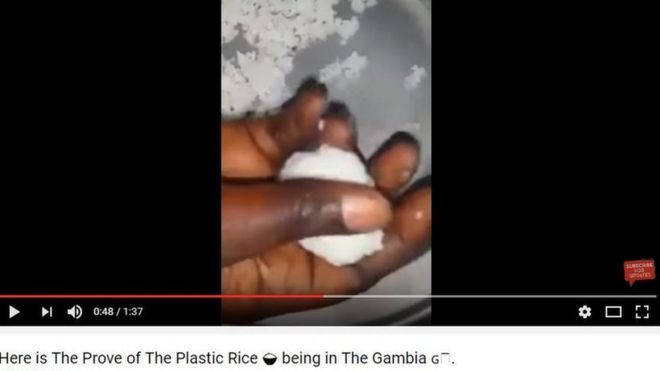
Why people believe the myth of 'plastic rice'
A video which falsely claims to "prove" the existence of fake plastic rice in the food supply
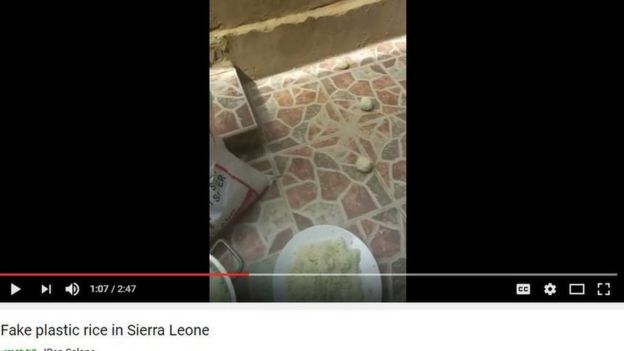
Despite little evidence that it's a widespread problem, rumours of "plastic" rice being sold in Africa and elsewhere persist on social media - driven in particular by viral videos which show bouncing rice balls.
The rumours spread over the last few weeks in Senegal, The Gambia and Ghana - and reached such a pitch that the Ghana Food and Drugs Authority decided to carry out an investigation.
They invited consumers and traders to submit samples of any rice brands they suspected of being made of plastic - and eventually concluded that there was no plastic rice being sold on the Ghanaian market.
Originating in China, rumours on social media have circulated since about 2010 of plastic rice being manufactured and mixed in with the real rice supply in order to trick consumers. The rumours were originally prompted by "fake rice" scandals, although they didn't involve food made entirely out of plastic.
In one case, companies were passing off ordinary but edible rice as premium "Wuchang" grains. Then in 2011, reports emerged that rice was being produced with potatoes and an industrial sticky resin. The rumours were further compounded when a Chinese restaurant association official warned that eating three bowls of "plastic rice" was the equivalent of eating one plastic bag.
Social media users are making videos fuelling the 'plastic rice' rumours
At no point, however, were there confirmed cases of large amounts of plastic chips being passed off as rice. "Plastic rice" is manufactured for use in shipping boxes, but it's likely that in most cases the cost of the chips would actually be more expensive than real rice.
The story had reached social media in Africa by 2016 when Nigerian customs authorities confiscated 2.5 tonnes of rice. Customs officials initially claimed that the rice was plastic - and were later forced to backtrack when the country's health minister said there was no evidence for the claims. Tests showed that the rice did however contain a high level of bacteria, Nigeria's National Agency For Food and Drugs said.
Bouncy rice
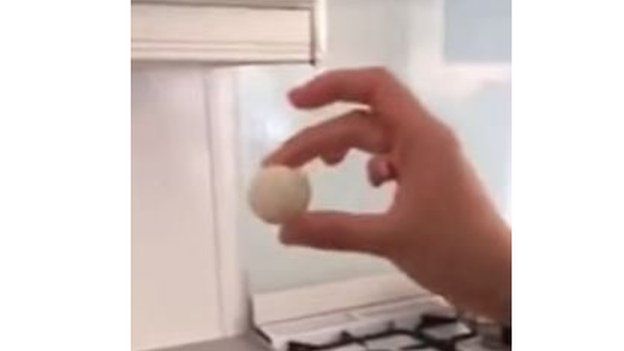
But rumours have persisted that plastic is being sold as rice, fuelled by videos which show people bouncing rice balls. Some also purport to show how the rice is made in factories.
Alexander Waugh, director of the Rice Association, a UK-based industry group, says the videos may be authentic - but not because the grains are plastic. Rice - when prepared in the right way - can actually bounce, Waugh told BBC Trending radio.
"The natural characteristics of rice are carbohydrates and proteins and you can do something like that with rice," Waugh says.
It could be that protectionism and a distrust of foreign imports is behind the persistence of the rumours, according to journalist Alexandre Capron of France 24's, The Observers.
Capron has worked extensively to debunk the myths around plastic rice and says some people are deliberately sharing fake videos to encourage consumers to buy more locally grown rice.
"The rumour is more popular in countries which are dependent on imported rice like Ivory Coast or Senegal," he says. "The rumour is so huge that governments are compelled to make statements... as to why there is no plastic rice."
Hassan Arouni, editor of the BBC's Focus on Africa, has looked into the "fake rice" rumours and says he's not sure whether people in West African countries are deliberately targeting food exporting countries such as China. But he does think food safety authorities in West Africa are doing the right thing by addressing the rumours head-on.
"I think that's the way to go and demonstrate to the public this [rumour] is not true," he says. "I think it will reassure people that this is fake news and probably somebody being naughty on the internet."

குளிர்பானம் குடிக்க போறீங்களா கவனம் தேவை

விருதுநகர், விருதுநகர் மற்றும் அதன் சுற்றுவட்டாரப்பகுதிகளில் உள்ள பெட்டிக்கடைகள் உள்ளிட்ட கடைகளில் அனைத்திலும் குளிர்பானங்கள் மற்றும் தண்ணீர்பாட்டில்கள் விற்பனை ஜோராக நடக்கிறது. இதில் பல கடைகளில் போலியான, காலாவதியான குளிர்பானங்கள், தண்ணீர்பாட்டில்கள் விற்பனை செய்யப்படுகிறது என்ற குற்றச்சாட்டு எழுந்துள்ளது.
விருதுநகர் கந்தக பூமி என்பதால் வெயிலின் தாக்கத்தை தணிக்க கடைகளுக்கு செல்லும் விழிப்புணர்வு இல்லாத மக்கள், கடைக்காரர்கள் கொடுக்கும் ஏதாவது ஒரு குளிர்பானத்தை 
குடித்து விட்டு செல்கின்றனர். வாங்கும் போது அது எந்த நிறுவனத்தில் தயாரிக்கப்பட்டது, காலாவதி நாள், அதில் கலந்துள்ள பொருள்கள் குறித்து பார்ப்பதில்லை. அவசரத்தில் கடைக்காரர்கள் கொடுக்கும் குடிநீர் பாட்டில், குளிர்பானங்களை குடித்து விட்டு செல்கின்றனர். 
கூடுதல் விலை
பல கடைகளில் போலி நிறுவனங்கள் தயாரிக்கும் குளிர்பானம், குடிநீர் பாட்டில், மற்றும் காலாவதியான குளிர்பானங்களை இருப்பு வைத்து வியாபாரம் செய்கின்றனர். அதிலும் சில கடைக்காரர்கள் கூடுதல் விலைக்கு விற்பனை செய்வதாகவும் கூறப்படுகிறது.
கிராமம் தான் குறி
விருதுநகரில் எப்போதும் குளிர்பானங்கள் விற்பனை அதிகளவில் இருக்கும். இதை பயன்படுத்தி சிலர் உரிய அனுமதி பெறாமல் போலி குளிர்பானம், குடிநீர் பாட்டில் தயார் செய்து விற்பனை செய்வதை வாடிக்கையாக கொண்டுள்ளனர். 
கடைகளில் குளிர்பானம் தயாரித்து பிளாஸ்டிக் பாக்கெட்டுகளில் அடைத்து விற்பனை செய்கின்றனர். இதுபோன்ற போலியான, தரமில்லாதவைகள் அனைத்தும் கிராமப்புறங்களை குறிவைத்து விற்பனை செய்யப்படுகிறது. அதிலும் பள்ளிகள், கோயில்கள், பொதுமக்கள் அதிகம் கூடும் சந்தை போன்ற இடங்களில் அதிகமாக விற்பனைக்கு வைக்கப்படுகிறது. 
கண்காணிப்பு தேவை
இதனால் குழந்தைகள் உட்பட அனைவருக்கும் வாந்தி, பேதி உள்ளிட்ட உடல் உபாதைகளால் பாதிக்க வாய்ப்புள்ளது. மாவட்ட நிர்வாகம், சுகாதாரத்துறை அதிகாரிகள் இதை கண்டுகொள்வதில்லை. எனவே அவ்வப்போது பெட்டிக்கடைகள் உள்ளிட்ட அனைத்து கடைகளிலும் அதிகாரிகள் கண்காணிக்கவேண்டும் என நுகர்வோர் விழிப்புணர்வாளர்கள் கூறுகின்றனர்.
போலிகள்
மணிகண்டன், விருதுநகர், “பெரும்பாலான பெட்டிக்கடைகளில் பாக்கெட்டுகளில் அடைக்கப்பட்ட குளிர்பானங்கள் விற்கப்படுகிறது. அதை பார்க்கும் போதே போலியானவை என தெரிகிறது. பள்ளி மாணவர்கள் தரமில்லாத பாக்கெட் குளிர்பானங்களையே தேடி வாங்கி குடிக்கின்றனர். 
தொடர்ந்து வாங்கி குடிப்பதால் பல்வேறு வயிற்றுப் பிரச்னைகளுக்கு ஆளாகின்றனர். அதுபோல் பெரும்பாலான கடைகளில் முகவரியில்லாத கம்பெனிகள் தயாரிக்கும் போலியான, காலாவதியான குளிர்பானம், தண்ணீர்பாட்டில் விற்பனை செய்யப்படுகிறது. 
இதனை தடுத்து, ஆரோக்கியமான பொருள் கிடைக்க அரசு அதிகாரிகள் நடவடிக்கை எடுக்கவேண்டும்” என்றார். விருதுநகர், விருதுநகர் மற்றும் அதன் சுற்றுவட்டாரப்பகுதிகளில் உள்ள பெட்டிக்கடைகள் உள்ளிட்ட கடைகளில் அனைத்திலும் குளிர்பானங்கள் மற்றும் தண்ணீர்பாட்டில்கள் விற்பனை ஜோராக நடக்கிறது. இதில் பல கடைகளில் போலியான, காலாவதியான குளிர்பானங்கள், தண்ணீர்பாட்டில்கள் விற்பனை செய்யப்படுகிறது என்ற குற்றச்சாட்டு எழுந்துள்ளது. விருதுநகர் கந்தக பூமி என்பதால் வெயிலின் தாக்கத்தை தணிக்க கடைகளுக்கு செல்லும் விழிப்புணர்வு இல்லாத மக்கள், கடைக்காரர்கள் கொடுக்கும் ஏதாவது ஒரு குளிர்பானத்தை குடித்து விட்டு செல்கின்றனர். வாங்கும் போது அது எந்த நிறுவனத்தில் தயாரிக்கப்பட்டது, காலாவதி நாள், அதில் கலந்துள்ள பொருள்கள் குறித்து பார்ப்பதில்லை. அவசரத்தில் கடைக்காரர்கள் கொடுக்கும் குடிநீர் பாட்டில், குளிர்பானங்களை குடித்து விட்டு செல்கின்றனர். கூடுதல் விலை பல கடைகளில் போலி நிறுவனங்கள் தயாரிக்கும் குளிர்பானம், குடிநீர் பாட்டில், மற்றும் காலாவதியான குளிர்பானங்களை இருப்பு வைத்து வியாபாரம் செய்கின்றனர். அதிலும் சில கடைக்காரர்கள் கூடுதல் விலைக்கு விற்பனை செய்வதாகவும் கூறப்படுகிறது. கிராமம் தான் குறி விருதுநகரில் எப்போதும் குளிர்பானங்கள் விற்பனை அதிகளவில் இருக்கும். இதை பயன்படுத்தி சிலர் உரிய அனுமதி பெறாமல் போலி குளிர்பானம், குடிநீர் பாட்டில் தயார் செய்து விற்பனை செய்வதை வாடிக்கையாக கொண்டுள்ளனர். கடைகளில் குளிர்பானம் தயாரித்து பிளாஸ்டிக் பாக்கெட்டுகளில் அடைத்து விற்பனை செய்கின்றனர். இதுபோன்ற போலியான, தரமில்லாதவைகள் அனைத்தும் கிராமப்புறங்களை குறிவைத்து விற்பனை செய்யப்படுகிறது. அதிலும் பள்ளிகள், கோயில்கள், பொதுமக்கள் அதிகம் கூடும் சந்தை போன்ற இடங்களில் அதிகமாக விற்பனைக்கு வைக்கப்படுகிறது. கண்காணிப்பு தேவை இதனால் குழந்தைகள் உட்பட அனைவருக்கும் வாந்தி, பேதி உள்ளிட்ட உடல் உபாதைகளால் பாதிக்க வாய்ப்புள்ளது. மாவட்ட நிர்வாகம், சுகாதாரத்துறை அதிகாரிகள் இதை கண்டுகொள்வதில்லை. எனவே அவ்வப்போது பெட்டிக்கடைகள் உள்ளிட்ட அனைத்து கடைகளிலும் அதிகாரிகள் கண்காணிக்கவேண்டும் என நுகர்வோர் விழிப்புணர்வாளர்கள் கூறுகின்றனர். போலிகள் மணிகண்டன், விருதுநகர், “பெரும்பாலான பெட்டிக்கடைகளில் பாக்கெட்டுகளில் அடைக்கப்பட்ட குளிர்பானங்கள் விற்கப்படுகிறது. அதை பார்க்கும் போதே போலியானவை என தெரிகிறது. பள்ளி மாணவர்கள் தரமில்லாத பாக்கெட் குளிர்பானங்களையே தேடி வாங்கி குடிக்கின்றனர். தொடர்ந்து வாங்கி குடிப்பதால் பல்வேறு வயிற்றுப் பிரச்னைகளுக்கு ஆளாகின்றனர். அதுபோல் பெரும்பாலான கடைகளில் முகவரியில்லாத கம்பெனிகள் தயாரிக்கும் போலியான, காலாவதியான குளிர்பானம், தண்ணீர்பாட்டில் விற்பனை செய்யப்படுகிறது. இதனை தடுத்து, ஆரோக்கியமான பொருள் கிடைக்க அரசு அதிகாரிகள் நடவடிக்கை எடுக்கவேண்டும்” என்றார்.

சமையல் எண்ணெய் பாக்கெட்களில் 'கொலஸ்ட்ரால் இல்லை' வாசகத்திற்கு தடை

சிவகங்கை: சமையல் எண்ணெய் பாக்கெட்களில் 'கொலஸ்ட்ரால் இல்லை'என்ற வாசகம் எழுதுவதற்கு உணவு பாதுகாப்புத்துறை தடை விதித்துள்ளது.
கடலை, சூரியகாந்தி, தேங்காய், எள் போன்ற தாவரங்களில் தயாரிக்கப்படும் சமையல் எண்ணெய்களில் இயற்கையாகவே 'கொலஸ்ட்ரால்' இல்லை. ஆனால் சில எண்ணெய் 
நிறுவனங்கள் மக்களை கவரும் வகையில் தங்களது தயாரிப்பில் 'கொலஸ்ட்ரால்' இல்லை என வாசகத்தை அச்சிட்டு வருகின்றன. இந்த விளம்பரத்தால் நுகர்வோர் ஏமாற்றம் அடைந்து வருகின்றனர். உணவு பாதுகாப்புச் சட்டப்படி, 'எண்ணெய்யின் இயற்கை குணாதிசயத்தை பாக்கெட்டில் குறிப்பிட தேவையில்லை, செயற்கையாக சேர்க்கப் படும் பொருட்கள் மற்றும் அதனால் ஏற்படும் மாற்றத்தை மட்டும் குறிப்பிட்டால் போதும்,' என கூறப்பட்டுள்ளது.ஆனால் தாவர எண்ணெய்யின் இயற்கை குணாதிசயமான 'கொலஸ்ட்ரால்' இல்லாததை, தங்களது 
தயாரிப்புகளுக்கே உரித்தானது போல் விளம்பரப்படுத்தி சில நிறுவனங்கள் மக்களை ஏமாற்றி வருகின்றன. இதனை தடுக்கும் வகையில் தாவர எண்ணெய் பாக்கெட் களில் 'கொலஸ்ட்ரால் இல்லை' என்ற வாசகம் இருந்தால், அவற்றை பறிமுதல் செய்ய உணவு பாதுகாப்புத்துறை உத்தரவிட்டுள்ளது.
உணவு பாதுகாப்புத்துறை அதிகாரி ஒருவர் கூறியதாவது: விலங்குகளிடம் இருந்து கிடைக்கும் எண்ணெய்களில் மட்டுமே 'கொலஸ்ட்ரால்' இருக்கும். மேலும் தாவர எண்ணெய்களில் செயற்கையால் மேற்கொள்ளப்படும் மாற்றங்களை வேண்டுமானால் குறிப்பிடலாம். இயற்கையிலேயே உள்ள அதன் குணாதிசயத்தை பிரபலப்படுத்தி வியாபாரம் செய்ய கூடாது, என்றார்.சிவகங்கை: சமையல் எண்ணெய் பாக்கெட்களில் 'கொலஸ்ட்ரால் இல்லை'என்ற வாசகம் எழுதுவதற்கு உணவு பாதுகாப்புத்துறை தடை விதித்துள்ளது. கடலை, சூரியகாந்தி, தேங்காய், எள் போன்ற தாவரங்களில் தயாரிக்கப்படும் சமையல் எண்ணெய்களில் இயற்கையாகவே 'கொலஸ்ட்ரால்' இல்லை. ஆனால் சில எண்ணெய் நிறுவனங்கள் மக்களை கவரும் வகையில் தங்களது தயாரிப்பில் 'கொலஸ்ட்ரால்' இல்லை என வாசகத்தை அச்சிட்டு வருகின்றன. இந்த விளம்பரத்தால் நுகர்வோர் ஏமாற்றம் அடைந்து வருகின்றனர். உணவு பாதுகாப்புச் சட்டப்படி, 'எண்ணெய்யின் இயற்கை குணாதிசயத்தை பாக்கெட்டில் குறிப்பிட தேவையில்லை, செயற்கையாக சேர்க்கப் படும் பொருட்கள் மற்றும் அதனால் ஏற்படும் மாற்றத்தை மட்டும் குறிப்பிட்டால் போதும்,' என கூறப்பட்டுள்ளது.ஆனால் தாவர எண்ணெய்யின் இயற்கை குணாதிசயமான 'கொலஸ்ட்ரால்' இல்லாததை, தங்களது தயாரிப்புகளுக்கே உரித்தானது போல் விளம்பரப்படுத்தி சில நிறுவனங்கள் மக்களை ஏமாற்றி வருகின்றன. இதனை தடுக்கும் வகையில் தாவர எண்ணெய் பாக்கெட் களில் 'கொலஸ்ட்ரால் இல்லை' என்ற வாசகம் இருந்தால், அவற்றை பறிமுதல் செய்ய உணவு பாதுகாப்புத்துறை உத்தரவிட்டுள்ளது. உணவு பாதுகாப்புத்துறை அதிகாரி ஒருவர் கூறியதாவது: விலங்குகளிடம் இருந்து கிடைக்கும் எண்ணெய்களில் மட்டுமே 'கொலஸ்ட்ரால்' இருக்கும். மேலும் தாவர எண்ணெய்களில் செயற்கையால் மேற்கொள்ளப்படும் மாற்றங்களை வேண்டுமானால் குறிப்பிடலாம். இயற்கையிலேயே உள்ள அதன் குணாதிசயத்தை பிரபலப்படுத்தி வியாபாரம் செய்ய கூடாது, என்றார்.