Jul 22, 2015

Maggi ban: Proprietary food is not unsafe


Maggi noodles falls under the category of proprietary foods
The country's largest food company by revenue, Nestle India, has contested the ban on Maggi noodles, saying that Section 22 of the Food Safety & Standards Act, 2006, which was invoked by the country's apex food regulator when prohibiting its manufacture and sale in a June 5 order, could not be the basis of the ban. Arguing the matter in theBombay High Court on Tuesday, Nestle India's counsel Iqbal Chagla said Section 22 could not act as a bar.
Section 22, for the record, indicates that genetically-modified food, organic foods, functional foods and proprietary food, cannot be manufactured, distributed or sold unless notified by the central government. Maggi noodles falls under the category of proprietary foods.
Chagla impressed upon the court that there were no specific standards governing proprietary food, which constituted five per cent of the food categories covered under the Act.
"Proprietary food is not unsafe," Chagla told the division bench headed by V M Kanade and B P Colabawala. "If Section 22 is not a bar, then Section 16 is irrelevant," he said.
Arguments in the matter will continue on July 22.

Online registration facility for food business operators

Imphal, July 21 2015 : Government of Manipur on Tuesday launched an online registration facility for food business operations in the five districts of Manipur.
A statement issue by State food safety commissioner/ principal secretary health & family welfare Dr J Surush Babu said the State has adopted the centralized Online System for FBO- License/Registration and it is happy to announce the launching of Online Licence/Registration services for Food business operators in Five districts of the State namely Imphal West, Imphal East, Thoubal, Bishnupur and Churachandpur districts.
All the Food business Operators can avail themselves of the services for Licensing/Registration by logging onto the website:http://foodlicensing.fssai.gov.in.
Alternately, they can access www.fssai.gov.in and log on to FLRS link provided in the site.
The statement further said that the Government of India enacted food safety and standards Act (FSS Act 2006), to regulate and monitor the manufacture, process, pack, transport, store distribute, sell and import of any food ingredient so as to ensure availability of safe and wholesome food for human consumption and also to laying down science based standards.
FSS Regulations Gazette Notified on August 5, 2011 mandates that every Food Business Operation (FBO) must obtain License/ Registration Certificate.
Food Safety & Standards Authority of India (FSSAI) has created a Centralized Online System for FBO- License /Registration for use across the country, with the assistance of National Institute for Smart Government (NISG), Hyderabad.
The online Food licensing /Registration system (FLRS) enables the Food business operators at their comfort check for eligibility, apply for License/registration pay the appropriate fees, upload supporting documents, track the status of their applications License/Registration status, schedule inspections and receive alerts on the status and renewals.
Food business operators are encouraged to create their online user accounts to continue to receive SMS, e-mail alerts from authority, the statement added.

Here’s how you test milk and milk products at home

MEERUT: To ease the burden on government officials and enable households to check the purity of milk and milk products, the Food Safety and Standards Authority of India (FSSAI) has issued a chart that can be used to check the quality of these. Easily available chemicals can be used to assess the safety of the milk consumed, right at home. 
"Various bakeries and milk products sellers indulge in adulteration. These manufacturers often do not come under the scanner of the food department. That is why the FSSAI has issued this chart, so people can easily learn how to check the quality of the milk or milk products," said JP Singh, chief food safety officer. 
"Ordinary citizens can use the manual to check adulteration in milk and milk products. Government labs are already under pressure with so many samples, it is often difficult to deal with the large number of samples received in a timely manner. With this manual, people can conduct checks on milk on their own," read the order from Praveen Kumar Singh, commissioner, Food Safety and Drug Administration. 
This comes days after the state's food testing laboratories were thrown open to ordinary citizens. Someone who suspects adulteration in a food item is free to bring it for testing to the state lab, on payment of Rs 1,000 to test each sample. 
The manual issued by FSSAI can be used to test the presence of starch, water, urea, vanaspati, formalin and detergent in milk. The presence of vanaspati or starch in sweet curd, and sweets like rabdi or in khoa, paneer, chhana can also be tested at home using the chart. 
There are six food testing laboratories in Uttar Pradesh, at Lucknow, Varanasi, Meerut, Agra, Gorakhpur and Jhansi. Now, routine and easy checks can be conducted at home, using common chemicals. 
"We will publish pamphlets of the manual for distribution outside schools and at meetings of district officials, so people are more aware of how these tests can be conducted," JP Singh said.

DINAMALAR NEWS


'பூச்சிகொல்லி மருந்து கலந்த காய்கறிகளால் தமிழகத்துக்கும் பாதிப்பு'

தமிழக காய்கறிகளுக்கு கேரள அரசு தடை விதித்துள்ளதால், விவசாயிகள் பாதிக்கப்படுவர். இதை தவிர்க்க, வேளாண் பல்கலை, உணவு பாதுகாப்பு மற்றும் மருந்து கட்டுப்பாடு நிர்வாகத்துறை அதிகாரிகள் ஒருங்கிணைந்து, 
உணவு பொருட்களில் நச்சுத்தன்மை குறித்த சான்றை, உரிய நேரத்தில் கொடுக்க நடவடிக்கை எடுக்க வேண்டும்.தற்போது உற்பத்தி செய்யப்படும், உணவு பொருட்கள் மற்றும் இறைச்சிகளில் கூட, அனுமதிக்கப்பட்ட அளவைவிட அதிகளவு, பூச்சிக்கொல்லி மருந்துகள் பயன்படுத்தப்படுகின்றன. இதனால் தமிழக மக்களும் பாதிக்கப்படுகின்றனர்.

Govt lays down rules to ferry animals meant for slaughter

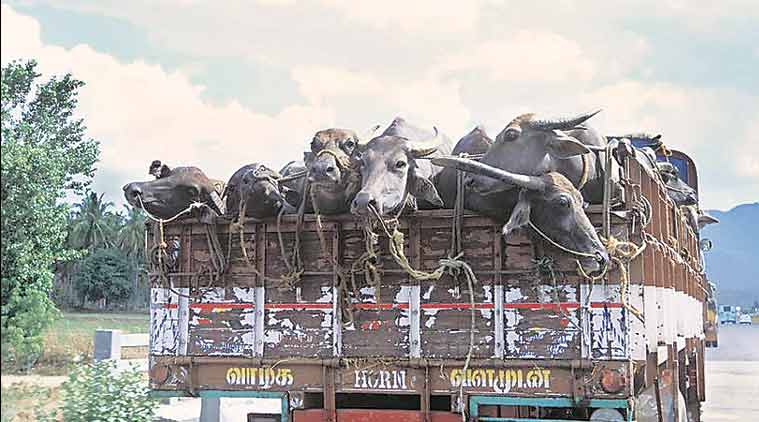
Since only two states — West Bengal and Kerala — allow cow slaughter, cows from all over India are transported to these two states for slaughter.
As per new norms, animals must be ferried on specially registered vehicles with welded cages.Four years after the Food Safety Act clearly laid down the conditions in which animals meant for consumption are to be kept and transported to the slaughterhouse, the Transport Ministry has finally laid down rules for the transportation of such animals.
Earlier this month, the ministry notified changes in the Motor Vehicles Act that require animal transportation vehicles to be registered as such with the respective Road Transport Offices (RTOs) and equipped with welded cages of specified sizes for transportation of specific animals. The move comes after a series of petitions from animal rights activists about the harsh conditions in which animals are transported. The notification issued on July 8 came after Union Women and Child Development Minister Maneka Gandhi took the issue up with Union Minister for Road Transport and Shipping Nitin Gadkari.
The notification that is to come into effect from January 1, 2016, requires animal transport trucks to adhere to standards set by the Bureau of Indian Standards and to have permanent cages to ensure that it cannot transport more than the allowed number of animals — six buffaloes or 40 goats per truck. It lays down cage sizes for transport of bovines, horses, sheep and goats, pig and poultry.
A motor vehicle that is registered as an animal carrying vehicle cannot carry other goods. If it does, it will lose its registration, apart from being made to pay a fine far heftier than those prescribed under the Prevention of Cruelty to Animals Act.
Since only two states — West Bengal and Kerala — allow cow slaughter, cows from all over India are transported to these two states for slaughter.
The long distance travel makes cows among the most abused during transportation, with animals sometimes stacked one on top of the other with their noses tied upwards to leave room for breathing. Many of these animals are pregnant as there is a belief that eating a pregnant animal helps produce babies.
While regulation of transportation of animals has been a long standing demand of animal rights activists, the regulations of the Food Safety Act (FSA) issues in 2011 clearly lay down that unnecessary stress to an animal during transportation may cause the quality of meat to suffer. It also requires livestock to be certified by a veterinary expert before slaughter.
“Livestock are transported en masse from the farm to the slaughterhouse, a process called ‘live export’. Depending on the journey’s length and circumstances, this exerts stress and injuries on the animals and some may die en route. Apart from being inhumane, unnecessary stress in transport may adversely affect the quality of the meat,” read the regulations under the FSA.
Injured animals, according to the regulations, are not to be slaughtered. This rule, however, is routinely violated.

Street vendors need proper skills for safer food: Paswan

Millions of street food vendors across India should be imparted proper skills to ensure hygiene so that people's health does not suffer, union minister Ram Vilas Paswan said on Tuesday.
The minister for consumer affairs, food and public distribution launched the 'Surakshit Khadya Abhiyan', a nationwide campaign for awareness on food safety, particularly among street food vendors.
Lauding Prime Minister Narendra Modi for his 'Skill India', which aims at developing skills among the people, Paswan said: "It is important to develop skills even among street vendors to ensure that there is hygiene and no adulteration in food."
"Food-borne diseases which have severe health and economic consequences, both in developed and developing countries can be prevented by food safety practices only," he added.
Launching the campaign's website and logo, he said: "Food safety is an inseparable part of food security and no nation can guarantee food security if food in not completely safe."
He said there can be no compromise over food safety.
From the president to a working class person, consumers comprise everyone, and hence there needs to be more emphasis on food safety and cleanliness, Paswan said.
The campaign, planned by the Confederation of Indian Industry (CII), National Association of Street Vendors of India and other consumer organisations, aims to create awareness on safe food across the country.
The initiative complements campaigns under the ministry like 'Jago Grahak Jago', for consumer awareness, the minister added.
For a street vendor who works for daily wages, livelihood was more important than quality of food, and therefore there needs to be more awareness among people, not just the educated class, about hygienic food and health, Paswan said.
The minister said the government will extend cooperation and support for infrastructure of the street food vendors.
At the initial stage, the campaign aims to target the cities of Delhi, Mumbai, Kolkata, Chennai, Bengaluru and Hyderabad and a few two-tier cities.
Nationwide sensitisation sessions on cleaning, hygiene and sanitation for safe food, walkathons and media dissemination programmes for consumers and the street food industry would be organised.

Nothing against Nestle, but awareness created: Paswan

Consumer Affairs Minister Ram Vilas Paswan on Tuesday said while the government had nothing against Nestle over the Maggi noodle controversy, which was probed by an independent watchdog on safety standards, the episode had created awareness among the public.
"Our priority is consumer health. From president to peon, everyone is a consumer. We don't want our people visit doctors after eating sub-standard food. The Maggi episode has created awareness on food safety," said Paswan who also holds food and public distribution portfolios.
"We want consumers to get safe food products. We also don't want to create panic in the market," said the minister, speaking to reporters at the launch of a national campaign to strengthen countrywide awareness and capacity building on safe and hygienic food for all.
Paswan also sought to clarify that he considered Nestle to be a responsible company.
"The Maggi issue was an isolated case. No one has to fear. But black sheep are everywhere. One thing is: No big company wants to sell sub-standard food products. And one wrong incident does not mean that the company is bad," he said.
Maggi noodles were banned by India's food regulator on June 5 after a allegedly high amount of lead and monosodium glutamate (MSG) were found in a sample. Following that, Nestle withdrew all the variants of the popular instant noodle but continued to maintain that its products were safe.
This was also confirmed by a host of other countries, including Britain, Singapore and Canada, found Maggi noodles that were imported there from India to be safe.
Paswan, nevertheless, sought to defend actions by Indian authorities.
"If something comes to the government's notice, it has to take action. If some complain about the product comes to the FSSAI (Food Safety and Standards Authority of India, the regulator), an investigation has to be done,"he said.
"That doesn't mean that the company is good or bad," he said, adding that it did not make any difference which was the nodal ministry for the food regulator as long as it was functioning properly.
Responding to demands of few states to shift FSSAI from the union health ministry to consumer affairs ministry, the minister added that FSSAI is an independent regulator and it does not make a difference if the authority is with health or consumer affairs ministry.

Jul 21, 2015

Maggi row: Paswan says govt has nothing against Nestle

Weeks after regulatory action forced Nestle to pull out popular snack Maggi, Food and Consumer Affairs Minister Ram Vilas Paswan today said the government has nothing against the Swiss food maker and was only probing the complaint. 
Paswan said consumer health is paramount and the Maggi controversy has created awareness about food safety in the country, even as he assured that the government was against any kind of "inspector raj". 
"The Maggi issue is an isolated case. There is nothing to fear. Black sheeps are there everywhere. No big company wants to sell sub-standard food products. One wrong incident/product does not mean that the company itself is bad," Paswan told reporters after the launch of a food safety initiative here. 
The regulator, Food Safety and Standards Authority of India(FSSAI) is investigating the Maggi issue as it has received complaints against the product, he added. 
Paswan further said, "If something comes to the government's notice, it has to take action. If some complain about the product comes to FSSAI, it has to be investigated. It does not mean that the company is bad or good." 
The Consumer Affairs Ministry has also received complaints against Maggi noodles and hence is filing a class action suit against Nestle India for the first time. 
The minister also observed that there is too much criticism against FSSAI if it takes strict action, while the authority is also blamed if it does not take any measures to curb sale of sub-standard food products in the market. 
"There is this dichotomy. Our priority is consumer health. From president to peon, everyone is consumer. We don't want people visit doctor due to consumption of sub-standard food. The Maggi episode has created awareness about food safety in the country," he said. 
On some states' demand to shift the FSSAI from the Union Healthy Ministry to the Consumer Affairs Ministry, the minister said: "FSSAI is an independent regulatory body. It does not make any difference if the authority is in Health or Consumer Affairs Ministry. The government's main concern is that FSSAI should ensure food safety." 
Last month, FSSAI had banned Maggi for being "unsafe and hazardous" for human consumption after it found excessive levels of lead and taste enhancer monosodium glutamate (MSG). Nestle India had to recall Maggi from markets, while some other companies also later withdrew similar products. 
"We want consumers get safe food products. Be it Maggi or any other product, we don't want to create panic in the market. We don't want to impose inspector raj," Paswan said. 
To protect consumers interest, Paswan said the government has proposed major changes to the existing Consumer Protection Act to protect consumer rights and simplify the judicial process to ensure speedy and inexpensive justice.

Over 12k samples found adulterated, misbranded in 2014-15

New Delhi, Jul 21, 2015 
12,077 samples were found adulterated and misbranded out of the 60,548 samples analysed by food safety watchdog FSSAI in all states and union territories in 2014-15, the government today said.
Taking action in the matter, the authority lodged 1,989 criminal and 7,241 civil cases, Union Health Minister J P Nadda said in a written reply in Rajya Sabha.
On the recent controversy over the detection of excess content of lead and MSG (monosodium-glutamate) in popular snack Maggi noodles, the minister said, "The FSSAI (Food Safety and Standards Authority of India) has issued an order directing M/S Nestle India Limited to withdraw and recall their products from the market."
"A show cause notice has been issued to the company giving 15 days' time as to why product approvals granted in respect of nine variants of Maggie Noodles should not be withdrawn," he added.
"The FSSAI has ordered recall of the food products and/or withdrawn the provisional 'No Objection Certificates' issued in respect of various food products manufactured by multi-national companies who violated the provisions of the FSS Act or Regulations. Some of the food products are Maggi instant noodles, Monster energy drink, Cloud 9 energy drink, Tzinga Energy drink and Akoaroma flavoured water," he said.

Check on Adulterated Food Items

As per reports from the States/UTs, samples of Nestlé’s Maggi noodles have been found to be containing more than the permissible limit of 2.5 ppm of lead. The samples have also been found to be violating the labeling requirements as far as presence of Monosodium Glutamate (MSG) is concerned. However, no report has been received by the Food Safety and Standards Authority of India (FSSAI) indicating the presence of detergent in Mother Dairy’s milk samples. 
The FSSAI has issued an order dated 5th June 2015 directing M/s Nestle India Limited to withdraw and recall their products from the market. Further, a show cause notice has been issued to the company giving 15 days’ time as to why product approvals granted in respect of 9 variants of Maggi noodles should not be withdrawn. 
The FSSAI has ordered recall of the food products, and/or withdrawn the provisional “No Objection Certificates” (NOCs) issued in respect of various food products manufactured by MNCs who violated the provisions of the FSS Act or Regulations there under. Some of the food products are Maggi Instant Noodles, Monster Energy Drink, Cloud 9 Energy Drink, Tzinga Energy drink and Akoaroma Flavored Water. Besides, safety standards of food items have been notified in respect of around 365 categories of food products. These standards are enforced by the Food Safety Departments of the States/UTs; however, details in this regard are not maintained centrally. 
The implementation and enforcement of Food Safety and Standards Act, 2006 primarily rests with the State/UT Governments. Samples of food items will continue to be drawn by the State Food Safety Officers and sent to the laboratories authorized by the FSSAI for analysis. In cases, where samples are found to be not conforming to the provisions of the Act, the Rules and Regulations made there under, action as per the Food Safety and Standards Act, 2006 and regulations 2011, will be taken. 
The Health Minister, Shri J P Nadda stated this in a written reply in the Rajya Sabha here today.

DINAMALAR NEWS


DINAMALAR NEWS


பரமத்திவேலூர் அருகே காலவதியான உணவு பொருட்கள் விற்ற கடைகளுக்கு அனுமதி ரத்து


பர மத் தி வே லூர், ஜூலை 21:
பர மத் தி வே லூர் பகு தி யில் உள்ள திரை ய ரங் கு களில் காலா வ தி யான உணவு பொருட் களை விற் பனை செய்த 3 கடை களுக்கு அனு மதி ரத்துசெய்யப் பட்டது.
நாமக் கல் கலெக் டர் தட் ச ணா மூர்த்தி, மாவட்ட உணவு பாது காப்பு அதி காரி தமிழ் செல் வன், ஆகி யோ ருக்கு பர மத் தி வே லூ ரில் உள்ள திரை ய ரங் கு களில் காலா வ தி யான உணவு பொருட் கள் விற் பனை செய் யப் ப டு வ தாக ரக சிய தக வல் கிடைத் தது. இத னை ய டுத்து கலெக் டர் உத் த ர வின் பேரில் பர மத் தி வே லூர் தாலுகா உணவு பாது காப்பு அதி காரி சிவ சண் மு கம், பர மத் தி வே லூர் பகு தி களில் உள்ள திரை ய ரங் கு களில் திடீர் சோத னை யில் ஈடு பட்ட னர். அப் போது காலா வ தி யான உணவு பொருட் களை விற் பனை செய் வது கண் ட றி யப் பட்டது.
பின் னர் அந்த 3 திரை ய ரங் கு களில் உள்ள கடை களுக்கு அனு மதியை ரத்துசெய்து கலெக் டர் உத் த ர விட்டார்.

Does FSSAI have powers to ban Maggi: HC asks Nestlé India

The Bombay high court (HC) on Monday asked Nestlé India to reply whether Food Safety and Standards Authority of India (FSSAI) has overriding powers to ban Maggi.
A division bench of justice VM Kanade and justice BP Colabawalla was hearing the petition filed by Nestlé India, after FSSAI banned all nine variants of Maggi on June 5 this year.
Senior counsel Iqbal Chagla appearing for the company said there have been no complaints against Maggi for 30 years, and suddenly someone in Ghaziabad found monosodium glutamate in a sample. He said there is no affidavit filed by FSSAI on this.
Chagla said there is absolutely no material to say that the product is unsafe and therefore should be banned. He said FSSAI cannot ban any product as and when it pleases.
The court then asked whether FSSAI had informed Nestlé India that they propose to impose a ban. Chagla said there was no notice given and they were informed about the ban through a phone call.
Chagla then said that FSSAI is a regulator and they should not have behaved in an adversarial manner by arbitrarily banning the product. He also said there was nothing found in the other six variants of Maggi and despite that there was an order to ban all the nine variants.
The court has asked Nestlé whether the FSSAI has overriding powers to ban the whole product and whether it is a proprietary product. The arguments will continue on Tuesday.

Test Maggi in distilled water: Nestle

The court also asked the company to clarify the scope of Section 22 of the Act, which deals with proprietary foods.
Swiss food manufacturer Nestle India told the Bombay High Court on Monday that the authorities should have tested Maggi noodles and the tastemaker in distilled water before imposing a ban on these products.
“Before coming to a conclusion, the authority [FSSAI] should have taken into account food as it is intended to be consumed and not as it is sold. The product [Maggi] is consumed in 250 ml of water. You have to test in water without lead, in distilled water,” senior advocate Iqbal Chagla, representing Nestle told the court.
A Division Bench of Justices V.M. Kanade and B.P. Colabawalla asked Nestle to clarify whether the Food Safety and Standards Authority of India (FSSAI), who declared Maggi to be unsafe, and other officers concerned could work only under Section 34 of the Food Safety and Standards Act 2006. It is Nestle’s contention that mandatory provisions of Section 34 were not complied with.
The court also asked the company to clarify the scope of Section 22 of the Act, which deals with proprietary foods. Maggi falls in the category of proprietary foods, for which separate approvals are required, but the State’s ban order does not mention this.
Nestle also claimed that they were not given any intimation before the authorities decided to ban Maggi noodles. “This ban order affects my civil rights,” Mr. Chagla said.

Maggi ban: Regulator overreach, says Nestle counsel

Says apex food regulator cannot issue emergency ban order on products under the law; argument to continue today
The jurisdiction of the country's apex food regulator, Food Safety & Standards Authority of India (FSSAI), ws questioned at the high court here on Monday, in the petition from Nestle India on the Maggi noodles' ban
Whether the regulator could issue an emergency ban order was among the arguments raised by the company's counsel, Iqbal Chagla. He contended Section 34 of the Food Safety & Standards Act, 2006, prevented FSSAI from issuing such an order.
“Section 34 specifies that emergency prohibition notices or orders can be issued by the designated officer or the commissioner of food safety (of a state), if they are satisfied that a health risk condition exists with respect to a food business," Chagla told a bench of judges V M Kanade and B P Colabawalla.
"Morever, the designated officer shall not apply the emergency prohibition order at least one day before the the date of application, till he has served a notice on the food business operator of his intention to do so. And, the prohibition order will cease to have effect once he is satisfied with the measures taken by the food business operator for lifting of such an order."
Nestle India has been arguing in court that the recall and ban order on Maggi, issued on June 5, was arbitrary and against the principles of natural justice. Monday's hearing was a continuation of final arguments that commenced on July 17.
On Friday, Chagla had argued on how the tests conducted by state laboratories to determine the level of contamination in Maggi could not be relied upon. He had highlighted how the tests were conducted by laboratories that were not accredited or notified under Section 43 of the 2006 law.
On Monday, he repeatedly drove home the point of arbitrariness, saying FSSAI had not adhered to sections 16 and 30 of the Act. “Section 16 indicates the duties and functions of the Authority, which does not include banning of products. Section 30 says it is the state government that will appoint the commissioner of food safety for efficient implementation of safety and standards. It is the commissioner that will prohibit the distribution or sale of a product in a state, carry out surveys of industrial units engaged in the manufacture or processing of food in a state, and ensure they comply with standards notified by the Authority. The latter has no power to discharge the above duties, as specified in the Act,” Chagla said.
Nestle will continue arguing the matter on Tuesday, after which the counsels for the Maharashtra Food & Drug Administration and FSSAI will present their defence. A judgement will be given after completion of all arguments, on a separate day.

Did FSSAI have power to impose pan India ban on Maggi queries Bombay HC

MUMBAI: The Bombay high court on Monday asked Whether FSSAI has authority to impose nationwide ban and Whether Maggie is a proprietary product under Sec 22 of FSS Act, 2006 which requires prior approval from the regulator. 
Nestle India which is arguing against the June 5 ban brought on by FSSAI after it said 30 out of 72 samples tested positive for excess Lead, said the water used during testing could have been impure. 
Senior counsel Iqbal Chagla who represents Nestle along with senior counsel Amit Desai questioned the quality of water used during the tests done as he said they were by unaccredited laboratories whose results can't be accepted. "Accreditation of labs is vital under the Act itself," said Chagla who expanded on the argument that lack of accredit ion is a flaw in the testing itself. Besides he said 2700 tests show that Maggi is safe and for 30 long years there was not a single complaint from inspectors. "And now suddenly one Inspector in Gaziabad speaks of high MSG and the sample is sent to the Kolkata referral lab whose notification expired this March before the test" he said. 
Ban on Maggie is just on the basis of levels of Lead and when all variants have product approval except Oats, the ban on the basis of few samples in "mindless and arbitrary and unjustified." 
"The water used during testing might contain high levels of Lead. They should have ensured that the water was pure," said Chagla. 
Calling the ban as a violation of the Food Safety Act, Chagla in his day long submissions said, "Maggie can't be termed unsafe or injurious to human health as per the definition of unsafe and substandard food given in FSS Act, 2006, itself." He said, " FSSAI must decide whether Maggie is unsafe or substandard," and added that the regulator has violated its provisions of natural justice and having tested only three variants out of nine it could have at best placed a ban on a particular batch and not the entire product range. 
"The authorities not empowered to impose this ban under the FSS Act, 2006," said Chagla promoting the court to ask if the regulator could impose a national ban on the popular 2-minute Maggi noodles. 
The Maharashtra government had followed the FSSAI order with its own ban within the state on sale of the snack packets the following day in June 6. Others States did too. 
The HC has not stayed the ban and the company has destroyed over Rs 600 crore worth of goods already even as it battles the ban in court. 
The matter will continue to be heard on Tuesday when the FSSAI and its Ceo through their counsel Anil Singh and Mehmood Pracha make their case in favour of the ban.

Maggi ban: HC asks Nestle India for clarifications

Challenging the ban on Maggi, Nestle India stated that authorities failed to do a number of things before calling the food unsafe
Mumbai: In the ongoing hearing challenging the Maggi noodle ban by the food regulator Food Safety and Standards Authority of India (FSSAI) and the Maharashtra Food and Drug Administration (FDA), the Bombay high court has asked Nestle India to clarify on two counts.
The bench comprising judges V.M. Kanade and B.P. Colabawalla asked the company to explain the scope of proprietary food under section 22 of the FSSAI Act, 2006, under which products such as Maggi instant noodles come.
The bench also asked if all the officers of FSSAI are governed only by section 34 FSSAI Act, 2006, or if they had any other powers.
Section 34 deals with the power of a designated officer to impose a ban if he or she is not satisfied with the product quality and feels that it poses a health risk.
Referring to the ban, Nestle India’s counsel Iqbal Chagla had told the court that “the authorities did not have any such power, nor does the state”.
He added that “natural justice has been completely and totally violated”.
Nestle India told the court that the authorities failed to do a number of things before calling the food unsafe.
It includes issuing a show cause notice to the company and conducting food tests.
The counsel told the court that Maggi noodles come with a tastemaker inside. The tastemaker is to be added to the noodles which is boiled in 250 ml of water for two minutes and then consumed.
However, both the noodles and the tastemaker were tested separately for lead by different states and the FSSAI lab in Kolkata.
FSSAI banned the product, terming them “unsafe and hazardous” for human consumption after finding high levels of lead and the presence of taste enhancer monosodium glutamate on 5 June.
After conducting its own tests, Maharashtra state, too, had banned its sale on 6 June.
The FSSAI and the Maharashtra FDA are yet to present their case before the court.

FSSAI to soon issue draft notification for liquor standards


The safety watchdog plans to set standards for alcoholic drinks including beer, whisky and rum among others
The proposal has been made in the Safety and Standards (Food Recall Procedure) Regulations, 2015, which has been put up for public comments. 
New Delhi: With plans to set standards for alcoholic drinks including beer, whisky and rum among others central food safety watchdog Food Safety Standards Authority of India (FSSAI) is likely to come out with a draft notification within a few weeks.
“The Food Safety Standards Authority of India (FSSAI) will come up with a draft notification on the standards of alcoholic beverages in next 45 days,” a source said. It was decided that once standards for alcohol and alcoholic beverages were finalised it shall be intimated to all states and UTs so that they may suitably advise the respective excise departments, the source added.
“Work is going on to prepare standards for alcohol and alcoholic beverages, broadly under two different heads, one for drinks with less alcohol like beer and other for drinks having major alcohol content like whisky,” the source said.
Among other drinks vodka, brandy and gin will also come under the proposed standards. Earlier this year, a meeting of the Central Advisory Committee had discussed having standards for alcohol and alcoholic beverages. FSSAI has already proposed that alcoholic beverages, pan masala and supari may not be treated as “unsafe food” for recall just because they carry a mandatory warning on their covers.
The proposal has been made in the Safety and Standards (Food Recall Procedure) Regulations, 2015, which has been put up for public comments. These draft norms were put up for public comments on 29 May and the deadline ends on 1 August.
FSSAI is the central body which lays down science-based standards for articles of food and regulate their sale, manufacturing, storage, distribution and import to ensure availability of safe and wholesome food for human consumption.

DINAKARAN NEWS


மதுபானங்களுக்கு தர நிர்ணய அறிக்கை

புதுடில்லி:'மதுபானங்களின் தர நிர்ணயத்தை பரிசோதிக்கும் வரைவு அறிக்கை, இன்னும், 45 நாட்களில் வெளியிடப்படும்' என, இந்திய உணவு பாதுகாப்பு மற்றும் தர நிர்ணய ஆணையமான, எப்.எஸ்.எஸ்.ஏ.ஐ., தெரிவித்துஉள்ளது. 'நெஸ்லே இந்தியா' நிறுவனத்தின் தயாரிப்பான,'மேகி நுாடுல்ஸ்'சில், காரீயம், ரசாயன உப்பு ஆகியவை அதிகமாக இருப்பதாகவும், இதை சாப்பிடு வோருக்கு பாதிப்பு ஏற்படும் என்றும் பரிசோதனையில் உறுதி செய்யப்பட்டது. மேகி நுாடுல்ஸ் விற்பனைக்கு தடை விதிக்கப்பட்டது.
இதைத் தொடர்ந்து, சில பாக்கெட் உணவுப் பொருட்களுக்கும் தடை விதிக்கப்பட்டுள்ளது. இந்நிலையில், மற்ற பொருட்களின் மீதும், தன் பிடியை, எப்.எஸ்.எஸ்.ஏ.ஐ., 
இறுக்கியுள்ளது. பீர், விஸ்கி, ரம் போன்ற மதுபானங்களின் தரத்தையும் பரிசோதிக்கப் போவதாக ஏற்கனவே அறிவிக்கப்பட்டிருந்தது. இந்நிலையில், மதுபான வகைகளின் தர நிர்ணயத்தை பரிசோதிக்கும் வகையிலான வரைவு அறிக்கையை, எப்.எஸ்.எஸ்.ஏ.ஐ., தயாரித்துள்ளது. இதற்கான இறுதிக்கட்ட பணிகள் நடந்து வருகின்றன. 
இதுகுறித்து, எப்.எஸ்.எஸ்.ஏ.ஐ., வட்டாரங்கள் கூறியதாவது:மதுபானங்களின் தரத்தை நிர்ணயம் செய்யும் வரைவு அறிக்கை, அடுத்த, 45 நாட்களில் வெளியிடப்படும். 
அறிக்கை வெளியானதும், அதுகுறித்த தகவல் அனைத்து மாநில அரசுகளுக்கும் தெரிவிக்கப்படும். இதன் அடிப்படை யில், சம்பந்தப்பட்ட அதிகாரிகளுக்கு மதுபான வகைகளின் தர சோதனை குறித்து நடவடிக்கை எடுக்க, அதிகாரிகளுக்கு மாநில அரசுகள் உத்தரவிடலாம். இவ்வாறு, அந்த வட்டாரங்கள் தெரிவித்தன.

காய்கறிகளில் ரசாயன மருந்து தாக்கம் உணவு பாதுகாப்பு அதிகாரிகள் ஆய்வு


கூடலுார்: விளைநிலங்களில் இருந்து கொண்டு வரப்படும் காய்கறிகளில் ரசாயன மருந்துகளின் தாக்கம் எப்படி உள்ளது என்பது குறித்த ஆய்வை, உணவு பாதுகாப்பு அதிகாரிகள் தேனி மாவட்டத்தின் பல்வேறு பகுதிகளில் மேற்கொண்டுஉள்ளனர்.காய்கறிகள் உற்பத்தியில் ரசாயன மருந்துகளின் பயன்பாடு அதிகமாக உள்ளது. ரசாயன மருந்துகள் தெளிக்காவிட்டால், காய்கறிகளை முழுமையாக உற்பத்தி செய்யவே முடியாது என்ற நிலை உள்ளது. ஆனால், இதனை பயன்படுத்தும் மக்கள் பாதிப்பிற்கு உள்ளாகின்றனர் என்பதை மறுக்க முடியாது.தமிழகப்பகுதியில் இருந்து வரும் காய்கறிகளில் ரசாயன மருந்துகளின் தாக்கம் அதிகம் உள்ளது என கேரளாவில் நடத்திய ஆய்வில் கண்டுபிடிக்கப்பட்டதாக கூறப்பட்டது. இதனால் கேரளாவிற்கு கொண்டு வரும் காய்கறிகளுக்கு, அம்மாநில அரசு கட்டுப்பாடுகளை விதிக்கத் துவங்கியுள்ளது. மருந்து கலந்து வரும் காய்கறிகளை தடை செய்யவேண்டும் எனக் கூறிய கேரளா, தற்போது உணவு பாதுகாப்பு ஆணையத்திடமிருந்து பெற்ற லைசென்சு இருந்தால் மட்டுமே கேரளாவிற்குள் காய்கறிகளை அனுமதிக்க வேண்டும் என, எல்லைப்பகுதியில் உள்ள 'செக்போஸ்ட்' அலுவலர்களுக்கு உத்தரவிட்டுள்ளது.
இந்நிலையில், தேனி மாவட்டத்தில் விவசாய நிலத்தில் இருந்து கொண்டு வரப்படும் காய்கறிகளை உணவு பாதுகாப்பு அலுவலர்கள் நேற்று முதல், ஆய்வு செய்யும் பணியில் ஈடுபட்டுள்ளனர். ஆய்வுக்காக எடுக்கப்படும் 'சாம்பிளை' மதுரையில் உள்ள ஆய்வு மையத்திற்கு அனுப்பி வைப்பர். இதற்கான முடிவுகள் வருவதற்கு 15 நாட்கள் வரை ஆகும். விவசாய நிலத்தில் இருந்து எடுக்கப்பட்ட காய்கறிகள், 15 நாட்கள் வரை பயன்படுத்தாமல் வைத்திருந்தால் வீணாகும் என்பதால் விவசாயிகள் கலக்கம் அடைந்துள்ளனர்.
'மொபைல் லேப்' வேண்டும்: காய்கறிகளில் ரசாயன மருத்துகள் குறித்து ஆய்வு மேற்கொண்டு உடனடியாக அதற்கான முடிவுகள் தெரியும் வகையில் ஒவ்வொரு மாவட்டத்திற்கும் 'மொபைல் லேப்' அவசியம். ஆய்வுக்கு உட்படுத்தப்பட்ட காய்கறிகளின் தன்மை குறித்து உடனடியாக தெரியும் வகையில் வசதியை விரைவில் 
ஏற்படுத்த அரசு முன் வரவேண்டும். இல்லாவிட்டால், காய்கறிகள் கேரளாவிற்கு அனுப்ப முடியாமல் சிக்கலை ஏற்படுத்தி விடும் என விவசாயிகள் தெரிவித்துள்ளனர்.

Sale of unwholesome food articles DFCO initiates action against erring hotel

JAMMU: Acting on a specific complaint, regarding sale of food article being prepared from unwholesome food ingredients and offered for sale to the consumers by a hotel in Jammu city, a team of the Food Safety Officers comprising Daleep Singh and Rakesh Kumar Gupta under the supervision of Sanjeev Kumar, Assistant Controller Food, (MCJ), Drugs and Food Control Organisation (DFCO), J and K, Jammu carried out a detailed inspection of the kitchens and stores of the hotel.
It was observed that the establishment was being run under unhygienic and insanitary conditions and heaps of garbage lying unattended could be seen within the premises. Processing of food was being carried out with deteriorated vegetables, virtually unsafe for human consumption.
Large quantity of unwholesome food articles such as cooked potatoes, sauces, meat, etc were destroyed on the spot. Challan on account of unhygienic and insanitary conditions under the provision of the Food Safety and Standards Act 2006 shall be filed. An improvement notice has also been served upon the hotel management for upgrading the existing infrastructure within a specific time frame.
Meanwhile, acting on the reports regarding artificial ripening of fruits in Fruit Mandi, the team of DFCO carried out a detailed inspection of Fruit Mandi. Vice President Fruit Mandi Association Om Parkash Saini along with other members associated with the trade were apprised by the DFCO team regarding health risks associated with the use of calcium carbide commonly used for ripening of the fruits.
It was impressed upon vendors that persons who indulge in such practices shall be dealt sternly under law.
It was also decided that a sensitisation cum awareness workshop on the topic shall be organised to suggest alternative methods of ripening which are naturally safe and were in use conventionally

Jul 20, 2015

B P Sharma given additional charge as FSSAI chairperson

Health and Family Welfare Secretary Bhanu Pratap Sharma was today given additional charge of Food Safety and Standards Authority of India (FSSAI), Chairperson, for three months. 
Sharma, a 1981 batch IAS officer of Bihar cadre, will hold the additional charge for three months beyond July 3 or till the appointment of a regular incumbent, an order issued by the Department of Personnel and Training (DoPT) said.

FSSAI to soon issue draft notification for liquor standards

The safety watchdog plans to set standards for alcoholic drinks including beer, whisky and rum among others
The proposal has been made in the Safety and Standards (Food Recall Procedure) Regulations, 2015, which has been put up for public comments. 
New Delhi: With plans to set standards for alcoholic drinks including beer, whisky and rum among others central food safety watchdog Food Safety Standards Authority of India (FSSAI) is likely to come out with a draft notification within a few weeks.
“The Food Safety Standards Authority of India (FSSAI) will come up with a draft notification on the standards of alcoholic beverages in next 45 days,” a source said. It was decided that once standards for alcohol and alcoholic beverages were finalised it shall be intimated to all states and UTs so that they may suitably advise the respective excise departments, the source added.
“Work is going on to prepare standards for alcohol and alcoholic beverages, broadly under two different heads, one for drinks with less alcohol like beer and other for drinks having major alcohol content like whisky,” the source said.
Among other drinks vodka, brandy and gin will also come under the proposed standards. Earlier this year, a meeting of the Central Advisory Committee had discussed having standards for alcohol and alcoholic beverages. FSSAI has already proposed that alcoholic beverages, pan masala and supari may not be treated as “unsafe food” for recall just because they carry a mandatory warning on their covers.
The proposal has been made in the Safety and Standards (Food Recall Procedure) Regulations, 2015, which has been put up for public comments. These draft norms were put up for public comments on 29 May and the deadline ends on 1 August.
FSSAI is the central body which lays down science-based standards for articles of food and regulate their sale, manufacturing, storage, distribution and import to ensure availability of safe and wholesome food for human consumption.

FSSAI mulls self-regulatory framework for packaged food products; may ask to mention expiry dates

Part of a stricter regime on food safety in the wake of the ban on Maggi noodles by the FSSAI in June, companies currently suggest a ‘best before’ date. 
NEW DELHI: Packaged food companies in India may soon have to be more explicit about theshelf life of their products with the Food Safety and Standards Authority of India (FSSAI) considering a plan to make it mandatory for manufacturers to print expiry dates on packs, said a top official of the apex regulator. 
Part of a stricter regime on food safety in the wake of the ban on Maggi noodles by the FSSAIin June, companies currently suggest a 'best before' date. That's not enough, said the official, who didn't want to be named. 
He also called on the industry and lobby groups that represent companies to move toward a self-regulatory framework similar to the one that the Institute of Chartered Accountants of India has for its profession. There would then be no need for the FSSAI to intervene to the current extent, he said. The FSSAI has come under attack from the government and the industry for choking the sector. 
Food processing minister Harsimrat Kaur Badal told ET in an interview earlier this month that an "inspector raj" had spread fear among companies and was stalling innovation and investment. Applications for product approval are on hold because companies, including global companies, either don't provide data on shelf-life stability or make incorrect ingredient claims, said the regulatory official. 
"The 'best before' date on the label indicates diminished nutritive value of the food product, which is still safe for consumption. However, for how long will it stay safe to consume after the 'best-before date' is not known," the official said. "By clearly stating the expiry date on the label, the safety of the consumer will be taken care of as the 'best before' date will always precede the expiry date. The 'best before' date can then be made optional." 
The regulator will deal with pending applications for approval in three more technical officers to the screening committee that examines these, the person said. The committee is also meeting more frequently than before to clear the backlog. The regulatory official said the primary reason for the rejection of product approval applications was the absence of scientific data from companies, including MNCs. 
"When a company is filing an application for product approval, one assumes that they are duly assisted by food experts and the product has gone through a scientific process of testing. However, many companies fail to give the shelf-life stability data sheet, which is mandatory," he said. 
Shelf life refers to the duration for which a product and its ingredients are safe for consumption under varying temperature and humidity conditions over a period of time. At the time of development, shelf-life stability is determined through a real-time study or an accelerated process. 
"If someone claims their product is good for, say, 18 months, unless you give me a shelf-life stability data sheet to prove this, how can it be approved?" said the official. 
"Some companies simply write that the shelf life of my product is so much without the data sheet." Another reason for rejection of applications is claims made on labels. One breakfast cereal was said to contain oats and honey as the main ingredients. It was then found that they made up less than 10% of the content, said the official. 
Another health drink claimed to contain almonds and pistachios. It did but in a tiny percentage. Chocolates are another area of disagreement. Vegetable oil is not permitted as an ingredient in chocolates, in line with similar restrictions in Swiss or Belgian standards. 
Yet most 'chocolate' sold in the Indian market contains vegetable oil, ranging from 5% to 35%, so much so that some brands avoid using the word 'chocolate' on the packaging. A leading multinational brand, which uses milk solids and cocoa butter in its home market, once tried to export chocolate to India with 5% vegetable oil, he recalled. 
He said there was great scope for consumer education and the FSSAI is willing to work with industry in this regard on everything from overages (in excess of normal levels) of nutrients in foods to the safety of flavour enhancer MSG for all save children below 1 year and those with specific allergies. Companies shouldn't adopt double standards when it comes to the Indian market simply because awareness about labelling and food safety is low. 
"As long as companies treat Indian consumers at par with those in Europe or America the authority is ready to work towards resolving issues," he said. "However, they cannot strengthen the bottom line in their balance sheet at the cost of the Indian consumers."
ET View 
Cooperate Towards Safe Food 
Transitions tend to be fraught. It was but natural that India's unregulated food industry should experience some friction while moving to a regulated regime. The point is for the industry and the regulator to work together and avoid confrontation. 
The industry will have to learn to be transparent about what its offering contains and will have to learn to follow the due process while applying for approval of new foods. The regulator, on its part, will have to learn to extend its approval fast. 
The suggestion for the industry to create a self-regulatory body that will offer the first check is sound and merits attention. Consumer awareness and education must receive the attention of both the industry and the regulator, jointly and separately, so that needless scares such as over MSG, cease to be hurdles.

Colour of Food

Social evils flourish when people in general are not adequately conscious of the harmful potential of such practices. In our country, food adulteration has assumed such a menacing proportion that it is perhaps uppermost among the social evils of our time, which like other deep-rooted ones can hardly be eradicated or effectively checked by mere statutory measures without the awakening of mass awareness and continued vigilance. Around 30 per cent to 40 per cent of food articles sold in markets are adulterated. From perishable vegetables to foodgrains, edible oils/fats to milk and milk products, sugar and sugar based confectionery to fruit juices and soft drinks, baby food to spices - almost every item is adulterated before being sold in the market. Consumption of adulterated food is extremely harmful in terms of nutrition. It can cause permanent infirmities and sometimes even death. Indeed, the nation's health is in grave peril due to food adulteration.
Adulterants are foreign substances. In terms of the Food Safety and Standards Act, 2006 (FSSA, 2006) an 'adulterant' is any matter which is or could be used for making the food unsafe or substandard or mis-branded or containing extraneous matter. The consumers' acceptance of any food article is in general guided by its three essential attributes - wholesomeness (to ensure nutrition and pleasure of food), safety, and consumers' preference (to ensure money's worth). In terms of such attributes a food is called adulterated if its quality is diluted or adversely affected by the addition of even innocuous or health hazard substances, or by the abstraction of the nutritious portion. Or if the food in question is not natural in quality. Food adulteration takes into account not only the deliberate addition or subtraction or abstraction of substances but also their incidental contamination during the period of growth, harvesting, storage, processing, transport and distribution.
Adulteration of food occurs in different forms. 'Frank' adulteration, so-called, is intended to increase the bulk and weight by adding foreign materials such as stone chips, sand particles, dirt etc. Such types of adulteration are generally found in cereals like rice, wheat, pulses etc. In another type, adulterants are indistinguishable from food materials, specifically the addition of chalk or soapstone materials or of non-casein proteins in casein and milk products. The most common type is the addition of chemicals, synthetic or natural, to add to the colour, flavour, texture and general appearance so that it primarily satisfies the organoleptic (sensory) quality and secondarily the nutritive quality. Many of the chemicals added are prohibited by food laws and are potentially dangerous to the health of consumers. Markets are flooded with vegetables, fruit, fish, meat, poultry, and sweets, and processed food, indeed essential items to which colour has been added. Farmers and unscrupulous traders adulterate their produce or merchandise with harmful adherents to increase profits... regardless of the danger to human life.
Both nutrients and hazardous adulterants consumed with food articles enter and are transported to different parts of the anatomy. While some adulterants pass through the gastrointestinal tract unabsorbed, some are digested by enzymes or broken down by bacteria. However, the "transport", transformation, utilisation and accumulation processes that are involved while addressing a poison within a tissue or organ of the body are dependent on time. If small amounts are consumed regularly, the concentration will build up to a steady level in most tissues and organs over a certain period of time. So-called "fat soluble" compounds like DDT or PBB (Polybrominated biphenyls) are not only stored in the adipose tissues but also pass into the milk fat of lactating women. Lead is also an accumulative poison like mercury and cadmium. Once it is absorbed, it tends to accumulate in the body.
Mineral oil added to edible oils and fats cause cancer. Lead chromate added to turmeric powder and spices can cause lead poisoning - foot-drop, insomnia, constipation, anaemia and mental retardation. Mercury in mercury fungicides used to treat grains or mercury contaminated fish can cause brain damage, paralysis and death. Non-permitted coal-tar dyes like metanil yellow, sudan II and III, congo red etc. can cause allergies, liver damage, infertility, anaemia, cancer and birth defects. There are many other food adulterants with poisonous effects on health.
Consumers have the right to food safety. Mere awareness is not enough. Without consumers knowing what adulterants are, food safety will remain a half-baked idea. They can now detect adulteration on their own by using common chemicals at hand. Such tests can help them immensely to prevent consumption of adulterated foods. "An ounce of prevention is worth a pound of cure." - Benjamin Franklin.
Colour contributes substantially to the appeal of food. Consumers often judge the freshness and quality of foodstuff by their colour. The colour which has been found to be the most popular with the trade is non-permitted metanil yellow, a coal-tar dye. Almost all brightly coloured and highly polished pulses, sweets (laddoos, jalebis), sharbat, turmeric (whole and powdered), biryani, etc. have been found to be adulterated with this prohibited dye. If a magenta red colour develops on the addition of a few drops of hydrochloric acid (muriatic acid) to the sample of sweets, biriyani or sharbat, it can be deduced that the sample contains metanil yellow.
Checking for extraneous colouring agents in turmeric or chilli powder is far simpler: Sprinkle a small quantity of the spice sample into a glass of water. Artificial colorant imparts any colour to the water or descends as coloured streaks. Similarly chicory used to adulterate coffee powder can be detected by gently sprinkling coffee powder sample in a glass of water. The coffee floats over the water but chicory begins to sink down within a few seconds leaving behind them a trail of colour, due to a large amount of caramel. Water soluble artificial colour in chillies or turmeric powder can be detected by sprinkling a small quantity of sample on the surface of water contained in a glass tumbler. The water soluble colour will immediately start descending in colour streaks.
If effervescence is observed after adding a few drops of diluted hydrochloric acid on the sample of jaggery, it can be inferred that either washing soda or sodium bicarbonate or both have been mixed with jaggery.
It is common knowledge that Bengal gram, arhar and besan ( Bengal gram flour) are often adulterated by using khesari (lathyrus sativus), a kind of pulse that contains BOAA (Beta-N-Oxalyl Amino -L Alanine) that causes neuro lathyrism which can lead to paralysis of the limb. Its presence can be detected by a simple test. A small sample can be taken in a test tube and placed in simmering water. Appearance of pink coloration suggests that the sample contains khesari. Metanil yellow, a prohibited coal tar dye, if present will give a similar colour even without simmering.
Starch used to adulterate milk, curd, khoya, paneer, sweets can be easily detected by using tincture iodine - Boil the foodstuff, cool and add a few drops of tincture iodine. The blue colour indicates the presence of starch. Common salt is deceptively sold as iodised salt. This misbranding can be revealed by a simple test: Cut a piece of potato, add the sample of salt and wait a minute and add two drops of lemon juice. If iodised, it will have a blue colour. In case of common salt, there will be no blue colour. Sugar solution used to adulterate honey can easily be identified: A cotton wick dipped in pure honey, when lit, burns readily. If adulterated, the presence of water will not allow the honey to burn; if it does it will produce a cracking sound.
The problem of adulteration of oils and fats is rampant in the country. More than 60 per cent of unsealed edible oil sold in the market is adulterated. Petroleum oils are very much cheaper than any edible oil and petroleum fractions, especially the oil used in cars.
'தமிழகத்தில் உற்பத்தியாகும் காய்கறிகளில் நச்சுத்தன்மை இல்லை' என, தமிழக அரசு விளக்கம் அளித்தும், கேரளா மீண்டும் முரண்டு பிடிக்கிறது. காய்கறிகளின் பரிசோதனை அறிக்கையுடன் வரும்படி, டிரைவர்களுக்கு அம்மாநில அதிகாரிகள் எச்சரிக்கை விடுத்துள்ளதால், வியாபாரிகள் அதிர்ச்சி அடைந்துள்ளனர்.
தமிழகத்தில் ஆண்டுதோறும், 2.28 கோடி டன் காய்கறிகளும், இரண்டு கோடி டன் பழங்களும் உற்பத்தியாகின்றன. திண்டுக்கல், நீலகிரி மற்றும் கோவை மாவட்டங்களில் உற்பத்தியாகும், முட்டைகோஸ், கேரட், பீட்ரூட், உருளைக்கிழங்கு உள்ளிட்ட காய்கறிகள், தினமும், 200 லாரிகளில் கேரளாவுக்கு அனுப்பப்படுகின்றன. 
நச்சுத்தன்மை:
தமிழகத்தில் இருந்து செல்லும் இந்தக் காய்கறிகளில், உடலுக்கு பாதிப்பை ஏற்படுத்தும் நச்சுத்தன்மை இருப்பதாக புகார் எழுந்துள்ளது. இதுகுறித்து, அம்மாநில அரசு, தமிழக அரசிடம் விளக்கம் கேட்டது. அதற்கு, 'கேரளாவுக்கு அனுப்பப்படும் காய்கறிகளில் நச்சுத்தன்மை இல்லை' என, தமிழக அரசு விளக்கம் அளித்துஉள்ளது.
இதுகுறித்து, தமிழக தோட்டக்கலைத்துறை அதிகாரி ஒருவர் கூறியதாவது:தமிழக காய்கறிகளில் நச்சுத்தன்மை இருப்பதை, ஆய்வுகள் மூலம் உறுதி செய்ததாக கேரள அதிகாரிகள் கூறினர். ஆனால், ஆய்வு எங்கு நடந்தது, அதன் முடிவு என்ன என்ற விவரத்தை தெரிவிக்கவில்லை. அதேநேரத்தில், இந்த விவகாரம் தொடர்பாக விளக்கம் கோரி, தமிழகத்திற்கு, கேரள அரசு கடிதம் அனுப்பியது. உடன், தமிழக அரசு உத்தரவுப்படி, காய்கறிகளில் நச்சுத்தன்மை குறித்து, தோட்டக்கலைத்துறை 
மூலம் ஆய்வு நடந்தது.அதில், உடலுக்கு பாதிப்பு ஏற்படுத்தும் நச்சுத்தன்மை ஏதும் இல்லை; அனுமதிக்கப்பட்ட அளவுக்குள் பூச்சிக்கொல்லிகள் இருப்பது தெரியவந்தது. இதுபற்றிய விவரம், கேரள அரசுக்கு அனுப்பப்பட்டுள்ளது. ஆனாலும், இதைஏற்க மறுக்கும் கேரள அரசியல்வாதிகள், ஏதோ காரணத்தால், தொடர்ந்து பிரச்னை செய்து வருகின்றனர்.இவ்வாறு, அவர் கூறினார்.
ஆய்வகங்களில்... :
இந்நிலையில், 'தமிழகத்தில் இருந்து கேரளாவுக்கு காய்கறிகளை ஏற்றி வந்தால், அத்துடன், காய்கறிகளில் நச்சுத்தன்மை இல்லை என்பதற்கான,தமிழக ஆய்வகங்களில் பரிசோதனை செய்ததற்கான அறிக்கையையும் கொண்டு வர வேண்டும்' என, லாரி டிரைவர்களுக்கு, கேரள அதிகாரிகள் எச்சரிக்கை விடுத்து உள்ளனர். 
அதிர்ச்சி :
இதுதொடர்பாக, காய்கறிகளை ஏற்றிச் செல்லும் லாரி டிரைவர்கள் கூறியதாவது: குமுளி, கம்பம்மெட்டு மற்றும் போடிமெட்டு சோதனைச் சாவடிகளில் உள்ள அதிகாரிகள், 'இனி காய்கறிகளை கொண்டு வரும்போது ஆய்வக அறிக்கையுடன் வர வேண்டும். ஒரு வாரத்திற்குள் அதற்கான ஏற்பாடுகளை செய்து கொள்ளுங்கள். ஆய்வக அறிக்கை இல்லாமல் வரும் காய்கறிகளை அனுமதிக்க மாட்டோம்' என, கூறுகின்றனர். இவ்வாறு, அவர்கள் தெரிவித்தனர். 
கேரள மாநில சோதனைச் சாவடிகளில், 'மொபைல்' ஆய்வகங்கள் அமைக்கப் போவதாக முன்னர் கூறிய கேரள அரசு, தற்போது, 'நீங்களே பரிசோதனை செய்து அறிக்கையுடன் வர வேண்டும்' என, முன்னுக்குப்பின் முரணாக கூறியிருப்பது, காய்கறி வியாபாரிகளை அதிர்ச்சிஅடைய வைத்துள்ளது. கேரள அரசு, மீண்டும் முரண்டு பிடிக்கத் துவங்கியுள்ளதால், இதுபற்றிய விரிவான விவரங்களை மத்திய அரசுக்கு அனுப்ப, தமிழக அரசு திட்டமிட்டு உள்ளது.

Vegetables are safe to consume

Pesticide residues within limits in Tamil Nadu: report
Rejecting the allegations of the Kerala government that vegetables supplied from Tamil Nadu have high level of pesticides residue, the Agriculture Department has data to prove that 96 per cent of samples were free of pesticide residue.
According to an analytical report prepared by the Tamil Nadu Agricultural University, only two vegetable samples — bhendi and bitterguard — have pesticide residue level exceeding the Maximum Residue Limit (MRL), set by the Food Safety and Standards Authority of India (FSSAI) and the CODEX (European Union Standards).
All the fruits — grape, mango, banana, guava and fig —were free from pesticides residue. For the current year, the analysis of 117 vegetables and fruits was completed by Pesticide Toxicology Laboratory of the Agricultural University on June 15.
The samples were processed through standardised multi-residue method approved by the National Accreditation Board for Testing and Calibration Laboratories (NABL).
The detection and quantification was done for 45 pesticides by Gas Chromatograph (GC) with confirmation in Gas Chromatograph—Mass Spectrometer (GCMS) as per the food safety requirement. Pesticides banned in Kerala, but used in Tamil Nadu were not considered. But pesticides banned as per Central Insecticides Board & Registration Committee are already restricted for marketing in Tamil Nadu, sources said.
“In five (4.1 per cent) vegetables — bhendi (4) and bitterguard (1), the residue level exceeded the permissible level. The remaining 96 per cent of the samples were free of pesticides residue,” the report said.
A senior official of the Agriculture Department said inspection in 4,800 retail pesticides shops found no banned pesticides.
Awareness campaign
To create awareness of judicious use of pesticides, the department has launched ‘Grow safe food campaign’ on five essential principles. The message of application of pesticides on the right crop, at the right time in approved doses and as per approved methods against pests for which pesticides have been approved is being conveyed to farmers and other stakeholders.

Ice-Cream, Flavoured Milk Under Food Safety Regulator's Lens; New Norms for Milk

NEW DELHI: Food safety watchdog FSSAI is planning to set new quality standards for ice-cream and flavoured milk besides tightening the existing safety norms for milk and other dairy products.
The proposal comes after ban on import of Chinese milk and milk products last month due to presence of melamine for one year till June, 2016, following a recommendation from FSSAI.
At present, Food Safety and Standards Authority of India (FSSAI) has norms for milk, paneer, ghee and butter, among others.
In the latest proposal, the regulator is working on setting more specific and stringent standards for fat content in milk.
"... there is need to further broaden the quality standards for milk and its products. We are working on that and it is likely that in next one month, will come up with draft of these standards," a source said.
The source further said that the authority is working on comprehensive norms for milk and milk products which will now also include ice-cream and flavoured milk, among others.
At present, FSSAI has ceiling on presence of insecticides and metal contaminants in milk and milk products.
Last month, the regulator had imposed limits for melamine in domestic milk products.
Melamine is used in plastic and fertiliser industry.
The regulator has stepped surveillance on processed food items after the Maggi controversy. It is reviewing safety standards and holding several consultations with stakeholders to strengthen it.
It had also asked states to increase surveillance and act against entities selling contaminated packaged drinking water as well as adulterated milk and edible oils.
Earlier this year, in a meeting with state food safety commissioners, the FSSAI CEO had shared concerns raised by the Parliamentary Panel on Consumer Affairs regarding widespread incidences of milk adulteration.
The food safety watchdog has also formed an 11-member panel for regulating salt, sugar and fat in food products sold or served at eating joints in the country.
On June 5, FSSAI had banned Nestle's Maggi, saying it was 'unsafe and hazardous' after tests found presence of lead and Monosodium glutamate above permissible limits.
While Nestle India had withdrawn the instant noodles brand from the market, it challenged the FSSAI order in Bombay High Court.

After Maggi mess, FSSAI plans new quality standards for ice cream, flavoured milk

The proposal comes after ban on import of Chinese milk and milk products last month due to presence of melamine for one year till June 2016 following a recommendation from the FSSAI.
The FSSAI is working on comprehensive norms for milk and milk products which will now also include ice cream and flavoured milk.
The Food Safety and Standards Authority of India (FSSAI) is planning to set new quality standards for ice cream and flavoured milk besides tightening safety norms for milk and other dairy products.
The proposal comes after ban on import of Chinese milk and milk products last month due to presence of melamine for one year till June 2016 following a recommendation from the FSSAI.
The FSSAI has norms for milk, paneer, ghee and butter among others.
"In the latest proposal, the regulator is working on setting more specific and stringent standards for fat content in milk. ... there is need to further broaden the quality standards for milk and its products. We are working on that and it is likely that in next one month will come up with draft of these standards," a source said. The authority is working on comprehensive norms for milk and milk products which will now also include ice cream and flavoured milk, among others, the source added.
Currently, the FSSAI has ceiling on presence of insecticides and metal contaminants in milk and milk products.
Last month, the regulator had imposed limits for melamine in domestic milk products.
Melamine is used in plastic and fertiliser industry. The regulator has stepped surveillance on processed food items after the Maggi controversy. It is reviewing safety standards and holding several consultations with stakeholders to strengthen it. It had also asked states to increase surveillance and act against entities selling contaminated packaged drinking water as well as adulterated milk and edible oils.
Earlier this year, in a meeting with state food safety commissioners, the FSSAI chief executive officer had shared concerns raised by the Parliamentary Panel on Consumer Affairs regarding widespread incidences of milk adulteration.
The food safety watchdog has also formed an 11-member panel for regulating salt, sugar and fat in food products sold or served at eating joints in the country.

ஐஸ் கி ரீம், நறு மண பால் தரத் துக்கு வரப் போ கி றது புதிய கெடு பி டி கள் மேகியை அடுத்து தொட ரும் கண் கா ணிப்பு தர நிர் ணய ஆணை யம் தீவி ரம்

புது டெல்லி, ஜூலை 20:
ஐஸ் கி ரீம், நறு மண பால் தரத் துக்கு புதிய கெடு பிடி கட்டுப் பா டு களை கொண் டு வ ர வும், இவற்றை கண் கா ணிக் க வும் இந் திய உணவு பாது காப்பு தர நிர் ணய ஆணை யம் முடிவு செய் துள் ளது.
மேகி நூடுல்சை தொடர்ந்து உணவு தர கட்டுப் பாடு விதி க ள் கடு மை யாக் கப் பட்டு வரு கின் றன. இதை ய டுத்து இந் திய உணவு பாது காப்பு தர நிர் ணய ஆணை யம் சர் வ தேச அள வில் உண வின் தரத்தை நிலைப் ப டுத்த கோடெக்ஸ் அமைப்பு வகுத் துள்ள விதி களை 12,000 தர விதி களை தற் போது உரு வாக் கி யுள் ளது. இது போல் ஓட்டல் கள், பாக் கெட் உண வு கள் ஆகி ய வை யும் இந்த ஆணை யத் தின் கண் கா ணிப்பு வளை யத் துக் குள் வந் துள் ளன. மது பான வகை களின் தர நிலை க ளை யும், பாது காப் பை யும் சோத னைக்கு உட் ப டுத் தும் வரைவு அறிக் கை யை யும் இது உரு வாக் கு கி றது. இதை தொ டர்ந்து ஐஸ் கி ரீம் மற் றும் நறு மண பால் ஆகி ய வற் றை யும் தனது கண் கா ணிப்பு வளை யத் துக் குள் இந் திய உணவு பாது காப்பு தர நிர் ணய ஆணை யம் கொண்டு வரு கி றது.
உரம், பிளாஸ் டிக் கில் கலக் கப் ப டும் ‘மெல மைன்’ எனும் நச் சுப் பொ ருள் சீனா வின் பால், சாக் லேட்டு களில் கலந் தி ருப் பதை கடந்த 2008-ல் உண வுப் பா து காப்பு ஆணை யம் கண் டு பி டித் தது. அப் போ தி லி ருந்து ஒவ் வோர் ஆண் டும் சீன சாக் லேட்டு களுக்கு தடை வி திக் கப் பட்டு வரு கி றது. கடந்த ஆண்டு விதித் தி ருந்த தடை கடந்த ஜூன் 23ம் தேதி யோடு முடிந்த நிலை யில் மேலும் ஓராண்டு நீட்டிக்க அர சுக்கு உண வு பா து காப்பு அமைப்பு பரிந் துரை செய் துள் ளது. இதை தொடர்ந்து பால் பொருட் களுக் கான விதி கள் கடு மை யா கின் றன. பால், பன் னீர், நெய், வெண் ணெய் ஆ கி ய வற் றுக்கு ஏற் கெ னவே தர விதி கள் வகுக் கப் பட்டுள் ளன. தற் போது இதில் உள்ள கொழுப்பு அள வு களுக் கும் தர கட்டுப் பாட்டை உணவு பாது காப்பு ஆணை யம் கொண்டு வரு கி றது.
‘‘பால் மற் றும் இது சார்ந்த பொருட் களின் தரத்தை அதி க ரிக் கும் வகை யில் புதிய முயற் சி களை எடுத்து வரு கி றோம். எனவே புதிய விதி கள் இறுதி செய் யப் பட்டு, இன் னும் ஒரு மாதத் தில் அவை கொண் டு வ ரப் பட உள் ளன. தற் போது இதற் கான வரைவு அறிக்கை உரு வாக் கப் பட்டு வரு கி றது என உணவு பாது காப்பு ஆணைய வட்டா ரங் கள் தெரி வித் துள் ளன.
உடல் பரு ம னுக்கு கார ண மா கும் நொறுக் குத் தீ னி களில் சேர்க் கப் ப டும் கொழுப்பு அளவு குறித்து ஆராய டாக் டர் கள், உணவு கட்டுப் பாட்டு நிபு ணர் கள் அடங் கிய 11 உறுப் பி னர் கள் கொண்ட குழு அமைப் ப தாக உணவு பாது காப்பு ஆணை யம் ஏற் கெ னவே தெரி வித் தி ருந் தது குறிப் பி டத் தக் கது.

DINAMALAR NEWS


FSSAI to tighten safety norms for dairy products


Two kids seriously ill after eating prasad

Guwahati: Seventeen people, including five children, who fell ill after consuming adulterated gram and mung beans at a religious ceremony on Wednesday were admitted to the Guwahati Medical College Hospital (GMCH) and a private hospital here on Sunday.
The condition of two children was said to be serious. They have been moved to the ICU facility at GMCH. The samples of the adulterated items have been collected by the food safety department for further tests and analysis.
The religious ceremony was held at a community temple in Amiyo Nagar locality of the city on July 15.
A few hours after consuming the adulterated religious offering, devotees began to complain of nausea, abdominal pain, vomiting and diarrhoea. Local residents said the affected took medicine but even four days later, the conditions persisted.
"We are investigating the incident. Meanwhile, samples of the adulterated offerings have been collected by the food safety department and are being tested at their laboratory. The patients were admitted on Sunday after their condition worsened," said Ganesh Saikia, joint director (health) Kamrup (Metro) district.
Incidents such as this are common and health experts said people usually tend to ignore the hygiene norms required to be followed during ceremonies held on a mass scale. In March, more than 500 people including women and children fell sick after consuming adulterated prasad at a religious ceremony held in Barpeta district. The prasad claimed three lives including that of a 10-year-old girl.
The shops in the district from where the gram, mung beans and other items were purchased for the ceremony were raided and the remaining portions of the supplies seized by the administration.

FDA, Maharashtra, collects samples of Haldiram’s products; results soon


Mumbai
Following repeated rejection of imports of Haldiram’s snacks by US FDA (United States Food and Drugs Administration), the Food and Drugs Administration (FDA), Maharashtra, has undertaken the task of carrying out inspections of the products by seeking samples from the markets in Nagpur and Mumbai.
Giving details on the inspections to FnB News over the telephone, Motiram Chapla Pawar, assistant commissioner, FDA, Nagpur, stated, “The sweets and snacks categories of Haldiram’s are under inspection and the results will be out in 25-30 days.”
US FDA is said to have rejected the products for reasons such as presence of high levels of pesticides, mould and bacteria salmonella.
Pawar added that there were many products, which were under regular inspection and Haldiram’s was one of them.
Elaborating further, Harshdeep S Kamble, commissioner, FDA, Mumbai, stated, “Packaged food products of Haldiram’s are under inspection and the results will be out in next 4-6 days, which will decide what action will be taken or may not be taken. This is a regular inspection to derive whether there is any adulteration pertaining to metals etc. The inspections which are undertaken are in the context of FDA and are not under the guidelines of US FDA. Every manufacturer has to undergo inspections.” 
Interestingly, since September 2014, Haldiram's products have been rejected 86 times. Yet, the group claims that its products are safe and reiterates that the issue has been triggered due to the differences in the policies of Indian authorities and US FDA. The US FDA, meanwhile, insisted that presence of salmonella, a bacteria, in the rejected products was one of the reasons for blocking Haldiram's shipments.

Study finds mercury, lead in fish from Ennore creek


Chennai
The seafood you eat could have toxic elements like mercury , arsenic, lead and cadmium, a study has found. Such heavy metals pose health threats that include cancer, lung infection and failure of kidneys and other organs.
A study by Aquaculture Foundation of India and three institutions including Anna University have found concentration of heavy metals in the water and marine organisms in and around Ennore creek due to pollution from industries and domestic sources.
The study , published last year, examined the level of eight metals in the water and in five species that are eaten.The concentration was compared to that of permissible limits prescribed by the Food and Agriculture Organisation (FAO), an agency of the United Nations and the World Health Organisation.
After finding the levels to be high, the consortium initiated another round of investigation to take a closer look at nickel content in seafood.
Species like green mussel and tiger bass were found to have high concentration of mercury . Asian tiger shrimp was found to have up to 0.9 units of mercury as against the safe limit of 0.5 units.While the vastly consumed flathead grey mullet (`mada vai' or `kayal meen') and Indian oyster had levels close to the prescribed limits. The study points out that the liver and kidney of fish and shellfish tend to concentrate environmental mercury .
“Marine organisms possess a capacity to turn inorganic mercury into organic compounds, thus rendering mercury more easily transferable throughout the aquatic food chain,“ the study says. Earlier studies have also shown that fish consumption may constitute an important sources of mer cury exposure for health.
All the five species of Asian tiger shrimp, green mussel, Indian oyster, mullet and tiger bass had high cadmium concentration; shrimp had the highest level of 19.25 units (microgram per gram) against the permissible limit of 0.05 to 5.5. The study shows that bivalves accumulated higher proportions of copper, chromium, nick el and arsenic in Ennore creek than shrimp, grey mullet and tiger bass.
Aquaculture Foundation of India scientist M Jaikumar said the concentration of heavy metal deposits are high around the railway bridge at Ennore creek. “Heavy metals get deposited in the river because of lack of proper dredging. The mouth of the estuary is dredged to about five metres, while the depth near the railway bridge is only about 1.5m,“ he said. “Dredging has to be done up to 5m, and to a length of about 5km.“
Jaikumar said they are now studying nickel bioaccumulation in tissues of four marine species: Mullet, crab, oyster and polychetae, a worm used as a feed in shrimp hatcheries.
National Institute of Ocean Technology has also conducted studies at Ennore creek that showed the biochemical oxygen demand and fecal coliform levels are beyond the assimilative capacity of the water body . “It was found during the comprehensive field study that the biggest contributor was untreated municipal sewage from Buckingham Canal,“ said an NIOT scientist.