Jan 19, 2019

150kg of spurious desi ghee seized

Ludhiana: Following a tip-off, the food safety team of the district health department conducted a raid at a house in Haibowal here on Friday afternoon, and sealed 10 cartons of desi ghee. During the raid, health officials recovered open bottles of flavoured chemicals for use in the preparation of the seized desi ghee, which was being further sold to an outlet in Amarpura Colony of Field Ganj.
Meanwhile, sources in the health department informed: “150kg (worth approx Rs60,000) of adulterated desi ghee was recovered during an extensive raid by health officials at a house on Friday afternoon. During the raid, the health team found a manufacturer preparing a huge amount of desi ghee in his house by mixing chemicals with harmful flavours.”
Speaking on Friday’s action, district health officer Andesh Kang said: “After receiving several complaints about the adulteration of desi ghee being sold in Field Ganj, the health team carried out a raid at a house and sealed the entire stock of desi ghee being prepared by them. The team has recovered an open bottle of flavoured chemicals from the house, about which health officials have suspicions it might be used in the preparation of desi ghee.”
Samples have been taken by the health officer, and sent to a laboratory for further testing. “We have sealed 10 cartons of 15kg desi ghee during the raid, which was further being sold to a dairy in Field Ganj. If the reports confirm adulteration, then a penalty of approximately Rs13 lakh will be imposed on the manufacturer, and might also result in the shopkeeper losing the licence of his shop, from where the ghee was being sold,” said Kang.

FDA slaps Rs 5 lakh fine on Maganlal Food Products for violating food safety norms​

PUNE: Food and Drug Administration (FDA) officials have initiated an adjudication process and slapped a fine of up to Rs 5 lakh on Lonavla-based Maganlal Food Products, the manufacturer of Maganlal’s Chikki, for violating food safety norms. 
After issuing the manufacturer a stop production notice for not adhering to quality standards early in December, the FDA officials have now found that the sample of chikki they had drawn from the outlet at the time of surprise inspection in December, contained synthetic edible colour in excess amount.
The officials have tested the chikki samples at designated government laboratory in Pune. 
“The sample of Maganlal’s strawberry peanut crush chikki was found to contain thrice the prescribed limit of edible synthetic colour. As per the food safety norms, the prescribed limit of the edible colour used in the chikki is 100mg/per kg, whereas the colour used in the drawn sample of chikki was 306.55mg/per kg,” Suresh Deshmulkh, joint commissioner (food), FDA, Pune told TOI. The sample was drawn on December 12.
Owner of Maganlal Food Products Ashok Agarwal said, “We have been serving customers for many years and the edible colour we used was always the best. However, food handlers’ visual observation might have prompted them to add more than the required colour in the chikki product. We have decided not to use any edible colour in our products from now on."

Govt to check unhygienic roadside eateries: CS

PATNA: Chief secretary (CS) Deepak Kumar has said a survey of street food vendors in the city was being conducted in order to rehabilitate them.
“The street food carts and kiosks are mostly unhygienic. We are going to provide them either glass shields or plastic sheets to cover the food items. We may also provide them new carts with covers,” Kumar told this newspaper on Friday.
Street vendors in Patna and other urban areas in the state are supposed to be rehabilitated under the provisions of ‘Bihar State Street Vendors (Protection of Livelihood and regulation of Trade) Act, 2012’. Sources said the Patna Municipal Corporation has also planned vending zones at around 12 places in the city.
The move to create vending zones has been hailed by many. “Inspection and audit officials from food safety and standards authority of India (FSSAI) regularly pay us a surprise visit to check for adulteration, contamination and preparation of fast food. We have nothing to worry as hygiene is our top priority. FSSAI officials also inspect our kiosk regularly,” said Om Prakash of a popular fast food kiosk at Maurya Lok Complex.
While the survey may not be a matter of concern for the likes of Prakash, it might come as a blow to hawkers who are operating in the street food sector without obtaining a licence from FSSAI.
Durga Das, a bhelpuri vendor near Dak Bungalow road, said such a move is against small and poor vendors whose survival depends on daily sales of local delicacies like chat, bhelpuri and golgappas etc. “My family of six is dependent on my bhelpuri business. If the government wants to rehabilitate us claiming that we sell unhygienic food, we should also be given an alternate source of livelihood,” said Durga.

Jan 18, 2019


Religious centres under FSSAI lens

Even though the regulation was mandatory in the FSSAI norms, it used to take no action.
The Food Safety and Standards Authority of India (FSSAI) has now directed them to follow standard safety practices and made its licence mandatory.
KOZHIKODE: Consuming prasadam or eatables from any religious centres is a practice with a lot of faiths, but for authorities, ensuring its quality is a matter of concern. 
The Food Safety and Standards Authority of India (FSSAI) has now directed them to follow standard safety practices and made its licence mandatory.
Even though the regulation was mandatory in the FSSAI norms, it used to take no action. The FSSAI will now conduct special drives to ensure quality food devotees consume. 
FSSAI assistant commissioner O. Eliyamma said that they are working on how to ensure their safety especially at a time when a lot of festivals and celebrations are coming.
All the religious centres must obtain a license from the FSA for distributing any food. If they outsource the foody, the vendor must also be licensed. 
“Even though no such situation arose at any of the religious centres in our district, we don’t want to take any risk,” she said. 
“Foreseeing the upcoming festival season, we will make it mandatory to ensure the quality of the food supplied. There are even religious centres here distributing food among devotees on a daily basis. We'll take action against those who violate norms.”

Sample of Maganlal chikki had synthetic colour in excess: FDA

Pune: Food and Drug Administration (FDA) officials have initiated an adjudication process and slapped a fine of up to Rs5 lakh on Lonavla-based Maganlal Food Products, the manufacturer of Maganlal’s Chikki, for violating food safety norms.
After issuing the manufacturer a stop production notice for not adhering to quality standards early in December, the FDA officials have now found that the sample of chikki they had drawn from the outlet at the time of surprise inspection in December, contained synthetic edible colour in excess amount.
The officials have tested the chikki samples at designated government laboratory in Pune. Under Food Safety and Standards Act, 2006, any person using edible colour more than the permissible limit in food products is liable to a penalty which may extend up to Rs 5lakh.
“The sample of Maganlal’s strawberry peanut crush chikki was found to contain thrice the prescribed limit of edible synthetic colour. Hence, we have initiated the legal process against the firm,” Suresh Deshmulkh, joint commissioner (food), FDA, Pune told TOI.
Food safety official R R Kakade had drawn the sample during inspection of the production unit on December 12. The sample was analysed at the designated laboratory between December 14 and December 26.
Elaborating, Deshmukh said, “As per the food safety norms, the prescribed limit of the edible colour used in the chikki is 100mg/per kg, whereas the colour used in the drawn sample of chikki was 306.55mg/per kg, which is three times more. It is violation of section 51 (penalty for sub-standard food) of the Food Safety and Standards Act, 2006.”
Following the inspection in early December 2018, the FDA officials observed grave lapses in sanitation and quality measures at the Lonavala-based production unit of the Maganlal Chikki and issued stop production notice to the manufacturer till it rectified the lacunae.
“The company had stopped production for first 15 days following the notice during which they complied as per the norms after which we allowed them to resume production,” Deshmukh said.
Owner of Maganlal Food Products Ashok Agarwal said, “We have been serving customers for many years and the edible colour we used was always the best. However, food handlers’ visual observation might have prompted them to add more than the required colour in the chikki product. We have decided not to use any edible colour in our products from now on."

33 shops to face action for selling adulterated sweets

GURUGRAM: Around 33 sweet shops-cum-restaurants across the district will face legal cases or administrative action and could be fined up to Rs 5 lakh for allegedly selling adulterated food.
The department of food safety has recommended registration of cases against the sweet shops at the court of the additional deputy commissioner. According to sources, the case proceedings against these commercial establishments will begin by the end of this month. Earlier, the officials had collected samples of sweets and food, such as paneer and other milk products, from these shops around Diwali. 
At the time, over a hundred samples were collected from various shops by the department of food safety and sent to the forensic laboratory in Karnal. The tests carried out subsequently have revealed that around 33 shops were selling adulterated or sub-standard quality edibles. The reports on the same have also been shared with the district and state health departments, said officials concerned.
As per rules, such shops can be asked to pay Rs 1-5 lakh in fines, besides facing other forms of strict action.

59 quintals of spurious ghee seized

Chandigarh: Continuing with its drive against spurious milk products, teams of food and drug administration have seized 59 quintals of spurious desi ghee.
Acting on a tip off, food team form Mansa inspected a dairy at Bareta Mandi village in the district along with CIA staff. The team found that a total of 59 quintals of spurious desi ghee was being prepared by mixing inferior quality product of two types, one of which was being supplied from another manufacturer and one was being prepared by the dairy owner. Huge amount of chemical was also found on the spot that was being mixed with the ghee to make the final product.
Commissioner food safety KS Pannu said during inspection, 10 quintals of adulterated desi ghee was found hidden in a milk tanker that was to be smuggled into nearby areas.

Jan 12, 2019

DINAKARAN NEWS


DINAKARAN NEWS


High fibre intake cuts risk of diseases


VMC cracks down on food outlets

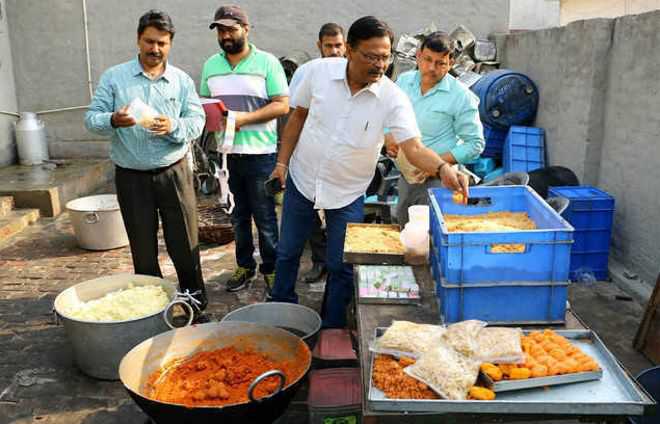
Vadodara: Food safety officers of the Vadodara Municipal Corporation (VMC) conducted extensive checking of outlets in the city selling sweet and savouries for the Uttarayan festivities. The officials also checked the quality of ingredients used to make these food items.
The food safety department took up the drive to check the quality of food items as dishes like ‘undhiyu’, ‘jalebi’, ‘chiki’ and others will be consumed widely during the two-day Uttarayan festivities that fall on Monday and Tuesday. Outlets have already started preparing and selling some of these while the raw material for others has been accumulated.
VMC teams on Friday checked establishments in the Waghodiya Road, Nizampura, Warasiya, Tarsali, Ajwa Road and OP Road areas in the city. Seven samples of prepared food items as well as raw materials were collected during the drive.
According to VMC officials, checking of food business operators had commenced during the last couple of days. Earlier, 15 outlets were checked by VMC teams. The samples that were collected include edible oil, jaggery and other raw materials apart from prepared food items.

FDA Cancels License Of Top Players, Focus On Hygienic Food

After identifying several lacunae, such as lack of hygiene, the hotels were served notices on September 6, and asked to improve the quality of food, as well as step up cleanliness measures.
In the last two years the food safety and standards authority of India has played an important role to maintain and make sure that restaurant and hotels are maintaining the basic hygiene. The food safety authority has also demanded online aggregators to make sure they partner with restaurants who fits on the safety criteria and had also asked them to delist the remaining players if they are not going by the law.
In a stern action, the Food and Drug Administration (FDA) has suspended the licenses of five hotels, including Lemon Tree Hotel Private limited, Holiday Inn Restaurant and Hyatt Place at Hinjewadi in Pune over lack of cleanliness, preparing food in unhygienic conditions and serving food items beyond their expiry dates.
Licenses of two other hotels — Fortune Select Dasve at Lavasa and Upper Deck resort at Lonavala were also suspended. The action comes after a visit by Food Safety Officer Santosh Sawant to Hyatt Place, Holiday Inn Restaurant and Lemon Tree Hotel on August 30 last year.
A statement, issued by Joint Commissioner (Food), FDA’s Pune division, Suresh Deshmukh, said the licenses of these hotels have been suspended. “The license of Holiday Inn restaurant and Hyatt Place has been suspended for 15 and 14 days respectively. The licence of Lemon Tree Hotel has been suspended for four days,” said Sampat Deshmukh, assistant commissioner (Food), FDA, Pune. The FDA Joint Commissioner has further urged hoteliers to maintain cleanliness and ensure qualitative standards, failing which strict action will be taken.
“Vigilance of food and health authorities is good steps as it will filter out players doing wrong practices and help customers have food which is not unhygienic. However, for long term, better route should be to re-work on the food and health rules and make it consistent across country,” shared Karan Tanna, CEO, Yellow Tie Hospitality adding the licenses approval should be made online so it is transparent and not subjective.
After identifying several lacunae, such as lack of hygiene, the hotels were served notices on September 6, and asked to improve the quality of food, as well as step up cleanliness measures. After the hotels submitted their compliance report on December 11 last year, the FDA conducted a re-inspection but found no change in the issue of cleanliness.
Earlier, this January, FSSAI also said that they have accelerated the process of setting standards and notified 27 new regulations for food standards.
Some of the key regulations include the ones on alcoholic beverages, food fortification, advertising and claims, packaging, residues of pesticides, tolerance limits of antibiotics and pharmacologically active substances.
"We are setting standards to ensure safe food to consumers and at the same time see to that they do no impact the businesses. Now that the standards (on food products) are more or less in place, our focus is going to be on compliance, monitoring, inspection and enforcement," shared Pawan Agarwal, CEO, FSSAI earlier this month.
A Parliamentary Standing Committee on health and family welfare in a report submitted in 2018 had rapped FSSAI over weak enforcement of food safety laws and also recommended restructuring of the autonomous body that functions under the health ministry.
Hence, we can say that the food safety authority is working hard to make sure that the food is served fresh and healthy.

Jan 11, 2019

Eateries, shops at RTC Complex found violating MRP norms

Vigilance officials inspecting a hotel at Dwarakanagar RTC Complex on Thursday. 

Vigilance officials conduct raids
Sleuths of Vigilance and Enforcement Department, along with food safety, legal metrology departments on Thursday conducted raids on several hotels and shops in the RTC Complexes at Dwarakanagar and Maddilapalem. The officials booked cases against several outlets on charges of several irregularities including violation of MRP norms.
Acting on the instructions issued by Vigilance SP D. Koteswara Rao, the officials raided hotels and shops . They found several outlets selling food items more than the MRPs and without manufacturing details. They collected four samples while the legal metrology officers registered seven cases against cool drink shops and other vendors.
Meanwhile, raids were conducted at Maddilapalem RTC complex. Shops were found using expired tomato sauce in preparing food and storing chicken in violation of norms. “Cases will be booked under Food Safety Act,” the officials said.
Vigilance DSP P.M. Naidu, Inspectors R. Mallikarjuna Rao, N. Srinivasa Rao and Food Safety Inspectors G.V. Apparao, Legal Metrology Inspector Radha Krishna and few others took part in the raids.

'No regulation for printing of nicotine content on cigarette packets'

INDORE: Food safety and standards authority of India (FSSAI) has submitted its reply before high court in a petition seeking printing of nicotine and tar content on cigarette packets, denying any regulation over smoking tobacco products or cigarettes. 
FSSAI submitted that they could only regulate food items and were taking steps towards exercising the ban on use of nicotine and tar in food products, including pan masala and gutka. FSSAI also submitted that while their primary duties lie in implementation of Food Safety and Security Act 2006, they could seize samples of cigarettes along with the state government under Cigarettes and Other Tobacco Products Act (COTPA) 2003.
“It had also been submitted by FSSAI earlier that a proposal is pending before the Centre for setting up a laboratory to test nicotine and tar content of cigarettes. The proposed laboratory will be the first in India and is likely to be set up in Gurgaon, Delhi,” advocate Shweta Mewada, counsel for petitioner said. PIL filed by Harsh Jhunjhunwala had alleged that tobacco companies were selling poor quality cigarettes in the market and that they were not mentioning the quantity of tar and nicotine on cigarette packets. `

Swasth Bharat Yatra to reach Pilibhit today, to spread awareness on healthy food

Pilibhit: Swasth Bharat Yatra (SYB), an outreach programme of Food Safety and Standards Authority of India (FSSAI) will reach Pilibhit on Friday.
Also known as ‘cyclothon,’ the programme has an ambitious objective of disseminating mass awareness about fortified food, techniques of detecting adulterated food materials and promotion of healthy eating habits.
As many as 70 students from different educational institutions of the district will take part in the programme and take it to Uttarakhand’s Udham Singh Nagra district, the next destination of SBY. The cyclothon is scheduled to conclude in New Delhi on January 27.
The food safety department of Pilibhit has sought active coordination of members of Indian Medical Council (IMA) to spread awareness on the importance of healthy food.
According to Pilibhit food safety officer, VK Verma, SBY is a key element of ‘Eat Right India Movement’ and is dedicated to Mahatma Gandhi’s Dandi March and Salt Satyagraha of 1930.
Verma said, “As part of the initiative, special vans titled ‘eat right movement and food safety on wheels’ will cover all urban and rural areas of the district to spread awareness on fortified products and the benefits of their consumption.”
“Fortified foods are rich in vitamins and essential minerals, including iron, sodium, potassium, calcium, zinc among others. We are trying to spread awareness on the same,” Dr Saurabh Agrawal, IMA district secretary, said.
District magistrate Akhilesh Mishra said that ASHA and ANMs would be assigned special duties to educate villagers on healthy eating habits.

Jan 10, 2019

DINAKARAN NEWS


Here’s how your vegetable salad may be getting poisoned, reveals IISc-UAS study

Bengaluru:
A study published by researchers at the Indian Institute of Science (IISc) and University of Agricultural Sciences (UAS) has claimed that increasing incidence of vegetable salads causing food poisoning may be due to infectious bacteria sneaking into plant roots.
“In recent years, contamination of salad vegetables by e.coli and salmonella bacteria — the most common causes of food poisoning — have led to largescale recalls. Although most salmonella outbreaks are linked to contamination from post-harvest handling and transportation, this infectious bacterium can also enter the plant from contaminated soil,” researchers said in a statement.
But how exactly does it enter from the soil? In their study, the researchers said unlike other disease-causing bacteria that enter the root, fruit or leaf by producing enzymes to break down the plant’s cell wall, salmonella sneaks in through a tiny gapcreatedwhen a lateral root branches out from the plant’s primary root.
“This is the first time we have shown how different salmonella are from other plant pathogens based on their ability to colonise roots,” said Kapudeep Karmakar, a PhD student, department of microbiology and cell biology, IISc, and first author of the paper published in BMC Plant Biology.
Karmakar andhiscolleagues studied how different types of bacteria, including salmonella, colonise the roots of tomato plants. While other bacteria were spread across the root, salmonella bacteria clustered almost exclusively around areas where lateral roots emerge.
“When a lateral root pierces open the wall of the primary root to spread across the soil, it leaves behind a tiny opening. Using fluorescent tagging and imaging, the researchers figured out that salmonella bacteria were using this gap to enter the plant.”
Researchers also noticed that under the same conditions, a plant with a more lateral roots harboured a greater concentration of salmonella than one with fewer lateral roots. Similarly, when plants were artificially induced to produce more lateral roots, the salmonella concentration increased.

Jan 9, 2019

Banned Plastic


DINAKARAN NEWS


‘Refined oils are totally safe for cooking’

Scientists and nutritionists dispel the myths doing rounds on social media platforms
In the wake of misleading messages doing rounds on social media platforms about refined vegetable oils, Scientific Panel on Oils and Fats at Foods Safety and Standards Authority of India (FSSAI) has said that refined oils are totally safe to use as cooking oil.
Chairperson of the Scientific Panel on Oils and Fats (FSSAI) R.B.N. Prasad said the FSSAI recognised several oils for cooking purpose and a majority of these oils required refining. Because the oil obtained either from expellers or solvent extraction plant would contain some impurities which adversely affect the safety, flavour, odour and appearance of oil, they are required to be removed for making the oil edible and for ensuring long shelf life.
He was speaking at a seminar on ‘Edible Oils – Myths and Facts’ organised by Indian Consumer Federation attended by scientists, nutritionists and the industry body Solvent Extractors Association and consumers here on Tuesday.
Refining advised
Some of the oils like groundnut oil, sesame, coconut oil, mustard oil and safflower oil, which were extracted using expelling technique could be consumed without refining. However in some cases these oils were also affected by ‘aflatoxin’ during harvesting. Thus it was advisable to refine these oils before consumption.
Several oils like sunflower, palm, soyabean, cottonseed and rice bran, among others, were required to be sold only as refined oils as these oils were produced by solvent extraction process and they may contain solvent residues. The refining process was done as per the guidelines issued by FSSAI and most of the nutritional components were retained during refining, he said.
Dietary requirement
Former director of National Institute of Nutrition Kalpagam Polasa said as per ICMR dietary guidelines the total dietary fat intake was 30% of total energy intake per day. This 30% of the total daily energy intake should come from dietary sources of oils and fats. If an individual consumed 2,000 Kcal of energy per day, then 30% or 600 Kcal (equal to 65 grams) should come from total fat (visible plus invisible intake). So 30 g of visible oils was necessary to be consumed per day.
On which cooking oil is good, she said each cooking oil had its own merits and demerits. If some oils like coconut oil have saturated fatty acids more, that could be easily metabolised, others have mono unsaturated fatty acids that help lowering LDL cholesterol. Thus a combination of oils could be selected and consumed to get required proportion of all kinds of fatty acids. However, it was safe to buy packed edible oils as loose oils could be adulterated.

FSSAI Bans Use of Newspapers, Recycled Plastic to Wrap Food

On finding that packaging materal can cause contamination in food products, the Food Safety Standard Authority of India (FSSAI) has directed all Food Business Operators to stop using recycled plastic, newspaper and paper sheets to wrap food.
The FSSAI conducted two studies to check the presence of chemical contamination and heavy metals in food, in collaboration with the Indian Institute of Packaging (IIP), Mumbai, and the National Test House (NTH), Kolkata. Following this, the FSSAI issued a notification regulating food packaging norms.
"Besides, general and specific requirement with respect to packaging materials, the regulations also prescribe overall migration and specific migration limits of contaminants for plastic packaging materials" FSSAI wrote in its press release.

Jan 8, 2019

DINAKARAN NEWS


DINAKARAN NEWS


DINAKARAN NEWS


DINAKARAN NEWS


New food packaging norms by regulator


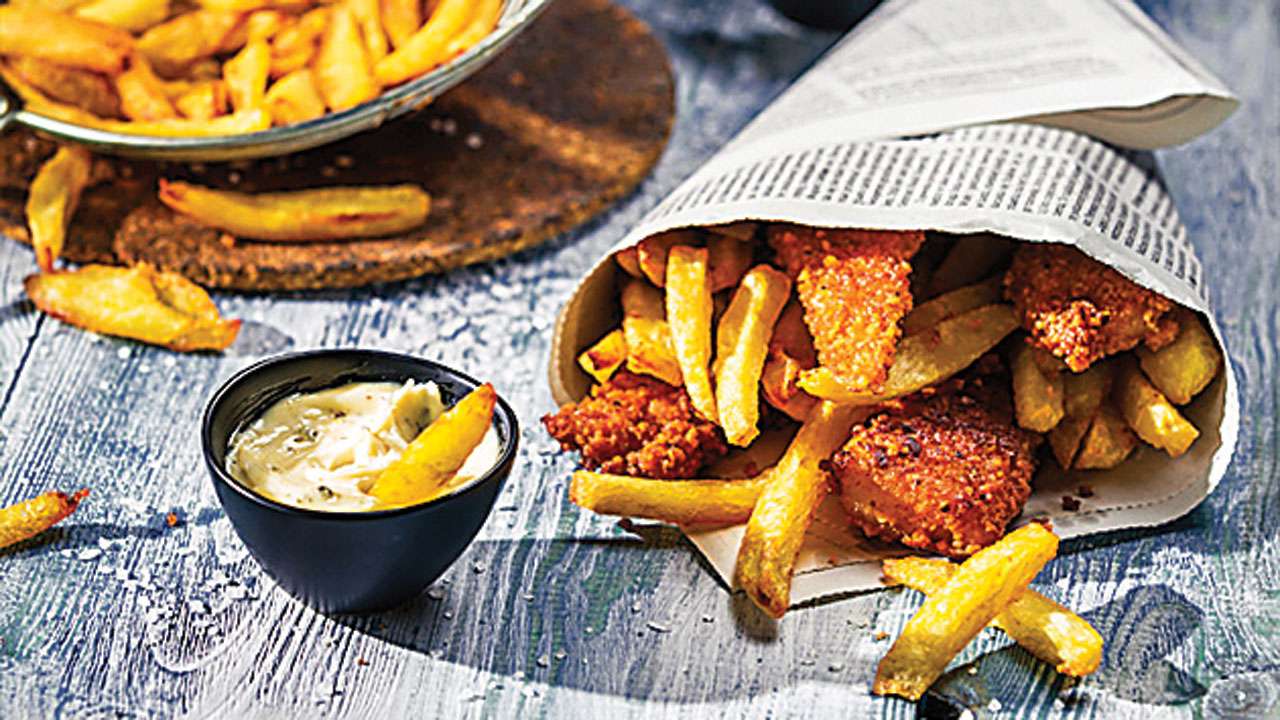
Soon, eateries will be fined if found wrapping food products using newspaper, recycled plastic

The Food Safety Standard Authority of India (FSSAI) has directed all Food Business Operator (FBO) not to wrap food products using recycled plastics, newspaper and paper sheets.
The move was taken after the results of two studies conducted by FSSAI which noted the presence of chemical contamination and heavy metals from packing materials into food. 
HIGHLIGHTS
  • New rules will come into effect after July 1, 2019
  • FSSAI has amended all existing provisions in respect to packing requirements
  • This was after 2 studies noted presence of chemical contamination and heavy metals in packaging materials
The Food Safety Standard Authority of India (FSSAI), the apex food regulator in India, has regulated food packaging norms after they found contamination in food products through its packaging material. They have directed all Food Business Operator (FBO) not to wrap food products using recycled plastics, newspaper and paper sheets.
This is the latest direction to all FBOs by the apex food regulator. The move is taken after the results of two studies conducted by FSSAI which noted the presence of chemical contamination and heavy metals from packing materials into food.
The study was done in collaboration with the Indian Institute of Packaging (IIP), Mumbai and the National Test House (NTH), Kolkata.
In the recent notification, the Food Safety Standard Authority of India (FSSAI) has amended all existing provisions with respect to packing requirements prescribed in the Food Safety and Standards (Packaging and Labelling) Regulations, 2011.
Pawan Agarwal, CEO of FSSAI told Mail Today, "We have given time to all FBOs till July 1, 2019 to gear up for the new packaging guidelines. The greater safety concern is for food packaging material by unorganised sector or loose packing. These regulations prohibit packaging materials made of recycled plastics, including carry bags for packaging, storing, carrying or dispensing articles of food."
About 380 food samples were collected from unorgansied sector and 13.4 per cent of overall contamination was found in food articles. Out of which, 51 samples were found with heavy metal contaminant such as plastic pouches, lid container, bottle, Al Foil etc.

Food testing lab inaugurated in Vijayawada

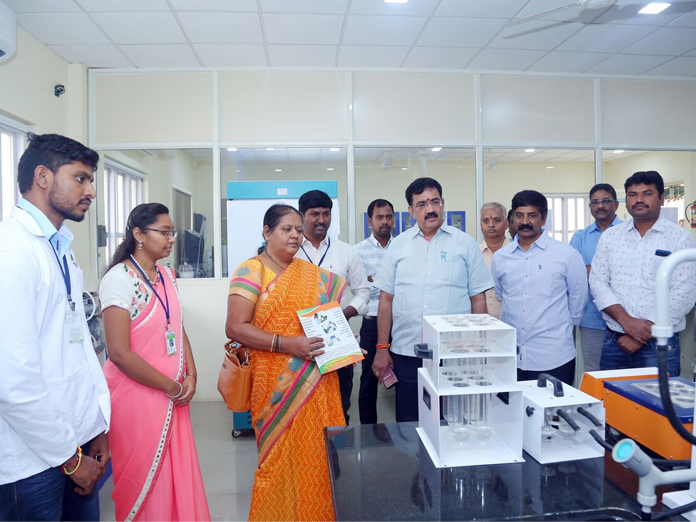
Institute of Preventive Medicine medical director Dr P Manjari inaugurating Annoor Envirochem and Food Analytical Laboratory in Vijayawada on Monday

Vijayawada: It is the responsibility of one to know the quality of the foods one takes in everyday life, said Institute of Preventive Medicine medical director Dr P Manjari.
She participated as the chief guest at the inaugural programme of ‘Annoor Envirochem and Food Analytical Laboratory’ at Siddhartha College of Pharmaceutical Science. The lab is the first of its kind in the state.
Speaking on the occasion, Manjari said that the manufacturers of food and soft drinks should follow the food safety Act and get the products tested as per the act.
Annoor Envirochem and Food Analytical Laboratory has accreditation from the National Accreditation Board for Testing and Calibration Laboratories (NABL).
Excess food colour, preservative, pesticide remains, nutrition values, mineral water, drinking water can be tested at the lab. 
Lab MD Sk Ansar said that tests were done under expert’s supervision. For the food test, people used to go all the way to Chennai, Bangalore and Hyderabad and now they can get the tests done here at Vijayawada, he said.

Jan 7, 2019

Popular noodles brand has lead in it

The company also misled the consumers by alleged unfair trade practices, false labelling and misleading advertisements.
The Supreme Court of India on January 3, vacated its stay on the Centre's 2015 action seeking damages of Rs6.4 billion (Dh338,057,043) from Nestle India limited - the manufacturer of Maggi noodles - for alleged unfair trade practices, false labelling and misleading advertisements.
The class action is rooted in the case of alleged high lead content and presence of MSG (monosodium glutamate) in Nestle's popular Maggi instant noodles.
The bench headed by Justice D.Y. Chandrachud today vacated the stay of the proceedings before the National Consumer Disputes Redressal Commission (NCDRC) that were stayed way back in 2015 as the top court then was seized of the matter.
While vacating the stay on the proceedings on the class action by the Centre seeking damages of Rs640 crores, the court said the report of the Mysuru-based Central Food Technological Research Institute where the samples of Maggi noodles were tested would form the basis of the proceedings.
The court asked the Centre, the Food Safety and Standards Authority of India (FSSAI), Nestle and others to argue before the NCDRC whether the consumers were misled by the company as contended by the Centre in its class action.
The Supreme Court had in 2015 put on hold proceedings before the NCDRC after Nestle moved the top court challenging the commission's order directing the testing of 16 samples of Meggi noodles to ascertain their safety for consumption.
The NCDRC had ordered the testing of the Maggie noodles in the course of the hearing of the Central government's class action against Nestle India, the manufacturer of Maggi noodles, seeking Rs6.4 billion in damages for alleged unfair trade practices, false labelling and misleading advertisements.
The Commission had directed that out of withdrawn stocks of Maggi noodles in the custody of the Food Safety and Standards Authority of India (of which 100 batch numbers were randomly noted by the local commissioner) 16 samples be sent for testing for presence of lead in any form and of MSG, including their quantity in the samples at the Export Inspection Council of India, Chennai.
Appearing for Nestle, senior counsel Abhishek Manu Singhvi said, "The lead content was found to be within permissible limit and there is some amount of lead in lot of products."
Senior counsel told the court that the Mysuru-based Central Food Technological Research Institute has given the finding that the noodles contained lead "within permissible limits".
However, the Centre contended that the main issue in the class action was not whether noodles were harmful or not, but the company misled the consumers by alleged unfair trade practices, false labelling and misleading advertisements.

How much lead in your food can harm you?

After the Supreme Court revived the action suit against Nestle, the company's lawyers admitted to the presence of lead in the popular instant noodles. Do you know how much lead in your food can harm you?
The Supreme Court on Thursday revived the action suit against Nestle by NCDR by questioning the lead content in the popular Maggi noodles. The lawyers representing Nestle admitted to the presence of lead in the FMCG product. However, they argued that the lead content in the noodles was within permissible limits. Let's take a look at what is lead poisoning and how much lead in your food can harm you.
What is lead poisoning?
Lead, a highly toxic metal, is a very strong poison. Lead poisoning is a serious condition which can sometimes be fatal. It causes severe mental and physical impairment. Young children are most vulnerable to it as their brains and nervous systems are in the developing stage.
Though no amount of lead in the blood is safe, it is known that lead level as low as 5 micrograms per deciliter can lead to health problems in children.
Symptoms and Diagnosis
Lead poisoning usually builds up slowly. Hence, lead toxicity follows repeated exposures to small quantities of lead. 
According to Healthline, some of the symptoms of lead toxicity in adults are abdominal pain, abdominal cramps, aggressive behavious, sleep problems, constipation, irritability, headaches, loss of appetite, fatigue, memory loss and anemia among others.
In children, symptoms can be identified in the form of intellectual disability. For example, a child having behaviour problems, low IQ, poor grades at school, growth delays, etc.
Emergency symptoms in case of a high toxic dose of lead can be severe abdominal pain and cramping, vomiting, muscle weakness, seizures and coma. Lead poisoning can be diagnosed with a blood lead test.

Samples of jaggery, milk taken in Ambala

Ambala, January 5
A team of drug and food administration on Saturday took a sample of jaggery from Khurshid Gur Kolhu at Khudda Kalan in Ambala. The team had taken four samples of jaggery, two samples of milk, and some other food items on Friday.
While the samples of jaggery were taken from Dhiman Cane Crusher, Avsed Ali Gur Kohlu, Bansal Cane Crusher, and Shiv Shakti Cane Crusher in Nohni village of Ambala, the milk samples were taken from a milk vendor, Naresh Kumar, and Lucky Dairy in Saha block.
Besides these, samples of atta noodle, chocolate pastry, and guava juice were taken from different shops on Friday on the basis of complaints received.
Food Safety Officer (FSO) Subhash Chander said, “The consumption of jaggery and products made from it increases manifold in winters and to ensure that only good quality jaggery is provided to the customers, the samples have been taken. All samples will be sent to the food laboratory in Karnal for analysis.”
On the other hand, two milk samples, out of eight, taken from dairies and milk vendors in December have been found to be substandard. The FSO said, “Two samples — one was taken from a milk vendor, who belongs to Lohal Simbli, Rajpura, and another sample from Ambala cantonment — have been found to be substandard. The SNF (solids-not-fat) content was not found adequate in the milk. The fat content was adequate. More raids will be conducted in the coming days to check adulteration in milk.”
Health Minister Anil Vij said chemicals were used in jaggery making, hence directions had been issued to the Food Safety Officers across the state to take samples of jaggery and get these tested in a laboratory.

Jan 6, 2019

DINAMALAR NEWS


விக்கிரவாண்டியில் பிளாஸ்டிக் பறிà®®ுதல்

விக்கிரவாண்டி: விக்கிரவாண்டி பேà®°ூà®°ாட்சி சாà®°்பில் கடைவீதியில் அதிகாà®°ிகள் பிளாஸ்டிக் பைகளை பறிà®®ுதல் செய்தனர்.தமிழக அரசு, கடந்த 1à®®் தேதி à®®ுதல் 14 வகையான பிளாஸ்டிக் பொà®°ுட்களுக்கு தடை விதித்துள்ளது. அதனையொட்டி விக்கிரவாண்டி பகுதியில் உள்ள கடைகளில், பேà®°ூà®°ாட்சி செயல் அலுவலர் வெà®±்à®±ியரசு தலைà®®ையில், உணவு பாதுகாப்பு அலுவலர் இளங்கோவன் உள்ளிட்ட அதிகாà®°ிகள் குà®´ுவினர் ஆய்வு செய்து, தடை செய்த பிளாஸ்டிக் பொà®°ுட்களை பறிà®®ுதல் செய்தனர்.

DINAKARAN NEWS


No food, opt premium train riders


Nestle ad campaign says Magi is Safe after SC revives Rs.640 cr. case


Food officials seize 2,300kg adulterated jaggery

Erode: Food safety officials conducted a surprise raid at a jaggery shandy at Chithode here on Saturday and seized 2,300kg adulterated jaggery.
Designated district food safety officer T Kalaivani said the searched was conducted based on a tip that the shandy was using chemicals such as sodium hydrogen sulphate, calcium oxide, sodium carbonate, sodium bicarbonate, super phosphate and alum to make the jaggery, besides mixing sugar to enrich its sweetness. According to her, jaggery manufacturers usually mix hydrogen sulphate to whiten the jaggery.
She said samples would be send to the government testing lab in Chennai to ascertain the presence of chemicals in the jaggery. “Strict action will be initiated based on the lab test report.”

Read menu card, curb appetite

There is a proposal to make it mandatory for restaurants to declare calorie counts of food
If you knew that the masala dosa you are relishing contained nearly 1,030 calories, would you reach out for that second helping? A recent study has demonstrated that the brain makes “sensible food choices” when calorie information is available on the menu card.
Read and eat
The study, published in the PLOS One, a peer-reviewed science journal, says seeing pictures of food with calorie information not only makes food less appetising but may also change the way our brain responds to food. When food images appeared with the calorie content, the brain showed decreased activation of the reward system and increased activation in the control system.
In other words, says the study, foods that you might otherwise be inclined to eat became less desirable once the calorie content was displayed.
For the study, 42 undergraduate students at the Dartmouth University, United States, were split into dieting and non-dieting groups. For the analysis their brain activity was measured while shown pictures of food with and without calorie information. They were then asked to rate their desire to eat the food.
The researchers observed that the self-reported desire to eat the food decreased when the subjects were shown pictures of food with calorie information.
However, nutritionists in India have mixed reactions to the applicability of this study to India. Those critical say that poor awareness about measuring calories and the “desire and longing for food” make it hard to implement in Indian restaurants
Lack of awareness
Dr. Rebecca Kuriyan Raj, Head, Nutrition and Lifestyle Clinic, St John’s Medical College Hospital, Bengaluru, says people are not aware of how many calories they are consuming every time they eat out. “Restaurant food is high in calories and most of the time, one can get more than half the requirement of the daily calories in a single meal of masala dosa, sambar and chutney, which is about 1023.7 calories,” she reckons.
Dr. Raj, was one of the authors of a multi-centre study that aimed to measure the calorie content of frequently ordered meals from sit-down and fast-food restaurants in five countries — India, Brazil, China, Finland and Ghana — and compare values with U.S. data. This study, published last month in the British Medical Journal, found variability in the amount of calories across restaurants because of differences in portion sizes and energy density (amount of calories for a given weight or volume).
She says, “The support of government-led initiatives to introduce mandatory calorie labelling in menus in restaurants, cafes and takeaway combined with significant efforts by the restaurants to reduce portion size, calories and sugar in the meals could help individuals to make sensible food choices.”
However, Veena Shatrugna, former Deputy Director of the Hyderbad-based National Institute of Nutrition (NIN), says calorie labelling on menu cards may not work in India given poor calorie literacy. “Even if the labelling is done, how many of us will bother to read it or keep daily counts?” she points out. “Individual response to calorie labelling is based on many factors including desire and longing for new processed foods introduced into the market every day. It will be really difficult to standardise responses across class and caste at this stage. We need to debate these issues. We also need more research on an ideal diet for Indians, vegetarians and non-vegetarians.”
Draft regulations
But calorie-counts in restaurants are on the government’s mind. The Food Safety and Standards Authority of India (FSSAI), a Union Health Ministry body, has issued draft packaging and labelling regulations making it mandatory for restaurant chains to declare on the menu cards, the calorie counts of all the dishes served at their outlets. It also intends to bring online food-delivery platforms and food aggregators under the ambit of these regulations.
FSSAI Chief Executive Director Pawan Kumar Agarwal says the organisation has been discussing these regulations with the restaurant-industry for over a year: “We had earlier urged restaurant companies to start printing calorie counts on their menu cards voluntarily… We are committed to enforce the rules.”
However, the Federation of Hotel and Restaurant Association of India (FHRAI) says this is not achievable in any serviced restaurant. FHRAI Vice President Gurbaxish Singh Kohli, argues that the calorie count for the same dish could vary dramatically due to various factors such as recipes and ingredients: “While the preparation of every food item changes with every chef, restaurants usually customise recipes to suit the choice of their customers,” says Kohli, who also heads the Hotels and Restaurants Association Western India. While one customer may want his food to be prepared in olive oil, the other would want an extra topping of cheese. While the thought process is good, printing calorie counts on the menu card is not achievable and the authority should modify the draft rules.
yasmeen.afshan@thehindu.co.in

Protect consumers from errant MNCs

The Food Safety and Standards Authority of India (FSSAI) had banned Maggi noodles in 2015 alleging that the product contained harmful monosodium glutamate (MSG).
Packets of Nestle's Maggi instant noodles are seen on display at a grocery store in Mumbai.
Maggi noodles are back in the eye of a storm. The Supreme Court on Thursday lifted a stay on the proceedings of a class-action suit filed by the Union against Maggi-producer, the Swiss-headquartered Nestle India. This will allow the National Consumer Disputes Redressal Commission (NCDRC) to begin hearing the Rs 640 crore claims filed by the government under the Consumer Protection Act, 1986. “Why should children have Maggi noodles with lead?” asked the apex court bench to the senior counsel, Abhishek Manu Singhvi, representing Nestle.
The Food Safety and Standards Authority of India (FSSAI) had banned Maggi noodles in 2015 alleging that the product contained harmful monosodium glutamate (MSG). Based on subsequent tests, FSSAI had green-lighted the noodle brand, but with the new Supreme Court order, Nestle and Maggi are back on trial. 
Another multinational company that has been in the news in recent days is the US-based pharmaceutical giant, Johnson & Johnson (J&J). The company is in hot water for supplying faulty hip implants to patients, endangering their lives. An expert committee has recommended that each of the patients be compensated a minimum of `20 lakh, and the penalties could go up to `1.2 crore. J&J is contesting the award in the Delhi High Court. 

Jan 5, 2019

DINAKARAN NEWS


DINAKARAN NEWS


Over 490 of 1,123 samples of packaged drinking water non-conforming to food safety norms, LS told

As many as 496 of the total 1,123 samples of packaged drinking water analysed during 2017-18 were found to be non-conforming to the prescribed standards of the food safety norms, the Lok Sabha was informed Friday.
Minister of State for Health Ashwini Choubey said 246 cases were registered during the period in which conviction was ordered in 97 cases, while penalties were imposed in 135 cases.
In 2016-17, 697 samples were analysed, of which 224 were found to be violating the provisions under the Food Safety and Standards (FSS) Act, 2006 and cases was launched in 131 cases, Choubey said.
Of these, conviction was ordered in 33 cases and penalties were imposed in 40 cases, he said.
Instances of sale of packaged drinking water not meeting the prescribed standards have come to the notice of the Food Safety and Standards Authority of India (FSSAI).
As the responsibility of enforcement of the Food Safety and Standards (FSS) Act, 2006 primarily lies with states and Union Territories.
The commissioners of Food Safety of states and UTs have been advised by the FSSAI from time-to-time to undertake strict enforcement activities against unauthorised manufacture and sale of packaged drinking water without FSSAI/BIS mark in states and UT governments.
Further to ensure the availability of safe and wholesome food, regular surveillance, monitoring, inspection and random sampling of food products, including packaged drinking water, are being carried out by officials of the Food Safety Departments of the respective states and Union Territories.
In cases where food samples are found non-conforming, recourse is taken to penal provisions specified under the FSS Act, 2006 which may extend to imprisonment for life.

Inspect organic shops: rights panel

Petitioner cites Minister’s statement
The State Human Rights Commission has ordered the government to conduct inspections in shops selling organic vegetables in the State for pesticide residues.
Agriculture Minister V.S. Sunil Kumar had informed the Assembly that pesticide residues were detected in organic vegetable samples, the commission said on Friday.
Report in a month
Commission chairman Antony Dominic has asked the Food Safety Commissioner, Agriculture Secretary, and the State Police Chief to take the necessary measures and submit reports in a month.
The commission’s order was based on a petition filed by activist Ragam Rahim. There is increased dependence on shops selling organically cultivated vegetables and fruits with pesticide-ridden vegetables being blamed for causing lethal diseases like cancer, the petitioner said.
Thrice the price
Trusting consumers are willing to pay thrice the normal price for organic vegetables thinking them to be free of pesticides. If such vegetables indeed contain toxins, it is a violation of the right to live. Such shops should be closed down especially in a scenario where the Minister himself had informed the Assembly about the pesticide residues, Mr. Rahim said in his petition.
Replying to a question in the Assembly on December 11, Mr. Sunil Kumar had cited a report of the Pesticide Residue Research and Analytical Laboratory at Vellayani which said that 11.11% of samples collected from privately-run organic vegetable shops contained pesticide residues.

A food safety net

Access to food and equity in nutrition security is fundamental. But safety is given a go-by due to excessive processing and removal of nutrients
William James had once said, “A chain is no stronger than its weakest link, and life is after all a chain.” This phrase best describes the food safety scenario in India. Post independence, rapid growth and the consequent scramble for scarce resources revived the Malthusian catastrophe, which represents poor agricultural production in times of tipping population growth. India today produces about 280 million tonnes (MT) of foodgrains, 175MT of milk while our horticultural output stands at around 320MT. India remains the second largest producer of rice in the world but is heavily dependent on oil imports. We are slowly shifting from a quantitative approach to qualitative considerations about what we eat. And this is where a farm-to-table approach becomes significant to understand the food safety circle. For example, what is the nutritive value of milk? One could just Google the answer and be satisfied with emerging tables. But going deeper, one would understand that the quality of milk depends on a number of factors like the breed of cow, quality of cattle feed, kind of urea that was used in the feed, whether antibiotics were given in their feed or whether oxytocin was used for milk let-down. These should actually turn the table.
The mere nutritive value of calorie, protein, fat or carbohydrates cannot satisfy questions related to health. Antibiotic and hormonal residues, mycotoxins, heavy metals and the like can mar the nutritive value — it is like highly nutritious food with traces of pesticides. Studies by the Centre for Disease Dynamics, Economics and Policy showed that India is fast becoming a hotbed for antibiotic resistance and emergence of superbugs due to the use of fourth generation antibiotics in animal and poultry feeding. A majority of antibiotics used by the pharmaceutical companies is actually used by growth promoters in animal feed. Any pathogen exposed to antibiotics in the environment will develop resistance. When they fall sick, the same antibiotics administered will not work. Today about four lakh people in India die due to tuberculosis, mainly drug resistance.
Of the 232 pesticides our country uses, nearly 52 have not been studied for their maximum residue limit. Food safety concerns are not simplistic like adulterating milk with water, cheaper dalda for ghee, papaya seeds for pepper, as was the case earlier. Hi-tech adulteration like the use of melamine to boost protein went undetected even in the US for a long time. New tools and techniques had to be evolved to detect the adulterant. In the same way, there are genetically modified organisms creeping into our food system through imports and illegal seeds. We would rarely be able to detect them given the current situation. In food processing, safety is given a go-by due to excessive handling, removal of nutrients, usage of food additives that can actually erode nutrient value. At present, the list of food additives is unending. Refined sugar and salt being added in excess in all processed food are the source of addiction to certain flavours and choices. Refined nutrients are today killing more people than toxic residues.
Ecological sensitivity, sustainability and food safety will be the trends as millennials look for better health and wellness. Consumers are now looking for sustainable solutions. Ethics is always contextual. For instance, being vegetarian or vegan can be ethical for some and extremely ethical for animal activists. But this isn’t universal. What is sauce for the goose should also be sauce for the gander. Ethical food has to be acceptable to all and the universal has to basically focus on reducing the ecological footprint. This calls for humane handling of animals in farming and even at slaughter houses.
The loss of biodiversity is the biggest bane for agriculture. Above all, access to food and equity in nutrition security is the fundamental ethical aspect of society. As for food companies, ethics about profit can simply be as a producer of foods that do not make people unhealthy, sick and obese. In this context, organic food has seen a great deal of growth in the past decade. More and more people are opting for organic foods because of its true form and content. People are asking for minimally processed diverse varieties rather than the routine run-of-the- mill foods that come even under the organic label. Conscious consumers are today raising questions, thanks to public opinion, created through debate and discussions in the media and consumer forums. Ecological sensitivity, increased disease burden and abundant health information are driving people to make better choices. Apart from enjoying food, they are making sure that they do not compromise on health. Good food can indeed prevent most of the ills that society confronts today and can pave the way for a healthy and happy life.
(The writer is founder and MD of a leading food manufacturing company)

Tangled noodles

The SC, by reviving a class action suit against Maggi, has brought back focus on food safety
Just when the dust had settled after the Indian branch of Swiss food giant Nestle suffered a brand hit with Maggi noodles being declared unsafe four years ago, it has run into fresh trouble. Taking cognisance of matters related to public health, the Supreme Court ordered the revival of a Rs 650-crore worth class-action suit filed by the Government that had pulled up the noodle manufacturer for indulging in unfair trade practices, false labelling of products and misleading advertisements. Not only that, Justice Chandrachud has questioned the presence of lead, even within traceable limits, and sought good reason why it should be fed to children. Though the sample test report from the Central Food Technological Research Institute, Mysuru — that had indicated lead in permissible limits — will form the genesis of the case, additional solicitor-general Vikramjit Banerjee said the matter should be sent to the National Consumer Disputes Redressal Commission which can decide on the merits independently.
The court’s circling of the presence of lead has again raised the issue of food safety standards in the country. Post-Maggi controversy, food companies, regulators, the Government and the consumers alike became more concerned about deconstructing food than being indifferent about it. The court’s observation points to the fact that ingredients, even if they are within legally permissible limits, are never marked out clearly on the food label. The problem with managing lead concentration is that the heavy metal is largely present in the environment, in soil or plants, and cannot entirely be eliminated by washing or processing. It is also possible for lead to enter the food supply chain through manufacturing processes, leaching into the water that passes through metal pipes or vessels. According to the USFDA, although lead levels in the food supply decreased dramatically between the 1970s-1990s, low traces of lead continue to be detected in some foods simply because they remain in the environment. And for that it ensures a strict regulatory framework of monitoring and testing at frequent intervals, something that is far cry in India yet. Lead does impact our children’s health and development, vulnerable as they are in their early years, causing neurological problems, learning disabilities and lower IQ levels. Food safety, therefore, should not just be limited to packaged products but the raw ones as well. High levels of cadmium and arsenic are routinely found in vegetables and fruits we procure from the market. The milk we consume is heavily adulterated with detergents. Compromising on standards is often a mistake that consumers make and this is the real concern that must be addressed by the guardians of public health. Even with the case of Maggi, our laboratories itself stood divided — while Government laboratories found excess levels of lead and MSG, other labs found otherwise. This raises questions about the sampling procedure itself, which is not foolproof. This would require strict enforcement of the Food Safety and Standards Act, 2006, else meeting public health indices will remain elusive.

Banned! Your food will not come in these materials; deadline imposed

"The new packaging regulations would raise the bar of food safety in India to the next level," Food Safety and Standards Authority (FSSAI) CEO Pawan Agarwal said in a statement.
The new packaging regulations would raise the bar of food safety in India to the next level," Food Safety and Standards Authority (FSSAI) CEO Pawan Agarwal said in a statement, 

Food businesses need to comply with new packaging regulations that bar use of recycled plastics and newspapers to wrap food articles by July 1, regulator FSSAI said Thursday.
The new regulations prohibit packaging material made of recycled plastics including carry bags for packaging, storing, carrying or dispensing articles of food.
Taking cognizance of the carcinogenic effect of inks and dyes, the norms also prohibit the use of newspaper and such other materials for packing or wrapping of food articles and includes respective Indian standard for printing inks for use on food packages.
"The new packaging regulations would raise the bar of food safety in India to the next level," Food Safety and Standards Authority (FSSAI) CEO Pawan Agarwal said in a statement.
He also said that there would be "difficulties" in implementation of these regulations by the unorganised sector and therefore sufficient time has been given before the regulations come into force.
"The food businesses shall have to comply with these regulations by 1st July, 2019," he said.
Agarwal also mentioned that stakeholder's consultation and mass awareness building amongst consumers and food businesses would precede implementation of the new packaging regulations.
Besides general and specific requirement with respect to packaging materials, the FSSAI said new regulations also prescribe overall migration and specific migration limits of contaminants for plastic packaging materials.
The regulations specify the suggestive list of packaging materials for different food product categories.

Jan 4, 2019

DINAKARAN NEWS


DINAMANI NEWS


Keeping check on plastic ban


Plastic go


FSSAI asks food biz to comply with new packaging norms by July 1

The new regulations prohibit packaging material made of recycled plastics including carry bags for packaging, storing, carrying or dispensing articles of food.
New Delhi: Food businesses need to comply with new packaging regulations that bar use of recycled plastics and newspapers to wrap food articles by July 1, regulator FSSAI said on Thursday.
The new regulations prohibit packaging material made of recycled plastics including carry bags for packaging, storing, carrying or dispensing articles of food.
Taking cognizance of the carcinogenic effect of inks and dyes, the norms also prohibit the use of newspaper and such other materials for packing or wrapping of food articles and includes respective Indian standard for printing inks for use on food packages.
“The new packaging regulations would raise the bar of food safety in India to the next level,” Food Safety and Standards Authority (FSSAI) CEO Pawan Agarwal said in a statement.
He also said that there would be “difficulties” in implementation of these regulations by the unorganised sector and therefore sufficient time has been given before the regulations come into force.
“The food businesses shall have to comply with these regulations by 1st July, 2019,” he said.
Agarwal also mentioned that stakeholder’s consultation and mass awareness building amongst consumers and food businesses would precede implementation of the new packaging regulations.
Besides general and specific requirement with respect to packaging materials, the FSSAI said new regulations also prescribe overall migration and specific migration limits of contaminants for plastic packaging materials.
The regulations specify the suggestive list of packaging materials for different food product categories.
As per these regulations, packaging materials used for packing or storing the food products should conform to the Indian standards provided in the schedules.
The new norms will replace all provisions with respect to packaging requirements prescribed in the Food Safety and Standards (Packaging and Labelling) Regulations, 2011.
Recognising the importance of packaging in the food sector and its impact on food safety, packaging regulations have been separated from labelling regulations.
The primary objective of packaging is to protect the food contents from micro-biological, chemical, physical and atmospheric contamination and preserve the food and thereby protect consumer’s health.
Good packaging also ensures that there is no change in sensory properties or composition of food when packed. Packaging is essential and critical for promoting food safety, extended shelf-life and thereby enhancing food security.

FSSAI issues food packing rules

The Food Safety and Standards Authority of India (FSSAI) has prohibited the use of packaging material made of recycled plastics including carry-bags for packaging, storing, carrying or dispensing food articles. 
The authority has set a deadline of July 1, 2019, for food businesses to comply with the new regulations that now replace all provisions with respect to packaging requirements prescribed in the Food Safety and Standards (Packaging and Labelling) Regulations, 2011.
According to Pawan Agarwal, chief executive officer, FSSAI, the new packaging regulations would raise the bar of food safety in India to the next level. 
Pointing to the difficulties in implementation of these regulations, particularly the loose packaging materials in the unorganised sector, he said that sufficient lead time has been given before the regulations come into force. He added that stakeholders’ consultation and mass awareness building among consumers and food businesses would precede implementation of the new packaging regulations. 
In addition to general and specific requirement with respect to packaging materials, the regulations prescribe overall migration and specific migration limits of contaminants for plastic packaging materials. The regulations specify the suggestive list of packaging materials for different food product categories. 
As per these regulations, the packaging materials used for packing or storing the food products shall conform to the Indian Standards provided in the schedules.
The new regulations are based on two studies conducted by the authority through the Indian Institute of Packaging (IIP), Mumbai and the National Test House (NTH), Kolkata.
The studies showed that the packaging material used by the organised sector is largely safe but there are concerns about the use of packaging material by the unorganised/informal sector. Further, there are serious concerns about the safety of loose packaging material.
“It is in the interest of all food business operators (FBOs) to follow high standards of packaging so that the quality of the food and the safety of their consumers is never compromised. On the premise that the government expects reasonable and cost-friendly corrections to be made, this will benefit consumers and also favourably raise the bar for the entire industry,” said Ravi Wazir, a food and restaurant industry consultant. 
Taking cognisance of the carcinogenic effect of inks and dyes, these regulations also prohibit the use of newspaper and such other materials for packing or wrapping of food articles and includes respective Indian standard for printing inks for use on food packages.
FSSAI said in a statement that the primary objective of packaging is to protect the food contents from microbiological, chemical, physical and atmospheric contamination and preserve the food and thereby protect consumer’s health. Good packaging also ensures that there is no change in sensory properties or composition of food when packed. Packaging is essential and critical for promoting food safety, extended shelf-life and thereby enhancing food security, it said.
With new food quality standards already in place, FSSAI will be focusing on enforcing the regulations without impacting businesses. During 2018, FSSAI accelerated the process of setting standards and notified 27 new regulations for food standards.
CRISP AND CLEAR
  • The rules also prescribe specific migration limits of contaminants for plastic packaging materials 
  • They also include respective Indian standard for printing inks for use on food packages

Stop using recycled plastics, newspapers to wrap food items: FSSAI to food biz

The new regulations prohibit packaging material made of recycled plastics including carry bags for packaging, storing, carrying or dispensing articles of food.

Food businesses need to comply with new packaging regulations that bar use of recycled plastics and newspapers to wrap food articles by July 1, regulator FSSAI said Thursday.
The new regulations prohibit packaging material made of recycled plastics including carry bags for packaging, storing, carrying or dispensing articles of food.
Taking cognizance of the carcinogenic effect of inks and dyes, the norms also prohibit the use of newspaper and such other materials for packing or wrapping of food articles and includes respective Indian standard for printing inks for use on food packages.
"The new packaging regulations would raise the bar of food safety in India to the next level," Food Safety and Standards Authority (FSSAI) CEO Pawan Agarwal said in a statement.
He also said that there would be "difficulties" in implementation of these regulations by the unorganised sector and therefore sufficient time has been given before the regulations come into force.
"The food businesses shall have to comply with these regulations by 1st July, 2019," he said.
Agarwal also mentioned that stakeholder's consultation and mass awareness building amongst consumers and food businesses would precede implementation of the new packaging regulations.
Besides general and specific requirement with respect to packaging materials, the FSSAI said new regulations also prescribe overall migration and specific migration limits of contaminants for plastic packaging materials.
The regulations specify the suggestive list of packaging materials for different food product categories. As per these regulations, packaging materials used for packing or storing the food products should conform to the Indian standards provided in the schedules.
The new norms will replace all provisions with respect to packaging requirements prescribed in the Food Safety and Standards (Packaging and Labelling) Regulations, 2011. Recognising the importance of packaging in the food sector and its impact on food safety, packaging regulations have been separated from labelling regulations.
The primary objective of packaging is to protect the food contents from micro-biological, chemical, physical and atmospheric contamination and preserve the food and thereby protect consumer's health.
Good packaging also ensures that there is no change in sensory properties or composition of food when packed. Packaging is essential and critical for promoting food safety, extended shelf-life and thereby enhancing food security.