
Dec 13, 2017


Synthetic colours in aravana ingredients? Spat over quality of Sabarimala prasadam

Food Safety officials say analysis of samples yielded conclusive evidence of food colour contamination.
Presence of synthetic colours in cardamom
An unseemly row has erupted between the Travancore Devaswom Board and the Food Safety Department over the quality of raw materials used for the production of Appam and Aravana at Sabarimala during the annual pilgrimage season.
The issue arose after officials from the Food Safety Commissionerate stopped the transport of a consignment of cardamom from Pampa to Sannidhanam, citing the results of an analysis of samples which detected the presence of synthetic food colours. The TDB subsequently had to stop the production and distribution of Appam for the pilgrims, provoking an angry response from Devaswom Minister Kadakampally Surendran.
Inappropriate
Terming the restriction imposed by the Food Safety Department inappropriate and crossing all limits, the Minister told a press conference that the timing of the decision gave room for suspicion. He also alleged that the officials were causing inconvenience to the pilgrims.
Food Safety officials said the analysis of samples had yielded conclusive evidence of food colour contamination.
“We detected the presence of Tartrazine Yellow and Brilliant Blue additives which are used in tandem to impart green colour to cardamom. The results of the tests done at the analytical lab at Pampa were later confirmed by the NABL-accredited lab in Thiruvananthapuram,” an official said. Tartrazine and Brilliant Blue have been linked to cancer, asthma, allergies and stomach ailments.
On Monday, a press note issued by the office of the Food Safety Commissioner here alleged that the TDB was levelling baseless allegations to cover up the issue.
The press note said the Food Safety Department had been ordered by the High Court to keep a close tab on raw materials used for preparation of prasadam at Sabarimala. “One sample each of jaggery and rice flakes (avil) and two samples each of rock candy (kalkandam) and cardamom did not conform to food safety standards. The consignments were withheld at Pampa and the government, TDB, and High Court informed of the situation,” the press note said.
Food Safety officials said the issue could have been averted if TDB had procured the materials well before the start of the pilgrimage season.
Food Safety And Standards Authority Of India Hasn't Received A Single Compliant In 11 Years
While Food Regulatory Body Reimburses Testing Fees To Consumers If Food Is Found Adulterated, It Hasn’t Received A Single Complaint In 11 Years
Did you know that as per the Food Safety and Standards Authority of India (FSSCI) Act, if food purchased by a person is established as adulterated, the cost of getting it tested is reimbursed? The answer is likely to be a resounding "no", because 11 years since the Act's inception, the regulatory body has not received a single case under section 40 that governs this complaint segment.
According to FSSCI officials, most consumers refrain from getting food products tested for adulteration fearing high costs of the process. "Any individual can get suspicious food products tested at FSSCI laboratories, but since it's a time-consuming procedure, most people shy away from doing so. The process costs R2,000 to R5,000, depending on the food product. But, the regulatory body has a provision under which the regulatory body will gladly reimburse the testing fees to the consumer," an official said.
Section 40 of the FSSCI Act states, "If the report of the food analyst shows that the article of food is not in compliance with the Act or the rules or regulations made there under, the purchaser shall be entitled to get refund of the fees paid by him under this section." However, not a single person has ever asked for testing under the section in the past 11 years. Dr Pallavi Darade, state Food and Drug Administration (FDA) commissioner, said, "The FDA does thousands of food analysis, every month. But, none of them are done because some consumer reported an adulterated food product."
If the food product is deemed in contravention of the provisions of the FSSCI Act, the product seller stands to lose his/her licence or be fined.
Poisonous Packaging

When it comes to eating street food, we often spend a lot of time worrying about what’s in the food, but not enough time worrying about what the food is in. Be they bun kebabs, samosas or any other downtown snack, odds are that the food you buy from street vendors will be wrapped in a newspaper. Now, here’s why this is bad news for you:
Wrapping fried food in newspapers is a very unhealthy practice and is very much prevalent in Kashmir and most parts of country and its consumption is injurious to health, even if the food has been cooked hygienically.
The reason is simple; the hot oil in, say, pakoras, facilitates the seeping of chemicals from ink and paper into the food. The newspaper ink contains many hazardous chemicals which can trigger serious health problems. Exposure to a class of organic chemicals called arylamines, such as benzidine, 2-Naphthylamine and 4-Aminobiphenyl, is associated with high risks of bladder and lung cancer.
Apart from these, printing inks also contain colorants, pigments, binders, additives and photo-initiators (used for speeding up the drying process of the ink), which have harmful effects. There are literally thousands of ink chemicals and a majority of them can be dangerous for consumers.
Newspapers are usually produced by a system called offset-web printing, which requires a certain consistency of the ink (it needs to be very thick) and a particular means of drying.
For the former, mineral oils (petroleum-based) and solvents such as methanol, benzene and toluene are used; and for the latter, heavy metal (Cobalt)-based drying agents are used. None of these should be used in food packaging, as they are also classified as harmful and can be perilous for consumers’ health.
Some offset printing ink formulations use vegetable oils rather than mineral oils; however, they have strong odours and should not be used in food packaging. Given the long-term risk from protracted exposure from an early age, the sale of such tainted foods to school children, a common sight in all our cities, must also be avoided and there is an urgent need to raise awareness on this issue.
Another similar problem which has been noticed is that fast food restaurants are packing burgers, soups and other hot meat and vegetable products in thin, transparent plastic bags, as take aways. These clear synthetic bags are typically made of polyethylene (polythene) and the principal potential ‘migrant’ agent is ethylene.
There are a number of potential additives to polythene, such as anti-static agents, ultra-violet protection and flame retardants. These additives can be very dangerous if they move into the take away food.
Other case is while using teabags, some people squeeze the teabag using the label fixed at the other end of the thread. As it can leak the ink from the label, it is recommended that the teabags should be squeezed by using the thread only.
In the recent time Food Safety and Standards Authority of India has issued an advisory wherein commissioners of Food Safety of all states were requested to initiate a systematic campaign for generating awareness among all stake holders to discourage the use of newspapers for packing, serving and storing of food items.
In the state of Jammu and Kashmir, Drugs & Food Control organization is the nodal department for enforcement of Food Safety and Standards Act 2006, rules/regulation 2011 with sufficient manpower, Deputy Commissioner Food Safety at Divisional level, Designated Officers at District level and Food Safety Officer at Block/Zone level.
Food Safety & Standards Act provides mechanism for collection and testing of food samples for any potential hazards at government level through Food Safety Officers.
Even the Purchaser/consumer can get the food sample tested at his own as provided under section 40 of the Food Safety and Standards Act, however in case the sample fails in testing government is supposed to refund the cost of sample and other expenditure to the purchaser while Designated Officers are supposed to initiate action against defaulters. In case the sample is reported unsafe in testing.
The offence is punishable with an imprisonment for a term which may be extended to six years and also with fine which may extend to five lakh rupees.
The department has started a campaign under Food Safety and Standards Act 2006 to control wrapping of fried foods in newspapers and banning the use of plastic bags for takeaways soups and other food items accordingly prosecution against many food business operators have been launched to tackle the issue.
Moreover, public awareness and support is the important means to discourage the use of newspapers in packaging of food items, consumers should refuse the food item if is packed /wrapped in newspaper.
Author is a Food Safety Officer Srinagar.
Two food joints with hookah bars sealed in Sector 18
NOIDA: In a joint raid by the city magistrate and the food safety department, two restaurants having hookah bars were sealed in Sector 18 on Monday.
A case will be filed against the restaurant owners under Food Safety Act, officials said.
The raid was carried out in the evening when many people were found smoking hookah. "The restaurants—Kartoos 49 Cafe & Lounge and Smoke House—were found serving hookah at their premises and were immediately sealed. A show cause notice will be issued and a court case will be initiated against them," Surendra Verma, district food safety officer, said.
"The samples of the smoke remnants have been collected and will be sent to a government laboratory for testing," city magistrate Mahendra Singh told TOI.
Hookah along with food and drinks in the smoking zone has been banned in the latest amendment to the Cigarettes and Other Tobacco Products Act (COTPA).
Dec 12, 2017


Food adulteration taking heavy toll on public health


SRINAGAR, Dec 11: Jammu and Kashmir has witnessed increase in food adulteration despite framing of various committees for strict implementation of Food Safety and Standards Act, 2006, in the state. In the last few months, Food Safety Department has seized food articles and imposed fines for selling sub-standard foods. Last month, sources said that around Rs 1.5 lakh fine was imposed on food outlets for selling sub-standard food items. These included restaurants owners, traditional bakers, milk vendors and butchers.
Sources said that during the inspection, many restaurants, bakery shops, and butchers were found processing food in total unhygienic conditions. "Some of them have been using synthetic colours in many popular food items," an official said. In July, the department prosecuted 35 businesses operators for selling and manufacturing substandard and adulterated food products. He said that they took action based on various complaints received from the people. The official said that thousands of food outlets in Srinagar are putting the health of millions of people at risk. "Like in Srinagar, sub-standard foods are taking a heavy toll on the people of Jammu region," the official said. The government in 2014 constituted a high powered steering committee for effective and smooth implementation of Food Safety and Standards Act, 2006. It was headed by the Chief Secretary and included several administrative secretaries. The committee according to sources was formed in backdrop of complaints of food adulteration. However, nothing has happened so far. "Such committees have been confined to papers only," sources said. The Food Safety and Standards Act of 2006 came into force across the country in August 2011. The Act was also to ensure improved quality of food for the consumers and censure misleading claims and advertisement by those in food business. The committee has to take a complete review of the ground realities, officers performing the duties under the Act, method of sampling, testing and further follow up action on the basis of misbranded samples. "So for, we did not see any difference. Instead the food adulteration has increased over the years," the official added.
He said the Act was not being executed properly in the state and adulterated food items were being openly sold in markets without any check from the government. The Central government had also asked the state government many times to ensure proper implementation of the Act.
Hospital lab technicians deputed to test food samples


Srinagar: The Drug and Food Safety Organisation (DFCO) has deputed hospital lab technicians, trained in urine and blood examination, for testing food samples at its Srinagar food laboratory. As per sources, the DFCO instead of appointing staff for the food laboratory has posted medical lab technicians on deputation there to mislead the J&K High Court.
“It is eyewash. The matter is in the High Court as part of a Public Interest Litigation (PIL). The department (DFCO) had been directed to appoint requisite staff and file compliance report in the court,” sources in the health department said.
The J&K Health Department has recently deputed four medical laboratory technicians to the Food Testing Laboratory at Dalgate to analyse food samples. The technicians were deputed days after the High Court slammed the department for not complying with its directions.
“These technicians were working in different hospital labs under the Health Department. Now they are being asked to analyse food samples even though they have no knowledge or experience in the work,” said a health official, wishing anonymity.
He said all the four lab technicians appointed in the food laboratory had a bachelors or equivalent degree in medical laboratory technology, which is not even distantly equivalent to the BSc in Food Technology or Dairy Technology required to become a Food Lab Technician.
As per official data, only four employees were originally appointed for the Food Testing Laboratory in Dalgate including a senior lab technician, assistant public analyst, lab assistant and lab attendant. The others were posted there simply to mislead the High Court.
“The others have been deputed there as two food analysts, four lab technicians and four food safety officers. They are working either on ad-hoc or deputation basis,” the official said.
Earlier this year, the government had issued a notification asking two food safety officers to work as ‘notified food analysts’ till they are appointed permanently.
“The notified food analysts have been left without power and accountability as they working on ad-hoc basis, despite having the requisite qualification and experience,” said an administrator.
The DFCO deputed field staff, including four food safety officers, from the Health Department and DFCO at the food lab to augment its staff strength. The postings were made after High Court directions in May. The deputation has created shortage in the field and put extra burden on the food safety officers posted in different departments.
In May, a division bench of Chief Justice Badar Durrez Ahmed and Justice Ali Mohammad Magrey had directed the Chief Executive Officer (CEO) of Food Safety and Standards Authority of India to depute a qualified person to the food laboratories to find out whether they fulfilled requirements under the Food Safety and Standards Act.
Controller Food and Drugs Lotika Khajuria said it was a national norm to recruit laboratory staff on deputation basis.
“It’s not necessary that Food Lab Technicians have the required qualification. In case of urgency, we can post any science graduate in the lab and give them on-job training,” she said.
“Food Analysts are notified to work in the lab as they were trained in Food Analysis by virtue of their qualification and experience,” she said.
The Controller also played down the staff shortage and said the department was not doing anything wrong. “We are following the norm that is prevalent in the whole of India. J&K is not a special case,” she said.
The shortage of field staff is acute in J&K, with 36 posts of Food Safety Officers, meant to supervise the food sold in markets, are lying vacant.
Dec 11, 2017


Mobile food testing van launched

PANAJI: 'Food Safety on Wheels, a mobile food testing van of the Goa Food and Drugs Administration (FDA), was launched on Sunday evening by chief minister Manohar Parrikar and health minister Vishwajit Rane.
Fully equipped with a lab, the van will be used to conduct tests for common adulterants in milk, water, edible oils and other items. It will also be possible to draw on the spot samples and generate instant reports of the analysis.
The FDA will also tie up with panchayats, municipalities and consumer clubs to spread awareness about food safety, hygiene and healthy eating habits, FDA director Jyoti Sardesai said.
The van that costs Rs 41 lakh was procured under the central government scheme to strengthen the food testing system in the country.
Roadside food vendors to be trained in hygiene, food safety

Chief Minister Manohar Parrikar seen launching Food Safety on Wheel (Mobile Food Testing Van) of Goa FDA at Altinho Panaji on Sunday in the presence of Health Minister Vishwajeet Rane, Director of FDA Jyoti Sardesai and others
PANAJI: Chief Minister Manohar Parrikar launched the food safety on wheels (mobile food testing van) at Altinho on Sunday in the presence of Health Minister Vishwajeet Rane.
Addressing the media, Parrikar said that under the central government scheme, the first van has been given to Goa in order to educate roadside food vendors about food safety.
Parrikar said we eat food from roadside kiosks but many a times we do not know what the food contains and whether it is safe or contaminated. He said the mobile van will create awareness amongst the people who enjoy eating roadside food.
Parrikar said that sometimes the vendors add colour to tandoori items instead of using the masala which can be detrimental to the health of people eating such food. He said that the Food Safety on Wheels (mobile food testing van) will train and teach the vendors on the health aspects of selling food on the roadsides.
The FDA director Jyoti Sardessai, said that as part of the central government scheme for strengthening the food testing system in the country, the Food Safety and Standards Authority of India (FSSAI), a statutory authority under the Food Safety and Standards Act, Government of India, has rolled out the scheme of mobile food testing laboratories known as ‘Food safety on wheels’.
She said the van is fully equipped with analytical instruments such as milk analyzer, hot air oven, hot plate, mixer-grinder, digital weighing scale, digital multi parameter hand-held meter, digital refractometer etc. The van is also equipped with facilities such as power generator, air-conditioner, refrigerator, commercial gas cylinder, audio-visual PA system as well as a computer.
The facilities will be used to conduct tests of adulterated milk, water, edible oils and other items of food for daily consumption. She said that the van will also have a facility to draw on the spot samples and generate instant reports.
She said that the mobile unit will help the state FDA to enhance their outreach programmes and conduct surveillance activities even in the remote areas of state.
The mobile van costs Rs 41 lakh and will be manned by a trained driver, a chemist and an attendant besides a team of food safety officers. She said that the public can call on toll free number 1800122100 or telephone the FDA directorate during emergencies.
Dec 10, 2017
Food safety department sends notice to supplier of Amul milk product
Food safety department of Firozabad has issued a notice to Amul milk product supplier and distributor after the department found less fat content in milk against the declared percentage on the milk packet. The matter came to light after the FSDA collected a sample of Amul milk in the month of June this year from milk outlets in Firozabad and sent their samples to government laboratory of Varanasi for examination.
Speaking to TOI, Virendra Singh Kushwaha, the chief food safety officer said, "After collecting the samples of Amul milk, we first took it to a nearby private laboratory to check if the milk content is according to set parameters. The result revealed that fat content was .8% less against the declared 6%. To recheck, we took the sample to another private lab, and again the same result was found. Finally, we decided to send the sample to Varanasi lab, so as to take legal action against the supplier and distributor of milk." He said, "In summer months, to meet the increased demand for milk, suppliers often mix water in their products to increase the milk quantity, which results in less fat content."
"The Varanasi lab also confirmed that Amul milk sample had only 5.2 % fat. We have now sent notice to Neelam milk agency of Firozabad, the prime distributor of milk product in the district and Garima Milk and Food Product of Dholpur, a packager and supplier of Amul products in Western UP district. If they wish, the two can challenge the lab results and samples will be again sent to Kolkata laboratory. But if they accept the report, then we will levy hefty penalty for low quality milk product," he added.
The lab report was shared to additional city magistrate Sheetla Prasad Yadav, who directed FSDA to send the notice to two concern parties. Speaking on the lab report of less fat content in Amul milk, the prime distributor Neelam Agency owner Pankaj said, "Whatever product the supplier provides us, we distribute it. Appropriate reply will be given to FSDA separately from our agency and Garima Milk and Food Product of Dholpur."
Beware, your biriyani may have dog meat
Vellore residents, who get cheap biriyani and meat dishes from roadside eateries must be cautious about dog meat is being served as mutton, said sources.

Vellore: It may be recalled a photo of two persons with a skinned carcass of a dog in Ambur that was circulated on social media, resulted in a scare and led to slumping of biriyani sales in the area a fortnight ago.
Sources revealed that four persons each in Christianpet and Kudibala village across Andhra Pradesh border on the Chittoor highway routinely provided dog meat to shops on both sides of the border.
With mutton sold at Rs 500 a kg, small shops were using this as a way of earning quick money as four kg of dog meat was sold for Rs 100. Getting the animals is not a hard task, given the increasing number of stray dogs on Vellore roads, added sources.
When queried about this, a Food Safety and Standards Authority of India official Dr Venkatesh said that they had not received any such complains.
He also denied the reports as both police and FSSAI had thoroughly checked all slaughter houses in the district following the Whatsapp message.
Dec 9, 2017


FSSAI order seeks to scrap cases filed under old food safety norms
Order comes less than two weeks after Nestle India was slapped with a fine of Rs45 lakh in Shahjahanpur,
In a big relief to food companies, the country’s food regulator Food Safety and Standards Authority of India (FSSAI) on Friday issued an order that effectively scraps almost all cases filed against food business operators for alleged violations of food safety standards and regulations in the past.
This would, according to the FSSAI order, prevent “avoidable harassment” of food companies.
“Commissioners of food safety are advised to withdraw, or at least not pursue, cases for violation of old norms and standards unless these are still not in conformity with the new/revised standards so that avoidable harassment of food business operators could be prevented,” the FSSAI order reads.
The order comes less than two weeks after the additional district magistrate of Shahjahanpur, Uttar Pradesh, slapped a fine of Rs45 lakh on Nestle India Ltd, Rs15 lakh on three of its distributors and Rs11 lakh on two retailers. The penalty was imposed in cases filed by the Uttar Pradesh Food Safety and Drug Administration based on reports by a Lucknow-based laboratory in 2016. The laboratory found higher than permissible ash content in samples of Maggi noodles that were collected back in 2015.
Besides denying the allegations, Nestle India had said in a statement that the tests were conducted applying “incorrect standards”.
The rationale behind the FSSAI order, as pointed out by the food regulator, is the formation of new standards and amendments to old regulations. During the last few years, FSSAI has notified a number of new standards, besides amending some of the old ones.
In the absence of a clear directive from FSSAI, state-level food safety inspectors had been following either old or new standards, or both, to identify violators. State food authorities have filed cases with different courts, sometimes at the district level, and these are being pursued until settlement.
Between April 2008 and 31 March 2016, food inspectors picked up 681,021 samples for testing across the country, of which 95,828 were found to be adulterated or mis-branded, and a total number of 69,759 cases, both criminal and civil, were lodged against food business operators, according to FSSAI reports. Many of these cases are yet to be settled. FSSAI’s annual report for the year ended 31 March 2017 has not yet been published.
Currently, food companies across the supply chain in India are required to comply with the provisions of the Food Safety and Standards Act, 2006. Before this Act, food products were governed by the Prevention of Food Adulteration Act, 1954.
The field machinery tasked with the responsibility of ensuring food safety, noted FSSAI in its order, may have lodged cases against some food business operators for violation of the “old standards even though the impugned products may now be in conformity with the new or revised standards”.
“It may be appreciated that such revision of standards has taken place after taking into account all scientific evidence required to ensure appropriate level of protection of human life and health. Engaging of state machinery in pursuing such cases not only diverts the scarce human resources of the government but also burdens the judicial system,” the FSSAI order added.
Food companies are happy with the latest order. “We are pleased... and welcome this as a progressive step which will help reduce confusion among food business operators, enforcement authorities and other stakeholders,” said a Nestle India spokesperson.
Hemant Malik, ITC Ltd’s divisional chief executive (foods division), also welcomed the order.
'Need more experts to ensure food safety'

Agarwal was in the city to attend the 26th Indian Convention of Food Scientists and Technologists (AFSTi).
"FSSAI and AFSTi will work together in the future to start government certified online courses to create experts who can tackle food safety issues," said Agarwal sharing that FSSAI has also proposed internships and research-based projects that can directly allow students to work on the most pressing issues in food safety in India.
Stressing the importance of reaching out to the population to realise the value of nutrition and food safety, Agarwal said: "With 134 crore Indians to feed, and a majority of the sector being unorganised, it is essential that we create professionals who can bring awareness."
On Xmas eve, 21 cake and wine-makers get stop memo

As part of first phase of inspections conducted from Wednesday to Friday, functioning of 21 units were temporarily stopped due to unhygienic conditions and for operating without mandatory license. As many as 582 out of the total 1,287 food production units were slapped with improvement notices. A total fine of Rs 11,58,500 was imposed on erring units. The squad collected 31 food samples for further testing.
A fine of Rs 1,56,500 was imposed in Thiruvananthapuram district alone. Of the 81 institutions inspected in the district, 26 were slapped with improvement notices while two were served temporary closure notice.
In Kollam, 41 institutions were served improvement notices. A fine of Rs 97,000 was slapped on various units.
Temporary closure notices were served to one institution in Pathanamthitta, five in Alappuzha, two in Thrissur and nine in Malappuram.
Notices were served to 29 units in Pathanamtitta, 39 in Alappuzha, 53 in Kottayam, 32 in Idukki, 51 in Ernakulam, 65 in Thrissur, 29 in Palakkad, 68 in Malappuram, 62 in Kozhikode, 34 in Wayanad and 30 in Kannur. Food safety department said that inspections will continue.
Primacy for safety of pilgrims: Minister
The Forest Department and the Food Safety Department should stop actions that caused difficulties to pilgrims, Minister for Devaswom Kadakampally Surendran has said.
He was reviewing the functioning of various departments and the Travancore Devaswom Board during the Mandalam-Makaravilakku pilgrim season at Pampa on Friday.
The Kerala State Electricity Board had erected temporary posts with lamps at Pampa Hilltop to avert accidents during the pilgrim season. Unfortunately, a forest official removed these posts, claiming that the area came under the Forest Department. In case of accidents in the area due to lack of proper lighting, the official concerned would be held responsible, Mr. Surendran said.
The Minister directed the District Collector to take necessary steps to ensure adequate facilities for the pilgrims, invoking the Kerala State Disaster Management Rules.
Similarly, the Forest Department had taken over the land used as parking ground for Kerala State Road Transport Corporation buses at Pampa, forcing the corporation to park its buses along the Pampa- Chalakkayam road. The parking of vehicles on the main trunk road might lead to traffic bottlenecks, Mr. Surendran said.
The Minister said the Food Safety Department had even taken samples of the prasadom at the Sabarimala temple for quality analysis. Such a situation was not there in the past and the department should restrain themselves from causing inconveniences to the pilgrims season, he said. The focus was on ensuring the safety of the pilgrims, the Minister said stressing the need for foolproof security arrangements.
Mr. Surendran said as many as nine pilgrims died of cardiac ailments at Sabarimala during the pilgrim season. The Forest Department and the TDB had arranged an off-road ambulance each at the Sannidhanam and Pampa for carrying pilgrims in case of an emergency.
Gutka use rampant despite ban, 8.2% women use tobacco orally

MUMBAI: The Maharashtra leg of the Global Adult Tobacco Survey (GATS) 2016-17 shows that there is a statistically significant prevalence of women taking betel quid with tobacco (3.8% of adult women) as well as tobacco for oral application(8.2%). "Around 6.6% of women take khaini," said Shulbha Parsuraman of TISS. Around 8.6% of the total population uses gutka, which is a banned product in Maharashtra.
Health minister Dr Deepak Sawant said, "Gutka and pan masala were banned in Maharashtra in 2012. Yet there is a sizeable number taking it. Action needs to be taken in this regard." Incidentally, the ban on gutkha and pan masala is not being implemented by the health ministry. Enforcement of the law is the responsibility of the FDA.
The biggest health concern highlighted by the survey is the significant number of women smokers in Maharashtra. "When we conducted the first GATS survey in 2009, the number of women smoking cigarettes was nearly zero or statistically not significant, but the new survey has found that almost 1% smoke cigarettes or bidis," said Sulabha Parsuraman of TISS that carried out the survey. Dr P C Gupta of Healis, who was associated with the exercise, said the number of women smokers is almost as high as 8 lakh. "The fact that this rise has taken place in just eight years is worrisome," he said.
Most experts attributed lifestyle reasons for women taking up smoking. "In a popular film, the ending had the women protagonists celebrating their victory by smoking and drinking. So, the message is clear here," said Dr Gupta. Cancer surgeon Dra Pankaj Chaturvedi said there is a misconception that smoking kills hunger pangs. "Some women believe they can control their weight by smoking," he said.
Dec 8, 2017


On-the-spot food safety tests by Sun
Panaji: A four-wheeler called 'food safety on wheels', with instruments that allow for on-the-spot food safety tests, will be launched on Sunday by chief minister Manohar Parrikar, health minister Vishwajit Rane said on Thursday. Rane said the vehicle, to be operated by the food and drugs administration (FDA), has been acquired at a cost of Rs 41 lakh, with funds provided by the central government.
"Goa was the first state to acquire the 'food safety on wheels'. It is fully equipped, and can test water, collect food samples at eateries for tests. The result can be obtained within 15 minutes," said Rane.
Food Safety Department satisfied with the quality of 'aravana and appam prasadam' of Sabarimala
ALAPPUZHA: Food Safety Department is satisfied with the test result of food samplesespecially the famous "aravana and appam prasadam" being supplied to the devotees at Sabarimala.
Speaking to TOI, Food Safety Commissioner Veena N Madhavan said that they have tested 31 samples of aravana and -48 samples of appam and the analysis reports of above samples show that all are satisfactory. We are completely satisfied with the test result of those samples. The sample results of aravana and appam are completely satisfactory , she said.
"We have also collected the 114 food items various samples from various parts of Sabarimala and they were subjected for detailed analyze . We have collected 82 cane jaggery powder samples and 81 samples are satisfactory. We have collected 16 samples of red rose rice and 16 are satisfactory,'' she said.
Two mobile food testing labs stationed and made operational at Nilackal and Erumeli to test the drinking water supplied to pilgrims. This lab is equipped to conduct tests on milk, oil, packaged drinking water, food colours, common adulterants and spices. Through these units, 24 tests can be conducted on milk, nine on edible oil, 17 on spices and 11 on other foods to check for adulterants.
The department has taken steps to conduct periodic quality analysis of the drinking water supplied by the Kerala Water Authority, Travancore Devaswom Board and the Ayyappa Seva Sangham. Food Safety Officers are actively involved in the sampling of raw materials used for "Annadhanam" provided by the Devaswom Board at Nilackal, Pamba and Sabarimala temple Sannidhanam. The samples so collected are sent to the District Food Testing Laboratory at Pathanamthitta for analysis,'' she said.
The food safety commissioner said that devotees were free to contact her department through two toll-free numbers (8592999666 & 18004251125).
Dec 7, 2017

Global food companies form lobby in India to avoid Maggi-like fiasco
Global Food Safety Initiative (GFSI) has decided to establish an Indian arm to work with the government, FSSAI and academia for ensuring food safety
New Delhi: To avoid another Maggi-like fiasco, global food companies such as Cargill, Nestle, Coca-Cola, Danone, Tesco, Metro Group and Amazon have come together to form a lobby in India to work with the government, the regulator and academia to ensure food safety.
The Global Food Safety Initiative (GFSI), which is managed by France-headquartered international trade organization Consumer Goods Forum, has decided to establish an Indian arm.
“India will be the seventh Local Group of GFSI that we are aiming to formalize early next year,” said Mike Robach, chairman of the board of directors, GFSI.
The core team of the GFSI India wing, which will have 20-25 members to start with, will have representatives from most of the firms that constitute the Board of GFSI.
It will bring GFSI’s global practices to India and mobilize the local food industry, besides engaging with the regulator and other government authorities regarding food safety issues and practices followed by companies, said Robach.
Global food manufacturers want to avoid a fiasco like the one Nestle India Ltd, the local unit of the Swiss packaged food maker Nestle SA, had to face in 2015 after the regulator Food Safety and Standards Authority of India (FSSAI) declared a nationwide ban on Maggi Noodles over safety concerns.
The debacle shaved off more than half a billion dollars from Nestle’s coffers.
Having a local wing in India is not common practice among global industry-specific lobby groups. Other industry-specific lobbies, such as GSMA that lobbies for cellular operators worldwide, have representatives in India but not a formal India wing.
India is among the fastest growing markets for packaged goods. In 2015, cumulative revenue of fast moving consumer goods firms in India was about $47.3 billion, which is predicted to cross $103 billion in 2020, according to data by market research firm Statista.
GFSI, which was set up under Belgian Law in May in 2000, works on improving food safety management systems across the world.
The concept of local groups is part of GFSI’s plan to implement its global strategy at a local level and exchange local knowledge with the global team. At present, GFSI has six local groups—South Latin America, Mexico, Japan, China, Europe and US-Canada.
GFSI comprises leading food safety experts in retail, manufacturing and food service companies, as well as international organizations, governments, academia and service providers to the global food industry, said Robach, who is also vice-president (corporate food safety, quality and regulatory) at Cargill Inc.
GFSI’s global board includes representatives from food and food retail firms.
Besides the board, GFSI has technical working groups and benchmarking leaders who work for improving food safety management systems globally.
“In India, we’ll have a team of 20-25 members who will be representatives from our member companies globally. Besides, we’ll leverage networks and knowledge of local industry associations,” said the GFSI chairman. GFSI has held talks with FSSAI and industry body Confederation of Indian Industry (CII) regarding formation of GFSI’s India wing.
Besides benchmarking of food safety schemes, enhancing food safety management systems, GFSI is currently working on bringing the farm-to-fork food supply chain under a food safety management system.
In June 2007, eight major retailers—Carrefour of France, Tesco of UK, ICA Gruppen AB of Sweden, Metro AG of Germany, Migros of Switzerland, Ahold of Netherlands, Wal-Mart of the US, and Delhaize of Belgium—agreed to follow a common food safety scheme benchmarked by GFSI.
FSSAI set to issue rule on mandatory warning against drunken driving on liquor bottles

NEW DELHI: India’s top food regulator is set to make it mandatory for all liquor bottles to have a message against drunken driving, while turning down a proposal to also add a pictorial warning against the same, on the lines of cigarette packets.
The development comes following a direction from the Delhi High Court, which had asked to Food and Safety Standards Authority of India to look into the matter, on a petition filed by an NGO Community Against Drunken Driving.
“We carried out consultations on the issue and also studied global practices. However, we came to the conclusion that liquor manufacturers in other countries, too, are not mandated by food regulators to have such messages or warnings and decide on their own,” said Pawan Agarwal, chief executive officer, FSSAI.
“We have however decided to ask for mandatory text warnings on liquor bottles against drunken driving after it is approved by the government,” he added.
Sources said that the decision comes following a meeting between FSSAI officials, representatives of several liquor brands and civil society members in which designs of six designs of pictorial warnings were discussed.
“While four designs were proposed by the NGO CADD, interestingly two of the liquor brands, also had come up with two designs but most other brands put their feet down and said they don’t want such a rule,” a source told the newspaper.
Prince Singhal, founder-president of CADD, on the other hand said that, while it was good that FSSAI had taken a positive step and decided to go ahead with a guideline the text warning on the bottles, he will approach the Union Ministry of Health and Family Welfare to consider the pictorial warning.
“We are pushing for it because it is in public interest and impacts crores of people,” he said. “I hope that as health ministry imposed the rule (of pictorial warning on harms of smoking) on cigarette companies, they also do the same for liquor manufacturers,” he said.
According to the data by the Union Ministry of Road Transport and Highways while drunken driving causes only about 4.8 per cent of total five lakh road crashes in the country every year, fatality in such cases is very high. Over 70 per cent of the victims in such crashes end up dead, statistics show.
According to the data by the Union Ministry of Road Transport and Highways while drunken driving causes only about 4.8 per cent of total five lakh road crashes in the country every year, fatality in such cases is very high. Over 70 per cent of the victims in such crashes end up dead, statistics show.
HC flags concern on contaminated fruits
HYDERABAD: Agreeing with the concerns raised by the amicus curiae that consuming fruits today is akin to consumption of poison, the Hyderabad High Court on Tuesday sought to know from AP and Telangana the number of food safety officers, food inspectors etc they have appointed to ensure that the food sold in the market is free from chemicals and adulteration.
The number of raids conducted and the results yielded too should be furnished, said the bench of acting Chief Justice Ramesh Ranganathan and Justice G Shyam Prasad, which had in August 2015 suo motu converted media reports about ripening of mangoes through calcium carbide into a public interest litigation. The court also appointed senior counsel S Niranjan Reddy as amicus curiae to assist the bench in the case. After the HC took up the case, the two Telugu states conducted flash raids on fruit markets and filled up a few food inspector posts.
When the matter came up for hearing after a long gap, the bench told the states that "as all of us consume fruits, we are all bound to suffer the ill-effects of ripening through chemicals. You need to come out with a clear plan, policy and solution to the menace". Niranjan Reddy furnished various reports to the court explaining the methods of artificial ripening. He also suggested recommending relatively harmless chemical ripeners as alternatives that will also address traders' concerns. The court expressed serious concern over the long-term impact of such fruits on the health of humans.
Niranjan also told the court that even daily essentials like milk, sugar, rice and salt, too, are being adulterated with harmful substances. Stating that pressing into service adequate number of food safety officers (FSO) will yield better results, the senior counsel said Telangana and AP were lagging behind in recruiting adequate number of such officers. While Tamil Nadu has 554 food safety officers, AP has just 28 and Telangana, too, is faring poorly with 20, Niranjan Reddy said. the bench sought details of FSO machinery from the two states within a week.
Food safety department sends notice to supplier of Amul milk product
AGRA: Food safety department of Firozabad has issued a notice to Amul milk productsupplier and distributor after the department found less fat content in milk against the declared percentage on the milk packet.
The matter came to light after the FSDA collected a sample of Amul milk in the month of June this year from milk outlets in Firozabad and sent their samples to government laboratory of Varanasi for examination.
Speaking to TOI, Virendra Singh Kushwaha, the chief food safety officer said, "After collecting the samples of Amul milk, we first took it to a nearby private laboratory to check if the milk content is according to set parameters. The result revealed that fat content was .8% less against the declared 6%. To recheck, we took the sample to another private lab, and again the same result was found. Finally, we decided to send the sample to Varanasi lab, so as to take legal action against the supplier and distributor of milk."
He said, "In summer months, to meet the increased demand for milk, suppliers often mix water in their products to increase the milk quantity, which results in less fat content."
"The Varanasi lab also confirmed that Amul milk sample had only 5.2 % fat. We have now sent notice to Neelam milk agency of Firozabad, the prime distributor of milk product in the district and Garima Milk and Food Product of Dholpur, a packager and supplier of Amul products in Western UP district. If they wish, the two can challenge the lab results and samples will be again sent to Kolkata laboratory. But if they accept the report, then we will levy hefty penalty for low quality milk product," he added.
The lab report was shared to additional city magistrate Sheetla Prasad Yadav, who directed FSDA to send the notice to two concern parties.
Speaking on the lab report of less fat content in Amul milk, the prime distributor Neelam Agency owner Pankaj said, "Whatever product the supplier provides us, we distribute it. Appropriate reply will be given to FSDA separately from our agency and Garima Milk and Food Product of Dholpur."
Dec 6, 2017


Tobacco products worth Rs 8L seized
Coimbatore: The food safety department on Tuesday seized tobacco productsworth Rs 8 lakh from a private bus that arrived in the city from Bengaluru and detained a person in connection with it.
The officials also seized the bus, as this was the second such offence by the private bus service provider in the past four months.
The seizure was made based on a tip that the tobacco products were being brought to the city in No 1 Travels. "I received the information from a source around 3.30am. We tracked the bus and followed it. Since there were about 10 passengers in the bus, we did not stop it on the way," said the food safety officer, Vijaya Lalithambiga B.
The bus was stopped near its shed closer to the Ramakrishna electric crematorium. "The bus had tobacco products worth Rs 8 lakh. When we questioned the driver, he said the box contained vegetables," she said.
The private bus service provider, however, said they did not have details about the person who booked the parcel or delivery details.
The food safety department has detained a person in connection with the case. "We are trying to trace the person who was to collect the consignment. We have collected samples and sent them to the lab for tests. The report will be submitted before the court, which will then take a call on disposing it of," Vijaya said.
Following the incident, the food safety department has instructed parcel service providers and omni bus operators to collect identity proof from customers, who drop parcels at their offices. "This will create a fear among the people trying to send prohibited products to the state. Also, this will prevent parcel service providers to indulge in such crimes," Vijaya said
The official said action would be taken on the private bus operator, who was caught second time carrying tobacco products.
FSSAI hints mandating food safety supervisor, MSMEs say it might add to input costs
FSSAI hints mandating food safety supervisor, MSMEs say it might add to input costs
New Delhi, Dec 5 (KNN) In response to the Food Safety and Standards Authority of India (FSSAI) CEO Pawan Agarwal hinting towards the authority mandating food safety supervisor for the enterprises involved in the food sector, the Micro Small and Medium Enterprises (MSMEs) fear that if made mandatory, it might add to the overall inputs costs of production.
Talking to KNN, Sagar Kurade, Past President of All India Food Processors' Association (AIFPA) voiced concern over the latest development.
Kurade said that while the step on an overall note is a welcoming one, but it might not be very well for the unorganized sector.
“While the organized and established sector would not find difficulty in employing a food safety supervisor to their team, the MSME units involved in the business might experience added burden on the overall input costs”, he said.
Kurade informed that at present in most of the MSMEs, the person in charge of the management or the person in charge of the quality control is assigned the task to inspect the food safety.
Kurade said that instead of making it mandatory, FSSAI may recommend the same, leaving it unto the capacity and capability of the units whether or not they can hire a food safety supervisor for their production process.
Earlier, FSSAI CEO Pawan Aggarwal in a press interview said the authority is considering making it mandatory for all food businesses to employ food safety supervisor. The move would be a game changer and reduce compliance burden, he further said.
Dec 5, 2017
வெள்ளை விஷம் வேண்டாம்... இந்துப்பு பயன்படுத்துங்கள்!
உப்பு, கூடவும் கூடாது; குறையவும் கூடாது. கூடினால் ஆரோக்கியக் கேடு. குறைந்தால் உணவு ருசிக்காது. கடலை ஒட்டி சிறு பாத்திகளைக் கட்டி தயாரிக்கப்படும் உப்பைத்தான் நாம் பயன்படுத்தி வந்தோம். மாட்டு வண்டியிலும் கழுதையின் மேலும் பொதியாக சுமந்து வந்து ஊர் ஊராகச் சுற்றி அந்த உப்பை விற்பார்கள். நெல்லுக்கு, அரிசிக்கு, உளுந்துக்கு மாற்றாக உப்பை விற்பார்கள். அந்த உப்புக்குப் பெயர் 'சோடியம் குளோரைடு' என்பதைக்கூட நாம் அறிந்திருக்கவில்லை. நமக்கு அது அவசியமாகவும் இல்லை.
இன்று, வண்டி மாட்டு உப்பு வியாபாரிகள் காணாமல் போய்விட்டார்கள். பாக்கெட் பாக்கெட்டாக சோடியம் உப்பு கடைகளில் அடுக்கப்பட்டிருக்கிறது. நாம் சாப்பிட்ட உப்பில் அயோடின் இல்லையென்று கூறி, பாக்கெட் உப்பை அறிமுகம் செய்தார்கள்.
அமெரிக்க நிலப்பகுதியில் அயோடின் இல்லாததால் அவற்றில் விளையும் காய்கறி உள்ளிட்ட உணவுப்பொருள்களில் அயோடின் சத்து குறைவாக இருந்தது. அதனால் அதைச் சாப்பிட்ட அமெரிக்கர்களுக்கு ஹைபர் தைராய்டு ஏற்பட்டது. அதனால் அங்கே உப்பில் அயோடின் சேர்க்கச் சொன்னார்கள். படிப்படியாக நமக்கும் அதைப் பழக்கி விட்டார்கள்.

கல் உப்பின் பயன்பாட்டைக் குறைத்து, தூள் உப்புக்கு மாறிவிட்டோம். கோவணம் கட்டிக்கொண்டு கடலோர மக்கள் செய்த உப்பு உற்பத்தி பெருநிறுவனங்களின் கைக்குள் போய்விட்டது.
நம் உடலுக்குத் தேவையான சோடியம் நாம் உண்ணும் காய்கறி போன்றவற்றில் இருந்து கிடைத்துவிடும். பாக்கெட் உப்பில் உள்ள சோடியம் கூடுதலாக நம் உடம்பில் சேர்வதால் தேவையற்ற பிரச்னைகளை அது ஏற்படுத்துகிறது. மனித உடலுக்குப் பொட்டாசியம், மக்னீசியம், கால்சியம், சோடியம் ஆகிய நான்குவிதமான உப்புகள் தேவை. ஆனால், நாம் சோடியம் கலந்த உப்பை மட்டுமே உணவில் அதிகம் சேர்த்துக் கொள்கிறோம். அது நம் உடலில் இருந்து வியர்வையாக, சிறுநீராக வெளியேறாமல் உடலிலேயே தங்கி விடுகிறது. அதனால் உடல் பருமனாகிறது. அதேநேரம், உடம்புக்குத் தேவையான கால்சியம், மக்னீசியம் போன்ற தாதுக்கள் வெளியேறுகின்றன. கால்சியம் வெளியேறுவதால் மூட்டு வலி, முதுகு வலி போன்ற பிரச்னைகள் வரும். மக்னீசியம் வெளியேறுவதால் உடல் அசதியும் உயர் ரத்த அழுத்தமும் உண்டாகும். இதனால் மாரடைப்பு, சிறுநீரகப் பழுது ஏற்படவும் வாய்ப்புள்ளது.
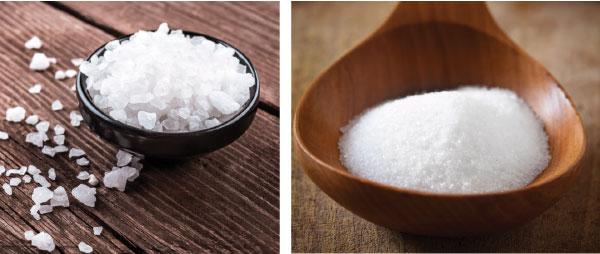
அண்மைக்காலமாக சோடியம் உப்புக்குப் பதிலாக இந்துப்பு பயன்படுத்தலாம் என்கிற குரல் சித்த மருத்துவர்களிடம் இருந்து எழுந்திருக்கிறது. ஒருவகை பாறையில் இருந்து எடுக்கப்படும் இந்த உப்பை ஆங்கிலத்தில் `ஹிமாலயன் ராக் சால்ட்' என்பார்கள். இந்தியா, பாகிஸ்தானில் மலைத்தொடர்களில் சுரங்கங்களிலிருந்து வெட்டி எடுக்கப்படும் இந்துப்பு வெள்ளை, சிவப்பு மற்றும் ஊதா நிறங்களில் காணப்படுகிறது. சித்தா மற்றும் ஆயுர்வேத மருத்துவத்தில் இந்த உப்பு பயன்படுத்தப்படுகிறது.
குளிர்ச்சியூட்டும் தன்மை உள்ள இந்த உப்பு, பசியைத்தூண்டும்; மலத்தை இளக்கும். சாதாரண உப்பில் இருப்பதைப்போலவே இந்துப்பிலும் சோடியமும் குளோரைடும் இருப்பதுடன் இயற்கையாகவே அயோடின் சத்து, லித்தியம், மக்னீசியம், பாஸ்பரஸ், பொட்டாசியம், குரோமியம், மாங்கனீஸ், இரும்பு, துத்தநாகம் உள்ளிட்ட நுண் சத்துகளும் உள்ளன. பாறைகளில் இருந்து வெட்டி எடுக்கப்பட்டு தண்ணீரிலும் இளநீரிலும் ஊற வைத்து பதப்படுத்தப்பட்டு விற்பனைக்கு வருகிறது.
நாம் பயன்படுத்தும் சோடியம் உப்பு, பித்தத்தை அதிகரித்து தலை கிறுகிறுப்பு, பித்த வாந்தி, மயக்கம், உயர் ரத்த அழுத்தம் போன்றவற்றை ஏற்படுத்தும். ஆனால், இந்துப்பு பித்தத்தை ஏற்படுத்தாது. பித்தத்தையும் கபத்தையும் சமன் செய்து சளி, இருமல் வராமல் தற்காத்துக் கொள்ளும்.

இந்துப்பு செரிமான சக்தியை அதிகரித்து கண் பார்வை மற்றும் இதயத்தைப் பாதுகாக்கும். ரத்த அழுத்தத்தைச் சீராக்கும். உடலுக்கு உறுதியைத் தருவதுடன் மனச்சோர்வு போக்கி உடலில் நீர்ச்சத்தினை தக்க வைக்க உதவும். ரத்த சர்க்கரையின் அளவைக் கட்டுக்குள் வைக்க உதவும். குடல்கள் உணவை நன்றாக உறிஞ்சி உட்கிரகிக்கவும் உதவும். நிம்மதியான உறக்கத்தைத் தருவதுடன் தைராய்டு பிரச்னைக்கும் தீர்வாக இருக்கிறது.
இந்துப்பை உடலில் தேய்த்து சிறிது நேரம் கழித்து குளித்தால் உடல் அசதி நீங்கி மனமும் உடலும் புத்துணர்ச்சி பெறும். இந்துப்பு கலந்த இளஞ்சூடான நீரால் வாய் கொப்பளித்து வந்தால் வாய் துர்நாற்றம் நீங்கி பல்வலி, ஈறுவீக்கம் போன்றவை சரியாகும். மூலம் மற்றும் வயிற்றுப்புண்கள் நீங்கவும் மருந்தாகப் பயன்படுகிறது.


FSSAI using technology to enforce food safety norms: CEO
The Food Safety and Standards Authority of India (FSSAI) will soon make it mandatory for all food businesses to employ food safety supervisor, he said, adding that the move would be a game changer and reduce compliance burden.
Food regulator FSSAI is using technology in a big way to enforce its norms and has set up an IT platform for safety compliances to bring consistency and transparency in inspection, its CEO Pawan Agarwal said on Monday.
The Food Safety and Standards Authority of India (FSSAI) will soon make it mandatory for all food businesses to employ food safety supervisor, he said, adding that the move would be a game changer and reduce compliance burden.
"We have started using technology in registration and licensing of the food business operators (FBOs). All our systems are IT-based," he said, addressing a CII's food safety, quality and regulatory summit.
Agarwal said the authority has strengthened its internal IT team to ensure effective compliance with food safety law.
He said the regulator has developed standardized testing methods and protocols for food products and launched IT-enabled Indian Food Laboratory Network (INFoLNet).
All food labs, which are FSSAI notified, are submitting food testing reports online on this network, he added.
"To reach scale, we need technology," he said.
That apart, Agarwal said the FSSAI has created a smart and digital compliance system.
A large-scale IT platform for Food Safety Compliance through Regular Inspections and Sampling (FoSCoRIS) is being put in place for adoption across all States.
Agarwal said this smart-phone based system is being tested in Madhya Pradesh and Goa by the food safety officers and will soon be rolled out across the country.
"This will bring consistency and transparency in food safety inspection and sampling," he said.
To achieve its mandate to provide safe and wholesome food to all, Agarwal said the regulator is partnering with other stakeholders including corporates and consumer organisations.
He, however, said ensuring compliances of food safety regulations in unorganised sector is a challenge.
"We organised a training programme for street vendors but we need to continuously engage with them," he added.
Agarwal said the authority has taken many initiatives in last few years and has also sensitised state government as they are responsible for the enforcement of food safety law.
However, he said: "We have to go a long way to bring States on the same page. But now there is greater engagement with the food safety commissioners".
Speaking at the summit, Nestle India CMD Suresh Narayanan said the Indian food industry is valued at close to USD 40 billion and is expected to grow at a CAGR of close to 11 percent.
Stating that the food processing has multiplier effects on our economy is one of the country's largest employment creators, he said the industry attracts domestic and foreign investments, and contributes to exports, amongst others.
He said the rising FDI into the Indian food sector from food giants across the world is a testimony to the growing interests in the Indian market.
According to the data provided by the DIPP, the food processing industry in India has received around USD 7.5 billion foreign direct investment during the period April 2000 to December 2016, he added.
Narayanan, who is also the Chairman of the CII National Committee on Food Processing, said the evolving regulatory regime that is focused on developing a strong and credible food safety and regulatory system has enabled the Indian food processing industry in taking a high level national and international consumer projects.India is being established as a preferred investment destination on the back of initiatives taken by the FSSAI in strengthening the food standards and by institutionalising the mechanism for consistent scientific review of standards, he added.
Maggi Compliant With Latest FSSAI Norms, No Ash Added, Nestle Reassures
District administration of Shahjahanpur, Uttar Pradesh, had slapped a fine on Nestle India and its distributors last week after Maggi had allegedly failed to pass the lab test and found ash content above the permissible limits for human consumption.
Nestle withdrew Maggi from market in June 2015 and relaunched it in November the same year.
NEW DELHI: FMCG major Nestle India said today that Maggi complied with the latest guidelines of food safety regulator Food Safety and Standards Authority of India (FSSAI) and it does not add any ash to its popular noodles.
District administration of Shahjahanpur, Uttar Pradesh, had slapped a fine on Nestle India and its distributors last week after Maggi had allegedly failed to pass the lab test and ash content above the permissible limits for human consumption was found during the lab test.
"Nestle wishes to categorically state that we do not add ash in any form whatsoever during the manufacturing process of its Maggi noodles," Nestle India Chairman and Managing Director Suresh Narayanan told reporters in Delhi.
Speaking on the sidelines of an event hosted by the Confederation of Indian Industry, he said the company has received the order of the district administration and will decide on the future course of action after studying it.
"We are fully compliant with the latest FSSAI guidelines which were issued in August-September this year..." he added.
He declined however to comment further saying that "the matter is sub-judice".
In June 2015, Nestle India withdrew Maggi noodles from the market. It had relaunched them in November after it went off the market for five months following a ban by the FSSAI over alleged presence of lead beyond permissible limits.
Is an Ayurvedic Product Authentic? Where’s the Mark? Customers, Inform Yourself!
For a product to be certified as ayurvedic, it has to be screened through quality verifications set by Quality Council of India (QCI), an autonomous body set up by the government and the Indian industry.
We live in a time when the obsession with Ayurveda and everything natural and unadulterated is on an upward spiral.
Be it grocery, fast consumable products or even cosmetics; we especially keep an eye out for brands and products with the ‘ayurvedic’ tag — thanks to the persistent dissemination of idea handed down through advertisements on mass and social media platforms.
Every consumable product that you find in a supermarket or grocery store undergoes various stages of inspection before actually being certified for consumption.
This is overseen by Food Safety and Standards Authority of India (FSSAI), the autonomous body under the Ministry of Health & Family Welfare that sets up the formulation and enforcement of food safety standards in the country.
So, do ayurvedic products also undergo quality assurance through accreditation just like every other product?

While many brands have been projecting themselves as suppliers of authentic ayurvedic products, whether or not they stick to the norms and regulations set up by accrediting bodies, is debatable.
Also, ayurvedic products are often confused with herbal and organic products. What differentiates the former from latter categories is the inclusion of metal extracts along with medicinal plant extracts in its concoctions.
For a product to be certified as ayurvedic, it has to be screened through quality verifications set by Quality Council of India (QCI), an autonomous body set up by the government and the Indian industry.
Through a voluntary certification scheme for AYUSH (Ayurveda, Yoga, Unani, Siddha and Homeopathy) products instated in 2009, QCI renders ayurvedic products with ‘premium’ and ‘standard’ quality labels that comply with international or national guidelines respectively. These are also known as AYUSH Premium Mark and AYUSH Standards Mark.
Ranging from capsules, shampoos, oils and syrups, only seven manufacturing companies carry this distinction in India, contrary to the information that various misinforming advertisements circulate across televisions and radios.

Ayurvedic drugs, on the other hand are regulated under the Drugs and Cosmetics Act, 1940 by the Drugs Controller General of India (DCGI). To formulate a standardised and centralised system across India, DCGI is assisted by statutory bodies like Ayurveda, Siddha, Unani Drugs Technical Advisory Board (ASUDTAB) and Ayurveda, Siddha, Unani Drugs Consultative Committee (ASUDCC).
For medicinal drugs to have ayurvedic certification, they need to be issued the Certificate of Pharmaceutical Products (CoPP) for Ayurveda product by DCGI.
So next time you see a commodity being hyped as ayurvedic product, you can check for actual accreditation rather than falling prey to the enamouring and bamboozling advertisements by various brands.
Subscribe to:
Posts (Atom)