
Jul 26, 2017


Govt, Aavin can’t take samples of pvt dairies

HC seeks reply on plea by milk producers.
Chennai: The Madras high court has restrained the Tamil Nadu government and state-run milk supplier Aavin from collecting samples of milk products of two private milk dairies, facing allegations of adulteration, for testing till further orders.
When two petitions filed by Hatsun Agro Products Limited and Vijay Dairy and Farm Products Private Limited came up for hearing before Justice M Duraiswamy on Tuesday, the judge passed the interim order.
The petitioners submitted that the private milk producers come under the ambit of Food Safety and Standards Authority of India (FSSAI) and the state government has no role in governing them.
They also opposed Aavin collecting samples for tests. Aavin is a direct competitor and conducting such inspections would amount to an illegal exercise of its powers.
However, the companies willing to offer their products for testing by the FSSAI. Hence, they prayed the court to restrain the state authorities from conducting inspections and collecting samples of their products.
The judge then adjourned the matter for four weeks and sought the government’s reply on the plea.
It may be noted that in May state milk and dairy development minister K.T. Rajenthra Bhalaji had alleged that the private milk suppliers added chemicals to extend the longevity of their milk products.
Jul 25, 2017


Gutka seized

Gutka seized from a godown in Indra Nagar in Erode on Monday.
Food safety officials carried out raids at various parts of Erode
Officials of the Tamil Nadu Food Safety and Drug Administration Department raided a godown in the city and seized banned gutka items worth Rs. 7 lakh here on Monday.
A 15-member team led by Designated Officer T. Kalaivani along with food safety inspectors and officials, divided into three teams, carried out inspection at tea shops and petty shops in the city.
The drive is to mainly focus on seizing the banned gutka items that were being sold. The team found Rs. 6,000 worth gutka items at shops in bus stand area and Rs. 10,000 worth gutka items at shops near market area. Inquiries revealed that they were supplied the banned items from godown in Indira Nagar.
Officials raided the godown belonging to Yogesh (32) and found 83 bundles of gutka items worth Rs. 7 lakh. Inquiries revealed that the banned item was distributed to retail shops from the godown. Officials seized the items and sealed the godown. A complaint was lodged with Karungalpalayam police who are conducting inquiry.
India’s food regulator should learn from middle-income countries: Report
India needs to look beyond food regulations in the US and learn from the middle income countries, such as Vietnam, New Zealand, China, and the UK, a report on FSSAI

FSSAI, which came in the limelight in June 2015 for cracking down on Nestle India, mainly follows the US Food and Drug Administration (USFDA) to set standards and rules regarding food safety.
New Delhi: To ensure safe food across the country, India needs to look beyond food regulations in the United States and learn from the middle income countries, like Vietnam, New Zealand, China, Netherlands and the UK, Donald Macrae, senior consultant on regulatory reform, World Bank Group, said in a report on the country’s food regulator Food Safety and Standards Authority of India (FSSAI).
Macrae’s report was based on FSSAI’s request to the Global Food Safety Partnership (GFSP), a public-private initiative of the World Bank Group, to advise it on international engagements.
“Most of its (FSSAI’s) partnerships have been with developed countries but it has much to learn from other middle income countries that are facing similar issues at present or have faced them recently and moved through them,” Macrae said in the report.
With an engagement with Vietnam, FSSAI can learn impact of slow urbanisation and how to deal with rural population (close to 70% India’s population still live in rural areas), and how to establish surveillance plans for sampling nationwide among others, the report noted.
From China, it could learn how to deal with scaling up operations that covers 1.3 billion people, risk assessment, adaptation of modern systems and seamless co-ordination between the centre, states and the municipalities, Macrae said.
According to Macrae, FSSAI should follow the United Kingdom for regulatory delivery, regulating the ‘meta-market’, third party certification, risk-based inspection and planning, consumer focus and trust. The Indian food regulator should learn risk communication and compliance support from Netherlands and New Zealand respectively, he added.
FSSAI, which came in the limelight in June 2015 for cracking down on Nestle India Ltd after the Swiss food-maker’s popular snack Maggi instant noodles were suspected to contain fragrance enhancer monosodium glutamate and excess lead, mainly follows the US Food and Drug Administration (USFDA) to set standards and rules regarding food safety.
“For FSSAI, the regulatory objective is to ensure a supply of safe and wholesome food, not to ensure a revenue stream of fines for violations. Punishing those who do not comply because of capacity issues does not solve their capacity issues or deliver safe and wholesome food,” Macrae said in an emailed response to Mint queries.
According to Macrae, under Pawan Kumar Agarwal, the current chief executive officer of FSSAI, the regulator is focusing on the new approach of “supporting those willing to comply, in order that their challenges in complying are overcome and they then deliver safe and wholesome food”. “This focus is in line with what is happening across the world and FSSAI is being truly innovative in tackling this new approach,” added Macrae.
Agarwal could not be reached for comments
FSSAI bans stapler pins in tea bags from January 2018

NEW DELHI, JULY 24:
The Food Safety and Standards Authority of India (FSSAI) on Monday said it is banning the use of stapler pins in tea bags effective January 1, 2018.
The move is expected to affect the fast growing packaged tea business in the country, as FSSAI has deemed the use of stapler pins in tea bag a serious health hazard.
It said in an order: “The use of stapler pins in tea bags poses potential hazard to consumers since any loose staple pin consumed inadvertently with tea may cause a serious health hazard.”
Currently, tea bags are either stapled or knotted.
“The Food Authority, in exercise of the power conferred under Section (15) FSS Act, 2006, hereby directs the concerned food business operators to discontinue the manufacture, storage, distribution, sale and import of stapled tea bags by January 1, 2018.”
It has also directed all food safety commissioners to take action to prevent the use of unsafe packaging materials by companies and take up measures for enforcement of its order.
According to industry estimates, the tea bag segment contributes 3-4 per cent by value of total tea sales but it is one of the fastest growing segments at 50-60 per cent year-on-year.
FSSAI to decide over introducing pictorial warning on liquor bottles, alcoholic beverages
Delhi High court, which heard the plea on May 18, refused to give a direction to increase the size of statutory warning on liquor bottles and packaging, saying it was in the realm of policy making.

Pictorial messages will serve as an alert or reminder to road users about the hazards of drunk driving and help in reducing the risk of road accidents tragedies.
Liquor bottles in the country may soon carry pictorial messages cautioning people against ill effects of alcohol and warning them about drunk driving. The Food Safety and Standards Authority of India (FSSAI), which is in the process of finalising standards for alcoholic beverage, is studying global practices regarding pictorial warnings and messages around drunk driving, an official said.
“We are examining international practices regarding pictorial warnings and messages around drunk driving and alcohol consumption. After this we will finalise our recomendations for inclusion of such warnings in regulations for alcoholic beverages that are being finalised,” the FSSAI official, who did not wish to be named, said. NGO Community Against Drunken Driving (CADD) had filed a Public Interest Litigation (PIL) in Delhi High Court seeking pictorial warning on drunk driving on all alcohol bottles, Indian or Indian Made Foreign Liquor (IMFL).
The court, which heard the plea on May 18, refused to give a direction to increase the size of statutory warning on liquor bottles and packaging, saying it was in the realm of policy making.
However, it had directed the FSSAI, under the ministry of health, to consider the plea as a suggestion and take a firm view in this regard. “I have met officials at FSSAI and given them four designs along with messages to be used as part of the bottle label. Pictorial warnings are critical as they are understood, easily without any language barrier and also comprehensible by persons who cannot read or write,” said Prince Singhal, activist and founder of CADD.
He said pictorial messages will serve as an alert or reminder to road users about the hazards of drunk driving and help in reducing the risk of road accidents tragedies.
India loses over 1,46,000 lives every year out of which 1,00,000 are due to drunk driving, Singhal claimed, adding drunk driving is also responsible for over 72 per cent of fatal road accidents.
THE RICE AND FALL OF ‘PLASTIC’

After rigorous testing, Centre dismisses reports of plastic rice and egg; calls it a case of adulteration
In an attempt to put an end to the long-drawn debate on “fake” eggs and rice, the Centre has stepped in. Now, the Ministry of Consumer Affairs, Food and Public Distribution, after testing samples from across the country, has concluded that there is no such thing as 'plastic' rice. It all boils down to adulteration.
The department of food and public distribution had collected samples from 29 states and 7 Union territories in the country and a total of 39,284 samples were analysed. The conclusion was that there was no plastic rice and the department stated that it was actually just poor quality rice.
CR Chaudhury, Minister of State for Consumer Affairs, Food and Public distribution, said: "While plastic rice rumours were doing the rounds on social media, the matter was taken up with the Kerala and Gujarat governments on the basis of an International Food Safety Authorities Network (INFOSAN) alert. The governments concerned have confirmed that there has been no such reports in their respective states. "
Random sampling was done and from Karnataka, 2,837 samples were received for testing and analysis. It was found that 341 samples were adulterated and the remaining proved that it was low quality rice. The department has launched 26 criminal cases and 112 civil cases on manufacturers and penalized them too. 112 manufacturers have been penalized and penalties totalling Rs. 21,95,900 were received. The sampling and testing was done by officials of the Food safety departments of the respective states to check compliance of standards laid down under the Food Safety and Standards Act, 2006, Rules and Regulations.
Speaking to Bangalore Mirror, YG Shadakshari, Director of Research, University of Agricultural Sciences, said, "It is very expensive to manufacture plastic rice. It is so expensive that it is not possible at all. I really wonder how these rumours came up. As per our testing based on samples received by Bangalore Mirror, we found it was only low quality rice. The government needs to probe whether adulteration is the main cause of all these plastic rumours." While the testing was headed by Prof KV Jamuna, UAS, she said, "When we did detailed research and testing, it was found out that this is totally a case of low quality rice. What residents of the city found was rice that had expired was being sold. Otherwise, something like 'plastic' is a bizarre thing to make."
No fake eggs either
Another grave issue that was making rounds on social media was 'plastic' eggs. Dr Murthy, Dean of the Karnataka Veterinary, Animal and Fisheries Science University, who did a complete test on eggs and said they were 'rotten' and 'spoiled'.
Focus on food safety, health officers told
Pointing out the loopholes in maintaining food safety measures, Deputy Commissioner H.R. Mahadev has directed health officers to pay adequate attention to the issue. He was presiding over a meeting of District Coordination Committee on Food Safety at his office here on Monday.
Shivashankar, Food Safety Officer, told the meeting that 314 of the 1,473 food outlets in Bidar taluk and 68 of the 825 outlets in Bhalki were registered.
Mr. Mahadev directed the officers to complete registration in all taluks. He asked the officers to speed up registrations in Humnabad, Basavakalyan and Aurad taluks that were far behind in the task.
The officers told the meeting that they had obtained nine unsafe food samples and imposed a fine of Rs. 92,000 on the outlets that had violated norms. They also said that taluk level squads were formed to monitor the implementation of food safety norms.
Tahsildars from different taluks, District Health and Family Welfare officer M.M. Jabbar, officers Anil Chinthamani, Indumathi Patil, Mallikarjun and D.S. Hawaldar and others were present.
30 students fall ill after eating hostel food

M. Lokesh, Deputy Commissioner, speaking to a student admitted to McGann Hospital in Shivamogga on Monday. Abhinav Khare, Superintendent of Police, looks on.
Looks like a case of food poisoning: Medical Superintendent
As many as 30 students at Morarji Desai Government Residential School in Gajanur village near here who fell ill owing to suspected food poisoning have been admitted to McGann Hospital, a government hospital attached to Shivamogga Institute of Medical Sciences, in the city on Sunday night.
Of the 321 students who had dinner at the hostel on Sunday night, 30 complained of stomach ache and vomiting. The wardens immediately admitted them at McGann Hospital where they were administered fluids and medicines intravenously.
On Monday, Deputy Commissioner M. Lokesh visited the hospital and spoke to the children. Mr. Lokesh said the samples of food served to the students and drinking water at the hostel have been sent to the laboratory for testing.
T.B. Satyanarayan, Medical Superintendent of McGann Hospital, said that the health condition of all the students was stable. “Prima facie is appears to be a case of food poisoning. However, though the same food was served for all 321 students that includes 160 boys and 161 girls, only 30 girls have fallen ill. The exact reason for the problem will be ascertained after the results of the tests conducted on food and drinking water samples are made available. The condition of the students is being closely monitored and they are likely to be discharged on Tuesday evening,” he said.
Street food vendors keep health squads on toes

One of the unhygienic eateries which was removed by a special squad in Thripunithura recently.
Need to create hygienic space for business stressed
The street food vendors continue to keep the health squads on their toes as they appear again at the same place from where they were removed for allegedly vending unhygienic food.
The district administration’s squads, with the support of local bodies, are active in the city and the surrounding municipalities. It is the local body concerned that should take a call on the street vending on government land. However, no local body is ready to give space for the street vendors in the time of communicable diseases that is keeping the health authorities on the look out for anything that could be a public health hazard.
District Food Safety Officer, Ernakulam, K.V. Shibu told The Hindu that food safety laws promote hygienic street food vending and any person who promises to vend food in safe and hygienic manner cannot be denied licence.
However, the municipal rules do not allow the civic authorities to permit people to use roadsides or other government land to set up even temporary stalls.
According to food safety rules, street food vending is permitted with certain conditions.
The local bodies need to accommodate the street food vendors by creating hygienic space and give them licence to do business. There had never been a serious effort in settling the issues of the street vendors.
Street food vending is popular on the highways where there is more truck movement and at places where people are working night shifts.
Kalamassery, Seaport-Airport Road, and Thripunithura are some of the places where street food vending has become more popular.

Lizard in idli, 65 girls fall sick in government women’s college

Chennai: A lizard in an idli served at a government women's college hostel landed 65 students in the hospital late on Sunday night.
Students of Quaid-e-Millath Government College for Women were rushed to two hospitals around midnight. They complained of uneasiness and nausea after having dinner in their hostel mess.
While 48 of the students were taken to Government Royapettah Hospital (GRH), 17 were admitted to Rajiv Gandhi Government General Hospital.Dr Anand Pratap, GRH resident medical officer (RMO), saidfour of them had diarrhoea. "The rest had just anxiety-induced nausea," he said. All the students were sent back after being observed overnight. Doctors said shortly after a student found a lizard in an idli, many of the students consumed salt water with tamarind to fight off nausea. "This made some of them throw up and feel even more ill," said Dr A Elango, RMO of Government General Hospital. On Monday morning, two teams from the state food safety department and the health department of Greater Chennai Corporation inspected the hostel mess and collected samples for testing. "We have collected samples of the idli batter, water and sambhar," said R Kathiravan, designated food safety officer for Chennai.
Geetha Rajan, principal of the college, said the students were sent back to their families on Monday. "The doctors advised them a week's rest. We will also use the time to renovate the hostel mess," she said.
This isn't the first time students in the college hostel have fallen ill after having food served to them. In October, 2015, 27 students from the institution sought medical help with complains of stomach ache and vomiting after having stale coconut rice from the mess.
"Even at the time of inspection, the sanitary conditions in the kitchen were poor. It was infested with cockroaches," said a member of the investigation team. This was vouched by a student, who did not wish to be named. "Students here keep falling ill on and off, but authorities notice only when a lot of us are sick," said a second-year student.
For food-related complaints WhatsApp- 9444042322.
Jul 24, 2017


Sale of paan masala should be banned, suggest experts
Pune: Doctors and experts have objected to the granting of permission for sale of flavoured supari or areca nut popularly known as paan masala.
In a statement, experts and medical practitioners claimed that the new notification allowing the sale of flavoured supari or areca nut issued by the FDA Maharashtra on July 17 has shocked public health experts and the medical fraternity.
"Studies by the World Health Organization and several other groups in the country have provided evidence that consuming paan masala leads to serious health hazards including mouth and throat cancer. All the research material have already been submitted to the FDA several times in the last five years. Our state is bound to become a laughing stock if the ban on paan masala is lifted," Pankaj Chaturvedi, representing the Tata Memorial Hospital, said.
Maharashtra was the first state to ban gutka and paan masala in July 2012. The prohibition was challenged by the gutka industry in the Bombay High Court but to no avail. The special powers granted by Food Safety Act to the food commissioner to ban a harmful substance for a maximum period of one year helped in enforcing the ban.
Successive FDA commissioners not only renewed the notification but also widened the scope of the ban to cover flavoured supari (without tobacco). But the ban was renewed each year by issuing a new notification.
Following the ban on gutka, paan masala gained popularity and is still being sold in the state. The marketing strategy targets nearly two crore smokeless tobacco users as potential consumers, the statement added.
On July 1, 2016, public health institutions petitioned chief minister Devendra Fadnavis to ban flavoured supari permanently.
The director (academics) of the Tata Memorial Hospital, Kailash Sharma, in his letter to Fadnavis said, "We sincerely urge you to continue the ban on flavoured chewing tobacco and flavoured supari (paan masala) permanently to save our future generation. Currently, the ban is applicable for only one year and it has to be renewed annually."
Violations of Food Safety Actmushroom in Krishna district
Vijayawada: The food safety department has booked over 255 cases in Krishna district for selling food products in violation of the Food Safety and Standards Act in the last year. Of these, 105 cases were booked for selling unsafe food products - an offence that is punishable by up to seven years in jail along with a fine of Rs 10 lakh.
Officials are about to launch prosecution proceedings in about 40 cases, it is learnt.
About 60 cases were slapped on fruit vendors for using carbide and other unsafe products to speed up the ripening of fruits. Though the usage of carbide to ripen mangoes was prohibited by the government, it is still being used heavily by wholesale fruit vendors. Apart from mangoes, carbide is being used to ripen oranges and papaya as well. Ethephon, a chemical used to regulate plant growth, is being used to ripen bananas.
Food safety officials have found a new type of product in the name of ethylene powder that was widely used across the state this season. Samples collected by sleuths of the food safety department were found to contain the ethylene powder, which was deemed to be unsafe.
Assistant controller of food safety, N Purnachandra Rao, said ethylene can only be available in liquid form. "We have booked cases against those who have used the unknown powder sachets that are mainly imported from China in the name of ethylene powder," he said.
In the case of grapes, excess amount of pesticide residue was found to be higher than permissible levels. Waxing apples to preserve them for a long period of time is also a rampant practice, said Purnachandra Rao. Though the use of bee wax is permitted, vendors are using wax derived from petroleum products which will lead to intestinal disorders, he said.
As many as 10 hotels, 10 sweet shops and six manufacturers of child food were booked for using prohibited colours. Pulses and oils were seized for having adulterated content. While the oils and ghee are being adulterated with vanaspati and palm oil, pulses are being coated with artificial colours to give them a shining appearance.
Fruits that are artificially ripened using carbide are overly soft, and are also inferior in taste and flavour. They also have a shorter shelf life. When carbide is used in very raw fruits, the amount of the chemical needed to ripen the fruit has to be increased. This results in the fruit becoming even more tasteless, unhealthy and possibly toxic.
Harming the organic farming movement
New Delhi The Food Safety and Standards Authority of India (FSSAI) has recently announced the Draft Food and Standards (Organic Food) Regulations, 2017, aimed at curbing sales of fake organic products. This regulation, when notified, will require that products sold in the domestic market as "organic" be certified by either of the two present certification systems: the National Programme for Organic Production (NPOP), initiated by the Ministry of Commerce and Industry, or the Participatory Guarantee Scheme (PGS), led by the Ministry of Agriculture. The difference between the two: the NPOP was designed for the export market and involves third-party companies which verify organic status, while in PGS, a group of farmers work together and guarantee that everyone in the group is practising organic farming. The draft, however, exempts 'unprocessed' organic food sold directly by a farmer or a farmer organisation to the end consumer. In other words, this regulation is only applicable to 'processed' organic food and branded 'unprocessed' organic food sold by a company. But a closer analysis shows that it cannot curb sales of fake organic products; in fact, in my view, it might do more harm than good to the organic farming movement in the country.
The genesis
The demand for a regulation on organics itself is suspect, as it is led by the Crop Care Federation of India (CCFI), an association representing pesticide manufacturers and formulators! In December 2014, CCFI released a report, prepared by the Indian Agricultural Research Institute (IARI), on pesticides in organic vegetables from Delhi. Interestingly, the IARI itself has not made this report public yet.
As per available information, the IARI tested 150 vegetable samples from one organic store in Delhi and found traces of pesticides in 50 samples; in 10 of these, the levels were above the maximum residue limit (MRL). The Altitude Store—the retailer from where samples were collected—identified a certified farm in Sonipat, Haryana as the source of the vegetables. The farm was certified by Ecocert, one of the largest NPOP certifiers.
To begin with, sampling from just one store and from one city is scientifically untenable. Secondly, finding small traces of pesticides in organic vegetables is not a surprise, simply because pesticides are present in our water and air, and will find their way into a produce even if the farmer is practising organic farming. This is why in many developed countries, a tolerance limit is prescribed for the presence of pesticides in organic products. Thirdly, the 10 samples in which levels exceeded the MRL were sourced from a certified farm. So, certification doesn't seem to be an answer to curb sales of fake organic food.
The limits of the proposed rules
Let us accept that there are some fake organic products in the market. How big is this problem is difficult to ascertain till we have a comprehensive all-India study on this issue. Secondly, a fake organic product is not a case of safety, but that of 'misbranding' or 'misleading advertisement'. Fake products are as safe or unsafe as any other products sold in the market. The question, therefore: Is certification required as per the Food Safety and Standards Act to tackle misbranding?
The FSSAI has a clear definition of and a penalty for misbranding of food and misleading advertisements. The penalty for misbranding is up to Rs 3 lakh; for misleading advertisement, up to Rs 1 million. Nowhere in the Act is it specified that to prevent misbranding or misleading advertisement, a product has to have mandatory certification.
So why this special favour for organic products, when certification is not required for other products, even the ones that are genetically modified?
So, how this regulation will impact farmers? To understand this, one has to understand the certification itself. Firstly, both NPOP and PGS are process-based certification systems. They look at the processes and practices of farming and food-processing; testing food for pesticide residues is a limited part of the scheme. NPOP obviously is far more expensive than PGS and therefore, preferred by big farmers, companies and exporters.
Under PGS, only the food processed by the PGS group of farmers themselves or their duly authorised federations can be labelled as 'organic'. The problem is PGS groups are run by small farmers and there are hardly any PGS groups or federations that directly process organic produce. They, therefore, sell their produce to other processors for value addition.
Under NPOP, only the produce of a certified NPOP farm can be processed by a certified NPOP processor and sold as 'organic'. The NPOP processor cannot take fresh produce from a PGS farmer, process it and sell it as 'organic'. The implication of the draft regulation, therefore, is that it will make it rather difficult for small farmers, who are either PGS certified or non-certified, to sell their produce for value addition. They will be forced to sell fresh produce directly to consumers or get NPOP certification.
If a small farmer gets NPOP certification, it makes his product more expensive and hence, uncompetitive in the market. If he sells only fresh produce, his value addition is low. The draft regulations, therefore, will dissuade small farmers from practising organic farming. What it will certainly do is promote companies that do NPOP certification.
No special favours, please!
The Indian organic farming movement is witnessing a revival, largely led by small farmers. More people in the domestic market feel connected to the word 'organic' and have started buying it. All this has happened without any support from the government. In fact, in 2017-18, the outlay on organic farming is a mere Rs 350 crore under the governments flagship Paramparagat Krishi Vikas Yojana; the annual subsidy for chemical fertilisers is over Rs 70,000 crore!
In a scenario where the government should be promoting more small farmers to take up organic farming, the FSSAI's regulation is going to put a roadblock for them. The logic of certifying organic food itself is perverse. Instead of making laws that require mandatory labelling of foods grown with pesticides, chemicals or GMO, FSSAI is asking positive attribute of 'organicity' to be certified. If the FSSAI is so anxious about fake organic products, it should set standards and use its 'misbranding' provision to penalise them. Like it does for every other food product. This would be the right way ahead.
STORM IN A PLATTER

After the much reported stomach burst of a customer at a Gurugram pub, molecular gastronomy has come under the scanner. SHALINI SAKSENA speaks to chefs to bring you a perspective
Earlier this month, a young businessman at a bar in Gurugram consumed a cocktail from a glass chilled with liquid nitrogen. He felt ill and was rushed to the hospital where the doctors found that his stomach was perforated so badly that half of it had to be removed.
The incident sent shock waves in the food and beverages industry as there are quite a few restaurants that use liquid nitrogen to dress up their food and beverages.
For those who don’t understand what this chemical is all about here is some scientific information. It turns into vapour at room temperature. It is the liquefied form of nitrogen that is commercially produced by fractional distillation of liquid air. At normal pressure, liquid nitrogen boils at 77 K (-195.8°C). It was first liquefied on April 15, 1883, by Polish physicists Zygmunt Wróblewski and Karol Olszewski.
Chefs and mixologists the worldover have been using this liquid for sometime as part of molecular gastronomy which blends physics and chemistry to transform the tastes and textures of food. Its dictionary meaning is — the scientific discipline that studies the physical and chemical processes that occur while cooking.
According to Sudhir Nair, executive chef, Courtyard by Marriott and Fairfield by Marriott in Bengaluru, molecular gastronomy — its knowledge and its applications in its true essence — have been present in Indian cuisine for a long time. “The use of chemical agents to result in changes in the texture, taste and presentation of food is in practice since centuries. For example, the use of tenderisers in meats, the use of citric acid to make cottage cheese, the delicate art of creating foam in milk for makingNimish (Daulat Ki Chaat) and use of alkali to preserve the colour of green vegetables when exposed to heat.
"The list is long but it’s only a few decades back that this knowledge was consolidated by physicists and chefs of in the West. In India, we have already been using molecular gastronomy for a very long time,” Nair explains.
But in its modern avaatar, it has come into India only a couple of years back ever since people's tastes became experimental and they were open to trying something new every day.
There is lot of fun element and the guest gets to see something different and gets attracted. That’s why molecular gastronomy has gained popularity. But it comes with its side effects.
Even though liquid nitrogen is safe to use in food or beverages why should it not be consumed?
The most important point to keep in mind here is that liquid nitrogen must fully evaporate from the food or drink before being served. If this doesn’t happen, the result is that the guest will ingest it which is dangerous because it can severely damage the tissues in the mouth, oesophagus and the stomach.
How? When liquid nitrogen vapourises it turns into nitrogen gas causing pressure in the body and holes in the tissues. As the gas is extremely cold it can lead to frostbite.
Despite the fact that it is dangerous if not handled properly, it is commonly used in the food industry for freezing and chilling because it is more cost-effective when compared to traditional methods. It can chill large quantities of food in just a few minutes unlike traditional chilling and freezing methods which take hours. It is being used for freezing meats, fish, poultry, dairy and bakery products besides pasta, microwavable meals, fruit and vegetables. It also goes a long way in maintaining the freshness of packaged food products. Fresh fruits do not require freezing only chilling and so they are chilled cryogenically using liquid nitrogen. It is also used to lengthen product life.
Off late, as well all know, liquid nitrogen has become popular in retail food and beverage industry. And many opine that it is just a bag of tricks to add drama to the dishes.
But chef Nair tells you that it isn’t just a bag of tricks that the chefs carry to pop out an act on the dining table. “It’s more to do with delighting the patron with a balance of textures, taste and vision,” he says.
Agrees the pioneer of molecular gastronomy in India, Zorawar Kalra, founder and MD Massive Restaurants. “Molecular gastronomy is based on natural occurring things. It is an amalgamation of science and art. This is a unique modern way of cooking. Technically, even baking is molecular since one uses baking powder, it has to be baked at a certain degree and uses science. Whenever one uses science into the art of cooking it is molecular. The name has been given its name due to use of chemicals. One has to use basic rationale while using molecular gastronomy,” Kalra tells you.
He also says that there is no need to be scared of it; the same way one should not be scared of fire; the same way you have to respect every natural element.
Molecular and post-molecular is being done in some way or the other by most top restaurants around the world. It is, in a way, taking food forward. It is an innovative way for chefs to introduce sometime new so that guests can enjoy a unique dining experience. However, this needs to be done with a lot of discipline, restrain and training and using proper chemicals that are WHO approved.
“Just like one doesn’t put burning food in ones mouth, the same goes for something that is at freezing point — it is just the reverse. Unfortunately, while there is no way to find a standard or examination, the restaurant has an obligation and responsibility to make sure that the staff is well-trained and uses approved chemicals. One can’t see a video and think one has become a master and start dabbling in molecular gastronomy. A lot of training goes before the chef is allowed to use such chemicals. Do we allow a child to play with fire? No. The same applies to use of chemicals in foods. One must take basic care — usually the use should take place inside the kitchen, kept far away from the guest — all these things need to be taken care of before one even thinks of using them.
“Bartenders need to make sure that the guest doesn’t touch the drink as long as the vapors are still coming out. In fact, the guest should not be served such a drink to begin with. There is no need to be theatrical about it. While the guest should be careful, the responsibility rests with the restaurant to make sure that the guest is briefed about how he should consume such drinks,” Kalra asserts.
Dr Saurabh Arora, founder, foodsafetyhelpline.com tells you that there is so many changes taking place in molecular gastronomy — new approaches and techniques being used — that it is almost impossible for the regulators and helplines to keep track of them.
“Therefore, the responsibility rests with the restaurants. Basically, the food regulation has laid down that if a restaurant is using a novel method of cooking, they have to take approval. But most people are not aware of the procedures and licenses that they need to take — what techniques they can use and what additives can be used,” Dr Arora says.
Citing an example, he tells you that when one of his clients wanted to introduce a drink using liquid nitrogen, they found that there was no way they it could serve it as a ready-to-serve drink and the regulation was more using nitrogen as a freezing agent. Since the specification was not clear, the idea was dropped.
“The problem is that there is lack of safety measures, concern and enforcement and that is why incidents like the one if Gurugram bar happened in the first place,” Arora says. While the onus rests on the restaurant, the guest should also take certain precautions like not consume the drink if one sees some bubbles still left in the drink.
Rahul Kaushik, executive chef, The Westin Pune, Koregaon Park, feels that while this style of cooking doesn’t do much to enhance the taste, it does add to the overall component in a dish. “Though it doesn’t enhance the taste, it does improve the presentation. Let’s take an example. Take a thin slice of watermelon and grill it. If a picture of this is taken, one wouldn’t be able to tell that it is not bacon. In a similar fashion, one can use cottage cheese and put a spherical mango. From far, it will look like a poached egg. There is need to go beyond the use of just chemicals,” Kaushik says and warns that if one doesn’t know this science, it is better to not dabble in it to begin with.
“It is science and there is need to know when, how and where to use it. There are chemicals like agar agar (natural) that are safe. But many use emulsifiers like methylcellulose are not. This is not good for children and the elderly. Here science comes to play. One must know how such chemicals will react with different people,” Kaushik says.
It is not just the use of chemicals, there are dehydrators too which leech out the water from food and are part of molecular gastronomy.
“There are foams that can be created without using liquid nitrogen. There are alternatives available. This one can’t learn by watching a video or looking at others do it. This is because in a restaurant the executive chef may only show the junior staff how to do it a couple of times. But this is not enough. Each person who handles chemicals needs to undergo intensive training, Kaushik tells you adding that the style of cooking has to come properly to India where one has trained and disciplined chefs who know the art and not just a hand full of people.
Chefs like Sriram Aylur, director operations for Quilon (London) and Bombay Brasserie tell you that though he doesn’t practise and preach it, everything evolves — art, fashion. So does food. But unfortunately, cuisine has not been documented like fashion or art has been. But molecular gastronomy is part of that evolution.
“Some practioners want to push the boundaries and do so by doing something that is exciting and involves the use of chemicals. “Has there been enough research? I don’t think so, even though everybody claims so. I say this due to a lot of gut that comes from my conviction. Since they use a lot of chemicals there are two issues. First, what each of these chemicals can do. Each has a side-effect. Second, because there are so many chemicals being used, one doesn’t know they will react individually when a 10-course meal is being served,” chef Aylur says.
But this doesn’t mean that food should not evolve. “All arts, for its own existence and appreciation has to be relevant. To do this, there is need to do a few things. One, has to keep the ethos and the foundation in its truest spirit. There are many chefs who stick to the traditions which is important. Then there are progressives where you take the availability of the ingredients into account, look at the new techniques, keep the foundation but add to the repertoire. As chefs, it is our duty to take from this repertoire and add to it. Third, there are others who will take it to a higher and different level and this where the idea of modern and contemporary comes in. Then there is molecular gastronomy which is part of creativity,” Aylur says.
He also tells you that the onus of this practise lies in many layers and needs to start from the point where the chemicals are made.
“If one buys a medicine over the counter and it has an adverse effect. Who is to be blamed? You, the chemist or the manufacture? One has to see where it is coming from and there is need to have proper regulations. After all, a paanwallah wouldn’t sell medicine since there are regulations. There is need to have regulations for practitioners of molecular gastronomy. Once you have regulations, practise falls in place,” he tells you.
WHERE NITROGEN CAN BE USED
The Food Safety and Standards Authority of India (FSSAI) has permitted the use of nitrogen in the following food categories:
Fermented milks (plain) heat treated after fermentation: Nitrogen to be used as packing gas only, Recommended Maximum Level (RML) as per Good Manufacturing Practice (GMP).
Renneted milk (plain): Nitrogen can be used, RML as per GMP.
Sterilised and ultra-high temperature creams, whipping and whipped creams and reduced fat creams (plain): Nitrogen to be used as packing gas only, RML as per GMP.
Peeled/cut fresh fruit: Nitrogen to be used as packing gas only, RML as per GMP.
Coffee, coffee /coffee substitutes, tea, herbal infusions, and other hot cereal and grain beverages, excluding cocoa: Nitrogen to be used as packing gas only RML as per GMP. It can also be used in the ready-to-drink products and pre-mixes for ready-to-drink products only.
Fruit juices (fruit juices for industrial use, thermally processed fruit juices): Nitrogen can be used, RML as per GMP.
Vegetable juices (vegetable juices for industrial use, thermally processed vegetable juices, thermally processed tomato juice: Nitrogen (INS 941) can be used, RML as per GMP.
Concentrates of fruit juices (concentrated fruit juices for industrial use): Nitrogen can be used, RML as per GMP.
Concentrates of vegetable juices: Nitrogen can be used, RML as per GMP.
FOLLOW THE RULES
Liquid nitrogen must be used only in areas that are properly ventilated. Since liquid nitrogen has no odour or colour its presence cannot be detected easily.
The areas where liquid nitrogen is stored must have an oxygen monitoring system as leaking nitrogen can displace oxygen. When nitrogen becomes loose in the atmosphere, it creates a state of oxygen deficiency leading to suffocation. The oxygen monitoring system takes regular readings of the oxygen in the environment and if there is a deficiency workers have enough time to evacuate the premises.
Personnel handling liquid nitrogen must wear protective clothing including thick gloves like, closed tough shoes not canvas ones as those can absorb nitrogen gas. If workers accidentally get liquid nitrogen on their skin while manufacturing they will suffer severe burns.
Use only cryogenic storage tank or liquid cylinder for storing liquid nitrogen
When transferring liquid nitrogen prevent splashing and pressure build up
All personnel working with liquid nitrogen must be fully trained about handling it, using protective gear, knowhow to calibrate oxygen monitoring equipment and handle emergencies.
An emergency plan must be in place, including first aid measures.
Jul 23, 2017


Ban on pan masala likely to be lifted soon

Mumbai : The Foods and Drugs Administration (FDA), Maharashtra, is mulling on lifting the ban on the sale of flavoured or scented areca nut, more popular as ‘pan masala’.
On July 17, the FDA issued a circular stating that it is likely to lift the ban on such products. FDA Commissioner Dr. Pallavi Darade said hearing on the issue is still going on by a single-member committee which was formed last year and a decision on the ban will come within 25 days.
Maharashtra was the first state to ban ‘Gutka’ and ‘pan masala’ in July 2012. It was challenged by the ‘Gutka’ industry in Bombay High Court but did not get any relief. “This ban on pan masala was brought into force because of the special power given by the Food Safety Act to the food commissioner to ban a harmful substance for a maximum period of one year,” a senior officer of FDA said.
Doctors said it causes an epidemic proportion of fatal diseases such as heart attacks, strokes, and cancers. Mouth cancer is the commonest cancer in men due to the rampant ‘supari’ chewing habit.
“The World Health Organization report and several studies in India have proven that pan masala causes serious health hazards including mouth and throat cancer. Moreover, since the last five years, all research material are submitted to the FDA several times and if they lift the ban than the state will never become tobacco free,” said Dr. Pankaj Chaturvedi of Tata Memorial Hospital (TMH).
As per Global Adult Tobacco Survey 2010, 27.6% of Maharashtra’s adult population was chewing tobacco (zarda, khaini, mava, kharra, masheri, gudakhu, paan, gutka or pan masala). In terms of numbers, nearly two crore people were using smokeless tobacco. Most consumers use smokeless tobacco along with supari (betel or areca nut).
On July 1, 2016, public health institutions had petitioned the CM to ban flavoured chewing ‘supari’ permanently and enforce the ban strictly. “We sincerely urge you to continue the ban on flavoured chewing tobacco and flavoured ‘supari’ (pan masala) permanently to save our future generation. Currently, the ban is applicable for only one year and it has to be renewed annually,” said Dr. Kailash Sharma, Director (Academics), TMH.
Several oncologists from different districts named Maharashtra Cancer Warriors, Deans of Dental College has also written to the Chief Minister, the FDA minister and the FDA commissioner for a permanent ban.
Ashok Dhoble, Secretary of Indian Dental Association, said, “The epidemic of mouth cancer cannot be curtailed without a comprehensive prohibition on selling of these lethal products freely as packaged mouth fresheners. We sincerely request to continue the ban.”
New FDA notification allowing sale of flavoured supari stuns medical fraternity

The FDA had imposed a ban on tobacco and related products — khaini, zarda, paan masala and flavoured tobacco — five years ago.
THE new notification of Maharashtra FDA, dated July 17, has shocked public health experts and the medical fraternity because it has permitted the sale of flavoured supari or areca nut, popularly known as pan masala. The notification states that while a one-member committee will decide on the ban of scented areca nut, the sale will be allowed.
“WHO and several studies in India have proved beyond doubt that pan masala causes serious health hazards, including mouth and throat cancer. All the research material has already been submitted to the FDA several times for the last five years. Our state is bound to become a laughing stock if the pan masala ban isn’t continued,” said Professor Pankaj Chaturvedi, Tata Memorial Hospital.
Incidentally, Maharashtra was the first state to ban gutkha and pan masala in July 2012. This was challenged by the gutkha industry in the Bombay High Court, but they didn’t get any relief from the court. The ban on pan masala was enforced because of the special power given by the Food Safety Act to the Food Commissioner, to ban a harmful substance for a period of maximum one year.
Encouraged by the success of the ban, successive FDA commissioners renewed the notification and extended the ban on flavoured supari (without tobacco). This ban was renewed with a new notification each year.
On July 1 last year, concerned individuals and institutions had petitioned Chief Minister Devendra Fadnavis, urging him to ban flavoured supari permanently and enforce the ban strictly. The group included the director of the Tata Memorial Hospital; 27 oncologists of the Maharashtra Cancer Warriors, dean of the Governmental Dental College; president of the Indian Medical Association; secretary of the Indian Dental Association; CPAA, Salaam Bombay Foundation and V Care.
Dr Kailash Sharma, director (academics), Tata Memorial Hospital, wrote in his letter “We sincerely urge you to continue the ban on flavoured chewing tobacco and flavored supari (pan masala) permanently to save our future generation. Currently, the ban is applicable for only one year and it has to be renewed annually.
Ashok Dhoble, secretary of the Indian Dental Association, said, “The epidemic of mouth cancer cannot be curtailed without a comprehensive prohibition of selling these lethal products freely as packaged mouth fresheners. We sincerely request that you will use your good offices to continue the ban on these smokeless tobacco and supari products to prevent premature deaths in our country.”
Several oncologists from different districts, under the aegis of the Maharashtra Cancer Warriors, as well as deans of dental colleges have also written to the Chief Minister and commissioner of FDA, seeking a permanent ban.
Y K Sapru of CPAA had written to the CM: “This is a request and an appeal not just from us, but from other NGOs like us who are involved in tobacco control, and also from thousands of families and patients who have gone through the agony of tobacco-related cancers, and from hundreds of thousands of unsuspecting youths whose lives are at stake.”
Tshering Bhutia of Salaam Bombay Foundation wrote: “In Maharashtra, the health of children and youth have been benefited by the ban on pan masala. We have been working in 15,000 zilla parishad schools and 220 schools in Mumbai. Please make it permanent.”
As per the Global Adult Tobacco Survey 2010, 27.6 per cent of Maharashtra’s adult population was chewing tobacco (jarda, khaini, mava, kharra, masheri, gudakhu, paan, gutkha, pan masala). In terms of absolute numbers, nearly 2 crore people were using smokeless tobacco. Most of the consumers use smokeless tobacco along with supari (betel nut or areca nut). This is causing epidemic proportion of fatal diseases such as heart attacks and strokes, apart from cancers.
Mouth cancer is the most common cancer among men in Maharashtra due to rampant supari chewing habit.
STATE REVOKES BAN ON PAN MASALA


According to the Global Adult tobacco survey 2010, 27.6 per cent of Maharashtra’s adult population chewed tobacco. PIC: AFP
Activists call notification ‘ shocking’; write to CM, FDA commissioner seeking its cancellation
Four years after the state imposed a ban on sale, purchase and storage of pan masala, thereby becoming the first in the country to do so, it has revoked the landmark decision. A notification issued by the Maharashtra Food and Drug Administration (FDA) on July 17 lifted the ban on sale of flavoured supari (without tobacco) in the state.
“Studies conducted by the WHO and others in India have proven beyond doubt that pan masala causes serious health hazards, including mouth and throat cancer. We have been submitting these research materials to the FDA for the last five years. The sudden decision to revoke the ban is frankly shocking,” said Dr Pankaj Chaturvedi, head and neck department, Tata Memorial Hospital.
Maharashtra was the first state in the country to ban chewable tobacco in July 2012. The following year, it extended the ban to pan masala. The ban, imposed by the FDA Commissioner using the special power vested on his office under the Food Standards and Safety Act, 2006, was effective for a period of one year and had to be renewed annually. While health activists had implored the state and chief ministers in office to make it a permanent ban, no such decision came about.
The decision has not gone down well with health activists and the medical fraternity. Several activists have written to chief minister Devendra Fadnavis warning of the perils of legalising pan masala. Dr Kailash Sharma, director (academics) at Tata Memorial Hospital, in his letter urged the CM to stick with the ban in order “to save future generations”.
A group of oncologists, under the banner of Maharashtra Cancer Warriors and deans of dental colleges, have also written to the CM, health minister and FDA commissioner, calling for a permanent ban on the products.
According to the Global Adult tobacco survey 2010, 27.6 per cent of Maharashtra’s adult population chewed tobacco. In absolute numbers, this figure stood at nearly two crore people. Most consumers use smokeless tobacco, along with supari (betel or areca nut). Mouth cancer is the most common cancer prevalent in men in the state.
What kind of Raids can a Restaurant or Eatery expect?
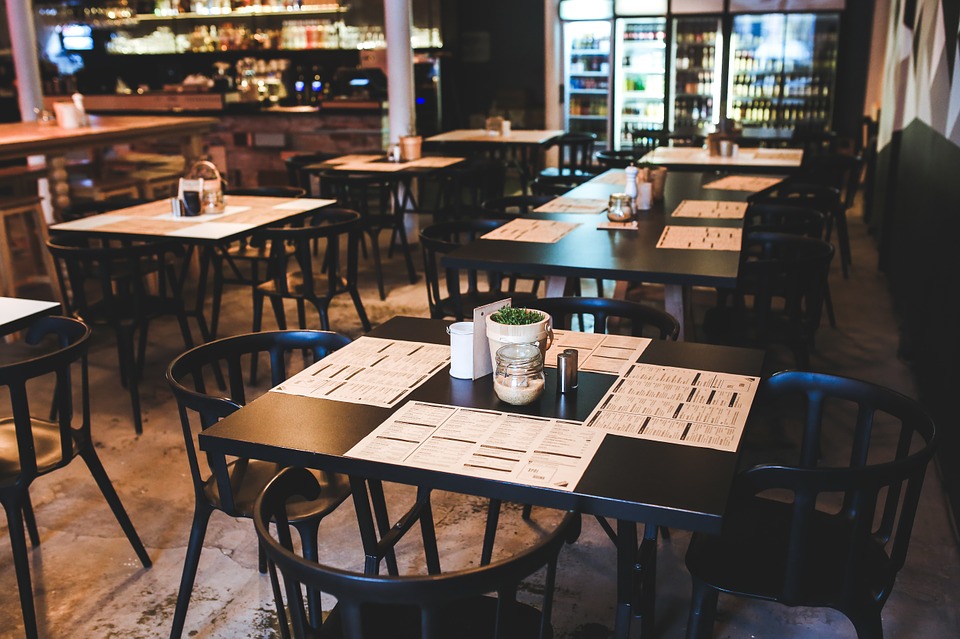
In this article, Jagriti Bharti of Amity Law School, Lucknow discusses the kinds of Raids a Restaurant or Eatery can expect.
With the globalisation of the whole country, India’s food trade system has also been globalised. It has initiated a transnational system for food production. India is passing through a strategic development phase when it comes to food and beverages. Indian food industry not only with its own home brands but also with the foreign brands is being taken to great heights of development. Indian food and beverage market are growing steadily having a fairly sophisticated market with enough restaurants in big cities of India like Delhi, Mumbai, Bengaluru, Chennai etc. Food franchise like KFC, Pizza Hut, McDonald’s, Starbucks Coffee, Dunkin’ Donuts, Domino’s Pizza, Subway, Costa Coffee, Burger King is among some of the famous foreign food franchise who has tightened their position in Indian food industry through their outlets in various cities of the country.
Active and fast pace lifestyle of the people has given a path to the development of the restaurant and eateries across the country. Thought they fulfil the purpose of serving hungry Indians who are willing to pay them their price, there are lots of eateries and restaurants who are not up to the mark in sanitation, hygiene and food quality. Their compromise in quality and hygiene can have a disastrous effect on the health of the consumers of their food. Several laws are made for these restaurants and eateries for maintenance of hygiene level and food quality but least of them is followed leading the government to take a step forward towards securing the safety of the public. And this step is the “surprise checks” (also known as “raids”) and audits of the hotels, restaurants, eateries to check their level of hygiene and food quality and ensure their public health.
“Week long raids in the Secunderabad Cantonment has exposed the unpalatable underbelly of the restaurant industry operating in the city. The exercise has now prompted a sea change in the Cantonment hotels management policy. The sanitation wing of the Cantonment board seized 6 installations including a sweetshop and a bakery. Officials found that all the kitchens had employees living in them and the kitchen repleted with the toilet. The surprise check was conducted after receiving complaints and will be continued until the food outlets will comply with hygiene norms[1].”
Above stated incident was just an example of a “raid.” There are much more which have been either conducted or yet to be conducted wherever the restaurant staff and administration lay back from their duty. The safety and quality of the food served in the restaurants and eateries are governed under FSSAI (The Food Safety and Standards Authority of India) Act. It operates under the Health ministry and is required to regulate and monitor the manufacture, processing, distribution, sale, and import of food as to ensure the safety of food. The FSSAI has become really active after the “Maggi issue”. They are conducting a lot of surprise audits and raids frequently in various hotels and restaurants to keep the restaurants and food businesses of their toes and deliver what is expected “quality”.
The provisions of FSSAI Act under which raids can be conducted of restaurants and eateries are:
Running Food Business Without License and Registration
As per Section 31 of the Food Safety and Standards Act, 2006, no person can commence or carry food business without a license. Whosoever carries food business without obtaining required licence will be liable to imprisonment for a term which may extend to 6 months and also a fine which may extend to five lakh rupees (Section 63).
Running food business (including restaurants and eateries) without a proper licence is illegal and this may attract raids from the food authority in order to find out whether the specific food business is legal or illegal. Restaurants will be required to show licence of their business whose inability to produce will attract the said punishment. [Getting FSSAI license for the restaurants].
NOTE: For a restaurant to sell liquor on its premises, it needs to get licensed from the State Excise Commissioner without which selling liquor is illegal. That restaurant can be raided and can even order for its closure.
Selling food, not of nature, substance or quality demanded
Raid can be conducted in any restaurant or eatery if they sell food to the purchaser which is,
Not in compliance with the provision of the FSSAI Act or,
Regulations made under this Act or,
Nature or substance or quality demanded by the purchaser’
And the concerned person will be liable to a penalty not exceeding five lakh rupees[2]. Noncompliance of this Section by any person who, if, covered under Section 31 (2) will be liable to a penalty not exceeding 25,000 rupees.
Case: This case is of Delhi’s eateries serving low-quality food. It was informed to the Delhi High Court by the FSSAI that various food samples collected from three different popular eateries in the capital have been found unsafe for consumption. They were:
KFC at Scindia House in Connaught Place: Sample collected was ‘Rizo Rice’ which contained artificial colour.
Sagar Ratna restaurant in Guru Teg Bahadur Nagar: Rice sample collected for testing was found to be unsafe.
Bikanerwala restaurant at ITL Tower in Netaji Subhash Place: Samples of fruit and vegetable chutney was found to be contaminated with artificial colours.
Selling food that contains external or inappropriate matter
Section 54 of the FSSAI Act states that any person who sells, stores, distributes or imports food which contains inappropriate or extraneous matter shall be liable to a penalty which may extend to one lakh rupees. Raids can be conducted by the concerned authority if complaint registered against any eateries or restaurant regarding this matter.
Case: There was a case of Mother Diary in which media agencies reported that he detergent and frozen fat was found by the Kolkata based Central Laboratory during re-tests of milk samples collected by the district Food and Drug Administration.
Keeping the kitchen dirty and unhygienic
Any restaurant owner who keeps the manufacturing area of food or process any article of food in an unhygienic or unsanitary condition will be liable to a penalty which may extend to one lakh rupees (Section 56) and this noncompliance of the owner can also raids to be conducted.
Case: The authorities warned Central Province Club of Nagpur of cancellation of their food licence due to faults like an extremely unhygienic kitchen, no pest control, unclean water tank etc. found during an inspection by the Food safety officer and which was not permissible under the FSSAI Act. [FSSAI guidelines to be followed by all the restaurants].
Accidents including consumer’s injury or death
According to Section 59, if any restaurant owner found guilty of selling any food item which caused either death or injury to the consumer then he will be liable a penalty of rupees five lakh in case of death and rupees 3 lakh in case of injury occurred to the consumer. If this has happened in any restaurant then the owner of the concerned restaurant may face the wrath of the food safety officials during raids.
There are also some other laws under which raids can be conducted in the restaurant and eateries
Income Tax Act, 1961
Section 14 of the Income Tax Act provides 5 heads of income i.e. Salaries, income from house property, profits and gains of business and profession, capital gains and income from other sources. If a person’s income falls in any of these heads, he will be liable to pay income tax as per the provisions of this Act. Owning and operating a restaurant, hotel, eatery or other food business is a kind of business and hence the restaurant owner has to pay the income tax on the income he has earned in the previous year from his business under the head “Profits and gains from business and profession” evading which will make him liable to face penal consequences.
Despite the laws made under the Act, people tend to evade payment of tax by not disclosing their income and assets. But the government had a smart solution to this. It launched “Income Declaration Scheme” in 2016 in order to combat the problem of tax evasion. Under this scheme every person has to declare their income and wealth to the government till 30 September 2016 failing which he will face search and seizures from the Income Tax officials.
Case: The Income Tax department has left no stone unturned in a bid to make “IDS” a success. It conducted around 100 raids in eateries in Ahmedabad, New Delhi and Kolkata. In Mumbai alone, around 50 restaurants and eateries were raided and were asked to declare their income under Income Declaration Scheme. Small businesses and roadside eateries also had to face raids from the IT officers.[3]
CONCLUSION
Owning a business like a restaurant or an eatery needs a bundle of licences from different Acts of State as well as Central and has to abide by the provisions and rules mentioned therein, violation or noncompliance of which can really trouble their business through penalties and raids conducted by the food authorities who can even pass an order of its closure. So, before starting a food business, one needs to be very alert and careful about the laws related to it.
Food safety officers conduct surprise checks of Sonawari markets
SUMBAL: To check the quality of foods, milk and juices being prepared, sold and served under unhygienic conditions, a team of food officers conducted a special drive in Sonawari area of Bandipora district.
A team of food safety officers led bu Yameen Ul Nabi, designated officer food safety drug & control organisation Bandipora on Saturday conducted surprise checks of various food business holders, milk shops at Sumbal, Sonawari areas; Shelvat, Wagipora and Sumbal.
The team inspected several establishments and lifted several samples of milk. Food items like milk, juice oil were tested on the spot in food safety organisation’s mobile van.
The food safety authorities have impressed upon the food business operators to strictly adhere to the provisions laid under FSSA (Food Safety and Standards Authority) and maintain high standards of health and hygiene to guarantee safe food to end users. The officers said such drives would continue in future as well.
Subscribe to:
Posts (Atom)