May 27, 2016

CHAT - Nitin Sethi - SUBJECT: Does the rot in Indian food safety system spread beyond breads and buns?

Senior Associate Editor, Business Standard

For exporting foods to developed world, Indian producers face stiff quality standards, often face rejection of lots. However, is there a similar stringent check on imports? We can see so many processed/semi-processed foods in Indian shops, (often even without details of mfg plant).
Ujjwal, you got it spot on. We are supposed to test exports and imports of food products, both. Our quality testing on exports is lax and our quality testing for imports is far worse. The govt recently appointed more than 100 unqualified customs officers as food safety officers at ports to check food imports. Anywhere else this would have been a scandal. We have never invested in building the food safety regulatory system and the government is now in a phase of further diluting the limited capacities.

Are we reactionary in how we look at food safety in India rather than being preventive?
Ravi our preventive capacities are near zero at the moment. A general lack of confidence that govt is ensuring food safety leads to the over-blown reactions i think at time.

Could you please give examples of how the government is now in a phase of further diluting the limited capacities of our food safety regulatory system? Also, what are the major areas that we need to urgently invest on to build a robust system?
The NDA government has shelved the earlier plans of expanding food safety enforcement systems. Initially it had proposed Rs 1,800 cr plan to do so across the country. Now the food safety authority, FSSAI is proposing that it shall not be involved in enforcement of the food safety law across the country at all! It has already wound down two of its offices, one in UP and another in Punjab. It plans to let pvt sector labs get in the business - and we all know how problematic that can be. It is willing to let even state officers enforce the food safety law as an additional duty and not as a full time task, which means we wont have trained officers doing it but just another official. Oddly, all this is being done in a rather hush hush manner. On what we should be doing: bring transparency to the system. Put all testing results, recalls etc online for consumers to know. Enhance our enforcement capacities for centre and state - train people and give them jobs as regulators. set up our independent labs across regions to test food products - especially processed food. To put it simply, we got a new law in 2011 but we were only at the verge of implementing it when the govt has instead began to shrink the enforcement ability of the regulator

In food safety, it is always said that our traditional home cooked food is the best and consumption of processed food should be limited, if not possible to avoid. But, regarding the most basic ingredients of cooked food i.e. water and vegetables, I have doubts about their being consumable and uncontaminated. And if there exist an already remedial mechanism, how do one go ahead if these basic ingredients are contaminated with pesticides and heavy metals
Varun, Our bodies are capable of taking different unsafe chemicals to some extent. This is how the food safety systems work. Experts assess what kind of foods we get our nutrition from - say rice, bread, lentils, meants etc - in a way what makes up your average food intake. Separately the assess how much of each dangerous chemical human body in different conditions can be ok with. Based on that they set up standards on what should be the maximum level of these bad substances can be permitted in different foods so that overall in a day we dont consumer more than the dangerous level. So i would say this, while our traditional foods will contain some harmful materials as well, i would rather have that than the harmful materials from processed food because at least i am getting a healthy diet that keeps my immune system working and body fit. Of course there are some dangerous chemicals that should not be present at all in our foods and the govt sets standards demanding so. The case of finding bromate in bread by CSE is one such example. The chemical should have been simply banned to begin with. I hope i answered your query

Consumer awareness on matters of safety of packaged foods is quite low and people are just not motivated enough to actually mobilize on this issue. This is also because there is no confidence in the safety standards set. Do people even know which ministry and which minister is supposed to deal with food safety. Why don' the concerned ministries don't speak up often enough?
Harsha, the concerned ministry is the Health and Family Welfare ministry. The food safety authority under it is FSSAI (http://www.fssai.gov.in/). Unfortunately the two have been extremely lax in actually doing much with transparency. Being a specialised area the onus on the authority should be much higher to act transparently and pro-actively. But that has not been the case. I would say the pressure from processed food industry is pretty high on most times. People would be more than motivated, I am sure, if the FSSAI began informing public of all the tests they are doing and what they are finding. Other countries such as US does this transparently and that brings awareness in public as well as mobilised people for public health.

When we have street vendors selling food, disregarding all standards of hygiene and safety, when can we truly have safe and healthy food standards?
This is the way I see it: There is a larger problem of hygiene and safe water etc that is wide-spread. The govt cant/wont guarantee that at the moment. The street vendors are provided no economic or other support to do any better and operate at very low margins. There are issues of hygiene and safety consequently. On the other hand are large profit-making businesses of processed and manufactured foods that have no excuse for not providing safe food products to consumers. Their desire to cut corners and serve cheap and dangerous additives or untested or unhealthy contents or making spurious claims of health impacts of their products should be unpardonable. I would treat the latter with a much more stringent set of norms while investing in the marginal and small vendors to help them provide better foods

Recently we saw that the govt. shut two regional FSSAI offices (in Lucknow and Chandigarh). Given that these offices were involved in the run-in with Patanjali and Nestle, do you think this was due to corporate influence? And how harmful is to the food regulatory regime to send this kind of message?
The shutting down of the two offices has a bad smell about it. There is no proof that i can quote to make an accusation though. Regardless of whether there was direct influence or not, the fact that the two offices were shut down should set off alarm bells. Why? Because under Indian food safety laws only these regional centres of the FSSAI can license food businesses and manufacturers of certain categories. If they are not there in the field then who is checking all these manufacturing facilities before giving the licenses? Say, any manufacturer that has units producing in more than two states can only be governed by the central authority. that would mean most of the big food manufacturers. you are right, it sends a very bad signal to consumers and a very positive signal to bad businesses.

I have another question. Isn't this issue similar to the car air bag issue where consumers are more price conscious than safety conscious. Is health/safety really an issue for people here. There was more outrage at Maggi's ban rather than the presence of lead in it. As opposed to this, the consumer rights scene is much more developed and many fight pro actively to enforce their rights. Couldn't there be or shouldn't there be greater synergy between consumer affairs ministry and HFW in this matter?
we are unfortunately being pushed in to a direction towards self-regulation for food safety of products as well just as it often happens in the automotive industry in India. and that is dangerous. Yes, you are right there should be more synergy between the two.

Do Indian central and state regulators have the man-power to monitor food safety standards closely? What steps would you propose?
Ankita, to put it simply: NO. Worse still, the govt is now proposing to whittle down the existing man-power further. Take a look at my answer to Kanika here for what needs to be done.

Advertising watchdog raps Patanjali ad claims

The Advertising Standards Council of India (ASCI) has rapped yoga guru Baba Ramdev's Patanjali Ayurved Ltd. for "false and misleading" advertisements that also "denigrate" rival products.
The Consumer Complaints Council (CCC) of the ad watchdog, which has released a statement on the complaints it dealt with in March, also found three of Patanjali's product advertisements indulging in "ambiguity" and making claims that were described as "gross exaggeration".
The CCC received 156 complaints against ads during the month, and upheld 90 - including those by Patanjali - under categories such as "education", "healthcare and personal care", "food and beverages" and others.
Under the "healthcare and personal care" category, the CCC pulled up the ad for Patanjali Kesh Kanti Natural Hair Cleanser & Oil, describing as "false and misleading by ambiguity" and "gross exaggeration" its claim that "mineral oil is carcinogenic in nature and may cause cancer".
In the "food and beverages" segment, it found that the ad for 'Patanjali Kachi Ghani Mustard Oil' made claims that were "misleading" and "not substantiated".
The ad had claimed that, "Other than Kacchi Ghani process most of the other edible refined oils and mustard oil are made using neurotoxin Hexagon solvent extraction process. To make profits at the cost of consumers' health many companies mix cheap palm oil in mustard oil".
The CCC ruled that the ad "unfairly denigrates other oils/mustard oil".
The ad had prompted the edible oil industry body, the Solvent Extractors Association of India (SEAI), to file complaints with the food regulator, Food Safety and Standards Authority of India (FSSAI), and ASCI.
In its letters to FSSAI and ASCI, the SEAI requested the regulators to "take action" against Patanjali, and alleged that the company's ad for 'Kacchi Ghani Mustard Oil' was not in good taste.
The CCC also found issues with the ad for 'Patanjali Herbal Washing Powder, Cake and Dishwash Bar', which claimed they were used by "millions of housewives". The watchdog said the claim was "not substantiated".
It further said that there was little evidence of the cleaning benefit of its professed ingredients, and declared the claim as "misleading by ambiguity".
The CCC also said that "the claim, 'Dish wash bars made with chemicals do clean the utensils but they end up damaging the hands', was not substantiated and unfairly denigrates dish wash bars directly".
Patanjali's ads have come in for criticism in the past. In a recent article, Pushpa M. Bhargava, former vice chairman of the National Knowledge Commission, made a detailed critique of the claims made by a Baba Ramdev ad about treatments for high blood pressure and diabetes.
Bhargava, who founded the Centre for Cellular and Molecular Biology, Hyderabad, described as "scientifically absurd" the "implication in the ad that blood pressure and diabetes are caused by viruses".

Toxic chemical test result of Goa’s pão  on Monday

PANAJI: Goans will know for sure by Monday whether the bread they eat is free from poisonous, cancer causing chemicals. Director of Food and Drug Administration (FDA), Bambolim, Salim Veljee said that the laboratory report on the presence of potassium bromate and potassium iodate in bread and bakery products is expected to be out on May 30. The report will reveal whether the local bread is safe for consumption, he said.
“Since May 23, when news broke out that bread in New Delhi contained potentially harmful chemicals, our food inspectors have collected bread samples from various bakers, patisseries, cafes and grocery stores in the state. The analysis of the samples will be out on Monday,” said Veljee.
There was no instruction from FDA Bhavan or higher authorities in the government to check the safety of local bread but our office is doing it anyway, said Veljee.
Meanwhile, members of the All Goa Bakers Association (AGBA) said that none of them use any harmful additives to make bread.
President of AGBA Agapito Menezes said, “Our ‘poders’ have not even heard of these chemicals. The cost of ‘pao’ is only Rs three. How can they afford these chemicals?” “Goan bakers – ‘poders’ and local bakeries – bake bread traditionally and do it two or three times a day. They don’t need to use chemical preservatives because they do not have excess production,” he pointed out.
There are about 1,200 bakers in Goa of which about 300 are members of AGBA, but Menezes said that he was confident that bread in the state is healthy and free from toxic chemicals. Ravindra Gaitonde, partner, Café Central, Panaji, said that their bread is absolutely natural and free from any preservative. “We need to file a defamation suit against the report because it cannot generalise on quality and create doubt in the minds of people,” he said.
An owner of a Panaji-based pastry chain said that the only ingredients that go into the making of bread are yeast, flour, salt, oil and sugar. No harmful chemicals are used, she said. A commercial sandwich bread manufacturer said that even large bakers do not use any chemicals in production.
New Delhi’s Centre for Science and Environment (CSE), a research organisation, released a study that found potassium bromate – a possible cancer-causing chemical – in 38 samples of popular bread brands in the national capital city. The study also found the presence of potassium iodate, a thyroid inducer. Both chemicals are used as additives to soften bread.
Usage of chemical is permitted up to limits of 50 ppm (parts per million) of bromate in bread. However, the Food Safety and Standards Authority of India (FSSAI) has now decided to remove potassium bromate from the list of additives and is studying the usage of potassium iodate.

Bread manufacturers withdraw use toxic chemicals, cite public controversy

Centre also tested and found residues of the chemicals in buns and pizza bases in major fast food chains
Under a harsh spotlight after a damning report on carcinogenic toxins in bread, the All India Bread Manufacturers Association announced they were 'voluntarily withdrawing' the use of the chemicals potassium bromate and iodate. This comes on the heels of both the central government and the Food safety and standards authority of India (FSSAI) taking serious note of the report put out by the Centre for Science and Environment (CSE).
The CSE report that came out on May 23, found that 84 per cent of the 38 commonly available brands of pre-packaged breads, and pavs and buns, contained potassium bromate and iodate. The Centre also tested and found residues of the chemicals in buns and pizza bases in fast food chains such as Domino's, McDonald's, Subway.
President of the AIBMA Ramesh Mago, told the press on Thursday that they were withdrawing the these chemicals due the public controversy. However the association said that the FSSAI had so far permitted the use of potassium bromate/iodate as food additives till the limit of 50 parts per million (ppm). The CSE report found all resides to be below the limit. Adil Hassan, MD of Harvest Gold, and member of All India Bread Manufacturers' Association, said, "Potassium bromate and potassium iodate are considered safe and legal and also approved for widespread use by the Food Safety and Standards Authority of India and even the USFDA. However, given that potassium bromate has become a controversial subject and causing confusion among consumers, we have decided to voluntary withdraw use of the additives in the products."
However, the report had called on the FSSAI to ban the chemicals altogether, as they had been in many countries, such as across the European Union and Canada, as potassium bromate/iodate have known to be potentially carcinogenic since the 1990s.
Taking serious note of the study, the union health ministry on May 23 itself asked the FSSAI to probe the issue and submit a report. FSSAI too soon recommended a ban on potassium bromate/iodate as food additives.
Industry representatives are not happy with CSE however. In a statement, ASSOCHAM said,"NGOs are free to be watchdogs, but they must realise that their reports and findings should not be targeted only at the industry... While the government is trying to move towards ease of doing business by relaxing the inspector raj, the NGO policing may harm many times."
CSE welcomes AIBMA's decision The CSE welcomed the bread manufacturers' decision to stop the use of potassium bromate and potasium iodate as additives, saying this will reduce public health risk from cancer-causing chemicals.
"We have heard what the bread-making association has announced. We are happy that they have decided to stop using potassium bromate and potassium iodate within two-three days. This will reduce public health risk from these chemicals," Deputy Director General, Centre for Science and Environment (CSE), Chandra Bhushan, said. CSE researchers had pointed out that potassium bromate can possibly cause cancer and use of potassium iodate in bread- making can lead to excess intake of iodine which could affect thyroid functions.

A long-term route to organic farming


Govt. opts for long-term route to switch over to organic farming
The government is embarking on a programme to bring down the use of chemical pesticides and fertilizers, under plans to enhance agricultural production and tap the export market. Agriculture Minister V.S. Sunil Kumar told The Hindu here on Thursday that the government would prefer the long-term route to switch over to organic farming.
Outlining the government’s objective to make Kerala a pesticide-free State, the Minister said a research and development programme would be taken up by the Agriculture Department and Kerala Agricultural University. “Branded organic products would help us tap a greater share of the export market and fetch a higher price for our produce.” A project initiated by the previous UDF government to convert Kerala into a fully organic State by 2016 had been bogged down after the pilot phase was implemented in Kasaragod last year. The United Arab Emirates had recently imposed tighter controls on the import of mango, cucumber, and chilli peppers from India. The country has made it mandatory for Indian exporters to produce a pesticide residue analysis report for import of these items. The latest report of the pesticide residue analysis lab under the KAU has revealed that most of the vegetables sold through markets stalls in Thiruvananthapuram, Pathanamthitta, and Kasaragod pesticide residue-free.
While curry leaves, mint leaves, and coriander leaves showed pesticide residue higher than the safe level prescribed by the Food Safety and Standards Authority of India, sambar chilli and green chilli were found to contain pesticide residue lower than the safety limit.
V.S. Sunil Kumar says an R&D programme would be taken up by the Agriculture Department and KAU.

DINATHANTHI NEWS


தர்மபுரியில் விற்பனை செய்யப்பட்ட மாம்பழ ஜூஸ் பாட்டிலில் பல்லி? உணவு பாதுகாப்பு அதிகாரிகள் விசாரணை

தர் ம புரி, மே 27:
தர் ம புரி பேருந்து நிலை யத் தில் உள்ள டீக் க டை யில் விற் பனை செய் யப் பட்ட மாம் பழ ஜூஸ் பாட் டி லில் இறந்த பல்லி மிதந் த தாக புகார் எழுந் தது குறித்து உணவு பாது காப்பு அதி கா ரி கள் விசா ரணை நடத்தி வரு கின் ற னர்.
தர் ம புரி சத் தி ரம் மேல் தெருவை சேர்ந் த வர் சீனி வா சன். இவர் நேற்று காலை தர் ம புரி புற ந கர் பேருந்து நிலை யத் தில் உள்ள ஒரு டீக் க டை யில், பிர பல தனி யார் நிறு வ னத் தின் மாம் பழ ஜூஸ் பாட் டிலை வாங் கி னார். பாட் டி லுக் குள் ஜூஸ் சு டன் இறந்த பல்லி போன்ற ஒரு பொருள் மிதப் பது தெரிந் தது. இத னால் அதிர்ச்சி அடைந்த சீனி வா சன் தர் ம புரி உணவு பாது காப்பு துறை அதி கா ரி க ளுக்கு தக வல் கொடுத் தார். அதன் பேரில் தர் ம புரி வட் டார உணவு பாது காப்பு அலு வ லர் கோபி நாத் மாம் பழ ஜூஸ் விற் பனை செய் யப் பட்ட கடை யில் ஆய்வு நடத் தி னார். பின் னர் அந்த பாட் டிலை பறி மு தல் செய்து எடுத்து சென் றார்.
இது குறித்து உணவு பாத காப்பு அலு வ லர் கோபி நாத் கூறு கை யில், ஆய் வுக்கு பின் னர் தான் பாட் டி லில் இருப் பது என்ன என் பது தெரி யும். முறைப் படி ஆய் வுக்கு அனுப்பி அறிக்கை கிடைத்த பின் சம் பந் தப் பட்ட குளிர் பான நிறு வ னத் திற்கு விளக் கம் கேட்டு நோட் டீஸ் அனுப் பப் ப டும். இது தொடர் பாக முறை யான நட வ டிக்கை எடுக் கப் ப டும் என் றார்.

DINAMANI NEWS


FSSAI needs to step up and do its job proactively


Bakers' half-baked vow of safety

Kolkata: Alarmed by the sharp drop in sales, bakeries in the state attempted to assure consumers that the bread they manufactured was safe, but admitted that harmful additives could be present in either the flour or the bread improver added to the dough. 
Speaking at a hurriedly convened press conference on Thursday, representatives of bakers said potassium bromate and potassium iodate, if present, were within the limit prescribed by food safety regulator FSSAI. They, however, acknowledged that the claim was not based on test reports but faith. 
The two chemicals have been banned in EU for being possibly carcinogenic, but are allowed in India in measured quantities. 
"We have not checked the level of the two chemicals in the bread we make, but I am confident it is not beyond the permissible limit. Moreover, there is no conclusive proof that bread has caused cancer or thyroid ailments in anyone here. The report published by an environment action group in Delhi is alarmist and misleading. We believe it is a conspiracy hatched by a corporate to corner the bread market by driving small and medium manufacturers out of business on the pretext of safety," said Idris Ali, a Trinamool Congress MP and secretary of the largest forum of bakers in the state. 
In an emotional appeal, Ali urged consumers to continue having bread as the industry would otherwise collapse and drive lakhs out of jobs. "Sales have already dipped by 30%. The situation will become grim if sales continue to drop," he said. 
However, other bakers present, including Sk Ismail Hossain who represents another bakers' forum, admitted most bakeries did not have chemists or laboratory facilities to test the chemical composition of ingredients. "We do quality checks, but that does not involve chemical analysis. We have no way of knowing if the chemicals are present beyond the permissible limit in the flour or the improver," he said. 
Bakers in Bengal: 4,000 (3,500 small; 450 medium; 50 big) 
Daily production: 10-12 lakh pounds
No of consumers: 40-48 lakh 
Consumption in Kolkata: 5 lakh pound
No of consumers in Kolkata: 20 lakh

FSSAI lauds bread makers decision on controversial chemicals

New Delhi, May 26 (PTI) Welcoming bread makers decision to stop using controversial chemicals in their products, food regulator FSSAI today said it will remove all apprehensions in public mind and shows that bread manufacturers are committed to public health.
The All India Bread Manufacturers Association (AIBMA), which represents over 90 organised bread manufacturers sich as Harvest Gold and Britannia has announced that they will stop using potassium bromate and potassium iodate voluntarily from tonight itself.
"... this decision will remove all apprehensions in public mind that have arisen with the findings of the CSE report. It shows that the bread manufacturers are responsible food businesses committed to public health and food safety," Food Safety Standards Authority of India (FSSAI) CEO Pawan Agarwal told reporters here. On May 23, the Centre for Science and Environment (CSE), while releasing a study had claimed that the bread samples of top brands in Delhi contained cancer-causing chemicals -- potassium bromate and potassium iodate. While appreciating that the CSE highlighted issue relating to use of potassium bromate in bread but Agarwal pointed that removal of potassium bromate has already been decided by the food authority based on the report of scientific panel. "It would have helped if the CSE had shared the findings of its reports with the FSSAI so that a necessary panic among public at large could have been avoided," he added.

May 26, 2016

No need to panic about presence of chemicals in bread: AIIMS Director

New Delhi, May 26 (ANI): There is no need to panic much in the long-term about presence of potassium bromate and potassium iodate in the pre-packaged daily bread but excess of anything should be avoided, a top AIIMS official said at an ASSOCHAM event held in New Delhi today.
"It might pose some danger but no individual eats entire pack of bread everyday, majority of people eat a piece or two at the most, so in the long-term there is no need to panic much as has also been said by the FSSAI (Food Safety and Standards Authority of India)," said Dr MC Misra, Director AIIMS Delhi while inaugurating an ASSOCHAM conference on 'Health Security for All.'
"Usage of chemical additives in food items should be minimized and replaced with fresh food items like eggs, fruits, vegetables and other alternatives, besides one should eat everything in moderate quantity," said Dr Misra.
"There should be no adulteration in food items and if it is there, it should be mentioned about on the packet," he added.

Mouldy bread seized from bakery outlet

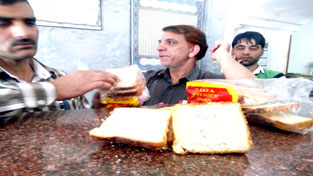
Srinagar, May 25: Jammu and Kashmir Food and Drug Control Department today seized ten packets of mouldy bread after raiding a prominent bakery outlet here at Residency Road in Lal Chowk area.
Assistant Commissioner of Food and Drug Department Srinagar, Hilal Ahmad Mir, said the mould is an indication that the bread has probably been stored for too long and is ‘past its prime’.
“We received a complaint from a consumer that M/s Ahdoos Bakery outlet has sold him bread with fungus grown inside it. We immediately sent our food inspectors and they found ten more mouldy bread which were on the display thereby compromising with the food safety which is unbearable,” he said.
Dr Abdul Qayoom of SMHS Hospital said the foods that are mouldy may also have bacteria that are invisible to the naked eye and can cause several diseases. “You should immediately discard the bread with mould because it can cause allergic reactions and respiratory problems in some people. A few molds, under certain conditions, may produce hazardous substances called mycotoxins. The worst of these, aflatoxins, may cause liver cancer,” he said.
The Assistant Commissioner said the Health Minister has given specific directions that there should be no compromise on the food safety. “I appeal people that they should not buy things which have improper labeling and without manufacture and expiry date written over it. They have to be extra careful with the perishable food items like bread and milk,” he said.
The officials lifted the sample of bread for testing and further investigation, report of which is expected to come after three days.

Form panel to find office for food safety tribunal: High court

Jaipur: Rajasthan High Court on Wednesday directed the chief secretary to constitute a committee of secretaries to find a place to house the office of food safety appellate tribunal.
The division bench of Justice Ajay Rastogi and Justice D C Somani had summoned principal secretary, general administration department (GAD) over not been able to provide a proper office and staff to the food safety tribunal taking the government to task in the last hearing by stating that that "even after five years and after the court taking cognizance for constituting food safety appellate tribunal, still the tribunal has not been constituted so far, in discharge its obligation under the Food Safety and Standards Act 2006." 
Principal secretary of GAD P K Goyal who appeared in the court on Wednesday said the there is no independent office space available except a few rooms at the Swasth Bhawan (Building of the medical and health department) to house the tribunal. The court was not happy with the reply. It retorted "should we put up a tent in the high court premises to house the tribunal?"
AAG Dharam Veer Tholia who represented the GAD said the government had already allotted four rooms on the third floor of the Swasth Bhawan and if required more rooms could be made available. He said the government had already allotted the Van Bhawan near the High court building following the department of Forest and Wild life shifted to its new building to the proposed circuit bench of the National Green Tribunal, Human Rights Commission, Department of Water Resources and Indira Gandhi Canal Board. There is no space available in that building to accommodate the Food Safety Appellate Tribunal.
He also informed that in compliance of its earlier order the government had sanctioned four LDCs, three MPWs, and reader stenographers.
The court then directed the chief secretary to form a committee of Principal Secretaries of GAD, Finance and Medical and Health with chairman of the Tribunal an ex officio member and directed to hold meeting on May 27 at 11.30 am to find an office to the tribunal and inform the court on May 30 of its decision.

Tips on how to keep food safe and hygienic

In the Indian context food safety while enforced and followed by all professional establishments is a cause of concern due to the unorganized form of the industry existing across the geographic landscape of the country
The basis of hospitality industry around the world is Food and Beverage and their production and service aspects. Therefore it is imperative for all establishments to not just set up their own means and measures to ensure food safety at all times, but also follow the direction of various government regulations put in force by specific departments, set up to monitor the same.
In the Indian context, food safety, while enforced and followed by all professional establishments, is a cause of concern due to the unorganized form of the industry existing across the geographic landscape of the country. Over the years the government has been taking numerous steps to ensure that there are proper laws and systems to set up guidelines and enforcement of the same like the Food Safety & Standards Act (FSSA) 2006.
The Food Safety & Standards Act (FSSA) 2006 consolidates the laws pertaining to the regulations to be followed by all food establishments across India, while also establishing the Food Safety and Standards Authority of India (FSSAI), which is the apex food regulator to lay down science bases standards for all articles of food and to regulate their manufacture, storage, distribution, sale and import to ensure availability of safe and wholesome food for human consumption. FSSAI is empowered by and functions under the Ministry of Health and Family Welfare, Government of India.
Under the FSSAI guideline, food products are categorized under two heads, namely Standardised and proprietary food. The former are those food products for which standards are prescribed and do not require product approval prior to manufacture, sale, distribution or import and a first time manufacturer or importer only requires an FSSAI license to begin a food business.
Proprietary food products do not have standards owing to their safety parameters not being known or yet ascertained. While FSSAI presently has approximately 377, FCS will be built around 18 main categories to begin with, which include category 1-16 of different food kinds. These are supplemented with category 17, to cover those products which can’t be placed in categories 1-16 and a category 99 has been created to deal with substances added to food, such as vitamins, minerals, additives, etc. Having said that, traditional foods do not require product approval as they are being consumed over centuries, with their ingredients and preparation being known. However, if they use any new technology or modern method of preparation or make alterations to their ingredients or food additive, they have to apply for product approval from FSSAI.
The Indian food safety regulation, implemented by the FSSAI, is primarily based on Codex Alimentarius, which was formed with collaborative efforts between two sections of the United Nations: World Health Organisation (WHO) and Food and Agriculture Organisation (FAO), therefore adhering to international standards and guidelines (reference link). Based on these guidelines there are certain best practices put into effect by the FSSAI for each operator in the business of food to implement and follow. 
Some of these are:
1.Food served to the costumer should be safe from the three main types offood hazards, i.e. Physical, Chemical & Microbiological
2.Hand Hygiene of Food Handlers: The spread of germs from the hands offood workers to food is an important cause of food borne illness outbreaks and therefore important for the staff to always ensure hand hygiene while handling any sort of open / unpacked food items
3.Personal Hygiene like daily bath, trimmed and neatly combed and tied hair and clean nails, fresh and clean clothing and ensuring the head is always covered with a net or cap
4.Proper cleanliness of raw material like vegetables and meat under portable water and proper storage under advised temperatures for the respective raw material
5.Always partnering with a vendor / source with proven track record and one which is approved by FSSAI with license number
6.Always cooking at the optimal temperature
7.Processing, production, storage and distribution of vegetables and meat / poultry / fish products should be segregated
8.Daily cleaning, and in some cases cleaning after every use, should be carried in the production area
9.Holding of cooked food must be at their optimal suggested temperature of below 5⁰C for cold food and above 63⁰C for hot food
10.Storage practice and handling: food must be stored at right temperature (avoidkeeping food at danger zone or near extreme temperatures not suitable for the said product). Gloves to be used while handling ready to eat products and while doing butchery
11.Food handlers must always be in perfect health at all times while handling any kind of product / food item
12.Trainings: it is essential that all food handlers are regularly monitored and trained to ensure that they are aware about the food safety procedures and updates
While private organisations and Government are working towards ensuring higher level of food safety standards are maintained across various levels and business, there is also a need for people to be more cautious on what and where they consume food articles from, while being watchful of the conditions they procure their ingredients / good / products from. Some of the most common mistakes that we make in India, especially in the summer season are:
1.Drinking water from unknown sources and in an unpackaged state
2.Consuming water based products like lime water or ice from an unpackaged or unreliable source
3.Not keeping the body hyderated at all times
4.Not consuming enough curd or coconut water from a reliable source, which introduces friendly bacteria and rehyderates the system to fight with various ailments
5.Not following a healthy regime or eating on time, thereby exposing the body to numerous diseases and illnesses
6.Being aware of the ingredients / food items that one is allergic to. Some allergies are from birth, but today there are numerous cases which have come to fore where adults have come to develop allergies and most of the time they aren’t aware of the same
7.Always checking on the date of manufacture and date of expiry in case of packaged goods before procuring it
8.Always disposing off expired goods stored at home / office or any area where they could be consumed inadvertently from
9.Always ensuring that the containers of packaged goods are properly disposed off
Food safety and hygiene is an elaborate subject, where the Government and private business are taking the requisite steps to ensure that the highest quality ingredients and products are offered to the consumers, however it is also essential for the consumers to ensure that they take the requisite steps and procure food products from only reliable and accredited sources at all times.

Three days interface meet on food Safety and Public Health

COHEART's 3- days interface between food safety officers, public health scientists, Hotel owners, Managers and Resort owners began at 28th March 2016 at Pookode. COHEART envisages for developing a sustainable platform for interaction of all the stakeholders involved in food industry and public health sectors across the State. The Interface meet is arranged for enabling knowledge transfer and linking food related and public health sectors of the district. 
Director of Entrepreneurship of KVASU Dr.T.P.Sethumadhavan handled a session of need of food security and need of food safety. In his talk, he stressed that India is looking for clean air and clean water, it is the need of the hour to provide safe food to the consumers as envisaged in FSSA act. Hoteliers need to verify infrastructure facilities, safety of raw materials during procurement and the processes to assess the safety of foods. Food processing industry is growing at a rate of 18-20 percent per annum in the country. Smt.Aleyamma.P.K, food Safety Officer, 
Calicut took a session on need based issues in food safety and mandates of SSA. The interface offers need based discussion on food safety and mandates of FSSA in Kerala for the owners of all the hotels and restaurants in Wayanad and is handled by Food Safety Officers. This is followed by their interaction with scientists and food safety officer. The day 2 envisages students and faculty programme wherein there is interaction on Opportunities, scope and job prospects in food industries as well as to enlighten faculties on emerging public health issues in the district. 
On the third day an interaction platform will be held for all the members of Wayanad Tourism Organization, resort owners and other organizations for the prospects of Wayanad to serve as a safe food destination for tourist. Visit to various units or department of college and interaction with Head of Department has been arranged. 
The participants will get exposed to the services offered by the veterinary university especially in public health and food safety sector. 150 delegates are attending the programme.

Bread makers to stop using ‘cancer-causing’ chemicals from tonight

Some popular food joints whose samples tested positive are KFC, McDonald's, Dominos and Pizza Hut.
New Delhi: Facing allegations about presence of carcinogenic chemicals in their products, a bread manufacturers' body on Thursday said they will stop using controversial potassium bromate and potasium iodate as additives from tonight.
The All India Bread Manufacturers Association, which represents over 90 organised bread manufacturers such as Harvest Gold and Britannia, has, however, asked Food Safety and Standards Authority of India (FSSAI) to verify the findings of the CSE report that claimed most of the breads sold in the National Capital contained cancer-causing chemicals.
"FSSAI has already said that use of potassium bromate as an additive will be stopped and a notification will be issued within 6-7 days. Hence, we have decided to stop using potassium bromate and potassium iodate voluntarily," All India Bread Manufacturers Association President Ramesh Mago told reporters in Delhi. He, however, said proper scientific study must be done on the issue.
"We would go to FSSAI and ask them to verify the claims by CSE," Mago said. When asked as how much time the industry would take to implement it, he said: "It would come in effect immediately. It would not be used in the fresh production from tonight."
Harvest Gold MD Adil Hussain and member executive council AIBMA said: "It's a matter of respecting public opinion. We would use other alternatives such as enzymes and emulsifiers depending on what product we are making."
He, however, said the said chemical was in the book, which FSSAI publishes in which 11,000 ingredients are allowed to be used for food products.
"It has been there for almost two decades and not a recent occurrence. The industry is very clear that it's an additive, which is safe and legally allowed by FSSAI in India and FDA in USA and perfectly safe," Hussain claimed.
Mago said that after CSE study claiming that bread contains cancer-causing chemicals, sales have been affected. "We have an impact of around 10 per cent on our sales," he said adding it would return to normal once the controversial substance is not used.

After cancer scare, 1 in 4 homes shuns bread

HIGHLIGHTS
• Even though the test done by the Centre for Science and Environment (CSE) was based on samples collected from Delhi, consumers in Kolkata have already pressed the panic button
• Though the CSE study claimed that about 84% of 38 commonly available breads tested positive, some experts pointed out the health impact of these chemicals could be negligible
Alarmed by reports of possible carcinogens in breads, one in every four household in the city shunned the loaf on Wednesday. Bakers and suppliers fear the demand could dip further as more consumers become aware of a study report that claims breads have harmful chemical additives.
Even though the test done by the Centre for Science and Environment (CSE) was based on samples collected from Delhi, consumers in Kolkata have already pressed the panic button. The two chemicals in question - potassium bromate and potassium iodate - are used by bakers in pre-packaged breads, buns and ready-to-eat pizza bases. These chemicals are believed to be carcinogenic.
But in India, Food Safety and Standard Authority of India (FSSAI) permits their use for baking. While the permissible limit for potassium bromate or potassium iodate for bread is 50 ppm, in maida for bakery purposes the limit is 20 ppm.
"We adhere to the permissible limit. In fact, bakers use these two chemicals in a much lesser quantity than what is permitted. The alarm caused by the CSE report has led to 25% slump in sales. We apprehend that it could affect bakers more," said Idris Ali, secretary Joint Action Committee of West Bengal Baker's Association. Alleging a conspiracy, Ali said that the association will counter the study reports through a press conference on Thursday.
KMC, too, swung into action on Wednesday with food inspectors collection samples from civic-run markets. The samples have been sent to the Central Food Laboratory on Kyd Street for tests.
Though the CSE study claimed that about 84% of 38 commonly available breads tested positive, some experts pointed out the health impact of these chemicals could be negligible. "You need to consume bread in a much larger quantity than we usually do in order to get affected. Unlike the West, bread is not a staple diet here. Chemicals like potassium bromate and iodate have to infiltrate the system over a long period and in considerably quantity to have a carcinogenic impact," said oncologist Gautam Mukhopadhyay. He welcomed the study, though.

Bread manufacturers to voluntarily withdraw use of potassium bromate as food additive

NEW DELHI, MAY 26: 
The All India Bread Manufacturers' Association on Thursday said that it has decided to voluntarily withdraw the use of potassium bromate as an additive in breads.
This move comes after a report by the Centre for Science and Environment claimed that it had found carcinogenic chemicals, potassium bromate and potassium iodate, in samples of bread and bakery products in Delhi-NCR region.
Addressing media persons at a briefing, Adil Hassan, MD of Harvest Gold, and member of All India Bread Manufacturers' Association, said, “Potassium bromate and potassium iodate are considered safe and legal and also approved for widespread use by the Food Safety and Standards Authority of India and even the USFDA. However, given that potassium bromate has become a controversial subject and causing confusion among consumers, we have decided to voluntary withdraw use of the additives in the products.”
Officials of the association said that they hope this voluntary withdrawal will get implemented in the next 2-3 days. FSSAI has already said that based on a recommendation of its scientific panel, it will soon notify the removal of potassium bromate and potassium iodate from its list of the additives.
Ramesh Mago, President, All India Bread Manufacturers' Association, said that the association will plan to help the unorganised players and small bakers to get access to the alternatives.
He said that there are alternatives in terms of enzymes and emulsifiers that are available that can be used to replace the chemicals and many organised players in the industry are already using it.
According to some industry players, the overall bread industry in the country has seen a decline of 20-30 per cent in sales, after the controversy broke over the use of potassium bromate and potassium iodate.
The association represents about 30 per cent of the organised players in the country. Industry estimates peg the industry size to be about Rs. 7,000 crore with 40-45 per cent of this being in the organised market.

Milk adulteration testing kit for Rs. 50

Hubli, May 25 (ANI): With over 68% of the milk in India found adulterated in a 2011 Food Safety and Standards Authority of India (FSSAI) study, the government is working towards providing an accurate, portable test kit. People in Hubli district of Karnataka have come up with Biosyl - a commercialised home milk testing kit for an affordable price of Rs. 50. 
This kit within minutes can detect contamination of six common adulterants in milk. It is a low-cost portable system with user-friendly features. A change in colour of the milk or a change in colour of the paper indicates the presence of a contaminant. The test can detect as low a value as 0.5 per cent of the contaminant.

SC to hear J&K eateries' plea against shutdown

The Supreme Court will hear on May 30 a plea by the J&K Traders and Manufacturers Federation (JKTMF) challenging the state high court's direction asking them to give an undertaking that if food supplied by them was not fit for human consumption, their units would be liable to be sealed.
An apex court vacation bench of Justice Prafulla C. Pant and Justice D.Y. Chandrachud agreed to hear the plea by the JKTMF after senior counsel Jayant Bhushan told the court that the food manufacturing and processing units have also been asked if they had food testing laboratories with qualified staff manning them.
The high court had asked the units engaged in food business that they have to be compliant of the Food Safety and Standards Act, 2006.
The J&K High Court in a suo motu PIL on April 27, 2016, order had directed the "food manufacturing/ processing units to file an undertaking before the Registrar, Judicial of the High Court certifying that the food manufacturing/processing units will supply food items fit for human consumption to the consumers, and in the event it is prima facie found that the food items are adulterated, their units will be liable to be sealed."
Telling the court that the members of the JKTMF were small time businessmen engaged in bakery, sweetshops and petty manufacturing works, senior counsel Jayant Bhushan appearing for the Federation told the vacation bench that the High Court's direction were contrary to provisions of the Food Safety and Standards Act.
Bhushan told the court that under the provisions of FSS Act, small time business entities including petty manufacturers who themselves manufacture or sell any article of food or a petty retailer, hawker or a temporary stall holder have to be registered but need not have licence.
The bench was told that Section 32 of the Food Safety and Standards Act provides that if a food business operator fails to comply with the provisions of the FSS Act and the regulations made thereunder then he would be served with a notice asking him to improve his food items.
Bhushan said under Section 33 of the FSS Act the premises or equipment used for food business should not be shut without affording an opportunity of being heard to the food business operator.
Bhushan also assailed the High Court direction asking the owners/managing directors of the food manufacturing/processing units to tell if their units had laboratories for testing food, the equipment installed therein and the number of persons having expertise engaged there as per provision of FSS Act and the rules.

FSDA awaits govt nod to collect bread samples

MEERUT: With widespread panic being caused following a study conducted by the Centre for Science and Environment (CSE) which reveals that nearly 84% of 38 commonly available brands of pre-packaged breads, including pav and buns, had tested positive for potassium bromate and potassium iodate, the sampling by Food Safety and Drugs Administration (FSDA) in Meerut has taken a backseat. 
The authorities say that until there are instructions from the Food Safety and Standards Authority of India (FSSAI) about sampling of breads and examining them to detect the chemicals, tests cannot be conducted. The authorities are waiting for the chemicals to be banned in India before they can start testing. 
JP Singh, chief food safety officer, said, "Regular sampling checks are going on in the city but we cannot collect samples of bread unnecessarily and create panic until we have any instructions from the FSSAI. Once, potassium bromate and potassium iodate are banned as food additives, as they are banned in many other countries being listed as 'hazardous', we can start sampling."
The government is set to ban potassium bromate as a food additive with health minister J P Nadda asserting that it will take appropriate action following a report which claimed presence of cancer-causing chemicals in bread samples of virtually all top brands. 
The CSE study claimed that while one of the chemicals was a category 2B carcinogen (possibly carcinogenic to humans), the other could trigger thyroid disorders but India has not banned their use.
Meerut has three big bread-making units and several other small units but authorities say unless instructions are issued, nothing can be done. "We are awaiting instructions from higher authorities and once we receive them, we will collect bread samples not only from bread-making units but also from outlets like Pizza Hut and Dominos, which use pizza base majorly," said Singh.

Cancer threat has bakeries under lens in Thiruvananthapuram

Potassium Iodate, a flour treatment agent, is likely to cause thyroid disorders according to international studies.
Thiruvananthapuram: The office of the Food Safety Commissioner in the state will launch a drive to test samples of bread, bun and baking goods. The move is in response to a report by a Delhi-based non-profit that 84 per cent of bread and bakery samples collected from New Delhi contain residues of hazardous chemicals.
The report by the research NGO, Centre for Science and Environment (CSE), says that the samples contained Potassium Iodate and Potassium Bromate in the range of 1.15-22.54 ppm. Technically this is within 50 ppm, the maximum permissible limit for these chemicals according to Food Safety and Standards Authority of India (FSSAI).
Gokul V.R., holding the additional charge of Food Safety Commissioner, says, “We will wait for instructions from the FSSAI, who has taken stock of the studies. Meanwhile, we will take samples of bread and other baked goods to see if the levels of the two additives are within the current permissible limits. The data will be useful, even after regulations are changed.”
FSSAI is yet to issue a notification banning Potassium Bromate, though it has conveyed to the media that it will initiate steps in that direction. A newsletter published by FSSAI in 2012 says that a meeting of its scientific committee had recommended the ban of the chemical as an additive.
Potassium Bromate, classified as possibly carcinogenic, is banned in many countries including the UK, Canada, Australia, New Zealand and China. It is used to render a fluffier product. Under ideal baking conditions, it is converted to Potassium Bromide, but the residues prove that this does not always happen.
Potassium Iodate, a flour treatment agent, is likely to cause thyroid disorders according to international studies. Many of the companies, alleged of using the two chemicals in their products, were in the defensive. Since the study has been published by an NGO, an independent study by the Commissioner’s office will help throw light into the actual situation.

FSSAI Proposes Ban on Cancer-Causing Additive Found in Bread: Doctors React

My grandmother is a passionate baker and I have watched her spend hours trying to bake the perfect bread. There was something very comforting about the sweet, smoky aroma that filled my house. I knew I never had the patience to make one, so I didn’t bother to learn. I wonder if I should have because the slice that I ate for breakfast yesterday is not what it seems, apparently.
A new report published by the Centre of Environment and Science (CSE) has given us cause for concern. CSE's Pollution Monitoring Laboratory conducted few tests between May and June last year with bread samples collected from companies like Harvest Gold, Britannia, Le Marche, KFC, Pizza Hut, Domino's, McDonald's, Slice of Italy and Subway in Delhi. They tested different varieties of white bread, whole wheat , sandwich breads, pizza breads, burger buns and pavs and their results have brought two chemical additives under scrutiny. The big reveal was difficult to swallow and we decided to dig deeper and seek expert advice.
Potassium Bromate (appears as E number E924 on the label) and Potassium Iodate act as flour improvers. These chemical additives are mostly used in flours, bread and bakery products. They help hold the bread dough together and make it rise and fluffy. They are also used as bleaching agents to give bread its white look. When used under the right conditions, they may get completely used up but if added excessively or the bread is not baked long enough or at a high enough temperature, they may sneak their way as residues in the final product.
Should we be alarmed? “Potassium Bromate is being used by the industry since a long time. It was during the 1980s when health organisations and particularly WHO (World Health Organisation) recognised that it may have the potential to cause cancer. Thereafter, many studies were conducted which strengthened these claims and countries like UK, Australia, Canada, Brazil and China banned its use. As far as Potassium Iodate is concerned, it is a known fact that excess Iodine in the body can affect the functions of the thyroid gland,” shares Dr. Ritika Samaddar, Regional Head- Dietetics, Max Healthcare, New Delhi. 
She adds, “Chemical residues when consumed by humans are not broken down in the body and they pass through the kidneys. This may put excessive load on the kidneys that can lead to renal tumours. They can also cause cell multiplication at a higher rate.” Another Delhi-based Nutritionist, Dr. Anshul Jai Bharat agrees and warns me that these chemicals tend to generate a lot of free radicals in the body which can initiate uncontrollable cell growth and thus, causing cancer. As a better alternative she recommends buying fresh bread from nearby bakeries.
The International Agency for Research on Cancer (IARC) was one of the first organisations to declare Potassium Bromate as “possibly carcinogenic (cancer-causing) to humans”. According to CSE’s findings, 32 out of 38 samples tested were found with Potassium Bromate and/or Potassium Iodate residues in the range of 1.15–22.54 parts per million. Further, the labelling across the various brands was inconsistent. The use of these additives is permissible in India and in the United States up to a certain limit. The Food safety and Standards Authority of India earlier permitted the use of these addictive up to 50 ppm for bread and 20 ppm for flours and bakery products but the limits for the residues have not been defined. 
Dr. Saurabh Arora, Founder of the Food Safety Helpline who has also setup two contract laboratories and a clinical research company, has another viewpoint, “Bromate is legally allowed to be used in breads and flours but it is not just present in bakery products. Bromate in drinking water was first highlighted by the WHO. It was found that Bromate is usually formed in packaged drinking water due to the reaction between ozone which is used as a disinfectant and naturally-occurring bromide in source water. This could be the case in these breads also as none of the companies have accepted that they used the additive. It is possible that the residues were formed naturally during the use of oxidizing agents. Bromate may also be formed in hypochlorite solutions produced by electrolysis of bromide-containing salt. Let’s face it, when it comes to industrial products, chemical levels can never be zero. For anything to be poisonous, it takes very large quantities to be ingested. As per WHO, the acceptable total daily intake of Bromide is up to 0.1 mg per litre per kg body weight and the residues found in bread are way below. Yet, it’s good to be aware.”
Following these reports, FSSAI has urged the government to pass a ban on the use of Potassium Bromate as a food additive while suggesting that it is ‘safe to eat bread’. The jury is still out on Potassium Iodate. I asked Dr Dipanjan Panda, Oncologist at Indraprastha Apollo Hospitals and Member of European Society of Medical Oncology, if these cancer-causing suspicions could be real, “There are Probable-Carcinogens and Definite-Carcinogens. Potassium Bromate comes under probable carcinogens and hence it’s not definite that it will cause cancer. In a Japanese research study by Kurukawa titled, Toxicity and Carcinogenicity of Potassium Bromate, it is revealed that the agent is carcinogenic in rats when given orally but there is no evidence to prove that it causes cancer in humans. There is a possibility that it may damage the DNA by releasing Bromine in the cells.”
This is not the first time the bread-making industry has been attacked. It was not long ago when Subway announced, after much controversy, that it will be removing a hazardous chemical called azodicarbonamide which was used in their bread and is also found in yoga mats and shoe soles. Dr. Harsh Dua, Oncologist at Indraprastha Apollo Hospital in New Delhi, briefly sums it up, “The causes of cancer are multi-factorial. From milk to sugarand fats to fruits and vegetables, these days everything contains chemicals in some form. It is not easy to assess the definite effects of these chemicals as most of us are exposed to them. Different chemicals may trigger different reactions in people. But it’s true that our changing eating habits and food patterns have put us at a higher risk of developing cancer than our ancestors.”
The questions lingers. Are we contaminating our body with everyday products? Triclosan, for instance. It is used as an anti-bacterial in toothpastes and is known to cause hormonal imbalances. Recently, I also figured that there could be iron filings swirling in my cup of tea– a contaminant that enters tea powder because of the way it’s processed. There are also healthier alternatives to Potassium Bromate like Ascorbic Acid and Glucose Oxidase that can serve the same purpose in bread-making. If only the chemical community would commit towards developing safer products, rather than trying to defend its right to use suspected carcinogens and cheaper alternatives.
These warnings are a reminder to unsuspecting consumers who know far too little about the long-term impact of exposure to such chemicals and contaminants. The secret world of processed foods is finally revealing itself to us. It is, therefore, of utmost importance that gaps in our knowledge are reliably filled so that we can make the best choices, especially when it’s about what you eat and where it’s coming from. Point made, I hope.

Jubilant FoodWorks clarifies reports on food safety standards

The Company reiterates that its food safety and quality assurance measures stand at the forefront of food safety protocols and standards within the food service industry. Quality control remains a top and absolute priority.
Jubilant FoodWorks, India's largest food service Company, has issued a statement pertaining to speculation regarding its food safety standards.
The Company reiterates that its food safety and quality assurance measures stand at the forefront of food safety protocols and standards within the food service industry. Quality control remains a top and absolute priority. The Company dedicates substantial resources to ensure that it implements and adheres to best practices across all its levels of business functions, right from supply-chain to restaurant operations.
Commenting on this, Company Spokesperson, Jubilant FoodWorks Limited, said, "At fubilant FoodWorks Limited, we believe in, and adhere to, the highest qualitrj standards and Indian food laws. Wefollow all processes to maintain the highest level of food safety across all our restaurants. We only use additives/ingredients duly approved under the Food Safety and Standards Authority of India Act (FSSAI) in all our pre parations (across all our restaurants). Theflour used by us is not treated with Potassium Bromate / Potassium Iodate. Wedo undertake certificate of analysis/undertaking from all our flour suppliers on no usage of Potassium Bromate/Potassium Iodate in ourflour supplies. Wealso cam1out regular assessments of theflour to ensure compliance in this regard."

CSE’s study on toxins in bread: Time for govt to act?

So what is potassium bromate? It is recognised as a category 2B carcinogen since 1999 which means it is believed to be "possibly carcinogenic to humans" by the International Agency for Research on Cancer.
The study by the Centre for Science and Environment (CSE), which has identified two chemicals with potential health hazards – potassium bromate and iodate – in packaged bread samples from prominent companies, set off shock waves among consumers and the industry.
While some companies like Britannia, Dominoes and KFC denied using the chemicals altogether, others including the All India Bread Manufacturers Association pointed out that the chemicals were permitted by the Indian food regulator within specific limits.
So here are the basics. The CSE said 32 of the 38 samples or 84 per cent of the tested samples had potassium bromate and iodate in the range of 1.15-22.54 parts per million. To date, the Food Safety Standards Authority of India (FSSAI) permits them up to 50 parts per million. The two chemicals can be used as treating agents in flour under the category of food additives. They are used to give the final product a soft, fluffy finish.
Late last year, a scientific panel appointed by FSSAI had recommended that potassium bromate be withdrawn as an additive. So, when the CSE study was released this week, the FSSAI quickly pointed out that based on the committee’s recommendations, it had already issued a draft notification in January banning the use of the chemical. The health ministry which has sat on the notification since January, now says it will ban the product and study the CSE’s findings. Till the final notification is issued, however, the chemical will remain in use.
So what is potassium bromate? It is recognised as a category 2B carcinogen since 1999 which means it is believed to be “possibly carcinogenic to humans” by the International Agency for Research on Cancer (IARC). Its use had been permitted earlier because it was believed that the chemical was filtered out of the final product. However, once evidence to the contrary emerged in the 1990s many countries banned it, including the EU (1990) and the UK.
Subsequently, Canada, Australia, New Zealand, China, Sri Lanka, Brazil, Nigeria, Peru and Columbia have stopped its use. CODEX Alimentarius, an international body which sets safety standards for food commodities, formally withdrew specifications of potassium bromate in 2012. Now with the CSE study, India may finally prohibit its use.
A day after the CSE study, ASSOCHAM stated that the the use of potassium bromate was done “with the permission and full knowledge of the food regulator”. “The industry will surely be at fault if it was using it in violation of the FSSAI rules,” said ASSOCHAM Secretary General Mr D S Rawat.
The FSSAI notification does not cover the second chemical in the CSE – potassium iodate – believed to be associated with thyroid disorders. Both FSSAI and the health ministry have said that CSE’s report is being examined and the recommendations of the government’s scientific panel will be sought on the issue.
Until then, it can be used in India. While some companies mentioned in the CSE report have denied its use, others have said they use it within permissible limits. As the CSE said, it was up to regulators to ensure public health remains a priority for the food regulator and government agencies in India.

Food safety

I wonder how long people should have to continue with this “trial-and-error” fashion of consuming processed foods which are supposed to be certified as “safe” by the Food Safety and Standards Authority of India and other bodies. First it was pesticides in colas, then lead in instant noodles, and now potassium bromate in breads. Except for a vague mention about preservatives, additives and raising agents on packages, consumers hardly know anything about what these are made up of and their ill-effects!
On top of this, we already have the menace of basic ingredients like sugar and salt being added in excessive proportions in items like soft drinks, chips and instant noodles which cross the daily Recommended Dietary Allowance limits as prescribed by the WHO and the National Institute of Nutrition, Hyderabad.

Potassium bromate in same cancer class as coffee

Less toxic than processed and red meat.
Potassium bromate, the chemical additive widely prevalent in bread and refined flour and associated with cancer, is in the same league as coffee, aloe vera, mobile phone radiation and carbon black, a key ingredient in eye-liner.
It also is less toxic than processed and red meat, according to a perusal by The Hindu of the list of agents deemed potentially cancerous by the International Agency For Research on Cancer (IARC) — a World Health Organisation body.
The intergovernmental agency’s periodic reviews play a critical role in determining national decisions to ban or regulate the use of certain substances and often make news when it pronounces judgment on the carcinogenic potential of agents such as coffee and the use of wifi.
Ubiquitous in bread
Potassium bromate, according to an investigation made public on Monday by the Centre for Science and Environment, was ubiquitous in several brands of bread and refined flour products including burgers and pizza, in Delhi.
The CSE referenced the IARC’s classification of potassium bromate to bolster its claim.
In its nearly four decades of existence, the IARC has evaluated 989 agents for their association with cancer.
Based on the quantity and quality of scientific evidence that is available through peer-reviewed literature and documented reports on the risk of cancer, the IARC follows a five-step grading scheme, the highest of which is Grade 1, or substances that are proven to cause cancer in humans, and the lowest at Grade 4 where there is definite proof that there is no link to cancer.
There are grades 2A and 2B which include potassium bromate and coffee — that differentiates between agents ‘probably’ and ‘possibly’ associated with cancer. These grades makes up the bulk — 791 — of the agents that have so far been tested by the IARC.
There are 118 agents classed in Grade 1 and only one, caprolactam, listed as ‘probably not cancerous.’
‘No risk assessment’
An IARC spokesperson told The Hindu that it differentiated between ‘risk’ and ‘hazard,’ where a hazard reflected how often a substance had been linked to cancer in humans and animals, and ‘risk’ indicating the probability of someone contracting cancer by exposure.
“IARC doesn’t do risk assessment,” Veronique Terrasse, spokesperson IARC, said.
“The types of exposures, the extent of risk, the people who may be at risk, and the cancer types linked with the agent can be very different across agents. Therefore, comparisons within a category can be misleading.”
She added that the IARC would be revisiting in June reports of links between cancer and coffee.
Active smoking, according to the IARC’s primer on interpreting cancer categories, carried a much higher risk of lung cancer than air pollution, although both are categorised in Group 1.
Another food safety expert said that while India by-and-large followed international regulations to decide whether to ban agents, there were instances of products allowed in India and disallowed abroad.
“Aloe vera is allowed as per our regulations [for skin products]) but internationally there have been [cancer] concerns over it,” said S.M. Bhardwaj, a senior official in the Delhi government’s food safety department.

May 25, 2016

Kolkata civic body orders testing of bread samples

Kolkata: The Kolkata Municipal Corporation (KMC) has ordered sampling and testing of bread products across the city after a study by the Centre for Science and Environment (CSE) reportedly found certain harmful chemicals in bread, buns, pavs, pizza bases and other commercially-sold bakery items, an official said on Wednesday.
"We held a meeting with our food safety officers on Tuesday and asked them to collect samples from various city pockets.
These samples would be sent on Wednesday to the central government lab (Central Food Laboratory) in Kyd Street and one other lab at Barasat for testing," Atin Ghosh, Mayor-In-Council member (health), told IANS.
The CSE on Monday released a report which said that Indian bread manufacturers use potassium bromate and potassium iodate for treating flour while making bread.
Potassium bromate is known to be a category 2B carcinogen and is already banned in Britain, the European Union, Australia, Canada and Sri Lanka, among other countries.
Following the report, the Food Safety and Standards Authority of India (FSSAI) said on Monday that it was already considering taking potassium bromate off the list of permitted additives following recommendation of a scientific panel.
The FSSAI said it was also examining the evidence against potassium iodate before taking any decision on disallowing its use.

Most Bottled Water is FILLED With Fluoride, Here’s a Complete List of Brands to

“Fluoride seems to fit in with lead, mercury, and other poisons that cause chemical brain drain,” Grandjean says.
“The effect of each toxicant may seem small, but the combined damage on a population scale can be serious, especially because the brain power of the next generation is crucial to all of us.”
As with other fresh water supplies (e.g., spring water, lake water, river water), bottled waters have low levels of fluoride.
Fresh surface water contains an average of just 0.05 ppm. To put this in perspective, artificially fluoridated water (using industrial-grade fluoride chemicals) contains 0.7 to 1.2 ppm fluoride, which is 14 to 24 times more than the average natural level.

Fluoride Health Problems
There is a lot of controversy surrounding the presence of fluoride in public drinking water (fluoridation). For starters, before fluoride was used to fight cavities, it was (and still is) used in insecticides and rat poision.
Fluorosis is a condition that wears down the enamal of the tooth, leaving behind white spots, making the teeth more vulnerable to cavities and decay. Fluorosis is a very real health condition that can effect both children and adults. More and more evidence is mounting against the use of fluoride, even in small amounts. But it doesn’t appear to be a critical issue according to the US Surgeon Generals, as the last 5 Surgeon Generals have supported the fluoridation of drinking water. Incidentally, the claimed health benefits almost always point to oral health. Fortunately, the CDC is calling for new labeling rules requiring manufacturers to list a product’s fluoride content, which we have found to be missing in some cases.
What is too much Fluoride?
Fluoride itself is actually required by our bodies in low doses. When consumed in high amounts, specifically the man-made fluoride that is in public drinking water, can cause problems.
An estimated 5-10g of sodium fluoride can be lethal for some adults. While fluoride provides benefits to your oral health, it can also come with adverse side effects, that vary in severity depending upon the amount of fluoride consumed. Excessive consumption of fluoride can lead to gastrointestinal discomfort. This can occur with doses 15 to 20 times lower than actual lethal doses (0.2-0.3mg/kg). Fluoride in exessive amounts can also cause problems in the formation bone.
Here are some bottled water brands that contain little to no fluoride:
A Better Water
Agromas Natural Mineral Water
Albertsons
Alpina
American Fare
American Star
Appco
Aqua Fresca
Aqua Panna
Aqua Pure
Aquarius Natural Mineral Water
Arbor Springs
Arlington Springs
Aquafina Water
Aqua Systems
Aqua Von
Artesian Wells
Augusta Medical – Daniels
Badger Water
Besco Pure Premium Drinking Water
BIOTA Colorado Pure Spring Water
Bio-2
Black Berry Farms
Blue Ice Natural Mineral Water
Boney’s
BORNEO
Bountyland
Buches
Calistoga
Callaway Blue
CAPA
Cascade
Century Springs
Chemung
Chippewa Spring Water
Citi Stop
Classic Selection
Clearly Arctic
Clear Mountain Spring Water
Clover Company Limited
Coach
Cold Country
Cohutta Mountain Spring Water
Cowboy Squeeze
Crowne Plaza Drinking Water
Crowne Plaza Natural Mineral Water
Cruel Jacks Spring Water
Crystal Mountain Spring Water
Crystal Point
Crystal Ridge
Crystal Spring Natural Spring Water
Culligan Water
Dakota Splash
Dannon
Deep Rock
Deep Rock Crystal Drop
Deep Rock Fontenelle
Deja Blue
Desert Quench
East Phils
Eco Quest
Elite
Equatorial Natural Mineral Water
Essentia Water
Eureka
Evian
E Water
Family Pantry
Famous Ramona Water
Flowing Springs
Food Club
Founders Square Bank
Fresh Brands Artesian
Fresh Brands Distilled Water
Fresh Brands Drinking Water
Fresh Market
Get-N-Go
Glacier Bay
Glen Summit Springs Water
Glen Summit Distilled Water
Glenwood Inglewood
Gordon Food Service
Great Bear
Great Value
Harvey’s
H2O4U
Henry’s
Hidden Valley Natural Mineral Water
Hillcrest Distilled Water
Hillcrest Drinking Water
Hillcrest Spring Water
Hilton PJ Natural Mineral Water
Hinckley Springs
HINT
Hi-Sprint Drinking Water
Hi-Sprint Natural Mineral Water
Hog Wash
Hon Less Natural Mineral Water
Ice Jam
Inland
Istana Natural Mineral Water
Joe Muggs
Joe Ragan’s Pure Water
Junior Johnson
Just Squeezed
KLGCC Natural Mineral Water
Kroger Bottled Water (Reverse Osmosis)
Krystal J Artesian Water
Krystal J Distilled Water
Laure
Leroy Jenkins Ministries
Logansport Savings Bank
Lowe’s
Martins
Masafi Pure Natural Mineral Water
Mercurio Produce
Mesra Drinking Water
Mesra Natural Mineral Water
Misty Mountain
Monadnock Mountain Spring Water
Montclair
Mountain Energy
Mountain Forest
Mountain Valley Spring Water
Mutiara Natural Mineral Water
Nantze Springs
New Frontier Bank
Niagra Mist
Nicolet Distilled
Northern Illinois University
Oasis Pure Drinking Water
Oasis Sparkling Water
Ogallala – Clear Cool Water
OUI Drinking Water
OUI Natural Mineral Water
Paiges
Parmer Pure H2O
Patriots Choice
Pelangi Natural Mineral Water
Penta Ultra Premium Purified Drinking Water
Piggly Wiggly
Polaris Water
Pristine Natural Artesian
Purely Sedona
Quick Stop
Rain Soft
Refresh Natural Mineral Water
Reiser Drinking Water
Request Foods, Inc.
Rip Time
Roundy’s “Purified Water”
Safeway – Refreshe
Sam’s Wine & Spirits
San Faustino Natural Mineral Water
San Pellegrino
Santee Springs
Scheopner’s Water
Sequoia Springs
Scotts
Shamrock
Shop-N-Cart
Shur-Fine
Silver Creek Purified Water
Silver Creek Spring Water
Sky Drinking Water
Smart Water
Snow Valley
Spinx
Stator Bros. Markets
Summit Mountain
Summit Springs
Summit Valley
T-Rex
Teton Mountain Lodge Spring Water
Tweetsie
United Dairy Farmers
Volvic
Vitamin Water
Veta Drinking Water
Valutime
Whistler Water
Whole Foods 365
Woodland Spring Water
Wyoming Machinery “Catipillar” Spring Water
Zodiac

List of brands to avoid that are known to be high in fluoride:
Alhambra
Arrowhead
Belmont Springs
Crystal Rock
Crystal Springs
Deer Park
Diamond Springs
Hindley Spri
Ice Mountain
Kandiyohi
Kentwood Springs
Mayer Bros.
Mount Olympus
Nursery Water
Ozarka
Poland Spring
Pure Flo
Puritan Springs
Shenandoah
Sierra Springs
Sparkletts
Zephyrhills
The list contains data provided by the International Bottled Water Association that you can use to make sure you’re not feeding fluoride to yourself and your family.

Safe To Eat Bread, Says Food Regulator FSSAI

NEW DELHI: A day after a Centre for Science and Environment report said that everyday bakery items could have cancer causing substances like potassium bromate, the Food Safety Standards Association of India or FSSAI has said there is no need to panic.
On its part, the food regulator has announced a ban on potassium bromate, an additive that's commonly used in bakery products, but says eating bread is still 'absolutely safe'.
Speaking to NDTV, Pawan Agarwal, the CEO of the food regulatory body, said, "As an abundant precaution we have decided that potassium bromate will no longer be permitted as an additive after our panel recommended it though there is limited evidence that it causes cancer. Bread is still safe to consume. Global standards are a reference. We have to develop our own standards for Indian conditions."
Even though consumers and the food safety regulator were not worried, the markets were spooked impacting the shares of companies that sell bread with some even closing in the red.
Countries like the UK, Australia, Canada, China and Sri Lanka have banned the use of potassium bromate as a flour treatment agent years ago. CODEX, the international body that sets safety standards for food products also considered it unsafe in 2012.
Deputy director general at Centre for Science and Environment Chandra Bhushan said, "There is a lot of scope for FSSAI to improve label practices and standards and of course enforcement is required. Even self-regulation requires regulation."
Potassium bromate is commonly used as a flour improver in baking but with the ban in place, the question is, will this lead to an overhaul of our regulation system or another Maggi-like scare?

Bread makers to meet FSSAI over CSE report

Agenda will be to explain their position and discuss the matter in detail
A day after New-Delhi-based Centre for Science and Environment (CSE)’s report on the presence of high levels of cancer-causing additives in white bread, pav, bun and pizza bread, the country’s apex body of bread manufacturers said it would seek a meeting with the Food Safety and Standards Authority of India (FSSAI) to explain their position.
In a conversation with Business Standard, Ramesh Mago, president of the All India Bread Manufacturers’ Association, which has representation of top bread makers such as Britannia, Harvest Gold and Modern, said: “The body will have an internal meeting in the next day or two to discuss this issue. We will meet the FSSAI shortly. The food safety regulations of 2011 permit up to 50 parts per million (ppm) of potassium bromate and/or potassium iodate in bread. In allied bakery products, it is 20 ppm for the two additives. In the event they are struck off the food additives list by FSSAI, we will cease to use them,” he said.
The FSSAI has clarified that a notification to remove potassium bromate off the food additives list is in the works. “It wasn’t notified so far though a scientific panel had discussed the relevance of potassium bromate and whether it is carcinogenic or not. Updating food standards is an ongoing process and we will issue a notification to strike it off the food additives list shortly,” said Pawan Agarwal, chief executive officer of FSSAI.
Bread makers, however, have asked for time, saying they will need three to six months to change manufacturing and packaging if potassium bromate is struck off the list.
CSE had said on Monday that 84 per cent of the 38 commonly available brands of pre-packaged breads including pav and buns tested positive for potassium bromate and potassium iodate, banned in many countries as they are listed as ‘hazardous’ for public health.
According to CSE, one of the two is a category 2B carcinogen, the other triggers thyroid disorders. The bread samples that were tested include brands such as Britannia, Harvest Gold and fast-food chains such as KFC, Pizza Hut, Domino’s, Subway, McDonald’s and Slice of Italy. The study was limited to the Delhi region.
A statement by Jubilant FoodWorks, the master franchisee of Domino’s and Dunkin Donuts in India, said. “The flour used by us is not treated with potassium bromate or potassium iodate. We undertake a certificate of analysis from all our suppliers on no usage of the above additives. We also carry out regular assessment of the flour to ensure compliance in this regard.”
Vikram Ogale, director (national supply chain and quality assurance) at Westlife Development, the franchisee of McDonald’s in the west and south of India, said: “We go through a lot of effort to ensure our food is safe for our customers and have stringent quality processes at every stage. In India, as also globally, McDonald’s adheres to the highest food safety standards and pursues strict compliance with consumer safety laws and regulations.”
Britannia stated: “We have studied the test reports released by the CSE. It clearly states that the third-party lab report did not find potassium bromate or iodate in Britannia bread samples. All our bread products are in 100 per cent compliance of existing food safety regulations.” A KFC spokesperson added, “Our suppliers have confirmed that they do not use flour treated with potassium bromate or potassium iodate to manufacture our products. The safety and health of our customers is our top most priority.”