
Apr 4, 2018

Chinese Pudi replaces carbide in fruit market

Officials find six to eight sachets in each of the mango cartons
Ethylene-producing chemical sachets imported from China have replaced calcium carbide for artificial ripening of mangoes at Gaddiannaram Agricultural Market Yard at Kothapet, popularly known as Kothapet fruit market.
The ethylene ripeners available in powder form too are forbidden under the Food Safety and Standards (Prohibition and Restrictions on Sales) Regulations, 2011.
The state food safety officials, who visited the market on Tuesday, found many boxes containing the imported chemical sachets. Six to eight sachets were recovered from each of the cartons containing raw mangoes ready to be transported.
Following the High Court’s direction for strict implementation of the ban on Carbide, the State government increased enforcement, which led to commission agents and traders shifting to the Chinese Pudi as it is locally known.
Each sachet costs ₹4, as against ₹2 spent on the carbide sachet, and once inside a box of mangoes, it releases ethylene gas through small holes that are punched into it. However, the ingredients and their quantities are not mentioned on the product packages.
The Director, Institute of Preventive Medicine Public Health Labs & Food (Health) Administration, Telangana, K. Shankar, who led a team of scientists from the State Food Laboratory, Nacharam, said the samples collected from four locations inside the market would be sent to the lab for analysis, and if the use of carbide is found, the sellers would be punished.
T. Lakshmaiah, Deputy Food Controller from the State Food Lab, said carbide is banned as it releases acetylene gas which is carcinogenic and harmful for human consumption. Even ethylene is permitted only in its gaseous form in limited doses (up to 100 parts per million), and not in its powder form.
Lakshminaryana Reddy, senior scientist, said the ethylene-releasing chemical, namely ethephon, is used for faster fruition in plants and its residue should not be more than two parts per million on the fruits.
Traders and commission agents, who are unhappy over the restrictions on artificial ripening, demanded that the government find a solution instead of citing rules.
“The ripening chambers in the market are insufficient for the loads arriving here every day. Truckloads of mangoes arrive and leave on the same day to places far off, such as Delhi. How can we be expected to hold them here so long for ripening? We will shut down the business and go home if the government wants that,” fumed Mohammed Abid, a trader.
He also questioned why the chemical sachets from China were not stopped during the customs check in Mumbai, if they were harmful.
Dirty money is quite literally making you sick


HIGHLIGHTS
- FSSAI observed that eateries and vendors should exercise precautions.
- Children, pregnant mothers, the elderly and immunity-compromised people are more vulnerable to such infections.
- Agency has directed all state food commissioners to create a systematic campaign for generating awareness among all citizens.
Dangerous diseases are cashing in on your filthy banknotes and coins, the countrys apex food regulator has pointed out.
The Food Safety and Standards Authority of India(FSSAI) has directed all state food commissioners to create a systematic campaign for generating awareness among all citizens to discourage the simultaneous handling of food and currency notes and coins.
The agency has also observed that eateries and vendors should exercise precautions while collecting cash and handing out food.
Handling of currency with unclean and soiled hands, use of saliva during counting and storage under unhygienic conditions leads to its contamination with harmful microorganisms, mentioned the FSSAIs advisory.
The agency has said cross-contamination from currency is a risk to human health, leading to many conditions such as food poisoning as well as skin, respiratory and gastrointestinal diseases.
Children, pregnant mothers, the elderly and immunity-compromised people are more vulnerable to such infections. Food vendors, particularly those selling their wares on the streets, often prepare and serve food and collect money from patrons with the same hand.
Currency notes and coins are widely circulated everyday by public and these are source of microbiological contamination. This we were examining for a long time, but we cannot punish anyone. Therefore, we have directed all the state food commissioners to launch a strong awareness campaign on hygienically handling of currency notes and coins and this we have to start at a very basic level, Pawan Agarwal, CEO of FSSAI, told Mail Today.
Ideally, handling of food and money should be physically separated. After handling currency, hands should be thoroughly washed before touching food and vice-versa.
Three scientific studies published in the Journal of Current Microbiology and Applied Sciences, International Journal of Pharma and Bio Sciences, and the International Journal of Advanced Research have highlighted that the presence of drugresistant pathogens on currency is the transmitter of a number of diseases in the community, including urinary and respiratory tract infections, septicaemia, skin infections, recurrent meningitis, toxic shock syndrome and a variety of gastro-intestinal diseases.
These studies were done in 2016. A study carried out by the department of microbiology of Tirunelveli Medical College in Tamil Nadu stated that the currency notes were contaminated with disease-causing pathogens such as Klebsiella pneumoniae, E coli and Staphylococcus aureus, i.e. pathogen that are present in excreta.
These currency notes were collected from a variety of sources including doctors, banks, local markets, butchers, students and housewives.
The studies prompted the food regulator to issue advisory. It mentioned that it is needed to ensure that hotels, hospitals, school and office canteens, restaurants, street food stalls, shops selling bakery products, sweets, and even those preparing food for mid-day meals and religious places, do not contaminate food with currency either at the time of preparation or at the time of sale or distribution.
Speaking to Mail Today, Dr SP Byotra, chairman of the internal medicine department at Delhis Sir Ganga Ram Hospital, said, It is a welcome initiative taken by the FSSAI to make people aware of the unhygienic transaction of currency notes and coins by hand. These are the biggest source of germs such as bacteria, fungi and parasites which can make us all sick. If we do a culture of currency notes, we can find harmful and life-threatening bacteria. For example, if a tuberculosis (TB) patient is keeping currency notes and coins in his pocket, with his sweat, the infection can be transferred to the currency and later this infection can pass onto the other person handling the notes.
"These microorganisms can cause us typhoid, lung diseases,gastrointestinal complications, etc," added Dr Byotra. Experts have pointed that currency notes should be handled and counted in a similar way like bank officials do.
It has been observed that bank tellers keep a sponge damper pad to count notes. The regulator has advised that food handlers, food sellers and others should avoid handling currency and food simultaneously. It has recommended that gloves be used to handle food, and bare and clean hands be used to handle currency.
Health dept team collects samples from food stalls near bus stand
Ludhiana: Following complaints of adulteration and change in weather conditions, the district health department team carried out extensive checking and sampling of food items in stalls near the city bus stand here on Monday, and issued strict guidelines to different vendors and food stall owners to follow the food safety norms effectively. The health team had also issued notices to some food stalls after watching the unhygienic conditions in their premises.
As per information provided by district food safety officer Yogesh Goyal — under the supervision of district health officer Andesh Kang — eight to nine food vendors based near the city bus stand had been checked thoroughly during the food checking and sampling drive on Monday afternoon. As many as 16 to 17 food samples were collected by health officials, including pizza, bread pakoda, green sauce, ice-cream, cream roll, popcorn, and apple juice.
Apart from the bus stand area, the health team also carried out a checking drive on Gill Road, taking samples from flour production and dairy production firms, and issued notices as per the rules of the health department. After collecting samples from different food vendors, the team sent them to the state food laboratory for testing. When the reports come out, the health team will take action, charging heavy penalties on all culprits.
Apr 3, 2018
Handling cash could be bad for the tummy

THIRUVANANTHAPURAM: One of the most widely circulated objects in the country could also be the carriers of disease-causing germs, according to the Food Safety and Standards Authority of India (FSSAI).
The FSSAI has asked the Food Safety Commissioners of all states to create awareness about the clean handling of currency notes and coins.
Handling of currency with unclean and soiled hands, use of saliva during counting and storage under unhygienic conditions result in it becoming contaminated with harmful microorganisms, said the advisory.
The Food Safety Commissioners have been instructed to launch a systematic campaign to discourage simultaneous handling of food and currency notes and coins.
Cross-contamination from cash is a risk to human health leading to a host of ailments, including food poisoning and skin, respiratory and gastrointestinal infections, it said.“Food vendors, especially wayside eateries, often prepare and serve food and collect money from patrons using the same hand. Hence, food handlers, food sellers and others should avoid handling currency and food simultaneously. Ideally, handling of food and money should be physically separated. After handling currency, the hands should be thoroughly washed before serving food items,” said the March 28 communique.
Know quality of water you buy
The general public can know the quality of the packaged drinking water in Namakkal district by visiting the State Food Safety Department website: https://safewater.fssai.gov.in/CleanWater/home.
In a press release here recently, M. Asia Mariam, District Collector said that units involved in the manufacture of the packaged drinking water should display the ISI number and the FSSAI (Food Safety and Standards Authority of India) number prominently in all the water sachets, bottles and 20 litre cans for the benefit of the public.
The people by using any one of the numbers in the website could collect the details of the six months or one year test reports and also the quality of the drinking water. They can also collect the details of the usage period.
The people can also use the website for knowing whether the concern continues to have the ISI and FSSAI standards.
The Collector called upon the public to take advantage of this facility to know the quality of the package drinking water being supplied to them.
The people can prefer complaints about the packaged drinking water concerns and also about the functioning of the food safety department to the Whatsapp number 94440 42322, the release added.
CAG pulls up state dept for hiring unlicensed vendor
Pune: The Comptroller and Auditor General of India’s recent report rapped the state women and child development (WCD) department for “gross violation of terms and conditions” in engaging a food vendor.
The report said a private vendor from Pune, whose licence was cancelled by the Food and Drug Administration (FDA), supplied 20.2 lakh packets of biscuits to anganwadi workers under the WCD’s Integrated Child Development Services (ICDS) scheme.
Per the report, the FDA has no mechanism to check whether food business operators (FBOs) with expired licences continue to operate.
As per Food Safety and Standard Regulations, any FBO with an expired licence must cease business activity until their apply for a fresh registration or licence.
In the Pune case, the report stated, the vendor continued to supply food under ICDS without a licence. The vendor in question is Govardhan Ayur Pharma Private Limited (GAPPL). The supply order was placed in February 2015. GAPPL’s licence was cancelled in January 2014.
On July 22, 2015, a food supply officer inspected the premises and collected food samples, which were declared sub-standard.
The ICDS department was told to recall the food from all anganwadis, but the biscuits had already distributed by then. The CAG recommended: “The government may create a database of FBOs which should be updated periodically ... (and) strengthen the enforcement structure.”
A case was lodged with Chief Judicial Magistrate, Pune, in November 2015.
Why eggs are hard outside and soft inside

Scientists believe they have cracked the conundrum of how chicken eggs are strong enough to resist being fractured from the outside, but weak enough to be broken from the inside when the chick hatches.
A Canadian study found that eggshells develop to be strong, but also not too weak because of changes in their nanostructure that occur during the egg’s incubation.
Researchers believe that a better understanding of events that drive eggshell hardening and strength could have important implications for food safety.
The team from McGill University in Montreal used new techniques to expose the interior of the eggshells to study their molecular nanostructure and mechanical properties. They said birds have benefited from millions of years of evolution to make the perfect eggshell — a thin, protective biomineralised chamber for embryonic growth that contains all the nutrients required for the growth of a baby chick.
Eggs are sufficiently hard when laid and during brooding to protect them from breaking. As the chick grows inside the eggshell, it needs calcium to form its bones. During egg incubation, the inner portion of the shell dissolves to provide this mineral ion supply, while at the same time weakening the shell enough to be broken by the hatching chick.
Using atomic force microscopy, and electron and X-ray imaging methods, the team found that this dual-function relationship is possible thanks to minute changes in the shell’s nanostructure that occurs during egg incubation.
In parallel experiments, the researchers were also able to recreate a similar nanostructure by adding osteopontin to mineral crystals grown in the lab. They found that a factor determining shell strength is the presence of nanostructured mineral associated with osteopontin, an eggshell protein also found in composite biological materials such as bone.
Professor Marc McKee said: “Eggshells are notoriously difficult to study by traditional means, because they easily break when we try to make a thin slice for imaging by electron microscopy. The findings are published in the journal Science Advances.
Rs 2.5 lakh fine imposed on ‘dead chicken’ sellers
Tirupur: The district administration has imposed a total of Rs 2.5 lakh fine on three people who tried to sell dead chickens in the city.
Velliyangiri and M Radhakrishnan were caught red-handed when they were transporting dead chicken near Veerapandi on December 15. It was found that they would buy dead chicken from poultry farms in and around Palladam, and clean them at their houses at Kallangadu before selling masala-mixed meat to roadside food stalls. Subsequently, they were booked under the Food Safety and Standards Act.
Following this, the district revenue officer and additional district magistrate S Prasanna Ramasamy imposed Rs 1 lakh fine on the violators recently.
In another case, P Arumugam of MS Garden in Palladam was found selling dead chicken. He was also booked under the Food Safety and Standards Act and was slapped a fine of Rs 1.5 lakh.
Meanwhile, FSDA designated officer to Tirupur K Tamil Selvan said, “The administration was committed to increase vigil on such violations. Heavy fines will be slapped on violators. The people should alert the food safety and drug administration department if they come across such cases. The department could be reached through WhatsApp too.”
New low-cost tool to detect bacteria in food, water
A new low-cost method for detecting bacteria in food or water samples has come closer to the reality.
Developed by scientists from the University of Massachusetts Amherst, the rapid and low-cost method could be useful to the chefs using fresh fruits and vegetables.
Researcher Lili He said, "Most people around the world cook their vegetables before eating, but here in the U.S. more and more people like to eat these foods raw. This gave us the idea that a quick test that can be done at home would be a good idea."
She added, "Microbial contamination is an important research topic right now. It has been a problem for a long time, but it is now the number one concern for food safety in the U.S."
The researchers designed a sensitive and reliable bacteria-detecting chip that can test whether fresh spinach or apple juice, for example, carry a bacterial load. The chip, used with a light microscope for optical detection, relies on what He called a "capture molecule," 3-mercaptophenylboronic acid (3-MBPA) that attracts and binds to any bacteria.
The chemical detection method relies on silver nanoparticles. The techniques are now in the patenting process.
The first step in the new test for bacteria detection is to collect a sample of water, juice or mashed vegetable leaf and place the chemical-based detection chip in with the sample.
The standard method for culturing bacteria from food samples, known as an aerobic plate count (APC) takes two days, He explained. "There are some others that are faster, but they are not very sensitive or reliable because ingredients in the food can interfere with them. We show in our most recent paper that our method is both sensitive and reliable and it can give you results in less than two hours."
The findings are published in the online issue of Food Microbiology and an earlier one in the Royal Society of Chemistry's journal, Analytical Methods.
FSSAI to launch campaign ‘Project Dhoop’
Food Safety and Standard Authority India is on mission to spread awareness among children about Vitamin D that comes through natural sunlight intake of fortified food. FSSAI will soon launch a campaign ‘Project Dhoop’ that will help spread awareness.
According to the survey 2016 that was conducted by National Health and Family, 70 per cent of pre-school children and around 50 per cent of women suffer from anaemia caused by iron deficiency.
The source of Vitamin D is limited to sunlight and few non-vegetarian foods, hence fortifying foods is a necessary involvement, said by R K Marwaha, Senior Consultant and Head of the Department of Endocrinology.
The campaign Project Dhoop will be implemented in alliance with the Central Board of Secondary Education (CBSE), the New Delhi Municipal Council (NDMC) and private firm Kwality Ltd, the regulator said in a statement.
Food Safety and Standards Authority of India (FSSAI) informed stakeholders about the projected campaign at an interaction on the issue of fortification. The campaign details are being worked out.
Alarming 70 per cent of the Indian population consumes less than 50 per cent of the recommended daily allowance (RDA) of micronutrients.
FSSAI CEO Pawan Agarwal said, “Public health consequences of micronutrient deficiencies are serious. The message of food fortification hence needs to go out using various methods, to a variety of people.”
Food fortification is simple, inexpensive yet priceless strategy that has been used across the world to effectively prevent vitamin and mineral deficiencies, he added.
The FSSAI has notified the standards and launched a fortification logo +F’ to help consumers and businesses identify the fortified product.
Santosh Karmarkar, an expert on folic acid deficiency said, it is the need of an hour to understand the importance of fortifying food with Vitamin D.”


Mar 30, 2018
FDA Under Scanner For Lack Of Officials In The Dept
A report by the Free Press Journal says that the Comptroller and Auditor General (CAG) has questioned the Food and Drug Administration (FDA) under the government of Maharashtra for its lack of presence of the required food drug inspectors. There was a shortage of 37 percent in the department.
THE LACK OF REQUIRED MANPOWER
The report says that the CAG further noted that 20 percent of Assistant Commissioners (Food) and 18 percent Food Safety Officers (FSOs) were present on the establishment as compared to the required number given by the commissioner of the state FDA. “The Drugs Division offices were functioning by giving additional charge to Assistant Commissioners while drug inspectors were also given additional charge of Assistant Commissioners. There was a shortfall of 37 per cent in the post of Drug Inspectors,” said the CAG report.
The Free Press Journal further talks about how the CAG report has also stated that FDA had also not been able to take action on the 1535 drug selling units whose licenses have expired. The report further noted that there were also lag in the conduction of inspections on the Food Business Operators (FBOs), drugs manufacturing and selling units.
Simultaneous handling of food and currency notes or coins is unhealthy, create awareness: FSSAI to states
New Delhi, Mar 29 (KNN) For the welfare and wellbeing of general public, Food Safety and Standards Authority of India (FSSAI) issued a notification to all states/UTs commissioner of Food Safety to start a systematic campaign for creating awareness amongst all citizens to discourage the simultaneous handling of food and currency notes/coins.
The notification pointed that handling of currency with unclean and soiled hands, use of saliva during counting and storage under unhygienic conditions leads to its contamination with harmful micro-organism.
Further, cross contamination from currency risks human health and causes serious diseases like food poisoning, gastrointestinal infection, skin problems and many more. Especially children and pregnant women and with weak immune system person are more vulnerable to such infections.
In this direction, it has been advised that food handlers, food sellers and others should dodge handling currency and food simultaneously.
In Public Interest, FSSAI further recommended that gloves should be used to handle food and bare hands to handle currency, two should be separated physically and hand should be washed properly before touching food and vice versa.


குடிநீர் ஆய்வுக்கு உத்தரவு
சென்னை : சென்னையில், நான்கு பேருக்கு, காலரா கண்டுபிடிக்கப்பட்டதைத் தொடர்ந்து, சென்னை முழுவதும் குடிநீரை ஆய்வு செய்ய, சுகாதாரத் துறை அறிவுறுத்தி உள்ளது.
சென்னையில் உள்ள தனியார் புற்றுநோய் மருத்துவமனையில், சிகிச்சை பெற்று வரும், மூன்று வெளிநாட்டு நோயாளிகள் மற்றும் மேற்கு வங்க மாநிலத்தைச் சேர்ந்த நோயாளி என, நான்கு பேருக்கு காலரா இருப்பது கண்டறியப்பட்டது.சென்னை குடிநீர் வாரியத்தின், நடமாடும் ஆய்வகத்தின் வழியாக, மருத்துவமனையில் உள்ள குடிநீர் ஆய்வு செய்யப்பட்டது.
மேலும், பொது சுகாதாரத்துறை, உணவு பாதுகாப்புத் துறை அதிகாரிகள், மருத்துவமனை உணவகத்தில் இருந்து, 10 மாதிரிகளை ஆய்வு செய்துள்ளனர். தற்போது, நான்கு நோயாளிகளுக்கும், அதே மருத்துவமனையில் சிகிச்சை அளிக்கப்பட்டு வருகிறது.
இந்நிலையில், மருத்துவமனை குடிநீர் மற்றும் உணவில், காலரா பரவுவதற்கான சாத்தியம் குறைவாக இருப்பதாக, சுகாதாரத்துறை கண்டறிந்துள்ளது. இதையடுத்து, சென்னை முழுவதும் குடிநீரை ஆய்வு செய்ய, குடிநீர் வாரியத்திற்கு சுகாதாரத் துறை அறிவுறுத்தி உள்ளது. அதே போல், கேன் குடிநீர் மற்றும் உணவு பொருட்களை ஆய்வு செய்யவும், உணவு பாதுகாப்புத் துறைக்கு உத்தரவிடப்பட்டு உள்ளது.
Food safety dept sets out to purge illegal water can units

As Cholera Returns, Officials Map Areas Where Biz Is Big, Especially Near Koyambedu
The cholera contagion that affected five patients at a private hospital this week may have come from abroad, but that has set off alarm bells in the food safety department and its first target will be illegal water packaging units operating across the city.
Officials are mapping areas where these units are thriving, with many situated near Koyambedu which is a gateway for water cans entering the city from factories in Tiruvallur. The district, along with Kancheepuram, takes up 80% of the share in the packaged water sector that caters to Chennai.
“Most of these unlicensed units are run by vendors who refill bubble-top cans multiple times before sending them back to the manufacturing units,” said a food safety officer who seized a few such containers from a retailer in Arumbakkam last week. The vendor was caught selling untreated groundwater in cans for ₹10 for 20 litres.
There are around 620 licenced water brands operating through nearly 4,000 dealers in Chennai, Kancheepuram and Tiruvallur. Besides different stages of filtration, a unit requires clearance from the state pollution control board and a licence from the Bureau of Indian Standards (BIS). However, a dozen bubble-tops and a reverse osmosis system are enough to start an illegal water packaging unit.
TOI visited one out of three such shops on Tiruveedhi Amman Koil street in Arumbakkam where six such cans are sold a day. The containers, which have no labels, are sold at ₹10 to nearby residents, mostly slum-dwellers. The shopkeeper, who identified himself as Mani, said he had procured the water from a dealer in Virgumbakkam. When contacted, the dealer, who identified himself as the proprietor of ‘Ganalakshmi packaged drinking water’ based in Poonamalee said he had not supplied water to Mani for two years. When asked where he sourced his water from, he refused to respond and hung up. The food safety officer in Tiruvallur has no packaged water unit named ‘Ganalakshmi’ in his record.
TOI also recently visited a dozen such unorganised units in Mannady where people sell water in unlabelled cans. The units procure untreated groundwater from private suppliers who pump water from wells near Red Hills. Water vendors have also set up shop near Chennai Central selling a 1-litre bottle of untreated water for ₹3.
Officials said while contamination of water sold by licenced manufacturers happens while f packaging, other violation ing misbranding, repeatedl ing containers, happen at t distribution point. “We found that bubble-tops were being filled manually by ill-trained workers,” said the designated f safety officer in Kancheep Manufacturers said m violations happen at the tion point. “Only 10% of t facturers directly market Most of us engage middle N Murali, patron, Tamil N aged Drinking Water Ass The stickers on the cans one brand, but the wat could be of another, or could be just tap water, he said.
How 12K food retailers were forced to register
In two months, the food safety department achieved what it couldn’t in the past six years got more than 12,000 food busi- in the city to apply for registrad licences. All it took was 63 otices after half-a-dozen deadtensions.
the total 32,002 food business ors in the city, around 92% are ther registered or licenced. cludes restaurants, street food ruits and vegetable shops, hosganwadi centres, midday meal ns in schools, packaged water manufacturing units, Tasmac outlets, Amma canteens and other retail outlets where edibles are cooked or sold.
The Food Safety and Standards (Licensing and Registration of Food Businesses) Regulations, 2011, mandates a licence for any food business with an annual turnover of more than Rs 12 lakh. Those with a lower turnover must register with the food safety department. After nine extensions, the last deadline set by the Food Safety and Standards Authority of India (FSSAI) for getting licences expired in February 2017.
Until last December, the process remained sluggish. Officials faced resistance from retailers who comprise 25% of the food businesses in Chennai. “Many were reluctant as they source provisions from unlicenced manufacturers. This is where the maximum adulteration happens,” said an official. There was also opposition from a section of traders who felt the Act was too stringent. A vendor who fails to register or get a licence could be forced to shut shop, pay a fine of up to ₹5 lakh and jailed for up to six months.
But the prospect of a hefty penalty finally fuelled the licensing drive. In early February, state food safety commissioner P Amudha gave the goahead to issue legal notices to 63 establishments. “We gave them 15 days’ time to comply, failing which, we told them, a criminal case would be filed,” said designated food safety officer R Kathiravan. The number of applicants rose from 17,121 to nearly 29,400.
Consumer activists said another reason for registrations going up could be the FSSAI’s draft of the amended version of the regulations. “The Centre has relaxed some of the norms related to hygiene and sanitary practices,” said Somasundaram M of Consumer Association of India.
Lack of trained staff hits mobile food laboratory
More than a month after its launch, the government mobile food testing lab has been carrying more pamphlets than food samples despite being fully equipped to check adulteration. The reason: Absence of a food analyst on board.
The central government initiative, Food Safety on Wheels, was flagged off to check food adulteration at people’s doorstep and to spread awareness on hygiene.
Since February, the vehicle has gone to three educational institutions and enlightened around 5,200 people on the dos and don’ts while handling food and how to check for adulteration at home. However, despite being equipped to undertake 24 tests on milk, nine on edible oils, 17 on spices and 11 on other food samples, the lab is yet to achieve its potential owing to the absence of an experienced hand. Officials in the food safety department said it had been difficult to fill the post. The van, expected to cover Kancheepuram, Chennai and Tiruvallur, requires a food analyst and a technician.
“Very few applicants had the required qualification,” said a food safety official. Experienced analysts, on the other hand, are reluctant to shuttle among three districts.
“We can’t afford to let someone with no experience handle the expensive equipment,” said the official. The vehicle along with the equipment cost around ₹40 lakh.
The department is now mulling over outsourcing the job and maintenance of the lab to a private player. The Centre will bear the maintenance cost for five years.


Mar 29, 2018


FSSAI to launch campaign to spread Vitamin D awareness among kids
About 70 per cent of pre-school children and over 50 per cent of women suffer from anaemia caused by iron deficiency.
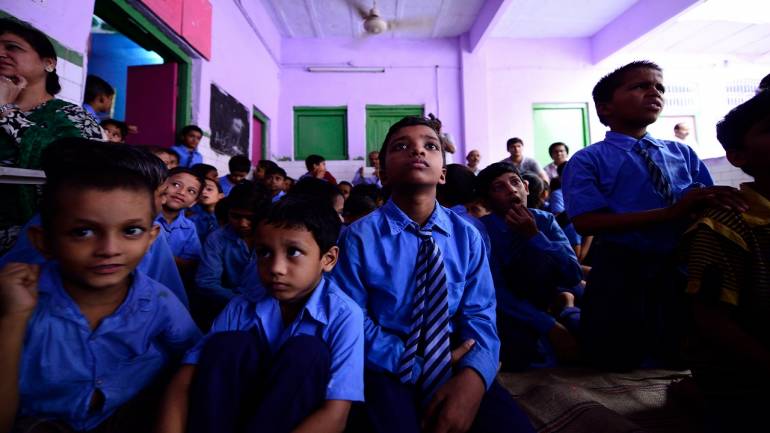
Food safety regulator FSSAI today said it will soon launch a campaign to spread awareness about availing Vitamin D through natural sunlight and intake of fortified food among school going children.
The campaign -- Project Dhoop -- will be implemented in collaboration with the Central Board of Secondary Education (CBSE), the New Delhi Municipal Council (NDMC) and private firm Kwality Ltd, the regulator said in a statement.
Food Safety and Standards Authority of India (FSSAI) informed stakeholders about the proposed campaign at an interaction on the issue of fortification. The campaign details are being worked out.
According to the National Health and Family Survey (2016), about 70 per cent of pre-school children and over 50 per cent of women suffer from anaemia caused by iron deficiency.
Alarming 70 per cent of the Indian population consumes less than 50 per cent of the recommended daily allowance (RDA) of micronutrients.
On fortification, FSSAI CEO Pawan Agarwal said, "Public health consequences of micronutrient deficiencies are serious. The message of food fortification therefore needs to go out using various methods, through various means, to various people."
Food fortification is simple, inexpensive yet priceless strategy that has been used across the world to effectively prevent vitamin and mineral deficiencies, he added.
The FSSAI has notified the standards and launched a fortification logo ‘+F' to help consumers and businesses identify the fortified product.
Santosh Karmarkar, an expert on folic acid deficiency said, "It is the need of an hour to understand the importance of fortifying food with Vitamin D."The source of Vitamin D is limited to sunlight and few non-vegetarian foods, hence fortifying foods is an essential intervention, said by R K Marwaha, Senior Consultant and Head of the Department of Endocrinology at AIIMS, New Delhi.
Anti-corruption NGO releases video on gutka smuggling by train
Chennai: As the Delhi-Kanyakumari Thirukkural biweekly express comes to a squealing halt at Madurai railway station, a staff is ready with a trolley near the goods compartment. Around 200 cartons wrapped in polythene are lowered onto the platform and the person wheels out the consignment through the VIP exit to a van parked close to the government railway police station. The darkness of the night is the only sign of secrecy in the otherwise brazen operation of smuggling banned gutka into the state.
The visuals, secretly captured on camera by Chennai-based rights and advocacy group Arappor Iyakkam, were released here on Wednesday.
Since the operation in October, heads have rolled, tobacco products have been seized and several communications have passed between the central government and the state in checking the transport of banned tobacco substances into Tamil Nadu, especially by rail.
But activists want more. “The movement of gutka cannot happen without the knowledge of senior officials,” Arappor Iyakkam convener Jayaram Venkatesh, demanding a CBI investigation. He cited the instance of how gutka was transported through the Thirukkural express. The train is scheduled to stop at Madurai junction for five minutes, but has for the past three years been stopping for 15-25 minutes without sanction. This extra period, a vigilance raid later found, was used to unload smokeless tobacco products, mainly gutka. “This is an obvious sign that multiple officials are involved,” said Jayaram.
In the meanwhile, the railway officials have handed over the seized tobacco products from Madurai railway station to food safety officials for testing. Officials said the government railway police will file an FIR once the test results are out.
Five cholera cases reported in Chennai, Food department to test samples

CHENNAI: Five cases of cholera have been reported in the city, according to Corporation officials.
“We have been informed of five cases of cholera. We have asked the Food Safety Department to test the samples,” said a Corporation official.
However, Director of Public Health Dr K Kolandaswamy said only four cases were notified to him. “On Tuesday, four positive cases of cholera were reported from patients who were admitted to hospital for a month. One from West Bengal and three from a African country were tested positive,” said Kolandaswamy.
Kolandaswamy further said the hospital gave treatment and also took control measures.
“We suspect contaminated food to be the source of infection. We have sent food sample to a lab for test and are waiting for result. We took food samples from the canteen of the hospital. We also gave training in hand washing practice and general hygiene to the workers at the canteen,” Dr Kolandaswamy said.
However, it was not clear whether the patients’ visitors had bought food from outside or from the canteen itself, the official added.
CFS for effective implementation of Food Safety & Standards Act
JAMMU:
Commissioner Food Safety, Dr Abdul Kabir Dar, on Wednesday called for effective implementation of Food Safety & Standards Act, 2006 in the state.
According to an official spokesman, he said this while chairing a meeting with all the officers of Jammu Division to review the measures taken for effective implementation of Food Safety & Standards Act 2006 in Jammu division.
Assistant Commissioner, Food Safety Jammu, Parvesh Kumar, Assistant Controller Food and Assistant Commissioner Food Safety of Jammu Division and other concerned officers attended the meeting, the official added.
During the meeting, Commissioner reviews the functioning of Food Safety in the division.
He was apprised about the difficulties faced by the officers while discharging their duties including infrastructure, mobility, dearth of staff and lack of enforcement in their respective districts and workplaces.
The official said that the meeting was also briefed about the equipments, machinery and available resources present in the Food Testing Laboratory.
Commissioner also held an interaction with the newly appointed Food Safety Officers who have recently completed their 40 days training programme. Dr. Kabir congratulated the officers for successful completion of training and advised them to perform their duties with zeal and zest, the official added.
Addressing the officers, Commissioner, Food Safety said that High Court is vigorously monitoring the functioning of the Food Safety in the state and Food Safety & Standards Act, 2006 should be implemented on ground in letter and spirit.
Duo held with guthka, source unknown

The Thane (rural) police, led by Assistant Superintendent of Police Atul Kulkarni, nabbed two local pan-stall owners who were found to be in possession of a consignment of gutkha and other banned tobacco-based products worth more than Rs. 69,000 in Bhayandar on Monday afternoon. Acting on a tip-off, the police apprehended the duo identified as Rajesh Udayram Yadav (30) and Buval Patiraj Yadav (32) immediately after they stepped out of the Bhayandar railway station at around 2.35 pm. While a case under the relevant Sections of the Indian Penal Code and regulations of the Food Safety and Standards (Prohibition and Restrictions on Sales) Regulations, 2011, has been registered against the accused duo. The investigating team are trying to ascertain the source and destination of the illegal consignment.
The Food and Drug Authority (FDA) officials and police personnel have been seizing gutkha and scented tobacco products worth lakhs of rupees in frequently conducted raids. However, the racket of smuggling banned products into Maharashtra from neighbouring states continues unabated, reportedly due to the alleged involvement of a strong syndicate of the notorious guthka mafia who operated a well-oiled distribution network on the outskirts of the twin-city. It has been alleged that peddlers land into the cop net even as the source of the consignments mostly remains a mystery.
Mar 28, 2018


FSSAI to align licensing norms with GST
NEW DELHI, MARCH 27
The Food Safety and Standards Authority of India (FSSAI) is working on amending the registration and licensing regulations for food businesses. It will look at reclassifying food businesses on the basis of their turnover, in a bid to align these norms with GST.
FSSAI CEO Pawan Agarwal said: “We are working on bringing a comprehensive amendment to the licensing and registration regulations for food business operators. The amendments will include classification of licences for food businesses on the basis of turnover in line with GST and MSME norms.”
All food business operators need to register with, or obtain licences from, the authorities at the State or Central level. But small food business operators with a turnover of ₹12 lakh, also known as ‘petty food manufacturers’, are only required to register but not obtain a licence.
Agarwal said the FSSAI proposes to raise the turnover limit for ‘petty food manufacturers’ to ₹20 lakh in line with the GST norms. In addition, it proposes to reduce the number of kind of businesses (KOB) categories from 17 to eigth categories.
At the same time, FSSAI is also focusing on revamping its existing online portal used by companies to register or apply for licences. “We are now developing a new-generation e-portal which will focus not just on registration and licensing applications but also create a compliance history of food businesses. We will call this portal the Food Compliance System and it will be launched in three to five months,” Agarwal added.
The regulator will look at the company’s track record with regards to compliance with standards and labelling norms before issuing fresh licences through the revamped portal.
In a bid to raise the bar of quality and hygiene at restaurants, the FSSAI is launching a framework for voluntary hygiene rating mechanism. The aim is to promote self-compliance of food hygiene and safety among restaurants and inform consumers about hygiene quality in the eateries, he explained.
FSSAI is exploring the option of hiring a third party agency to do the hygiene ratings for restaurants. It is in the process of training food safety advisers for food businesses to promote self-compliance of food safety norms.
It has conducted 800-odd training programmes for food businesses, and The could look at making the hygiene ratings mandatory in a few years.
Cholera cases in Chennai hospital: Food safety and public health officials begin probe
CHENNAI: A day after two patients in a private hospital at Teynampet here tested positive for cholera, food safety and public health officials Wednesday morning initiated an investigation into the source of the water-borne disease.
Three other patients in the same hospital are suspected to have the infection. This is the first time in two years that the state is seeing cholera cases.
Food safety officials will collect 10 food and water samples from the hospital.
Preliminary inquiries have made public health officials suspect that the carrier of the infection could have been a patient from Uganda, one of the two confirmed cases, who showed symptoms of cholera a day after he was admitted to hospital.
"He had carried food from his home country. But we are investigating other angles too -- how the remaining patients got the infection and if there are other cases in the city," said a health official.
Director of public health K Kulandaisamy, designated food safety officer in the city R Kathiravan and Greater Chennai Corporation health officer Dr N A Senthilnathan are probing.
Chennai Corporation deputy commissioner, health, P Madhusudhan said, “As of now the infection is contained within the hospital. We are doing an end to end search to ensure that there is no spread.”
The patients were moved to the isolation ward to prevent spread of the infection. All of them were stable, sources told TOI on Tuesday. They had been admitted to hospital for various reasons, including cancer.
Cholera is an acute diarrhoeal infection caused by ingestion of food or water contaminated with the bacterium vibrio cholerae. Public health experts say it is an extremely virulent disease that can cause severe acute watery diarrhea.
Railways told to take action on transport of gutka into Tamil Nadu
CHENNAI: Taking note of railway officials’ reluctance to check the transport of banned gutka into Tamil Nadu by train, the Food Safety and Standards Authority of India(FSSAI) has written to Indian Railways on March 14 seeking an action taken report on recent seizures in the state.
This comes after Tamil Nadu food safety commissioner P Amudha wrote two letters to FSSAI stating that railway officials in the state appeared to be unaware of the 2016 Supreme Court order banning the manufacture, sale and distribution of gutka. A TOI report on March 3, describing how gutka was being brought in through the Delhi-Kanyakumari Thirukkural bi-weekly express and unloaded at Madurai junction in violation of railway rules, was also attached by Amudha with the letter. Gutka was found to be smuggled through containers on railways by the Chennai police as well.
After a tip-off by social activist Jayaram Venkatesan, railway vigilance and Railway Protection Force (RPF) raided the train and seized a consignment of 200 bundles in February. But they couldn’t file an FIR as they were waiting for the food safety department to test the sample in their laboratory. Authorities also said at the time that as per railway rules, tobacco was not acontraband.
The train was found to be illegally stopped for 20 minutes to unload the consignment, while its scheduled stoppage time is only five minutes.
Asenior railway official in the Madurai division told TOI that they have declared the consignment as contraband. “There is no doubt from our side. The food safety authority has taken the samples on March 15 and the test reports are awaited, after which they will destroy the contraband,” he said. Until the test report comes, the government railway police (GRP) will not be able to file an FIR, he said, adding that two commercial clerks have been chargesheeted in the case.
Section 59 of the Food Safety and Standards Act, 2006 states that anybody who manufactures, sells, stores or distributes food which is unsafe — causing non-grievous injury — can be imprisoned for one year and fined up to ₹3 lakh.
Venkatesan said there was acollusion of railway employees in the racket. “How can a driver prolong stoppage at a station without collusion? There’s clearly a network which has to be investigated,” he said.
‘Stern action against illegal manufacture, export and sale of creatine monohydrate in Kerala'

THIRUVANANTHAPURAM: The Food Safety Commissionerate has put its foot down on the unlicensed manufacture, import and sale of creatine monohydrate, a popular supplement used by bodybuilders and athletes as performance enhancers, in the state.
The order comes in the wake of an instruction issued by the Food Safety and Standards Authority of India (FSSAI) in December to all states asking them to stop the unlicensed manufacture, import and sale of the supplement. The commissionerate on Tuesday urged the public to inform it about over-the-counter sales and sales through e-platforms on the toll-free number 1800-425-1125.
According to the FSSAI, creatine monohydrate is a product/ingredient for which no standard has, so far, been prescribed under the Food Safety and Standards Act, 2006, and the rules and regulations made under it. “It is also observed that some food business operators having food licences issued by licensing authorities are selling food products in the name of the product containing creatine monohydrate. These activities carried out by the FBOs are illegal and unauthorised,” the FSSAI said.
Creatine monohydrate is one of the supplements that athletes use to build lean muscle mass, increase strength and maximise performance. While formal studies have not been conducted, its indiscriminate use has been on the rise among youngsters.
In December, FSSAI director (Regulatory Compliance) Garima Singh had asked the states to keep an eye on the sale of such products and slap notices on e-commerce businesses that sell these products through their websites. FSSAI had issued notices to e-commerce giants including Amazon and Flipkart and also notified 13 companies engaged in the manufacture and sale of creatine monohydrate.
153 people fall sick after consuming panakam during Srirama Navami celebrations at A Konduru
VIJAYAWADA: As many as 153 persons fell sick with food poisoning after drinking ‘panakam’ (a traditional drink made with jaggery and black pepper powder on the occasion of Srirama Navami festival) at A Konduru in Krishna district. Those who participated in Srirama Navami celebrations at Adda Road and consumed panakam fell sick with the symptoms of diarrhea.
All the victims were from Chaitanya Nagar Thanda and Mantriya Thanda two small habitations located on either side of the road under A Konduru village. The population of the two villages is about 500 of which 39 people were severely affected and rest of them also developed symptoms of diarrhea. The villagers participated in the festival celebrations on Monday evening and had pulihora and panakam distributed as prasadam.
People started falling sick with vomiting, diarrhea and fever over the night and by the morning the number went on increasing in both the habitations. The revenue officials swung into action immediately and shifted them to Tiruvru and Mylavaram government hospitals.
The officials took preventive measures by conducting door to door survey in the two habitations and shifted everyone even with little symptoms to hospitals. A Konduru tahasildar M Suresh Kumar and health officer M Anusha visited every home to make sure that no one was left behind.
Speaking to TOI, Suresh Kumar said, "primarily it appears that the diarrhea was because of food poisoning which took place in panakam. We have noticed that the panakam was mixed in the fertilizer cans. We suspect that the cans might have not been properly cleaned and people fell sick because of chemical contamination. However, the food safety officials have collected samples and a detailed analysis is being done."
Krishna district collector B Lakshmikantam visited the villages and oversaw the measures being taken by the officials. A medical camp was set-up in the villages. Vijayawada MP Kesineni Srinivas and Tiruvuru MLA Rakshana Nidhi also enquired about the incident.
Mar 27, 2018


FSSAI wants food companies to set up teams for manage recalls
In a letter to food companies such as ITC, HUL, Dabur and Nestle, FSSAI said the food companies will also need to submit a ‘fresh plan on the recall management’
New Delhi: Food Safety and Standards Authority of India (FSSAI), the country’s food regulator, on Monday said it has asked the top 200 food companies that have procured licences from the FSSAI headquarters to set up exclusive teams to manage food recalls if the situation arises in the future.
In a letter written to companies such as Kolkata-based ITC Ltd, the country’s largest packaged goods company Hindustan Unilever Ltd (HUL), New Delhi-based Dabur India Ltd and Nestle India Ltd, the local unit of Swiss packaged food company Nestle SA, Food Safety and Standards Authority of India said the companies will also need to submit a “fresh plan on the recall management”.
A copy of the letter has been reviewed by Mint.
The move is part of the food regulator’s plan to “implement food recall regulations across India” that it notified in November 2017, putting the onus on companies by stating that the primary responsibility of implementing any recall lies with food companies, as it believes a recall is directly linked to “serious defects in the manufacturing process”.
It outlined a 10-step process that companies will have to follow for a recall.
The regulator has also asked companies to submit details of the food recall team within 30 days and the fresh recall plan within 60 days from 20 March, 2018.
The directive comes almost three years after FSSAI ordered Nestle India to recall Maggi instant noodles for alleged presence of monosodium glutamate and excess lead on 5 June 2015, which turned out to be the largest food recall in India ever.
“As a responsible corporate citizen, we always abide by all relevant norms and regulations,” a Nestlé India spokesperson said in an e-mailed statement.
According to the FSSAI letter, the food recall plan will be reviewed by FSSAI’s regional offices every time any of the 200 food companies applies for renewal of its licence.
“Recall is not a common thing in India. The regulator’s directive is part of preventive measures to assure consumers that companies make and sell safe food. This might have some cost pressure on companies, but that is not unjustified,” said Rajat Wahi, partner (management consulting) at consulting firm Deloitte India.
Siegwerk seeks Inks based on Toulene banned
Mr Pradhan, however, admitted that by switching to non-toluene based ink, the company will lose out on nearly 85 per cent of the market.
Hyderabad: While the European Union has strict norms on ink used for packing of food to prevent health hazard, India, in comparison, has norms that are voluntary.
With the Food Safety and Standards Authority of India (FSSAI) initiating talks to implement stricter norms, Siegwerk, which produces ink for the flexible packing industry, on Monday, urged regulators to include toluene-based ink in the list of banned substances.
The company, which has shunned Toluene-based inks from its portfolio, hopes that the chemical — a health risk — should be included among the list of banned
substances.
Siegwerk India CEO Ashish Pradhan said, “Over the past decade, the EU has strengthened its norms on food packaging after scandals emerged that toluene-based ink used in packaged foods migrate past to contaminate the food. Although India already a standard in place on packaged foods, it’s voluntary.”
“Even a country like Sri Lanka has made a stand against such ink. However, about 90 per cent of the market in India is still using toluene-based inks," he added.
When asked about possible substitutes and its impact, Mr Pradhan said, “There are alternatives already available that are on par in cost or slightly on the higher side.
Companies in the EU have switched to alternatives. There would hardly need to upgrade their machineries as non-toluene-based inks can be used in the same machines.”
Mr Pradhan, however, admitted that by switching to non-toluene based ink, the company will lose out on nearly 85 per cent of the market.
Food Adulteration On A Rise In Maharashtra
The cases of food adulteration have risen to double the amount in Maharashtra in the last three years says a report by the Free Press Journal based on the data given by the Union Health and Family Welfare Ministry. The publication talked to a senior official of the ministry who said the adulteration had risen from 1162 to 2529 between 2015 and 2017 in the state.
NO ARRESTS MADE
The report further said that no arrests have been made so far in the case of food adulteration in the state. 10,716 food samples were collected and 10,030 were tested in 2016-17 and out of these 2,529 were found to be adulterated. A recent report claimed that the government had decided that the persons’ involved in milk adulteration will be arrestedon a non-bailable basis.
“It is strange as no one was convicted in 2016-17 compared to 75 and 24 who were convicted in 2014-15 and 2015-16 respectively. They all had to face legal action for selling and marketing adulterated food items,” said RPY Rao, president, Society for Awareness of Civil Rights to the Free Press Journal. He also told the publication that the adjudication process of the Foods and Drug Administration (FDA) is faulty due to which no arrests were made.
“But against the norms, in Maharashtra, the adjudication process is headed by four joint commissioners who are not fit to hold legal proceedings. Although the state has collected more than Rs 1 crore in fines, the total cost of efforts and time invested by employees is much more than that,” he added.
4 fall sick after ‘eating prasad’

GURUGRAM: Four persons fell sick allegedly after eating prasad at a temple in Gurugram late on Sunday evening. They were rushed to Civil Lines hospital, where doctors suspected that they might have had laddoos laced with sedatives or narcotic substance.
A preliminary probe revealed that Sumitra (70), Manju (45), Hitesh (38) and Rashmi (35), all of the same family from Shyamnagar in Hapur (UP), had gone to offer prayers on the occasion of Ram Navami and ate laddoos offered as prasad at the temple. A close family friend, who had also gone to the temple, said the four complained of sickness soon after and were rushed to the general hospital around midnight.
“We kept them under observation for a few hours and then referred them to the Safdarjung hospital for toxicology tests,” said Pradeep Sharma, the principal medical officer at the general hospital.
Police said the four persons were out of danger now. No FIR has been filed in the case.
Subscribe to:
Posts (Atom)