
Dec 13, 2019


இனிமே பானி பூரி சாப்பிடும் போதெல்லாம் இதுதான் ஞாபகம் வரும்!
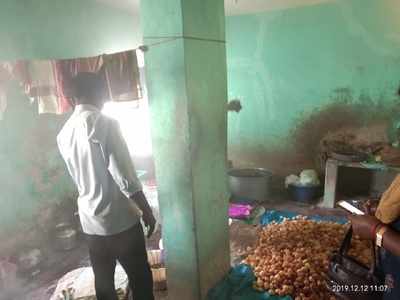
காலில் மிதித்து பானி பூரி தயாரித்து, திருச்சி முழுவதும் அதை சப்ளை செய்த நிறுவனத்திற்கு 'சீல்' வைக்கப்பட்டது.
இனிமே பானி பூரி சாப்பிடும் போதெல்லாம் இதுதான் ஞாபகம் வரும்!
திருச்சி சஞ்சீவி நகர் மேல தேவதானம் பகுதியில், வடநாட்டினர் பானி பூரி தயாரிக்கும் நிறுவனம் ஒன்று செயல்பட்டு வருகிறது. இந்த நிறுவனம் அந்தப் பகுதியில் உள்ள ஐந்து வீடுகளை வாடகைக்கு எடுத்து இயங்கி வருகிறது.
இந்த பானி பூரி நிறுவனத்தை, வடமாநிலத்தைச் சேர்ந்த கமல்சிங், ராஜு ஆகியோர் நடத்தி வந்துள்ளனர். இந்த நிறுவனத்தில், வடமாநிலங்களைச் சேர்ந்த 20 பேர் தங்கி, பானி பூரிகளைத் தயாரிக்க பணியில் அமர்த்தப்பட்டுள்ளனர்.
இந்த நிறுவனம் குறித்து திருச்சி மாவட்ட உணவுப் பாதுகாப்புத் துறைக்குச் சமீப நாட்களாகப் புகார்கள் வந்துள்ளன. அந்த புகாரில், “சுகாதாரமற்ற முறையில், காலில் மிதித்துப் பூரி மாவைத் தயாரிக்கிறார்கள்” எனக் கூறப்பட்டிருந்தது.
புகாரையடுத்து, இந்த பானிபுரி நிறுவனம் செயல்பட்டு வந்த வீடுகளில், உணவுப் பாதுகாப்புத் துறை அலுவலர்கள் அதிரடி சோதனை நடத்தினர்.
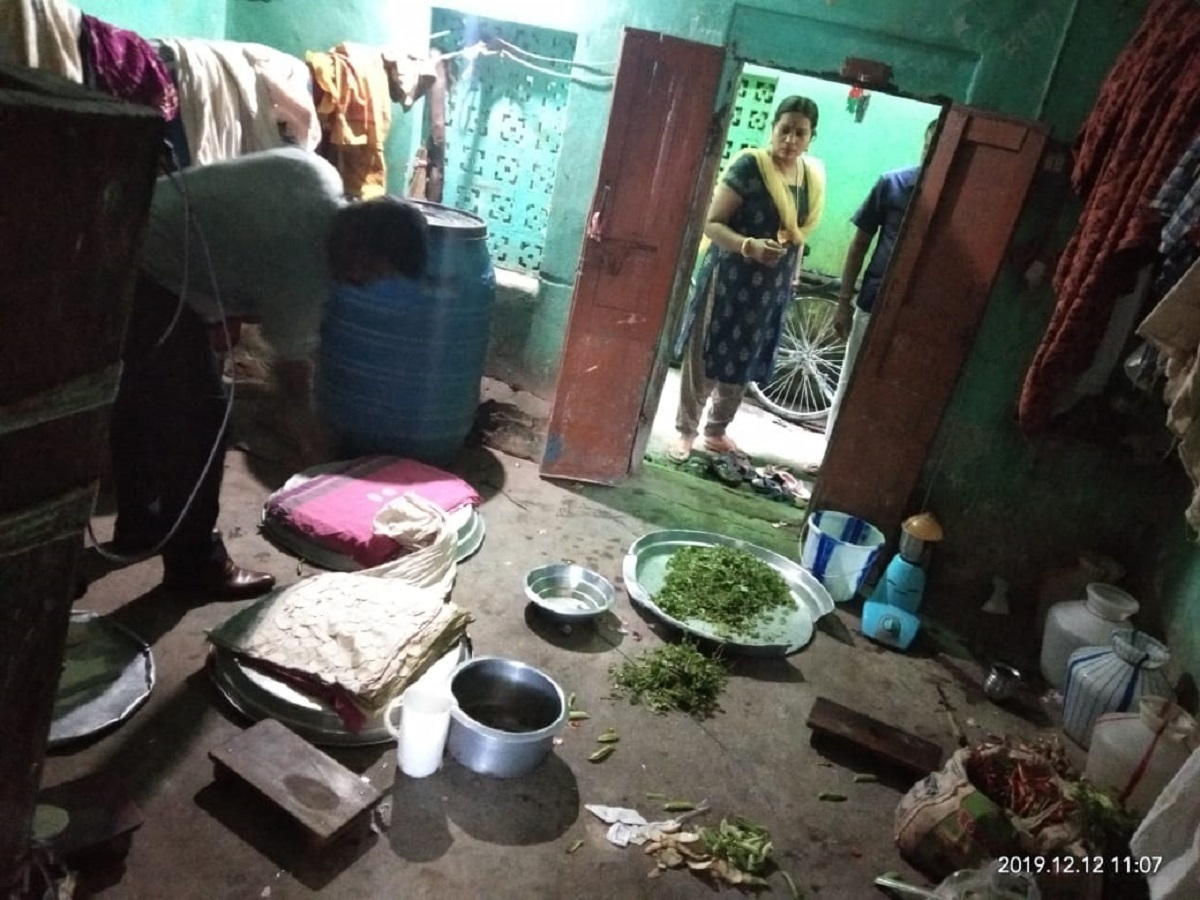
சோதனையின்போது, சுகாதாமின்றி, தரமற்ற முறையில் பானி பூரிகளைத் தயாரித்து வந்தது கண்டுபிடிக்கப்பட்டது. அதேபோல் பானிபூரிகள் தயாரிக்கப்பட்ட இடத்தில், தரைகளில் ஆங்காங்கே ஓட்டைகளும், அதிக எண்ணிக்கையில் எலிகளும் சென்று வந்து கொண்டிருந்தன. மற்றொரு அறையில் அதிகாரிகள் சோதனை செய்யச் சென்றபோது, அங்கு நடந்த நிகழ்வைப் பார்த்து அதிர்ந்து போனர்.
ஆம், ஒரு அறையில் பானிபூரி தயார் செய்ய மாவைச் சிலர் கால்களால் மிதித்துத் தயாரித்து வந்தனர். இதைப் பார்த்த அதிகாரிகள் அதிர்ச்சியடைந்தனர். அதேபோல் அந்த இடம் சுகாதாரமற்ற முறையிலிருந்ததாகவும் கூறப்படுகிறது. இதனால் அந்த நிறுவனத்திற்கு உணவுப் பாதுகாப்புத் துறை அதிகாரிகள் சீல் வைத்தனர்.
இதற்கிடையில், திருச்சியில் உள்ள 90 சதவீத பானிபூரி கடைகளுக்கு இந்த நிறுவனத்தில் கால்களால் தயாரிக்கப்படும் பானிபூரிதான் செல்கிறது என்பது தெரியவந்துள்ளது.
Unsafe food: FSSAI urges crackdown
FSSAI is working to sharply reduce the quantity of unsafe food in India to ensure consumers can consume a healthy and safe diet.
Sounding concerns about the prevalence of unsafe food in the country, the Food Safety and Standards Authority of India (FSSAI) is seeking a sharp reduction.
FSSAI chairman Pawan Kumar Aggarwal, speaking at a Confederation of Indian Industry (CII) event, drew attention to “very low” public confidence in Indian foodstuffs. Aggarwal drew attention to a survey of one lakh samples of food, which found 3.7 percent of the foodstuffs to be unsafe. He called on the industry to reduce this percentage to one percent or less in the next four years. In addition to the 3.7 percent of samples which were unsafe, fifteen percent were non-standard and nine percent was improperly branded.
Acknowledging food safety to be a concern, Aggarwal nonetheless expressed concern that effecting reductions in the quantities of non-standard, improperly branded and unsafe food was achievable with proper surveillance, enforcement and review of food standards, and monitoring of pollutants such as antibiotics, heavy metals, and pesticides in the country’s produce. He also highlighted the disparity between the survey’s findings and media and public perception.
“It [the lack of confidence] is partially due to perception but there is some amount of reality,” he explained. “Obviously we have to communicate well with the citizen so that gap between reality and perception is reduced. We need to take concrete actions to address this issue.” Of the targets to reduce unsafe foodstuffs, Aggarwal said “the level of 3.7 percent is low when compared to media reports of sixty to seventy percent. In [the] next four years, can we bring unsafe food level to less than one percent or negligible level…non-standard food to five percent and mis-branded food to two percent?”
There is indeed a clear need to reduce the quantity of unsafe food in India. It was reported last year that, of the 1,649 infectious disease outbreaks reported until December 3rd, 2017, food poisoning was responsible for 242, the second highest number behind acute diarrhoeal disease. Food poisoning is on the rise too, the number of instances of food poisoning outbreaks increasing from just fifty in 2007 to 242 a decade later – almost a fivefold increase. Such instances have repeatedly proven to be lethal.
Earlier this year, it was reported that the FSSAI would be taking major steps towards ensuring food safety in India through the appointment of inspectors. “The FSSAI has trained about 1.7 lakh food safety supervisors for capacity building under the Food Safety Training and Certification initiative. They will ask people and food vendors to comply with the food safety norms, including the hygiene aspect,” commented Union Health Minister Dr Harsh Vardhan. “We not only have to provide [the] right food, but also ensure that there is strict implementation of laws and the compliance of standards to assure that citizens have safe and wholesome food.” The FSSAI’s encouragement of the removal of unsafe food from the market is another encouraging step.
Food delivery apps in hot water over hygiene, quality


HYDERABAD: Almost half of the food safety and quality-related complaints being received by food safety officials in the city are related to food ordered online, through the delivery applications. Food safety officials say that applications like Swiggy or Zomato need to strengthen their mechanism in ensuring that only quality food is delivered to their customers. Officials from the Institute of Preventive Medicine, which also houses the Telangana FSSAI office, say that more than 50 per cent of the complaints from the city are about food ordered via online delivery applications.
While action is usually taken directly against the restaurant if inquiry by GHMC reveals discrepancies, officials claim that the fault lies with the delivery service too who are bound to check and monitor the restaurants themselves. Moreover, many of the penalised restaurants continue to be listed on the food delivery applications.
Speaking to Express, Dr K Shankar, director of the Institute of Preventive Medicine said, “Every month we get 15-20 complaints from the consumers, out of which 8-10 are screen shots of their online orders through applications.”
Another senior official on condition of anonymity said, “We cannot take any direct action against the food delivery apps. But they are also supposed to have proper monitoring mechanism of the restaurants that they list. Moreover, the conditions in which these food delivery apps deliver the food also is very unhygienic. The heat insulated bags are not washed, cleaned or disinfected for days together.”
He further said “None of the restaurants that are penalised are also delisted from these delivery service apps.” As per official information, the State has a sanctioned strength of 58 Food Safety Officers but presently has only five officers.
At the district level, of sanctioned 12 District Food Safety Designated Officers, there are only nine though there is a need to increase the numbers as districts have increased to 33.
CM lays stress on food safety
‘Conduct regular inspection of food items’
Chief Minister Pinarayi Vijayan has stressed the need for a fool proof mechanism to ensure food safety by carrying out periodic inspections.
Addressing the annual meeting of District Collectors and heads of departments here on Thursday, he said it was important to conduct regular inspection of fish, meat, vegetables and cooking oil sold through various outlets in the State.
He directed officials to carry out inspections of wayside eateries and big hotels on a regular basis to prevent the sale of contaminated food items. The meeting decided to implement the plastic ban in the State from January 1.
An intensive participatory campaign would be organised across the State on January 25 to remove plastic and other waste from the sides of national highways and other roads. The campaign would enlist the support of voluntary workers, NSS, NCC, Green Corps and the general public.
The meeting decided to launch the second phase of the Care Kerala housing scheme taken up by the Cooperation Department. The Chief Minister would inaugurate the project in Thrissur in January next year. Officials said 2,000 houses would be completed by December and handed over to beneficiaries.
The meeting reviewed the progress of various projects implemented by the departments of Agriculture, Ports, Culture, Environment, Education, Health, Home, Housing, Industries, Local Self-Government and Sports and Youth Affairs.
Ministers E.P. Jayarajan, A.C. Moideen, Ramachandran Kadannappally, C. Raveendranath, K.T. Jaleel, K.K. Shailaja and Kadakampally Surendran, Vice Chairman of Planning Board V.K. Ramachandran, Chief Secretary Tom Jose and heads of various departments participated.
Shop owners asked to avoid spilling hot oil on pedestrians
FSSAI has instructed hotels and snacks stalls on State Bank Road in Coimbatore to keep frying pans covered to avoid spilling of hot oil on pedestrians.
The Food Safety and Standards Authority of India (FSSAI) has instructed those who run eateries and snacks stalls on either side of State Bank road, near railway station, to keep the large kadais (cast iron vessel) covered to avoid spilling of hot oil on pedestrians who walk along the pathway.
K. Tamilselvan, Designated Officer of FSSAI for Coimbatore, and his team inspected the shops and issued the instructions a few days ago. They asked the shop owners to cover the large caste iron kadais, that are kept close to the footpath, to avoid spilling of hot oil on pedestrians or keep the vessels away from pedestrian pathway.
According to people, who frequent the bus stop in front of the railway station, there were several incidents wherein pedestrians had hot oil splash from such eateries when the cook shakes the strainer or puts items like rolled dough for poori into the kadai.
“During inspections, the kadais used for deep frying were found kept in the open, close to the pathway, except in one restaurant. We instructed owners of the eateries to keep them covered with glass or metal cabin so that the oil is not splashed on pedestrians while frying. They could also keep the kadai away from the pathway,” said Dr. Tamilselvan.
He said that the shops would be inspected again without notice and action would be taken against owners who fail to obey the instructions.
Last month, The Hindu had reported on the encroachments along the pathways and oil splash from open kadais. The Coimbatore District Railways and Airways’ Passenger Welfare Association had also petitioned the Coimbatore Corporation to remove encroachments by 60-odd shops.
Dec 12, 2019

Places of worship cold to taking food safety licence for offerings

Sri Padmanabhaswamy, Guruvayur, Sabarimala temples take registration; majority of other Hindu shrines, churches and mosques ignore the FSSAI directive
KOCHI: The Food Safety and Standards Authority of India’s (FSSAI) directive to the churches, mosques and temples in the state to take food safety licence or registration to distribute ‘prasadam’ and offerings has received a lukewarm response. Though the state food safety department which started implementing the ‘Blissful Hygienic Offering to God’ (Bhog) campaign a year ago, only 1,652 PoWs (places of worship) have taken the registration from the department.
As per the rough estimate prepared by the department, over 15,000 worship centres in the state serve food to the devotees as ‘prasadam’. “The Bhog drive is an initiative by FSSAI to encourage places of worship to adopt and maintain food safety and hygiene as well as convey food safety messages through such places to the people to follow as responsible citizens. Though we have approached religious heads to bring the PoWs under the Food Safety and Standards Act, they are reluctant to take the registration. Most of them didn’t want to come under the radar of the food safety department,” said an official.
As per the information sourced from the department, only religious centres in Ernakulam and Thiruvananthapuram have taken the move positively. Of the 1,652 centres that registered, Ernakulam district received registration of nearly 200 and Thiruvananthapuram 320 centres. The major worship centres such as Sri Padmanabhaswamy, Guruvayur and Sabarimala temples have taken the registration.
“Since we can’t initiate any penal action against the authorities, the implementation can be done only through the regular campaign. There are some religious organisations like Malankara Mar Thoma Syrian Church which have positively received the move. The Mar Thoma Church has taken the registration for all its churches. We are working hard to implement Bhog in all PoWS,” said Alex K.Isaac, Assistant Commissioner of Food Safety, Thiruvananthapuram.
Meanwhile, the Food Safety Commissioner has directed all district collectors to convene a meeting of the representatives of all worship centres to make them aware of the rules. “We will convene a meeting of the stakeholders on February 5 to discuss the implementation of Bhog. The authorities can take the registration at the meeting,” said Ernakulam Collector S Suhas.
The FSSAI introduced the project after 13 people died and 130 others fell ill after consuming ‘prasadam’ from a temple in Karnataka.
Dr Rathan U Kelkar, Commissioner of Food Safety, was unavailable for comments.

Stay up to d
FSSAI asks industry to reduce level of unsafe food to less than 1 pc over next 4 yrs
New Delhi, Dec 11 () Stating that the public perception about food overall in the country is very low, Food Safety and Standards Authority (FSSAI) Chairman Pawan Kumar Aggarwal asked the industry to bring drown the level of 'unsafe food' to less than one per cent or negligible level in the next four years.
Addressing a CII event, Aggarwal shared a four-point vision and noted that the first aim is to bring down significantly the level of unsafe, non-standard and mis-branded food in the country.
Citing a survey of one lakh samples of food conducted by enforcement officers over last years, he said 3.7 per cent of food was found to be unsafe, 15 per cent was non-standard food and 9 per cent was mis-branded food.
"The sampling was done in an area where safety was a concern. The level of 3.7 per cent is low when compared to media reports of 60-70 per cent. In next four years, can we bring unsafe food level to less than one per cent or negligible level, while non-standard food to 5 per cent and mis-branded food to 2 per cent?" he said expressing confidence of achieving these targets.
This can be achieved through higher levels of surveillance, improved and targeted enforcement, review of food standards (in particular composition and vertical standards), regular monitoring of pesticides, anti-biotic residues and heavy metals besides building capacity of primary producers, he said.
Stating that there is "very low" public confidence in the food overall, the FSSAI chief said, "it is partially due to perception but there is some amount of reality. Obviously we have to communicate well with the citizen so that gap between reality and perception is reduced. We need to take concrete actions to address this issue."
He further said the second goal is to raise hygiene levels in processing and preparation of food across the supply chain.
Talking about promoting healthier and sustainable diet, Aggarwal said the third goal is to ensure that over two-third food is healthy and develop right eating culture in the country.
There is a need to review standards with health and sustainability lens, promote use of logos and symbols (like organic, trans-fat free and wholegrain) besides enhancing enforcement of claims and advertising regulations to ensure food is healthy, he said.
He also emphasised on the need to transform school environment, promote eat right campus, eat right districts and eat right cities through participatory movement.
According to FSSAI chief, the fourth goal is to build a robust institution ad ecosystem through partnerships and networks to deliver above three goals."We are building a high trust culture which is simple, fair and transparent. We have recently introduced performance management culture in FSSAI," he added.
Govt doctors to be trained in detecting adulterated food
Coimbatore: The food safety department is all set to train government doctors in detecting food adulteration with a rapid test, using easily available items.
The move comes close on the heels of health minister Dr C Vijayabaskar’s recent announcement in the assembly that every primary health centre would be trained in detecting adulterated food products by way of DART (detection of adulteration using rapid tests).
Now, the food safety department will conduct a training programme for around 50 doctors on rapid tests available for food items such as milk, ghee, oil, spices, sugar and fruits, at the public health office here on Thursday.
Designated food safety officer K Tamilselvan said there were many simple methods to detect water adulteration in milk. “Just put two small drops of milk on a polished slanting surface. If it is unadulterated milk, the droplet will be thick and flow down the surface very slowly. If it has water, it will flow down fast and when it falls won’t retain the colour of milk.”
He said saffron too was prone to adulteration with colouring agents and maize. “When pure saffron is put in water, its colour won’t run and spread. In adulterated saffron, the colour will run and turn the liquid into red. If bent, original saffron will not break at all while fake saffron could break.”
According to the food safety officer unadulterated asafoetida would catch fire if that were to be exposed to flames for a while.
While doctors will undergo the training on Thursday, they are expected to pass on the knowledge to paramedical staff and village health nurses in the primary health centres by December-end. “Once all the staff members are trained, they will have to set up a DART demonstration corner in the health centre on all special days like antenatal check-up days, review days and vaccination days, to help public, especially in rural areas, detect adulterated food products,” Tamilselvan said.
Don’t buy fish mixed in sand; Food Safety dept issues warning
Punalur: The food safety department has issued a warning to people not to buy fish that is smeared in sand. It also alerted people to be careful as this is done to fool the people misleading it to be it to be a new variety of fish.
The alert was issued at the awareness campaign conducted as part of the Model Food Safety Panchayat project. The traders fool the people saying that these fishes are caught fresh from the sea.
The sand found on the open shores are taken and spread over the fishes. These sand infected with germs get into the fish bodies and spread to humans, says the authorities.
Preserving fish should be done only with ice. A kilo of fish can be preserved using the same amount of ice. The fishes must not be dumped inside ice box. Pure water must be used to make ice. These huge blocks of ice must not be dragged on floors and vessels made of bamboo must not be used to handle fishes.
How to identify good fish
- The gills of the fishes are shaped in a definite design and are dark red in colour
- Fishes will have bright bulging eyes
- Look for firm, shiny fish
- Sniff the fish and it must not have a strong, fishy odour
- When you touch the fish, the flesh of the fish must bounce back
- The skin surface must be tight and scales tightly attached. Avoid fishes with loose skins
Rampant in TVM
The smearing of sand over fishes is rampant in Thiruvananthapuram district. Now these kind of fishes are also seen in Kollam. These kind of spoilt fishes were seized from Anchal a few months back. Awareness campaign and inspections at fish markets have been intensified, says T S Vinodkumar, Food Safety Officer, Punalur.
Dec 5, 2019


UP: Inquiry ordered after dead rat found in midday meal

At least eight students and a teacher from a UP school complained of uneasiness and had to be taken to a hospital after a dead rat was found in the midday meal in a UP school on Tuesday.
Additional District Magistrate Amit Kumar Singh said that the small rodent was scooped out of a container of yellow urad daal at the Janata Inter-College – a government-aided institute - in Mustafabad Panchenda village. Luckily, no one had eaten till then.
The meal, meant for students of Class VI, VII and VIII, was supplied by NGO Janklyan Samiti of Hapur. An FIR has been lodged against the organisation.
An inquiry has been ordered and strict action will be taken against those found guilty of negligence, Singh said.
The students and the teacher complained of vomiting after they saw the rat in the daal.
Recently, the UP government has been in the news for all the wrong reasons thanks to its midday meal scheme.
Last week, a video showed that a litre of milk was allegedly diluted with a bucket of water so that 81 children could be served during their midday meal at a government school in Sonbhadra district, following which a teacher was suspended.
Two months ago, a similar video emerged from Siyur Primary School in Mirzapur district showing a woman distributing rotis and another giving salt to the children.
The National Human Rights Commission (NHRC) had taken note of the Mirzapur incident and sent a notice to the Uttar Pradesh chief secretary following which two teachers were suspended. The commission had also sought a detailed report about the status of the midday meal scheme across the state within four weeks. PTI

The rat was scooped out from the bottom of a daal container
Mumbai Central gets India's first 'Eat Right Station', 4-star rating by FSSAI
- As part of efforts to help passengers make a healthy and right food choice, the Indian Railways launched the 'Eat Right Station
- 'Eat Right India' is built on two broad pillars—Eat Healthy and Eat Safe
MUMBAI : The Mumbai Central Terminus of the Western Railway has been certified as India's first "Eat Right Station" with a 4-Star rating awarded by the FSSAI.
The honour came on the basis of compliance of food safety and hygiene, availability of healthy diet, food handling at preparation, trans-shipment and retail/serving points, food waste management, promotion of local and seasonal foods and creating awareness on food safety and a healthy diet, said Western Railway chief spokesperson Ravinder Bhakar, here on Tuesday.
"The Western Railway, food quality regulator FSSAI, and Indian Railways Catering Tourism Corporation trained food handlers, both in canteens and base kitchens, inspected catering establishments at the station, certified and rated the standards of food," Bhakar said.
As part of efforts to help passengers make a healthy and right food choice, the Indian Railways launched the 'Eat Right Station' as part of the 'Eat Right India' initiative of the FSSAIstarted in 2018.
It focused on improving the health and well-being of the people by ensuring they ate healthy, with the FSSAI making suitable interventions on both the demand side and supply side, besides related aspects, said Bhakar.
'Eat Right India' built on two broad pillars -- Eat Healthy and Eat Safe -- aimed to engage, excite and enable people enhance their health and wellbeing, he added.


Nov 28, 2019


TN is good: Implementing food safety norms

CHENNAI: Though Tamil Nadu is among the 10 states that have performed well on the enforcement of food safety rules, the state was the worst performer in terms of “unsafe food” and “labeling defects.”
Even as the adulteration in milk rocks the state, official figures indicate that TN tops with 12.7 per cent share of unsafe samples in the country. Assam (8.9 per cent), Jharkhand (8.8), West Bengal (7.6) and Odisha (6.7 per cent) are among the top states with unsafe samples. When it comes to labeling defects in samples, TN accounts for the highest share of 18.5 per cent, followed by Jammu and Kashmir (17.8) and Punjab (15.6 per cent).
During 2018-19 fiscal, a total of 1,06,459 samples were analysed. While 3.7 per cent of these samples were found to be unsafe, 15.8 per cent were found to be sub-standard and 9 per cent samples had labelling defects. While, there should be zero tolerance to unsafe food, issue of sub-standard and labelling defects require greater efforts on capacity building of food businesses and food standards as well as labelling requirements.
Bad: Labelling defects accounts for 18.5%
There has been a 7 per cent increase in the number of samples analysed during 2018-19 as compared to 2017-18. It is said 25 per cent more samples were found non-conforming compared to the previous year. This shows that there has been better targeting of enforcement efforts by States/UTs in the country, according to the data released by Food Regulator, Food Safety & Standards Authority of India (FSSAI). There has been 36 per cent increase in civil cases launched and a 67 per cent increase in the number of cases where penalties were imposed. The amount of penalty imposed has increased by 23 per cent during 2018-19 compared to the previous year. A total amount of `32.58 crore has been realised during 2018-19.
According to Pawan Agarwal, CEO, FSSAI, more rigorous enforcement by states was essential to build public trust in food. He admitted that public trust has been eroded in recent times due to fake news creating widespread perception of large-scale adulteration in the country.
“FSSAI is working with states and UTs, particularly with weaker ones in this regard. For this, FSSAI is increasing the capacity of State food laboratories and enabling use of private food labs for testing food samples. Enforcement efforts have to be better targeted and preceded by surveillance efforts to identify hotspots and problem areas,” he said.
Poison on your plate


New report from food regulator comes as a shock to residents of Tamil Nadu
CHENNAI: FOOD Safety and Standards Authority of India (FSSAI) on Tuesday dropped a bombshell saying over 45 per cent of food samples taken for study last year in Tamil Nadu did not meet the required standards with 12.7 % coming up as adulterated and unsafe for consumption.
While FSSAI report on National Milk Safety and Quality Survey released last month revealed the name of toxic contents in samples, the regulatory body has not mentioned the hazardous content in the samples.
However, the report noted that Disease Burden Epidemiology Reference Group of World Health Organisation has identified 31 food-borne hazards.

“The group has found that frequent causes of food-borne illness are diarrhoeal disease agents, particularly norovirus and Campylobacter spp,” the report said.
Organisms from cattle
“The samples mostly get adulterated because of organisms found in cattle and agriculture field. However, some samples may also contain chemicals used in the local market,” said a food safety officer.
The food regulator blamed the absence of food testing labs and inadequate enforcement authorities for poor quality.
While food safety officials remained tight-lipped on the names of food items, they said steps are being taken to increase vigil and promote hygienic practices among farmers and traders.
On Tuesday, TN Foodgrain Merchants' Association submitted a petition to Agricultural Production Commissioner Gagandeep Singh Bedi seeking government intervention in protecting merchants.
Association state president S P Jayaprakasam told Express that most of the food items which failed the quality test, including foodgrains, vegetables, fruits are contaminated by fertilizers and chemicals used by farmers. "The FSSAI should release a detailed report of the samples," he said.
Cleaning the dairyIt is the right of the consumer to get pure milk

The tie-up of the Food Safety and Standards Authority of India (FSSAI) with Punjab for its pilot project aimed at educating farmers on milk contaminants holds the promise of supplementing the government’s efforts. The pact will yield good practices by the suppliers if followed by stringent measures to ensure excellence of milk and milk products. In a bid to track the quality supplied by the unorganised vendors, the FSSAI also plans to certify their products after verification.
Incentives to the dairy farmers abiding by safety standards would hasten the process towards wholesome products. The phenomenal success of the cooperative model, Amul, pioneered by Verghese Kurien, holds the torchlight. He transformed India from a milk-deficit nation into the world’s largest milk producer by making the milkmen a partner in the company. The authorities endeavouring to clean the system would do well to remember his advice: ‘Any sensible government must learn to unleash the energy of its people and get them to perform instead of trying to get a bureaucracy to perform.’
FSSAI releases action plan for milk safety
Taking into consideration the results of both the surveys and available testing infrastructure, a 12-point action has been drawn up
On the occasion of ‘National Milk Day’, Food Safety and Standards Authority of India (FSSAI) released Action Plan for Safe and Quality milk and milk products
Subsequent to the release of national milk safety and quality survey report which revealed that only 7% milk samples had contaminants or adulterants that rendered such milk unsafe, FSSAI carried out a survey on milk products. The results of 399 samples analyzed so far (out of total 1048) indicate only quality and hygiene concerns in milk products. Major quality concern observed is adulteration with vegetable fats with no concern about presence of heavy metal contaminants. Microbiological concern observed relates to poor hygiene, while no bacterial pathogens have been found. The interim report will soon be published.
Taking into consideration the results of both the surveys and available testing infrastructure, a 12-point action has been drawn up to ensure safety and quality of milk and milk products in the country. These actions are broadly in three areas, namely – (1) testing and continued surveillance, (2) preventive and corrective action for implementation and monitoring; and, (3) consumer engagement.
For testing and continued surveillance and to upgrade testing infrastructure, several rapid testing and high-end precision test equipment have been provided to States/UTs. In addition, FSSAI has notified NABL accredited private and other public food laboratories for primary, regulatory and surveillance testing which can be used by the States/UTs to complement testing by the state laboratories.
As aflatoxin-M1 and antibiotic residues emerged as a major contaminant in milk, various preventive and corrective action are proposed for the stakeholders in milk sector. There is need for extensive capacity building at primary production levels for following Good Dairy Farming Practices through focused training programs in the areas of animal husbandry, animal health and Feed and nutrition.
FSSAI also noticed quality issues in milk mostly related to proportion of fat and solid non-fat (SNF) which varies widely by species and depends on breed as well as quality of feed and fodder. This can be improved by proper feeding of Cattle and adopting good farm practices.
The milk survey had revealed that even processed milk has both quality and safety concerns which is a serious matter. In this regard, FSSAI has developed and released a harmonized Scheme of Testing and Inspection (STI) to be adopted by dairy processing plants for the purpose of monitoring and self-compliance throughout their production chain in order to strengthen their internal controls.
FSSAI also emphasizes the dairy plants to undertake fortification of milk with Vitamins A and D which are lost during processing. Since milk is consumed by all population groups, fortification of milk with specified micronutrients is a good strategy to address micronutrient malnutrition.
To build up trust of consumers in safety and quality of milk, consumer awareness and engagement programs will be organized throughout the country. This will include dissemination of details about DART book, magic box containing simple tests to be performed at home to check adulteration in milk and Consumer guidance note on milk products. A guidance document on the Hygienic and Safe Practices for Handling of milk products will also be released. FSSAI has also undertaken a project under joint funding for comprehensive awareness campaign in Punjab through the Punjab State Farmers and Farm Workers Commission for improved awareness and knowledge of adulterants in milk and milk products. Learning from this would be extended as well as replicated in different parts of the country based on the outcome and its impact.
Finally to address the unorganized sector which has a major share and to address the issue of raw milk quality, FSSAI would launch a “Verified Milk Vendors Scheme” where milk vendors can voluntarily register through online registration portal and would be provided photo-identity card and properly calibrated lactometer. Trainings would be imparted on clean milk practices with periodic sampling and testing of their milk. The hot spot areas identified would help stringent enforcement/surveillance activities. Food Safety Mitras will also be given a mandate to facilitate registration of these vendors at a very nominal cost. A dedicated portal will be created to facilitate these actions.
In order to implement the action plan effectively, regional workshops would be organized jointly by FSSAI, Department of Animal Husbandry and Dairying (DAHD), NDDB, NDRI and food safety departments of the States/UTs.
Assam bans ‘pan masala’, ‘gutka’ for a year
The ban, which comes into immediate effect, follows an order issued by the food safety department under clause (a) of Sub-section 2 of Section 30 of Food Safety and Security Act, 2006.
Besides ‘pan masala’ and ‘gutka’ any other chewing material containing tobacco or nicotine would also come under the purview of the ban in Assam
The Assam government has banned the manufacture, distribution, storage, sale, transportation and display of ‘pan masala’ and ‘gutka’, which contains tobacco and nicotine, for one year.
The ban, which comes into immediate effect, follows an order issued by the food safety department under clause (a) of Sub-section 2 of Section 30 of Food Safety and Security Act, 2006.
The notification signed by Assam’s commissioner of food safety said the prohibition comes under regulations 2, 3 and 4 of the Food Safety and Standards (Prohibition and Restrictions on Sales) Regulation, 2011.
Besides ‘pan masala’ and ‘gutka’ any other chewing material containing tobacco or nicotine would also come under the purview of the ban, the notification said.
According to the Global Adult Tobacco Survey (GATS) carried out in 2016-2017, the use of tobacco decreased in India from 34.6% to 28.6% but it increased in Assam from 39.3% to 48.2% in five years.
It added that in Assam 25.3% of men, 0.8% women and 13.3% of all adults smoke tobacco.
Additionally, 50.5% men, 32.5% women and 41.7% of all adults use smokeless tobacco.
Assam fails to ensure food safety
India’s food safety regulator, Food Safety and Standard Authority of India (FSSAI) says ten states have performed poorly including Assam
Assam and nine other states across India have failed to ensure food safety, raising concern over the health issues of their citizens.
A government statistics that could raise eyebrows of cross section of people, India’s food safety regulator, Food Safety and Standard Authority of India (FSSAI) said ten states that have performed poorly include Assam, Chattisgarh, Himachal Pradesh, Karnataka, Jharkhand, Odisha, Rajasthan, West Bengal, Telengana, and Uttarakhand.
As many as 515 food samples in Assam were tested in 2018-19.
The report has found 46 unsafe food, 48 sub standard food and 17 with labeling defects.
During the same year, Rs 77,000 have been imposed as penalties whereas 14 civil and seven criminal cases were also registered during the time.
However, no convictions took place during the same period.
The FSSAI said that many of the poorly performing states have not been able to put in place full-time officers for food safety and do not have proper food testing laboratories despite the food safety law coming into force over a decade ago.
The FSSAI has also identified ten states/UTs that have performed well.
The states are Uttar Pradesh, Gujarat, Kerala, Madhya Pradesh, Punjab, Tamil Nadu, Bihar, Jammu & Kashmir, Delhi and Chandigarh.
The regulator said that food safety issues extend beyond food adulteration as it is often believed by most people in India.
“Food borne Disease Burden Epidemiology Reference Group of the World Health Organization (WHO) has identified 31 food borne hazards,” the FSSAI said.
“In its first estimates of the incidence, mortality, and disease burden, this group has found that the global burden of food borne diseases (FBD) is comparable to those of the major infectious diseases, HIV/AIDS, malaria and tuberculosis,” it added.
The most frequent causes of food borne illness were diarrheal disease agents, particularly noro virus and Campylobacter spp.
Diarrheal disease agents, especially non-typhoidal Salmonellaenterica, were also responsible for the majority of deaths due to FBD.
Other major causes of FBD deaths were Salmonella Typhi, Taenia solium and hepatitis A virus.
The global burden of FBD caused by the 31 hazards in 2010 was 33 million – Disability Adjusted Life Years (DALYs); children under five years old borne 40 per cent of this burden, although they represented only nine per cent of the global population.
These facts call for urgent action by all stakeholders to improve food safety throughout the food chain with more coordinated efforts and greater focus.
According to the data released by FSSAI, during the year 2018-19, a total of 1,06,459 samples were analysed.
While 3.7 per cent these samples were found to be unsafe, 15.8 per cent were found to be sub-standard and 9 percent samples had labelling defects.
This is the first year the data has been compiled for unsafe, substandard and labelling defects separately.
Officials believe that this would help support food safety authorities to take precise corrective and preventive action.
While, there should be zero tolerance to unsafe food, issue of sub-standard and labelling defects require greater efforts on capacity building of food businesses and food standards as well as labelling requirements.
There has been a seven per cent increase in the number of samples analysed during 2018-19 as compared to 2017-18.
Twenty five per cent more samples were found non-conforming compared to the previous year.
This shows that there has been better targeting of enforcement efforts by states/UTs in the country.
There has been a 36 per cent increase in civil cases launched and a 67 per cent increase in the number of cases where penalties were imposed.
The amount of penalty imposed has increased by 23 per cent during 2018-19 compared to the previous year.
A total amount of Rs. 32.58 crore has been realized during 2018-19.
As far as criminal cases are concerned, there has been 86 per cent increase in criminal cases launched.
Since the conclusion of criminal cases takes time, a total of 5198 cases were concluded during 2017-18 that included a backlog of previous years.
During the year there have been 701 convictions in criminal cases so far.
Nov 27, 2019


Food Safety officials seize 41 tonnes of jaggery in Salem
Officials of the Food Safety Department conducted a surprise check and seized jaggery in Shevapet,
The raids were conducted based on complaints received about possible adulteration
Officials of the Food Safety Department conducted surprise raids at a jaggery auction market on Tuesday morning and seized approximately 41.7 tonnes of jaggery.
A team led by R. Kathiravan, Designated Officer, Food Safety, conducted the sudden inspections at a jaggery auction centre near Shevapet. Dr. Kathiravan, along with seven Food Safety officials checked jaggery balls brought in 42 trucks to the centre. A total of 41.7 tonnes of jaggery was seized, and 23 samples lifted. The jaggery had been brought in from various parts of Salem.
Dr. Kathiravan said the raids were conducted based on adulteration complaints sent to both the Food Safety Department and the Chief Minister Special Cell. “About 80 tonnes were brought for auction here and about 41 tonnes have been seized. We have lifted 23 samples to check for adulteration. These samples will be sent to the Food Samples Laboratory, Guindy in Chennai, for a detailed analysis."
Dr. Kathiravan said a combination of substances could have been added to the jaggery, one of them being a substance called sodium hydrosulfite. This is a permitted bleaching agent but its residual value should be only 50 ppm. The seized goods could have residual values of this agent beyond permissible limits, officials said. Officials also said that super phosphate, a fertiliser is also being used as a binding agent.
Dr. Kathiravan said that further action would be taken based on test results.
FSSAI to launch Verified Milk Vendor Scheme to register unorganised suppliers
The Food Safety and Standards Authority of India (FSSAI) plans to write to the GST Council to reduce the tax rate on packaged milk products to zero. The move is part of its efforts to address the issues of safety and hygiene in the unorganised milk products sector.
The food safety authority will also launch the Verified Milk Vendors Scheme to address the issues of quality and safety in raw milk that is supplied directly to consumers by unorganised milk vendors.
Unveiling an action plan for safe and good quality milk and milk products, FSSAI CEO Pawan Agarwal said on Tuesday, “We have noticed that many unorganised players who were earlier selling packed milk products have now begun selling them as open products to avoid GST.
“So we plan to write to the GST Council to bring down the rate on packed milk products from 5 per cent to 0 per cent to address hygiene and safety issues.”
The FSSAI plans to take several key measures for increased and targeted testing and surveillance, preventive and corrective actions, and to increase consumers’ engagement as part of the action plan.
Online registration
While all milk vendors are required to register per the Food Safety and Standards Act, only 5 per cent are currently registered. Under the Verified Milk Vendors Scheme, unorganised milk vendors will be able to voluntarily register through an online portal.
They will be provided with a photo identity card, properly calibrated lactometer and training.
“Addressing the issues of quality and safety in the unorganised milk sector is challenging. We also hope to make consumers aware of this scheme so that they ask their milk vendors whether they are verified. We hope to initially get as many as one lakh milk vendors verified under this scheme. Then the scheme will be reviewed,” Agarwal said.
As far as the organised dairies sector is concerned, the FSSAI has already notified a Scheme of Testing and Inspection, under which the players will need to test products throughout the production chain and maintain records of safety and quality parameters.
“This scheme will get enforced from January 1, 2020. And we will use third-party audit agencies to conduct audit on dairy players next year,” Agarwal added.
Precision testing
Meanwhile, the FSSAI is providing State food laboratories with key testing equipment to conduct high-end precision testing as well as rapid testing to check for contaminants such as aflatoxin M1, antibiotics and pesticides, besides determining the quality of milk and milk products.
It has also asked NABL-accredited private food laboratories to complement the testing by State food labs. Additionally, it will work with consumer organisations, specially in smaller cities and towns, for carrying out surveillance activities on milk and milk products.
“Milk and milk products safety and quality is one of the key priorities for the FSSAI and we will be making efforts to address issues impacting the quality and safety of products in this industry,” Agarwal said.
The FSSAI will be closely working with the Ministry of Animal Husbandry, Dairying and Fisheries along with the National Dairy Development Board to enhance awareness among small dairy farmers regarding improved animal husbandry and farm practices, he added.
Fast food joints issued show-cause
Under these regulations, advertisements are required not to undermine the importance of a healthy lifestyle.
Aligned with WHO advice, the FSSAI recently finalised the Food Safety and Standards Regulations, 2018.
Mumbai: The designated officer of the central licencing authority and Food Safety and Standards Authority of India (FSSAI) in Mumbai has taken cognisance of faulty food advertisements and issued show-cause notices to various fast food outlets for contravening the Food Safety and Stand-ards (Advertising and Claims) Regulations, 2018. Pawan Agarwal, CEO, FSSAI said that food companies must desist from issuing advertisements/publicity materials that are in violation of the Food Safety & Standards Act, 2006 and rules/regulations made thereunder.
“The FSSAI is committed to ensuring the availability of safe and wholesome food for all citizens of the country through various means like education, awareness building and regulatory enforcement and to achieve these goals, the ‘Eat Right Campaign’ is underway on across the country,” he said. Aligned with WHO advice, the FSSAI recently finalised the Food Safety and Standards Regulations, 2018. Under these regulations, advertisements are required not to undermine the importance of a healthy lifestyle, and not to promote or portray their food and beverages as a meal replacement unless otherwise specifically permitted by the FSSAI.
FSA dept collaborates with 2,600 schools in Agra to create awareness on food safety
The Food Safety and Drug Administration Department of Agra (FDSA) has collaborated with 2,600 schools of the district to create awareness among the community about food safety measures.
Already, 2,200 schools across the district have responded to the awareness efforts.
Speaking to PTI on Tuesday, District Designated Officer, FDSA Department, Agra, Manoj Verma, said, The FDSA has planned to spread awareness about how health gets affected if bad or adulterated food is consumed."
"School children have been involved because it is seen that children have the willingness to learn and absorb. Whatever message is given to children, it will have a manifold multiple effect on the community, he said.
Verma added the aim was to make the consumer aware about the adulteration problem that existed in all kinds of food
From November 4-18, the department had organized an 'Eat Right Moment' programme in 113 schools in Agra. Around 64,540 children had participated. The department will initiate the same programme with more schools from December first week.
Nov 26, 2019


10 states unequipped to ensure food safety: FSSAI
- FSSAI says many of the poorly performing states have not been able to put in place full-time staff for food safety and do not have proper labs
- Food regulator analyses total 106,459 samples across the country and finds over 15.8% food samples as sub-standard, 3.7% unsafe and 9% mislabelled during the year 2018-19
NEW DELHI : At least 10 states in India are unequipped to ensure food safety, owing to scarcity of staff and food testing laboratory infrastructure, the Food Safety and Standards Authority of India (FSSAI) said on Monday.
According to the apex food regulator, Chattisgarh, Himachal Pradesh, Karnataka, Assam, Jharkhand, Odisha, Rajasthan, West Bengal, Telengana, and Uttarakhand are the worst performing states on food safety.
With its own admission to the shortfalls, the FSSAI said that many of the poorly performing states have not been able to put in place full-time officers for food safety and do not have proper food testing laboratories despite the food safety law coming into force over a decade ago.
“More rigorous enforcement by States is essential to build public trust in food. Public trust has been eroded in recent times due to fake news creating widespread perception of large-scale adulteration in the country. FSSAI is working with states and UTs, particularly with weaker ones in this regard," said Pawan Agarwal, CEO, FSSAI. “For this, FSSAI is increasing the capacity of State food laboratories and enabling use of private food labs for testing food samples. Enforcement efforts have to better targeted and preceded by surveillance efforts to identify hotspots and problem areas," he said.
However, the food regulator has also noted improvement in food safety in states such as Uttar Pradesh, Gujarat, Kerala, Madhya Pradesh, Punjab, Tamil Nadu, Bihar, Jammu & Kashmir, Delhi and Chandigarh.
FSSAI on Monday also released data on enforcement efforts by states and Union Territories in India.
It analysed a total of 106,459 samples across the country and found over 15.8% food samples as sub-standard, 3.7 % unsafe and 9% mislabelled during the year 2018-19.
This is the first year the data has been compiled for unsafe, sub-standard and labelling defects separately. Data released include samples analysed, non-conforming samples, cases launched, convictions and penalties by states/UTs during the year 2018-19 and also trends over the past three years.
According to the report, there has been a 7% increase in the number of samples analysed during 2018-19 as compared to 2017-18. 25% more samples were found non-conforming compared to the previous year. This shows that there has been better targeting of enforcement efforts by states/UTs in the country.
There has been a 36% increase in civil cases launched and a 67% increase in the number of cases where penalties were imposed. The amount of penalty imposed has increased by 23% during 2018-19 compared to the previous year, the report said.
A total amount of Rs32.58 crore has been realised during 2018-19. As far as criminal cases are concerned, the official statement said, there has been 86% increase in criminal cases launched. Since the conclusion of criminal cases takes time, a total of 5,198 cases were concluded during 2017-18 that included a backlog of previous years. During the year there have been 701 convictions in criminal cases so far.
Food borne Disease Burden Epidemiology Reference Group of the World Health Organization (WHO) has identified 31 food borne hazards. In its first estimates of the incidence, mortality, and disease burden, this group has found that the global burden of food borne diseases (FBD) is comparable to those of the major infectious diseases, HIV/AIDS, malaria and tuberculosis.
The most frequent causes of foodborne illness were diarrheal disease agents, particularly norovirus and Campylobacter spp. Diarrheal disease agents, especially non-typhoidal Salmonella enterica, were also responsible for the majority of deaths due to FBD. Other major causes of FBD deaths were Salmonella Typhi, Taenia solium and Hepatitis-A virus.
The global burden of FBD caused by the 31 hazards in 2010 was 33 million -- Disability Adjusted Life Years (DALYs); children under five years old borne 40% of this burden, although they represented only 9% of the global population. These facts call for urgent action by all stakeholders to improve food safety throughout the food chain with more coordinated efforts and greater focus.
Shops flout rules, caught selling cooking oil in loose
Madurai: Cooking oil, which was being sold in loose in two shops at the K Pudur Bus Stand and on a vehicle near Alagarkovil was seized by a team of food safety officials on Sunday evening. Officials said the seized oil was worth Rs 50,000.
Officials said they began the crackdown after coming to know that the shops were selling cooking oil in loose, despite being explained about the implementation of the Food Safety and Standards Authority of India (FSSAI) Act, which prohibited its sale, a month ago. Though the shop owners had assured to stop selling such oil, they did not take any steps. Seizure memos were issued to shopkeepers, officials said.
Designated officer for food safety, Dr M Somasundaram who led the raid said the rule prohibiting loose oil sale will be enforced slowly, but steadily. “The traders have been given adequate time. When they already have a manufacturer licence, what is stopping them from packing the oil while selling?” he asked.
Somasundaram said that palm oil is often sold as gingelly oil after mixing a few drops of essence. “There is nothing wrong in selling palm oil, but it should not be sold as other cooking oil. Adulteration in oil is rampant and it can be addressed when traders start selling them in packs,” Somasundaram said.
Officials said that when the announcement on implementation of the rule was issued, members of oil traders association had told them that it will pave way for increase in usage of plastic as they have to use plastic covers for packing. But, traders were already using plastic for packing loose oil as customers were not encouraged to bring containers.
Meanwhile, a group of regular customers, who were not aware of the happenings in the shops, and had come to make their purchase, were urged by Somasundaram to exercise discretion while choosing oils. People should not expect good quality oil at a cheaper price. “They should start suspecting the quality of oil when it is sold at throwaway prices,” he insisted.
Penalties from errant food companies up 23%: FSSAI
Sharp rise in number of civil, criminal cases, as per data from States and UTs
Penalties worth ₹32.58 crore have been realised from errant food business operators in 2018-19, up by about 23 per cent compared with realisations in 2017-18, according to data released by the Food Safety and Standards Authority of India (FSSAI) on Monday.
There was also a nearly 67 per cent rise in the number of cases where penalties were imposed on food companies in 2018-19 (12,734 cases) compared with the previous year, as per the data compiled by FSSAI on enforcement activities of food safety officers from States and Union Territories for 2018-19. In the previous year, penalties amounted to about ₹26.36 crore.
The regulator said there has been an improvement in the overall enforcement activities indicating better targeting of such efforts by States. About 1.06 lakh food samples were analysed by State food safety officers in 2018-19, which was nearly 7 per cent higher than 2017-18.
Of this, while 3.7 per cent (3,900) of the samples were found to be unsafe, 15.8 per cent were sub-standard and 9 per cent samples had labelling defects.
The food safety authority’s data also revealed that there was a 36 per cent rise in civil cases filed in 2018-19 (18,550 cases) over the previous year. There was an 86 per cent increase in criminal cases launched against food business operators in 2018-19 compared to the previous year.
“Since the conclusion of criminal cases takes time, a total of 5,198 cases were concluded during 2017-18 that included a backlog of previous years. During 2018-19, there have been 701 convictions in criminal cases,” FSSAI stated.
Uttar Pradesh, Gujarat, Kerala, Madhya Pradesh, Punjab, Tamil Nadu, Bihar, Jammu & Kashmir, Delhi and Chandigarh were among the top 10 States which performed well in terms of enforcement parameters.
“Ten States that have performed poorly include Chhattisgarh, Himachal Pradesh, Karnataka, Assam, Jharkhand, Odisha, Rajasthan, West Bengal, Telangana, and Uttarakhand,” it added. It was noted that poorly performing States do not have full-time food safety officers and proper food testing laboratories.
Pawan Agarwal, CEO, FSSAI, said, “More rigourous enforcement by States is essential to build public trust in food. FSSAI is working with States and UTs, particularly with weaker ones, in this regard. For this, FSSAI is increasing the capacity of State food laboratories and enabling use of private food labs for testing food samples. Enforcement efforts have to be better targeted and preceded by surveillance efforts to identify hotspots and problem areas”.
The food safety authority said that this is the first time that data was compiled for samples found as unsafe, substandard or with labelling defects separately. This is being done to enable State food safety authorities to take precise corrective and preventive action.
3.7 Percent of over 1.06 Lakh Food Samples Analysed in 2018-19 Found Unsafe, Says FSSAI
The Food Safety and Standards Authority of India (FSSAI) reported 36 per cent rise in civil cases to 2,813 and 86 per cent increase in criminal cases to 18,550.
New Delhi: Food regulator FSSAI on Monday said that over 1.06 lakh food samples were analysed last fiscal, of which 3.7 per cent were found to be unsafe and 15.8 per cent sub-standard.
The Food Safety and Standards Authority of India (FSSAI) reported 36 per cent rise in civil cases to 2,813 and 86 per cent increase in criminal cases to 18,550, it said in a statement.
There has been a 67 per cent increase in the number of cases where penalties were imposed to 12,727. A total amount of Rs 32.58 crore has been realised during 2018-19, up 23 per cent from previous year. There have been 701 convictions in criminal cases.
FSSAI released the data on enforcement efforts by states/UTs in the country. The released data includes samples analysed, non-conforming samples, cases launched, convictions and penalties by states/UTs during the year 2018-19
"During the year 2018-19, a total of 1,06,459 samples were analysed. While 3.7 pc of these samples were found to be unsafe, 15.8 pc were found to be sub-standard and 9 pc samples had labelling defects," FSSAI said in a statement.
There has been a 7 per cent increase in the number of samples analysed during 2018-19 as compared to 2017-18 and "25 per cent more samples were found non-conforming compared to the previous year", the regulator said, adding that this indicates there has been better targeting of enforcement efforts by states/UTs.
"More rigorous enforcement by states is essential to build public trust in food," FSSAI CEO Pawan Agarwal said.
He admitted that public trust has been eroded in recent times due to fake news, creating widespread perception of large-scale adulteration in the country.
FSSAI is working with states and UTs, particularly with weaker ones in this regard, he added.
"For this, FSSAI is increasing the capacity of state food laboratories and enabling use of private food labs for testing food samples. Enforcement efforts have to be better targeted and preceded by surveillance efforts to identify hotspots and problem areas," Agarwal said.
Uttar Pradesh, Gujarat, Kerala, Madhya Pradesh, Punjab, Tamil Nadu, Bihar, Jammu & Kashmir, Delhi and Chandigarh performed well, while states that have performed poorly include Chhattisgarh, Himachal Pradesh, Karnataka, Assam, Jharkhand, Odisha, Rajasthan, West Bengal, Telengana, and Uttarakhand.
Many of the poorly performing states have not been able to put in place full-time officers for food safety and do not have proper food testing laboratories despite the food safety law coming into force over a decade ago, FSSAI said.
4% of food samples analysed last year unsafe, FSSAI data shows
The better performing states and UTs are Uttar Pradesh, Gujarat, Kerala, Madhya Pradesh, Punjab, Tamil Nadu, Bihar, Jammu & Kashmir, Delhi and Chandigarh.

Nearly 4% of the one lakh food and beverage samples analysed by the states and Union Territories last year were unsafe
Nearly 4% of the one lakh food and beverage samples analysed by the states and Union Territories last year were unsafe, about 16% were sub-standard and 9% were mislabelled, shows data released by the Food Safety and Standards Authority of India (FSSAI).
This is the first time that data has been separately compiled for unsafe, substandard and labelling defects. It also includes cases launched, convictions and penalties during the year 2018-19 and also trends over the years, which shows that at 1,06,459, there was a 7% increase in the number of samples analysed as compared to the previous year.
Nearly 25% more samples were found non-conforming compared to the previous year, and there was a 67% increase in the number of cases where penalties were imposed. Among criminal cases imposed on defaulters, there has been 86% increase since the previous year, highlighting the fact that there has been an improvement in enforcement efforts by the States.
“This would help support food safety authorities to take precise corrective and preventive action. While, there should be zero tolerance to unsafe food, issue of sub-standard and labelling defects require greater efforts on capacity building of food businesses and food standards as well as labelling requirements,” said FSSAI in a statement.
The better performing states and UTs are Uttar Pradesh, Gujarat, Kerala, Madhya Pradesh, Punjab, Tamil Nadu, Bihar, Jammu & Kashmir, Delhi and Chandigarh. The ones having performed poorly are Chhattisgarh, Himachal Pradesh, Karnataka, Assam, Jharkhand, Odisha, Rajasthan, West Bengal, Telengana, and Uttarakhand.
“More rigorous enforcement by states is essential to build public trust in food,” says FSSAI CEO Pawan Agarwal.
“FSSAI is working with states and UTs, particularly with weaker ones, in increasing the capacity of state food laboratories and enabling use of private food labs for testing food samples. Enforcement efforts have to better targeted and preceded by surveillance efforts to identify hotspots and problem areas,” he added.
Subscribe to:
Comments (Atom)