
May 15, 2019


Chennai: 4.5 tonne mangoes seized in Koyambedu

Three shops sealed for violation of ripening norms.
Officials of the Food Safety and Standards Authority of India (FSSAI) and Market Management Committee (MMC) inspecting fruit shops in Koyambedu, in a bid to stop the practice of use of ethylene sachets by vendors for ripening of fruits
Chennai: Officials from the Food Safety and Standards Authority of India (FSSAI) and Market Management Committee (MMC) conducted a joint inspection at fruit shops in Koyambedu and Ashok Nagar on Tuesday.
The raid was carried out at around 12:30 pm in nearly 25 shops at Koyambedu. Three shops were sealed after the raids and around 4.5 tonnes of mangoes were seized for using ethylene sachets in direct contact with the fruits. Ethylene sachets were used for artificial ripening of mangoes. The seized fruits were destroyed at the Koyambedu biomethanation plant by the FSSAI and MMC officials. The total value of goods destroyed is estimated to be Rs. 3,15,000.

The FSSAI permits the use of 100 ppm of gaseous ethylene for artificial ripening. Ethylene sachets (containing three grams of powdered ethylene) are usually used by vendors for artificial ripening. According to FSSAI guidelines, one sachet of ethylene can be used to ripen five kilograms of fruit. These ethylene sachets, however, should not be placed in direct contact with the fruits. The fruits should either be covered in paper or the ethylene sachets should be placed in containers with air holes to prevent ethylene deposition on the fruits during ripening.
"The FSSAI has conducted several awareness programmes in the past and issued food safety guidelines to fruit and vegetable vendors. Even banners to this effect have been put up in these places. But, these shop owners have violated food safety norms and put consumers' health at risk. A notice has been served to these shops under Section 55 of IPC and a case will soon be filed against the offenders," said an FSSAI official who was part of the squad.
A similar raid was conducted at Ashok Nagar, 11th Avenue and around 530 kilograms of mangoes ripened by direct use of ethylene was seized and destroyed.
4500kg of artificially ripened mangoes seized
CHENNAI: Food safety and drug administration officials on Tuesday seized and destroyed 4.5 tonnes of mangoes artificially ripened using ethylene sachets from Ashok Nagar and Koyambedu.
In a raid carried along 11th Avenue in Ashok Nagar, a fruit vendor was found using ethylene sachets to ripen mangoes. “530kg of mangoes were seized ,” said an official.
The team of officials then went to the Koyambedu wholesale fruit market and raided 20 vendors, three of whom were found using ethylene powder to ripen mangoes. Sachets were dropped inside cartons in direct contact with the mangoes. “We seized nearly 4,000kg of mangoes that were then destroyed at the Koyambedu biomethanation plant,” said an official. The vendors were issued notices under section 50 of the Food Safety and Standards Act, 2006, he said.
Ethylene is used to ripen fruits such as mangoes inside chambers, but at controlled levels. Use of ethylene sachets in direct contact with mangoes, however, is dissuaded as quantity of the gas released cannot be regulated and fruits ripen within a day against the minimum 36 hours taken in a special chamber.
Consumers can identify artificially ripened fruits by the non-uniform colour. Health experts say artificially ripened fruits should be avoided as they can cause gastric trouble, stomach ulcers, and even cancer.
Common food additive may harm gut health: Study

Published in the journal Frontiers in Nutrition, the study investigated the health impacts of food additive E171 (titanium dioxide nanoparticles) which is used in high quantities in foods and some medicines as a whitening agent.

While nanoparticles have been commonly used in medicines, foods, clothing, and other applications, the possible impacts of nanoparticles, especially their long term effects, are still poorly understood.
A common additive used in many food items such as chewing gum and mayonnaise may have a substantial and harmful influence on human gut health, a study has found.
Published in the journal Frontiers in Nutrition, the study investigated the health impacts of food additive E171 (titanium dioxide nanoparticles) which is used in high quantities in foods and some medicines as a whitening agent.
Found in more than 900 food products such as chewing gum and mayonnaise, E171 is consumed in high proportion everyday by the general population, said researchers from the University of Sydney in Australia.
The study in mice found that consumption of food containing E171 has an impact on the gut microbiota – the trillions of bacteria that inhabit the gut – which could trigger diseases such as inflammatory bowel diseases and colorectal cancer.
“The aim of this research is to stimulate discussions on new standards and regulations to ensure safe use of nanoparticles in Australia and globally,” said Associate Professor Wojciech Chrzanowski, from the University of Sydney.
While nanoparticles have been commonly used in medicines, foods, clothing, and other applications, the possible impacts of nanoparticles, especially their long term effects, are still poorly understood.
Titanium dioxide consumption has considerably increased in the last decade and has already been linked to several medical conditions, and although it is approved in food, there is insufficient evidence about its safety.
Increasing rates of dementia, auto-immune diseases, cancer metastasis, eczema, asthma, and autism are among a growing list of diseases that have been linked to soaring exposure to nanoparticles.
“It is well established that dietary composition has an impact on physiology and health, yet the role of food additives is poorly understood,” said Chrzanowski.
“There is increasing evidence that continuous exposure to nanoparticles has an impact on gut microbiota composition, and since gut microbiota is a gate keeper of our health, any changes to its function have an influence on overall health,” Chrzanowski said.
“This study presents pivotal evidence that consumption of food containing food additive E171 (titanium dioxide) affects gut microbiota as well as inflammation in the gut, which could lead to diseases such as inflammatory bowel diseases and colorectal cancer,” he said.
“Our research showed that titanium dioxide interacts with bacteria in the gut and impairs some of their functions which may result in the development of diseases,” said Associate Professor Laurence Macia from the University of Sydney.
“We are saying that its consumption should be better regulated by food authorities,” Macia said.
“This study investigated effects of titanium dioxide on gut health in mice and found that titanium dioxide did not change the composition of gut microbiota, but instead it affected bacteria activity and promoted their growth in a form of undesired biofilm.
Market checking in Kargil, fine imposed
Srinagar
An inspection team headed by Tehsildar Kargil Muhammad Salim Wazir and comprised of the members of the Enforcement Wing of FCS&CA, Inspector Food Safety, Municipal Committee and Police personnel conducted a market checking drive in various markets of Kargil town.
The spokesman said that drive was conducted from Fatima Chowk to Islamia School Chowk, Fruit Mandis of Kargil town and other business establishments.
The team thoroughly inspected more than 70 establishments and took stock of the hygienic conditions of food items like vegetables, fruits, meat and other food items available in the market. The charging of rates and other set standards were also checked.
During the course of the inspection, 10 business establishments were penalized on spot for violating the provisions of the Food Safety and Standards Act 2006 and Essential Commodities Act. A fine of Rs 4700 was collected from the offenders on spot.
Huge quantity of stale fruits and vegetables were also seized and destroyed on spot.
The shopkeepers and traders were asked to display the rate list prominently at their establishments besides maintaining cleanliness.
Meanwhile, the Deputy Commissioner has appealed all the traders to avoid black marketing or hoarding and warned of stern action against the violators under rules.
Specific directions have also been issued to the concerned officers to carry out frequent inspection and checking of the market so as to curb overcharging, black marketing, use of polythene and sale of substandard food items.
May 14, 2019

NIN's unscientific report on Akshaya Patra food flayed
Civil society activists and NGOs on Monday demanded that the National Institute of Nutrition (NIN) withdraw its report approving the nutritional value of food supplied by the Akshaya Patra Foundation as part of the mid-day meals scheme without proper scientific assessment.
In a letter to the NIN, they expressed their dismay at the institute's "unscientific, biased and irresponsible" response to the Karnataka government request about technical inputs on nutritional adequacy, bio-availability, diet diversity, taste and food safety and hygiene by the APF.
The APF has been supplying food to 2,814 schools in Karnataka as part of the mid-day meals scheme, which aims at providing students nutritious meals containing locally and culturally relevant food.
The Karnataka government had written to the NIN and the Central Food Technical Research Institute after the APF refused to provide eggs or use onion and garlic in the food calling them "tamasic".
"Since onions and garlic are part of the traditional foods, like sambhar in Karnataka, and hence has been included as part of the menu prescribed by the state government, their non-inclusion by the APF was raised by the Karnataka State Food Commission and civil society groups," reads the letter.
While CFTRI has refused to comment, the activists said, the NIN, to their "utter shock and dismay", made sweeping statements praising the APF, without carrying out any systematic scientific study.
"No empirical data was collected on the quantity and quality of ingredients used or amount consumed and amount wasted by children to certify food supplied by the APF as nutritionally adequate. Instead, a paper menu submitted by the APF was considered as evidence to comment on an aspect of the scheme, which has nutritional impact on lakhs of children!" reads the letter.
Even more shockingly, without visiting a single school or speaking to children consuming the food, the NIN took the unwarranted liberty of commenting on the taste and safety of the food, it said and added that "flies in the face of observations" by the State Food Commission on monotony of the food supplied by the APF or media reports of children vomiting after consuming the food on some occasions.
Activists said the eagerness exhibited by the NIN to offer opinions in this case raised "serious questions" about its credibility and independence.
"In view of the NIN's history and tradition of rigorous scientific research and considering that the nutritional future of thousands of children studying in government schools and availing mid-day meals has been undermined by the unscientific report submitted by it to the Karnataka government, we urge you to withdraw the report immediately, pending a systematic field evaluation of the food being supplied by APF," they demanded in the letter.
Icemaking units put health at risk

HIGHLIGHTS
- Unauthorised icemaking units mushrooming in the district are making ice using contaminated water, possibly containing E Coli bacterium
- Though rules stipulate that every icemaker should have a reverse osmosis plant, none of the about 150 units in the district has any such plant
- Units are allegedly supplying the ice they make normally for fish traders for storage of aqua products to food and drink businesses too
Rajamahendravaram: With little oversight from the department concerned, the thriving icemaking units in the district are posing a danger to the health to the people.
As investment is not much, several units have come up in the district to cater the needs of people in the sizzling summer.
According to information, around 150 icemaking units are functioning in the district without the knowledge of food safety and control department.
Ice is in heavy demand from juice shops, soft drink parlours, soda shops, small restaurants and other summer businesses due to summer.
The icemaking units, which normally make ice using unclean water for mainly fish traders to store fish and other aqua products, are said to be supplying the same to these businesses too.
According to sources, E Coli (Escherichia coli) bacterium which is present in the the ice made of poor quality water has become a health hazard to the people after consuming foods and drinks in which the ice is used.
E Coli bacterium reduces the stamina in the body to prevent diseases making them prone to more serious infections.
The people who are not aware of these risks, ask juice vendors to add more ice in the drinks.
As per government guidelines, the ice manufacturing units should own an RO (reverse osmosis) plant and use purified water but many icemaking units have no such plants but doing good business using contaminated water.
When contacted, food safety and control department district assistant controller K Nageswara Rao said that so far they had not given any licence to any icemaking unit in the district.
The department will give licences to icemaking units after they were sent by department of industries, he said.
FDA finds 112 outlets operating sans licence

The Food and Drug Administration (FDA) is keeping a close watch on online food businesses and has taken several steps to ensure compliance in the state of Maharashtra.
Mumbai: The Food and Drug Administration (FDA) is keeping a close watch on online food businesses and has taken several steps to ensure compliance in the state of Maharashtra.
In the last few months, the FDA has conducted raids on almost 350 online food delivery outlets and found nearly 112 out of them operating sans licences.
Many of them have been found operating out of unhygienic places. “We have filed 200 such cases against them. These actions will benefit consumers in the long run,” said state FDA commissioner Dr Pallavi Darade.
FDA officials said that they had already issued notices to Swiggy and Zomato, asking them to get their delivery partners registered as per food safety rules. Documentation had been made mandatory for Swiggy, Zomato and others.
Following the declaration of intent, the Maharashtra FDA said that if they failed to comply, online food aggregators would have to face action.
A senior FDA officer said, “Around 10,000 food delivery partners work with different online platforms, but merely a handful are registered. If found not fulfilling the guidelines especially meant for them, we have taken action against them.”
State Food and Drug Administration commissioner Darade said, “Such registration is mandatory as per food safety rules. Without it, food aggregators, all of whom have been told to take responsibility, cannot conduct business. They need to get delivery partners registered with the FDA. This will help the government raise revenue and citizens avail hygienic food. In the past, too, we have taken action against such outfits for collecting edibles from unregistered food business operators. Cases were also filed.”
HC directs food safety dept to act on plea over adulterated edible oil
Madurai: The Madurai bench of the Madras high court has directed the commissioner of food safety to consider a petition by an advocate from Sivaganga district, alleging adulteration of edible oil by manufacturers and vendors in Singampunari town panchayat and take appropriate action.
M Balaji, the advocate in his petition stated that he has forwarded several complaints to the food safety commissioner to take action against edible oil manufacturers, wholesale and retail vendors for selling unlabelled oil in improperly packed packages in Singampunari.
The petitioner had also sought for disciplinary action against the food safety officer for failure to discharge his duty as per the Food Safety and Standard Act, 2006.
According to the petitioner, there are oil mills and vendors in the panchayat with a yearly turnover of several crores of rupees in the business.
“Some money-minded persons are indulging in selling adulterated edible oils by simply mixing the low price oils with high priced ones irrespective of varieties,” the petitioner stated and added that he made several written complaints and sent petitions through WhatsApp, but no action was taken.
When the petition came up for hearing, the additional government pleader submitted that the petitioner’s concerns would be looked into.
Recording the submissions, a division bench of justice K Kalyanasundaram and justice R Tharani, without going into the merits of the matter, directed the commissioner of food safety to consider the petition and take appropriate action purely on merits and in accordance with law, within a period of three months.
May 13, 2019


Fight against trans-fatty acids

Hyderabad: There is a sense of urgency and a concerted effort has been launched by national and international government agencies and organisations in the field of public health to limit consumption of Trans-Fatty Acids (TFA) in our daily diet in the next few years.
The seriousness with which World Health Organisation (WHO) and Indian food regulatory agencies, including Food Safety and Standards Authority of India (FSSAI) are targeting food with trans-fat is understandable, given the direct link of TFA to cardiovascular ailments and deaths.
In India, trans-fatty acids are commonly known as Vanaspati, which is directly linked to causing heart diseases. In fact, according to WHO, every year TFA on an average causes an estimated 5 lakh deaths globally. In the first week of May, the WHO achieved a major feat when it convinced International Food and Beverage Alliance (IFBA) to work for elimination of industrially produced TFA from food supply chain by 2023. Last year the FSSAI has launched a campaign to eliminate use of Vanaspati in India by 2022 through active engagement with industries.
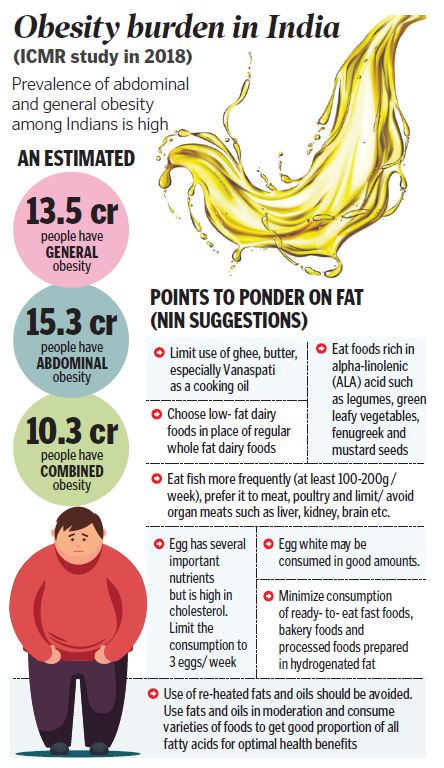
So why Vanaspati is bad for us?
Vanaspati or Trans-fatty acids (TFA) are not natural and are prepared through an industrial process known as hydrogenation, which in simple terms is hardening or solidifying vegetable oils. TFA also occurs naturally but at very lower quantities in meat and dairy products from cattle, sheep, goats, and camels.
In India, Vanaspati is still used as a substitute for ghee in cooking and the preparation of bakery products, sweets and snack foods. These oils are most frequently found in baked and fried foods, prepared or pre-packaged snacks and food, and cooking oils and spreads.
Initially developed as a replacement for animal fats such as butter, TFA are now increasingly utilised by industries because they provide longer shelf life to oils and food products. Moreover, TFA are far cheaper than animal fats and also change the texture and taste of food.
Industrially produced TFA were first introduced into the food supply in the late 19th and early 20th centuries with the invention of partially hydrogenated oils. Partially hydrogenated oils became more popular in the 1950s-1970s. However, by the late 20th century, an extensive body of evidence had accumulated from various studies on the negative metabolic effects of TFA as well as on the relationship between TFA intake and coronary heart disease.
TFA and its impact on health:
In the last few years, a series of international and national research papers have directly linked TFA to coronary heart diseases (CHD). According to Hyderabad-based National Institute of Nutrition (NIN), the daily intake of TFA should not exceed 1 per cent of energy intake.
Doctors and researchers have also found that TFA causes a rise in LDL Cholesterol levels (Bad cholesterol) and lowers good Cholesterol (HDL). It also increases risk of developing heart disease and stroke and is associated with a higher risk of causing type 2 Diabetes.
According to the WHO, ‘replacement of TFA with unsaturated fatty acids decreases the risk of CHD, in part, by ameliorating the negative effects of TFA on blood lipids. In addition, there are indications that TFA may increase inflammation and endothelial dysfunction’.
How much TFA is good?
WHO recommends that total TFA intake be limited to less than 1 per cent of total energy intake, which translates to less than 2.2 grams per day in a typical 2,000 calorie diet and elimination of industrially-produced TFA from the food supply is critical to achieving this aim.
By decreasing the risk of CHD events and mortality, it will help reduce premature death from NCDs, one of the health targets of United Nations Sustainable Development Goals.
Elimination of industrially-produced TFA will also contribute to the creation of an enabling food environment which promotes healthy diets and help achieve the global nutrition and diet-related NCD disease targets.
FDA warns mango growers: Ripen them naturally or face action

Food Safety and Standards Authority of India (FSSAI) has permitted ethephon powder to be used to ripen mangoes. Last year, after the mango season FSSAI published it directive on August 16.
Food and Drug Authority (FDA) has warned that mangoes should be ripened naturally or it would take action. Directive after research Merchants throughout the Country still use calcium carbide for ripening mangoes.
This banned chemical causes cancer and has been proved through research. Hence the government takes strict action against merchants who use this banned substance.
Noted the merchants started using ethephon powder but FDA official stock action against its use too. Many samples were taken from Kalamana market and sent for analysis. FSSAI, after the season, directed that ethephon powder could be used and so all merchants are using this powder.
FSSAI claims that mangoes, ripened through this chemical, were nutritious. Mangoes ripen due to ethylene gas Cheap ethephon powder is imported in large quantities from China and South Korea.
A pouch of this powder kept in a box emanates ethylene gas and ripens the fruit faster which can be brought to the market. Earlier, the grass kept in the mango box also used to give out ethylene gas and ripen the fruit.
However this process is time consuming and merchants want to make profits faster. Powder should not touch fruits FSSAI directive stipulates that, ethephon powder should not directly touch the fruit. If it touches, it can cause serious diseases. The pouch has to be kept in the box.
Food Safety and Standards Act, 2006 has prohibited the use of calcium carbide and action is taken against the individual using it under Sec 59 of the Act.4 Kalamana merchants have gas chamber.
Four merchants in Kalmana have gas chambers for ripening mangoes where ethephon powder is used. Construction of the chamber requires large amount of land and money. Hence small merchants do not construct such gas chambers and ripe mangoes inboxes with ethephon powder.
May 11, 2019


NO ADDED SUGARS? THINK AGAIN, WRAPPER MAY BE MISLEADING YOU

What’s in a name? An ‘ose’, say diabetologists, by every one of its names is just as sweet and harmful. And more frightening is that according to a just-published study, most Chennaiites may not be able to tell their sugars apart.
A recent study on ‘Perception of Sugar Content in Food Labels among Supermarket Consumers in Chennai City’ found that 77% of the respondents did not look specifically for sugar content in the food they were buying although a majority were aware of the ill effects of sugar consumption. Only 2% read the contents on the label, the rest were more interested in brand, offers and price. Also, only 29% were aware of terms such as artificial sweeteners and non-caloric sweeteners.
The study, conducted by Department of Conservative Dentistry and Endodontics, Sri Venkateswara Dental College and Hospital and funded by the Indian Council of Medical Research, was published in the Journal of Pierre Fauchard Academy (India Section) this March.
The ‘no added sugars’, ‘no added flavours’, and ‘no added preservatives’ all add up, says Dr Poorni Saravanan, one of the lead authors of the study. “Corn starch, for instance, is a hidden sugar, which many were not aware of,” she says. While the study was originally undertaken with dental caries in mind, says Dr Poorni, it took a more serious turn when the researchers realized people were not aware of the contents of the food they were buying.
Sugar can be listed under 61 different names, but the rule of thumb, says dietician Shiny Chandran, is that anything on the label that ends with an ‘ose’ has sugar. And that means dextrose, lactose, fructose and glucose. “It is best if the sugar content is less than 3% of all the ingredients,” she says. “Cookies, breakfast cereal, Indian-Chinese fusion food, all contain sugars. Everything that is supposedly low fat contain hidden sugars because that’s the only way to enhance taste.”
WHO guidelines recommend adults and children to reduce the daily intake of free sugars to less than 10% of their total energy intake. A further reduction to below 5% or roughly 25 grams (6 teaspoons) per day would provide additional health benefits, say the guidelines.
Dr Vijay Viswanathan of the M V Hospital for Diabetes says most of his patients are also not aware that there are two types of artificial sweeteners – caloric and non-caloric (like stevia). “People assume all sweeteners are good for them. Maltodextrin for instance is a caloric sweetener so those with issues of obesity and fatty liver and diabetes need to be wary. Most diabetic sweets contain the caloric sweetener lactulose and to make it more palatable, fat is added,” he says.
Dr Poorni says the study also threw up a problem that is unique to India. “The contents are listed in English and this is a barrier for most consumers. It has to addressed by the Food Safety and Standards Authority of India,” she says.


May 10, 2019


Banned stapler pins on your tea bags? FDA is waiting for your complaint

Says can't act unless it receives complaints, has no manpower to conduct checks itself. The Food Safety and Standards Authority of India (FSSAI) banned the usage of stapler pins in tea bags and sent a circular saying so in July 2017
A loose staple pin could be consumed and cause serious health issues.
Despite the ban on the use of stapler pins in tea bags in 2017, manufacturers continue to use them widely. Yet, the Maharashtra Food and Drugs Administration (FDA) has no case of any violations. That's because, officials claimed, they haven't received any complaints regarding this and don't have the manpower to conduct inspections at night, when many tea sellers who use such tea bags, go about their business.
No Complaints, Staff Shortage
Speaking to mid-day, Pallavi Darade, FDA commissioner said, "So far, we haven't received any complaint from people regarding it. If we do, then we can certainly look into it."
Another officer said the FDA office is reeling under a staff crunch, because of which they can't even hold regular inspections to find violators. "Most tea sellers who use tea bags do their business at night, so we need to keep an eye on them. But, sadly, we don't have the staff strength to conduct these inspections. Regarding private companies using them, we need to get complaints, which we haven't yet," the officer added.
FSSAI's Ban
The Food Safety and Standards Authority of India (FSSAI) banned the usage of stapler pins in tea bags and sent a circular saying so in July 2017. The use of staple pins in tea bags is a hazard to consumers, since any loose staple pin consumed inadvertently with tea may cause serious health issues. The pins are made of steel coated with zinc but are also known to be made of galvanised iron coated with zinc. "Taking cognisance of the risk to public safety in using staple pins in tea bags by some FBOs, the Food Authority in exercise of the power conferred under Section 16 (5) of FSS Act, 2006, hereby directs the concerned FBOs to discontinue the manufacture, storage, distribution, sale, and import of stapled tea bags by January 1, 2018," reads the circular. The commissioners of Food Safety of all States/UTs were directed to take necessary action to prevent the usage of unsafe packaging material and take up measures for enforcement of this direction from January 1, 2018.
Doctors Caution
Doctors have cautioned consumers that usage of such pins in tea bags can even prove deadly if one gets mixed in the tea and is consumed. "In the past, there have been incidents where people have swallowed stapler pins. As these pins are also made of iron coated by zinc, it may prove harmful to the stomach's internal lining. It may cause bleeding and even poisoning," said Dr Rasheed Sheikh, a general physician.
2017
When the FSSAI banned the use of stapler pins in tea bags
240kg gutka smuggled out via Central stn parcel office

The Chennai police have found that 240kg of banned gutka was smuggled into Chennai from Bengaluru on train number 12658 Bengaluru Mail on Wednesday morning.
Southern Railway has ordered a high-level probe into the lapse.
That the contraband, packed in six bundles, was loaded on a leased parcel van coupled at the front of the train, unloaded on platform 9 of MGR Central station around 5:45am and taken out through the parcel office on a tempo has shocked officials.
The leased parcel vans are given out on contract to private parties who pay railways a fee. Southern Railway has initiated a process to ask the lease holder for an explanation, said an official.
The tempo was on its way towards the Elephant Gate area when police from the C2 Elephant Gate police station intercepted it. After checking CCTV footage, they established the sequence of events.
TOI has already reported on irregularities at the station’s parcel office. Officials said many contraband items pass through the parcel office unchecked. Last week, red sanders was seized from its premises. Also, gutka from the northern states used to be brought to Tamil Nadu on the Hazrat Nizamuddin-Kanyakumari Thirukkural Express. The train, which started from New Delhi, stopped for an additional15 minutes in Madurai where the contraband was unloaded. Three big seizures were made from the parcel vans of the trains.
An official said recently the RPF had flagged how there were many cases of theft, robbery or other malpractices involving leased parcel vans but the Government Railway Police was reluctant to file cases and investigate.
May 9, 2019


Beware! Over 81% juice stalls fail food safety test

The BMC inspected several juice stalls across the city, including the ones at major railway stations like Dadar, Churchgate, Chhatrapati Shivaji Maharaj Terminus (CSMT), Kurla, and Mumbai Central among others.
Next time you are at your nearest juice centre, be aware of the hygiene at the place! Around 486 samples of juice and 300 samples of ice across the city have failed the 'Food Safety and Hygiene' test. This was revealed from the report on the samples collected by the Health Department of the Brihanmumbai Municipal Corporation (BMC) after the viral video of unhygienic preparation of lemon juice at Kurla station in March.
The BMC inspected several juice stalls across the city, including the ones at major railway stations like Dadar, Churchgate, Chhatrapati Shivaji Maharaj Terminus (CSMT), Kurla, and Mumbai Central among others. Last month, BMC had inspected a total of 1,183 stalls (280 selling lemon juice and 303 sugarcane juice stalls) and collected 385 ice samples.
However, the BMC health department has revealed that out of the collected samples from juice stalls, around 486 juice samples and 300 ice samples were found to be unfit for human consumption. In the advent of summer when people drink more juices at public places, the BMC has stepped in and is taking extra precautions by checking juice stalls especially at big stations like Dadar, CSMT, Kurla and Mumbai Central.
“Consumption of such contaminated juices and ice can land people in hospitals. When the lemons are squeezed manually without maintaining proper hygiene standards, there are high chances of contamination. Improper handling of fruit juices and soft drinks enable the growth of fungi and molds in them,” said Dr. Padmaja Keskar, Executive Director of the BMC's Health Department. She cautioned consumers to practice caution while consuming road-side food.
However, last month, the civic body also inspected 195 other stalls violating hygiene and safety norms and had collected 191 food samples from them, of which, only 43 were found fit for consumption.
Following a visual inspection of the stalls, the inspecting officials choose their samples based on the visual appearance of an eatery's hygiene standards. Also, BMC had destroyed 15,645 kgs of ice, around 3,838 kg of fruits not fit for consumption and around 10,000 liters of juice including sugarcane juice after they were found to be adulterated.
Branded water containing harmful microbes openly sold

UDHAMPUR, May 8: In a shocking exposure it has come to fore that packaged drinking water brands by two prominent companies though containing harmful microbes are openly being sold in the market here with none from the authorities concerned to check it.
On 23rd of last month, the Commissionerate of Food Safety, J&K in a 'Food Alert' had issued 'Stop Use Notice' after samples of the Packaged Drinking Water 'Aqua Nice and Mc Dowell's No. 1 Platinum' were lifted by the Empowered Authorities of the Commissionerate under the provisions of Food Safety and Standards Act 2006, Rules and Regulations 2011.
The 'Stop Use Notice' had declared these packaged drinking waters as 'Unsafe and Misbranded' by the Food Analyst at Public Health Laboratory, Jammu
The report had stated that Packaged Drinking Water bottles had no mention about batch number, date of packing, best before, net content etc and the water contained harmful microbes like e-coli and other coli forms.
Still the water is openly available at all outlets like ruler and urban areas and is also being served at marriage halls and other parties. Many prominent persons in the civil society have expressed concerned over the negligent role of law enforcement authorities and health authorities in this regard and have demanded strict action against them.
May 8, 2019


Novel sensor can detect spoilt milk
Scientists have developed a sensor that can 'smell' if milk has gone bad, an advance that could make expiration dates on cartons a thing of the past.
The sensor consists of chemically coated nanoparticles that react to the gas produced by milk and the bacterial growth that indicates spoilage, said Shyam Sablani, professor at Washington State University in the US.
The sensor does not touch the milk directly.
"If it's going bad, most food produces a volatile compound that doesn't smell good. That comes from bacterial growth in the food, most of the time. But you can't smell that until you open the container," Sablani said in a statement.
The sensor detects these volatile gases and changes colour, according to the study published in the journal Food Control.
The next step for the team is developing a way to visually show how long a product has before it spoils. Currently the sensor only shows if milk is ok or spoiled.
Though still early, Sablani envisions working with the food industry to integrate his sensor into a milk bottle's plastic cap so consumers can easily see how much longer the product will stay fresh.
One problem with current expiration dates is they are based on best-case scenarios, researchers said.
"The expiration date on cold or frozen products is only accurate if it has been stored at the correct temperature the entire time," Sablani said.
Temperature abuse, or time a product has spent above refrigerator temperature, is very common, he said. And it can happen during shipment, or if a consumer gets delayed on the way home from the store.
"We'll have to work with the industry to make this work. But we're confident that we can succeed and help improve food safety and shelf life for consumers," Sablani said.
Food Safety Dept Poonch seizes 6000 packets of sub-standard salt
A team of Food Safety Department on Tuesday raided several Anganwadi centers and seized a large quantity of substandard salt in Poonch district of Jammu region.
Reports reaching GNS said that an official team led by Assistant Commissioner Food and Safety Department Tariq Mehmood alongside Inspector Zafar Ahmad Mir raided CDPO office Buffflaiz and Surankote during which six-thousand packets of substandard 'Samzan' salt were seized.
An official said that the raid was carried out in several storehouses in the border district following a specific information over the use of substandard salt in Anganwadi centres.
The official remarked that “It has come to the fore that the said salt with the name 'Samzan' is misbranded and is of substandard nature. The salt was being used for the preparation of various food items in as many as 1372 Anganwadi centres in the district.
The official said that from henceforth all the centres are directed to discontinue the use of the salt with immediate effect while the officials also said that whole of the stock of the salt will be seized throughout the district.”
After falsely claiming FDA approval, IIT-Delhi startup Sanfe falsely claim AYUSH ministry approval
On 8th of March 2019, four IIT-Delhi entrepreneurs launched a product called ‘Sanfe Period Pain Relief Roll-On’ that claimed to help with menstrual pain. The start-up group (Redroom Technology Private Limited) who launched the Sanfe claimed to have an FDA approval, after which an Alt News Science investigation reported it as a false claim. This previous press release with the FDA approval was published without any fact-checking by several news outlets such as The Indian Express, NDTV, The Times of India, The Economic Times, and India Today.
After releasing our 1st investigative report on Sanfe, the co-founder of Redroom, Archit Agarwal sent a copy of the corrigendum published in The Hindu on the 28th of March 2019, accepting that it was a mistake to suggest that Sanfe was FDA approved. However, in the corrigendum, Redroom maintained that the approval was actually from the AYUSH ministry instead. On the phone, Archit Agarwal also maintained that the formula was clinically tested before release, and was safe for use.

We contacted the AYUSH ministry, Haryana’s Dr Satish Khatkar, who approved the formulation to determine the authenticity of the certificate of approval by AYUSH. Additionally, we conducted a literature review on the research of different components of the Sanfe roll-on to determine whether it was safe and effective to use as per the claim.
Claims:
Archit Agarwal clarified that the AYUSH certificate means that Sanfe roll-on is approved by AYUSH
Sanfe, consisting of 100% natural oils, causes no side effects. (as per the packaging)
It targets the source of pain without having to take ‘pain killers’ (as per the packaging)
Fact Check:
The claim of approval from AYUSH
Both, Redroom Technology and co-founder Archit Agarwal, maintained that the certificate of approval was from the AYUSH ministry, Haryana, and not by the FDA, which was a ’mistake’. When we contacted the authority who had signed this certificate at AYUSH, Dr Satish Khatkar suggested that the document was NOT an approval for safety for the products but only a certificate of approval for manufacturing (see the image of its manufacturing licence).

Dr Khatkar from AYUSH, also suggested that the certificate meant those individual components of the product may be effective and safe according to the ancient textbook of Ayurveda, Bhavaprakasha Nighantu (B.P.N), which had not been approved as a combined specific formula that Sanfe roll-on is.
Moreover, the certificate or manufacturing licence is given after a confirmatory test by AYUSH that the product has only the individual components as per the claim of the manufacturer and that no other safety tests are conducted by AYUSH.
Khatkar also suggested that the responsibility of conducting these safety and toxicity tests was upon the manufacturer, in this case, Space Organics, Haryana. In our previous conversation, the owner of Space Organics, Mr Nagpal, had confirmed that it was not financially viable for them to conduct tests for a product that had a higher research cost than its production cost. Hence, no testing was conducted on this product before its release.
After the first Alt News investigative report, Space Organics and Redroom released a document that listed the research on 79 women as per the original claim. This document was not a peer-reviewed published document, did not contain any data, nor it was tested for safety in various conditions. Khatkar suggested that such ‘research’ is likely to be a market survey where a group of women are given the product and later verbally asked to report efficacy. This unsystematic measure of efficacy cannot be considered as clinical research as suggested by the founders of Sanfe.
The claim of a safe and natural composition
As suggested above, the safety certificate from AYUSH is only for individual components in the roll-on and not for the formula as a whole. As per AYUSH, this safety certificate was backed by the ancient Ayurvedic text Bhavaprakasha Nighantu (B.P.N).
Any remedy that affects will, evidently, have unwanted side effects. Hence, the dosage is studied to extract the most desired effect with the maximum tolerable adverse effect. It is false to claim that herbal drugs will be completely free of side effects just because they are ‘natural’. Some of the most potent drugs in medicine have been derived from natural substances which also carry the same adverse effects as any other laboratory synthesized compounds.
The use of medicinal plants and oils as a form of topical pain treatment has been widely studied, where detailed adverse effects have been described (Bakkali et al. 2008). Prolonged use of any of the Sanfe’s ‘natural’ ingredients, standalone or in combination, can lead to strong unwanted adverse reactions.

Sanfe roll-on consists of 6 components, and there is no prescribed method to limited the frequency of its use. Apart from the described oils (see the manufacturing licence), reportedly, lavender, gandhipura (wintergreen), nilgiri (eucalyptus), rosemary and base oil, the strongest active ingredient is an extract of the mint in the crystal form. While the packaging shown in the image below doesn’t mention crystalline Menthol (mint) as one of the ingredients, the Space Organics certificate above does. Since mint in the herbal form does not contain high quantities of this active ingredient, a crystalline form of the compound menthol is used which can act on the cold receptors in the skin to give pain relief. This is a low-cost compound synthetically manufactured in the lab and is not safe or natural, if not used correctly.

Mint essential oil can contain up to 40-90% menthol which is a potent pain killer acting on the cold receptors in the skin. Several topical anesthetics and nasal decongestants such as Vapour-Rubsalso contain menthol.
Additionally, menthol also enhances the penetration of other transdermal drugs, which means that the absorption of other compounds is increased when mixed with menthol. Drug development companies should issue expert advice on consumption of menthol based compounds as it may be toxic and sub-lethal in higher doses starting from 50-500mg per kg of body weight.
The claim of suggesting it as devoid of traditional pain-killers, which target the source of pain.
The Sanfe formulation contains several ‘pain killer’ compounds in the form of essential oils that is equivalent (in specific dosage) to over the counter pain killers. For example, an American patent describes a mixture of wintergreen oil, olive oil and/or eucalyptus oil as a topical pain killer.

Although Sanfe doesn’t directly claim that its composition has no pain killers, it is contended that pain is reduced without having to take pain killers. Using this roll-on is equivalent to a topical application of consuming a ‘pain killer drug’, provided it gets absorbed into the system in the required dosage.
For example, wintergreen oil (8% in Sanfe roll on) contains about 98% of methyl salicylate, a compound closely related to acetylsalicylic acid, or aspirin- which is a class of ‘pain killers’. Also, if used excessively, wintergreen oil can lead to toxicity from ingestion of methyl salicylate compound. This toxicity varies for different age groups and is the most harmful in small children. For example, 5 ml of methyl salicylate is equivalent to 5 aspirin tablets (325 mg each). Various toxicity studies have confirmed that while low dose skin application was safe or can cause mild-acute irritation to the skin, dosage over 7 gm for a 70 kg adult can result in severe neurological disturbances (Chin et al. 2007).
Other ingredients of Sanfe, such as eucalyptus, lavender, and rosemary have shown limited pain-relieving effects, but have known to cause several skin related, systemic problems and other adverse effects similar to an anaphylactic reaction in higher doses (Darben et al. 1998, Pozadski et al. 2012, Ulbricht et al., 2010). Use of rosemary is also dangerous for anaemics and pregnant women.
Lastly, the claim that it penetrates deep into the source of pain is made without understanding the research in pain mechanisms. Pain during menstruation arises deep within the muscles, while this roll-on is applied only on the skin. The muscle and the skin is separated by several other layers of tissue that do not allow deep penetration of topical drugs unless the drug is in systemic circulation through the bloodstream. Hence, the effect of pain relief with Sanfe may be not be attributed through deep absorption through the skin. This claim shows the developers of Sanfe’s meagre understanding of pain emergence during menstruation.
Conclusion
Hence, once again, the founders of Sanfe, used government institutes such as AYUSH to promote drugs without any background research or understanding of menstrual pain.
Sanfe’s founders also claimed a to have an approval certificate which, through our investigation, turned out to be a manufacturing licence from AYUSH.
The Sanfe formulation is packed with several compounds used as pain-killer medications, as well as other compounds that increase the absorption of such pain-killers, which should be evaluated in toxicity and dosage studies before marketing and administration similar to any other drugs.
Thus, under the Drugs and Cosmetics Act, 1940 and Drugs and Cosmetics Rules 1945, it can be considered as attempts to misbranding the product as defined.
The Ministry of AYUSH in a document lists ethical principles to be followed during a clinical trial for Ayurvedic drugs, the launch of the Sanfe product did not seem to follow those guidelines.
References
Chin, R. L., Olson, K. R., & Dempsey, D. (2007). Salicylate toxicity from ingestion and continued dermal absorption. The California Journal of emergency medicine, 8(1), 23–25.
Bakkali, F., Averbeck, S., Averbeck, D., & Idaomar, M. (2008). Biological effects of essential oils–a review. Food and chemical toxicology, 46(2), 446-475.
De Groot, A. C. and Schmidt, E. (2015), Eucalyptus oil and tea tree oil. Contact Dermatitis, 73: 381-386.
Darben, T., Cominos, B., & Lee, C. T. (1998). Topical eucalyptus oil poisoning. Australasian journal of dermatology, 39(4), 265-267.
Posadzki, P., Alotaibi, A., & Ernst, E. (2012). Adverse effects of aromatherapy: a systematic review of case reports and case series. International Journal of Risk & Safety in Medicine, 24(3), 147-161.
Ulbricht, C., Abrams, T. R., Brigham, A., Ceurvels, J., Clubb, J., Curtiss, W., … & Isaac, R. (2010). An evidence-based systematic review of rosemary (Rosmarinus officinalis) by the Natural Standard Research Collaboration. Journal of dietary supplements, 7(4), 351-413.
Drug and Cosmetics Act 1940 and Drugs and Cosmetic Rules 1945 http://www.cdsco.nic.in/writereaddata/Drugs&CosmeticAct.pdf
http://ayush.gov.in/acts-rules-and-notifications/good-clinical-practice-guidelines-clinical-trials-asu-medicine
Subscribe to:
Posts (Atom)