
Oct 9, 2018


Street food to be audited for cleanliness and hygiene by FSSAI
Ahmedabad's Kankaria Lake area became India's first Clean Street Food Hub in July this year.

Indian street food experience could soon undergo a massive change if Food Safety and Standards Authority of India's (FSSAI) plans follows to fruition. FSSAI is implementing a "clean street food hub programme" so that you can enjoy your chaats and gol guppas without bothering about hygiene. The autonomous body has identified 144 clusters across the country that would be audited by FSSAI along with state authorities for cleanliness and hygiene.
Such clusters would be encouraged to keep up with certain practices and standards and the ones that meet the criteria will be given a clean street food hub certificate.
Ahmedabad's Kankaria Lake area is one such example. In July, the area that has 66 vendors became India's first Clean Street Food Hub, as mentioned in a report in The Economic Times. There is a FSSAI certification on display in the area that is visited by 1.2 crore people every year.
Arbind Singh, national coordinator of National Association of Street Vendors of India said that such certified street vending zones provide safe, tasty and affordable eating options for citizens and tourists, along with the local ambience and flavour, as mentioned in the daily.
Not only hygienic environs, this will also provide better employment opportunities. This initiative will improve the prospects of around 20 lakh street food vendors in India as well as give tourism a boost. But all in all, this is only part of FSSAI's larger game plan that seeks to ensure that all food business operators adhere to certain standards and hygiene. FSSAI also wants food served in schools, offices and hospitals to come under its initiatives.
FSSAI will, however, have to make sure that vendors have access to clean water and garbage disposal system. They have also started a massive training programme in Delhi across 40 locations, covering 23,000 vendors.
The organisation is also redefining its role as a mere licensing and testing body to an organisation that addresses the core issues of health and nutrition in the body, the daily mentioned. They also want FMCG and food companies to reformulate their products to address the issue of nutrition and health in the country.
As part of this move, the organisation also ordered online delivery platforms such as Zomato and Swiggy to delist restaurants and food business operators that do not comply with its regulations.
Food safety dept to identify ‘clean street food hubs’
Trichy: Wondering where to buy or eat clean and safe street food in the city? The general public may get a better idea in the near future if the district food safety department’s efforts to identify “clean street food hubs” in Trichy become a reality.
Officials from the food safety department said they will start identifying the zones which have 50 or more street food stalls within Trichy that serve popular local or regional cuisine and assess them based on certain benchmarks. If the street food hubs/ clusters meet 80% of the benchmarks specified, they would be declared as “clean street food hubs” and also given awards, plaque and certification. The programme to be launched this month is being taken up as part of a national campaign.
Street food is something very popular among many people, but often there is lot of scepticism or criticism regarding the quality of preparation or hygiene at the stalls and kiosks. As a result, the Food Safety and Standards Authority of India (FSSAI) had earlier launched a massive campaign called “clean street food hub” programme to identify and officially certify popular street food hubs in the country. In September, FSSAI had declared a lake area called Kankaria in Ahmedabad as the country’s first clean street food hub.
Speaking on how the department would zero in on potential hubs in the city, designated officer (DO) of district food safety department, Trichy, Dr R Chitra said that they would initially focus on conducting awareness drives. Two such awareness drives – where the roadside stall owners and vendors from across the city would be invited – are to be organised at Gandhi market and Thiruverumbur this month. “During these events, it will be explained to the owners how a street food stall should be maintained, the dos and don’ts etc. We will give them time to improve their stalls,” the DO said. She added that inspections at the identified zones would be made after that and if a particular hub/ cluster was found to satisfy the prescribed benchmarks, it would be certified officially.
According to sources in the food safety department, there were about 350 to 400 registered street food shops within the city limits and close to 600 which were yet to get registered. However, sources said that absence of street food hubs in Trichy and lack of cooperation in maintaining hygiene among the stall owners could possibly prove to be obstacles for certification. “Street food hubs are found primarily in central bus stand area, Chathiram bus stand, Big Bazaar street, NSB road etc., but only the central bus stand area looks to be a potential cluster,” a source from the department told TOI. The central bus stand cluster which had around 70 street food stalls was more cooperative with the food safety department, the source added.
Goa to hire foreign agency to test fish for chemicals: Vishwajit Rane

PANAJI: The Goa government will hire an international agency to check fish and ensure that hazardous chemicals like formalin are not used as preservatives, state Food and Drugs Administration Minister Vishwajit Rane said Monday.
A high level committee comprising Goa Town and Country Planning Minister Vijai Sardesai, Fisheries Minister Vinod Palyekar, besides Rane, met in Margao on Monday to discuss the issue.
"There are fears being raised about use of formalin in fish. We have decided to address it by hiring an international agency which will test the fish that is imported in Goa from other states," Rane told reporters after the culmination of the meeting.
He informed that the state government would finalise the name of the international agency within 24 hours and it would be invited to work along with the state's FDA in this regard.
He said that the decision to invite the international agency was taken after consulting Food Safety and Standards Authority of India (FSSAI).
The FSSAI, a Central body, is responsible for making regulations and setting standards, import of food, notifying labs and ensuring cooperation with the states.
The issue of formalin or formaldehyde, a potential cancer-inducing chemical, as a preservative in fish has rocked Goa for several months now.
Rane said that unlicensed fish traders will not be allowed to operate in Goa after October 15.
Goa Town and Country Planning minister Vijai Sardesai said Monday's meeting discussed measures to ensure highest standards are adopted so as to make fish safe for consumption.
Sardesai alleged that the opposition Congress was creating doubt in the minds of the people about fish being consumed in Goa and added that chief minister Manohar Parrikar had been apprised of the issue.
Oct 8, 2018
ஆசிஃப் பிரியாணி’ கிளையில் நூல் பிடித்த அதிகாரிகள்.. ரெய்டில் சிக்கிய 2000 கிலோ அழுகிய இறைச்சி!
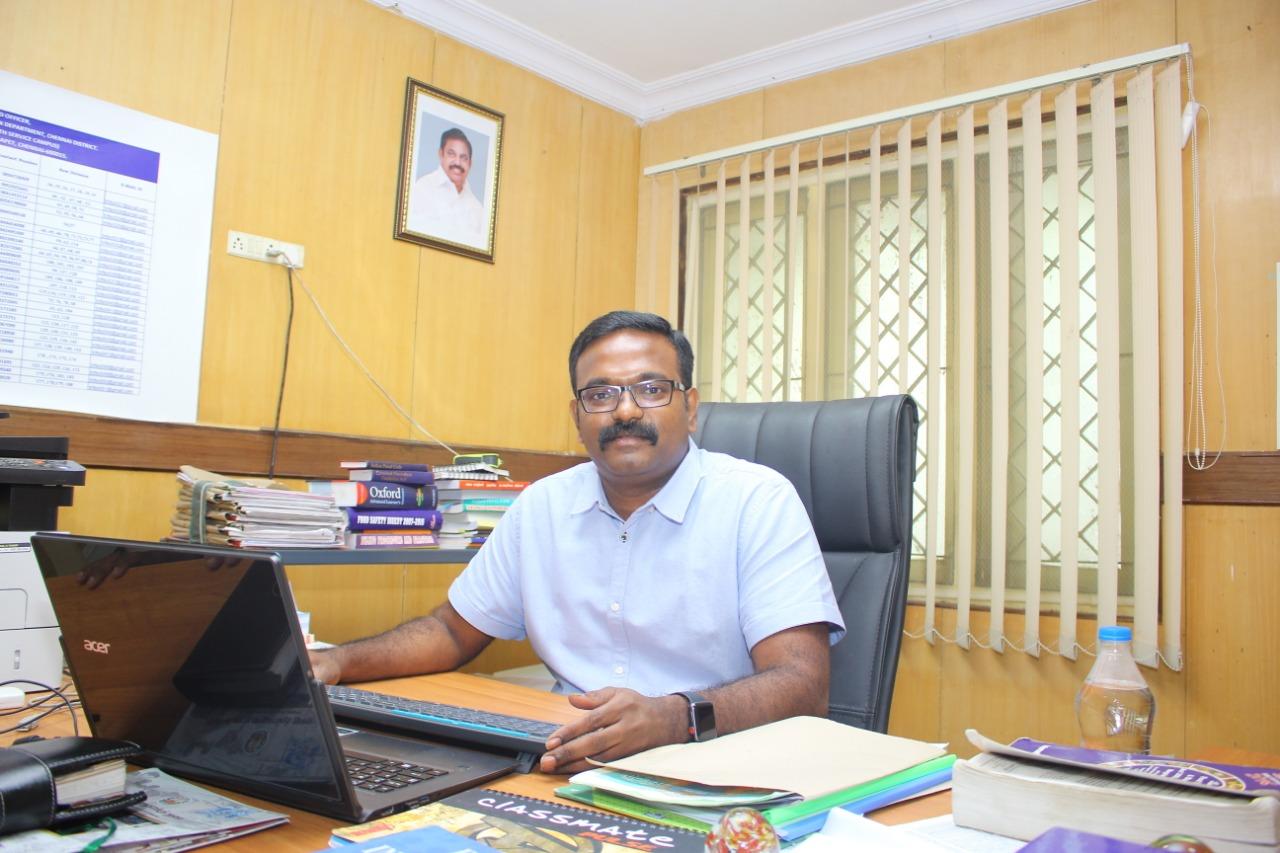
நேற்று முன்தினம், ஆசிஃப் பிரியாணியின் கிண்டி தலைமை கிச்சனுக்குள் புகுந்த உணவு பாதுகாப்புப் பிரிவு அதிகாரியான டாக்டர் கதிரவன் அதிரடி ரெய்டு நடத்தி சீல் வைத்தார். ஜூ.வி வாசகர் ஒருவர் கோயம்பேடு ஏரியாவில் உள்ள ஆசிஃப் பிரியாணி கடையில் தரமற்ற மட்டன் பிரியாணி சப்ளை செய்ததைக் கண்டுபிடித்து தகவல் சொல்ல… கோயம்பேடு கிளைக்கு எங்கிருந்து பிரியாணி சப்ளை ஆகிறது என்பதை விசாரித்து கிண்டியில் உள்ள அந்த ஹோட்டலின் கிச்சனில் ரெய்டு நடத்த உத்தரவிட்டிருந்தார் தமிழக அரசின் உணவு பாதுகாப்புப் பிரிவு கமிஷனர் அமுதா. “இனி அப்படி நடக்காது. தவறுகளைத் திருத்திக்கொள்கிறோம்’’ என்கிற ரீதியில் ஹோட்டல் நிர்வாகத்தினர் டாக்டர் கதிரவனிடம் கடிதம் கொடுத்துவிட்டு சீலை எடுக்கும்படி காத்திருக்கிறார்கள். இது ஒருபுறமிருக்க…
சென்னையின் பிரபல ஹோட்டல்களில் பரிமாறப்படும் மட்டன், சிக்கன் போன்ற இறைச்சிகள் தரமானதுதானா?
…என்கிற விசாரணையில் இறங்கியிருக்கிறார்கள் உணவு பாதுகாப்புப் பிரிவு அதிகாரிகள். மக்கள் புழக்கம் அதிகமுள்ள இடங்களில் செயல்படும் சில நான்வெஜ் ஹோட்டல்களில் கெட்டுப்போன இறைச்சி சப்ளை ஆவது தொடர்பாக ரகசிய விசாரணையில் அதிகாரிகள் ஈடுபட்டு வந்தனர்.
வெளியூர், வெளி மாநிலங்களிலிருந்து கெட்டுப்போன இறைச்சிகளை தெர்மோ கூல் பாக்ஸில் பேக் செய்து அனுப்பி வருகிறது ஒரு பயங்கர கும்பல். இதற்கென சென்னையின் பல பகுதிகளில் ஏஜென்டுகள் உண்டு. இவர்கள் மூலம் சந்தடியில்லாமல் குறைந்த விலைக்குக் கடைகளுக்கு இறைச்சி சப்ளை ஆகிவிடும். ஆசிஃப் ஹோட்டல் ரெய்டுக்குப் பிறகு, உணவு பாதுகாப்புப் பிரிவு அதிகாரிகள் ரகசிய வேட்டையில் இறங்கியிருக்கிறார்கள்.
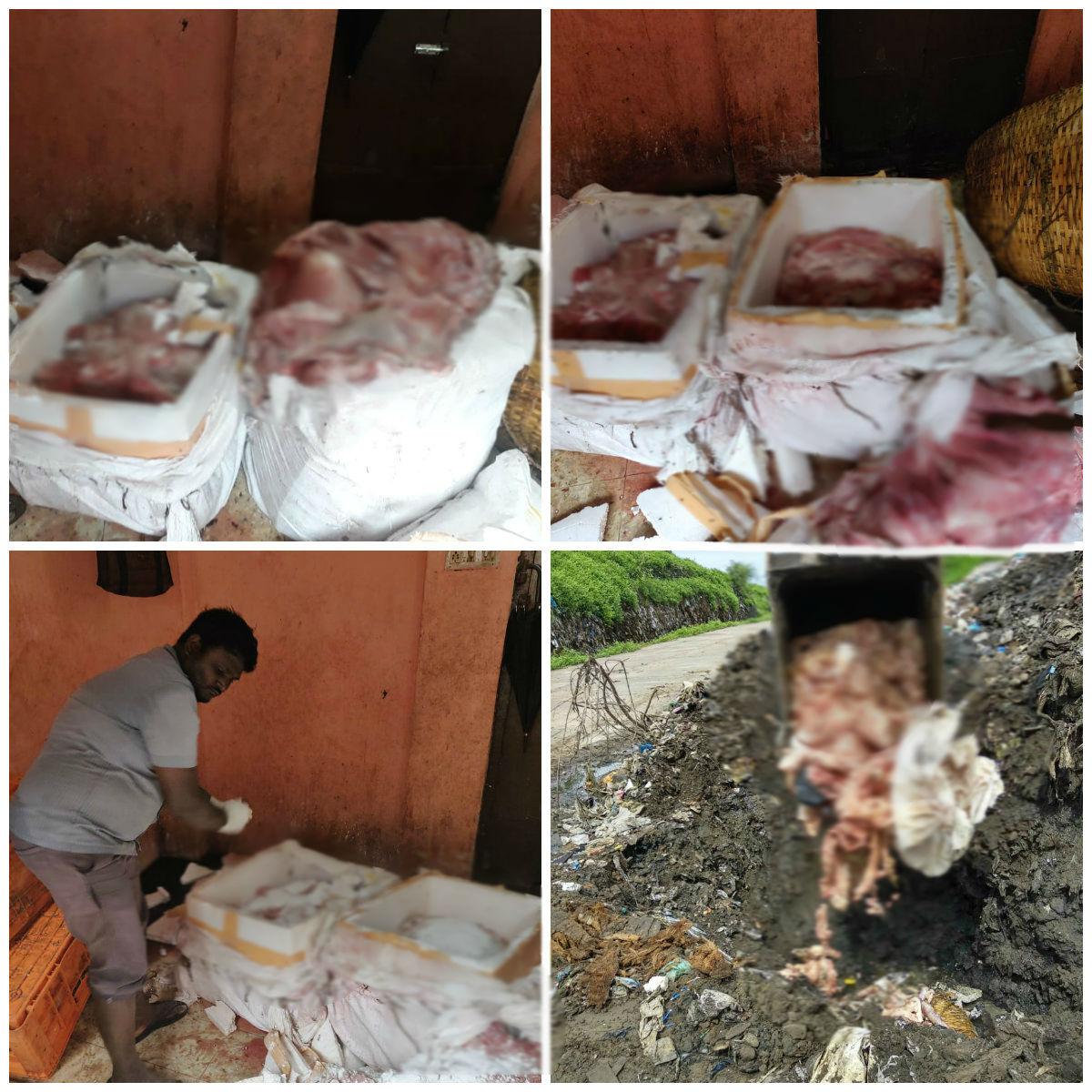
நேற்று (5.10.2018) அவர்களுக்குக் கிடைத்த ரகசியத் தகவலை அடுத்து, சிந்தாதிரிப்பேட்டையில் ஓர் இடத்தில் சர்ப்ரைஸ் ரெய்டு நடத்தியிருக்கிறார்கள். 2,000 கிலோ இறைச்சி கெட்டுப்போன நிலையில் கைப்பற்றியிருக்கிறார்கள்.
சென்னை ஹோட்டல்களுக்குத் தரமற்ற இறைச்சியை சப்ளை செய்யும் நெட்வொர்க்கை ரகசியமாக நடத்திவரும் கோஷ்டிகளில் முக்கியமானது சக்திவேல் கோஷ்டி. இதுபற்றி டாக்டர் கதிரவன் நம்மிடம் கூறும்போது, “மாடு, பன்றி, கன்றுக்குட்டி… ஆகியவற்றைக் கொன்று அதன் இறைச்சியைச் சாதாரண தெர்மோ கூல் பாக்ஸில் அனுப்புகிறார்கள். இந்த மாதிரி, அண்ணாசாலை பாடிகாட் முனீஸ்வரன் கோயில் அருகே ஒரு கும்பல் கெட்டுப்போன இறைச்சியைப் பதுக்கி வைத்திருப்பதாகத் தகவல் கிடைத்து ரெய்டு நடத்தினோம். அங்கே சிக்கிய சக்திவேல் கோஷ்டியைச் சேர்ந்த ஐந்து பேரைப் பிடித்தோம். அவர்களைப் போலீஸில் சொல்லி கைது செய்து சிறையில் அடைத்தோம். அப்போது, அந்தக் கோஷ்டியிடமிருந்து 500 கிலோ இறைச்சியைக் கைப்பற்றி அழித்தோம்.
அதேபோல், இன்றும் எங்களுக்கு ரகசியத் தகவல் கிடைக்கவே சிந்தாதிரிப்பேட்டையில் ரெய்டு நடத்தினோம். அதே, சக்திவேல் கோஷ்டிதான் சிக்கியது. இறைச்சிகள் குவியலாகப் போட்டுவைக்கப்பட்டிருந்த இடத்தைப் பார்த்தால், குமட்டிக்கொண்டு வந்தது. துர்நாற்றம் வீசியது. சுகாதாரமற்ற நிலையில் கிடந்த 2,000 கிலோ இறைச்சியைக் கைப்பற்றி அழித்தோம். மனித உடலுக்குத் தீங்கு விளைவிக்கக்கூடியவை இந்த இறைச்சி. இதன் பின்னணி தெரிந்தே, சிலர் வாங்கிச்செல்கிறார்கள் என்பதைக் கேள்விப்படும்போது அதிர்ச்சியாக இருக்கிறது. ஆட்டு இறைச்சியின் விலை அதிகம். ஆனால், மாடு, பன்றி, கன்றுக்குட்டி ஆகியவற்றின் இறைச்சி விலை குறைவு. இவற்றை வெட்டி, இறைச்சியைக் கடத்தி விற்கிறார்கள். அதை வாங்குகிறவர்கள் ஆட்டு இறைச்சிக்குப் பதிலாக இவற்றைக் கலந்து சமைக்கிறார்கள். இது மிகவும் தவறானது. இந்தக் கொடுஞ்செயலை யார் செய்தாலும் தண்டனைக்கு உரியக் குற்றம்" என்றார்.
இனி பிரபல ஹோட்டல்களில் சாப்பிடப் போகும்போது உணவு தரமில்லாமலோ, சுகாதாரமற்ற சூழ்நிலை நிலவினாலோ… உடனே உணவு பாதுகாப்புத்துறை கன்ட்ரோல் ரூமுக்குத் தகவல் கொடுங்கள். நீங்கள் பார்த்த காட்சியைப் படம் பிடித்துக் குறிப்புடன் சென்னை தேனாம்பேட்டையில் மாநில உணவு பாதுகாப்பு கமிஷனர் அமுதா ஐ.ஏ.எஸ் அலுவலகத்தில் இயங்கும் கன்ட்ரோல் ரூமுக்கு (வாட்ஸ் அப்/ செல் எண் 94440 42322) தகவல் தெரிவியுங்கள்.
How FSSAI is ensuring that food offered by street vendors and online aggregators meet safety norms


The FSSAI is out to ensure that the food offered by street vendors and online aggregators meet safety and hygiene standards
Wolfing down pani-pooris being served by a street vendor is set to become more relishing if the food safety regulator has its way. The Food Safety and Standards Authority of India (FSSAI) is implementing a “clean street food hub programme”. It has identified 144 street food clusters across the country that would be jointly audited with state authorities for cleanliness and hygiene. Clusters would be encouraged to comply with certain standards and those meeting the criteria would get a “clean street food hub certificate”.
A successful example of this initiative can be seen at Ahmedabad’s Kankaria Lake area. In July, the city’s picnic spot, which has 66 vendors, became India’s first Clean Street Food Hub. A plaque with the FSSAI certification is on display here, giving much comfort to the 1.2 crore people who grab a bite from here every year. “Such certified street vending zones provide safe, tasty and affordable eating options for citizens and tourists, along with the local ambience and flavour,” says Arbind Singh, national coordinator of National Association of Street Vendors of India. “This is also a way to provide better employment opportunities for many poor people.”
While it is clear this initiative will help improve the prospects of the estimated 20 lakh street food vendors in India and give a boost to tourism, the programme is only a part of FSSAI’s larger game plan. The regulator wants to ensure that all food business operators across the country adhere to certain standards and hygiene. FSSAI also wants food served in schools, offices, hospitals and even places of worship to adhere to the standards. All this is a part of the regulator redefining its role as a mere licensing and testing body to a more transparent organisation that addresses the core issues of health and nutrition in food.
In August, FSSAI launched the Eat Right Movement, aimed at getting citizens to choose healthier food and dietary options and also ensuring food safety — from procurement to consumption and disposal. The regulator plans to rope fast-moving consumer goods companies and food companies willing to reformulate products for better nutrition, so as to address common health issues in India. FSSAI CEO Pawan Kumar Agarwal says: “We have decided to redefine our role as an organisation that helps align the expectations of key stakeholders, including scientists, testing labs, food businesses, state governments and consumers.”
As part of this realignment, the regulator had in July targeted online food aggregators. It ordered that restaurants and food business operators (FBOs) not complying with its regulations be delisted from such websites. The deadline for this exercise expired in September. FSSAI will now review the progress. “We believe that food safety and public health issues are on the top of the agenda not just for us, but also all industry players and online platforms such as Swiggy and Zomato. They wouldn’t want to risk their reputation because of non-compliant FBOs,” Agarwal says.
FSSAI issued the directive after receiving several complaints on the quality of food being supplied by FBOs listed on such platforms. Food aggregators seem to have taken the cue. Zomato, for instance, has delisted hundreds of restaurants across the 34 cities where it offers its services. “Most of our high-order volume restaurant partners already have an FSSAI licence or have applied for one,” says Mohit Gupta, CEO, food delivery business, Zomato. “We have delisted those who have failed to furnish licences. We are certain this move will not have an impact on our order volumes.”
Recognising the huge logistics challenge in cracking down on FBOs, FSSAI had extended the deadline for food aggregators to delist errant operators to the end of September. “Though all of them took up the issue seriously, we realised there were 40,000 to 50,000 restaurants on these platforms. So we decided to extend the deadline for better compliance,” says Agarwal.
After a preliminary review, FSSAI officials say they have found 90% compliance by the online platforms. They hope this initiative will also be as successful as the Kankaria Lake project.
The challenges, however, are much bigger when it comes to street food vendors. FSSAI has to first ensure that the vendors have access to clean water and a garbage disposal system, among others. All this means coordinating with multiple civic and state agencies — which is easier said than done. “Our project to bring street food vendors under our certification was started last year,” says Agarwal. “We started with a massive training programme in Delhi, covering 23,000 vendors in 40 locations. Our learning was that to bring in sustainable change and improvement in street food hygiene, we have to go beyond just training individuals and providing them with gloves and aprons, etc. We have to also work with different authorities to give better street lighting, drainage, garbage removal and safe water to the vendors.”
The outreach in Delhi has helped Dal Chand, who has been selling alu-tikkis and alu-chaat in east Delhi’s Mayur Vihar Phase 1 market for over two decades. Last year, he was trained at an FSSAI centre and got a certification, which he displays on his food cart. “I have been strictly following the hygiene and safe-food standards. It has helped me sell more,” says Chand, who had a daily turnover of Rs 6,000-8,000 during festival season.
Going beyond the streets, FSSAI has also proactively focussed on restaurants and eateries, and held regular discussions with industry bodies such as the National Restaurant Association of India (NRAI) and the Federation of Hotel and Restaurant Associations of India.
President of NRAI and CEO of Beer Café Rahul Singh says: “A major change is being introduced to ensure awareness, education and self-regulation — not only for food safety, but also towards a healthier lifestyle. For this, FSSAI has in the past 2-3 years taken steps to initiate multiple schemes across the entire food chain.
The very recent voluntary initiatives started for the industry include serving safety and hygiene rating, and menu labelling for restaurants.” These initiatives will improve food safety standards and will drive more players towards the organised sector, he adds.
FSSAI’s engagement with stakeholders has been in an inclusive manner. “Given the size and complexity of the food chain in India, many initiatives were introduced on a voluntary basis. Capacity building within the industry is being encouraged before bringing in rules and regulations,” Singh says.
Earlier this year, for example, FSSAI shared a proposal with NRAI members to declare calorie count of the food they serve. Instead of making it mandatory right away, the proposal is being rolled out on a voluntary basis across the larger restaurant chains for now. While it would be tough for smaller standalone restaurants to introduce the calorie count measure within a tight deadline, NRAI members say the step may attract more health-conscious customers in the long run.
The regulator has also partnered with various FMCG companies to ensure the “eat right” campaign is successful. “Our eat healthy campaign, with the tagline aaj se thoda kam, aims at reduction of high fat, sugar and salt foods in the diet of Indians,” says Agarwal.
Kellogg India is one of the companies that has pledged to reduce sugar by 10-15% and salt by 10-30% in its products by 2021 as part of the programme. “Full marks to FSSAI in taking the higher ground and initiating a collaborative dialogue between industry players and government bodies to achieve a healthier and more nutritious diet for Indians,” says Mohit Anand, MD, Kellogg India and South Asia.
The biggest challenge is getting the various government departments and ministries — including the food processing ministry, department of consumer affairs and the commerce ministry — to coordinate and ensure the plan is a success. As of today, however, most industry players say FSSAI is on their team and are willing to work together for a healthier India.

A street food festival was organised in Delhi in January where vendors served over 300 types of cuisine from across India. Participants were sensitised on safe-food practices, hygiene and sanitation


Ahmedabad’s Kankaria Lake area, which has 66 vendors, has become India’s first Clean Street Food Hub
2 fined for selling eatables without licence
CHANDIGARH: A district court here made two persons stand till the rising of the court and imposed a fine of Rs 20,000 on each for selling eatables without a food licence.
They were held guilty and convicted under Sections 26 (2)(iii), 31(1), punishable under Section 63 of the Food Safety and Standards Act. The convicted persons have been identified as Aditya Soni, manager of M/S Tavern (Satya Paul and Co.) and Satya Paul, contractor of the company.
On May 31, 2017, a food safety officer during an inspection at the business premises of M/S Tavern (Satya Paul and Co.), SCO No. 95, Sector 17D, Chandigarh, had found manager Aditya Soni selling food articles like packaged drinking water, carbonated water, peanuts, prepared chicken, prepared paneer etc. for human consumption by way of public sale without a food license.
The food inspector challanged the accused for selling the aforesaid food articles for human consumption without having a food license under Section 26 (2) (iii) and 31(1) of the Food Safety & Standards Act 2006 punishable under Section 63 .
The defence counsel contended that no independent witness was associated at the time of the challaning the accused. Also, it was argued that neither any sample of food article was taken by the FSO nor raw material for preparation were seized and entire case has been falsely foisted upon the accused. It was also stated that no raid has ever taken place and the accused never sold any of the alleged food articles to any customer and that the he has been falsely implicated in the case.
Prosecution contended that since the accused were challaned for selling packaged drinking water, carbonated water, peanuts, prepared chicken, prepared paneer etc. without having a food licence, there was no requirement for taking sample of the food articles. After the arguments, the court held both the accused guilty and imposed a fine of Rs 20,000 on each.
How safe is green?
The green fresh vegetables available in the market everybody knows contains high contents of pesticides, but it has now emerged that more harmful chemicals are present in alarmingly high doses across the country. Few years back a report by the Agriculture Ministry showed that there has been an almost two-fold increase in the number of samples having pesticides above the permitted Maximum Residue Level (MRL) in vegetables, fruits, meat and spices.
The major culprits were green chilli, cauliflower, cabbage, brinjal, okra, tomato, capsicum and coriander leaves. The samples were picked up from Mandis, retail shops and also from farm gates. The situation was equally alarming in this part of the region. A large number of vegetables grown included spinach, coriander leaves, capsicum and okra and a large part of vegetables available have high presence of pesticides.
Recently, the Food Safety and Standards Authority of India (FSSAI) had proposed regulations for heavy metal content in a whole range of food items including vegetables to hold traders accountable and also to persuade Indian farmers to do responsible farming and adopt good practices. In developed countries, consumers get safe food, including fresh vegetables.
Once these standards are in place to carry out tests instantly and disseminate the information to people, that will create an atmosphere where everyone in the production and supply chain will behave responsibly. Interestingly, the Agriculture Ministry’s report showed that the number of samples having high dose of pesticide was more in samples picked up from Mandis than the ones collected from the farm gate.
Consuming pesticide-laden fruits and vegetables for a long period of time can prove fatal affecting the nervous system and other important organs such as liver and kidney. Food wasn’t always so scary. For most of human history, we ate our meats, grains, fruits and vegetables pretty much the way we found them. Oh sure, as our species got more sophisticated, we cooked, ground, dried and aged things a bit. But in the past 60 years, our foodstuffs have changed dramatically, and not all for the better.
Oct 6, 2018


Adulterated flour making units unearthed
Madurai: After unearthing units adulterating cooking oil and ghee, food safety officials have run into two units which have been manufacturing adulterated flours and functioning without valid licences. While both the units were functioning on the same premises, one was making flour at the behest of a city-based trader and the other was packing and distributing it directly in the market.
Though the units were mainly producing gram flour, they were also mixing other flours at cheap price and using bad grade grains fit for consumption of cattle and poultry. With the Diwali season fast approaching, flours are being sought-after for making a variety of snacks. Since the production of the required flours has gone up, these illegal units have been busy manufacturing adulterated food produces day and night.
The unit was unearthed by a team of officials led by Dr M Somasundaram, designated officer for food safety, Madurai district. The samples were taken from the units and sent for laboratory testing following which they were closed. Officials said legal action would begin as soon as the test results were out in a fortnight.
“Gram flour was manufactured from discarded grade Bengal gram and mixed with corn flour and the colour enhanced with tartrazine yellow,” Dr Somasundaram said. Explaining the process involved in manufacturing adulterated gram flour, an official said cheap quality corn was procured and grinded in mills. It was then mixed with gram flour obtained by grinding poor quality Bengal gram. While one kilogram of good quality gram dhal is sold at not less than Rs 70 in the market, the adulterated ones are sold for as low as Rs 40.
“The flour was being manufactured in dingy mills which have not been cleaned for years together. The unclean method of production can attract health problems for the consumers,” said an official. According to the food safety officials, there could be many more such units manufacturing inferior quality flours. Some of the established traders were also selling inferior quality flours the manufacture of which was outsourced to mill owners who got entangled in legal complication when caught. The traders managed to escape legal action, they said.
S P Jeyaprakasam, president of Tamil Nadu Food Grains Merchants Association, said that such wrongdoers should be punished severely. “Almost 90% of the flour manufacturers have got licences and are doing fair business. We are taking classes for our members on how to ensure quality. We are committed to ensuring quality products for the consumers,” he said. Food grains merchants said that people should avoid buying cheap gram flour. To ensure that the flours were of good quality, consumers should read the ingredients and small print, they said.
Food safety team recover misleading food packing
CHANDIGARH: Kapurthala district food safety team recovered misleading packaging of boneless chicken breast. Food safety commissioner K S Pannu shared that during an early morning check, a team intercepted a vehicle (registration No. PB 02 CR 3834) carrying food articles from Perfect Poultry Products Pvt Ltd, Ajnala Road, Amritsar.
The vehicle from Amritsar en route to Ludhiana was intercepted at Dhilwan containing frozen boneless chicken breast in packing of 2 kg each. The net content was about 1,740 kg, bearing label as manufactured and packed by Meat Masters, Baba Deep Singh Nagar, Village Dugri, Ludhiana. The manufacturer and buyer of the product were the same as per label of packets and the invoice, which is a clear indication that some kind of mislabelling to befool the customers was intended, said Pannu.
Oct 5, 2018
IIFPT holds programme to sensitize street food vendors on food safety
Trichy: The Indian Institute of Food Processing Technology (IIFPT) organised a programme to sensitize street food vendors on safe practices pertaining to food safety and personal hygiene which needs to followed during production of food products. It further stressed that the guidelines, if followed, would improve the quality of food which inturn would be instrumental in the financial upliftment of the vendors.
More than 200 street food vendors across the district participated from the one-day awareness drive.
“About a crore street food vendors are functioning across the country and around two lakh vendors are functioning in metropolitan cities like Chennai, Bangalore and Mumbai. Thus proper knowledge of the food safety and personal hygiene guidelines would help in improving the quality of food they make,” said director of IIFPT C C Anandharamakrishnan.
He also briefed about the training and consultancy services offered by the institute and encouraged the participants to benefit from the services on offer.
Member of the Parliament K Parasuraman, who inaugurated the programme also highlighted and appreciated the research activities and services provided by IIFPT in the field of food processing.
Corporation Commissioner, Thanjavur P Kalimuthu spoke about organizing the street food vendors by allotting them identity cards. A number of schemes are there to support the livelihood development of street food vendors we would take steps to sensitize them about availing them, he added.
Food Safety Dept conducts raids, seize milk products
Ahmedgarh, October 4
Officials of the Food Safety Department raided establishments dealing in food products, besides intercepting vehicles transporting various items.
They also seized the entire stock of packed drinking water at a Kaheru Plant and took the samples of various products.
Sangrur Assistant Commissioner (Food) Ravinder Garg said raids were conducted at various establishments dealing in food products, including milk products and packaged water.
A dairy named Chaman Milk Centre was also raided by the team where a huge quantity of paneer, desi ghee, curd and milk were found. Two samples of paneer and one sample each of milk, dahi and ghee was sealed for further testing of purity and fitness. The team sealed two samples of mustard oil at Shree Gurcharan Parkash Oil Mill where nothing objectionable was found.
A raid was conducted at a packaged drinking water unit at Kaheru where water was being packed under the name of Greatway. The entire stock of 2,390 boxes of packed water, each containing 24 glasses, was seized, besides stopping the sale of the product.
The team also intercepted a truck coming from Saharanpur and heading to Samrala in Ludhiana which was carrying 100 quintal of gur of Surya brand and 25 quintals of shakkar laced with unpermitted colour. One sample of each was sealed. Another vehicle carrying about 55 bags (each containing 65 packets) of Anshul brand tobacco was intercepted and a sample was sealed. A vehicle carrying 150 boxes of Flake brand packaged drinking water and 125 boxes of Mango Flake was intercepted and one sample of each product was sealed.
Oct 4, 2018


FSSAI raids food manufacturing units in Vijayawada; units without licenses served notices


VIJAYAWADA: Food Safety and Standards Authority of India (FSSAI) officials carried out raids on various food manufacturing units in the city on Wednesday and served notices after collecting samples. According to the assistant food controller, N Purnachandra Rao, the raids were conducted simultaneously by two Vijayawada teams and some units in the Association of Lady Entrepreneurs of India (ALEAP) - Surampalli village.
During the raids, officials found that some units were running without licenses.
While inspecting Sai Sri Food Products (two units with different owners) at Chittinagar, FSSAI officials found that its owner did not possess a valid license. “He was served a notice and from the unit.”
In Surampalli, officials raided three units, Madhura Ghee Products, Emirates Dates and Srinivasa Food Products.
They inspected the packing procedure and hygiene conditions. “As many as ten samples in the form of cow ghee, dates, honey, candy and ice cream were collected from all the units. The samples will be sent to the laboratory for testing,” said Purnachandra Rao.
Raids conducted on food industries in Surampalli
Vijayawada: Officials of food safety department conducted raids on Association of Lady entrepreneurs of AP at Surampalli on the outskirts of Nunna village on Wednesday. The officials collected the samples of ghee, dates, honey, candy and ice creams.
Assistant food controller N Purnachandra Rao and others made surprise checks and collected lollipops, honey, dates, candies and other products and sent them to Lab for quality tests.
Popular Bakery caught selling expired juice
Kohima, Oct. 3 (EMN): In a major setback to one of the most reputed bakeries, Kohima Municipal Council administrator, Kovi Meyase, caught Popular Bakery located at PR Hill, Kohima selling expired Lychee and Nata De Coco juice on October 2.
Meyase told Eastern Mirror that he detected the bakery selling juice that has passed the expiration date when he went to buy some foodstuff. He said that he would inform the Chief Medical Officer and Food safety officers and conduct a joint inspection.
The manufacturing date is clearly written as 31/06/2016 and the expiration date as 31/11/2017 on the labels of the juice but it was displayed on the shelf for sale (pictures provided to Eastern Mirror).
Popular Bakery was in news for the wrong reason in June this year after it was issued a notice to improve the condition of its kitchen (baking unit) in connection with hygiene under Section 32 of Food Safety and Standards Act 2006. Another surprise inspection was made on July 23, and its trade license was suspended the following day after failing to improve its standard of hygiene despite a previous notice.
However, the Chief Medical Officer (CMO) Kohima revoked the suspension of Popular Bakery’s food license in August after the officials found out during an inspection that it had complied with the hygiene standards suggested by the authorities.
It may be mentioned that the Chief Medical Officer and Designated Officer, Kohima had on September 27 issued a public advisory on purchasing and consuming safe food. Dr. Ritu Thurr said in a statement that the public should check and read the labels for information such as manufacturing date, best before date, and FSSAI licence number on the package before purchasing any food item.
Thurr said that people not to eat fast food wrapped in newspapers as the ink can contaminate food which is injurious to health and also avoid food that are high in fat, salt and sugar (HFSS). He also asked the citizens to see that the name and address of the importer is written on the package or containers of any imported food items.
Oct 3, 2018

Oct 2, 2018


HC stays order in favour of tobacco manufacturer
Firm had challenged the invoking of the Food Safety Act
A Division Bench of the Madras High Court has stayed an order passed by a single judge of the court in favour of a chewing tobacco manufacturing company by setting aside action initiated against it under the Food Safety and Standards Act (FSSA) of 2006 and the regulations framed under the Act in 2011 prohibiting and restricting the sale of certain products.
Justices Huluvadi G. Ramesh and K. Kalyanasundaram granted the stay after Additional Government Pleader E. Manoharan contended that the single judge’s order, passed on June 9 last year, would hamper efforts being made by the Food Safety and Drugs Control (FS&DC) department to crack down on the sale of gutkha, pan masala and other banned products.
In an affidavit filed along with her writ appeal, G. Varalakshmi, the Designated Officer of the FS&DC department in Villupuram district, said the State government had banned the sale of chewing tobacco, pan masala and gutkha for the first time in November 2001 by invoking Section 7 of the Prevention of Food Adulteration Act of 1954.
Another notification was issued on May 23, 2013, imposing a similar ban for a period of one year. But this time, it was issued by invoking the provisions of the FSSA, 2006. The ban was extended periodically.
In October 2016, the appellant seized samples of tobacco products manufactured by Jayavilas Tobacco Traders in Chinna Salem and decided to prosecute it for offences under the FSSA. However, the company filed a writ petition on the ground that tobacco was not a food product, and therefore, the FSSA could not be invoked.
A single judge of the court accepted the contention.
Sep 30, 2018


Activists commit to maintain food quality
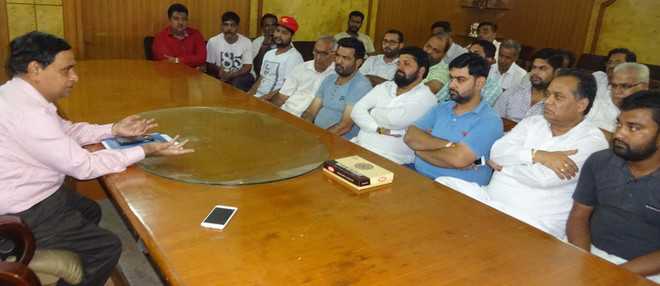
Assistant Commissioner (Food) Ravinder Garg addresses a meeting of food service entrepreneurs at Ahmedgarh.
Mandi Ahmedgarh, Sept 29
Office-bearers and activists of various organisations of food industry and service entrepreneurs vowed to maintain standards of purity and quality of food items, besides maintaining hygienic environment on their premises.
An oath was taken in response to call made by officials of the Food Safety Department led by Assistant Commissioner (Food) Ravinder Garg during a meeting held at MGMN Senior Secondary School here.
Milk and milk product dealers, besides sweetmeat manufacturers led by Vijay Kumar Kakria, councillors Bimal Sharma and Bhojraj Sharma reiterated their earlier stand to support the Tandarusat Punjab Mission by following and implementing guidelines of the Food Safety Department issued from time to time.
Comprehending that ill profits made by adopting unlawful activities were dissipated uselessly, the entrepreneurs acknowledged that only genuine growth and development could be spontaneous and perpetual.
Earlier, officials led by Garg visited workshops of hotels, dhabas, sweet manufacturers and catering contractors to ensure if guidelines issued by the Food Safety and Standards Authority of India were being implemented in letter and spirit.
Garg illustrated modalities about mandatory obtaining of a license or get registration under the Food Safety Act. He also highlighted the guidelines of the Act and exhorted all concerned to follow these guidelines in case they wanted to avoid action, including heavy fine and punishment.
Garg updated the participants on the methods of checking adulteration in various food products, including milk, ghee, paneer and khoya.
Sep 29, 2018


Mumbai: FDA seizes adulterated milk in raids
The state's Food and Drugs Administration (FDA) department raided two milk selling places after getting a tip of milk adulteration in Santacruz East.
The inspection was done on September 26 by the food inspectors.
During the inspection, the FDA authority got milk packets of branded companies like Amul, Mahananda, Govardhan which were found adulterated. According to the officials, the milk packets were found tampered with. Good quality milk from the packet was thrown away and adulterated milk was filled in the branded milk packets.
Shailesh Adhav, Joint Commissioner Food, Mumbai, said, "We have taken samples from two different places in Santacruz. Four samples from the collected milk packets have been given for further testing at the laboratory. Milk packets worth Rs 44,982 have been sealed by our officials because the packets were found to have been tampered with."
A total of 1,071 litres of milk was found adulterated. Besides the milk, the food inspectors also sealed 6600 empty packets of Amul brand from both the places where the raid was conducted.
"Four people have been arrested by the Mumbai Police in this matter under the Food Safety and Standards Act 2006. We will be taking strict action in the milk adulteration incident as well as surprise inspection will be conducted across the city," added Shailesh Adhav.
While purchasing milk packets consumers can look at different parameters to check the milk pouch.
The parameters are: The milk should be cold/room temperature, stitches should be zigzag and sealed, four corners should be pointing outwards, name and address of the manufacturer should be mentioned, net quantity should be written, MRP must be visible, type of milk must be mentioned on the packet, expiry date must be mentioned, FSSAI license number must be written on the packet.
Sale of misbranded food items goes unnoticed in Kashmir

At a time when rampant sale of adulterated food items in the retail markets in Kashmir is proving to be a serious health concern, misbranded packaged “traditional” Kashmiri food products, including spices, tea and edible oils are being openly sold in valley markets.
As per Food Safety Standards Act, 2006 “misbranded food means an article or food if it is purported, or is represented to be, or is being offered or promoted for sale with false, misleading or deceptive claims either upon the label of the package or sold by a name which belongs to another firm”.
Commissioner, Food Safety, Abdul Kabir Dar said Drug and Food Control Organisation admitted that there is a wide-spread presence of misbranded traditional packaged Kashmiri food products such as nun chai, spices and edible oils in Kashmir. However, Dar said with a “limited manpower” it is not possible for his DFCO to keep a check on "each and every violator" whose sale of misbranded products goes unnoticed.
“Although there are scores of such cases of misbranding but many of them are still operating slyly but we seek public support to bust these unethical firms,” Dar said.
Greater Kashmir accessed latest laboratory test reports (copies of which are in possession of GK) pertaining to certain declared cases of misbranding with the DFCO. A leading spice company produced sample picked up by DFCO officials was "declared as misbranded" by the department last month.
“The sample does not fulfil label specifications as date of packing and best before is not provided on the label of sample which is in the contravention of Food Safety Act (packaging and labelling) and hence declared misbranded," stated the lab test report.
In view of frequent cases of misbranding and adulteration, DFCO recently issued an order asking all food business operators (FBOs) to register themselves with the department. Dar said misbranding "is a widespread menace" and to keep a check on it all sorts of FBOs have been told to register, he added.
“We have also recently sent some samples of wari masala and nun chai for testing as well. In recent past nun chai brands have been selling sub-standrad tea in Valley” Dar added.
Another recent DFCO lab test report reveals that samples of nutri under label Araph Nutri were last month "declared as misbranded" by the department.
“The sample is not in contravention of the Food Safety Standards Act, Rules and Regulations 2011. Samples don’t fulfil labelling specifications as best before is given in small letters. Hence sample is declared misbranded,” reads a laboratory test report of DFCO.
Another lab report accessed of a misbranded product was that of “Snowber Premium Bread”. The report stated that “sample does not confirm the labelling provisions as the use by date is not given on label hence declared as misbranded,”
DFCO had recently seized 4000 litres of adulterated cooking oil during a raid at Al Noor Colony, Hyderpora which was being “repacked as misbranded product”. He said surprise checks will continue in the markets adding that "people must inform the DFCO if they come across misbranded products"
Food safety experts also point-out that several cases of “misbranding” of mustard oil, which has been traditionally used for Kashmiri dishes including wazwan, is taking place in Kashmir’s retail markets.
“There are many dubious practices that are used to manufacture low pungency or low smoke mustard oil. The most common among these is to mix cheaper refined oil or oils with mustard oil. The pungency drops and the oil is no longer 100 percent natural because the refining process involves chemicals, some of which are extremely detrimental to your health,” said a food expert wishing anonymity.
Sep 28, 2018
Licence does not ensure food is safe for consumption: Ashwin Bhadri

An end-to-end solution for food, water and air quality testing / auditing in the country, Equinox Labs is a Food Safety And Standards Authority of India (FSSAI) notified laboratory. It also has accreditation from the National Accreditation Board for Testing and Calibration Laboratories (NABL) and is among the first few private Food Safety Training And Certification (FoSTaC) partners in the country. Ashwin Bhadri, chief executive officer, Equinox Labs, in conversation with Ashish K Tiwari, speaks about the delisting of food business outlets from various online food delivery platforms, the purpose it serves in the area of promoting food safety and hygiene. Edited excerpts...
What's your take on the recent uproar on food safety and hygiene issues with large and small food service businesses in the country?
The situation is not as bad as it looks like. There have been a few instances of videos going viral on social media platforms but those are just a handful of fly-by-night food service businesses bringing a bad name to the industry. It's like if there have been few instances of Ola or Uber cab drivers misbehaving or being unprofessional doesn't mean people should stop using their services. It can't be a one represents all scenario. There is no denying that there have been instances of food safety and hygiene issues and whether online platforms are involved or not, it is a concern and a critical aspect for every (food industry) player irrespective of the size.
What stops food business operators from following safety and hygiene practices?
There appears to be a perception that following food safety norms is expensive, it is not. There is a lack of awareness and knowledge gap among food business owners. I have been in the food safety domain for 13 years now and have trained over 45,000 people. From what I have witnessed, it's not that a food business owner / handler deliberately wants to cause food poisoning. The issue is that no one has taught the food handler the dos and don'ts of doing it right.
The FSSAI has a training programme for creating awareness on that front.
FoSTaC is a great initiative by FSSAI where they have now made it mandatory that at least one person in 25 needs to get trained and s/he can then train the remaining. That's the onus being passed on to the food safety supervisor. That's a programme if it actually gets to the root wherein 80% to 90% of the people in the food service business are trained, it will have a much bigger impact on food safety and hygiene practices across the industry.
The main challenge however, is with food businesses in the lower strata where one person managing the entire operations and makes Rs 200 to 300 a day, the person doesn't have enough time on hand to ensure food safety and hygiene standards because s/he is short on staff. You can't blame such players because s/he is struggling for her/ his livelihood and cannot afford additional resources to support the business. But as you go up the food chain wherein people are a more responsible and have the resources they need to take it very seriously and should invest in educating their employees on the dos and don'ts of food safety and hygiene standards. That's where the FoSTaC programme plays a very crucial role.
Does having a licence or a certification ensure dispensing of safe food?
Just because someone has a license it doesn't mean the food being dispensed is safe for consumption and vice-versa. Many people confuse safety for license/ documentary compliance. Delay in procuring a license is an issue faced largely by the newer restaurants. The business owner has invested significantly in setting up a modern kitchen and waiting for the authorities to audit and issue a license. The regulatory delays sometimes compels the business owner to start operations as license and related certifications are already work-in-progress. So, just because they don't have a license it doesn't mean s/he is dispensing unsafe/ unhygienic food.
The FSSAI has asked food delivery platforms to delist non-registered food business operators.
Delisting the FBOs is a good move but it will have some repercussions on the online food delivery platforms. That's because almost 50% of the paying food service operators will go out of system and that's certainly going to impact revenues. While due procedure is being followed for listing new FBOs, it will take time to get all the details from the existing ones who are now being delisted for lack of necessary documents/ certifications. Food delivery platforms are proactively working on finding a solution to the current challenge in the market. Initiatives include setting up a helpline, asking food service businesses to submit licences, assisting those who do not have one and so on. A lot of good work is happening in this space but it will take some time to streamline it all. While everyone is working on meeting the deadline set by FSSAI it may be a challenge to achieve it in such a short span.
What are the possibilities of FSSAI license and registration becoming mandatory irrespective if whether one is selling from food delivery platforms or not?
Food businesses license is mandatory for any outfit to function but that's not the case with the FSSAI certification, which is generally issued by third-party auditing agencies on behalf or in lieu of FSSAI. It's not mandatory at present but is very likely to become mandatory in the coming years. It cannot be done overnight because there isn't enough bandwidth to implement the same. Even FoSTaC was started as a voluntary programme two years ago and now it has been made mandatory.
Efforts are also being made to promote self vigilance through food safety display boards that tell the customer 10 things to expect (from the food handler at the outlet) in terms of food safety and hygiene. If there is a discrepancy the consumer can bring that to the notice of the food safety officer by calling or sending a visual on the contact details provided on the display board. This was voluntary earlier but is gradually being made mandatory across food catering businesses. The idea behind making it mandatory to have a FSSAI license/ registration number for a food business outlet is basically for quick and efficient traceability. For instance, if there is any issue with food being delivered from an FBO registered with one of the online food delivery platforms, it will become easy to track/ trace that FBOs through the FSSAI number. So there will be a central helpline as well as a local branch number to call and complaint. If there is no satisfactory resolution at the local level then the consumer can esclate it to FSSAI on the central number.
Won't it make doing business more challenging for food businesses?
The compliance requirements may appear to be blocks / hurdles initially but what's been done through all this is that the entire food business value chain is being brought into the FSSAI system. It definitely increases problems for the food business owners one way or the other. The FBOs will have no option but to quote their FSSAI registration number to be able to do business on any of the e-commerce / food delivery platforms. Not only that, it may also happen at a later stage that major suppliers will not be able sell to FBOs that do not have a FSSAI registration number. So whether one likes it or not, every FBO owner will be forced to come under the FSSAI system. Very much like what's being done through the goods and services tax (GST) number. While GST was rolled out much quicker, FSSAI will take it slow.
Hell’s kitchen
When a 1,000-seater restaurant at Ikea’s Hyderabad store, the Swedish retailer’s first India outlet that was launched early August with much fanfare, served a ‘worm’ in vegetarian biryani, social media went berserk. The much-affordable and do-it-yourself furniture range from the home solutions major weren’t discussed so much in detail, but the dead worm ‘crawled’ its way across India to incite hot debates on the pitiable safety standards in the country’s fast-growing food industry.
As per news reports, Nagpur-based Haldiram was the vegetable biryani supplier to the Hyderabad store. Of course, the incident drew so much ire that Ikea had to stop serving two items – vegetarian biryani and samosa at its restaurant. The retailer initiated an internal review to undertake “corrective actions” before they plan to reintroduce the items at a later stage.
Recent cases where foreign objects – lizards to be precise – were present in vada served at outlets in Ambernath and Badlapur, two extended suburbs of Thane in Maharashtra, sent a shock wave across the food industry. What is more appalling is that these incidents happened within the space of a month at two different outlets at nearby locations. The complete disregard for following the basic safety and hygiene practices has surely frightened customers.
The eateries have since been shut down and complaints have been filed against the outlet owners. However, the fact that such incidents continue to happen raises major concerns over food safety issues and practices associated with such eateries operating across the country.
Incidents of food contamination and adulteration in hotels, restaurants, snacking and fast food outlets are not new. Many such instances may have gone unreported or settled privately to avoid public outcry.
Change in the air
A lot of such instances have started making headlines in the last few years, thus building awareness among consumers. Additionally, it is also building pressure on the food business owners to adhere to the prescribed safety and hygiene norms. This is evident from the fact that the Food Safety and Standards Authority of India (FSSAI), which regulates over 28 lakh small, medium and big food businesses in the country, is handling around 10,000-12,000 complaints every month.
Occurrences of food contamination and adulteration in the organised/ branded food and beverage retailing businesses have a strong recall in the minds of the consumers. Shockingly though, the food safety and hygiene situations are much worse when it comes to the unorganised fast/snacking food eateries operating in every nook and corner. Since most instances never get addressed, owners of these food businesses don’t feel compelled to adopt basic safety and hygiene practices.
FSSAI is making efforts to put in place quality and hygiene standards for almost all food items to make them suitable for human consumption. But the enormous size of the industry poses a big challenge.
In a recent interaction with DNA Money, Pawan Agarwal, chief executive officer, FSSAI, had said there are over 3,000 food safety field offices under the state governments to carry out inspections and compliance. “Recently, we have got an additional close to 500 positions under FSSAI to help us in better enforcement. Next, we are going to build capacities of food businesses so that they can ensure safety by themselves.”
“We have started Food Safety, Training and Certification (FoSTaC) system. Under this, all food businesses need to have at least one person trained and certified as per our standards. Around 40,000 people, out of a total of 3.5 lakh, have been trained so far under this programme. The focus is largely on restaurants, hotel segment, manufacturing and processing units,” added Agarwal.
Food delivery under scrutiny
In July 2018, FSSAI issued a directive to food delivery platforms like Zomato, Swiggy, UberEats, Box8, Faasos, FoodCloud, Foodmongo, Foodpanda, JusFood and LimeTray to delist unregistered food business operations on their platform. The diktat was issued after complaints/video evidence posted on social networks by consumers about unhygienic operations and sub-standard food being delivered by certain food business operations (FBOs). In fact, earlier this month, the online food delivery platforms began the process of delisting thousands of FBOs that did not comply with FSSAI’s hygiene requirements.
The FSSAI move is expected to see a significant churn in listings of food delivery platforms due to non-compliance of FBOs. While food delivery platforms are pushing the FBOs for listing, industry experts are of the view that a lot of the secret kitchen and sweatshop operations may not re-list on the platforms. This is mainly because such FBOs operate from desolate locations and do not invest in state-of-the-art kitchens, skilled/trained manpower and premises that conform to the basic food safety and hygiene standards.
“What percentage of the delisted FBOs will come back on the food delivery platforms is an area of concern. That’s because secret kitchens and sweatshops operate on a shoestring budget, it is unclear if every FBO would want to go through the hassles of incurring costs on dealing with a food safety officer, or for that matter, conforming to FSSAI guidelines. The delisted FBOs could go back to conducting business sans online food delivery platforms,” said a top industry executive.
Challenges galore
Although a system is being put in place by the regulator, it can’t pick up every sample as the entire ecosystem is very large and that many of these practices will take years to get embedded, he said.
While it’s mandatory for the organised and branded players to follow the standards/criteria being set by the FSSAI, the same is not true for their counterparts.
According to Ravi Wazir, a food and restaurant industry consultant, food safety and hygiene cannot be organised versus unorganised player topic. “It needs to be practised consciously by every single food and beverage operator regardless of whether s/he runs a sophisticated restaurant, a mid-level delivery kitchen or for that matter a simple snack-food cart on the street. After all, what use is the tastiest food if it isn’t safe to eat?” he said.
Consumers have been very particular about contamination and adulteration at branded outlets because they are paying a premium and expect high standards of safety and hygiene levels to be followed. While a few years ago, the roadside or neighbouring snack food vendor was able to get away with unsafe and unhygienic practices, that’s not the case anymore as consumers are becoming more aware and not shying away from reporting such incidents to municipal authorities and FSSAI for taking necessary disciplinary actions.
Industry experts believe that eateries flaunting regulatory permissions and/or FSSAI certifications are not necessarily a sign that all safety and hygiene rules are being followed. “Food safety works best when a business owner sees it as his moral obligation to society rather than merely another legal requirement to comply with. Those who think that the cost of initiating and maintaining food safety standards is high will soon realise that the cost of not doing so is considerably higher. One incident can badly damage the brand’s reputation, sales and relationships and at times, even result in the business shutting down,” said Wazir.
What can be done to make food safety and hygiene practices a top priority in every food business owner’s mind? FSSAI’s Agarwal outlines, first and foremost, greater public awareness around food safety is vital. “Second, training is required to build capacities around food safety in food businesses. Third is to have more effective enforcement. Since we have a large number of businesses to regulate and have a small staff, we expect businesses to ensure food safety by themselves.”
The FSSAI is also moving towards making regulations and their enforcement more effective through large-scale surveillance and monitoring activities. “As far as the law is concerned, it does not make any distinction between branded or non-branded players. The whole effort on building capacity in the food business is around making businesses more responsible from the food safety angle so that unintentional incidents of food safety while manufacturing, transportation or storage could be avoided,” Agarwal added.
SERVICE INTERRUPTED
In July, FSSAI issued a directive to platforms like Zomato, Swiggy, UberEats, Box8, Faasos, FoodCloud, Foodpanda to delist unregistered food business operations on their platform
The diktat was issued after complaints/video evidence posted on social networks about unhygienic operations and sub-standard food being delivered by certain food business operations
FSSAI’S HYGIENE RULE CODES
Keep premises clean and have regular pest control
Use potable water for food preparation
Cook food thoroughly
Store veg and non-veg food, raw and cooked food in separate containers
Keep hot food above 60 degree celsius, cold food below 5 degree celsius and frozen foods at or below -18 degree celsius
Use separate chopping boards, knives, etc, for raw cooked and veg/ non-veg food
Wear clean clothes/ uniform
Wash hand before and after handling food and after using toilets, coughing, sneezing, etc
Use water proof bandage to cover cuts or burn woods
Do not handle food when unwell
Keep separate and covered dustbins for food waste
PIPING HOT
28 lakh Small, medium and big food businesses regulated by FSSAI in the country
40,000 People trained under Food Safety, Training and Certification system
10,000-12,000 complaints FSSAI handling every month
Globally, food control systems in advanced nations have much more staff and resources.
The United States has a staff of 14,200 in its two agencies, the USDA and FDA to look after food safety.
Canada has over 4,000 staff in its food safety inspection services.
Given the size of the country’s population, the geographical spread, diversity and the widespread prevalence of food businesses in the unorganised sector, India’s 824 posts in the country food safety authority is very low.


FDA ‘courts’ wrong: FSSAI

Acting on complaint from licensees, authority CEO advises state FDA against elevated desks for joint commissioners
The chief executive officer of the Food Safety and Standards Authority of India (FSSAI) has instructed the state Food and Drug Administration (FDA) to remove its court-like set-up stating that this is wrong. The All Food and Drug Licence Holders Association (AFDLHA) had written to the FSSAI and the state commissioner of FDA claiming that the court-like setup in FDA offices is unethical and misleading. The AFDLHA had also claimed that even the joint commissioners of the FDA, who conduct hearings in these court-like set-ups are not empowered to do so according to the Food Safety Standards Act, 2006. The FSSAI ruling comes even as the state FDA commissioner is yet to look into the complaint.
AFDLHA president Abhay Pandey had written to the state FDA commissioner and FSSAI claiming that the arrangement of ‘court’ rooms in Pune, Thane, Nagpur and Nashik. Pandey stated that FDA joint commissioners have made its sitting arrangements like judges in courts with desks three to four feet above the ground with separate sitting arrangements for visitors at a level lower than the joint commissioner’s elevated position. He argued that this is misleading and is disrespectful behaviour towards the Indian judicial system.
Speaking on behalf of the AFDLHA, Pandey said, “This arrangement is only visible in the Maharashtra state FDA offices and there is no similar precedent in other states. The Food Safety Standards Act, 2006, states that when samples of food items are found suspicious during investigation and proved by lab reports, a case has to be filed against persons or institutes found guilty. As per the rule, the case has to be heard by the adjudicating officer who then penalises the culprit according to the case.”
Pandey added, “It is clearly stated in the 2006 Act that the adjudicating officer cannot be below the rank of additional district magistrate. The Maharashtra FDA conducts investigation of cases and notification is issued by the joint commissioners as they are adjudicating officers with a pay scale at par with additional district judges. “The director of FSSAI, who is the implementing officer of the Act had also clearly stated in a letter, ‘It should not be mistaken that a state government officer with a pay scale on a par with the ADM can be notified as adjudicating officer’, This letter had been written by SS Ghonkrokta, former director of FSSAI, to the state government in June 2011.”
Pawan Kumar Agarwal, chief executive officer, FSSAI, said, “We have discussed the issue and we are agreed that the arrangement is not right. We have discussed with the Maharashtra state government and also instructed them that the arrangements need to be reviewed. The discussion happened during a recent meeting involving all food safety commissioners of all states. We have also told them that there was a similar arrangement in the Gujarat FDA but they have changed it now. We have advised the Maharashtra FDA to change it also. The state FDA is examining our suggestion and we are sure they will change it.”
Pallavi Darade, state FDA commissioner said, “I am unaware of the issue and am yet to look into the complaint we received and the suggestion from the association. I am yet to go through the complaint. I cannot comment on this till I do so.”
Workshop on food safety to be held
Dehradun: Days after the Food Safety and Standards Authority of India (FSSAI) asked restaurants to put up food safety display boards on their premises by October 15, the food safety cell of Uttarakhand will organise a workshop on the need to display safety boards and general hygiene and sanitary requirements in restaurants.
Food Safety Display Boards mention food safety and hygiene practices to be followed. Ganesh Kandwal, designated officer (food safety), Dehradun district, said, “The food safety cell of Uttarakhand will conduct a hand-holding workshop with the businessmen concerned on the need and importance of displaying safety boards and general hygiene and sanitary requirements in restaurants. We had already sent a communication to them in May but it got a lukewarm response.”
The FSSAI guidelines were issued earlier this year but were not being complied with. Failing to follow the guidelines will result in the cancellation of licences, the FSSAI has warned.


Subscribe to:
Posts (Atom)