
Jul 8, 2018


Rumours of formalin in fish hits trade

Checks Show Fish Safe, Say Officials
Chennai:
Rumours that fish sent from Tamil Nadu to Kerala was laced with formalin has affected the trade in the state, particularly in Chennai. With aban on fishing along the west coast in place, fishermen in places like Kasimedu in Chennai had been sending most of the catch to Kerala and other places. The quantum of the loss is yet to be ascertained.
In order to assuage buyers, officials of the fisheries department and the Food Safety and Standards Authority of India (FSSAI) conducted thorough checks at the fishing harbor and fish markets and found, apart from finding decayed fish in a couple of places, none laced with formalin. Search teams used a kit developed by Tamil Nadu Dr J Jayalithaa Fisheries University.
FSSAI officials said they were working with the fisheries department on the issue and that fish samples were collected and tested in Tuticorin and Kanyakumari districts.
The fishermen, however, do not seem satisfied. South Indian Fishermen Welfare Association president K Bharathi said the government instead of just conducting checks should also spread awareness among people. “The fish that had formalin traces were sent from Andhra Pradesh to Kerala and not from Tamil Nadu,” he added.
Fishermen in the state had begun getting a good catch very recently after the ban ended but have again been hit by the rumours, he said. Tuna from Tamil Nadu was one of the most sought after in Kerala and used to fetch up to ₹120 per kg. Now, traders in Kerala have rejected it.
“There are no takers even after the price was reduced,” he said.
Prof develops kit to check fish quality
Chennai:
A kit developed by Jeyashakila, a professor at Tamil Nadu Dr J Jayalalithaa Fisheries University in Tuticorin, has come in handy to check quality of fish, especially to see if it is laced with formalin.
Jeyashakila, who is also the head of the Referal Laboratory at the university, said a sample of the fish skin has to be put in a vial with a diluent. A chemical is added to the mixture which reacts if formalin is present in it. If the mixture turns fluorescent yellow, it is positive. If the sample remains colourless, it is negative. The test takes about five minutes to check for the presence of formalin. Using one kit, 25 samples can be tested, she added
How India is planning to fight lifestyle diseases

The FSSAI is flagging off its nationwide 'Eat Right' initiative on July 10 to promote healthy living.
In the early 1990s, when I used to be a health writer, Dr K Srinath Reddy, one of the country’s foremost public health advocates, used to lament the absence of any concern for "lifestyle diseases", especially those that are diet related and hence reversible, in the public sphere.
He would refer wistfully to the Danish model of reducing the burden of cardio-vascular diseases by rigorously introducing food labelling, cutting down salt intake at the population level, and introducing safe and nutritious food in schools.
Policy discussions in those days were still dominated by contagious diseases, from malaria to the new "pandemic" (as it was then described by a number of vested interest) of AIDS, and barring few people, such as Dr Reddy and the eminent late nutritionist, Dr Vulimiri Ramalingaswamy, no one really cared to underline the potential dangers of the new diets (now covered by the umbrella acronym HFSS, or High Fat, Salt and Sugar) that were being introduced into the country by fast food multinationals, cola giants and purveyors of breakfast cereals.
In the last 25 years, what were once lone voices of public intellectuals — such as Dr Reddy, Dr Vandana Shiva, alter-globalisation crusader and founder of Navdanya, and the director-general of the Centre for Science and Environment (CSE), Dr Sunita Narain — now got amplified into a chorus for change.
Informed Indians, influenced by the western debate on the subject sparked off by Fast Food Nation, the turn-of-the-millennium book by Eric Schlosser, started speaking up and acting against junk food, sugar-laden colas and breakfast cereals, genetically modified food, chemically altered "low fat" food, and "high-yielding agriculture" propelled by an overload of potentially life-threatening chemicals and fertilisers.
Multiple factors have ensured that food will finally find its place at the centre of the national health policy debate — and it will cease to be the sole concern of doctors, nutritionists and your friendly neighbourhood dietician.
The Food Safety & Standards Authority of India (FSSAI) has issued a new set of progressive Draft Food Safety and Standards (Display and Labelling) Regulations, which have already triggered nationwide discussions on making it mandatory for sugar and added sugar to be mentioned specifically on product labels, for nutrition labels to be attached to junk food delivery boxes, and for film and sport celebrities to stay away from promoting colas.
The food regulator is also getting new, and realistic, standards in place for the certification of organic foodstuff, and it is all set to flag off its nationwide “Eat Right” initiative on July 10.
One of the pillars of the movement, which for the first time will also cover food served at holy places and on the Indian Railways, will be the implementation of the national goal of freeing India from the scourge of “transfats” (the real artery blockers, such as margarine and vegetable oil, or vanaspati, in packaged and fast foods) by 2022.
This movement can only gather momentum because of international initiatives such as the recently published, action-orientated "Solutions Menu" of the Nordic Council, or the SDG2 Advocacy Hub’s efforts to get chefs around the world aligned to sustainability issues, or the 20-member Lancet Commission’s monumental work on healthy and sustainable diets (look out for its report on India).
Getting a country such as India to "Eat Right" is not easy. No regulatory mechanism can be strong enough for a country where, as I learnt the other day, big food operators sell their used oil to small restaurants and street vendors for a profit! Unless all of us view "Eat Right" as more than just another slogan, but a call for national action, we’ll all continue to wallow in the sea of lifestyle diseases.
From what we eat to the air we breathe — cancer is everywhere
Sonali Bendre recently revealed that she has been diagnosed with a high-grade cancer that has metastasised. With this news, the actor falls in the category of other celebrities, such as Manisha Koirala, Lisa Ray and, more recently, Irrfan Khan, who were also diagnosed with different types of the disease. What’s worrying is the fact they were all leading healthy lives before being diagnosed with cancer. So, are lifestyle choices really to blame?
WATCH WHAT YOU CONSUME
Despite awareness, cancer continues to claim lives at an alarming rate. The government-run Kidwai Institute of Oncology alone witnesses some 1,000 patients every day from across the state. The patient pool doesn’t just consist of smokers. Experts, therefore, stress on the need for awareness and stricter regulations on food and packaging. “The common man is ignorant about the chemicals and pesticides that are pumped into the food we consume — with everything from bread to milk,” says Dr Vishal Rao, a head and neck oncologist.
Pesticides, preservatives and wasted calories seem to be the trends of new Indian recipes. Oncologist Dr BS Ajai Kumar says, “Urban Indians are yet to understand the serious implications of eating outside and how lifestyle changes can cause cancer. Unfortunately, because of our dietary habits, having canned and frozen food alters our body’s epigenetics (heritable changes in gene function that do not involve changes in the DNA sequence). The amount of pesticides and herbicides used is unnatural. Breast, ovarian and colon cancer has increased drastically because of this demographic shift. The middle-class is now into junk food and the repercussions are not good.”
BREATHING IN DANGER
The rampant burning of garbage across the city and the exhaust from vehicles is more than just an eyesore. Doctors warn that another reason why there has been a spike in the number of cancer cases is the toxins that we all invariably breathe in. “Not just food safety and regulations, another area that needs to be looked at is the amount of pollution in the air that we all breathe. Sadly, there’s no check and regulation on garbage burning, vehicular smoke, the burning of dry wood and industrial pollution,” says Dr Vishal.
THE HEAVY PRICE OF BEAUTY
A study done by Centre for Science and Environment (CSE) found that 73 cosmetic products of four different categories were tested for heavy metals. Of this, 32 fairness creams (26 for women and six for men) were found to have mercury. Additionally, 30 lipsticks, eight lip balms and three anti-aging creams (samples included Indian and international cosmetic brands, along with a few herbal products) were found to contain lead, cadmium, chromium and nickel.
Causes
- Increasing obesity
- Lifestyle-related changes
- Alcohol consumption, which has increased three fold between 2000 and 2014
- Delayed childbirth and reduced breastfeeding
- Chemicals consumed through water and food
- Pollution, stress, lack of exercise
Dead lizard in midday meal makes two ill
NEW DELHI: Two girls aged 11 and 14, respectively were hospitalised after eating midday meal at their school in east Delhi’s Kalyanpuri on Saturday morning. A dead lizard was found in it during investigation.
Confirming the incident, DCP (east) Pankaj Kumar Singh said a case has been registered against the vendor under IPC section of endangering life or personal safety of others.
The incident happened after lunch when the girls started vomiting. They were taken to a nearby hospital and are currently stable. During inspection by the school staff, a dead lizard was found in the vessel in which the food packets were brought in. Subsequently, the principal filed a complaint with the police and the case was registered against the vendor. Police have sent the utensils for further investigation as well.
Deputy chief minister Manish Sisodia later visited the school after hearing about the incident and talked to the children. The food vendor’s contract has been suspended till the investigations are completed. The Delhi Commission for Protection of Child Rights has also received a complaint about the incident and has launched an investigation into it.
Jul 7, 2018


Manufactuerers, suppliers under food safety department radar
The food safety department has been on an overdrive of late. The department has raided shops, manufacturing units and bakeries for the past two months, determined to ensure that food consumed in the district is safe. They have conducted at least 40 raids since May, which is almost a five-fold increase compared to the usual frequency of raids.
On Friday, along with the fisheries department, the food safety department raided 110 fish stalls in the Ukkadam fish market.
They say that continuous raids are for establishments to understand that they are constantly being watched. The raids are also conducted to zero in on suppliers and distributors of adulterated and banned products. Traders associations however say that food safety officials do not understand the ground reality when conducting raids and are having a field day collecting bribes.
The food safety department in the district has been going on a raid almost every day cracking down on establishments across the board, including petty shops, street vendors, godowns, manufacturing units and restaurants. In June, officials have seized 1.3 tonnes of banned tobacco products, 25 tonnes of mislabeled oil, 400 litres of expired soft drinks, low grade plastic bags and spoons and adulterated chilli chicken masala powders.
However, officials say that crackdowns will continue till they find the main manufacturers, suppliers and distributors of the above products. “When we confiscate these products from shops, we only find small quantities. The seizure does not affect them because they will get a new supply the next day,” says designated food safety officer, Dr Vijayalalithambigai.
“We want to raid and keep a watch on shops continuously so that we can find their supplier and through them their distributor,” she says. “This is especially important in cases of gutkha, haans, adulterated tea and mangoes,” she adds.
“Hitting the major distributors and their godowns will stop the products from being present in several shops,” she says.
Twenty days after 15 tonnes of fish laced with formalin were seized, officials raided all the shops in the Ukkadam fish market. They found none of the shops using any chemical preservatives. They also instructed shops to start using banana leaves to wrap and sell their fish instead of plastic covers and use mosquito nets to guard their shops and fish from houseflies.
Traders welcome the food safety department’s move to crackdown on adulterated tea, adulterated oil, misbranded oil or even expired products, but say issuing notices and levying fines to small shops and bakeries based on laws in the food safety and standards act was not practical. “Practically, we cannot do business as per the laws in the FSSAI Act. I doubt even government officials have read all the 1,000 odd pages of the act, so how can a small bakery owner have read it,” asks president of the Tamil Nadu Vyabarigal Sangam, Vikrama Raja.
“They want products to be cooled and frozen at -20 degrees celsius, which is not available with most small vendors. They want only a specific type of knife to be used to cut onions and water used by bakeries even for wetting their dough to be boiled and free of any form of contamination. We use corporation drinking water, so the department should speak to the corporation to improve their water quality instead of targeting bakeries. Small vendors can’t afford to use mineral water for every small process in baking,” he said.
“While raids to catch “unlawful” practices are good, they become an excuse and a route for other inspectors to collect bribes from vendors,” he said.
Food safety department to set norms for manufacturing edible ice

THIRUVANANTHAPURAM: The food safety department is gearing up to set norms for preparing edible ice at ice manufacturing units. This is being done after the food safety standards officials – who inspected ice manufacturing units in coastal areas – found that the ice manufactured for preserving fish and edible purposes were being made at same locations.
The inspection was conducted after suspicion arose that formalin (which is used to preserve fish) is being mixed with ice in some cases. “We are planning to ensure some standards in the industry. During inspections, we found that ice for various purposes were manufactured at the same location and there is high chance that the ice varieties will get mixed up,” said food safety commissioner M G Rajamanickam, adding that industrial preparation of edible ice warrants ISO standards.
The examination of ice samples was initiated as a follow-up action after large quantities of fish that was being brought to the state from neighbouring states were found to be preserved in formalin. In one of the cases, the formalin testing kit – supplied by Central Institute of Fisheries Technology (CIFT) – showed that a sample contained formalin. But, later it turned out to be negative when it was tested in a lab.
Rajamanickam said that this could have happened because the ice that was used in the market for preserving fish contained formalin. The usual practice is spraying it on the fish. Formalin is widely added as a preservative during transportation or storage of sea food due to its anti-microbial agent property. Repeated exposure to formalin can lead to cancer and other diseases in human beings.
In another case, an ice sample tested positive for ammonia said food safety officials. Exposure to high concentration of ammonia can cause burning sensation in eyes and respiratory tracts, resulting in blindness and lung damage. Food safety officials are now gearing up to examine fish samples by collecting them at fish landing centres along the coast.
No sale of FMCG products along with tobacco: Diktat will affect our livelihood, say shopkeepers
Notification aims to prevent kids and non-users from exposure to tobacco products
Retail association rallies against GR prohibiting sale of chips, candy, bread, soft drinks, etc at paan-beedi shops.
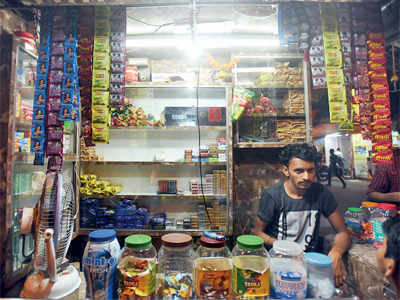
More than a thousand retail shopkeepers staged a protest on Thursday against a government notification restricting the sale of FMCG products alongside tobacco, lamenting the heavy dent in their livelihood the diktat will cause in an already reeling economy.
Even though the notification was issued by Food and Drugs Administration (FDA) commissioner Pallavi Darade on January 9, and is yet to be stringently implemented, the retailers are worried that the state, close on the heels of the recently-executed plastic ban, might suddenly decide to up the pressure on them.
According to the notification issued as per the provisions of the Food Safety and Standards Act, 2006, paan-beedi shops and tobacco retailers cannot sell consumer products like candy, chips, biscuits, soft drinks, bread, eggs, etc along with tobacco products. The move is aimed at preventing children and non-users from being exposed to the vice.
The Federation of Retailers Association of India (FRAI) and Mumbai Bidi Tambakhu Vyapari Sangh (MBTVS) is rallying against the rule saying that that it could severely impact the incomes of micro, small and medium retail shopkeepers across the state, even though most shopkeepers Mirror spoke to had not received any direct communication from the FDA or the government indicating that the ban has not been aggressively implemented.
Over 12 lakh retailers on edge
Shashank Rao, president, MBTVS, said, “Yes, the FDA hasn’t implemented it but that does not mean that they won’t implement it at all. We have been trying to convince the government that this will severely impact over 12 lakh retailers who rely on selling multiple products for their survival. The notification will also lead to potential harassment from the authorities.”
“Tobacco retailers in the state are already facing immense financial pressure due to extreme regulations on the tobacco industry especially on controls of advertising at the point of sale. Together these measures will increase their cost of doing business and result in an at least 40 per cent fall in their earnings,” Rao said.
Retailers say if the regulation must be implemented it should be done through a democratic, consultative process, and that they should be given time to diversify or change the nature of their business.
The notification also envisages heavy fines – Rs 5,000 for the first offence, and loss of retail licence is caught violating the norms for the third time.
Jul 6, 2018


In India, it’s time for mandatory front-of-package food labels

According to the Global Burden of Diseases Report 2017, cardio vascular disease kills 1.7 million Indians every year.
Front-of-package label designs, which are clear and impactful, play an important role in increasing awareness and shifting food-eating norms. At present, manufacturers are using varying formats of complicated nutrition labels that are not consumer friendly.
The science is absolutely clear on the fact that excessive consumption of food and beverages high in trans-fat, sodium, sugar and saturated fat is a leading cause of heart disease, stroke and premature death in India and around the world.
More Indians are losing their lives to cardiovascular diseases than ever. According to the Global Burden of Diseases Report 2017, cardio vascular disease kills 1.7 million Indians every year. And yet, eating habits are getting worse day by day, as we consume an increasing amount of processed and packaged foods. Not only have many of these products become less healthy over time, the sheer number of choices in stores have made it difficult and confusing us from selecting healthy food. Adding to the confusion, unhealthy products may feature misleading health and nutrition claims on their packages.
Food Safety and Standards Authority of India (FSSAI) has brought down the permissible level of trans-fats on oils from 10 per cent to 5 per cent in 2015 and further committed to decreasing the same to 2 per cent by 2022. Even the current permitted trans-fat level of 5 per cent is considered very high despite being reduced from 10 per cent in 2015. Trans-fats are leading cause of cardio vascular diseases (CVD), Alzheimer’s disease, obesity, infertility, cancers, diabetes, etc. The premature mortality (years of life lost because of CVD) in India increased to 37 million in 2010 from 23.2 million in 1990 (by 59 per cent).
Consumers have a right to know what’s in the food we eat and drink, so that we can make healthy choices.
India has an opportunity now to provide such help and in doing so join a growing list of countries that are taking decisive steps to enhance the understanding and use of nutrition information and warning labels on foods containing high amounts of trans-fat and saturated fat, which are commonly used in baked goods, fried foods and fatty snacks.
Globally there is a clear consensus against trans-fats and saturated fats in our diet; just last month, the World Health Organisation (WHO) unveiled tools for countries to eliminate industrially produced trans-fat from the global food supplies by 2023, as the industrially produced edible oil leads to over 10 million premature deaths every year.
FSSAI is in the process of updating rules governing the labelling of packaged foods. The regulator’s current proposal significantly improves what currently exists. For instance, it requires foods high in sodium, sugar and fat to carry front-of-package warning labels.
Research clearly shows that consumers prefer simple labels that are immediately visible and require little time to evaluate. Front-of-package warning labels fit that criterion. They provide consumers with clear guidance to make quick and impactful decisions about the food they eat.
Front-of-package label (FoPL) designs, which are clear and impactful, play an important role in increasing awareness and shifting food-eating norms. At present, manufacturers are using varying formats of complicated nutrition labels that are not consumer friendly.
Mandatory front-of-package warning labels are considered by governments around the globe as an effective and evidence-based way to improve diets. At least 16 FoPL systems are operating in 23 countries, with another 14 schemes proposed. Chile, Israel, Peru and Uruguay have successfully adopted mandatory front-of-package warning labels, which are clear and impactful in shifting food eating norms.
Chile’s approach to warning labels that is currently considered the gold standard among health and nutrition experts. Chile uses octagonal black labels, printed with the words “alto en” (high in), along with key nutritional factors for packaged foods. Preliminary evidence in Chile suggests that the labels have helped to increase consumer knowledge about healthy food choices and led to a significant decline in sugary beverage purchases.
CUTS International, leading consumer advocacy group in India, along with a group of distinguished international health experts and other premier health organisations of India are urging the FSSAI to introduce mandatory front-of-package warning labels on foods and beverages to curb the growing epidemic of heart disease and cardiovascular deaths.
While the move to bring in a regulation on labelling and display is very much appreciated, there are many issues and concerns related to the Draft Food Safety and Standards (Labelling & Display) Regulations 2018, which can be further improved. If done properly, this regulation could have a major, long-term impact both in encouraging industry reformulation and in changing food norms. However, as they currently stand, the draft regulation has major weaknesses and a few strengths.
The strengths are related to the provisions of nutrition facts panel with ingredients, but there is felt need that if possible, saturated fat should be added to the labels, as well as trans-fats, so that all the critical components of fat that impact consumer health most severely are displayed. Second, the cut-offs for sodium and total fat which are very good but it would be ideal if the proposal had created saturated fat instead of total fat cut-offs, but these are well-thought out and fit what other countries have done.
As far as weaknesses are concerned which need to be improved, these are related to serving sizes, guidelines for daily allowance (GDAs), replacing the total fats with saturated fats or do both on the nutrition facts panel, need for rigorous testing of front-of-package design, the colours selected, and the content and approach towards front-of-package warning label.
Done right, Indian food and beverage labels can have a similar effect. And yet, some food producers and manufacturers continue to push for confusing, voluntary labelling schemes that dozens of studies show do not improve our diets.
FSSAI should not take the bait, and instead make India a global leader in strong labelling rules that provide consumers with the information to make healthy food choices.
The writer is director, CUTS International, and a member of Central Advisory Committee of FSSAI
High Court seeks food safety commissioner’s response
KOCHI: The high court has asked the food safety commissioner to respond to a public interest litigation (PIL) alleging laxity in implementing food safety measures. A PIL filed by M S Ajithkumar of Kareepra near Kundara in Kollam is being considered by the court.
Citing the responsibility of Food Safety and Standards Authority of India (FSSAI) under Food Safety and Standards Act of 2006 to ensure availability of safe and wholesome food for human consumption, the petitioner argues that the measures adopted now are grossly inadequate.
“The number of food safety officers, food analysts and accredited laboratories are alarmingly insufficient …,” the PIL filed through advocate Manu Ramachandran stated.
Even after implementation of the Act, most of the food operations lay outside the licensing or registration regime. As per the Act, all food business operators are required to obtain registration from FSSAI. Health minister’s statement in the assembly that there are only two lakh outlets in Kerala is far from actual truth, the petitioner said.
When the government made vigorous efforts to make Kollam a ‘Safe Food District’, 50,000 food business operators came forward to take registration, the petitioner points out.
Businesses like roadside eateries, those with a turnover of more than Rs 50,000 per day and event management groups that serves food do not have licences. Kollam district has only 11 food safety officers and they can inspect only 6,912 outlets a year. Thus, more than 90% of the operators are not inspected, it is alleged.
Food poisoning: Sports dept turns a blind eye to intelligence report
Thiruvananthapuram: Even days after food safety commissioner M G Rajamanickam filed a report to sports director, recommending a police inquiry into recurring incidents of food poisoning at G V Raja Sports School, no action has been initiated so far.
This is despite the fact that intelligence wing of police pointed fingers at higher officials in the school over the food poisoning incident. The education department has transferred the school principal, head master and a teacher in connection with the incident.
For every student around Rs 200 is spent for food each day. The school has over 300 students, and the contract for mess amounts to around Rs 18 lakh per month. Sources said that there is strong lobbying for getting the contract and higher officials of the school and the sports department are involved in it.
Despite intelligence report alleging that repeated food poisoning incidents in the school could have seriously harmed the students, the sports department has no plans to go for a police inquiry into the issue. Sports director Sanjayan Kumar said that the department has terminated service of the contractor who was running the mess after department-level inquiry found that there was fault on his part. “Now we have constituted committees for daily, monthly and bi-monthly monitoring of mess. Steps have been initiated to invite a new contractor. Meanwhile, Kudumbashree has been given charge for running the mess,” he said.
However, when TOI asked why there is no probe into the repeated cases of food poisoning, there was no satisfactory reply. “Right now we have not taken any decision to recommend police inquiry. We may do if we feel that it is necessary,” said the sports director.
Sports secretary B Ashok said that the recommendations of the food safety commission were handed over to sports director for further action. Ashok said that he has not seen the intelligence report so far.
However, education department was quick to act on the intelligence report which raised allegations against school authorities. While higher education secretary transferred school principal C S Pradeep, directorate of public administrations transferred headmaster Jainraj S and a teacher.
DPI K V Mohankumar said that though the department is yet to access the intelligence report, it has taken the decision on transfers based on media reports. “We learnt from media reports that school authorities are involved in the incident. That is why headmaster and a teacher were transferred. Sports department is in charge of administrative matters and so it has to take further action,” he said.
Former principal C S Pradeep was unavailable for comments despite repeated attempts over phone.
Fish sellers question test report
Imphal: The All Manipur Fish and Egg Traders' Association (Amfeta) on Thursday demanded that the food safety department prove the authenticity of the presence of formalin in fish.
The department imposed a ban on import of fish preserved in ice from outside the state following complaints from various sections about presence of formalin on June 29.
It was banned after the department found presence of formalin in ice-packed fish.
The department continued to check formalin's presence by collecting some more fish samples from Imphal market.
Joint secretary of the association, A. Sashikumar, has sought clarification on how six samples were found to be formalin-positive out of 17 samples taken on July 2.
"From where, when and how were the samples taken?" he asked the food safety department.
Sashikumar added that the chief commissioner of land administration and special chief secretary of Andhra Pradesh, Anil Chandra Punetha, had clarified on Wednesday to Manipur's chief secretary Suresh Babu that formalin was not used as a preservative since it is hazardous to health.
Sashikumar said fish are imported from five companies of Andhra Pradesh. He, however, said he could not provide facts and data on the recent losses.
He added that normal consumption of 10,000 kg per day had reduced to 300-400 kg per day after the news broke about use of formalin.
Less ice-packed fish was seen selling in Imphal market on Thursday.
The traders said the food safety department has not intimated the traders directly.#There were only notifications in newspapers.
The department imposed a ban on import of fish preserved in ice from outside the state following complaints from various sections about presence of formalin on June 29.
It was banned after the department found presence of formalin in ice-packed fish.
The department continued to check formalin's presence by collecting some more fish samples from Imphal market.
Joint secretary of the association, A. Sashikumar, has sought clarification on how six samples were found to be formalin-positive out of 17 samples taken on July 2.
"From where, when and how were the samples taken?" he asked the food safety department.
Sashikumar added that the chief commissioner of land administration and special chief secretary of Andhra Pradesh, Anil Chandra Punetha, had clarified on Wednesday to Manipur's chief secretary Suresh Babu that formalin was not used as a preservative since it is hazardous to health.
Sashikumar said fish are imported from five companies of Andhra Pradesh. He, however, said he could not provide facts and data on the recent losses.
He added that normal consumption of 10,000 kg per day had reduced to 300-400 kg per day after the news broke about use of formalin.
Less ice-packed fish was seen selling in Imphal market on Thursday.
The traders said the food safety department has not intimated the traders directly.#There were only notifications in newspapers.
Jul 5, 2018


Do bars have food safety licences: HC
The Madras High Court on Wednesday expressed concern over the quality of eatables sold in bars attached to State-run liquor shops and directed the State government as well as the Tamil Nadu State Marketing Corporation (Tasmac) to submit by Friday a list of bars which had obtained licences under the Food Safety and Standards Act of 2006. A Division Bench of Justices N. Kirubakaran and V. Parthiban issued the direction while hearing a related case. The judges wanted the government to let the court know by when it would close down 500 liquor shops for the current year since the AIADMK had promised to shut shops in a phased manner.
Warehouse sealed for stocking banned tobacco products
Police arrest owner of the godown
The Selvapuram police have arrested owner of a godown at Ponnaiya Rajapuram which was sealed by the Food Safety and Standards Authority of India (FSSAI) on Monday after it had a stock of 1,500 kg banned tobacco products.
According to police, B. Ashok Kumar of Sukrawarpet was held for employing head loading workers to remove the stock from the warehouse in the intervening night of Tuesday and Wednesday.
A night patrol team of the police had found five persons standing in front of the godown. When enquired, the head load workers informed them that they were employed by Kumar to shift the tobacco products.
The police later traced the location of Kumar and arrested him.
The tobacco products seized and sealed in the warehouse are valued at Rs. 17 lakh according to FSSAI.
Rumours in Kerala on use of formaldehyde affects fish sales
Fisheries and food safety department officials have started conducting surprise raids at fishing harbours and fish markets in Kanyakumari district following rumours in neighbouring Kerala that fishes from the district are preserved using formaldehyde. This has badly affected trade in the busy Chinna Muttom fishing harbour in Kanyakumari district and affected the livelihood of fishermen and allied workers for the last one week.
Since the annual fishing ban is in effect in the western coast (parts of Kanyakumari district and whole of Kerala to Gujarat), Kerala primarily depends on fish from the Chinna Muttom fishing harbour for its requirement across the state. The fish brought to the harbour is transported to Kerala in trucks and containers.
Fishermen said that there are 264 trawlers from the port that are engaged in daily fishing. They start from the port at 5am and return to the shore with the catch between 9 and 10pm. Unlike other deep sea fishermen of Thoothoor region who go for deep sea fishing up to 50 days, covering a distance of 400 to 1,000 nautical miles, fishermen of Chinna Muttom do fishing between 20 and 30 nautical miles from the shore.
Some of the fish varieties like Mackerel Scad that was sold for Rs 2,000 (20 kg) is sold for a mere Rs 300 now. Fishermen claimed that they are suffering a loss of Rs 70,000 to Rs 1 lakh per boat everyday. To avert loss, fishermen from the region refrained to go for fishing last Friday and Saturday. It was during this time, the fisheries department intervened to put an end to the issue by checking the quality of fish.
On the directions of the director of fisheries, the department officials from Kanyakumari sought help from the Fisheries College and Research Institute in Tuticorin. “They prepared chemicals and gave us a kit with 25 strips that can be readily used to check if formaldehyde has been used. The strip turns yellow within 10 minutes if the preservative is used,” said I Wivin, a fisheries inspector at Chinna Muttom.
Late on Tuesday evening fisheries officials led by assistant director V Deepa and Wivin and officials from the food safety department conducted a surprise raid at the harbour. Officials checked samples of fish and ice used to store the fish with the strips and found the result was negative, proving that formaldehyde was not used. Officials plan to conduct such surprise tests in other harbours and fish markets in the district.
“Since the fishermen here are mostly engaged in one-day fishing they only use ice from the nearby factories. Ice can keep the fish intact and preserve it from decay for more than 10 days. At times fishermen use rock salt to prevent speedy melting of ice, but there is no need to use the harmful preservative. However, we are planning to check vans carrying fish to Kerala to check if they are illegally using formaldehyde,” Wivin added.
Food regulator for mandatory mention of exact blend of oils on packs
NEW DELHI: In a move to enable consumers to make an informed choice, the food safety regulator has proposed to make it mandatory for manufacturers of blended oils to mention the exact blend in percentage terms on the front of the pack along with other labelling modifications.
The proposal is part of the draft regulation notified by Food Safety and Standards Authority of India (FSSAI), which has suggested changes to the Food Safety and Standards (Packaging and Labelling) Regulations, 2011.
The food regulator also said that such oil packs must also carry declaration “Blended Edible Vegetable Oil” in a font size not less than 5mm and not less than 10 mm if the net quantity is more than 1 litre.
Besides, packages of such blended oil will also have to declare in bold “NOT TO BE SOLD LOOSE”.
The move comes in the wake of increasing vegetable oil consumption in India driven by economic growth and rising disposable income. According to a recent report by Rabo Bank, India's vegetable oil consumption is expected to grow by 3% annually to exceed 34 million tonnes by 2030.
"Increasing income, urbanisation, changing food habits and deeper penetration of processed foods will be key drivers of future consumption growth of edible oil in the country," Rabo Research report 'The Future of India's Edible Oil Industry: How Will India's Vegetable Oil Demand Shape Up by 2030' said.
Palm oil, soy oil and sunflower oil are expected to penetrate regional markets further in the future, with the packaged edible oil segment leading the way for future growth of the industry. In this context, the regulator feels it is essential for consumers to be aware of what they are purchasing and consuming.
The country's vegetable oil consumption was at 23 million tonnes in 2017.
Besides, the draft changes, FSSAI has also initiated discussions with the Indian Biodiesel Association for setting up an ecosystem for collection of used cooking oil and its conversion into biodiesel.
"Annually, about 23 million tonnes of cooking oil is consumed in India. There is potential to recover and use about 3 million tonnes of this for production of bio-diesel," FSSAI said. According to the regulator, this will have an estimated value of Rs 18,000 crore per year.
Repeated use of same oil or re-heating of oil also produces harmful trans-fat. While re-heating of the same oil is a common practice in Indian cooking, particularly for industrial or commercial purposes, FSSAI recently also notified norms effective from July 1 for food business operators to monitor the quality of oil during frying. The regulator has prescribed a limit for Total Polar Compounds (TPC), which is a reliable benchmark for measuring the degradation of the oil, to be maximum 25% - beyond which the cooking oil is not suitable for use.
Currently, used-cooking oil is either not discarded at all or disposed of in an environmentally hazardous manner, thereby, choking drains and sewerage systems.
Recently the World Health Organisation (WHO) also raised concerns about industrially produced trans-fats and said it is responsible for over 5 lakh deaths worldwide every year.
Watch out next time you spice up your dish
The C. verum tree and the dried bark (inset) used as a spice.
Toxic Chinese cinnamon flooding South Indian market raises food safety concern
The cinnamon you just bought from the local grocery to spice up your dish may not be what the doctor ordered. Chances are the cinnamon bark you picked up from the shelf is a toxic version of the spice imported from China and passed off as the original.
A study conducted by scientists at the Jawaharlal Nehru Tropical Botanic Garden and Research Institute (JNTBGRI) here has revealed that South Indian market is flooded with Chinese cinnamon (Cinnamomum cassia) containing high levels of coumarin, a hepatotoxic compound, raising food safety concerns.
While the authentic Cinnamomum verum cultivated in South India is a safe food additive with a market price about ₹1,000 a kg, the Chinese version is available for ₹180 to ₹200 per kg, making it an affordable option, albeit one with a health hazard for consumers.
The study conducted by K.B. Rameshkumar and R. Ananthakrishnan from the JNTBGRI found that the maximum coumarin content in authentic cinnamon (C. verum) collected from plantations in Kerala is 143 mg/kg while samples collected from various markets in South India contained up to 3,462 mg/ kg, indicating the widespread use of C. cassia as a substitute. The samples collected from the cinnamon estate established by the East India Company at Ancharakandy, Kannur, in 1767 had the lowest coumarin content of 12.3 mg/kg.
The study, using the latest liquid chromatography and mass spectrometry methods, was done with collaboration from the Central Drug Research Institute, Lucknow, and has been published in the International Journal of Food Properties.
Recently, Indian cinnamon and food products containing cinnamon were banned in European countries due to the high content of coumarin.
The Food Safety and Standards Authority of India has set the maximum permissible content of coumarin in food items at 0.3% while the European Food Safety Authority has established the tolerable daily intake of coumarin as 0.1 mg per kg of body weight. “C. cassia is remarkably similar to C. verum, making it virtually impossible for the consumer to distinguish the substitute from the original,” says Dr. Rameshkumar.
Director, JNTBGRI, R. Prakashkumar said the institute would take steps to popularise cinnamon plantations in the State.
Kerala Packaged Drinking Water Manufacturers Association claims that false campaigns have tarnished their image
Recently, there were reports the authorities had detected Coliform bacteria in the mineral water supplied by major manufacturers in Kerala.

KOCHI: The Kerala Packaged Drinking Water Manufacturers Association (KPDA) has claimed people with vested interests are running a false campaign against packaged water by saying they are infected with the Coliform bacteria. KPDA functionaries told reporters the other day they had lodged complaints against those levelling the false allegations against packaged water manufacturers. “We have approached the Food Safety Assistant Commissioner,” said KPDA president Rajeev Menon.
Recently, there were reports the authorities had detected Coliform bacteria in the mineral water supplied by major manufacturers in Kerala. However, Menon said false reports were being circulated against leading companies like Green Valley, Golden Valley, Blue Iris, Aqua Sair, Mount Mist, Bristol and Diplomat.
“The Food Safety Department did not detect any contamination or the presence of Coliform bacteria in the packaged water sold by the companies. The products are certified by the Food Safety Authority and BIS. False allegations are being propagated to topple down the industry,” Menon said.ISI is tasked with ensuring the quality of bottled potable water across the country. The companies engaged in manufacturing bottled water also have to follow guidelines laid by the Bureau of Indian Standards (BIS) and Food Safety and Standards Authority of India (FSSAI). “The mineral water bottles hit the market after undergoing 10 stages of purification. The quality of the water is checked daily at the laboratory installed at each manufacturing units. Similarly, the samples are also checked by government authorities in a fixed time-period,” he said.
Jacob Abraham, chief patron, KPDA, urged the government to save the state’s bottled water industry by identifying and punishing companies which are operating and selling water devoid of the ISI mark.
“As for the fake WhatsApp messages being spread against the sector, complaints have been filed before the DGP and the Cyber Cell,” said Abraham.
Meanwhile, former BIS director R C Mathew said the authorities would definitely make sure each bottle of potable water is subjected to proper purification which includes chlorination, sand filtration, purification, activated carbon filtration, de-chlorination, reverse osmosis, microfilter, ultraviolet rays and ozonisation, before it enters the market.”
Jul 4, 2018
New regulations for ‘used cooking oil’ come into effect
State Food Safety Commissioners have been advised to focus on awareness and education programmes, surveillance and enforcement activities for the new set of regulations
FSSAI in talks with industry to convert used-cooking oil into bio-diesel
NEW DELHI, JULY 2
With the new regulations for monitoring “used cooking oils” coming into force from July 1, the Food Safety and Standards Authority of India (FSSAI) on Monday said the implementation of these regulations will require focus on consumer education, enforcement as well as creation of an eco-system for collection of “used cooking oil” to produce biodiesel.
FSSAI said it is in discussion with the Indian Biodiesel Association to establish a nation-wide eco-system for collection of used cooking oil and its conversion to bio-diesel.
The new regulations have set the maximum permissible limit of Total Polar Compound (TPC) in edible oil at 25 per cent. Repeated frying and usage of edible oil changes its physiochemical and nutrition properties and leads to the formation of TPC, which makes it unfit for human consumption.
“From July 1, onwards, all Food Business Operators (FBOs) would be required to monitor the quality of oil during frying by complying with the said regulations,” FSSAI said in a statement. The Food Authority has also established testing protocols for Total Polar Compounds.
Pawan Agarwal, CEO, FSSAI, said effective implementation of used cooking oil standards require “Triple E strategy” and a co-ordinated effort.
“First ‘E’ in the ‘Triple E Strategy’ is ‘Education’ that is educating both the consumers and food businesses about public health consequences of spoiled ‘used cooking oil’. Second ‘E’ is ‘Enforcement’, particularly amongst large food processing plants, restaurants and fast-food joints that are frying food in large quantities; and the third ‘E’ is developing an ‘Ecosystem’ for collection of used cooking oil and producing biodiesel from it ”, he added.
FSSAI has also advised State Food Safety Commissioners to focus on awareness and education programmes, surveillance and enforcement activities for these new set of regulations. “Annually, about 23-million tonne cooking oil is consumed in India. There is potential to recover and use about 3 million tonnes of this for production of bio-diesel,” FSSAI added.
As of now, used cooking oil is either not discarded or disposed in an environmentally hazardous manner and sometimes even finds it way to smaller restaurants, dhaabas and street-vendors.
After farmer protests, FSSAI agrees to revisit Organic Food regulations
Country’s top food regulator— Food Safety and Standards Authority of India (FSSAI) -- is considering watering down its regulations on organic food that kicked in from July 1 this year, after farmers’ protests.
Several organic farmer groups protested against the new regulations— especially asking for organic certification, and met Pawan Agarwal, FSSAI chief executive officer (CEO) in Delhi.
The regulator, which had held extensive consultations with various stakeholders for drafting regulations, didn’t seem to have factored in details such as lack of adequate certification agents, technical glitches while handling websites etc., necessary for successful implementation.
India is among top five countries in the world in terms of agricultural production.
According to the World of Organic Agriculture- 2014 report, 0.28% of India’s agricultural land is for organic agriculture. India’s organic production in 2013-2014 was 1.24 million tons.
“We are having a dialogue with organic farmers’ community and FSSAI is willing to relook at the points of contention and how implementation can become smoother,” said Agarwal.
“Even though we had created an implementation committee and given them six months to comply, there still seem to be certain issues that have cropped up and need attention, especially the certification process.”
The organic certification is issued by testing centres accredited by the Agricultural and Processed Food Products Export Development Authority (APEDA) under National Programme for Organic Production (NPOP), which was primarily meant for big organic farmers.
Also, the Participatory Guarantee System for India (PGS-India), is a decentralised system where a cluster of farmers is trained in organic farming in villages to monitor and certify farms.
By August 2014, India had a mere 24 accredited agencies for inspection and certification of 0.5 million hectare organic farms.
“It is not feasible for farmers as it is not affordable, and even accessible. It takes a lot of money to get an NPOP certificate issued in the first year and then one needs to keep renewing each year. For exporters it makes sense to shell out huge sums of money but for us, who cater to domestic market, it’s not cost-effective,” said Vishalakshi Padmanabham, an organic farmer from Bengaluru, Karnataka.
“PGS-India certification system is a cumbersome process. Also, it takes a minimum of three of years to get the certificate for lack of enough certification agents; what do we do during the transition phase,” he added.
Agarwal said: “What challenges crop up at the implementation level is something one can’t know at the level of drafting regulations. We try to modify regulations to remove impediments as we go along. Our aim is not to unnecessary harass anyone but to ensure consumers get safe and authentic food.”
Licence to swill: 250 Chennai bars have no permit
CHENNAI: Here’s proof that the appetizers served in Chennai’s liquor outlets could be just as unhygienic as the ‘bars’ they’re attached to are squalid.
Tamil Nadu State Marketing Corpn Ltd allows shady attachments to 250 of its 262 shops in the city — mostly small, grubby rooms or shacks equipped with makeshift tables and stools that pass off as bars — to operate without a mandatory Food Safety and Standards Authority of India (FSSAI) licence.
Food safety department officials confirmed that only 12 bars in Chennai have valid FSSAI licences. Employee union chiefs charge the state-run retail liquor monopoly with diluting conditions in its tenders to favour individuals looking to open these money-spinning bars.
“We usually refuse to issue licences to Tasmac bars because they don’t adhere to food safety norms,” a food safety official told TOI. “This includes a ban on cooking on the premises.”
Establishments that sell food and post an annual turnover of Rs 12 lakh annually must obtain licences from FSSAI. The food and standards regulator issues bars licences under the ‘food vending establishment’ category.
“The turnover of these bars is not less than Rs 12 lakh a year,” the official said. In the past year, complaints led to action against only four bars.
Tasmac made the FSSAI licence one of the 12 conditions to take part in bidding for bars.
Other conditions include GST ID number, structural stability of the building and no objection certificate from the landlord.
But Tamil Nadu Tasmac Employees Union president N Periyasamy alleged that 1,500 Tasmac outlets across the state have illegal bars.
“No bar follows the rule that it can only sell eatables prepared outside,” he said. “In fact, they commit all sorts of violations. The government should shut down all of them.” Tasmac’s income from bars dropped 50% after the Supreme Court order banning liquor vends within 500m of highways. It generated Rs 200 crore from bars in 2017-18, down from Rs 440 crore in the previous fiscal.
A Tasmac official said bar operators have applied for FSSAI licences. “The food safety department has asked them for a list of eatables they sell,” he said. “That caused considerable delay in obtaining licences.”
Stale chicken, expired soft drinks seized in Pudukkottai
Close to 100kg of rotten chicken was seized by the food safety department officials from 20 restaurants including some of the popular restaurant chains in Pudukkottai on Tuesday. Besides the rotten meat, over 50 litres of soft drinks well beyond the expiry date was seized from a bar.
The team also took samples of colouring agent from a restaurant after suspecting it to contain carcinogens.
All the shops were served notice directing them to improve the quality of food served. Officials said that further action would be taken based on a follow-up inspection in a few days. The decayed meat and expired soft drinks were destroyed by the food safety officials.
“So far we have been focusing on licensing and registration of shops and eateries. The focus has now shifted to quality of food items being served to the public,” said R Ramesh Babu, designated officer from food safety department for Pudukkottai.
“We found mostly frozen chicken that was decayed. There was no bills available on the purchase of the meat. We could identify the decayed meat by observing the change in colour of its upper layer,” he said.
Asked on the rotten meat being kept in the restaurant, Ramesh said that such restaurants do not have dedicated workers to check the quality of the meat and raw materials.
“There are 30 restaurant in Pudukottai apart from 100 small hotels. Inspection would be carried out in a phased manner in other restaurants in the coming days,” said officials.
City traders sell expired food products despite warnings
Visakhapatnam: Practice of selling food products and other consumable goods without mentioning the manufacturing date and expiry period remains unchecked in the city.
According to the Section 27 III (B) of Food Safety and Standards Act 2006, a trader is not supposed to sell any consumable product after its expiry date ends. But, many traders in the city seems to have been violating the Act.
As per the rules of Packaged Commodities (Regulation) Order, sale of packaged commodities without details such as date of manufacturing, maximum retail price, producer's name and address shall have to be banned from sale.
Despite a series of warnings and cases as per the Act filed by the enforcement agencies like Prevention of Food Adulteration (PFA), Greater Visakhapatnam Municipal Corporation (GVMC), the illegal practice by some traders is continuing at areas like Madhurawada, Peda Waltair, Kancharapalem, Gajuwaka, Poorna Market and MVP Colony among others.
Many innocent people, particularly those living in the slums and the customers of super markets get cheated from the traders in the guise of attractive discounts and offers.
A consumer P Radhika from Peda Waltair said “She was also once cheated by a super market two weeks ago. I sent my kids to fruit drinks. The super market people sold expired drinks to my kids by giving nearly 40% discount on the MRP.”
“Of course, I had returned the goods, but what about the plight of people who do not aware of all these rules?” Radhika questions.
Recently on June 30 at 1 pm at Kancharapalem, NA Reddy, a citizen and representative of We Care U Welfare Society, found a group of youth selling caskets of soft drinks without proper manufacturing information and expiry date by offering a huge discount.
Reddy, who had even posted the illegal practice at the social media platforms like Facebook to bring awareness among the people, said “I found the sale of soft drink bottles on the road and many people purchased due to its discount. When checked, many drink bottles do not have proper product information. I lodged a complaint with nearby Kancharapalem police station too.” Speaking to TOI, food inspector of food safety department of GVMC, M Koteswara Rao, said that they have filed cases against soft-drink traders.
Rao said that they registered nearly six such cases against the traders who cheat people by selling the foods without expiry dates recently. According to Rao, drinks like mango juice, soft-drinks, biscuits and wheat flour among other food packets were sold by the traders at areas like Madhurada, Peda Waltair, Kancharapalem and Poorna Market according to their records and previous cases.
Jul 2, 2018


Ready-to-eat foods are in demand
Due to changing lifestyles, the fad for heat-and-eat food items is catching on in the state despite concerns about quality and hygiene.
KOCHI: After packaged dosa and idli batter conquering the kitchens of Kerala, now it’s the turn of chappati and puri to make waves with small time entrepreneurs establishing mechanised units to make them, earning a profit close to Rs 6,000 a day. Industry experts say the cumbersome dough kneading process to prepare chappati has in fact fuelled the ready-to-cook chappati business in the state. The rapid mushrooming of small businesses to fill the rising demand has resulted in a manifold growth in this sector over the past few years, giving a stiff challenge to traditional large packaged food companies.
Take for example, Chappathi Point at Gandhinagar, holding the distinction of being one of the first mechanised chappati-making units in Kochi which kick-started its operations in 2014. With 15 exclusive outlets in the city, it sells more than 15,000 chappatis a day in Kochi. Such has been the rate of growth of this business in Kerala that they have opened manufacturing units and distribution centres in cities like Thiruvananthapuram and Kozhikode. “Our total sales vary between 25,000 and 30,000 chappatis per day in Kerala,” said Anoop Chandran, proprietor of Chappathi Point.
The fast-paced lifestyle has resulted in people not wasting time on routine activities like cooking, making them turn to reliable packaged foods items,” said Chandran. He added the concept of opening their own distribution chain in the city has helped them retain a loyal set of customers who have come to trust the brand. Another unit Aaji’s Chappathi on Kaloor-Kadavantara Road in the city is the story of a young entrepreneur named Vishnu T Jairaj who ventured out in 2016. According to Vishnu, the demand is rising, but so is the supply with multiple units catering to the same coming up in the recent years.
He stressed the importance of standing out to make a difference. “As pre-cooked chappati has four ingredients - atta, water, salt and oil - we experimented heavily to get the right mix to make the tastiest chappatis. The usage of Sharbati atta sourced from Gujarat, which is considered best for chappatis, rice bran oil and the general avoidance of preservatives ensures our brand gradually becomes popular,” said Vishnu. Aaji’s also sells home-made dishes in the evening that go along with the chappatis and plans to make it a dine-in soon.
A sneak peek into the economics of these businesses reveals an initial investment of around R20 lakh to set up a pre-cooked processing plant. These highly mechanised units with just four employees can produce more than 5,000 chappatis or puris in a day. Most manufacturers sell a packet of 10 chappatis for R45-50, with their cost of manufacturing a packet standing anywhere in the range of R25-30. The healthy profit margin is a major attraction for many to set up a unit. Apart from individual customers, these units source orders mainly from hotels, retail stores, canteens and housing societies.
Kudumbasree estimates a total of 963 food processing centres run under its umbrella alone in the state. Small-scale industries catering to this segment which mainly provide employment opportunities to women receive various subsidies under different state and Central Government schemes.
The issue of food additives
Food adulteration is the talk of the town with state officials seizing large swathes of contaminated fish at various checkpoints across Kerala. What we fail to understand is preservatives are used in almost all food products to extend its shelf life. Claiming to be a victim of the excessive use of chemicals in pre-cooked chappatis, Noushad Saffron has started his brand of preservative-free products named Bread Basket in Kochi.
Saffron claims he consumed these contaminated chapattis regularly for little under a year, which caused damage to the liver, leading to partial cirrhosis. “Most of the manufacturers add things like sodium benzoate, glycerine and vanaspati that cause long-term damages to your body,” said Saffron. To ensure healthy products, Bread Basket claims to only make use of clinically-tested atta free of any additives sourced from Rajasthan, rice bran oil and UV filtered water. He said the unit and employees use all preventative measures to avoid contamination and use food grade reusable plastics for packaging.
Business establishments like Aaji’s and Chappathi Point say smaller units tend to mostly sell their items produced on the same day, so the need to add preservatives does not exist. Small businesses report a strict need-to-basis production. Any unsold inventory at the end of the day is generally sourced by local hotels and canteens at a discounted price. A fairly well-established packaged food venture in the city said when there are orders which require a shelf life of 3-4 days, lower than permissible levels of ascorbic acid are added. Ascorbic acid is allowed by the Food Safety and Standard Authority of India to be added to food products to extend its shelf life.
When quality matters
Kochi: Of late, there has been an increase in the number of shops and food units selling half-cooked chappati, porotta, puri and pathiri. Though these ready-to-cook products are proving to be a big hit, many have expressed apprehensions over quality. Many consumers have raised doubts about the quality of the raw materials being used, hygiene of the production units and whether these businesses are registered. As per the FSSAI regulations, no person shall commence any food business unless he possesses a valid licence.
According to district food safety officer K V Shibu, every food processing unit has to register with the Food Safety Department. “Officials from the department will conduct a thorough inspection of the unit before issuing a licence,” he said. Also, frequent inspections are carried out to ascertain whether these units are following the FSSAI guidelines. “Samples are collected from food processing units at regular intervals and tested for contaminants, toxins, presence of banned preservatives and chemicals,” he said. If any unit is found not adhering to regulations strict action like cancellation of licence is taken, he added.
Jul 1, 2018
Trouble in Paradise

India’s food safety regulator is getting stricter about who gets to retail food labeled organic. Small farmers are upset
Sujatha Rajeswaran made the kind of career shift those stuck in the corporate rat race tend to wistfully talk about, around the office water cooler. Eight years ago, she and her husband quit their IT jobs in Chennai and began farming on a three-acre plot near Puducherry, where they grow paddy, millets, pulses and sesame free of chemicals and pesticides. The switch meant losing a steady monthly income but Rajeswaran says they enjoy other luxuries, such as eating fruit plucked fresh from the garden. Some of the crops they grow, such as traditional varieties of rice, are sold directly to customers, while others are sold to a few retail outlets in Puducherry.
By the time you read this, though, Rajeswaran would no longer be able to sell her produce to retail stores under the organic label. A new rule framed by the Food Safety and Standards Authority of India (FSSAI), which kicks in on July 1, bans the retail sale of food labelled as organic unless it has been certified according to one of two processes. “I don’t know what will happen,” says Rajeswaran, who chose to sell by building trust with the stores over getting her products certified.
So far, certification was compulsory only for export. Farmers who wanted to export organic produce had to opt for third-party certification by one of 28 agencies recognised under the National Programme for Organic Production (NPOP) guidelines. Those selling at home could either get NPOP certification or choose the cheaper Participatory Guarantee System-India (PGS), under which farmers form a collective and vouch for the others’ produce. But neither was compulsory for domestic sales.
“It was a free-for-all situation where anyone could call anything organic and get away with it,” says FSSAI CEO Pawan Kumar Agarwal. “We are trying to create a clearer system.” The new rule will empower food safety officers to test samples from the market and prosecute transgressors.
A 2016 Yes Bank white paper on the organic market in India estimates the organised market to be ₹250-300 crore and the “uncertified, unmonitored” one to be ₹300-500 crore. On an average, organic produce sells at a 30% premium. At online retailer Big Basket, for example, a kilo of organic carrot costs ₹100 while local carrot is ₹80.
But small farmers argue the two certification options are either expensive, cumbersome or both and doesn’t always guarantee quality. The samples in a 2014 study by the Indian Agricultural Research Institute had found pesticide residues above permissible levels, though the samples had been certified by third-party agencies. Erode-based Ramaswamy Selvam, who started organic farming in 1996, says certification under NPOP would cost him ₹15,000-₹50,000, while the PGS system is cumbersome and time-consuming. For example, the fee structure of Bureau Veritas, an NPOP-recognised agency, includes ₹15,000 per man day for organic certification for one farmer, ₹7,000 as certificate fees and ₹2,000 for a transaction certificate, apart from expenses for lab analysis, travel and accommodation. A certification is typically valid for three years and renewals cost less.
Under PGS, which is supposed to be free, a farmer has to form a collective with at least four other organic farmers. “We would have to visit the others’ farms twice in one cropping season, which is not easy if the farms are not nearby. I see the new rules as a kind of punishment to me for having turned organic,” says Selvam, who has circulated an online petition demanding the rules be withdrawn.
Vishalakshi Padmanabhan, founder of farmer collective Buffalo Back, says they are trying to help the 35% of their farmers who have not yet been certified under the procedure. “But it is not easy.” Others, like NCR-based iOrganic, which sells 3,000 litres of milk a day, have been able to sidestep the rule by having organic only in the brand name. “We have not called our milk organic anywhere, we only say it is farm-fresh,” says founder Aditya Sinhal.
Kavitha Kuruganti, a former member of the government task force on organic and non-chemical farming, warns that the new rules will keep a whole set of farmers out of the organic market. “It will become an elite market dominated by big brands serving wealthy customers.”
FSSAI’s Agarwal argues that a clause exempts a “small original producer or producer organisation” directly selling to the consumer from certification. But Selvam asks why the exception for direct sales should be restricted to “small farmers”, a term that has not even been clearly defined.
For now, the non-certified farmers are hopeful of getting some leeway and the FSSAI says it is willing to listen. For starters, a small farmer is likely to be defined as one earning less than ₹12 lakh annually. “We might also extend the July 1 deadline. The regulations are final but in the course of implementation, if we face any difficulty, we are open to renewing these,” adds Agarwal.
Dairy firm iOrganics says the FSSAI rule does not affect it as it does not say its milk is organic, only farm fresh


MENACE OF FOOD ADULTERATION
India's consumer-driven economy has unleashed a large number of brands in the country. These brands meet top quality standards and requirements that are laid out by national food regulator, Food Safety and Standards Authority of India (FSSAI). Normally, such brands carry a higher price as they have to deliver on multiple benchmarks. However, this has also provided an opportunity for many unscrupulous players to either produce cheap products or indulge in counterfeiting. Such is the greed for money that those indulging in food adulteration knowingly refuse to see its unabashed disregard for human life. What makes this problem even more complicated is the fact that there are a host of cheap, easily available and life-threatening options at the disposal of the adulterators that frankly it's difficult to pinpoint the most effective strategy in this situation. It’s indeed a hydra-headed monster that we are dealing with.
Economically, adulteration cuts production costs and boosts profit margins, but from the health and safety perspective, it plays a deadly game with all those it comes in contact with. The travesty of justice is evident from the fact that no matter what the health damage, people literally go scot free under the present law. While there is a provision for life imprisonment for adulteration, the police don't have the power to invoke the FSSAI act; this can only be invoked by the food safety authorities in the States. The net result is that most cases receive a maximum imprisonment of six months or a fine of `1000. The FSSAI, which is responsible for protecting and promoting public health through regulation and supervision of food safety has collected a total of 84,537 adulterated food samples from all States in 2014-15, 77,941 in 2015-16 and 80,463 in 2016-17. However, the convictions stood at only 1,402 in 2014-15, 540 in 2015-16 and 1,591 in 2016-17. To my mind, this rate has to simply skyrocket in times ahead and this could be a vital part in dealing with the complex maze of adulteration.
Commonly adulterated items in India include milk, pulses, rice, local sweets, vegetable oils and ghee, honey, liquor, medicine and so on. According to the National Survey on Milk Adulteration 2011, in States like Bihar, Chhattisgarh, Odisha, West Bengal, Jharkhand, Mizoram, adulteration of milk was up to a 100 per cent with the national average at 68.4 per cent. The adulterants of choice were found to be urea and detergent.
Pulses are consumed by a large number of people. This makes profit easy to come by and adulterants like asbestos (polishing), metanil yellow (colour) and soluble coal tar (shine) are added. These are all carcinogenic and compromise consumers’ health. Rice, which is a staple food in India, has become a favourite with the adulterators, who till recently, were adding marble chips, mixing sand, chalk and brick powder, and have also started a synthetic replication of rice called ‘plastic rice'. Experts warn that this form raises the risk of cancer by 15-20 per cent and damages the digestive and reproductive system.
Local sweets are a rage in all parts of the country. However, sulphur dioxide in excessive amounts, starch, aluminium and more are added to save cost and enhance the visual appeal. These can cause severe allergies and in worst cases, fatality.Vegetables oils and ghee are necessities that are exploited by the adulterators. In mustard oil, argemone seeds and papaya seeds, which are used to add bulk and weight, can cause epidemic dropsy and severe glaucoma. People have lost their eyesight by consuming sub-standard edible oil. The young, old and those with immunity issues are particularly vulnerable.
Recently, an article in a newspaper in the month of April, 2018, carried a report about a fake ghee factory that was busted in Uttar Pradesh. It contained packets of prominent dairy brands like Amul, Paras, Sanskar and Madhav. It was found that they were using a combination of dalda (vegetable ghee), refined oil and essences to make desi ghee. Officials say that this combination was like poison and played havoc with the lives of the people.These were sold at a cheaper price and nexus with local wholesale traders ensured its penetration in the markets.
Honey, which is known for its overall health benefits is being denatured with the addition of corn syrup, which is imported from China and invert sugar which is locally available. The net result of all this, according to the experts, is that 85 per cent of the honey sold in India, is adulterated. I have limited my scope to the very basic and essential items sold across the length and breadth of our country. The situation is no better in spices, ice creams, liquor, medicines and bottled water.
Last year, understanding the gravity of the situation, the law commission had recommended a set of stringent measures.It recommended that sections 272 and 273 of the Indian Penal Code be amended to make adulteration a serious crime. The commission also recommended increasing the fine on adulterators from `1000 to `10 lakh and increasing jail time from six months to imprisonment till death.To their credit, States like Uttar Pradesh, West Bengal and Odisha have already implemented the second point. However, a lot more needs to be done and more States have to follow suit if we are to effectively tackle the menace of food adulteration.
The Government needs to intensify its efforts in creating large scale awareness campaigns that educate the consumers about the ill-effects of buying counterfeit products and the consumers on their part need to be aware that a small saving that is made by purchasing counterfeits can have life-threatening results. The need of the hour is to set up systems for regularly monitoring through a large number of accredited laboratories across the country. These will check, verify and satisfy that the products available in the marketplace are meeting the quality and safety standards and that they are indeed genuine. Such a mechanism should be on a fast track basis so that examples are made out of such unscrupulous elements and they never muster the courage to break the law again.
(The writer is Chairman, FICCI-CASCADE and Sr. Vice President, ITC Ltd )
Subscribe to:
Posts (Atom)