
Aug 20, 2017


40,000 kg adulterated spices seized from 3 cold storages

The spices belonged to a trader situated at Chandpole, who had fled from his shop when he came to know that health authorities are coming to take action against him. The accused trader allegedly sold adulterated spices which were produced in VKI-based factory, which was raided by the health authorities on Friday and found that the manufacturing unit was using inedible red colour to give redness to chilli powder produced by using inferior quality of chilli and wheat husk.
Now, investigating more into the case, food officers—Virendra Singh, Sushil Chotwani and Shashi Kumar—found that the Chandpole-based trader Jai Prakash stored his spices in three cold storages in VKI and Jhotwara area.
"We have issued notice to all the three cold storages not to give the spices belonged to Jai Prakash. We have already seized his Chandpole situated shop as he has not given samples of spices which he has kept in his shop," Virendra Singh, a food safety officer said.
They alleged that they have found dried coriander stocks, which the trader was using to prepare coriander powder. "He was not selling coriander powder but he was selling powder of coriander stalk," Singh said.
Officials said that they have found 352 bags, 326 bags and 218 bags of chilli, coriander and other items from three cold storages. Each bag contains 50kgs of spices.
Now, as the health authorities' unearthed an adulterated spices manufacturing unit, they have become more cautious now. "We will conduct more such inspections in the city to uproot such factories," chief medical health officer (Jaipur I) Dr Narottam Sharma said.
Besides, the health authorities have also collected samples from Deenanathji Ki Gali in the Walled City area on suspicion that it is adulterated. The officials have sent it to laboratory for testing its quality.
Close 18 chilli powder mills: Panel

Adulterated chilli powder is damaging the image Guntur has globally. It is for this reason, the food department began checking the quality of the chilli powder in the mills
GUNTUR: The chilli yard committee sought the government’s intervention to initiate measures for the closure of 18 chilli powder mills on the basis of laboratory reports.
Committee chairman M. Subba Rao, on Saturday, stated that 18 chilli mills, manufacturing powder, were found to be adulterating it and so the committee wrote a letter to the government for closure of the mills.
Addressing the media in Guntur, Mr Subba Rao said that on October 23, 2016, food and safety, vigilance and other government departments conducted raids on chilli mills and cold storages and seized 20,000 bags of adulterated chilli powder.
He said that samples were collected from chilli powder mills and sent to laboratory for test. The tests revealed that chilli powder from 56 mills was sub-standard and that from 18 mills was not safe to public health.
Mr Subba Rao said they lodged a complaint with the food safety state commissioner Ms Sujatha Sarma demanding sealing the 18 chilli powder mills.
Mr Rao said the adulterated chilli powder was damaging the global image of Guntur red chillies and so the food and safety department began checking the quality of chilli powder from the mills.
He sait that the officials conducted raids on Lakshmi Ganapathi chilli powder industry and collected samples from it.
The surprise checks would continue to maintain standards and also for the safety of public health, he said.
Surprise raids on Guntur chilli units
GUNTUR: Food safety sleuths carried out surprise inspections in chilli powdermanufacturing units in Guntur on Saturday.
Around 20 food inspectors formed nine teams to raid 30 chilli powder manufacturing units. They collected over 36 samples for testing and the officials found substandard chilli powder at Lakshmi Ganapatiindustries near market yard.
After receiving several complaints over adulteration of chilli powder, the food safety commissioner Sujatha Sharma took up the issue seriously and ordered the officials to raid the chilli powder making units under the supervision of the joint food controller K M Swarup.
The assistant food controller of Guntur district Sheik Gouse Moinuddin said that the collected samples will be sent for lab analysis and they will take legal action against the manufacturers if the lab report indicates any discrepancy. He added that the officials seized the stock at Lakshmi Ganapati industries that used cheap chillies in production.
Full milk fortification in organised sector soon: Tata Trusts
New Delhi, Aug 20 (PTI) Tata Trusts, which has been partnering with the government in milk fortification programme, expects to cover the entire organised sector within the next 6-9 months, much ahead of schedule.
The philanthropic bodies set up by Tata group founders had earlier set a target of fortifying 50 per cent of organised sector milk by 2019.
The trusts have joined hands with central food safety regulator FSSAI, National Dairy Development Board (NDDB) and other co-operatives in many states to add micro-nutrients, specially Vitamin A and D in milk to address deficiency problems as part of its food fortification programme.
"I have a feeling that at least in the organised sector, which is through the dairy-cooperatives, it is very likely to happen in the next six to nine months," Tata Trusts Senior Advisor, Nutrition Rajan Sankar told PTI.
He was responding to a query on the timeframe by when Tata Trusts expects to achieve 100 per cent fortification of milk in the organised sector.
At present, the level of milk fortification in organised sector is around 25 per cent. In 2015-16, Indias total milk production stood at 155.5 million tonnes with 18-20 per cent coming from the organised sector and the rest from small and marginal farmers.
Sankar attributed the acceleration in organised sector milk fortification to major diary co-operatives of Tamil Nadu, Karnataka and Madhya Pradesh coming on board.
"All the three will start in the next two months. It will pick up momentum...Once it crosses a critical mass of 30 -40 per cent of the market, there will be so much of pressure on others to follow it," he added.
Besides, Sankar said with the government now driving the programme through FSSAI with active participation of NDDB, milk fortification has achieved success in organised sector.
"We started it but now it is completely being pushed by the government. We are only a playing role to assist," he added.
Tata Trusts initiative of milk fortification is currently being carried out in Maharashtra, Assam, Rajasthan, Haryana, Punjab and Jharkhand.
Sankar said the challenge going ahead would be how to address deficiency of vitamin A and D in rural areas as the organised sector milk currently caters only to urban and semi-urban areas.
"To address micro-nutrients deficiency problems in rural areas, we would need a different strategy, either through tablets or capsules for high risk population," he said.
Tata Trusts has started working in few states in partnership with Integrated Child Development Services (ICDS) promoting use of fortified edible oil and flour in mid-day meal for children, Sankar added.
The philanthropic bodies set up by Tata group founders had earlier set a target of fortifying 50 per cent of organised sector milk by 2019.
The trusts have joined hands with central food safety regulator FSSAI, National Dairy Development Board (NDDB) and other co-operatives in many states to add micro-nutrients, specially Vitamin A and D in milk to address deficiency problems as part of its food fortification programme.
"I have a feeling that at least in the organised sector, which is through the dairy-cooperatives, it is very likely to happen in the next six to nine months," Tata Trusts Senior Advisor, Nutrition Rajan Sankar told PTI.
He was responding to a query on the timeframe by when Tata Trusts expects to achieve 100 per cent fortification of milk in the organised sector.
At present, the level of milk fortification in organised sector is around 25 per cent. In 2015-16, Indias total milk production stood at 155.5 million tonnes with 18-20 per cent coming from the organised sector and the rest from small and marginal farmers.
Sankar attributed the acceleration in organised sector milk fortification to major diary co-operatives of Tamil Nadu, Karnataka and Madhya Pradesh coming on board.
"All the three will start in the next two months. It will pick up momentum...Once it crosses a critical mass of 30 -40 per cent of the market, there will be so much of pressure on others to follow it," he added.
Besides, Sankar said with the government now driving the programme through FSSAI with active participation of NDDB, milk fortification has achieved success in organised sector.
"We started it but now it is completely being pushed by the government. We are only a playing role to assist," he added.
Tata Trusts initiative of milk fortification is currently being carried out in Maharashtra, Assam, Rajasthan, Haryana, Punjab and Jharkhand.
Sankar said the challenge going ahead would be how to address deficiency of vitamin A and D in rural areas as the organised sector milk currently caters only to urban and semi-urban areas.
"To address micro-nutrients deficiency problems in rural areas, we would need a different strategy, either through tablets or capsules for high risk population," he said.
Tata Trusts has started working in few states in partnership with Integrated Child Development Services (ICDS) promoting use of fortified edible oil and flour in mid-day meal for children, Sankar added.
FSDA uncovers major synthetic milk racket; urea detergent used for production
AGRA: The Food Safety and Drug Administration (FSDA) department has uncovered a major synthetic milk racket in which the accused were working in connivance with officials from the department and were using adulterants like hydrogen peroxide, detergent and urea for production.
FSDA, district administration and police had conducted a raid at three houses in Kukhreliyavillage under Barhan police station on May 25. The team had seized adulterants in large quantities and had caught a woman manufacturing synthetic milk. She was arrested and an FIR was registered against five people.
Soon after, four samples of milk were sent to the food testing laboratory in Lucknow, but the authorities there had stated that the samples were substandard and were hence unfit for testing. FSDA assistant commissioner Vineet Kumar, who headed the raid, had raised an objection to the Lucknow laboratory's report and had sought permission from the higher authorities to get the remaining samples tested at a laboratory in Kolkata.
The samples were found to be unfit for human consumption as they contained hydrogen peroxide, detergent and urea among other adulterants. On this basis of the Kolkata laboratory's report, Kumar had sought action against not only the accused, but also against the departmental officials involved in the matter. "At the time of the raid, we had destroyed more than 2000 litres of synthetic milk. Besides, around 67 litres of refined soyabean oil, 22 kg of vanaspati, two litres of liquid detergent, 72 kg of glucose powder, 34 kg of skimmed milk powder, 325 litres of an unidentified chemical, 35 kg of viscous paste and 56 litres of refined palm oil were also seized," Kumar said.
He added, "As the racket involved some well-connected people, I had kept senior officials in the loop. After the samples were found to be substandard, several fraudulent complaints were also made against me at the headquarters. The Kolkata report proves that there is a nexus and some of our officials are involved in corruption."
Kumar said that he has formed a special squad to deal with such cases. "The team first gathers enough evidence before conducting a raid," he said.
Sources said that remote areas like Dauki, Kheragarh and Barhan are huge markets for adulterated milk and are also a stronghold of the milk mafia.
As per an official estimate, the daily requirement of milk in Agra district is around 12 lakh litres and around 25% of it is fulfilled by adulterated products. In terms of supply, the share of packaged milk in 40% and that of open milk is 60%. According to sources, adulterators add synthetic milk to open milk after which its cost goes down by at least Rs 20 per litre.
Aug 19, 2017


Worried about impact of pesticides on your health? Here's how you can get rid of it the organic way
The agriculture sector uses most of India's pesticides with the products applied most liberally to crops like rice, wheat, maize, chillies, cotton and soya bean.

An average of about 200,000 people die from the toxic exposure to pesticides every year across the world, according to a UN report issued early this year. With lax regulations and safeguards in the developing world, it is obvious they contribute most to the tally.
The pesticide industry in India is worth over Rs 5000 crores and produces over 90,000 metric tonnes. The agriculture sector uses most of this with the products applied most liberally to crops like rice, wheat, maize, chillies, cotton and soya bean.
Given that the country uses generic pesticides from long discovered molecules, many of which are banned globally and even in developing nations like Sri Lanka, Thailand, Indonesia and Syria, one doesn't need the UN report to realise the "catastrophic impacts" on human health and the environment.
Most studies in India have noted that more than 20 pc of food tested showed pesticide levels above the maximum residual level allowed for each. (This is against a similar 1.4 pc in EU.) Many fruits, vegetables and milk have been found to be most contaminated with WHO Class I pesticides, classified as most hazardous. DDT residues have been found in 82 pc of milk samples tested.
And still, both governments and academia (agricultural research) refuse to let go of pesticides, resorting instead to "safe" pesticides and regulation. The issue of food safety, farmer health and sustainability continues to be ignored.
With such neglect of a major health hazard (pesticides have been linked to a host of illnesses from cancer, Alzheimer's, birth defects, sterility and so on) consumers have only one resort. To opt for food grown without pesticides. That is where organic food comes in. Using natural ecosystem services to cycle nutrients in the soil and control pests, it does away with chemical fertilisers and pesticides.
In India, one of the largest organic companies is Sresta Natural Bioproducts with its leading food brand, 24 Mantra Organic. Under its wing, the company guides more than 25,000 farmers to cultivate 1,50,000 acres across 15 States of India. Besides providing safe and nutritious food, the company has a vision of sustainability which it plans to take forward to reach 500,000 acres under organic farming by 2020.
It began in 1992, when the founder Rajsekar Seelam Reddy was working in an agricultural products company and observed the alarming use and spread of chemical usage on farms and the resulting rural indebtedness. He was disturbed by the way traditional farming was pushing the farmer into poverty as also the land. Working on a way out, he founded the company in 2004.
With strict guidelines and stricter monitoring of adherence to organic principles, Sresta ensures that its products ranging from grains, cereals to processed food are safe and pesticide free. Using state of art grain cleaning, chemical free fumigation to prevent infestation, certified aseptic processing Sresta claims to ensure organic food purety.
All its farming projects are under Organic Certification for Euro 2092/91 standards, US NOP and Indian NPOP organic standards. The company is registered with FSSAI (Food Safety and Standards Authority of India) and US FDA (U.S. Food and Drug Administration). It exports its products to the US and Europe.
Recently, in a bid to promote organic food and create awareness among consumers about dangers of pesticide, the company launched a 'freedom of pesticide' week in Bangalore. As part of the campaign, it offered up to 30 percent saving on many of its produce. Rajashekar Reddy Seelam, founder and MD, Sresta noted on the occasion that it was "a step towards enhancing the quality of lives of farmers, consumers and environment through a unique model where we are actively involved at each stage."
Speaking to IBTimes, he shared a few thoughts on organic farming, the need for it and Sresta's model. "It is of concern that in India we do not have a defined permissible daily intake (of pesticide) in India. Even the maximum residue limits are way higher than in other nations and even these limits are not enforced. In fact, hardly 100 out of 200 pesticides used have a MRL value fixed."
"Children are four times more susceptible to pesticides," he added.
Reddy spoke of the challenges in convincing the agricultural community that yields of organic farming are comparable or even more than traditional farming. The possibility of farming without fertilisers and pesticides is still something many do not accept, he said.

Many experts have pointed to some of the reasons for pesticide contaminations as owing to indiscriminate use, no waiting for prescribed period, use of sub standard pesticides and banned ones like DDT, dealers pushing their products on farmers, etc.
Quoting various studies like done by CSE and All India Coordinated Research on Pesticide Residue, Reddy said that most of our cereals and vegetables are pesticide contaminated. It is in this context his company has, he said, come up with a model that addresses "sustainability, ethics and ensures commercial growth".
With more than 40 projects and each spread around in 15-20 kms, covering few 100 to few 1000 acres, Sresta makes sure that for every 150–200 farmers there is a trained field associate. Procurement is done directly from farmers without any middlemen. All this is part of the company's Farm to fork Approach to maintain the organic integrity.
"We only procure from our farmers and we ensure that there is farm to kitchen traceability. Based on batch number on a pack we can tell which farmers have grown the contents of the pack."
Here are few questions he answered for us.
How do you make sure the products are free of pesticides and chemicals?
24 Mantra uses a five step process to ensure organic integrity. This includes:
Social pressure by forming informal groups of farmers.
Our field staff visit the fields regularly. We do more than a million field visits every year. We train the farmers in organic cultivation and also suggest timely solutions to any problems they face.
Internal inspections are done every year by our teams in every season to ensure that the farmer is practising organic methods and also to ensure there is no contamination from neighboring fields.
Inspections by internationally recognized certification agencies are conducted every season.
After harvest and before we purchase the produce is tested for 182 pesticide residues, heavy metals and microbial contaminants.
We conduct a total of over a lakh inspections every year.
How exactly do you define organic food?
Organic food is grown sustainably without using chemical pesticides, Fertilizers and ensuring that the farmer gets a fair price. The products are also made using without any preservatives, artificial colours, flavours or any other chemical additives.
Are there no pests in organic fields? How are pests managed?
Pests will be there but they can be managed using some methods. These include Proper crop rotation, integrated pest management, Using preparations made of locally available herbs like tulsi, ginger, neem, marigold, custard apple etc. In case of severe pest attack we use biological interventions by releasing natural enemies of pests. No chemical pesticides are used in organic agriculture. We find the incidence of pests and diseases is much lower in organic fields due to the practices.
Coming to the big problem with organic food, what are reasons for higher costs of organic food?
There are few valid reasons. These include the premium paid to farmers; higher storage costs -- we use cold storages to prevent infestation and this is about five times more expensive than normal storage; higher treatment costs to prevent storage pests -- we use non chemical modified atmospheric methods to treat the grains unlike conventional chemical treatment; better packaging to ensure good shelf life, and finally we have to give higher margins to retailers compared to conventional products.
Finally, given the present context of drought in many states, how would organic farming fare?
Organic farms withstand drought better due to healthier soils and better water retention capacity of the farms. The humus retains water and prevents evaporation. In fact, organic farms require almost 10 percent lesser water than traditional farming. Our focus in drought hit areas is on drought tolerant and locally suitable open pollinated varieties of crops.
We have also been able to achieve same kind of yield in our farms as obtained with traditional farming. This is proof that organic farming is the sustainable and healthy way ahead.
FDA finds unhygienic conditions at Curlies restaurant, shuts it
Mapusa/Panaji: The Food and Drugs Administration (FDA) on Thursday ordered the closure of the restaurant at Curlies Beach Shack at Anjuna after its inspecting team found that it operated under extremely unhygienic conditions.
The FDA noted 30 deficiencies, including food cooked in the open, kitchen having direct access to washrooms and use of food colour in cooking, among others.
FDA director Salim Veljee told TOI that the food handlers were not following basic hygiene. "The storage of food items as well as intermediate items was not hygienic, and while cooking was done in an open area, the kitchen had direct access to toilets," said Veljee.
The restaurant manager also failed to produce the Food Safety and Standards Authority of India (FSSAI) license, Veljee said.
A source said the FDA officials noted that the refrigerators were not only rusted, but were unclean, too. Besides, the right refrigeration temperature was not maintained.
As to the use of food colours, senior food safety officer Rajiv Korde said, "As per the Food Safety Act, use of food colours is not allowed in any food preparation as the food become unsafe. We found food colours used in cooked items and ordered that the food be destroyed."
The restaurant will remain shut till the compliance report is filed by its operator and deficiencies are not rectified.
FDA SHUTS DOWN THE CURLIES IN ANJUNA FOLLOWING THE KITCHEN OF THE SHACK FOUND IN HIGHLY UNHYGIENIC CONDITION

IT LOOKS LIKE THE BAD DAYS OF CURLIES ARE NOT YET OVER, FOLLOWING THE RECENT RAIDS ON THE MOST POPULAR SHACK SITUATED IN ANJUNA THE PANDORA OF ILLEGALITIES WAS EXPOSED. AFTER THE DRUGS RELATED INCIDENT AT THE BEACH SHACK NOW FDA HAVE FOUND ITS KITCHEN IN HIGHLY UNHYGIENIC CONDITION. ACCORDING TO THE FDA AUTHORITIES, CURLIES KITCHEN WAS IN SUCH A BAD SHAPE THAT IT WAS EVEN OVERLOOKING THE BASIC LAWS OF HYGIENE…
Just when the Curlies owner, Edwin Nunes had breathed a sigh of relief, after being bailed out of an alleged drug case, he was put through another trial when his beach shack was raided by Food and Drugs Administration on Thursday. The FDA found out that the shack was operating under extremely unhygienic condition. They then ordered for immediate shut down of the shack.
FDA noted 30 violations, that included food cooked in the open, kitchen has direct access to washrooms and use of excessive food colour in cooking, among others.
The Director of FDA Salim Veljee said that the food handlers were not following basic hygiene. “The storage of food items as well as intermediate items was not hygienic, cooking of the food items was done in an open area, and the kitchen had direct access to toilets,” said Veljee.
The restaurant manager also failed to produce the valid license of FSSAI (Food Safety and Standards Authority of India), Veljee said. A source said the FDA officials also noted that the refrigerators were not only rusted but were unclean, too. Besides, the right refrigeration temperature was not maintained.
As to the use of food colours, senior food safety officer Rajiv Korde said, “As per the Food Safety Act, use of food colours are not allowed in any food preparation as the food become unsafe. We found food colours used in cooked items and ordered that the food is destroyed.”
According to the reports, the restaurant will remain shut till the compliance report is filed by its operator, and deficiencies are rectified. What is your opinion on the number of controversies surrounded to the Curlies? Please share your views on this serious issue.
Officials plan crackdown on street food joints

VIJAYAWADA: Food safety officials are bracing up to inspect street food centres in the city as complaints against food carts have been increasing day by day. Officials say that cooking oil and water used at food carts are highly dangerous. Food adulteration or use of unsafe ingredients in food items is quite common in street food joints and push carts.The majority of food carts in the city are unlicensed and they are preparing food using adulterated ingredients at unhygienic places.
Consuming food from these places may bring serious health problems.
Food safety officials admit that they are getting many complains against push carts in the city. They claim that at the time of inspections, the push carts will remain shut or or they change their places.Speaking to Express, N Poornachandar Rao, Assistant food controller, said, “In a short span, we are going to raid all the food carts in the city -- both licensed and unlicensed. We have received many complaints from the public regarding unhygienic conditions of street food centres. In fact, many of these carts are unlicensed. Many of them are on encroached spaces or on the drains. In many cases, we found that these joints are using adulterated ingredients like used oil, unsafe water and rotten vegetables.”
He warned that people must be careful in choosing a food cart especially when it is not located in a clean environment.
“Fast food joints like noodles and fried rice stalls generally use adulterated oil and spices. In some cases, noodles and rice are cooked in wastewater. In food carts where they sell bhajji’s, usually the batter and chutneys would have a mix of leftovers, which is highly dangerous.” complained second year student P Sowmya, who was badly affected with food poisoning after eating from a roadside shop.
“Usually I like to have golgappas and have them at my regular place. But one day, I had with my friend at another place in Satyanarayanapuram, where the cart is just adjacent to an overflowing drain and the food is not that great. Ignoring all this, I started eating. Later, I was admitted to a hospital.”
“It is the worst experience for me, which made me to avoid all roadside foods,” she says.
Aug 18, 2017

Food Adulteration: The Muck in Milk
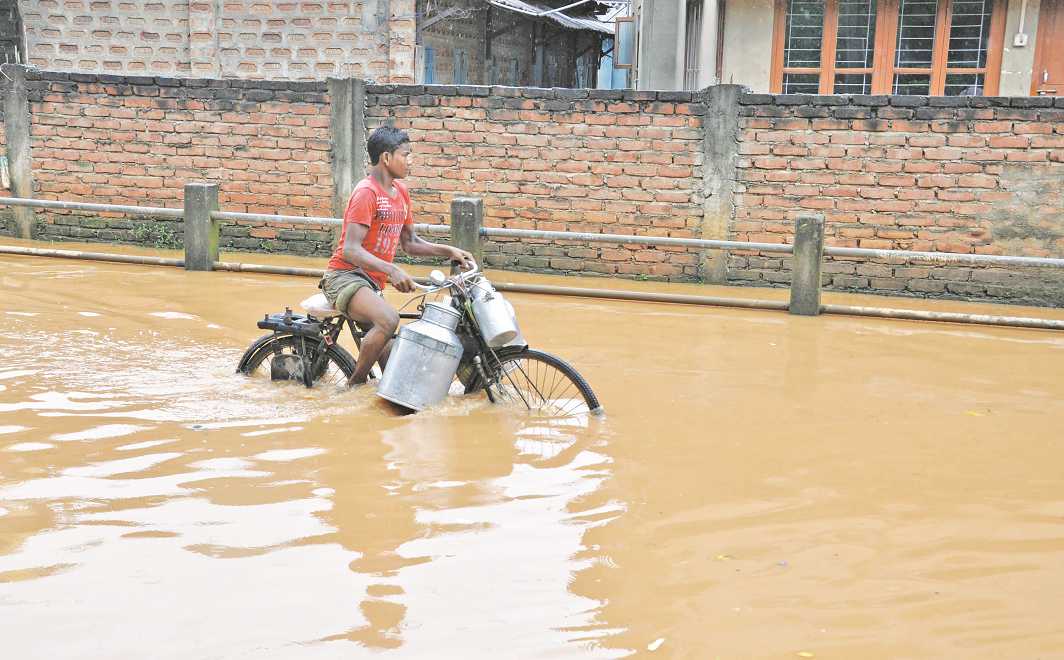
Even as the apex court had directed the government to amend the Food Safety and Standards Act and IPC to award life imprisonment for milk adulterators, studies have found the presence of coliform bacteria in it~By Ramesh Menon
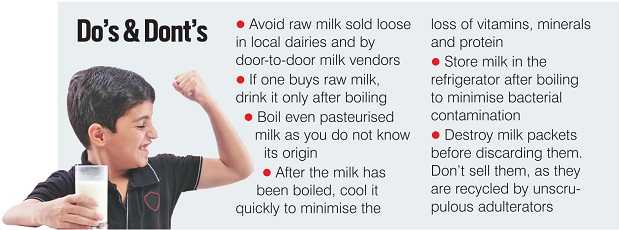
Some things do not change in India. Like the adulteration of milk. First it was done with plain water, then it was chemicals that included detergent. And now a study done by the Consumer Education and Research Centre (CERC) at Ahmedabad has found that 70 percent of loose milk sold is unfit for human consumption. Out of 55 loose milk samples tested, 38 were found to contain coliform bacteria indicating faecal contamination. This could be due to milch cattle not being washed properly, leading to dung falling into the milk vessel. It could also be due to contaminated water being used to adulterate the milk.
DAMAGING EFFECTS
Coliform bacteria can cause diarrhoea, vomiting, urinary tract infections and typhoid. Unless boiled or pasteurised, milk in the raw form can be dangerous. Thirty-one of the 55 samples tested were graded fair to poor in tests that measured contamination by bacteria which can cause gastroenteritis, food poisoning and intestinal irritation.
Milk adulteration has been going on for a long time. In 2014, the UP government in a startling admission told the Supreme Court that adulteration of milk was rampant in the state. Vijay Bahadur, assistant commissioner (food safety), Uttar Pradesh Food Safety and Drug Authority, said the menace was most rampant during festival seasons when the demand for milk rises.
In an affidavit, the UP government admitted that it had actually failed to take effective steps to curb it. It pointed out that out of the 4,503 samples collected between January 2012 and May 2013, 1,280 were found to be adulterated with detergent, starch, carbohydrate and whitener. Another sample size of 613 found that 207 samples were adulterated. The worst cases of adulteration were from Faizabad, Moradabad, Agra and Saharanpur.
Last year, the Bombay High Court took note of milk adulteration and directed the Maharashtra government and the Commissioner of Food and Drugs Administration to spell out how it planned to deal with this as the health of the public and children was at risk.
UNHYGIENIC HANDLING
Incidentally, due to its high nutritive value and moisture content, milk is an excellent medium for the growth of microorganisms. Microbial content in it depends on the living conditions and hygiene in sheds of milch cattle and the cleanliness of those milking them, the animals and vessels. Once micro-organisms enter milk, they multiply due to the warm ambient temperature, resulting in rapid deterioration. As there are no regulations on hygiene in barns, cleanliness is given the go-by.
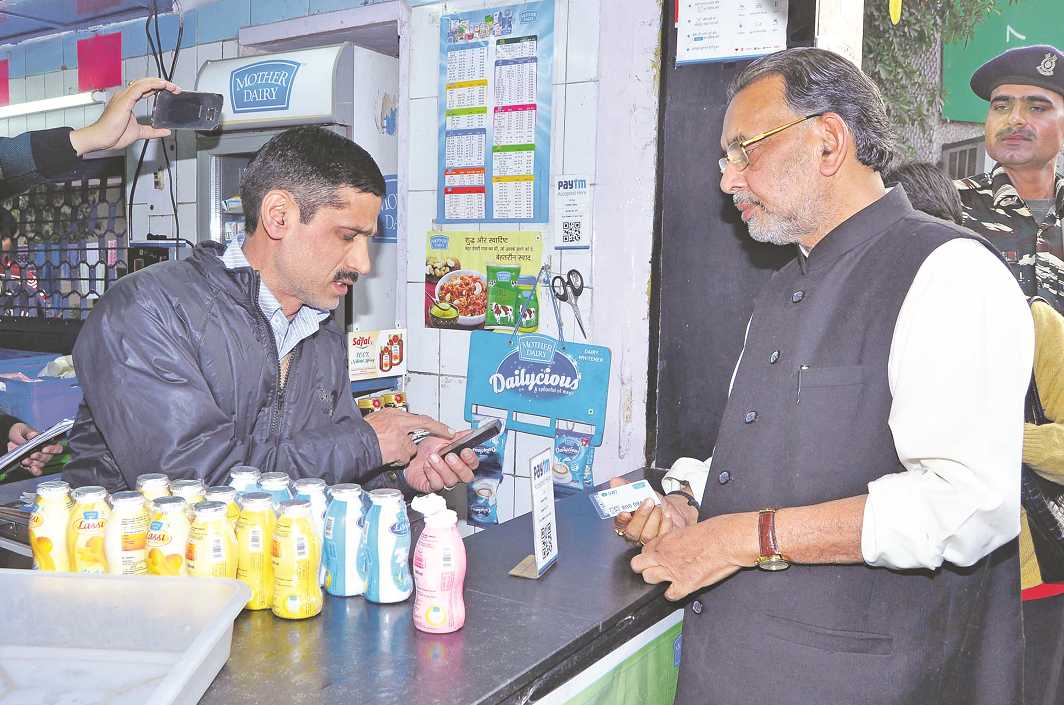
Union Minister of Agriculture and Farmers Welfare, Radha Mohan Singh, visits Mother Dairy Milk outlets in Delhi.
Pritee Shah, chief general manager, CERC, Ahmedabad, told India Legal: “Milch cattle eat garbage and plastic instead of nutritious fodder. There is lack of hygiene while milking, collection, storage and distribution of milk. You can’t trust local doodhwallas to adhere to safety standards. Today, it is vital to buy only packed and pasteurised milk.”
India is not only the largest producer but also the largest consumer of milk in the world. The organised dairy sector pasteurises and packs only 25-30 percent of milk. The remaining is either locally consumed or handled by the unorganised sector in an unhygienic manner.
HAZARDOUS ADULTERANTS
A 2016 study in Mirzapur, UP, of milk adulteration done by Pooja Jaiswal of Benaras Hindu University and SK Goyal, assistant professor, KVK Institute of Agricultural Sciences, Mirzapur, showed that 20 percent of milk samples contained urea, 44 percent had salt and 36 percent, soap. As many as 42 percent of the samples were found to contain skimmed milk powder to increase the weight or relative mass of natural milk, while ten percent were found to contain glucose to prolong the keeping quality of milk. Formalin was also found in 36 percent for the same reason.
Another study done by Maitreyi College in Delhi that tested 75 milk samples from Delhi, Faridabad, Gurgaon and Noida found that most of them had neutralisers, skimmed milk powder, urea, detergent and ammonium sulphate. Neutralisers are usually added to prevent curdling and increase the shelf-life of milk. They could be added in the form of caustic soda, sodium bicarbonate and sodium carbonate. Skimmed milk power was found in all the samples.
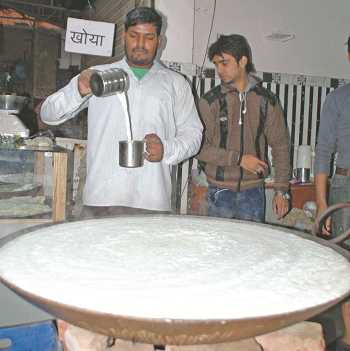
A local shop in Delhi selling milk-made products.
In 2011, the “Executive Summary on National Survey on Milk Adulteration” released by the Foods Safety and Standards Authority of India (FSSAI) pointed out that at the national level, 68.4 percent of milk being sold was adulterated. It said the worst performers were Bihar, Chhattisgarh, Odisha, West Bengal, Mizoram, Jharkhand and Daman and Diu, where adulteration in milk was found up to 100 percent! This Authority was established under the Food Safety and Standards Act (FSSA), 2006. The Act not only replaces the Prevention of Food Adulteration Act 1954 but also consolidates other food acts such as the Fruits Product Order, Meat Food Products Order, Vegetable Oil Products (control) Order and the Milk and Milk Products order.
So how can this menace be curbed? Ashish Bahuguna, chairman of the FSSAI, said that milk adulteration is more in North India than the South. A kit has been produced to check the quality of milk by FSSAI. It is presently negotiating with investors and entrepreneurs to mass produce and market it.
LIFE IMPRISONMENT
A year ago, a Supreme Court bench had asked both the centre and the states to look at amending the FSSA and also the IPC so that those who adulterate milk can be awarded life imprisonment. Referring to its orders of December 5, 2013 and December 10, 2014, the apex court said: “It will be in order, if the Union of India considers making suitable amendments in the penal provisions at par with the provisions contained in the State amendments to the Indian Penal Code” by Uttar Pradesh, West Bengal and Odisha governments, which have enhanced the punishment for adulteration of food and products to life imprisonment.
Speaking for the bench, Justice R Banumathi had said: “Since in India traditionally infants and children are fed milk, adulteration of milk and its products is a concern and stringent measures need to be taken to combat it. The consumption of adulterated milk and adulterated milk products is hazardous to human health.”
Coliform bacteria can cause diarrhoea, vomiting, urinary tract infections and typhoid. Unless boiled or pasteurised, milk in the raw form can be dangerous.
The direction by the apex court to make milk adulteration punishable with life imprisonment came after a PIL was filed by an Uttarakhand-based religious seer Swami Achyutanand Tirth. He had highlighted the menace of growing sales of adulterated and synthetic milk in different parts of the country.
Last year, Harsh Vardhan, the science and technology minister told the Lok Sabha that over 68 percent of milk in the country does not conform to standards laid down by the food regulator. He added that the most common adulterants found in milk were detergent, caustic soda, glucose, white paint and refined oil, considered “very hazardous” as it could lead to serious ailments.
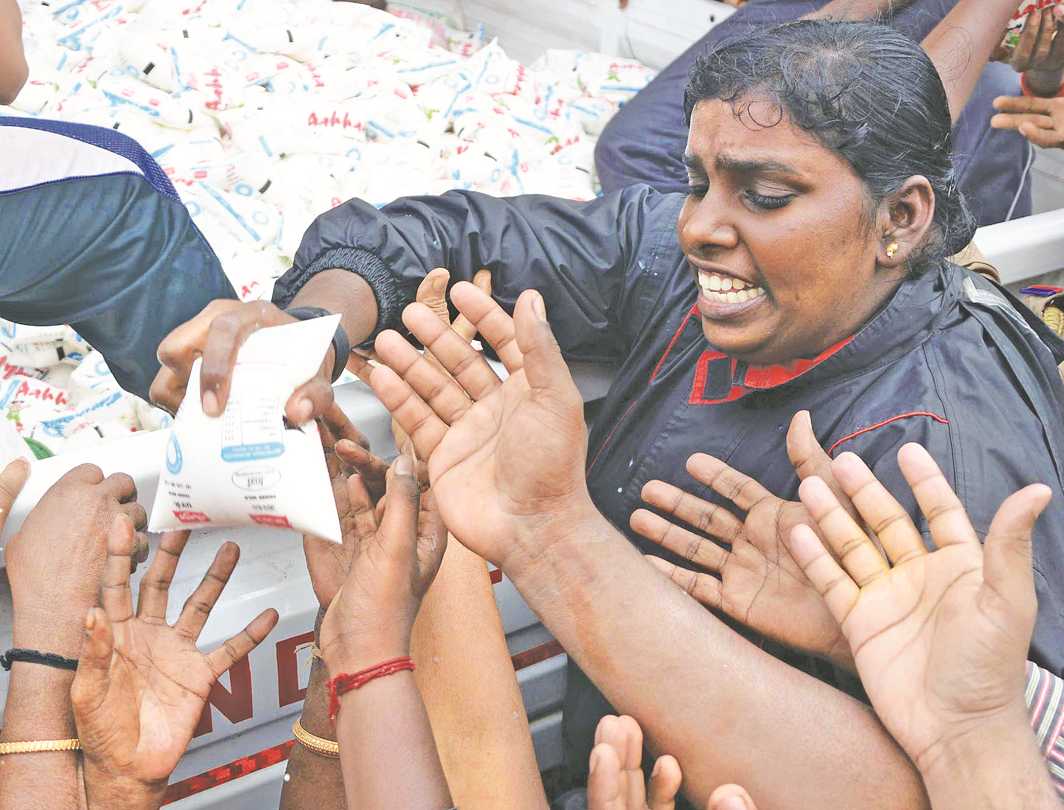
Milk sold in packets is more hygienic than milk sold raw.
In olden days, there were no pasteurisation units and the milkman supplied the milk. But then cattle grazed in lush green fields, were healthy and well-fed. Today, milch animals are just seen as vehicles to make money. They live in cramped sheds that are dirty, full of dung and urine and are let out into the open, where they feed mainly on waste found in polythene bags. As there is no law on hygiene and cleanliness, the local milkman does not want to incur extra costs to ensure that the milk is unadulterated.
But with reports of coliform in it, there are enough reasons to worry.
Misleading to call soya, almond beverages ‘milk’, says Parag Foods
“Only milk obtained from milch animals can be called milk. Soya/badam drinks can only be called as substitute of milk or alternative to milk, but they cannot be termed as milk”
NEW DELHI, AUGUST 17:
Dairy company Parag Milk Foods has raised concerns on plant-based soy or almond-based beverage makers classifying their product as milk.
Devendra Shah, Chairman, Parag Milk Foods, said: “According to the regulations, only milk obtained from milch animals can be defined as milk”. He added that as per the regulations, even toned milk or full-cream milk should be made out of milk or milk products obtained exclusively from animal-sourced milk and should not contain any other substances.
“One can’t promote soy and almond milk, the same as milk , in contravention of the provisions of food safety law. Therefore, the association of the word ‘milk’ with soya or almond beverages is quite misleading and should not be permitted to be sold as soya or almond Milk,” he added.
In a letter to the Food Safety and Standards Authority of India, the company has said that under the FSS Act and Regulations, beverages having vegetable plant origin and having milky appearance sourced from soyabean and almond cannot be termed as milk.
“Manufacturing and selling of soya/badam beverage as soya/badam milk is misleading. These drinks can only be called as substitute of milk or alternative to milk, but they cannot be termed as milk as per Food Safety and Standards ( Food products and Food Additives) Regulations 2011,” the letter stated.
Non-milk alternatives
According to Euromonitor, non-dairy milk alternatives in India are still in the nascent stage and have pegged the retail value sales of soy milk currently at about ₹106 crore. The category is expected to grow at 15.7 per cent CAGR in the country in 2017-2022 period, it said.
This concern comes at a time when a similar debate has been raised in more developed markets of Soy Milk such as the United States. According to media reports, traditional dairy companies and makers of plant-based alternatives are locked in a battle over labelling norms of plant-based alternatives in the US since the beginning of this year.
Ashwin Bhadri, CEO, Equinox Labs, said: “ For more clarity for consumers, additional disclaimer such as “non-dairy milk” can be put on the labels of such products. It becomes a bigger concern, if someone is marketing flavoured milk as almond milk or soy milk.”
Abbott increases nutrition portfolio for metabolic disorders
Abbott, a leader in nutrition science research and development, has announced increased access to its metabolic formulas to help infants diagnosed with Inborn Errors of Metabolism (IEM) in India.
Abbott's Nutrition Metabolic Formulas (ANMF) will help infants diagnosed with IEM in India, where the US-based company said, a large number of babies need specialised nutrition and medical attention to survive.
The announcement comes on the back of easing of import regulations by the regulatory authority FSSAI (Food Safety and Standards Authority of India) under the Diet4Life initiative, which has made the movement of these critical medical foods simpler and faster into the country since November 2016.
The final approval on IEM products came in June.
India has one of the world's highest birth rates. Of the nearly 74,000 babies born every day, 74 are likely to born with IEM, the global healthcare company said.
On a yearly basis, this translates into more than 27,000 infants who need specialised nutrition and medical attention to be able to stay healthy and even survive, it said.
Anganwadis serve poor quality dal in Guntur

Minister P. Pulla Rao, along with other officials, inspects and tastes food at an Anganwadi centre in Srinivasa Raothota in Guntur on Thursday.
Guntur: Minister for civil supplies P. Pulla Rao expressed displeasure with the officials for using poor quality dal in the food being served at Anganwadi centres, during his inspection in Guntur on Thursday.
He warned the officials about stern action if they fail to follow the norms. He inspected the rooms, food and kitchen in the Anganwadi center at Srinivas rao Thota and inquired about the nutritious food offered to pregnant women under Anna Amrutha Hastham scheme. He tasted the food with Guntur joint collector Krithika Shukla and Guntur West MLA M Venugopala Reddy and expressed dissatisfaction over the poor quality of dal and rice. He directed the officials and Anganwadi centers to provide nutritious food and warned of stern actions for violation of norms.
Mr Pulla Rao with food safety department officials conducted surprise checks in the Rythu Bazaar near NTR bus station. He expressed anguish over the poor sanitation and selling of water and food for excess prices in the food canteen in the Rythu Bazaar. He directed food safety department to collect samples for tests. He interacted with the public, inquired about the rates of vegetable and stated the government is taking all measures to control onion prices. He directed Estate Officer to take measures for the improving sanitation.
Aug 17, 2017


Mid day meal scams: 72 complaints on unhygienic food since 2015

Mid day meal under Mid Day Meal Scheme was served to 9.78 crore children on an average basis on every working day in 11.43 lakh schools in 2016-2017. The quality of mid-day meals has been a matter of concern for the public. There have been regular reports in the media regarding unhygienic and inadequate food served in the schools.
The Comptroller and Auditor General of India (CAG) in a report tabled in the Parliament on 18 December 2015 found the quality of food served in schools under the Mid Day Meal Scheme to be poor across the country. The CAG found that “Cases of cooking of poor quality meals in unhygienic conditions, inadequate and poor quality of infrastructure in terms of kitchen sheds and utensils were rampant across all states exposing children to health hazards.”
Yet, while responding to Unstarred Question No. 2157 in the Rajya Sabha on 3 August, Shri Upendra Kushwaha, Minister of State in the Ministry of Human Resources Development stated that only 72 complaints on the substandard quality of food served to the children were reported from various States and Union Territories from 2015 to 2017. These included 46 in 2015, 21 in 2016 and 5 so far in 2017.
The highest number of complaints during 2015-2017 were received in Uttar Pradesh (19 complaints) followed by Bihar (9), Maharashtra and Delhi (7 each), Jharkhand (4), Madhya Pradesh, Odisha, and West Bengal (3 each), Chhattisgarh, Gujarat, Haryana, Punjab (2 each), and Andhra Pradesh, Assam, Chandigarh, Goa, Himachal Pradesh, J&K, Tamil Nadu, Telangana & Tripura (1 each).
The response of the minister itself suggests that complaints redressal mechanism is not working. Out of 72 complaints filed during 2015-2017, the Ministry of Human Resources Development has not received reply from the state governments/UTs in 32 cases i.e. 44.4% of the total complaints. Interestingly, out of these 32 cases where the Ministry has not received responses from the States/UTs, 14 complaints belong to the year 2015, 13 complaints to the year 2016 and 5 complaints of the current year (2017). In addition, two complaints registered in 2015 are still under investigation at state level as of today.
Departmental action (including warning, transfer, suspension) and action against service providers were taken only in 18 out of 46 cases in 2015 and 8 out of 21 cases in 2016. Corrective actions including issuing of instructions to the concerned were taken in seven complaints during 2015-2017.
Mr Kushwaha told the Rajya Sabha that the Government of India made various efforts to improve the quality of mid-day meal such as issuing guidelines on food safety and hygiene for school level kitchens under Mid Day Meal Scheme on 13 February 2015; safe storage and supply of ingredients to schools; procurement of pulses and ingredients of branded and Agmark quality; mandatory tasting of meals by 2-3 adult members including at least one teacher before serving to children and testing of food samples by accredited/Govt. recognized laboratories etc.
In addition, the Central Government has adopted an elaborate monitoring mechanism at Central, State and District levels to curb malpractices and to ensure the quality of food served under the scheme. Further, the Centre constitutes Joint Review Missions (JRMs) consisting of educational and nutritional experts, which review the scheme through field visits from time to time. The reports of JRMs are shared with concerned States/UTs for taking corrective action on the findings.
Aug 16, 2017
Nothing clean about mineral water units in Telangana

They operate without microbiologist to test purity: IB report
The report said due to lack of supervision by the food safety department and interference of political leaders, officials were unable to conduct raids on the illegal units.
Hyderabad: Thousands of so-called ‘mineral water plants’ are being run in the state without much supervision. The intelligence department has reported to the government that the composite Warangal district had 1,500 such water units, of which 1,484 were being run illegally. This has caused a huge loss to the state exchequer, it said.
The report said supervisory officials were accepting bribes to ignore the illegal plants. It said the units were thriving because of the increasing demand for clean water. According to the norms, a water unit needs a minimum space of 1,000 square feet and a borewell. The owner should take permission from the local urban body or gram panchayat and get it registered with the district industries centre.
The owner should obtain a labour department certificate and the ISI certification from the Bureau of Indian Standards. The unit should engage a well-trained microbiologist, and the staff to maintain hygienic condition and qualitative production. The intelligence report said no unit had a chemical lab and microbiologist to test the water purity in Warangal district. Only 16 of the 1,500 water units in the composite district had clearance certificate from the food safety authority and only one plant had the BIS certification.
Another 15 plants had obtained certificates from a body called International Herbal Water Foundation (IHWF), Chennai, which is not recognised by the government. The owners were printing the IHWF hallmark that they secured by paying Rs 50,000 per year on the bottles.
The report said due to lack of supervision by the food safety department and interference of political leaders, officials were unable to conduct raids on illegal units. The intelligence report suggested that the government bring these units under the Essential Commodities Act to regulate licencing, make BIS certification mandatory and empower the district food safety inspector to seize illegal units. Director of municipal administration T.K. Sreedevi said the government did not have a clear policy on mineral water plants, and would bring out one soon.
Former MLA K. Laxma Reddy, who encouraged the growth of these water units, said they were like cottage industries and did not need a licence. He set up about 300 units plants in Ranga Reddy district. He said that water unit owners were doing a a social service by supplying clean water. Introducing a licencing system would lead to corruption and an increase in the cost of water. He said food safety authorities could check quality of water supplied.
Aug 15, 2017

Special food safety drive during Onam

THIRUVANANTHAPURAM: In order to prevent food safety issues during Onam season, the food safety commissioner has constituted 40 squads to carry out inspections in manufacturing units, restaurants, hotels and wayside shops across the state.
Food safety commissioner Navjot Khosa has also sent letters to food safety commissioners in the neighbouring states of Tamil Nadu, Karnataka and Andhra Pradesh, urging them to increase surveillance during the period.
Being a consumerist state, Kerala depends on these states for its food requirements. Khosa's letter has expressed concerns over possible adulteration of products like milk, coconut oil, fruits, vegetables and chicken which are brought from other states.
Khosa requested the neighbouring states to increased surveillance and inspection in the production units there.
Food safety department officials said that manufacturers use innovative methods to hide adulteration. Food safety assistant commissioner Anil Kumar said that cheaper oils like palm oil and palm kernel oil are pushed into the market, instead of coconut oil. "It is difficult to detect this through tests because the manufacturers have found new ways to ensure that the samples meet the parameters of coconut oil," he said.
FSDA collects 61 food samples in anti-adulteration drive
Meerut: Food Safety and Drugs Administration (FSDA) officials raided at least 60 different sweet shops and bakeries during a week-long drive around Raksha Bandhan and collected 61 suspected food samples. In a report regarding the same, FSDA said that the results of samples testing are expected within a month after which action will be taken if required.
“Ahead of Raksha Bandhan, we conducted a week-long drive against adulteration and took samples of oil, milk, milk products, sweets, sauce and other suspected items from various food outlets in rural and urban areas. The 61 samples have been sent to Lucknow laboratory for testing,” said Archana Dheeran, designated officer, FSDA.
“We also issued improvement notices to outlets which were found to be preparing food in unhygienic conditions. If they are again found to be doing the same, an inquiry will be ordered against them,” added Dheeran.
Hair in kulfi, Verka says could have flown from nearby barber’s shop
Chandigarh: The District Consumer Disputes Redressal Forum has directed Verka, the flagship brand of Punjab's state-owned cooperative Milkfed, to refund Rs 25 and pay Rs 3,000 as compensation for harassment caused to Sector 19 resident after a hair strand was found in an ice cream he bought from its booth. The Verka authorities were also asked to deposit Rs 7,000 with Institute for The Blind, Sector 26, as penalty for the irregularity in a first of its kind order.
Anshul Arora, a resident of Sector 19, said he had purchased one "Malai Kulfi" from Verka booth for Rs 25 on December 25, 2016. He found a hair stand and immediately informed the salesman, who referred the matter to the head of the marketing team.
The matter was reported to the police. A daily diary report (DDR) was lodged. A report from a food analyst in Haryana was sent to food safety officer, Government Multi-specialty Hospital, Sector 16. It was proved that the sample of kufli in the poly pack contained a small piece of hair.
The complaint was filed against Verka booth in Sector 19, Verka milk plant in Industrial Area and Punjab State Cooperative Milk Producers Federation Limited, Sector 34.
In its reply, Verka denied hair was inside the kulfi. It stated that the strand might have stuck to the kulfi because of the windy weather and due to a barber's shop near the booth. Verka also stated that the alleged incident happened on December 25, 2016, and the complainant had taken the sample to laboratory for checking after two days. Verka authorities further stated that it might be possible that the plastic bag in which the sample was stored was containing a hair.
The forum held the pleas taken by Verka that the hair found inside the kulfi might have stuck because of windy weather and due to barber's shop nearby was highly absurd.
How can a hair from a barber's shop stick in an ice-cream packed in double packing, the forum asked. The other plea taken by them that it might be possible that the plastic bag in which the sample was stored was containing a hair, was stated to be "not worthy of belief as it is not reported in the report of the food analyst, Haryana, that hair in the sample of kulfi was stuck on it, rather it is reported that the sample contains a piece of hair."
UPFDA to tighten its grip on unlicensed, unregistered FBOs

Uttar Pradesh, the State Food and Drug Administration has decided to initiate a drive across the state against unlicensed and unregistered Food Business Operators (FBO). The step is taken to ensure high quality and safety in the state's food business.
One of the officials of the UPFDA informed that FBOs can only operate their business freely if they possess legal license or registration as per the mandate of Food Safety and Standards Act, 2006. Ramaraj Maurya, Additional Commissioner, UPFDA, stated that the state authority had planned a drive and will check if there is any FBO operating without a valid license or registration.
“It has been mandated by the Food Safety and Standards Act, 2006 that any FBO found operating without a valid license or registration will be penalised,” he added.
“We will ensure that every FBO operates with a prescribed license or registration as required. For this, we plan to start a drive,” Maurya reiterated. However, he did not specify a timeline for the drive. Last Year, Food Safety and Standards Authority of India has given the deadline of 4th August, 2016 to obtain the license and it has stopped taking the requests after that. The apex body was more keen on educating FBOs about the responsibilities under the act rather than merely providing a license to them.
Commenting on the issue, Pawan Kumar Agarwal, chief executive officer, FSSAI, said, “It is a continuous process, and FSSAI regularly issues directives to the state authorities to make sure that the FBOs operate with valid licenses and registrations.”
“However, no directive has been issued to a particular state. Each state has been given the autonomy to act independently of others. They can take action, including penalising or compounding errant FBOs. The powers have been mentioned in the Act,” he added.
Agarwal said, “To further strengthen the process of licensing and registration, FSSAI plans to use technology-based solutions. For instance, it plans to use mobiles to check whether the licensing and registration regulations are being complied with.”
Cow milk standard changed; lesser fat and solids now acceptable
Minimum fat content in milk is now set at 3.2 per cent by the Food Safety and Standards Authority of India

Desi cow’s milk has lesser fat content as compared to the Jersey cow
The Food Safety and Standards authority of India (FSSAI) has changed the regulatory standards of cow milk, making it uniform for the entire country as opposed to the state-wise standards earlier.
The new standards that came into effect on August 2, have reduced the earlier set standards of “milk fat” and “milk solids not fat.” While earlier the minimum fat content of cow’s milk was different for different regions. The highest standard for milk fat was set for Haryana, Punjab and Chandigarh at 4 per cent and the lowest in Mizoram and Orissa at 3 per cent.
This figure has now been made the same for the entire country set at 3.2 per cent. On the other hand the standard for milk solids which was set at 8.5 per cent all over the country has been brought down to 8.3 per cent.
The director of FSSAI, Pawan Agarwal said that the changes are part of the continuously evolving system of standards and added, "Today we don't require the variation across states. That's why the new standards are uniform for the country now." He said that the new standards will make sale of milk easier for cow milk sellers.
Veena Shatrugna, former deputy director of National Institute of Nutrition, Hyderabad, says that the new standard eases the selling process for cooperatives. Cow milk has 4.48 per cent fat content, so the change may be to accommodate desi cow’s milk, which has lesser fat content as compared to the Jersey cow, Shatrugna says. "There must be a demand from the owners of desi cows to recognise this as the ideal composition for cow's milk," she adds.
Cooperatives found it difficult to meet the older standards as the cows have to be fed special fodder to increase milk fat content. While Agarwal says that the new standard will not impact the nutritional value of milk, Shatrugna believes it can make a difference when milk is diluted to give to babies.
Aug 14, 2017
4 Secrets of Water Bottles No One Wants You to Know
4. Why we shouldn’t reuse plastic bottles

A plastic bottle can exude dangerous chemicals. Pay attention to the special signs on the bottom: those numbered triangles indicate which kind of plastic was used.
A bottle labeled 1 (PET or PETE) is only safe for a single use. When exposed to oxygen or high temperatures, including sun heat, such a bottle will discharge toxic substances that get into the water.
Avoid bottles labeled 3 or 7 (PVC and PC) as they exude toxic chemicals able to penetrate your food and drinks, and lengthy exposure can even result in severe health problems.

Bottles made of polyethylene (2 and 4) and polypropylene (5 and PP) are suitable for multiple uses. They’re relatively safe if you only store cold water in them and regularly disinfect them.
3. Bacteria and basic hygiene breaches

Drinking water from a used plastic bottle is almost the same as licking a toilet seat, a dog’s toy, or even worse scientists say. The amount of bacteria in such bottles often exceedssafety limits. We create the perfect growth conditions ourselves by taking the bottle with dirty hands, not rinsing it thoroughly enough, and keeping warm water in it.
What to do then? Wash bottles regularly with warm soapy water, vinegar, or antibacterial mouthwash.

Even with washing the bottles thoroughly, we may still get food poisoning or even hepatitis A. Research showed that most bacteria live on bottle necks that you can’t wash well enough. Twist caps and sliding caps teem with germs that you swallow along with water. To be on the safe side, use a straw.
2. Where does your water come from?

A lot of companies love to mention on their packaging that the water you buy comes from a picturesque stream. But the truth is a lot of times the water you buy in a bottle is identicalto the water you get from your faucet at home!
Actually, you can even see that on the bottle itself, usually in a tiny text that everybody neglects. Companies are obliged to explain that the source of water for them is the main water supply channel. That way the water costs way, way less than what you are paying for it!
1. Not really healthy

Not even mentioning the bacteria hazard, there are common misconceptions about water.
Bottled water companies want to attract the new market of young and sporty people. So they advertise bottled water with different tastes added to it, claiming "it’s healthier for you" than other sugary drinks.
Well, in fact, sometimes this water can contain as much sugar as a soda! To not be fooled by advertising, always check the information on the label.
காரில் கடத்தப்பட்ட ரூ.1 லட்சம் மதிப்புள்ள தடை செய்யப்பட்ட பொருட்கள் பறிமுதல்
கிருஷ்ணகிரி: கிருஷ்ணகிரி அருகே, காரில் கடத்தி வரப்பட்ட, ஒரு லட்சம் ரூபாய் மதிப்பள்ள தடை செய்யப்பட்ட புகையிலை பொருட்களை, போலீசார் பறிமுதல் செய்து, மயிலாடுதுறையை சேர்ந்த இருவரை கைது செய்தனர்.
பெங்களூருவில் இருந்து, கிருஷ்ணகிரி மாவட்டம் வழியாக, தமிழகத்தின் பிற மாவட்டங்களுக்கு தடை செய்யப்பட்ட புகையிலை பொருட்கள், காரில் கடத்தப்படுவதாக டி.எஸ்.பி., ரவிக்குமாருக்கு ரகசிய தகவல் வந்தது. இதையடுத்து, கிருஷ்ணகிரி தாலுகா இன்ஸ்பெக்டர் அன்புமணி மற்றும் போலீசார் கிருஷ்ணகிரி, ஓசூர் தேசிய நெடுஞ்சாலையில் பையனப்பள்ளி டோல்கேட் அருகே நேற்று முன்தினம் இரவு, 11:00 மணிக்கு வாகன சோதனை மேற்கொண்டனர். அப்போது, கிருஷ்ணகிரி நோக்கி வந்த மாருதி ஈகோ காரை, நிறுத்தி சோதனை செய்தனர். அதில், பெங்களூருவில் இருந்து மயிலாடுதுறைக்கு, 23 பெட்டிகளில், 47 ஆயிரம் பாக்கெட் தடை செய்யப்பட்ட புகையிலை பொருட்கள் கடத்தி வரப்பட்டது தெரியவந்தது. இதன் மதிப்பு, ஒரு லட்சத்து, 20 ஆயிரம் ரூபாய். இதையடுத்து, போலீசார் புகையிலை பொருட்களுடன், காரை பறிமுதல் செய்தனர். காரில் வந்த மயிலாடுதுறை அடுத்த ரயில்வாடியை சேர்ந்த முனிஷ்வரன், 40, சீனிவாசன், 38, ஆகியோரை கைது செய்தனர்.


‘Staff shortage delaying accreditation to food labs’

Pressing need: A. Eswaran, general secretary of Food Analysts Association (India), speaking at the association’s national conference in Madurai on Sunday.
Food Analysts want all labs accredited by August 2018
With over 60% vacancies, State/ Public Food Laboratories across India, particularly in Tamil Nadu, are unable to get accreditation from National Accreditation Board for Testing and Calibration Laboratories (NABL), according to members from Food Analysts Association (India).
Speaking at the association’s national conference on ‘Food Safety and Standards Act, 2006’, A. Eswaran, Public Food Analyst and association general secretary, pressed for an amendment to Section 43 of the Food Safety and Standards Act, 2011, under the Food Safety and Standards Authority of India (FSSAI). The section calls for recognition and accreditation of laboratories, research institutions and referral food laboratories.
“We want to make it mandatory for State governments to have all the labs accredited by August 2018. They must also fill up all vacancies within the next six months,” he said, echoing the opinions of other members in Madurai on Sunday.
This yearly NABL review accounted for the presence of manpower, infrastructure and training provided to the employees. However, labs headed by S.M. Bharadwaj, president FAA-I, in Delhi lost their certification in 2013 due to lack of technical workers.
Maharashtra faced a similar plight. Of the 72 labs present in India, only three had got the requisite approval, they said.
Six labs were present in Tamil Nadu – Chennai, Salem, Thanjavur, Madurai, Tirunelveli and Coimbatore. Two of the labs did not have a ‘Head Analyst’. Members asked the FSSAI to provide instructions to the State government to ensure that technical workers were given stipulated roles.
About ₹800 crore had been allocated for the food processing industry under the Union Budget, 2017. Members asked for priority to be given to civil infrastructure and not just instruments used in labs. “Most of the labs in the State are in a dilapidated condition. Focus should be diverted in order to have world class labs,” Mr. Eswaran said.
Childhood obesity is a risk factor of developing heart diseases and diabetes in later life
Junk Food is a term used for food containing high levels of calories from sugar or fat with little fiber, protein, vitamins or minerals. These foods lead to a rapid increase in blood sugar levels (high glycemic index) which forces the body to produce high levels of insulin to counter the rising blood sugar.
As reported by Indian Council of Medical Research (ICMR), development of obesity is multi-factorial and eating of junk and processed food is one of them. Childhood obesity is a risk factor of developing heart diseases and diabetes in later life.
The results available from 15 States/UTs of an ongoing ICMR India Diabetes (ICMR-INDIAB) Study on the prevalence of diabetes indicate overall prevalence of Diabetes varying from 4% to 13%. According to the Report of National Commission on Macroeconomics and Health, there were 641 lakh cases of Cardiovascular Diseases (CVDs) in India in the year 2015.
Ministry of Women and Child Development had constituted a Working Group on addressing consumption of foods High in Fat, Salt and Sugar (HFSS) and promotion of healthy snacks in schools of India, which has given its report.
The Food Safety and Standards Authority of India (FSSAI) constituted an Expert Group on Salt, Sugar and Fat. The Expert Group prepared a draft report on consumption of these items and its health impacts among Indian population and recommendations on healthy dietary intake of these items. While preparing the above report, Expert Group has considered WHO guidelines on ‘Sugar Intake for Adults and Children regarding the adverse impact of high sugar in foods.
ICMR, National Institute of Nutrition (NIN) and other institutions carry out research and studies related to food and healthy diet. Apart from this, the consumers are made aware of food safety through consumer awareness programmes launched jointly by the Department of Consumer Affairs and the Food Safety and Standards Authority of India (FSSAI) which also includes advertisements in different media, campaigns, educational booklets, information on FSSAI website and Mass awareness campaigns.
The Minister of State (Health and Family Welfare), Smt Anupriya Patel stated this in a written reply in the Lok Sabha here today
Aug 12, 2017
Poor quality food being served at hostel
Samples of food items, including rice and tur dal, supplied to students of Post-Metric (Women) Hostel, run by the Social Welfare Department in Hassan, were found unfit for human consumption after a laboratory test. This has prompted the students to demand strict action against officials responsible.
The office of Chief Food Analyst in Mysuru had tested the samples of tur dal, rice, refined oil and tea powder obtained from the hostel kitchen. As per the lab tests, except the refined oil, all the three items were unfit for human consumption. The officers of Food Safety and Quality Authority in Hassan had collected the samples from the hostel on July 16, following a protest by students complaining that the food served there was of poor quality. The samples were sent to the office of Chief Food Analyst, where the divisional level lab is also located. According to the report, the tur dal sample contained living insects, while the rice sample had living insects, hair and other extraneous matter. Similarly, the tea powder sample was found unsafe as it showed the traces of added colour. The Chief Food Analyst, after conducting the tests, sent the report on July 29.
V. Ambarish, State president, Students’ Federation of India (SFI), who shared a copy of the test results with the media in Hassan on Friday, said, “The lab report vindicated the students. However, no action has been taken against the officers responsible so far, ” he alleged.
Threat to students
M. Asha, District Secretary, SFI, who is also a student of the hostel, said that the warden and other officers of the Social Welfare Department had threatened to send her out of the hostel for raising her voice against the poor quality of the food being served there.
When The Hindu contacted Parashurama, Hassan Taluk Social Welfare Officer, he said the department had been taking measures to improve the facilities. “Some students associated with the SFI are creating problems by staging protests repeatedly. We should not have given admission to those students associated with the SFI,” he said. When asked whether was it a mistake by the students to demand proper quality food, the officer added, “Asha, being an office-bearer of SFI, instigated the protests. THis is not expected from students”.
‘Organic’ veggies not as organic as you think

KAU study detects new-generation insecticides and fungicides in ‘organic’ fruits and vegetables
Here is an alert for health conscious people who go in search of ‘organic’ fruits and vegetables.
New generation insecticides and fungicides have been detected in fruits and vegetables labelled organic is the latest concern in food safety, according to a report published by Kerala Agricultural University (KAU) recently.
They are often sold at higher prices in separate counter in hypermarkets, it noted.
The report from the Pesticide Residue Research & Analytical Laboratory (PRRAL) under the KAU contains categorised test results of vegetables, fruits, spices and condiments sampled from public markets, including hypermarkets across the State, during the period from April to June 2017.
Green capsicum
A sample of ‘organic’ green capsicum purchased on June 16, 2017 from a major hypermarket in Ernakulam city was found contaminated with seven chemical pesticides, including five insecticides, acetamiprid (1.12 ppm), clothianidin (0.72 ppm), imidacloprid (0.69 ppm), buprofezin (0.12ppm), acephate (1.78 ppm) and two fungicides, tebuconazole (0.84 ppm ) and iprovalicarb (0.22 ppm).
New insecticides
Another sample of baji chilli branded ‘pesticide-free’ contained three new-generation insecticides viz. acetamiprid, metalaxyl and chlorantraniliprole. One sample of imported “red globe” variety grapes purchased from the same shop had four pesticides, imidacloprid (1.31 ppm), metalaxyl (0.57 ppm), azoxystrobin (1.12 ppm) and carbendazim (0.09 ppm).
The study conducted in a major hypermarket in Thiruvananthapuram city also indicated the same trend.
Red capsicum contained imidacloprid, clothianidin, azoxystrobin, tebuconazole and carbendazim in the same sample.
Baji chilli had residues of imidacloprid, carbofuran (banned in Kerala) and two fungicides tebuconazole and trifloxystrobin.
Among the fruits collected from the same hypermarket, red globe grapes priced at ₹400 a kg showed the presence of acetamiprid (0.39 ppm) and indoxacarb (0.04 ppm), while seedless green grapes had residues of three pesticides.
A systemic organophosphate insecticide, dimethoate (0.67- 2.34 ppm), was detected in small onion and green chilli samples purchased on June 9, 2017 from another shop in Thiruvananthapuram city selling exclusively ‘organic’ labelled products.
Detection of a number of new generation pesticides up to trace levels of parts per billion (nanogram/kg), which were not previously reported, has been made possible with the new liquid Chromatograph-Mass Spectrometer (LC-MS/MS), an apparatus imported from the U.S., said Thomas Biju Mathew, Associate Director (PP) and Head, PRRAL, Vellayani.
“The results indicated regular spraying of a cocktail of new-generation insecticides and fungicides at close intervals to protect the crop in farms and polyhouses in other States,” he said.
Need for surveillance
KAU Vice Chancellor P. Rajendran said the new results necessitated intensified surveillance of fruits and vegetables sold in Kerala.
“Procurement, operation and maintenance of sophisticated and costly instruments like LC-MS/MS and service of highly skilled analysts has become a necessity. The new pesticide residue laboratories set up under the KAU in Kumarakam, Vellanikkara and Padnakkad should also be strengthened with advanced equipment to attain full technical competency,” he said.
The report is also published on the State government’s web portal kerala.gov.in
Subscribe to:
Comments (Atom)