Oct 20, 2012

Ministry in tizzy over who will crack whip

Even as the gutkha manufacturers have launched a media blitzkrieg claiming that chewing tobacco is safe, the Union Health Ministry is still scratching its head to determine which of its agencies is empowered to impose penalties against the defaulters for violation of court directions as well as food safety laws.
“We are contemplating legal action against the smokeless tobacco firms for spreading false and misleading information through ads about food safety aspects of the gutkha in violation of the Food and Safety Standards Act 2006. The Act prohibits sale and advertisements of tobacco products.
“But we are yet to decide which department is empowered to take action against such violation,” said Director of National Tobacco Control Programme in the Ministry, Amal Pushp. He was talking to reporters on the sidelines of an event organised by anti-tobacco groups to counter misinformation by the gutkha firms through ads by questioning the legality of gutkha ban by 14 States.
Initiating contempt of court proceedings against the gutkha lobby including Smokeless Tobacco Association, All India Kattha Factories Association and the Central Arecanut and Cocoa Marketing and Processing Cooperative is another option that the Ministry is planning. It says that the “misleading” advertisements violate the High Courts’ and Supreme Court directions which have both ruled that gutkha is a food product as it is consumed.
“As per the amended FSSA 2006, misleading information against the food products such as gutkha invites penalty between `5 lakh and `10 lakh. We have to see if the Food and Safety Standards Authority of India (FSSAI) can take action against the misleading ads information,” Pushp said.
The ban on the smokeless tobacco products came on the directions of the Supreme Court which had taken cognizance of a Health Ministry’s report on the ill-effects of chewing tobacco which contains 3095 hazardous chemicals including 28 cancerous one causing oral cancer.
So far, at least 14 States/UTs have banned the manufacture, sale, distribution and storage of gutkha and other such products containing tobacco or nicotine under the FSS Act.
Maharashtra has taken a step further by not only banning gutkha and related products but also arecanut, an ingredient in gutkha and paan masala. “All States must ban them as they are being used at dangerously epidemic levels by many including children and women in the country,” said Mahesh Jagde, Food Commissioner, Maharashtra.

Food safety experts find adulterants like detergent, urea and soda in 68% of milk

The glass of milk that you consider to be the epitome of nutrition and good health may not be all that pure. In fact it can be harmful when unscrupulous vendor s use adulterants like detergent, urea and soda.

The government has made the shocking admission that the bulk of milk supplied by vendors across the country is either contaminated or adulterated. Even packaged milk in some parts of the country is below standard. The admission comes in an affidavit filed by the Centre in an ongoing public interest litigation in the Supreme Court. Over 68 per cent of the samples of milk available across the country examined by food safety authorities have been found to be of substandard quality.


The admission comes in an affidavit filed by the Centre in an ongoing public interest litigation in the Supreme Court. Over 68 per cent of the samples of milk available across the country examined by food safety authorities have been found to be of substandard quality.

These samples did not conform to standards fixed for different types of milk such as skimmed, toned and double toned.

The analysis by the authorities revealed traces of detergent in some samples. This was apart from the use of water, glucose and skimmed milk powder, the most commonly used adulterants. Experts said dilution took away from the nutritive value of milk.

"While packaged milk producers are governed by government standards, there is practically no check on non-packaged milk sold by vendors," said Dr Vinod Kansal, a leading dairy expert who was formerly with the National Dairy Research Institute in Karnal.


The study was conducted across India
Usually, he said, milk is collected by vendors in unhygienic conditions and then stored for long durations. "All this increases the chances of lowering milk quality and results in bacterial contamination," Kansal said. In order to prevent milk from getting spoiled in summer season, milkmen add urea or soda, which are very harmful for humans.

Dejon Mishra, consumer rights activist, said: "The food safety authority must mandate a system for tracking all milk products so that contaminated products could be traced. In the long run, steps should be taken to see that all milk sold in the country is packaged."

The government analysis revealed that over 66 per cent of samples not conforming to standards were non-packaged samples while 33 per cent were packaged milk.

The government said in its affidavit to the court that water was the most common adulterant and the addition of water reduced the nutritional value and posed a danger to health if water was contaminated. "Milk with detergent is unsafe for drinking," the government added.

There is a better chance of getting quality milk if one buys packaged milk than nonpackaged milk available in the market.

The study was conducted across India. It was found that the worst place to buy milk is Uttar Pradesh where 88 per cent of 136 samples collected were found to be not conforming to standards. The situation in Delhi, however, was not as bad.

The affidavit, filed on behalf of the Centre by the assistant director of Food Safety and Standards Authority of India (FSSAI), Kamal Kumar, stated that the government had fixed standards for different types of milk under the Food Safety and Standards Regulations of 2011 and had taken a total of 1,791 samples from all over the country for the snap shot survey.

Of the 1,791 samples, only 565 were found conforming to the standards fixed by it and 1,226 samples failed the test. The government said the Food Safety and Standards Act of 2006 permitted the public to take samples for testing in laboratories. Based on the result of the test, prosecution can be launched by the food safety officer.

The FSSAI study has only confirmed the findings of earlier studies in different parts of the country which point to milk contamination, including coliform bacteria.

An insurance against adulterated milk is the common Indian habit of boiling milk before consumption. "All bacteria are killed once milk is thoroughly boiled", Kansal said.

The affidavit had been filed in response to a notice on a petition alleging rampant milk adulteration with harmful substances. Swami Achyutanand Tirth had filed a PIL earlier this year alleging that the government had failed to check adulteration in milk which was prepared with materials like urea, detergent, refined oil and caustic soda.

The Supreme Court had on May 9 issued notice to the Centre and several state governments on the PIL highlighting the need for putting an end to the malpractice by formulating a comprehensive policy on the production, supply and sale of milk.

The petitioners had claimed that a recent survey by the FSSAI had revealed that harmful adulterated milk was being sold in various parts of the country.

Health department to check for spurious food items


JAIPUR: To keep a check on sale of adulterated and spurious food items ahead of festive season, the medical health and family welfare department would soon launch a special drive in the city.
Generally during festive season, the demand for diary food items increase and to cash in on the increasing demand, some traders offer substandard food items which cause health-related problems to the consumers. During Diwali, the sale of sweets peaks.
Keeping in mind the health related issues, the department has decided to constitute teams to collect samples of food items especially dairy products including sweets.
Till last year, the district administration was responsible to collect samples of food items but since the state government has implemented the Food Safety and Standard Act (FSSA) 2006 replacing the old Prevention of Food Adulteration Act 1954, the medical health and family welfare department has become the authority for ensuring implementation of FSSA.
Chief medical health officer (Jaipur I) Dr O P Thankan said, "We will launch a special campaign to ensure that only safe-to-eat food items are sold in the city." He said the department would take serious action against traders who violate the FSSA or offer adulterated food items to earn quick money.
The department would collect samples of ghee, oil, mawa, sweets and paneer from shops and send them for testing to the laboratory. If the sample of the food items fails at the laboratory, the department would take strict action against the trader concerned. Also, it would keep a check on milk supply as the demand of milk increases during Diwali, which push up the possibilities of sale of adulterated milk.
Doctors claimed that consuming sweets made up of adulterated mawa cause stomach-related problems.

Oct 19, 2012

Food manufacturers and sellers penalised

VARANASI: The court of the adjudicating officer ordered to realize heavy amount as penalty from the manufacturers and shop owners under Food Safety and Standards Act-2006.

Adjudicating officer MP Singh, who is also ADM city, recently decided four cases that were filed by the food safety officer against the manufacturers and sellers of food articles in 2011. On October 19, 2011, the staff of food safety and drug administration (FSDA) office had collected samples of `Butter Vimal Lite premium table margarine', a product of a Gujarat based company, from its local depot holder Mahendra Pal's place in Sundarpur, under Lanka police area.

The FSDA office forwarded the samples to government food analyst (GFA).

In GFA's investigation report, it was mentioned that manufacturer has declared on the sample as Butter Vimal Lite, zero cholesterol on the label and it contains flavour of butter also which is a violation of rule 2.2.2(1) of the Act, hence the sample is `misbranded'. After the investigation and hearing, the court ordered to fix a penalty of Rs one lakh on the manufacturing company as well as local deport holder. The order stated that if the penalty amount is not deposited in government exchequer within a month, the penalty would be realised on the line of land revenue.

At Sardar Sweet Shop, the FSDA staff had collected samples of `Besan laddu' on September 27, 2011. The sample was forwarded to GSA. During laboratory test, it was found as substandard.

On the basis of the test report, the court of adjudicating officer ordered to realize a penalty of Rs 25,000 from the owner of the shop.

Similar order was issued against Jyka restaurant owner, where samples of paneer (cheese) were collected on September 21, 2011. It was also found substandard in the laboratory report.

The court fixed a penalty of Rs 10,000 against Anand Food Products in Chandpur area as the samples of biscuit packets collected by FSDA from its manufacturing unit on September 24, 2011 did not contain the batch number.

Gutkha ban: Health Ministry mulls penalising companies for ad blitz

NEW DELHI: Taking a serious view of continued misrepresentation of gutkha ban through newspaper ads, the Health Ministry is mulling to penalise firms manufacturing smokeless tobacco products for violating key provisions of food safety law.

The Ministry, however, is yet to decide which of its department is competent to impose penalties on the violators of specific sections of the Food Safety and Standards Act, 2006.

"A call in this respect will be taken next week," Director of Tobacco Control in the Ministry Amal Pusp said today on the sidelines of a function organised by anti-tobacco groups to counter misinformation which these firms are spreading through ads by questioning the legality of gutkha ban by 14 states.

These states have enforced the ban in view of the recent Central notification which says tobacco and nicotine cannot be mixed with gutkha, which the Supreme Court has ruled as a food product.

The Ministry today came together with NGOs Voluntary Health Association of India and Public Health Foundation of India to launch a counter offensive against smokeless tobacco firms.

Led by Smokeless Tobacco Association, All India Kattha Factories Association and the Central Arecanut and Cocoa Marketing and Processing Cooperative, these companies have been questioning the Health Ministry notification as to why the ban is imposed on gutkha and not on cigarettes.

The smokeless tobacco lobby is questioning why cigarettes are not being banned and claiming in their ads that four crore farmers would lose their livelihoods due to gutkha ban and that 14 states feel gutkha is less harmful than cigarettes.

Pusp said all these claims by the smokeless tobacco lobbies are in contravention of the FSSAI Act.

"Section 53 of the Act clearly says anyone publishing an advertisement which falsely describes a food product or misleads people on the quality and standard of food will be liable to a penalty of up to Rs 10 lakh.

"Section 23 lays down a penalty of up to Rs five lakh for anyone who promotes in any way a harmful product and these smokeless tobacco firms are using surrogate ads to promote gutkha, and are therefore liable for penalties," he said.

Asked when penalty would be imposed and by whom, Pusp said, "We are seeing who the right authority is to impose penalty, whether we should get the Food Safety and Standards Authority of India to impose it or some officer in the Food Safety Department in states."

Oct 18, 2012

Health ministry fumes over ads terming gutkha ban unfair

Calls them misleading and unjustified

Advertisements issued by gutkha (a form of chewing tobacco) industry in the print and electronic media, terming the ban on it as unfair, has angered the Union Ministry of Health and Family Welfare (MoHFW). The ministry has called the advertisements misleading and unjustified.  It is also planning to take strict action against the industry for publishing such misleading information.
The advertisements are being published in leading news dailies and aired on television channels for over 15 days now. The industry, through these advertisement, questioned why the health ministry has not banned cigarette which also contains tobacco. “Over four crore (40 million) people have lost their livelihood because the 14 states which have banned gutkha believe that cigarettes are healthy,” it says. The advertisements have been issued jointly by Smokeless Tobacco Association, The Central Arecanut and Cocoa Marketing and Processing Cooperative Limited and All India Kattha Factories Association.
In its defence, the ministry on October 18 said that it chose to ban gutkha first as a higher number of people use it. “Of the 247.9 million tobacco users in India, 25.9 per cent consume smokeless tobacco while 14.9 per cent smoke tobacco,” says Amal Pushp, director with the health ministry. In the smokeless tobacco category,  18.4 per cent are women, while only 2.9 per cent of women smoke tobacco. Similarly, 16.1 per cent people in the age group 15 to 24 use smokeless tobacco while 5.3 per cent smoke tobacco, he adds.
In its advertisements, the gutkha industry has also contended that when both cigarettes and tobacco are already regulated under the Cigarettes and Other Tobacco Products Act (COTPA) of 2003, then governments need not use the Food Safety and Standards Authority of India (FSSAI) Act of 2011 to target gutkha. Pushp clarifies that FSSAI Act is being used to ban gutkha because it considers it as a food product. “Any food item containing any substance including gutkha and nicotine, which may be injurious to health, is prohibited under the Act. Unfortunately, cigarette is not a food item. Besides, there is no provision of ban under COTPA. We can only regulate, which is what we are doing with cigarettes,” he adds.
When asked, if the ministry is using the policy loophole to shield cigarette industry, Pushp says, “We have to go by the law and till now there is no provision under which cigarette could be banned. But we are equally concerned about the harmful effects of cigarette smoking and are trying to find out how it can be banned.” On why only 14 states have implemented the ban, he says that the ministry has written to the food commissioners of all the states to do so.
In the FSSAI Act, there is a provision of penalty of Rs 10 lakh against any person who publishes or is party to the published material which falsely represents a food item. The ministry is thinking to take action under this clause, he says.
Baseless claims
Meanwhile, non-profits, including Voluntary Health Association of India (VHAI) and Public Health Foundation of India (PHFI), have countered the claims being made by the tobacco industry in the advertisements. “The ads say that one pouch of gutkha contains 0.2 grammes of tobacco verses 0.63 grammes in cigarette. This is misleading because the size of the gutkha pouch varies from 1 gm to 3.5 gm. Besides, no authentic estimates of contents are available so far,” says Bhavna Mukhopadhyay of VHAI.
The ads further say that a cigarette has 4,000 chemicals while gutkha has only 3,000 chemicals. “Smokeless tobacco contains 3,095 chemicals, out of which 28 are carcinogenic. Even a single cancer causing chemical can cause disease, disability and death. So, it is immaterial to say that cigarette has more chemicals,” points out Monika Arora, director of health promotion and tobacco control at PHFI. The consumption of gutkha is making more than 15 million Indians impoverished every year due to high treatment costs, she adds.
The non-profits also pointed out that the figure of over 40 million people losing their jobs is also wrong. “According to 2004-05 estimates of the government, total employment in the formal sector by the tobacco industry was 7 million. Even if one adds the employment by the informal sector, it will not even come close to 40 million,” says Arora. She also challenged the claim that the farmers growing tobacco in around 700,000 hectares in the country are on the verge of suicide. “As per directorate of tobacco development, the area under cultivation for smokeless tobacco is just 40,000 hectares. Why not use this area to grow crops and feed the hungry in the country?” asks Arora. Experts also say that studies show that farmers get pittance for growing tobacco and the profit is mostly pocketed by the industry. “The industry is trying to hide behind the livelihood issue when it is only concerned with its profits which are seriously affected due to the ban of gutkha in 14 states,” says Mukhopadhyay.

HC permits reopening of KFC outlet in Thiruvananthapuram

The Kerala High Court on Wednesday granted permission to re-open chicken and fast food chain Kentucky Fried Chicken’s (KFC) Thiruvananthapuram outlet, which was closed down last week after worms were found wriggling out of a chicken delicacy served to a family.
The court cautioned that the outlet should strictly maintain the food safety standards.
“It should ensure that quality food alone is served to the customers. The food safety officers can conduct periodical inspection to ensure that the outlet is complying with the  the statutes, rules and regulations.
“The outlet should have the liability to maintain the freezer (-18 degree celsius) and keep the premises and kitchen clean,” Justice T R Ramachandran Nair held.
The court issued the interim order while considering a petition filed by Yum! Restaurants India Pvt Ltd, Gurgaon, challenging the state’s decision to seal the outlet at Pulimoodu, Thiruvananthapuram.
It also submitted that suspending of the food safety license is illegal. Earlier, there was a government order that the outlet will remain closed until further orders. Its licence has also been suspended.
The state submitted that when the food safety officials visited the KFC outlet, they found a lot of worms in chicken pieces and reported it to the Food Safety Commissioner-in charge.
During the inspection food safety authorities found frozen chicken with the manufacturing date April 12, 2012.
“Frozen chicken, which is almost six months old, if not kept at right temperature at all time, shall putrefy and infest with worms. The outlet bought frozen chicken from Coimbatore. It may not be possible to keep the temperature at -18 degree throughout the transportation and also for the prolonged period of six months. They kept chicken for long time in the freezer and this was the reason for the presence of live worms in chicken,” special government pleader Tom K Thomas submitted.
The state also said that both the claims of the outlet that the chicken was kept at -18 degree and cooked at 170 degree were not true.
The court pointed out that the business that is being done by the petitioner was not covered specifically by any such food safety management system.
But the state is free to insist to have a good hygienic condition on the restaurant premises. But the state should give such communications in advance in writing to the outlet.
Meanwhile, the petitioners sought a directive to the state to keep the analysis report without publication. To which the state said that only an informal analysis is being done. Once the analysis is completed, the result will be produced in a sealed cover at the court before taking an action.

Turkey Hill Dairy in US voluntarily recalls 1200 packages of ice cream

The US-based Turkey Hill Dairy is voluntarily recalling 1,200 packages of Mint Chocolate Chip All Natural Ice Cream, 48 oz. because it contains undeclared coconut.

People who have an allergy or severe sensitivity to coconut run the risk of serious or life threatening allergic reaction if they consume this product.

The packages of ice cream were distributed in Harrisburg, Lancaster, Lebanon, York, Wilkes Barre-Scranton and Philadelphia areas of Pennsylvania through direct distribution by Turkey Hill to the following stores: Turkey Hill Minit Markets, Cold Cut Hut (Philadelphia, PA), Shady Maple Farm Market (Blue Ball, PA), and John Herr's Village Market (Millersville, PA).

According to a release by the company, Turkey Hill has not received any reports of consumer illness or allergic reaction caused by consuming this product.

The inclusion of coconut as an undeclared allergen in Mint Chocolate Chip All Natural Ice Cream was reported by a consumer who had purchased the product. Turkey Hill confirmed the allergen contamination and issued the recall. Subsequent investigation indicated that the contamination was isolated to the last 32 minutes of the production run of the ice cream.

Kerala High Court orders to open KFC outlet in T'puram

Kerala News: KOCHI, The Kerala High Court bench chaired by Justice C N Ramachandran while directing to open the outlet said the samples were not collected legally from the hotel.

The court directed to open the KFC outlet at Pulimoodu in the capital city. The outlet was closed after worms were found in the chicken served.

The court asked KFC to abide the criteria of the food safety department. The food safety department was asked to produce in court the results of the food items seized from the outlet in a sealed cover.

Worms were found in the chicken served on October 9.

International food chain brand Kentucky Fried Chicken (KFC) had challenged the closure notice served on its outlet at Thiruvananthapuram after worms were allegedly found in the chicken served there.

The petition questioning the closure order by food safety officials was filed at the Kerala high court by Yum Restaurants India Pvt Ltd, the Indian arm of the US-based corporation.

Food safety officials initiated action against the KFC outlet at Pulimoodu in Thiruvananthapuram after a family complained of worms in the chicken served to them. This KFC outlet began functioning only in May this year and was the company's fourth one in Kerala.

Officials of the food safety department had claimed to have found stale food items while conducting a search at the outlet based on the complaint. A closure order was immediately slapped on the outlet, while officials sent the samples collected from the outlet for laboratory analysis.

According to the petition filed through advocate P Sanjay, the closure order is against the statutory provisions and is in violation of principles of natural justice.

The multinational company is relying on the principle of equality before law and right to freedom guaranteed by the Constitution to prove its point. According to the Constitution, right to freedom includes the right to carry on any occupation, trade, or business.


HC orders reopening of KFC outlet

The Kerala High court today directed re-opening of the multinational Kentucky Fried Chicken outlet at Thiruvananthapuram which was closed down on October 9 by Food Safety Authorities after a worm was reportedly found in a chicken dish bought by a customer.

Considering the petition filed by Yum Restaurant, KFC's franchisee at Thiruvananthapuram, Justice T R Ramachandran Nair ordered desealing of the outlet.

FSA had sealed the outlet after an NRI customer found a worm in a dish of 'fiery chicken', following which he lodged a complaint with officials.

Acting on the complaint, a search was conducted at the outlet and some stale items were recovered, following which the outlet was served with a temporary closure notice.

Challenging the closure, the petitioner moved court, contending that the procedure adopted by FSA officials is illegal and that 'informal samples' had been collected without complying with the statutory mandate in the Food Safety Act.

Upholding the petitioner's plea, the court directed that the outlet be re-opened.
 

Oct 17, 2012

Beware! Sweets may leave bitter taste

Ludhiana, October 16
Try to avoid temptation for sweets this festive season as they could be adulterated. Sweetmakers and confectioners are busy preparing sweets in advance to meet the demand. With such heavy demand during the festive season, adulterated sweets are sold in bulk in the market.

Though the district health department has started collecting samples, but the drive is yet to pick up pace. Talking to The Tribune, district health officer Dr Kulwinder Singh said: “Collecting samples of eatables is an ongoing process. Yesterday, we collected samples of eight eatables, including sweets, and today we collected seven samples from Khanna.”
It has been observed that till the time the report of samples is out, adulterated sweets have been sold out. All samples are sent for testing at the food laboratory, Chandigarh. This means that eatables, especially sweets, are sold even if they fail purity test.
The district health officer said: “People should avoid buying sweets and other eatables from shops that have the history of selling adulterated stuff. As the festival season has started, the health department will start a campaign to collect samples.”

Set up testing lab in city
}We have alerted the sweetsmakers. I wish that all are using good quality khoya. About a month ago, the National Dairy Research Institute, Karnal, held a training programme for sweetsmakers at the CIPHET. We were taught techniques of testing sweets. We have urged them to set up a laboratory in the city so that all sweetsmakers and customers can test the purity of eatables.
Narinder Pal Singh, president, Halwai Association

Penalty under Food Safety and Standards Act
  • Misbranded: Up to Rs 2 lakh
  • Sub-standard: Up to Rs 3 lakh
  • Food not of the nature or quality demanded: Up to Rs 5 lakh
  • Misleading advertisement: Up to Rs 10 lakh
  • Food containing extraneous matter: Up to Rs 1 lakh
  • Not complying with directions of the food safety officer: Up to Rs 2 lakh
  • Unhygienic and unsanitary processing or manufacturing of food: Rs 1 lakh

Samples that failed quality test in 2011
Mustard oil and cheeni ke khilone: Mander Karyana Store, Issaru
Khoya burfi: Aujla Sweets Shop
Packaged drinking water: Sunil Cold Drink, Haibowal Kalan
Sweets: Super Lovely Sweets, Lakkar Bazaar
Patisa: Shyam Lal Sweets, Dashmesh Nagar
Rasgulla: Sharma Sweets, Focal Point, Sherpur
Petha: Bhure Lal factory
Mustard oil: Calcutta Karyana Store, Pakhowal
Daal masur: Mohini Karyana Store, Kochhar Market
Pickle: Godowns in Udo Ram Dera Karabara and Dera Bazigar
How to differentiate
Ravinder Garg said: “It’s difficult for a common man to differentiate between pure and adulterated sweets. As far as khoya is concerned, a layman can check it by taking a small piece of sweet and rub it with fingers. If the fingers gets laced with ghee, it means it is pure and if gives the look of vermicelli, it means it is impure." Keep sweets with silver foil in oven. If it burns, it is aluminium.

Maintaining Quality & Hygien in Tea manufacturing

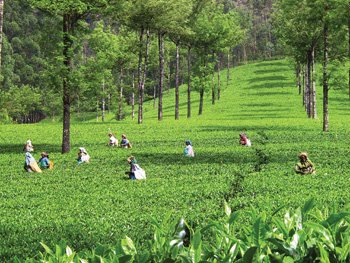
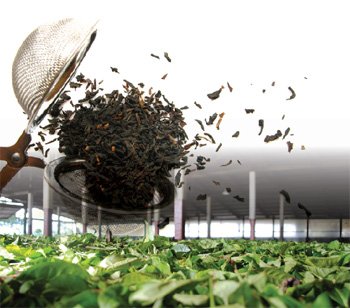
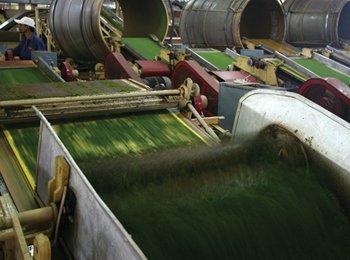
Cleaning processes that help in the production of tea varieties comprise of three stages: cleaning after plucking, during manufacturing and during packaging. Tea manufacturing involves different stages like green leaf intake, withering, rolling, oxidation (fermentation), drying, sifting/grading/cleaning of grades, packing and dispatch. Besides these, moisture and temperature control also needs to be taken into consideration in the context of tea leaves, dust and bacterial contamination. When the leaf brought from the field is dry, there is little increase in bacterial growth. But if the leaf brought to the factory is wet, as it happens during the rains, the conditions become favourable for bacterial growth. The food material required for bacterial growth is drawn from the leaf itself. The bacterial growth is checked with the removal of surface moisture.
Microbial Contamination
Tea leaf in the field carries on its surface a large population of naturally occurring bacteria. So when the leaf is carried to the factory, a considerable number of bacteria are likely to be carried along with it. These bacteria under favourable conditions develop very rapidly. The long interval of 16 to 18 hours between plucking & processing followed by oxidation periods of about 1.5 hours for cutting, tearing and curling (CTC) and around 2.5 hours for manufacture allow the possibility of a considerable bacterial build-up. During firing, all the bacteria are destroyed, but moulds have been known to persist even after drying.
Sources of Microbial Contamination
The possible sources of contamination of tea include the oxidized leaf, factory floor and air. The factory floor up to the stage of fermentation can be kept clean by washing properly, but the same thing cannot be followed in the drying room and beyond. If the drying and sorting rooms are not washed or if the atmosphere is warmer and dusty, then a different group of moulds start growing. These microbes affect adversely the tea quality. Warm, dusty atmosphere and moisture along with the changed substrate in the made tea provide ideal conditions for growth of the moulds.
Talking about hygiene in the manufacturing process,
Dr Mohan Kumar, Director, UPASI Tea Research Foundation, Tea Research Institute, Valparai, Coimbatore says, “The teas marketed in India have to pass Food Safety and Standards Authority of India (FSSAI) specifications that include black tea quality parameters and the amount of pesticides residues & heavy metals.”
Explaining the cleaning processes in detail Suresh Jacob, Vice president, Plantations, AVT Ltd, said, “The first stage of manual cleaning helps in removing only foreign bodies; all the bacteria get killed in the subsequent stages of drying. At green leaf stage, removal of foreign body like stones, leaves etc are done. In sorting and grading, removal of iron fillings at various stages and removal of stalk & fibre (tea fibre) are accomplished to have a clean black tea.” Withering and fermentation, which are entirely dependent on change in ambient weather condition need close supervision. In order to ensure that withering takes place in a favourable setting, cleaning of machineries is meticulously done.
Jacob goes on to explain the need for manual cleaning and why no sophisticated machinery is required to aid the cleaning of tea. “The bolder leaf grades are cleaned by a machine called colour sorter to clean and remove the long fibre and the smaller grades are cleaned through fibre extractors. The Wet processing area rollers/ fermenting area have to be cleaned well after every day’s manufacture – ideally with hot water to kill the bacteria.” In terms of the latest machinery that is available,
Dr Kumar opines, “The cleaning of tea machinery and floor in tea factories is done using high pressure water jet.”
During rolling, there is an immediate drop in the microbial population due to the antiseptic properties of oxidised polyphenols. But during this process the leaf juice is expressed which drips down to the floor with fragments of leaf and may become a source of bacterial growth. The juice and the fragments of leaf may also be found adhering to the roller caps, roller doors, ball breakers, CTC machines etc. If not cleaned properly, this infection is carried over to the following day. It is a common experience to see plenty of leaf particles adhering to the inside cover of the CTC machine for a long period if not properly attended to. This makes the leaf over fermented and also provides the source for bacterial growth. Similar is the case with the roller-doors where juice and fragmented leaf particles may be the source of contamination.
The floor of the rolling room can be a dangerous source of infection in the factory. The juice expressed on the floor should be washed away immediately. The floor should have a steep slope from the rear to the front of the rollers to facilitate washing and removing the juice to the side drain. However, a rung trolley placed under the rolling table is always preferred.
The use of all metal leaf trolleys reduces the bacterial growth possibilities in this stage. But these are to be kept thoroughly clean. Green leaf sifters can infect leaf with bacteria very easily. A high-pressure hose is suitable for cleaning these sifters. Although precaution may be taken during the daily cleaning at the end of the day’s manufacture, the infection tends to develop on sifters during the course of manufacture, as adequate cleaning is not possible unless the whole of the leaf has been rolled. It is, therefore, advisable to have more than one sifter so that one can be cleaned when the other is in use.
Fermenting Room
When rolled leaf is spread on floor for oxidation, some juice adheres to the surface and, if not cleaned, the accumulated juice becomes a source of bacterial contamination. Rough cement surfaces, cracks and crevices are the sources for bacterial growth. The porousness or the roughness of the cement floor can be done away to a great extent with a coat of epoxy resin paint that keeps the floor shining white to facilitate proper cleaning. Glazed tiles, metal sheets etc. are also used as juice collected over these can easily be cleaned.
On badly cleaned “fermenting” surface, the bacterial effect may arise in two ways. Bacteria present in the film of juice may penetrate the lower layers of the bed of leaf and produce a direct infection. The second effect is due to the bacteria attacking the juice deposits already present on the floor and the juice freshly deposited with each bed on leaf. The fermenting room should be well drained and cleaned with an abrasive and good detergent. The water used for cleaning the fermenting floor should be clean and bacteria free.
Many of the present day factories use Continuous Fermenting Machine for oxidation. One of the biggest problems with these machines is to keep them hygienically clean. Whenever such machines are used, extreme care should be taken to keep them clean.
In order to achieve this, Jacob explains, “Dry cleaning of withering troughs and dry cleaning and washing the orthodox rollers, rolling room floor and fermenting floor with high pressure jet using organic cleaning agents are done. Drying room, heater room and packing room are also dry cleaned with brooms and vacuum cleaner.”
Drying and Packing
Teas emerging out of a drier usually have a low microbial count as most of the bacteria are destroyed during firing. It may appear that after drying, there will be lesser chances of microbial contamination.
Quality Control, Testing and Accreditation
Quality is a major discriminating factor that sets the different tea brands apart from one another. “Acquiring quality green leaf, (raw material) is tough. The quality in the end product is achieved through Good Agriculture Practices (GAP) and Good Manufacturing Practices (GMP – HACCP ),” says Jacob.
Says Dr Kumar, “NABL accreditation is given to Chemical and Calibration Laboratories for following the norms as per the requirements of ISO 17025:2005. Manufacturing aspects are covered by HACCP (Hazard Analysis and Critical Control Points) principles. Tea manufacturing units obtain ISO 22000 certification besides GMP, which deals with the HACCP principles apart from quality management system.”
Moreover, the pesticide residue facility of UPASI Tea Research Foundation has been granted GLP certification by National GLP Monitoring Authority of India. The testing facilities, chemical laboratories at UPASI Tea Research Foundation, Tea Research Institute, Valparai, Regional Centre, Conoor and Regional Centre, Vandiperiyar are accredited by National Accreditation Board for Testing and Calibration Laboratories, Government of India as per the requirements of ISO 17025: 2005. Armed with adequate infrastructure, UPASI TRF is also authorised to analyse the tea samples that are intended for export and import.
Dr Kumar gives us an overall picture on UPASI’s activities to encourage good manufacturing practices. “The Tea Technology Division of UPASI TRF is engaged in research in terms of manufacture, bio-chemical and quality aspects besides the testing activities pertaining to the bio-chemical and quality parameters of processed tea. Sometimes samples for NABL-GLP and FSSI certification too reach us. We serve as a link between the plantations. In addition UPASI Krishi Vikas Kendra (KVK) is working at Conoor to extend the analytical and extension services for small tea growers, government farms and tribal co-operatives. Members who have subscribed for our services and those from KVK approach us.”
UPASI has developed the microbial detection kit for testing the microbial contamination level in the tea manufacturing unit. “In case of microbial contamination, cleaning agent such as Purfue is being used to clean the machinery followed by high pressure water cleaning.” AVT Ltd trains its cleaning personnel before taking them on job. “Shortage of workers is a major challenge faced in plantations,” remarks Jacob.
Waste Management
Care is taken to make the cleaning process eco-friendly. “Washed water is let into three filtration tanks which have gravels, charcoal and sand. The filtered water is let into tea field. The bio degradable waste is put separately in a pit and later used as manure. Non biodegradable materials like plastic are collected separately and sold to the approved buyer. Only organic cleaning agents are used for cleaning machineries and floor,” explains Jacob. In terms of the tea waste and its feasibility Dr Kumar cites only one productive use. “Only 2% is allowed as tea waste. It gets used for vermi-compost production. The methodology for composting has been disseminated to tea industry by UPASI. In case of low grade tea varieties, they are used to make instant teas.”
Vijayalakshmi Sridhar
(With inputs from various sources)
Tea manufacturing in India is an age old industry that dates back to the 1800s. The major tea belt constitutes the states of Assam, West Bengal, Tamilnadu and Kerala.
Each tea growing areas has its own distinctive pests and diseases though several of them might have been recorded from more than one region. Number of pests and diseases associated with tea plants in an area depends on the length of time for which it is cultivated in that area. More than one thousand species of arthropod pests and nearly 400 pathogens are known to attack tea all over the world, though only about 300 species of insects and mites and 58 pathogenic fungi are recorded from tea in India. Crop loss due to pest and diseases varies between 15 and 20%. Magnitude of the losses is bound to be higher today in view of the increased production and productivity besides the variations in climatic conditions. Mites are serious pests of tea and they damage the green tissues of leaves, thereby reducing the photosynthetic efficiency resulting in yield reduction. Infestation leads to discoloration of leaves. Most of the species occupy the under surface of the leaves but a few prefer the upper surface also.

Consumer Rights for Food & Food Products

Consumer Rights 
As a consumer you have certain rights with regards to the food and food products you purchase. You also have a redressal mechanism to help you. All you have to do is to be aware and exercise your rights.
Know Your Rights
  1. A Purchaser of food article may, if he so desires, have the article analysed by the Food Analyst as per the provisions of the Act.
  2. The Purchaser shall pay the prescribed fee to the Food Analyst carrying out the analysis which will be refunded if the food sample is sub-standard.
  3. The Food Analyst shall send to the Purchaser his report on the analysis of the article of food and if the finding of the report is to the effect that the article of food is adulterated / misbranded / contaminated or does not conform to the standards prescribed under the Act or the Regulations, the Purchaser shall be entitled to get a refund of the fees paid by him.
Labelling
It is mandatory that every package of food intended for sale should carry a label that bears all the information required under FSS (Packaging and Labelling) Regulation, 2011. Food package must carry a Label with the following information :
  1. Common name of the Product.
  2. Name and address of the product’s Manufacturer
  3. Date of Manufacture
  4. Ingredient List with additives
  5. Nutrition Facts
  6. Best before/ Expires on
  7. Net contents in terms of weight, measure or count.
  8. Packing codes/Batch number
  9. Declaration regarding vegetarian or non-vegetarian
  10. Country of origin for imported food
Consumer Reward Scheme 
FSSAI has a reward scheme for people who convey valid information about mislabelling, misbranding and extravagant claims. Your identity will be kept absolute secret. A reward of Rs. 500 will be given once FSSAI establishes the validity of the complaint. You can send the information to ceo@fssai.gov.in
For more details about Food Safety and Standards Authority of India (FSSAI) please visit their website at fssai.gov.in
The Toll Free Helpline No. is 1-800-11-2100 Complaints can be lodged and followed up online at foodsafetyhelpline.in/FSSAI/ This site also has interesting consumer resources in this area.

State FDA seizes mawa, mithai worth Rs 3.28 lakh before festive season

Food and Drug Administration (FDA) Maharashtra has seized mawa and mithai worth Rs 3.28 lakh till September 9, 2012. For the safety of the consumers this festive season, FDA will be carrying out a special drive to check out the adulteration all over the state.

K B Sankhe, joint commissioner, food, FDA, informed, “Since the new food act came into force on August 5, 2011, there were only a few cases. This year till September 9, we have collected 109 samples of mithai and mawa from all over Maharashtra and awaiting for the reports.”

He further added, “In the reports if the products collected by us is of unsafe and injurious to health then the party will be prosecuted, if it is a minor adulteration the matter will go to the adjudicating officer and if found to be of sub-standard quality, then the culprits can be fined upto Rs 10 lakh.”

“Contaminated and adulterated mawa is manufactured in Gujarat and it is being sold on a wide scale in Maharashtra. Gujarat is popular for this food item as it is one of the largest producers of milk and milk is the primary ingredient in mawa and mithai,” informed the source from FDA on the condition of anonymity.

“This Diwali, we have planned to focus on mawa and mithai, because they are a major ingredient in all sweet products. We will carry out surprise raids all over Maharashtra in sweet shops and will not spare anyone if found involved in adulteration,” added Sankhe.

FDA is also appealing the people to come ahead and report about the adulteration during the festive season.

Erring manufactures, traders fined on world Food Day

ADC Kulgam for strict implementation of FSA, awareness among masses
KULGAM, OCTOBER 16:
ADC Kulgam G.A. Shabnum, who is also adjudicating authority under Food Safety standards Act 2006, has fined Rs.1.11 lacs on ten manufacturers, stockiest and retailers of district Kulgam found involved in manufacture and sale  of sub standard food items today on world food day.
The erring manufacturers, stockists and retailers were booked under Food Safety and Standards Act 2006 by Food Safety and Standards officer Kulgam during market checking across the district and were summoned in the court of the Addl. Deputy Commissioner Kulgam on Tuesday for being heard and to defend themselves. The booked manufacturers, stockiest and retailers failed to vindicate themselves and counter the charges leveled against them. They also declined to have the seized samples cross examined at their level to prove or disprove the analysis revealed during the examination of the samples seized and sent to testing laboratory by the Food Safety Officer of District Kulgam. While adjudicating upon the cases and estimating the quantum of crime committed by the accused, the ADC Kulgam as Adjudicating Authority under the Act fined Rs.1.11 lacs on them which was realized and deposited in the Government treasury.
He also warned the accused to be careful in future and desist from manufacturing of sub-standard food items and also from stocking & selling of sub-standard and misbranded edibles. He asked the officers of Food Safety & Standards to intensify their vigil against manufacturers, traders and retailers who are involved in such malpractices.
He also suggested for proper awareness among manufacturers, traders and the consumers of the district about the Food Safety and Standards Act, 2006 and for its strict implementation to ensure availability of standard and safe food items in the district. He also appealed the consumers of the district to extend their full support for identifying and booking such manufacturers, traders and retailers who resort to manufacture and sale of sub-standard, misbranded and unsafe food items.
Meanwhile a joint squad of CA&PD, Drug & Food  Controller Origination and Labour department lead by Addl. Deputy Commissioner Kulgam made market checking at Kulgam and recovered a fine Rs.5600/- on spot from  13 hoteliers, medical shops, Shopkeeper and venders for violation of Food Safety and standards Act, consumer protection Act & Labour laws. The squad also seized 8 domestic LPG cylinders used by the hoteliers.


Oct 16, 2012

8 of 12 PMC employees promoted to food safety officers will not join FDA

Fearing transfers within state every three years, they choose to remain with civic body

Food inspectors with the Pune Municipal Corporation (PMC) were promoted to food safety officers (FSOs) and asked to report to the Food and Drug Administration (FDA) following changes to the Food Safety and Standardisation Act, but two-third of them have declined to do so.
Realising that by accepting service in the FDA they will be under the state government and can be transferred anywhere in the state, eight of the 12 officers have decided to stay back in the PMC.
These officers also claim that there was an order that had given them the choice between the PMC and the FDA and that they have chosen to remain with the PMC. According to these FSOs, they are not interested in joining the FDA as they do not want to be transferred to another city.
FSOs working with the FDA get transferred every three years within the state. “We don’t want to move to the FDA as we are happy doing our work here,” Ajit Bhujbal, an FSO with the PMC, said. “We are not ready to the join FDA and we have filed an application to stay in the PMC.”
Of the 12 PMC food inspectors gazzetted as FSOs, only four have decided to work with the FDA. “They had an option between the PMC and the FDA, and four people chose to go for FDA,” PMC Health Officer Somnath Pardeshi said. “The remaining eight have shown willingness to stay in the PMC. Though we can not issue licence through these FIs who are now FSOs, we have given other work to them.”
According to the state government gazette dated August 1, 2011, in pursuance of sub section (1) of section 37 of Food Safety and Standards Act 2006, the Commissioner of Food Safety appointed the food inspectors from various municipal corporations as FSOs for the respective area.
Joint Commissioner, FDA (food), S R Kekare said: “Eight of the employees concerned have chosen to stay with the PMC and only four will be in the FDA now. Also, the decision must have been taken or may be in process at the commissioner and state level. Yes, we have less manpower, but instead of cribbing about it we are doing our work effectively.”
The eight who have opted to remain with the PMC will now not continue as FSOs. Pardeshi said: “We have given them posts in the PMC according to their education and they will not be FSOs as their names will be omitted from the new gazette.”
Kekare said: “People who do not join FDA will not be FSOs in future. There will a finalisation of names, and after that those who haven’t joined FDA will not continue as a FSOs.”

Parle Biscuits knocks on Bombay HC doors over recall of Kachha Mango Bite

On 14 Oct, the Maharashtra unit of FDA had ordered recall of entire stock of Kachha Mango Bite from the marketplace
Parle Biscuits, the maker of candies Mango Bite and Kachha Mango Bite, has approached the Bombay High Court over the issue pertaining to the recall of the latter by the Food & Drug Administration (FDA).
On 14 October, the Maharashtra unit of the FDA had ordered the recall of the entire stock of Kachha Mango Bite from the marketplace following a series of raids conducted at Nasik, Raigadh and Bhiwandi.
FDA officials had said that the company was using buffered lactic acid, an ingredient which is not permitted under the Food Safety & Standards Act, 2006, in Kachha Mango Bite, hence the decision to order a recall of the product.

In a statement, Parle Biscuits has said that lactic acid is safe for human consumption and that it is widely used in several items including bread, processed cheese, milk powder, tomato ketchup, squashes, garlic, onion and ginger paste.

But FDA officials say that the use of lactic acid has been banned in foodstuff after a bench found it not good for consumption for its tooth decaying side effects.

Mahesh Zagde, the Maharashtra FDA commissioner had said in a conversation with Business Standard that the body would continue carrying out state-wide raids to ascertain whether the company was making Kachha Mango Bite using buffered lactic acid. "So far, stocks of the candy have been seized in Nashik and Konkan. All the food safety inspectors across the state have been alerted to carry out similar raids in their respective areas," he said.

Oct 15, 2012

Importers to take License before 4.12.2012


DINAKARAN NEWS


Cargill India gets CII national award for Food Safety 2012

Addressing the session Chandramouli called on industry bodies and industries to partner in the implementation agenda of FSSAI across the country through a collaborative effort and drew attention to the fact that safety in street food was a concern and needed focussed attention.
NEW DELHI: Confederation of Indian Industries (CII) distributed it's CII National Award for Food Safety 2012 to Cargill India Pvt Ltd, Kutch, Gujarat for it's outstanding performance in food safety excellence - manufacturing business. The award was conferred by K Chandramouli, Chairman of Food Safety and Standards Authority of India (FSSAI) recently.
Addressing the session Chandramouli called on industry bodies and industries to partner in the implementation agenda of FSSAI across the country through a collaborative effort and drew attention to the fact that safety in street food was a concern and needed focussed attention.
On this occasion, Chandramouli launched the CII-FACE (Confederation of Indian Industries - Food and Agriculture Centre for Excellence) & IIT Certified Food Professional Course at the Awards function by releasing the brochure.
Meetu Kapur, executive director CII - FACE elaborated on the course saying that it was a proud moment for CII FACE to launch this novel program where CII FACE and IIT Kharagpur have come together to raise the standards of the Indian Food & Agriculture industry to global standards- stated a release by CII.
The existing lacunae and the growing demand of food safety and quality professionals by small and medium enterprises, with first-hand knowledge on benchmark practical laboratory techniques, food science, manufacturing hygiene and quality and food safety systems were identified through the CII FACE surveys.
This All in One Course for Facilitators was designed with 3 weeks Residential course at the state of art technology environment of IIT Kharagpur, 5 weeks e- learning and 1 month industry project.
Earlier , in his Welcome address, Rakesh Bharti Mittal stated that the Award program was an endeavour by CII towards capacity building of the Food Sector by involving the Industry in the assessment process. With the aim of encouraging participation from various food sectors and sizes, customised assessment criteria, catering to Small, Medium and Large scale industries in Food
Manufacturing , Hotels, Restaurants, Eateries, Canteens and Food Retail Stores have been made available under the specific models of assessment. Apart from an opportunity to receive national recognition, the take aways for each Applicant unit is an external perspective on their practices and performance in the form of a detailed feedback report .
Therefore, organizations at different levels of implementation can benefit from participating in the award process to understand where they currently stand on these practices and identify improvement opportunities and benchmarks.
Mittal pointed out that despite the challenging and stringent demands of the model, there has been 100% increase in participation in the Award applications this year with about 50% applications coming from the SMB sector. He hoped that industry would come forward to enhance participation and take part in this capacity building initiatives to raise their standards to world class levels.
The Food Safety Award program has helped CII-FACE reach out to organisations, their suppliers and co-packers across the 4 regions in cities and far flung locations like Vemagiri, New Jalpaiguri, Zaheerabad, Kandla, Haldwani, Sonepat, Bidadi, Haridwar, Gandhinagar, Bangalore Rural and others.

Ponda's closed ras-omelet vendors want government jobs


PONDA: Alleging that the decision to stop ras-omelet kiosks has deprived them of their livelihood, several such roadside kiosk operators from Ponda have demanded government jobs in exchange for the business.
"The kiosks were our livelihood and as the government has ordered us to stop our business, we want government jobs," a kiosk operator, despite having crossed the age limit for entering government service, said.
He said they have been running the business for over two decades and stopping it suddenly has deprived the kiosk owners of their livelihood. He said various families survive on income generated from the kiosks which helps educate their children and so the government must revise recruitment rules to make government jobs available to affected kiosk owners.
Stating that food and drugs administration (FDA) has stopped their business alleging that kiosks do not maintain hygiene, another vendor said hygiene at roadside eateries is better than that of restaurants.
"We prepare the dishes in front of our customers and wash our dishes in their presence. This ensures cleanliness. If we had not maintained hygiene, customers would have never returned to our kiosks," the kiosk owner told TOI.
FDA food inspector Rajiv Korde said the kiosks were shut down as they do not have the necessary licences necessary. "They have been asked to stop business for want of the FDA licences. We have no objection to them running their business or issuing FDA licences to them, but to get our licence, they must submit local civic body and health authority permissions. No ras-omelet kiosk at Ponda has any of these licences," Korde said. Stating that action has also been taken against 'wada-pao' vendors and Chinese fast food vendors, Korde said the three Chinese fast food vendors have licenses.
Ponda municipal council chief officer Pradeep Naik said the council has not yet prepared a policy regarding allotment of permission to kiosks, so the civic body cannot issue any permission. "When there is such a policy in place, we can issue permissions. It is the council that should draft the policy," Naik said.

Food and drugs administration orders closure of 70 kiosks


PANAJI: Food and drugs administration (FDA) on Monday ordered the shutting of 70 roadside gaddas and handcarts across the state as they were operating with out necessary permissions and licences.
FDA director Salim Veljee said the handcarts did not have food licences nor did they possess municipal permissions or approvals. He said the handcarts and gaddas were selling various items such as Chinese fast food, tea, snacks and other eatables. They were operating in various parts of the state including Panaji, Margao, Mapusa, Ponda and Porvorim.
Veljee said food safety officers identified the violating gaddas and handcarts as part of the regular survey on controlling unlicenced street food and gaddas.
A few weeks ago, FDA had seized expired food items being sold in some prominent establishments and fined them. tnn

Street food under scanner

Road side eateries and food joints who are planning to make some fast bucks during the puja festivity selling adulterated and sub-standard edible items better be prepared to face the music.
A team of senior health department officials of East Singhbhum will start collecting food samples from eateries and other food joints in the city to check its quality.
The East Singhbhum district health department has received directive from State food controller TP Burnwal for carrying out random checking drive at crowd puller pandals and fairs in the city during the puja festivity.
The State food controller directive assumes significance with the State food and drug testing laboratory inauguration at Namkum near Ranchi.
“We are keeping a special eye on Jamshedpur as it witnesses one of the highest puja pandals and fairs during the puja festivity in the State. The step is being taken to prevent sale of adulterated foods by outlets in the garb of rush during puja festivity,” said Burnwal.
The samples collected by the district health department would be sent to the food testing lab.
Jamshedpur witnesses more than 280 Durga puja pandals and around 12 fairs organised near crowd pullers pandals across city.
Burnwal further said that eateries and food joints whose samples are found containing adulterated and poor quality items would be warned of suspension of licenses and levied a fine of Rs 25,000.
ACMO East Singhbhum Swarn Singh said that they would constitute a team with food inspector and carrying out random checking drive on all the four days of the festivity in the city.
“We have been receiving complaints from the people about the poor quality of food being served. Moreover, with rise in cases of bird flu in the city over the past few years has also been a matter of great concern. Such a move has been taken to prevent the people from poisonous and harmful foods, which lead to various diseases.  It will also help in preventing sale of sub-standard food. We want to put a check on the hotels and road side eateries so that they are able to serve quality food to the people,” said Singh
Singh said that earlier the quality of food sold by hotels and other eateries used to be regulated under The Prevention of Food Adulteration Act, 1954.
But, now the inspection of food quality is being done under The Food Safety and Standards Act, 2006. The hotel owners need to follow the norms and guidelines or else they would have to face the music.

Save human lives and not the tobacco industry

Kudos to Justice Amar Saran and Justice Anuraag Kumar of the Allahabad High Court for issuing strong warnings to the Uttar Pradesh government to ban gutkha (paan masala mixed with tobacco), on a public interest litigation filed by the Indian Dental Association, in the light of the provisions of the Food Safety and Standards Act. The Court also expressed its displeasure over the delay and the frequent change in the stand of the state government on this issue. It was only due to the firm stand taken by the Court that the Uttar Pradesh government has agreed to ban the manufacturing, sale and distribution of gutkha in accordance with the Regulation 2.4.3 of the Food Safety and Standards Act 2006 notified for implementation from August 5, 2011 by the Government Of India which states: ‘Tobacco and nicotine shall not be used as ingredients in any food products’. The Supreme Court had clarified that ‘since pan masala, gutkha or supari are eaten for taste and nourishment, they are all food within the meaning of Section 2(v) of the Act.’
However, this much delayed order will come into effect in UP only from April 1, 2013 as our young and dynamic Chief Minister Sri Akhilesh Yadav wants to help the workers of the industry by giving them six months’ time to find alternative employment and occupation. This concern reads more like a statement of the gutkha lobby which has time and again made its hapless employees a shield to fight against civil society efforts for tobacco control. Akhileshji too seems to have played into the powerful hands of the gutkha industry by giving it enough time to sell off its existing stock of this hazardous substance. Earlier also the UP government had dilly dallied enough even after receiving three letters sent by the Union Ministry of Health and Family Welfare between May-August 2012 directing it to prohibit the sale and distribution of gutkha. Instead of putting a ban on the manufacture and sale on gutkha, the UP government, in August, had lowered the entry tax to facilitate increased sale of the product.
Perhaps the greed for filling the state coffers with the revenue earnings from gutkha overpowers the human duty of the government to save lives from this lethal attraction. Reportedly, in 2011-12 the sale of gutkha in UP fetched over Rs 200 crore in tax, while paan masala sales added another Rs 32 crores to its kitty. But the expenditure by the government health services on treating tobacco related diseases was bound to be much higher. One also wonders if the Honourable Chief Minister realizes that it is incumbent upon the state government to protect the health of its citizens by taking appropriate measures. Does he care as much for the families and lives of 328 lakh men and women above the age of 15 years who consume smokeless forms of tobacco with nearly 41.5% or 136.21 lakhs of them consuming gutkha and thus sitting on a veritable landmine of oral cancer?
According to a newspaper report, some 2.5 lakh people are suffering from cancer in UP, of which 75,000 are cases of oral and mouth cancer, mainly due to use of chewing tobacco, gutkha and paan masala. Experts believe that by 2020 the cancer population will swell by 56% with more than 30% of them suffering with oral cancer caused by chewing tobacco. Also, 33% of the patients oral cancer seeking treatment at the Mumbai based Tata Memorial Hospital are from Uttar Pradesh. This adds up to about 12,000 patients per annum from just one hospital.
It is indeed unfortunate that till now only 14 states (Goa, MP, Kerala, Bihar, HP, Rajasthan, Maharashtra, Chhattisgarh, Jharkhand, Haryana, Delhi, Gujarat, Punjab and Mizoram) — have been able to invoke the law banning the manufacture, sale and consumption of the gutkha. Perhaps it is the so called small gutkha industry which in collusion with the political class (which in many cases has big stakes in the industry) has been thwarting all tobacco control measures and has tried its level best to hoodwink the authorities into believing that it is a big revenue spinner.
Yet there are a few sane voices in this wilderness of chaos. After banning gutkha, the Goa government has already banned all eating outlets, shops and establishments from storing or selling tobacco products in any form-- cigarettes, cigars, beedis, gutkha, and hookah. Likewise, the Delhi government is also contemplating a ban on chewing tobacco.
The Citizen News Service (CNS) hopes that the new pictorial health warnings on tobacco packs as finalised by the government and to be implemented from April 1, 2013, would be scary and effective enough. The government has clarified that the anti-tobacco warnings will have to be displayed in 40% of the frontal displayed area of the tobacco/cigarette packs with the word ‘Warning’ printed in red colour along with the messages—Smoking Kills and Tobacco Kills. It remains to be seen if the government will stick to its mandate strictly or succumb to the pressures of the tobacco lobby as has often happened in the past when these warnings have been repeatedly diluted and/or delayed due to vested interests. As per the Framework Convention on Tobacco Treaty (which India has ratified), the pictorial warnings should be rotated at least once every year, and the new set should have come into force from December 2012, which India has failed to abide by.
It is high time our politicians and citizens chose Life over Tobacco.

Punjab Govt assured every possible help to dairy sector

To meet challenges of food safety and standards 2006
CHANDIGARH: The Punjab Government was committed to extend every possible help to the dairy sector of the state to enable it to meet the challenges thrown by Food Safety and Standards Act 2006, Rules and Regulations.
This was stated here today by Jagpal Singh Sandhu, IAS, Financial Commissioner, Animal Husbandry, Fisheries and Dairy Development, Punjab while delivering presidential address in the inaugural ceremony of one day National Seminar on Food Safety and Standards Act 2006 and its impact on Dairy Industry today organized by Indian Dairy Association Punjab Chapter at Chandigarh. He appreciated the proactive role of IDA Punjab Chapter which was an organization of producers of Milk and Milk Products taking up the responsibility to spread the awareness about the new law. This initiative of the producer’s organization speaks volumes of their readiness to comply with the provisions of Food Safety and Standards Act 2006. He said that the new Act was very comprehensive and covers everything which could be conceived as an item to be consumed by the human being. He paid rich tribute to Dr. V.Kurian, who is known as the Milkman of India and said that the philosophy with which he initiated the dairy cooperative movement was now more relevant.
Milk and milk products constitute a very vital component of our daily food in all age groups. Compliance with the new provisions in this sector was of prime concern. Moreover, it has unique predicament in many ways. Milk was a highly perishable commodity and required critical infrastructural facilities to maintain the quality throughout the supply chain. Sandhu while emphasizing the need to comply with all the provisions of new regulations in view of the concern about the health of the consumer assured that the government would do everything possible to facilitate such compliance by different stakeholders in dairy sector.
S. Inderjit Singh, Chairman, Indian Dairy Association, Punjab Chapter in his welcome address gave a brief account of Indian Dairy Association and told that it is an apex National Body of Dairy Professionals. Punjab Chapter is its extended arm operating within the state. Today’s seminar was being organized by the State’s Chapter with the main objective of spreading awareness among different stakeholders. Since, the Act, Rules and Regulations were new and have very wider implications for all food business operators. Dairy sector supports a variety of large number of Food Business Operators having unique characteristics and problems. He thanked the Chief Guest and other dignitaries for sparing the time to grace the occasion. He appreciated the whole hearted support of N.R.Bhasin, IDA President, M.P.S Chadha, Chairman, IDA, North Zone and Dairy Industry for their active support to make the seminar a success.
M.P.S Chadha, Chairman, IDA, North Zone while paying the tribute to Dr. V.Kurian described him as a one man army, which brought White Revolution in the country. He spearheaded Cooperative movement in dairy sector. The whole gathering in the seminar paid rich tribute to the Milkman of India by observing two minutes silence.

Mango Bite’ raids on Parle factories set to rock food industry

India’s food industry that was given numerous incentives in the last decade has come under the scanner of the Food and Drug Administration (FDA) when it raided Parle Biscuits Pvt Ltd’s factories to seize its branded Mango Bite candies with more than permissible levels of lactic acid. The move is set to rock the industry which requires a new set of standards in keeping with new research findings on food preservants.
The FDA has seized candies in their factories amounting to more than Rs 2 crore from Raigadh, Nashik and Bhiwandi factories of Parle Biscuits last month and sent them for lab testing to confirm the “excessive levels” of lactic acid as alleged. Based on the lab report, the authorities are planning to file cases against the country’s one of the top candy-makers and erstwhile owners of Thums Up which they had sold to Coca Cola in the 1980s, in one of the industry’s first sell outs to an MNC.
The seizure is set to destablize the food-processing industry which is huge and fast-growing in India. Currently, the market size of confectionery in India is estimated at $1.1 billion, growing at the rate of 11.9 percent per annum. It is estimated to grow up to $2 billion by 2014 by Datamonitor in its 2010 report.
Arup Chauhan, MD of Parle Products, said: “The goods from some of the factories have been seized, but we have not yet got any further instructions from the FDA.”
Assistant food inspector (FDA headquarters, Mumbai) K V Sankhe said the product, though positioned categorized as sugar-boiled confectionary, has excessive amounts of lactic acid amounting to recall of the product from several places last month. Parle has denied that the product was recalled but said lactic acid was not harmful and used by confectionaries all over the world.
Lactic acid is used as food-preservant and its mild acidic taste gives it sour flavour. It is non-volatile odorless and is classified under GRAS (generally regarded as safe) by FDA in the US. It is a very good preservative and pickling agent. Addition of lactic acid aqueous solution to the packaging of poultry and fish increases their shelf life. In India, its usage in food industry was allowed but within certain limits.
In fact, FICCI has asked for more clarity on the issue two years ago. Since there is variation in certain standards which are conflicting and contradictory, industries use varied levels of acidulants made from lactic acid. For instance, usage of Acidulants in chewing gum and bubble gum was omitted from main ingredients list and put in a different Table (13)(G).
However, regulation 3.1.12 allows different limits of acidulants for “miscellaneous foods”. In new table 13(G) L(+)Lactic acid is not incorporated, while in regulation 3.1.12 L(+) lactic acid is allowed “as an Acidulant in miscellaneous foods” at GMP level and Miscellaneous food is not specifically defined still, says the a FICCI report on the industry.
As both the above rules contradicts each other, a FICCI report sought more clarification on the ingredient’s use in different products.
The use of lactic acid (chiefly found in milk products) was banned in foodstuff after a court verdict found it not good for consumption for its tooth decaying side effects but has been allowed under India’s new Food Safety & Standard Act of 2006.
In the United States, the US FDA allowed it as an ingredient in food with no limitation other than current good manufacturing practice and is categorized it as generally recognized as safe (GRAS) as a direct human food ingredient is based upon its use:
(1) as an antimicrobial agent; a curing and pickling agent; a flavor enhancer; a flavoring agent and adjuvant; a pH control agent and a solvent.
(2) The ingredient is used in food, except in infant foods and infant formulas, at levels not to exceed current good manufacturing practice.
The raids by India’s FDA will provide an in-depth study of the safety usage of lactic acid in candies which are meant for children and elders alike.

Cockroach in food, restaurant closed

THIRUVANANTHAPURAM: After KFC, the licence of one more prominent restaurant in the city was suspended on Friday. Customers found cockroaches in the dish served to them at Hotel Sindhoor, functioning at Vazhuthacaud and informed the food safety authority. The food safety officials inspected the restaurant and found that it was functioning in unhygienic conditions and asked the management to close the eatery.
According to food safety commissioner in-charge Anil Kumar, the complaint was registered by a government employee Uma Maheswari through the authority's toll free number. She is the Confidential Assistant to the Tourism Secretary at the Secretariat. She said that she had gone to the restaurant with her daughter to have lunch. Her daughter ordered fried rice while she ordered fish curry meals for herself along with a dish a prawn. She alleged that the cockroaches were found in the prawn dish.
When she complained, the restaurant authorities tried to appease her by offering to replace the dish, she told in her complaint. The mobile vigilance team of the food safety authority that inspected the restaurant found the complaint genuine.
"The kitchen of the restaurant was completely unhygienic," said food safety officer A Satheesh Kumar.
He said that cockroaches, cats and rats were found in the kitchen. The box in which dried chilly was kept was also filled with cockroaches. Meat and vegetables were stored together in the freezer. The contents in the freezer also turned stale, he said. He also said that the team visited the sister concern of the restaurant that functioned at Kowdiar where they detected some minor hygienic problems, they could not find any grave instance of callousness there. However, they have issued a notice to the management of the restaurant to improve the facilities there.
Meanwhile, the food safety authority officials also said that they would kick start the second phase of state-wide raids from Monday. At least 50 teams will be operative in the state on each day.

FSSR failed to describe gradation; Act enacted in haste, S N Mohanty told

Tejinder Singh Renu, honorary secretary, Vidarbha Taxpayers Association (VTA), Nagpur, met S N Mohanty, chief executive officer, Food Safety and Standards Authority of India (FSSAI), in New Delhi recently to discuss the ambiguities and discrepancies in the Food Safety and Standards Act (FSSA), 2006, and the Food Safety and Standards Regulations (FSSR), 2011.

While Renu was accompanied by Bhawanishankar Dave, joint secretary, Nagpur Hotel Owners Association, the country's apex food regulator was represented by S S Ghonkrokta, director (enforcement); Madhawan, deputy director (enforcement-I); and D S Yadav, deputy director (enforcement-II).

Renu explained, "The Act is literally threatening to close down practically all food business operators (FBOs) in the country, as the Regulations have a number of provisions that are practically impossible to comply with, and has also given unprecedented powers to the food inspectors leading to Inspector Raj."

He expressed his gratitude to Mohanty for extending the time limit as prescribed in Regulation 2.1.2 of the Food Safety and Standards (Licensing and Registration of Food Businesses) Regulations. 2011, which deals with licences for food businesses by six months, but said it would be insufficient as the Act applies to the whole country and covers all businesses related to food.

Renu raised several key issues, the first of them being FSSAI's failure to strike a logical balance and gradation. "They have surprisingly prepared the same provisions for all levels (from farm to fork), which means a petty dhaba and a seven-star hotel shall be following the same norms, as no parameters or gradations have been described under the new Act," he said.

Another issue raised by him was the fact that the regulator did not study the Indian market, agricultural procedures and other parameters before bringing the Act into effect. He said, "We (VTA) feel that the Act has been enacted in haste, and FSSAI has not given stakeholders a lawful opportunity."

After all, FSSAI was incorporated to lay down science-based standards for articles of food and to regulate their manufacture, storage, distribution, sale and import to ensure the availability of safe and wholesome food for human consumption. He also alleged that the regulator didn't follow provisions prepared by themselves, such as Sections 18(2)(a)(i) and 18(2)(d) of the Act.

"Another vital issue was existing FBOs would come under the purview of the Act as they have been asked by local authorities to comply with all the provisions and local authorities have also been demanding a mandatory affidavit from all applicants stating that they will comply with all the provisions of Schedule IV within a year of taking registration under the Act," Renu said.

"The penalty provisions under the FSS Act, 2006 - namely Sections 42 to 63 - lack clarity and ambiguity therein, which would lead to a number of litigations. Also, it vests in food inspectors unprecedented powers, which is bound to give a boost to corruption," the VTA secretary pointed out.

Dave, joint secretary, Nagpur Hotel Owners Association, pointed out various discrepancies in the Food Safety and Standards (Food Products Standards and Food Additives) Regulations, 2011, and said, "Even the best foodgrains available in the market are failing to match the high standards and characteristics defined in the Regulations."

When Mohanty was quizzed about the exclusion of farmers and milk societies from the purview of the Act, he said, "FSSAI was formed after the Act came into existence, and hence it can only be replied by Parliament." However, he categorically stated, "Farmers are also requested to obtain registration under the Act before they can sell their produce in the market."

VTA, in its memorandum, said they would categorically state that they were not against any of the laws or provisions that were in the interests of people, who might be affected upon consuming unsafe or adulterated food, but the system adopted to cover one and all, be it a small FBO or a big one, overnight might surely attract corruption and Inspector Raj was incorrect.

"This should have been imposed slowly and gradation-wise, so that gradually all are covered. After a patient hearing, Mohanty assured us that FSSAI would reply to all the issues raised in our memorandum soon and issue appropriate clarifications in the form of memos or instructions for clarification," said Renu.