Jul 17, 2020

Ban on food delivery hits hotels

With no money to pay the staff and rent expenses, many restaurants and hotels might have to shut down their business
A restaurant at Thampanoor displaying the closed board ,B P Deepu
THIRUVANANTHAPURAM: Hotels and restaurants in the city have suffered extensively due to the Covid-19 crisis. However, they hoped to revive business through food delivery giants such as Swiggy and Zomato. Several restaurants created their own food delivery services with the help of their staff. But, with the spike in cases resulting in triple lockdown, restaurants and hotels were instructed to close, without being permitted to offer parcel service. With no money to pay the staff and rent, many restaurants and hotels might have to shut shop.
A few months ago, when the lockdown was eased, many restaurants in the city implemented safety measures and lifted shutters to welcome customers. As people were still uncomfortable to dine out, many restaurants had switched to food delivery services. But the triple lockdown has resulted in a huge financial crises. “We have already incurred a loss of over Rs 4 lakh ever since the lockdown began. We barely received dine-in customers when it was eased. However, the parcel service was quite helpful as we were able to meet half of the expenses. We were delivering food to our customers through our delivery staff, adhering to the safety protocols. But, now that is impossible,” said Unnikrishnan N P, owner of The Yellow Chilli.
 
Unnikrishnan also pointed out that home chefs were mushrooming across the city during the lockdown. “Even bakeries have started selling biriyani. This will affect restaurants even if we resume after the lockdown. We are getting a lot of enquiries from senior citizens and people who stay alone but we are unable to cater to them due to the strict restrictions,” he said. 
However, some are pinning their hopes on the government and waiting for further instructions. “Only parcel service from Janakeeya hotels by Kudumbashree is allowed. Although we have suffered a huge loss, we are awaiting a nod from the government to resume operations after the lockdown is eased,” said Fajis of Ali Baba & 41 Dishes, Sasthamangalam. Meanwhile, the Kerala Hotel and Restaurant Association (KHRA) has already given a memorandum to Chief Minister Pinarayi Vijayan, district collector, Food Safety Commissioner and Mayor addressing their issues.
“There are more than 2,000 restaurants registered with KHRA functioning in the city whose owners have been paying taxes and rent for running the outlets. However, only the Janakeeya hotels have been allowed to deliver food instead of these restaurants. Moreover, home chefs across the city are being allowed to deliver food without any hindrance. Due to heavy losses, many restaurant owners are likely to shut their business and take up daily wage jobs. We have given a memorandum to the authorities concerned and waiting for the response,” said B Vijayakumar, secretary, KHRA.

Food safety team inspects Mohali shops, collects 35 samples

Shopkeepers were briefed on the Food Safety Act, and instructed to follow the guidelines issued by the district administration and health department to curb the spread of Covid-19
Quality of various food items and their expiry dates were checked in various shops by the food safety team in Mohali and samples taken through the mobile food testing van being run by the health department.
In order to ensure that quality food was being served to customers, a food safety team of the district health department visited various shops and departmental stores in Mohali and Kharar, and took 25 samples for testing.
Led by district health officer (DHO) Dr Subhash Kumar the inspection was part of the state government’s Tandrust Punjab Mission.
Quality of various food items and their expiry dates was checked and samples taken through the mobile food testing van being run by the health department.
Shopkeepers were briefed on the Food Safety Act, instructed to follow the guidelines issued by the district administration and health department to curb the spread of Covid-19, ensure cleanliness of the area, stock unadulterated items and dispose of products after date of expiry.
They were also asked to wear gloves and masks and not allow anyone to enter the shops without masks. The shopkeepers were also briefed on the Food Safety Act.
Dr Kumar also said that the checks were not to harass people but to ensure that clean and quality food items were made available to people.
The van will be available till July 31 for anyone wanting to get samples tested for quality, Dr Kumar said.
The vehicle is equipped with machinery to check the quality of milk , RO water and plain water, turmeric, salt, pepper, spices, cold drinks and desi ghee. A fee of Rs50 per item is charged.
Food safety officer Rajdeep Kaur can be contacted on 94644 21838 for more information.

Ethylene-ripened fruits safe or not for consumption, HC asks officials

Hyderabad: The Telangana high court on Thursday directed state food safety commissioner and food laboratory’s chief public analyst to inform it whether fruits ripen through ethylene gas are fit for human consumption and also to explain the difference between ethylene and ethephon.
A bench of Chief Justice Raghvendra Singh Chauhan and Justice B Vijaysen Reddy was hearing two pleas filed by ethylene sachet traders, who complained about police harassment hindering their business in Telangana. The bench reminded assistant solicitor general N Rajeswara Rao to obtain a counter from Food Safety and Standards Authority of India (FSSAI). 
The food safety authorities and labs had already declared that ethylene sachets were safe because it uses natural hormones within fruit to act as catalyst to ripen the fruits and hence the central authorities had issued guidelines approving the use of ethylene as a safe ripener, the bench said. “Hence, we cannot say that ethylene is a prohibited item. But the report of the amicus curiae was confusing, who brought in ethephon into the picture. This led to some confusion,” the bench said.
A little study into the matter revealed that edharine was the nickname of ethephon, it said. The amicus curiae’s report said that ethephon was an insecticide and hence cannot be used to ripen fruits. Petitioners’ counsel Dharmesh Jaiswal said that ethephon sachets produce ethylene gas, which would ripen the fruits, and was also approved by labs and authorities. The bench sought counters from the authorities and posted the case to July 30.

Ban on manufacture, storage and distribution of gutkha in Delhi banned for one more year

The city government’s Food Safety Department has been issuing notification on the ban of gutkha and pan masala for the last four years.
Food Safety Commissioner D N Singh issued a notification on the ban of these products on Wednesday. 

The Delhi government has extended the ban on manufacture, storage, sale and distribution of gutkha and pan masala for one more year.
Food Safety Commissioner D N Singh issued a notification on the ban of these products on Wednesday.
“Commissioner (Food Safety), National Capital Territory of Delhi, prohibits in the interest of public health for a period of one year in NCT the manufacture, storage, distribution, or sale of tobacco which is either flavoured, scented or mixed with any of the said additives, and whether going by the name or form of gutkha, pan masala, flavoured/scented tobacco, kharra...” the notification read.
The city government’s Food Safety Department has been issuing notification on the ban of gutkha and pan masala for the last four years.
However, there is no ban on cigarettes in the city.

Jul 15, 2020

How To Keep Packaged Milk Clean Amid COVID-19? FSSAI Shares Some Tips

There have been a lot of different myths doing the rounds about packaged milk. The FSSAI shared some tips to ensure the milk we consume is safe.

FSSAI shared some tips for keeping milk packages clean.

  • Highlights
  • In Covid-19 times, safety and cleanliness is of the utmost importance
  • FSSAI shared a few tips to make sure milk packages are clean
  • The tips do not involve cleaning agents such as soap or detergent

Milk is one of the essential food items in India. Many of us can't imagine beginning or ending our day without a tall glass of milk. The nutrition that a single glass of milk provides our body makes it a worthy kitchen staple. But, how should we go about consuming this highly important food product in the times of COVID-19? The global pandemic has made us wary of many of our regular food items, such as the fruits and vegetable produce we buy from grocery stores, and how we wash and clean them before consumption. So, why should packaged milk be dealt any differently?
Having said that, there have been a lot of different myths doing the rounds about whether or not packaged milk is safe for consumption. Whether milk should be boiled or not, how to properly handle milk packages etc. is something which has been on the minds of people for long. The Food Safety And Standards Authority of India (FSSAI) recently shared some tips to ensure the milk we consume is safe and hygienic. Take a look:
Here Are 5 Tips To Keep Packaged Milk Clean Amid COVID-19:
1. One primary safety measure while taking milk is to ensure maintenance of a safe distance from the milkman at all times. Always check if he is wearing a mask, and if not, request him to wear one in order to ensure safety and hygiene.
2. Once you receive the milk packet, wash the packaged milk thoroughly with water. Only water is sufficient, there is no need to use soap or disinfectant to clean the packaged milk.
3. Keep the package aside for drying, so that there is no external surface water that will go into the pan while boiling.
4. Always wash your hands with soap and water before pouring milk into the pan.
5. Cut the pack, pour the milk into the pan and bring to boil.
It is essential to take care of milk and milk products in Covid-19 times. 
These tips by FSSAI will ensure that the milk that we consume daily is safe and healthy. Any external dirt or infections will be completely removed and that too without using additional cleaning agents such as soap or detergents. It is always better to rely on food safety information by experts and official authorities for the safety and health of your family.
Stay safe, stay healthy!

Jul 11, 2020

DINAKARAN NEWS


FAQ: Is It Safe to Order Outside Food During COVID-19 Lockdown?

At a time when the government has mandated everyone to stay at home, is it ethical to order food from outside?
The three-week coronavirus lockdown is nearing an end, you have run out of cooking recipes, and you’re now inching towards ordering biryani from your favourite restaurant. But is it safe to do so? Do you risk a chance of infection? By ordering, are you exposing the delivery person to the risk of infection? At a time when the government has mandated everyone to stay at home, is it ethical to order food from outside? Here’s a quick guide.
We are answering all your COVID-19 and lockdown-related questions. You can email us at covid19faqs@thequint.com, and read our FAQs here.
Is it safe to order food deliveries?
  • Yes, but as long as you use restaurants with “contact-less” options, says the World Health Organisation. Online food delivery apps like Swiggy and Zomato have come up with the concept of “contact-less” delivery, where they ensure that the food is dropped off in a way that minimises contact of the customer with the delivery person.
  • Food delivery people travel to various houses in a day, and some of the customers could be potentially infected with COVID-19. Especially, if incidences of the infection are high in your locality. So also ensure that food is kept at safe temperatures. (below 5-degree Celsius or above 60-degree Celsius.)
  • Food outlets like McDonald's and Domino’s Pizza have also implemented similar policies. Here’s a look:
  • Domino’s Pizza has promised “zero contact delivery” where the delivery person will place the food in front of the customer’s doorstep.
  • If you’re ordering from McDonald’s, you’ll get food which hasn’t been touched by bare hands, according to a statement released by the food chain
  • Swiggy says that it’s training its delivery people on the “proper method and frequency of washing hands.
  • Apart from starting “contact-less” delivery, Zomato has said that it will offer insurance and financial support to delivery people, in case they’re infected with COVID-19.
  • Big Basket has said that it is regularly sanitizing warehouses where its products are stored. You can read more about these initiatives here.

Jul 9, 2020

DINAKARAN NEWS


Officials raid sweet stall claiming to cure COVID-19 with herbal Mysurpa, cancel licence

According to the Designated Officer of the Food Safety Department K Tamil Selvan, the amount of Mysurpa seized from the shop is estimated to be worth around Rs 1 lakh
the food safety department conducted a surprise raid and cancelled the shop's licence.

COIMBATORE: Following claims made by a famous sweet stall at Chinniyampalayam in Coimbatore that COVID-19 can be cured by eating their herbal Mysurpa, the food safety department on Wednesday conducted a surprise raid and cancelled the shop's licence.
Officials also seized 120 kg of Mysurpa on which the shop made a hefty profit by selling 50 grams for Rs 50. One kg was sold at Rs 800.
According to the Designated Officer of the Food Safety Department K Tamil Selvan, the amount of Mysurpa seized from the shop is estimated to be worth around Rs 1 lakh.
He said a case has been filed against the shop owner under section 53 (penalty for misleading advertisement) and 61 (punishment for false information) of the Food Safety and Standards Act, 2006.
Siddha department officials have collected some samples of the product for laboratory testing.
Tamil Selvan told The New Indian Express that the shop owner claimed the Mysurpa which was made with 19 kinds of herbs can cure COVID-19 in a day.
"We launched an inquiry against the shop owner after we came to know they have been selling the product to consumers by making false claims. The shop is prohibited from manufacturing or selling any product as its licence has been cancelled," he added.
According to the chart designed by the sweet maker, customers were directed to chew each bite of the Mysurpa 13 times before swallowing.
The chart says the customers would experience a bitter taste on the first day of intake but said it would become sweeter as the immunity level builds up.
Joint Director of Health Services P Krishna and District Siddha Medical Officer C Dhanam were also present during the raid.

Jul 8, 2020

Study casts doubt on herd immunity


Centre releases guidelines for evaluation of nano-based agri-input, food products in India

New Delhi, Jul 7 (PTI) The Centre on Tuesday released guidelines for evaluation of nano-based agri-input and food products in the country, a statement said.
The guidelines were released through video conferencing by Science and Technology Minister Harsh Vardhan and Agriculture Minister Narendra Singh Tomar.
The guidelines have been prepared jointly by Department of Biotechnology (DBT), Ministry of Science and Technology, Ministry of Agriculture and Farmers'' Welfare, Food Safety and Standards Authority of India (FSSAI), Ministry of Health and Family Welfare through concerted inter-ministerial efforts coordinated by the DBT.
Parshottam Khodabhai Rupala, Minister of State for Panchayati Raj, Agriculture and Farmers Welfare; Renu Swarup, Secretary, Department of Biotechnology; Sanjay Agarwal, Secretary, Department of Agriculture, Cooperation & Farmers Welfare; Arun Singhal, CEO, FSSAI; and senior officials and experts from the government, research institutes and universities attended the virtual event.
Speaking on the occasion, Vardhan said, "Nanobiotechnology has the potential to improve agricultural systems through increase in plant productivity and better crop protection for meeting the changing needs and requirements of providing food to the growing population".
Vardhan said compared to bulk form of chemical inputs in crops, use of nano-nutrients can reduce nutrient run-off into ground and surface water and can thus reduce environmental pollution.
Congratulating scientists, he said these guidelines are aimed at assisting in making policy decisions by providing information on the existing regulations for nano-based products in agriculture and food and also to ensure quality, safety and efficacy of the targeted products.
"These guidelines would help policy makers and regulators to frame effective provisions for future novel nano-based products in the agri-input and food sectors of India. They will also encourage the Indian innovators and industries to develop and commercialise new nano-based formulations and products in these sectors,” Vardhan said.
Tomar highlighted that formulation of these guidelines is one of the most important steps for delineating quality, safety and efficacy assessment of the novel nano-formulations which can be commercialised.
He said these guidelines are also intended to provide transparent, consistent and predictable regulatory pathways for nano-based agri-input and food products in India.
The minister said, "This is an excellent initiative, which has brought on board all the departments and ministries dealing with nanotechnology and nano-based products."

Jul 6, 2020

DINAKARAN NEWS


DINAKARAN NEWS


How to stay safe while eating outdoors

New Delhi, July 5 (IANSlife) Eating out? If you are planning a picnic, barbeque, or meal under the summer sun, remember to practice social distancing, keep a 6 feet distance from those who you don''t live with. It''s important to be cautious, protecting yourself and others from a COVID-19 infection.
Also remember to pack your picnic basket with food safety in mind, as foodborne bacteria that cause food poisoning (also known as food borne illness) multiply faster in warm weather.
Follow these tips? by the US FDA to keep your food safe when eating outdoors:
Before your picnic
  • Defrost meat, poultry, and seafood in the refrigerator or by submerging sealed packages in cold water. You can also microwave-defrost, but only if the food will be grilled immediately afterward.
  • Marinate foods in the fridge not the counter-top. Never reuse marinade that touched raw foods unless you boil it first or set some of the marinade aside before marinating food to use for sauce later.
  • Wash all produce before eating, even if you plan to peel it. The knife you use to peel it can carry bacteria into the part you eat.
  • Fruits and vegetables that are pre-cut or peeled should be refrigerated or kept on ice to maintain quality and safety.
  • If your picnic site doesn''t offer clean water access, bring water or pack moist towels for cleaning surfaces and hands. Don''t forget to pack a food thermometer.
Packing coolers
  • Place food from the refrigerator directly into an insulated cooler immediately before leaving home.
  • Use ice or ice packs to keep your cooler at 40°F or below.
  • Pack raw meat, poultry, and seafood in a separate cooler, or wrap it securely and store at the bottom of the cooler where the juices can''t drip onto other foods.
  • Place beverages in a separate cooler; this will offer easy drink access while keeping perishable food coolers closed.
  • Avoid loading coolers in the trunk of the car, as it can collect heat. Once at the picnic site, keep food in coolers until serving time (out of direct sun) and avoid opening the lids often.
Grilling
  • Have clean utensils and platters available. Cook meat, poultry, and seafood to the right temperatures - use a food thermometer to be sure. Keep cooked meats hot at 140 °F or warmer until serving time - set them to the side of the grill rack to keep them hot.
  • When removing foods from the grill, place them on a clean platter.
  • Never use the same platter and utensils for cooked food that you used for raw meat, poultry, or seafood.

Jul 2, 2020

DINAKARAN NEWS


From Parkinson's to penaut allergy, pandemic puts brakes on new drugs


New symptoms delay covid care


Covid 19 vaccine from Pfizer


Covid-19: 5 Tips To Keep Fruits And Vegetables Clean According To FSSAI

The Food Safety and Standards Authority of India (FSSAI) has come up with guidelines to keep our fruit and vegetable produce safe and clean at all times.
It is important to maintain good food hygiene and cleanliness at all times.

Highlights
  • Cleaning food is of the utmost importance before consumption
  • FSSAI shared a few tips to keep fruits and vegetables clean
  • Here are the tips as per the government organisation

Fruits and vegetables are the very basic ingredients which are used while cooking at home. Although they are cooked before consuming and need not necessarily be had raw, yet proper cleanliness and hygiene while bringing them into use is of the utmost importance. We must ensure that fruit and vegetable produce is clean and devoid of any germs, especially because of the heightened concerns around food safety in light of the global Covid-19 pandemic. The Food Safety and Standards Authority of India (FSSAI) has come up with a few guidelines to keep our fruit and vegetable produce safe and clean at all times. If you have been a little too worried about the safety of the fruits and vegetables in your stock, you can take a cue. 

  • The first tip was to keep the fruits and vegetables inside the packet in which it was bought from the vendor. Further, the packet should be kept in an isolated place for some time before it can be brought into use.
  • To wash the fruit and vegetable produce, use lukewarm water. If necessary, just a single drop of 50ppm chlorine in a tub of warm water can be used for dipping the vegetables.
  • The next step is to clean the vegetables with drinking water. This makes them fit for consumption and further cooking.
  • It is not advisable to use disinfecting sprays, cleaning wipes or soap on fresh produce, as this can harm its quality and hamper the cleaning process. Only fresh water should be used in the cleaning process.
  • As for storing vegetables or fruits in the freezer, it is not required at all. Those goods which may get spoilt should be stored in the refrigerator. Remaining vegetables can be stored at room temperature in baskets or racks.
The FSSAI has also released other tips to maintain good hygiene and sanitation while shopping for food and eating right. Take a look:
It is important to follow the right practices to ensure that our vegetables and fruits are fit for consumption. Do not resort to hearsay or myths around the same and only trust information from reliable sources.

Jun 30, 2020

How safe is your food when you microwave it

01/6Myths and facts about microwave ovens
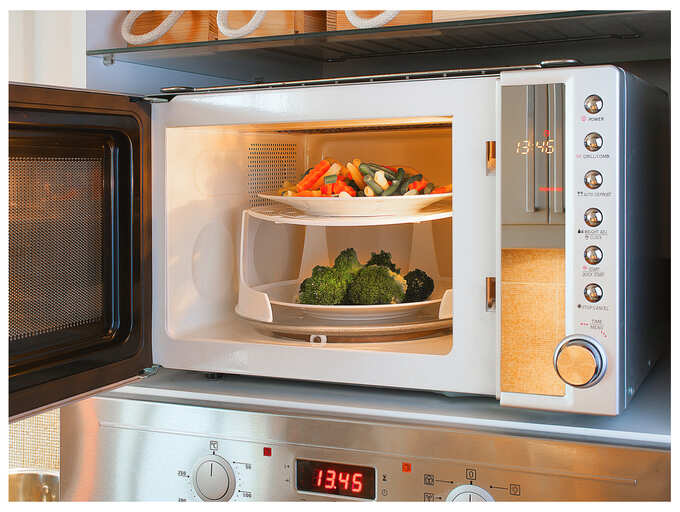
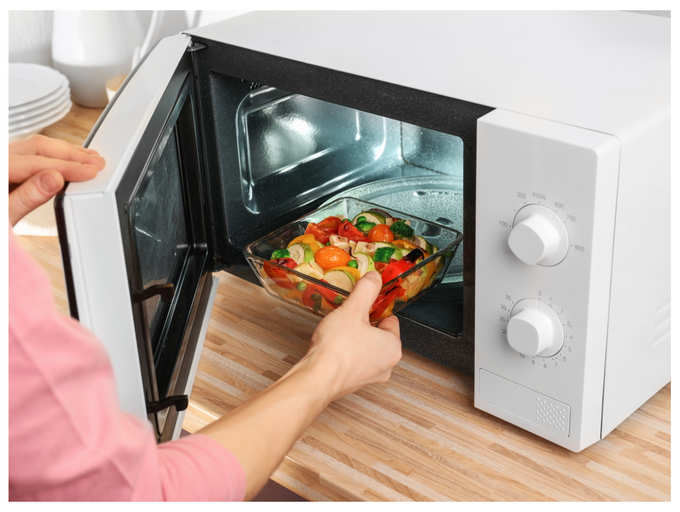
Microwave ovens are the best human inventions in the culinary world so much so that they have become a quintessential part of our day-to-day lives. Right from cooking food in just a matter of seconds to reviving the freshness of a cold and bland meal, microwave ovens are no less than a saviour and a lazy man’s companion.
Of late, with an increase in health consciousness, there have been several myths around the usage of microwave ovens on a daily basis and how it can affect the quality of food and impact our overall health. Well, this has been a matter of debate since its inception, but we cannot rule out the fact that this simple invention has made our lives easier, but at the same time it is essential to understand the impact of re-heating or cooking meals using radiation. Read on and we delve deep into the facts and myths about microwave ovens.
02/6​Heats food inside out!

Interestingly, around 70% restaurants and eateries around the world use microwave ovens to cook their meals faster than ever! This not only saves time , energy and gives the customer the happiness of eating warm food. In fact, many people believe that the microwave oven cooks food inside out but the reality is that the outer layer is cooked first and then gradually the core of the food or meal gets heated. It actually works opposite the outer layer first and then the inner layer of the food.
03/6Are microwave ovens energy efficient?

Well, this common myth is actually a reality, microwave ovens are much more energy efficient as compared to conventional ovens. In fact, reheating food in just a few seconds can save upto 80% percent electricity, but it does vary in terms of cooking an entire meal using a microwave oven. So, the portion and time of cooking actually decides the usage of energy, but as compared to conventional methods of cooking like coal, gas or LPG, microwave ovens are really energy efficient.
04/6​Does heating oil in a microwave oven catch fire?
Well, this is certainly a myth having said that even if you warm oil in a container, the radiation heats up the container first and gradually the oil, and too much hot oil can turn dangerous. However, if you want to warm the oil, make sure you do so for just a few seconds that too by keeping an eye on the container. Moreover, heating frozen butter or olive oil in a microwave isn’t really a great idea because the molecules of olive lack polarity, which is found in water. Similarly, frozen butter has water molecules in the form of ice wrapped around butter, which makes it difficult to melt. Thus it's best to not heat oils at a very high temperature using a microwave oven.READMORE
05/6​Using a metal is strict No!

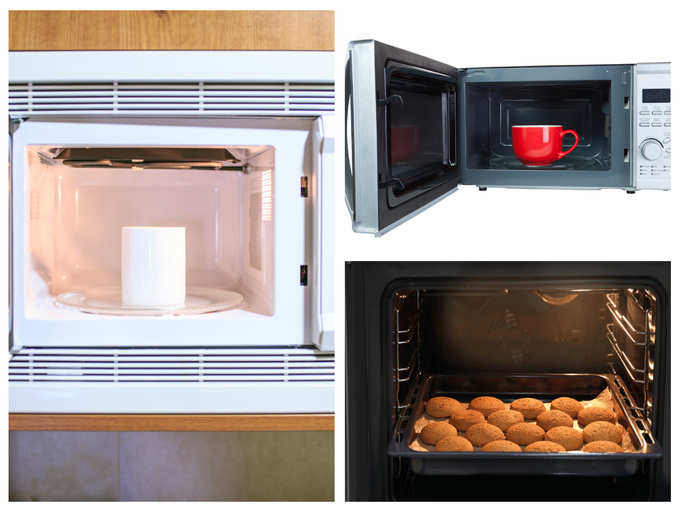
Well, in many countries it was believed that microwave ovens can heat the metals to a level that it will be difficult to cook in metal utensils. But on the contrary, the reason why metal utensils are a strict No for microwaves ovens is because metals reflect and react to microwaves, which can lead to sparks and even short circuits.
06/6​Avoid the use of plastics
Microwave ovens cook food using radiation and that’s why it is essential to use the right cookware and using any random plastic can result in melting and leaching out of harmful chemicals into the food.
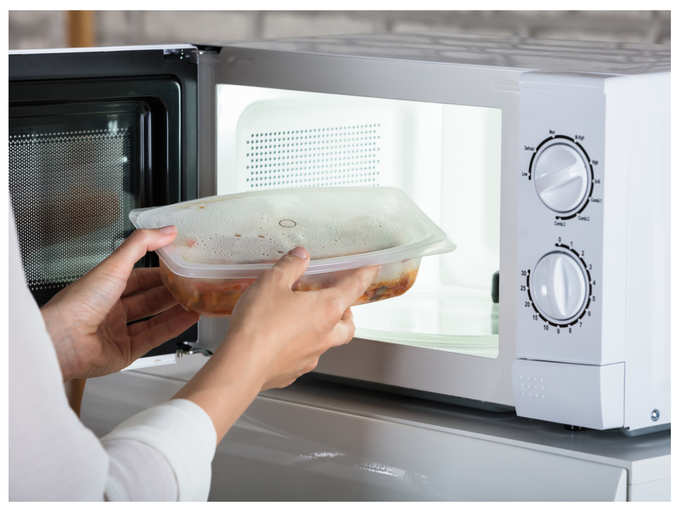
Hence, using microwave safe cookware is the best way to cook in a microwave oven. However, you need to ensure that the cookware you use does not have cracks or scratches as this can also lead to leaching out of toxic chemicals like Bisphenol A into the food, when the food is heated. Also avoid heating in the same plastic cookware, when it is already hot as excessive heat can also release toxic chemicals into the food. Thus, it is better to use either ceramic cookware or microwave safe plastic to cook or heat in a microwave oven.

Food safety team raids restaurants

Visakhapatnam: The food safety department on Monday inspected a group of hotels and restaurants in response to complaints lodged by consumers.
According to GAB Nandaji, assistant food controller, the inspections were conducted at New Tandoori-Inn, Sri Sai Ram Parlour and Satyam restaurants at Diamond Park near RTC Complex in the city.
The food safety team issued instructions to scrupulously follow Covid-19 safety measures in the preparation of food, service, maintenance of physical distance, sanitation and registration of customers. Workers involved in preparation of food and servers must undergo regular health check ups, the team said.
The instructions also called for immediate rectification of unhygenic conditions in the kitchen and dining area, including maintenance of drainage, cleaning walls, the roof, utensils and crockery. Premises must be regularly disinfected, a release said.
“We also found pre-cooked food in the refregirators and stale food. We collected samples and sent them for analysis,” Nandaji said, adding that action would be taken based on the reports of the samples.

Jun 29, 2020

DINAKARAN NEWS


Liquor sold in T.N. conforms to IS and FSSAI specifications, Tasmac tells HC

Government “more sensitive” to the issue of maintaining public health, says State-run corporation
The Tamil Nadu State Marketing Corporation (Tasmac) on Friday told the Madras High Court that the State government was “more sensitive” to the issue of maintaining public health and hence the corporation took utmost care to sell liquor conforming to Indian Standards (IS) and Food Safety and Standards Authority of India (FSSAI) specifications.
The State-run corporation, holding monopoly over wholesale as well as retail sale of liquor across the State, also asserted before the court that price lists had been displayed conspicuously in front of all liquor shops run by it across the State and that stringent action was being taken against its staff if they indulged in Maximum Retail Price (MRP) violations.
Justices R. Subbiah and Krishnan Ramasamy were told by Tasmac Managing Director R. Krilosh Kumar that the corporation purchased liquor from 11 Indian Made Foreign Spirit (IMFS) manufacturing units and seven breweries possessing licences issued by the Prohibition and Excise Commissioner with the approval of the State government.
Excise supervisory officers in the rank of Deputy Collectors had been posted in all the manufacturing units along with supporting staff to monitor all day-to-day activities in those units. “At the initial stage, the spirit to be used for manufacture of liquor is tested by the Forensic Sciences Laboratory, Chennai before blending.
“After receipt of a fitness certificate from the forensics laboratory, the spirit is allowed for blending (production). After production and before bottling, once again the Excise supervisory officer takes the sample of blended liquor (final product) in respect of each batch and sends the same to the forensics laboratory indicating the batch number.
“The forensics sciences laboratory issues a certificate indicating the batch number and date of manufacturing as to whether the samples conform to the IS and FSSAI specifications or not. Only on receipt of the fitness report, the Excise supervisory officer releases the blended liquor of the particular batch, stored in a particular vat, for bottling,” the MD said.
After this process, brand labels and holograms were fixed on the bottles before despatching them to Tasmac’s wholesale depots. Mr. Kumar also told the court that all Tasmac retail outlets in the State had obtained licences under the Food Safety and Standards Act of 2006 and that all the liquor manufacturing units too possessed such licences.
As far as MRP violations were concerned, he said, as per a circular issued by Tasmac on January 21, 2019, salesmen caught selling liquor for ₹1 to ₹9 more than the MRP would be imposed with a penalty of ₹1,000 for every additional rupee charged beyond the MRP. If the shop supervisor was present at the time of occurrence, he must pay 60% of the penalty.
If a salesman was caught selling liquor for ₹10 to ₹19 more than MRP, then he must pay a penalty of ₹10,000 along with Goods and Services Tax (GST) and 60% of it should be shared by the supervisor if he was present at the time of occurrence. Apart from penalty, the salesmen and supervisor would be transferred to a shop with lower sales.
Similarly, those caught selling liquor for ₹20 to ₹29 more than MRP would be imposed with a penalty of ₹10,000 and transferred to the Tasmac IMFS depots where they have to work for a minimum of three months. The punishment for selling liquor for more than ₹30 above MRP was suspension from service and penalty of ₹10,000.
Mr. Kumar also told the court that 4,664 instances with respect to MRP violations below ₹10 and 4,655 instances regarding MRP violations above ₹10 had been detected between April 2019 and March 2020 and that action was initiated against all those who were involved. He said revised price lists had also been displayed in all shops since May 7.
The submissions were made in a counter affidavit filed in reply to a public interest litigation petition complaining about rampant MRP violations in liquor shops. After taking the counter on file, the judges adjourned the case by two weeks.

Jun 26, 2020

26 died of covid every day in last 20 days in Chennai


Vaccine cos face biggest medical manufacturing feat in history


250 tins of adulterated ghee, edible oil seized in Jodhpur

The business was run from the house of the uncle of the main accused, identified as Dinesh, in Bhadwasia area.
The adulterated products were to be supplied to the wholesale market in Krishi Mandi
JODHPUR: Police seized 250 tins of adulterated ghee and edible oil from a house in Jodhpur and arrested four persons involved in the illegal trade, officials said on Thursday.
The business was run from the house of the uncle of the main accused, identified as Dinesh, in Bhadwasia area.
The adulterated products were to be supplied to the wholesale market in Krishi Mandi, they said.
A police official said the police raided the house on Wednesday night.
"We found that ghee and oil was being packed in tins in the house. The material was suspected to be 3-4 years old, which was meant to be delivered to mandi merchants as branded ones," the official said.
A health department official said samples have have been sent to the laboratory for examination.

Jun 23, 2020

DINAKARAN NEWS


Coronavirus: FSSAI urged to promote plant-based food as immunity builder

CHENNAI: The Federation of Indian Animal Protection Organisations (FIAPO) has urged Food Safety and Standards Authority of India (FSSAI) to promote plant-based food as an immunity builder and to seek food hygiene and safety guidelines for meat shops and slaughterhouses during the Covid-19 pandemic. 
The FSSAI recently released guidelines under the ambit of Eat Right India (Eat Right during Covid-19) and food hygiene and safety guidelines for food businesses during the pandemic.
“Green foods are vital against novel coronavirus by improving the immunity of all age groups and hence should be promoted by FSSAI. It is also pertinent that all the slaughterhouses and meat shops should follow all the rules notified by FSSAI under food hygiene and safety guidelines for food businesses during the Covid-19 pandemic or should be banned to operate,” says Varda Mehrotra, executive director, FIAPO.
Covid-19 poses a serious threat to people with low immunity and one of the major ways to deal with it is by boosting immunity. One of the most important components of the immune system is the T-cells, which play an essential role in supporting our immune system and are responsible for defending our body against invading pathogens that could cause diseases and illnesses. 
Fruits and vegetables are packed with antioxidants like carotenoids and flavonoids. Flavonoids are found in fruits, vegetables and grains. They possess antiviral capabilities. They can also stimulate the activities of certain immune cells, including T- cells.
In the wake of the pandemic, FIAPO feels it is important that we consume healthy foods and strengthen our immune system to give a strong immune response to fight infections and ward off diseases.
People following vegetarian diets tend to have lower levels of white blood cells, our natural defender cells. This is the case for vegetarian diets, including vegan diets.
Increased number of WBC’s activates the innate carcinogens which are responsible for cancer in the body. Having very low levels of these cells is not ideal as it can affect the body’s ability to fight infection. However, having just the right number of white cells within a healthy range may reduce chances of getting sick.

Jun 21, 2020

Meat, fish ban a body blow to consumers, traders


Chenai braces for exodus of covid -v


Restaurants to metros: Some of the riskiest places you can catch COVID-19 from

01/8Some of the riskiest places you can catch COVID-19 from
We have been locked up for over three months and now, people are slowly getting out of their homes to resume a normal life.
As we continue to learn to live with the virus and practice social distancing, normalcy is slowly thriving back, even though in a different way. Wearing a mask and maintaining six feet distance is compulsory. Even as we step into a post-COVID era, there will always be a risk of catching infections. One can never really be too safe.
02/8What defines a risky place?
Coronavirus can spread anywhere but higher risk posits in an indoor or closed environment, where airflow quality is bad and the number of people present at a time is one too many. This increases the risk of viral transmission. For the same reason, most offices and establishments are closed or following restrictive working styles. That being said, there are some places which are still, more infection-prone than others. We list out a few you need to be extremely cautious about:
03/8Bars
A recent survey conducted in the US found out that bars and restaurants may not be the ideal places to be in during the coronavirus pandemic. Viral experiments have also examined how quickly COVID-19 could spread through a simple buffet with limited people. Air conditioning, frequently speaking or talking (which is a possible way for coronavirus to spread) or removing masks to eat or drink can be some of the ways for transmission to peak. Stepping out to socialize during this time is not the wisest call.
04/8Theatres and concert halls
Theatres, entertainment centres and concert halls are still shut for the public and if you want to prevent the risk of infection spiking up, it's better if you stay away. Not only does any such gathering breach the protocol of assembling 10 people at once, maintaining distance is not really possible. You are more likely to come in contact with people indoors, which adds to the risk. Instead, one way of bravely stepping into any gathering, or a party you would be attending is to know beforehand, the number of people attending or the protocols being followed there. With the food stalls too, practising good safety measures is a must.
05/8Swimming pools
Swimming is a must-do recreational sport for many especially in the summers but most community pools, beaches and clubs have to remain shut even after the lockdown. One of the key essentials while swimming in a public space is to ensure cleanliness and sanitation. Those suffering from even slight respiratory disorders, flu or symptoms of coronavirus can transmit the virus through droplets. Further, certain germs like bacterium Legionella can infest or collect in the nooks and crevices and even disperse along with the steam or mist. It can be very easy to ingest this, which can then lead to breathing trouble.
06/8Religious places of worship
The government recently issued new guidelines for the graded reopening of religious places and congregations. However, it can be one of the riskiest places. Just like any other indoor space, there is a higher risk of crowding, coming in contact with someone who's contagious or asymptomatic. If you must go, be cautious about maintaining effective safety protocols, limiting your visit. Those with low immunity are advised to stay at home.
07/8Public transport
Public transport is the lifeline for so many people and with trains and metros closed down, some are also finding it hard to go to work. Even though transport officials are adopting stringent precautions, we do know that a virus like SARS-COV2 can survive on surfaces for up to 9 days, and considering how often we come in touch with surfaces like poles, seats or doors while travelling, using public transport is not the safest right now.
08/8Salons and barbershops
The lockdown forced many to opt for in-house beauty services but now, the establishments are opening up we are seeing stylist and hairdressers wearing scary PPE overalls while attending to the customers. Some are even charging a 'coronavirus safety charge' from the customers. Going to a salon or parlour right now may seem dire, but one must know that the risk of transmission, in a place with high contact points runs high. If you must check in first about the existing sanitisation procedures, the number of people present, and the type of space they operate in. A crowded or cramped place can make it more likely for infection risk to rise.

Jun 20, 2020

ILLEGAL NEPAL TEA BEING SOLD AS DARJEELING TEA IN INDIA: DTA


DARJEELING: The Darjeeling Tea Association (DTA) have lodged a complaint with different authorities alleging illegal entry of tea from Nepal that are being sold in retail markets as ‘Darjeeling tea’. The largest association of tea gardens of the hills also sought an intervention from the Tea Board of India.
“It has come to our knowledge that some trucks carrying tea consignments from Nepal are illegally entering through the Indo-Nepal borders of Raxaul, Jogbani and Panitanki at night on regular basis. These illegal consignments are reaching the warehouses in Kolkata and Siliguri and being sold in the retail markets there,” said DTA chairman-core group Sanjay Prakash Bansal in his letter to the chief commissioner of Customs, Kolkata zone.

The DTA, in its letter, added that tea coming from Nepal do not comply with Food Safety & Standards Authority of India (FSSAI). “These non-compliant spurious teas imported from Nepal are sold in the retail markets passing off as Darjeeling Tea thus deceiving the consumers and also endangering their health. This is alsocausing financial loss to Darjeeling tea industry and threatening the livelihood of the majority of the people besides damaging the reputation of Darjeeling tea,” he said.
The DTA has also written to the FSSAI chairperson maintaining that the FSSAI standards have not been followed in the tea imports from Nepal.
“We write to seek your intervention in the matter and a direction for strict 100'% testing and compliance of the FSSAI standards on import of tea from Nepal. We also request the immediate withdrawal of recognition for theacceptance of the testing certification from the National Food & Feed Laboratory, Kathmandu in respectof the product tea in India,” said the DTA.
In its letter to the Tea Board of India deputy chairman, Kolkata, the DTA has sought a ban on sale and distribution of imported tea in loose format. The association further requested for publication of a caution notice for compliance of labelling guidelines of sale and distribution of imported tea in packed format under Tea Distribution Export Control Order 2005.
The alleged misuse of ‘Darjeeling’ in sale and distribution of imported tea from Nepal has also been highlighted with the board.
“It is matter of public knowledge that Nepal tea is passed off in the retail markets as Darjeeling tea to consumers which has been continuously flagged by us seeking stringent action andregulation. It is also a well-known fact that many packers have been using imported teas in their packetswithout proper markings of the correct origin,” said Bansal in the letter.
The DTA chairman claimed that public records available show about 16 million kg of tea were imported from Nepal last year and among them, 5 million kg were of the orthodox variety. “However, we have never come across any packet or any kind of distribution or sale of tea as Nepal tea in the domestic market, which clearly suggests passing off,” he said.