
Jun 5, 2020


Food and Drugs deptt seizes 'expired water bottles' in Harwan
Destroys bakery kept in ‘unhygienic conditions’
On the basis of complaint, a team of Food Safety Officers headed by Assistant Commissioner Food Safety, Srinagar seized expired carbonated water bottles at Harwan here.
A statement said huge stock of carbonated water worth Rs 1.75 lakh was seized and the samples were lifted for further necessary action under rules.
Moreover, the statement said, some bakers in the city who have started their business were also inspected and were impressed upon to maintain high standard of hygiene and follow in letter and spirit all COVID19 related guidelines issued by Food Safety and Standards Authority of India.
The statement said bakery items worth Rs 10,000 were destroyed on the spot in Saraibala area which were kept for sale under unhygienic conditions.
Commissioner, Food and Drugs administration, Shakeel-ur-Rehman directed the field officers to keep strict vigil on market to ensure safe and wholesome food to the consumers, said the statement.
COVID-19: How safe are Indian wet markets?
India is a huge market for meats. Apart from usual poultry, bovine and fish, a few protected species are also illegally traded for food in wet markets

Most people did not know the term ‘wet market’ before the novel coronavirus disease (COVID-19) pandemic. The term gained almost universal acknowledgement once it emerged the possible source of the COVID-19 outbreak was the Huanan seafood wholesale market, a wet market in China’s Wuhan.
Close interactions with wild animals caused numerous disease outbreaks in humans even before the emergence of the SARS-CoV-2 virus that causes COVID-19.
Several other strains of the virus — including the Middle East Respiratory Syndrome and Severe acute respiratory syndrome — had zoonotic origins, which means they originated in an animal host before spilling over to human populations.
Other viruses such as Ebola, Nipah, H1N1 (swine flu) all have zoonotic origins.
A wet market usually has multiple open-air stalls spread over a large area that sell vegetables, fruits, meat and fresh seafood. Some slaughter and sell live animals on site, including poultry and fish, while some illegally deal in meat of wild animals as well.
These markets are known as wet markets because water and ice are used to keep food and meat fresh.
India is a huge market for meats. Apart from usual poultry, bovine and fish, a few protected species are also illegally traded for food in wet markets across the country.
The sale of turtle meat is rampant in West Bengal, Bihar, Jharkhand and parts of Uttar Pradesh, according to reports. Wet markets illicitly sell wild meat and other derivatives from porcupine quills to lizard oil to manta rays: All protected species by law.
Consumption of meat per se does not increase the risk of disease transmission. It increases when animals are stressed, stored in small cages and in close contact with humans during the slaughtering process.
The immune system of animals is weakened under duress. Viral pathogens can intermingle and mutate in ways that make them more transmissible between species. The virus can then jump to food handlers or customers through exposure to an animal’s bodily fluids.
Leaders across the world, health experts and international bodies including United Nations have called for a ban on wet markets.
In January 2020 — after the spread of COVID-19 — China closed Huanan market, but re-opened it recently. Closing meat shops indefinitely is not an option.
Meat is an affordable source of nutrition for a large section of people. Strict regulations are needed, however, due to the potential danger of the origin of diseases from wet markets and food habits.
How equipped is India?
The most important legislation is the Food Safety and Standards Act, 2006 (FSSA), that overrides all other food-related laws in operation prior to it. FSSA initiates harmonisation of India’s food regulations according to international standards.
The Food Safety and Standards (Licensing and Registration of Food Business) Regulations, 2011 govern the aspect of license and registration of food businesses, including meat and meat-based products. Under Regulation 2.1, all food business operators in the country are required to be registered. A valid license is needed for any food-related operation and to ensure safety, sanitary and hygienic conditions.
The act has ensured the closure of illegal slaughter houses and butcher shops. Such businesses are now required to obtain proper licenses and follow hygiene-related guidelines laid by Food Safety and Standards Authority of India (FSSAI).
Only goat, sheep, pigs, bovine, poultry and fish are allowed to be slaughtered.
Prevention of Cruelty to Animals (Slaughter House) Rules, 2001 stipulate that a veterinarian must certify the animal is healthy and disease-free before being slaughtered for meat. A number of municipal laws are applicable to meat markets and slaughter houses as well.
No animal may be slaughtered except at a municipal or registered slaughter house, according to section 415 of the Delhi Municipal Corporation Act, 1957.
In localities where a municipal slaughter house exists, it is illegal for animals to be killed anywhere else, according to section 407 of the act. Further, under the Water Pollution Act, it is illegal for slaughter house waste to be discharged into any water resource.
Like many other laws, the implementation of FSSA was found lacking in various aspects. In 2017, the Comptroller and Auditor General of India (CAG) submitted its report on the implementation of the act.
The report found systemic inefficiencies, delays and deficiencies in the framing of several regulations and standards. It was observed licenses were issued on the basis of incomplete documents in more than half of the cases.
It was further noted that most of the state food laboratories entrusted with food testing and certification functions were not only ill-equipped, but also did not possess National Accreditation Board for Testing and Calibration Laboratories accreditation.
To shore up its efforts in 2019, FSSAI mandated a food safety audit for food businesses in six high-risk categories: Dairy products, meat and meat products, fish and fish products, egg and egg products, food for infant nutrition and prepared food (catering).
Third party audits of municipal and other slaughter houses were in progress till now. FSSAI also created a hygiene rating for meat shops. Setting up regional offices and more labs was also proposed.
It is important for existing legislations to be strictly enforced. FSSAI as a nodal agency should be strengthened and better equipped to ensure safe food and food outlets.
Robust measures regarding licensing, sampling and testing need to be put in place. Skilled manpower, with a scientific approach, should be recruited. Penalties for violation of norms should be made stricter. Tighter curbs on illegal wildlife trade are imperative.
Further, there is a need for greater synergy and coordination between concerned ministries, agencies such as FSSAI and civic municipal bodies. State governments must explore and support advanced agricultural technologies to solve food safety (and security) issues.
Alternate meat sources derived from plants and laboratory cultured cell-based meat has already gained traction. This sector is expected to comprise 35 per cent of the global meat market by 2040, according to estimates.
Singer Paul McCartney recently said it was “a little bit medieval eating bats”. He may be right. The Beatles legend famously recorded I wanna hold your hand, making the song a rage in 1963. He did not likely envision social-distancing then. Perhaps it is time to give medieval practices a burial.
Jun 4, 2020
Grocery shoppers are being less careful about hygiene as the pandemic goes on. A food safety expert said that's risky.
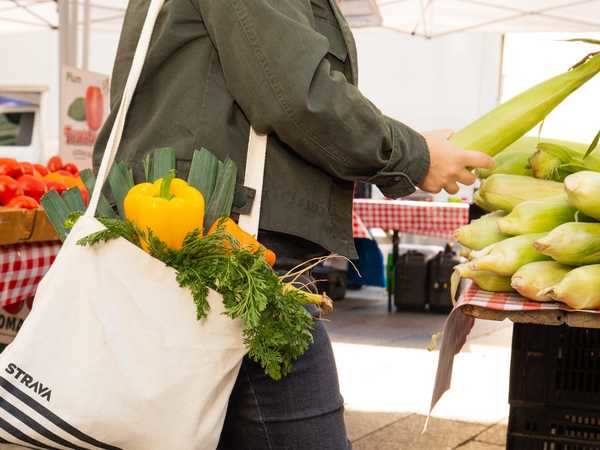
People are taking fewer precautions against the coronavirus while grocery shopping, according to new survey data from the International Food Information Council.
An expert says simple precautions are still important, not just to prevent the spread of the coronavirus but also for general food safety.
The survey data also showed people are more concerned now about being able to afford food as the pandemic has affected joblessness and assistance programs.
As the US surpasses three months of lockdowns to prevent the spread of the coronavirus, consumers are starting to ease up on grocery shopping precautions, according to survey data from the International Food Information Council.
The survey, which involved interviews with 1,000 adults in early May, found that fewer people are washing their hands and sanitizing objects and surfaces after shopping than they were in April. At the same time, people reported more anxiety about being able to afford healthy food.That suggests we've entered a new phase of quarantine thinking, according to Ali Webster, director of research and nutrition communications at the International Food Information Council.Advertisement
But it's also concerning because simple precautions can be very effective at preventing the spread of disease, Webster told Insider.
Younger people are less likely to wash their hands and disinfect after they shop, according to the survey
Just 52% of respondents reported washing their hands after a trip to the grocery store, compared with 63% in April. Some 38% percent said they were using hand sanitizer and disinfectant, versus 47% last month. And just 39% said they were trying to minimize their contact with surfaces at the store, compared with half of everyone in April. And slightly fewer people reported trying to limit their grocery trips, too.Webster said these decreases suggest that people are exhausted by the previous level of vigilance in early stages of lockdowns.
"I really think this fatigue is setting in. There's a sense of wanting to get back to normal and decrease the things that are making things harder for us, since these are additional steps and can get really taxing on the brain over time," she said.Webster said while there could be a false sense of security, particularly among younger people, it's important to remember that the virus is still highly contagious even among people without symptoms. "In areas not as touched by the virus, people may perceive the risks to be minimal. And there may be a perception of invincibility from younger folks. But they don't have the interest of the greater good at heart," she said.
It's true that the risk of becoming ill from grocery items or food packages is extremely low, Webster said, and it's not necessary to wipe down or sanitize everything you buy.
But simple hygiene like hand washing is still important, she said, not just for preventing the novel coronavirus but as a general best practice for food safety."I don't think people should be letting up on things like washing hands and disinfecting that are relatively low lifts," Webster said. "Don't give up now."
Food insecurity is also growing concern, according to the survey
At the same time as people are becoming less worried about contamination, anxiety about being able to afford food is on the rise — 20% of those surveyed said that being able to provide for their family was a top concern, and 38% said they've become more aware of their grocery budget compared to before the pandemic.
Webster said that potential factors include high employment rates, as well as an increasing number of people trying to access SNAP and other forms of food assistance. The closure of schools, too, present a problem, as many children have less access to meals served through their district.
Although the data is somewhat positive — people have stopped panic-buying, for the most part, and supply chains appear to have leveled off and alleviated potential shortages — Webster said the economic impact of the pandemic is still clearly influencing how people are able to access food, and that's not likely to let up anytime soon."The primary concern is the changing economic conditions right now, and reality of how we have to eat differently," she said.
Jun 3, 2020
HC asks FSSAI stand on carbide
Hyderabad: Justice T Vinod Kumar of the Telangana high court on Tuesday sought to the stand of the Food Safety and Standards Authority of India (FSSAI) on a petition that charged the police with creating obstacles in the sale of ethylene sachets for artificially ripening fruits like mangos. Following the furore over usage of calcium carbide for the purpose, the FSSAI had banned the use of carbide because it was proved to be harmful.
In its place, it suggested the use of ethylene to ripen the fruits. Stating that though had obtained permission to sell ethylene sachets, police in Telangana are creating hurdles in its sale, SGS International firm approached the high court. We are selling FSSAI approved Ethylene ripening sachets in India for ripening mangos because it was approved by the FSSAI to ripen mango, banana and papaya fruits, the firm’s partner Rajesh Selarkar said in his plea. Though the police booked a case against us in 2018, later they closed it after they received a report from the forensic lab that our sachets are not harmful, he said.
Now the Government of Telangana appears to be supporting a dealer who is selling a similar product with a brand name En-ripe, the petitioner said. In order to support and promote the En-ripe dealer, the Hyderabad Police are publishing banners to not to use the product of SGS International and to use only the product of En-ripe. Now they have again booked cases against the small mango traders, he said. As a similar plea by another firm too was pending with the court, the judge directed the registry to tag it along with the current plea and posted both of them to Wednesday.
New online portal to simplify food licencing norms
Panaji: A new online platform has been introduced for food operators to apply for and renew registrations under the Food Safety and Standards Act (FSSA), 2006.
The Food Safety and Standards Authority of India has launched a cloud-based, upgraded food safety licencing and compliance online platform called the Food Safety and Compliance System (FoSCos), replacing the Food Licencing and Registration System (FLRS) which was used for applying and renewing licenses and registrations under FSSA.
The new online platform is conceptualised to provide a one-point stop for all engagements with food business operators with the regulatory department for matters relating to licencing, renewals, modification, and inspection, as well as with provisions to file annual returns.
For food operators in the manufacturing business, the system offers a paradigm change in the shift of methodology of licencing.
This is expected to help manufacturers endorse their products as per the list of standardised products under FSSA, in the licence product category
According to the old FLRS system, for a manufacturer of a particular product like “carbonated water”, the FLRS system would ask to endorse a general beverage category to your license. This new system allows endorsement of exact product in case of all standardised products, and in case of non-standards products, manufacturers will have to opt for proprietary foods category.
The existing manufacturers, re-packers and relabelers will have to make the necessary change to their existing licence by logging in to the new system using the existing user credentials, same user Id and password as used in FLRS, and make the necessary endorsement and modification to their existing license for product category before December 31, 2020, without paying any licence fee.
Jun 2, 2020

Eating out in times of Covid-19: Hygiene, social distancing norms in focus as restaurants, retailers gear up to reopen in India
Restaurant operators and retailers are now looking forward to resume business activities after the government on Saturday allowed them to re-open from June 8.23 IST

Customers sit inside an Indian restaurant amidst the easing of the coronavirus disease (COVID-19) restrictions, in the Parramatta suburb of western Sydney, Australia, May 29, 2020.
Restaurant operators and retailers are now looking forward to resume business activities after the government on Saturday allowed them to re-open from June 8.
Several Quick Service Restaurants (QSR) operators have redesigned and reorganised layouts of their dining facilities to adhere social distancing norms along with additional hygiene features, while some have also introduced home delivery and take-away.
While most of the players welcomed government’s order to reopen restaurants and shopping malls in a phased manner from June 8, saying that it would help the economy to recover; others have also cautioned pointing out that more clarity on guidelines is required as respective state governments and the local administration would have a wider say in this.
QSR chain operator KFC India said the new guidelines would help people to resume their regular life. Assuring safety and well being of its customers, the company has modified the restaurant designs to reinforce social distancing, and trained team members according to the new norms.
“We have planned for ways in which consumers can enjoy their favourite KFC food with friends and family when they come to the restaurants, while being assured of their safety.
“We have modified the restaurant designs to reinforce social distancing, trained team members according to new norms and are implementing measures like distanced seating arrangements, demarcated waiting spots in the queues, controlled customer inflow,” KFC India CMO Moksh Chopra said.
Burman Hospitality, which is the Master Franchise Partner in India for Taco Bell’s, said it would re-open its restaurants with additional hygiene and safety measures, following social distancing norms both on the restaurant floors as well as in the kitchens.
“Restaurant brands like ours have been working diligently on creating and testing new ways of operations designed for the post COVID-19 world.
“To reinforce this, we have been gaining knowledge from what other Taco Bell franchisees have been adopting globally and have already started introducing a number of features that will make us the safest restaurants in India,” Burman Hospitality VP - Operations Mandeep Singh Sethi said.
Some examples are re-organising restaurant layouts, creating an end-to-end contactless dining experience for consumers, as well as introducing new business models which have a greater focus on delivery and take-away, he added.
McDonald’s India (North and East) also said it has implemented safety measures at its restaurant.
“We are studying best practices which are followed globally as well as understanding the local guidelines, basis which we are preparing to ensure a safe and hygienic environment for our customers as well as for our employees,” said McDonald’s India (North and East) in a statement.
Expressing similar sentiments, a spokesperson of Burger King India said: “We welcome the government’s announcement about opening up of restaurants. We are delighted to offer safe, hygienic and tasty food to consumers in these tough times”.
National Restaurant Association of India (NRAI) though has welcomed the government relaxation guidelines, but said it failed to understand the logic of keeping out bars from the purview of permitted activities and the same must be permitted as well.
“We now await to engage with various state governments to put together stringent safeguards to ensure safe environment for our consumers and employees. As a responsible industry body, we had voluntarily closed down our business in larger health risks to our guests and employees and we will like all safeguards to be in place before we open our restaurants again,” NRAI President Anurag Katriar.
It must also not be forgotten that the current permitted hours of business is also very limited and needs to be extended further in due course, he added.
Shopping Centres Association of India (SCAI) ) has said that the move would help ease pressure from the industry and start the process of revival.
“The relaxation is certainly going to help ease an unimaginable amount of pressure that was put on the industry following the lockdown. Revival and resurgence is a long process, which has just about begun. We will await further information from MOHFW to ensure the guidelines are followed in letter and spirit,” said SCAI Chairman Amitabh Taneja.
Retailers Association of India (RAI) said opening of malls and all categories of retail “is important to save millions of jobs and revive the economy”.
“Retailers and malls have to ensure standard operating procedures so that citizens are safe and the people working in these places are also safe. We have been in touch with various government officials since lockdown and we believe that the government is satisfied that the malls would follow the SOPs as is required,” RAI CEO Kumar Rajagopalan said.
Jun 1, 2020
Arun Singhal Appointed CEO of Food Regulator FSSAI
Senior bureaucrat Arun Singhal has been appointed as the new Chief Executive Officer (CEO) of India’s apex food regulator Food Safety and Standards Authority of India (FSSAI). He will succeed GSG Ayyangar.
A 1987-batch IAS officer of Uttar Pradesh cadre, Mr Singhal, is at present Special Secretary in the Department of Health and Family Welfare.
The FSSAI comes under the purview of the Ministry of Health & Family Welfare. It is responsible for setting up standards for the food industry and regulate the manufacturing, storage, distribution, sale, and import of foods.
May 31, 2020

May 30, 2020


May 29, 2020


May 27, 2020


May 25, 2020


May 24, 2020


May 22, 2020


May 21, 2020


May 20, 2020


May 19, 2020

May 18, 2020


Subscribe to:
Posts (Atom)