
Mar 6, 2020


Food safety officials conduct checks on eateries
In a surprise check, officials from the Food Safety Department on Thursday conducted raids in 100 eatery outlets and restaurants in and around Pennicuick bus stand here.
According to a release, the authorities conducted the check after receiving several complaints. The shopkeepers were instructed not to sell food items that were unfit and substandard. As many as 150 kg of substandard items were seized and destroyed.
After a one-time warning, shops would be imposed fines ranging from ₹5,000 to ₹25,000. Those found indulging in frequent malpractices would be taken to task under the law and their shops sealed and closed. About 120 eatery outlets in the district did not have licence and were told to get them within four days, the officials said.
Coronavirus fear keeps consumers off eateries, meat
A top executive at a company that runs several restaurants across India speaks of increasing cancellation of large parties over the last two weeks
FSSAI says cooked meat including poultry was safe
NEW DELHI : The Covid-19 scare is driving people away from restaurants. And those who turn up are staying off non-vegetarian dishes.
A top executive at a company that runs several restaurants across India spoke of increasing cancellation of large parties over the last two weeks. “We have just received a cancellation of a party of 150 tomorrow at one of our restaurants in Noida," he said, asking not to be named.
With firms asking employees to work from home, “a lot of our boxed meals are being cancelled. Moreover, across our restaurant brands, we have seen a drop of non-veg food consumption by 15-20%, largely driven by a dip in orders of mutton and chicken," he said.
Sharmila Prasad, 39, a Faridabad resident, who runs a dance academy, said she and her family have given up on all kinds of meat as a precaution although there’s no scientific study on the subject. “I am a Bengali and meat is part of our daily diet. Just to be safe, my family and I have stopped eating all kinds of meat," she said.
A restaurateur in central Delhi said that footfalls were down this week. “Customers who have been walking in have some concerns and misconceptions around consuming meat. Although they’re inquiring about meat, they order vegetable and paneer rolls," said Nishant Agarwal of fast-food outlet Rolling Joint. Agarwal said demand for non-vegetarian orders was down 15-20%.
A delivery executive with a food aggregator said, “People are now ordering paneer dishes and dals," he said.
Online food ordering platform Zomato said it has not seen a seen any dip in orders yet. “We are actively working with our delivery and restaurant partners to ensure food safety and health precautions," a company spokesperson said.
Online meat ordering platform Licious claimed no dip in orders. On Thursday food regulator FSSAI said cooked meat including poultry was safe.
Coronavirus does not spread through chicken, mutton, seafood: FSSAI chief
Mar 5 There is no scientific evidence to show that coronavirus spreads through eating chicken, mutton and seafood, FSSAI chief G S G Ayyangar said on Thursday and asserted that the virus would not survive in higher temperature. "It is basically an animal virus. Let us leave it to scientists to figure out how it has been transmitted...however, ours is a tropical country and once the temperature crosses 35-36 degrees celsius, no virus will survive.
"Let us pray to God that winter ends and temperature rises," he said. There are at least 29 confirmed cases of coronavirus infection in India. Amid apprehensions that the infection could spread through eating chicken, mutton and seafood, the Food Safety and Standards Authority of India (FSSAI) CEO said there is a misconception about it. "There is a misconception that coronavirus will spread through chicken, mutton and seafood. There is nothing like that. It is scientifically not proven. "I am a scientist, I will not buy this argument," Ayyangar told reporters here.
Ayyangar, who was earlier with Indian Council of Medical Research (ICMR), said it is a matter of time that vaccine for coronavirus will be developed as India has a good track of handling viruses. "Whether it is Ebola virus or Avian flu, we have handled them very well. It is a matter of time. We have to take precaution. We have to be on our toes," he said. Urging people to take precautions, he said coronavirus is like many other viruses and developing a vaccine will depend on the complexity of the virus. The government is making all efforts to isolate the virus.
"Once we are able to isolate the virus, then it takes sometime to find a vaccine to counter the virus," he said at an event organised by industry body Assocham. Addressing the event on nutrition and functional foods, Hexagon Nutrition Managing Director Vikram Kelkar said prices of vitamin supplements have been volatile recently and spread of coronavirus has affected the supply across the world.
On March 2, poultry breeders demanded a relief package from the government claiming that the sector has incurred heavy losses of around Rs 1,750 crore in a month due to fake news that eating chicken could spread coronavirus. Poultry bird prices have plunged to Rs 10-30 per kg at farm gate level due to a slump in chicken demand while the average cost of production is Rs 80 per kg, the All India Poultry Breeders Association had said in a representation to the Ministry of Animal Husbandry.
Coronavirus outbreak: Imported food safe, says FSSAI
FSSAI had constituted a committee of experts to examine the possibilities of the presence of coronavirus in imported food items.
The country’s apex food regulator, Food Safety and Standards Authority of India (FSSAI), on Thursday said that the food imported into India is safe from the novel coronavirus.
“…the food imported into India including from the novel coronavirus affected countries is safe for human consumption,” a statement from the food regulator said.
FSSAI had constituted a committee of experts to examine the possibilities of the presence of coronavirus in imported food items.
“The committee in its report opined that as of now there is no conclusive evidence for the food borne transmission of the virus. Coronavirus predominately affects the respiratory system and is spread from human to human via droplets while sneezing, coughing, contaminated hands and surfaces. The committee agreed with the advisories of global organizations that the predominant routes of transmission of coronavirus appear to be human to human,” the statement read.
The food regulator also clarified that cooked meat, including poultry, was safe to eat.
“As a precautionary measure, the committee has advised to avoid consumption of raw or undercooked meat as well as unprocessed food products. Frozen food items must be consumed only after cooking them properly. Good hygienic practices must be followed before consuming raw fruits and,” it said.
Since the outbreak was reported on December 31, 2019, in China, a total of 80,270 confirmed cases and 2,981 deaths have been reported in China. Outside of China, 12,857 confirmed cases and 220 deaths have been reported in 78 countries including Hong Kong, Macao and Taiwan. India has reported 30 positive cases so far, with no deaths.
Mar 5, 2020


Workshop on tobacco menace held
For effective implementation of Cigarettes and Other Tobacco Products Act (COTPA) 2003, health department organised a day-long state level workshop at new circuit house.
Police, transport, labour, food and drug administration, urban administration and development department, medical and dental college officers from 13 districts participated in the workshop. They were sensitised on the cigarettes, other tobacco products, its side effects and modes to control it, and existing laws to deal with the problem.
Food and drug Controller S.N. Rathore said tobacco consumption causes more harm to body for which social awareness is needed along with effective implementation of COTPA and Food Safety and Standards Authority of India (FSSAI) norms. There is need for inter departmental coordination for reduction in consumption of tobacco.
National Tobacco Control Programme state nodal officer Dr Kamlesh Jain said instead of working as officer, need is to work as a social worker to fight the menace. Along with creating awareness there is a need for stern implementation of provisions of laws, he added.
Tobacco has around 4000 types of chemicals out of which 200 causing harm have been found through research while it causes 60 different types of cancer.
Advocate Ranjeet Singh from New Delhi and Anant Christian from Gujarat spoke on details of COTPA 2003. Officers from Bijapur, Balod, Balrampur-Ramanujganj, Bemetara, Dantewada, Janjgir-Champa, Kawardha, Kondagaon, Koriya, Narayanpur, Raigarh, Sukma and Surajpur also participated.
Mar 4, 2020


79% of all milk sold in Maharashtra fails food safety tests

Both branded as well as non-branded milk falls short of standards, study finds
The Consumer Guidance Society of India (CGSI) has found that 79 per cent of all milk sold in the state does not comply with Food Safety and Standards Authority of India (FSSAI) guidelines.
Between January and December 2019, CGSI collected 413 samples – 73 from branded companies and the rest from non-branded sources – from across Maharashtra and tested them, and founded only 87 – or 21 per cent – meeting FSSAI standards, a CGSI report said.
Among the branded samples only 15 per cent met regulations; among the unbranded, 22 per cent, the report said.
“Milk forms an essential part of our food and hence it is necessary to maintain standards. According to the research conducted, contamination has increased by 5 per cent compared to last year,” said Dr Sitaram Dixit, chairman, CGSI.
To improve the quality of milk, the government has made adulteration a non-bailable offence. It also conducts regular raids to ensure milk producers comply with the guidelines.
As per the FSSAI standards, cow milk should have minimum 3.2 per cent fat content and 8.3 per cent milk solids. For buffalo milk, the fat content should be 6 per cent and solids 9 per cent. For toned milk fat per cent is 3 per cent and solids 8.5 per cent. For full cream milk, the fat should be 6 per cent and solids 9 per cent.
CGSI offers free milk testing services to everyone. Consumers can approach them directory or society volunteers can come to their doorsteps and check the milk, Dixit said.
Anjali Mulye, a consumer from Vikhroli, said adulteration is a matter of concern. “My children drink milk and I care for its quality. I prefer packaged, branded milk over loose milk. But if the branded milk is also not safe as per the study, then it is a matter of worry for us. The government should ensure that milk is not diluted or adulterated because that will affect the health of our children,” she said.
Food Regulator Cautions Against Fake Order Seeking Rs 1,200 Fine

While clarifying that it has not issued any such order, the food regulator said it is taking legal action about this incident of forgery and spreading a fake order. The FSSAI has also advised food businesses to verify or confirm the veracity of any order released by FSSAI on its official website before making any payment or initiating any other action.
A fake notice in the name of Food Safety and Standards Authority of India that "an order FNo Std/SP-10/T (Formaldehyde) dated 12.02.2020" in this regard is being circulated on social media and amongst food businesses, the regulator said in a statement. "It is clarified that FSSAI has not issued any such order dated 12.02.2020 related to a fine of Rs 1200," FSSAI said.
All the food businesses and other stakeholders including State Food Safety Authorities are advised to verify / confirm the veracity of any order released by FSSAI on its official website before making any payment or initiating any other action, it added.
"It appears some individuals are trying to cheat food businesses or other stakeholders through these fake orders. Combatting such mischief and fake news requires one to be vigilant," FSSAI said. The FSSAI requested to alert the appropriate authorities in the state food safety departments or at FSSAI's regional offices or headquarters at Delhi if anyone comes across such mischief.
Mar 3, 2020


FULL OF FILTH The meat you eat comes from a house of horrors

Piling Refuse, Broken Roof And Non-Existent Floor, Pulianthope Slaughterhouse Is Bursting At The Seams
Most of the meat that comes to your table may be cut and processed at illequipped abattoirs where workers are forced to stand in a slush of blood and dung as they go about their work.
Though the mutton and beef that come out of slaughter houses are certified by a vet, the conditions in which the animals are slaughtered, skinned and cut go unmonitored. Chicken is handled in the most unhygienic conditions at stalls and markets. They are transported to the city in filthy, stinking cages mostly from Salem and Namakkal.
The abattoir at Pulianthope, the city’s oldest and largest, that gets around 500 goats and 300 cattle on weekends is in a mess and years of neglect has made it a health hazard for nearby residents.
On Monday, TOI saw piles of bones, hooves and refuse all over. In the absence of a proper platform, workers spread animal skin on the ground so that the meat doesn’t get soiled when chopped. Dogs have made the sheds their home and were found lying on the floor where meat is handled.
A meat vendor who has a stall inside the abattoir and lives in the neighbourhood said: “The refuse is not removed. We get scorpions and snakes in our homes. The stench makes it tough to live here.”
Traders who bring their cattle and goats to slaughter are helpless and worried as their pleas to the Greater Chennai Corporation and politicians for a new building at the same location are not being heeded. Tiles have fallen down from most parts of the roof, which can collapse anytime.
“The abattoir does not have basic facilities. As there is no proper platform to cut the meat, they are forced to spread the skin on the ground and chop the meat,” said Perambur MLA Thayagam Kavi. He said a toilet is ready but could not be used because there was no water and sewerage connection.
As the abattoir is in bad shape, retail sellers are uncomfortable selling meat that comes from Pulianthope. In many markets -- including at Zam Bazaar in Triplicane -- they slaughter goats adjacent to stalls because buyers want the meat to be clean.
S Salauddin, president, Chennai Mutton Merchant (retailers) Association, said, “The abattoir in Pulianthope is in bad shape. It is not able to handle the number of animals. The meat that comes from there is cut in an unhygienic manner. It turns red fast. But we have no option but to sell it when demand is high on weekends.”
“We have asked the government to open abattoirs in Adyar, Porur, Tiruvotiyur, Mogappair so neighbourhoods there and get quality meat,” he said.
Salauddin said the abattoir at Pulianthope should not have stalls. “These stalls were opened as piece market for the poor who used to sell the balance meat from slaughtering for a living. But now it has become a business,” he said.
B Sampath, secretary, Chennai Mttiraichi Vyaparigal Sangam (beef traders association) said: “We are helpless. We have made representations to authorities to improve the condition. But they are not doing it.”
The corporation has plans to improve the facility and build new sheds. “Three to four years ago we had repaired the floor but because the cattle are heavy, it got damaged. The renovation plan is likely to cost Rs 1 crore. We met representatives of the traders’ associations but will have a meeting soon about the development work,” an official said.


IN DISREPAIR: The Pulianthope abattoir has nothing common with a state-of-the-art slaughterhouse. Animals don’t have a pen, meat is sold in the open and animal refuse is not removed for days raising a stench. (Right) Food safety officials raiding a fish market to crack down on use of formalin
Formalin in fish? Babus raid market
When two fish samples picked from the market turned blue during a spot test – food safety inspectors suspected that they might be lined with formalin, a cancer-causing substance commonly used in labs as an antiseptic or disinfectant, or to preserve bodies in mortuaries.
Coating fish with the chemical can increase shelf life of the meat that is highly perishable, said Chennai city district food safety official A Ramakrishnan. A team of food inspectors visited markets in Chinthadripet and surrounding areas such as Swami Pandaram Street and Palani Andavar Koil Street. Earlier, another team visited 25 shops in Kasimedu area and lifted five samples that looked ‘suspicious’. “We did not find much in the spot test, so we sent all seven samples to the lab for further tests,” he said.
The raid followed similar action in Madurai last week when food safety officials dumped nearly two tonnes of fish coated with formalin. “It was a cause of concern. We do not want people to eat fish coated with chemicals,” said another senior food safety official.
Fish coated with formalin is usually stiff, has a pungent smell and don’t have flies hovering above it. Although most of the formalin is washed off while cleaning the fish, it may still cause problems.
Studies show that although formalin can cause nausea, upset stomach, respiratory disorders or trigger allergic reactions initially, long-term consumption can increase risks of cancer.
Mar 2, 2020


Punjab prohibits online supply of food from FBOs not possessing hygiene rating
Punjab government's Food and Drug Administration on Sunday said it has prohibited online supply of food from Food Business Operators (FBOs) not possessing hygiene rating.
Issuing the prohibition orders, Food and Drug Administration Commissioner K S Pannu said invoking provisions under the Food Safety & Standards Act, 2006, keeping in view the interest of public health, the distribution/supply/sale of articles of food through Online Food Supply Aggregators (OFSAs) related to those FBOs who have not got their hygiene rating done has been prohibited.
"The orders also prohibit OFSAs from sourcing the food from FBOs which are not hygienically rated and also where such rating is less than three out of five," a Punjab government release said.
The prohibition orders would be effective for one year beginning April 30, 2020.
The orders state that in Punjab, information technology-driven OFSAs have been distributing/selling/ supplying food to the consumers after sourcing the same from FBOs.
"This food delivery through an IT based platform is a very recent phenomenon in which the direct and primary contact between the consumer of food articles and the manufacturers of food articles, especially the hot cooked food articles, has snapped.
"This mechanism of distribution/sale/supply of food by OFSAs has obliterated the system of responsibility of maintaining the quality of food, which till now was being directly verified by the consumers from the food business operators at his counter," the release said.
It further stated that with the introduction of OFSAs, it has become important to ensure that these aggregators supply only good quality and properly hygienic food articles to the consumers.
"Although, it is the moral responsibility of FBOs and OFSAs to ensure quality and hygiene of food delivered, the duty is also cast upon the State authorities to ensure safe food to public under the Section 18(1)(a) of food Safety and Standards Act, 2006," said Pannu.
He said that the Food Safety and Standards Authority of India (FSSAI) has issued instructions vide which the system of hygiene rating of the food business operators has been introduced. FSSAI has empanelled various agencies to conduct the hygiene rating of the FBOs.
Pannu said the office of the Food and Drug Administration, Punjab had asked all the OFSAs to ensure that the FBOs from where they are sourcing food for distribution to consumers should get the hygiene rating of their business done.
The date of getting the hygiene rating of the FBOs done was earlier extended till October 31, 2019, Pannu said.
"However, it has been observed that even after creating awareness regarding the importance of hygiene rating, OFSAs have not taken the matter seriously, resulting in consumers continuously facing the potential of delivery of unsafe/unhygienic food..," he said.
Is your food actually gluten-free?
For those allergic or intolerant to gluten, not all food products and grains that claim to be free of gluten are devoid of the proteins.
In a first-of-its-kind pilot study, researchers at Indian Council for Medical Research (ICMR) affiliated National Institute of Nutrition (NIN), Hyderabad, have found oats and flour processed from naturally gluten-free grains with gluten levels up to 90 times and 20 times the permissible limit set by the law indicating contamination in products that are sourced from local retailers and millers.
Gluten is a conglomeration of proteins found in wheat – a staple food for a large portion of the Indian population – rye and barley. Allergy to gluten expresses itself in two forms – celiac disease (CD), which is a chronic inflammatory autoimmune disorder in which the lining of the small intestine’s inner wall is damaged owing to incomplete digestion of food made of any of the three cereals, and non-celiac gluten sensitivity.
NIN researchers collected samples of ready-to-eat food products, multigrain flour as wheat replacer, pulses and dals, millets, quinoa, buckwheat, oats and soy-based products available in online grocery shops, super markets and local markets. Individual grain flour ¬– rice, ragi, sorghum, gram – was sourced directly from mills. Samples were tested using the internationally prescribed ELISA kits for detecting gluten levels.
Of the 160 samples, nearly 36.7% products from the grains and 9.8% labelled as ‘gluten-free’ were found to contain gluten above the acceptable level of 20mg/kg. The 2011 rules of the Food Safety and Standard Authority of India (FSSAI) has stipulated that a product can be labelled as either gluten-free if the content is up to 20mg/kg only after the product is analysed for contamination by standard internationally accepted method.
Nearly 85% of oats products – permitted as part of a gluten-free diet by many countries – showed gluten levels with a concentration range between 23.78mg/kg and 1830.8mg/kg, while buckwheat, quinoa, pulses, millets and soy products showed no such cross-contamination.
“Although the sampled grains are inherently gluten-free, their products might become cross-contaminated at post harvesting or processing facilities,” S Devindra, co-author and assistant director, NIN. “These products therefore cannot be stated as gluten-free until confirmed by test procedures. Otherwise, it might be misleading and potentially harmful to celiac patients, who are on a strict dietary plan.”
Globally, 0.67% or one in 130 people suffer from CD. A pan-India by the Delhi-based All India Institute of Medical Sciences (AIIMS) – it also the main centre of research in CD– found prevalence of the disease in 0.67% (4 to 6 million) with a high incidence in north India. “The (NIN) data is relevant because gluten-free diet is the only way of treating celiac patients and those who are intolerant or sensitive to gluten, and therefore cross-contamination of food products is a cause for concern. Even 5mg gluten, which is a chapati bite, can lead to persistence of the disease,” said Dr Govind Makharia, professor, department of gastroenterology and human nutrition, AIIMS, who has undertaken extensive research on the disease among Indians, and not involved in the study. “Cross-contamination can take place anywhere from the farm to the factory.” While studies over the past 15 years have shown the presence of gluten above the permissible limits in both labelled and naturally gluten-free food products available in US, Europe and Turkey, there is no India-specific data on gluten contamination.
Findings of the present assessment, published in this month’s issue of Food Additives and Contaminants: Part A, found gluten content in 35.9% unbranded flour samples from local markets and local mills in the range of 20–400mg/kg thereby breaching both FSSAI and the internationally laid out Codex safety levels.
Only 5 of the 51 samples from products labelled as gluten-free showed contamination above 20 mg/kg although levels were well within 100 mg/kg owing to well-adapted processing procedures and maintenance of individual mills for separate flours. Of all the regular grains, the highest amount of gluten – up to 400mg/kg – was present in sorghum samples, followed by rice (279mg/kg), gram (135.4mg/kg) and ragi (122.3mg/kg).
Researchers said while common flour mill and collecting bags for rice and wheat in many milling shops is likely to be responsible for cross-contamination in rice flour samples, the presence of gluten in ragi and sorghum can be attributed to the use of a common utility area and handling procedures.
“Common flour mills, collecting bags, or flour processing area for both gluten and naturally gluten-free cereal flours might be one of the major factors responsible for the high rate of gluten contamination in local flour mill samples,” said Devindra.
To address the issue of cross-contamination in gluten-free products, FSSAI in June last year reiterated that food with only 20mg/kg or less gluten content can be labelled as gluten-free, and released a guidance note on testing and labelling for food manufacturers and consumers. “Gluten intolerance is a new area of concern because its focus in India has been of recent origin owing to greater awareness today, and therefore the food system has to respond to it,” said Pawan Agarwal, secretary, consumer affairs department at the Centre.
The former FSSAI chief executive officer under whose tenure the guidance note was issued, Agarwal added, “Our department will have a meeting with FSSAI officials and other departments to see what can be done.”
“Firstly, it will help raise awareness and let consumers know that a product may be compromised. Secondly, it will help us advocate and push for better vigilance by government regulatory bodies,” said Dr Shweta Khandelwal, head of nutrition research, Public Health Foundation of India, who was not involved in the study. “Lastly, it will also warn businesses to be more stringent in quality checks.”
135 criminal cases against Andhra Pradesh Food Business Operators
Officials file 291 adjudication cases after testing food samples collected from 270 units

VIJAYAWADA: Cracking the whip on errant food business operators (FBOs), vigilance and enforcement (V&E) officials have filed as many as 135 criminal cases and 291 adjudication cases against them. The criminal and adjudication cases were filed for supplying unsafe food items, and possessing substandard and misbranded products, respectively.
Speaking to TNIE, V&E director general (DG) KRN Rajendranath Reddy expressed concern over the rising food adulteration menace in the state as it led to numerous harmful effects on human health. After testing 426 food samples collected from 270 FBOs across the state over the past three years, the Food Safety and Standards Authority of India (FSSAI) and vigilance departments submitted a detailed report to the government and filed cases against the establishments as per the instructions. Samples of sweets, toned milk and dairy products, edible oil, ghee, meat products, tea powder, soft drinks and ice cream were sent to the state food laboratory in Hyderabad for testing.
Penalties for offences under Food Safety and Standards Act, 2006
Section 51 up to Rs 5 lakh
Section 52 up to Rs 3 lakh
Section 57
For processing adulterant not injurious to health: up to Rs 2 lakh
In other case, up to Rs 10 lakh
Section 63 Imprisonment up to six months and fine up to Rs 5 lakh

Mar 1, 2020


Food safety dept raids eateries ahead of Attukal Pongala
The raids which started on Thursday will continue till March 10.
THIRUVANANTHAPURAM : The Food Safety Department served closure notice on three eateries during a special drive launched on Thursday in the wake of the Attukal Pongala festival. The Porotta Centre and Zamzam Bakery at Manacaud were served closure notices for serious violations which would risk the health of customers. Closure notice was also served on ‘One Take Away’ at Karamana for offering stale food items for sale.
The raids which started on Thursday will continue till March 10. A total of 14 squads comprising 54 food safety officers are participating in the drive. Close to 97 shops were raided on Thursday. Of them, improvement notices were served on 47 establishments, a fine has been imposed on 10 establishments for serious lapses. The department has asked the public to raise complaints and suggestions over the toll-free number 1800 425 1125 or 8943346181, 8943346195, 7593862806.
City sweet makers to meet FSSAI over ‘best-before’ rule

The recent order from the Food Safety and Standards Authority of India (FSSAI), asking all sweet manufacturers to print the manufacturing date of their sweets and “best before” declarations, has put city sweet manufacturers in a fix. They will now be going to meet the FSSAI bosses in Delhi on March 4 and 5 to look for a solution to the problem. It is likely that the state will support the Paschim Banga Mistanna Byabasayee Samiti in this and send a representative to attend the meeting.
Most of the big sweet makers in Kolkata, however, said they understand the intent of the FSSAI and support the move because this will stop “smaller” manufacturers from trying to sell stale sweets, which are often “covered in thick sugar syrup to hide their staleness”. The declaration of manufacturing and best-before dates will definitely put a stop to this, they felt. However, they agreed there were some logistical issues that need to be sorted out as well.
The meeting will be part of Ahara, a national food festival, to which city sweet manufacturers have been invited. “It is known that Bengal sweets are made of chhana, unlike mawa that is used by sweet makers of other provinces. Chhana as a raw material is extremely fragile and decays after 24 hours so we do not sell sweets that are beyond a day old. We are already writing “to be consumed within 24 hours” on our products,” said Dhiman Das, spokesperson for K C Das.
Most bigger brands said some sweets and their manufacturing processes are so delicate that they spoil within hours. In peak summer, rosomalai and rosogolla, if left unrefrigerated, can spoil in eight hours. “We mentally keep tabs on this. Now we will have to declare it. However, writing them on shelves and on boxes are two different ball games and involve additional hassles,” said Subhojit Ghosh of Banchharam. He insisted that because of the short shelf life of Bengal sweets, it is still considered a cottage industry that needs all the support it can get to survive.
Most sweet manufacturers said the inclusion of Bengal sweets within the GST net has already affected the industry because of the huge cost involved in upgrading accounts. But if the FSSAI declaration involves a complicated process, it will further affect business.
“We want the process to be uncomplicated. At the time of manufacture, we keep back-end records of each batch and we know when to stop selling which tray. We don’t mind declaring it, but we are a bit confused about the process,” Ghosh added.
A spokesperson for the 200-year-old brand Nalin Chandra Das echoed the thought. “We have received the circular to give these declarations by June 1. We don’t mind and we agree that customers have a right to know how healthy the sweet is. However, if we are once again channelled into complications, we will suffer,” said proprietor Tapan Kumar Das.
Feb 28, 2020


HC notice to health, food safety depts on salt iodisation
The Madurai Bench of the Madras High Court on Thursday issued notices to the Ministry of Health and the Family Welfare and Food Safety Department in a plea seeking to quash the Central government’s order on iodisation of salt.
Madurai:
A division bench of Justice M Duraiswamy and Justice T Ravindran was hearing a petition filed by TSP Jayapalan, secretary, Thoothukudi Thanpaadu Uppu Ettrumathi Viyabarigal Sangam, on the issue.
The petitioner stated that salt, which is being traditionally manufactured depending purely on nature in Thoothukudi, need not require fortification of iodine for human consumption. Salt is a natural element of soils and water. Earlier, the Food Safety and Standards Authority of India, through a notification, had prohibited the sale of non-iodised salt
The Food Safety Regulations, 2011, had cited that consumption of iodised salt could be set right. But, it did not mean that by using common salt, it would cause harm to health. Therefore, the impugned amendment could not be sustained on this sole ground.
Further, the petitioner claimed that some people might have more iodine content in the body while some others could have deficiency of it. As a result, every person could feel physical inconvenience, the medical prescription would only guide on whether salt could be consumed with or without iodine. Therefore, generalising the whole concept by way of an amendment could not stand the test of law.
Several scientific data revealed that if iodine content increased in the body beyond the required level, it would result in depression, impotency, hyperthyroidism and so on. Therefore, the regular consumption of iodised salt would harm consumers’ health, the petitioner said.
Meanwhile, counsel for the petitioner argued that since AYUSH is the accredited institution founded by the Centre through special ministry, it has the expertise to give its opinion as to whether or not the common salt could be permitted to be used for human consumption. Hence, it has become necessary to get AYUSH impleaded in this case, counsel said.
After hearing, the bench issued notices to the Ministry of Health and the Family Welfare and Food Safety Department to respond and adjourned the case until further notice.
Food safety sleuths raid general stores in Vijayawada
During the inspection, the officials reportedly found that some traders were selling products with expiry dates and were charging more for purchases.

VIJAYAWADA: Sleuths of Food Safety and Standards Authority of India (FSSAI) on Wednesday carried out raids at wholesale and general stores in one town here. The raids were conducted on the basis of complaints filed against a few traders for poor quality products.
During the inspection, the officials reportedly found that some traders were selling products with expiry dates and were charging more for purchases.
Addressing media persons, regional assistant food controller N Purnachandra Rao said one dry fruit trader violated FSSAI rules by indulging in sale of misbranded products and not giving bills to the customers. He also said some other traders were found using artificial colours to enhance the appearance of food grains.
Rao requested the public to demand bill for every purchase. He said samples collected from the stores will be sent to laboratory for testing.
Sampling drive: Notice served to trader in city
Jalandhar, February 26
A sampling and checking drive was carried out at Nadala, Begowal in Kapurthala today. A total of 14 samples of desi ghee (manufactured in another state), mustard oil, flavoured milk, besan, chana dal, Dalia, Biscuit bakery, Rusk, tea leaves 2, rajmah, fruit juice and rice puff etc were seized for analysis. During the course of inspection, a dealer of soft drinks was found storing expired food products along with fresh ones. A notice also served to him in this regard.
All food business operators dealing in sweets were asked to comply with the directions issued by FSSAI. Checking was carried out under Assistant Commissioner, Food and Drug Administration, Kapurthala.
Implementing a new order issued by FSSAI (Food Safety and Standards Authority of India) directing display of ‘Manufacturing’ and ‘Best Before’ date in case of sweets, the Food and Drug Administration also directed implementation of the order.
FSSAI Joint Director (RCD - Regulatory Compliance Division) had issued this order after reported instances of stale/expired sweets being sold to consumers, posing potential health hazards.
An indicative list of shelf life of various types of sweets is given in the Guidance Note on Safety and Quality of Traditional Milk Products which is available on FSSAI website.
Feb 27, 2020
Kolkata’s street food still unhealthy for consumption
The civic body, in association with the WHO, Bureau of Indian Standards (BIS) and two other agencies, conducted a survey and research on Kolkata’s street food with an objective to find easy and implementable methods to make street food safe in a sustained manner.
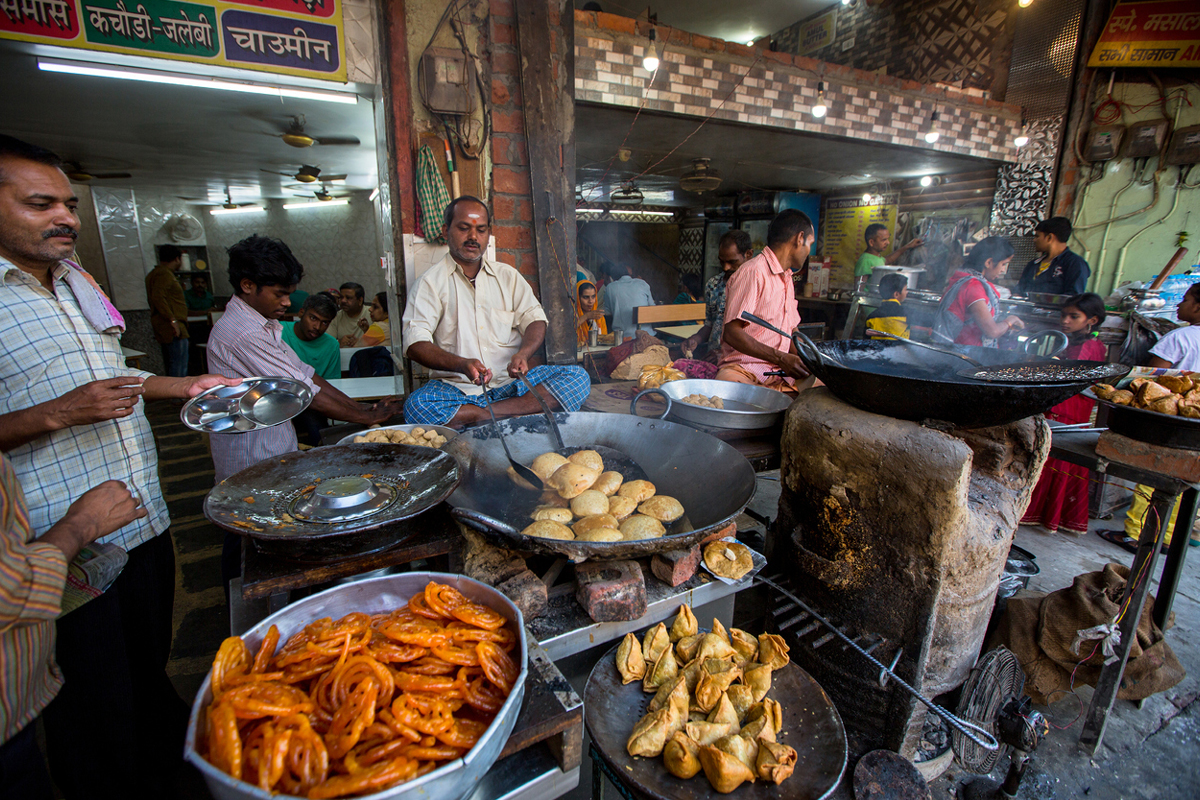
Acomprehensive survey on Kolkata street food, carried out jointly by the Kolkata Municipal Corporation (KMC) with World Health Organisation (WHO), and other agencies, revealed that poor disposal of garbage, lack of hygiene by vendors and re-use of oil, are still some of the major issues that continue to make the city’s street food unhealthy for consumption.
The civic body, in association with the WHO, Bureau of Indian Standards (BIS) and two other agencies, conducted a survey and research on Kolkata’s street food with an objective to find easy and implementable methods to make street food safe in a sustained manner. The study is based on a total of 42 indicators and covered 10 zones as identified by KMC.
It covered 104 areas in two detailed surveys and 54 areas in the sample survey. Speaking on the results of the study, Mr Atin Ghosh, deputy mayor and member, mayor-in-council, health, said “The survey report has revealed that most of the street food items are largely safe. However, we cannot say it is 100 per cent safe since the minimum standard of food safety is still not maintained by all vendors due to socio-economic problems.
An NGO survey earlier had revealed Kolkata has the safest street food in India. Consumers and street food vendors have become more conscious about food safety than before.” He added, “KMC had begun full scale food safety drives from 2015 and in the following years, we have also take stern action against food vendors who were found violating food safety norms. We have 16 food safety officer teams for all the16 boroughs of KMC who carry out inspection drives from Monday to Saturday and compile a ward wise report.”
Commenting on the study, Dr. Indira Chakraborty, who was involved with the project, pointed out, “We used 42 indicators for the study which included water, vendor hygiene, raw materials and several other factors. A total of 10 critical issues were observed which continues to make Kolkata street food unhealthy. Firstly, garbage removal is still a huge issue and cooking near it is extremely unhygienic.
The vendors need to dispose organic waste properly. Secondly, lack of personal hygiene while cooking, continues to be a major problem since vendors don’t wash their hands. Many have been observed scratching or fixing their hair while cooking. The hand gloves remain unchanged and are reused for days. Thirdly, use of unclean water for cooking is rampant” “Another worrying factor is frequent reuse of cooking oil. Oil should not be reheated and used for cooking but it is apparent among the city’s street food vendors. Our survey covered all parts of Kolkata” said Dr Chakraborty.
Among the overall inferences derived from the study, one is that maximum number of vendors (74-76 per cent) prepare and sell food at the place of sale and hence onthe- spot awareness generation is possible. Most vendors were found more aware about basic issues than they were earlier.
It was learnt that future steps include conducting nationwide pilot assessments and sharing results with city authorities; creation of safe street food zones in identified areas in Kolkata which will include awareness generation, monitoring, provision of simple amenities etc. Conducting water quality monitoring in different food establishments was also recognised as vital.
Subscribe to:
Posts (Atom)