
Mar 2, 2020


Punjab prohibits online supply of food from FBOs not possessing hygiene rating
Punjab government's Food and Drug Administration on Sunday said it has prohibited online supply of food from Food Business Operators (FBOs) not possessing hygiene rating.
Issuing the prohibition orders, Food and Drug Administration Commissioner K S Pannu said invoking provisions under the Food Safety & Standards Act, 2006, keeping in view the interest of public health, the distribution/supply/sale of articles of food through Online Food Supply Aggregators (OFSAs) related to those FBOs who have not got their hygiene rating done has been prohibited.
"The orders also prohibit OFSAs from sourcing the food from FBOs which are not hygienically rated and also where such rating is less than three out of five," a Punjab government release said.
The prohibition orders would be effective for one year beginning April 30, 2020.
The orders state that in Punjab, information technology-driven OFSAs have been distributing/selling/ supplying food to the consumers after sourcing the same from FBOs.
"This food delivery through an IT based platform is a very recent phenomenon in which the direct and primary contact between the consumer of food articles and the manufacturers of food articles, especially the hot cooked food articles, has snapped.
"This mechanism of distribution/sale/supply of food by OFSAs has obliterated the system of responsibility of maintaining the quality of food, which till now was being directly verified by the consumers from the food business operators at his counter," the release said.
It further stated that with the introduction of OFSAs, it has become important to ensure that these aggregators supply only good quality and properly hygienic food articles to the consumers.
"Although, it is the moral responsibility of FBOs and OFSAs to ensure quality and hygiene of food delivered, the duty is also cast upon the State authorities to ensure safe food to public under the Section 18(1)(a) of food Safety and Standards Act, 2006," said Pannu.
He said that the Food Safety and Standards Authority of India (FSSAI) has issued instructions vide which the system of hygiene rating of the food business operators has been introduced. FSSAI has empanelled various agencies to conduct the hygiene rating of the FBOs.
Pannu said the office of the Food and Drug Administration, Punjab had asked all the OFSAs to ensure that the FBOs from where they are sourcing food for distribution to consumers should get the hygiene rating of their business done.
The date of getting the hygiene rating of the FBOs done was earlier extended till October 31, 2019, Pannu said.
"However, it has been observed that even after creating awareness regarding the importance of hygiene rating, OFSAs have not taken the matter seriously, resulting in consumers continuously facing the potential of delivery of unsafe/unhygienic food..," he said.
Is your food actually gluten-free?
For those allergic or intolerant to gluten, not all food products and grains that claim to be free of gluten are devoid of the proteins.
In a first-of-its-kind pilot study, researchers at Indian Council for Medical Research (ICMR) affiliated National Institute of Nutrition (NIN), Hyderabad, have found oats and flour processed from naturally gluten-free grains with gluten levels up to 90 times and 20 times the permissible limit set by the law indicating contamination in products that are sourced from local retailers and millers.
Gluten is a conglomeration of proteins found in wheat – a staple food for a large portion of the Indian population – rye and barley. Allergy to gluten expresses itself in two forms – celiac disease (CD), which is a chronic inflammatory autoimmune disorder in which the lining of the small intestine’s inner wall is damaged owing to incomplete digestion of food made of any of the three cereals, and non-celiac gluten sensitivity.
NIN researchers collected samples of ready-to-eat food products, multigrain flour as wheat replacer, pulses and dals, millets, quinoa, buckwheat, oats and soy-based products available in online grocery shops, super markets and local markets. Individual grain flour ¬– rice, ragi, sorghum, gram – was sourced directly from mills. Samples were tested using the internationally prescribed ELISA kits for detecting gluten levels.
Of the 160 samples, nearly 36.7% products from the grains and 9.8% labelled as ‘gluten-free’ were found to contain gluten above the acceptable level of 20mg/kg. The 2011 rules of the Food Safety and Standard Authority of India (FSSAI) has stipulated that a product can be labelled as either gluten-free if the content is up to 20mg/kg only after the product is analysed for contamination by standard internationally accepted method.
Nearly 85% of oats products – permitted as part of a gluten-free diet by many countries – showed gluten levels with a concentration range between 23.78mg/kg and 1830.8mg/kg, while buckwheat, quinoa, pulses, millets and soy products showed no such cross-contamination.
“Although the sampled grains are inherently gluten-free, their products might become cross-contaminated at post harvesting or processing facilities,” S Devindra, co-author and assistant director, NIN. “These products therefore cannot be stated as gluten-free until confirmed by test procedures. Otherwise, it might be misleading and potentially harmful to celiac patients, who are on a strict dietary plan.”
Globally, 0.67% or one in 130 people suffer from CD. A pan-India by the Delhi-based All India Institute of Medical Sciences (AIIMS) – it also the main centre of research in CD– found prevalence of the disease in 0.67% (4 to 6 million) with a high incidence in north India. “The (NIN) data is relevant because gluten-free diet is the only way of treating celiac patients and those who are intolerant or sensitive to gluten, and therefore cross-contamination of food products is a cause for concern. Even 5mg gluten, which is a chapati bite, can lead to persistence of the disease,” said Dr Govind Makharia, professor, department of gastroenterology and human nutrition, AIIMS, who has undertaken extensive research on the disease among Indians, and not involved in the study. “Cross-contamination can take place anywhere from the farm to the factory.” While studies over the past 15 years have shown the presence of gluten above the permissible limits in both labelled and naturally gluten-free food products available in US, Europe and Turkey, there is no India-specific data on gluten contamination.
Findings of the present assessment, published in this month’s issue of Food Additives and Contaminants: Part A, found gluten content in 35.9% unbranded flour samples from local markets and local mills in the range of 20–400mg/kg thereby breaching both FSSAI and the internationally laid out Codex safety levels.
Only 5 of the 51 samples from products labelled as gluten-free showed contamination above 20 mg/kg although levels were well within 100 mg/kg owing to well-adapted processing procedures and maintenance of individual mills for separate flours. Of all the regular grains, the highest amount of gluten – up to 400mg/kg – was present in sorghum samples, followed by rice (279mg/kg), gram (135.4mg/kg) and ragi (122.3mg/kg).
Researchers said while common flour mill and collecting bags for rice and wheat in many milling shops is likely to be responsible for cross-contamination in rice flour samples, the presence of gluten in ragi and sorghum can be attributed to the use of a common utility area and handling procedures.
“Common flour mills, collecting bags, or flour processing area for both gluten and naturally gluten-free cereal flours might be one of the major factors responsible for the high rate of gluten contamination in local flour mill samples,” said Devindra.
To address the issue of cross-contamination in gluten-free products, FSSAI in June last year reiterated that food with only 20mg/kg or less gluten content can be labelled as gluten-free, and released a guidance note on testing and labelling for food manufacturers and consumers. “Gluten intolerance is a new area of concern because its focus in India has been of recent origin owing to greater awareness today, and therefore the food system has to respond to it,” said Pawan Agarwal, secretary, consumer affairs department at the Centre.
The former FSSAI chief executive officer under whose tenure the guidance note was issued, Agarwal added, “Our department will have a meeting with FSSAI officials and other departments to see what can be done.”
“Firstly, it will help raise awareness and let consumers know that a product may be compromised. Secondly, it will help us advocate and push for better vigilance by government regulatory bodies,” said Dr Shweta Khandelwal, head of nutrition research, Public Health Foundation of India, who was not involved in the study. “Lastly, it will also warn businesses to be more stringent in quality checks.”
135 criminal cases against Andhra Pradesh Food Business Operators
Officials file 291 adjudication cases after testing food samples collected from 270 units

VIJAYAWADA: Cracking the whip on errant food business operators (FBOs), vigilance and enforcement (V&E) officials have filed as many as 135 criminal cases and 291 adjudication cases against them. The criminal and adjudication cases were filed for supplying unsafe food items, and possessing substandard and misbranded products, respectively.
Speaking to TNIE, V&E director general (DG) KRN Rajendranath Reddy expressed concern over the rising food adulteration menace in the state as it led to numerous harmful effects on human health. After testing 426 food samples collected from 270 FBOs across the state over the past three years, the Food Safety and Standards Authority of India (FSSAI) and vigilance departments submitted a detailed report to the government and filed cases against the establishments as per the instructions. Samples of sweets, toned milk and dairy products, edible oil, ghee, meat products, tea powder, soft drinks and ice cream were sent to the state food laboratory in Hyderabad for testing.
Penalties for offences under Food Safety and Standards Act, 2006
Section 51 up to Rs 5 lakh
Section 52 up to Rs 3 lakh
Section 57
For processing adulterant not injurious to health: up to Rs 2 lakh
In other case, up to Rs 10 lakh
Section 63 Imprisonment up to six months and fine up to Rs 5 lakh

Mar 1, 2020


Food safety dept raids eateries ahead of Attukal Pongala
The raids which started on Thursday will continue till March 10.
THIRUVANANTHAPURAM : The Food Safety Department served closure notice on three eateries during a special drive launched on Thursday in the wake of the Attukal Pongala festival. The Porotta Centre and Zamzam Bakery at Manacaud were served closure notices for serious violations which would risk the health of customers. Closure notice was also served on ‘One Take Away’ at Karamana for offering stale food items for sale.
The raids which started on Thursday will continue till March 10. A total of 14 squads comprising 54 food safety officers are participating in the drive. Close to 97 shops were raided on Thursday. Of them, improvement notices were served on 47 establishments, a fine has been imposed on 10 establishments for serious lapses. The department has asked the public to raise complaints and suggestions over the toll-free number 1800 425 1125 or 8943346181, 8943346195, 7593862806.
City sweet makers to meet FSSAI over ‘best-before’ rule

The recent order from the Food Safety and Standards Authority of India (FSSAI), asking all sweet manufacturers to print the manufacturing date of their sweets and “best before” declarations, has put city sweet manufacturers in a fix. They will now be going to meet the FSSAI bosses in Delhi on March 4 and 5 to look for a solution to the problem. It is likely that the state will support the Paschim Banga Mistanna Byabasayee Samiti in this and send a representative to attend the meeting.
Most of the big sweet makers in Kolkata, however, said they understand the intent of the FSSAI and support the move because this will stop “smaller” manufacturers from trying to sell stale sweets, which are often “covered in thick sugar syrup to hide their staleness”. The declaration of manufacturing and best-before dates will definitely put a stop to this, they felt. However, they agreed there were some logistical issues that need to be sorted out as well.
The meeting will be part of Ahara, a national food festival, to which city sweet manufacturers have been invited. “It is known that Bengal sweets are made of chhana, unlike mawa that is used by sweet makers of other provinces. Chhana as a raw material is extremely fragile and decays after 24 hours so we do not sell sweets that are beyond a day old. We are already writing “to be consumed within 24 hours” on our products,” said Dhiman Das, spokesperson for K C Das.
Most bigger brands said some sweets and their manufacturing processes are so delicate that they spoil within hours. In peak summer, rosomalai and rosogolla, if left unrefrigerated, can spoil in eight hours. “We mentally keep tabs on this. Now we will have to declare it. However, writing them on shelves and on boxes are two different ball games and involve additional hassles,” said Subhojit Ghosh of Banchharam. He insisted that because of the short shelf life of Bengal sweets, it is still considered a cottage industry that needs all the support it can get to survive.
Most sweet manufacturers said the inclusion of Bengal sweets within the GST net has already affected the industry because of the huge cost involved in upgrading accounts. But if the FSSAI declaration involves a complicated process, it will further affect business.
“We want the process to be uncomplicated. At the time of manufacture, we keep back-end records of each batch and we know when to stop selling which tray. We don’t mind declaring it, but we are a bit confused about the process,” Ghosh added.
A spokesperson for the 200-year-old brand Nalin Chandra Das echoed the thought. “We have received the circular to give these declarations by June 1. We don’t mind and we agree that customers have a right to know how healthy the sweet is. However, if we are once again channelled into complications, we will suffer,” said proprietor Tapan Kumar Das.
Feb 28, 2020


HC notice to health, food safety depts on salt iodisation
The Madurai Bench of the Madras High Court on Thursday issued notices to the Ministry of Health and the Family Welfare and Food Safety Department in a plea seeking to quash the Central government’s order on iodisation of salt.
Madurai:
A division bench of Justice M Duraiswamy and Justice T Ravindran was hearing a petition filed by TSP Jayapalan, secretary, Thoothukudi Thanpaadu Uppu Ettrumathi Viyabarigal Sangam, on the issue.
The petitioner stated that salt, which is being traditionally manufactured depending purely on nature in Thoothukudi, need not require fortification of iodine for human consumption. Salt is a natural element of soils and water. Earlier, the Food Safety and Standards Authority of India, through a notification, had prohibited the sale of non-iodised salt
The Food Safety Regulations, 2011, had cited that consumption of iodised salt could be set right. But, it did not mean that by using common salt, it would cause harm to health. Therefore, the impugned amendment could not be sustained on this sole ground.
Further, the petitioner claimed that some people might have more iodine content in the body while some others could have deficiency of it. As a result, every person could feel physical inconvenience, the medical prescription would only guide on whether salt could be consumed with or without iodine. Therefore, generalising the whole concept by way of an amendment could not stand the test of law.
Several scientific data revealed that if iodine content increased in the body beyond the required level, it would result in depression, impotency, hyperthyroidism and so on. Therefore, the regular consumption of iodised salt would harm consumers’ health, the petitioner said.
Meanwhile, counsel for the petitioner argued that since AYUSH is the accredited institution founded by the Centre through special ministry, it has the expertise to give its opinion as to whether or not the common salt could be permitted to be used for human consumption. Hence, it has become necessary to get AYUSH impleaded in this case, counsel said.
After hearing, the bench issued notices to the Ministry of Health and the Family Welfare and Food Safety Department to respond and adjourned the case until further notice.
Food safety sleuths raid general stores in Vijayawada
During the inspection, the officials reportedly found that some traders were selling products with expiry dates and were charging more for purchases.

VIJAYAWADA: Sleuths of Food Safety and Standards Authority of India (FSSAI) on Wednesday carried out raids at wholesale and general stores in one town here. The raids were conducted on the basis of complaints filed against a few traders for poor quality products.
During the inspection, the officials reportedly found that some traders were selling products with expiry dates and were charging more for purchases.
Addressing media persons, regional assistant food controller N Purnachandra Rao said one dry fruit trader violated FSSAI rules by indulging in sale of misbranded products and not giving bills to the customers. He also said some other traders were found using artificial colours to enhance the appearance of food grains.
Rao requested the public to demand bill for every purchase. He said samples collected from the stores will be sent to laboratory for testing.
Sampling drive: Notice served to trader in city
Jalandhar, February 26
A sampling and checking drive was carried out at Nadala, Begowal in Kapurthala today. A total of 14 samples of desi ghee (manufactured in another state), mustard oil, flavoured milk, besan, chana dal, Dalia, Biscuit bakery, Rusk, tea leaves 2, rajmah, fruit juice and rice puff etc were seized for analysis. During the course of inspection, a dealer of soft drinks was found storing expired food products along with fresh ones. A notice also served to him in this regard.
All food business operators dealing in sweets were asked to comply with the directions issued by FSSAI. Checking was carried out under Assistant Commissioner, Food and Drug Administration, Kapurthala.
Implementing a new order issued by FSSAI (Food Safety and Standards Authority of India) directing display of ‘Manufacturing’ and ‘Best Before’ date in case of sweets, the Food and Drug Administration also directed implementation of the order.
FSSAI Joint Director (RCD - Regulatory Compliance Division) had issued this order after reported instances of stale/expired sweets being sold to consumers, posing potential health hazards.
An indicative list of shelf life of various types of sweets is given in the Guidance Note on Safety and Quality of Traditional Milk Products which is available on FSSAI website.
Feb 27, 2020
Kolkata’s street food still unhealthy for consumption
The civic body, in association with the WHO, Bureau of Indian Standards (BIS) and two other agencies, conducted a survey and research on Kolkata’s street food with an objective to find easy and implementable methods to make street food safe in a sustained manner.
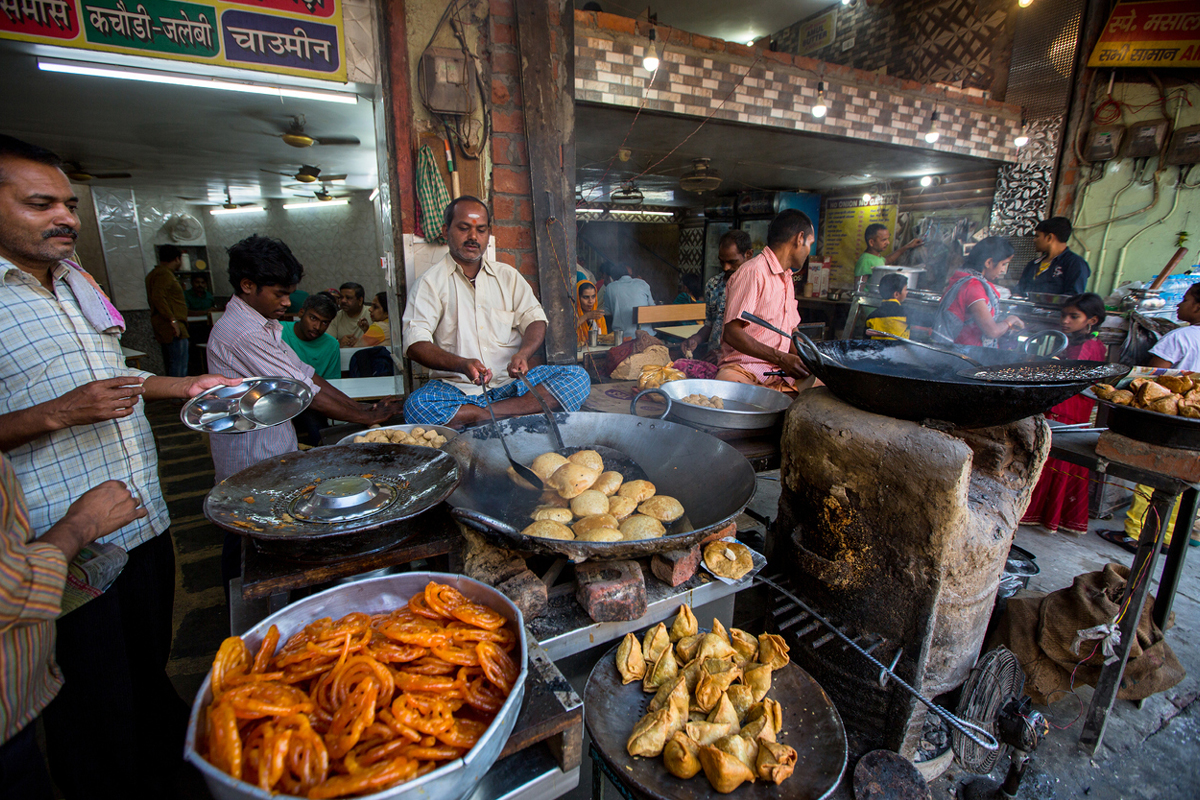
Acomprehensive survey on Kolkata street food, carried out jointly by the Kolkata Municipal Corporation (KMC) with World Health Organisation (WHO), and other agencies, revealed that poor disposal of garbage, lack of hygiene by vendors and re-use of oil, are still some of the major issues that continue to make the city’s street food unhealthy for consumption.
The civic body, in association with the WHO, Bureau of Indian Standards (BIS) and two other agencies, conducted a survey and research on Kolkata’s street food with an objective to find easy and implementable methods to make street food safe in a sustained manner. The study is based on a total of 42 indicators and covered 10 zones as identified by KMC.
It covered 104 areas in two detailed surveys and 54 areas in the sample survey. Speaking on the results of the study, Mr Atin Ghosh, deputy mayor and member, mayor-in-council, health, said “The survey report has revealed that most of the street food items are largely safe. However, we cannot say it is 100 per cent safe since the minimum standard of food safety is still not maintained by all vendors due to socio-economic problems.
An NGO survey earlier had revealed Kolkata has the safest street food in India. Consumers and street food vendors have become more conscious about food safety than before.” He added, “KMC had begun full scale food safety drives from 2015 and in the following years, we have also take stern action against food vendors who were found violating food safety norms. We have 16 food safety officer teams for all the16 boroughs of KMC who carry out inspection drives from Monday to Saturday and compile a ward wise report.”
Commenting on the study, Dr. Indira Chakraborty, who was involved with the project, pointed out, “We used 42 indicators for the study which included water, vendor hygiene, raw materials and several other factors. A total of 10 critical issues were observed which continues to make Kolkata street food unhealthy. Firstly, garbage removal is still a huge issue and cooking near it is extremely unhygienic.
The vendors need to dispose organic waste properly. Secondly, lack of personal hygiene while cooking, continues to be a major problem since vendors don’t wash their hands. Many have been observed scratching or fixing their hair while cooking. The hand gloves remain unchanged and are reused for days. Thirdly, use of unclean water for cooking is rampant” “Another worrying factor is frequent reuse of cooking oil. Oil should not be reheated and used for cooking but it is apparent among the city’s street food vendors. Our survey covered all parts of Kolkata” said Dr Chakraborty.
Among the overall inferences derived from the study, one is that maximum number of vendors (74-76 per cent) prepare and sell food at the place of sale and hence onthe- spot awareness generation is possible. Most vendors were found more aware about basic issues than they were earlier.
It was learnt that future steps include conducting nationwide pilot assessments and sharing results with city authorities; creation of safe street food zones in identified areas in Kolkata which will include awareness generation, monitoring, provision of simple amenities etc. Conducting water quality monitoring in different food establishments was also recognised as vital.
Feb 26, 2020


From June 1, loose sweets to carry best-before dates

NEW DELHI: Before buying laddoo, sandesh or rasmalai from your neighbourhood sweet shop, you may soon be able to check the manufacturing and ‘best before’ dates of such non-packaged sweet items.
The Food Safety and Standard Authority of India (FSSAI) has made it mandatory for sweet shops to display these details even on non-packaged or loose sweets from June 1. At present, it is mandatory to mention them on labels of packaged sweets.
The latest regulatory move comes in wake of FSSAI receiving complaints about sale of stale or expired non-packaged sweets posing potential health hazards to consumers.
“In public interest and to ensure food safety, it has been decided that in case of non-packaged/loose sweets, the container/tray holding sweets at the outlet should display the ‘date of manufacturing’ and ‘best before’ date of the product,” the food regulator said in its order.
The regulator said food business operators (FBOs) should decide and display the ‘best before’ date for non-packaged sweets depending upon the nature of the product and local conditions.
FSSAI has also issued an indicative list containing shelf life of various types of traditional sweets which can be referred to by FBOs for compliance. For instance, it recommends consumption of some items like rasgullas, badam milk, rasmalai and rajbhog within two days of manufacturing.
The regulator has asked state food safety commissioners to ensure compliance with these directions. However, traditional Indian sweet makers have expressed reservations over the order.
From June 1, ‘loose’ sweets will carry best-before date
Shops told to indicate manufacturing and expiry date of non-packaged sweets at display counters; currently rule applies only to packaged sweets
Traditional Indian sweet shops will soon be required to display the expiry dates of loose and non-packaged sweets on the display counter at their outlets. The Food Safety and Standards Authority of India (FSSAI), in its latest notification, has directed mithai shops to display the manufacturing and the best-before dates for loose sweets, effective June 1.
In its order, the food safety authority said it has received complaints regarding the sale of stale and ‘expired’ sweets, which poses a “potential health hazard”.
“In public interest, and to ensure food safety, it has been decided that in the case of non-packaged/loose sweets, the container/tray holding the sweets at the outlet for sale should display ‘Date of Manufacturing’ and ‘Best Before Date’ of the product. This will be effective from June 1,2020,” it added.
Existing stipulations
Per the Food Safety and Standards (Packaging and Labelling) Regulations, 2011, pre-packaged sweets are already required to display this information on the labels. Now, this norm is being made mandatory for loose and non-packaged sweets, too.
“The Food Business Operators shall decide and display the ‘Best Before Date’ of the sweets depending on the nature of the product and local conditions,” said the FSSAI order.
Last year, the FSSAI had issued a guidance note on traditional Indian milk products, listing out the shelf life of some of the traditional sweets. For instance, it recommends the consumption of some, such as rasgulla, badam milk, rasmalai and rajbhog, within two days of manufacture.
However, traditional Indian sweet makers have expressed concerns regarding the implementation of the FSSAI order.
Concern over implementation
Firoz H Naqvi, Director, Federation of Sweets and Namkeen Manufacturers (FSNM), said the directive has come as a surprise for the industry. “Only 5-10 per cent of traditional Indian sweets are packaged and the majority of them are sold in loose form. An outlet, on an average, has as many as 200 varieties of sweets to sell, which are made from different kinds of ingredients and therefore have different durations of shelf life. While we agree with the intent of this direction and that it is in consumers’ interest, implementing this norm on the ground will be very challenging,” he said.
“We will be writing to FSSAI to inform them about these challenges and hope to work towards a more practical solution in this regard,” Naqvi added.
Meanwhile, the FSSAI has directed all State Food Safety Commissioners to ensure compliance of its latest directive by all the concerned food business operators.
Sweet sellers to display ‘best before’ and manufacturing date from 1 June
- Not too pleased with the diktat, sweet shop owners are hoping to appeal to the govt against the order
- Branded sweet retailers already follow the practice for their packaged products
NEW DELHI : Your neighbourhood halwai shop will soon have to declare the manufacturing and best before date of all loose sweets available in his shop. India’s food regulator, Food Safety and Standards Authority of India (FSSAI) has asked local mithai and sweet shop owners to display the manufacturing date and the “best before" date on loose sweets sold in their shops in a move that will help ensure that the consumers are purchasing a fresh product.
In an order issued on Monday, FSSAI—the food regulator—has asked all mithai shops to use such labelling on the trays that carry loose sweets. “Further, in public interest and to ensure food safety, it has been directed that in case of non-packaged/loose sweets the container or tray holding sweets at the outlet should display the “date of manufacturing" and “best before date" of the said products," the order said. The order, which will be effective 1 June.
Citing instances of stale and expired sweets being sold in the market, the FSSAI said it is asking shops to comply with such labelling orders to ensure that consumption of such products does not pose a potential health hazard to the consumers.
An indicative shelf life along with a suggestive logo of various types of sweets has been given in a separate guidance note on milk products issued by the FSSAI.
“Traditional milk-based sweets are generally prepared from khoya, chhena, sugar and other ingredients such as maida, flavours and colours e.g. peda, burfi, milk cake, gulab jamun, rasgulla, rasmalai etc. Sweets have limited shelf life. Sweets particularly those with milk products have lesser shelf life and are more prone to microbial growth. Therefore sanitation and hygiene in their preparation and consumption within shelf life is of utmost importance," according to the guidance note.
“Moreover, there are issues of adulteration and use of sub-standard products," the regulator said in the noted. Concerted efforts are needed to ensure food safety of sweets by stakeholders including food businesses, consumers and regulatory authorities, the regulator said.
Not too pleased with the diktat, sweet shop owners are hoping to appeal to the government against the order they say is difficult to implement.
“We are with FSSAI, but some things are hard to implement. A lot of milk products have a limited shelf life, and some have a longer shelf life. Some shops have 200 to 300 products and it is difficult to put a label on each category because of varying shelf lives, " said Firoz H. Naqvi, managing director, Federation of Sweets and Namkeen Manufacturers (FSNM).
The FSNM represents interests of over 400 manufacturers of Indian sweets and namkeens including branded chains such as Haldiram’s and Bikanervala, among others. Naqvi said that the association was not consulted before publishing the order.
“We will write to the government, put out our concerns, and try and meet midway, where their concerns are met and ours too," he added.
Branded sweet retailers already follow the practice for their packaged products such as rasgulla and soan papdi.
India has thousands of traditional mithai shops that sell packaged and loose traditional delicacies.
Most sell dairy-based sweets prepared with khoya, desi ghee, along with cooking oil, refined sugar etc. Such sweets are sometimes found to be adulterated or are sold beyond their expiry dates.
Food safety commissioners of states and union territories have been directed to ensure compliance of the order.
Feb 25, 2020


Food safety awareness drives held
Coimbatore: The food safety department conducted a rally on Monday to create awareness on adulterated food products, importance of consuming nutritious food and banned products like tobacco.
Collector K Rajamani flagged off the rally.
Officials of the department visited a city-based engineering college and addressed students to create awareness on adulterated tea, coloured eggs and adulterated ghee, and explained about the ways to trace adulteration. The team requested them to report adulteration on the department’s WhatsApp helpline 9444042322.
As many as 2,500 people, including college students, members of self-help groups, anganwadi workers and government employees learnt food safety lessons at the awareness session conducted by the Food Safety and Standards Authority of India at Sri Krishna College of Arts and Science.TNN
Feb 24, 2020


Rajasthan: 18 students admitted to hospital after they fell ill following consuming midday meal
Around 50 students were taken to the nearby community health centre. From there, 18 students were referred to Jawaharlal Nehru hospital in Ajmer town
On Saturday, 18 students studying at a government school in Ajmer district of Rajasthan were rushed to hospital after consuming their midday meal. The incident took place at Arjun Pura Khalsa School, a government school in Arjun Pura village.
Rajasthan: 17 students of a government school in Ajmer's Arjanpura fell ill after consuming mid-day meal. KK Seni, CMHO says, "Children were rushed to hospital and are stable now. Food Safety officer was sent to take the food samples of the meal. We are looking further into it".



The children had, reportedly, consumed vegetables, roti, and milk as their midday meal. After taking the milk, the students complained of vomiting, nausea, and diarrhoea. The school administration then contacted the health officials, following which the children were admitted to the hospital.
Chief Medical Health Officer (Ajmer) KK Soni said, “Children were rushed to the hospital and are stable now. The food safety officer was sent to take the food samples of the meal. We are looking further into it.”
Around 50 students were taken to the nearby community health centre. From there, 18 students were referred to Jawaharlal Nehru hospital in Ajmer town. The condition of the children, aged between and 11 years, is said to be out of danger now.
He added that around 80 children have been kept under observation. The district collector, Vishwa Mohan Sharma, also informed that the headmaster Khoob Chand Maghani and midday meal in-charge Meena Sharma have been suspended. He had earlier directed the Education Department to initiate disciplinary action against the school authorities.
Used Cooking Oil for Bio-Diesel Production
“Under the Food Safety and Standards Authority of India’s (FSSAI) the project, ‘RUCO’ (Repurpose Used Cooking Oil) we have conducted the survey in over 25-30 big hotels and restaurants across the city. We are identifying such establishments from where we can collect UCO on a daily basis,” said Apoorva Minz, Food and Safety officer Bokaro.

On the directives of higher-ups District Food and Safety department is conducting a survey in hotels and restaurants in Bokaro Steel City to collect used cooking oil (UCO), which would be used in making bio-diesels.
“Under the Food Safety and Standards Authority of India’s (FSSAI) the project, ‘RUCO’ (Repurpose Used Cooking Oil) we have conducted the survey in over 25-30 big hotels and restaurants across the city. We are identifying such establishments from where we can collect UCO on a daily basis,” said Apoorva Minz, Food and Safety officer Bokaro.
“We have kept a target to collect 2500 litres of UCO from hotels and restaurants on a daily basis so that it can be utilized in making bio-diesels. The aim behind this initiative is to prevent repeated use of cooking oil and to convert it into bio-fuel,” said Minz.
“We have observed that UCO finds its way to small food vendors and households at cheap prices as well. It is hazardous not only for health, but also for the environment. UCO, when discarded without any treatment, clogs drainage systems as well,” said Minz.
Last year FSSAI has released a detailed guidance note on the handling and disposal of UCO by small and big food business operators and household-level users. According to this repeated use of cooking oil is banned as it can have serious repercussions on health, said Minz adding that those who do not obey the rules will have to pay a penalty of Rs. one lakh.
It has been notified the limit of total polar compounds (TPC) used in cooking at 25 per cent.
TPC is used to measure the quality of oil, and its level increases every time oil is re-heated. TPC beyond 25 per cent is considered unfit for human consumption, she said. FSSAI in association with the Biodiesel Association of India (BDAI) has recently launched ‘RUCO’ project, short for repurposing used cooking oil, said an official. RUCO is a project that plans to convert vegetable oils, animal fats or restaurant grease that has already been used in cooking into biodiesel for running diesel vehicles, or any other equipment that uses diesel.
Feb 23, 2020


Feb 21, 2020

FSSAI sets limits for formaldehyde in 63 fish species

PANAJI: The limits of formaldehyde for 63 species of marine and fresh water fish have already been set by the food safety and standards authority of India (FSSAI), New Delhi.
The food safety and standards (FSS) (Food Products Standards and Food Additives) Regulations, 2011, are being amended to add ‘Limit of Formaldehyde’- the naturally occurring formaldehyde for 63 different species of fish, the FSSAI informed the high court of Bombay at Goa on Thursday.
“The amount of naturally-occurring formaldehyde for 63 species has been laid down under sub-regulation 2.6.2 of FSS Amendment Regulations, 2020,” assistant director of FSSAI Pankaj Gera submitted to the high court.
During the hearing on Thursday, counsel representing FSSAI, Dattaprasad Lawande, told the court that a total of 693 samples of fish have been analysed till date by the Central Institute of Fisheries Technology (CIFT), Kochi to determine the naturally-occurring formaldehyde in fish.
On the request of petitioners that no checks of formalin in fish are being carried out, the high court asked the government to place the reports of random checks before it. Senior counsel J E Coelho Pereira told the division bench that the laboratory to test the presence of formaldehyde in fish at the SGPDA market in Margao, should in fact be set up at the wholesale market.
Under its Rs 54 lakh collaborative research project ‘Natural level of formaldehyde in freshly harvested fin fish and shellfish’ initiated on July 3 last year, the FSSAI is expected to set formaldehyde standards for 72 major commercial species of fish which contribute to more than 90 percent of the fish production and consumption in India.
The central authority is expected to complete the exercise by August this year after analysing more than 1,000 samples of fish.
Marico to promote safe food habits in Gujarat
Through this program, Marico is working with 3 Eat Right Campuses, 5 Clean Street Food Hubs and 50 schools in Gujarat wherein it has introduced the Safe and Nutritious Food at School initiative, the company said in a statement.

New Delhi: FMCG company Marico said that it will extend its association with the Eat Right initiative started by the Food Safety and Standards Authority of India (FSSAI) to foster hygienic and safe food habits in the state of Gujarat. Through this program, Marico is working with 3 Eat Right Campuses, 5 Clean Street Food Hubs and 50 schools in Gujarat wherein it has introduced the Safe and Nutritious Food at School initiative, the company said in a statement.
The company has been a supporter of the program since its launch and in the last one year it has reached out to 200 schools benefitting more than 80,000 children across India, it claims. The program includes magic box tool kits to help students detect adulteration and canteen certification in 50 schools, reaching out to over 50,000 children across Gujarat.
“Marico has always been committed to making a difference in the community and support healthy living. In line with this, we are delighted to partner FSSAI to aid their Eat Right program. Having made a positive impact in the last 3 years, we are now expanding our initiatives in Gujarat through Eat Right Campuses, Clean Street Food Hubs and Safe and Nutritious Food at School programs, with an aim to promote healthy, safe and hygienic food habits,” said Dr. Sudhakar Mhaskar, CTO-Research, and Development at Marico.
As a part of its Eat Right Campus program, in accordance to FSSAI’s mandate, Marico has adopted the five star-rating mechanism which has a set of well-defined benchmarks on food safety and hygiene, food waste management, healthy diets, promotion of local and seasonal food and awareness building on healthy eating across campuses such as IIM Ahmedabad, NIRMA University in Gujarat, among others, the company said. Additionally, Marico will also promote food safety and nutrition through Health & Wellness Coordinators and Health Teams on campuses.
“I congratulate Marico Limited for initiating and supporting Eat Right Program at Gujarat, Maharashtra, Tamil Nadu, and Chandigarh. I appreciate the efforts taken by respective FDAs as well as auditing and training agencies. Food Safety is a shared responsibility and Marico has been our partner in the Eat Right program since its inception. My best wishes for the future programs,” said Pawan Kumar Agarwal, CEO, FSSAI.
With the support of local FDA and FSSAI, Marico aims to work with 100 schools, 10 Eat Right Campuses, and 11 Street Food Hubs and reach over 4,00,000 people across Gujarat, Chandigarh, Maharashtra and Tamil Nadu in 2020, the company said.
“Monitoring food safety: Why BBMP, not Central authorities, should be in charge”
How often have we thought about how safe our food is or how sustainable our food practices are? What regulations exist to make our food secure? Who is enforcing these regulations, and how efficiently?
Everyday food is often laced with pesticide residues, as shown by the crippling attack of arthritis in over 300 people in Shimoga and Chikmagalur districts. In another instance, excessive levels of poisonous fungi were found in flour sold in parts of Karnataka. The fungi could cause a range of disorders – from jaundice to gastrointestinal bleeding.
Besides, India already faces a triple burden of malnutrition due to inadequate calorie intake among a large section of the population, obesity among another section, and pervasive micronutrient deficiencies. Fluctuations in food prices change the spending pattern and consumption of the poor, who are forced to buy poorer quality food or to settle for a diminished diet, continuing the cycle of undernutrition.
A comprehensive regulatory framework is urgently needed, to prevent exploitation of both producers and consumers, especially in cities where citizens are totally reliant on market sources. This must be in tandem with efforts to diversify and increase food production.
Regulations and enforcement are centralised
Currently, regulations on food are prescribed by the Food Safety and Standards (FSS) Act, 2006. And these are implemented and enforced by the Food Safety and Standards Authority of India (FSSAI), a central body under the Ministry of Health and Family Welfare.
All food labs across India have been brought under the Indian Food Laboratory Network (InFoLNet), a centralised digital management system. Besides, the centre is implementing a ‘one-nation, one-food-safety-law’, which prescribes common standards for implementation, compliance and enforcement of regulations.
But this centralised approach cannot provide continuous monitoring of food. Nor can it accommodate local techniques in food production or fully involve various stakeholders.
Given our country’s diversity in agriculture production and food habits, food regulations should be decentralised, and local bodies should be included in the monitoring of producers and consumers. This would help strengthen community networks and institutions too.
No incentive to grow local crop varieties
Food habits are influenced by factors like geographical location, socioeconomic status and religious views. Farmers tend to grow crops that form the main diet of a particular region. But crops before harvest are also included as ‘food’ under the FSS Act, and hence farmers come under the purview of the central regulations.
These regulations do not consider productivity and land quality, the type of soil or other factors essential for the growth of a particular crop across various regions. If the regulations on a specific crop (especially if it’s grown in fewer regions) are more technical and call for stricter compliance, farmers would default to crops that are easier to grow and transport as per regulations.
Centralised regulations promote production of crops that are easier to grow and transport.
That is, the centralised, uniform set of standards and regulations gives no incentive to farmers to grow local crop varieties. This has led to increasing homogenisation of crop production.
How can local regulations help?
Local bodies like panchayats are traditionally assigned functions related to ‘neighbourhood’ public goods like sanitation and water supply. Food, being an immediate need sourced mainly from local, informal vendors, should hence come under the head of ‘neighbourhood’ public good, and should be regulated and monitored with the help of local bodies.
Local regulations and implementation can also lead to increased interaction between stakeholders like farmers, traders and consumers. As a result, regulations can be tailored for the diverse socio-economic characteristics of municipalities.
It can also allow pooling of resources including information, and encourage the innovation and spread of more artisanal production techniques, which are currently restricted by the centralised regulations.
Is this doable for BBMP?
Take Bengaluru. Section 247(1) of the Karnataka Municipalities Act, 1964, authorises a Municipal Commissioner, Chief Officer or any person authorised by the Council to inspect markets and other places used for the storage and sale of goods. The section also gives the authority powers to seize goods that are harmful or adulterated.
Additionally, BBMP’s functions include orderly development of the city with respect to health, hygiene, licensing, trade and quality of life. Since food is a fundamental and immediate aspect of life, its regulation and monitoring would fall within BBMP’s core functions.
Involving local bodies like BBMP would:
Make the process of approving products easier
Allow for more frequent checks and monitoring
Allow negotiation and mediation between various stakeholders as per local customs
BBMP should monitor raw food and vendors too
Urban local bodies can also widen the scope of their monitoring, from restaurants to raw foods and vendors. BBMP already conducts raids on restaurants and resto-pubs for unhygienic food, and has decided to conduct such raids at least twice a week. Expanding upon these functions, BBMP could examine raw produce before it makes its way to consumers’ houses.
For example, in fish markets in Bengaluru, formalin may be used to increase the shelf life of stock. FSSAI conducts checks only twice a month, but new stocks of fish enter markets every day and are being sold without adequate checking.

HAL fish market. Checks on fish quality need to be more frequent.
If checks can be done at least once a week, it would be more effective for the FSSAI to work alongside the BBMP. Currently, BBMP can only give or cancel licenses once FSSAI finds formalin. But if BBMP is allowed to conduct its own checks as well, the monitoring system would be more efficient. FSSAI could also then improve its food safety knowledge through increased access to data collected by BBMP.
Besides, BBMP would be better-equipped than FSSAI to conduct regular checks on the Public Distribution System (PDS). Thirty seven per cent of poor households obtain food from the PDS, where adulteration abounds. Examples are the adulteration of spices sold in an open, powdered-form, where the adulterants may even be carcinogenic; or the adulteration of milk, leading to undernutrition.
Restrictions in reporting unsafe food
Currently, the onus is on ill-informed consumers to report any infraction by vendors, to the Food Safety Department. And this is to be done through an online portal. This makes the system reliant on the information of a few individuals with the knowledge and resources to report violations.
To better involve consumers in food regulation, targeted programmes for public participation and consumer education should be initiated, as was done in the US by the Food and Drug Administration (FDA) in 1985. Under this programme, information was given on nutrition labelling, on food safety in the home, on the administrative procedures of the FDA, and so on.
Environmental concerns
The current regulations also show a poor understanding of the environment. Centralised systems increase the travel distance from the field to the marketplace. This is because the nearest FSSAI centre for food testing would be farther away than the nearest local regulator, especially in rural areas. This results in the planting of only those crops that can be easily transported and stored for longer periods of time.
Decentralisation essential for sustainable, efficient food system
Given these, FSSAI’s functions should be restricted to prescribing a structure, coordinating, and facilitating work, while allowing state authorities to set regulations that are specialised to their regions. Local bodies like BBMP can strongly enforce these regulations and can use their judgment to declare whether a food product is safe.
A centralised system is also incompatible with the Agricultural Produce Market Committee (APMC) system which is supposed to prevent exploitation of farmers by their creditors. APMC Acts of different states have significant differences in commodity coverage and in the extent of powers of agricultural marketing boards. Differentiated and localised regulations would ensure there are no discrepancies in terms of commodities covered by the APMC Act of that particular state.
Furthermore, APMC Acts allow state governments to involve local governments in the process of regulation. The Karnataka Agricultural Product Marketing (Regulation and Development) [APM] Rules, 1968, under Section 92(1), empowers panchayats to check for licenses of sellers, to supervise sale, delivery, and other matters, thereby allowing a certain level of decentralisation. Section 91-A also looks at contract farming – ensuring through specific, localised rules – that farmers are not exploited.
To conclude, for a food regulation system to be efficient and environmentally sustainable, the regulations should be decentralised. Such regulations will also be region-specific and more accessible to all stakeholders.
Noida food safety officers to check milk products, snacks ahead of Holi
Ahead of Holi, the Gautam Budh Nagar food and safety department has made three teams to inspect snacks and milk products in the district. From February 24, officials will start focusing on shops and stores selling milk products and snacks.
“We have made three teams which will focus on snacks and milk products being sold at various sweet shops and food outlets. We have been receiving a lot of complaints regarding the quality of paneer being used by restaurants and food outlets in the district. Ahead of Holi, we will focus on the quality of milk products to ensure the safety of consumers,” Sanjay Sharma, food safety officer, Gautam Budh Nagar, said. “The temperature has started increasing following which the chances of milk products getting spoiled increases.”
“Each team that will conduct inspections will have three food safety officers (FSO),” Sharma added.
Between April 2019 and January 2020, the food department officials collected and tested over 440 samples. The results of around 380 samples have come, out of which 156 samples did not pass the quality tests. According to the officials, most of the failed 156 samples are milk products.
Officials can file a case against the persons from whose outlets the sub-standard samples were collected in the additional chief judicial magistrate’s court after taking sanction from the commissioner of the state food safety department in Lucknow. The defaulters can be imposed a penalty and even imprisoned from one to six years by the ACJM court.
For the last 20 days, officials have been focusing on canteens and restaurants in the district and have conducted around 150 inspections until now. From February 24 to March 10, officials will be inspecting sweet shops and restaurants which are visited by many people during festivals.
“In the coming three weeks, we will mostly be checking sweets and snacks in the district. We have collected several samples in the last 20 days and found many sub-standard food milk products,” Sharma said.
On January 1, the state government had ordered that every FSO in the district needs to conduct at least 40 inspections a month. There are nine FSOs in the district and as per the new orders, they will need to conduct at least 360 total inspections in a month.
The order has also said that all the details of every inspection and the suggestions made for improvement to owners of food outlets should be documented in a report. The detailed report should be submitted to the senior officials concerned within three working days.
In January, officials had conducted more than 349 inspections and served 28 notices to various restaurants, canteens, manufacturing units among others.
Canteen operators in schools to undergo food safety training

Ambala, February 19
In order to ensure food safety standards in schools and colleges, the Food and Drug Administration has asked institutes to ensure that canteen operators get the food safety training through the FSSAI authorised trainers by March end.
Selling food items without food safety and training certificate may attract a penalty ranging from Rs 2 lakh to Rs 5 lakh.
As per the FSSAI, it is mandatory for food business operators and people engaged in preparing food items to get the training, as per the Food Safety and Standard Act -2006 and Food Safety and Standard Rules-2011 from the FSSAI authorised training partners.
Subhash Chander, Food Safety Officer, Ambala, said, “People who have been running restaurants, hotels, dhabas and even street vendors are being provided food safety and training certification. Schools and colleges have also been asked to get the training of their canteen operators done before March end. Besides private schools, the Education Department has been asked to ensure training of midday meal workers as well.”
Deputy District Education Officer Sudhir Kalra said, “Midday meal workers are provided training by the department to maintain hygiene while preparing food. We also keep taking the feedback from children about quality of food. If the department wants to provide special training then we will organise training sessions and call the cooks in batches.”
Joint Director Secondary Education Department Satinder Siwatch has expressed concern over the quality of food being served to students in schools.
Siwatch said, “The students are being provided junk food in schools. They should be served nutritious food.”
Kulbhushan Sharma, president, National Independent Schools Alliance, said, “We want to provide healthy food to students and the Central Government is preparing a policy in this regard. We had a meeting with the FSSAI in this regard.”
Digital push to pull up illegal hawkers in Jamshedpur
Drive to ensure only licensed vendors operate, and to keep check on food quality

Street vendors in Sakchi, Jamshedpur, on Thursday.
The city civic body will digitise licensed street vendor’s records to end the perennial problem of traffic congestion and to ensure quality of food dished out in commercial hubs.
More than 4,000 licensed street vendors in commercial hubs of the city will have smart chip cards containing the biometric data and all details of the licence holder including name, age, address, contact number, licence number and photograph.
Hawkers selling food will need to have the food safety licence from the Food Safety and Standards Authority of India (FSSAI), which is issued by district civil surgeon.
“We would be issuing tender to a private agency for making the smart chip card for the vendors soon based on the survey record,” said Vishal Kumar, city mission manager, Jamshedpur Notified Area Committee (JNAC). “It will help us in knowing the locations where these vendors put up their stalls. The private agency will put in the data. We will also ask vendors to enter their details at our office in the next few weeks. We hope to have the smart chip cards ready by April and implement it from then.”
He said the move will help enforcement squads take action against illegal vendors.
“Our enforcement squad will have the QR code scanner machine and during special drive against illegal vendors we will scan the smart chip cards to get entire details,” Kumar said. “If the vendors are found putting their stalls in a location other than the one in which they are allotted we will confiscate their goods and levy fines. We hope that after regularisation of vendors the problem of squatting on roads leading to traffic congestion would be curbed to a great extent.”
Now, authorised vendors have hard (paper) copies of their authorisation and it is often difficult for the enforcement squad to verify the details because the vendors make other people man the stalls. “It (digitisation) would make our task easier to know if they have the mandatory FSSAI license which is renewed annually by the district health department and is aimed at curbing sale of adulterated and poor quality food,” said the JNAC city mission manager.
There are dedicated vending zones in Golmuri, Sidhgora, Kadma and Bistupur but vendors often prefer to squat by roads to attract customers.
Feb 18, 2020


Subscribe to:
Posts (Atom)