
Jan 6, 2020


Jan 5, 2020


Safe food streets to come up in Bhubaneswar
With increasing populations in the cities, food safety has been brought to focus by the State Government. Chief Secretary Asit Tripathy on Saturday in a high-level meeting reviewed the food safety measures in different cities.
Tripathy directed the Housing and Urban Development and Food Safety Commissionerate to take a special drive for creating intensive awareness among the street food vendors and the people. He also directed to educate the food vendors about food safety techniques and make people aware not to take unsafe food.
The CS also stressed on enforcing food safety measures through authorised outsourced agencies.
It was decided that the Bhubaneswar Municipal Corporation (BMC) would identify the most populous stretches for creation of ‘safe food streets’ in the corporation area on a pilot basis. A proposal for appointment of designated Food Safety Officers in five municipal corporations was also approved at the meeting.
Tripathy directed to put in place an online system for creating a database of the oversight and enforcement activities.
Stating the updates, Food Safety Commissioner Yamini Sadangi appraised that there had been a steady increase in the number of registered food business operators (FBOs) in the State over last three years. The total number of registered FBOs has increased from 5,026 in 2016-17 to 25,822 in 2017-18 and 36,622 in the year 2018-19.
It was revealed that an online registration system for FBOs has been operational since December 2016. The payment of fees and dues as per FSS Act, 2006 has also been made online.
In the year 2018-19, a total number of 327 ‘legal samples’ were picked and tested out of which 92 samples were found either adulterated or misbranded against which 14 criminal and 33 civil cases have been instituted. Besides, a total number of 1599 ‘surveillance samples’ have also been collected principally from the places of public festivals and celebrations out of which 477 samples found adulterated have been fined.
With the Eat Right India movement, we seek to secure a healthy future
Transforming our food system poses one of the greatest leadership challenges and opportunities of our time

Food systems around the world are delivering unhealthy diets, raising the risk of death and disease, malnutrition, and rising obesity. Building a world where safe and nutritious food is available for everyone and everywhere requires transformation of the food systems
We are what we eat, and we eat what we get. But we do not get what we need. We get what our food system provides.
Food systems around the world are delivering unhealthy diets, raising the risk of death and disease, malnutrition, and rising obesity. Building a world where safe and nutritious food is available for everyone and everywhere requires transformation of the food systems.
Food systems lie at the interface of agriculture and rural economy, industry and commerce, public health and environment. Transforming them requires cooperation, partnerships and alliances, with public-private collaborations cutting across traditional silos. This poses one of the greatest leadership challenges and opportunities of our generation.
Food systems are critical to many of the United Nations Sustainable Development Goals (SDGs). Recognising this, the UN will host a Food Systems Summit in 2021 as part of the Decade of Action to deliver the SDGs.
At the Food Safety and Standards Authority of India (FSSAI ), we are leading a movement called Eat Right India, to provide safe and wholesome food to people everywhere. This requires a mix of regulatory, capacity building, collaborative and empowerment tools. By combining supportive actions to its primary regulatory mandate, we are taking a “food systems approach” to address these issues in a holistic manner. FSSAI was applauded for it by Prime Minister Narendra Modi in his Mann Ki Baat radio address in December last year.
The Eat Right India movement is a collective effort based on three pillars: Safety (if it’s not safe, it’s not food); Health (food should not only serve the palate but the body and mind); and Sustainability (food has to be good both for people and the planet).
There are five concrete actions under each pillar. Under safety, the focus is on ensuring personal and surrounding hygiene, maintaining hygienic and sanitary practices through the food supply chain, combating adulteration, reducing toxins and contaminants in food, and controlling food hazards in processing and manufacturing processes.
Under the healthy diet pillar, we promote dietary diversity and balanced diets, eating less and timely, eliminating toxic industrial trans fats from food, reducing consumption of salt, sugar and saturated fats and promoting large-scale fortification of staples to address micronutrient deficiencies.
The sustainable diet actions promote local and seasonal foods, preventing food loss and food waste, conserving water in food value chains, reducing use of chemicals in food production and preservation, and the use of safer and sustainable packaging.
These actions aim to achieve three things: inspire public trust in food available to people in the market or through government programmes, through improved safety and quality of food; second, to build a strong culture of self-compliance in all food businesses across the supply chain, with better ease of doing business; and finally, to promote safe, healthy and sustainable diets through both demand and supply side interventions, to protect the health of the people and the planet.
There is action on the ground as well. This includes certification of clean street food hubs, fruit and vegetable markets, hygiene rating of halwai shops, meat shops, safety of food served in religious places, and so on. Eat Right India’s home, school and campus initiatives are settings-based approaches to providing the right food environments so that people get what they need.
Mass campaigns with celebrity influencers like Virat Kohli, Raj Kumar Rao, Juhi Chawla and Sakshi Tanwar are triggering behavioural changes for informed food choices. A rich repository of content and messaging (print, digital audio and video) has been created and disseminated. A nation-wide scaling up of the Eat Right India movement is now planned.
The Eat Right India targets people across ages, gender, regions, and socioeconomic groups. It brings together food-related mandates of the agriculture, health, industry and environment ministries, with a “whole of government” approach. As a platform for collective action of stakeholders — consumers, food businesses, community organisations, experts and professionals, and the government — it is in fact a “whole of society” approach. It connects with other flagship programs — Ayushman Bharat, Swachh Bharat Abhiyan, Poshan Abhiyaan, Fit India movement — to institutionalise preventive health care as a way of life.
The Eat Right India movement has forged partnerships with food and nutrition professionals: dieticians, nutritionists, medical doctors, chefs, food scientists, technologists and analysts. They support outreach in collaboration with state food authorities.
FSSAI is gradually transitioning from enforcer to enabler and reformer. This integrative approach is unique for a developing economy like India, with its challenges in size, complexity, food diversity and the large unorganised sector. Eat Right India will be a good template for collective attention in the UN’s 2021 Food System Summit.
Govt to brand Capital streets for food safety
Bhubaneswar: In view of the rising demand for street food in cities like Bhubaneswar and Cuttack, the state government has decided to identify some stretches to brand them as ‘safe food streets’.
Expressing concern over unhealthy junk food items being served to people by some street vendors in cities, the government has taken the step to enable people to obtain safe food. The programme will be implemented on a pilot basis in Bhubaneswar and later extended to other corporation towns— Cuttack, Berhampur, Sambalpur and Rourkela.
The decision was taken at a high-level meeting held under the chairmanship of Chief Secretary Asit Tripathy at Lok Seva Bhawan here, Saturday.
Reviewing the food safety measures in different cities, Tripathy directed the Housing & Urban Development department and Food Safety Commissioner to take a special drive for creating intensive awareness among the street food vendors and the people. He also directed to educate the food vendors about food safety techniques and make people aware not to take unsafe food.
Further, the Chief Secretary asked the officials concern to examine the possibility of enforcing food safety measures through authorised outsourced agencies with delegation of necessary powers.
It was decided that Bhubaneswar Municipal Corporation (BMC) would identify the most populous stretches for creation of ‘safe food streets’ in the corporation area on pilot basis.
Designated food safety officers (FSOs) will be appointed in five corporation towns of the state for the purpose. The Chief Secretary advised the officials to put in place an online system for creating a database of the oversight and enforcement activities.
Elaborating the updates, Food Safety Commissioner Yamini Sarangi said that there has been a steady increase in number of registered food business operators (FBOs) in the state over the last three years. The total number of registered FBOs has increased from 5,026 in 2016-17 to 25,822 in 2017-18 and 36,622 in 2018-19.
Available data show that online registration system for FBOs was launched in December 2016. The payment of fees and dues as per Food Safety and Standards Act, 2006 has also been made online.
The State Food Testing Laboratory has been recognised by Food Safety Standards Authority of India (FSSI) and mobile food testing laboratory has been provided in the state since November 2017 to check the quality of food served in different areas of the state.
This apart, the government has launched Blissful Hygienic Offering to God (BHOG) programme at three places—Kali Temple at Baramunda, Sai Temple at Tankapani Road and Shani Temple at Vani Vihar in Bhubaneswar on a pilot basis to provide quality food to people.
Blissful Hygienic Offering to God ( BHOG) program has been launched in three places- Maa Kali Temple at Barmunda, Saibaba Temple at Tankapani Road and Shani DevTemple at Vanivihar-- in Bhubaneswar on Pilot basis.
BHOG is an initiative put forth by Food Safety and Standards Authority of India (FSSAI).
This move is to encourage Places of Worship (PoW) to adopt and maintain Food Safety and hygiene as well as convey food safety messages through such places to the people to follow as responsible citizens.
In Odisha BHOG has been implemented on Pilot Basis and it is one of the major flagship programs of the Food Safety Commissionerate.
Chief Secretary Asit Tripathy Saturday directed the Housing & Urban Development and Food Safety Commissionerate to launch a special drive for creating awareness among the street food vendors and the people on food safety.
Chairing a high level meeting to discuss food safety issues here, Mr.Tripathy directed the officials to educate the food vendors about food safety techniques and make people aware not to take unsafe food.
Reviewing the food safety measures in different cities, Mr.Tripathy issued directions to examine the possibility of enforcing food safety measures through authorized outsourced agencies with delegation of necessary powers.
It was decided in the meeting that BMC would identify the most populous stretches for creation of ‘safe food streets’ in the corporation area on pilot basis.
The proposal for ‘Designated Food Safety Officers’ in five Corporation areas was also approved in the meeting, said officials.
The Chief Secretary also directed to put in place an online system for creating a data base of the oversight and enforcement activities.
Food Safety Commissioner Yamini Sarangi said that there had been a steady increase in the number of registered food business operators (FBOs) in the State over last three years.
The total number of registered FBOs has increased from 5,026 in 2016-17 to 25,822 in 2017-18 and 36,622 in the year 2018-19.
According to officials, the online registration system for FBOs has been launched from December,2016 and the payment of fees and dues as per FSS Act 2006 has also been made online.
The State Food Testing Laboratory has been recognized by Food Safety Standard Authority of India (FASSI) and mobile food testing laboratory has been provided in the State from November, 2017.
In 2018-19 a total number of 327 ‘legal samples’ have been picked and tested out of which 92 samples have been found either adulterated or misbranded against which 14 criminal and 33 civil cases have been instituted, said officials.
Besides, 1599 ‘surveillance samples’ have also been collected principally from the places of public festivals and celebrations out of which 477 samples found adulterated have been fined.
The officials said that mobile food testing laboratory has tested 1832 samples and have conducted 140 awareness and 20 training programs.
Principal Secretary Health & Family Welfare Nikunja Bihari Dhal, Principal Secretary Housing& Urban Development G Mathivathnan, Director Municipal Administration Sangramjit Nayak along with senior officers from concerned departments participated in the deliberations.


Jan 3, 2020


FSSAI: Alexa, tell the Kids to‘Eat Right’

New Delhi: In a first, the national food regulator has tied up with ecommerce giant Amazon’s virtual assistant Alexa and is setting up ‘eat right’ labs in schools, looking to include children in the dialogue on healthy and safe eating.
“A key constituent of the ‘eat right’ campaign is towards children and to address this audience, there are a number of interventions that are based on pulling in these young minds, rather than pushing out content,” Food Safety & Standards Authority of India chief executive officer Pawan Agarwal said.
The programmes are aimed at reaching youth who use Alexa regularly and to work with schools to deliver meal plans based on eating right, he said.
The move comes after the Central government clamped down on junk foods in schools, banning the sale of packaged foods high in fat, salt and sugar in their canteens, messes, hostel kitchens or within 50 metres of their campuses.
“Millennials are more conscious about their diet. A lot of them live in villages but technology is closing the rural-urban divide. Virtually, they are in the same space as urban consumers and it’s aspirational for them to also eat right. We are aware of this,” Agarwal said.
FSSAI, the nodal agency under the ministry of health and family welfare, will use technology extensively to drive conversations on safe and healthy food.
“We want this to become a mainstream conversation and we’re using technologies like virtual and augmented reality to bring in school and college students,” he said.
The ‘eat right’ campaign is linked with concepts such as setting hygiene parameters for street vendors and hygiene ratings for restaurants, hotels and cafeterias.
In a related development, FSSAI’s “clean street food hubs” under which it identified clusters including street vendors, and trained and mobilised them, is being scaled up nationally from 20 such hubs presently. Besides, milk testing and inspection of dairy plants will come into effect starting this month, with penalties for those not adhering to guidelines.
“There is general despair among citizens that food products such as milk, spices and oil are adulterated. We understand there are problems and that’s why we are doing largescale surveillance to understand the nature and extent of the problem so we can address those,” he said. The regulator is hiring 800-plus employees and taking over central licensing enforcement from state governments.
FSSAI brings loose milk suppliers in Gujarat under regulatory ambit: Report
A nationwide introduction of a similar scheme will be taken into consideration by the FSSAI based on the experience of the rollout in Gujarat.
Unorganised milk suppliers, vendors and producers will now come under the ambit of a regulatory net with the launch of the Food Safety and Standard Authority of India's new 'Verified Milk Vendors Scheme' in Gujarat.
All such unorganised milk producers and vendors will be issued identity cards on registration under the new scheme, The Hindu Businesslinereports.
The state has an estimated 40 lakh milk producers and vendors.
A nationwide introduction of a similar scheme will be taken into consideration based on the experience of the rollout in Gujarat.
Currently, only cooperative dairies and registered private dairies come under the regulatory franework in accordance with the Food Safety and Standards ACt. However, small vendors and producers continue to operate outside the ambit of such regulations.Hemant G Koshia, Commissioner, Food and Drug Control Administration (FDCA) - Gujarat, told the publication that the plan for rollout of the scheme is still underway and they expect that all vendors will be given identity cards within the next six months to one year.
FSSAI launches 'Verified Milk Vendor Scheme' in Gujarat
FSSAI to bring loose milk suppliers under the regulatory ambit
In a first for India, the unorganised milk suppliers or vendors will now be brought under the monitoring through a verification programme.
The Food Safety and Standards Authority of India (FSSAI) has launched 'Verified Milk Vendors Scheme' in Gujarat with an aim to cover milk producers and milk vendors under the regulation net.
Under the new scheme, all the unorganised milk producers and vendors in Gujarat will be issued identity cards by taking their registration. "For the first time, we will be monitoring the raw and loose milk suppliers. Till now the focus has remained on the dairy products and the dairies. But the unorganised suppliers to these private dairies and the end-consumers were somehow missed from the regulatory monitoring. So, we are going a step ahead to keep a check on the raw milk suppliers and producers, who independently supply loose milk to small/big dairies and the end consumers," Hemant G Koshia, Commissioner, Food and Drug Control Administration (FDCA) - Gujarat, told Businessline.
The cooperative dairies and registered private dairies are already covered under the Food Safety and Standards Act, whereas the small vendors and producers often go unchecked.
Gujarat is estimated to have about 40 lakh milk producers and vendors who will be given these identity cards.
FSSAI Chief Executive Officer, Pawan Kumar Agarwal was also present during the launch of the scheme in Ahmedabad last week.
"Currently, we are finalising the rollout plan and coverage strategy. Within next six months to one year's time we will cover all the vendors with identity cards," Koshia stated.
Based on the Gujarat experience, the FSSAI will plan to roll-out the similar scheme nationwide.
On the retail consumption of loose milk, Koshia stated that about 85 per cent of the overall milk consumption in Gujarat is pouched milk, so only a small portion of retail consumers actually go for loose milk purchases. However, Koshia also flagged the risk at the private dairies, where a bulk of loose milk gets processed to make different milk products.
The food regulators in Gujarat have observed instances of milk adulteration in the State to be around 6-7 per cent of the samples collected. "This is in line with the national average of milk adulteration cases. In past 8-10 years, we have seen adulteration cases where water or sucrose were mixed with milk. But there has been no case of urea-mixed adulteration at least in Gujarat so far," stated Koshia.
New sensor to test milk
Researchers at the Indian Institute of Technology Guwahati (IITG) have developed a simple paper-based sensor to assess the freshness of milk, and the method is instantaneous. Commonly used tests to study the effectiveness of pasteurisation such as the Methylene Blue Dye Reduction Test are time-consuming. It can take hours for the colour changes that indicate the presence or absence of microbes to occur. Commercial phenol-based tests require sophisticated spectrophotometers and involve multi-step procedures.
A research team led by Pranjal Chandra of the Department of Biosciences and Bioengineering at IITG developed a simple visual detection technique to detect the quality of milk without the need for special equipment or instruments. Their work was recently published in the journal “Biosensors and Bioelectronics”.
Alkaline phosphatase (ALP), an enzyme present in raw milk, is destroyed at high pasteurisation temperature and is therefore an important biomarker in the quality control of milk. Detection of ALP in milk can thus point to inadequate pasteurisation and/or contamination with raw milk. According to Pranjal Chandra, despite ALP’s recognisable detection potential in native milk, the multi-step nature of and the requirement of sophisticated bulky analytical instruments and trained personnel to detect ALP with the currently used methods limit their use as a sensor of milk quality in remote settings and in home kitchens. Such testing, he pointed out, would require easy-to-operate portable detection kits.
The researchers took simple filter paper, chemically modified it and loaded it with the anti-ALP compound 5-bromo-4-chloro-3-indolyl phosphate, which captures the ALP present in the milk by forming a blue-green precipitate. The intensity of the colour indicates the amount of ALP present. In the absence of ALP, there will be no colouration. The team used a smartphone to capture the image of the colour and used the RGB (Red Green Blue) filter in the phone to profile the colour obtained, which could be correlated to the ALP concentration in the test sample.
“Our sensor takes merely 13 minutes to detect ALP, and hence it can be applied for quick onsite analysis,” Pranjal Chandra said. The researchers successfully tested milk obtained from villages and commercially available milk samples using their kit and found that they could detect down to 0.87 units of ALP per millilitre of milk to 91-100 per cent accuracy. This detection limit and accuracy make it possible to discriminate raw milk from pasteurised/boiled milk. The team has developed a miniaturised detection kit. Kuldeep Mahato, Ashutosh Kumar and Buddhadev Purohit of the research team have also developed an advanced version of the paper-based sensor with improved accuracy using a label-free bioelectronic chip. The researchers plan to commercialise both variants of the kit.
Dec 31, 2019


Drive to ensure potable water
Kochi: District administration has decided to intensify ‘Operation Pure Water’ and take stringent action against those supplying contaminated water from Wednesday. Tanker trucks engaged in the supply of drinking water should draw water from the 13 hydrants provided by Kerala Water Authority (KWA).
Tests will be conducted on a frequent basis for checking the quality of water supplied through tanker trucks. The registration number and time of the trucks collecting water should be noted at the points from where the water is drawn. Quality division of KWA should monitor the distribution and the quality of drinking water supplied in the district. The water supplied should be subjected to quality tests at government recognized laboratories at regular intervals. Tanker trucks, which are not registered with the Food Safety and Standards Authority of India, should not be allowed to engage in water supply. Such tankers should also register with the district administration.
The squad of food safety department must take rigorous actions against those drawing water from abandoned quarries. Moreover, they have to adhere to the high court order stating that the colour of tankers transporting drinking water, construction material, and sewage must be blue, brown and yellow, respectively.
Dec 30, 2019


Milk safety: Feed producers told to meet BIS’ mark

FSSAI has said foods of animal origin (such as milk) are at times found to be non-compliant with relevant standards prescribed under the law.
CHENNAI: The Centre has fixed a deadline of June 10, 2020, for animal feed manufacturers to comply with regulatory standards prescribed by the Bureau of Indian Standards (BIS). It has also banned import of feed which does not have BIS certification mark. Cattle feed is a major source by which milk gets contaminated with Aflatoxin M1, a carcinogen. The order by Food Safety and Standards Authority of India (FSSAI) has been issued to all States, two months after a national-level survey revealed the presence of the carcinogen in milk samples taken from Tamil Nadu and a few other States.
FSSAI has said foods of animal origin (such as milk) are at times found to be non-compliant with relevant standards prescribed under the law. It is examining the possibility of framing feed regulations, supported with appropriate amendments to the Food Safety Act. “On an interim basis, it has been decided that commercial feeds and feed materials intended for food-producing animals (such as cattle and sheep) shall comply with relevant BIS standards and shall not be manufactured/imported, distributed and sold except under BIS certification mark,” said the directive issued on December 10 by P Karthikeyan, deputy director, FSSAI, New Delhi.
The FSSAI has given feed manufacturers a deadline of six months, from the date of the order, to comply with it. Following reports of the presence of Aflatoxin M1 in milk, last month the State government constituted a high-level committee to conduct a detailed study. Cattle are fed with paddy straw, fodder and concentrate mixture. The concentrate feed is prepared using different varieties of cake along with food grains, husk, minerals and molasses from sugar mills.
Milk producers say ingredients used for preparing cattle feed are purchased from small-scale companies in rural parts of the State and currently there are no provisions to examine the quality standards.
“Most farmers will not even weigh the feed purchased. Regulation of cattle feed may be appreciated, but a majority of dairy farmers are unaware of the standards and other safety parameters,” said M G Rajendran, general secretary, Tamil Nadu Milk Producers’ Welfare Association (TNMPWS).
Tamil Nadu Food Grain Merchants Association State president S P Jayaprakasam said the association was informed by State health officials that Tamil Nadu Agricultural University will conduct a detailed study into cattle feed and only later would regulations be decided on. “We will create awareness among the manufacturers over toxic content. However, fodder gets contaminated mainly because of fertilisers”. “All dairy farmers are being sensitised by our field level staff and veterinarians over quality of feed,” said a senior official of Animal Husbandry department.
Coconut oil , tomato sauce companies slapped with fine for substandard products
KOCHI: State Food Safety department has slapped heavy fines on two coconut oil companies after finding out their products lacked quality and failed to meet the prescribed standards.
The brands facing ban are K P N Suddham, Kitchen Tasty, Shudhamaya Thani Nadan Velichenna and Keraleeyam. The company called Kairali Oil Kizhakkambalam, which is producing these four brands, has been slapped a fine of Rs 6 lakh under Food Safety act, in three adjudication cases.
Moovattupuzha RDO has signed the order that specifies the fine.
Along with Kairali Oil, ABH trading company was also fined Rs 3.15 lakh for its sub-standard product known as Keraleeyam coconut oil, distributed by Kochin Trading Company Allapra.
Kolanchery-based PKM Prime Foods Private Ltd was also fined Rs 2 lakh for their substandard Tomato sauce.
The above mentioned companies had selected for their products names that had resemblance with popular brands and by that way, duped customers into buying their products. This also brought bad name to those popular companies.
Punjab bans manufacturing, storage and sale of cooking oils made of admixtures of Ghee and Vanaspati

CHANDIGARH: Issuing a Prohibition Order in the interest of public health ,under section 30(2) (a) of the Food Safety and Standards Act, 2006, and in pursuance of the Regulation 2.1.1 of the Food Safety and Standards ( Prohibition and Sales ) Regulations, 2011, Kahan Singh Pannu, Commissioner, Food and Drug Administration, Punjab informed that the manufacture, distribution, storage and sale of Cooking Medium concoctions prepared by admixture of ghee and any added matter not exclusively derived from milk fat and vanaspati to which ghee or any other substance has been added, have been prohibited in the State of Punjab. Such admixtures cannot be sold even under proprietary food category.
The orders have been enforced for one year with effect from January 15, 2020, said he.
He informed that the office of Commissioner, Food & Drug Administration, Punjab had cancelled the licenses of firms, in the month of September, 2019, which were manufacturing such admixtures in the State of Punjab against the provisions of Regulations, 2011. However, the sale of such admixtures continued in the State with the products manufactured outside the State.
Thereafter, in mid September, a notice was given for seeking objections, to completely prohibit the manufacture/sale/distribution of these concoctions in the State of Punjab. The objections, if any, were to be filed within a period of 15 days.
A company named M/s Tapan Agro Industries Private Limited, Agra filed the objection to the notice. A personal hearing was given to the representative of M/s Tapan Agro Industries Private Limited and was informed that the admixture formulation of M/s Tapan Agro Industries Private Limited (Preet Lite cooking medium proprietary food and Deep Classic cooking medium proprietary food) are not exempted from Regulation 2.1.1 of the Food Safety & Standards (Prohibition & Restrictions on Sales), Regulations, 2011. It was also cleared that this admixture cannot be sold even under proprietary food category , even after proper labeling declaration for being in contravention with the Regulations, 2011.
Pannu said that it has been observed that a large number of Food Business Operators are selling admixtures of vanaspati and admixtures of ghee in gross violation of the Regulations, 2011, under various names such as Cooking Medium, Lite Ghee, Pooja Ghee, Activo Lite, Preet Lite, Ultra Classic, etc. Such cooking mediums contains large amount of Saturated Fats and Trans Fats which further increase manifold when the product is used for frying purposes. The Trans Fats have been established to have ill effects on human health for causing hypertension and coronary diseases. These products are made with admixtures of vanaspati and admixtures of ghee and are prohibited in the State under the Regulations, 2011, being injurious to public health.
Dec 29, 2019


FDA now trains its guns on food shacks outside institutions


First they went after schools to clean up their act so students ate right on campus; now widening the scope of this campaign, Food and Drug Administration (FDA), Pune region, is launching the Eat Right Campus (ERC) at the premises and surroundings of different institutional spaces — such as hospitals, colleges, corporate establishments, courts, among others — starting from January. Audit will be conducted focusing on systematic approach to serving safe and wholesome food at these campuses, informed officials.
The campaign will work on the premise that most people consume at least one meal outside their home every day and the vigil is tailored to ensure this food is nutritious and prepared in keeping with food safety standards and hygiene. As before the ERC is tailored on the guidelines set by the Food Safety and Standards Authority of India (FSSAI).
The officials have already drawn up a list of institutions they will be targeting with the campaign.
In the city they’ve identified Modern College on University Road, the Shivajinagar court, SNBP International School at Pimple Saudagar, Ruby Hall Clinic, Deendayal Hospital, Tata Motors, Bharati Vidyapeet at Katraj, College of Engineering, Pune (CoEP), both the civic bodies — Pune Municipal Corporation and Pimpri Chinchwad Municipal Corporation, among others.
The prime objective of the initiative is to educate the food business operators (FBOs) and their functioning will be inspected for compliance with parameters set down by the Food and Safety Act, 2006, Rules and Regulations (2011). The aspect that will come under scrutiny will include safety and hygiene, healthy diet, food waste management and also promotion of local and seasonal foods.
Suresh Deshmukh, joint commissioner FDA, Pune region, told Mirror, “The ERC will kick off from January, targeting to build awareness among the public and the food business administration on healthy practices to be followed. They will be tutored on what constitutes eating right, including the items to be consumed and those to be avoided. The employees of the organisation we inspect will also be counselled on this.”
He pointed out that given FDA’s variant commitments and the vast audience the campaign needs to address, it will be run selectively on campuses that have huge numbers. “We will hold meetings with heads of the institutions and their employees to educate them and through them effect a major change in our eating habits. The influence of western cultures on our diets has been immense and needs to be countered,” he asserted.
Aparna Bhoite, assistant commissioner of FDA added, “The campaign will not just impact food habits on campus but also help the audience reform their lifestyle to incorporate the health advice we impart. Also in campuses that have no inhouse canteen or mess, the people step out to establishments adjoining the premises to grab a meal, so these businesses also need to be brought into the ambit of this campaign. Squeezing this outreach into our existing schedule we are working to reach maximum number of people within the time constraint.”
An FBO, Pravin Tapkir, welcomed the move. “Many FBOs are unaware on the practices to be followed to deliver healthy and good food. Though most want to serve their best, they are not privy to different processes of food storage and production to meet the mandated standards. Even people who’ve been in the business for years are grappling with problems of waste management, which is one of the biggest issues before the industry. A schooling on these factors will cut back on food wastage and also save us some money,” said Tapkir.
He is not alone in cheering the campaign. Bomi Bhote, chief executive officer of Ruby Hall Clinic was enthused enough to offer the services of his specialists. ”We have several doctors and dieticians who would like to come forward and participate in the campaign. Right diet will definitely ensure people move towards wellness,” he commended.
Dr Ramachandra Hankare, PMC’s health chief, observed, “Being an education hub and an IT hub, Pune has a huge floating population. Most of these people are hooked to ordering food online, compromising their diet. These choices are limited to food that is not wholesome, lacking in micro-nutrients, vitamins, carbohydrates and fibre. Even FBOs are known to falter in raw material management, cooking methods and storage prior to consumption. This initiative will clearly be in public interest but FDA must also consider deploying the online platform for this.”
66 percent samples of milk products fail lab test
Agra: Around 66 percent samples of milk and milk products, mainly sweets, have failed laboratory test. The samples were collected by the Food Safety and Drug Administration (FSDA) during a special campaign ahead of Diwali from October 18 to 26.
The FSDA has started proceedings to register case against those found selling adulterated and substandard food products. Notices are being sent to them.
According to FSDA officials, some of the samples of sweets which have been found substandard belong to major shops of the city. Even expensive sweets had adulteration in them and were prepared in violation of the food safety rules and regulation.
The FSDA records stated that 77 out of the 115 samples of milk products collected by the FSDA teams during the eight-day campaign failed the laboratory test. Only 38 samples of milk, paneer and sweets were found suitable for human consumption.
FSDA designated officer Manoj Kumar Verma said, “Majority of the samples collected during the special campaign ahead of the Diwali festival has failed the lab test. In this regard, notices have been sent to them. We have asked the headquarters for permission to file a case against them under the Food Safety and Standards Act, 2006.”
There are around 447 sweet sellers in Agra district as per official estimate. On Diwali, over 30,000 quintal sweets were sold in 4.5 lakh packets.
Adulteration causes serious risk to health. Presence of harmful starch, urea-mixed milk, caustic soda, ‘ararot’, artificial sweetening chemicals, non-approved coloured sweets [such as heavy metals incorporated malachite green] and unhygienic conditions lead to acute gastritis, serious diarrhoea, dysentery, dehydration and kidney inflammation.
Adulteration in food items can lead to cancellation of licence and sentence ranging between six months and life. Besides, the criminal offence attracts a fine up to Rs 10 lakh.
Dec 28, 2019


Portal to trace source of used cooking oil diverted for conversion to biodiesel
In an attempt to give a push to the diversion of used cooking oil (UCO) for making biodiesel, the government has created an online ecosystem, which would make it possible to trace the source of used vegetable oil, used for making biofuel.
The web portal, which will have all the information relating to collection and conversion of UCO for making biodiesel, was unveiled at a workshop organised jointly by the Food Safety and Standards Authority of India (FSSAI) and the Biodiesel Association of India (BDAI) here on Friday.
Called Repurpose Used Cooking Oil (RUCO), the initiative spearheaded by FSSAI, attempts to address two major issues. Apart from helping save a part of the forex outflow for crude oil imports, the diversion of used edible oil helps fight adulteration in the edible oil industry and also the adverse health effects associated with reuse of oil for repeated frying.
During frying, several properties of oil get altered, For instance, toxic total polar compounds, which are linked to several diseases such as hypertension, atherosclerosis, Alzheimer’s disease and liver diseases are formed on repeated frying. Therefore, it is essential to monitor the quality of vegetable oils used for frying.
RUCO initiative
On August 10 this year, the Ministry of Health and Family Welfare, under which FSSAI operates, and the Ministry of Petroleum and Natural Gas came together to launch the RUCO initiative. Subsequently, the Oil Marketing Companies invited expressions of interest (EOIs) for supplying biodiesel produced from UCO from different States. According to the latest count, as many as 200 EOIs have been received.
The government has also announced attractive prices to encourage people to divert UCO for biodiesel manufacture. The ex-factory price of UCO-based biodiesel has been fixed for the next three years. The price of biodiesel from used cooking oil would be Rs 51 per litre (August 2019 to September 2020), while the price in the second year (October 2020 to September 2021) would be Rs 52.7 per litre and Rs 54.5 per litre in the third.
According to Sandeep Chaturwedi, BDAI President, of the 2,467 crore litres of edible oil consumed annually in the country, nearly two-thirds is used by households and food business operators (FBOs) and one-third by soaps and oleochemical manufacturers. The total amount of UCO generated by FBOs in India is estimated at 11.45 lakh tonnes, he said.
Currently, 11 biodiesel plants that can produce biodiesel from UCO opearational in India and many more are expected to come up in the near future.
Besides, the FSSAI is using big data to analyse the total purchase of vegetable oils by FBOs so that it can come up with standard oil consumption norms for cuisines. This can help the authorities estimate UCO production in each district in the country, Chaturwedi said.
"The biggest advantage of having a system in place for traceability is that the enforcing agencies would be able to find out how much UCO is generated by the restaurants and other food operators and how much is being released for repurposing as biodiesel," he said.
47 L kg used cooking oil collected from food biz operators since Aug;70% converted into bio-diesel'
New Delhi, Dec 27 () Nearly 47 lakh kilograms of used cooking oil has been collected from food business operators since August and about 70 per cent of the quantity has been converted into bio-diesel, according to an industry body.
The Biodiesel Association of India (BDAI) on Friday conducted an interactive workshop at the National Street Food Festival being held at Jawaharlal Nehru Stadium from December 25-29.
The National Association of Street Vendors of India (NASVI), along with Food Safety and Standards Authority of India (FSSAI), is organising the festival.
BDAI President Sandeep Chaturvedi said the collection of used cooking oil from food businesses started from August. FSSAI has set up a web portal RUCO (Repurpose Used Cooking Oil) for collection of edible oil.RUCO is a technology platform that gives 100 per cent traceable UCO-based bio-diesel to the oil marketing companies (OMCs).
The RUCO initiative, which is currently running in eight states/UTs, has 11 enrolled bio-diesel manufacturers and four aggregators.
"Total collection recorded till December 24 stood at 46,79,511 Kgs. Around 33,35,469 kgs of bio-diesel have been produced and balance stock of used cooking oil is 13,44,042 kgs," Chaturvedi told reporters.
He said there are about 30 plants for bio-diesel manufacturing.
Chaturvedi said the OMCs are buying bio-diesel at Rs 51 per kg and then blending it with diesel.
He said over 1 million tonnes of bio-diesel can be produced through used cooking oil. The total bio-diesel demand is 45 lakh tonnes per annum for 5 per cent blending.The workshop focused on green initiatives to collect and convert used cooking oil to bio-diesel.
Used cooking oil creates free radicals which attaches to our healthy cells and thus causes serious ailments like heart diseases, bad cholesterol, cancer, and irritable throat. The used cooking oil discharge can also pollute water bodies, freshwater resources and soil. One litre of used oil can contaminate 10,00,000 litres of fresh water."Every used oil collection is recorded and verified with FSSAI registration number of the food business operator. The portal reflects the collection quantity in each city in real time. The aggregated used cooking oil is supplied to the bio-diesel plant who convert it into bio-diesel and supply to the OMCs. All transactions are verified with the GST invoice and E-way Bills," Chaturvedi said.
Fill food safety officers’ posts in 2 months: Telangana High Court

HYDERABAD: Making it clear that the people’s health should be of grave concern for the government, a division bench of Telangana High Court on Wednesday directed the Telangana State Public Service Commission (TSPSC) to fill up 36 vacant posts of food safety officers (FSOs), six posts of food inspectors and one post of assistant food controller in two months.
Besides, the bench directed the State government to file an affidavit informing the steps taken by it to control availability of carbide in the market and number of persons prosecuted for misuse of carbide since 2015 to November 30 this year. “The government is constitutionally bound to look after the health and well being of the people”, the bench noted.
Further, it directed the health secretary to file an affidavit regarding the number of posts required to be created to ensure that the people’s health is safeguarded by the government.
The officer should not only consider the number of posts existing in neighbouring states of Karnataka, Tamil Nadu and Maharashtra, but should also consider the number of posts required keeping the State’s population in view and the time required for creating additional posts. Mere correspondence between TSPSC and the department is not enough, but the officers should meet and discuss the issue. Else, the Court would summon the authorities concerned, the bench cautioned.
The bench comprising Chief Justice Raghvendra Singh Chauhan and Justice A Abhishek Reddy was passing this order in a suo moto taken up PIL case based on a news item published in a vernacular daily in 2015 on rampant usage of calcium carbide for artificial ripening of fruits in both Telangana and Andhra Pradesh.
When the matter came up for hearing, the government counsel informed the court that there was correspondence between the TSPSC and medical and health department regarding filling vacant posts. About 36 FSO posts are still lying vacant out of the 61 posts created by the State, he added.
Not satisfied with the submissions of the government counsel, the bench directed the health secretary to file an affidavit on the issue by January 3. The bench posted the matter to January 6 for further hearing.
Dec 27, 2019


Tell how many Food Safety Officer posts are needed for State, asks HC
Go by the population of the State in your assessment, govt. told
Noting that the government was constitutionally bound to look after the health and well-being of people, the Telangana High Court on Thursday directed the State government to file an affidavit on the number of Food Safety Officers required to be recruited for the entire State.
A division bench of Chief Justice Raghvendra Singh Chauhan and Justice A. Abhishek Reddy passed this direction, while hearing a PIL plea on usage of carbide for artificial ripening of fruits. A news report on how carbide was being used for artificially ripening fruits in a Telugu daily and how health of people was being adversely affected by this had been taken up as PIL by the HC in 2015.
After hearing contentions of counsel, the bench instructed the Principal Secretary of Medical and Health to ascertain how many Food Safety Officers were required to keep tabs on different types of food contamination and initiate legal action against the offenders. While assessing the required number of posts, the government should not go by how many such posts were created in Tamil Nadu, Maharashtra and Karnataka, the bench said in its interim direction.
But the government should take into account the population of the State and assess the number of Food Safety Officer posts required to look after the health of people, the bench said in its order. It also instructed the Telangana State Public Service Commission (TSPSC) to fill 36 posts of Food Safety Inspector/Food Safety Officer lying vacant out of the 61 posts created by the government. Posts of six Gazetted Food Inspector and one post of Assistant Food Controller, along with the above posts, should be filled within two months, said the order.
The bench ordered the government to file an affidavit on the measures it had taken to curtail production of carbide and how it was controlling availability of carbide in the market. It sought to know how many persons the government had prosecuted for misuse of carbide till the end of November 2019.
The plea was posted for January 6, 2020.
Punjab bars online food aggregators from delivery from outlets sans hygiene rating
CHANDIGARH: The online food delivery aggregator companies operating in Punjab will not be able to deliver food from outlets without hygiene rating.
The decision has been taken by food and drug administration (FDA), Punjab after these firms showed reluctance in getting the food business operators (FBOs) registered with them rated for hygiene, despite repeated directions from the authorities.
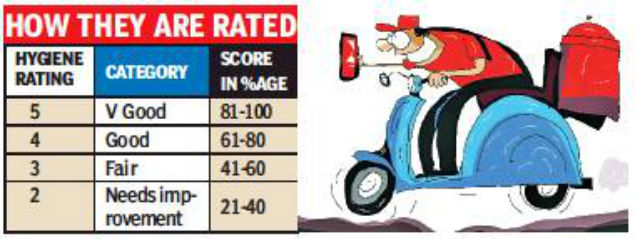
There are about one lakh food outlets in the state, of which about 5,000 are registered with different online food delivery aggregator companies. Of total, these companies have managed to get only about 200 food outlets rated. Unhappy with the response, the FDA has decided to take action against the erring aggregators under Section 30 of the Food and Safety Act which empowers FDA commissioner to prohibit manufacture, storage, distribution or sale of any article of food for non-compliance.
All the major the online food delivery aggregator companies - Zomato, Swiggy, Uber Eats and Food Panda - were first asked in May this year to get audit and hygiene rating of FBOs registered with them from 23 companies empanelled with Food Safety and Standards Authority of India (FSSAI) by August 31. After getting no response, they were given time till October 31. As per directions, only those FBOs who get three or higher hygiene rating would be allowed to supply food.
The cost involved in getting the outlets rated is one of the key reasons for non-compliance. The FSSAI empanelled companies charge fee between Rs 1,500 and Rs 2,000 for assessment of a single restaurant. The final ratings are given only after compliance of shortcomings pointed out during assessment, which also include cost.
KS Pannu, FDA commissioner, held a meeting on December 24 with the representatives of these companies and officials of the department to decide the next course of action. "The decision has been taken after the online food companies showed little interest. It is our duty to help consumers make informed choice about outlets from where they place food order online. We will not allow any firm to deliver food without getting the outlets rates," said Pannu. He added that a formal order will be issued shortly.
As per the norms laid down by FSSAI, each FBO will get score based on self-assessment questionnaire for compliance with food hygiene and safety procedures. Physical inspection and validation will be done by Food and Drug Administration, Punjab. As per level of compliance, hygiene rating will be given in the range of 0 to 5.
Dec 26, 2019
Hostel canteen served notice for violating food safety norms
Coimbatore: The food safety department issued a notice to a canteen operated in a ladies hostel in Peelamedu on Tuesday evening for violating multiple food safety norms. The authorities conducted a surprise inspection and found the hostel using rotten fruits and vegetables, reused oil and unlabelled packed food items.
The inspection follows after an inmate of the hostel fell sick due to food poisoning and had to be hospitalized.
Earlier this week a student staying at the ladies hostel in PSG Estate Colony, which houses only students of PSG Medical College, was hospitalized after she suffered ailments due to food poisoning. The remaining inmates sent a complaint to the food safety department’s WhatsApp number on Tuesday, regarding the serving of poor quality food and how students were falling sick because of it.
The department immediately acted on the complaint and sent a few officers to inspect the hostel on Tuesday evening. Officers found the canteen violating at least 10 food safety rules, including functioning without a registration certificate as a food business operator. “Other violations include keeping raw materials open, poor maintenance of kitchen, not using fresh vegetables for food preparation and even keeping the waste bin open. Some packed food items used are also unlabeled,” said a report from the department.
Officers also seized 1.2kg of rotten fruits and vegetables and appalam from the kitchen. They also seized 500ml of reused oil that they had bought. The cooks were also not wearing any safety gadgets and even a handwash or soap was not found next to the wash basin, said officials.
The department have issued a notice under Section 55(penalty for failure to comply with direction of food safety officer) of the Food Safety and Standards Act, 2006 to the hostel along with recommendations to make improvements. The hostel has been ordered to rectify the issues and submit the required documents to the food safety department within seven days to avoid further action. The officials are mulling over to fine the hostel.
The public can file a complaint regarding food safety complaints on WhatsApp number 9444042322.
Dec 25, 2019


CSMT gets 5-star rating for hygiene, food safety

MUMBAI: The Food Safety and Standards Authority of India (FSSAI) on Monday gave five-star rating to CSMT Railway station for compliance with food safety, hygiene and food waste management norms.
“This is a prestigious rating for the Central Railway station which is bustling with commuters round the clock,” said CR chief spokesperson, Shivaji Sutar. It is the first CR station to get a five-star rating.
He further stated the FSSAI, an autonomous body under the Ministry of Health & Family Welfare, assessed them on parameters including food safety and hygiene, availability of healthy diets on the railway station complex, innovative practices in food waste management, promotion of local and seasonal food to passengers with minimal preservatives, and creating awareness about food safety and healthy diets.
Sources said an FSSAI team had conducted pre-audit checks and suggested improvements after which the food plaza, base kitchen and other vendors were asked to comply. After the final audit was conducted, the officials found satisfactory results in 88% of the parameters.
“The station has been declared ‘Eat Right Station’ with an exemplary certificate,” Sutar added.
12 challaned by Food Safety team for unhygienic conditions
JAMMU, Dec 24: On the eve of Christmas, Food Safety wing of Food & Drugs Administration (FDA), Jammu conducted a special drive in Jammu city to check adulteration and challaned 12 food business operators for unhygienic conditions.
The drive was headed by Dr Parvesh Kumar, Assistant Commissioner, Food Safety Jammu along with Food Safety Officers. During the drive, the Food Safety team inspected various food establishments, Wall Marts and Big Bazaars situated in Nanak Nagar, Gandhi Nagar, Trikuta Nagar and Sanjay Nagar.
The team lifted 14 samples of bakery items, honey and spices for testing from India Cake House, Renukas Cake, Bakery shops and Khaana Khazana at Bus stand.
Besides, 12 establishments were challaned for unhygienic conditions at Trikuta Nagar, Gandhi Nagar and Trikuta Market at Bus Stand, Jammu. Amongst challaned were Indian Fast Food, Red Rose Restaurant, Amritsari Food Court, Vees Fast Food on Barnai road, Daily Need on main road Bantalab, Spicy Grill at main market Trikuta Nagar, Billu Di Hatti at Gandhi Nagar, Sharma Sweet Shop, Amritsari Kulcha at Gandhi Nagar, Chinese Fast Food and Nick Bakers at Gandhi Nagar, Jammu.
The Food Safety team also created awareness among the shopkeepers about the good hygiene and manufacturing practices and also instructed them to maintain proper sanitation and hygiene in the processing/storage areas of their bakery shops.
The team was comprised of Food Safety Officers Ajay Khajuria, Daleep Singh and Pervaiz Ahmed.
Chandigarh: Elante told to shut food court; directed to pay Rs 20 lakhs along with other involved stakholders
CHANDIGARH: Coming down heavily on Deluxe Dhaba and Akash Restaurant in Elante mall, Elante mall itself, Ayan foods that runs food court in Elante mall, Kandhari beverages and coca cola beverages, State consumer disputes redressal commission directed them to pay up Rs 10 lakh to PGIMER’s poor patient welfare fund and to deposit Rs 10 lakh in consumer legal aid account of State Commission for charging excess money for a water bottle, having dual price for water bottle and for running without license under Food Safety and Standard Act, 2006 (FSSA 2006). The restaurants had charged Rs 10 more than MRP for the water bottle on two different occasions by same complainant- Navneet Jindal.
The restaurants and others were also further directed to pay Rs 30,000 as compensation to the complainant in each complaint and refund the money charged by the complainant in each complaint.
Besides this, Elante Mall was directed to stop the food business with immediate effect as it had not license to run the food business on the premises and eateries too admitted that they had not obtained such a license to run the food business at Elante’s food court. “Thus, the food business is being run in an illegal and unauthorized manner. It amounts to undue enrichment through illegal and unauthorized means. Thus, the circumstances of the case require that the same be stopped with immediate effect,” Commission ordered.
A copy of the order was sent to Deputy commissioner Chandigarh, with a direction to ensure that no food business is being run without a license under the provisions of Food Safety and Standards (Licensing and Registration of Food Businesses), Regulations, 2011. It was stated that “in case it is found that there is violation of the FSSA 2006 and Regulations appropriate action be taken under intimation to this Commission.”
The case
Jindal had first filed two complaints against them in District Forum, one in 2016 and other in 2017, however the same were dismissed. He had then appealed against the order in state Commission which set aside the order of the district forum and penalized the restaurant in the recent order.
In both complaints complainant had stated that he was charged Rs 30 for a water bottle when the MRP (inclusive of all taxes) was RS 20. Jindal stated that the Dhaba along with Elante mall and others are deficient in providing service and also adopted unfair trade practice, by printing dual MRP as well as by charging the price above the basic MRP of the aforesaid products sold in their premises because similar products were available in the open market having less or basic MRP. Also, he stated that the food business run in the Elante mall is neither a restaurant nor a hotel nor the competent authority under Food Safety and Standard Act, 2006 (FSSA 2006) had issued any license to run the food business.
The restaurant and others (except Elante authorities) contended that that the eateries wherein the food business is run, be treated as a restaurant and the respondents are entitled to print dual prices on the bottles of soft drink and water respectively, and also to recover the price as printed on the bottles in question. Reliance was placed upon various judgements. It was pleaded that the amendment to the Legal Metrology (Packaged Commodities) Rules, 2011 made effective from January 1, 2018, gave liberty to restaurants to charge dual prices of the commodities.
However, commission after going through the documents put on record held that both the appeals deserves acceptance based on the fact that the food business going on within the premises of Elante mall can’t be termed as a restaurant or a hotel. Commission held that “Neither any waiter has been provided to the complainant nor were any other services provided to him. Rather, the customers have to self-serve them. In this view of the matter, the eateries run by the respondents cannot be equated with restaurants or hotels.”
It was added that eateries have no license under the provisions of FSSA 2006 and the Food Safety and Standards (Licensing and Registration of Food Businesses), Regulations, 2011 and that “there is no law authorizing the respondents to depict dual pricing and charging above the MRP on the products sold within the premises of Elante mall.”
Commission concluded by saying that, “The respondents by charging excess amount, towards the products, referred to above, against each bottle, from the complainant, have adopted unfair trade practice and are also deficient in providing service.”
It was held that the District Forum failed to appreciate various rules and sections of the FSSA 2006, and also failed to take notice that the respondents were not equipped with licence issued by the competent authorities. “The District Forum also failed to apply its mind that the food court/eateries, where no service is provided, and the customers have to self-serve them cannot be considered as restaurants or hotels. Therefore, in this view of the matter, the order passed by the Forum is liable to be set aside and reversed.”
They were all directed to pay up.
FSSAI comes up with Hygiene Rating Scheme for food service sector
The Food Safety and Standards Authority of India (FSSAI) has recently introduced a new scheme namely Hygiene Rating Scheme for food service sector such as hotels and restaurants, cafeterias, etc. FSSAI’s Hygiene Rating Scheme is a user driven, technology-enabled scheme applicable to food businesses supplying food directly to consumers either on or off the premise. As per the scheme, food businesses are rated on the basis of food hygiene and safety conditions found at the time of inspection, and given a score between 1 and 5 as per their hygiene and food safety compliance. The core intention behind this scheme is to allow consumers to make an informed food choice about where to eat and inculcate right eating habits, while encouraging food businesses to adopt high hygiene standards and to sustain them so as to showcase the same to their consumers. In addition, there are already Regulations viz. the Food Safety and Standards (Licensing and Registration of Food Businesses), Regulations, 2011, to check the reuse of cooking oil by the caterers. In the said regulation, the following guidelines are provided:
- Re-use of cooking oil should be avoided; In case of reheating of oil, use maximum three times to avoid the formation of trans-fat. It is ideal to use once, if possible.
- Re-heating and reuse of oil should be avoided as far as possible.
- Avoid using left over oil wherever possible. However, vegetable oil having developed Total Polar Compound more than 25% shall not be used.
On 10 August 2018, the FSSAI launched a new initiative ‘Repurpose Used Cooking Oil’ which is an ecosystem that will enable the collection and conversion of used cooking oil to bio-diesel. FSSAI has issued directions on 30 January 2019 requiring Food Business Operators (FBOs), whose consumption of edible oils for frying is more than 50 liters per day, to maintain usage records and dispose the used cooking oil to authorized aggregators for being delivered to bio-diesel manufacturers. Detailed guidelines have also been issued for handling & disposal of used cooking oil by FBOs to ensure safe handling and disposal of used cooking oil.
FDA conducts special drive to check adulteration
Pune: Officials of the Food and Drug Administration (FDA) on Tuesday launched a special drive to curb cases of food adulteration during the Christmas and New Year period by drawing food samples from restaurants and hotels.
“The FDA has constituted teams to conduct surprise checks by visiting hotels, restaurants and roadside eateries across the city and rural areas between December 24 and 31. Our focus is to ensure that food quality is not compromised during the festive period when miscreants try out different methods to make quick money,” said S M Deshmukh, assistant commissioner (food), FDA, Pune.
Deshmukh said the food safety inspectors will be checking milk products, edible oils and other ingredients required for making cakes during the upcoming festive season. After the inspection, samples will be taken for laboratory tests.
“The officers would collect food samples only if they suspect adulteration. Strict action would be taken against those found involved in adulteration,” he said.
There are over 10,000 food business operators across the Pune district who have either sought licence or registration from the FDA. However, a sizeable number of food operators run their businesses without seeking mandatory licence or registration, Deshmukh said.
“Citizens should be cautious and only buy food items from licensed shops and take due receipts,” Deshmukh added.
The official also said the citizens can complain of suspected adulteration by calling the FDA’s toll-free helpline number 1800222365.
FSDA to check quality of Christmas treats
Meerut: The Food Safety and Drugs Authority (FSDA) in Meerut has started a drive to ensure that Christmas and New Year’s treats are safe for consumption and that no adulterated items are sold in the city during the festive time.
The anti-adulteration drive is set to start from Christmas and continue till New Year. “A five-member team of the food department will conduct regular checks by sending samples of food items to the Lucknow laboratory for testing. While action will be taken only after the lab results are sent here, if the team finds any substandard or unsafe food item – which looks so prima facie, action can be taken accordingly,” said Archana Dheeran, designated food officer.
Though samples of food items suspected to be substandard or adulterated will be sent to the Lucknow food testing lab to avert any manipulation at the city-based lab, if the food items look way too suspicious they will be sent to the latter and immediate report will be sought. The sample reports from the city-based lab can be procured in 48 hours and action can be taken soon after, officials said.
The FSDA officials will keep a close eye on milk, milk products, cakes, Christmas treats, sweets and ingredients used for making bakery products. These, they say, are the main food items that are found adulterated during this time.
“The food items are preserved and sent to Lucknow by courier. The result will reach us within 20 days. We are focusing mainly on sweets, milk products and cooking oils to keep adulteration under control,” said Dheeran.
Adulteration in food items can lead to cancellation of licence and sentence ranging between six months to life. Besides, the criminal offence attracts a fine up to Rs 10 lakh.
Subscribe to:
Comments (Atom)