Sep 25, 2019

Artificial colour: a new threat to tea industry

GUWAHATI, Sept 24 - Artificial colour used by some unscrupulous blenders, packeteers, retailers, and tea stall owners, has emerged as a threat for the tea industry of the country. According to Viren Shah, chairman of the Federation of All India Tea Traders’ Associations (FAITTA), the practice of adding colour to tea is in total contravention of the Food Safety and Standard Act, 2006.
Shah said in his statement messaged to this newspaper that unscrupulous traders and packers are resorting to this deception, as, consumers in some areas of the country want more colour in tea liquor. The FAITTA and the Tea Board of India have drawn the attention of the Food Safety and Standards Authority of India (FSSAI) to the problem, urging for decisive steps to curb this menace.
Tea has intrinsic qualities as a natural product and the addition of colour can potentially compromise the goodwill and safety of consumers. FAITTA has initiated legal steps against one such trader and has urged the Tea Board to join in the FAITTA effort to rein in the unscrupulous traders, Shah said.
Tea manufacturers are also of the opinion that artificial colour has become a menace for the tea industry as a whole. This practice of adding colour to tea started few years back in the South Indian states of Andhra Pradesh, Karnataka and Tamil Nadu. It then spread to Maharashtra, Gujarat and it is now spreading to North India at a rapid pace.
The arithmetic that works in the entire exercise of adding artificial colour to tea is such – a kilogram (kg) of normal tea can produce 400 cups of tea, whereas the same quantity of tea with artificial colour can produce 500 cups of tea or more. Significantly, to earn more profit, the unscrupulous traders are also using inferior quality tea in this whole business.
This process makes tea lose its natural taste and thus, ultimately, tea loses its consumers. It is thus ruining the tea market, said the sources in the tea industry.
North Eastern Tea Association (NETA) advisor Bidyananda Barkakoty made a request to Union Minister Rameswar Teli and all MPs from Assam to take up the issue boldly with the Union Ministries concerned. He said that this new trend of adding artificial colour and marketing the end products as ‘Premix,’ not as tea, by taking advantage of the loopholes in the existing legal provisions and finally to hoodwink the gullible consumers to drink the brews of such products as tea, is harming the tea industry like anything. For, finally, even the committed tea consumers also get frustrated by such products and drift away from drinking tea, which affects the tea industry, Barkakoty said.
It needs mention here that the tea industry, which is providing employment to over two million people, is now passing through a difficult phase due to several factors. The development of adding artificial colour to tea has also emerged as one of the factors responsible for this sorry state of affairs of the tea industry, sources said.

Sep 24, 2019

DINAMANI NEWS


DINAKARAN NEWS


DINAMALAR NEWS


DINAMALAR NEWS


FSSAI offers resources for food safety

Panaji: Countries need to pool their resources and provide support to the least developed countries in the region, said experts at the 21st session of the Food and Agriculture Organisation (FAO), World Health Organisation (WHO) Coordinating Committee for Asia, organised here by the Food Safety and Standards Authority of India (FSSAI) on Monday.
“On behalf of India, FSSAI is happy to offer the capacity we have built at the international training centre for food safety and nutrition at Mumbai, for such capacity-building programmes,” said FSSAI chairperson Rita Teaotia.
“Countries trade extensively with each other. Almost 60% of food trade is within the region. This alone is enough reason for us to develop a common ground for cooperation,” she added.
Teaotia stressed on creating a network of scientific and research institutions for the collection and assimilation of data, for regional and worldwide purposes. This would help to create an IT-enabled platform.
FSSAI regulations head Sunil Bakshi emphasised on the need to promote mutual communication and resource-sharing to develop regional standards and regulations for food products.

FSSAI seizes 462 kg tea dust for suspected adulteration

Officials of the Food Safety and Standards Authority of India (FSSAI) on Monday seized 462 kg of tea dust for suspected adulteration in the form of mixing artificial colouring agents.
Designated Officer of FSSAI K. Tamilselvan said that the food regulatory body was closely monitoring the sale of adulterated tea dust in the district.
Based on a specific information, food safety officer V. Kamaraj found 12 kg of suspected adulterated tea dust with K. Bhuvaneswaran, a resident of Balaji layout near Ganapathy, at Podanur on Monday. He was selling the tea dust in tea stalls and bakeries in the area. A spot test done on the tea dust found that they could be adulterated.
Following this, food safety officer M.S. Murugesan inspected Bhuvaneswaran’s house and found 440 kg of tea dust. Spot test done on the the stock found signs of adulteration in the tea dust.
Dr. Tamilselvan said that samples were lifted from the seized tea dust which will be sent to the Government food laboratory for examination. The total quantity of the seized tea dust is valued around ₹ 90,000.
The WhatsApp helpline of FSSAI can be reached at 94440-42322.

Health department to form district-level teams to check adulteration

Chandigarh: Punjab health department will be forming district-level teams to check food processing units and ensure availability of unadulterated milk products, sweets and bakery items during the festive season.
The decision was taken by health minister Balbir Singh Sidhu during a review meeting of district health officers, assistant food commissioners, designated officers and lab analysts.
The health minister said the state government is committed to provide hygienic and unadulterated food products to the people and if any retailer or manufacturer is found to be indulging in unethical practices, strict action will be taken against them. He urged people not to compromise with the quality of the food products. 
Giving details of the activities of the food safety teams across the state, food and drug administration (FDA) commissioner Kahan Singh Pannu said 853 samples have been collected from different parts of the state in August. While 690 samples have been found safe, 159 samples were found substandard. A total of 340 cases have been filed before additional deputy commissioners (ADC) whereas eight cases filed before the chief judicial magistrate (CJM). He further said fines of Rs 24.50 lakh have been imposed on the offenders. Pannu said apart from inspections, the food safety teams have been carrying out awareness activities — 75 sensitization camps have been organized to impart special training.
He added that these training sessions were intended to provide relevant and practical insights about food safety hazards, food safety, standards, food safety management systems and related legal provisions under the act.

Test of purity: FDA collects samples of besan, pan masala

Bhopal: Teams of food and drug administration (FDA) department on Monday collected 32 samples of besan and besan laddoos from Kolar area and also collected samples of pan masala from Chuna Bhatti.
Senior food safety officer, Bhopal, D K Verma said that FDA has widened the range of goods that are being put to test for purity to cover all kind of edibles. “This action will ensure that purity of edible products is maintained and action is taken against adulterators,” he said.
Campaign against adulteration was launched on July 19 across the state and later christened as ‘Shudh ke Liye Yudh’ (battle for purity), was started after unearthing of fake milk and mawa plants in Morena and Bhind districts by teams of special task force (STF), where hazardous chemicals and detergents were being used for manufacturing of milk and mawa.
The previous day, the FDA team had collected samples of eggs from a wholesale poultry shops in New Market. The samples were taken after complaints that ‘fake eggs’ were being retailed in the city.
Food safety teams in Bhopal have collected 253 samples of edibles including fruits and vegetables. An FIR has been lodged against 10 traders while notices have been issued to 48 traders under the provisions of Food Safety Act and action under National Security Act (NSA) was taken against three.

Sep 23, 2019

DINAKARAN NEWS


DINAKARAN NEWS


DINAKARAN NEWS


DINAKARAN NEWS


DINAKARAN NEWS


DINAKARAN NEWS


DINAKARAN NEWS


DINAKARAN NEWS


FDA collects egg samples to test of purity

Bhopal: A team of food and drug administration (FDA) department on Sunday continued its drive against adulteration and collected samples of eggs from a wholesale poultry shops in New Market. The samples of eggs were taken after complaints that ‘fake eggs’ were being retailed in the city.
Senior food safety officer, Bhopal, D K Verma said that samples of all kind of edibles are being collected to test purity so that every edible item is free from adulteration including vegetables, fruits, milk and eggs.
Verma said that the drive against adulteration which began on July 19 and later christened as ‘Shudh ke Liye Yudh’ (battle for purity) has continued since then. Food safety teams have been carrying out sample collection, raids, inspection, repeat sampling in establishments which were found at fault in the past. They have also lodged FIRs with the police in the event of serious charges of adulteration and in three cases, district collector, Tarun Pithode has booked traders and manufacturers under National Security Act (NSA).
Under the campaign so far, 252 samples have been collected. In 10 cases, FIR has been lodged by the food safety teams, in 48 action has been taken under provisions of Food Safety Act and against three persons, action was taken under NSA.

Nicotine found in 7 pan masala brands

PATNA: Seven of the 12 banned pan masala brands in state have tested nicotine positive by National Tobacco Testing Laboratories (NTTL) and National Institute of Cancer Prevention and Research under the Ministry of Health and Family Welfare. The samples of the 15 brands had been sent by the state health department for test after harmful chemical magnesium carbonate was found in 12 of them.
The brands tested nicotine positive were Rajnigandha, Supreme, Kamla Pasand, Rajshree, Rounak, Signature and Madhu. The samples had been collected from Patna, Darbhanga, Gaya, Nawada, Begusarai and Bhojpur.
The order to ban 12 pan masala brands was passed in August after harmful ingredients like magnesium carbonate were found in their samples.
According to the report of NTTL, Rajnigandha, Supreme, Kamla Pasand, Rajshree, Rounak, Signature and Madhu contained 0.042%, 0.186%, 2.26%, 0.163%, 0.208%, 0.046%, 0.151%, and 0.155% nicotine percentage respectively.
It should be noted that the state government banned the sale, distribution and production of nicotine containing products in May 2012, based on the Food Safety and Standards Authority of India (FSSAI) report. As per standards of pan masala laid down by FSSAI, it should not contain either magnesium carbonate or nicotine. However, it was revealed that most brands were adding toxic chemicals in pan masala products.
Experts claimed that pan masala itself is carcinogenic and addition of nicotine makes it more addictive and poisonous.
PMCH superintendent Dr Rajiv Ranjan Prasad told this newspaper on Sunday that oral cancer is very common in Bihar because of the use of pan masalas. “It can also lead to cardiac arrest. People, especially youngsters, get influenced to consume such products because of its packaging and the way it is being advertised by the celebrities,” he said and added: “Drug testing laboratory in state failed to play an effective role. Earlier, it was defunct. The food inspectors are not trained properly. However, the state government has been focusing on such things for the last few years.”
Principal secretary (health) Sanjay Kumar told this newspaper that he is yet to receive the formal report from the testing lab. “I received the report on WhatApp from the experts there. We are waiting for the official reports,” he said.
“It is a criminal offence. The pan masala brands are putting something that they are not declaring and above all use of both the chemicals in food items are banned in state. Instead, they wrote on packaging that the product is nicotine-free,” Kumar said and added: “Once, the formal reports are received, we will take appropriate legal action against such pan masala brands.”

Sep 21, 2019

DINAKARAN NEWS


DINAMANI NEWS


DINAKARAN NEWS


DINAMANI NEWS


Food safety officials conduct awareness expo

Visitors at the international water expo organised by the Coimbatore Region Packaged Drinking Water Manufacturers’ Association in the city on Friday. 
Expo will conclude on September 22.
Officials from the Food Safety and Standards Authority of India (FSSAI) conducted an awareness expo on food adulteration at Codissia Trade Fair complex here on Friday.
Food adulterations
Held as part of the ‘International Water Expo’ organised by the Coimbatore Region Packaged Drinking Water Manufacturers’ Association, food safety department officials conducted demonstrations on identifying food adulterations.
The expo will conclude on September 22.
Public may contact FSSAI officials upon finding adulterated items in the market through the WhatsApp number 94440 42322, the release said.

Ahead of festive season, samples of food taken

Sweetmeat shop owners told not to use artificial colours
Health officials during a drive in Kapurthala. 
Kapurthala, September 19
In view of the upcoming festival season, a team of experts, including Dr Harjot Pal Singh, Assistant Commissioner (Food), and Satnam Singh, Food Safety Officer, Kapurthala, today checked various food items and took samples from eateries.
Dr Harjot said six samples, including khoya burfi, paneer, kalakand, desi ghee and besan, had been seized by the Food Wing, Kapurthala. Inspection and sampling were done near Satnarayan Mandir, Kapurthala, and Katra Bazaar, Sultanpur Lodhi. Sweetmeat shop owners were directed not to use artificial colours in sweets or other food items and aluminium leaf as a coating on sweets.
Permitted food colours could be used for the preparation of sweets. However, these too should be put only in permissible limits i.e. 20 gm of food colour in 100 kg of sweets. Chemical colours should not be used in sweets or any other food item as these cause cancer of small and large intestines and kidneys, the sweet manufacturers were told. They were also directed not to store khoya and sweets in cold stores.
“The department will conduct a special checking of the cold stores to check khoya and sweets items. However, the shop owners could store sweets in their own cold chambers for a limited period of time, but they have to ensure that the quality of sweets/khoya doesn’t deteriorate,” Dr Harjot said.
All food businessmen dealing in sweets are directed to ensure that they don’t procure khoya and sweets from other states as that was deemed to be of inferior quality. Khoya and sweets should be obtained only from known and reputed establishments. They were also instructed to take special care of easily perishable items such as milk and milk products. These need to be preserved at a temperature up to 4°C.
The samples collected have been dispatched to the State Food Laboratory, Kharar, and the report of the analysis will be made available to the department at the earliest. Further, legal action will be initiated in the court of law against offenders as per the report of analysis of the laboratory under the Food Safety and Standards Act, 2006, and Rules and Regulations, 2011.
The checking drive by the Food Wing, Kapurthala, to curb the menace of adulteration in food items will be continued in the future also to ensure that residents get pure, healthy and unadulterated sweets and other food items in the upcoming festival season, experts said.

Sep 20, 2019

Antibiotic resistance in food-animals growing


Mumbai: India, long associated with the spread of superbug New Delhi metallo-beta lactamase-1 and extensively drug-resistance tuberculosis, has now been identified as one of the global hotspots of rising antibiotic resistance among animals as well.
The other hotspots include China, Pakistan, Vietnam, Turkey, Brazil and South Africa, says a review study jointly done by Princeton University and Delhi-based Center for Disease Dynamics, Economics & Policy and published in Science journal on Thursday night.
Antibiotics are added to animal feed to make them healthier. The study said the increasing demand for animal protein in lower middle income countries had led to increased production (rearing of food-animals) using antibiotics liberally.
In May, a local study from Mumbai published in ‘Acta Scientific Microbiology’ journal showed resistance in chicken liver meat and eggs collected from poultry shops across 12 locations in the city.
The Mumbai study by National Facility for Biopharmaceuticals in Khalsa College, Matunga, tested the samples for bacteria salmonella that was resistant to widely used antibiotics such as amoxicillin, azithromycin, ciprofloxacin, ceftriaxone, chloramphenicol, erythromycin, gentamicin, levofloxacin, nitrofurantoin and tetracycline.
Now, the CDDEP study has said antibiotic resistance is seen in several food-animals across the globe. “It is of particular concern that antibiotic resistance is rising in low- and middle-income countries because this is where meat consumption is growing the fastest while access to veterinary antimicrobials remains largely unregulated,” said the study, adding that animals nowadays consume three times as many antibiotics as humans.
The study’s main author Ramanan Laxminarayan of CDDEP said, “The study found the proportion of antimicrobial compounds in food animals that showed resistance higher than 50 % increased overall between 2000 and 2018.”
The highest resistance rates were observed in the most commonly used classes of antimicrobials in animal production: Tetracyclines, sulfonamides, and penicillins. Commonly used human medicine such as ciprofloxacin and erythromycin (20% to 60%), too, showed high resistance while the study found moderate resistance for third- and fourth generation cephalosporins (10 to 40%). The trend is dangerous because increase in antibiotic-resistant infections among animals will finally affect humans as well.
“In developing countries where veterinary antibiotic sales remain unregulated and feed is less nutritious compared to that in high income countries, rates of antibiotic resistance in animals have the potential to increase exponentially,” said the Science study. Although beneficial for short-term mass meat production, overconsumption of antibiotics in food animals has been linked to an increase in antibiotic-resistant infections not only in animals, but also in humans. The authors feared that surveillance systems that track resistance rates among animals currently lack in low- and middle-income countries.
But academicians such as Dr Sujata Baveja, who heads the microbiology department of civic-run LTMG Hospital in Sion, said the Indian Centre for Medical Research has already started a series of programmes to control antibiotic resistance.
She added that has been an international practice for long to give antibiotics to animals to increase production of milk or meat. This also cuts transmission of bacteria from animals to humans. However, there has been no control on the amount or types of antibiotics given to food-animals reared in farms solely for human consumption. “This practice has contributed to rising levels of antimicrobial resistance in the community. Even sewage has resistant bacteria growing these days,” said Dr Baveja.
“People shouldn’t pop antibiotics if they have viral fever. They shouldn’t ask the chemist or non-allopathic doctors to give them antibiotics. Without discipline in the use of antimicrobials, we will see another tuberculosis like horror story,” added Dr Baveja.

TFA ill-effects: Cut down on Vanaspati, bakery items

Keep a check on Vanaspati and bakery items
Hyderabad: Food regulatory authorities have launched concerted efforts to make people aware of the ill-effects of trans-fatty acids (TFA) and also reduce their availability in the food items that are consumed by general public on a daily basis. As part of this initiative, the Food Safety and Standards Authority of India (FSSAI) has in principle decided to bring down the trans-fatty acids (TFA), which are commonly available in Vanaspati, bakery items and margarine, a form of butter, by at least two per cent in a phase manner.
According to FSSAI, the reduction of TFA by at least two per cent would effectively bring the level of TFA to zero level in food in India. Many countries around the world such as Denmark, Chile Norway, Singapore South Africa and Ecuador have already limited TFA in all foods by 2 per cent.
How harmful is TFA?
Trans fats are major concern for various diseases such as cardiovascular diseases. The TFA is not natural and is prepared through an industrial process known as hydrogenation, which in simple terms is hardening or solidifying vegetable oils. TFA also occurs naturally, but at very lower quantities in meat and dairy products from cattle, sheep, goats, and camels.
Doctors and researchers have also found that Vanaspati or TFA causes a rise in LDL Cholesterol levels (Bad cholesterol) and lowers good Cholesterol (HDL). It also increases risk of developing heart disease and stroke and is associated with a higher risk of causing type 2 Diabetes.
How much TFA is safe?
According to Hyderabad-based National Institute of Nutrition (NIN), the daily intake of TFA should not exceed 1 per cent of energy intake. Teh FSSAI says that food products, in which edible oils and fats are used as an ingredient, shall not contain trans fatty acids more than 2 per cent by weight of the total oils or fats present in the product from January, 2022.

Woman cooks Maggi in milk and internet is angry: Are we overreacting?

01/4Love for Maggi is matchless
We love Maggi so much that it has ceased to exist as a brand for us. It is part of our childhood memories and a comfort food that we go back to, again and again. We are so possessive about it that when three years ago, in 2015, food safety regulators from Barabanki, Uttar Pradesh, reported that several samples of Maggi were found to have unexpectedly high levels of monosodium glutamate (which was actually 17 times the permissible limit), we were heartbroken, angry and incredulous! And when there was a nationwide ban on Maggi, we were not ready to believe that our ‘ideal’ comfort food could ever ditch us and that it all was a ‘conspiracy’. Maggi was eulogised in verses, celebrated in memories and talked about on social media as a love lost! This incident interestingly doubled up the popularity of Maggi. 
02/4Maggi in milk? Internet is puking!
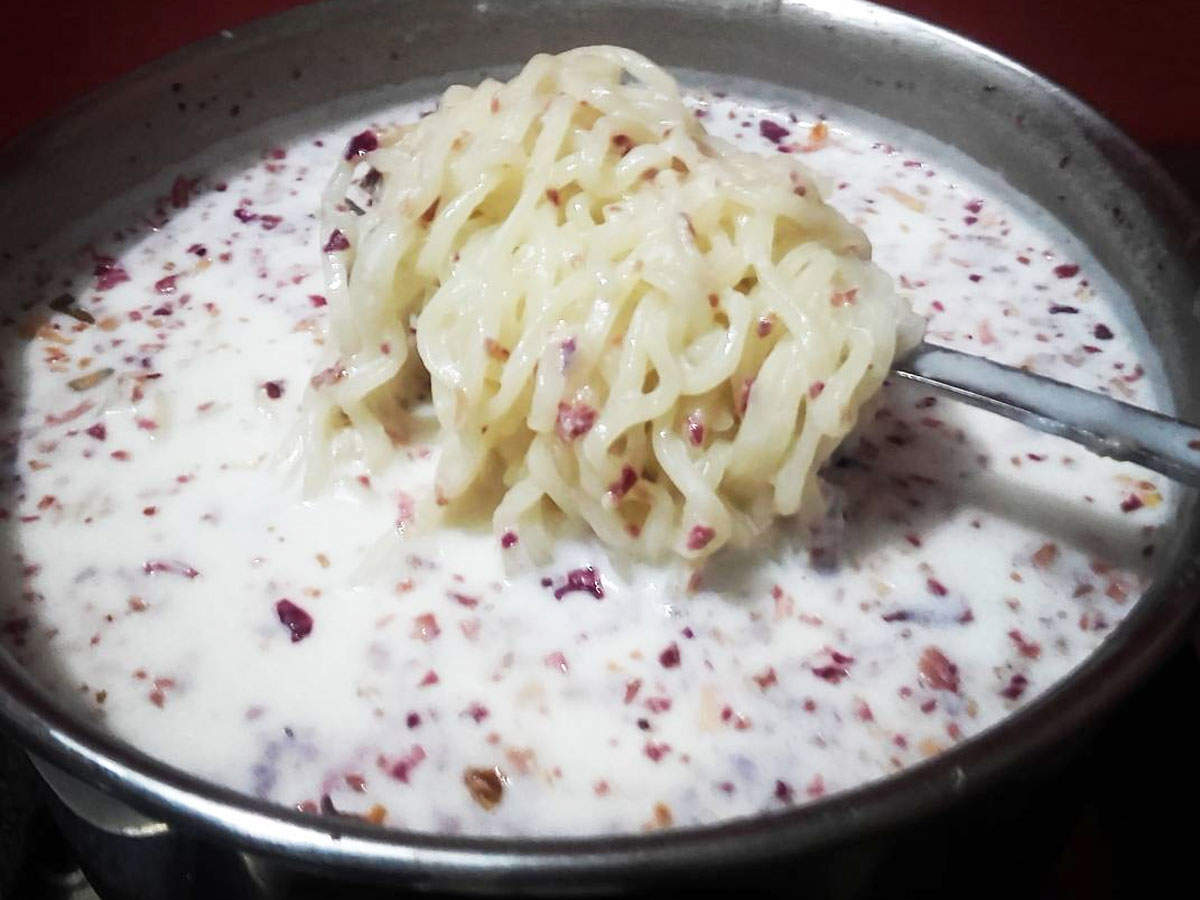
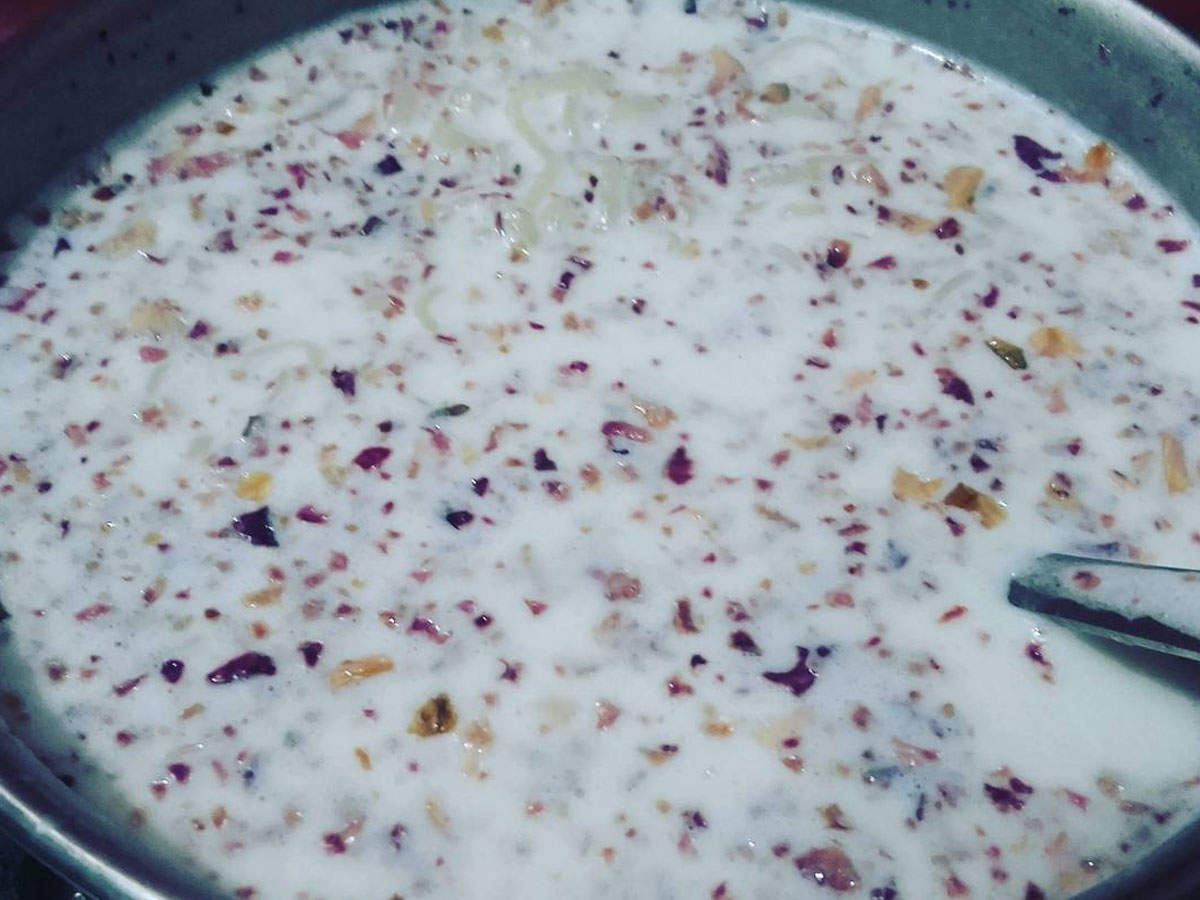
We do not love, but we worship Maggi and no wonder when the video of sweet Maggi got viral, people took it personally and got offended. Internet was flooded with comments that were sometimes hilarious and even menacing and people were ready to puke on this Maggi made with milk and sugar. Originally posted on YouTube by Hemanshi’s World, this video became viral when it was tweeted by Desi Gooner on September 12. In the video, blocks of Maggi were broken into a simmering pan of milk to which water, condensed milk and rose petals were added. The final dish was somewhat like seviyan kheer and the YouTuber claims that this dish is a family favourite. 
03/4Everyone has a unique Maggi recipe
Are we too harsh on judging the YouTuber for putting milk in the noodles when we all have our own ways to make Maggi? Yes, she did add milk and it looked overtly unique, but there are so many of us who put whatever we like in our Maggi. We spoke to a number of Maggi lovers and this is what we found!
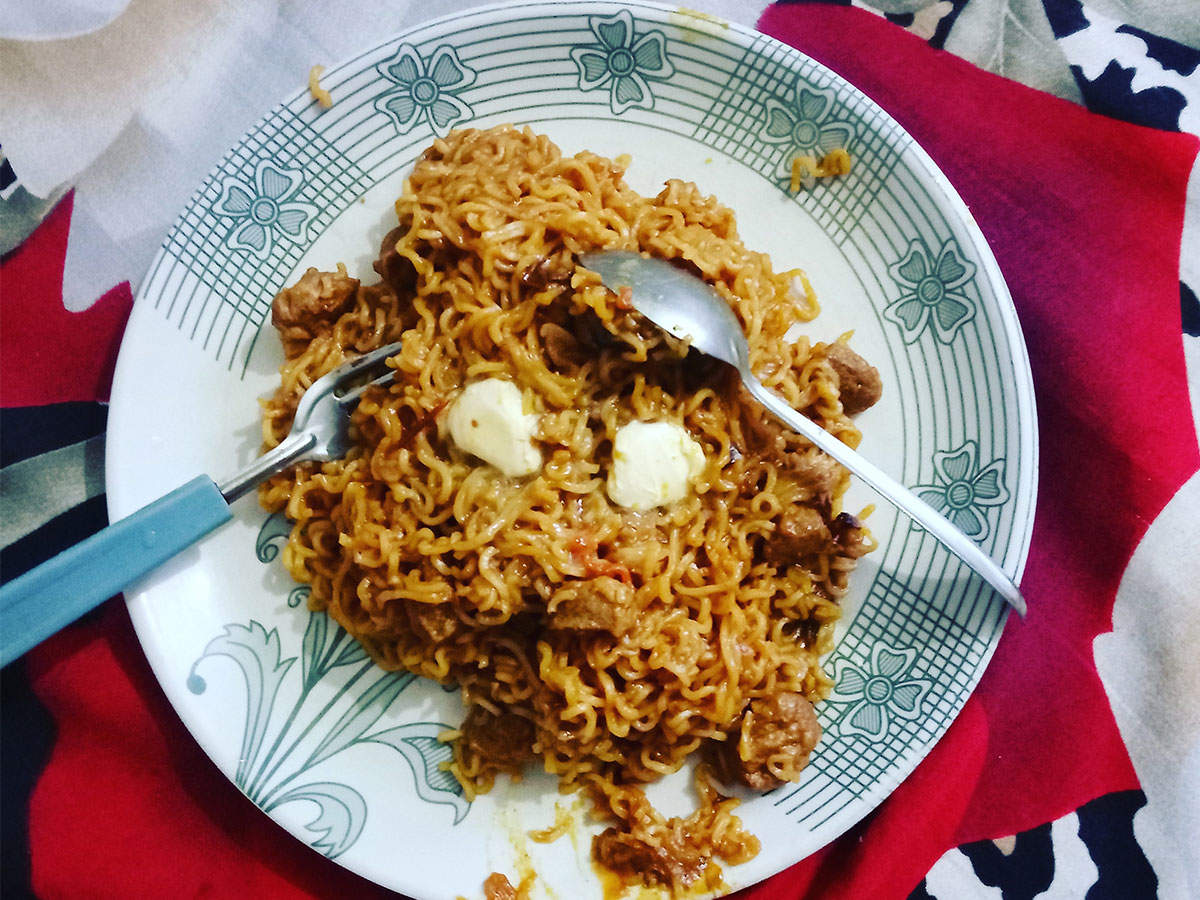
Kalpana Sharma, a journalist by profession, says she loves Maggi Pakora and also loves it when her cook adds Maggi to Sambhar. Gunjan Verma, an interior designer by profession says she likes to stuff Maggi and Eggs in capsicum and tomatoes. Fashion blogger Ankita Shukla says she likes to load Maggi with cheese and then fill it up in sandwiches. According to Navya Anand, a chef by profession, she deep fries Maggi and prepares Maggi Bhel and also Maggi Bonda. Other favourites that we found out from our readers were-Tadka Maggi, Dahi Maggi Chaat, Anda Maggi, Maggi Dosa, Maggi Pancake, Maggi Curry, Maggi Kadhi and even Maggi Bhajia!
04/4Rightfully angry, are we?
Adding milk and sugar was actually taking the experiment to far, but we do that in case of ‘Meri Maggi’, don’t we? We add our own favourites to it, the blogger added her own. Taste is a very personal thing and she has a right to prepare her Maggi the way she wants. We do add milk to our Soups, Sugar to our Dals and Curries and Garam Masala to our Chai! We even go gaga over experimental stuffs like Turmeric Latter, Butter Coffee, Tamatar ka Halwa and even Garlic Kheer. So why not let someone try Maggi kheer too?
‘Meri Maggi’ is an appellative we have taken too seriously and no wonder we are up in arms when we see any ruffle in our scheme of loving our very own Maggi. Our love is blind when it comes to Maggi but although the spurt of internet messages were hilarious, but were at the cost of the YouTuber who shared her personal recipe. Lets not judge her and lets not stop experimenting, after all our ‘Meri Maggi’ is hers too!

Picking the right food

In a bid to make consumers aware about whether or not a restaurant complies with hygiene regulations, the Food Safety and Standards Authority of India (FSSAI) has introduced a new measure. The government agency will soon ask restaurants and hotels to display their hygiene ratings on their doors or entrances. This comes against the backdrop of an increased number of diners wanting to go out and eat across cities in India. Eating out or meeting friends or family over meals in restaurants is a trend that has caught on now like never before, especially after an increasing number of signups on food aggregators.
There will also be food supervisors to check the safety of what is served, for which the regulator intends to train around 170,000 people. The FSSAI is in the process of forming guidelines to implement the rating system.
If implemented diligently, the programme would be in the interest of the customer and could raise the quality of food served. Ratings will give restaurant owners an incentive to improve their standards and will likely filter out food joints that pose a health risk. That extra costs borne to maintain quality may raise menu prices, too. The additional costs of raising food quality and maintaining it may also result in an increase in food prices. In cases where restaurants are found to be flouting rules of food safety, FSSAI will reportedly send notices. This move is part of a series of changes that the FSSAI is bringing as a part of its 'Eat Right Campaign'. The campaign involves measures aimed at preventive healthcare through checks and regulations, as well as awareness efforts and moves for food building capacity for restaurants. In general, few can object to such an idea.
However, any system that requires an external assessment of quality could be abused. As those in the hospitality business would testify, state-directed scrutiny tends to descend all too easily into an “inspector raj", with officials determined to give them a hard time, unless given some reason—pecuniary or otherwise—not to. As a way to guard against this, the criteria for hygiene ratings will need to be clear-cut and uniformly applicable, with no scope for subjectivity. A lot of well-intended initiatives end up hurting a market simply because their execution is faulty.
The move appears to be a well-intended and timely one, given an increasing interest in dine-in restaurants and thousands of new restaurants cropping up around the country week after week. However, it remains to be seen how it will be implemented.

Sep 19, 2019

DINAKARAN NEWS


DINAKARAN NEWS


DINAMANI NEWS


Reactions to Ban


Waxed apples from Khan Market find their way to Consumer Affair Minister Ram Vilas Paswan's house

  • The minister found out about the wax on apples when his cook couldn't wash it as it was too slippery. The cook then scratched it with a knife and found a layer of wax on it.
A fruit shop in Delhi's Khan Market faced consequences for selling apples a little too shiny to Union Consumer Affairs Minister Ram Vilas Paswan.
The apples had an extra layer of wax on them to make them look fresh and shiny.
The minister wanted to have Russian salad and asked his cook to wash the apples bought from a reputed shop in Khan Market. The apples were bought for Rs 420 per kg.
The minister found out about the wax on apples when his cook couldn't wash it as it was too slippery. The cook then scratched it with a knife and found a layer of wax on it.
The Union Consumer Affairs minister raised the issue with his team following which, the team raided the shop and found every fruit and vegetables had a layer of wax on it.
The shopkeeper's challan has been cancelled following the raid.
According to the shopkeeper, he bought the American apples from Azadpur mandi.
Food Safety and Standards Authority of India (FSSAI) has informed the rules for wax coatings.
All relevant stakeholders are required to label fresh fruits and vegetables that have been waxed. Fruits that are coated with food-grade waxes approved by FSSAI are generally safe to eat.

Sep 18, 2019

DINAMALAR NEWS


DINAKARAN NEWS


DINAMALAR NEWS


DINAMANI NEWS


DINAKARAN NEWS


DINAKARAN NEWS


DINAKARAN NEWS


DINAKARAN NEWS


DINAKARAN NEWS


Check on adulterated palm jaggery

For long, a section of producers in Thoothukudi have been selling adulterated palm jaggery. 
Norms laid down for manufacturers and traders
Following complaints regarding widespread adulteration of palm jaggery in the district, the Food Safety Department has planned to crack down on manufacturers making adulterated jaggery, as time sought by producers and traders to comply with the norms came to an end on September 15.
The adulteration affects consumers, many of whom suffer from various ailments like diabetes, who consider palm jaggery a healthy alternative to sugar. But sugar, which is a cheaper sweetener, found its way into palm jaggery as an adulterant.
“For long, a section of producers have been selling adulterated palm jaggery. Due to lack of labelling of ingredients in retail sale, there is no transparency,” says V. Gunaselan, a social activist in Udangudi, which is well known for its ‘panakarupatti.’ “While jaggery can be produced for a few months from March to August, those who adulterate the product continue to produce it round the year.”
It makes production of unadulterated palm jaggery unsustainable for producers. “The price of jaggery in the market suffers steep cut due to cheaper adulterated product,” says A. Ravi of Thoothukudi South District Vanigar Sangangalin Peravai, who also produces palm jaggery. “It has become more difficult to find palm tappers, who continue to leave the profession. As a result, migrant workers are brought from places like Nagercoil and wages go up making the business unsustainable,” he says.
Following an amendment to the Food Safety and Standards Regulations, standards for jaggery and cane jaggery were created. The norms have a clear distinction between jaggery, prepared from palmyra palm, date palm or coconut palm, and cane jaggery made by boiling or processing juice pressed from sugarcane.
In August, based on the instruction of the Collector after complaints, two meetings were held in Thoothukudi with producers and traders. “Only if jaggery is produced from pathaneer and not mixed with sugar, should it be labeled as panakarupatti (palm jaggery) or panakarkandu (palm candy or misri). Even if one % of sugar is mixed, it would be considered as adulterated, and the inventory will be seized,” officials told the stakeholders during the meeting.
Various other instructions including implementation of good hygienic practices in manufacturing, labelling clearly whether it is palm or cane jaggery, both in Tamil and English, installation of a pest control system were given to producers and retailers.
R. Karunakaran, Designated Officer for Food Safety, said only 27 out of about 180 manufacturers in the district have valid licences. “Some producers have started labelling their products in compliance with the norms,” he says.
He said the department would collect samples from producers, wholesale distributors and retail shops, who would be fined a minimum of ₹1 lakh, if found to be not complying with the norms.
Dr. Karunakaran has a few tips for consumers. “Unadulterated palm jaggery would not be very hard, and would be less sweet compared to adulterated one. On exposure to air, it would become sticky and will be medium brown in colour. As pathaneer has lime content, it would have a slight bitter taste,” he says.

Adulterated ghee seized in Tiruppur

B. Vijayalalithambigai (second left), Designated Officer, FSSAI, seizing the adulterated ghee at a house in Velliangadu, Tiruppur, on Sunday.
Sellers use palmolein oil and vanaspati to prepare the ghee
Nearly 500 litres of adulterated ghee was seized by the Food Safety and Standards Authority of India (FSSAI) officials from seven houses at Velliangadu in Tiruppur on Sunday.
A team led by B. Vijayalalithambigai, Designated Officer, FSSAI (Tiruppur), raided the houses following the seizure of 13 litres of adulterated ghee from a seller on a two-wheeler on Mangalam Road in Avinashi. The seven ghee sellers were from Sivaganga.
Dr. Vijayalalithambigai told The Hindu that the samples were sent to laboratories on Wednesday and further action would be taken based on the test results. Upon investigation, the officials discovered that the sellers used palmolein oil and vanaspati to prepare the ghee. For the colour, they had used certain seeds that imparted yellow colour and added artificial essence for aroma, she said.
“The ghee was being sold for ₹ 240 per litre, which is half the market price of pure ghee. Regular intake of adulterated ghee will harm the digestive system, particularly that of children,” Dr. Vijayalalithambigai said.
On September 7, the FSSAI officials seized 1,310 litres of palmolein oil from a company on Palladam Road for failing to meet the standards of Food Safety and Standards Act.
In a press release, Dr. Vijayalalithambigai warned public to avoid buying substandard ghee from those who sell it on two-wheelers. Anyone who finds sale of adulterated food may report it to FSSAI via WhatsApp at 94440 42322, the release said.

Beekeepers ‘stung’ by food safety watchdog’s amended rules


KOCHI: Honey, whose USP as a natural sweetener is nearly as long as mankind itself, has now left a bitter taste in beekeepers’ mouths following the amendment of the Food Safety and Standards Authority of India’s (FSSAI) quality parameters on moisture content in the natural produce. As per the FSSAI, the standard moisture content of honey should be below 20 per cent. However, honey produced by farmers in Kerala is found to have a moisture content of 20- 25 per cent.
So it is deemed lowquality and hence unsaleable. The beekepers have urged the government to take up the issue with FSSAI. They are also planning to seek legal recourse if indeed the attempts do not bear fruit. According to Sunil B, divisional engineer, Kerala Agro Industries Corporation and the implementing officer of the Centrally-sponsored beekeeping schemes, the Central authority set the parameter after taking into consideration the honey produced in northern India.
“The climatic conditions in north Indian states and Kerala couldn’t be anymore different. Also, the bees used to produce honey vary,” he said. “The sizzling climate of Kerala is the main reason for the high moisture content in the honey being produced here. Also, farmers in Kerala use Apis cerana indica or Indian honey bee while Italian bees are used up north,” said Sunil. And the honey produced by Indian bees has a higher moisture content compared to those from Italian bees. “Another factor which ought to be taken note of is the difficulty in using Italian bees at honey farms in Kerala.
They can’t survive in the Kerala climate,” he said. According to him, Agmark and other quality control agencies, both domestic and international, have taken into consideration all these factors while fixing the parameters. “Earlier, the parameters set by FSSAI were the same as that of the other quality control agencies,” said Sunil. Philip Mathew, a beekeeper, said the farmers are afraid to market their produce. “Recently, after the FSSAI amendment, samples were taken from various brands.
One brand sold by a beekeeper at Angamaly and Perumbavoor was found to have 21.3 per cent moisture. He was slapped with a `10 lakh fine,” said Philip. As of now, production of honey has fallen 60 per cent in the state. “If the state government doesn’t take steps to help out the farmers, Kerala honey, which is famous among domestic and international consumers, might disappear from the market forever,” he said. After the farmers and the organisations associated with honey production in the state approached the state government seeking help, Agriculture Minister V S Sunil Kumar directed Kerala Agriculture University (KAU) to conduct a study and submit a report.

No more plastic: Hotels to serve drinking water in reusable glass bottles

The latest directions of FSSAI also specify that these glass bottles should not be kept for sale outside the hotel premises.
This move, issued in a notification of Food Safety and Standards Association of India (FSSAI) on September 9, comes after the authority found that packaged plastic bottles in hotels generated enormous plastic waste.
Soon, hotels across the country will have to replace plastic bottles completely and serve drinking water in reusable glass bottles with paper seals for free.
In June last year, Maharashtra had banned packaged drinking water below 200 ml, among other single-use plastic items. While many states have similar bans on plastic in place, the central government plans to do away with single-use plastic items including plastic bags, cutlery and packaging material, among others.
This move, issued in a notification of Food Safety and Standards Association of India (FSSAI) on September 9, comes after the authority found that packaged plastic bottles in hotels generated enormous plastic waste.
“The hotels will have to serve water to their guests in glass bottles, mentioning details of the hotel. For this, hotels will need to set up an in-house drinking water bottling system on its premise. All sanitation and hygienic conditions will need to be adhered to as per standard norms,” the notification stated.
The latest directions of FSSAI also specify that these glass bottles should not be kept for sale outside the hotel premises.
The bottle’s make, BIS specification of the drinking water and packaging standards will have to be adhered to as per the prescribed norms of IS 10500 : 2012 and FSS Act 2006 specifications, respectively.

Allow reuse of PET drinking water bottles: experts

India may consider making PET bottles reusable and allow them to be used for packaging water more than once if the government agrees to recommendations made by experts drawn from various departments and scientific institutions.
Currently, the Food Safety and Standards Authority of India (FSSAI) doesn’t allow the repeated use of PET drinking water bottles. On the contrary, the experts from various ministries as well as Bureau of Indian Standards, Council of Scientific and Industrial Research and Indian Institute of Packaging think that it should be allowed as the move may reduce the use of single-use plastics considerably.
This suggestion came up during a high-level meeting organised at the behest of the Ministry of Consumer Affairs on September 9, said V K Duindi, Deputy Director General (Policy Planning) at the Bureau of Indian Standards (BIS) here on Tuesday.
He said even though the BIS has a standard for compostable plastic (which is mainly plant-derived), but that cannot be used for packaging drinking water. The experts suggested that the bureau should come out with a new standard for compostable plastic suitable for packing liquids such as water.
Among other recommendations was that plastic layer used in paper-based packaging materials should be made of compostable plastic and so should be the case with multi-layer plastic.
Ram Vilas Paswan, Minister for Food, Public Distribution and Consumer Affairs, during a press conference here, said that many States have already come out with orders that either prohibit or restrict the use of single-use plastics. In his latest Mann ki Baath programme last month, Prime Minister Narendra Modi urged people to shun the use of single-use plastics and reduce its application to the minimum possible by October 2, the 150th birth anniversary of Mahatma Gandhi.
However, Paswan also said that banning the use of single use plastics all at once is not a solution as other options available are expensive. The alternatives being proposed should meet at least three significant conditions: they should be affordable for people, good enough to win the trust of users as well as adequate transparent so that the consumers can see the content, he said.
While most departments and public sector units under the ministry have already stopped using single-use plastics, the Food Corporation of India (FCI), under the Department of Food and Public Distribution, is exploring ways to replace plastic bags used for storing food grains with those made of jute. “Already 85 per cent of bags FCI uses are made of jute, and only 15 per cent is plastic bags. We want to stop even that,” Paswan said adding that he was convening a meeting of FCI officials next week to prepare a timeline for this.
According to Paswan, India currently generates 95 lakh tonnes of plastic waster annually, of which 38 lakh tonnes are of single-use plastic. Every year, 6 lakh tonnes of plastic waste from India land up in oceans. If measures are not taken immediately, the amount of plastic waste generated will double by 2022, the minister said.

FSSAI issues notice to 75 educational institutions in Coimbatore for unhygienic environment, poor sanitation

Around 61 educational institutions and 14 institutions were issued notices under section 55 (the penalty for failure to comply with the directions of Food Safety Officer)
The Food Safety and Standards Authority of India (FSSAI) have issued notices to 75 educational institutions in Coimbatore since last week for maintaining poor sanitation and unhygienic environment. The notices issued to the violators specify a time-bound of 14 days to rectify the issues. It was during the recent special drive the food safety officials found the hostels, mess, and canteens in both schools and colleges to be not following the rules. Some of the complaints raised by the officials during the drive were poor sanitation, poor hygiene, lack of personal hygiene and not displaying the food safety license to the public.
Out of the total 75 institutions that were issued notices, about 46 were colleges and the remaining were schools. Comparing to government institutions, the number of private educational institutions violating the food safety regulations were higher. Designated food safety officer K Tamil Selvan said, "During the drive, we found many failing to comply with the rules. There were some to be having their license expired but still operating without any problem. The violators were issued notices to rectify the issues."
Around 61 educational institutions and 14 institutions were issued notices under section 55 (the penalty for failure to comply with the directions of Food Safety Officer) and section 63 (Punishment for carrying out a business without a licence) respectively of the Food Safety and Standards Act 2006. The department is planning to intensify the drive in the upcoming days.
President of Association of Self Financing Arts, Science and Management Colleges of Tamil Nadu Ajeet Kumar Lal Mohan said they have informed all the colleges to have an FSSAI certificate. "The canteens at all colleges were asked to follow basic procedures according to the food safety guidelines. Similarly, the students could make use of the feedback mechanism at all the institutions in case of any suggestions or complaints."
When most students prefer private over government run institutions, the issue puts spotlight on the need to streamline private schools and colleges to serve hygienic food to the students.

'Street vendors need basic training on food safety'

Meghalaya Health & Family Welfare Minister, AL Hek has stressed the need for street vendors in Meghalaya to undergo training on food safety and hygiene.
“It is the right of every customer to have access to safe and hygienic food,” Hek said while addressing a one – day training programme for Street Food Vendors at Sri Aurobindo Institute of Indian Culture, Shillong on Tuesday.
Hek said that the vendors need to provide not only clean utensils and hygienic food, but also a positive attitude and mindset also needs to be incorporated by them in their day to day business.
Stressing on the popularity of street food around the world, Secretary to the Government of Meghalaya, Health & Family Welfare department, Pravin Bakshi said that the quality of food served attracts the customers to buy from the vendors. In this regard, he said that as the State is one of the favourite tourist destinations, it comes as a major boost for the vendors to grow their business and serve the best and hygienic food to the tourists.
During the programme which was organized by the Commissionerate of Food Safety, Meghalaya in collaboration with Nestle India Limited and National Association of Street Vendors of India (NASVI), the Health Minister unveiled the Hygienic Kit and also distributed Certificates and Hygienic Kits to Street Food Vendors.
It may be noted here that ‘Project Serve Safe Food’ was launched in 2016 and contributes to enhancing the livelihoods of street food vendors by providing training on food safety and hygienic awareness. Since its inception, over 14,000 street food vendors have received training across 12 States through this programme. The project focuses on educating the street food vendors by training them on subjects such as health, hygiene, safe food handling, waste disposal and entrepreneurship. These trainings enable the street food vendors to undertake adequate precautions such as usage of disposable gloves, cart and personal hygiene that prevent the spread of food borne diseases.
Expanding ‘Project Serve Safe Food’ across India, Nestle India Limited in collaboration with the Commissionerate of Food Safety, Meghalaya and NASVI launched the initiative in Meghalaya to train 500 street food vendors. Apart from Shillong, the training will also be conducted at Sohra and Tura in September and November.

Sep 16, 2019

Myth versus reality

ASCI ticks off misleading ads featuring celebrities as claims are grossly exaggerated
Ad guru Leo Burnett once said how advertising does not just circulate information, it penetrates the public mind with desires and belief. And at a time when lifestyle choices are aplenty and we seek to govern our lives with the right one, advertisements, especially those helmed by celebrities and their gone-in-60-seconds wisdom, have a profound impact. Artful lying it is, but when it is outright falsehood, there’s a problem. That’s why the Advertising Standard Council of India (ASCI) has decided to verify tall claims made by companies in mass media campaigns and banned 106 of 334 ads for violating consumer rights and interests. Most of these campaigns were by topline brands and found to be selling mistruths concerning crucial sectors like healthcare, home appliances, personal care, housing, food and beverages and education, in short our everyday life and well-being. The ASCI said the commonest reason for pulling out ads was their unsubstantiated and exaggerated claims that exploited the consumers’ lack of knowledge. Besides, some of the products made unverifiable leadership claims, improper use of Food Safety and Standards Authority of India (FSSAI) logo in contravention of the FSSAI advisory and labelled products organic without fact-checks. One ad claimed an endorsement by the Indian Medical Association (IMA) which had supported the technology but never the product. It also came down heavily on celebrity campaigns, considering their mass popularity and impact, suggesting that each brand ambassador should, while endorsing products, at least ensure that all description, claims and comparisons made in the advertisement are genuine. The misleading advertisements include those of Asian Paints, featuring actors Ranbir Kapoor and Deepika Padukone; Fena Superwash Powder peddled by Preity Zinta, cricketers KL Rahul and Ravichandran Ashwin; Eureka Forbes RO hawked by Madhuri Dixit; CricPlay online game by cricketer-turned politician Gautam Gambhir and housing firms ads by actress Vidya Balan.
Earlier, too, products that falsely claim doctoral research or clinically proven results had been pulled out, be it enriching clay shampoos, chemical-free hair colours or pure atta noodles, all of which have a certain ratio of concentrates and ingredients that they claim to have done away with. For example, atta noodles have maida or refined flour, too, and 100 per cent dandruff-free shampoo is never a possibility. Consumer awareness and rights are anyway not scaled up in this country and without questioning, such products are not only misleading and overrated but cheating the consumer of his expectation and right to a good and healthy life. Going by the list, most of the products prey on the consumers’ health insecurities instead of addressing them through scientific corroboration. Of course, there are consumer laws and various codes about advertisement in general to curb malpractices. And though food safety norms have made labelling with details mandatory, the same does not extend to other product categories with equal seriousness. However, the absence of a single statutory, regulatory body further aggravates the problem. But hopefully this will be taken care of by the Consumer Protection Bill 2019, which seeks to penalise deceptive advertisements. Disclaimers should run as tickers on both audio, print and video campaigns. Of course, the core of the advertising industry is based on tempting the consumer, capturing their mindspace and then driving up sales. True, it is hard to expect the creators to be “conscience-oriented,” but given the social cascade of information flow, they have to be self-regulatory, considering they rule cultural sensibilities.

Food safety training for vendors at PGI

As part of its Corporate Social Responsibility (CSR) initiative, Hindustan Unilever Limited organised Food Safety Training and Certification (FOSTAC) training of food vendors for implementing the Food Safety Standards Authority of India (FSSAI) supported programme on “Eat Right Campus” at the PGI here today.
The PGI is the first medical institute in India to organise FOSTAC training, wherein all food business operators inside the campus were approached for this purpose. Various officers in charge of the following eating outlets, including hospital kitchen, upper/lower cafeteria, hostel messes and private food business operators, on the campus were asked to actively participate in the programme. Fifty of them attended the workshop.
Dr Amarjeet Singh, Department of Community Medicine and School of Public Health, PGIMER, was the coordinator for this venture.
The star attraction of the event was the presence of specialists in the field who attended the event such as JP Kant, faculty from the CIHM, Sector 42, Dr Geeta Mehra, faculty from MCM-DAV, Sector 36, and Dr Pushkar and Dr Ishwarpreet Kaur.
This training also co-hosted the 15th capacity building and training workshop for street food vendors. The trainees received free hygiene kit, which included aprons, gloves, head covers and easy to understand IEC material. They also received free medical check-up by doctors of the community medicine, PGI.
The workshop was attended by more than 130 participants. These included 40 doctors, medical/nursing/food technology/hotel management students, paramedical, 50 staff members of eating outlets inside the PGI campus and 19 street food vendors of Chandigarh.

Sep 14, 2019

Food Safety Department of Assam bans packaged drinking water ‘Bisleri’ in State


Guwahati: The Food Safety Commissioner of the Assam Government had recently issued a notification to ban the packaged drinking mineral water ‘Bisleri‘ in Assam.
The ban has been carried out due to the presence of fluoride in the water which is considered harmful for the health.
The notification further states that according to section 3 (1) of the Food Safety Standards Act 2006, they have found a large amount of fluoride in the water of this brand which is harmful to health.
This notification was released by the Food Department on 12 September.
The report of the Food Department also states that the water of this brand was tested as per Regulation 2.10.8 of Food Safety and Standards in which an excessive amount of fluoride has been found.
It has also been said in the notification that the ban on this water will continue until the company provides pure drinking water.
Meanwhile, the Department has ordered GD Aqua located at Dolma Industrial Area in Bahata, Assam, to ban the water storage, distribution.
Section 3 in The Food Safety and Standards Act, 2006
It is to be noted that “food” means any substance, whether processed, partially processed or unprocessed, which is intended for human consumption and includes primary food, to the extent defined in clause (ZK) genetically modified or engineered food or food containing such ingredients, infant food, packaged drinking water, alcoholic drink, chewing gum, and any substance, including water used into the food during its manufacture, preparation or treatment but does not include any animal feed, live animals unless they are prepared or processed for placing on the market for human consumption, plants prior to harvesting, drugs and medicinal products, cosmetics, narcotic or psychotropic substances: Provided that the Central Government may declare, by notification in the Official Gazette, any other article as food for the purposes of this Act having regards to its use, nature, substance or quality.

Clean Chaats, No Dirty Golgappa Paani Or Rotten Chow-Chows -- Campaign To Give Street Food Spotless Image Adds To Taste

The Food Safety and Standards Authority of India's initiative to train street food handlers on good hygiene, safety and quality has positively impacted some of India's biggest street food hubs in cities like Ahmedabad and Amritsar
AHMEDABAD
Stalls at Kankaria Lake, the nation’s first Clean Street Food Hub
The chole bhatures, stuffed paranthas, pav bhajis, golgappas, chaats are finger-lickin’ good, as are the melt-in-mouth galauti kababs, chicken rolls, biriyanis, chow-chows, and idiyapp­ams...Well, you can have them served by liveried waiters at gourmet restaurant. But that’s not the real McCoy. For many of us, they are not as tasty until sold from sidewalk-hogging dirigible carts, or small brick-and-mortar stalls—a fixture on city streets. That’s street food, a vibrant subculture populating our cities and towns, dishing out an inexpensive delectable fare, often greasy and spicy. Be it Delhi’s Chandni Chowk, Mumbai’s Khau Galli, Calcutta’s Dalhousie or Lucknow’s Hazratganj, every state has food hubs selling local cuisine. The carts add a sense of community, and give a peek at the microcosm of the city’s millions and its storied history. They are a repository of age-old food culture; they attract local foodies as well as tourists. They make good food accessible and inexpensive.
They don’t do any serious damage to wallets, but are sometimes indulgent on sanitation—a reason why authorities see hawkers as an illegal nuisance selling inferior foods sourced and prepared unhygienically. The street food business has grown exponentially. Hardworking city slickers are its main clientele. This flourishing trade has now attracted unskilled vendors, the majority of them illiterate or semi-literate, having no knowledge whatsoever about food safety. Unhealthy cooking practices, unhygienic handling of raw and cooked food, washing dishes in dirty water, and stinking surroundings because of rotting, leftover food are major deterrents.
Still, these are hopeful times; change is stirring on the woks of roadside stalls. The Food Safety and Standards Authority of India (FSSAI) has initiated a programme to certify select roadside food hubs across the nation as clean and safe after training the hawkers on personal hygiene (like using gloves and aprons, keeping fingernails trimmed, washing hands with soap before handling food every time, wearing a headgear, covering the mouth, avoiding touching the face, head, hair or any body part). “One of the most important aspects of this initiative is to train street food handlers on good hygiene practices and ensure food safety when meals are prepared and served,” says Pawan Agarwal, CEO of the FSSAI.
The guidelines don’t stop at hygiene training for vendors. The FSSAI also audits the food safety status of a hub (clean location, sanitation facilities, availability of potable water, pest control, waste disposal et al) before giving the certificate, which is valid for a year and renewable subsequently. Besides, 80 per cent or more of the vendors must sell local and regional cuisines.
Five such roads in Gujarat, two in Maharashtra and one each in Madhya Pradesh and Punjab have been already certified by the FSSAI as Clean Street Food Hub. Besides, over 30 food streets in over ten states, including Uttar Pradesh, Odisha, Haryana, Kerala, Gujarat, Karnataka and Goa, have been identified for certification.
AMRITSAR
People enjoy a veritable fare at Darbar Sahib.
In Delhi, 14 places have been identified—­including Chandni Chowk’s Paranthewali Gali, Zoological Park, Qutub Minar. But the certification process is yet to begin. “It’s a great initiative. I think this will make civic bodies ­responsible for keeping the area clean. I want this scheme to be started in Delhi as soon as possible,” says a food vendor in Paranthewali Gali. He admits that vendors are not aware of hygiene and food safety and often people complain about that. Another vendor, at the Sector 32 market in Gurgaon, says: “We are training and it is helpful. I never wore hand gloves and aprons before but now I do it. I tell my staff to keep themselves neat and clean, which makes a good impression on visitors.”
More than 10 million visit Kankaria Lake every year; the figure rose significantly after it earned the safety tag.
Under the project, state governments have to provide a list of food streets with an aggregation of at least 50 vendors that can be developed as clean hubs. In Tamil Nadu, a place selected for the certificate is Elliots Beach, Besantnagar, Chennai, where around 50 stalls sell fast food. Their numbers quadruple during annual weeklong Velankanni Church festival in September. Though the Chennai civic agency gives licences and regulates these eateries, inspection is often irregular and cursory. A crackdown happens only when there are reports of suspected food poisoning or photos of unhygienic conditions are splashed on media. With sales peaking during the fest, sanitation becomes the biggest casualty—oil on fry pans reused for the nth time, utensils washed in dirty water, leftovers discarded in the open, attracting flies and birds.
A similar scene unfurls every day in Khau Gali near Ram Mandir in Bhubaneswar. This is the go-to street for breakfast/lunch/dinner, or to simply buy a snack; popular among the hipsters but underrated by the gastronomic cognoscenti because of hygiene issues. Most eateries keep their foods, cooked and uncooked, in the open, exposing them to dust, air pollutants and parasites. Take, for instance, the top-selling panipuri or phuchka. The tangy, masala water is generally dirty. The cloths that the vendors use to wipe their hands are unfailingly shabby. Since they make the panipuris at home, the quality is suspect too. Authorities hope that the FSSAI project would help such hawkers—on Elliots Beach and in Bhubaneswar—get a shot to stay relevant in this takeaway and home delivery age.
MUMBAI
Juhu Chowpatty has always been a popular street food destination.
The food safety regulator has requested corporate houses to support the initiative with funds. Nestle footed the bill for training and auditing at Kankaria Lake food hub in Ahmedabad, the first certified Clean Street Food Hub in the country. Similarly, Nectar Group sponsored the food hub near Darbar Sahib, Amritsar. Companies like Hindustan Unilever and Jubilant FoodWorks have come forward too. According to reports, more than 10 million people visit Kankaria Lake every year and experts believe footfalls rose significantly since it earned the safety tag.
INDORE
Chappan Dukan is a certified street food hub now.
Paramvir Singh Deol, head of operations, the Food Safety Awareness and Training Organi­sation (FASTO), which trained vendors at Kan­karia Lake and Darbar Sahib, says: “I was excited to see vendors showing interest. The training involves half-a-day of classroom activities and two days of on-the-job exercise.” The cost of the entire exercise is Rs 3 lakh for each hub—the minimum­—and it can go up to Rs 10 lakh. Deol says the success of the project depends on the promptness of the state government, especially the food safety department and the municipal agency. “If I train the vendors, but garbage collection or cleaning of the area by municipal workers is not regular, the project will fail. So, it’s a collective responsibility.”

60 kg adulterated sweet items seized from stalls at Chhapar Mela

Ludhiana: To combat supply of adulterated food items across the districts, the food safety team of the health department carried out an extensive checking drive at Chhapar Mela on Friday.
The team recovered 60 kg of sweet items made with artificial colours and flavours which is harmful for children as well as women.
During an inspection of various food stalls installed at Chhapar Mela, the food safety team took samples of several milk products over suspicion of being adulterated with harmful chemicals.
Moreover, a team of the drug department and legal metrology also conducted surprise checking at several outlets for selling tobacco products openly in the city markets. They were also issued challans.
The health department generated Rs 5,000 from several offenders during the tobacco awareness drive. They also gave strict instructions to the offenders regarding the same.
District food safety officer, Yogesh Goyal, said under the supervision of the district health officer, Andesh Kang, a team of the food safety officers carried out inspection at different food stalls at the Chhapar Mela.
They found several adulterated food items containing harmful coloured flavour.
“We have destroyed more than half a quintal of sweets on the spot at the Chhapar Mela. We have collected samples of various milk products and sent it to a laboratory for further testing,” he said.
The food safety team inspected as many as five to six dairy shops in Payal and Dhaka areas of the district on Friday and took samples of 7 to 10 food items, including curd, ghee and other milk products for laboratory testing.
“The district health department team will take action after the report and impose heavy fine on the offenders,” he said.
“We have issued a proper guidelines to all the city-based vendors that they should avoid using newspaper for wrapping the food items. We have also issued instructions to vendors to use masks, gloves, gown and caps while preparing and serving food items,” said Goyal.
The health department advised people to check the quality of food items before buying due to change in the weather conditions.