Aug 26, 2019

Study Says Packaged Food Unhealthiest in India

At least for a decade now, doctors in India have been warning against the consumption of chocolates, cookies, chips and other packaged foods. Their concerns have fallen on deaf ears for ages, but it is time for many in the country to seriously consider this advice now. A recent survey has found that India’s packaged food is among the unhealthiest of the countries surveyed in the world.
The study published in the medical journal ‘Obesity Reviews’ analysed more than 0.4 million food and drink products from 12 countries including the UK, US, Australia, Chile, China, India, New Zealand and others. These products were rated based on the Australian Health Star Rating System. The system assesses the healthiness of food products on a scale from 0.5 to 5, where 0.5 is the least healthy. 
The assessment is done by comparing the good ingredients and components of the products (fibre, protein, fruits, legumes etc.) to the bad ones (saturated fats, calorie intake, total sugar and sodium). In this study, India ranked the lowest with a 2.27 rating. It was followed by China at 2.43 and Chile at 2.44. Amongst the high-ranking countries, the UK was at the top with 2.83 and closely followed by the US with 2.82 and Australia with 2.81. 
These findings are bad news for Indians considering the amount of packaged food that they consume. According to a report done in 2017, 93% of children eat packaged food and 68% consume packed beverages more than once a week. Moreover, in 2016, the National Family Health Survey in India had pointed out that obesity in the country had doubled in a decade. Against this backdrop, the current study highlights that the high levels of sugar, saturated fats and calories in some of India’s favourite snacks are a cause of concern. 
But what has earned India such low rating? Sonal Dhingra, the Deputy Programme Manager of Food Safety and Toxins at the Centre for Science and Education answers that a lack of regulation is the main cause. “The current law does not require a mandatory declaration of critical nutrients of concern like salt, saturated fats, cholesterol and added sugar. So, the same food company that declares these nutrients of concern in countries like the US and UK are selective in declaration here. Besides, it is not just about the content but also about the quantity consumed. Indian regulations in their current form, unlike the US and UK, do not mandatorily require the declaration of serving size and per serve contribution to recommended dietary allowance (RDA). If a consumer is aware of how much of the daily limit of fat, salt or sugar he/she will exhaust by consuming a particular quantity, they can consume thoughtfully,” she says. 
Dhingra further adds that the nutritional quality of packaged foods can be improved if the food companies reformulate their products i.e. manufacture the same foods with less fat, sugar, and salt. Front-of-pack warning labels can potentially encourage reformulation of these products, but the food industry is averse to the idea of having a warning label on the foods. Having this label would make it easier for a consumer to understand the contents of the packaged food and highlight excess fat, sugar, and salt. 
But this improved consumer understanding of unhealthy packaged food is detrimental to the sales of these companies. 
Mridul Patwardhan, a nutritionist who specialises in food as preventive medicine and sports nutrition too has similar things to say. “Manufacturers of these products want to maintain their profit margin yet keep their prices low for maximising their sales. In this bid, they tend to use a lower quality of the ingredients. Multiple videos have been put up on social media which have shown how unhealthy packaged food is. However, no action has been taken up in response to that. Such things are not taken lightly in developed countries and if a company is sued, it becomes difficult for them to carry on with their business,” she says. 
Patwardhan further added that consumers too need to be aware and read the labels carefully. “I had once bought two variations of pasta, one which claimed to be whole wheat pasta on the front label and the other one was white pasta. However, when I compared the ingredients of the two, they were the same. So, what made the pasta look brown? One needs to think about it,” she says. 
The health burden of packaged food 
Considering that packaged food is energy dense, with a high content of fat, sugar, and/or salt, it contributes to long-run health risks. “In India, the disease patterns have experienced complete transition since the 1990s. About two-thirds of Indians now die because of non-communicable diseases (NCDs). These include cardiovascular diseases, cancers and diabetes, many of which are associated with unhealthy diets. Overweight/obesity levels among the 15-49-year-old population have doubled in a decade and the threat of hypertension is looming large,” says Dhingra. 
On the positive side, she says that the Food Safety and Standards Authority of India (FSSAI) released a draft Food Safety and Standards (Labelling and Display) Regulations 2019 last month, which also includes ‘front-of-pack’ labelling along with red-coloured coding to help identify foods that are high in calories, saturated fats, trans fats, added sugar and sodium. The draft, if adopted, will require packaged foods to have this label which can encourage the food industry to improve the nutritious value of packaged food. 
“It is important that this draft is notified soon to enforce the required labelling laws. Apart from the labelling regulations, the consumption of high fat, sugar, salt (HFSS) foods also needs to be curtailed by having in place a robust regulatory framework for restricting its advertisements, targeted at children and youngsters. This should be made applicable to ads on television (during prime-time), in outside spaces like near parks, schools, stadiums and other places where children gather, and digital media platforms that children access the most. The availability of packaged food in school canteens needs to be restricted as well,” says Dhingra.

Food supplements sold as drugs in State

Companies claim falsely that the products have approval of AYUSH Ministry
Certain manufacturers in the State have been accused of getting licence for their products as ‘food supplements’, but later resorting to multi-level marketing to sell them as drugs that can cure diseases such as diabetes, blood pressure, and body pain.
The Assistant Commissioner of Food Safety, Thiruvananthapuram, recently banned the sale and marketing of Glucosamine Plus capsules and Jamun capsules, food supplements that claim to heal osteoporosis, a bone disease, vericos vein, neck pain, and diabetes and related issues. The action was based on complaints filed by the Campaign Against Pseudo Science Using Law and Ethics (CAPSULE), an initiative of the Kerala Sasthra Sahitya Parishad.
M.P. Anil Kumar, functionary of CAPSULE, says these companies claim that their products have the “approval” of the Union Ministry of Ayurveda, Yoga and Naturopathy, Unani, Siddha and Homeopathy (AYUSH). They also claim that the products are Ayurvedic drugs that have no side effects.
“They call for franchisees in districts and hold workshops for prospective clients. Those who enrol five customers would be offered a commission and the network gets expanded. Not many know that the AYUSH Ministry does not issue approval for drugs,” he says.
The Drugs Control Department has a limited role in regulating these products as the licence is given by the Food Safety authorities, he claims.
In the order banning Glucosamine Plus capsules and Jamun capsules, the Food Safety authorities pointed out that the advertisements placed by the companies and the sale of their products had violated the Food Safety and Standards Act, 2006 and Food Safety and Standards Regulations, 2011. The labels of food products for sale should not contain the words “recommended by medical profession” or those implying that the products were recommended by medical practitioners or were approved for medical purpose.
Illegal adverts
Placing advertisements of such products falsely representing that they were of a particular standard, quality, quantity or grade composition was illegal. The manufacturers should not make false representation about the usefulness of the products or give any guarantee of their efficiency that was scientifically proved, the order added.

Most eateries flouting food safety rules in Dimapur

Dimapur, August 25: The Food safety authorities have been caught napping time and again while the Food Safety and Standards Act are being openly flouted in Dimapur.
There are hundreds of food joints and hotels, ranging from roadside/ foot path eateries, tea stalls to restaurants and bakeries flourishing in the commercial hub of the State with little or no monitoring from the authorities on the safety of foods served in such establishments.
In a major embarrassment to the State authorities, a tourist had a nauseating experience while eating at a hotel here recently. The tourist informed about the same to some of his State official friends who then informed the Principal Secretary, Health & Family Welfare.
When Nagaland Page contacted the Principal Secretary, Health & Family Welfare, Ramiah Ramakrishnan, it was learnt that a tourist from a neighboring state while eating in a hotel at Middle Point Colony observed with utter disgusts that rats were running on the floors, even touching his feet and the food items kept on the table. It was also learnt that sweats from the cooks were dripping on cooking pan, the floors and the tables were unclean, splashed with food items and food was served in unclean plates with dirt visible.
The tourist, as learnt, paid off the bill without eating anything and rushed out from the hotel. He then informed some friends who contacted the Principal Secretary, H&FW and narrated the happening.
“It is a very shameful matter for the State and so I immediately informed the Chief Medical Officer, who deputed the food inspection team and made the necessary inspections. More such surprise checking will take place,” Ramiah Ramakrishnan said.
In the inspection report, the food inspection team mentioned that “the sanitary and the hygienic condition of the tea stall were at zero tolerance.”
“The tea stall premises were filthy and the surroundings too were found to be unhygienic and there were every possibilities of cross contamination of food articles. Fourteen days time was given for food compliance under FSS Act, rules and regulations guidelines,” the report said.
Instructions were also issued to all the tea stall proprietors to attend to food safety authorities for necessary legal actions.
This, however, is only a tip of the iceberg. If the officials conduct raids on other hotels, tea stalls or bakeries in the city, many facts will be exposed about the poor quality of food served to customers and poor hygiene inside the eateries and restaurants.
Earlier this year some raids were conducted on some restaurants and bakeries, both in Dimapur and Kohima, and they were reportedly given some time for food compliance under FSS Act. Whether they have complied to the guidelines or not nothing is known, as is the activities of the State food safety authorities since then.
There is also the habit of the State authorities to announce when they are going to conduct raids, which allows time for the eateries to ensure a semblance of hygiene in their respective establishments during the raid period.
Ramiah assured that the food inspection team would vigorously carry out inspections and strict actions enforced on defaulters. Perhaps he should also direct the food inspection team to go for surprise raids, instead of giving advance announcement of raids to be conducted, in order to eradicate this menace.

Aug 20, 2019

DINAKARAN NEWS


DINAKARAN NEWS


DINAMANI NEWS


‘Thattukadas’ are here to stay

Wayside eateries are thriving here, thanks to loopholes in guidelines which go light on these food stalls
KOCHI: Who doesn’t love street food, especially when it is light on the pocket? The last few years have seen a mushrooming of thattukadas (street food stalls) across the city. Conservative figures put the number of functional thattukadas at a little more than 500 within the Kochi Corporation limits. Not surprising, considering that while hotels and restaurants have to acquire both a Dangerous and Offensive Trades Licence (DNO) from the local municipality and a separate permit from Food Safety and Standards Authority of India (FSSAI) to set up an establishment, thattukada owners are only required to register their stall with the state Food Safety Department.
 

“The registration for roadside eateries comes under the FSSAI. It costs `100 per year and vendors only have to affix a valid identity card along with providing details of where the stall will be set up,” said Rani, district food safety officer, Ernakulam.As per regulations, the basic registration with FSSAI is only applicable to stalls whose revenue per day is less than `3,000 but the Kerala Hotel and Restaurant Association (KHRA) claims that street food vendors are flouting norms. 
“Some popular thattukadas in the city located close to bus stations and main hubs do business upwards of `25,000 every day. This is more than the sales in some restaurants. They don’t have to follow any hygiene standards imposed on permanent eateries, there is no routine inspection.
Moreover, wayside eateries do not come under the purview of GST and most of them blatantly misuse the electricity and water resources of the corporation,” said Hafiz Moosa, state secretary and district president of KHRA.On the other hand, roadside food vendors state that they have to operate under the constant threat of eviction as the Corporation refuses to issue licences. 
“We are not given formal recognition, we have to operate in a grey zone and are scared to be shut down any day. Officials say we don’t follow hygiene but my stall has been running well for the last 10 years. Some of my customers come every other day, why would they turn up if the food is unclean,” noted Usha (name changed) who runs a popular wayside eatery in Panampilly Nagar with her husband. 
Unlike in the case of hotels where inspections happen regularly, street food stalls have so far been exempt from scrutiny. “The Food Safety Department has every right to cancel or suspend registrations but street food stalls issue a statement claiming their income is below a certain figure. So the review procedure is not as stringent. When an officer visits a certain area to inspect a hotel or a food processing unit, he or she also drops by thattukadas in the vicinity to check cleanliness standards,” adds Rani.
Close to 2,000 stalls were directed to shut shop in 2017 by a task force set up by District Collector. 
The Street Vendors Act of 2014 enacted by Parliament proposes rehabilitation of stalls to identified locations. “Kerala is yet to implement the act on a full scale but most hawkers would be unwilling to uproot from their current locations as it might lead to a sharp fall in their sales. What we found during the eviction drive was that some stalls were thriving and making anywhere around `50,000 to `1 lakh daily,” said Sreenivas, district health officer.
street stalls
 Some popular thattukadas in the city located close to bus stations and main hubs do business up wards of 
`25,000 every day, this is more than the sales in some restaurants, says a KHRA official
Unlike in the case of hotels where inspections happen regularly, street food stalls have so far been exempt from scrutiny.
Close to 2,000 stalls were directed to shut shop in 2017 by a task force set up by District Collector.

Govt hostels mock hygiene, safety

Madurai: Inmates of the government hostels meant for schools, ITIs and colleges say that they undergo various issues starting from water shortage to unclean environment to poor food quality.
Hari Murugan, a literature graduation student from Sathamangalam government hostel said that the quality of food served is becoming bad to worse. Although reasonable money and supplies are provided by the government, the cooks are not making proper use of it. It is very difficult to have the food at hostels, but they are left with no other option but to eat it. "We have highlighted the issue through protests in the pasts, but nothing has improved. We have also taken it up with the district collector through petitions," he said.
The hostels are always under the attack of swarm of mosquitoes. Cleaning is not being done properly, resulting in mosquito menace.
Hostel wardens in the city say that borewells are not repaired resulting in water shortage. In some hostels the water level has receded, whereas in some hostels borewells are not working due to faulty motors. The issues are not addressed in time-bound manner, they said.
Madurai district secretary of Democratic Youth Federation of India T Selva said that most of the hostels have the issue of poor food quality and unclean environment. "Kitchens are improperly maintained and are unclean. But they cook food and serve it to students without caring a bit about their health," he said.

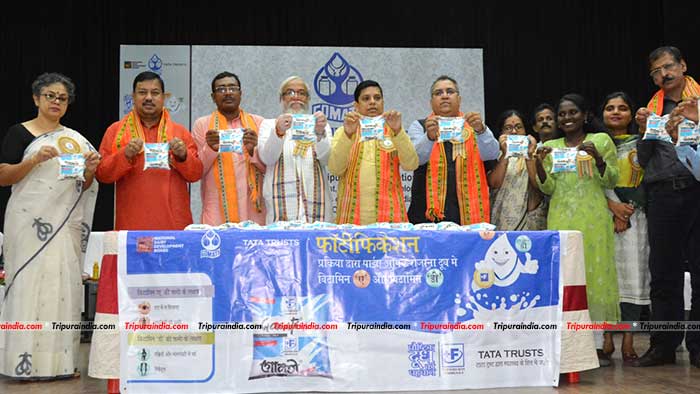
Tripuram’s Goati Milk fortified with Vitamin ‘A’ and ‘D’

AGARTALA:
Moving at par with the recommendations of Food Safety and Standards Authority of India (FSSAI), the Gomati Co-operative Milk Producers’ Limited today launched its fortified milk with Vitamin ‘A’ and ‘D’ in the state of Tripura in collaboration with World Bank, TINI – TATA Trust, National Diary Development Board (NDDB).
Tripura Industrial Development Corporation Limited (TIDCL) Chairman Tinku Roy along with the BJP MLA Ratan Chakraborty, Ram Prasad Pal and others launched this fortified milk in a function here at Agartala Town Hall today.
FSSAI rolled out recommendations for fortifying Skimmed Milk, Double Toned Milk, Toned Milk and standardized milk with 770 IU of Vitamin A and 550 IU of Vitamin D per liter of Milk. The fortification will help provide 15-30 % of the daily requirement for these Vitamins.
Taking this initiative, forward development partners like TATA Trusts have supported the states like Jharkhand, Assam and Tripura to start the fortification of their Milk variants.
TATA Trusts has also collaborated with World Bank and NDDB to take this initiative forward in the Cooperative sector planning to fortify about 50 % of the milk by 2019 and 80 % by 2021.
Many states have taken the initiative to provide a glass of milk to school children to improve their nutrition and we have extended our fortification drive to this sweetened and flavored Milk for children which is now getting fortified with Vitamin A and Vitamin D to provide them with these micronutrients in addition to the goodness of Milk.

Aug 19, 2019

DINAMANI NEWS


DINAKARAN NEWS


DINAKARAN NEWS


DINAKARAN NEWS


Food safety bans ads, sales of two capsules

Thiruvananthapuram: The food safety department has banned the advertisement and sale of two capsules which were supplied as food supplements. The companies had taken the license to sell the capsules as drug supplements and were claiming it as a drug offering cure for various ailments through advertisements.
The assistant commissioner of food safety department in an order has banned the sale of Jamun and Glucosamine capsules which were sold as food supplements in the state. The ban comes for misleading the people with claims offering medical cure through a food supplement. In the advertisements given by the manufacturers, it was claimed that the capsules offer cure for diabetes, joint pains, varicose vein and various other muscle pains.
The food safety department in its order said that both the manufacturers had violated the Food Safety and Standards Act 2006 and Food Safety and Standards Regulations 2011. The department observed that as per the Act, labels should not use words implying the recommendations made by medical profession. “There shall not appear in the label of any package, containing food for sale the words recommended by medical profession or any words which imply or suggest that the food is recommended, prescribed or approved by medical practitioners or approved for medical purpose,” says the Act.
The order said no advertisement should be made of any food which is misleading or deceiving or contravenes the provision of FSS Act Rules and Regulations made there under.
CAPSULE, the movement under Kerala Sastra Sahitya Parishad against the magical cure offered by various manufacturers, had approached the food safety department with the complaint.

Upgradation of govt food test labs to be completed in Dec

The laboratories testing food samples in Tamil Nadu, that are located in Madurai and Chennai, are undergoing an upgradation and it is expected to be completed by the end of this year.
Chennai: 
The laboratories are expected to receive various new facilities, including infrastructure to check for pesticide residue, antibiotic residue, heavy metals and other microbiology tests.
The State government undertook the upgradation considering the increased demand for advanced testing of the food samples. The laboratories require to cater to the needs of advanced testing of food samples as many types of additives and adulterants are difficult to identify. This highlights the need for advanced testing equipment and machinery.
“The government needs to fast-track the work. The civil and electronic works are being undertaken at the laboratories and they are expected to start functioning by December. The Centre is funding the upgradation through Food Safety and Standards Authority of India (FSSAI),” said Pawan Aggarwal, chief executive officer of FSSAI.
Meanwhile, private food testing laboratories that are FSSAI notified can be used by the government, he added. The officials pointed out that the renovation of the laboratories is going on at a slow pace and this has increased the load on the laboratories.
Traders had earlier raised the issue of delayed testing of samples that leads to the expiry of food samples before they are tested. Senior officials of the food safety department said that advanced testing methods will ease the process, however, more laboratories are required to meet the greater demands of testing food samples throughout the State.

Aug 18, 2019

DINAMALAR NEWS


DINAMANI NEWS


DINAMANI NEWS


These are times that call for a convergence of food and pharmaceuticals

Nutrition experts stress the goodness of ‘food as medicine’
As consumers increasingly reach out for supplements, functional foods and nutraceuticals in their pursuit of staying well, the dependence on drugs seems to be reducing. But there is space for these products to co-exist with modern medicine, say experts, as they distil traditional knowledge to develop an alternative pathway in healthcare.
Exploring the evolution from traditional foods to nutraceuticals is a book edited by Dr DBA Narayana and Dr V Prakash titled Beginning of the journey of Herbaceuticals and Nutraceuticals.” A regulatory expert, Dr Narayana explains that the concept of anna-aushadi (food as medicine ) was integral to the Indian psyche well before Western science said, “let food be thy medicine”.
India’s ancient wisdom
“India and China are the only two countries that have documentary evidence of their traditional medicines,” he says, pointing to the wealth of information that sits in these texts waiting to be tapped for consumer wellness.
In India, nutraceuticals are regulated under the Food Safety and Standards Act. And as consumer consciousness of these products increases, so does the scrutiny of their efficacy and quality, says Narayana. The book seeks to address key areas across food science, herbaceuticals and regulations through the writings of different experts.
To illustrate how one product could lock in multiple health benefits, Narayana points to fenugreek or methi seeds that can be taken as a spoonful with water on an empty stomach to address lipid profile concerns. Taken with curd, it stops diarrhoea. And if roasted a little, powdered and taken twice a day, it can help people with diabetes, he says, adding that there are published studies on this and other such traditional information.
A chapter co-authored by Narayana looks at “describing, deciphering and defending” label claims. Pointing out that claims have more significance than just the mention of therapeutic benefits, he says everything mentioned on a label is a claim. “Whether something was procured from an orchard or the product was triple-refined, it was richer that something else, etc, — all of them are claims,” he says.
About 60 per cent of pharmaceutical ingredients have their origin in herbs or natural material, says Narayana. There is space for traditional medicines, supplements and nutraceuticals to co-exist with modern medicine, he says, addressing the general distrust that remains between them.
A similar theme anchors the book Pharmaceuticals to Nutraceuticals: A shift in disease prevention, by Dilip Ghosh and RB Smarta.
“We believe that there is a convergence between food and pharma. Chronic diseases need more than just traditional pharmaceuticals approach. Our food and nutrition expertise can help create a new industry where nutrition plays a bigger role in helping people who live with difficult chronic medical conditions,” says Smarta.
The global nutraceutical market is pegged at $400 billion and every other multinational company has a nutraceutical wing, says Smarta. “With the ageing population, getting people healthy at the later stage of life is difficult and expensive. Healthcare is going to be in real trouble if we do not start to look at it in a different way,” says Smarta, as the book explores functional foods, looks at scientific evidence on efficacy, discusses combination therapies between pharmaceuticals and food bioactives in disease prevention and treatment, among other things.

Various organizations demand action against senior food safety officer of Lakhimpur

LAKHIMPUR: Various organizations of Lakhimpur submitted memoranda to State Finance, Health and PWD Minister Dr. Himanta Biswa Sarmah, who visited the district on August 15 to take part in the Independence Day celebration, regarding some crucial issues.
Submitting the memorandum, the Lakhimpur district unit of Manab Adhikar Sangram Samiti demanded the minister to take immediate steps to construct a bridge over Subansiri connecting Ghunasuti and North Lakhimpur headquarters. According to the organization, over seventy thousand population of Ghunasuti, which is historically famous for the perennial love-story of Jonky and Panei, have suffered a lot year after year due to lack of the bridge. The memorandum stated that the construction of the bridge would cause drastic change in Tourism and many other sectors connected with the area and reduce the distance between North Lakhimpur and Dhakuakhana from 80 km to 30 km.
Further the organization demanded the minister to take action against the Senior Food Safety Officer of Lakhimpur who was in charge of Dhemji district too. Regarding the demand, the organization in the memorandum alleged that the Food Safety officers of the State under his department had not taken any steps against adulterated and unsafe food products. “The Senior Food Safety officer of Lakhimpur has not taken any such effective initiatives and hence the markets of Lakhimpur and Dhemaji have been filled with adulterated and unsafe food products, mostly with those which are popular among children”, the memorandum stated.
The Lakhimpur district unit of All Assam Hindu Youth Council(AAHYC) also submitted the minister a separate memorandum demanding the suspension of the Senior Food Safety officer. According to the memorandum of the organization, the people of Lakhimpur and Dhemaji have to purchase adulterated food items from the market due to the dereliction of the officer concerned during the last fourteen years period. “The black marketeers have run an abated business of adulterated and unsafe food products in both district with indirect co-operation of the Senior Food Safety Officers. The officer is infamous as the most corrupted officers among the businessmen of Lakhimpur”, remarked the memorandum submitted by Lakhimpur AAHYC.

Aug 17, 2019

DINAKARAN NEWS


Raid on Fake Unit


Ghee, butter as prasad in temples could be ‘inedible’

Officials Say It May Have Dyes That Can Cause Cancer
Chennai: The butter given as ‘prasad’ after prayers at temples may contain cancercausing dyes, mustard oil and vanaspati, say food safety officials.
Worse, some brands of edible ghee risk contamination as they are made on the same production line churning out ‘inedible’ ghee.
Ahead of Krishna Jayanthi, officials on Friday raided more than nine houses in T Nagar that manufacture and sell ‘inedible’ ghee and butter under various names including Vishnu lighting ghee, Sri Krishna deepa ghee, Sri Eshwari ghee and Krishna butter at ₹200 a kg compared to ₹435 per kg of edible ghee by brands such as Aavin.
More than 4,000 tonnes of this ghee and butter is sold to various shops every week besides being supplied to temples, officials estimate.
“The labels clearly mention they are not edible. But we found that people who don’t see the labels eat this butter after it is offered to the god at various temples,” said Chennai food safety officer A Ramakrishnan.
Most manufacturers also make edible ghee and butter on the same assembly line. “This is a complete violation of food safety as there is risk of edible food getting mixed with these chemicals,” another official said. Samples of ghee and butter products were seized from these units and sent for analysis.
“We will be able to find adulterants they use. We can frame charges against the manufacturers if edible ghee is contaminated and if there are labelling issues,” he said. If the charges are proved, it can lead to cancellation of manufacturing licence besides criminal action.
None of the manufacturers reared cows or had dairy farms and bought raw material — white and yellow butter and ghee — from a distributor (name withheld for investigation) in tins. The distributor also gives them 5 litres of a red dye mixed with mustard oil. This goes into ‘white’ butter to give it the colour and texture of cow’s ghee.
The chemicals have also been sent for analysis. Last year, food safety officials in Visakhapatnam found manufacturers mixing synthetic resin adhesive such as Fevicol with ghee.
Consuming ghee or butter mixed with colouring chemicals and vanaspathi is dangerous. While the chemicals can cause digestive disorders and cancer, the effect of vanaspathi is equally devastating.
“It is vegetable ghee that has been hydrogenated and hardened with palmolein. It is high on trans fats, a risk factor for high cholesterol, heart attacks and strokes,” said nutritionist S Bhama.
In 2018, the government said 47 major temples in Tamil Nadu run by the Hindu Religious and Charitable Endowments Department will get Food Safety and Standards Authority of India certification for ‘prasad’. Food safety officials say they check all temples. “We told temple officials and priests not to use inedible substance as offering,” he said.

Modern Dairy products inspected for quality by FDA

The FDA officials seized a total of 561 kilogrammes of spurious curd, malai, paneer, and fresh cream collectively worth Rs 1,23,691 on Friday
FDA officials said the food items sold at Modern Dairy violated the norms prescribed by the Food Safety and Standards Authority of India and is a serious threat to the public

In a surprise raid conducted on Friday, the Food And Drug Administration (FDA) Pune seized paneer (cottage cheese), curd and cream from Modern Dairy shop located in Camp area, to inspect for quality.
The FDA officials seized a total of 561 kilogrammes of curd, malai, paneer, and fresh cream collectively worth Rs 1,23,691 on Friday.
According to Food And Drug Administration officials, the products would be inspected for hygiene.
Suresh Deshmukh, joint commissioner, FDA, Pune, said they received a tip-off on which the action was taken
Earlier this month, FDA conducted surprise checks at 100 eateries, creameries, milk establishments across the city. Most of the cases were attributed to unhygienic preparations, usage of acids and other colouring methods.
The officials said that any violations of norms prescribed by the Food Safety and Standards Authority of India (FSSAI) is a serious threat to the public.

FSSAI implements ban on colistin use

The food regulatory body came up with the draft of the amendment and directed that it be operationalised immediately
NEXT NEWS ❯
Colistin and its tolerance limits will be removed from the list of antibiotics and veterinary drugs for foods. 
The Food Safety and Standards Authority of India (FSSAI) on August 8, 2019 issued a draft regulation to prevent the use of antibiotic colistin in food, banned by the Union government in July.
Colistin, which is a last resort antibiotic for humans, is used to treat drug-resistant gram-negative infections in critically ill patients.
According to the Food Safety and Standards (Contaminants, Toxins and Residues) Amendment Regulations 2019, colistin will be added to the list of antibiotics and veterinary drugs that are prohibited for use in processing of meat and meat products, poultry and eggs, sea foods including shrimps, prawns or fish and fishery products.
Also, colistin and its tolerance limits will be removed from the list of antibiotics and veterinary drugs for foods. While the draft will be notified in some time, FSSAI operationalised it from August 8.
The Union government's July notification prohibited the manufacturing, sale and distribution and colistin's formulations for food-producing animals, poultry, aqua-farming and animal feed supplements with immediate effect.
“The regulation to ban colistin is timely reflected in the food law. This will enable necessary monitoring of food by food inspectors,” said Amit Khurana, programme director, food safety and toxins, Centre for Science and Environment, a New Delhi-based non-profit.
The World Health Organization (WHO) not only categorises colistin as a highest priority critically important antimicrobial, but also places it under "reserve" category under the AWaRe categorisation. 
In 2018, mcr 1 and 3 genes that confer resistance to colistin were reported for the first time in food samples procured locally in India.

Aug 16, 2019

DINAKARAN NEWS


Chhattisgarh: Food department raids sweet shops, seize samples

RAIPUR: Amid festive season, a team of Food and Drug department along with civic body officials conducted surprise inspections at sweet shops across Jagdalpur on Tuesday.
Jagdalpur Sub-Divisional Magistrate GR Markam informed that the action was taken on the instructions of the district collector for prevention of adulteration of sweets during the festive season. He said that the collected samples are being sent to the state food testing laboratory in Raipur for quality check. Strict action will be taken against the concerned sweet shops under Food Safety and Standards Act if any food material is found to be of substandard quality in the test.
As per officials, as many as three different team of food and drug administration, food department and municipal corporation conducted raids at various sweet shops across Jagdalpur district on Tuesday. The team collected samples of various food products including sweets, khoa and namkeens for testing during the raids.
A team constituted under the leadership of sub divisional magistrate GR Markam examined the factory of a sweets and snacks manufacturing company . During the raid, namkeen packets without manufacturer name and content of products on the packaging were seized. Keeping this in view, a case has been prepared under Section 52 of the Food Safety and Standards Act, 2006 against the concerned shop.
Similarly, a team constituted under the leadership of Food Safety Officer Zahira Khan raided another sweet shop. During the raid, the team took samples of various sweets including Besan Barfi, Lal Peda, Ras Malai, Chhena Kalakand, Gulab Jamun and Sonpapadi for quality check.
Another team formed under Food Safety Officer Chitralekha Kodopi conducted raid at a famous sweet shop. Samples of Khoa, Besan and Bundi were collected for quality check purpose.
Meanwhile, in wake of festive season, Bastar district collector Ayyaj Tamboli issued directions to conduct inspection of sweet shops to check quality of food.

FSSAI mandates safety audit for FBOs dealing in dairy, meat, other products

New Delhi, Aug 15 Food regulator FSSAI has made safety audit mandatory for licensed food business operators (FBOs) dealing in dairy, poultry, fish, eggs and meat and their products as well as food catering.
The Food Safety and Standards Authority of India (FSSAI) has issued an order mandating food safety audit of food businesses holding central licence and falling under high-risk categories.
The regulator has listed six food businesses under high-risk categories -- dairy products, meat and meat products, fish and fish products, egg and egg products, food for infant nutrition and prepared food (catering).
These food companies should get safety audit done by a recognised audit agency at intervals specified by the authority, the order said.

Aug 15, 2019

DINAMALAR NEWS


DINAKARAN NEWS


DINAMANI NEWS


FSSAI makes third-party audits must for high-risk food-makers

This will reduce the burden of regulatory inspection
The Food Safety and Standards Authority of India (FSSAI) has decided to make third-party audits mandatory for food businesses involving certain high-risk categories.
To strengthen the food surveillance system, the FSSAI has, for the first time, introduced the concept of food safety audits through recognised private agencies.
In its latest directive, FSSAI said that food businesses that hold central licences that involve dairy products, meat and meat products, eggs and egg products, besides fish and fish products, will be subject to ‘mandatory food safety auditing.’
In addition, central licence holders that make food products for particular nutritional purposes such as infant products will also be subject to mandatory food safety audits through recognised third-party agencies.
The order stated that companies involved in prepared foods businesses such as for catering purposes will also need to get their operations audited in a timely manner.
Eligible private agencies
Last year, FSSAI had notified the food safety auditing regulations and, earlier this year, it recognised 24 private agencies eligible to conduct food safety audits of food companies.
Since inspecting and auditing of food businesses and packaged food companies is a huge task, the regulator had decided to introduce the concept of food safety audits through recognised private agencies. It had earlier stated that selected food categories on the “basis of their risk classification will be subject to mandatory food safety auditing.”
The food safety authority believes that satisfactory audits will lead to less frequent regulatory inspections by the Central and State Licensing Authority, except for regulatory sampling.
Reducing workload
The regulator had earlier said that this will reduce the burden of regulatory inspection and encourage a culture of self-compliance among the food business ecosystem.
The regulator has already begun conducting food safety audits of nearly 486 government-licensed slaughterhouses.

DINAKARAN NEWS


DINAMALAR NEWS


DINAKARAN NEWS


Soon hygiene must while preparing food in temples


Chennai collector warns of action against vendors who pack food in newspapers


CHENNAI: Chennai district collector R Seethalakshmi on Wednesday warned of action against vendors who store, distribute and sell food packed in printed newspaper, plastic bags and sheets sealed with stapler pins.
The sale of food packed in printed newspapers or any inked papers, plastic wraps and bags are not permitted by the Food Safety Act 2006 and the Food Safety and Standards (Licensing and Registration of Food Businesses) Regulation, 2011 as they can cause serious health issues due to chemical and microbiological contamination.
“Action will be taken against vendors violating the rules,” Seethalakhsmi said.
Earlier, the health department and food safety officials had issued notices prohibiting the sale of food wrapped in newspapers and plastic bags. They had advised vendors to use stainless steel, fresh or dry leaves to store food. Yet, many vendors violated the rule. 
According to a release from the collectorate, eatables like vada, bonda, pakoda and bhaji when packed in newspapers and plastic covers become toxic and should not be consumed. The Food Safety and Standards Authority of India (FSSAI) had said the printing ink contains cancer-causing agents.
Recycled newsprints contain phthalate and mineral oil that should not be mixed with food. They also contain lead and cadmium. Once warm food is placed under newspaper, the printed ink melts and exposes the human body to various health problems, according to the release.

Aug 14, 2019

DINAKARAN NEWS


DINAMANI NEWS


Need close watch on city restaurants’ hygiene

Trichy: While food safety officers are focussed on the quality of food at the road side eateries, consumer activists insist on keeping a close watch on the restaurants in Trichy to ensure that quality food is served to people. 
A surprise raid on May 16 by the food safety team in eight restaurants in Trichy city brought to light the unhygienic and unhealthy ways of keeping cooked food in refrigerator for using them the next day. The raid unearthed cooked mutton, chicken, rice and Parotta which are kept in freezers in all the eight restaurants.
During the raid, the team seized over 15kg of meat kept in cold storages. The food safety officers (FSOs) said that all the shops keep meat in freezers. The officials also cautioned people not to consume stale food as it will lead to food poisoning, vomiting, diarrhoea and other health complications. 
There were no such surprise raids in the past three months. Secretary, Consumer Protection Council, Tamil Nadu, S Pushpavanam asked the food safety officers to frequently monitor the restaurants. "Monitoring of kitchens in the restaurants should be tightened, he said while recalling an incident of stacking cement bags in the kitchen of a leading restaurant in Trichy a year ago.
Designated officer, food safety and drug administration department, Dr S Chithra promised that the department will conduct raids at regular intervals. "The surprise raids will start again soon. Offenders will be booked as per the law," she said.

Clean street food hub coming to Trichy

Trichy: Trichittes will soon have a ‘clean street food hub’ with the food safety department working on converting a stretch of VOC Road behind the Central bus stand into one.
Under the permanent project of Food Safety and Standards Authority of India (FSSAI), the food safety and drug administration department has identified VOC Road as a potential hub for the project.
According to FSSAI, the initiative will help upgrade food streets and build trust among consumers to have a safe and hygienic local eating experience. Most people avoid the roadside eateries only because of its unhygienic conditions. FSSAI also believes that it will make the local food popular among the domestic and international tourists visiting Trichy.
"Roadside eateries along the VOC Road could be an ideal choice for implementing the project. Hence, we have chosen the place and started working on it before rolling out the scheme in a month," designated officer (DO) of the department in Trichy Dr R Chithra told ToI on Tuesday adding that the project will be extended to all the 17 blocks under its department in Trichy.
Food safety officers and outsourced private agencies will guide 25 vendors in the stretch to maintain their roadside eateries clean and hygiene. The eateries run by around 75 vendors in three shifts for breakfast from 5 am to 12 pm, lunch from 12 pm to 5 pm and dinner from 6 pm to 12 pm remain popular among the travellers visiting Trichy Central bus stand.
With a slew of guidelines for the location, personal hygiene, solid waste management and several other aspects, the stretch could become a model for all the roadside eateries if they comply with the guidelines. "Our duty is to ensure that the guidelines laid down are being followed by the eateries. Food safety officers will monitor them regularly and sort out discrepancies, if any," said Chithra.
Before the commencement of the project, an agency will conduct an audit in the stretch to check the criteria following which permissions may be granted to the food safety department to have the hub in the area.
Welcoming the move, Trichy District Pushcarts Vendors Association district president R Ganesan said the food safety department should set up a toilet facility for both the workers and the customers besides providing continuous water. "We request the corporation to also maintain cleanliness in the stretch," said Ganesan.
Social worker in Trichy Paul Guna Loganath said that though it is a welcome move in terms of food safety, it will be a hindrance to the buses entering the Central bus stand. "Hygiene of most of the roadside eateries is questionable. The food safety hub could bring about a good change," he said.

Honour for ‘No Food Waste’ founder

Padmanaban Gopalan, founder of No Food Waste, receiving the National Youth Award from Union Minister of Youth Affairs and Sports Kiren Rijiju in New Delhi on Monday. 

Padmanaban Gopalan gets the National Youth Award for the year 2016-17 from Union Minister of Sports and Youth Affairs, Kiren Rijiju
Padmanaban Gopalan, founder of No Food Waste, received the National Youth Award for the year 2016-17 at a function held in New Delhi on Monday.
Speaking to The Hindu over phone shortly after receiving the award, Mr. Gopalan termed the award as a “great honour” for volunteers of the organisation, who are mostly youngsters. “I'm just representing [the volunteers],” he said.
The number of active volunteers involved with No Food Waste were around 3,200 spanning across 16 locations in Tamil Nadu and West Godavari district in Andhra Pradesh, Mr. Gopalan said. The chapters are present in Chennai, Tiruppur, Erode, Salem, Tiruchi and Krishnagiri.
Founded in 2014 in Coimbatore, No Food Waste is a food recovery and food waste management network that focuses on collecting surplus food from weddings, parties and other places to distribute among the people in need. In nearly five years since the inception, Mr. Gopalan felt that the awareness regarding prevention of food wastage has increased. “Earlier, we had [to face] a lot of tough situations to recover the food,” he said, as people were not forthcoming to donate the surplus food.
Mr. Gopalan said that the organisation has received support from the government, particularly the Food Safety and Standards Authority of India (FSSAI) and the municipal corporations in the cities where No Food Waste is currently operating. “We are working in parallel with both the government and the community,” he said.
Though focusing on recovering and recycling of surplus food, the organisation is hoping to roll out a technology soon to reduce food wastage “at the production and logistics level,” Mr. Gopalan said. The award was presented by Union Minister of Sports and Youth Affairs Kiren Rijiju.

Aug 13, 2019

DINAMALAR NEWS


DINAMANI NEWS


DINAMALAR NEWS


Packaged food products may soon have expiry date; discounts likely

New Delhi: Packaged food companies may soon have to carry an “expiry/ use by date” along with the “best before date” label on all products and offer discounts after the ‘best before date’. The proposal is part of the labelling regulation and good food retail practices under consideration of the Food Safety and Standards Authority of India, official sources said.
The idea is to empower consumers to make an informed decision and enable them to bargain for products that have crossed their ‘best before date’ but are still safe to consume. Besides, it is also expected to help reduce wastage of food.
In the absence of a policy to tackle the shelf life, retailers often return the stock to companies after they cross the ‘best before date’. Companies are also left with no choice but to destroy such stocks as regulations do not allow their sale.
“Most of such products are still good to eat and safely edible for a reasonably limited period of time. Destroying such stocks leads to sheer wastage of food, while a lot of it is nutritional,” an official said.
On the other hand, retailers try to push products through various schemes just around the ‘best before date’. In such a scenario, the consumer must be aware of what he is buying and for how long it can be used. The consumer must also be able to bargain for such products, the official said.
“Best before” label is the date that indicates the end of the period in which the condition of the food item, under storage, will remain as stated. During this period, the food product is marketable and retains specific qualities which it is understood to have or which have been claimed on the label.
“Expiry/ Use by date” label indicates the estimated end of the stated storage period after which the food item will probably not have the quality and safety attributes normally expected by the consumers and the food shall not be sold.
At present ‘use by date’ is seen only in a few products like breads, packaged dairy products. India is one of the top five markets for packaged food in the world, and the second largest in Asia, with a sales volume of 34 million tonnes.

‘Consumer fora should not be harsh on small businesses’

Chief Executive Officer of Food Safety and Standards Authority of India Pawan Kumar Agarwal speaking at a meeting in Madurai on Monday. 
Consumer forums should not be harsh on small businesses unless they were habitual defaulters so as to sustain economic growth, said Chief Executive Officer of Food Safety and Standards Authority of India Pawan Kumar Agarwal.
Addressing a meeting on Food Safety and Standards Act conducted by Tamilnadu Foodgrains Merchants Association and Tamil Nadu Hotel Owners Association here on Monday, he said, “Business people must take the responsibility of educating the public on unethical practices such as artificial ripening, adding colours as adulterants so that consumers can make an informed choice,
When one of the members of the audience complained that Food Safety officers who collect samples took up to six months to release results of the tests, Mr. Agarwal said the officers should give the results within two weeks even if they needed the service of private labs. To expedite this process, the Central government could have tie-ups with private labs. Tamil Nadu was one of the few States with six laboratories as some States did not even have one lab, he said.
He explained the various layers of food safety standards and said problems need to be resolved step by step. Some issues need to be discussed with the central advisory committee as well. “If we create an ecosystem for food safety, it could serve as a model for other developing countries,” he said.
K. Vanaja, Director and Additional Commissioner of Food Safety, V. Pasupathy, National Advisor, Food Safety, Federation of Hotel & Restaurant Associations of India, took part in the meeting.

Food traders seek single licence for all linked facilities

Madurai: The Tamil Nadu Foodgrains Merchants Association urged the chief executive officer of FSSAI, Pawan Kumar Agarwal, to take steps to issue a single licence for all branches and facilities owned by a Food Business Operator (FBO), reducing the owners the hassle of renewing multiple licences whenever needed.
At present, separate licences need to be obtained under the Food Safety and Standards Authority of India Act for various facilities such as factories, godowns, manufacturing units, vehicles and registered offices, said president of the association S P Jeyapragasan. He read out a charter of demands on the sidelines of a discussion meet held between stakeholders on Monday. 
The association demanded exemption from Food Safety Training and Certification, which the FBOs are supposed to undergo for GST reasons. The association also sought the validity of the certificate to be extended from one year to five years. Members of the association demanded that the Food Safety and Standards Act, 2006, rules and regulations of 2011 be published in all regional languages including Tamil for easy understanding.
They sought the CEO to allow coriander farmers to continue with their traditional way of fumigating the harvest with sulphur, which will give a longer shelf life, till a new fumigation method is found by the department. 
The FSSAI was urged to take methods to distinguish pure jaggery and palmyrah jaggery from those mixed with white sugar in the market. “With the sugar content in pure jaggery and palmyrah jaggery not meeting the standards of FSSAI, white sugar is added to them,” a trader said, adding that it was important to differentiate between them with markings.
Another demand put forth by the traders was to mellow down action on unintentional mistakes made while labelling products. “Instead of punishing for the offence, the FBO must be served with an improvement notice. Action should be taken only if the FBO has deliberately committed a mistake,” a member said.

Use pvt labs to test food faster, food safety chief tells officials

Madurai: Responding to grievances of traders that food samples collected were not being tested on time, chief executive officer of the Food Safety and Standards Authority of India (FSSAI), Pawan Kumar Agarwal, urged officials to make use of recognised private labs to test products if government facilities cannot handle the demand.
Agarwal said this during a discussion on the Food Safety and Standards Act, 2006, jointly organized by Tamil Nadu Food Grains Merchants Association and Tamil Nadu Hotel Owners Association, on Monday. 
Earlier, traders from Madurai city had reported that samples taken from manufacturing units and shops are at times tested after their expiry date, though rules stipulate that products must be tested within 14 days of sampling. 
Addressing stakeholders present at the meeting, Agarwal said it was a grave offence to test samples after expiry and initiate action against food business operators (FBO) based on it. 
He said Tamil Nadu was fortunate to have six food testing labs, when seven other states don’t have a single such facility. “The facilities in (government) labs may not be adequate. But while the labs are being upgraded, officials have been given permission to get the samples tested in private labs. I am not sure why this is not being done,” Agarwal said. 
Saying the process has to be dealt with in a pragmatic manner, the CEO said results produced in private labs were equally valid as that from government labs. “The only thing the labs must have is a qualified food analyst.”
Speaking about future plans in the field, Agarwal explained that the whole philosophy of the new Food Safety and Standards Act, 2006, is different from the earlier Act that focussed on preventing adulteration. “The focus now is to ensure safe food standards and supply chain. But that spirit is yet to percolate to the field level. Much of the discussion continues to be about penalties and punishment.”
Agarwal added that a five-year plan created by the FSSAI will address this issue and bring to fore the food processing standards that are to be adhered to by FBOs. “The ecosystem for food safety that we are creating comes at very little cost and from meagre resources compared to most developed nations. We will become the food safety model for the rest of the world, particularly for other developing nations,” he said.
Dr K Vanaja, director and additional commissioner of department of food safety and drugs administration, and food scientist V Pasupathy were also present at the meet.

No harmful chemicals in PET bottles, finds CSIR study

The analysis found that no chemcials breached the EU-specified norms. 
The CFRTI analysis, commissioned by an industry body, concluded that antimony, arsenic, barium, cadmium, chromium, cobalt, lead, mercury, selenium and zinc “were below” their detection limits (BDL) of 0.001 mg/kg.
PET bottles are safe, a comprehensive evaluation by the CSIR-Central Food Technological Research Institute, Mysore has determined.
For years there’s been a swirling debate internationally on whether PET (Polyethylene Terephthalate) bottles, which are the mainstay of plastic bottles and disposable food containers, leach harmful chemicals when exposed to high temperatures.
The CFRTI analysis, commissioned by an industry body, concluded that antimony, arsenic, barium, cadmium, chromium, cobalt, lead, mercury, selenium and zinc “were below” their detection limits (BDL) of 0.001 mg/kg.
Bisphenol-A was below its detection limit of 0.02 mg/kg.
For their analysis, the researchers collected four different kinds of PET containers and exposed them to different stimuli such as ethanol of varying concentrations, acetic acid and vegetable oil. These were supposed to simulate the kind of chemicals contained in packaged food and drink that could trigger the leakage of metals or other secondary chemicals. They tested these bottles when they were subject to 40C and 60C temperature as well as when test-chemicals were stored in them for 10 days.
Along with metals, the scientists also measured terephthalic acid, Isophthalic acid, Ethylene Glycol, BPA (bis-phenol A) and phthalates. BPA is a synthetic organic compound and used in the manufacture of PET bottles but is now phased out after research found a link between the presence of BPA and the disruption of hormone regulation, as well as breast cancer.
The CFTRI scientists found that the presence of metals, BPA and pthalates were “below detection limit” meaning that they were below the minimum levels required by the instruments and methods employed by the researchers to detect these chemicals.
They were also below the EU (European Union) regulation norms of the “specific migration limit”, which is the maximum amount of a substance that can migrate from a food packaging material or food container into food. In most cases the EU standards are similar to the ones specified by the Food Safety and Standards Authority of India, except for BPA for which FSSAI has not specified standards and zinc, where FSSAI permits 25mg/kg as opposed to the EU’s 5 mg/kg.
The analysis found that no chemcials breached the EU-specified norms.
“The studies further confirmed that antimony does not leach out of PET bottles. These findings further establish that no endocrine disruption happens from the use of PET bottles. The migration studies were at most stringent conditions of time, temperature and accelerated testing environment,” said a statement from Pet Packaging Association for Clean Environment (PACE), the industry body which commissioned the study.
Dr. Shekhar C. Mande, Director General, CSIR and Secretary, DSIR, Govt. of India, said in a statement: “ Of the plastics, PET is a unique and universal packaging material for food, pharmaceuticals, water, edible oils, personal care products, etc...This project is unique, as it investigated not only the leaching aspects, but also examined the composition/chemistry of PET and furthermore, even studied the endocrine disruption potential of PET. In this respect, the findings in these reports would be more relevant than those found in any standalone tests.”
The scientists also studied water stored in PET bottles and checked whether it affected the hormone levels of rats and mice.
“The evaluation found that the experimental male and female rats exhibited comparable blood hormone levels in both cases. This conclusively proved that PET bottles did not cause any Endocrine Disruption activity if used to package water,” a study report concluded.

Thiruvananthapuram: Hoteliers ‘no’ to ID cards for workers

Impossible to get permanent handlers.
Thiruvananthapuram: The ambitious Subhojanam Scheme, which is being rolled out by the City Corporation aiming at ensuring hygiene at eateries, has faced a set back with the Hotels and Restaurants Association cold-shouldering the decision to mandate ID cards for workers. According to the hotel owners, it’s impossible to get permanent food handlers and workers at eateries. Also the association claimed that the scheme clashed with the programmes of Kerala Commissionerate Food Safety (KCFS).
It is learnt that the Commissionerate has launched FoSTaC (Food Safety Training and Certification) as mandated by the Food Safety and Standards Authority of India (FSSAI) for ensuring a trained food safety supervisor trained in good hygiene and manufacturing at every eatery in the state.
The corporation’s plan is to launch the scheme this week. However, according to sources, there would be a slight delay in the launch of the programme because of the floods.
The Kerala Hotel and Restaurants Association district secretary B Vijayakumar told DC that the scheme of the corporation is highly impractical. “It’s impossible to get permanent workers. Majority of them are migrant workers and they stick on only for short term and they move to other places. It’s hard to get permanent workers and to always make the ID card for them,” said Mr Vijayakumar. He said that the training programme of the Commissionerate is easier and practical to implement. “The corporation is planning to set up lab facility for checking food and water quality which is designated responsibility of the food safety,” Mr Vijayakumar added.
With the hotel owners’ cold-shouldering the decision, the civic body has decided to enforce ID cards for food handlers and hotel employees. “Every eatery including thattukadas would be brought under the scheme. Hotels should hire only certified food handlers and workers and else we would take action,” said the official. 
The official said the food safety is understaffed and they don’t have the infrastructure to ensure food safety.
“They have one officer to cover an entire constituency. But we have the human resources and infrastructure to implement the scheme,” the official added.

Food safety dept seize 1000 kg spurious khoya

With Rakshabandhan just around the corner, Delhi’s food safety department seized around 1,000 kgs of spurious khoya during a surprise check at the khoya mandi near Kashmere gate early Monday morning.
The officers collected six samples to be tested in the laboratory; the rest was taken to the Gazipur landfill and destroyed.
“Every morning, people carry khoya in the flat bottomed vessel we call parat to sell it at the Mandi. When we reached the market today, there were several vendors sitting with their wares. As soon as they spotted us, they abandoned everything and fled. We could not catch anyone, but we confiscated all the spurious khoya. Only a few regular vendors had genuine products,” said Ranjeet Singh, designated officer, Food Safety Department.
The officers could recognise spurious and unsafe khoya on visual inspection.
“We have years of experience and can tell the real khoya from the fake just by visual examination; the spurious ones were whiter than what khoya actually looks like, most of them also smelled of refined oil, which is usually added when vendors make khoya with milk powder. Milk powder is usually make of skimmed milk with less than 0.5% fat, the khoya made from it is very dry and oil is added to improve the consistency. Real khoya is made by drying out the milk till only the fat and solid not fat is left,” the official said.
Some of the samples also smelled bad, were ridden with flies, and wrapped in dirty gunny bags.
The spurious and unhygienic khoya starts coming into the market during the festive season.
“This month there was Teej and now Rakshabandhan when most families give each other sweets made of khoya. The demand for khoya again goes up during diwali. It is best to avoid sweets made of khoya during the festive season,” said Singh.