May 27, 2019

Beware! The milk you are drinking might have detergent in it

01/7Packaged milk contains detergent and starch!
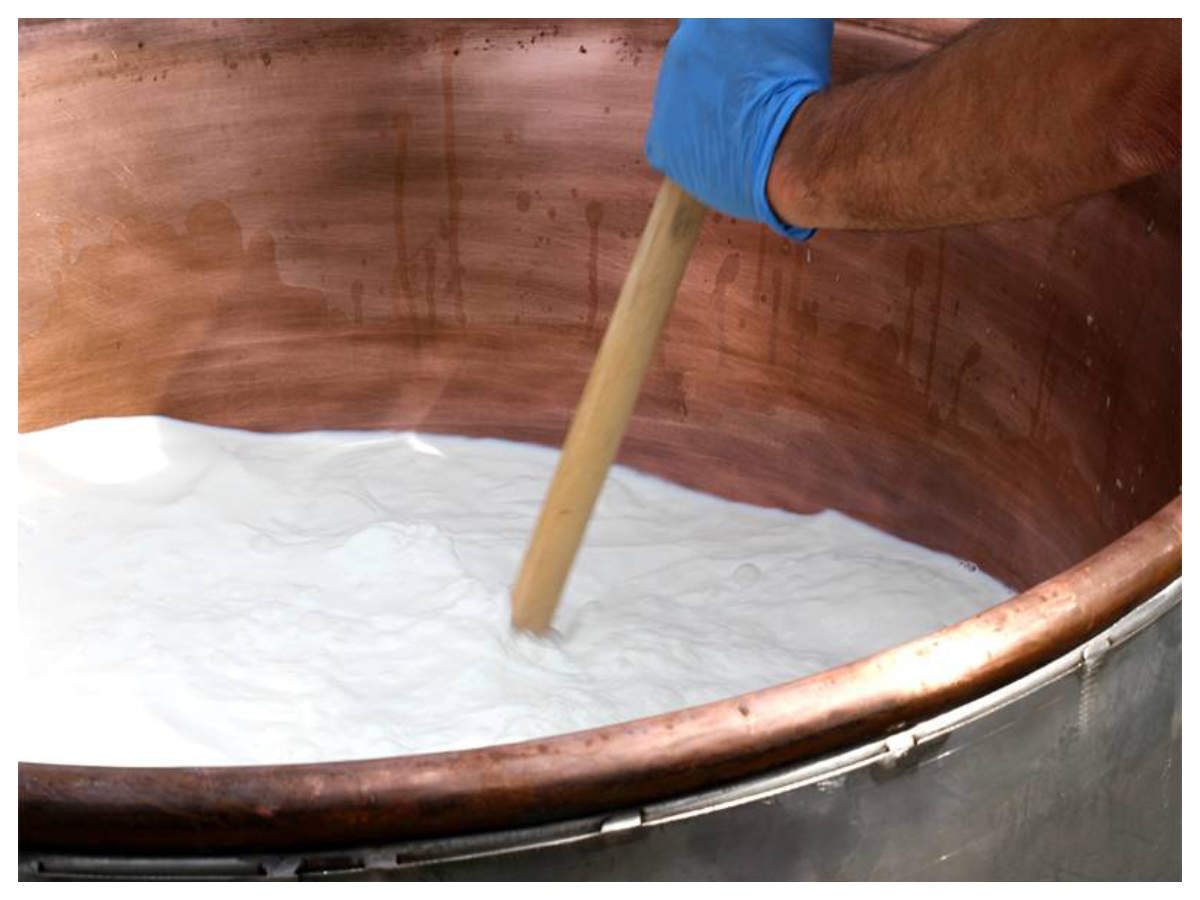
Come summer and demand for milk and milk products increases. The vast gap between demand and supply gives the market players a scope to play around with unfair means in order to make a profit. A recent raid in the dairy plant has revealed that the packaged milk is basically a concoction of milk, white paint and detergent. In case you are buying the packaged milk, there are chances you are consuming detergent in the name of milk.
02/7Dairy plant raid in Varanasi
Recently, a huge dairy plant was raided in Varanasi by the state's Food Department and over ten thousand litres of spurious milk, mixed with detergent was seized. Run by Pure Dairy Solutions, the plant had been marketing milk by the brand name Kashi Sanyog. During the raid, it was discovered that milk contained detergent, urea and starch.
03/7Why detergent and starch are added?
During the raid, it was revealed that most of the dairy plants in Uttar Pradesh, Haryana and Punjab usually use these unfair means during summers when there is an acute shortage of milk.
04/7Patiala case
Last year during the summer season, a huge dairy plant in Patiala was raided and over seven thousand litres of adulterated milk, mixed with detergent powder was recovered. Around 323 bags (of 50 kg each) of skimmed milk using chemicals were also recovered from this plant.
05/7Delhi Food Safety Department report
Between January 2018 and April 2019 the milk test conducted by Delhi Food Safety Department reflects that all the milk products are sub-standard. During this period around 477 samples were tested in the Delhi-NCR region.
06/7AWBI guidelines
According to Animal Welfare Board of India (AWBI) 68.7 per cent of milk and milk products sold in India are not as per the standards laid down by Food Safety and Standard Authority of India (FSSAI). The research report says that the adulterated milk and related products have 45-60 percent detergents, caustic soda, glucose, white paint and refined oil in them.
07/7Verdict
It is recommended to buy fresh milk from the local milkman, as it is safer compared to packaged milk. Also, try to visit the cattle farm and buy milk after checking the purity of milk.

May 26, 2019

DINAKARAN NEWS


DINAKARAN NEWS


DINAKARAN NEWS


DINAKARAN NEWS


DINAKARAN NEWS


Food safety dept to crack the whip on illegal masala units

Madurai: After cracking the whip on adulteration in cooking oil, ghee and a range of flours, food safety department officials from the district have now set their eyes on substandard masala powders widely used in various types of foods. The move has been necessitated after it has come to light that many of the units producing masalas are running their business without obtaining licence, which is mandatory under the Food Safety and Standards Act, 2006.
Meanwhile, officials have asked the residents not to buy readymade masalas, available in packets. They have instead asked them to purchase raw materials and prepare the masalas at home, which would not only be cost-effective but also ensure the best ingredients go into cooking.
“After grinding the masala, banned artificial colouring additives and flavour enhancers are used to make them appealing. Using such masalas can result in health problems in the long run. It is always safe to prepare masala at home,” designated officer for food safety, Madurai district, Dr M Somasundaram .
Somasundaram said that they found sub-standard materials in an illegal masala production unit during an inspection carried out recently. The ingredients were infested with insects and fungal matters. Rampant adulteration was also found. They suspect that it could be the scenario in all illegal units.
“There are no numbers available on the exact number of units manufacturing masalas because many are run illegally without licence. We have estimated that there could be more than 200 units. Inspections will be conducted area-wise to ensure quality products are supplied to people,” an official from the food safety department said.

How do you know your organic food is really organic?


Shankar Langati at his farm in Belagavi district; a farmer at Hanumantaraju’s organic fruit and vegetable collection centre in Nelamangala. 
As the organic food market expands, fruit and vegetable suppliers are under pressure to supply more, and some of them are taking shortcuts. The principles of organic farming are difficult to follow when the volumes are big, trade insiders say.
“The demand is growing exponentially. Retailers want volume and variety and growers are forced to use chemicals and pass off their products as organic,” a major supplier to organic stores in Bengaluru told DH.
It happens with a range of products. Take organic rice. Recent entrants to the trade buy paddy from random growers, have it milled, and sell it as organic to big supply chains. “All they need is a transaction certificate in an organic farmer’s name, and they sometimes get it even without the farmer’s knowledge,” said B N Nandish, an organic farmer in Shivamogga district. “This trend worries genuine organic farmers.”
Some retail chains in Bengaluru cheat, too. “They approach us for organic produce and ask for a copy of our organic certification. They place orders for a couple of weeks and then stop, only to use our name to sell products sourced from elsewhere,” said Ravi K, chief executive officer of a Regional Cooperative Organic Farmers’ Association Federation, facilitated by the state’s agriculture department.
The more genuine traders are worried about the authenticity of what they get. “I had to check at least 50 sources before getting a genuine organic food supplier,” said Shodhan Kumar, proprietor of an organic food import and export firm.
Champions of the movement are concerned that the primary objectives of organic farming are being compromised. Currently, neither the farmer nor the consumer reaps the benefits of organic farming.
Pioneer problems
In 2004, Karnataka became the first state in India to get an organic farming policy. The area under organic certification increased from 2,500 hectares in 2004 to one lakh-plus hectares in 2018, and certified production is estimated at three lakh tonnes.
The market is growing faster, and the growth comes with its own problems.“As the supply chain grows longer, there is a greater disconnect and it becomes nearly impossible for a consumer to trace the producer,” said Vishala, who works with farmers and runs an organic store in Bengaluru.
She calls for a regulation with a decentralised approach to sustain the movement.
Her apprehensions are valid: it is estimated that about 80% of the organic food market is controlled by a few big players.
DH visited some organic stores in Bengaluru and asked the storekeepers whether they were aware of where their supplies were coming from. In eight out of 10 shops, they didn’t have a clear answer.
“In any organic trade fair, you see every item available at every stall. There’s no clarity about the source. Even the farmers’ federations, instead of selling what they produce, display a wide range of products,” said V Gayathri of the Institute for Cultural Research and Action, a pioneering organic farming initiative in the state.
The federations should market region-specific products. That will help local farmers, she observed.
The state has 15 organic farmer federations and 576 organic villages. These villages were declared organic under the state government’s organic scheme. They have now lost motivation for want of guidance and supervision.
What should have been a movement of farmers is now driven by industry. As a result, it has moved away from the basic principles of sustainable livelihood, ecological responsibility, and food safety.
“Farmers do want to take up organic farming, but they need skills, resources and continuous support. Even when it comes to government support — in the form of research or subsidies — organic farming gets a smaller share than chemical farming,” said Dr K Ramakrishnappa, former additional director, Department of Horticulture.
The aim should be to replace chemical farming with organic farming, he said.
Hanumantaraju, who supplies fruits and vegetables to about 80 organic outlets in Bengaluru, works with 400 farmers, two-thirds of whom are certified.
Though his four field workers randomly visit the farms, he finds it difficult to check if the product is genuine.
“Getting them tested for chemical residues in a lab approved by the National Accreditation Board for Testing and Calibration Laboratories (NABL) is expensive. I have to shell out about Rs 10,000 for each sample,” he told DH.
A state-run lab in Bengaluru does the tests for free for farmers, but not many know about it. Also, the lab is not yet approved by NABL or the Agricultural and Processed Food Products Export Development Authority.
Testing organic food is not something an individual consumer thinks about, even when she is paying a premium. There should be a place for farmers to deposit their produce, from where samples can be checked for residues, many felt.
Saraswati, who works with about 40 farmers and supplies organic produce to shops in Bengaluru, believes the boom of organic produce has resulted in an influx of players with no idea about the spirit of organic farming.
Who pockets premium?
“We see new stores opening every day. Even if a few go against ethics, it hampers the entire organic movement that has evolved on passion, integrity and trust,” said K Srinivas Aithal, in the business for 10 years. Organic produce is priced at 25% to 200% more than chemically grown produce. But sadly, the money the consumer pays doesn’t go to the farmer.
A study commissioned by the Karnataka Agricultural Price Commission (KAPC) shows the imbalance: traders make way more money than growers.
“Organic farming should be made profitable for farmers. We have proposed the formulation of an Organic Price Policy,” said KAPC Chairman T N Prakash Kammaradi.
The word ‘organic’ is used extensively now. Words such as ‘natural’ and ‘herbal’ are used without any basis. “If I see bright, attractive, uniform and unseasonal fruits and vegetables on the shelf, I know the store is not dedicated to organic food,” said Ashu, a consumer, told DH. Her advice: Consumers should ask questions, observe and only then buy a product.
Most stores have their own labels for organic grocery, and they claim they get their supplies from farmers or aggregators they know. With so little clarity about certification, how do you make out whether the ‘organic’ label is genuine?
Branding tricks
“Many a time, we are misled by glib talk and the ambience of the shop. The word ‘organic’ is the main driver,” said Jayashri, who regularly buys organic. Misrepresentation and misbranding are two major concerns that need to be addressed as the market grows exponentially.
On April 2, the Food Safety and Standards Authority of India (FSSAI) issued a direction regarding Food Safety and Standards (Organic Foods) Regulations, 2017. It has made it mandatory for all organic food business operators to get the Jaivik Bharat logo, the FSSAI organic logo, to distinguish their products from non-organic ones. 
FSSAI permits small organic producers, with an annual turnover of less than Rs 12 lakh, to sell their produce to end-consumers without certification.
Also exempted are aggregators with an annual turnover of less than Rs 50 lakh, selling directly to end-consumers. They need not procure only from certified organic farmers. Growers say the exemptions make no sense.
“Certification is meant to provide quality assurance. Why would a farmer, even if her turnover is more than Rs 12 lakh, need certification if she sells directly and when the consumer obviously knows her? Also, aggregators can’t sustain the business if the turnover is less than Rs 50 lakh. It has to be at least Rs 2 to 3 crore for them to break even,” said Kavitha Kuruganti of The Alliance for Sustainable and Holistic Agriculture (ASHA).
Along with other organisations, ASHA has taken growers’ concerns to the FSSAI. Further, the regulation, which is notified under the Food Safety and Standards Act 2006, is ultra vires Section 18 (3) of the Act that excludes farmers from the provisions of the Act.
Consumers pay a premium for organic products because they believe they are safe and healthy. “When people are misguided into eating chemical-laced food as organic food, it could have negative health consequences,” said K C Raghu, a food expert, who runs an organic food business.
According to a study conducted by the Indian Council for Research on International Economic Relations, the lack of a nodal agency is hampering the growth of the industry. 
Brijesh Kumar Dikshit, commissioner for agriculture, Karnataka, agrees. “There has to be convergence to streamline the growing organic trade,” he said. 
Climate change is for real. Organic farming is the way forward. Farmers need sustainable cultivation and continuous market support to tide over the economic and ecological crisis they are facing.
Consumers want products that are safe, healthy and environment-friendly. The future of the organic movement lies in connecting these two crucial stakeholders.
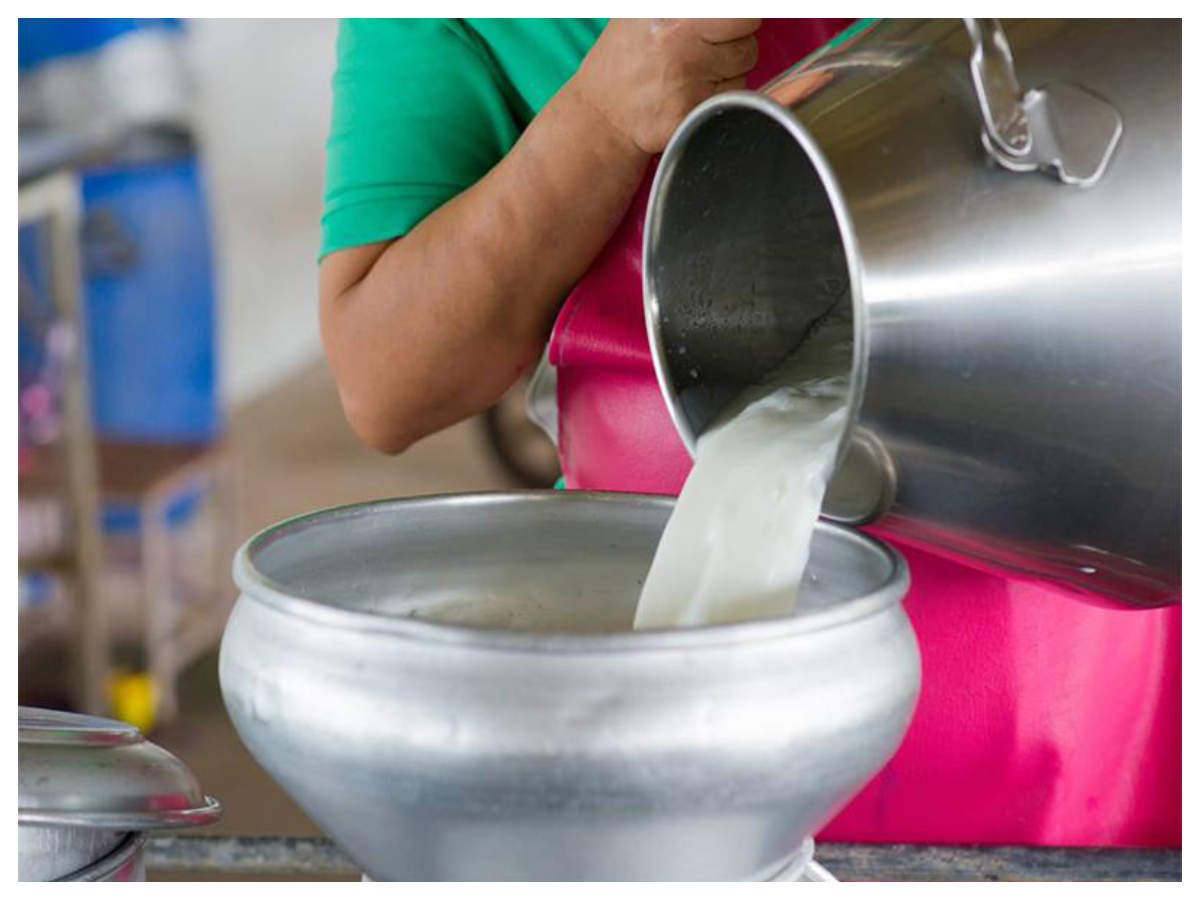
Food Safety team raids illegal wholesale units of Momos

Momos found kept in unhygienic and insanitary conditions at a residential house in Gorkha Nagar, Jammu during a raid of Food Safety team.
JAMMU, May 25: Consequent upon the receipt of numerous complaints regarding quality of veg and non-veg Momos available in the market, a team of Food Safety headed by Commissioner of Food Safety, J&K Government, Vinod Sharma paid a surprise visit at Gorkha Nagar, where these momos are cooked on whole sale and distributed to various food vendors.
During the inspection, it was found that almost all the cooking premises were mainly established in the residential houses of the people at Gorkha Nagar, Jammu, wherein samples of prepared momos, sauces and raw materials used for preparations of Momos were lifted and sent to the Food Testing Laboratory for detection of adulteration.
Commissioner directed the food business operators to obtain licenses of their food establishments from FSSAI, improve the infrastructure and maintain hygiene at all levels to avoid cross contamination. Further, he warned all the food vendors not to prepare unhealthy Momos otherwise legal action shall be initiated against them.
He directed concerned officers to deal with violators stringently as per norms laid down under Food Safety and Standards Act 2006, not to compromise on unhygienic conditions and maintain sanitation in and around the cooking premises. He also advised public to check each and every eatable before consuming.
Later, the team also inspected the food establishments situated at Gole Market and Gandhi Nagar and passed the directions to food vendors to improve the basic infrastructure as well as hygiene level. The team also inspected food vendors at Miran Sahib, lifted samples of bakery and pastries to the Food Testing Laboratory for detection of adulteration.
The team was comprised of Assistant Commissioner, Food Safety, Municipal Limits Jammu, Dr Parvesh Kumar and other Food Inspectors.

May 25, 2019

DINAKARAN NEWS


FSSAI discontinues 14 state food testing labs which do not have NABL accreditation

New Delhi, May 24 (KNN) The Foods Safety & Standard Authority of India (FSSAI) has decided to discontinue as many as 14 State Food Testing Laboratories which do not have NABL accreditation.
The National Accreditation Board for Testing and Calibration Laboratories (NABL) is a Constituent Board of Quality Council of India. Laboratory accreditation is a procedure by which an authoritative body gives formal recognition of technical competence for specific tests/ measurements, based on third party assessment and following international standards.
In a notification, FSSAI said, “In the last 2 years, FSSAI has repeatedly requested States/ Union Territories for initiating NABL accreditation process and submit an undertaking in this regard..”
The food watchdog had warned that in case the laboratories fail to do so, “respective laboratories shall be discontinued as food laboratories under Section 98 of FSS Act, 2006.

May 23, 2019

DINAKARAN NEWS


DINAKARAN NEWS


DINAKARAN NEWS


DINAKARAN NEWS


Food Safety Check


Avoid adulterated edible oil, says food safety dept

Trichy: The food safety and drug administration department has warned consumers not to fall prey to poor quality edible oil just because it is sold on the cheap, saying it is mostly made without following prescribed norms . 
Random searches by food safety officials on some of the oil mills manufacturing edible oils revealed traces of malpractice of adulterating sesame oil and groundnut oil with palmolein oil.
“Palm oil is mixed with sesame oil and groundnut oil. Unaware of the adulteration, people buy them because it’s cheap. People should avoid inferior and unhealthy products and obtain oils from reputed mills because palm oil will cause several health complications particularly heart related ones,” designated officer (DO), food safety and drug administration department Dr R Chithra told ToI on Wednesday.
Acting on a tip-off, the team led by Chithra visited an oil mill in Musiri on Tuesday. The team found packets filled with adulterated sesame and groundnut oil. The adulterated sesame oil or groundnut oil will have 70 % of palm oil, said DO Chithra. The violators add an essence to the palm oil to give the flavour of sesame oil and groundnut oil.
The food safety department has no idea as to what is the name of the essence. Food safety officers say that the traders are well aware of the loopholes to bypass the rules. A food safety officer said he had seen a private oil mill misbranding the oils in Musiri in 2018.
Instead of selling the adulterated oils in the name of sesame oil or coconut oil, they cheat consumers using small fonts on the pack. They print cooking oil in bold letters on the packet while say they have mixed it with palm oil in small fonts which cannot be easily noticed.
In Tamil, they print Nalla Ennai instead of Nallennai for sesame oil. For groundnut oil, they use picture of the groundnut without mentioning the name. Though they have been receiving complaints, they are yet to take a full-blown action on them.
Though mixing palm oil in other oil is permitted in FSSAI, the manufacturers deliberately avoid mentioning the ratio of blending on the label to sell oils for high price. Whatever may be the rules, the doctors suggest avoiding the use of palm oil in any quantity.
Interventional cardiologist Dr Kader Sahib Ashraf at Apollo Speciality Hospitals in Trichy was of the view that any oil consumed in excess quantity will take its toll on the cardiac system. “I would suggest intake of mustard oil and olive oil which won’t be harmful if taken in limited quantity. In general, the consumption of adulterated oil will no way good for heart,” he said on Wednesday.

51 Quintals of Mango Destroyed At Fancy Bazar Fruit Market In Guwahati, 2 Nabbed

GUWAHATI: The sleuths of the Food Safety Wing seized 51 quintals of mango and destroyed them at Fancy Bazar Fruit Market in Guwahati on Tuesday, besides nabbing two West Bengal-based traders. Three other traders, however, fled the scene.
It looks like an ordinary incident, but it is not as the crime involved in it has a direct bearing on human health, involving dreaded diseases like cancer.
The mangoes seized were artificially ripened ones. Ripening agents, when pricked to fruits, speed up the process of their ripening. These agents are particularly unsaturated hydrocarbons like acetylene, ethylene, etc. However, a chemical known as calcium carbide (CaC2) is the most commonly used one for artificial ripening of fruits. This chemical is only allowed for industrial use. The use of calcium carbide in fruits is banned in accordance with the Food Safety and Standards Act 2006. The Act is to consolidate the laws relating to food and to establish the Food Safety and Standards Authority of India for laying down science-based standards for articles of food and to regulate their manufacture, storage distribution, sale and import etc.
Consumption of artificially ripened fruits may lead to diarrhoea and vomiting. Prolonged consumption of fruits ripened by calcium carbide may lead to cancer in the alimentary canal.
The two nabbed West Bengal-based traders – Niranjan Roy and Sheikh Nurul Islam – have been handed over to Fancy Bazar police outpost.

May 22, 2019

DINAKARAN NEWS


DINAMANI NEWS


DINAKARAN NEWS


DINAKARAN NEWS


DINAKARAN NEWS


DINAKARAN NEWS


Street Food Checked


Sweets firm under health dept lens

Jaipur: A sweets and snacks producing firm’s manufacturing unit at MD Road and retail unit at Raja Park were raided by the food safety wing of health department on Tuesday, wherein it was found that they were using tanker water for preparing the edible items. The food safety team also found that the food items were being prepared in unhygienic conditions. 
However, the major offence of the firm was that it was functional without procuring any licence from the health department. “The owner was preparing sweets and namkeens (snacks) at the MD Road unit and he was selling it from his outlet at Raja Park. But, when we demanded food licence from him, we found that he did not procure it. For producing and selling food items, one should have food licence. If anyone is doing so without a licence, it is a violation of the Food Safety and Standards Act,” said Dr Sunil Singh, nodal officer, food safety, health department.
They have also served notice to the firm for improvement. The firm has been served with a notice under section 32 of the Food Safety and Standards Act, 2006 for improvement and for not producing food items until it improves and obtains a licence. 
Besides, the food safety team also found that the firm was allegedly using sodium hydro sulphite, which is a non-edible item, in preparation of snacks and sweets.
Also, the team found ingredients’ packets such as coriander powder, which were past their expiry dates. The floor of the kitchen was broken and there were spider webs on walls of the kitchen, making it an unhygienic place for preparing food.

May 21, 2019

DINAKARAN NEWS


DINAKARAN NEWS


DINAMANI NEWS


DINAKARAN NEWS


FSO imposes fine of Rs 2.32 lakh

JAMMU, May 20: Food Safety Organisation (FSO), J&K has imposed fine of Rs 2,32,500 on the violators of different provisions of Food Safety and Standards Act, 2006 Rules and Regulations, 2011 in Srinagar district.
Prosecutions have also been sanctioned against the various Food Business Operators of the State which include M/S Delhi Special Eating Point, Udhampur, M/S Future Retail Ltd., Talab Tillo Jammu, M/S Shubham Goldiee Masala Pvt. Ltd, Kanpur, U.P., M/S Raja Kiryana Retail Shop, Sunderbani Rajouri, M/S Jai Bua Datti Enterprises, Sunderbani Rajouri and M/S Bikanervala Foods Pvt. Ltd., Greater Noida for selling, manufacturing, storing, distributing articles of food which have been declare as unsafe by the various food testing laboratories.

Sell organic produce without certification till 2020, don't use 'Jaivik Bharat logo': FSSAI tells farmers

The Jaivik Bharat logo is an identity mark to distinguish organic products from non-organic ones
Food safety regulator FSSAI has permitted small organic producers, having an annual turnover of over Rs 12 lakh, to sell their produce directly to end consumers without certification till April 2020, but will not be able to use 'Jaivik Bharat logo' on their products, a latest report says.
The Jaivik Bharat logo is an identity mark to distinguish organic products from non-organic ones.
A similar relaxation has been given to 'aggregators' having an annual turnover of Rs 50 lakh. However, the organic food retail firms have to comply with the certification norm.
Under the 2017 organic regulation, sale of organic produce directly to end consumer has been allowed only with the certification of the National Program for Organic Production (NPOP) and Participatory Guarantee System (PGS) India.
In its latest order, the Food Safety and Standards Authority (FSSAI) said the norms were relaxed after it examined several representations regarding challenges faced in the implementation of regulations by organic food business operations including small original producers.
"One of the challenges is that there are a large number of producers and producer organisations in the country who are not certified under any of the two systems of certification. Efforts are currently underway for simplification of PGS-India to make it small producer friendly," it said.
To build confidence in small producers, the regulator has said "...these regulations may be considered as 'enabling regulations' and not be considered for prosecution particulary for small original producers and producer organisations during initial phase of its implementation till April 2020".
The self certification of turnover of small organic producers and aggregators will be considered, the FSSAI said.
However, the state food safety officers have been asked to see if the limits of contaminants and insecticide residue as per the regulations are being followed. They have also been asked to see any misuse of this provision.

May 20, 2019

DINAKARAN NEWS


DINAKARAN NEWS


DINAKARAN NEWS


DINAKARAN NEWS


DINAKARAN NEWS


DINAKARAN NEWS


DINAKARAN NEWS


DINAKARAN NEWS


BIS inspection to be held at KWA’s bottled water plant

Thiruvananthapuram: ‘Thelineer’, the bottled water plant project of the Kerala water authority at Aruvikkara will soon become a reality. Inspection by a team from Bureau of Indian Standards (BIS) will be held on Tuesday. 
The certificates of BIS and Food Safety and Standards Authority of India are required for the commissioning of the plant that can generate bottled water of a total capacity of 7,500 litres per day. 
KWA has also begun works for production of pet bottles. Tender for this work was delayed due to election model code of conduct. 
‘Thelineer’ is expected to be launched in 500ml, 1 litre, 2 litre bottles and 20 litre cans. The rate of 500ml bottle will be Rs 10, while 1 litre bottle will cost Rs 15. 
KWA has proposed a revenue sharing model for running the plant. The revenue sharing model, which is waiting to get government nod, aims at giving 12% of the profit to private parties which will operate the plant and market the product. Under this model, the contract will be given in a competitive tender.
The bottled water project in Aruvikkara was originally planned in 2006. KWA amended the Kerala Water Supply and Sewerages Act for the project in 2008. 
The administrative sanction for the project was given in October 2013. Due to delay in awarding the project, the CAG report of 2013 had criticized KWA for its laxity to implement an income generating project.
After failing to get bidders, KWA spilt the project into civil, electrical and electronic segments for convenience of tender. The work began in 2015.

May 19, 2019

DINAKARAN NEWS


Health Wise


Milk and milk products topmost unsafe food item in Delhi

Milk and milk products topmost unsafe food item in Delhi
If you are in Delhi, you might want to steer clear of dairy products, for now, that is if you wish to avoid a health risk.
A recent report suggests that milk and milk products sold in Delhi are more likely to be unsafe for consumption, according to the food safety department.
Here are more details about the report.
Details: Out of 2,880 samples, 477 failed quality testing
A report published in Hindustan Times revealed that out of the 2,880 samples, packaged and freshly prepared, that were quality-tested by Delhi's food safety department, 477 failed.
The quality tests were conducted between January 2018-April 2019.
The 477 failed samples comprised 144 substandard samples and 90 that were unsafe.
Most samples failed tests due to misbranding (nutritional information omitted or printed wrong).
Fact: Milk products accounted for 161 of 477 failed tests
161 samples of the 477 failed tests were milk or milk products, the Hindustan Times report revealed. Out of those, 21 products were misbranded. 125 samples were found to be substandard, while 15 other products were marked unsafe for consumption.
Quote: Samples usually fail due to naturally low fat, solids content
"Usually, milk samples fail to meet standards because the fats or solids-not-fat content is less than standards mentioned in the act. Sometimes cows produce milk that is not up to standards," a Delhi health department official told HT.
In 2017, FSSAI reduced the standards for required fats and 'solids-not-fat' quantity to avoid failing samples with naturally low levels as it's not detrimental to health.
Fact: What's the difference between substandard and unsafe?
"A food is considered substandard when the nutritional level is not as per standards," a senior official from Delhi's health department stated. "Misbranded products and substandard products attract fines. But foods that are unsafe can damage health, and the manufacturers are fined and risk imprisonment."
Quote: Here's how you can guarantee you get safe milk
"To guarantee you get safe milk," founder of dairy sector consulting firm, Suruchi Consultants, Kuldeep Sharma suggested, "ensure that the package is intact, check the best before date, and see whether it was kept in a refrigerator in the store."
Sharma also stated that some adulterants, like sugar or glucose, are not harmful, while others, like soda or hydrogen peroxide, can make milk unsafe.
Other survey: FSSAI 2018 survey found 90% milk across India safe
Notably, a survey conducted by the Food Safety and Standards Authority of India (FSSAI) last year found milk across India to be "largely safe, even though quality issues persist."
According to the National Milk Quality Survey, 2018, tested 6,432 samples on a number of parameters and found that a little less than 10% of the samples (638) had contaminants making milk unsafe for consumption.
Fact: 2018 survey spanned 1,100 towns across 29 states, 7 UTs
The 'National Milk Quality Survey, 2018' was conducted in 1,100 towns across 29 states and 7 union territories and 1,100 towns over six months (May-October). However, the survey never specified which part of the country the adulterated samples came from.
Punishment: Punishments for violating food safety regulations
Anyone selling unsafe foods, which haven't caused harm, could face imprisonment for six months with a Rs. 1 lakh fine.
Causing injury extends prison term to six years with a fine of Rs. 5 lakh.
In case of death, the punishment could extend to imprisonment not less than seven years (may extend to life imprisonment) with at least Rs. 10 lakh as fine.

May 18, 2019

DINAKARAN NEWS


DINAMANI NEWS


DINAKARAN NEWS


Veggie eggs are coming to your breakfast table


2 tonnes of gutka products seized

Trichy: A team from the food safety and drug administration department seized two tonnes of banned gutka products worth Rs 3 lakh from two shops in the city during a surprise raid conducted on Friday. 
The team, led by designated officer Dr R Chithra searched the shops in the Big Kammala Street on Friday morning. The officials found five different brands of banned gutka products stashed away in two shops in the street. 
According to the shop owners, they brought the banned items from Karnataka by buses, trucks and trains to Trichy and other districts.
The shop owners told the officers that their main trade was to sell the products to retailers and wholesale traders. The owners were also taken to the office of the food safety and drug administration department for inquiry where food safety officers (FSOs) MA Mariappan, A Muthuraja and Stalin Prabhu grilled them. 
The officials took samples from the seized items and sent them for testing to the food analysis laboratory.
Action will be initiated against the shop owners once the lab reports come.

Corpn destroys 500kg mangoes ripened by spraying ethylene

Trichy: Despite the warning against spraying ethylene directly on mangoes for ripening, traders in the city continue to break the rule and use the hazardous method of spraying the chemical directly on the fruit. The food safety official seized 500kg of illegally ripened mangoes from the Gandhi market on Thursday.
The food safety and drug administration department has intensified its vigil as the mango season is at its peak. The team led by its designated officer (DO) Dr R Chithra visited the Gandhi market in city on Thursday.
The team found out that the traders spraying ethylene directly on raw mangoes in their godowns in the market. The officials also pointed out the texture of the mangoes that were in direct contact with ethylene.
The major portions of the mangoes were seized from two godowns. The seized mangoes worth Rs 30,000 were destroyed at the dump yard of Trichy City Corporation at Ariyamangalam on Thursday evening.
The food safety and drug administration department had asked the traders to use ethylene gas to ripen the mangoes till last year. But the traders violated the producers and covered the mangoes with ethylene sprayed sheets making the fruit harmful.
As in the case of carbide stones, mangoes having direct contact with ethylene will also cause health hazards. The onus is now on the food safety department to tackle the violation in the use of ethylene for ripening mangoes.
From this year, the department has devised a new method with the help of the agriculture department that a sachet of ethephom can be used for ripening mangoes without touching the fruit. The sachet, dipped in water, should be kept in a box near mangoes for 24 hours for the raw mango to turn into a fruit.

Cooked food stored for next day seized from restaurants

Trichy: Eating-out during weekends remains one of the few options for the city folk to get away from their routines. But, the latest raid by the food safety and drug administration department on a few restaurants in the city exposed the unhygenic conditions prevailed in the eateries and the quality of food there.
As a part of a routine search, the team carried out checks at the restaurants in Cantonment area on Thursday. The quality check at a restaurant in the area unearthed cooked mutton, chicken, rice and parotta stored in a freezer.
“We got information that many non-vegetarian restaurants were using old and stale meat. During our raid, we found cooked food stored in a freezer to be used for the next day. They are preparing fast food items with the meat and supplying it to the customers unmindful of the health hazards,” designated officer (DO) of food safety department Dr S Chithra said.
The search continued in eight shops in the area and the team seized more than 15kg of meat kept in the cold storage. The food safety officials (FSOs) said that they found old meat in all the shops. “Hence, we are advising people to check their food before consuming it,” said Chithra.

Jehangir hosp fined ₹1 L for violating food safety act

The hospital has admitted its mistake and deposited the penalty, says will seek further approval at the earliest
After a patient had found bloody cotton swabs in the soup served to her at Jehangir Hospital, the Food and Drug Administration (FDA) has initiated adjudication process against its canteen and slapped a fine of Rs 1 lakh for violating the Food Safety and Standards Act, 2006, and Food and Safety Standard Regulations, 2011. Earlier, a notice was issued to the canteen after FDA officials visited the facility to inspect after a complaint was lodged. Meanwhile, the hospital has paid the fine and claims that the FDA has marked their kitchens clean and hygienic.
Earlier this month, Mahesh Satpute had complained to the FDA about the cotton swabs incident. Satpute had immediately reported the matter to the senior management, which had allegedly brushed it off. It prompted him to file a complaint with Koregaon Park police station and also convey the matter to the FDA and Pune Municipal Corporation.
Suresh Deshmukh, joint commissioner of FDA, Pune region, said, “Our team visited the hospital canteen facility the next day and inspected the place. We received the complaint from Satpute but we were unable to find any clues or any proof. However, we found other provisions of the food safety acts which were not fulfilled by the facility.”
An improvement notice was issued on the basis of the inspection and an application was filed for adjudication as per the Food and Safety Act, 2006.
Hospital officials agreed that provisions of the food safety norms were violated by them and a penalty of Rs 1 lakh was imposed. “Providing good and healthy food is the responsibility of the canteen operators and they should mandatorily follow it or face action,” added Deshmukh.
The official spokesperson of Jehangir Hospital told Mirror, “FDA has given us a clean chit for the hygiene and cleanliness of the kitchen. However, they have made some other observations. They have levied Rs 1 lakh fine for these issues and we have paid the same to them.
The observations have now been closed and we will be doing the needful by sending photographic records to the FDA so that they can validate our premises as per their norms. We would again like to reiterate that the hospital kitchen is hygienic and clean and there are no compliance issues.”
FDA had inspected the hospital canteen after bloodied cotton swabs were found in a patient’s soup