
Jan 11, 2018

Dietetics: Food safety norms not followed in state
PATNA: Bihar Dietetic Association (BDA) on Wednesday said people of the state were forced to consume substandard food as there was no regular inspection against adulteration in Bihar.
The association members alleged that the Combined Food and Drug Laboratory at Agamkuan in Patna to check food adulteration has been non-functional for the past many months. "Nobody checks if the norms for food safety are being followed by vendors or the companies that provide processed food in the state," said association's secretary Sudhakar Mishra. The samples from Bihar, he claimed, are sent to Kolkata for test.
Mishra requested the state government to get regular inspections conducted by the health department's food safety wing to ensure that the companies with the licence to manufacture processed food were selling items as per standards fixed for them.
Talking to newsmen at a workshop conducted at Nalanda Medical College and Hospital (NMCH), he said, "People in India focus only on quantity and not on quality of the food they consume."
The association, he said, wants to ensure that the food being consumed is checked for adulteration.
Sources in the food safety wing said there were only 14 food safety officers for 38 districts in the state. The official also said although the laboratory faced problems in the past as well, it had been functional for the past six months with regular inspections being carried out for adulteration. "The allegations are not true," an official said.
Food safety inspector Mukesh Kashyap, when asked about routine inspections, said as per the norms followed by the food safety wing, every food safety officer collects 10 samples from different areas every month for routine inspection. "Inspections are also carried out extensively during festive seasons," said Kashyap.
FDA warns Mumbai McDonald’s outlet over food hygiene
HardCastle Restaurants, which runs the McDonald's franchise in Southern and Western states said they are looking into the matter seriously.

According to the Food Safety Standards Act, hotels and restaurants should see to it that the kitchen conditions, as well as the cleanliness and hygiene of the chefs should be of good standard. (Photo: PTI)
Mumbai: The state Food and Drug Administration (FDA) has warned popular quick service restaurant McDonald's as one of its outlets in the central region of the city has allegedly breached food safety standards.
The FDA had reportedly conducted a "surprise check" on the McDonald's outlet in High Street Phoenix at Lower Parel for alleged violation of the Food Safety Standards Act, by cooking in unhygienic conditions, and for not displaying its licence copy prominently.
They subsequently sent a warning notice to the restaurant chain, saying if the conditions were not improved over the next 15 days stern action will be taken.
HardCastle Restaurants, which runs the McDonald's franchise in the Southern and Western states said they are looking into the matter seriously.
"As a part of a routine investigation we have received some queries from the FDA. We have already submitted our response to the points raised," the company said in a statement on Wednesday.
According to the Food Safety Standards Act, hotels and restaurants should see to it that the kitchen conditions, as well as the cleanliness and hygiene of the chefs should be of good standard.
Could a meal at Mcdonald’s cost us our health?

Will a meal at Mcdonald's cost us our hygiene?
MUMBAI: The state Food and Drug Administration (FDA) has warned the popular quick meal restaurant McDonald’s as one of its outlets in the central region of the city has allegedly breached food safety standards.
The FDA reportedly conducted a “surprise check” on the McDonald’s outlet in High Street Phoenix at Lower Parel for alleged violation of the Food Safety Standards Act, by cooking in unhygienic conditions, and for not displaying its licence copy prominently.
They subsequently sent a warning notice to the restaurant chain, saying if the conditions were not improved over the next 15 days stern action will be taken.
HardCastle Restaurants, which runs the McDonald’s franchise in the Southern and Western states said they are looking into the matter seriously.
“As a part of a routine investigation we have received some queries from the FDA. We have already submitted our response to the points raised,” the company said in a statement on Wednesday.
According to the Food Safety Standards Act, hotels and restaurants should see to it that the kitchen conditions, as well as the cleanliness and hygiene of the chefs should be of good standard.
Food carts go freewheeling


3 food inspectors for 1 crore Hyderabadis
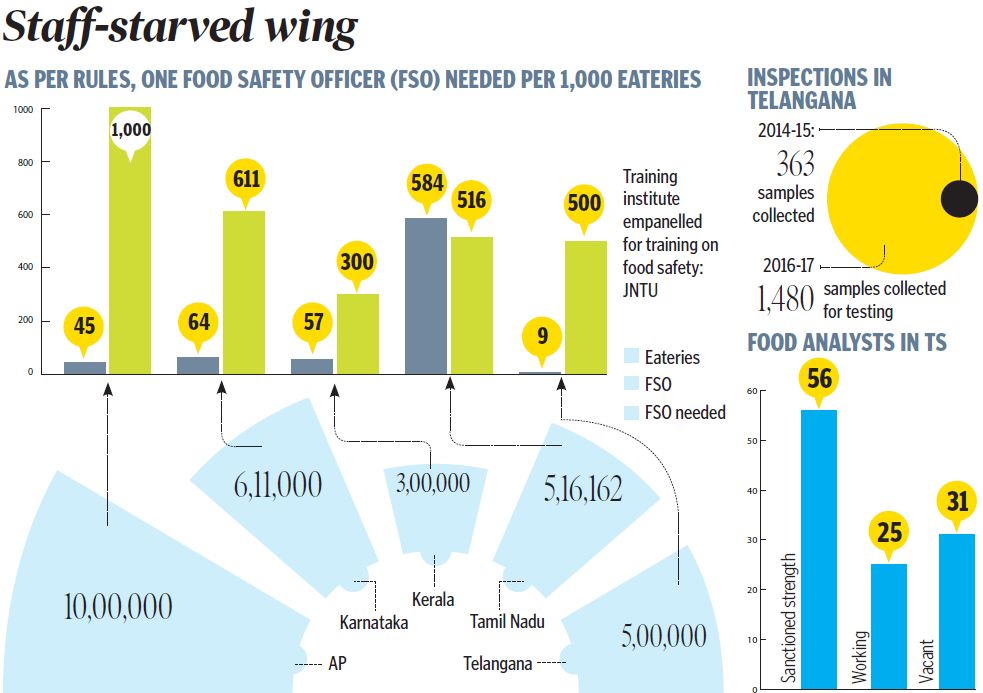
Hyderabad: Even as the Food Safety and Standards Authority of India (FSSAI) of the Central government has decided to regulate roadside eateries like the ‘thela bandis’, Hyderabad neither has proper staff nor the equipment to test samples of the products sold on bandis.
The FSSAI wants even mirchi and dosa bandis should obtain clearance from the health department but this is easier said than done since the government does not have any staff to either issue clearance certificate or enforce compliance of the mandatory.
It is hard to believe but there are only three food inspectors for Hyderabad’s population of one crore and there is only one state-level food laboratory where too few staff chase too many samples of food items that are sent to it not only from Telangana but also from AP.
As testing samples is taking a long time, the roadside eateries from where the samples are obtained should remain shut, robbing the livelihood of the vulnerable sections who set up such outlets. After analysis, if a sample is found to be harmless, it would not come as a great news for the eatery wallah since by then he would have lost valuable business.
A two-day meeting of the Health Ministers of the country is underway in New Delhi organised by FSSAI. During the first day, it was decided to regulate the roadside eateries, which serve mirchi bhajji, pungulu, dosas, idlis and other food items.
It has been decided to regulate the roadside eateries by making them to register with FSSAI. The objective is to ensure quality in all types of food businesses and also to promote a healthy society. The organisation proposed to make the application, supervision, complaints and other issues online. As per the proposal, there should be one health inspector for every 1,000 food units.
However, at the ground level, the situation is far from encouraging. There is no proper supervision by the authorities. The officials have no idea as to how many such eateries exist in Hyderabad. In Greater Hyderabad alone, where the population is about one crore, there are only three food inspectors and the number of inspectors needed is at least 30, which is one per a circle. The official said that on an average they get 25 to 30 complaints in a month of stale food being sold by restaurants.
“When we raid the food joints, we find the place unhygienic and we impose penalties, book cases and send samples for tests,” said the official. The official said that there is one recognised lab (State Food Laboratory) and it is burdened with samples from other states too. Once a 300-member institution now has only 30-odd staff testing hundreds of food samples every month.
For a report, which can be submitted within 14 days, it is taking over two months. The delay in bifurcation of the laboratory between Telangana and AP is also burdening the laboratory. Since the State Food Laboratory is in the Tenth Schedule and remains common for both the Telugu states.
According sources, during the last nine months the lab received over 4,400 samples from both the states. The FSSAI has proposed to give funds to the state government for setting up of food safety and standards authority in the state and wanted it to be autonomous. The organisation would help in having mobile testing units with necessary equipment to check adulterations. It also envisages to bring awareness among the businessmen on the importance of maintaining quality and hygienic food.
Jan 10, 2018


Telangana to have foolproof nutritious food system
The health authorities have decided to adopt a seven-point charter to address issues that have impeded food safety
Hyderabad: For the first time in Telangana, the State government is set to implement a broad framework aimed at putting in place a fool-proof mechanism for safe and nutritious food for all.
To this effect, the health authorities have decided to adopt a seven-point charter to address issues that have impeded food safety and put in place a robust food control system at the State-level.
Participating in a round table meeting of State Health Ministers in New Delhi organised by Ministry of Health and Family Welfare and Food Safety and Standards Authority of India (FSSAI) on Tuesday, Health Minister, Dr. C. Laxma Reddy said the State government is committed to improve food safety and very soon these measures will be grounded.
Recognising the need to improve infrastructure, the State government has decided to upgrade State Food Laboratories (SFL) by roping-in manpower and equipment and get certification from National Accreditation Board for Testing and Calibration Laboratories (NABL).
The SFL will become part of the Indian Food Laboratory Network (InFoLNet) to ensure seamless flow of information and in the process instil confidence among public and food business.
Among the many decisions, the authorities have also decided to tap into the available funds with Ministry of Health and Family Welfare to upgrade the SFLs. The authorities will procure major lab equipment, set up microbiology laboratory and renovate infrastructure at a cost of Rs 10 crore.
In addition to all this, authorities will also utilise resources to start mobile food testing laboratories dubbed as ‘Food Safety on Wheels’ with a cost of nearly Rs. 40 lakh and an additional Rs. 5 lakh every year towards petrol and oil expenses.
The authorities have also decided to address the issue of micro-nutrient deficiency by adopting fortified staples like rice and flour with iron and iodine in mid-day meal scheme and in Integrated Child Development Scheme (ICDS). In due course, activities like promoting organic food, launching campaign with focus on youngsters to adopt a healthy lifestyle.
Telangana sets focus on food safety

To come up with online Food Licensing and Registration System; to launch special drives to identify unregistered eateries
Hyderabad: The heath authorities here are set to introduce an online Food Licensing and Registration System (FLRS) where Food Business Operators (FBOs) i.e. eateries can apply online for licenses and registration.
It is mandatory for persons who operate food business to apply for license and registration under Food Safety and Standards Authority of India (FSSAI) Act, 2006. However, it is a fact that there are many eateries that operate their business without registration and license.
In the round-table on Food Safety held in New Delhi, Health Minister Dr C Laxma Reddy said the process of integration of payment gateway and online licensing system to implement FLRS was under process and very soon it would be completed. To bring in more food business operators under the umbrella of FSSAI, the authorities also want to issue license and registration within 30 days of receiving an application.
The authorities have also decided to launch special drives to identify unregistered FBOs and conduct more inspections through food safety officers who from now on are required to maintain a database of eateries that are operating in their jurisdictional areas.
Web-based sampling system
In another major initiative to improve food safety, the health authorities have decided to adopt a web-based mobile application ‘Food Safety Compliance through Regular Inspections and Sampling (FoSCoRIS)’ that can be used in mobile devices, tablets and desktops.
The app will essentially replace manual inspection that is carried out by the food safety officers and serve as an empowering tool for data collection, monitoring and data analysis.
These officers will carry out inspections with their handheld devices, capture images and upload the inspection report while Food Safety Commissioner will be able to monitor live update of the inspections that are being carried out at the ground level.
The Food Safety Commissioner will also be able to view details of the officers conducting inspections, geographical location, food premises being inspected etc. They would also be able to draw inspection plans on FoSCoRIS itself and assign inspections to the officers on the field. The status of inspections assigned and inspection reports submitted can also be monitored.
Framework to promote safe eating habits in children
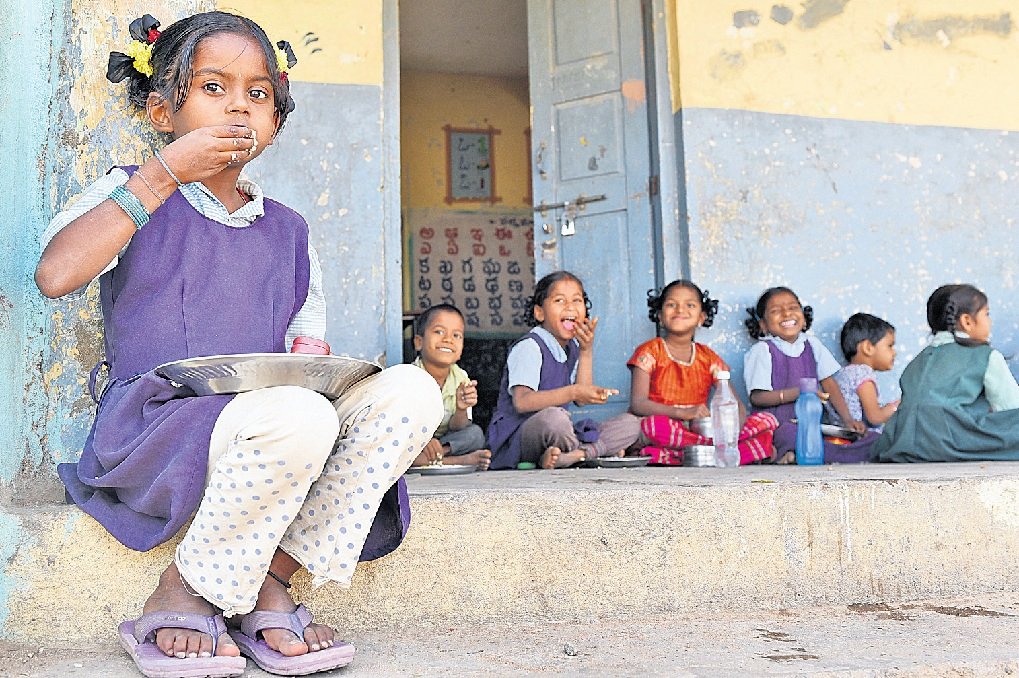
To bring social and behavioural changes towards eating habits, especially among children, the State health authorities have decided to adopt Safe and Nutritious Food initiatives in schools.
With the double burden of under-nutrition and increasing childhood obesity, authorities want to target children and encourage them to develop healthy and safe eating habits early in life.
To encourage food safety, hygiene and consumption of nutritious food among schoolchildren, authorities will collaborate with Food Safety and Standards Authority of India (FSSAI) to come out with a framework to promote safe and wholesome food eating habits in schools.
Essentially, it will deliver and reinforce the message of safe and nutritious food through both curricular and co-curricular activities and create Health and Wellness Coordinators and teams in schools.
According to officials here, FSSAI has already created scientifically and technically accurate content for inclusion in the curriculum. It has also come up with a Teacher’s Training Manual to equip teachers with necessary information on food safety.
Release funds for AIIMS, Minister to JP Nadda
Health Minister Dr C Laxma Reddy on Tuesday met Union Minister for Health and Family Welfare JP Nadda and requested him to expedite the long-pending All India Institute of Medical Sciences (AIIMS) project in Telangana.
Reddy met Nadda on the sidelines of a round-table meeting of State Health Ministers on Food Safety in New Delhi and urged him to release funds that were meant to establish AIIMS in the State. He also requested to release the funds that were set aside by the Union Ministry of Health to improve mother and child health in the State.
During the meeting, he reminded the Union Minister that the Centre had promised AIIMS for Telangana in the last year’s budget but so far funds were not released to launch the much-awaited project.
According to health officials, Laxma Reddy also drew Nadda’s attention towards the proposed medical colleges in Mahabubnagar, Siddipet, Suryapet and Nalgonda and urged him to allocate funds for the colleges.
FSSAI urges states to use its book on eating right in schools

Food regulator FSSAI has urged the states and Union territories to advise their school education boards to use the 'Yellow Book', aimed at children detailing how to eat right, in school curriculum.
The book was brought out by the Food Safety and Standards Authority of India (FSSAI) in September last year, and has been launched in three categories for children in the age group of 4-7 years, 8-12 years and 13-17 years.
It covers a range of topics — from food safety practices, personal hygiene and cleanliness habits and eating a balanced diet, to packing a wholesome lunch-box. It also lays emphasis on preventing nutritional deficiencies and making healthy choices.
The book includes useful tips and interesting activities for school children. It can be used independently as a guide, as well as an activity book in conjunction with the existing curriculum in schools.
"State governments and Union territory administrations are requested to advise the school education boards to use the Yellow Books in their curriculum while delivering inputs related to safe and wholesome food," the FSSAI said in a letter to the states and UTs.
"The existing curriculum maybe reviewed based on FSSAI's content, gaps identified and a holistic review undertaken to ensure messaging is not fragmented and is appropriate and correct," it said.
The book has been developed after discussions with various education boards such as CBSE, NCERT, state education boards, nutrition and education experts.
Besides, the FSSAI has also launched 'Pink', 'Purple' and 'Orange' Books which consists of information on food safety and nutrition for Indian households, restaurants and employees in organisations.
"The Pink Book has practical tips and information about food safety and nutrition that Indian households need on a daily basis. In India, most people still eat food that is cooked at home. Thus, behavioural changes about food safety and healthy nutrition should ideally begin at home," a senior official said.
"Most people do not have access to food safety experts and nutritionists. Thus, most of the homemakers are at the mercy of multiple and often conflicting sources of information on safe food and nutrition. This initiative of FSSAI is aimed at filling in this gap," he said.
The Orange Book is all about safe and nutritious food for employees while the Purple Book contains food standards and practices to be followed by restaurants.
Artificially ripened papayas seized in Visakhapatnam

The team, led by DSP C.M. Naidu, conducted the raids following repeated complaints.
Officials of the vigilance and enforcement in association with food safety officials raided a fruits godown and seized four tonnes of artificially ripened papayas at Seethampeta area in Vizag city.
Visakhapatnam: Officials of the vigilance and enforcement in association with food safety officials raided a fruits godown and seized four tonnes of artificially ripened papayas at Seethampeta area in Vizag city. The team, led by DSP C.M. Naidu, conducted the raids following repeated complaints from the public that many traders in the city were using chemicals to ripen papayas and bananas, turning the fruits hazardous.
Mr Naidu said the accused, K. Srinivasa Rao, is running a six-tonne godown. For the past few years he has been supplying artificial ripening pa-payas to outlets in the city. “Our raids revealed that Srinivasa Rao has been using Ethephone, an insecticide, to ripen papa-yas,” said food inspector S. Janardhana Rao. “Eating fruits, which are artificially ripened, will put the consumer at risk with mouth ulcers, gastric problems and rashes,” he added. “We have seized the god-own and registered a case against Srinivasa Rao un-der the Food Safety and Standards Act 2006. We have collected the samples and will send them to the laboratory in Hydera-bad and will file a charge-sheet against Srinivasa Rao later,” said the DSP.
FDA Notice to McDonald's for Poor Quality at Mumbai Outlet
The FDA had reportedly conducted a "surprise check" on the McDonald's outlet for alleged violation of the Food Safety Standards Act, by cooking in unhygienic conditions, and also not displaying its license copy prominently.
Mumbai: The state food and drug administration (FDA) has warned popular quick service restaurant McDonald's as one of its outlets in the central region of the city has allegedly breached food safety standards.
The FDA had reportedly conducted a "surprise check" on the McDonald's outlet in High Street Phoenix at Lower Parel for alleged violation of the Food Safety Standards Act, by cooking in unhygienic conditions, and also not displaying its license copy prominently.
They subsequently sent a warning notice to the restaurant chain, saying if the conditions were not improved over the next 15 days stern action would be taken.
HardCastle Restaurants, which runs the McDonald's franchise in the Southern and Western states said they are looking into the matter seriously.
"As a part of a routine investigation, we have received some queries from the FDA. We have already submitted our response to the points raised," the company said in a statement today.
According to the Food Safety Standards Act, hotels and restaurants should see to it that the kitchen conditions, as well as the cleanliness and hygiene of the chefs should be of good standard.
2nd phase registration for food-related units starts in Tirupur district
TIRUPUR: The Food Safety and Drug Administration (FSDA) started its second phase of enrolment camps for food business operators (FBO) in the district on Tuesday at CM Unavagam in Palladam. The enrolment drive would end on January 12.
The FSDA asked FBOs to use e-services, which was launched on Monday, for registration and for getting licences.
Till now, 65% of the 18,585 FBOs in the district have either registered or submitted applications for the purpose. "With the first phase of special enrolment camps held last month, Tirupur FSDA was able to increase the percentage of enrolled entities from 46% to 65%. The state food commissioner has fixed January 15 as the deadline to achieve 100% registration," said K Tamil Selvan, designated officer of Tirupur FSDA.
"For registration or to obtain licence, the FBOs could submit application at the common e-services centres (CSC) with the required documents and registration fees. The Food Safety and Standards Authority of India (FSSAI) started the online services for the purpose in Tamil Nadu on Monday," said Tamil Selvan.
As per the FSSAI norms, the food selling entities, from hawker to business class hotels, should pay Rs 100 as an annual registration fee if it has a turnover under Rs 12 lakh and 2,000 if the turnover exceeds Rs 12 lakh.
In case of the food manufacturing units, the registration fee is Rs 3,000 if the total production is less than one tonne a day and Rs 5,000 for 1-2 tonnes a day.
Earlier, the FSSAI wanted the FSDA to get all FBOs registered or obtained licences before the last year. But around 50% of the entities across the state were yet to enrol.
The enrolment would help the department to keep a tab on the quality of foods produced and sold in the FBOs. So, the FSDA was carrying out door-to-door campaigns to create awareness. "If the FBOs fail to come forward for registration, we would serve them with legal notices," Tamil Selvan added.
Food borne diseases cost India $28 billion a year: World Bank study
To reduce the economic burden, India needs to invest in ensuring food safety for the masses, says a study by World Bank and the Netherlands government
New Delhi: Food borne diseases cost India about $28 billion (Rs1,78,100 crore) or around 0.5% of the country’s gross domestic product (GDP) every year, revealed a study by ‘Food for All’ partnership of the World Bank Group and The Netherlands government.
To reduce the economic burden, India needs to invest in ensuring food safety for the masses. Indians are moving from simple staples to more nutritious food. While this should have positive impacts, according to the study, the transformation is currently leading to “risky foods”. “If no investments in food safety are made, there could be an adverse impact with potentially large costs due to increase in poverty and under-nutrition,” said Delia Grace, program manager (animal and human health, ILRI, in her presentation on Tuesday at a round-table meeting of health ministers from the states.
The study was conducted by Grace, Zuzana Smeets Kristkova, researcher at Wageningen Economic Research, and Marijke Kuiper, senior research economist at Wageningen Economic Research, Wageningen University, Netherlands.
The two-day round-table meeting, which was organized by the country’s food regulator Food Safety and Standards Authority of India (FSSAI), was chaired by union health and family welfare minister Jagat Prakash Nadda.
Ensuring safe food, said Grace, will eventually reduce child mortality. According to her, India should improve its food safety policy through coordination across the value chain, develop key infrastructure, such as cold chains, storage facilities, better testing capacity, crop protection, and animal health to improve food safety.
According to the ILRI expert, India needs to strengthen training and education across all levels of the value chain, ensure “faster collaboration” between governments, producers and consumers and embed food safety in nutrition programs (government schemes).
The health ministers from different states on Tuesday adopted a joint resolution with seven-point charter.
“Recognizing that safe, hygienic and healthy diet is key to preventive healthcare which is part of the first pillar of National Health Policy, 2017, the state health ministers agreed to improved convergence between National Health Mission and Safe and Nutritious Food campaigns initiated by FSSAI,” FSSAI said in a statement.
This would include using funds from the National Health Policy for strengthening of food safety systems in the states, integration of emergency response system under National Food Mission, added the FSSAI statement.
As part of the charter, the state health ministers agreed to support development of robust food standards and codes of practice for safe food, create a positive regulatory environment, establish a credible and robust national food testing system and address micronutrient deficiencies through government schemes and by promoting healthy dietary habits.
The state health ministers also agreed to build “culture of self-compliance amongst food businesses”. The ministers have also assured to focus on third-party audits, make enforcement transparent, standardized, predictable and fair by adopting digital compliance platform.
States must use NHM funds for food safety: JP Nadda
Nadda is Union minister of health and family welfare
NEW DELHI: In a bid to strengthen food safety systems in each state such as laboratories and enforcement infrastructure, states should use funds from National Health Mission (NHM), said the Union minister of health and family welfare, JP Nadda during a meeting with state health ministers and the Food Safety and Standards Authority of India.
"Central Government is providing support to the tune of Rs 482 crore for the states. As many as 45 state labs are to be strengthened. I request the states to come forward with the proposals or give us the plan for strengthening the laboratories," said Nadda adding that finance will not be a constraint and each state should have at least one government food laboratory of high quality.
Food borne diseases impose a huge economic burden on India amounting to as much as 0.5% of India's GDP or about $28 billion, according to researchers present at the meeting.
All state health ministers, present during the meeting, agreed to the use of appropriate curriculum content on food and nutrition in schools to promote healthy eating habits and build awareness. States will also launch sustained campaigns in cities, districts and states under the banner of Safe and Nutritious Food (SNF) to develop city, district and state-wide ecosystems and declare them smart food state, city or district.


Jan 9, 2018


For years, India’s food safety regulator has twisted rules to allow sale of unsafe processed food
The Food Safety and Standards Authority of India has disregarded the warnings of its own scientists and broken its rules to do so.

By 2025, Indians are expected to eat processed food valued at Rs 72 lakh crore annually, while the revenues of the country’s processed food industry have been forecast to touch Rs 60 lakh crore. To keep growing, India’s food processing industry constantly introduces new flavours and products. Between 2012 and 2015, the food processing industry tried to introduce nearly 4,500 products with completely new formulations.
But, as this two-part series reports, the Indian food safety regime has failed to keep pace with the rapidly growing industry. The first part of the seriesdetails recent Comptroller and Auditor General’s findings on how the authorities allowed the sale of food proven to be dangerous.
In December 2013, the Food Safety and Standards Authority of India, which is responsible for ensuring that the food sold in the country is safe for consumers, granted permission to a company called Pushpam Foods and Beverages to sell an energy drink called Restless Ginseng.
Just under a year later, scientists at the food safety authority gave senior officials a piece of information that is well-recognised in the rest of the world: that caffeine and ginseng, the two key ingredients in Restless Ginseng, make for a dangerous cocktail that could increase heart rate and blood pressure.
It took the authority seven months to react. It was only in June 2015 that it withdrew the no-objection certificate given to the company to sell the product. For a year and a half, the company was able to manufacture and sell a harmful product. Despite the authority’s action, Pushpam Foods continues to promote the drink on its website. The food safety authority has evidently failed to check whether the product has been withdrawn from the market.
As the Comptroller and Auditor General of India pointed out in a recent report, had the authority followed its own guidelines framed in 2011, products such as Restless Ginseng would not have been put in the market in the first place.
The guidelines required food companies to provide scientific evidence that their product is safe. Only after the authority’s scientists were satisfied was the product to be allowed into the market.
Diluting guidelines
Restless Ginseng was not an exception. Starting from 2012, the authority has diluted its regulations, bypassed established protocols and ignored warning from its scientists to allow the sale of more than 800 processed foods with new formulations without assessing their safety. Some of these are still on the market.
The authority enabled this, the CAG noted, by diluting the 2011 guidelines to give temporary one-year no objection certificates to products even before its scientists had examined them.
The dilution goes against the provisions of the Food Safety and Standards Act, 2006, mandating that only scientific panels can decide if a food product or food type is safe to consume.
The bureaucrats heading the authority can issue licences for food business operators to sell a product only after the scientists have approved it as safe.
Proprietary foods
Restless Ginseng is one of hundreds of products that are sold as proprietary or novel foods – new formulations of processed food products for which safety standards do not exist in the 2006 Food Safety and Standards Act that applies to all packaged foods. The 2011 guidelines were formulated to regulate such foods.
Among these foods that do not have pre-set safety standards under the law are energy drinks, salted snacks, noodles, soups and pasta. Also in this category are nutraceuticals – dietary supplements such as multivitamins that may improve health but do not treat a medical condition. Though such supplements might be sold by chemists, they are categorised as food, not medicine.
By 2020, the nutraceutical industry in India alone is expected to grow to Rs 26,000 crore, according to the Drug Marketing and Manufacturing Association.
CAG’s findings
When the CAG did a test audit of 50 proprietary food products approved for sale to consumers between 2012 and 2014, it found that even the diluted regulations were not followed.
In many cases, the authority did not send the product for scientific assessment even after giving it the temporary no-objection certificate. By April 2015, a note written by the authority’s chief executive in May 2015 shows, it had issued such certificates to over a thousand products but sent only 200 of them for testing.
In the case of at least four products, the authority continued to allow sale for up to 47 months after the scientists rejected them as unsafe.
For some products, the authority did not cancel the no-objection certificates in time. Sometimes when it did cancel the certificate, it allowed the sales licence for the product to stand.
The CAG highlighted the case of a company called Chemical International that had received a no-objection certificate to sell a mushroom-based nutraceutical in August 2012. A month later, the authority’s scientists asked for the product to be banned as the company had not submitted clinical data about its claimed health benefits. But the authority did not cancel the licence for the product.
In August 2013, the safety authority gave a company called Surya Herbal a licence to sell Sunova Spirulina tablet. But since the company did not provide scientific evidence of the tablet’s safety, the scientific panel cancelled the no objection certificate in August 2014. Yet, the company continued to carry the licence to sell the tablet till December 2017. It still promotes Spirulina tablets on its website, though it could not be ascertained if this is the same product that has been banned. The authority does not require companies to disclose such details on their websites.
Licence raj
In 27 of the 50 cases audited by the CAG, the authority’s product approval unit had recommended referring the items to its scientific panels for assessment. But this was not done. Instead, the authority issued no-objection certificates to all the products.
Restless Ginseng is probably not the only potentially harmful energy drink that the authority has allowed. The CAG said it was likely other companies besides Pushpam continue to sell drinks with the same dangerous concoction of ginseng and caffeine.
The authority has also granted the approvals arbitrarily. In January 2013, it allowed the Indian biotech company Biocon to market its nutraceutical tablet S-Adenosyl Methionine but denied permission to Sun Pharmaceutical Industries to sell the same product in August that year. Although Biocon’s product approval was withdrawn about a year later, the company continues to hold the licence to sell the nutraceutical till May 2020.
This arbitrary clearance system was struck down when challenged before the Bombay High Court and its decision was validated by the Supreme Court in 2015.
With the clearance regime banned by the courts, the sale of proprietary food products should have stopped until a new system was put in place. But, the CAG found, a month after the judgement of the Bombay High Court, the food safety authority issued “blanket instructions” to its licensing authorities to renew or continue all existing licences issued on the basis of the no-objection certificates it had already issued.
“Consequently, FSSAI permitted the indefinite manufacture, distribution, sale or import of possibly unsafe foods,” the CAG said. “FSSAI did not take any action after the final orders of the Supreme Court to withdraw these blanket instructions.”
Despite this, the food authority, and the Union health and family welfare ministry which oversees it, have been dismissive of the CAG’s report. The main thrust of their defence is that it is old news and a new set of regulations has been put in place starting 2016.
Pawan Kumar Agarwal, the chief executive officer of the Food Safety and Standards Authority of India, reiterated this to Scroll.in. “Product approval [under the guidelines the courts have done away with] is a thing of the past,” he said. “Why don’t you write a forward-looking article? The CAG report is not based on facts.”
But the new regulations promise to be worse, shows an investigation by Scroll.in, which found new evidence that had escaped even the CAG. The details will be reported in the second part of this series.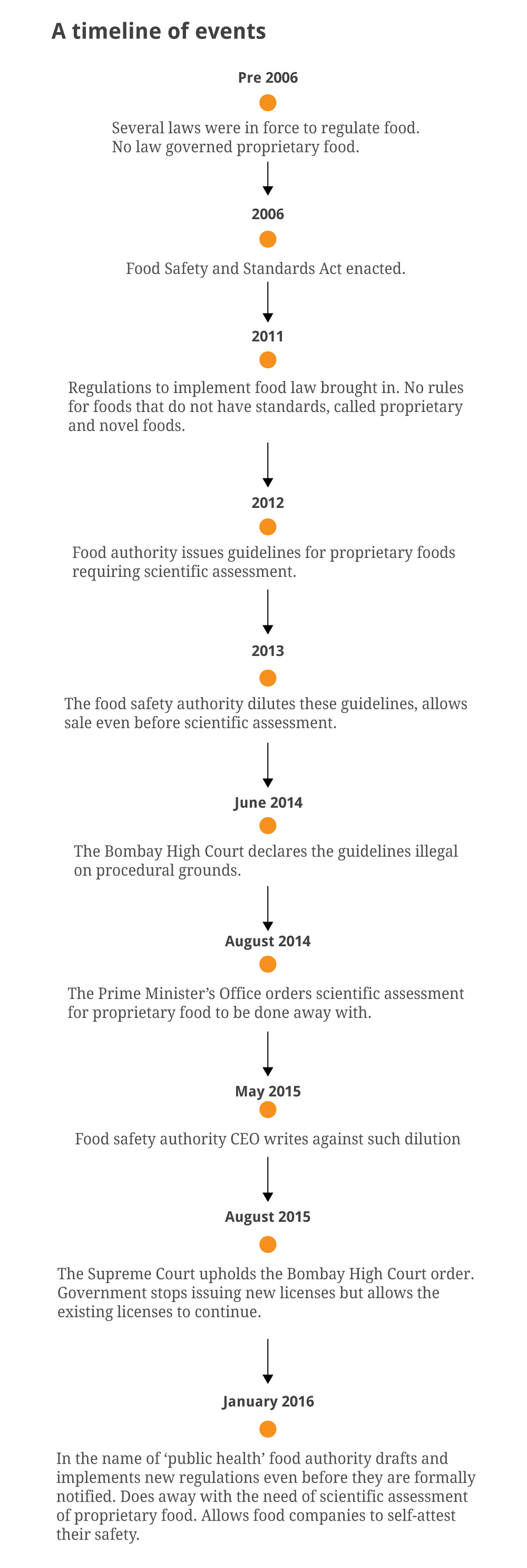
Additives make your food highly unsafe

Herbal products, dietary supplements are risky.
Products containing fluoride and potato protein isolate must be withdrawn.
Hyderabad: The scientific panel of the Food Safety and Standards Authority of India (FSSAI) has recommended that fluoride, potato protein, willow bark extract, lemon balm and pyrroloquinoline quinone (PQQ) must not be used in any food product as they are unsafe for human consumption.
The FSSAI has directed that products containing fluoride and potato protein isolate must be withdrawn immediately and new products must not have these ingredients. Willow bark extract, lemon balm, and PQQ are used in herbal products and dietary supplements and they too are now banned as they are found to have the effect of drugs.
For dietary supplements, functional foods and nutraceuticals these additives are to be used based on the recommended dietary intake guidelines of the FSSAI.
Fluoride
Fluoride is found in foods that contain water. Untreated water has a high fluoride content which is residue from agriculture and industrial waste. The food processing industries that use this water have been told to test the level of fluoride in the water before use. Fluoride is found in liquids more than solids. It is most commonly found in a) Fruit juices; the highest content is found in apple and grape juice b) Sauces like tomato sauce c) Salads that are eaten raw and not properly washed d) Soda e) Toothpaste, mouthwash and dietary supplements.
Excess fluoride in the body causes thyroid, arthritis, dementia, bone fractures and dental fluorosis.
Potato protein
Potato protein isolate is a protein which is extracted from the potato. It has replaced animal protein in the food processing industry to suit vegetarian tastes. It gives a feeling of fullness. Potato proteins are used in a) Baked items like crisp bread, cookies, wafers, crackers, biscuits b) Pizza base, sweet bread, muffins.
High levels of this protein cause kidney problems.
Willow bark
Willow bark is a herb that has been in use since the 5th century. It is used in herbal products, tea and dietary supplements.
The FSSAI says willow bark is nothing but aspirin. Its excessive use in tea powder and herbal products can cause thinning of the blood and in some cases sudden death.
PQQ
Pyrroloquinoline quinine (PQQ) is a compound. It is found naturally in soil and also foods such as kiwi fruit and in human breast milk. It is also added to skimmed milk and dietary supplements.PQQ's role as a vitamin has been controversial since its introduction in 2005. PQQ can be toxic and can damage the kidney and liver. There is a lot of debate about dietary supplements that have PQQ. FSSAI states that it must not be used as its safety parameters have not been identified.
Willow bark
Willow bark is a herb that has been in use since the 5th century. It is used in herbal products, tea and dietary supplements.
The FSSAI says willow bark is nothing but aspirin. Its excessive use in tea powder and herbal products can cause thinning of the blood and in some cases sudden death.
Lemon balm
Lemon balm is a herb of the mint family and has been used for centuries. It is used in herbal teas, ice-creams, ready-to-eat fish foods, health foods and supplements, and mixtures in wines.
There are mixed results for the use of this herb which has good and bad effects. The actual safety dose is difficult to decide as scientists find that it is difficult to quantify. It is found to cause drowsiness, excessive sleep, cognitive decline and also withdrawal symptoms.
FSSAI, Maharashtra FDA and Coca-Cola India join hands to train street food vendors in Pune
Maharashtra’s Food and Drug Administration (FDA) and Coca-Cola India has launched a pilot project in the city to train street food vendors on food safety and good hygiene practices.

This initiative is a part of Memorandum of Understanding (MoU) signed earlier last year by Food Safety & Standards Authority of India (FSSAI) and Coca-Cola to train 50,000 street food vendors across India over next three years under the project ‘Clean Street Food’
This initiative is a part of Memorandum of Understanding (MoU) signed earlier last year by Food Safety & Standards Authority of India (FSSAI) and Coca-Cola to train 50,000 street food vendors across India over next three years under the project ‘Clean Street Food’.
Under this initiative, Coca-Cola and Maharashtra FDA will train 1,200 street food vendors in Pune city in January 2018 on the aspect of safe and nutritious food enabling them to improve the quality of their offering, which will ultimately lead to increase in their earnings.
As part of this initiative, Coca-Cola India, will closely work with FDA in upgrading the eating out experience for the local populace at large. While Coca-Cola India will be responsible for the program execution through its network of trainers and available infrastructure, FDA will ensure the relevance of the training content and shall oversee the overall delivery.
On successful completion of the training, Maharashtra Food and Drug Administration (FDA) will issue a certificate to the street food vendors.
Chief Guest, Girish Bapat, Cabinet Minister for Food, Civil Supplies and Consumer Protection, Food and Drugs Administration and Parliamentary Affairs, present at the launch said, ”Street Food Vendors form an integral part of our society and reflect the local food culture. While Street Food Vendors offer nutritional and affordable food to consumers, it would be highly beneficial for them to upgrade their knowledge of food safety standards and rules of hygiene. This joint initiative between FDA and Coca-Cola India is a positive step towards promoting safe and nutritious food while eating out.”
Commenting on the pilot, Pallavi Darade, Commissioner Maharashtra FDA said, “Under this program launched jointly with Coca-Cola India, we have selected Pune as the first city to launch the pilot initiative due to its vibrant and diverse food culture. Our collaboration with Coca-Cola India will help us in sensitizing street vendors on practising good hygiene and maintain cleanliness to create a good eating out experience for consumers.”
Darade further mentioned that under an earlier project ‘Bhog’ her team had raised the standards of ‘traditional Prasad’ being served in temples across the state. The world famous ‘Shree Siddhivinayak’ temple in Mumbai was the first one to adopt these initiatives and subsequently was cleared by USFDA to allow dispatch of ‘prasad’ to devotees in the United States.
The training under Clean Street Food program is delivered through a unique classroom on wheels. This customized bus is fully equipped with training pre-requisites such as a seating area, presentation zone, audio-video equipment and on-board trainers will reach out to street vendors in rural and semi-urban areas with the help of local FDA teams.
Speaking on the occasion, Ishteyaque Amjad, Vice President Public Affairs and Communication, Coca-Cola India and South West Asia said, “Our collaboration with FSSAI and various State FDAs for project ‘Clean Street Food’ is aimed at providing best practises and knowledge to street food vendors through specialised training modules enabling them grow their businesses sustainably. The initiative has been designed by keeping in mind the specific needs of the small food vendors. Coca-Cola India is committed to build capabilities and support sustainable food security programs.”
Over the next three years, the Clean Street Food project will expand to 14 other locations across nine different states through the bottling plant network of Coca-Cola India states including Uttar Pradesh, Maharashtra, Andhra Pradesh, West Bengal, Chandigarh, Punjab, Chhattisgarh, Delhi NCR.
‘Plastic’ alert in a few batches of Danish chocolate
Summary: Pune: The national food regulatory body has issued an alert over some batches of Danish chocolates imported by India which may cause choking in children. The European Commission sounded the alert first about plastic fragments in the chocolates.The chocolates in question are Anthon Berg Marcipanbrod Whiskey 40g, Anthon Berg Marcipanbrod Cognac 40g, Anthon Berg Sweet Moments Marzipan Bar Mini 165g and Anthon Berg Sweet Moments Marzipan Collection 400g. Our officials have been told to visit malls and other shops that sell imported chocolates. "There is a risk that the product in question contains small pieces of plastic which may cause choking in children. We are keeping an eye over the online sales.
Pune: The national food regulatory body has issued an alert over some batches of Danish chocolates imported by India which may cause choking in children. The European Commission sounded the alert first about plastic fragments in the chocolates.The chocolates in question are Anthon Berg Marcipanbrod Whiskey 40g, Anthon Berg Marcipanbrod Cognac 40g, Anthon Berg Sweet Moments Marzipan Bar Mini 165g and Anthon Berg Sweet Moments Marzipan Collection 400g."There is a risk that the product in question contains small pieces of plastic which may cause choking in children. It is imported by India and hence imperative to start follow-up action, including recall," P Kartikeyan, assistant director (regulations), Food Safety and Standards Authority of India said in the alert notification issued on Friday.The product category under which the chocolates are sold is cocoa and cocoa preparations, coffee and tea , As Reported By TOI.
According to the Newspaper,They are likely to reach consumers through online sales or by other means.Chandrashekhar Salunkhe, joint commissioner (HQ), state Food and Drug Administration (FDA) said, " We have started tracking the importers of these specific chocolates. Our officials have been told to visit malls and other shops that sell imported chocolates. We are keeping an eye over the online sales."The European Commission, through an alert, has informed Belarus, Belgium, Canada, Finland, France, Germany, Hungary, Norway, Qatar, Slovakia, Sweden , Turkey and the United Kingdom about the product and follow-up has commenced, according to the Union ministry of health and family welfare.When contacted, an official from Dorabjee's supermarket and grocery store in Camp area said they did not stock these Danish chocolates.
Jan 8, 2018


Food poisoning, a common outbreak in 2017

Incidence high in areas where food is cooked in bulk
Recent data put out by the Union Health Ministry’s Integrated Disease Surveillance Programme (IDSP) has indicated that food poisoning is one of the commonest outbreaks reported in 2017. This is apart from acute diarrhoeal disease (ADD).
According to the data, 312 of the 1,649 outbreaks reported till the third week of December 2017 were due to ADD and 242 were due to food poisoning.
The IDSP has interpreted that the incidence of ADD and food poisoning is high in places where food is cooked in bulk, such as canteens, hostels and wedding venues.
Same trend
A.C. Dhariwal, Director of the National Centre for Disease Control (NCDC), the nodal agency under the Union Health Ministry that documents outbreaks and brings out data under its disease surveillance programme, told The Hindu that the trend had been the same over many years.
“It is not just this year. Acute diarrhoeal disease and food poisoning have been common outbreaks since 2008. This is followed by chickenpox and measles,” Dr. Dhariwal said.
Food poisoning, also called food-borne illness, is caused by eating contaminated food. Infectious organisms including bacteria, viruses and parasites or their toxins are the most common causes.
Dr. Dhariwal said it was important to follow safety measures and maintain hygiene while handling food. “It is a matter of concern for all as food poisoning outbreaks have increased from 50 in 2008 to 242 in 2017. Similarly, ADD cases have increased from 228 in 2008 to 312 in 2017,” he said, quoting the IDSP data.
Overall mortality
Pointing out that the increase in the number of cases was due to better and increased reporting of cases, he said the good thing was that the overall mortality was not alarming.
K.K. Aggarwal, who recently stepped down as the national president of the Indian Medical Association, said infectious organisms or their toxins could contaminate food at any point of processing or production.
“Contamination can also occur at home if food is incorrectly handled or cooked,” he said.
“While it is known that raw meat, poultry and eggs can also harbour diseases, in recent years most outbreaks of food-borne illnesses have been due to contaminated fresh fruits and vegetables,” he said.
Prasadams from TN temples to be exhibited in Delhi
Residents of New Delhi will get an opportunity to savour the mouthwatering prasadams from famous temples of Tamil Nadu at the food exhibition conducted by Food Safety and Standards Authority of India (FSSAI). The prasadams would be showcased for its quality and hygiene way it is prepared as prescribed by FSSAI.
The prasadams include panchamirtham from Palani Murugan temple and ghee wafting laddu, murukku, appam and puttu from Madurai Meenakshi Amman temple. Thenkuzhal and adhirasam from Srirangam Ranganathaswamy temple would also be sent from Trichy. The famous milagu vadai from Tiruvannamalai Annamalaiyar temple could also be in the list, if things fall in place.
"While the prasadams from Srirangam and Madurai will be airlifted, panchamirtham would be carried in train since the latter's shelf like is longer. Hundred pieces of each items sent to expo, which is to be held at January 12, in New Delhi. A separate stall for the prasadams has been allotted," said a higher official from Tamil Nadu Hindu Religious and Charitable Endowments Department (HR&CE) from Chennai.
The prasadams would be sold at the same price at which they are sold in the temples. For instance, a laddu weighing 60 grams in Madurai Meenakshi Amman temple, which is known for its quality and taste, would be sold for the same Rs 10 in New Delhi too. Similarly, murukku and appam also would be sold at the same price.
"All prasadams are being prepared using the best quality ingredients procured from cooperative societies and it is being checked by a team regularly. For making laddu, the ghee is procured only from Aavin," said an official from Meenakshi Amman temple.
Officials said that a team of eight officials from HR and CE temple would attend the workshop conducted by FSSAI on the previous day of exhibition. A communication with this regard has been sent to Tiruvannamalai temple. The temple authorities are expected to take a call in a day or two.
Officials also said that around 40 prominent temples took part in the workshop conducted by FSSAI in 2016 which focused on serving prasadam made in a hygienic manner. Many of them have now got certifications from the food quality ensuring body after they implemented the recommendations made by FSSAI.
This would be the first time prasadams from Tamil Nadu are exhibited. FSSAI had requested the HR& CE officials for this arrangement. It is to sensitise on the quality of prasadams being served in temples.
All alcohol outlets now under food safety ambit
Summary: Under these guidelines, alcoholic drinks are classified as food, too.An official in the excise department said while only bars and restaurants have been obtaining a licence from the Food and Drugs Administration (FDA) so far, all kinds of alcohol licences have now been brought under the ambit of the FSSAI.Around 11,000 liquor licences have been issued in Goa. Panaji: The excise department has directed all businesses engaged in the manufacture and sale of alcohol to obtain Food Safety and Standard Authority of India (FSSAI) licences from the designated state licensing authority immediately.In a circular issued last week, excise commissioner Amit Satija stated that it was mandatory for all manufacturers, importers, marketers, suppliers and retailers to obtain FSSAI licences under the Food Safety and Standards Act 2006/ Rules and Regulations 2011.
Panaji: The excise department has directed all businesses engaged in the manufacture and sale of alcohol to obtain Food Safety and Standard Authority of India (FSSAI) licences from the designated state licensing authority immediately.In a circular issued last week, excise commissioner Amit Satija stated that it was mandatory for all manufacturers, importers, marketers, suppliers and retailers to obtain FSSAI licences under the Food Safety and Standards Act 2006/ Rules and Regulations 2011. Under these guidelines, alcoholic drinks are classified as food, too.An official in the excise department said while only bars and restaurants have been obtaining a licence from the Food and Drugs Administration (FDA) so far, all kinds of alcohol licences have now been brought under the ambit of the FSSAI.Around 11,000 liquor licences have been issued in Goa.
Artificial fruit ripening centre to be set up soon
Jan 7 - Why do green bananas bought from the city markets turn bright yellow after a few hours? And later within a day, black blotches appear on the banana peel? The taste too is not that of fresh fruits. These are indications of chemical ripening, which has become a growing menace in the city, posing severe health hazards to the consumers.Besieged by the problem, the Assam State Agricultural Marketing Board has planned to set up an organic fruit ripening centre in the city.
“The Central Government has approved our proposal under the Rashtriya Krishi Vikas Yojana. The centre will come up within this financial year. The Board has decided to set up the centre at Ulubari,” Bulbul Hussain, Joint Chief Executive Officer (Tech) of the Board, told The Assam Tribune.
The centre would be used mostly for bananas, and if required, even for papayas. It would have a capacity to ripen 20,000 bananas daily and would be set up at an estimated cost of Rs 1 crore.
“If successful, we would replicate the model in other towns of the State like Jorhat, Dibrugarh, Sivasagar etc.,” Hussain said.
The centre will have chambers to store fruits. Ethylene would be injected into the chambers to ripen the fruits.
Ethylene (C2H4, also known as ethene) is a gaseous organic compound that is the simplest of the alkene chemical structures (alkenes contain a carbon-carbon double bond). It is the most commercially produced organic compound in the world and is used in many industrial applications. Early examples of human utilisation of ethylene to enhance fruit ripening include the ancient Egyptian practice of gashing figs to enhance ripening responses.
The ethylene produced by the injured fruit tissue triggers a broader ripening response. Similarly, the ancient Chinese practice of burning incense in closed rooms with stored pears (ethylene is released as an incense combustion by-product) which stimulates ripening of the fruit.
When fruits are exposed to ethylene under controlled conditions, they will initiate their respiratory climateric pattern and ripen at a relatively uniform rate.
While ensuring uniform ripening, ethylene ripening also keeps intact the quality of the fruit.
Hussain said no electricity will be used at the centre and it will be run on biomass. The model of operating the centre is yet to be worked out.
A good chunk of bananas and other fruits which are sold in the city markets are reportedly ripened using calcium carbide. Use of carbide for ripening is prohibited by The Food Safety and Standards Authority of India (FSSAI) and action can be initiated under the Prevention of Food Adulteration Act, 1955 for any violation.
Calcium Carbide in fruits
3 banana vendors held for using harmful ripening agent
The lid finally blew off a long held fear about the use of carcinogenic agents for ripening fruits sold in the market. The suspicion has grown all the more compelling with the police arresting three fruit vendors in Dimapur for allegedly using an industrial chemical to speed up the process of fruit ripening.
The arrests were made on January 6 at New Market and could involve a multi-crore illicit fruit ripening trade run right under the nose of the authorities. The substance in question – Calcium Carbide- is an industrial chemical used in steelmaking and commonly in iron welding units.
It unravelled with the arrest of one Laxmi Sha, a New Market-based banana vendor on January 6 from whose shop the police also recovered approximately 3kgs of Calcium Carbide. Sha’s arrest led to the arrest of two others – Baiju Sha and Rajesh Mahdo. A huge quantity of bananas was also seized.
According to the police, Sha admitted to using the chemical agent to artificially speed up the ripening process. “The arrested accused stated that half a kilogram of Calcium Carbide (CaC2) can ripen 3 quintals of unripe bananas,” stated the police. He was further said to have told the police that fruit traders in Dimapur use the chemical to artificially ripen fruits like mangoes, watermelons, apples and bananas.
Quoting scientific reports, the police said that the chemical contains arsenic and phosphorous; ingestion of which poses serious public health concern. Stating that further investigation is on, the police said that the seized Calcium Carbide, suspected to have been procured from Bhutan, and the bananas confiscated is being sent for forensic analysis. Calcium Carbide is also available in the market here for use in industrial units and not for fruit-processing.
Asked whether the state food safety authority has been alerted, the police said that it will be coordinating with the department in concern.
While some states in India have banned the use calcium carbide by fruit vendors, many are still to follow suit.
As per the Food Safety and Standards (Prohibition and Restriction on Sales) Regulations 2011, use of Calcium Carbide for ripening of fruits is prohibited. The Union Ministry of Health & Family Welfare in December 2016 has also asked the state health authorities to conduct frequent inspection of fruit and vegetable markets.
FDA officials raid store, seize banned gutka worth Rs 64,000
Thane, Jan 7 (UNI) Officials of Food and Drug Administration (FDA) here on Saturday raided a store in the powerloom town of Bhiwandi and seized banned Gutka worth around Rs 64,000.
FDA Assistant Commissioner (Food) Thane, M N Chowdhary told UNI that the officials of the FDA conducted the raid on the Bamhur Cigarette and General Stores at Gaibinagar and seized a stock of Dubai Gutka and Vimal Pan Masala.
The shop owned by one Shekar Jaffar Ahmed Ali Jaffar was sealed, he said and added that an offence under Food Safety and Standards Act 2006 was registered against the shop owner.
He said action had been taken against the same shop twice earlier for the same offence and this was the third time the FDA had raided the shop and found to have stocked the banned goods.


Jan 6, 2018


Come July, label mandatory for food certified as ‘organic’

Companies not sticking to standards can be prosecuted, according to FSSAI
Come July, it would be illegal to sell organic food that was not appropriately labelled so.
The Food Safety and Standards Authority of India (FSSAI) had issued regulations that required food companies selling organic produce to get certified with one of the two authorities — National Programme for Organic Production (NPOP) or the Participatory Guarantee System for India (PGS-India). Companies could also get a voluntary logo from the FSSAI that marked its produce as ‘organic.’
Though NPOP and PGS-India had been in the certification business for some years, it was mostly a voluntary exercise. “From July, any company that claims to sell organic food and not sticking to standards can be prosecuted,” Pawan Aggrawal, CEO, FSSAI told The Hindu.
“..Labelling on the package of organic food shall convey full and accurate information on the organic status of the product. Such product may carry a certification or quality assurance mark of one of the systems mentioned… in addition to the Food Safety and Standard Authority of India’s organic logo,” said a FSSAI notification on January 2 and published in the Gazette. These rules were finalised after almost a year of being sent out as a draft for public comments.
Third party certification
For nearly two decades now, organic farming certification had been done through a process of third party certification under the NPOP. It was run by the Ministry of Commerce and was used for certifying general exports. Nearly 24 agencies were authorised by the NPOP to verify farms, storages and processing units and successful ones got a special ‘India Organic’ logo.
The PGS-India programme, in contrast, had been around for only two years and — unlike the top-down approach of the NPOP — involves a peer-review approach. Here, farmers played a role in certifying whether the farms in their vicinity adhered to organic-cultivation practices. This programme was implemented by the Ministry of Agriculture through the National Centre of Organic Farming.
FDA testing six brands of packaged drinking water

After receiving a letter from the Food Safety and Standards Authority of India (FSSAI), the Food and Drug Administration (FDA) Maharashtra has collected six packaged drinking water samples from across the city.
While the FDA had started collecting samples in October 2017, as per a letter sent by the FDA joint commissioner (Food) to FSSAI, they have collected six samples of packaged drinking water of different brands in the city.
The FDA letter reads, "The samples were sent for analysis to State Public Health Lab, Pune. However, the test facility for bromate was not available in the lab, therefore, the samples were sent to another lab in Jogeshwari (east). While the lab has tested these samples for bromate and the analysis report of these samples are sent to Pune lab. FDA is yet to receive these analysis reports. As soon as the reports are received, further action in the matter will be taken as per the Act."
In 2017, a social activist from Mumbai filed a complaint with the National Human Rights Commission (NHRC) to look into the matter of packaged drinking water containing harmful substances such as bromate. The letter was then forwarded from NHRC to FSSAI and later the FSSAI authority had asked FDA to conduct further investigation.
Researchers at the Bhabha Atomic Research Centre (BARC) in 2015 found out that there is the presence of carcinogen (cancer-causing) bromate in packaged drinking water available in Mumbai. Based on this report, a complaint was filed on July 7, 2017, to the NHRC by the activist.
The activist, who does not wish to be named, said, "I am not happy with the way FDA is dealing with the issue since the number of samples collected and sent for analysis is extremely low. I will be writing to FDA to collect more samples considering the fact that 28 out of 100 samples were contaminated while doing the research. There are fewer chances of finding contamination in merely six samples."
Alcohol alert on bottles soon

HIGHLIGHTS
1 FSSAI is prescribing alcohol content for each alcoholic beverage.
2 Alcohol manufacturers, domestic or foreign, will have to abode by prescribed alcohol content level in the drink.
3 The authority says ensuring consumption safety of alcoholic drinks is its main aim.
For Bacchus lovers, it's time to say cheers on a healthy note! For, next time you down a peg of your favourite wine or whiskey, be assured that its alcohol content would be within a safe and permissible limit - as per the standards fixed by Food Safety Standard & Authority of India (FSSAI).
In a first, FSSAI - a body under Union health ministry - is regulating all varieties of alcoholic products by permitting only prescribed percent of alcohol in your drink. All categories of hard drink such as beer, wine, brandy, country liquor, gin, rum, whisky, vodka and wine (red and white) have been regulated.
FSSAI is also prescribing the limit of heavy metals in hard drinks. These heavy metals are found naturally in alcoholic beverages. There will also be an advisory on life safety - 'Be safe, do not drink & drive'. This will be in addition to the existing labelling that mentions 'Alcohol is injurious to health'.
Drunk driving is one of the leading causes of accidents and deaths in India. The World Health Organisation study also identifies drunk driving as one of the five key risk factors for road deaths.
According to the ministry of road transport and highways report, 2015, 6,777 individuals were killed because of drunk driving. In 2016, Delhi alone saw as many as 28,006 motorists prosecuted for driving under the influence of alcohol.
FSSAI CEO Pawan Agarwal told MAIL TODAY, "There was no regulation on alcohol in our country. It is for the first time FSSAI is regulating such beverages. We have been working on this for past two years to develop standards for alcohol limit. The final standards have been sent to the Union health ministry for health minister's approval and will be notified very soon. FSSAI is now moving along the lines of Bureau of Indian Standards and International Organisation of Vine and Wine."
"These regulations are made under the Food Product Safety & Standards (Alcoholic Beverages Standard) Regulations 2018," said Agarwal.
Another official said: "For the regulation of alcohol, the ministry has covered entire products containing alcohol. Any product with over 0.5 per cent of alcohol is called alcohol beverage. Now, these fixed standards for limiting alcoholic content would be applicable under FSSAI Act, 2006, to all domestic products as well as imported products."
Other countries have to follow new permissible limit for importing their alcohol beverage to India.
"The regulations are being made with the aim to control the market of alcohol manufacturers and also people should get a safe drink," he added.
Jan 5, 2018


Subscribe to:
Posts (Atom)