
Dec 19, 2017


39 out of 297 food samples fail quality test
Pune: Of the 297 food samples drawn during Diwali and tested, 39 have fared poorly on various quality parameters at the state-run lab, the latest report of the Food and Drugs Administration (FDA) has revealed.
FDA officials had drawn samples of 387 food items ahead of Diwali this year. "Of these, 297 samples have been analysed at the designated laboratory so far. After the testing, it was found that 39 samples did not conform to the quality standards set by the Food Safety and Standard Authority of India (FSSAI)," SS Desai, joint commissioner (food), FDA, Pune, told TOI.
Among the 39 samples found substandard (lacking in quality but safe for human consumption), the maximum were of milk and edible oil. "Milk samples found substandard lacked the amount of fat and solids-not-fat (SNF) as per the norms laid down by the law. While purity of edible oil was compromised by mixing oils of lesser quality," Desai said, adding that excessive use of edible colour and milk powder affected the quality of milk products, sweets and farsaan.
"We have started taking action against the commercial establishments from where these 'substandard' samples were drawn," Desai said, adding, "As per the provisions of the Food Safety and Standards Act, 2006, the FDA officials can only fine them for such offences. A case is filed against a supplier only when the sample is found unsafe for human consumption."
Meanwhile, activists have questioned the state's approach towards ensuring food safety. "The state health laboratory in Pune, which is a referral lab for testing food samples in the state, has been overburdened. Many key positions of the staff are lying vacant for years. The government should fill up these posts," activist Sanjay Dabhade said.
Lab not yet set up to test food served to VVIPs at official functions


“The Microbiology Lab sanctioned two years ago, as part of the Public Health Laboratory project of the Drug and Food Control Organisation, couldn’t be established due to inordinate delay by the Health and Medical Education Department in buying the necessary testing equipment and supporting infrastructure,” officials told Kashmir Reader.
A Food Safety Officer (FSO), wishing anonymity, said that such callous approach has left officers in a dilemma over what to do about VIP security. He said that in the absence of testing equipment, it is nearly impossible to test the safety of food served at public events.
Sources said that the food analysts are left helpless when they are assigned the job of testing food served to VVIPs. “We can’t test the food for adulteration or poisoning due to bacteria as per the official protocol. Lack of infrastructure and equipment make us vulnerable to grave mistakes,” confided a food analyst.
He said that the analysts who are assigned the job of testing food usually follow a medieval practice of the times of royal courts.
“Analysts and technicians follow an old practice that was prevalent in royal courts, where royal cooks would taste the cuisine themselves in front of the king before he eats it,” the official said.
The food testing is also hampered due to the defunct mobile testing vans of the Drug and Food Control Organisation (DFCO).
“There is no separate staff for the mobile testing vans, which make food testing even more difficult,” rued an administrator.
“The laboratory staff is forced to attend to VIP duty, despite the absence of equipment, which puts them in danger,” he said.
Speaking to Kashmir Reader, Suman Vikas, Assistant Professor at Department of Food Technology, Islamic University of Awantipora, said that a microbiology lab is vital for food safety and quality testing in a variety of food products, raw materials, and ingredients.
He said a simple microbiology lab with basic equipment would take Rs 8 lakh-10 lakh to start.
“The lab must have supporting infrastructure and basic equipment, like ovens for sterilisation, autoclave, incubators, refrigerators, colony counters, laminar flow chamber, microscopes, and computers,” Vikas said.
“It is not a big investment for the government. Many private food and spice companies in Kashmir have small labs. If they have it, why can’t the food department?” he said.
Controller, DFCO, Lotika Khajuria admitted that there has been a delay in setting up the microbiology lab. She, however, denied that any breach of security protocol occurs in her department.
“The police department usually calls us to send food analysts at functions attended by VVIPs. We are doing the best possible to make sure that the food is tested properly. If any of our officials are facing problems in their duty, he or she must give it in writing, so that we take up the issue with the quarters concerned. The issue may be taken up with the Food Safety and Standard Authority for necessary action,” she said.
According to her, the delay in the establishment of microbiology lab is due to the validation process. “We can’t start the lab right away because validation process takes time. We will start it soon because the funds have been sanctioned,” she said.
Dec 18, 2017

Hindus urge India Govt. to mandate listing of gelatin source on food, which many times is beef
Chandigarh,17.12.17-Hindus are urging India Government and Food Safety and Standards Authority of India (FSSAI) to mandate food manufacturers to mention the source of gelatin, if used in the product, on its “Ingredients” label.
When the source of gelatin is not listed and if it is beef, it is a serious non-disclosure affecting the Hindu devotees and would severely hurt their feelings when they would come to know that they were inadvertently consuming beef-laced popular food products, Hindu statesman Rajan Zed stresses.
Consumption of beef was highly conflicting to Hindu beliefs. Cow, the seat of many deities, was sacred and had long been venerated in Hinduism; Zed, who is President of Universal Society of Hinduism, pointed out in a statement in Nevada (USA) today.
“…there is no requirement to declare the source of gelatin on the product label under our regulations”, P. Karthikeyan, FSSAI Assistant Director, wrote responding to an email query from Rajan Zed.
It would be shocking for the Hindu community to learn that some of the popular food products, which they might had been unknowingly eating for years, might contain beef as part of the gelatin while beef was not explicitly mentioned under the ingredients listed on the boxes/packages to caution them, Zed indicated.
Rajan Zed further said that it was hard to comprehend that why corporations, both domestic and international, many times were not transparent enough to mention beef explicitly under the ingredients on the box/package when, being constituent of gelatin, it was part of the product inside, so that an ordinary consumer could make right and appropriate choices.
Dutch-British transnational consumer goods company Unilever, which “has been in business since the 1880s” and which claims to have “developed a clear and global approach to nutrition labeling”, in a response to Zed, noted: Gelatin “is used in some of our products to provide a lower fat, lower calorie product with a pleasing texture and consistency…We cannot guarantee if the gelatin is derived from beef or pork”.
Many products of Wrigley, said to be the largest manufacturer and marketer of chewing gum in the world, contain gelatin that is sourced from beef. Gelatin derived from beef is found in the many products of multinational Kellogg’s, which claims to be “world's leading cereal company”.
Gelatin/gelatine is procured from various animal body parts and is usually used as a gelling agent in food. It can be from cows, pigs, fish, chicken, etc.; but there are animal-free and plant-based alternatives to gelatin like seaweed extracts. Gelatin is an ingredient in some cereals, ice creams, candies, yogurts, desserts, marshmallows, aspic, trifles, dips, fruit snacks, sour cream, margarine, frosting, confections, gums, Chinese soup dumplings, puddings, nondairy creamers, cakes, cream cheese, lozenges, etc. It is also used for clarification of vinegar, juices and wine.
FSSAI, headquartered in New Delhi, “has been created for laying down science based standards for articles of food and to regulate their manufacture, storage, distribution, sale and import to ensure availability of safe and wholesome food for human consumption”. Ashish Bahuguna and Pawan Kumar Agarwal are Chairperson and CEO respectively of FSSAI, whose tagline is “Inspiring Trust, Assuring Safe & Nutritious Food”.
Dec 17, 2017
Now, an easy-to-use kit to detect fish contamination

The kit, developed by CIFT, helps in ascertaining chemical contents in fish
The Central Institute of Fisheries Technology (CIFT), under the Ministry of Agriculture, has developed a rapid detection kit that can be used conveniently by individual buyers to determine formalin and ammonia contents in fish. There are separate kits for formalin and ammonia contamination detection, and they comprise strips of paper and a small bottle of chemical solution that works as a reagent.
To detect contamination, one has to rub the strip over the fish and later apply a drop of the solution on the strip. The result will be known in two minutes. The kit comes with a colour code indicating the level of contamination.
CIFT Director C.N. Ravishankar told the media here on Saturday that the kits had been developed over a period of six months in the wake of reports of rampant use of chemical agents to preserve fish. Some of these chemicals are extremely harmful to humans, while formalin is a cancer-causing aldehyde.
Can cause health problems
Though ammonia is not a cancer-causing chemical, its repeated ingestion can lead to health problems including injury to the mucous membrane, throat, esophagus, and stomach.
Mr. Ravishankar said around 16% of fish samples brought in by Food Safety and Standards Authority of India officials from local markets had been found contaminated. CIFT was also actively encouraged by Fisheries Minister J. Mercykutty Amma, who had repeatedly asked the institute to come out with a test kit to detect chemical contamination of fish.
S.J. Lali and E.R. Priya, the scientists who were directly involved in developing the kit, said easily affordable kits were being made available for the first time.
The kits, when mass-produced, will cost less than ₹5 per test. CIFT will invite an Expression of Interest (EoI) to hand over the right for commercial production of the kit.
The team of scientists from CIFT had conducted detailed tests to ensure the reliability of the kit, said Mr. Ravishankar.
Meanwhile, the first of the fish vending units, designed and developed by CIFT scientists, was inaugurated in West Kochi on Saturday. The unit comprises a refrigerated storage and de-scaling and cutting units run on conventional power supply. The units cost between ₹30,000 and ₹40,000 each.
Caterer booked in food poisoning case

Chafai Mahila Sanstha’s office sealed; school decides to stop serving mid-day meals
An FIR has been filed against the organisation that supplied mid-day meals to a government-aided school in Jogeshwari, where 37 students were hospitalised after eating khichdi on Wednesday.
Meghwadi police said on Saturday that they had registered a case against Chafai Mahila Sanstha, a Bhandup-based women’s self-help group, three days after 37 Class V and Class VII students of Bal Vikas Vidya Mandir suffered from food poisoning. The students were rushed to Kokan Hospital in Jogeshwari for treatment when they began vomiting after having lunch.
Samples sent for tests
Senior Police Inspector Pandurang Patil said, “We have filed a case of endangering life or personal safety of others under the Indian Penal Code against Chafai Mahila Sanstha in connection with the incident. We have sealed the office and kitchen of the organisation in Kanjurmarg.”
Mr. Patil said samples of the khichdi served on Wednesday and samples of other food items prepared at Chafai Mahila Sanstha’s kitchen have been sent for analysis. Action will be taken after reports of the analysis are received on Monday.
Meanwhile, the school authorities decided to discontinue the mid-day meal scheme following a meeting with parents on Saturday. Archana Bhanushali, principal, Bal Vikas Vidya Mandir.
Archana Bhanushali, principal, Bal Vikas Vidya Mandir, said, “The parents and the management reached a unanimous decision to stop serving mid-day meals. We realise that it is mandatory to implement the mid-day meal scheme in all schools, but will do so only in consultation with parents.”
Parents’ consent sought
Sahdev Sawant, vice-chairman of the school’s management board, said, “We still haven’t received a new proposal from the Brihanmumbai Municipal Corporation for the mid-day meal scheme. No action will be taken without the involvement of parents.”
Mr. Sawant said inquiries were being conducted to find out how only students of Class V and Class VII suffered from food poisoning while over 600 students were served the same food.


Dec 16, 2017
Inside a mega kitchen

At 55000 sq ft area, this could be the country’s largest commercial kitchen

From the look of it from outside, Voila F9 Gourmet on a two-acre plot in the Financial District of Hyderabad is a white structure with not too much height. Appears to be a well-maintained industrial shed that is probably used as a storehouse. However, step inside and this seemingly unimpressive structure turns out to be a jaw-dropping 55,000 sq ft commercial kitchen with world class facilities. It’s perhaps the largest commercial kitchen in the country.
As many as 50,000 meals can be cooked on a peak day at this facility. Apart from the number, it is the practises and processes involved here that will leave us wondering at the care and caution taken to prepare the food.
Arrival and treatment

Various raw ingredients like fruits, vegetables, pulses and meats are received at different gates throughout the day. “There are specialised zones for receiving, stores, sorting, pre-prep, hot kitchen, confectionery, butchery, quality control, dispatch, temperature controlled refrigeration and also RO and STP / ETP plants. Here most of the raw ingredients are sanitised and stored in temperature-controlled rooms to retain their freshness. Most of the peeling, chopping and grinding are done by machines under supervision. Charts and duty sheets alert the stores about dispatching required amounts of various ingredients for the day,” says Sannjay Bhatija, director, operations.
If the raw green ingredients are treated at the time of arrival the dry ingredients go through a cleaning and sorting process by hand and then passed through magnetic channels to extract any unwanted metallic content.
The powdered spices and flour are sieved and sorted in individual baskets. So in the dry section, the employees are all armed with masks, headnet and gloves.
Cooking for corporates
Home grown Voila with an employee strength of over 850, produces over 25,000 meals everyday for employees of corporate groups like Google, Facebook, Deloitte, Qualcomm, D E Shaw&Co., Arcesium, Uber, Indus School etc. These kitchen employees work in three shifts to cater to breakfast, lunch and dinner. All the meals produced at the central kitchen in Gachibowli are then transported through a fleet of trucks which are also equipped with temperature controlled facilities.
“The kitchen doesn’t only serve the corporates; large-scale events like Sensation, Sunburn also rely on us for their outdoor catering. We as a company follow internationally acclaimed food safety processes like HACCP and ISO 22000:2005 and also run an in-house Microbiology lab to test and monitor every food item that is prepared,” says Vijay Amritraj, CEO.
Inside the kitchen

Inside the hot kitchen, contrary to popular perceptions that a huge kitchen will feel like one big oven with more than 100 cooking stations all working at the same time, the temperature is normal. In one side of the kitchen close to 10 cauldrons are being prepared with marinated meat for a biryani dinner. Six sous chefs upturn and mix the meat with spices in turns as a huge vessels of close to 200 litre capacity of water simmer on the side with potli spices.
Water consumption and garbage
Bigger the facility, the larger the requirement. This facility makes use of close to 2 lakh litres of water, 700 kgs of regular table rice, 1500 kgs of water melon, 7000 eggs, 700 kg of chicken, 500 kg of mutton, 1200 kg of onions, 1100 kg of tomato. The fact that they use close to 200 kg of salt on a daily basis gives an idea of the amount of food that is cooked.
For proper garbage collection and disposal, the facility makes use of garbage collection facilities and some of the water used to clean and wash vegetables is recycled to water the plants and landscape all around. Some of the waste water is also used to clean the outdoor area.


Will appoint food safety commissioner soon, Govt tells High Court


Authorities resorting to dilatory approach, says amicus-curiae
The government on Friday informed the High Court that the food safety commissioner would be appointed shortly after the cabinet clears his name, even as amicus-curiae Bashir Ahmad Bashir pressed for holding the chief secretary responsible for the “government’s failure to implement the court orders.” As soon as the suo-moto public interest litigation against food adulteration came up for hearing before a division bench of Justice Muhammad Yaqoob Mir and Justice Ali Muhammad Magrey, the additional advocate general Muhammad Iqbal Dar informed the bench that the next cabinet meeting scheduled shortly will clear the name of an officer as food safety commissioner.
The amicus-curiae, however, told the court that the government is resorting to a dilatory approach with regard to court directions and the authorities should be held accountable for defying the court orders.
“They (authorities) are resorting to a delaying tactic; otherwise it could not take so long to post an IAS officer as food commissioner. The post has already been created, still there is delay,” he said.
He submitted that the court orders passed from time to time can be implemented only if the chief secretary is asked to give an undertaking that he would implement the orders in a time-bound manner, “failing which, the chief secretary should be made responsible for consequences.”
Advocate Dar told the court that the health and medical education department had earlier submitted a proposal to the finance department—through the general administration department—for creation of posts of commissioner, food safety along with the supportive staff.
“But the department has cleared the proposal only to the extent of creation of post of commissioner, food safety, about which the court was already informed,” he pleaded.
The state counsel said that with regard to supportive staff , a proposal has been re-submitted to the finance department which has convened through a communication its agreement for creation of three posts for the office of commissioner—private secretary, junior assistant, and an orderly.
The finance department, Dar said, has also agreed that other need-based staff shall be considered separately. For driver’s post, he submitted that the department has requisitioned it from State Motor Garages.
“Once it is concluded that an office of independent food commissioner is established, it will pave way for the implementation of the food laws,” the court was told.
With regard to food testing laboratories, the court was informed that the erstwhile forensic laboratory is still operating from the same place despite several communications sent to the police in this regard.
“Once again, the director general, police has been requested but nothing concrete has been done on his part,” the court was told.
The court was informed that in Kashmir division, of 876 samples lifted, 682 have been tested so far and 98 were found in contravention with the provisions of food safety and standards (packaging and labeling) regulations, 2011.
For the staff of food safety appellate tribunals, the government informed the court that the posts are required to be filled up through a proper selection process which has been initiated by the services selection board.
After hearing the arguments, the court said that it will pass orders.
15K unlicensed eateries may have to shut

CHENNAI: Come January, owners of more than half of the city's 32,000 food establishments will be forced to pay a hefty fine or face imprisonment with the government set to penalise those who have failed to obtain licences.
Commissioner of food safety P Amudha has given the go-ahead to crack down on establishments who don't apply for licences on or before December 31.
In March, the food safety department undertook an enumeration and found a total of 32,002 food establishments in Chennai, including pushcart vendors, retailers, provisional stores, bakeries, hostels, restaurants, fruits and vegetable shops and units that engage in making sweets and savouries. Of these, only 14,462 have been certified by the department.
The Food Safety and Standards (Licensing and Registration of Food Business) Regulations, 2011, mandates a licence for any food business with an annual turnover in excess of Rs 12 lakh. Those with a lower turnover must register with the state food safety department. After eight extensions, the last deadline set by the Food Safety and Standards Authority of India (FSSAI) for getting licenses expired in August, 2016.
R Kathiravan, designated food safety officer, Chennai, said although the department has been sporadically inspecting illegal units based on complaints, licensing would bring all of them under its scanner. "Before we issue licenses or register them, a team inspects the facility and judges them on various parameters, including quality of the water and raw materials they use for cooking, the hygiene of workers, kitchen and storage places," he said.
A vendor who fails to register or procure a licence is liable to be forced to shut shop, pay fines ranging from Rs 25,000 to Rs 10 lakh or face imprisonment of up to six months.
Food safety officials said a majority of those who have not registered are retailers. "They comprise 25% of the food business in the city. Many are reluctant as they source provisions from unlicensed manufacturers. This is where the maximum adulteration happens," said an official.
In February, TOI had carried a story on how less than 50% of the total 3,254 government institutions, including fair price shops, TASMAC outlets, Amma canteens and anganwadis, were licensed. Kathiravan maintains that all of them are now certified, except the mid-day meal kitchens in schools.
In the meanwhile, members of trade unions feel several provisions in the Act are too stringent. A M Vikrama Raja, president of Tamil Nadu Federation of Traders' Association, said at least 30% of the norms laid out under the regulation fall under the responsibility of the government. "If the water provided by Metrowater isn't clean, how is it our fault? The same goes with garbage piled close to the units and stagnant sewage," he said, adding that some members also felt the penalties were too harsh
Consumer activists have welcomed the government cranking up the heat, but said awareness on licensing still remain low. "And officials should not limit inspections just to the time licences are issued or when the public raise complains. It should be done on a periodic basis," said consumer activist T Sadagopan.


Dec 15, 2017

Camps to register food biz entities
Tirupur: As more than 10,000 unregistered food-related entities in the district are facing the deadline of December 31 for registration or to obtain a licence under the Food Safety and Standards Act, the administration has planned to conduct five camps to reach them.
The first camp will be held at Annapoorna Hotel on Palladam Road on Friday. The entities can submit the required documents and complete the online registration process.
As per recent enumeration conducted by the district food safety and drug administration (FSDA) department, the district has 18,588 entities, including manufacturers, packers, wholesalers, dealers, retailers, hawkers, street vendors, warehouses and transporters in the food industry. As many as 10,303 entities are yet to register.
"So far, 8,285 entities have obtained the licence or registered. The department was creating awareness about it and explained the unregistered entities about the mandate," said K Tamil Selvan, FSDA's designated officer for Tirupur.
"Once they do, it would help the department to keep tab on the food safety. As per the Food Safety and Standards Authority of India (FSSAI), each entity should have a food safety supervisor among their employees. The department will provide training on the food safety and standards to them," said Tamil Selvan.
Besides, the department has been conducting meetings with the respective associations to provide education about the food safety.
The fee for the registration is Rs 100 for entities with annual turnover of less than Rs 12 lakh and Rs 2,000 for those who exceed Rs 12 lakh. In case of the food manufacturers, they should pay Rs 3,000 for the licence.
FSSAI enlists 15 agencies to audit food safety
This is the first time the food authority has taken a step like this in order to strengthen the food safety surveillance system in the country.
New Delhi: Food Safety and Standard Authority of India (FSSAI) has empanelled 15 national and international agencies to audit food safety and hygiene standards of canteens, cafeterias and hostel mess of several IITs and IIMs.
Some agencies which have been empanelled are DNV, Bureau Veritas, Intertek, MS Certification, IRCLASS, SGS, BIS, TUV and Indocert.
This is the first time the food authority has taken a step like this in order to strengthen the food safety surveillance system in the country. The audit will start with select large central institutes such as IITs in Delhi, Mumbai, Chennai and Guwahati, AIIMS (Delhi and Jodhpur), IIM (Ahmedabad and Kozhikode), IISc Bangalore and IISER Kolkata.
FSSAI orders food safety audit in IITs, IIMs and AIIMS
New Delhi, Dec 14 () Food regulator FSSAI today said it has ordered safety audits of the canteens at 10 large educational institutes, including IITs, IIMs and AIIMS, in view of complaints with regard to food safety and hygiene standards.
The Food Safety and Standards Authority of India (FSSAI) said that the audit will be done by empanelled 15 agencies and they will be given one-month time to submit report.
The FSSAI said that audit has been ordered as number of cases of food safety issues have been reported from hostels/canteens of various academic institutions in India.
"In view of this, FSSAI has ordered special food safety audits of the canteens, cafeterias, hostel mess etc of 10 select large central institutes of higher education like IIT (Delhi, Mumbai, Chennai and Guwahati), AIIMS (Delhi and Jodhpur), IIM (Ahmedabad and Kozhikode), IISc Bangalore and IISER Kolkata," the FSSAI said in a statement.
To strengthen the food safety surveillance system, the FSSAI has taken up audits of food business operators through third-party audit agencies.
It has empanelled 15 audit agencies in accordance with the Food Safety and Standard (Food Safety Auditing) Regulation, 2017.
The audit in select 10 institutes will help to check whether hostel mess/canteen/cafeteria where food is handled in these institutions comply with the food safety and hygiene standards prescribed under the food safety law.
"These reports will give an insight into the existing standards of food safety and hygiene of these canteens/ hostel mess etc and will help FSSAI to identify the gaps," the authority said.
The FSSAI expected that the results of these audits will serve as guidance to these institutions to improve and maintain the standards of food safety and hygiene in their premises, the statement said.
The authority has empanelled national and international food safety audit agencies like DNV, Bureau Veritas, Intertek, MS Certification, IRCLASS, SGS, BIS, TUV, Indocert among others."For the time being these agencies have been provisionally empanelled since the regulation is still at draft stage," the FSSAI said
Dec 14, 2017


FSSAI licence must for food sale, supply

There have been complaints about the quality of food being sold at mass gatherings such as youth festivals.
‘Any thing being cooked and sold outside your kitchen needs licence’
The Food Safety and Standards Authority of India (FSSAI) has asked heads of the departments of Police, Education, Collegiate Education, and Health as wells secretaries of local bodies in Kozhikode district to ensure that firms that supply food at mass gatherings have licence issued by the authority.
This follows complaints about the quality of food served and sold at religious festivals, school youth festivals, sports meets and office canteens.
P.K. Eliyamma, Assistant Commissioner, FSSAI, Kozhikode, told The Hindu that the State Food Safety Commissioner on April 20, 2016 had issued an order saying that those who sell food in such places should compulsorily have the licence issued by the authority.
“Any thing being cooked and sold outside your kitchen and open markets should have the FSSAI licence,” she said.
Food poisoning was recently reported from Cheruvannur and Koodaranhi grama panchayats. At Narikkuni, eight people were down with food poisoning after they reportedly had a curry made of chicken parts. The beverages, such as sugar cane juice, being distributed outside religious gatherings lack hygiene and the sellers often don’t have any licence. It is reported that they use adulterated ice blocks. Water is sourced often from water tankers.
Organisers of such events are supposed to seek permission from the Health Department to distribute food and approval from the Police Department to use mike system.
Along with these, Ms. Eliyamma said, the authorities should also ensure that they have the FSSAI licence too. The order has been forwarded to the Superintendent of Police, District Medical Officer, Kozhikode City Corporation Secretary, Deputy Director of Panchayat, municipal secretaries in Vadakara, Koyilandy, Ramanattukara, Koduvally, Feroke, Mukkom, and Payyoli, deputy directors of education, higher secondary education and collegiate education.
Section 119 of the Public Health Act, 1939, says that the authority in charge of any fair or festival should intimate the executive authority or health officer the date of beginning of any festival and other details two months in advance. This provision is reportedly not followed often, sources in the Health Department said. Although local bodies such as panchayats, municipalities and corporations have relevant laws to deal with any eventuality, a uniform law applicable to all institutions is yet to be formulated.
Raid nets 1000 litres synthetic milk, food inspector suspended
Morena (MP), Dec 13 (PTI) Authorities raided a factory in Chinnoni village here yesterday and seized 1000 litres of synthetic milk, a senior official said.
A food inspector had been suspended for failing to check the malpractice, the official added.
Additonal collector KP Mishra said that a joint team from the food and revenue departments had raided the factory at Chinnoni village and seized 1000 litres of synthetic milk yesterday.
The team recovered glucose, detergent and other ingredients that went into making the synthetic milk, he added.
He said that the raid was carried out following complaints to the district collector.
Mishra informed that the collector had yesterday suspended food inspector Savita Saxena.
"She did not pay heed to senior officials who had been asking the food inspector to crack the whip on people involved in milk adulteration," Mishra said.
Mishra said that the adulterated milk from the factory used to be supplied to Nova Dairy in Malanpur, Gwalior.
The owner of the raided factory has been under Food Safety and Standards Act.
4 held for selling adulterated ghee
The city police have arrested four people, including a wholesale dealer of KMF products, for allegedly selling adulterated ghee for the last two months in Adugodi and Kumara Park.
According to the police, Ayyappa Swamy, who has been identified as the prime accused, allegedly plotted this scam in order to make up for the money he lost in a betting during an IPL cricket match.
The police took up the investigation last month based on a complaint from KMF officials who found adulterated ghee being supplied from the milk parlour at Bengaluru Diary in Adugodi. Following complaints from consumers, a team of KMF quality control officials had identified 84 packets of adulterated ghee after tests in the lab.
Apart from Swamy, 30, from Tamil Nadu, who lived in J.J. Nagar in the city, the others arrested are Maruthi, 28, a resident of Malleswaram, Shivakumar, 29, who lives in Kumara Park West, and Sukumar, 67, a resident of Dharmapuri.
They adulterated the ghee by adding palm oil and vegetable oil.
Swamy reached out to Maruthi, an employee for a company that has a dealership for KMF products. The duo later took the help of the other two accused — Shivakumar and Sukumar — both of whom ran Nandini milk outlets to sell the adulterated product. Maruthi’s role was to provide plastic covers to pack the ghee.
Cases have been registered under IPC sections 272 (Adulteration of food or drink intended for sale), 273 (Sale of noxious food or drink), and 420 (cheating).
GOA: FOOD BIZ OPERATOR SENTENCED FOR VIOLATING FOOD SAFETY ACT
Panaji (Goa): The Judicial Magistrate First Class (JMFC) has sentenced a food business operator to undergo simple imprisonment up to the rising of the court and slapped a fine of Rs 3000 for selling dry snack despite being declared as unsafe food product.
The order was passed based on a report of the Directorate of Food & Drugs Administration at Bambolim Chandas Vaishnav, Proprietor of M/s Balaji Farsan in Valpoi for manufacturing and selling food article ‘Mix Shev.’ The accused indulged in the violation although the food product was declared as ‘Unsafe’ due to the presence of non- permitted colour and had also exceeded the maximum prescribed limit. Senior Food Safety Officer Rajiv Korde had collected the food sample to test in the department’s laboratory, and the report had ascertained the violation.
The JMFC accordingly pronounced the sentence wherein if the accused fails to pay the fine, in default he will to undergo simple imprisonment for one month for this offence punishable under Section 59(i) of The Food Safety & Standards Act, 2006.
Tech lift for Telangana’s food laboratory
Centre sanctions Rs 8.05 crore to provide state-of-the-art equipment
Once the upgradation is done, samples relating to oil, pulses, food, including from restaurants, can be analysed in a foolproof manner.
Hyderabad: The State Food Laboratory (SFL), which has been waiting for an overall revamp of facilities for carrying out sophisticated tests on a variety of food items, is all set to get a major facelift with the Centre sanctioning Rs 8.05 crore to provide state-of-the-art equipment.
As the Food Safety and Standards Authority of India (FSSAI) rolled out Central Sector Scheme (2017-18) for strengthening the food-testing system across the country, the Institute of Preventive Medicine (IPM) entered into a memorandum of understanding with it.
Though FSSAI has already sanctioned the amount a few months ago, the SFL is yet to receive it. Lab officials are hopeful of getting the amount after FSSAI examines the details of high-end equipment that would be required for the lab.
The lab is getting the amount under the Central sector scheme launched by the Centre which allocated Rs 500 crore for 46 food labs across the country.
Food Safety Commissioner Rajeshwar Tiwari confirmed that the FSSAI was providing funds for the upgradation of the lab at Nacharam on all fronts.
A senior official said if the lab was equipped with the new testing machines, the staff would be able to carry out analysis of samples more effectively. Samples relating to oil, pulses etc., could be analysed in a foolproof manner, he explained.
A request was also made to FSSAI to sanction Rs 50 lakh as a grant in aid towards sub-component for renovating the lab before installing the new equipment. The lab personnel are facing problems in conducting an analysis of over 4,400 food samples received from Telangana and Andhra Pradesh in the last few months.
During summer, the lab will be flooded with samples of fruits especially mangoes to examine the chemicals used for ripening process. “Apart from the upgrading the lab, there is an urgent need to fill up the vacant posts,” the official added.
Dec 13, 2017


Synthetic colours in aravana ingredients? Spat over quality of Sabarimala prasadam

Food Safety officials say analysis of samples yielded conclusive evidence of food colour contamination.
Presence of synthetic colours in cardamom
An unseemly row has erupted between the Travancore Devaswom Board and the Food Safety Department over the quality of raw materials used for the production of Appam and Aravana at Sabarimala during the annual pilgrimage season.
The issue arose after officials from the Food Safety Commissionerate stopped the transport of a consignment of cardamom from Pampa to Sannidhanam, citing the results of an analysis of samples which detected the presence of synthetic food colours. The TDB subsequently had to stop the production and distribution of Appam for the pilgrims, provoking an angry response from Devaswom Minister Kadakampally Surendran.
Inappropriate
Terming the restriction imposed by the Food Safety Department inappropriate and crossing all limits, the Minister told a press conference that the timing of the decision gave room for suspicion. He also alleged that the officials were causing inconvenience to the pilgrims.
Food Safety officials said the analysis of samples had yielded conclusive evidence of food colour contamination.
“We detected the presence of Tartrazine Yellow and Brilliant Blue additives which are used in tandem to impart green colour to cardamom. The results of the tests done at the analytical lab at Pampa were later confirmed by the NABL-accredited lab in Thiruvananthapuram,” an official said. Tartrazine and Brilliant Blue have been linked to cancer, asthma, allergies and stomach ailments.
On Monday, a press note issued by the office of the Food Safety Commissioner here alleged that the TDB was levelling baseless allegations to cover up the issue.
The press note said the Food Safety Department had been ordered by the High Court to keep a close tab on raw materials used for preparation of prasadam at Sabarimala. “One sample each of jaggery and rice flakes (avil) and two samples each of rock candy (kalkandam) and cardamom did not conform to food safety standards. The consignments were withheld at Pampa and the government, TDB, and High Court informed of the situation,” the press note said.
Food Safety officials said the issue could have been averted if TDB had procured the materials well before the start of the pilgrimage season.
Food Safety And Standards Authority Of India Hasn't Received A Single Compliant In 11 Years
While Food Regulatory Body Reimburses Testing Fees To Consumers If Food Is Found Adulterated, It Hasn’t Received A Single Complaint In 11 Years
Did you know that as per the Food Safety and Standards Authority of India (FSSCI) Act, if food purchased by a person is established as adulterated, the cost of getting it tested is reimbursed? The answer is likely to be a resounding "no", because 11 years since the Act's inception, the regulatory body has not received a single case under section 40 that governs this complaint segment.
According to FSSCI officials, most consumers refrain from getting food products tested for adulteration fearing high costs of the process. "Any individual can get suspicious food products tested at FSSCI laboratories, but since it's a time-consuming procedure, most people shy away from doing so. The process costs R2,000 to R5,000, depending on the food product. But, the regulatory body has a provision under which the regulatory body will gladly reimburse the testing fees to the consumer," an official said.
Section 40 of the FSSCI Act states, "If the report of the food analyst shows that the article of food is not in compliance with the Act or the rules or regulations made there under, the purchaser shall be entitled to get refund of the fees paid by him under this section." However, not a single person has ever asked for testing under the section in the past 11 years. Dr Pallavi Darade, state Food and Drug Administration (FDA) commissioner, said, "The FDA does thousands of food analysis, every month. But, none of them are done because some consumer reported an adulterated food product."
If the food product is deemed in contravention of the provisions of the FSSCI Act, the product seller stands to lose his/her licence or be fined.
Poisonous Packaging

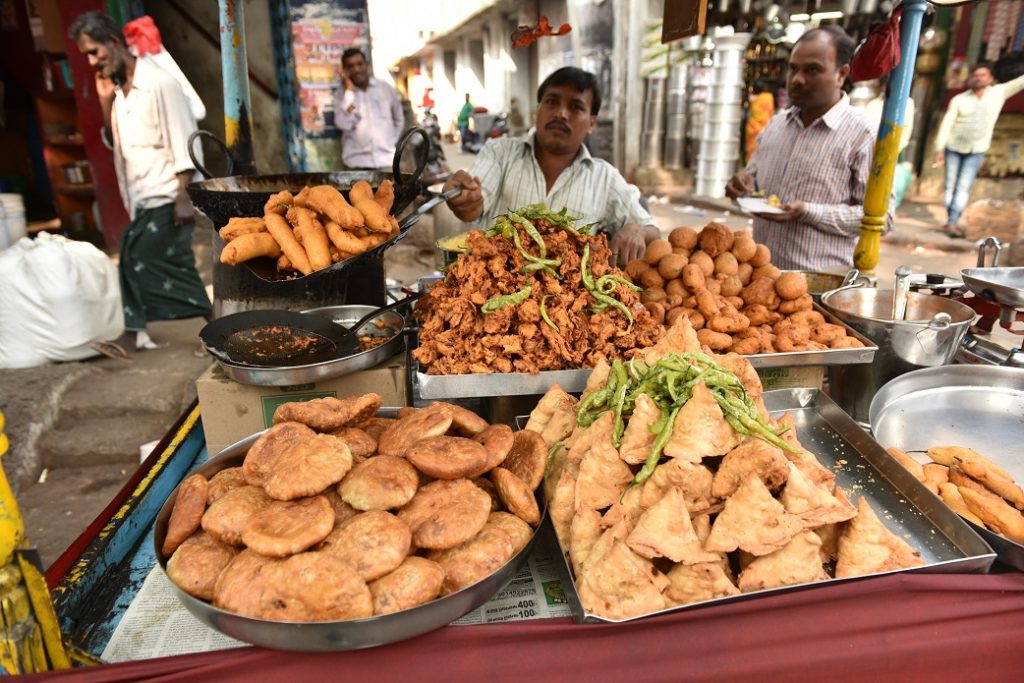
When it comes to eating street food, we often spend a lot of time worrying about what’s in the food, but not enough time worrying about what the food is in. Be they bun kebabs, samosas or any other downtown snack, odds are that the food you buy from street vendors will be wrapped in a newspaper. Now, here’s why this is bad news for you:
Wrapping fried food in newspapers is a very unhealthy practice and is very much prevalent in Kashmir and most parts of country and its consumption is injurious to health, even if the food has been cooked hygienically.
The reason is simple; the hot oil in, say, pakoras, facilitates the seeping of chemicals from ink and paper into the food. The newspaper ink contains many hazardous chemicals which can trigger serious health problems. Exposure to a class of organic chemicals called arylamines, such as benzidine, 2-Naphthylamine and 4-Aminobiphenyl, is associated with high risks of bladder and lung cancer.
Apart from these, printing inks also contain colorants, pigments, binders, additives and photo-initiators (used for speeding up the drying process of the ink), which have harmful effects. There are literally thousands of ink chemicals and a majority of them can be dangerous for consumers.
Newspapers are usually produced by a system called offset-web printing, which requires a certain consistency of the ink (it needs to be very thick) and a particular means of drying.
For the former, mineral oils (petroleum-based) and solvents such as methanol, benzene and toluene are used; and for the latter, heavy metal (Cobalt)-based drying agents are used. None of these should be used in food packaging, as they are also classified as harmful and can be perilous for consumers’ health.
Some offset printing ink formulations use vegetable oils rather than mineral oils; however, they have strong odours and should not be used in food packaging. Given the long-term risk from protracted exposure from an early age, the sale of such tainted foods to school children, a common sight in all our cities, must also be avoided and there is an urgent need to raise awareness on this issue.
Another similar problem which has been noticed is that fast food restaurants are packing burgers, soups and other hot meat and vegetable products in thin, transparent plastic bags, as take aways. These clear synthetic bags are typically made of polyethylene (polythene) and the principal potential ‘migrant’ agent is ethylene.
There are a number of potential additives to polythene, such as anti-static agents, ultra-violet protection and flame retardants. These additives can be very dangerous if they move into the take away food.
Other case is while using teabags, some people squeeze the teabag using the label fixed at the other end of the thread. As it can leak the ink from the label, it is recommended that the teabags should be squeezed by using the thread only.
In the recent time Food Safety and Standards Authority of India has issued an advisory wherein commissioners of Food Safety of all states were requested to initiate a systematic campaign for generating awareness among all stake holders to discourage the use of newspapers for packing, serving and storing of food items.
In the state of Jammu and Kashmir, Drugs & Food Control organization is the nodal department for enforcement of Food Safety and Standards Act 2006, rules/regulation 2011 with sufficient manpower, Deputy Commissioner Food Safety at Divisional level, Designated Officers at District level and Food Safety Officer at Block/Zone level.
Food Safety & Standards Act provides mechanism for collection and testing of food samples for any potential hazards at government level through Food Safety Officers.
Even the Purchaser/consumer can get the food sample tested at his own as provided under section 40 of the Food Safety and Standards Act, however in case the sample fails in testing government is supposed to refund the cost of sample and other expenditure to the purchaser while Designated Officers are supposed to initiate action against defaulters. In case the sample is reported unsafe in testing.
The offence is punishable with an imprisonment for a term which may be extended to six years and also with fine which may extend to five lakh rupees.
The department has started a campaign under Food Safety and Standards Act 2006 to control wrapping of fried foods in newspapers and banning the use of plastic bags for takeaways soups and other food items accordingly prosecution against many food business operators have been launched to tackle the issue.
Moreover, public awareness and support is the important means to discourage the use of newspapers in packaging of food items, consumers should refuse the food item if is packed /wrapped in newspaper.
Author is a Food Safety Officer Srinagar.
Two food joints with hookah bars sealed in Sector 18
NOIDA: In a joint raid by the city magistrate and the food safety department, two restaurants having hookah bars were sealed in Sector 18 on Monday.
A case will be filed against the restaurant owners under Food Safety Act, officials said.
The raid was carried out in the evening when many people were found smoking hookah. "The restaurants—Kartoos 49 Cafe & Lounge and Smoke House—were found serving hookah at their premises and were immediately sealed. A show cause notice will be issued and a court case will be initiated against them," Surendra Verma, district food safety officer, said.
"The samples of the smoke remnants have been collected and will be sent to a government laboratory for testing," city magistrate Mahendra Singh told TOI.
Hookah along with food and drinks in the smoking zone has been banned in the latest amendment to the Cigarettes and Other Tobacco Products Act (COTPA).
Subscribe to:
Posts (Atom)