Apr 13, 2017

FSSAI to get flavour of global food standards

NEW DELHI, APRIL 12: 
The Food Safety and Standards Authority of India (FSSAI) has entered into an agreement with US-based Decernis Ltd, which will allow it to have access to a database of international food regulations through an online platform.
In a statement, it said this agreement will give access to database of over 70,000 standards for food additives, food standards and food contaminants from over 170 countries.
Pawan Agarwal, CEO, FSSAI, said that as per the good regulatory practices, the authority needs to take international practices in account, while framing national standards and guidelines. “This module will help FSSAI in accessing various regulations and practices which are followed globally,” he added. Agarwal said that access to international regulations will enable scientific panels in understanding global standards and also benchmarking Indian regulations to international standards, besides help in risk assessment.
Under the agreement, Decernis will also integrate Indian draft and final standards into its systems to improve the understanding and compliance of users.
“FSSAI will also assist in occasional client questions regarding the regulations of food standards, food additives, food contact substances, contaminants and pesticide residues,” the statement added. The regulator said that food compliance across countries, languages and cultures can be complex and this co-operation represents another step toward improving global food safety.

Substandard Food to Jawans Deployed at Borders

As per information received from Forces, mechanism to check quality of food being served to jawans is in place. Forces (CAPFs) while deployed under Ops Control of Army procure ration as per defence food specification/Food Safety and Standards Authority of India (FSSAI). Also, some Forces like Assam Rifles is reported to have engaged nutritionist to prepare a standard menu based on calorific requirements of troops. In Forces, Unit Medical Officer/Duty officer/Senior officers check food for its nutritious value and quality during their visits. Monthly mess meeting is carried out to look into grievances and further improvements in the quality of food. In addition, this Ministry has also advised the forces that the senior officers may also partake the food prepared for jawans and endorse a note on the quality/quantity of food in inspection register. 
This was stated by the Minister of State for Home Affairs, Shri Kiren Rijiju in a written reply to question by Shri Lal Sinh Vadodia in the Rajya Sabha today.

Apr 12, 2017

DINAKARAN NEWS


Misbranding a major concern

Food Safety officers in Ernakulam find dates, raisins unsafe for consumption
‘Misbranding’ of products topped the list of complaints filed by the Ernakulam wing of the Food Safety Department before the adjudicating authorities in the previous fiscal.
Sixteen complaints related to misbranding were filed before the District Revenue Officer as per the provisions of the Food Safety and Standards Act.
The collected samples were found to have not included details regarding ingredients, nutritious content, batch number, lot number, date of manufacturing and date of expiry.
“The complaints about misbranding were found in packets of toor dal, drinking water, cake, rusks, double-toned milk, cashew nut, blended vegetable oil, etc.,” said K.V. Shibu, Assistant Commissioner, Food Safety, Ernakulam.
Tea powder
Among the 45 complaints in which prosecution steps were initiated in the last fiscal, seven cases referred to the contamination of tea powder with iron filings. The Food Safety and Standards Authority of India (FSSAI) has capped the limit of iron filings in tea powder at 250 mg/kg.
Stating that iron filings enter tea owing to either wear and tear of the processing machinery or deliberately, Mr. Shibu said tea powder having iron filings above the prescribed limit was unsafe for consumption owing to the health hazards it could trigger in human beings. Iron filings above the limits could lead to diseases such as cirrhosis, osteoporosis and heart failure.
The FSSAI has found that tea leaves could be contaminated with iron filings owing to processing methods such as sieving and crushing. In Ernakulam, samples of tea powder with iron filings were picked up from wholesale units, retailers and street vendors.
The inspections carried out by 14 food safety officers in Ernakulam found items such as dates and raisins unsafe for consumption. Dead insects were found in packets of dates and raisins. The teams also seized ice creams, curry powder and chilli powder under the category of “sub-standard” food items. The ice cream samples tested had very low quantity of milk fat revealing that it contained agents or flavours beyond the permissible limits.
The Ernakulam wing of the Food Safety Department also slapped a penalty of about ₹9 lakh on various hotels and restaurants for preparing and storing food in unhygienic conditions in the last fiscal.

Arabian food joints in city under the scanner again

The Food Safety Department has stepped up vigil over Arabian food joints in the city. The move comes in the wake of an incident reported last week in which eight persons fell sick and were admitted to various hospitals after they consumed an Arabian dish from an outlet near Edappally junction.
“We have slapped a fine of ₹10,000 on the food joint. Samples collected from the outlet have been sent to the Regional Laboratory at Kakkanad for further examination. The Department will initiate criminal proceedings based on the Food Safety Act if the tests reveal that the food was unsafe for consumption,” said K.V. Shibu, Assistant Commissioner of Food Safety, Ernakulam.
A similar incident was reported from an Arabic food joint along the Kaloor-Kathrikadavu stretch in October last year, found operating in unhygienic surroundings. Stale food items were found inside the refrigerator. The Food Safety officials said the stale dishes would either have been sold or removed from the outlets by the time the customers started experiencing health problems including vomiting and diarrhoea. Such complaints were reported mostly from outlets selling non-vegetarian dishes as chances of traders storing meat in refrigerator for a long period were high.
Surprise checks
Food Safety officers under the Assistant Commissioner of Food Safety in Ernakulam are expected to hold surprise checks at food outlets to check violations under the Food Safety Act. Random sampling of food items will also be carried out as part of the drive.

TAMIL MURASU NEWS


DINAKARAN NEWS


மாம்பழம் விற்பனை செய்யும் கடைகளில் உணவு பாதுகாப்பு துறையினர் ஆய்வு

சேலம்: சேலத்தில், கார்பைட் கல் மூலம் பழுக்க வைக்கப்பட்ட மாம்பழங்கள், விற்பனை செய்யப்படுகிறதா என, உணவு பாதுகாப்புத்துறை அதிகாரிகள் நேற்று ஆய்வு நடத்தினர்.
சேலத்தில், மாம்பழங்களை விற்பனை செய்ய, 100க்கும் மேற்பட்ட சில்லரை விற்பனை கடைகள், 50க்கும் மேற்பட்ட மொத்த விற்பனை கடைகள் உள்ளன. தற்போது, சீசன் நெருங்கி விட்டதால், ஏராளமானோர் மாம்பழங்களை விற்பனை செய்கின்றனர். பெரும்பாலான வியாபாரிகள், கார்பைட் கல் வைத்து விற்பனை செய்ய வாய்ப்பு இருப்பதாக உணவு பாதுகாப்பு துறை அதிகாரிகள் யூகித்தனர். அதன்படி, நேற்று உணவு பாதுகாப்பு துறை அதிகாரி டாக்டர் அனுராதா தலைமையிலான குழுவினர், நேற்று சின்னக்கடை வீதி மற்றும் முதல் அக்ரஹாரம் பகுதிகளில் ஆய்வு மேற்கொண்டனர். அப்போது, வியாபாரிகள் யாரும் கல் வைத்து பழுக்க வைக்கப்பட்ட பழங்களை விற்பனை செய்யவில்லை என்பது தெரியவந்தது. இதையடுத்து அவர்களிடம், எப்போதும் கல் வைத்து பழுக்க வைக்கக்கூடாது என்று எச்சரித்து விட்டு அதிகாரிகள் சென்றனர்.
இதுகுறித்து, டாக்டர் அனுராதா கூறியதாவது: சேலம் மாநகரில் உள்ள, மாம்பழம் மற்றும் வாழைப்பழம் விற்பனை செய்யும் வியாபாரிகள், கார்பைட் கல் மூலம் பழுக்க வைத்து விற்பனை செய்கிறார்களா என்பதை ஆய்வு செய்தோம். 35 கடைகளில் நடந்த ஆய்வில், அது போல் யாரும் பழங்களை விற்பனை செய்யவில்லை என, தெரியவந்தது. இருப்பினும், அவர்கள் எத்தலின் திரவத்தை கொண்டு, பழுக்க வைத்திருப்பது தெரியவந்தது. அவ்வாறு செய்யக்கூடாது என, எச்சரிக்கை விடுக்கப்பட்டுள்ளது. இவ்வாறு அவர் கூறினார்.

சேலத்தில் 40 பழக்கடைகளில் திடீர் ஆய்வு; 15 கிலோ மாம்பழங்கள் பறிமுதல் உணவு பாதுகாப்பு அதிகாரிகள் நடவடிக்கை

சேலம்
சேலம் மாவட்டத்தில் தற்போது மாம்பழ சீசன் தொடங்கி உள்ளது. இதையொட்டி பழக்கடைகளில் மாம்பழங்கள் விற்பனை அதிகமாக காணப்படுகிறது. மாம்பழங்களை சிலர் ‘கார்பைடு‘ கற்கள் மூலம் பழுக்க வைத்து விற்பனை செய்கிறார்கள் என புகார் எழுந்தது. இந்த மாதிரியான மாம்பழங்களை வாங்கி சாப்பிடும் பொதுமக்களுக்கு உடல் பாதிப்பு ஏற்படுகிறது. இது தொடர்பாக நடவடிக்கை எடுக்க 6 குழுக்களை மாவட்ட உணவு பாதுகாப்பு நியமன அலுவலர் அனுராதா அமைத்து உத்தரவிட்டார்.
இந்தநிலையில் நேற்று சேலம் கடைவீதி, ராஜகணபதி கோவில் பகுதி உள்ளிட்ட இடங்களில் உள்ள பழக்கடைகளில் உணவு பாதுகாப்பு நியமன அலுவலர் அனுராதா தலைமையிலான அதிகாரிகள் திடீரென ஆய்வு மேற்கொண்டனர். இந்த ஆய்வில் எந்த ஒரு பழக்கடையிலும் ‘கார்பைடு‘ கற்கள் மூலம் மாம்பழங்கள் பழுக்க வைக்கவில்லை.
சில பழக்கடைகளில் உணவு பாதுகாப்பு விதிமுறைகளை மீறி எத்திலினை திரவமாக பயன்படுத்தி மாம்பழங்களை பழுக்க வைத்திருப்பது தெரியவந்தது. அந்த மாம்பழங்களை அதிகாரிகள் பறிமுதல் செய்தனர். இதுகுறித்து உணவு பாதுகாப்பு நியமன அலுவலர் அனுராதா கூறியதாவது:–
கடைகளில் ‘கார்பைடு‘ கற்கள் மூலம் மாம்பழங்களை பழுக்க வைத்து விற்பனை செய்கிறார்களா? என நடத்திய ஆய்வில், எந்த பழக்கடையிலும் அவ்வாறு மாம்பழங்களை பழுக்க வைக்கவில்லை. இருந்தபோதிலும் எத்திலினை வாயுவாக பயன்படுத்தாமல், திரவமாக பயன்படுத்தி மாம்பழங்களை பழுக்க செய்து வைத்திருந்த 12 கிலோ மாம்பழங்கள் பறிமுதல் செய்யப்பட்டன.15 கிலோ மாம்பழங்கள் பறிமுதல்
மேலும் அழுகிய நிலையில் விற்பனைக்காக வைக்கப்பட்டிருந்த 3 கிலோ மாம்பழங்களும் பறிமுதல் செய்யப்பட்டன. மொத்தம் 40 பழக்கடைகளில் ஆய்வு செய்யப்பட்டு, 15 கிலோ மாம்பழங்கள் பறிமுதல் செய்யப்பட்டன. பொதுமக்கள் வாங்கி சாப்பிடும் மாம்பழத்தை ‘கார்பைடு‘ கற்கள் மூலம் பழுக்க வைக்க கூடாது என கடைக்காரர்களுக்கு அறிவுறுத்தப்பட்டன. இதுகுறித்து ஏதேனும் தகவல் தெரியவந்தால் உணவு பாதுகாப்பு அலுவலகத்துக்கு புகார் தெரிவிக்கலாம். அதன்பேரில் சம்பந்தப்பட்ட பழக்கடைக்கு சென்று ஆய்வு நடத்தி நடவடிக்கை எடுக்கப்படும்.
இவ்வாறு அவர் கூறினார்.

Apr 11, 2017

DINAMANI NEWS


DINAKARAN NEWS


DINAKARAN NEWS


DINAKARAN NEWS


"I am keenly involved in the food safety drive at FDA"

Talking to Restaurant India, Shri Shivaji Desai, Joint Commissioner, Food & Drug Administration- Pune shares about the food safety programs at FDA.
Food safety has become a major issue in the last two years. Talking to Restaurant India, Shri Shivaji Desai, Joint Commissioner, Food & Drug Administration- Pune shares about the food safety programs at FDA.
What is your view on food safety in India?
The food safety and standards act, 2006, has been implemented since 2011. In Maharashtra, FDA has taken responsibility to implement this act. The restaurant factor is there. We have to follow norms mentioned in the schedule 4 i.e. part 5 that is for restaurant, hotel and catering facilities. It should be followed by these entrepreneurs. We have to inspect and take programs and inspect many times so that they should comply by the industries. If schedule 4 is complied you have achieve goals that is required by the act for safety management system.
Restaurants are following the norms but the unorganised sector is not. What do you have to say about it?
We are giving street vendors registrations and about 12 lacs vendors have been educated and provided license on it. Though, it is a very difficult task but people will have to come together to follow these regulations.
What is your view on growing culture of and restaurant as industry?
With growth of smart cities and IT industries there is a sudden push in the eating out trend. And, seeing the opportunity it provides, we have to support the food culture of India which is as diverse as its culture.
What is your role at FDA?
I am keenly involved in the food safety drive at FDA. We have done a special drive and we found majority is not complying with the law and we have issued notices as warnings. They have to comply in 14 days and if they do not we have to cancel their licenses.
Many a times restaurants have applied for licenses but it takes time to get the revert. What are you doing for it?
It is not at all difficult these days. It is an online process and FDA has launched a website and you have to make an online request and your license will be issued in 8-10 days.

Unmarked sweet leaves Shatabdi Express passenger sour

CHANDIGARH: The eatables served aboard the elite Shatabdi Express don't meet the Food Safety and Standards (Packaging and Labelling) Regulations, 2011, alleges a passenger who got the taste of it on Friday (April 7) while heading in from Delhi.
The food containers, he alleges, were neither sealed nor carrying the manufacturer's name, packagingexpiry date, and the ingredient list."When I asked for the complaint register, the attendant failed to produce one," claimed passenger Ajay Jagga. He then wrote to railway minister Suresh Prabhu and railway board chairman AK Mittal, besides Health and Family Welfare Ministry secretary CK Mishra.
Jagga was aboard train 12045 on PNR number 2810937233 in C-5 coach at seat 17 when a mystery "sweet" with syrup was put before him in an unsealed plastic container that had no label and no mandatory consumer information. Every Shatabdi ticket includes Rs 130 for the food.
Divisional railway manager (commercial) Parveen Gaur Dewedi said: "We check the food served aboard the Shatabdi Express regularly but if some passengers have is sues, we will look into those, once I receive the complaint through proper channel."
Under clause 2.2.1of the Food Safety and Standards (Packaging and Labelling) Regulations, 2011, it is mandatory for packed food to carry a label mentioning in clear print the name, trade name, description, ingredients, batch number or code of the eatable inside.

Apr 10, 2017

TN GAZETTE NOTIFICATION - Conferment of powers to all the Principal District Judges / District Judges and the Principal Judge, City Civil Court, Chennai to deal with the offences under the Food Safety and Standards Act, 2006.


Amul ads guilty of disparaging frozen desserts, HUL argues in Bombay HC

Gujarat Cooperative Milk Marketing Federation had argued that its Amul ice-cream ads did not hurt Kwality Walls because they did not refer to it by name, rather depicted a generic cup labelled ‘frozen dessert’. 
Mumbai: The lawyers for Hindustan Unilever Ltd (HUL) argued in the Bombay high court on Friday that Gujarat Cooperative Milk Marketing Federation Ltd’s (GCMMF) advertisements were guilty of disparaging frozen desserts.
The multinational maker of Kwality Walls ice-cream argued that identifying a particular brand or firm by name was not necessary for an ad to be guilty of “general disparagement”.
GCMMF had earlier argued that its Amul ice-cream ads did not hurt Kwality Walls because they did not refer to it by name, rather depicted a generic cup labelled “frozen dessert”.
HUL’s counsel, senior advocate Virag Tulzapurkar, cited a case law from the Delhi, Calcutta, and Madras high courts whose benches had previously ruled that a company could be guilty of showing a product in poor light even if it did not include a competitor’s name, by emulating its packaging or by attacking the entire class of products it is sold in.
Among the cases Tulzapurkar cited was a 1999 judgement in the Calcutta high court that ruled against ads for a fabric whitener.
The ads implied that blue coloured “neel” harmed clothes by leaving blue patches. Makers of Robin Blue fabric whitener, Reckitt Colman Ltd, won the case, arguing that reference to a “blue” agent was enough to disparage their product even if it was not referred to by name.
HUL and GCMMF had exchanged emails on the ads that Amul ran, in which HUL had asked the company to stop airing advertisements saying that Kwality Walls was made with vanaspati, or hydrogenated vegetable oil.
However, Tulzapurkar argued that Amul’s subsequent change in the ads, from “vanaspati” to “vanaspati tel” was not enough.
“The effect of that change is zero because the image from the first ad is fixed in the public mind,” Tulzapurkar said, referring to the images Amul ran showing the difference between ice-cream and frozen dessert.
The counsel’s argument was that the ad showed a generic frozen dessert made from a semi-solid mixture, seemingly implying that it was made from hydrogenated vegetable oil or vanaspati and not liquid vegetable oil.
As per regulations of the Food Standards and Safety Authority of India, ice-creams made from edible vegetable oil must be labelled and sold as frozen desserts.
However, GCMMF’s counsel on Friday held its ground arguing that this argument was invalid since Amul had changed its ads to say “vanaspati tel” in reference to frozen desserts instead of “vanaspati”.
“I would ask my learned friend to limit his arguments to the second ad, as we will deny that the first ad is being aired or that it continues to be aired,” the lead counsel for GCMMF, senior advocate Ravi Kadam, said.
GCMMF managing director R.S Sodhi declined to comment, saying the matter is subjudice.
A HUL spokeswoman also declined to comment saying the matter is subjudice.
The matter has been adjourned to Monday.

Ensuring safe food at places of worship

Every day, the Golden Temple in Amritsar feeds 60,000- 70,000 people for free
Faith and reason seldom go together. While the latter remains open to debate, the former is too sacred to be touched. And the Food Safety and Standards Authority of India (FSSAI) is soon going to get a taste of it.
How Food Safety Management System ensures quality Prasad
  • Standardises prasad ingredients and manufacturing process to improve its shelf-life and safety
  • Vendors to be trained in food safety, hygiene; persuaded to apply for licence
  • Encourages self-audit to ensure that ingredients used in prasad are safe
  • Food handlers to be trained in good manufacturing practices; to be educated about personal hygiene and using protective clothing, such as aprons, gloves 
  • Introduces rotational system for food stock to ensure first-expired-first-out; strengthens documentation and record keeping so that the stock can be traced 
Mandates management of wastes, such as flowers, fruits and vegetables, in such a way that they do not affect food safetyThe country’s apex food regulatory body plans to implement the Food Safety Management System (FSMS) to ensure quality of food in places of worship. But the idea that something sacred needs to ascribe to external standards of purity is likely to make the implementation of FSMS a bumpy ride. 
FSSAI stumbled upon one such bump in the last week of January, when the Tirumala Tirupati Devasthanams (TTD), managing trust of Tirupati temple in Andhra Pradesh, refused to allow the state’s food safety officers to inspect the temple kitchen.
In August 2016, FSSAI asked the state’s food safety commissioner to take appropriate action on a complaint about unhygienic and unsafe practices during the preparation of prasad (edible religious offering) in the temple.
Bengaluru-based RTI activist T Narasimha Murthy, who had filed the complaint, told Down To Earth (DTE): “Cooks who prepare laddoos in the Tirupati temple kitchen do not wear gloves, aprons or caps.” Media reports have in the past highlighted nuts, bolts and key chains being found in Tirupati temple laddoo, which has a Geographical Index tag indicating its uniqueness. 
But TTD is adamant. In its response to the complaint, TTD says the laddoo is a sacred item and not food. It further says the prasad of Hindu temples is prepared as per customs and any intervention will potentially demean the feelings of Hindu pilgrims all over India. Since prasad is distributed at subsidised prices to pilgrims, it cannot be termed as goods for sale.
TTD’s arguments run contrary to the Food Safety and Standards (FSS) Act, 2006, which says laddoo is a food item and TTD is a food business operator (FBO). In its letter to the state’s food safety commissioner, FSSAI had written that the Act is applicable on all food items, whether purchased or distributed for free.
TTD, therefore, must obtain a licence and fulfil the responsibilities of an FBO as stipulated in the Act, and comply with its rules and regulations. “But executive officer of TTD refused to apply for the licence, saying TTD does not come under FSSAI’s purview,” says Vishwanath Reddy, assistant food controller in Andhra Pradesh. TTD did not respond to DTE’s emails till the story went to press. 
A humongous task
The unsuccessful attempt by Andhra Pradesh food safety officers to inspect Tirupati kitchen indicates the huge hurdles FSSAI is likely to face while implementing FSMS. 
According to the 2011 Census, India has more than 3 million places of worship, which are visited by millions every day. The Tirupati temple alone is visited by over 50,000 devotees a day. In the absence of any guidelines, food is often prepared and handled with bare hands. Food handlers, at most places, are seldom tested for infectious diseases. 
Many devotees have fallen ill in the past due to unsafe and unhygienic food practices at places of worship. In April 2014, around 350 people fell sick after drinking panakam (jaggery-based drink) offered as prasad at Sri Kodandarama Swamy temple at Damarcherla in Telangana’s Nalgonda district. In 2013, two people died and 50 showed symptoms of food poisoning after consuming panakam and buttermilk at Bengaluru’s Sri Muthu Mariamma temple.
Slow but steady acceptance 
FSMS ensures that food safety hazards and unsafe conditions at places of worship are minimised, says Prabodh Halde, president of the Association of Food Scientists and Technologists (India), Mumbai chapter, which has designed the system for FSSAI. “Under the system, raw material for prasad are standardised and tested for contami nation. We have put safety norms in place and trained food handlers and those who prepare the prasad in good manufacturing practices,” says Halde.
The association first implemented FSMS in January 2016 at Mumbai’s Siddhivinayak temple, which is also visited by 50,000 people a day. “Prasad hygiene and awareness about food safety among the workers improved within four months,” states FSSAI, which has vetted the pilot project before adopting it for pan-India implementation. 
Though implementation of FSMS is not mandatory, several places of worship have volunteered to follow the system. One such is Shirdi Sai Baba temple in Maharashtra’s Ahmednagar district. Over 25,000 devotees throng the temple for prasad every day. 
In September, FSSAI conducted a workshop on the implementation of FSMS. It was attended by 14 institutions, including the Hindu Religious and Charitable Endowments Department of the Tamil Nadu government that manages temples in the state.
It has shown interest in implementing FSMS in 20 of its temples. The Shiromani Gurdwara Parbandhak Committee (SGPC), responsible for the management of gurd waras, has also welcomed the move, notwi thstanding caveats. “If they have valid suggestions, we are amenable to them.
Otherwise, it is a matter of faith. Nobody can tell us how to prepare prasad,” says Harcharan Singh, chief secretary of SGPC. Pawan Agarwal, FSSAI’s chief executive officer, says their intention is not to question any faith but to reassure visitors about food safety.
“This is a win-win situation. I am sure neither Tirupati nor gurdwaras want anyone to fall sick,” he says. FSSAI has asked state food safety commissioners to identify five places of worship where FSMS can be implemented. The move can also come to the rescue of thousands of urban poor who do not have access to nutrition and depend on prasad for food.

How this Asia’s largest kitchen serves free food to 40,000 people everyday

Ever since the dinning hall or the prasadalaya was built in 2009, the place has been serving over 40,000 devotees on a daily basis. If you wondered where this kitchen is located then let’s help you soak into the glory of being an Indian, again.
The iconic Saibaba temple in Shirdi stands tall in its grace of being the holy place, quite literally. With digital signboards reading, What you have in your platter is not mere food. It’s Prasada of Shri Saibaba. Please don’t waste it and the tables being occupied at the drop of an hat and the hot meal being served to the devotees, this is a view that is worth being a part off.
The 11,550 sqmt dinning hall in the temple premises has started serving free meals to devotees since January 1. Earlier there was a nominal fee of Rs 1o. This has fetched the temple the tag of being the Asia's largest kitchen providing free food to all, as opposed to Asia's largest solar-energy driven kitchen said a TOI news
Dr Suresh Hawre, chairman of Shri Saibaba Sansthan Trust (SSST) in the news said,
Free food to all was one of the basic teachings of Saibaba. When he lived in Shirdi, he used to cook food and distribute to the people. Taking the cause of service for all, the trust has continued with this mission.
Last year, this holy place won the Concentrated Solar Thermal (CST) and Solar Cooker Excellence Award from the ministry of non- conventional energy sources. The temple houses 73 solar dishes that generate 2,800 kg of steam on a daily basis said the report.
In 2001, the premises welcomed its first solar system which could cook food for 3,000 people. Owing to this success, the plan was expanded. The hot water pumped in can cook 2000kg of daal and rice and can clean all the used oily vessels. There are manual helpers as well who work in shifts. The kitchen also empowers the local farmers by buying fresh vegies from them owing to a demand of 2,000 kg of vegetables everyday.
The temple also houses two imported dish washing machines, two imported vegetable cutter machines, three vegetable and rice washing machines, and a grinding flour online mill unit along living upto the tag of a self-sustainable kitchen. The temple also follows the Food Safety and Standards Authority of India (FSSAI) standards of cooking says a HansIndia report.

Bitter truth about artificially-ripened fruits

Stringent action against traders selling such fruits
Public cautioned against consuming artificially-ripened fruits to prevent cancer
The Food Safety Department has cautioned people against consuming artificially-ripened mangoes and other fruits to avoid intake of cancer-causing chemicals. Acetylene gas generated through use of carbide stones for ripening would cause cancer, District Collector S.Prabakar said in statement urging consumers and traders to be on vigil. Toxic effect is also caused by direct spraying of erythron on the fruits.
The harmful chemicals are the cause for stomach ache, throat irritation, diarrhoea and related complications that would eventually lead to cancer, the statement said, informing that artificially ripening can be determined when the fruits are soft on the exterior, but raw inside. Artificially-ripened mangoes would bear patches of green on the skin, and be bereft of the natural aroma, sweetness and juiciness.
Sapota, guava and bananas were also being ripened artificially, the Collector said advising people to soak such fruits in salt solution for 15 minutes before washing them well in warm water for a minute or two. The fruits could then be consumed after peeling off the skin. Traders indulging in artificial ripening of fruits will be prosecuted under stringent sections by the Food Safety department. The public coming across such practices could convey complaints over phone: 0424-2223545 to the District Designated Officer for Food Safety and Drug Administration.

DINAKARAN NEWS


DINAKARAN NEWS


DINAKARAN NEWS


DINAMALAR NEWS


DINAMANI NEWS


Apr 9, 2017

DINAKARAN NEWS


Organic? Really? No way to know

Food officials in no position to do tests.

Organic vegetables for sale in city market. 
KOZHIKODE: With just few days left for With just a few days left for Vishu, shops offering organic vegetables charging higher prices are rising as people are increasingly scared of the ‘poisoned' ones from other states. But food safety officials cannot trace their genuineness. The Food Safety and Standards Authority of India has just one testing centre in the state for pesticides, which is at the Agriculture Research Institute in Thiruvananthapuram. “The samples have to be sent in 24 hours, or else it is of no use,” said O. Sankaran Unni, FSSAI assistant commissioner.
"It's very expensive and time-consuming. At present, the department is running short of funds. How is it possible to check all the samples that we send on a regular basis?" “For this Vishu season, we would be collecting samples from all the outlets. Even though the results of which will not be available before the festival, we will be getting an idea on the safety of the food we consume in the name of organic," he added. The good agriculture practice (GAP) certification from the selected Krishi Bhavans in the State is the only method to ensure the quality of the farm products.

GHMC hygiene raids just to ‘make money’

Despite many violations, not a single prosecution.

A view of the kitchen at one of the hotels which was raided by GHMC officials. It was found violating several food safety standards.
Hyderabad: Eating out is extremely popular in the city, but is the food being served at restaurants and hotels worth your hard-earned money? Turns out that many restaurants and hotels are serving food that’s not up to the mark.
The worst is that the Greater Hyderabad Municipal Corporation (GHMC) is going slack on offenders and is often sparing them. The Food Standard and Safety Act 2006 has three sections pertaining to adulteration, misbranding and serving stale food. Violations of these sections are punishable with seven years in jail.But despite finding that hotel managements are serving stale food, there has not been a single prosecution.
The only action that’s taken is temporary shutting of establishments and fines. Three hotels were shut after it was found that the managements had been serving food that had been stored for a week.The Government of India enacted the new Food Safety and Standards Act 2006, which came into force in August 2011 with notification of rules.
Secretary of Forum for Good Governance M. Padmanabha Reddy said, “Adulteration and sub-standard food is a serious concern. Even the high court took up the issue, but the GHMC instead of prosecuting the owners or proprietors of restaurants is letting them off with meagre fines. The GHMC officials made inspections and booked cases; but once the dust settled, things are back to normal usual. Sub-standard food claims lives of customers. Despite the fact that the FSS Act allows serious action, the GHMC is acting soft. Are raids an act to increase the corporation’s revenues?”
On Saturday, officials inspected the Your Friend Bawarchi Hotel near Madhapur police station and seized the hotel for unhygienic conditions, for using unstamped meat, storing meat and cooked items in the freezer and using plastic below 40 microns. The officials also inspected Green Bawarchi at Srinagar Colony and imposed a penalty of Rs10,000 for not using stamped meat.

FDA to crack the whip on ‘artificial eggs’ retailers

BHOPAL: After samples of milk were found adulterated with water, the Food and Drugs Administration (FDA) is set to crack down on egg retailers. The crackdown is expected to come any time in the wake of a complaint by Betul resident after he found suspicious plastic material in his egg.
According to MP FDA officials, samples from suspected chemical-laced artificial eggs were sent for chemical testing. A full report is expected this month. "It is illegal to sell artificial eggs. The supply was from a Hyderabad-based company. It is suspected that excessive production led to their foray in Madhya Pradesh market," said an FDA official.
FDA officials admit they are unaware of the process and have turned to internet and YouTube channels to verify the process. One official said he found a process in which fake egg white is made by mixing sodium alginate to warm water and then adding gelatin and alum. Later, the video demonstrated to add benzoic acid to the end product. Benzoic acid is a preservative.
For the moment, FDA officials are in the dark about such eggs in the market. Reports of such eggs being marketed have been traced to South India and some parts in Delhi. "These eggs are being sold Rs 20 to Rs 30 cheaper than normal eggs. We are advising people to report any instance of this nature," he said.
FDA is also likely to crackdown on use of excessive chemicals in vegetables. In 2015, the FDA came down hard on vegetable producers near Arera Colony for using sewage water for cultivation. Traces of highly toxic chemicals were found.
On Friday, FDA carried out milk sampling surveillance in Bairagarh sector. Around 20% of the samples were found adulterated with water. It came after Food Safety and Standards Authority of India (FSSAI), an autonomous body established under the ministry of health and family welfare (MoHFW) provided inspector with milk scanning devices. The devices sent to all FDA units across the country trace adulteration and level of fat in milk.

After Haridwar, now crackdown on illegal slaughterhouses in Doon

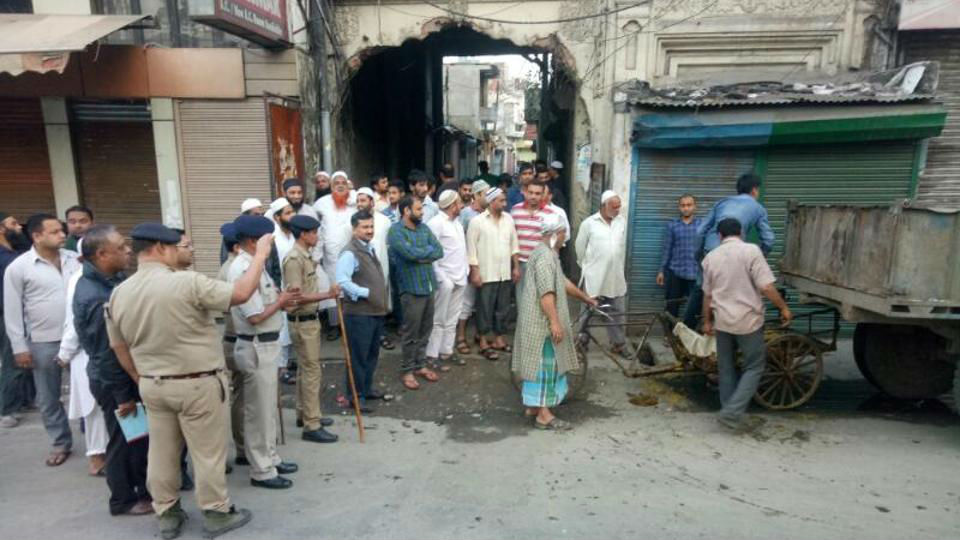
DEHRADUN: A few days after a crackdown on illegal slaughterhouses and abattoirs in and around Haridwar, teams of the food safety department raided a few slaughterhouses located at Innamullah building near railway station and Muslim colony in Kargi early Saturday morning.
Department sources said buffalo carcasses and meat were seized during raids, following which notices were issued to seven people, while all unlicensed abattoirs had been sealed.
Sources said there are over 50 illegal abattoirs in the district, of which majority are running in the outskirts of cities such as Sahaspur, Vikasnagar and Doiwala, while major part of meat is brought on bikes from Saharanpur.
Raids were carried out by several teams comprised officials of the city administration, food safety department and police, and the accused were booked under two separate cases — illegal slaughtering of bovines and violation of environmental norms.
Notices have been served on four people from Innamullah building — Abdul Salam, Naushad, Mohammad Shahzad and Irfan Kureshi; two from Muslim colony in Kargi — Mohammad Gulfam Ahmad and Mustakim; and one from Chukhu mohalla — Vikas Sonkar.
The notice provide them three days to present documents before the food safety officer, failing which the department will register a case against them on Tuesday under the Food Safety and Standards Act 2006.
According to officials, who conducted raids, they found bovines being slaughtered, and blood flowing into drains in gross violation to the environmental norms.
Divulging details of raids, officer designate, the Food Safety and Standards Authority, Anoj Thapliyal said, "Owners of these so-called slaughterhouse neither had licence from the Food Safety and Standards Authority of India (FSSAI) nor were they following correct waste disposal method as has been set by FSSAI. The condition is extremely dangerous, polluting and life-threatening."

After U.P. slaughterhouse raids, it’s Dehradun next

Notices served on seven abattoirs without licences
Following the crackdown on illegal slaughterhouses in Uttar Pradesh, the BJP government in neighbouring Uttarakhand also raided slaughterhouses in Dehradun on Saturday, and served notices on at least seven persons for allegedly running “illegal” operations.
Superintendent of Police (City) Ajay Singh said, “The slaughterhouses were running without licence … We have given the slaughterhouse owners three days to produce the required documents, failing which strict action will be taken where the defaulters might have to serve an imprisonment of six months and pay a fine of Rs. 50,000.”
On Saturday, seven persons were served notices for running slaughterhouses which were allegedly in violation of the Food Safety and Standards Act, 2006, the designated officer of the Food Safety and Standards Authority in Dehradun, Anoj Kumar Thapliyal, said.
The teams that raided three areas in Dehradun had officials from the district administration, the police, and the health and animal husbandry departments.
Early morning searches
“The raids continued in three localities of Dehradun [Inamullah Building, Chukhu Mohalla, and Muslim Basti] between 4 a.m. and 7.30 a.m. ,” Mr. Thapliyal said. He added that “the defaulters had no licence and the bovines were being slaughtered under unhygienic conditions.”
The police said the crackdown would continue.

‘Illegal’ slaughterhouses raided in Uttarakhand, notices sent to seven people

The accused were booked under two separate cases — illegal slaughtering of bovines and violation of environmental norms — and asked to reply in three days
After Uttar Pradesh, it is the Uttarakhand government’s turn to crack down on illegal slaughterhouses operating across the state.
Government teams raided three places with “unlicensed abattoirs” in Dehradun on Saturday morning, issuing notices to seven people. According to sources, bovines were being slaughtered under unhygienic conditions even as the operation was in progress.
The team – comprising officials from the police, municipal, district administration and food safety departments – started by raiding Inamullah Building, located in a Muslim-dominated area in the heart of Dehradun, at 4 am. They reportedly witnessed bovines being slaughtered, and blood flowing into drains in gross violation of environmental norms.
“The accused neither had valid licences nor adequate arrangements for proper disposal of waste. The conditions were extremely dangerous, polluting and life-threatening,” Anoj Kumar Thapliyal, designated officer of the Food Safety and Standards Authority in Dehradun, told Hindustan Times.
The team also raided slaughterhouses at Kargi Chowk and Chukhuwala, and returned with similar reports. In all, four people from Inamullah Building (Abdul Salam, Naushad, Mohammad Shahzad and Irfan Kureshi), two from Muslim Colony in Kargi (Mohammad Gulfam Ahmad and Mustakim), and one from Chukhuwala (Vikas Sonkar) were served notices.
They were booked under two separate cases of illegal slaughtering of bovines and violation of environmental norms. The first offence, to be decided in the chief judicial magistrate’s court, will entail six months’ imprisonment and a penalty of up to Rs 50,000. The second, which will be judged in the additional district magistrate’s court, is punishable with a penalty of up to Rs 2 lakh.
The traders were given three days to submit their responses to food safety officers. All the cases have been booked under the Food Safety and Standards Act-2006.
Superintendent of police (city) Ajay Singh said this was just the start. “Similar raids will happen in the coming days. We won’t allow any illegal slaughterhouse to exist,” he added.
Sources say there are over 50 illegal abattoirs in the district, spread across suburban areas such as Sahaspur, Vikasnagar, Premnagar, Doiwala and Chakrata.

UP slaughterhouses: All about the Rs 15,000-cr industry that employs 25 lakh people

The Aligarh-based Frigerio Conserva Allana Limited is one of the country’s biggest slaughterhouse-cum-meat processing units, contributing to a huge industry that provides livelihood to an estimated 25 lakh people directly or indirectly. 
The BJP’s election manifesto promised to shut down all illegal slaughterhouses and place curbs on all mechanical abattoirs in the state. The manifesto said the concerns were about UP’s livestock that suffered badly during previous dispensations. Though cow slaughter is banned in UP, there is no ban for slaughtering buffaloes. As the Yogi Adityanath government launches a crackdown on illegal slaughterhouses, here’s a look at Uttar Pradesh’s abattoirs and what drives the business
What does it take to start an abattoir
A proposal is submitted to the industries centres by an applicant after procuring land for the unit. It is then sent to the UP Pollution Control Board (UPPCB) which forwards it to the concerned district magistrate (DM) for clearance. A panel formed by the DM visits the project site and examines it on various parameters, law and order being the most important factor. After receiving the administration’s nod, the proposal is sent back to the UPPCB for granting no objection certificate (NOC). A team of UPPCB officials also visits the project site and screens it to ensure it conforms to the norms laid down to check air, water and other forms of environmental pollution. An application is then moved by the plant owner before the Agricultural and Processed Food Products Export Development Authority (APEDA), the Union government’s regulatory body that monitors exports of all products. Before granting approval for export, the APEDA carries out its own inspection of meat and meat products in slaughter houses, processing plants, storage and conveyance facilities.
Number of slaughter houses in UP
Of the 72 government-approved abattoirs across the country, 38 are in Uttar Pradesh, according to UP Pollution Control Board based on NoCs issued. This includes four government-run of which only two – Agra and Saharanpur – are functional. The remaining two are proposed in Lucknow and Bareilly. Hind Agro IMPP in Aligarh is one of the first plants set up in 1996.
Why do illegal slaughterhouses flourish
Most of the 38 slaughterhouses in Uttar Pradesh cater to exports. The buffaloes slaughtered in India are in demand in Gulf countries because of two reasons -- low cost and the assurance that buyers in Muslim countries are assured it is halal, slaughtered in a manner Muslims consider ritualistically appropriate. Under these circumstances, the local demands are met by illegal or standalone slaughterhouses.
How are buffaloes procured
On an average, 300 to 3000 livestock is slaughtered daily at these abattoirs depending on their capacity and permission. The abattoirs slaughter buffalo, sheep and goat, which have become ‘spent’ for their owners/farmers, mostly Hindus, and are procured by a group of traders from regional weekly ‘mandis’ (village markets). The average cost of a buffalo is around Rs 20,000. A minimum of 10-acre plot of land is needed to set up an IMPP at a cost of Rs 40 to 50 crore. The slaughter houses in the state have permission to kill a bull which is more than 15 years or is of an unhealthy breed.
ead more
How big is the industry
Uttar Pradesh is the market leader in production and export of meat in the country. There is no record of illegal animal slaughter and the quantity of meat produced from animals butchered illegally but rough estimates suggest that 140 slaughterhouses and over 50,000 meat shops don’t have permission. As per an APEDA report, UP is the highest producer of meat with 19.1% share, followed by Andhra Pradesh at 15.2% and West Bengal at 10.9%. From 2008-09 to 2014-15, the state produced 7515.14 lakh kg of buffalo meat, 1171.65 lakh kg of goat meat, 230.99 lakh kg of sheep meat and 1410.32 pork meat in the year 2014-15, data from the state’s animal husbandry department show.
How does Centre support the industry
The Centre has been encouraging the meat industry and the food processing ministry by providing aid of up to 50 per cent of the cost of setting up a unit. Uttar Pradesh accounts for nearly 50 per cent of India’s total meat exports and more than 25 lakh people are associated with the industry directly or indirectly, according to the All India Meat and Livestock Exporters’ Association.
How will a ban on slaughterhouses effect the industry
As per estimates, meat exports account for Rs 26,685 crore annually, according to UP’s animal husbandry department. According to the All India Meat and Livestock Exporters’ Association, a ban on meat exports would mean a loss of at least Rs 11,350 crores of revenue for the state. And if it persists the for next five years, then the revenue loss can mount up to Rs 56,000 crore. In the year 2015-16, UP exported 5,65,958.20 metric tonnes of buffalo meat.

Apr 8, 2017

DINAKARAN NEWS


DINAKARAN NEWS


DINAKARAN NEWS


DINAMALAR NEWS


Will ice creams win, or frozen desserts?

Two giant brands get into a slugfest over the goodness of ice creams and frozen desserts, reports Sohini Das.
IMAGE: Bengali actress Rituparna Sengupta (left) and actress June Malia ahead of an ice cream eating competition in Kolkata. Photograph: Sucheta Das/Reuters.
Temperatures are soaring this summer in the ice creams versus frozen desserts battle between the country’s two behemoths: Dairy major Gujarat Cooperative Milk Marketing Federation that markets the Amul brand of ice creams and FMCG major Hindustan Unilever Limited, which owns the Kwality Walls brand.
The two have sparred earlier too but, this time, the stakes are bigger given that both are fighting not just for a bigger slice of the summer pie, but are also battling customer perceptions about health and nutrition.
HUL has moved Bombay high court against Amul over a recent commercial that urges consumers to use their discretion when buying their favourite dessert.
The ad, which features a little girl visiting a dentist, ends with a voiceover that asks customers to go for real milk-based ice creams from Amul and not vegetable oil-based frozen desserts.
It asks the consumer to check the pack for the word ice cream.
Amul has chosen this narrative, as according to the Food Safety and Standards Authority of India, there is a technical difference between ice creams and frozen desserts.
Ice creams that are made with vegetable oil have to be labelled ‘frozen desserts’, while only those that are made with milk fat can be legally called ‘ice cream’.
Amul has chosen to hype its brand strength in the ad, say experts, who see nothing wrong in that.
According to Ambi Parameswaran, founder of Brand-Building.com, “Amul has always positioned its ice creams as ‘real milk real ice creams’ and now, in this ad, it is highlighting its strength.”
This is not the first time that Amul and HUL have taken each other on; in 2012, Amul had insisted that HUL strike the word ice cream off its ads since they were misleading the consumer about the true nature of the product.
Amul had complained to Advertising Standard Council of India. Consequently, ASCI had asked HUL to replace ‘ice cream’ with ‘frozen dessert’. HUL had given in to the order at the time.
What has got HUL hot under the collar this time?
Sources indicate that the company has objected to the use of the term ‘vanaspati tel’ in the Hindi advertisement, which makes the product look unappealing.
An HUL spokesperson said, “Amul has been airing a misleading television commercial since March 2017. This advertisement makes factually incorrect statements creating apprehensions among consumers of frozen desserts. It makes incorrect claims about the usage of ‘vanaspati/vanaspati tel’ in frozen dessert. We wish to clarify that Kwality Walls range of ‘frozen desserts’ does not contain vanaspati.”
The company makes it clear that they use milk/milk solids like ice creams and the only difference is that frozen desserts use vegetable fat instead of dairy fat.
“This actually makes them healthier as they have lower saturated fat and do not have cholesterol,” the spokesperson adds.
R S Sodhi, managing director, GCMMF, says that HUL can go ahead and promote the goodness of its products.
He however notes that vegetable oils are much cheaper than milk fat. “Vegetable fat costs around ₹60 per kg, while milk fat is around ₹300 per kg. Even then, prices of HUL’s frozen desserts are higher than Amul’s by 10-20 per cent.”
Given that the fight is over the ₹7,500-odd ice creams plus frozen desserts market in India, which is roughly growing at 10-12 per cent annually, the aggression on display is hardly surprising.
Tempers are even more frayed since both brands have had to face the brunt of challenger brands that have emerged as significant players in regional pockets.
Ahmedabad-based Havmor Ice Creams, which categorises itself as a mass premium ice cream and prices its fare a tad higher than Amul, is the market leader in Gujarat, with close to 40 per cent share in the state, followed by the number two position in Rajasthan.
In the South, Arun Ice Creams is a strong and established player taking on both big brands.
Euromonitor, which tracks data on only the ice cream market, said that, between 2017 and 2021, it is likely to grow at 10.3 per cent.
While Amul is the market leader with a pan India presence in the space, according to Euromonitor, it has a 17 per cent value share in the ice creams plus frozen desserts market.
Clearly there is enough room for growth but, given the proliferation of small brands and the growing customer preference for local labels, it is becoming imperative that brands put up a strong fight for their turfs.
However, at the end of it, Parameswaran says, “These battles cannot be won in courts. Ultimately the brand wins or loses the battle. The consumer would decide the victor.”

UP has more than half of approved abattoirs in India: govt

"As per the information available in the Food Licensing and Registration System (FLRS) of the Food Safety Standards Authority of India (FSSAI), the total number of slaughter houses (mechanised or non-mechanised) for which license or registration have been issued under Food Safety and Standards (FSS) Act, 2006 is 1,707," Kulaste said
New Delhi, Apr 7 Uttar Pradesh, where the BJP government is clamping down on "illegal" slaughterhouses, accounts for more than half of the approved abattoirs and meat processing plants in the country, the Centre today said.
Minister of State for Health Faggan Singh Kulaste in a written reply in Lok Sabha said licenses have been issued to around 1,700 slaughterhouses by the country's food regulator FSSAI.
According to figures given by Kulaste, Uttar Pradesh has 42 out of the total 76 approved abattoirs-cum-meat processing plants or standalone abattoirs.
Maharashtra is second with 13 abattoirs while Punjab and Andhra Pradesh had five approved abattoirs each.
"As per the information available in the Food Licensing and Registration System (FLRS) of the Food Safety Standards Authority of India (FSSAI), the total number of slaughter houses (mechanised or non-mechanised) for which license or registration have been issued under Food Safety and Standards (FSS) Act, 2006 is 1,707," Kulaste said.
He said the Agricultural and Processed Food Products Export Development Authority (APEDA) registers integrated abattoir-cum-meat processing plants or standalone abattoirs engaged in export.
Asked whether any domestic need assessment was done before such licenses were granted, he said, "No such assessments are carried out before grant of licences".
"In terms of section 31 of the FSS Act 2006, all food business operators have to obtain license or registration for commencing any business," he added.
After coming to power, new UP chief minister Yogi Adityanath has ordered the closure of illegal slaughterhouses and strict enforcement of the ban on cow smuggling to fulfil a key electoral promise of the BJP, which led to their closure.
This has reportedly created scarcity of meat in the state leading to the shutting down of many meat shops, according to reports.

UP has most approved abattoirs in India

NEW DELHI: Uttar Pradesh, where the BJP government is clamping down on "illegal" slaughter houses, accounts for more than half of the approved abattoirs-cum-meat processing plants in the country, the government informed the Lok Sabha on Friday.
In a written reply, minister of state for health Faggan Singh Kulaste said UP has 42 of the total 76 approved abattoirscum-meat processing plants or standalone abattoirs.
Next to UP is Maharashtra with 13 abattoirs while Punjab and Andhra Pradesh have five approved abattoirs each. "As per information available in the Food Licensing and Registration System of the Food Safety Standards Authority of India, the total number of slaughter houses (mechanised or nonmechanised) for which licence or registration have been issued under Food Safety and Standards (FSS) Act, 2006 is 1,707," Kulaste said.
He said the Agricultural and Processed Food Products Export Development Authority registers integrated abattoircum-meat processing plants or standalone abattoirs engaged in exports.
Asked whether any domestic need assessment was done before such licences were granted, he said, "No such assessments are carried out before grant of licences."

500kg of artificially ripened fruit destroyed

VADODARA: Teams of the Vadodara Municipal Corporation (VMC) health department continued their crackdown upon artificially ripened mangoes for the second consecutive dayon Friday. Food safetyofficers of the civic body destroyed over 500kg of mangoes during the drive.
In wake of mangoes arriving on a large scale in the market, the VMC was instructed by the state government to take action on any means taken to ripen them artificially. The civic body began the drive following the instructions and on Thursday destroyed over 250kg mangoes in the Khanderao Market that has a large number of wholesale dealers and godowns.
But the action on Thursday did not seem to have much impact on the traders and the civic body cracked down on them again on Friday. This time 24 storage facilities were checked by the food safety officers.
VMC officials said that rampant use of ethylene for ripening mangoes came to light during the drive. Officials seized 560kg of mangoes that were ripened using the chemical. The mangoes were taken to the Jambuva landfill site and destroyed there. The civic body has warned the traders in the market against using chemicals to ripen mangoes.

Accused of selling stale apple concentrate JKHPMC, says its product confirmed safe

SRINAGAR: After being accused of selling expired apple concentrate in the state assembly by a ruling PDP minister, the Department of Horticulture Friday said that its apple juice concentrate conforms to the set food safety norms.
In government handout the department spokesperson has said that the separate analytical reports received from the Food Analyst Kashmir and NABL (National Accreditation Board for Testing and Accreditation of Laboratories) accredited AVON Food Lab Pvt Ltd, New Delhi, the samples of the apple juice concentrate lifted from JKHPMC Juice Plant at Doabgah, Sopore February last have been found conforming to the Food Safety and Standards Regulation 2011.
In January PDP legislator and Education minister Altaf Bukhari in State Assembly blamed the government for ‘selling poison’ instead of apple concentrate produced at this plant accusing that juice processed three years back is being supplied to the market,maintain that its shelf life being 18 months.
It prompted the Deputy Speaker Nazir Gurezi asked the government to present a report in the House regarding the issue.
The spokesman added that the samples were sent for testing on the directions of the Chief Minister Mehbooba Mufti after a legislator raised the issue in the Assembly during the Budget session 2017. He added that JKHPMC’s 10,000 MT capacity Apple Juice Concentrate Plant at Doabgah, Sopore has been upgraded and modernized with state-of-the art machinery turning it from manual mode to fully automatic.

Ways of capturing consumer attention

The onset of summer and rising mercury levels will soon lead to a huge demand for ice-creams and frozen desserts across India. This implies a huge sales opportunity for these companies in India. However, with HUL filing a case against Amul, an interesting twist has been added to the tale. The point of contention is a media campaign launched by Amul to educate customers on the difference between ice-creams and frozen desserts – the key difference being that the former uses dairy fat while the latter uses vegetable oil.
However, the basis of the legal tussle and concern shown by HUL to Amul's media campaign is unwarranted due to the following reasons:
First, the TV commercial and print advertisement recently launched by Amul is just an act of creating awareness regarding the fundamental difference between ice-creams and frozen desserts. The whole idea is to allow the consumer make a conscious choice while trying to soothe their taste-buds and beat the summer.
There are just a few who really understand or appreciate this difference while making a purchase despite the labelling as per Food Safety and Standards Authority of India (FSSAI) guidelines. In such a scenario, communicating the facts or creating awareness about the ingredients of the product offerings always builds trust and transparency with the customer and should be encouraged by all companies.
Secondly, HUL's apprehension regarding negative publicity and impact on its sales is unfounded – the reason being that the campaign does not say that other companies are making a false representation on their product labelling. It is simply highlighting the difference between ice-cream and frozen dessert as per the technical definition by FSSAI. As of now, a majority of the consumers in India buy ice-creams or frozen desserts sold by ice-cream carts and shops on the assumption that they are buying ice-creams.
Thirdly, the ice-cream and frozen dessert industry has been growing in India at an average of 15-17 per cent. The growing demand potential is also evident from the entry of local and multinational players like Naturals, Havmore, Fresh and Naturelle, Cocoberry, Hagen-Dazs and the like. Both Amul and HUL carry a strong brand appeal of quality product offerings in this industry and maintain strong market shares in India. So, it is unlikely that consumers who like HUL's frozen desserts and ice-creams will make a shift to Amul or other ice-cream brands. 
The companies must realise that the rules of the game are changing with their trying innovative ways of capturing consumer attention in a competitive landscape. The companies can deliberate on the following questions to decide upon the winning combination: What kind of product offerings in a specific industry provides more value to the target segment?
What kind of engagement models can be designed to bring together the marginalised people from the poor communities as suppliers, employees, or micro-entrepreneurs across the value chain? How can the companies redefine their business model to target the rural markets for their offerings? These are the kind of questions that will define the future of every industry in India. The sooner companies realise this reality, the better will be their chances of survival.

Apr 6, 2017

DINAKARAN NEWS


DINAKARAN NEWS


DINAKARAN NEWS


DINAKARAN NEWS


DINAMANI NEWS


Four held

The police have arrested four persons who attempted to intrude Aram Valartha Mariamman temple near Kuniyamuthur allegedly armed with weapons, on Saturday night. The arrested have been identified as Muhammed Rafiq (31), Ibrahim (33) of Edayarpalayam, Muhammed Nizar (27) of Madukkarai market, and Abuthahir (33) of B.K. Pudur.
Seized
Officials of Food Safety and Standards Authority of India seized 3.5 tonnes of banned tobacco products worth Rs. 5 lakh during a raid conducted on Wednesday.

Kerala: Food safety officials finds cancerous preservatives

High level of carcinogenic sodium benzoate found in six samples of fish.
Experts opined that the preservative is highly dangerous to one's health and can also cause gastroenteritis.
Thiruvananthapuram: When the food safety officials initiated Operation Sagar Rani across the state, out of 405 fish samples, six contained sodium benzoate which is a preservative that can cause cancer.
Four samples were identified in Thiruvananthapuram, one each in Kollam, Kochi and Kozhikode districts.
Food safety officials told DC that all the samples were sent to Central Institute of Fisheries Technology, Kochi, which revealed the high level of sodium benzoate.
Experts opined that presence of the chemical substance could cause gastroenteritis as well as cancer. At the same time, the ice they seized revealed high dose of formalin.
“Initially, fish and dairy products were not checked. But when there have been several complaints from across the state on the quality of fish, we decided to check random samples. It revealed high dose of sodium benzoate which is actually a preservative to store the fish for a longer duration,” said a top official.
Much to their horror, when they seized the drinking water from tanker lorries, it showed dangerous levels of e.coli bacteria in Ernakulam district. The officials are trying to find out from where they source water there.
Meanwhile, the department has also decided to continue one of their flagship programmes, ‘safe food for healthy life’ in 280 more schools in the coming academic year after its success last year, started as a school health programme at a budget of close to Rs 50 lakh.
The department has selected 50 villages as part of bringing 100 food security villages where nutrition experts would be given lectures and classes.
A high-level meeting comprising food safety commissioner Ms Navjot Khosa and assistant food safety commissioners and district officers were held in Thiruvananthapuram on Wednesday where they decided to enforce stringent measures to combat pesticide and chemicals laced fruits, vegetables, drinking water and milk.
Chief Minister Pinarayi Vijayan has called another high-level meeting on food safety.

Give us space to slaughter chicken, fish: Gautam Budh Nagar food dept

NOIDA: In a fix over the issue of licenses to chicken and fish shops, Gautam Budh Nagar food safety and drug administration (FSDA) has written to the state government to clarify its stance on the slaughtering of chicken/fish and issuance of license to the sellers.
Ever since the Yogi-Adityanath led government came to power, authorities have become active in closing operation of many road-side vendors or meat, chicken and fish shops which were operating without a license, along with the illegal abattoirs as promised by the BJP in its manifesto.
According to the rules of the Food Safety Act, 2006, slaughtering of animal is not allowed in any meat/chicken/fish shop and can only be done in a slaughter house.
There is only one government-approved slaughterhouse cum meat processing unit Surajpur area of Greater Noida apart from the ones in Dasna in neighbouring Ghaziabad district and the Ghazipur mandi where goats and sheep can be slaughtered.
However, there are practical problems in executing the ban on slaughter of chicken or fish in the shops.
"There is a problem of demand and supply when it comes to chicken or fish. If a person buys 50 kilogrammes of slaughtered chicken from a slaughter house and is only able to sell 40 kilogrammes, what will he do with the rest of the chicken? Secondly, there is no slaughter house for chicken or fish in Gautam Budh Nagardespite being significant demand from the residents. We have asked the government to provide us spots where the chicken or fish can be slaughtered," Mahendra Srivastava, designated officer, FSDA department, Gautam Budh Nagar told TOI.
A letter to this regard was sent to the FSDA headquarters in Lucknow on April 1.
Meat,chicken and fish sellers too rue that while the government suddenly wants them to comply with all the rules, it has to provide space for the same.
"If we cannot slaughter chicken in our shop, we have to be provided with a designated space for the same," said a meat shop owner in Sector 22.
Awaiting instructions, the department has issued licenses only to 26 meat sellers in Sector 62.

Sweets vendors using excessive colours: FSSAI

Belagavi: After a massive crackdown on adulterated milk in Belagavi district and border areas, the Food Safety and Standards Authority of India (FSSAI) has said that the sweets sold by local vendors are not safe for consumption.
A detailed probe by the Belagavi food authority officials revealed that 'Bombay halwa', a local sweet, contained excessive food colour. According to FSSAI, only 0.5% edible colour can be added for preparing 1kg halwa. "If the colour added is more than the prescribed limit, sweet products can be pose health risks like cancer, high blood pressure and diabetes," officials said.
Officials said they examined sweet samples for a well-known shop in Bhagya Nagar area in Belagavi. "We have warned all sweet shop owners and asked them to use edible colours according to the prescribed limits. During a raid recently, we tested sweets from a shop in Bhagya Nagar. Results revealed that the food colour was more than the required limit. We are waiting for orders from FSSAI commissioner to lodge a case against the shop owner," said Mahadevi Bekkeri, FSSAI district officer.
Officials said they also found excessive colours in 'pharsan', a local snack. "We recently imposed a fine of Rs 2 lakh on a packaged water manufacturing unit in Belagavi. However, staff crisis is affecting our operations in Belagavi. We struggle to nab culprits involved in food adulteration due to lack of trained officers," Bekkeri added.