Feb 15, 2017

FSSAI constitutes panel to identify nutritional gaps

The Panel on Food Fortification and Nutrition will also review standards for all suitable food fortifying vehicles in addition to healthy dietary intake of fat, sugar and salt.
Ministries of health, women and child development, biotechnology department and Indian Council of Medical Research will also be working with the panel.
The Food Safety and Standards Authority of India (FSSAI) has constituted a panel to identify critical nutritional gaps in the Indian diet in general and also in specific specific target groups.
The Panel on Food Fortification and Nutrition will also review standards for all suitable food fortifying vehicles in addition to healthy dietary intake of fat, sugar and salt. The panel would include Dr Ambrish Mithal (Medanta) Dr C S Pandav and Major General (Retd) Dr R K Marwaha (AIIMS), Dr Anura Kurpad (St. John’s Medical College), Dr Yogeshwar Shukla (CSIR-Indian Institute of Toxicology Research), Prof H P S Sachdev (Sita Ram Bharatia Institute of Science and Research), Dr K M Nair (National Institute of Nutrition), Dr P Ramachandran (Nutrition Foundation of India), Dr Sumit Arora (National Dairy Research Institute) Dr Sirimavo Nair (MS University, Baroda) and Prof Harsulkar (Bharati Vidyapeeth).
Ministries of health, women and child development, biotechnology department and Indian Council of Medical Research will also be working with the panel. According to National Family Health Survey (2006-07) and the World Bank (2006), about 70 per cent preschool children suffer from iron deficiency anemia. As many as 57 per cent preschool children have sub-clinical vitamin A deficiency.
World Bank (2006) figures say Iodine deficiency is endemic in 85 per cent of districts. Folate deficiency leads to Neural Tube Defects, the most common congenital malformation in India with an incidence that varies between 0.5-8/1,000 births. It is estimated that 50-70 per cent of these birth defects are preventable. To deal with endemic nutritional deficiencies, FSSAI has launched the Food Fortification Resource Centre to promote large-scale fortification of food across India.

Delectable food still a far cry for rail passengers

PATNA: While the railways is focusing more on improving food quality on running trains, general refrain of passengers is that they are still being served poor quality meals on premier trains originating from different stations under East Central Railway (ECR) jurisdiction in Bihar. Railways has not revised its menu for long distance trains, such as Patna-New Delhi Rajdhani Express and Patna-New Delhi Sampoorna Kranti Express, sources said.
Passengers hardly find quality of pulse, rice, vegetables, soup, cutlets and non-vegetarian meals delectable on Rajdhani Express. “Railways is charging flexi fares in the Rajdhani Express these days. At least meals served to elite class of passengers must be fresh and of good quality,” said an aggrieved passenger, adding that meals served on other Rajdhani Express trains are good in taste.
According to an IRCTC official, railways has set up a centralised catering monitoring cell (CCMC) in New Delhi with a view to keeping a tab on food quality served to passengers on running trains. “A toll free number, 1800 111 321, has also been started by railways for registering complaints in case of passengers’ grievances,” he said, adding the cell has been getting passengers’ complaints and suggestions every day.
According to sources, railways has introduced a defined quality assurance programme under which passengers are to give a feedback opinion about the quality of meals served to them on running trains. An interactive voice recording system (IVRS) has also been introduced in select trains to record passengers’ opinion about the food quality being served to them on running trains, sources said, adding this system is not strictly followed in most of the trains running from Bihar.
Reacting to poor quality meals being served to passengers on trains, a Railway Board official said, “Railways had introduced a third party audit of catering services to maintain transparency in its functioning. This practice was made mandatory in every zone, including ECR. The basic purpose of introducing this system was to maintain quality and hygiene in supply of meals and breakfast to passengers either on running trains or on railway platforms,” he said.
A railway board official admitted that several cases were detected about sub-standard food served to passengers on running trains in different zones last year. “Railways imposed fines on the agency concerned in about 52 cases of complaints,” he said.
According to sources, railways is also planning to introduce air-conditioned pantry cars in all important zones on the pattern of Rajdhani Express to ensure better food quality. Railways is keen to abolish gas cylinder cooking system permanently from pantry cars, sources said.
Meanwhile, quality of meals being served to passengers under e-catering services has also drawn flaks from passengers. Most of the complaints are about stale food supply being supplied to passengers under e-catering services, sources said.

The Maggi ban: How India's favourite two-minute noodles lost 80% market share

New Delhi: It was Sanjay Singh, a food inspector at the Uttar Pradesh government's Food Safety and Drug Administration, who spotted the label that claimed "no added MSG (monosodium glutamate)" on the bright-yellow packets of Maggi noodles in March 2014 during one of his routine raids on retail outlets.
A PhD in organic chemistry, Singh picked up a sample and sent it to the state laboratory at Gorakhpur for testing. The result that came a few weeks later was positive-that particular sample of Maggi noodles had MSG. Samples of Maggi noodles were then sent to the Central Food Laboratory in Kolkata in June 2014.
The results that came after almost one year in April 2015 read: "MSG: Present and Lead: 17.2ppm (parts per million)". The amount of lead found was over 1,000 times more than what Nestle India Ltd had claimed. 
The Uttar Pradesh food safety commissioner sent a formal notice to Nestle seeking clarification on presence of MSG and lead in Maggi samples. The company did mail its response along with its internal monitoring documents on 5 May 2015, but did not take any proactive step to counter any possible aftershock. On 7 May, there was a small news item on the episode in one of the Hindi newspapers in Uttar Pradesh.
Still, Nestle did not react. It never thought the news could lead to an estimated half a billion-dollar loss for the company (including erosion of brand value) that would shake the Swiss multinational and that the subject would be debated at length in television studios.
Nestle failed to gauge the depth of the crisis even after national newspapers started writing about it. It did not issue any statement till 21 May. And in its first official statement, it said there was "no order to recall Maggi noodles being sold" and the popular instant noodle was "safe to eat".
Interestingly, Nestle could have settled the issue according to the law under the regulations with the Uttar Pradesh food safety department by paying a penalty of Rs3 lakh as the Maggi sample contained MSG even though the pack said it didn't, making it a punishable offence. However, Yudhvir Singh Malik, chief executive officer of Food Safety and Standards Authority of India (FSSAI) at that time, stepped in on 25 May.
On 5 June 2015, the day FSSAI asked Nestle to recall Maggi noodles, the company's global chief executive Paul Bulcke met the regulators, and addressed the media in New Delhi. Bulcke said: "This is a matter of clarification and we need to sit down together and clear the air. We will look into the safety concerns. We do not add MSG in Maggi noodles. We apply the same quality standards everywhere. Everything we do is keeping consumers in mind. We will do everything it takes, and are fully engaged with the authorities."
But by then, things had spun out of control. Bulcke was left with little choice but to recall the popular noodles from the market. The company got Luca Fichera, then executive vice-president (supply chain) at Nestle India, to lead the recall process.
Between 5 June and 1 September 2015, Fichera's team collected 38,000 tonnes of Maggi noodles from retail stores, and destroyed them by first crushing the noodles and then mixing them with fuel and burning in incinerators at 11 cement plants across the country.
"The entire recall process is huge and complex," Fichera told Mint before he moved to become the director (supply chain) for Nestle Philippines.

Pesticides, Toxic Heavy Metals Found in Organic Rice


Grahak Sathi, a National Consumer Magazine in Hindi, published by the Ahmedabad-based Consumer Education and Research Centre (CERC), Ahmedabad, has released the findings of its in-house comparative product-testing laboratory on seven brands of organic rice. The findings revealed that six out of seven brands had pesticide residues and all seven brands contained toxic heavy metals. The very rationale of buying an organic product is to ensure it is pesticide-free.
The brands carried a variety of logos and certifications from national and international agencies. This is confusing for consumers. Why should a product meant for the domestic market carry so many international logos?
The three heavy metals tested for in the products were lead, copper and arsenic. “We tested the products for 16 pesticides. The four pesticides detected belonged to the organophosphate group,” says the report.
Six of the seven brands of organic rice contained pesticide residues. Fabindia Organics did not have pesticide residues. Two brands, Organic on Call and Sanjeevani Organics, had Chlorpyrifos levels above the prescribed limit. Two of the four non-organic rice brands had pesticide residues.
Over a long duration even microscopic quantities of pesticides can be harmful. The pesticides detected by the tests are not in the US list of pesticides permitted in organic products.
All the organic rice brands showed presence of all three heavy metals, though they were within the prescribed limits. None of the non-organic rice brands had arsenic. Copper levels were higher than in organic rice brands, though within limits. Lead levels were within limits and slightly lower than that in the organic rice brands.
Organic rice brands are much costlier than ordinary brands. Comparing the extremes, you would be paying more than five times the price for the costliest organic rice brand –Fabindia Organics – than you would for the cheapest non-organic rice brand – Hypercity. 
Most organic rice brands claimed to be free of pesticides. Morarka Organic’s Down to Earth, which contained both pesticide residues and toxic heavy metals, claimed to be: “…free from chemicals, fertilizers, pesticides, toxic substances, synthetic hormones…” Two organic rice brands – Vikalp Organic Product and Organic on Call – did not have any organic certification.
Manufacturers’ Response
As a policy, the laboratory conveys the test results to manufacturers. It received the following responses:
Sanjeevani Organics said that organic certification was done for the practices and processes, and not for the products. But consumers are concerned not with processes and practices but with the end product. Certification for processes must reflect in quality of final product.
24 Mantra Organic said that the pesticide detected by the tests, Chlorfenvinphos, was not used even in conventional paddy cultivation and not available in their project area. 
Organic Tattva said that as per the Agricultural and Processed Food Products Export Development Authority (APEDA) guidelines there is no requirement for testing for heavy metals for organic products. While this is true, CERC says “we have tested for them as consumers should be concerned about their presence in foods. Heavy metals accumulate in the human body over a period of time and cause harm.”
CERC has urged that the Bureau of Indian Standards (BIS) should set specific mandatory standards for organic foods. “In response to our appeal over a year ago, we received a letter from Food Safety and Standards Authority of India (FSSAI) saying that BIS has constituted a committee to formulate standards for organic foods. However, no concrete action has been taken as yet,” says CERC. 
It also argues that National Programme for Organic Production (NPOP) certification should be made mandatory. NPOP, which currently certifies organic process standards, should also certify the final product. Also, India needs to follow labelling norms as per global best practices. Regular monitoring of organic food quality, including that sold online, is necessary and advertising claims made by organic product manufacturers should be closely monitored.
Grahak Sathi’s conclusion is that “organic brands of rice are not safer than non-organic ones. There is no concrete evidence that organic food has higher nutritional value than regular food. Also, organic rice brands are much more expensive. Our advice is not to buy organic rice. People want to make healthier choices and the Government must support them in this matter. It should ensure that consumers do not get exploited in the name of organic foods. It is vital that the regulatory authorities set standards and closely monitor the quality of organic food products.”

Feb 14, 2017

Packaged drinking watersale to be streamlined

NO OTHER GO: Waters cans are sold for for Rs.35 to Rs.40 at shops in Thoothukudi.
Collector takes steps to prevent fleecing by water companies
Collector M. Ravikumar has appealed to packaged drinking water companies to bring down the price of canned water.
Speaking to media persons here on Monday, he said that during a recent meeting with the members of packaged drinking water companies association, the proprietors were instructed to sell a can of 20 litres for Rs.20. But they wanted the price to be fixed at Rs.25. The revised price would be notified in the media within a week.
If the price was not brought down soon, the district administration would sell water cans for Rs.15 each through cooperative stores, he said and expressed concern over shopkeepers fleecing the public by selling a can for Rs.35 to Rs.40.
Only nine packaged water companies had received licence and approvals from all the departments of Groundwater, Food Safety and Pollution Control Board. Fifteen other companies had two licences. It was mandatory for all packaged drinking water companies to get all licences and approvals, the Collector said.
Officials concerned should check the quality of packaged water and also whether groundwater was tapped illegally. The functioning of the packaged drinking water companies would be streamlined and new regulations framed within this month, Mr. Ravikumar said.
He said 78 illegal borewells were sealed. A sealed borewell at Deivaseyalpuram, which resumed operations, was sealed again, Mr. Ravikumar added.

Action against misleading advertisements

The Advertising Standards Council of India (ASCI) has upheld complaints about 100 misleading advertisements related to healthcare, personal care, education, food and beverages and E commerce.
The ads in healthcare category included: Dr. Batra’s Homeopathy Family Clinic, which claimed to have cured over 10 lakh patients in 142 cities for hair fall, skin and other disorders. It also offered cure for sexual problems which was in violation of the Drugs & Magic Remedies Act. Similarly “ Nova Pulse IVF Clinic Private Limited” claimed to have carried out over 10,000 IVF pregnancies. The claim was unsubstantiated. Similarly the catch line of the “Richfeel Health & Beauty Pvt. Ltd”’s ad offered better hair growth just for Re.1with a visual of 1 rupee coin. However the body copy of the ad states the treatment costs as Rs. 60,000/-.
Under personal care category the Hindustan Unilever’s ads “The new Lakme Youth Infinity range keeps the contoured look of youth”, and “Percentages of women who have experienced the sculpting power of Lakme Youth Infinity Day Crème” were found to be unsubstantiated and misleading. “ Marico Ltd”s ad “Parachute Advanced apnaiye aur paiye World’s Best Hair”, was found to be misleading and exaggerated.
In education category “Swadesh Competition Classes, Jodhpur, Rajasthan”’s claim of offering Government job in 3 months was found to be unsubstantiated since there was no data to support the claim. “Orane Institute of Beauty & Wellness” made false claim of having largest network of beauty and wellness Institutes in Delhi-Punjab-Chandigarh-Gujarat-Rajasthan-Haryana-Himachal Pradesh”. It also made a false claim of “100 per cent Job Assistance” through the institute .
Under the Food and Beverages category GlaxoSmithKline’s claim that “Horlicks”, “Helps Manage Healthy Blood Pressure”, was found to be misleading by ambiguity and implication.
In E commerce category, “ Amazon India” ad found to be offering “HTC Desire 620G Dual Sim” for the discounted price of Rs.7375, whereas the actual MRP was Rs.9990. “ Cleartrip”’s advertisement was also found to be misleading. Similarly “Magic Bricks” a property site made false leadership claim. Its website did not quantify the total number of properties displayed or sold.
Also, “Bridgestone India”’s claim that its tyres were eco-friendly was exaggerated. The stunts in normal traffic shown in Bajaj Auto’s ad was in disregard to safety and sought to encourages violation of traffic rules. Similarly Idea Cellular’s ad "ek jaroori suchna! abhi call karen 53111 aur payen 50 Rs ka free recharge”, was false and misleading.Philips Appliances’s ad offering life long free service was also misleading.
In other categories, Indigo Airlines’s offer “With fares starting at just Rs.858, book till 8th November 2016 for travel between 11th January 2017 and 11th April 2017”, was false since no such flight fare exist. Besides, there was no specific information about which route or for which flight this offer was valid.
ASCI’s role has been acclaimed by various Government agencies, including The Department of Consumer Affairs (DoCA), Food Safety and Standards Authority of India (FSSAI) and Ministry of AYUSH. The Supreme Court of India in its recent judgement also affirmed and recognized the self-regulatory mechanism put in place for advertising content by ASCI.

What is Food Fortification? Why Milk, Salt and Cereals Need to Be Fortified?

Highlights
  • Food fortification is a common practice that is carried out commercially
  • FSSAI has set up a panel to draft guidelines on fortification of food
  • Food fortification was a measure taken to curb nutrient deficiencies
Familiar with iodised salt or calcium enriched milk? Food fortification or enrichment is a common practice that is carried out commercially. It refers to a process where essential micronutrients, such as vitamins and minerals, are added to food ingredients to make them more nutritious. This is done because sometimes post agriculture, the food products may lack certain vital nutrients due to poor soil conditions or other environmental factors. Also, in some regions the normal diet of the population lacks variety, where they consume only limited food items leading to dietary deficiencies. For example, one often hears tales of farmers living on a meal comprising boiled rice, a pinch of salt and a green chilli; or whole wheat rotis with pickle on the side. To curb such incidences of malnutrition, the staples are hence fortified.
In the early 90s, the WHO (World Health Organisation), FAO (Food and Agricultural Organization of the United Nations), and other nationally recognized organizations brought to light that there were billions of people worldwide who were suffering from a variety of micronutrient deficiencies, particularly Vitamin A, Iodine and Iron. The need for providing additional micronutrients in food sources was thus established.
WHO defines food fortification as “the practice of deliberately increasing the content of an essential micronutrient, i.e. vitamins and minerals (including trace elements) in a food irrespective of whether the nutrients were originally in the food before processing or not, so as to improve the nutritional quality of the food supply and to provide a public health benefit with minimal risk to health.”
What Food Items Can Be Fortified?
While we are all familiar with fortified salts and milk, other ingredients that fall under this category include atta, maida, edible oil, butter, cheese, cereals, infant formulas, teas and other healthy beverages, etc.
The Drawback of Food Fortification
While fortified foods is a stepping stone towards preventing malnutrition on a large scale, health experts point out the fact that there could be chances of increased toxicity as well, if proper method of fortification is not carried out by the respective food brands. According to researchers of the study on Fortification of Foods with Vitamin D in India, done by University of California, “The supplementation strategy certainly has greater specificity of intervention and allows better dose adjustment. However, its disadvantages are: incurred user cost, low compliance, self-prescription and increased risk of toxicity. Fortification strategy has the advantage of universality of the intervention and greater compliance. Drawbacks of the fortification strategy are: the dose is a function of food quantity consumed; lower specificity; and varying standards legislated for each country and quality control and regulatory challenges pertaining to fortification levels with the manufacturers of fortified foods.”
Therefore it is essential to set certain guidelines to prevent any mishap. Addressing this issue at hand, The Food Safety and Standards Authority of India (FSSAI) has set up a panel to draft guidelines on fortification of food items such as salt, milk, wheat flour, rice and edible oil, and prepare strategies to address malnutrition problem. While it is important to boost production and consumption of fortified foods, the guidelines for fortified food production is of greater priority.
Fortified Food Guidelines
The FSSAI draft rules were operationalised in October even as they sought comments from stakeholders before finalising the final regulations. Standards have been set for fortification of salt with iodine and iron; of vegetable oil and milk with vitamin A and D; wheat flour and rice with iron, folic acid, zinc, vitamin B12, vitamin A and some other micro nutrients
“FSSAI has set up a new Scientific Panel on Food Fortification and Nutrition to address issues related to fortification of food,” the regulator said in a statement. The Panel will identify critical nutritional gaps in the Indian diet in general as well as in specific target groups based on diet surveys and credible scientific evidence. It will define strategies to address nutritional needs of the general population and vulnerable groups, besides reviewing the standards for all suitable food fortifying vehicles.
The panel will also address regulatory and related technological issues, review proposals from industry using modern risk assessment methods, and prescribe standard sampling and test methods for effective monitoring, surveillance and enforcement of the relevant regulations. With an effective regulatory mechanism along with the continuous support of all the stakeholders, FSSAI expects that the problem of malnutrition in general and micronutrient malnutrition in particular would be overcome soon.
FSSAI has also unveiled a logo for fortified foods which may be used by food companies.

Poison on your plate

The Law Commission has recommended stringent punishment for adulterators and sent these to the Supreme Court for consideration~By Ramesh Menon
Hungry kya? Food often sets our heart racing with excitement. But, wait. It may not be safe. Pause for a moment before you eat. Are you sure about the contents of your meal?
Here are some imminent dangers: Your chicken fry might contain some harmful antibiotics. The rice biryani might have mercury and aluminium phosphide from tablets that are used as fumigants in rice bags and are poisonous. The silver leaf on sweets may contain an animal residue.
Okay, you like to avoid sugar and opt instead for fruits. But it could have been ripened with carcinogenic calcium carbide. You want to finally sip some tea. But it could have iron filings that are sometimes mixed with the tea leaves when it is cut by iron rollers.
The milk in the tea could have chalk, urea and even soap. It could lead to kidney stones.
After reading this, you may not be hungry anymore. Adulteration has become a thriving business in India, putting our health at risk. But there is hope round the corner.
ENHANCED PUNISHMENT
The Law Commission has now recommended that if someone dies consuming adulterated food or drinks, the punishment for the guilty will be enhanced from six months to life imprisonment under Sections 272 and 273 of the IPC. It recommended that non-grievous injury caused by adulteration could attract a jail term of one year and a fine of Rs 3 lakh. If it results in a grievous injury, it could lead to a jail term of six years and a fine of Rs 5 lakh. And if the person dies, it can lead to life imprisonment and a fine of Rs 10 lakh. These recommendations have been forwarded to the Supreme Court.
In fact, the Supreme Court had asked the Commission to give its view if the centre was required to revisit the Food Safety and Standards Act, 2006, which incidentally, is the single reference point for looking at food and safety standards. Interestingly, while listening to a PIL last year, the Supreme Court had favoured a life term for offences to those adulterating food that proves fatal.
In the case of iron filings in tea, these are usually removed by the manufacturers with the help of magnets. But some particles get left behind. The Consumer Education and Research Centre (CERC) in Ahmedabad cautions that an iron overload could upset the stomach, result in organ damage and even death.
Recently, the centre, which is a credible consumer pressure group, wondered why the Food Safety and Standards Authority of India had increased the permissible limit for iron particles in tea powder to 250 mg/kg from 150 mg/kg.
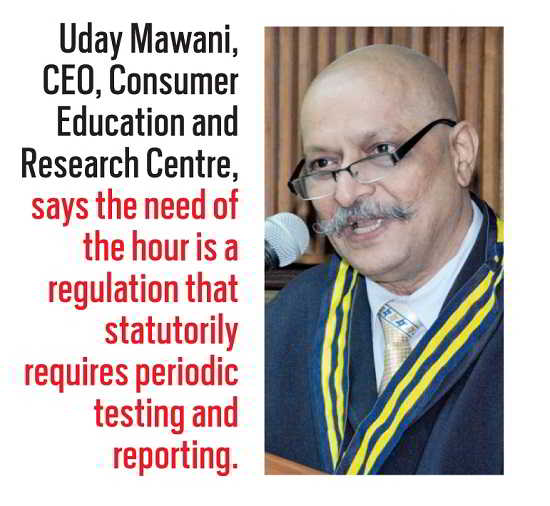
Uday Mawani, CEO, CERC, said: “The Law Commission’s recommendations are a welcome move as adulteration affects all categories of consumers, especially the poor and vulnerable. Consuming adulterated food is like a double whammy as medical bills go up and disposable income for consumption drops even more. It affects their quality of life even further.”
DEVASTATING EFFECT
In 2014, the Centre for Science and Environment had discovered antibiotic residue in chicken samples collected from Delhi and the National Capital Region. These antibiotics are fed to chicken to treat for possible infections of their urinary tract, respiratory tract, eye and ear, blood stream, diarrhoea and tuberculosis. As we all know now, continued exposure to antibiotics could end up in anti-microbial resistance that ultimately leads us to battle superbugs that have no cure.
Wanting to make a quick buck, fruit vendors use calcium carbide, commonly referred by them as “masala” to induce quick ripening of fruits within hours. Though this is banned, it continues on the sly as there are hardly any checks. Calcium carbide is carcinogenic and can cause mouth ulcers, gastric irritation, food poisoning and death.
Food dyes are one of the most widely used and dangerous additives. Your fav-ourite funky blue cocktail could damage your brain and kidneys. Experts say blue colour is known to cross the blood-brain barrier and cause permanent damage over time. Red and green colours are known to cause tumours in the bladder and testes and yellow can trigger hyperactivity in children.
A recent study by the Maharashtra Food and Drug Administration found that 20 percent of milk sold in the state continues to be adulterated. Some had used just tap water which contains impurities. But it isn’t as if bottled water is pure. A study by CERC of 13 leading brands had earlier shown that 10 had foreign objects floating in them, while two contained heavy metals which are toxic.
EXERCISE CAUTION
We just have to watch what we eat. Sugar can have tiny chalk crystals, and salt, powdered stone. Chilli powder can have brick powder, while coriander powder, sawdust or even powdered cow dung. Honey can contain jaggery syrup. Mouth-watering barfis can have harmful dyes and colours that cause cancer, while cumin seeds, coal particles and sooji, coloured sawdust.
Mawani says: “Producers must get their products tested for adulteration from independent laboratories. What we need is a regulation that statutorily requires periodic testing and reporting.”
The Supreme Court is now considering the recommendations of the Commission. Consumer activists feel that life term for food adulterators may be a deterrent.

Zarda packets seized

Acting on a tip off on February 9 from Police Officials of PS, CCS, Port Blair regarding arrival of contraband tobacco products through Andaman Super Express, Courier Service here, Mr R.V. Murugaraj, Food Safety Officer, South Andaman opened two packages of parcel in front of Mr S. Purushotham, Manager, Andaman Super Express, courier service and police personnel from PS, CCS and found Ratna 150 brand Zarda of 50 gms pouches packed in Select Premium CTC tea pouches. Altogether, 151 packets of Zarda were recovered from the tea packets and the prohibited tobacco (Zarda) and tea pouches were seized by the Food Safety Officer in the presence of Police Officials and Manager of the courier service. 
All the courier service/parcel service’s running in A&N Islands have been instructed to pass on information of any suspicious parcel arrived through their courier service to the District Food Safety Office, South Andaman at No. 03192-231024, 03192-238881 and 09434280018 (CFS/DCSA) for thorough check before its released.

Feb 13, 2017

Health staff to keep watch on street food

Bhubaneswar: With summer approaching, the state capital has witnessed mushrooming of juice stalls and other fast food joints, raising the possibility of the spread of waterborne diseases.
Although seasonal flavor and cheap prices are the reasons for crowding of these stalls by people, most of these stalls prepare food at most unhygienic places. “Street foods are tasty and affordable. So we will not think about the hygienic factor,” said Mitun Natyak, a college student who loves street food. 
According to the Food Safety and Standards Act of 2006, any person manufacturing or processing any food item in unhygienic condition shall be liable to pay a penalty of up to `1 lakh. But, sources informed this newspaper that health officials conduct inspection of these stalls only when they receive a complaint. However, staff crunch in the department is hampering its operation. 
“Inspections are done when we receive a complaint. Staff crisis is the major reason for this issue. For instance, we have only one food inspector for Bhubaneswar Municipal Cooperation and entire Khurda district,” said a top official on condition of anonymity.
However, city health official Chandrika Das, who admitted the issue of staff crunch, said that the department has decided to intensify the inspection of these stalls.
“Though we are facing a staff crunch, we have decided to intensify the inspection. Regular inspection is going on at all these stalls and there will be more inspection in the coming days,” Das said. The civic body, which is planning to introduce uniform for street vendors, has decided to intensify the inspection.
“Health officials will monitor these stalls and action will be taken against the offenders,” assured BMC Mayor Ananta Narayan Jena.

FSSAI sets up panel to finalise laws on food fortification

NEW DELHI: Food regulator FSSAI has set up a scientific panel to frame final regulations on fortification of foods and prepare strategies to address malnutrition problem.
The Food Safety and Standards Authority of India (FSSAI) has already issued the draft guidelines on fortification for five food items -- salt, milk, wheat flour, rice and edible oil -- to boost production and consumption of fortified foods.
The draft rules were operationalised in October even as FSSAI sought comments from stakeholders before finalising the final regulations
Fortification means deliberately adding or increasing the content of essential micro nutrients in food items to improve quality.
Standards have been set for fortification of salt with iodine and iron; of vegetable oil and milk with vitamin A and D; wheat flour and rice with iron, folic acid, zinc, vitamin B12, vitamin A and some other micro nutrients
"FSSAI has set up a new Scientific Panel on 'Food Fortification and Nutrition' to address issues related to fortification of food," the regulator said in a statement.
The panel has 11 experts and scientists -- Ambrish Mithal from Medanta; CS Pandav and R K Marwaha (Retd) from AIIMS; Anura Kurpad from St John's Medical College; Yogeshwar Shukla from CSIR - Indian Institute of Toxicilogy Research, HPS Sachdev from Sita Ram Bharatia Institute of Science and Research; KM Nair from NIN; P Ramachandran from Nutrition Foundation of India; Sumit Arora from NDRI; Sirimavo Nair from the MS University, Baroda, and Harsulkar from Bharati Vidyapeeth.
Members from Scientific Panels dealing with food fortifying vehicles such as wheat flour, refined flour, rice, milk, edible oil and salt will also be a part of this committee.
The Panel will identify critical nutritional gaps in the Indian diet in general as well as in specific target groups based on diet surveys and credible scientific evidence.
It will define strategies to address nutritional needs of the general population and vulnerable groups, besides reviewing the standards for all suitable food fortifying vehicles.
The panel will also address regulatory and related technological issues, review proposals from industry using modern risk assessment methods, and prescribe standard sampling and test methods for effective monitoring, surveillance and enforcement of the relevant regulations.
FSSAI had earlier brought out Draft Regulations for fortified food -- Food Safety and Standards (Fortification of Food) Regulations, 2016 which were operationalised in October, 2016.
"Based on the comments received on the draft Regulations, the Panel will finalise the Regulations," FSSAI said.
Apart from framing standards, FSSAI has launched the Food Fortification Resource Centre (FFRC) to promote large-scale fortification of food across India.
An online portal of FFRC to facilitate food businesses and bring fortified foods into government programmes was launched in November.
With an effective regulatory mechanism along with the continuous support of all the stakeholders, FSSAI expects that the problem of malnutrition in general and micronutrient malnutrition in particular would be overcome soon.
FSSAI has also unveiled a logo for fortified foods which may be used by food companies.

Feb 12, 2017

Modi should check FSSAI’s anti-business move

Prime Minister Narendra Modi is keen on enhancing the ease of doing business in India, but the bureaucracy is yet to imbibe this idea. Various organs of the government continue to make the life of entrepreneurs and businesspeople miserable. The Food Safety and Standards Authority of India’s (FSSAI’s) new-found enthusiasm to ensure that restaurants declare the calorific and nutritive value of the food they serve is an instance of unwarranted official intervention in a growing sector.
Hindustan Times (February 10) quoted Pawan Kumar Agarwal, chief executive officer of FSSAI, saying, “Declaring details of calorie intake and nutrition information ensures that consumers are informed. These things are already part of labelling norms for packaged food.” Thankfully, he is not making this a binding requirement: “But Agarwal doesn’t want to make this mandatory—at least, not yet.”
The operative part of the sentence is “not yet,” which keeps the field open for the FSSAI’s intervention. This is what government and its agencies itch for; the itch is institutional.
Make no mistake about it; bureaucrats’ (ostensible) concern for the public is just a pretext to make their obnoxious presence felt. Had they been so concerned for the health of people, they would have eradicated food adulteration, synthetic milk, etc.—the real threats to public health. But, typically, officials would not address the real issues; they would like to carry out a phone campaign, and they are likely to get a lot of support from sundry activists, who are generally anti-business zealots.
The FSSAI chief has already commenced the jihad against the food business, though right now it is low-key. “To start with, let the big ones come forward and do this voluntarily,” he said.
But some restaurateurs are already doing it. “Making it voluntary may make sense. But if it is mandatory, compliance may be an issue. Declaration of nutrition information and calorie details will be a huge task. Even in the western countries, it is not a practice,” National Restaurants Association of India (NRAI) president Riyaaz Amlani was quoted as saying.
Compliance will not only be an issue but also a cost. Top fine-dining restaurants may be able to manage—wasting considerable time, energy, and money—the calorific and nutritive information about the food they serve, but it will be extremely difficult, if not downright impossible, for roadside dhabas and smaller eating joints to comply with the intended stipulation. When compliance is difficult, the proclivity to bypass it becomes stronger which, in turn, becomes a ground for the foot soldiers of the department concerned to fleece small businesses. Another vista opens up for the inspector raj.
The FSSAI seems to be going beyond its mandate by insisting on calorific and nutritive value. “The mandate assigned to the Food Authority is (i) laying down science-based standards for articles of food (ii) to regulate manufacture, storage, distribution, sale and import of food (iii) to facilitate food safety,” this is what the authority’s website says. While the FSSAI has clearly failed in its essential duties pertaining to food standards—as evident from myriad media reports—it wants to arrogate for itself duties not mentioned in its charter.
As former US president Ronald Reagan said, “The government’s view of the economy could be summed up in a few short phrases: If it moves, tax it. If it keeps moving, regulate it. And if it stops moving, subsidize it.” It’s truer in India than in the US where you get a Reagan after Jimmy Carter and a Donald Trump after Barack Obama.
Reagan’s second phrase applies to India’s food services sector, which is estimated to grow from a little over Rs 30,000 crore in 2016 to Rs 49,800 crore by 2021. Surely a matter of concern for mandarins! They ought to regulate it! Even if regulation translates into strangulation!
It is time Modi and his key functionaries restrained bureaucratic hyper-activism, as exemplified by the FSSAI.

Food fortification not a magic bullet


Though fortified foods are promoted as an effective means to combat malnutrition, they have been embroiled in controversy in the past. 
The Supreme Court order on sourcing natural food locally instead of relying on artificially-fortified commercial products is hailed by experts.
On January 2, the Food Safety and Standards Authority of India (FSSAI) issued draft guidelines prescribing standards for fortification of salt, oil, milk, vanaspati (vegetable oil), atta (wheat flour), maida (white flour) and rice. 
The food regulator sought suggestions and objections to the guidelines within a month after which the draft regulations will be taken into consideration. 
Fortification means adding key vitamins and minerals like iron, iodine, zinc, Vitamin A and D to staple foods to improve their nutritional content. These nutrients may or may not have been originally present in the food before processing.
"This should not be made mandatory because fortification by its very nature incentivises centralised production and procurement of food," said Biraj Patnaik, Principal Adviser to the Commissioners of the Supreme Court.
Patnaik added that he had no fundamental objections to the concept of fortification, if it has been proven that the vehicle used for fortification provides for sufficient bio-availability and bio-absorption. 
"My argument is that preference should be equally for promoting dietary diversity as the means for dealing with micro-nutrient deficiency rather than emphasising on fortification."
According to the draft guidelines, the regulator will promote fortified foods in the country and take steps to encourage production, manufacture, distribution, sale and consumption.
It will also advise and promote the use of fortified food in government-funded programmes on distribution of food. Though fortified foods are promoted as an effective means to combat malnutrition, they have been embroiled in controversy in the past. 
Even the Supreme Court, in its order dated October 2004, had said that private contractors should not be used for supply of nutrition in Anganwadis and preferably, ICDS (Integrated Child Development Services) funds should be spent by making use of village communities, self-help groups and Mahila Mandals for buying grains and preparation of meals.
Commercialisation of malnutrition
ICDS is India’s flagship programme and the world’s largest scheme on early childhood care and development.
The scheme serves children under six years as well as pregnant and lactating women. Under this programme, six-year-olds and younger children are entitled to 500 calories and 12-15 grams of protein.
Severely malnourished children are entitled to 800 calories and 20-25 grams of protein regularly, while pregnant and lactating women are entitled to 600 calories of energy and 18-20 grams of protein a day.
This supplementary nutrition is distributed in the form of micronutrient fortified food and/or energy dense food as take-home rations.
The Supreme Court order was hailed by experts who advocated inclusion of locally-sourced natural food in place of artificially-fortified commercial products. Banning private vendors was also seen as an effective way to stop commercialisation of malnutrition. 
Patnaik recommends a wholesome approach to tackle malnutrition which deals with multiple aspects, including junk food consumption and micronutrient deficiency.
"Government and policy efforts should simultaneously attack both problems — reducing dietary diversity and increasing consumption of unhealthy, ultra-processed food; as well as fortification. It should not be seen as a magic bullet," he said.

DIDNAKARAN NEWS


Feb 11, 2017

DINAKARAN NEWS


DINAKARAN NEWS


DINAKARAN NEWS


DINAKARAN NEWS


DINAMALAR NEWS


DINAMALAR NEWS


DINAMALAR NEWS


How safe are our kids: Tall order to keep them away from junk food

When schools ban sale of unhealthy food on campus, vendors make their own makeshift shops and start selling meals-on-bicycles outside the institute.

Parents can monitor what their children eat at home, but once they step out, healthy options dry up. Instead, children’s palate is assaulted with unhealthy food high in fat, salt and sugar (HFSS) and low on essential nutrients they need to grow mentally and physically.
Chips, sweetened beverages, instant noodles, fries, samosas, bread pakoras and patties are the standard fare in most school cafeterias. When schools ban them, enterprising vendors set up makeshift kiosks and sell meals-on-bicycles outside schools. With no running water or quality control for cooking and storing, most children end up with empty calories and very often, gut-destroying germs.
“All refined, fried and processed foods are just empty calories because most of the essential sugar and fat the body needs is present naturally in food, such as sugar in fruits and fat in dairy, seeds, nuts, meats and cooking oil,” says Rahul Verma, founder of the Delhi-based non-profit Uday Foundation, which filed a PIL in the Delhi High Court in December 2010 asking for a ban on the sale of junk food in schools. “Though traditional snacks are freshly made and do not have additives such as colour and preservatives added to them, they are usually high in low quality oils, salts and sugars,” Verma underlines.
In March 2015, the Delhi High Court asked the administrator of Delhi to issue healthy eating guidelines under Rule 43 of the Delhi School Education Rules, 1973, and directed the Food Safety and Standards Authority of India (FSSAI) to formulate guidelines, which have since been circulated but are not binding.
While many private schools in Delhi and Mumbai have not waited for government guidelines and moved towards healthier snacks years ago, Punjab, where the state’s child rights commission banned junk food in schools in January 2016, unhealthy foods are still widely available.

Delhi’s Springdales School, Pusa Road, removed fried snacks and aerated drinks from their canteen menu a decade ago. The shift in the attitude occurred after a survey showed 70% of the students were overweight and were either suffering from associated conditions or would grow up to be unhealthy adults.
“Children have only one meal in school during recess. To make the child healthy over-all, we have to involve the parents. Too many children were getting two-minute noodles, fried potato taters or foods high on sugar and fats,” says Ameeta Wattal, principal, Springdales, where poha, idli sambar and wholewheat sandwiches are sold along with drinks like lassi, chaach and lime juice.
These foods are also part of the cafeteria menu at Delhi Public School, Mathura Road, where the menu is changed periodically to include seasonal vegetables. The school also has a committee – consisting of teachers, students and some parents who work in the field of nutrition -- that monitor the nutrition value of the food, the taste and the oil it is cooked in. “Our canteen is outsourced, but we strictly monitor it to make sure that the quality of the food is maintained,” says Manohar Lal, principal of the school.
In Lucknow’s La Martiniere Girls College, children are encouraged to eat more fruit and vegetables from kindergarten. “The practice was introduced by our former principal Late Farida Abraham and it is still continuing,” vice-principal Aashrita Dass told HT.
In Mumbai, parents associations are sore at the lack of guidelines in Maharashtra. “Schools receive cutbacks from vendors, and canteen contractors also prefer such items because it boosts their sales,” says Jayant Jain, president, Forum for Fairness in Education, a parent-teacher body.
Even education officials admit they do not check whether schools serve junk food as there is no regulation against it so far. “We cannot stop a school from serving junk food, as there is no official ban in place. We can at best advise them to opt for healthier choices,” concedes BB Chavan, deputy director of education, Mumbai division.
While many schools said it is difficult to restrict junk food in its vicinity, some have come up with innovative ways to restrict fast food in the campus: Rajhans Vidyalaya in Andheri serves fresh, hot and hygienic food breakfast and lunch on campus and doesn’t allow home food to ensure parents don’t send unhealthy food. Aerated drinks are banned.
At Ryan International, Kandivali, teachers patrol the streets after school to ensure children walking out don’t stop at the nearby McDonalds or other junk food joints.
In government-run schools, the hot meals provided under the National Programme of Nutritional Support to Primary Education (Mid Day Meal Scheme) are nutritive and safe but remain a challenge in many districts. The scheme was launched to increase enrolment, retention and attendance while improving the nutrition levels of children by giving them 300 calories of energy, 8-12 gm of protein and adequate micronutrients.
The meals were not good enough to keep children in school. A 2015 audit of the action taken on the Comptroller and Auditor General’s 2008 Report on Mid Day Meal Scheme showed that the enrolment of children in the midday meals-covered schools dropped from 14.69 crore in 2009-10 to 13.87 crore in 2013-14, while enrolment in private schools shot up by 38% in the same period.
The audit also found children were given less than the prescribed quantity of 100/150 gms of foodgrains and prescribed inspections were not carried out to ensure quality. Most schools sample checked in the audit were lacking in infrastructural facilities like kitchen sheds, proper utensils, availability of drinking water facility etc. There were several instances of food being cooked in the open in unhygienic conditions, the report found.
Few lessons seem to have been learnt from the shocking case of negligence that left 23 children dead and dozens others seriously ill after they ate a pesticide-laced midday-meal at a primary school in the village of Dharmashati Gandaman in the Saran district in Bihar in July 2013. A month later, 30 children fell ill in the Betul district of Madhya Pradesh; and in November 2014, 25 children fell ill after eating their mid-day meal at a government school in Gaya district in Bihar.
In July 2016,40 students fell ill in Chincholi village of Adilabad district of Telangana after eating food prepared in the school kitchen for a farewell party for seniors. In September that year, 25 students were hospitalised in Kolar district in Karnataka
In September 2015, about 150 students in Chandoor town and Ilapuram village in Telangana started vomiting after their mid-day meal.
“Such cases of food poisoning are very rare and take place in remote areas due to lack of proper supervision and maintenance of kitchen. Otherwise, there is a periodical check on the quality of food by officials, parents’ committees and teachers. Even we eat the same food regularly to ensure the quality,” said L Ravinder Rao, a senior headmaster in a government school in Ranga Reddy district of Telangana.

Food Safety dept. launches ‘Operation Sagar Rani’

The objective is to ensure safety and hygiene at markets
KOCHI: To ensure safety and hygiene at fish handling and distribution centres, Food Safety officials in the district have launched an initiative named ‘Operation Sagar Rani’.
The inspections conducted under programme followed complaints about lack of food safety measures at fish handling centres, said a statement issued by Food Safety Department, Ernakulam Circle.
The team led by Assistant Commissioner of Food Safety (Intelligence) Reji C. George, following the inspections, decided to organise awareness sessions on food safety during handling and distribution at various harbours and markets.
Inspections were conducted at Aluva, Paravur, Kalady, Muvattupuzha, Varappuzha, Chambakkara, and Ernakulam markets as well as Thoppumpady and Munambam harbours, and instructions were issued to workers to abide by food safety norms. The sessions will be organised at Munambam (February 10, Friday), Thoppumpady (February 14) and Champakkara market (February 16).
The team of officials from Food Safety and Fisheries departments comprised Food Safety Officers P.B. Dileep, Jose Lawrence, Zakeer Husain, Fisheries sub-inspectors Devi Chandran, and Leena.

Artificial fruit ripening: Two fruit vendors arrested

RAIPUR: Two fruit vendors were arrested for selling artificially ripened fruits after the adulteration was confirmed by police based on laboratory report of Food and Drug Administration (FDA) in the capital on Friday. Ashok Kumar Baghel and Vijay Shankar Choubey were arrested by Golebazar police and a case is registered under section 269, 273 of IPC.
This is first time that action has been taken based on FDA reports against fruit sellers. According to FDA's assistant commissioner Dr Ashwini Dewangan the lab report confirms the sample fruits were ripened with liquid chemicals and carbide stone, which are prohibited under food safety and standard regulation."
The raids on fruit markets at Lalpur and Jawahar were carried out by Revenue Department, police and FDA on January 18 during which 8 tonne of fruits were seized and destroyed. Samples of fruits were sent to FDA's lab and based on which the fruits sellers have been arrested and their go-down have been sealed.

Food Safety Department to examine fish brought from other States

According to the Food Safety Department, fish samples collected from the Central fish market in the city contained sodium benzoate. 
Concern over wide use of sodium benzoate to preserve stock
After Operation Sagar Rani that mainly targeted the local fish vendors who sprinkled harmful chemical preservatives on fish, the enforcement wing of the Food Safety Department is all set to routinely examine the fish stock that arrives in Kerala from other States.
The are reports that sodium benzoate is widely used in fish coming from Karnataka, Goa, Maharashtra and Andhra Pradesh. The drive will zero in on non-Kerala suppliers as the samples collected from local fishermen contained only minimal preservatives.
Food Safety Department officials say intensive vehicle checking with the support of the police and other related departments will be planned to check the stock and collect samples on the spot.
“We had collected fish items and ice samples from 47 locations in the district, but only samples collected from the Central fish market in the city contained sodium benzoate. The main issue in Kozhikode is that vendors do not use required quantity of ice for preserving fish,” said O. Sankaranunni, Assistant Commissioner, Food Safety Department. The improper use of ice by local vendors was mainly noticed along the wayside.
Awareness programmes
The department will go ahead with field-level awareness programmes for fishers on the impact of cancerous preservatives on human body. One such awareness programme will take place in the city on February 13. A separate session for the fish vendors in Central market, where the misuse of sodium benzoate was confirmed, will be organised on February 15.
Merchants’ stand
Local fish vendors say they never opt for unlawful preservation of their stock. “No fisherman will do it deliberately because they will lose their regular clients and it will affect their business,” says Faijaz, a local fish merchant at Nadakkavu. He also adds that fishers are very receptive towards the ongoing quality-checking mechanism to address safety concerns.
Food safety officials also clarify that there has been no confirmed incidents in the district in which fishers used formalin, a toxic and carcinogenic chemical commonly used to preserve dead bodies, to keep fish items. The main issue in the district is the poor quantity of ice used to preserve the stock that naturally leads to bacterial infection and further health complications, they add.

FSSAI considering adding calories on restaurant menus

Explores ways to get restaurants to list nutritional information on menu cards
As per a report in The Hindu Business Line, in a bid to promote food safety and nutrition at hotels and restaurants, the Food Safety and Standards Authority of India (FSSAI) is exploring ways to get hotels and restaurants to list nutritional information such as calories, salt and sugar content in food products, on menu cards. The regulator is also working on norms for organic food. Pawan Agarwal, CEO, said, “We have been discussing this idea with the stakeholders. In several countries, this practice is already applicable, and in some of these places, it is voluntary. To enable restaurants that want to voluntarily list nutritional information on their menu cards, we may provide for a provision in the labeling regulations, which are being finalised.” 
Agarwal said the regulator will need to work with restaurant associations and State governments for this initiative. “We will need to do some field experiments to figure out the best way to do this. If we find that it serves a purpose, we may look at making it mandatory,” he added. Garish Oberoi, VP, Federation of Hotel and Restaurant Associations of India (FHRAI), and Managing Committee member of Hotel and Restaurant Association of Northern India (HRANI), told that the associations will run a pilot on these lines. “In a bid to take forward FSSAI’s Serve Safe initiative, we will be running a pilot with about 200 members in major metros. We will work with chefs on a model to specify estimated number of calories and other nutritional information on dishes being served, on menu cards,” he said. 
Under the Serve Safe initiative, FSSAI has now made it mandatory for every restaurant to have at least one trained and certified food safety supervisor. In collaboration with partners such as HRANI, it has started running training sessions for master trainers who will train these food safety supervisors. Meanwhile, the regulator is also working on norms for organic food in consultations with farmers and other stakeholders, and a draft regulation may be released this month. Organic food Agarwal said the regulator aims to create an umbrella rule to ensure certification of organic food. He said a committee is also being formulated to look into issues such traceability and organic-food retailing practices. 

Grahak Sathi exposes shocking truth behind organic rice


Ref.: E&R/PR/AR/Organic rice/2017
Press Release
Grahak Sathi exposes shocking truth behind organic rice
Our tests find pesticide residues in 6 out of 7 brands and toxic heavy metals in all
Grahak Sathi (February-March 2017), the National Consumer Magazine in Hindi published by Consumer Education and Research Centre (CERC), Ahmedabad released findings of its in-house comparative product testing laboratory on seven brands of organic rice. Shockingly, the findings revealed that 6 out of 7 brands had pesticide residues and all 7 brands contained toxic heavy metals! Ironic, isn’t it? The very rationale for buying an organic product is to buy a pesticide-free product.
No standards
Since there are no specific standards for organic rice at present, why is the product being allowed to be sold in the country?
Why a variety of logos?
The brands carried a variety of logos and certifications from different national and international agencies. This is confusing for consumers. Why should a product meant for the domestic market carry so many international logos?
Alarming findings
The 3 heavy metals tested were – lead, copper and arsenic. We tested the products for 16 pesticides. The four detected belonged to the Organophosphate group.
Pesticide residues: Six of the 7 brands of organic rice contained pesticide residues. Fabindia Organics did not have pesticide residues. Two brands had Chlorpyrifos levels above the prescribed limit – Organic on Call and Sanjeevani Organics. Two of the four non-organic rice brands had pesticide residues.
Over a long duration even microscopic quantities of pesticides can harm. The pesticides detected by our tests are not in the US list of pesticides permitted in organic products.
Heavy metals: All the organic rice brands showed presence of all three heavy metals though they were within the limits. None of the non-organic rice brands had arsenic. Copper levels were higher than in organic rice brands, though within limits. Lead levels were within limits and slightly lower than that in the organic rice brands. (See Annexure for detailed results)
Highly priced
Organic rice brands were much costlier. Comparing the extremes, you would be paying more than five times the price for the costliest organic rice brand –Fabindia Organics – than you would pay for the cheapest non-organic rice brand – Hypercity. Why should the organic version of a staple product like rice be so expensive? It is unaffordable for the common man.
False label claims
Most organic rice brands claimed to be free of pesticides. Illustratively, Morarka Organic Down to Earth, which contained both pesticide residues and toxic heavy metals, claimed to be: “…free from chemicals, fertilizers, pesticides, toxic substances, synthetic hormones…”Two organic rice brands –Vikalp Organic Product and Organic on Call – did not have any organic certification.
Manufacturers’ response
As a policy, we convey the test results to all the manufacturers and await their response. We received the following responses:
Sanjeevani Organics said that organic certification was done for the practices and processes and not for the products. Our response: “Consumers are concerned not with processes and practices but with the end product. Certification for processes must reflect in quality of final product.”
24 Mantra Organic said that the pesticide detected by our tests – Chlorfenvinphos – was not used even in conventional paddy cultivation and not available in their project area. Our response: “The presence of Chlorfenvinphos could be due to cross contamination during harvesting. Also, some pesticides can persist in the environment even after use is discontinued.”
Organic Tattva said that as per APEDA (Agricultural and Processed Food Products Export Development Authority) guidelines there is no requirement for testing of heavy metals for organic products. Our response: “True. However, we have tested for them as consumers should be concerned about their presence in foods. Heavy metals accumulate in the human body over a period of time and cause harm.”
Urgent action needed 
The Bureau of Indian Standards (BIS) should set specific mandatory standards for organic foods. In response to our appeal over a year ago, we received a letter from Food Safety and Standards Authority of India (FSSAI) saying that BIS has constituted a committee to formulate standards for organic foods. However, no concrete action has been taken as yet.
Too many logos confuse consumers. NPOP (National Programme for Organic Production) certification should be made mandatory. NPOP, which currently certifies organic process standards, should also certify the final product. Also, India needs to follow labelling norms as per global best practices.
Regular monitoring of organic food quality, including that sold online, is necessary.
Advertising claims made by organic product manufacturers should be closely monitored.
Grahak Sathi’s conclusion
Our tests proved that organic brands of rice are not safer than non-organic ones. There is no concrete evidence that organic food has higher nutritional value than regular food. Also, organic rice brands are much more expensive. Our advice is not to buy organic rice.
People want to make healthier choices and the Government must support them in this matter. It should ensure that consumers do not get exploited in the name of organic foods. It is vital that the regulatory authorities set standards and closely monitor the quality of organic food products.
To read the complete story CLICK HERE
For further information please contact
Ms Pritee Shah (O) 079-27489945/46 (M) +91 99048 63838

Despite directions against it, serving food in newspapers continues in Kashmir


Srinagar, Feb 10: The vendors, butchers and other roadside food out lets continue to use newspapers for wrapping and packing food items despite directions from authorities not to use it given the harmful effects.
Recently, the statement was issued by the Assistant Commissioner Food safety and standards, Srinagar Hilal Ahmad in which it was said that strict action will be taken against those violating the directions.
The statement further said that as per the relevant provisions of food safety and standards act, the guilty will be punished.
In contrast, nothing has changed on the ground, the violations are taking place at random and still newspapers continue to be the preferred choice of vendors and butchers to wrap the food articles.
At Maharaja Bazar, which is in the heart of the Srinagar city, the butchers were seen selling meat wrapped with the newspaper to the customers.
The road side vendors, selling snacks were also seen selling them to the customers wrapped with the newspapers at many places in and around the Srinagar city.
Even fried fishes were sold to the customers wrapped with the newspapers at Munawarabad, Baghat and Hyderpora.
When this reporter talked to some of the vendors and butchers about the directions issued by the food and safety standards department, Srinagar, they said that they are not aware of the directions.
“We have not heard that government has banned the use of newspaper. We are as usual selling the meat wrapped with the newspapers. If at all the directions would have reached to us. We would have at once started obeying them,” said Ali Mohammad a butcher from Nowpora.
Pertinently, the food contaminated by newspaper ink raise serious health concerns with known negative health effects.
Besides chemical contaminations, presence of pathogenic microorganisms in used newspapers also possesses risk to human life.
The Food, Safety and Standard Authority of India (FSSAI) has already warned that such unhealthy practice can be injurious to health even if the food is prepared in a safe and hygienic manner.
Since the ink used in newspapers has multiple bioactive materials with known negative health effects can easily leached into foods wrapped or served in them, it poses a potential risk to human health when consumed. Also, the solvent used to dissolve ink on the paper can be potentially carcinogenic.
"Wrapping food in newspapers is an unhealthy practice and the consumption of such food is injurious to health, even if the food has been cooked hygienically," the Food, Safety and Standard Authority of India (FSSAI) said in an advisory.
"Printing inks may also contain harmful colours, pigments, binders, additives, and preservatives. Besides chemical contaminants, presence of pathogenic microorganisms in used newspapers also poses potential risk to human health," the advisory said.
Assistant Commissioner of food safety and standards, Srinagar Hilal Ahmad said that “we are on the job”.
He further said that “we have destroyed the newspaper stock of vendors at many places in the Srinagar city”.
“Where ever the violation is still taking place, that will be looked in, guilty will be taken to task in accordance with the law,” he said.

Food regulator wants restaurants to declare details of calorie intake, nutrition

The food services market in India is projected to grow from Rs 3.09 trillion in 2016 to Rs 4.98 trillion by 2021, expanding at an annual average rate of 10%, according to a NRAI-Technopak report.
India’s food regulator wants restaurants to declare the calorific and nutritive value of the food they serve in order to make consumers aware of what they eat.
At present, some fine-dining restaurants, especially those in five-star hotels, have separate menus for low-calorie food and also offer sugar-free options on demand. But they do not declare details of calories and nutrition.
“Declaring details of calorie intake and nutrition information ensures that consumers are informed. These things are already part of labelling norms for packaged food,” said Pawan Kumar Agarwal, chief executive officer of Food Safety and Standards Authority of India (FSSAI).
But Agarwal doesn’t want to make this mandatory — at least, not yet.
“To start with, let the big ones come forward and do this voluntarily.”
The Indian food regulator’s move is probably inspired by the US Food and Drug Administration (USFDA), which notified rules in December 2014 for the so-called Nutrition Labelling of Standard Menu Items in Restaurants and Similar Retail Food Establishments. By May 5 this year, some categories of restaurants in the US will have to comply with these.
FSSAI is likely to follow the USFDA standards when it decides to notify rules, although there is no plan to do this immediately.
“We are working with FSSAI and disclosing information on nutrition and calorie intake will not be an issue,” said a spokesperson for the Hotel and Restaurant Association of Northern India that has 1,700 members across nine states. National Restaurants Association of India (NRAI) president Riyaaz Amlani is not as enthusiastic about the idea.
“Making it voluntary may make sense. But if it is mandatory, compliance may be an issue. Declaration of nutrition information and calorie details will be a huge task. Even in the western countries, it is not a practice,” said Amlani, who owns Impresario Entertainment and Hospitality Pvt. Ltd that runs popular restaurant and bar and cafe chains such as Smoke House Deli and Social.

FSSAI drafting organic food norms

Size of organic food market is around Rs 3,350 cr, industry estimates suggest its growing 30% a year.
The Food Safety and Standards Authority of India (FSSAI) is drawing up guidelines to regulate organic food.
The regulator will put up draft guidelines for organic packaged food and commodities in the public domain for suggestions next month.
The size of the organic food (grains and pulses) market in the country is around Rs 3,350 crore and industry estimates suggest the market is growing 30 per cent a year.
Organic food exporters are now required to obtain approval from the Agricultural and Processed Food Products Export Development Authority. There are no guidelines for domestic players.
"The initial draft, prepared after consultations with stakeholders, is ready," said Pawan Kumar Agarwal, chief executive officer, FSSAI.
The draft will propose setting up of a committee to suggest changes in the certification method being followed now.
The FSSAI is also planning to ensure more disclosures about food. "Contents and calorie counts are now mentioned on packets. We are trying to figure out how more details can be incorporated in bar codes printed on packs," Agarwal said. "We are also consulting with the Indian Dietetics Association and the Nutrition Society of India," he added.
The regulator is also trying to rope in restaurants to offer healthier food choices to patrons. Restaurants may be required to list ingredients used and calorie counts. "It is voluntary now, but is increasingly becoming a global practice," said Agarwal. The Federation of Hotel and Restaurant Associations of India is working with the FSSAI on this initiative.
The FSSAI is sending a team to train staff at 20 temples in Tamil Nadu that offer food and drinks to devotees. The regulator will pursue such training programmes across the country.

FBOs can’t be punished if values of fats are lower than those on labels

Enforcement agencies cannot initiate punitive action against food business operators (FBOs) if the values of saturated and trans-fat are found below the values specified on the labels of the products. This was stated by the Food Safety and Standards Authority of India (FSSAI).
The direction issued by the apex food regulator stated, “Several representations have been received regarding practical difficulties faced by the edible oil and fat industry with reference to declaration of exact quantity of saturated fat and trans fat content due to the variations in different batches, multiple sourcing of crude oils, seasonal availability of oils and variations in fatty acid profiles in different climatic conditions.”
Considering the fact that the purpose of this regulation was to restrict the quality of saturated fat and trans fat, enforcement officials were advised to not to take punitive action, if the values of saturated fat and trans fat were found to be lesser than the declared value on the labels.
B V Mehta, executive director, Solvent Extractors’ Association of India, said, “FSSAI has streamlined this regulations following concerns about the higher quantities of trans fats and saturated fats in food products. The edible oil industry, under preview of the Food Safety and Standards Act, 2006, will follow the new regulations.”
“The edible oil manufacturers had been asked by the regulator to keep total fats below five per cent. This came after recommendations given by National Institute of Nutrition (NIN), Hyderabad, which suggested that to keep it below 10 per cent which was welcomed by the industry too,” he added.
“Later, under policy amendments, it was decided by the regulator to keep it to five per cent. Manufacturers like us asked the regulator to give us some time to make the following changes in our products,” Mehta said.
“Also, in the meantime, the regulator came out with a new amendment to disclose trans and saturated fats on the labels, which again will invite changes in packaging,” he added.
Further, speaking on the representation filed by the oil industry, Mehta said, “Both amendments came one after the other. So we asked FSSAI whether changing the packaging after reformulating products will incur losses to the industry.”
“The regulator gave a deadline of February 27, 2017 to comply with the regulation of disclosing details of the trans and saturated fats in the products,” he added.
Mehta said, “There are major issues in the transportation of the product after the stage of refining. While in some cases, the temperature of the location where the refineries are set up is much cooler than that of the location of sale and distribution which can lead to generation of different results.”
Keeping this in mind, FSSAI has advised its officers to only take actions of trans and saturated fats that cross the values mentioned on the label.
The FSSAI has asked NIN to study it again and bring in some better insights which can address the situation with ease. This notification is being worked on since the year 2009, and has not yet finalised.