May 15, 2015

India’s food safety authority halts sale of Monster Energy drinks

The drinks contain ingredients which are either not permitted under food safety regulations or for which the proof of permission is missing


The Food Safety and Standards Authority of India (FSSAI) recently withdrew the No Objection Certificate (NOC) of Monster Energy and Monster Energy Zero products, putting an immediate stop to their manufacturing, sale, distribution and import. These drinks are produced and marketed by Monster Energy India Private Limited which is part of US-based Monster Beverage Corporation.
The authority’s scientific panel observed an irrational combination of ginseng and caffeine in Monster Energy, which it said would have an “opposing effect” on the human body. The energy drink projects the rationale for combination of ginseng primarily as flavouring agent, but it is not listed in the Food Safety and Standards Regulations-approved list. The panel also found the title of the product misleading.
One can (475 ml) of Monster Energy Zero was found to contain vitamins B2, B3, B6 and B12 in excess of the recommended daily intake.
Apart from ginseng and caffeine, the product also contains Taurine and L Carnitine, two amino acids, in violation of section 22 of the Food Safety and Standards (FSS) Act, 2006. The use of L Carnitine and ginseng has to be specifically approved by FSSAI for use in such energy drinks. Documents supporting the approval of these ingredients were also missing.
FSSAI was to issue the letter withdrawing the NOC in September 2014. But the company managed to secure interim relief from the Bombay High Court in the same month. FSSAI challenged the interim relief in Supreme Court and the apex court finally issued the letter of withdrawal of NOC on May 8, 2015. This is not the first time that concerns have been raised about the ingredients in an energy drink. NOCs for energy drinks such as Cloud 9 and Tzinga Energy were also withdrawn on similar grounds in November 2014 and April 2015 respectively.
Energy drinks have also been at the centre of a controversy due to their high caffeine content, a strong psycho-stimulant which is marketed as an instant source of energy.
High caffeine content can have life-threatening impact on blood pressure, heart and brain functions. The energy rush after consuming such drinks come from the sugars present in it, while caffeine only gives the impression of feeling energetic.
A study was conducted by Delhi-based non-profit Centre for Science and Environment (CSE) in 2011 on the safety of energy drinks such as Red Bull, Coca-Cola’s Burn, Cloud 9, Hector Beverages’ Tzinga, Monster Energy Ltd's Monster Ripper and three of JMJ group’s XXX energy drink brands—Rejuve, Nicofix and Minus.
Results revealed that 44 per cent of the samples breached the caffeine limit of 145 ppm set for carbonated beverages. Thirty-eight per cent of the samples breached the limit mentioned on the label and 25 per cent did not mention the caffeine content on the label.
As of now, India has not declared any standards limiting the caffeine content in energy drinks to be followed by the industry. As per a 2009 amendment in Rule 37-A (2) of the Prevention of Food Adulteration Act, 1954, “energy” drinks were to follow the caffeine cap of 145 ppm, as is applicable to carbonated beverages. A stay order was placed on the amendment in 2010 which led the industry to be largely unregulated.
Later, FSSAI notified a draft regulation on April 18, 2013, with standards for total caffeine in caffeinated beverages to be not less than 145 mg/l and not more than 320 mg/l. As per the draft, energy drinks were to be categorised as caffeinated beverages.
It proposed that product labels must display a message recommending that the daily intake must not exceed two cans per day. It also required labelling to have a prominent display of caution, warning against consumption by children, pregnant and lactating women. It recommended packaging of energy drinks in 250 ml containers with no health and enhanced function claims. 
Till date, there has been no action nor has there been any update on the status of these draft regulations. 
Detractors claim that consuming caffeine through tea and coffee is similar to that consumed through energy drinks.
But it is important to note that tea and coffee are consumed in smaller quantities and more slowly.
A pack of energy drink cans, on the other hand, has more caffeine and is consumed in higher quantity. When these are taken in one go, it is likely to cause sudden chemical burden on the body. It is, therefore, recommended that energy drinks follow a caffeine limit of 145 ppm.
Apart from their high caffeine content, concerns have also been raised about the consumption of these drinks with alcohol to counter drowsiness. However, scientific evidence shows that such consumption can impair cognitive function, increase probability of alcohol dependence and can affect other organs in the body.
India has no set standards for energy drinks till date. Food safety researchers have been waiting for concrete regulations to be set and implemented.

FSSAI ASKS MONSTER ENERGY INDIA TO WITHDRAW TWO ENERGY DRINKS

The Food Safety and Standards Authority of India (FSSAI) has asked Mumbai-based Monster Energy India Pvt Ltd to withdraw its two energy drinks 'Monster Energy Absolute Zero' and 'Monster Energy' from the market alleging that contents in them have been found to be in violation of the food law.
Though the FSSAI had in 2014 itself had decided to withdraw No objection Certificate (NoC) issued a year ago to the two products, it was stopped from doing so after the company managed to take interim stay from the Bombay High Court.
However, the top food regulator moved the Supreme Court which on May 1, 2015 stayed the Bombay High Court order. Armed with the Apex Court order, the FSSAI on May 8 withdrew the NoC and asked the company to immediately stop manufacturing/sale/distribution/import of the duo products.
Though the NOC to the products were issued in 15 October 2013 which was to be expired on 14 October 2014, a FSSAI panel found that 'Monster Energy' had Ginseng which was projected as a flavouring agent but was not in the FSSR approved list.
"Also the title of the product Monster Energy was found to be misleading. The panel also found that the product has irrational combination of ginseng and caffeine which had opposing effect on the human body. Hence the panel recommended the rejection of the product as a dietary supplement," said the FSSAI in a letter to the company written on May 8.
Also, a FSSAI's scientific panel for functional foods, nutraceuticals, dietetic products and other similar products in its meeting on March 2014 for the risk assessment for safety of ingriedents and limits found 'Monster Energy Absolutely Zero' too was not fit for consumption.
"The panel observed that the product is a caffeinated drink and contains caffeine with Ginseng extract and vitamins, 475 ml cans are supplied and not more than one can/day usage level is recommended by the applicant. At this level of usage, all the vitamins (vitamins B2, B3, B6 and B12) are above the recommended daily allowance.
"It is also in violation of Section 22 of the FSS Act 2006. The product also contains Taurine, L-Carnitine in addition to ginseng and caffeine. As per the Act, such products have to be specifically approved by the FSSAI and the company has not provided adequate supporting data for the same," said the letter.

Food regulator orders recall of Hector beverages' Tzinga, terms it 'unsafe'


The Food Safety & Standards Authority of India has made a rare and strong move in getting energy drink brand Tzinga recalled, terming it 'unsafe'.
NEW DELHI: In a rare move, India's food quality regulator has ordered recall of Tzinga energy drink of Hector Beverages, maker of Paper Boat drinks, saying it's 'unsafe'.
"You are directed to recall all the existing products (under Tzinga) from market under intimation to FSSAI as the same has been declared unsafe," the Food Safety & Standards Authority of India (FSSAI) wrote to Hector Beverages in a letter dated May 12.
This is a rare case when the food authority has directed a company to entirely withdraw its products. So far, it has mainly directed firms to either change formulations or labelling on their packs. A Hector Beverages spokesperson, in an email response to ET's query, said, "We acknowledge notice from FSSAI on May 13, 2015. We understand that Tzinga is one among the few other energy drinks companies to which 
the notice has been issued." The food regulator has also directed two other smaller players Pune-based firm Pushpam Food & Beverages, which makes Cloud 9 energy drink, and Chennai-based firm Akoaroma, which makes flavoured water to recall their respective products.
Both these firms could not be reached for comments.
ET has reviewed copies of all three letters sent on Tuesday. Tzinga sells in three flavours: Lemon Mint, Tropical Trip and Mango Strawberry. "As a responsible company, we will cooperate and immediately comply with the notice. Simultaneously, we are internally investigating this matter and will aim to address this at the earliest," the Hector Beverages spokesperson said.
Technically, the firm can contest FSSAI's order in a court. Hector Beverages makes the popular Paper Boat range, which has made its niche in the readyto-drink segment dominated by fizzy drinks, by selling ethnic beverages such as aamras, aam pannaand jaljeera.Set up by former Coca-Cola officials Neeraj Kakkar and Neeraj Biyani, Hector's first product was Tzinga.
The firm is backed by Sequoia and Catamaran Ventures. Three years ago, FSSAI had directed all energy drinks makers to stop using the word 'energy' on their labels, and instead call them 'caffeinated beverages'. Drinks are also supposed to carry a statutory warning of 'high caffeine content' label, in addition to directive on the label - 'not recommended for children, pregnant women, persons sensitive to caffeine and sportspersons'.
The energy drinks market in the country, growing at over 30% annually, is dominated by Austrian firm Red Bull with over 70% share. Besides Tzinga and Cloud 9, other players include Coca-Cola's Burn. Industry reports peg the energy drinks market at Rs 700 crore, which is niche compared to the mass Rs 14,000-crore soft drinks category.
Last month, Hector Beverages had inked a tie-up with Indo Nissin, maker of Top Ramen noodles, for distributing its beverages across general trade stores. The two companies had announced the exclusive distribution partnership, which, they said, would specially help to increase Hector's penetration in smaller, tier-II markets.

Akshaya Patra inaugurates food safety lab in Ahmedabad

AHMEDABAD, MAY 14: 
Bengaluru-based Akshaya Patra Foundation on Thursday inaugurated its first and latest Food Safety and Quality Control Lab (FSQC Lab) in Ahmedabad. This lab is established in technical collaboration with the Central Food Technological Research Institute, Mysuru.
The microbiology laboratory is equipped with the latest and modern technology for evaluating the food products right from the farm to plate. These include table top refractometer which evaluates the total soluble solids, fat purity, and adulteration in oils.
Speaking on the launch, Madhu Pandit Dasa, Chairman, Akshaya Patra Foundation, said, "It is indeed a great moment to have a state-of-the-art food safety lab being inaugurated at Ahmedabad. All the kitchens of Akshaya Patra follow a standard process for preparing the mid-day meals. This process is charted out to ensure hygiene and quality of the cooked meal and also to adhere to the food safety standards."
The Central Food Technological Research Institute, Mysuru, has provided technical assistance for setting up this lab. The microbiology lab is equipped with the latest technology instruments in enumerating the microbial count, using filtration techniques with pre-sterilised membranes of 0.45 microns. The air sampler instrument evaluates the environmental quality in few hours.
The lab is also equipped with fume hood and exhaust systems along with precision weighing balances of 0.0001g accuracy to accurately weigh the chemicals for microbiological and chemical analysis.

May 14, 2015

FSSAI NOTIFICATION ABOUT PRODUCT APPROVAL DENIED PRODUCT


FSSAI RECALL ORDER ON AKOAROMA AND TZINGA ENERGY DRINK


Clear the junk

Pooja Wadhwa of Delhi is a conscientious mother. She makes sure her kids Sheetal, 13, and Neil, 8, take homemade tiffin to school. At home, she serves them wholesome meals. But there is no way she can ensure they don't eat anything else. “The school cafeteria has muffins, pasta, hot dogs, noodles and spring rolls. Like others their age, my kids, too, love these kinds of food,” says Wadhwa.
Restricting access to junk food remains a challenge for parents since it is marketed incessantly and is available almost everywhere, including school premises. This may, however, change soon. The ministry of women and child development is working on a proposal to ban junk food in school premises across the country. This means that both Indian snacks like samosas and chole bhature, and fast food options like French fries, burgers, pizzas and colas will soon disappear from the school canteens.
There is also a plan to ban the sale of food high on fats, salts and sugar in and around schools. The proposal, if implemented, will be a step towards checking children's intake of junk food and creating awareness about healthy eating. “We have constituted a nutrition board, which includes senior members from various institutes like the AIIMS, to define what junk food is and to identify the items to be banned,” said a ministry official.
In March, Food Safety and Standards Authority of India submitted guidelines to the Delhi High Court for “making available quality and safe foods in school” after Uday Foundation filed a PIL seeking a ban on the sale of junk food in and around schools as well as a ban on its promotion and advertisement.

But why such a hue and cry over junk food? The fact that junk food is low on nutritional value is known. Not many people, however, are aware about the harm it causes to the body. A study by Scripps Research Institute in Florida showed that high levels of chemical preservatives, hydrogenated oil or trans fat, High Fructose Corn Syrup (HFCS) and monosodium glutamate (MSG) were present in junk food and these altered the function and activity of the brain quite similar to the way cocaine does. So, it is almost like an addiction.

The chemicals create havoc in the body, affecting growth and development, and lead to weight gain. Trans fat clogs the walls of the arteries, making the passage narrower over time, while high salt is linked to high blood pressure. And high sugar causes mood swings and insulin resistance.
Between 2006 and 2009, the number of obesity cases in kids increased from 9.8 to 11.4 per cent. In a study conducted in Delhi, one in every five children and adolescents was found to be overweight. “Earlier, every kid who came to us with diabetes was assumed to be suffering from type 1 diabetes,” says Dr Dheeraj Kapoor, consultant, endocrinology and diabetes at Kokilaben Dhirubhai Ambani Hospital in Mumbai. “Now we see kids as young as 7 and 8, who are suffering from adult onset of diabetes, that is type 2 diabetes and insulin resistance. While we do check them for hormonal imbalances like for hypothyroidism, but in majority of cases, it is the imbalance in the diet and exercise ratio which is the root cause.”
Eating junk food occasionally should not be a problem but the fact is that most parents don’t realise how often their kids indulge in junk food, says Dr Shashank Shah, bariatric surgeon at Fortis Healthcare in Mumbai. “Almost 50 per cent of times, whatever the kids are eating is junk food. An examination of tiffins of school kids showed that less than 30 per cent brought healthy tiffin,” he says.
The effect of junk food is not restricted to just weight gain. “There are so many cases that I have treated of kids with mood disorders, aggression, depressive and even suicidal thoughts, which were linked to junk food consumption,” says Rachna Chhachhi, nutritional therapist.

Since junk food is high in calories but low in nutrition, the brain is deprived of the fuel that is essential for its normal functioning. As a result, its functioning gets altered causing mood fluctuations. Poor nutrition also causes hormonal imbalance.
What has aggravated the situation is the easy availability of junk food. They are stocked in the supermarkets, kept in refrigerators at home and are available even in the school canteen. Most kids get pocket money today. So, they don't need their parents to buy them fast food, they do it themselves.

“It is not only the urban elite but even the middle and lower classes, which have succumbed to it,” says Shobha Shukla, managing editor of Citizen News Service, who is also a gender and health activist. “Eating bread or double roti, as we call it, for breakfast is more a norm now rather than exception. Packet chips and carbonated drinks are the other favourites among kids.”
The parents, too, do not monitor the intake of junk food if their child is not overweight. “They need to understand the difference between watching weight and being healthy,” says Dr Haresh Mehta, interventional cardiologist at Lilavati Hospital in Mumbai. “A person who looks hefty may have more muscle and bone mass while a lean person may have excessive fat percentage which is unhealthy.”

Advertising and marketing have an important role to play in luring kids towards eating junk food. “The food industry is aware of the fact that the only segment where junk food holds the maximum appeal is children, who with their pester power, are surely going to get in the revenues,” says Harish Bijoor, brand and business strategist.
Most big brands have developed strategies to appeal to this particular category of consumers. From using popular cartoon characters and celebrities to offering freebies, these companies keep innovating to remain relevant to their consumers. “If the advertisements stop, kids would also stop asking for junk food. But we have ads reminding them of junk food almost every other minute,” says Wadhwa.
Despite the alarming rate at which cases of childhood diabetes and other diseases are being reported, no guidelines have so far been formulated to keep the promotion of junk food under check. “Advertisements today are made in a very attractive way to lure kids and even young adults,” says Dr Anoop Misra, chairman, Fortis-C-DOC, Delhi, and president of National Diabetes, Obesity and Cholesterol Foundation. “Self-regulation has a very limited role to play, especially in the case of children. Further, with aggressive advertisement strategies, it is difficult even for adults to ignore them.”

With increasing awareness, parents are, however, slowly learning to read the fine print. But the advertisers have also found a way to go around that. They promote the product as being healthy and low on trans fat, even when some of them are not.
Research by a Delhi-based NGO, Centre for Science and Environment, on 16 fast food brands found their labelling to be riddled with inaccuracies. Top Ramen Super Noodles claimed to be trans fat-free, yet the study found it contained 0.7gm of trans fat per 100gm. Similarly, Lays (Snack Smart) claimed to be trans fat-free when the study found 3.7gm of trans fat per 100gm. The companies, however, refuted the allegations.
Even if the information mentioned on the food packages are accurate, unless they are explained in terms of their daily requirement, they are not useful.

While experts agree that the government needs to get tough on labelling and promotion of junk food, it is ultimately the parents who have to be proactive about their children’s health. “The change has to happen at the dinner table,” says Abhishek Sharma, yoga and fitness expert. “Parents should set an example by eating healthy.”
Mumbai-based Vinita Contractor, 38, feels cooking healthy meals at home is not rocket science, but it requires some thought and effort. She has devised a plan for it. At the start of every week, she sits down with her sons—Ahaan, 8, and Sohm, 6—to plan the breakfast menu, which includes dishes like nachni pancake, rajgira porridge and eggs.
She also takes extra effort to cook snacks at home that are made from whole wheat so that she doesn't have to depend on packet food and expose her kids to trans fat and preservatives. “I get a lot of flak for doing this. Some people think I am going to the other extreme, but I don’t let it affect me,” she says. “I know my kids are benefiting in the long run.”
Schools also need to do their bit to promote healthy eating, not just by educating the students about the importance of having healthy food, but also by keeping healthy food items in the canteens.
“We do advise our students on healthy food choices,” says Vladimir Kuskovski, principal of Oberoi International School in Mumbai. “For instance, we don't allow any sugar snacks, but encourage fruit snacks. We also send regular communications to early-year parents to educate them on what should or should not be included in food brought from home.”
Manju Yagnik, vice chairperson of Nahar Group, which runs the Nahar International School in Mumbai, says they have a clear policy on food. “We do not serve junk food or aerated drinks,” she says. “The food served in the school is vegetarian, made of whole wheat and nutritious.”

India is facing the problem of both over and undernutrition at the same time. With the gradual rise in the non-communicable disease burden, we can no longer ignore the problems arising from unhealthy eating habits.
While passing the law is the first step, its implementation is equally important. In 2012, Uttar Pradesh announced the ban of junk food in and around school premises. But it was soon forgotten. “When they have not been able to prevent the sale of tobacco products within 100 yards of school premises [as the law demands], implementing a ban on junk food seems like a tall order,” says Shukla.
There is also a lackadaisical attitude towards labelling. “We have been working on the labelling issue since 2010 but there is little that has been achieved till now. India hasn’t even thought about regulations on advertising of junk food,” says Amit Khurana of Centre for Science and Environment.

Not all is lost yet. Our childhood obesity figures are nowhere close to that of developed countries. If we act now, we can prevent the future generation from going down a similar line. One can start by keeping junk food off the dining table and reintroducing our regular traditional fare. So, say goodbye to pastas, burgers and samosas, and say hello to rajma chawal and idli sambar.

HEAVY BURDEN
Sagar Balani's birth weight was normal. But by the time he was 7 years old, Balani weighed over 100 kilos with a BMI of 80 (22.5 is considered normal). When kids his age were busy playing, Balani could not even move or lie down. He suffered from diabetes and had high blood pressure and cholesterol levels.
His family was initially not worried about his weight gain, but when he crossed 100kg, they were alarmed. They tried everything to help him lose weight but in vain. Finally, they consulted Dr Shashank Shah, bariatric surgeon at Fortis Hospital in Mumbai, who suggested a gastric bypass surgery.
Balani was 8 when he underwent the procedure. He is the youngest person in India to go under the knife to lose weight.
Outside Shah’s clinic, I meet 8-year-old Rani (name changed), who weighs 65 kilos. She suffers from sleep apnoea and diabetes and her cholesterol levels are high.
While bariatric surgery should be considered as the last option, especially in children, doctors are seeing an increasing number of parents inquiring about the surgery for their kids. “I see five to seven morbidly obese kids a month and operate on about 24 kids a year,” says Dr Ramen Goel, senior metabolic and bariatric surgeon at Hinduja Healthcare in Mumbai.
The effects of obesity, Goel says, are felt in phases. The first phase is characterised by childhood obesity, phase two by the emergence of obesity-related co-morbidities, phase three by medical complications with serious health risks like death in middle age and phase four by the changes that are transmitted across generations. “India is currently in phase three,” says Goel. “We are reporting heart attacks at a young age with comorbidities like liver cirrhosis, fatty liver and a shorter life expectancy.”

DON'T OVERFEED
By Anita Jatana
The idiom, you are what you eat, holds true for both adults and children. In fact, focusing on nutrition during childhood, the formative years, is of prime importance since children are growing, developing bones, muscles and blood.
Growth must be monitored regularly so that weight issues can be identified early and intervention initiated to prevent long-term adverse consequences.
There is prevalence of obesity in 11 per cent of children in the age group 6 to11 and BMI>95th percentile. This increasing trend of obesity in children is a significant and alarming public health problem. The longer a child is overweight the more is the likelihood of his being overweight in adulthood.

The consequences of obesity in childhood include psychosocial difficulties, negative self-image and health consequences like early manifestation of cardiovascular risk factors and diabetes.
At the other end of the scale is undernutrition, which is leading to deficiency of macro or micronutrients and compromised rate of growth. So, good eating habits established in the formative years will help children in optimising their health now and in later years.

DON’T REWARD WITH JUNK FOOD
By Bhakti Samant
Junk food is anything that is tasty, convenient and fashionable. It includes burgers, pizza, fries, noodles, pakoras, samosas, namkeen, chips, chocolate, soft drinks and packaged food.
One reason why children end up eating junk food is that working parents are hard-pressed for time. They depend on ready-to-eat packaged food or fast food.
Another reason is the aggressive marketing by the companies selling such products. Fast food ads featuring popular cartoon characters promote unhealthy dietary practices and kids end up being on a diet high in fat, sodium and added sugar.
Worse, junk food is now widely available in schools through a variety of outlets.
Children today have no time for recreation or sports as they are overburdened with homework and tuition classes. Zero physical activity and an unhealthy diet put the children at the risk of obesity and other allied diseases.
The eating habits of the parents play an important role in inculcating good habits in children. For example, parents who are obese or have unhealthy eating habits set a wrong example for their kids. Then there are parents who use junk food as a reward.
Worldwide, obesity trends are a serious public health concern as they act as an independent risk factor for cardiovascular diseases and significantly increase the risk of morbidity and mortality.
Childhood obesity is a global phenomenon affecting all socio-economic groups, irrespective of age or sex. Many comorbid conditions like metabolic, cardiovascular, psychological, orthopaedic, neurological, hepatic, pulmonary and renal disorders are seen alongwith childhood obesity.
A multidisciplinary, multiphase approach, which includes dietary management, physical enhancement, restriction of sedentary behaviour and an overall lifestyle modification, is required to bring it under control.
Here is a sample menu that would make sure that your child stays away from junk food.
Early Morning: One glass of toned milk (3 per cent fat milk)
Breakfast: Homemade snacks like poha/upma/oats upma/daliya upma/vermicelli upma/thepla/omelette with one chapati.
Mid-morning: Fruit or a few almonds with walnuts or buttermilk. (Fruits to be consumed in between meals. It helps in reducing the starving time between the meals and healthy fillers.)
Lunch: Vegetable salad with phulka and cooked vegetable and dal or vegetable salad with veg pulav/biryani with kadi or veg-stuffed paneer paratha with curd or grilled chicken/egg rolled in chapati or vegetable salad with veg paneer pulav with kadi.
Evening: One cup toned milk with one tomato omelette cooked in non-stick pan/one moong dal chilla/boiled chana chaat/steamed sprouted chaat/sprouts bhel/moong dhokla/khakra chaat/kurmura bhel (no sev) with lots of vegetables. (All the options are rich in proteins and low on fat, hence healthy.)
Midevening: Fruit or a few almonds with walnuts.
Dinner: Same as lunch.
Bedtime: One glass toned milk. Total fat intake to be limited to 500ml/person/month.
Note: This is only a sample plan. Portion size will vary depending on age, recommended dietary allowance, physical activity pattern and calorie goal.
Samant is senior dietician at
Kokilaben Dhirubhai Ambani Hospital, Mumbai.

STICK TO SMALLER PORTIONS
By Rachna Chhachhi
It is sad to look around and see what could have been beautiful teenagers with lovely hair and skin, and energetic, lithe bodies, actually looking like plump swarms of pimples, with bodies and skin marred by bad eating habits. Today’s generation is probably the ugliest that urban India has ever seen, when in reality, these kids are taller, have better features and access to quality nutrition.
Everyone knows eating junk food is bad. Parents are worried about it and children are irritated about not getting it. And, yet, there is a lack of understanding among parents and teenagers about its repercussion.
Effect of junk food:* Soft drink consumption is associated with aggression, depression and suicidal thoughts in adolescents and younger children in addition to attention problems and withdrawal behaviour.
* The moment the child hits puberty, a lot of hormonal changes occur in his/her body. The hormonal fluctuations can get aggravated with junk food, leading to hormonal imbalance, polycystic ovary syndrome, obesity, acne and hair fall in girls, and aggression and stunted height in boys.
* Kids and teenagers with a history of asthma can get more frequent attacks with colas, processed meats, white flour, sugar, bottled dressings, bread spreads and instant noodles. In fact, elimination of these has shown to make asthma disappear in kids hitting puberty.
A lot of these problems carry into the twenties, with cases of depression due to poor body image, a compromised stomach lining leading to IBS (irritable bowel syndrome) and early onset of lifestyle diseases like type 2 diabetes, hypertension and high cholesterol.
Ideal dietAn ideal diet for teenagers can go a long way in eliminating or minimising the problems. A way to inculcate good habits in kids is by setting an example as a parent: if the parents cook and eat fresh, nutritious, homemade food, then that would be the only kind of food available to teenagers when they open the refrigerator in the middle of the night.
Given below are some options.
BreakfastIt should always be a combination of a protein and a complex carbohydrate. It releases the sugar slowly in the blood, leading to lower hunger pangs at lunch. The fibre in the complex carbohydrate ensures excretion of toxins.
Some healthy options
* 2 full eggs (a lot of parents think eating egg white is “healthier” which is wrong, as the yellow is a powerhouse of nutrients) with whole-wheat toast
* Whole-wheat cereal (not cornflakes as corn is a simple carbohydrate) with yoghurt
* Oats made as upma.
Snacks
There should always be three meals and two snacks to pre-empt bingeing. One snack of mixed fruits, between breakfast and lunch, and a second snack of mixed nuts, between lunch and dinner, will curb the cravings for the packet of chips.
Lunch and dinnerIt should be a good mix of protein, fibre and complex carbohydrates.
Some healthy options
* Fish curry with brown rice and a bowl of a seasonal vegetable
* Stir-fried tofu with seasonal vegetables and rice
* Rajma, brown rice and vegetable
* Raw salad (without cabbage and broccoli as these need to be cooked) with chicken or low-fat cottage cheese with extra virgin olive oil and a whole-wheat toast
Tips and tricks
When eating out, there is always a healthier option available like grilled vegetables with durham wheat pasta; grilled fish or chicken with vegetables; idli sambar; parantha-sabji, or yoghurt smoothies.
Stop stocking cold drinks, juices and chips in the house. Replace these with healthy options.
Stop overfeeding. ‘Finish what’s on your plate’ is the worst diktat any mother can give to her child. Instead, serve small portion sizes so that food wastage is minimal. It also prevents overeating.
Chhachhi is a nutritional therapist specialising in
the treatment and reversal of chronic lifestyle diseases
in adults and children.

GOOD EATING HABITS* Ensure proteins like dals, besan, paneer, egg, cheese, chicken and soya are included and meals are not carbohydrate and fat dense.
* The meal should be low in saturated fat, trans fat, sugar and salt.
* Avoid soft drinks, sweetened juices and energy drinks.
* Opt for whole grains rather than refined cereals.
* Give at least one serving of fruit, three to four serving of vegetables, two serving of milk, four to five serving of cereals and one to two serving of non-veg or dal every day.
* Do not let the child skip breakfast as it affects cognition and school performance.
* Eating together as a family in a happy and relaxed atmosphere is important.
* Discourage watching television while eating.
* Don’t overfeed children.
Jatana is chief dietician at
Indraprastha Apollo Hospitals, New Delhi.

GLOBAL WARNINGBritain: With 26 per cent of its population obese, Britain banned junk food in schools in 2005. And, in 2008, it banned ads aimed at children below age 16.
The United States: The US department of agriculture banned the sale of junk food in schools from July this year. Items with more than 35 per cent fat cannot be sold. Only water, no-fat milk, 100 per cent fruit or vegetable juices are allowed to be sold.
Mexico: As part of its anti-obesity campaign, Mexico has banned junk food in all public, private and elementary schools.
Hungary: Imposed fat tax on food high in salt, sugar, carbohydrates and fats in 2011. Carbonated drinks, alcohol and drinks with caffeine were also taxed.
Denmark: Implemented a fat tax on junk food in October 2011. Surcharge is levied on products like butter, bacon, milk, cheese, ice cream if they contain more than 2.5 per cent of saturated fats.

Bitter bite
Junk food has high sodium content, which leads to hypertension and high cholesterol. It can cause heart disease in the future.
Deposition of cholesterol leads to hardening of blood vessels and atherosclerosis even in young patients.
Chemicals in processed food cause various allergies, especially respiratory.
According to a study by Dr Sundeep Salvi of Chest Research Foundation, women who consume junk food during pregnancy had a higher chance of having kids with asthma.
Lack of fibre in junk food leads to constipation.
Eating calorie-dense food results in sudden increase in blood sugar levels. So the body secretes insulin, which brings the levels down. Because of this sudden rise and fall in sugar levels, the body becomes insulin-resistant, which leads to diabetes and polycystic ovary syndrome.
Since junk food is not nutritious, kids become deficient in micronutrients like
iron and vitamins A, B and C.

Weight gain makes kids lethargic. Studies have shown high levels of depression, especially in boys and low self-esteem in girls due to obesity.
A study published in the Lancet found that in 64 per cent of children with Attention Deficit Hyperactivity Disorder (ADHD), an unhealthy diet was the likely the culprit.

Source: Dr Tanu Singhal, consultant paediatrics at Kokilaben Dhirubhai Ambani Hospital; Dr Ramen Goel, senior metabolic and bariatric surgeon at Hinduja Healthcare; and Shireen Hamrapurkar, counselling psychologist

Food safety body asks some energy drinks brands to recall products

Concern over using ingredients that are ‘not safe’
NEW DELHI, MAY 13: 
The Food Safety and Standards Authority of India has asked Hector Beverages, owner of the Tzinga energy drink, and three others to recall their energy beverages for using ingredients that are ‘not safe’.
The Authority has sent notices to several companies, including Hector Beverages and Pushpam Foods and Beverages. The notice came after the FSSAI withdrew its no-objection certificate for these products.
It directed these companies to recall products from the market as they have been declared unsafe. The drinks include three flavours of the Tzinga and four products under brand Cloud 9 energy drink by Pushpam Foods and Beverages.
Meanwhile, FSSAI also asked Chennai-based Akoaroma Co to recall its Akoaroma-M Flavour concentrate and Akoaroma Flavour Water.
Replying to a BusinessLine query, a spokesperson from Hector Beverages said: “We duly acknowledge the notice from FSSAI on May 13. We understand that Tzinga is one among the few other energy drinks companies to which the notice has been issued.
“As a responsible company, we will cooperate and immediately comply with the notice. Simultaneously, we are internally investigating this matter and will aim to address this at the earliest.”
The FSSAI had on May 8 also issued withdrawal of no-objection certificate notice to Monster Energy India for their beverage brands Monster Energy and Monster Energy Absolutely Zero. It directed the company to immediately stop the manufacture, sale, distribution and import of these two products.
The key issue with these drinks is the combination of ingredients ginseng and caffeine.
According to the FSSAI’s scientific panel, the “irrational combination” has opposing effect on human body and this combination should not be allowed in any caffeinated beverage.
The NOC withdrawal certificate of some of these companies also states they had either launched new flavours without fresh approvals or had not submitted safety evaluation data.

Food regulator orders recall of Hector beverages' Tzinga, terms it 'unsafe'

The Food Safety & Standards Authority of India has made a rare and strong move in getting energy drink brand Tzinga recalled, terming it 'unsafe'. 

NEW DELHI: In a rare move, India's food quality regulator has ordered recall of Tzingaenergy drink of Hector Beverages, maker of Paper Boat drinks, saying it's 'unsafe'. 
"You are directed to recall all the existing products (under Tzinga) from market under intimation to FSSAI as the same has been declared unsafe," the Food Safety & Standards Authority of India (FSSAI) wrote to Hector Beverages in a letter dated May 12. 
This is a rare case when the food authority has directed a company to entirely withdraw its products. So far, it has mainly directed firms to either change formulations or labelling on their packs. A Hector Beverages spokesperson, in an email response to ET's query, said, "We acknowledge notice from FSSAI on May 13, 2015. We understand that Tzinga is one among the few other energy drinks companies to which the notice has been issued." The food regulator has also directed two other smaller players — Pune-based firm Pushpam Food & Beverages, which makes Cloud 9 energy drink, and Chennai-based firm Akoaroma, which makes flavoured water — to recall their respective products. 
Both these firms could not be reached for comments. 
ET has reviewed copies of all three letters sent on Tuesday. Tzinga sells in three flavours: Lemon Mint, Tropical Trip and MangoStrawberry. "As a responsible company, we will cooperate and immediately comply with the notice. Simultaneously, we are internally investigating this matter and will aim to address this at the earliest," the Hector Beverages spokesperson said. 
Technically, the firm can contest FSSAI's order in a court. Hector Beverages makes the popular Paper Boat range, which has made its niche in the readyto-drink segment dominated by fizzy drinks, by selling ethnic beverages such as aamras, aam pannaand jaljeera.Set up by former Coca-Cola officials Neeraj Kakkar and Neeraj Biyani, Hector's first product was Tzinga. 
The firm is backed by Sequoia and Catamaran Ventures. Three years ago, FSSAI had directed all energy drinks makers to stop using the word 'energy' on their labels, and instead call them 'caffeinated beverages'. Drinks are also supposed to carry a statutory warning of 'high caffeine content' label, in addition to directive on the label - 'not recommended for children, pregnant women, persons sensitive to caffeine and sportspersons'. 
The energy drinks market in the country, growing at over 30% annually, is dominated by Austrian firm Red Bull with over 70% share. Besides Tzinga and Cloud 9, other players include Coca-Cola's Burn. Industry reports peg the energy drinks market at Rs 700 crore, which is niche compared to the mass Rs 14,000-crore soft drinks category. 
Last month, Hector Beverages had inked a tie-up with Indo Nissin, maker of Top Ramen noodles, for distributing its beverages across general trade stores. The two companies had announced the exclusive distribution partnership, which, they said, would specially help to increase Hector's penetration in smaller, tier-II markets.

DINAMALAR NEWS


May 13, 2015

Food safety body issues alert over recalled products

The Food Safety and Standards Authority of India (FSSAI), the national food regulatory body, has issued an alert over the presence of the bacterium listeria monocytogenes' in US-based Blue Bell Creameries' ice cream products.
Blue Bell recently voluntarily recalled the product after its two half-gallon containers of chocolate chip cookie dough ice cream, manufactured on March 17 and 27 this year, tested positive for listeria.
Though, the recalled products are not being sold in India, these products may be available online, the FSSAI said. Listeriosis is a rare but serious illness caused by eating food contaminated with the bacterium called listeria monocytogenes. Listeriosis can be fatal, especially in certain higher risk groups which include the elderly and people with weakened immune systems.
"The FSSAI issued the advisory in the country because there is a possibility that the product might have entered the country through online portals which sell imported products. The product has already been recalled in the USA," said Shashikant Kekare, joint commissioner (food), Food and Drugs Administration (FDA), Pune division.
Dilip Sangat, assistant commissioner (food), FDA, Pune said: "We are going to keep a watch over online portals selling imported products in India. Consumers also need to be alert and vigilant while buying products online." The symptoms of listeria infection include gastrointestinal distress, muscle aches and fever.

AMWAY MADE FALSE HEALTH CLAIMS FOR NUTRILITE DAILY PILLS: UP COURT

In a boost to the country's top food regulator's move against misleading advertisements by the food firms, a UP court has slapped a fine of `10 lakh on Noida-based Amway India Pvt Ltd, one of the largest direct-selling company in the country, for making false claims regarding its leading supplement food product Nutrilite Daily.
The Food Safety and Standard Authority of India (FSSAI) in 2011 had filed a case against Amway in the court of Adjudicating Officer (FSSA) cum Additional District Magistrate, Gautam Budh Nagar for violating the provision of the Section 24 of the Food Safety and Standards Act 2006 which pertains to misleading advertisements - and the Food Safety and Standards (Packing and Labelling) Regulations (FSSR), 2011.
It alleged that the company in its advertisements placed in the newspaper, television and other media for its Nutrilite Daily product has been falsely claiming "if you are not taking a truly adequate and well balanced diet, the Nutrilite Daily may be a convenient once a day choice for supplemental nutrients you have been looking for".
The product also claimed that "each tablet supplies 13 vitamins, 11 minerals and phytofactors plant compound from nutrilite's exclusive plant concentrate. Nutrilite exclusive nutria lock makes tablet easier to swallow."
In its defence, the company said that the product does not claim that don't eat food and that it will fulfill your need, rather it said that it can provide nutritional supplements to the consumer in case they are not able to take "balanced" diet.
However, the FSSAI pointed out that the claims made by the company were not proved by the signs on the products. It further maintained that to avoid stringent rules and the clinical trials under the DCGI, many companies are trying to sell their products under the 'food' category under the FSS Act which is more relaxed and flexible.
Agreeing with the FSSAI contention, ADM Chandra Sekhar also doubted the report of the lab that the company had submitted to substantiate its claim. While imposing fine against the company, the court also took note that its other products such as Iron Folic, Natural B had not got the approval from the food regulator.

May 12, 2015

States/UTs to finalise action plan to test milk products regularly: Nadda

New Delhi : State/UT governments have been requested by the Department of Health and Family Welfare to finalise state-wide Action Plan to draw and test samples of milk products at regular intervals, the Rajya Sabha was informed today. 
Stating this in a written reply, Health Minister J P Nadda said in cases where samples of milk were found to be not conforming to the provisions of the Food Safety and Standards Act, 2006 and the rules and regulations made there under, penal action is initiated against the offender.
The Act provides for graded penalties including life imprisonment. 
However, implementation and enforcement of the Food Safety and Standards Act, 2006 ''primarily rests with State/UT governments,'' he added.
“Random samples of food items are drawn by the State Food Safety Officers and are sent to the laboratories recognised by the Food Safety and Standards Authority of India (FSSAI) for analysis,” the Minister said.
Referring to a nationwide survey conducted by the Food Safety and Standards Authority of India (FSSAI)on milk adulteration in 2011 through its five regional offices wherein as much as 68.4 per cent of milk samples were found to be ''non-conforming'' to prescribed standards with 5.75 per cent found to be adulterated with detergents. 
“A total of 103 samples (5.75 per cent) were found to be adulterated with detergents,” the Minister said.
A total of 1,791 samples were drawn from 33 states and were tested in the government laboratories.

Over 685 milk samples faily quality test, says Government

In a nationwide survey on milk adulteration by Food Safety and Standards Authority of India (FSSAI), 68.4 per cent of the samples lifted from 33 states did not confirm to the prescribed standards, the government said

NEW DELHI: In a nationwide survey on milk adulteration by Food Safety and Standards Authority of India (FSSAI), 68.4 per cent of the samples lifted from 33 states did not confirm to the prescribed standards, the government said today. 
The survey that was conducted through FSSAI's five regional offices in 2011, a total of 1,791 samples were drawn from 33 states and were tested in the government laboratories, Minister for Health and Family Welfare, J P Nadda said in Rajya Sabha. 
While replying to a question on milk adulteration, Nadda said,"68.4 per cent of the samples were found to be non-conforming to the prescribed standards. Out of these samples, in 46.8 per cent were found to be sub-standard in respect of Fat and Solid Not Fat (SNF) contents".
"Another 548 samples (44.69%) of skim milk powder were found to be non-conforming to the prescribed standards where presence of glucose was detected in 477 samples. A total of 103 samples (5.75 per cent) were found to be adulterated with detergents," he said. 
The Food Safety and Standards Act, 2006 provides for graded penalties including life imprisonment. However, its implementation and enforcement primarily rests with state and Union Territories governments, the minister said. 
"Random samples of food items are drawn by the State Food Safety officers and are sent to the laboratories recognised by FSSAI for analysis. In cases, where samples are found to be not conforming to the provisions of the Act and the Rules and Regulations, penal action is initiated against the offender," he said. 

68.4% of the samples lifted from 33 states did not confirm to the prescribed standards, the government said

A total of 1,791 samples were drawn from 33 states and were tested in the govt laboratories, J.P. Nadda said in Rajya Sabha
New Delhi: In a nationwide survey on milk adulteration by Food Safety and Standards Authority of India (FSSAI), 68.4% of the samples lifted from 33 states did not confirm to the prescribed standards, the government said on Tuesday.
The survey that was conducted through FSSAI’s five regional offices in 2011, a total of 1,791 samples were drawn from 33 states and were tested in the government laboratories, minister for health and family welfare, J.P. Nadda said in Rajya Sabha.
While replying to a question on milk adulteration, Nadda said,”68.4% of the samples were found to be non-conforming to the prescribed standards. Out of these samples, in 46.8% were found to be sub-standard in respect of Fat and Solid Not Fat (SNF) contents”.
“Another 548 samples (44.69%) of skim milk powder were found to be non-conforming to the prescribed standards where presence of glucose was detected in 477 samples. A total of 103 samples (5.75%) were found to be adulterated with detergents,” he said.
The Food Safety and Standards Act, 2006 provides for graded penalties including life imprisonment. However, its implementation and enforcement primarily rests with state and Union Territories governments, the minister said.
“Random samples of food items are drawn by the State Food Safety officers and are sent to the laboratories recognised by FSSAI for analysis. In cases, where samples are found to be not conforming to the provisions of the Act and the Rules and Regulations, penal action is initiated against the offender,” he said.

Adulteration of Milk and Milk Products

The Food Safety and Standards Authority of India (FSSAI) had conducted a nationwide survey on milk adulteration in 2011 through its five regional offices. A total of 1791 samples were drawn from 33 states and were tested in the Government laboratories. 68.4% of the samples were found to be non-conforming to the prescribed standards. Out of these samples, in 46.8% samples, milk found to be sub-standard in respect of Fat and Solid Not Fat (SNF) contents. Another 44.69% of the samples (548) in respect of skim milk powder were found to be non-conforming to the prescribed standards where presence of glucose was detected in 477 samples. A total of 103 samples (5.75%) were found to be adulterated with detergents. 
The Food Safety and Standards Act, 2006 provides for graded penalties including life imprisonment. However, implementation and enforcement of the Food Safety and Standards Act, 2006 and Rules & Regulations made thereunder primarily rests with State/UT Governments. Random samples of food items are drawn by the State Food Safety Officers and are sent to the laboratories recognized by the Food Safety and Standards Authority of India (FSSAI) for analysis. In cases, where samples are found to be not conforming to the provisions of the Act and the Rules and Regulations made thereunder, penal action is initiated against the offender. The State/UT Governments have been requested by the Department of Health and Family Welfare on 07.01.2015 to finalize State wide Action Plan to draw and test samples of milk products at regular intervals. 
The Minister for Health & Family Welfare, Shri J P Nadda stated this in a written reply in the Rajya Sabha here today.

Amway's Nutrilite in trouble

United States-based direct selling company Amway is in trouble as a lower court in Uttar Pradesh has pronounced that the company has been making false and misleading health claims for its vitamin supplement Nutrilite Daily and violating India's food law.

United States-based direct selling company Amway is in trouble as a lower court in Uttar Pradesh has pronounced that the company has been making false and misleading health claims for its vitamin supplement Nutrilite Daily and violating India's food law.
Besides, the ruling could cast a shadow on the multinational company's flagship brand Nutrilite, under which it sells a range of products including vitamin supplements and protein powder.
After hearing a complaint filed by the food regulator, Food Safety and Standards Authority of India or FSSAI, the court said in a recent order that Amway has been claiming that its product has exclusive natural extracts such as 'phytofactors plant compounds from Nutrilite's exclusive plant concentrates', without citing any scientific evidence to back it.
The court also slapped a penalty of Rs 10 lakh on the company. Amway said that it has already challenged the order in Food Safety Appellate Tribunal at Meerut and got a stay order.
The Greater Noida court also found Amway's claim - that its special coating called 'Nutrilite exclusive nutria lock' makes it easier to swallow tablets - misleading and without proof, and said that it fails to understand how the company's coating is exclusive and different from those used by several other drug making companies for the same purpose.
The judge also took note of the fact that FSSAI's product approval division has rejected applications for several other products under Nutrilite series such as Iron-Folic, Natural 'B' and Bio C, among others. The food regulator argued before the court that it has become a trend for many drug-making companies to project their medicinal products as 'food' to escape the tighter regulations under Drug and Cosmetics Act, and expensive and time consuming clinical trials mandated under it.
Leading brand consultants said the adverse impact of one sub-brand has a negative rub-off on other sub-brands under the umbrella brand. "An adverse event like this absolutely has the potential to make a dent in the brand image of the entire Nutrilite range of products, albeit not to the extent of damage faced by the brand of the product in question, Nutrilite Daily in this case," said Harish Bijoor, CEO of Harish Bijoor Consults Inc.
Amway said it doesn't think that the ruling will hit the brand image of Nutrilite in India.
"We have moved Food Safety Appellate Tribunal at Meerut challenging this order which questioned claims made through product merchandising literature of Nutrilite Daily. The Tribunal vide an order dated May 07, 2015 has stayed the order passed by ADM, Gautam Budh Nagar, Greater Noida. We are hopeful of getting a positive order in our appeal as we have adequate substantiation for all the claims made in the product merchandising literature of Nutrilite Daily," said an Amway spokesperson
Claiming that Nutrilite is the world's No. 1 selling vitamins and dietary supplements brand, he added that all Nutrilite products globally comply with World Health Organisation and International guidelines like CODEX for vitamin and mineral content.
"The Nutrilite range has been manufactured and sold in India, after getting requisite licences under the food law, for more than a decade. Nutrilite Daily was launched in India in 2002 and we have lakhs of satisfied customers here," he said.
According to media reports published in March, of the over Rs 2,000 crore annual revenue that Amway clocks in India, the Nutrilite range of products accounts for 55%, beauty products portfolio contribute another 30% while the balance comes from the company's homecare range.

Amway making false, misleading health claims for Nutrilite Daily: UP court

The ruling could cast a shadow on company’s flagship brand Nutrilite, under which it sells a range of products including vitamin supplements and protein powder.

NEW DELHI: A lower court in Uttar Pradesh has pronounced that the United States-headquartered direct selling company Amway has been making false and misleading health claims for its vitamin supplement Nutrilite Daily and violating India's food law. 

The ruling could cast a shadow on the multinational company's flagship brand Nutrilite, under which it sells a range of products including vitamin supplements and protein powder. 
After hearing a complaint filed by the food regulator, Food Safety and Standards Authority of India or FSSAI, the court said in a recent order that Amway has been claiming that its product has exclusive natural extracts such as 'phytofactors plant compounds from Nutrilite's exclusive plant concentrates', without citing any scientific evidence to back it. 
The court also slapped a penalty of Rs 10 lakh on the company. Amway said that it has already challenged the order in Food Safety Appellate Tribunal at Meerut and got a stay order. 
The Greater Noida court also found Amway's claim - that its special coating called 'Nutrilite exclusive nutria lock' makes it easier to swallow tablets - misleading and without proof, and said that it fails to understand how the company's coating is exclusive and different from those used by several other drug making companies for the same purpose. 
The judge also took note of the fact that FSSAI's product approval division has rejected applications for several other products under Nutrilite series such as Iron-Folic, Natural 'B' and Bio C, among others. The food regulator argued before the court that it has become a trend for many drug-making companies to project their medicinal products as 'food' to escape the tighter regulations under Drug and Cosmetics Act, and expensive and timeconsuming clinical trials mandated under it. 
Leading brand consultants said the adverse impact of one subbrand has a negative rub-off on other sub-brands under the umbrella brand. "An adverse event like this absolutely has the potential to make a dent in the brand image of the entire Nutrilite range of products, albeit not to the extent of damage faced by the brand of the product in question, Nutrilite Daily in this case," said Harish Bijoor, CEO of Harish Bijoor Consults Inc. 

Amway said it doesn't think that the ruling will hit the brand image of Nutrilite in India. 
"We have moved Food Safety Appellate Tribunal at Meerut challenging this order which questioned claims made through product merchandising literature of Nutrilite Daily. The Tribunal vide an order dated May 07, 2015 has stayed the order passed by ADM, Gautam Budh Nagar, Greater Noida. We are hopeful of getting a positive order in our appeal as we have adequate substantiation for all the claims made in the product merchandising literature of Nutrilite Daily," said an Amway spokesperson 
Claiming that Nutrilite is the world's No. 1 selling vitamins and dietary supplements brand, he added that all Nutrilite products globally comply with World Health Organisation and International guidelines like CODEX for vitamin and mineral content. 
"The Nutrilite range has been manufactured and sold in India, after getting requisite licences under the food law, for more than a decade. Nutrilite Daily was launched in India in 2002 and we have lakhs of satisfied customers here," he said. 
According to media reports published in March, of the over Rs 2,000 crore annual revenue that Amway clocks in India, the Nutrilite range of products accounts for 55%, beauty products portfolio contribute another 30% while the balance comes from the company's homecare range.

Easing of bottlenecks for import shipments

The CCCFC will have to meet frequently, once in 15-20 days to discuss the progress made by each agency in granting clearance certificate.

In a bid to cut down compliance burden and transaction cost, the customs department is working on setting up a high-level committee to coordinate between various regulatory agencies including food safety and standards, plant protection and quarantine, textiles, and drug standard control for faster and smoother clearance of goods.
Official sources told The Indian Express that a central customs clearance facilitation centre (CCCFC) would be set up this month, headed by the revenue secretary and comprising secretaries of departments including shipping, civil aviation, FSSAI, animal husbandry among others, for faster clearance of import consignments. “From May 1, local customs clearance facilitation centres at 18 major sea ports and 17 major airports have already started operating. These committees are being headed by chief commissioners’ customs and have representation from the ministries like shipping, and civil aviation. By the end of the month, a central mechanism will be in place to improve ease of doing business in the country,” the sources said.
The local committees have been tasked with identifying the bottlenecks in the clearance procedure like delay in drawing samples for lab testing, infrastructure bottlenecks, server breakdown etc and resolving them.“The local committees will take care of the intra-departmental delays. However, the issues which can not be resolved at the local level will be referred to the central institutional mechanism,” the official added.
The CCCFC will have to meet frequently, once in 15-20 days to discuss the progress made by each agency in granting clearance certificate. Further, government has also initiated online connectivity between important departments including the food safety and standards authority of India (FSSAI) and plant protection, quarantine and storage department in three ports including Jawaharlal Nehru Port Trust, Tughlakabad inland container depot (ICD), and Patparganj ICD.
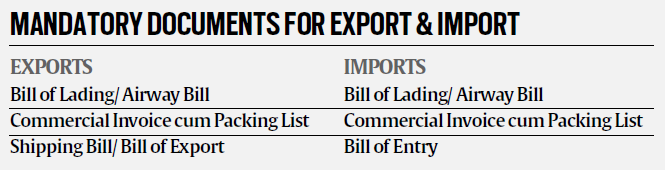
The exercise is a part of the single-window clearance for customs announced in the Budget 2014-15. The single-window will hugely benefit around 1,30,000 importers and 1,08,000 exporters registered with the department. Last year, 37 lakh bills of entry were filed while 57 lakh shipping bills were filed by the traders.
“This will cut down the time taken. A single form will be soon made available where the importer will have to give information to only one agency and that will be electronically transmitted to others, thus curbing duplicity. In 1-2 months the online connectivity will be extended to all the ports. The bill of entry will get automatically transmitted to their systems from the customs’ system for clearance,” the official said.
The finance ministry has also asked all the departments involved in the process to give standard operating procedures and timelines for clearances to ensure accountability. “The customs system is being integrated with the Central Drugs Standard Control Organization, animal husbandry, wildlife and textiles departments. These departments are still not automated. In the next 4-5 months the system integration should be complete,” the sources added.

May 11, 2015

கார்பைடு கல் மாம்பழங்கள் எச்சரிக்கை: சுவை இருக்காது, உடலுக்கு தீங்கானது

தூத்துக்குடி, திருநெல்வேலி மாவட்டங்களுக்கு மாம்பழங்கள் வரத்து அதிகரித்துள்ளது. அதேநேரத்தில் கார்பைடு கல் மூலம் பழுக்க வைக்கப் படுவது குறித்த அச்சம் மக்கள் மத்தியில் எழுந்துள்ளது. ‘தடை செய்யப்பட்ட கார்பைடு கல் மூலம் மாம்பழங்களை பழுக்க வைக்க வேண்டாம்’ என, வியாபாரிகளுக்கு உணவு பாதுகாப்பு துறையினர் விழிப்புணர்வு ஏற்படுத்தி வருகின்றனர்.
சுண்டி இழுக்கும்
மே மாதத்தில் மாம்பழம் சீசன் தொடங்கி விடும். கடைகளில் வகை வகையான மாம்பழங்கள் பார்வையாளர்களை சுண்டி இழுக்கும். முக்கனிகளில் ஒன்றான மாம்பழம் அனைவராலும் விரும்பி சாப்பிடப்படும் பழ வகையாகும். எனவே, மாம்பழ வியாபாரம் விறுவிறுப்பாக நடைபெறும்.
அதேநேரத்தில் செயற்கை கல் மூலம் பழுக்க வைக்கப்படும் மாம்பழங்கள் பறிமுதல் செய்யப்பட்டு அழிக்கப்படுவது வாடிக்கையாகி வருகிறது. பல்லாயிரம் டன் மாம்பழங்கள் பறிமுதல் செய்யப்பட்டு ஆண்டுதோறும் அழிக்கப்படுகின்றன.
வரத்து அதிகரிப்பு
தற்போது சீசன் தொடங்கியுள்ளதால் கடந்த சில தினங்களாக தூத்துக்குடி, திருநெல்வேலி மாவட்டங்களுக்கு மாம்பழங்கள் வரத்து அதிகரித்துள்ளது. அனைத்து பழக்கடைகளிலும் வகை, வகையான மாம்பழங்கள் விற்பனைக்காக குவித்து வைக்கப்பட்டுள்ளன. மக்களும் ஆர்வமுடன் வாங்கிச் செல்கின்றனர். அதேநேரத்தில் கார்பைடு கல் மூலம் மாம்பழங்கள் பழுக்கவைக்கப்படுவது குறித்த அச்சமும் மக்கள் மத்தியில் எழுந்துள்ளது.
நிறத்தை மாற்றும் கல்
வெல்டிங் தொழிற்சாலைகளில் பயன்படுத்தப்படும் கால்சியம் கார்பைடு என்ற கல்லை சிறு துண்டுகளாக உடைத்து காகிதங்களில் சுற்றி மாங்காய்களுக்கு நடுவே வைத்துவிடுவார்கள். அடுத்த 3 முதல் 6 மணி நேரத்தில் மாங்காய்கள் அனைத்தும் பழுத்து மஞ்சள் நிறமாக மாறிவிடும். இதுதான் செயற்கை கல் மூலம் பழுக்க வைக்கும் முறை. இந்திய உணவு பாதுகாப்பு மற்றும் தர நிர்ணய சட்டத்தின் படி இது தடை செய்யப்பட்ட முறை.
இந்த கால்சியம் கார்பைடில் இருந்து அசட்டலின் என்ற வாயு வெளியாகி மாம்பழத்தை பழுக்க வைக்கிறது. அதாவது மாம்பழத்தின் நிறத்தை அது மாற்றும். தன்மையை கெடுத்துவிடும்.
கால்சியம் கார்பைடு கல் வைத்து பழுக்க வைக்கப்படும் மாம்பழங்கள் பார்க்க மட்டுமே பளிச்சிடும். ஆனால், சுவை இருக்காது. பழத்தில் இனிப்பு இருக்காது. அதுமட்டுமின்றி உடல் நலத்திற்கும் பல்வேறு தீங்குகளை ஏற்படுத்தும் என்கிறார், உணவு பாதுகாப்பு மற்றும் தர நிர்ணய சட்ட மாவட்ட நியமன அலுவலர் எம். ஜெகதீஷ் சந்திரபோஸ்.
புற்றுநோய் அபாயம்
அவர் மேலும் கூறும்போது, ‘கால்சியம் கார்பைடு கல்லில் இருந்து வெளியாகும் அசட்டலின் வாயு மாம்பழத்திற்குள் ஊடுருவி சென்றுவிடுகிறது. இந்த மாம்பழத்தை சாப்பிட்டால் பல்வேறு உடல் உபாதைகள் ஏற்படும்.
உடனடியாக வயிற்று வலி உண்டாகும். தொடர்ந்து வாந்தி, மயக்கம், வயிற்றுப்புண் போன்றவை ஏற்படும். மேலும், வேதியியல் மாற்றங்களால் புற்றுநோய் ஏற்படும் அபாயமும் உள்ளது.
மாமரத்தில் சுரக்கும் எத்திலின் என்ற ஹார்மோன் மூலம் தான் மாம்பழங்கள் மரத்தில் இயற்கையாக பழுக்கின்றன. எனவே, அதே எத்திலின் திரவத்தை மாங்காய்களில் தெளித்து அவைகளை செயற்கையாக பழுக்க வைக்கலாம். இந்த முறை உடல் நலத்திற்கு கேடு விளைவிக்காது. இந்திய உணவு பாதுகாப்பு மற்றும் தர நிர்ணய சட்டத்தின் படி இது அனுமதிக்கப்பட்ட முறைதான்.
ரசாயன கடைகளில் எத்தரால் என்ற திரவம் கிடைக்கிறது. இந்த திரவத்தின் விலை அதிகம் கிடையாது. 1 லிட்டர் தண்ணீருக்கு 1 மி.லி. எத்தரால் திரவத்தை கலந்து அதனை மாங்காய்கள் மீது தெளித்து, அறையில் வைத்து பூட்டி வைத்தால் போதும். அதில் இருந்து எத்தலின் வாயு வெளியேறி மாம்பழங்களை இயற்கையான முறையில் பழுக்க வைத்துவிடும். ஆனால், இந்த முறையில் மாம்பழங்கள் பழுக்க 24 மணி நேரம் முதல் 48 மணி நேரம் வரை ஆகும். இந்த முறையில் மாங்காய்களின் நிறம் மாறுவதுடன், சுவையும் அப்படியே இருக்கும். உடல் நலத்திற்கு எந்த தீங்கையும் விளைவிக்காது.
எளிதில் கண்டுபிடிக்கலாம்
ஆனால், கார்பைடு கல் வைத்தால் 6 மணி நேரத்தில் பழுத்துவிடும். விரைவாக பழுக்க வைத்து விற்பனை செய்ய வேண்டும் என்ற நோக்கத்தில் வியாபாரிகள் சிலர் கார்பைடு கல் வைத்து பழுக்க வைக்கின்றனர். வாங்கும் மக்களின் உடல் நலத்தை பற்றி அவர்கள் கவலைப்படுவதில்லை.
கார்பைடு கல் மூலம் பழுக்க வைத்த மாம்பழங்களை மக்கள் எளிதில் கண்டுபிடித்துவிடலாம். மாம்பழங்களின் மீது பெரிய அளவில் கறுப்பு புள்ளிகள் இருக்கும். மாம்பழங்களை தொட்டு பார்த்தால் சூடாக இருக்கும். தோல் மட்டும் பழுத்தது போல மஞ்சளாக இருக்கும். உள்ளே வெட்டி பார்த்தால் பழுத்திருக்காது, சுவையும் இருக்காது. மேலும், கார்பைடு கல் மூலம் பழுக்க வைத்த மாம்பழங்கள் 2 நாட்களில் கெட்டு போய்விடும்.
திடீர் சோதனை
இதுதொடர்பாக வியாபாரிகளிடம் உணவு பாதுகாப்பு அலுவலர்கள் விழிப்புணர்வை ஏற்படுத்தி வருகின்றனர். கார்பைடு கல் மூலம் பழுக்க வைக்கப்படும் மாம்பழங்கள் பறிமுதல் செய்யப்பட்டு அழிக்கப்படும். எத்திலின் மூலம் பழுக்க வைத்தால் எந்த பிரச்சினையும் இல்லை என்பதை அவர்களுக்கு எடுத்துக் கூறி வருகிறோம். அனைத்து பழ குடோன்களிலும் உணவு பாதுகாப்பு அலுவலர்கள் திடீர் சோதனை நடத்தி வருகின்றனர்’ என்றார்.

FDA Maharashtra seeks more teeth to law for reining in food adulterators

Maharashtra's Food and Drug Administration (FDA) has recently sent a proposal to the state government that would enable stringent action against food adulteration in Maharashtra.
In its proposal, FDA said that with the advent and proper implementation of the Prevention of Food Adulteration Act, 1954, in the year 1972, most of the food adulteration had been prevented, hitherto. Similarly, the effectiveness of the work of the food safety officers in the state can be increased only when proper action is taken - from filing of First Information Report (FIR) in the police station against adulterators to court proceedings thereafter. 
In this regard, “At present, if a food safety officer finds any malpractices or any flouting of rules and regulations by the food business operators in the state, an FIR is registered in the police station against those perpetrators of the crime and thereafter drag them to the court. However, sadly, these culprits free themselves from such cases as the punishments granted are 'Non-cognizable & bailable,' which makes our efforts to curb any malpractices difficult,” an official from FDA revealed on the condition of anonymity.
Therefore, the authorities have asked the state government to make amendments to the classification of offences to Section 262 & 263 under Section 30 (2) Subsection (a) of Indian Penal Code (IPC), where the aforesaid cases are being handled to detect malpractices and make punishments as deterrent as possible.
According to the current Indian Penal Code, Section 30(2) Subsection (a): 272 under adulteration of food and drink intended for sale - whosoever adulterates any article of food and drink, so as to make such article noxious as food or drink, intending to sell such article as food or drink or knowing it to be likely that the same will be sold as food or drink, shall be punished with imprisonment of either description for a term which may extend to six months or with fine which may extend to Rs 1,000 or both. Similar, is the punishment stated under the IPC Section 273, under sale of noxious food or drink. These are termed to be 'Non-Cognizable-Bailable.'
The officials have stressed in their proposal to bring in changes under those IPC sections from Non-Cognizable-Bailable to Non-Bailable -Cognizable stating that it would ease out the officials work to detect adulteration and help in their serious effort to punish adulterators who always look for an easy escape.
“The task is never ending and it is continuous, in the long run we are facing the crunch of manpower that is evident to all therefore, to bring in control, it is necessary to enforce stringent action against flouting of rules and regulations,” the official explained FDA’s stand.
It was also noted in the proposal that Uttar Pradesh, Orissa and West Bengal were the only states to be successful with such a move in the past. 
The official then mentioned that the impact of this change would be 10 times higher. He pointed out that the number of complaints related to adulteration for last year in the state was 500 out of which 250-350 complaints were majorly from Mumbai due to the awareness among the consumers. However, 90 per cent of the complaints were vague. “The number of vague complaints related to food, these laws would be a tool to put forth stern action to deal against food adulteration, as otherwise all our efforts would be in vain with such less manpower to tackle the issue,” he concluded.

25 RIMS STUDENTS HOSPITALISED WITH FOOD POISONING

Around 37 students of the Rajendra Institute of Medical Sciences (RIMS) fell sick due to poisoning from food they had for their hostel dinner on Saturday. They were rushed to the hospital after they complained of uneasiness.
Sources maintained 35 girls including under-graduates and post-graduates had a meal comprising rice, puri, chola-bhatura and chicken at the junior girls’ hostel block number 1. The same diet was taken by two boys of hostel number 7.
They were admitted to the emergency ward. On Sunday morning, 12 of them were discharged while 25 were admitted. Director of the premiere medical college Dr Satyendra Kumar Choudhary said he would probe into the matter. A team of the Food Safety department reached the spot on Sunday to collect samples of the raw materials and food served to the students.
“Our team has already collected the food samples. After testing the samples in our laboratory, the report will be sent to the concerned authority of RIMS,” Food Safety director Praveen Chandra told The Pioneer.

May 10, 2015

Crackdown on tobacco sellers from Monday

PATNA: The state health department's food safety wing will from Monday start nabbing traders found selling smokeless tobacco products other than raw tobacco, or 'khaini'. The department on Saturday also issued a notification, giving 15 days to dealers of smokeless tobacco products to shift their produce out of Bihar. The notification follows a Supreme Court order on Friday that upheld the ban on these items ordered by the state government.
After May 24, even transportation of such products to other states will be declared illegal. However, one will not be allowed to sale tobacco products during this 15-day window period. "Raids will start from Monday to check whether this window period is being misused for selling the products," said health secretary cum food safety commissioner Anand Kishor.
All tobacco products other than bidi, cigarette and 'khaini' were banned by the state government on November 7 last. Packaged 'khaini', which is mixed with additives; scented areca nut and scented tobacco (pan masala, zarda) or any chewable tobacco product, whether packaged or unpackaged, are included in the list of banned items.
An FIR will be lodged against anyone found selling the banned products. The accused will be arrested and sent to jail. The seized sample will be sent to food safety lab. If it is found to have contained any banned chemical, the accused can be awarded life imprisonment and Rs five lakh fine. If it is proved that a death occurred due to consumption of that product, the punishment can be stricter, said Mukesh Kashyap, a food safety officer posted at Patna.
However, implementing the ban may prove an uphill task for the food safety wing as it faces acute shortage of manpower. There are only 14 food safety officials for the state's 38 districts. The food safety wing has requested the state government to sanction 500 posts. "In the meantime, the food safety commissioner may designate district administration officials to conduct the raids," a food safety wing official said.
There are also issues concerning the food safety lab. The lab at Agamkuan has been non-functional for long. After seizure of a sample, it is only a food analyst who is mandated to do necessary investigation. That post is also lying vacant. Also, food safety norms say such sample testing can be done only at a National Accreditation Board for Testing and Calibration Laboratory-accredited lab and the Aghamkuan lab lacks such accreditation.
"The food safety wing has already written to its central counterpart to send a project management agency to upgrade the Aghamkuan lab. For the time being, we send samples to a Kolkata-based lab," an official said and added these odds would not hamper the implementation of the ban.

WATER WATER EVERYWHERE…HOW SAFE IS IT TO DRINK?

Sunday, 10 May 2015
Come summers and city roads are filled with pyaaus (drinking water facility) to quench the thrust of the common man, who cannot afford buying a water bottle for Rs 18 – 20. There are temporary pyaaus installed with earthen pots and there are permanent ones set up by voluntary organizations and the municipal body of the city.
However, perhaps no one cares whether the water being served at the Pyaaus is pure enough to be consumed by the marginalized sections of society. And, the irony with the people who consume water from Pyaaus is that despite knowing that the water may not be pure and can put their health at risk, they continue using the facility.
“We get water continuously but it is not safe to drink. No filter is attached to the tank to clean the water. We don’t have any choice to get water from other sources,” said Vinod Kumar Sahoo, a shopkeeper at Mahaveer Chowk, Upper Bazar.
A sweet shop worker near Shaheed Chowk said that water of Pyaau is not safe enough to be consumed. “The water of Pyaaus collected from running pipelines and deep boring is unfit to drink because the water tank is not cleaned regularly, which is leading to various health disorders in the locality,” he said.
“The water supplied in Pyaaus is contaminated and unsafe for drinking. Even the basic facility like drinking water which is provided to common people is unhealthy. Access to safe drinking water is serious issue for all habitations,” said Jeet Tirkey, a rickshaw puller near Albert Ekka Chowk.
Jeevan Majumdar, owner of a Fast Food Stall said, “Pyauu is not safe for drinking purpose. Nine months on, water in the tank not yet cleaned and due to which people are suffering from various health problems.”
Interestingly, both the Ranchi Municipal Corporation (RMC) and Department of health claimed that Pyauus do not come under their jurisdiction. Director of Food Dr Praveen Chandra, when asked about the condition of Pyaaus , said, “We look after purity of packaged water but Pyaau doesn’t come under our department.” Food Safety Officer K P Singh also denied department’s involvement in maintenance and inspection of the drinking water facilities.
Notably, most of the Pyauus in the Capital City are not working properly. At few places only people are getting fresh water to drink. “Pyaaus near Firayalal Chowk is safe to consume as it has attached filters to clean the water and tank is regularly cleaned by adding bleaching powder,” Sanjeet Kumar, a student said.

ADULTERATION ADVT


DINAMALAR NEWS


கோயம்பேடு மார்க்கெட்டில் கார்பைடு கல்லில் பழுக்க வைத்த 300 கிலோ மாம்பழங்கள் பறிமுதல்

சென்னை, மே 10:
கோயம் பேடு மார்க் கெட்டில் கார் பைடு கற் கள் மூலம் பழுக்க வைக் கப் பட்ட 300 கிலோ மாம் ப ழங் களை அதி கா ரி கள் பறி மு தல் செய் த னர்.
கோயம் பேடு மார்க் கெட்டில் உள்ள சில கடை களில் மாங் காய் களை கார் பைடு கற் கள் மற் றும் ரசா யன பவு டர் மூலம் பழுக்க வைத்து, சுகா தா ர மற்ற முறை யில் விற் பனை செய் யப் ப டு கி றது. இந்த கார் பைடு கற் களை பயன் பாடு முடிந் த வு டன் அங் குள்ள குப்பை தொட்டி யில் வீசப் பட்டி ருப் ப தாக 2 நாட் களுக்கு முன், தின க ரன் நாளி ழில் படம் வெளி யா னது.
அதன் பே ரில், உணவு பாது காப்பு துறை அலு வ லர் கள் சதா சி வம், மணி மா றன், கஸ் தூரி, ராஜா ஆகி யோர் அடங் கிய குழு வி னர் நேற்று முன் தி னம் மாலை கோயம் பேடு பழ மார்க் கெட்டில் அதி ரடி சோதனை நடத் தி னர். அப் போது, அங் குள்ள 12 கடை களில் கார் பைடு கற் கள் மூலம் மாங் காய் களை பழுக்க வைத் தி ருந் ததை கண் டு பி டித் த னர்.
அங் கி ருந்து 30 கிலோ கார் பைடு கற் கள், 300 கிலோ எடை யுள்ள சுகா தா ர மற்ற மாம் ப ழங் களை பறி மு தல் செய் த னர். மேலும், ஊசி மூலம் பழுக்க வைத் தி ருந்த 100 கிலோ தர் பூ சணி பழங் களையும் பறி மு தல் செய்து அழித் த னர்.
இது கு றித்து சம் பந் தப் பட்ட கடை உரி மை யா ளர் களுக்கு விளக் கம் கேட்டு நோட்டீஸ் கொடுத் த னர்.