Apr 22, 2016

HC seeks personal appearance of Comm FS

Court takes serious note of food adulteration
Srinagar, Apr 21: The State High Court today took strong note of food adulteration which is causing life threatening diseases in the State and sought information from the authorities regarding infrastructure, manpower particulars of companies and unit holders who are processing food items in the entire State. It also sought personal appearance of the Commissioner / Secretary Food Safety.
These directions have been passed after the amicus curie to the suo-moto proceedings of the High Court, Senior Advocate Bashir Ahmad Bashir, brought to the notice of the Court that food adulteration in the State is at alarming situation and people due to their innocence are taking the sub-standard foods resulting into multiple diseases among people, including cancer whose rate had doubled in the Valley in the past less than a decade.
It has also been brought to the notice of the court by the amicus that food testing laboratory in the Valley lacks equipment, infrastructure and manpower to check the adulterated consumption of food and there is no mechanism in place to check the purity of eatables in Kashmir.
It is after these submissions that court directed the authorities to provide the information regarding number of testing laboratories and their location, which are available in the State. Court deferred the hearing of the matter till April 25 with the observation that “before proceeding further in this petition, it is appropriate to seek following information from the State Government”.
The Division Bench of Justice MH Attar and Justice Ali Mohammad Magrey also sought information with regard to man power in the concerned department. “Number of officers/officials, who are required to be posted in terms of FSS Act 2006 and how many such officers are in place”.
DB also sought information with full particulars of all those persons/companies/ corporations, who are manufacturing and processing any food product in the State adding the information of those who have been convicted and sentenced under the Food Safety Act.
“How many convictions have been recorded by the court of law on the complaints filed under Food Safety and Standard Act of 2006.Full particulars of persons who are convicted and sentenced by the court of law be also provided”, DB further added.
Court granted time to the authorities till April 25 for the information at the request of counsel representing State advocate N A Beigh (Sr. AAG) and on that day court will hear the matter for its further proceedings and Commissioner Food Safety has been directed to remain present in the Court on April 25.
The suo-moto proceedings with regard to issue of food adulteration have been taken by the High Court with regard to media reports asserting that consumption of adulterated and carcinogenic food items in the Valley are at alarming proportion.
Meantime amicus, Advocate Bashir Ahmad Bashir, filed his suggestions as he was asked by the court so as to curb the menace of food adulteration and those suggestions are on record.
In its suggestion Advocate Bashir seeks arraying Chief Secretary of the State as respondent with Commissioner / Secretary H&ME Department, Secretary Health and Family Welfare Government of India, Director Health Services of both divisions of the State, Commissioners of Municipal Corporations of both divisions, Drug Controller of the State, All Deputy Commissioners of the State and all recognized Food Testing Laboratories in the State.
Amicus curie in his suggestions said that the PIL involved security and protection of precious lives of lakhs of people who are consuming different food items which are allegedly contaminated and carcinogenic causing terminal diseases.
It was further stated in the suggestions that situation is aggravated by lack of scientific facilities for checking and testing the contaminated food items like food testing laboratories, equipments, man power (both technical & non-technical) as also the supervisory staff.
Advocate Bashir also submitted that the Food Safety & Standards Act is applicable to whole country and the State of J&K so it must have scientific committee or pane of advisory committees at Central level and to execute the provision of laws of the said Act.
It was reported in various press reports that food testing laboratory in the Valley lacks equipment, infrastructure and manpower to check the adulterated consumption of food in Valley. It is said that the adulterated food is leading to multiple diseases among people, including cancer whose rate had doubled in the Valley in the past less than a decade.
The lone Food Testing Laboratory (FTL) of the Valley situated in Srinagar is said to be having ancient and outdated equipments while old methods are put into practice to test samples of foods.
About the food items like oils, milk etc consumed by general masses according to the reports are contaminated and such kind of adulteration have flooded the markets of the Valley as there is no mechanism in place to check the purity of eatables.

Adulteration: HC seeks details of food manufacturers, testing labs

The bench directed the government to furnish details about the number of officials required to be posted in terms of the Act and number of officials who are in place.

The Jammu and Kashmir High Court on Thursday directed the government to furnish details about the food manufacturing companies, food testing laboratories officials required to be posted in keeping with Food Safety and Standard Act 2006.
Hearing a Public Interest Litigation against food adulteration, a division bench comprising Justice MuzaffarHussain Attar and Justice Ali Muhammad Magarey also sought details about the persons convicted and sentenced by the court in the complaints filed under Food Safety and Standard Act.
Underscoring that the PIL is of considerable importance, the bench observed, “Before proceeding in the matter it is appropriate to seek information about the number of testing laboratories and their location in the state.”
The bench directed the government to furnish details about the number of officials required to be posted in terms of the Act and number of officials who are in place.
The court also sought full particulars of all the persons, companies or corporations manufacturing or processing any food products in the state.
The directions came after Senior Advocate and Amicus Curie in the case told court that ground realities with regard to curbing food adulteration in the state is a sorry state of affairs.
“Implementation of Food Safety and Standard Act 2006 stands implemented nowhere in the state as there are no food analysis laboratories and manpower required to be there in accordance with the Act,” Advocate Bashir Ahmad Bashir pleaded.
He said the government has been lifting food samples and number of samples lifted always exceeds the samples that are sent for laboratory analysis. “It speaks volumes about the sincerity of the concerned department to curb food adulteration. Food sampling has now turned into a goldmine,” he said.
The High Court has already taken suo-moto cognizance of news reports on food adulteration and rising cancer incidence, published in Greater Kashmir, and has treated these as a Public Interest Litigation.
Greater Kashmir stories highlighted that there was no scientific mechanism in place to test foods in Kashmir markets, including oil and milk. Some of these news stories referred to lack of facilities for cancer patients in Kashmir hospitals—including the facilities like PET-CT Scan—which is forcing many of them to go outside the state for treatment.
The reports highlighted lack of infrastructure and manpower at the Valley’s lone Food Testing Laboratory in Srinagar, and also the acute lack of treatment and diagnostic facilities for cancer patients, especially at the SK Institute of Medical Sciences and GMC associated hospitals.
The court adjourned the case and listed it for further hearing on April 25 after Senior Additional Advocate General, N ABeigh, requested for time to provide the information.

Crime branch raids gutkha unit, hides news

Aurangabad: Commissioner of police Amitesh Kumar is probing an alleged incident in which the crime branch intentionally suppressed the fact that they had conducted a raid on a gutkha manufacturing unit under the jurisdiction of Jinsi police station.
The information about a gutkha manufacturing unit at a posh bungalow close to the police IP mess and the official residence of the superintendent of police was passed on by a journalist. Kumar soon tasked inspector Avinash Aghav of the crime branch and an assistant inspector to conduct a raid on the unit, along special branch sleuths and the Food and Drugs Authority. But, information about the successful raid was suppressed for reasons best known to those who are privy to the development.
A senior officer said, "Even for minor detections and action by the crime branch, a press note is sent across Whatsapp groups, besides emailing it to all reporters. But, the successful raid on a gutkha manufacturing unit not coming out, leaves scope for suspicion."
Soon after learning about the act by the crime branch, Kumar summoned the inspector sought his explanation.
Kumar said, "I am probing the act of suppressing the news. Henceforth it will be ensured that utmost transparency is maintained in raids and seizures made by the city police.
The crime branch is also accused of showing the cost of seized gutkha as a meagre Rs 15,000, raising serious suspicions.
When contacted, Aghav said that he "forgot" to inform the authorities about the raid.
Sources said the owner of the gutkha unit is a key player in the region's illicit gutkha manufacturing circle and is known for his influence across the departments.
A senior police officer said, "The reason for the existence of a gutkha manufacturing unit under the nose of the city police is that the owner greases the authorities' palms much beyond their expectations."

Food For Thought

Almighty Allah (SWT), while creating this world stuffed it with all its requirements including the food for all the creations which were to inhabit the planet from its creation to doom. The guarantee for food for all has been there from none other than the Creator. The food in nature, in its purest form is abundant for all creations, and barring humans, every other creature takes it in its original and purest form provided by Allah (SWT). The man is blessed with the sense of tang and taste, and hence has learnt innovative ways to make his food delectable, luscious and sumptuous.
However the insatiable human greed has takes over all the moral sensibilities and, in a wild pursuit of getting incessant material profits, humans have been indulging in adulterating, polluting and contaminating this natural bounty without the slightest remorse or concern for fellow humans’ health and life.
Food adulteration in an unpardonable act of intentionally debasing the quality of food offered for sale either by mixture or substitution of inferior substances or by the removal of some valuable ingredient.
We in Kashmir have been facing this menace not only in the food items imported, but also in the eatables made indigenously. The instances of lethal adulterations in spices, pre-prepared food articles and milk, to name a few have been quite often reported in the valley.
Recently a popular milk brand was banned for alleged adulteration with detergents which shook the whole valley. The valley has been consuming around 50000 litres of this milk daily for so many years, along with other related products like curds and cheese, etc. Imagine the myriad damage to the health of the masses this reported adulteration might have caused. Will the alleged perpetuators have some compunction?
Another recent case of food adulteration that took the country and Kashmir by storm was adulteration of a famous brand of noodles which was found to contain higher than permissible levels of lead and manganese. The adulterants are reportedly carcinogenic in nature.
Consequently, we have all become, and genuinely though, very incredulous of the purity and quality standards of the food we consume on daily basis. Adulterants in the garb of food colours, chemicals and additives often creep up not just in our local produce, but even in packaged products which flood our markets, and which we are habituated to consume as a matter of keeping along with the changing trends. Mixing milk with water to add volume, starch in cheese to make it thicker and fluffier, hydrogenated oils and vanaspati in ghee, cow dung in spices etc., are just a few examples. Stories like these often shake us up and make us vary of what we eat.
The technical definition of food adulteration according to the Food and Safety Standards Authority of India (FSSAI) is, “The addition or subtraction of any substance to or from food, so that the natural composition and quality of food substance is affected.” Food adulteration can be intentional when done to add volume, texture, taste or stability to the items in raw form or prepared form, which may result in the loss of actual quality of food item. These substances may be other available food items or non-food items. The Adulterated food is thus impure, unwholesome and unsafe for human consumption.
"Adulteration" in legal term means that a food product fails to meet standards set by the concerned authorities. Adulteration is an addition of another substance to a food item in order to increase the quantity, look and/or the taste of the food item. Generally, if a food contains a poisonous or deleterious substance that may render it injurious to health, it is considered to be adulterated.
The adulteration can also be due to carelessness or poor maintenance of the facility and logistics on part of the food manufacturer or distributor. The natural consequence of this adulteration is serious long term damage to the public health.
Data reveals that some of the most common adulterated foods are milk and milk products, flour, edible oils, cereals, condiments, pulses, coffee, tea, confectionery, baking powder, vinegar, besan and curry powder, packaged drinks, almost everything which we use as food or a part of the food on daily basis. Most of the time looking at the food won't giveaway whether it's been adulterated or not.
Contamination is generally done by mixing superfluous and extraneous material including even objectionable substances in foods, such as glass, metal, plastic, wood, stones, sand, cigarette butts, undesirable parts of the raw plant material such as stems and roots and even harmful chemical and biological substances. In Kashmir reports of adulteration of spices with cow dung has also been reported. In a lot of cases, food additives and chemicals hide behind their scientific pseudo names.
With the changing times, Kashmiris also took to the new trend of eating outside, though we carry and continue the tradition of running a full-fledged kitchen in our homes. The growing fashion of eating outside has resulted in mushroom growth of restaurants, food courts, road side eateries, fast food outlets and street food vendors etc. In most of these places, with few exceptions, food safety measures are never adhered to and maintaining hygiene is one of the least concerns. Resorting to adulteration to enhance taste and look is a routine matter. Here in Kashmir we have all the relevant food laws in place. But following or respecting a law is thought to be an insult in Kashmir and enforcing it is an opportunity for raising an extra buck.
Eating out of home is generally for fun, pleasure, partying and fashion. Earlier this was not the case with our society. People would by large have the home-made food, even carry it to their work places. The hygiene was always ensured and adulteration never a concern. This is why our earlier generation lived a much healthier life, and we would not find the clinics and hospitals overcrowded with people as is the case nowadays.
The trend of eating out of home and enormous consumption of readymade handy eatables has opened up golden opportunities for those involved in food adulteration and contamination. What is pathetic is that people despite being regularly informed through various media seem to be least bothered about the menace and their own health. Ironically they are happily ready to settle for lifelong health issues rather than avoiding the fun eating in the hotels and restaurants.
The hazards of food adulteration are compounded by the fact that most of the natural raw foods, like vegetables, pulses and even fruits are routinely grown against the natural processes. This is one of the reasons why the seasonality of vegetables and the fruits has become irrelevant. It has been reported many times that the fruits and vegetables are treated with lethal chemicals to ensure premature ripening and over sizing. The addition of newer manures and fertilizers has not only taken the health benefits off the natural edibles but has made them more injurious than beneficial.
Manufacturing and sale of adulterated food is a grave human rights and legal violation. The law has its own shortcomings, and perpetuators routinely slip through loopholes, and escape punishments. The lack of moral values and human sensibilities have unfortunately taken a back seat and have been replaced by insatiable greed to amass more and more material wealth. The people perusing such crimes are not only depriving the humanity of purity and originality of the food provided by the Nature, but also feeding them poisonous things and thus playing with their lives.
In our society, most of the people dealing with food business are our own Muslim brethren. Islam in unequivocal terms condemns the act and strongly admonishes those indulged in food adulteration.
The Holy Prophet (pbuh) said, “One who sells adulterated goods to Muslims is not from us. He will be raised with the Jews on the Day of Qiamah, because an adulterator is not a Muslim.”
On another occasion, The Revered Prophet (pbuh) said,
“One who gives us adulterated goods is not from us.”
He repeated this sentence thrice then said,
“And Allah will remove barakat from the livelihood of such Muslim. (Allah) will destroy his economy and leave him upon his own condition.”
Earning the wrath of Almighty and displeasure of beloved Prophet (SAW) for worldly gains is surly not a profitable business but an eternal loss.

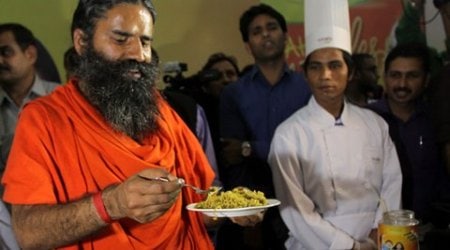
Patanjali's mustard oil ad in hot water

Edible oil industry body SEA is approaching FSSAI, ASCI against the brand's 'false and misleading' oil
Edible oil industry body SEA is approaching food safety regulator FSSAI as well as advertising industry watchdog ASCI against yoga guru Ramdev promoted Patanjali alleging that its ads for mustard oil are "false and misleading".
Stating that it doesn't "appreciate derogatory remark for other edible oils", Solvent Extractors Association of India (SEA) claims that Patanjali's advertisement of its 'kacchi ghani mustard oil' is "not in good taste".
Patanjali, however, insisted that its present commercial was "based on facts, findings and research. We do not intend or mislead any one".
The company's advertisement had claimed that kacchi ghani mustard oil of other brands are "adulterated".
SEA has taken exception to such claims.
"Recent advertisement on Kacchi Ghani Mustard oil published by Patanjali Ayurved Ltd is not in good taste. In this advertisement, there are misleading and false statements about the solvent extracted oils," Mumbai-based SEA said in a statement.
SEA has sent a detailed memorandum with documentary evidence to Patanjali drawing its attention and requested to withdraw the misleading statement made in the advertisement against solvent extracted oils, it said.
"Unfortunately, Patanjali continued the advertisement both in print and electronic media and therefore the Association has decided to approach Food Safety and Standards Authority of India (FSSAI) as well as Advertising Standards Council of India (ASCI) to direct the Patanjali to withdraw the said advertisement with misleading facts," SEA added.
The association also asked its members producing 'kacchi ghani mustard oil' to register their complain with FSSAI as well as ASCI on this issue.
When contacted, Patanjali Ayurved spokesman said, "Our present commercial is based on facts and research. We do not intend or mislead any one. We believe in educating the mass and promote quality products."
The company has been working in 'Kacchi Ghani mustard oil' from over four years. The response of the consumer is very good and the people are now getting aware of the health benefit of the mustard oil, hence it is on the pace of fast growth, the official adde

Apr 21, 2016

SEA to move FSSAI, ASCI against Patanjali mustard oil ad

Stating that it doesn't "appreciate derogatory remark for other edible oils", Solvent Extractors Association of India (SEA) claims that Patanjali's advertisement of its 'kacchi ghani mustard oil' is "not in good taste". 
The association also asked its members producing ‘kacchi ghani mustard oil’ to register their complain with FSSAI as well as ASCI on this issue. 
Edible oil industry body SEA is approaching food safety regulator FSSAI as well as advertising industry watchdog ASCI against yoga guru Ramdev promoted Patanjali alleging that its ads for mustard oil are “false and misleading”. 
Stating that it doesn’t “appreciate derogatory remark for other edible oils”, Solvent Extractors Association of India (SEA) claims that Patanjali’s advertisement of its ‘kacchi ghani mustard oil’ is “not in good taste”.
Patanjali, however, insisted that its present commercial was “based on facts, findings and research. We do not intend or mislead any one”. The company’s advertisement had claimed that kacchi ghani mustard oil of other brands are “adulterated”. SEA has taken exception to such claims. 
“Recent advertisement on Kacchi Ghani Mustard oil published by Patanjali Ayurved Ltd is not in good taste. In this advertisement, there are misleading and false statements about the solvent extracted oils,” Mumbai-based SEA said in a statement. 
SEA has sent a detailed memorandum with documentary evidence to Patanjali drawing its attention and requested to withdraw the misleading statement made in the advertisement against solvent extracted oils, it said. 
“Unfortunately, Patanjali continued the advertisement both in print and electronic media and therefore the Association has decided to approach Food Safety and Standards Authority of India (FSSAI) as well as Advertising Standards Council of India (ASCI) to direct the Patanjali to withdraw the said advertisement with misleading facts,” SEA added. 
The association also asked its members producing ‘kacchi ghani mustard oil’ to register their complain with FSSAI as well as ASCI on this issue. When contacted, Patanjali Ayurved spokesman said, “Our present commercial is based on facts and research. We do not intend or mislead any one. We believe in educating the mass and promote quality products.” 
The company has been working in ‘Kacchi Ghani mustard oil’ from over four years. The response of the consumer is very good and the people are now getting aware of the health benefit of the mustard oil, hence it is on the pace of fast growth, the official added.

Ice cream Vs. Frozen dessert – The Chilling Truth

Before going into great detail, the big difference between ice cream and frozen dessert is this.
As a consumer, whether I am buying a shirt that claims to be linen, or whether it’s a face cream, I like to know whether I am getting my money’s worth. And it’s no different when it comes to food. So how do you think I felt when I got a carton of ice cream and in a small, inconspicuous corner, I see the label – frozen dessert. And it only got worse from there.
Today, in India, frozen dessert has taken over as much as 40% of the ice cream segment. Is that such a bad thing?

Before going into great detail, the big difference between ice cream and frozen dessert is this.
Before going into great detail, the big difference between ice cream and frozen dessert is this. Frozen desserts are made with vegetable oil. Also, this is usually the vegetable oil that we want to avoid in our diet like coconut oil or palm oil. Ice-cream on the other hand, is mainly made from milk and dairy fat.
To do a fair comparison, I randomly picked up a box from each – a frozen dessert and an ice cream carton. Here is what I saw.
The Label Comparison
Ice Cream

Claim: Labels it as Ice Cream on the top of the carton.
Ingredients: Water, milk, solids, sugar, permitted stabilizing and emulsifying agents (412, 410, 407, 471, 466). Contains added vanilla flavors (artificial flavoring substances).
Frozen Dessert
Claim: The larger font says – Creamy Delights: Strawberry. In a corner on the side of the box, it says – Frozen Dessert.
Ingredient List: Water, sugar, milk solids, edible vegetable oil, liquid glucose, vegetable protein, emulsifier – 471, stabilizers – 410, 412, 407 Acidity regulator – 330. Contains permitted synthetic food colors and added flavors. Nature identical and artificial milk and strawberry flavoring substances.
Analysis
For starters, the labeling is unclear. When you see the picture on the carton, you would think it is any ordinary ice cream. Only when you turn it around to look for a title, you see a much smaller font, almost apologetic to be there, and it says – Frozen Dessert.
According to the Food Safety and Standards Authority of India, the definition of an ice cream, kulfi or softy ice cream means that the product is obtained by freezing a pasteurized mix, prepared from milk and /or other products derived from milk with or without the addition of nutritive sweetening agents, fruit and fruit products, eggs, etc.
Frozen dessert means the product obtained by freezing a pasteurized mix prepared with milk fat and/or edible vegetable oils and fat having a melting point of not more than 37.0 degree C in combination and milk protein alone or in combination/or vegetable protein products singly or in combination with the addition of nutritive sweetening agents.
So in theory, both brands are correct and are not trying to say they are something they are not.
There are many companies that are making both frozen desserts as well as ice cream. To get a get a better understanding of the product, I asked Mr Sapan Sharma, the General Manager of Hindustan Unilever Limited (HUL) on what he thought about the labeling, he was sure that they were following the guidelines and legal requirements laid down by FSSAI, when it came to size of font and placement of their label.
Fair enough, but one could argue that it’s time that the FSSAI ensured that desserts do not camouflage themselves as ice cream, and the consumer is not left confused.
The Calorie Woes
Ice Cream

For every 100 gm of serving
Energy – 217 KCal
Protein – 3.5 gm
Carbs – 21.5
Fat – 13
Calcium – 176 mg
Frozen Dessert
Energy – 200 KCal
Fat – 10.5
Carbs – 23
Protein – 4
Saturated fat – 5.8
Trans-fat – traces
Analysis
You see that the number of calories are almost the same in both cases. But that’s never the whole story. The frozen dessert label says traces of trans fats and saturated fat of 5.8. So both harmful dietary fats are found in frozen desserts. Saturated fats as well as trans fats are what we want to avoid in our diet. They are simply the bad fats. They add to weight, can cause heart problems and raise our cholesterol levels. According to the Harvard Medical School Heath Guide, trans fats are worse than saturated fats, and there is no safe level of trans fats. So nutritionally the frozen dessert falters.
According to Mr. Sapan Sharma, “Ice cream and frozen dessert give similar eating experience.”
But I am more interested in the nutrition aspect, so I cross question him on the nutritional value of vegetable oil.
His reply is, “Vegetable fat is more advantageous than dairy fat. Vegetable fats are not a direct cholesterol source. Palm oil or derivatives like mid fractions are healthier. Also, vegetable fat is amenable to making ice cream. Palm oil is very versatile, and helps give frozen dessert its smooth and creamy texture at -15 degrees.”
According to India’s leading nutritionist, Dr Shikha Sharma, “It has been proven by several research studies that palm oil is unhealthy due to its cholesterol increasing effect. It has been also seen that high consumption of palm oil can cause heart diseases.”
“Do you use partially hydrogenated vegetable oils in your frozen dessert?” I ask Mr. Sharma.
Unilever’s reply is that that they don’t.
The Price Factor
Lastly, there is the price factor. The consumer has no benefit as this frozen dessert is not cheaper than ice cream. This is despite the fact that dairy fat costs rupees 300 per kg while vegetable fat is rupees 50-60 a kilo.
According to industry experts, the ingredients only make up 8 to 12% of the cost of the product. A lot is spent on other factors like R&D, designing product, the technology component, etc. So the price will not be altered due to the ingredients.
This issue has become a controversy among the players involved. The government has come up with a gazette notification amending the Prevention of Food Adulteration Act to allow the labeling of frozen desserts as “vegetable fat based ice cream” or “non-dairy ice cream”. This has sparked off a fresh set of claims and counterclaims.
Whichever way this row ends up, it’s time we looked carefully at our labels. It’s time consumers learn to read between the lines.

Artificially ripened mangoes aplenty in city & not all bad

There's a good chance that the brightly coloured fruit you see in the market may have been artificially ripened.Consumer activists are calling for a check on the practice, especially ripening by calcium carbide, as it could prove to be a major health hazard.
Social activist Santhana Rajan said most traders are resorting to the process of ripening mangoes by gassing them with ethylene. “Traders are not willing to wait for the mangoes to ripen on their own due to the demand ,“ he said.Consumer activist T Sadagopan is of the view that neither the government nor the food safety department has created any awareness about the safety of the ethylene gas process.
While the use of ethylene is approved by the government, many traders are also using calcium carbide to ripen mangoes even though it is banned. P Kuganantham, a city doctor, said that fruit ripened with calcium carbide can cause gastroenteritis, abdominal pain and diarrhea and is carcinogenic.
The CEO of Kovai Pazha Mudir Nilayam (KPMN), Senthil Natarajan, told TOI that his company uses a refrigerated ripening chamber where the mangoes are ripened with ethylene gas and left for 48 hours till they turn golden yellow. “This is the safest government prescribed method. We have imported machinery from Italy,“ he said.
M Arunachalam, a whole sale fruit merchant in Koyambedu, said, “There are a few black sheep who want to make a quick buck overnight but they fail to realise that even they have children who could eat these mangoes which pose a health hazard.“
“The food safety department's raids are ineffective. A couple of raids are just as an eyewash,“ said Santhana Rajan. He said that mangoes ripened with calcium carbide can be identified by an unnaturally bright colour when compared to naturally ripened mangoes.

FSDA authorities to inspect food items at canteens in schools, colleges, hospitals

The Food Safety and Drugs Administration (FSDA) will now be inspecting food items at canteens of academic institutions and hospitals. The inspection comes in the wake of instructions by the district magistrate. A four-member team has been made to ensure the inspection is carried out at regular intervals.
The team will also be inspecting food served under the mid-day meal scheme. Taking into account the diseases that are common during the summer season, authorities said that move was to ensure no substandard product was being sold in these places.
"As per the orders of the district magistrate, Meerut's FSDA department will conduct regular inspection and sampling of canteens and other shops in and around these institutions that serve edible items. It is peak summer time, there are chances of food items going bad. Those found violating rules and using such items will face the music," said JP Singh, chief food safety officer.
The FSDA department has already listed the names of the schools, colleges and hospitals in the city and will conduct regular inspections at their canteens.
District magistrate Pankaj Yadav, said, "I keep getting complaints about substandard food being served at schools, colleges and hospitals but they generally don't come under the FSDA scanner owing to ongoing inspections in various parts of the city. However, now I have instructed authorities at FSDA to conduct regular inspections at these places."
Chandralekha Jain, principal, St John's Senior Secondary School, said, "It is a very good initiative. We try and provide the best quality food inside our school canteen but the street vendors outside are the ones we cannot keep a check on. This step will not only help us see our drawbacks - if any - inside our canteen and also bring the street vendors under scanner."
On Wednesday, the FSDA department took a sample of boiled milk from the canteen of Radha Govind Engineering College and a sample of sauce from the canteen of Anand hospital.

500 லிட்டர் பாக்கெட் பால் பறிமுதல்

அம்பை, ஏப். 20:
அம்பை வட் டார உணவு பாது காப்பு அதி காரி நாக சுப் பி ர ம ணி யன் அகஸ் தி யர் பட்டி பொன் நக ரில் ஆய்வு மேற் கொண் டார். அவ் வ ழி யாக வந்த பால் வண் டியை நிறுத்தி சோத னை யிட்ட போது பால் வண் டி யில் உண வுப் பொ ருள் கள் கொண்டு செல் வ தற் கான உரி மம் மற் றும் பால் தயா ரிப் பிற் கான உண வுப் பா து காப்பு துறை உரி மம் போன்ற முறை யான ஆவ ணங் கள் இல்லை என் பதும், 4 டிகிரி வெப்ப நிலை யில் பால் பதப் ப டுத் தப் ப ட வில்லை என் றும் தெரிய வந்தது.
இதை ய டுத்து சுமார் ரூ.20 ஆயி ரம் மதிப் பி லான 500 லிட் டர் பாக் கெட் பால் பறி மு தல் செய்து அழிக் கப் பட் டது.

Paswan warning on Delhi water

Drinking water supplied by the Delhi Jal Board is not safe for consumption as prescribed quality standards are not being met, Union Consumer Affairs Minister Ram Vilas Paswan said on Tuesday.
The Minister also urged consumers to complain if packaged drinking water is sold above maximum retail price at places like five star hotels, cinemas and airport so that the government can take strict action against such sellers.
"The issue of safe drinking water was discussed in the meeting today. Nobody can drink tap water in Delhi. Delhi's water is not safe for drinking, though there are quality standards in place," Paswan told reporters after the meeting of the Central Consumer Protection Council(CCPC).
Food safety regulator FSSAI informed in the meeting that Delhi's municipal corporation is responsible for setting the quality standards of drinking water, he said.
"The Council was of the view that safe drinking water is the constitutional right of the people and the quality standards should be followed strictly," he said.
The Minister said regulation of quality of piped water should come under the Food Safety and Standards Authority of India (FSSAI), while also regulates packaged drinking water.
At present, it is mandatory for companies to comply with quality standards of packaged drinking water unlike piped water. The Bureau of Indian Standards (BIS) under the Consumer Affairs Ministry is working on upgrading the quality standards for piped water and make it compulsory.
To protect consumers from overpricing of packaged drinking water at select places, the Minister said both the Delhi High Court and consumer courts have given several rulings that packaged drinking water should be sold at MRP at all places.
"There is lack of awareness among consumers on such issues. Be it cricket stadium or five star hotel or airport, if consumers see they are being charged more than MRP for packaged drinking water they should file complaint. We will take strict action," Paswan added.
Paswan also said the government will set up additional 50 consumer helpline counters in the next 15 days, taking the total number of helpline counters to 62.
He also reviewed the performance of Grahak Suvidha Kendras being run on a pilot basis at five places.

Apr 20, 2016

Drinking water not safe in Delhi: Ram Vilas Paswan

New Delhi, Apr 19 (PTI) Drinking water supplied by the Delhi Jal Board is not safe for consumption as prescribed quality standards are not being met, Union Consumer Affairs Minister Ram Vilas Paswan said today.
The Minister also urged consumers to complain if packaged drinking water is sold above maximum retail price at places like five star hotels, cinemas and airport so that the government can take strict action against such sellers.
"The issue of safe drinking water was discussed in the meeting today. Nobody can drink tap water in Delhi. Delhi's water is not safe for drinking, though there are quality standards in place," Paswan told reporters after the meeting of the Central Consumer Protection Council (CCPC).
Food safety regulator FSSAI informed in the meeting that Delhi's municipal corporation is responsible for setting the quality standards of drinking water, he said.
"The Council was of the view that safe drinking water is the constitutional right of the people and the quality standards should be followed strictly," he said.
The Minister said regulation of quality of piped water should come under the Food Safety and Standards Authority of India (FSSAI), while also regulates packaged drinking water.
At present, it is mandatory for companies to comply with quality standards of packaged drinking water unlike piped water. The Bureau of Indian Standards (BIS) under the Consumer Affairs Ministry is working on upgrading the quality standards for piped water and make it compulsory.
To protect consumers from overpricing of packaged drinking water at select places, the Minister said both the Delhi High Court and consumer courts have given several rulings that packaged drinking water should be sold at MRP at all places.
"There is lack of awareness among consumers on such issues. Be it cricket stadium or five star hotel or airport, if consumers see they are being charged more than MRP for packaged drinking water they should file complaint. We will take strict action," Paswan added.
Paswan also said the government will set up additional 50 consumer helpline counters in the next 15 days, taking the total number of helpline counters to 62.
He also reviewed the performance of Grahak Suvidha Kendras being run on a pilot basis at five places.

Need to monitor drinking water standards: Consumer forum

The Central Consumer Protection Council (CCPC) has suggested that the union government monitor the standard of drinking water irrespective of its source.
CCPC is an apex body to advise the government in consumer related issues.
"Central Consumer Protection Council has expressed concern over quality of drinking water being supplied through pipeline and has recommended mandatory standards for drinking water irrespective of its source," the Council said in a statement released here.
At the moment, government through its agency Food Safety and Standard Authority of India (FSSAI) is keeping close watch only on standardized bottled water.
CCPC also said that FSSAI should formulate standards for water supplied to housing localities in urban areas through pipelines.
The CCPC members met the union Minister for Consumer Affairs Ram Vilas Paswan on Monday to express their concerns in this regard.
The minister reportedly assured the CCPC delegation that their issues will be taken up with the concerned ministries.

DINAMALAR NEWS


DINAMALAR NEWS


DINAKARAN NEWS


தமிழகம் முழுவதும் மே 4ம் தேதிக்குள் உணவு பண்டங்கள் விற்கும் கடைகளுக்கு உரிமம் பெற வேண்டும் அதிகாரிகள் தகவல்

வேலூர், ஏப்.19:
தமி ழ கம் முழு வ தும் உணவு பண் டங் கள் விற் பனை செய் யும் கடை கள் அனைத் தும் மே 4ம் தேதிக் குள் அதற் கான உரி மத்தை பெற வேண் டும் என்று உணவு பாது காப் புத் துறை அதி கா ரி கள் தெரி வித் துள் ள னர்.
தமி ழ கம் முழு வ தும் பிர தான சாலை க ளில் திரும் பிய பக் க மெல் லாம் ஓட் டல் க ளும், சிற் றுண்டி கடை க ளும், பழச் சாறு கடை க ளும் உள் ளன. குறிப் பாக பஸ், ரயில் நிலை யங் க ளின் அருகே ஏரா ள மான தள் ளு வண்டி கடை கள் முளைத்து விடு கின் றன. இதில் பெரும் பா லான சிக் கன் பக் கோடா மற் றும் ஓட் டல் க ளில் ஏற் க னவே பயன் ப டுத் திய சமை யல் எண் ணெய் மற் றும் பொருட் க ளால் சமைக் கப் பட்ட உண வு கள் விற் கப் ப டு கி றது.
இந்த வகை தவ று களை களைய உணவு பாது காப்பு அதி கா ரி கள் சோதனை செய் வ தும் தொடர்ந்து நடக் கி றது. ஆனால் அடுத்த நாளே வழக் கம் போல வியா பா ரத்தை தொட ரு கின் ற னர்.
எனவே, ஆரோக் கி ய மான உணவு மற் றும் பழங் கள் விற் கப் ப டு வதை உறுதி செய் யும் வகை யில் மத் திய அரசு உண வு பா து காப் புத் தர நிர் ண யச் சட் டத்தை கொண்டு வந் துள் ளது. அதன் படி வரு கிற மே 4ம் தேதிக் குள் அனைத்து உண வுத் தொ டர் பான கடை கள் உணவு பாது காப் பு துறை அலு வ ல கத் தில் லைசென்ஸ் பெற்று இயங்க வேண் டும் என்று உத் த ர வி டப் பட் டுள் ளது.
இது கு றித்து உணவு பாது காப்பு அதி கா ரி கள் கூறி ய தா வது:
தமி ழ கம் முழு வ தும் உணவு பாது காப்பு மற் றும் தர நிர் ணய சட் டத் தின் படி வரும் மே 4ம் தேதிக் குள் ஓட் டல் கள், வாட் டர் கம் பெ னி கள், மளிகை கடை கள், சுவீட் ஸ்டால் கள், சாலை யோ ரக் க டை கள், சிக் கன், மட் டன் கடை கள், காய் கறி கடை கள், டீக் க டை கள் என உண வுத் தொ டர் பான அனைத்து கடை க ளும் லைசென்ஸ் பெற்று இயங்க உத் த ர வி டப் பட் டுள் ளது.
இவ் வாறு அவர் கள் கூறி னர்.

கார்பைடு கற்களால் பழுக்கவைத்த மாம்பழங்களை தடுக்க 14 உணவு பாதுகாப்பு குழுக்கள் அமைப்பு வேலூர் மாவட்டத்தில் நடவடிக்கை

வேலூர், ஏப்.19:
வேலூர் மாவட் டத் தில் கார் பைடு கற் க ளால் பழுக் க வைத்த மாம் ப ழங் களை தடுக்க 14 உணவு பாது காப்பு குழுக் கள் அமைக் கப் பட் டுள் ளது.
கோடை காலம் தொடங் கி னாலே வழக் க மாக ஏப் ரல் முதல் வாரத் தி லேயே வேலூர் மார்க் கெட் டில் மாங் காய் வரத்து அதி க ரிக் கும். அவை சீக் கி ரம் பழுப் ப தற் காக சில வியா பா ரி கள் தடை செய் யப் பட்ட கார் பைடு கற் களை பயன் ப டுத் து கின் ற னர். அவ் வாறு பழுக்க வைக் கப் பட்ட மாம் ப ழங் களை சாப் பி டு வ தால் புற் று நோய் மற் றும் வயிற் றுக் கோ ளா று கள் ஏற் ப டு கி றது. இதனை தவிர்க் க வேண் டும் என டாக் டர் கள் எச் ச ரித் துள் ள னர்.
இதற் கி டை யில் தமி ழ கம் முழு வ தும் விற் பனை செய் யப் ப டும் மாம் ப ழங் கள் கார் பைடு கற் க ளால் பழுக்க வைக் கப் பட் டதா என் பதை ஆய்வு செய்து நட வ டிக்கை எடுக்க வேண் டும் என்று அதி கா ரி க ளுக்கு உணவு பாது காப் புத் துறை உத் த ர விட் டது.
அதன் படி, வேலூர் மாவட் டம் முழு வ தும் தலா 4 பேர் கொண்ட 14 குழுக் கள் அமைக் கப் பட் டுள் ளன. கார் பைடு கற் க ளால் பழுக்க வைக் கப் ப டு வது குறித்து கண் ட றி யப் பட் டால் சட் ட ரீ தி யான நட வ டிக்கை எடுக் கப் ப டும் என்று உணவு பாது காப் புத் துறை அதி கா ரி கள் எச் ச ரித் துள் ள னர்.

Health department officials raid mangoes traders to check use of chemicals

Visakhapatnam: Are you buying a basket of mangoes? Beware of the quality. The department of Food Safety, Health and Family Welfare carried out surprise checks at various fruit shops in the city on Monday to check the use of artificially ripening chemicals such as calcium carbide in mangoes.
Confirming this to TOI, food safety assistant controller B Hanumantha Rao said they collected samples of mangoes from various sellers in the city on Monday. The samples were sent to the laboratory at Nacharam in Hyderabad to scientifically check the presence of artificial ripening chemicals, Rao said.
"Consumption of mangoes with Calcium Carbide is dangerous as it can lead to health problems like cancer, damage to the nervous system and indigestion. We have started keeping a vigil on the mango selling outlets in the city and will do so till the end of the mango season. If anyone finds artificially ripen mangoes they can bring it to our notice for further action," Hanumantha Rao said.
On Monday, the Food Safety officials collected samples from TTD Kalyanamandapam in MVP Colony and Poorna Market. According to the mango sellers, most of the artificially ripened mangoes are from Duvvada. "If our laboratory tests prove that the mangoes are being ripened with calcium carbide, we will take action against the seller as well as the supplier. We allow artificially ripening of fruits with ethane, but not calcium carbide," Hanumantha Rao said.
Meanwhile, horticulture department assistant director G Prabhakara Rao said naturally ripened mangoes will hit the market by the end of April or first week of May. "Because of high demand and price of mangoes in the beginning of summer, some mango traders use chemicals to ripen the fruit," Prabhakara Rao said.
The horticulture officer said the department conducts a special mango mela every summer, in April-end or first week of May.
"Mango seeds take 100 to 105 days to ripen after its flower stage. If any mango is harvested before that, they are not fully matured. Both mango growing farmers as well as the consumers should know this," said a horticulture professor from Dr YSR Horticulture University, Venkataramannagudem, in West Godavari district.
Horticulture officials said good varieties of mangoes like Banginapalli, Suvarna Rekha and Cheruku Rasaalu will come to the city in May. Moreover, artificially ripened mangoes have yellowish skin and white pulp whereas naturally ripened mangoes are yellow both in and out.

Failed food samples: McDonald’s, KFC, Easyday to face the music

Officials said the samples were sent to the state food laboratory in Chandigarh and reports had arrived within a month. 
The district health department is set to initiate legal action against popular food business operators McDonald’s, KFC and Easyday store among others after several of their food samples were tested “unsafe”.
As per information, a team of officials had collected samples of oil from two of McDonald’s food joints at BMC Chowk and Lajpat Nagar near Guru Nanak Mission Chowk on January 20. Both were tested unsafe.
The team had also collected samples of cooked chicken and marinated chicken from KFC at Model Town market on August 4 last year. Both the samples were tested unsafe.
Officials said the samples were sent to the state food laboratory in Chandigarh and reports had arrived within a month. It takes few months to start legal proceedings against violators as several formalities such as getting approval are involved in the process, they said.
Three of the samples of marinated chicken, fish meat and raw chicken collected from Easyday store at Manbro Chowk in Model Town in November 2015 have been found unsafe for consumption also.
Water samples collected from Om Dhara Sweet Water at New Hardayal Nagar were also reported unsafe.
Om Dhara Sweet Water was the same firm to which the civil surgeon’s office had issued a registration certificate (22114361006141) on November 9, 2014, and the certificate had manual alterations on it despite the fact that the entire process is carried online.
Details further reveal that samples of jaggery (gur) from a manufacturing unit at Khiala village near Sant Baba Bhag Singh University, fruit beer from the university canteen, red chili powder from Aggarwal Karyana Store in Shahkot, chum-chum (sweet) from Baba Sweet Shop in Garha and others were also reported unfit for consumption.
The food and safety wing team comprising district health officer (DHO) Dr Jasbir Singh, food safety officers Rashu Mahajan, Divya Bhagat and Sukhrao Singh were involved in the collection of samples.
Speaking to Hindustan Times, Dr Jasbir Singh said the cases against KFC, Om Dhara Sweet Water have been filed in the court and files regarding McDonald’s have been sent to the high-ups for approval to initiate court proceedings against them.
Singh said in case the samples are found sub-standard, cases are being filed in the court of the additional deputy commissioner while those of unsafe cases are being listed in the court of the chief judicial magistrate.
The DHO said the drive would continue without any political pressure and interference.
State Food safety commissioner Hussan Lal said, “We give a time of 30 days to violators for retest of food samples from the referral lab in Ghaziabad and if the food business operators do not opt for the same, cases are initiated against them in court.”
Health minister Surjit Kumar Jyani was not available for comments.
“As a responsible brand, KFC is committed to providing the highest level of food safety to customers. We are not aware of this matter, as we are no longer associated with the franchisee that operated the store at the time of sample collection. Our new franchisee, SFIPL, is gathering information on the issue,” a representative from the KFC communications department said.

Apr 19, 2016

This milk of human unkindness

When it comes to milk, we have both a good and a really bad track record in our country. India ranks number One in the world for milk production. It contributes about 18 per cent of the world’s milk production. Milk production is to the tune of about 146 million tonnes in the country. Of course, this is a huge quantity.
But there is also something to ponder about. It is feared that over 60 per cent of the milk is contaminated due to malpractices in the milk supply chain which includes dilution with unsafe water and mixing of hazardous chemicals. Milk is adulterated with contaminants such as urea, various kinds of salt, detergent, liquid soap, boric acid, caustic soda and hydrogen peroxide which have hazardous health effects. These are the claims and candid admissions of the government of India.
India being one of the largest milk producers in the world, this is a matter of serious concern. It has to be tackled sooner rather than later, as it is causing serious health problems to the people of the country. The immediate effect of drinking adulterated milk containing urea, caustic soda and formalin is gastroenteritis, but the long-term effects are far more serious and include liver and kidney failure and cancer.
Let’s understand what is adulteration. As per Food Safety and Standards Authority of India (FSSAI), milk adulteration is the “act of deliberately reducing the quality of milk offered for sale to the consumers for profit.” And yes, adulteration can take place during the harvest, growth, storage, transport and finally at the distribution stage.
FSSAI recently conducted a survey in 33 states and union territories and found that 68.4 per cent of 1,791 milk samples were contaminated. In urban India, nearly 70 per cent of samples were found to be contaminated, compared with 31 per cent in rural areas. The survey said that only two states - Goa and Puducherry - sold unadulterated milk or at least samples taken from these two states were not contaminated.
At the other end were West Bengal, Bihar, Chhattisgarh, Jharkhand, Orissa and Mizoram, where not a single sample that was tested met FSSAI norms. Other prominent states fared just a shade better. Around 89 per cent of the samples tested from Gujarat, 83 per cent from Jammu & Kashmir, 81 per cent from Punjab, 76 per cent from Rajasthan, 70 per cent from Delhi and Haryana and 65 per cent from Maharashtra failed the test.
Around half the samples from Madhya Pradesh (48 per cent) met a similar fate. States with comparatively better results included Kerala where 28 per cent of samples did not conform to FSSAI standards, Karnataka (22 per cent), Tamil Nadu (12 per cent) and Andhra Pradesh (6.7 per cent).
Keeping these grim facts in mind, what is the big deal if we are the world’s largest producer of milk, thanks to the white revolution. For a layman to differentiate between contaminated and pure milk is a tall order and only specific chemical tests can reveal the truth. As mentioned earlier, water is the most common adulterant in milk. It reduces the nutritional value of milk but if the water used for adulteration is not safe, it is going to make our citizen permanently ill.
This only confirms that food adulteration is common in India. Even milk, consumed primarily by children, isn’t spared. It is shocking to say the least. What’s particularly worrying is the kind of substances used to adulterate, including toxic chemicals. This shows that the tradeoff between the risk of getting caught and the reward of huge profits is skewed heavily in favour of the latter. The government must focus on raising the risks to the adulterator. One way of doing this is by hiking the penalty, including making it analogous to attempt to murder in extreme cases. It’s equally important to regularly check foodstuff for adulteration and ensure speedy trials.
When people die due to tainted milk, counterfeit products or negligently compounded drugs, we need to recognize this as cold blooded murder or at least abetment to murder. In recent years, China has gained worldwide appreciation for its particularly strong stance against individuals who intentionally and willfully violated its food and drug laws for personal profits. China executes those who are found to be involved in tainting milk. While we may not be able to follow China, those involved in adulterating milk surely merit long jail sentences.
As the situation is rather serious, the government in power seems to be working overtime to address the issue. In this backdrop, Dr. Harsh Vardhan, Minister for Science & Technology and Earth Sciences has recently dedicated Systems for Detection of Adulteration and Analysis of Milk. It is developed by Central Electronics Engineering Research Institute (CSIR-CEERI), Pilani. This technology is expected to tackle a national level health hazard due to adulteration in milk.
Dr Harsh Vardhan said that he will soon be reaching out to the Union Health Minister and the Health Ministers of all state governments to adopt and deploy this technology platform to address the problem of milk adulteration in the country. FSSAI will also be asked to bring in the required regulatory intervention so as to ensure the delivery of quality milk.
I feel that CSIR has done yeoman service in developing a technology solution, in the form of a milk analysis machine ‘Ksheer-Scanner’, which instantaneously detects adulterants in milk. It is a low-cost portable system with user-friendly features. It enables detection of contaminants in just 40-45 seconds at a per sample cost of less than 50 paise. A top official of CSIR was recently telling me that among the many benefits of ‘Ksheer Scanner is that the system offers automated scanning of raw milk samples at milk collection points. It is safe to use and ideal for installation at milk collection centers at village and tehsil levels. The system can also be useful for on-the-spot milk testing by food inspectors and by users and packers of the milk. The system has been successfully tested at various dairies located in Rajasthan, Uttar Pradesh and Haryana.
One only hopes that that this technology would go a long way towards breaking the back of all those who are playing with the lives of people. Additionally GPS-based technology can be used to track the exact location in the supply chain where the milk was tampered with.
At the end of the day, one thing is clear. India needs to wake up to the seriousness of tainted milk. Otherwise, our daily glass of good health could actually be doing us more harm than good.
The writer is a BJP Member of the Rajya Sabha.

Things you should know about Expiry Date and Best Before Date

Many times when we buy any food items , we end up buying those which have crossed their expiry date. These dates are important since they indicate how long food can be kept before it begins to deteriorate or may become unsafe to eat. However, there is often a confusion between best before date, expiry date and use by date that appear in the label. So what is the difference?
Best Before and Expiry Date are two labels, which are used for the shelf life of a product, mostly a food product. Consumers should look for the shelf life of that product as these indicate the time till which the product can be eaten safely. Checking the expiry date or the best before date is a must when buying food products.
However, manufacturing dates help us in choosing a freshly manufactured product – which implies that the manufactured date should be a date closer to the date you are shopping. Expiry date and best before dates should always be in the future by the time you shop if you want to consume a good food product.
What does Best Before mean?
The best before date indicates the date till which the food will be at its best quality in terms of its taste and the nutrients it provides, and the food may still be eaten after the date has passed, but it’s quality may have begun to degrade. The foods mostly sold in the tinned or packed form usually bear this date. For example, in US for eggs have a best before date of maximum 45 days after the eggs are packed. This is because eggs may contain salmonella (salmonella is a type of bacteria). The best before date usually appears on the label of a product. Sometimes, we see a text that say ‘best before see lid’ or ‘best before see bottom’. It is always advisable to check the dates and take decision.
What does Expiry Date mean?
Expiry date means the date till which the food or some product sold in peripheral package is completely safe to eat but unlike Best Before date, the product is not safe to eat after the expiry date. Once the expiry date is reached, the food becomes unhealthy for consumption and could instead result in health problems such as food poisoning. It is strictly advised to avoid eating products which are nearing their expiry date and especially products that have reached the expiry date.
In short, Best Before Date is an indication of quality, while Expiry Date indicates the safety of the food item to be consumed.

Recent regulatory and policy decisions by FSSAI in focus at PFNDAI seminar

FSSAI’s recent announcements and policy decisions regarding regulations were discussed and debated in detail at a regulatory compliance meet - Seminar on Regulatory Practices: Difficulties in Compliance - organised by PFNDAI (Protein Foods and Nutrition Development Association of India) here on Monday.
The pre-lunch session of the seminar kicked off with the inaugural address by Sailesh Venkatesan, VC, PFNDAI. He briefed on significance of regulatory practices and explained how last year, the food processing industry experienced a setback.
He was followed by Dr B Sesikeran, former director, National Institute of Nutrition, Hyderabad. He opined, "The regulatory errors by the regulator while conducting tests and also while framing laws should be formulated and rectified and connected with the nutrition that is derived from the food or beverage that is tested. There is also need for more literature and studies which can help regulator to frame policies."
A presentation on 'Rule Making Process’ by Dr Joseph Lewis, consultant, FSSAI, and Dr V Sudershan Rao from National Institute of Nutrition, Hyderabad, highlighted the need to emphasise on good regulatory practices. Lewis said, "Today, we have good manufacturing practices (GMP) but no one speaks about good regulatory practices (GRP). To ensure smooth working, every FBO should comply with the laws."
He added, "Besides, we also need to take into consideration that there are certain confusing laws with regards to FBOs, particularly those in labelling. As per our existing Act, laws regarding what a label should mention when an FBO is dealing with consumers is given clearly. While on the other side, in the B2B space when an FBO is dealing with another FBO on a wholesale front -- to reach its labelling requirements that a B2B activity requires, there are exemptions given in the 'FBO to consumer chapter' that has to be followed."
Lewis suggested, "There have to be two separate chapters which clearly state FBO to FBO and FBO to consumers labelling requirements which can avoid confusion."
Later, while speaking on risk assessment and its use in framing laws, especially for framing and determining limits, Dr Rao pointed out, "Risk assessment will be helpful to determine tolerance levels or permissible limits to the contaminants, micro and macro nutrients, residues and others. Studies in this regard will be helpful to determine permissible limits."
Speaking on nutrients and total diet studies for nutrients, he said, "If you consider diet which we have today, we see that cereals are vanishing from our meals and also millets are almost out of our diets. Fat in the meals can be seen growing."
He added, "A total diet study which will be helpful for the industry is stalled due to the unavailability of funds. It needs Rs 80 crore."
At the end, Dr Lewis said, "In the earlier law when PFA was in practice, before every meeting they held they came up with an agenda and circulated to its members and made the details of the meeting public making it more transparent."
He further stated, "The regulator should involve the industry stakeholder in the law making process before it is drafted and prepared. It is very difficult once a draft of law is framed to change it."
The next slot was dedicated to a discussion on 'Analysis and reports: failure and risk.' Dr Nilesh Amritkar, MD, Envirocare Labs, said, "There are several grey areas in the law, like which tests should be conducted, through which method is not clearly specified. Sometimes it happens to be like due to lack of communication from the regulator, several FBOs insist on tests which actually aren't prescribed by the FSSAI."
While ending the session, Sunil Adsule from Coca Cola gave a small presentation on 'Role of processed foods and beverages in national food nutrition and security.' He shared, "We are a processed food manufacturer, we are not manufacturing to put anyone into a problem. Last year, was a bad year for processed food industry as it incurred more than Rs 2,000 crore loss. We are also concerned about our consumers to provide safe food."
The post-lunch session focussed on issues and interpretations that the industry faced, especially, in the last year. This session opened with V Mohan, advisor, corporate lawyer and consultant. He said, "Several judgements by courts have relieved the industry like those of Nestle's Maggi which is all clear now. The major confusion in the law written is 'may' and 'shall.' Then there are certain documents which give space to create tension and friction between the laws which are in place. They should not clash with each other."
Later Dr Shatadru Sengupta, senior director, legal, Hardcastle Restaurants Pvt. Ltd, said, "With regards to FSSAI laws, which are in place, there is a need to create a definite law structure. The points which are prescribed in the FSS Act on misbranding and misleading have to be revised and are subject to be studied again. Some claims like a product not containing trans fat should be allowed."
Sengupta was followed by Dr Jasvir Singh, associate VP, head, scientific affairs, regulatory affairs, Mondelez International, who stressed on proprietary foods and recent advances. He said, "We have proprietary foods and the primary concern is that if at any level, a proprietary food is detected with impurities or adulterants then all the responsibility will have to be taken by the manufacturer. This clause will reflect badly on the FBO as it may be that the FBO has no hand in such an activity."
Singh added, "There is a need to develop a framework which will be applicable to all products like labelling or manufacturing. Vertical standards are moving away from standards being framed globally. Yes, vertical standards have importance but to a defined set of laws only."
In the end, Sandhya Shrivastav, associate professor, department of microbiology, University of Mumbai, gave a presentation on bacterial identification and standardisation to help in regulating smoothly. "Studies can help up to generate data on the bacterias which are of concern. Nobody has studied bacterias like salmonella which has reflected on the fate of processed foods today. Such bacterias have to be studied and hazard levels regarding the same will help to regulate easy."
Overall, the seminar stressed on regulatory issues at the regulator’s as well as FBO’s level. It discussed the awareness among FBOs, and focussed on labelling requirements for export and import.

DINAMALAR NEWS


DINAMANI ARTICLE


DINAKARAN NEWS


DINAMALAR NEWS


Apr 18, 2016

Consider these Hygiene aspects to handle food in your business

You have a bright new idea of a swanky restaurant or eatery, and you decide to take the plunge into business. Raw materials check. Staff – Check. Location – Check. Advertisements – check. Hygiene precautions… missed?
Or, you want to start your own business of pickles. You don’t take into account the need for following hygiene practices like gloves, headgear etc….and it becomes difficult to implement when your business grows.
People heading eatery businesses often miss out on this very basic aspect of food handling – personal hygiene of the staff. By the time they realize the need for training employees for hygiene, it’s quite late. Instances – like a stray hair sticking out of the food, to some unwell cook spreading his illness to his customers as well – come up and threaten the credibility and image of your business.
So how can this be controlled?
The answer is, train the food handlers to maintain hygiene. Be it a restaurant or food processing companies, people often groan about wearing a head cap, or face mask. But, it is extremely important to implement, else the business would end up being a carrier for diseases!
Here we bring to you important aspects that need to be kept in mind for hygienic food handling in your businesses
‘Hairy’ Issues
Human hair is a physical and a bacterial contaminant that can get into food (e.g., hair in soup). Thus, headgear(like Hats and hairnets) and beard nets keep the hair off of your forehead and your face – the new haircut should not be visible to anyone inside the kitchen!)
Aprons and clean clothing
Imagine you need to wipe you wet hands, and you absentmindedly wipe it on your dress that has sort of become a hand towel for you. Not only is it gross, it compromises the hygiene. Dirty clothing should be changed immediately. Contrary to popular belief, light colored clothing while cooking or handling food is beneficial since it is easier to see the dirt.
Hands and Nails
Ladies! It is known that you’re tempted to keep your fingernails long and have them painted with nice colors. While men like to flaunt their fancy watches while at work.
Sorry, but it’s an absolute no-no in food business! Nail polishes contain substances that may get mixed with the food or make the nails chip and fall on the food. On the other hand, rings, bracelets and wrist watches can become a home to a variety of germs.
Sick leaves need to be used, not saved
Sick employees can be a major threat to the food they’re handling , even though they could be considering themselves brave enough to come for work despite their illness.
Before you enter food business – be it food processing or eatery – ensure that you have all these checks in place so that all your customers remain happy and safe.

Chew on this: the risks of smokeless tobacco

In a much-needed measure to keep the consumption of chewing tobacco under check, the Delhi government has extended by a year the ban on the sale, purchase and storage of all forms of chewable tobacco — scented, flavoured and mixed — sold in forms such as gutka, pan masala, khaini and zarda. The extension of the ban has come after the previous notification expired recently. In 2012, a few States, beginning with Madhya Pradesh, Kerala, Bihar, Maharashtra and Rajasthan, banned gutka just months after the notification of the Food Safety and Standards (Prohibition and Restriction on Sales) Regulations, 2011 came into effect. The FSS Act clearly states that “tobacco and nicotine shall not be used as ingredients in any food products”. By the end of 2012, all of 14 States had banned gutka, and in 2013, following the Supreme Court’s direction, gutka was banned in all the States. Besides gutka, 11 States including Delhi have over a period of time banned flavoured chewing tobacco, and three States — Maharashtra, Bihar and Himachal Pradesh — have banned flavoured areca nut too. There is a strong case for all States to ban pan masala as manufacturers have effectively sidestepped the FSS Act by selling chewing tobacco and pan masala in separate sachets. Also, the rampant surrogate advertisement of pan masala products has made a mockery of the ban on gutka. The biggest blow for tobacco control in India, which has banned the advertisement of all tobacco products, came through the amendment of the Cable Television Networks Amendment Rules 2009; in contravention of the World Health Organization Framework Convention on Tobacco Control, the amended Rules allow for the use of the brand name or logo of tobacco products for marketing non-tobacco products.
The International Agency for Research on Cancer, functioning under the WHO, had stated in a 2008 monograph that “areca nut is carcinogenic to humans (Group I).” In India, areca nut is the “second most consumed” carcinogen after tobacco. Also, many of the flavouring agents used in pan masala, a cunning mix of natural products and chemicals, are dangerous substances. So what is preventing the Central government from extending the scope of the amended FSS Act to include areca nut and thereby ban the sale of pan masala in India? After all, the number of smokeless tobacco users in India is alarmingly high at 206 million, as estimated in an August 2012 paper in The Lancet. Unlike in the case of smokers — where less than 10 per cent of cigarette-users are women and a little over the same percentage consumed bidis — about 50 per cent of consumers of smokeless tobacco are women, according to the 2009-2010 Global Adult Tobacco Survey. The number of oral cancer deaths caused by chewing tobacco is alarmingly high. According to the Ministry of Health and Family Welfare, about 100,000 new oral cancer cases are diagnosed every year and nearly 50 per cent of these lead to death within one year of diagnosis. It’s time the government came down heavily on chewing tobacco.

Checking quality of food is also important

While serving food free of cost is for a good cause, the organisers also check the quality of food. B. Murugan of Nizhal Maiyam said that he stopped distributing leftover food to orphanages and homes as he came to know that some of them stored and served it to children the next day.
“At times the food was spoilt and it posed a threat to the health of the children,” he said.
When he gets a call on leftover food, he shares contact details of orphanages and homes with the donors. Padmanaban Gopalan of No Food Waste said that they collect food and bring it to their two centralised collection points in the city where it is tested and tasted before it is distributed to the deserving.
“We maintain temperature of food above 60 degrees and ensure that it is consumed in less than four hours,” he said. According to him, less than two per cent of food they get is not good for consumption.
Food safety officials said that they have not checked the quality of food served free of cost.
“We believe that people only give food that they can eat, to others. We have not received any complaints of ailments suffered by homes or orphanages by eating food served to them by sponsors,” the officer said.
Stating that they have to check quality of food even if it is distributed free of cost, the officer added that they will check it, if there is a need.
While checking food quality at the source point is not possible as food is collected from various places, the authorities could consider checking it at the end point before the deserving people eat it.

DINAMALAR NEWS


Apr 17, 2016

As TS Intensifies Raids, Fruit Dealers Shift Base to Bidar

HYDERABAD: With State government stepping up vigil against artificial ripening of fruits and police intensifying raids, it seems the fruit dealers in Hyderabad have shifted their base to Bidar district in Karnataka.
Officials at the Telangana Food Safety department said they have received information about agents transporting fruits from Bidar to markets in Hyderabad and other parts of the state. It is suspected that the fruit dealers have shifted their base to ensure hassle-free ripening of fruits using carbide and ethephon.

According to sources, the shifting of base will help fruit dealers escape the scrutiny of Food Safety officials as the under-staffed department won’t be able to check each and every truck laden with fruits. Meanwhile, the steady flow of artificially ripened fruits from Bidar is causing concern among authorities. With temperatures soaring and the state reeling under scorching heat, the consumption of fruits has gone up. With artificially ripened fruits flooding the market, authorities are concerned about the health hazard involved.
“We received information that agents are ripening fruits in Bidar and bringing them to Telangana. We are regularly conducting checks to curb artificial ripening of fruits here. But we are not in a position to check each lorry-load of fruits, if they are transported from Bidar. We don’t have the manpower to keep an eye on trucks transporting artificially ripened fruits from Bidar border,” said an official from the Telangana Food Safety department.
Agents use chemicals to ripen green bananas. The same process is followed to ripen mangoes.
Food Safety officials have booked a total of 130 cases against fruit dealers during the last couple of months for selling artificially ripened fruits. They have also sent around 200 samples to Telangana State Food Laboratory for testing.
However, this did not deter agents and artificially ripened fruits are being sold at markets in Moghalpura, Mirchowk, Bahadurpura, Chandrayangutta and other places.
Cops to Test Fruit Juice Samples Also
Officials are also picking up samples of fruit juices, marketed by popular brands to check if any banned chemicals are used. Two samples each would be picked from each district of Telangana and sent to Telangana State Food Laboratory for tests. 
In a raid at Ramnagar, Musheerabad, a manufacturer who was preparing fake mango juice using mango essence, sugar and water was apprehended by Task Force sleuths in a check conducted along with Food Safety officials.

Samples collected to check adulteration


Imphal, April 16 2016 : Following news report about appre-hending a trader by members of JCILPS, IPSA and KSA for selling adulterated edible oils, tea, biscuit and other items, officials of Food Safety today collected samples from a factory to determine the adulteration level.
A team led by Food Safety Consultant, Medical Directorate Bimola Kumari and Food Safety Officers from Imphal East and Imphal West districts along with police personnel raided the factory at Khurai Ahongei Tellipati owned by trader Ajay Prasad (34) s/o Gobind Prasad.
The team confiscated a number of food items which have no manufacturing dates or expiry dates.
Further the team also came across machines used by Ajay Prasad to adulterate 'Kazi-ranga tea' with other low grade tea.
Bimola Kumari said that the samples collected will be sent to various laboratories to determine whether they were adulterated or not.
Further, she said that if the samples were found to be positive of adulteration then the factory and the godown will be sealed.
Earlier residents of the factory refused to open the factory for almost two hours even after Food Safety officials and police identified themselves.
Irate locals later tried to forcefully open the main entrance and the residents agreed to open the gate.
A local on anonymity expressed apprehension that Ajay Prasad might have bribed the police and food safety officials and the incident might again be closed with no punishment like other cases which had happened in the past.
The local also expressed that the trader Ajay has been selling food items at a lower rate compared to other traders which has attracted customers from different parts of the State.
"We were not aware that such heinous crime against humanity was going on right under our nose.
The food materials sold could have poisoned many people and it could lead to hazardous consequences," he added.
He further expressed that the State Government should take prompt steps to stop such illegal activities in Manipur.
Many such cases must have gone unreported and it needs to be stopped at any cost before it leads to worst consequences.

FDA notice to caterer for food poisoning at student meet


Mumbai: Even as the state FDA slapped an improvement notice to Poncho Hospitality Private Limited, the promoters of Box8, the firm released a statement on Saturday claiming that the organisers delayed the distribution of the packaged food at the venues of the conference. Around 20 students were hospitalised as hundreds fell victim to food poisoning after consuming 'stale' food at the conference. 
Suresh Deshmukh, joint commissioner (Konkan) of FDA, said that Box8's kitchen in Thane had violated some norms prescribed in the Food Safety and Standards Act, and therefore have been given the improvement notice. "If they do not meet the standards within 15 days we will initiate action against them," said Deshmukh. The violations include hygiene issues near the cooking area and also the clothes worn by the cooks.
The promoters of Box8 claimed that their internal investigation did not reveal any deficiency in preparation, packing or delivery of the food to the venues where the Indian International Model United Nations conferences were held. 
"It appears that the organisers delayed distribution of the packaged food at the venue, which might have affected the quality of food," read their official statement.
Rishabh Shah, the founder of IIMUN, said that there was no storage place in the colleges where the events took place. "We distributed the food as soon as it was delivered. In fact one of the venues, the food was delivered late," said Shah. One of the other organisers mentioned that they had opted for Box8 only because they claimed that they had multiple kitchens in the city. 

Khyber served latest closure notice after pumping milk in market

‘Ban still in place: Com Secy HM&E Department
Khyber continues to flout court directive by supplying toned milk in the market.Srinagar: Despite Government order of recalling of milk and all milk products manufactured by Khyber Agro Farms and directions that these products should not be supplied in markets till further orders, the Company has been violating the law and is busy in pumping milk products in the market.
The government on Saturday issued fresh notice to the Khyber asking them to immediately halt the milk production.
A CNS reporter visited many places in Srinagar city after sources informed that Khyber Company is still supplying toned milk to traders for sale. “Yes, the company supplied these toned milk packets to us today. We procured only few packets though they were insisting the take more,” vendors from Kokar Bazar Srinagar told CNS while showing the Khyber milk packets lying in a box for sale.
The reporter clicked photographs of the milk packets that the shopkeepers had put on sale. Shopkeepers from Zakoora area in the outskirts of Srinagar city can only be seen selling toned Khyber milk.
Pertinently, in compliance with court directions the government has issued orders for implementing the judgment of Judicial Magistrate Budgam and ordered Controller, Drug and Food Control Organization to ‘remove milk and milk products manufactured by Khyber Agro Farms Private Limited from the markets. The Health and Medical Education Department, in its order No HD/Legal/Drug/MR-56/2016 dated 06-04-2016 ordered that no milk or milk product of the company be available for human consumption till these products are declared safe by a referral laboratory in Kolkata.
Ironically a top official from Food Safety Department who wished not to be named said that he is a small fish and can’t do anything on ground, however when CNS brought the issue into the notice of Commissioner Secretary Health and Medical Education Department Dr M.K.Bhandari, he said how is it possible when the government has not issued an ‘withdrawal’ order.
“Our order that we issued on April 6 is intact and through that order the company can’t supply milk products to market. The ban on the sale and production will be lifted only after Referral Laboratory clears it. It is a serious issue and I will look into it,” he said.
Hours after CNS received phone calls from both Drug Controller Department and Food Safety informing that latest notice has been served on Saturday evening to proprietor Khyber Agro Farms wherein he has been asked to immediately halt the production of milk in his industrial unit.
An official from Drug Controller Department who identified herself as Lochika Khajuria said that in fact a team of Food Safety seized Khyber toned milk packets from different areas of Srinagar city including Sanatnagar and interiors of city centre Lal Chowk. “Immediately, the Designated Officer Pulwama was asked to serve closure notice to the company,” she said while forwarding the order copy to the news agency.
“Your have been served closure notice vide letter number DO/FSSA/PUL/569-72 dated 16/4/2016 by Designated Officer Pulwama in light of the orders passed by worthy Commissioner of Food Safety vide letter number HD/Legal/Drug/MR-56/2016 dated 06-04-2016. As such you are directed to recall all the milk and milk products from District Srinagar market immediately so that same are dealt as per the provision of Food Safety and Standards Act 2006 Rules 2011,” reads the latest order served to the company.
An official form Food Safety wishing not to be named said that even after the ban, the company had pumped 5 to 6 thousand liters of milk in the market on trial basis. “The court had stayed the sentence and the fine imposed earlier on the company. We believe that the company proprietor has misinterpreted the court judgment and in a bid to sense the mood of the market and the Food Safety Department, it pumped dairy products in the market, that backfired,” he said.
Meanwhile, Designated Officer Food Safety Pulwama Sony Singh told CNS that a copy of the latest closure notice served to the Khyber has also been sent to SP Pulwama for keeping a strict vigil on the Kyber Unit.