Oct 29, 2013

Diwali is almost here and so are the adulterated sweets but wait, we have alternatives

Call them impure, contaminated or adulterated (they all are synonyms), they have a major role in your sickness.
Yes, India’s most popular festival, the festival of lights Diwali/Deepawali is almost here and this means, all the sweets shops are having a gala time. Actually, we all know India is a very vivid country and we Indians like to celebrate each and every day as a festival, which also means; the sweets business is a sweet business throughout the year. Anyways, the festivals have a major impact on the actual sale of sweets and other sweet products and items in India and Shimla is no different.


You may argue, the presence of other edible gift items like packed chocolates, candies, biscuits, canned sweets, soft drinks and even savoury chips and stuff (pardon us if we missed something, we assume you get the point) have taken over India’s typical handmade sweets (the Gulab Jamuns, Rasgulaas, Barfi and the likes ). It’s a common trend to save yourself from standing in a queue at a sweets shop, we rather like to visit our general store, get the alternatives, pack them in colourful wrappings and gift. But exactly, why do we do that?


Well, there are a few valid reasons. The first one would be our love for easy food. We at SB won’t call candies, biscuits, soft-drinks, chips and chocolates as junk food items (come-on half the world is eating all this, and they all can’t be wrong?). The second would most definitely be our laziness. In order to buy sweets, you need to find a sweets shop, these sweets shops aren’t so general like your general items/daily needs shop around the corner. The third and perhaps, the biggest reason for the decline of our old skool sweets shop is the fear of buying impure or contaminated sweets. During the festival season, there’s always a risk of buying and consuming polluted sweets. In order to make quick cash, the sweet makers or the Halwai’s in India are tempted to use non recommended products for their sweets. This poses a serious threat for your general well being and health.
Like we said, Shimla is no different and it’s important to have a thorough inspection of the sweets before buying them. Of Course! We don’t have the equipment to check for impurities but, we do have eyes, nose and tongue moreover, the health department of Municipal Corporation Shimla is already active.
If you find something suspicious, complain
The Shimla Municipal Health team has been visiting sweets shops in the different areas of the city and they have been proactively tightening the leash on those who are trying to play with the health of people. The team has been inspecting sweets shops and fruit vendors for impure sweets and rotten fruits under the guidance of Shimla Municipal Health Officer, Umesh Bharti and he has assured that strict actions have been taken against suspected sweet shops.
Speaking of actions, Under the Food Safety and Standard Act-2006, if a shopkeeper/sweet-maker is found guilty of making or selling infected, contaminated sweets, there’s a minimum penalty of Rs 1lakhs and a maximum fine of Rs 10lakhs with life imprisonment (applicable only if some dies due to consumption of infected food item). If the Municipal Health team finds a certain shop or place to be dirty and unfit as per the standards, the shop keeper can be fined upto Rs 1Lakh and if the shopkeeper doesn’t have his valid license to run the shop and the food items are unsafe, he can be fined Rs 5lakh with a maximum imprisonment of up to 6 months.
So, this goes out to all our friends in Shimla and everywhere else, if you plan to buy sweets, do have a thorough inspection of the items and if you find anything suspicious, stand up and register your voice.

Food and Drug Administration seizes 19kg edible oil during raids in Thane

THANE: With the festival of lights round the corner, the Thane unit of Food and Drug Administration (FDA), decided to raid the producers and wholesalers selling loose edible oil (unpacked) to retailers. Selling of loose edible oil is prohibited under the food safety standard, fearing large-scale adulteration, especially during Diwali.
A special squad of FDA, Thane conducted simultaneous raid on violators of food safety norms on Sunday and seized a huge amount of loose oil at various places in Thane district. During the drive, FDA seized 19, 132kg including mustard, refined and groundnut oil worth Rs 19, 24, 258. As many as nine traders were trapped by the squad encompassing Navi Mumbai, Thane, Kongaon, Bhiwandi, Ambernath, Mira and Bhayndar.
"The demand for edible oil increases manifold during Diwali and suspecting a large scale adulteration we decided to raid various places. The raid was planned based on a tip-off," said S K Shere, joint commissioner of FDA (Food), Konkan Division, Thane.
Those trapped include, Sumit Enterprises, Turbhe, Gautam Enterprises, Vashi, Heena Oil depot, Ambernath, Indra Sales Agency, Kongaon, JJ Trading Company, Kongaon, Ganesh Oil depot, Bhiwandi, Sohan Traders, Bhiwandi, Amrut Oil Agency, Bhayandar and Vinayak Traders, Mira Road.
According to the rule a producer or trader is not allowed to sell loose oil to the retailer. In case the sample found to be sub-standard and unsafe for consumption after through test conducted in the laboratory the violator is liable to pay a fine upto Rs 5 lakh and imprisonment from six months to six years.
"We have sent the samples for testing and further action will be initiated once the reports come in. We will continue the raid for one more week to put an anchor on violators of food safety rule," said Shere.

Readers mail - Unkempt mutton stalls

Mutton shops in the North Devi Street, Srirangam, are an eyesore. Butchers wash the animals with water and improperly remove the dust from hair and hoof. A battalion of swarming flies in and around and stray dogs waiting for meat presents a pitiable sight. Action should be taken against vendors who abrogate themselves from following hygiene norms prescribed under Food Safety Act. I urge the authorities concerned of the Department of Food Safety and Drug Administration to take action against such mutton shops.
K. Aravind, Srirangam.

Milma sachets to sport new look from November

New Milma packets will display the tagline, 'Let's grow'. Photo: Special Arrangement
New Milma packets will display the tagline, 'Let's grow'.
Kerala Cooperative Milk Marketing Federation Limited (Milma) has decided to remove the imprint ‘fresh and pure’ from its milk sachets with effect from November 1. Milma will market its product with a brand new packaging from that date and will display a new tagline, ‘Let’s grow’.
The cooperative milk marketing body was directed by the High Court a few months ago to remove the phrase ‘fresh and pure’ from its packaging after a consumer took up a case on the issue, contending that Milma milk contained skimmed milk powder. Milma had claimed that milk powder was being added to maintain the SNF (solid not fat) content in the milk as required by the Food Safety and Standards Authority of India. The milk, produced by different breeds of cattle and procured from various centres, did not conform to the stipulated SNF norms. Milma authorities had also explained that the tagline ‘fresh and pure’ had been displayed as part of the National Dairy Development Board marketing scheme.
Along with the introduction of the new packaging, Milma has decided to withdraw its Jersey brand of milk from the market. A senior official of the milk marketing body said that the step was being taken as it was difficult to sell milk belonging to jersey breed of cattle alone. The Ernakulam region of Milma will introduce homogenized toned milk in the market, at Rs.35 per litre. The particular variety was not available in the region earlier.

Officials take sweets samples for lab test


Food Safety Officers collecting samples from a sweets manufacturing unit at R.S.Puram in Coimbatore on Monday.— Photo: K.Ananthan
Food Safety Officers collecting samples from a sweets manufacturing unit at R.S.Puram in Coimbatore on Monday.
Food Safety Officials on Monday began taking samples from sweets shops across the district ahead of the festival season of Deepavali.
Tamil Nadu Food Safety and Drug Administration Department (Food Safety Wing) Designated Officer R. Kathiravan said that this was part of measures to check the quality of sweets, since this period witnessed a huge surge in sales. The spurt in demand could lead to deterioration in quality, he said.The samples will be tested at the Government Food Analysis Laboratory here. If the tests revealed the quality to be unsatisfactory, improvement notices would be served on the shops, he said.
Samples will be taken till Deepavali.

DINAMALAR NEWS


DINAMALAR NEWS


DINAMALAR NEWS


ஓட்டலில் கலர் பொடி கலந்த கோழி இறைச்சி பறிமுதல் தர்மபுரி


Food safety licence must for food grain godowns

PANAJI: Goa civil supplies department has stated that all its godowns across the state have to obtain a food safety licence to ensure that quality of food grains is maintained.
The department has also asked for a monthly report from joint mamlatdars about damaged, inferior or infested grains found in godowns from where the grains are supplied to fair price shops through the public distribution system. The directions are mentioned in a circular issued by director of civil supplies Vikas Gaunekar
The joint mamlatdars will also have to educate fair price shop owners about maintaining quality of grains and to take measures to prevent pest infestation. There are more than a dozen godowns in the 12 talukas.

Oct 28, 2013

Food Safety Audit to start in city

Srinagar, Oct 25: In a view to ensure safe and protected food to be sold in market, The Public Health
Department of Srinagar Municipal Corporation (SMC) will be conducting a Food Safety Audit (FSA) of all food establishments of Srinagar City.
The FSA which will be started day after tomorrow would include Sanitation and cleanliness of the food establishments, Pest and rodent control methods adopted health and hygiene of the all food handlers along with their medical and health status and adoption of dress code including uniform, gloves, and Head gear.
According to officials any food establishment which would be caught against the said necessities and
failed to comply FSA would be liable to cancellation of food licences along with fine up to one lakh
rupees and imprisonment up to 6 months under the Food Safety and Standard Act 2006.
Health Officer SMC Dr Shafqat Khan said that they will be taking strict actions especially against the top and leading food establishments running in the city.
“I am warning those food outlets which practise unhygienic methods in making food items to be cautious enough as I will be taking hard actions against them if found guilty,” he said.
The FSA will be starting from Monday and the concerned department has given one day time to food
outlets for meeting the audit rules provided by the department.

Street vendors launch catering service for ensuring safe, hygienic food

In order to provide a safer and hygienic alternative to people consuming food on the street, the National Association of Street Vendors of India (NASVI), in a first-of-its- kind initiative, has launched a catering service, which will be run and managed by street vendors. Interestingly, some international companies are also interested in investing in the initiative.
Arbind Singh, president, NASVI, explained, “The catering service which we have launched will be run and managed by street vendors. The street vendors will have to stand united if they want to be taken seriously. This new initiative will give street vendors an opportunity to expand their base. And through this the NASVI can also keep a check on the quality of food served and hygiene standards maintained by street vendors.”
Singh informed, “We want to improve the livelihood of street vendors. So in order to make them more organised, we are not only creating awareness among the street vendors but also giving them information about hygiene and cleanliness. Now, the street vendors are coming ahead themselves to ensure acceptable standards of food quality and hygiene. Instead of organising seminar, conferences and interactive session for street vendors, we are organising street food festival from last two years and getting huge attention.”
He added, “In 2011, when we first started the festival, many street food vendors participated and there were thousands of visitors. While in 2012, it was mega hit with double the number of street vendors’ and visitors’ participation. Meanwhile we also organised the street food festival in Patna and Hyderabad.”
He pointed out, “We, in association with civic bodies, FSSAI and other government officials, are planning to promote street food in 14 states of the country. If the street food vendors start following hygiene they will not only attract more customers but can also increase their earnings. NASVI will be going to start a campaign across the country from November 4 to get police out of extortion in order to protect the street food vendors from harassment.”
Singh further stated, “It is a compulsion for the street vendors and not a trend to be organised. We have been providing mass training to street vendors in Delhi as well as other states of the country so that they can be organised. We have peer leaders and our members across the country for follow-ups and to provide repeat training to the street vendors. Our groups are also working on minimising the issue of garbage disposal. Big companies from America and Korea are showing interest in investing in India and making street vendors as stakeholders. If the street vendors continuously follow safety and hygiene, we can start a food court in the city for street vendors and people should start having confidence in them. If everything goes well we can also beat the big chains and outlets.”
On a concluding note, another NASVI member, stated, “We have also started an initiative to check food safety in markets and for this peer leaders have been appointed in all important markets. This people will be ensuring that all the food vendors in the market adhere to norms. Our members have also put banners in the market providing all related information on food safety.”

Food safety wing steps up vigil

Food safety teams in Madurai district have stepped up inspections of sweet shops ahead of Deepavalai festival to prevent selling of adulterated sweets to the public.
While surprise checks were being carried out in urban and rural areas, special teams have been deputed to act on specific complaints against sweet shops. J.Suguna, Designated Officer for Food Safety, said on Sunday that notices have been issued to 12 sweet shops for violating food safety norms.
She said that major complaints were regarding the reuse of oil for preparing the sweets.
Quality was compromised, especially in shops dealing with bulk orders for Deepavali sweets.
Dr.Suguna warned sweet makers to maintain hygiene and quality to avoid departmental action.
“We found that some sweet shops which were engaged in supplying orders through Deepavali funds were not meeting the required standards. Sweet stalls in Jaihindpuram, Kamaraj Salai and near bus stands in the city are under our scanner as several complaints were received from these areas,” she added.
Food safety teams will carry out raids till the festival and public can make complaints on mobile number 98423-03625 if they suspect the quality of sweets.
Areas under focus include Tirumangalam, Melur and Usilampatti.

Now, blended oil under scanner

JAIPUR: Blended oil is under health authorities' scanner ahead of Diwali as they are inspecting shops to collect samples and also seize packets if complete information on content is not provided.
"Such edible oil will come under the category of misbranding, which is an offence under the food safety and standard Act 2006," a health department official said.
Recently, the health department had seized a sizeable amount of edible oil packets for misbranding. "The packets had pictures of olive but the percentage of olive oil in the blended oil was very less and it was blended with rice bran oil. The ratio of the rice bran oil was much higher, even more than 50%. But on the packet, it was mentioned in small letters that it was blended oil," the official said.
In a similar action, the health department had collected samples from Chand Pole areas. From the packaging it looked like that it has peanut oil only but in small letters there was a mention that it was blended oil. The other content was sunflower oil. But, the packet had photos of peanuts and in small letter there was a mention of sunflower oil and blended oil.
The health authorities claimed that in the past few years, a lot of companies launched blended oil. There are some from the state also, which are producing blended oil.
The health department claimed that if manufacturers are producing blended oil, it should be mentioned on the packaging prominently. Also, there should be a mention of the ratio of oil used.
The health department has launched a campaign in the state against adulteration in food items and also to check misbranding of products and to prevent the sale of stale food items in the interest of the customers. The campaign was launched on October 14 and will continue till November 5.
The health department claimed that edible oil is one of the items which are covered in the campaign but mawa and other milk products are also in the list of items which the health authorities are checking so that customers get quality food items during the festive season.

Three food outlets fined for adulteration ahead of Diwali

GURGAON: Think before you give in to temptation for sweets this Diwali. Keeping in view the increase in food adulteration around the festival of lights, the Haryana department of food and drug administration recently fined three food outlets for selling sub-standard food items. The move follows the testing of food samples at various popular outlets in Gurgaon by the department.
Recently, officials had collected 30 food samples, including those from different outlets in the various malls and markets. The samples were then sent to Chandigarh for testing. "We recently imposed heavy penalties on three food outlets - Six Ten store in Chakkarpur, an outlet in DT Mega Mall and a Mother Dairy kiosk - for selling sub-standard food. The three outlets have been fined Rs 15,000, Rs 30,000 and Rs 50,000 respectively. Food items including Malai Ka Mixture, aginomoto and several milk products were found to be sub-standard," said K K Sharma, food and safety officer, Gurgaon.
Experts, however, say the department does too little to maintain the quality of food being sold in the city. "Very few hotels and catering companies meet the international food safety standards," said Ajay Grover, former consultant for the 2010 Commonwealth Gamescatering and dining facilities and a Garden Estate resident.
"It has to be ensured that sweet shops have health trade licence, which is granted only when they have proper sewer and water connection besides meeting the prescribed sanitation norms. A number of sweet shops are operating without a licence. The ingredients need to be checked. Khoya could be stale or adulterated with potato paste, rabdi could be adulterated with blotting paper. Harmful colours and chemicals may be used to make sweets look more attractive," said Pavan Choudhary, chairman, CII-Medical Technology Division.
More random checks are being conducted at food outlets across the city.

No spurious sweets this Diwali, FDA tells vendors

PANAJI: With Diwali around the corner, the food and drugs administration has issued guidelines to sweet manufacturers and vendors, hoping to keep adulterated and poor-quality festival goodies out of the market.
Addressing a meeting of 40 sweet vendors from across Goa, FDA chairperson Salim Veljee warned them against using 'mava', 'khoya' or 'kalakanand' (milk sweets used as a base for other delicacies) transported to Goa without refrigeration. "The vendors were also directed to purchase only properly packed and labeled raw ingredients from licensed FSSAI vendors," added Veljee.
Veljee also recalled a few complaints received by the FDA, about sweets like 'pedha' and 'barfi' that got spoiled the very next day after purchase, revealing the use of stale ingredients . "The vendors were also warned not to indulge in the 're-cycling process' of mixing the stale, unsold sweets into the preparation of fresh sweets, which is the main reason why sweets start getting rancid /sour immediately, emanating a foul smell or changing colour," said Veljee, warning that such cases would be severely dealt with.
The FDA also issued guidelines as to the maximum permissible limit of artificial coloring used in sweets, to safeguard the health of the consumer. The vendors were asked to be vigilant in differentiating the decorative 'silver leaves' from aluminum leaves, which is not permitted under the law.
"This Diwali, our food safety officers will step up surveillance and conduct surprise raids across the state toensure that only high quality products are sold in the market," added Veljee.

Sub-standard food items seized

Imphal, October 26 2013 : State Food Safety officials seized fungus and insect infested foods from different hotels today.
In a press conference held at the office of Directorate of Health Services, Deputy Food Safety Commissioner Brojen-dro Khaba said, the officials conducted a drive to examine the quality of food items being sold at the hotels of Paona Bazar, Thangal Bazar, BT Road and Alu Gali areas.
During the course of their inspection drive, the team de-tected insects and fungus in the food items sold at many of these hotels, he said and added that the team seized the items to initiate action against the respective hotel owners.
Moreover, a shop was found selling unlicensed pac-kaged drinking water bottle, 'Yes', he said.
Manufactured at Yairipok in Thoubal district, the brand had been banned some time back for not acquiring necessary IS number and license, the Deputy Director said.
Sub-standard food items seized
Brojendro also appealed to the people of the State to be careful in buying food items from the hotels of Imphal market, he added.
Our Thoubal Correspondent adds: A large quantity of expired food items were found selling at different shops located in and around Pallel Bazar in Thoubal district.
The food items were detected and confiscated during a drive conducted by Social Development Organisation (SDO), Pallel.
SDO Secretary Sachin T Mangang said that after selling of expired food items was reported in Imphal, the organisation conducted a drive to check the menace at Pallel Bazar yesterday evening.
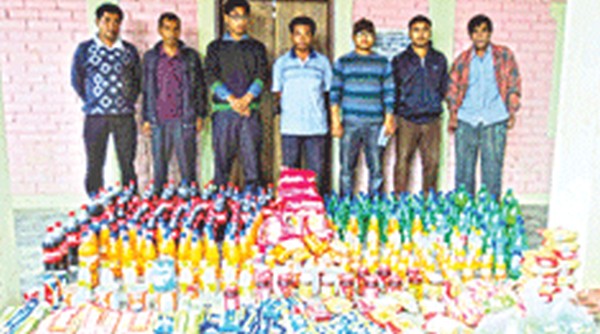
During the drive, many shops were found selling expired Sprite and Coca Cola soft drinks, biscuits, sweets, toasts, pickles, rasgula, sweets, packaged milk powders etc.
Expired items worth around Rs 50,000 were seized during the drive, he added.
While appealing to the authority concerned, particularly the food safety officers, to conduct drives regularly and take action against those who are selling expired food items, the secretary urged the general public to be careful and vigilant in this regard.
The confiscated expired food products were displayed before the media today.

Food and Drug Administration officials seize gutka worth 76,000

PUNE: Officials of the Food and Drug Administration (FDA) seized gutka and paan masala worth Rs 76,800 from a general store in Pimpri late on Saturday.
The officials have lodged an FIR against the shop owner with the Pimpri police station.
"We received a tip-off that the general store owner was selling gutka and paan masala during the late hours. Our officials conducted a raid around 9 pm and seized banned products worth Rs 76,800 from his shop," said Shashikant Kekare, joint commissioner (food), FDA, Pune.
Food safety officials Ravindra Jekete and Kiran Jadhav carried out the raid under the guidance of assistant commissioners (food) Dilip Sangat and S S Desai.
The Pune division of the FDA has seized gutka worth around Rs 3.5 crore since the ban came into force in July 2012.
After the state government's decision to extend the ban by another year, the city FDA started implementing it strictly and is set to take action against offenders.
The ban, which has been imposed by the FDA from July 18, is not just limited to gutka and paan masala. It also includes the ingredients required for their preparation, such as scented areca nuts and scented tobacco.
However, it allows manufacturing, storage, distribution and sale of untreated tobacco and areca nuts.

ஜவ்வரிசியில் ஆபத்தான கலப்படம் 54 சேகோ ஆலைகளில் ஆய்வு உணவு பாதுகாப்புத்துறை அதிகாரிகள் அதிரடி


சேலம், அக்.25:
சேலம் மாவட்டத்தில் ஆத்தூர், தலைவாசல் பகுதியில் இயங்கும் சில சேகோ ஆலைகளில் ஜவ்வரிசிக்கு வெண்மை நிறமேற்ற ஒயிட்னர் மற்றும் சல்பியூரிக் அமிலம் பயன்படுத்துவது உணவு பாதுகாப்பு அலுவலர் ஆய்வில் தெரியவந்துள்ளது.
சேலம், நாமக்கல் மாவட்டங்களில் மரவள்ளி சாகுபடி அதிகம். இதை பயன்படுத்தி ஜவ்வரிசி தயாரிப்பில் சேலம் மாவட்டத்தில் 100க்கும் மேற்பட்ட தொழிற்சாலைகள் இயங்கி வருகின்றன. சேலம் அடுத்த பனமரத்துப்பட்டியில் பகுதியில் சாபு என்று தனி யார் ஜவ்வரிசி (சேகோ) உற் பத்தி ஆலை செயல்பட்டு வருகிறது. இந்த ஆலையில், வெண்மை நிறம் வருவதற்காக ஜவ்வரிசியில் ஆப்டிக்கல் ஒயிட்னர் என்ற ரசாயணம் கலக்கப்படுவதாக உணவு பாதுகாப்புத்துறை சூரமங்கலம் பகுதி அதிகாரி திருமூர்த்திக்கு புகார் சென்றது.
இதையடுத்து உணவு பாதுகாப்புத்துறை சேலம் மாவட்ட அலுவலர் அனு ராதா, சூரமங்கலம் பகுதி அதிகாரி திருமூர்த்தி தலைமையிலான குழுவினர் கடந்த மாதம் 20ம் தேதி குடோனில் இருந்த ஜவ்வரிசியை ஆய்வு செய்து உணவு பகுப்பாய்வு கூடத்திற்கு பரிசோதனைக்கு அனுப்பினர். இந்த பரிசோதனையில் ஜவ்வரிசியில் ஆப்டிக்கல் ஒயிட்னர் என்ற வேதி பொருள் கலந்து இருப்பது தெரிய வந்தது. ஆப்டிக்கல் ஒயிட்னர் வேதிப்பொருள் புற்றுநோயை ஏற்படுத்தக்கூடியது. ஜவ்வரிசியின் பழுப்பு நிறத்தை மாற்றுவதற்கு ஒயிட் னரை பயன்படுத்தி வருவது தொடர்பாக உணவு பொருள் பாதுகாப்பு சட்டத்தின் கீழ் நடவடிக்கை எடுக்க முடிவு செய்யப்பட்டது.
மாவட்டத்தில் பல தொழிற்சாலைகளில் இது போன்ற கலப்படம் நடப்பது தெரியவந்தது. இதையடுத்து உணவு பாதுகாப்புத்துறை அதிகாரிகள் தலைவாசல், கெங்கவல்லி, தம்மம்பட்டி உள்ளிட்ட பகுதிகளில் உள்ள சேகோ ஆலையில் சோதனையிட்டனர். இந்த சோதனை யில் பல லட்சம் மதிப்பிலான ஆப்டிக்கல் ஒயிட்னர், சல்பியூரிக் அமிலம் ஆகியவற்றை கைப்பற்றி அழித்தனர்.
இது குறித்து உணவு பாதுகாப்புத்துறை சேலம் மாவட்ட நியமன அதிகாரி டாக்டர் அனுராதா கூறியதாவது:
சேலம் அடுத்த பனமரத்துப்பட்டியில் தனியார் சேகோ ஆலையில், ஜவ்வரிசி வெண்மை நிறமாக மாறுவதற்கு ஆப்டிக்கல் ஒயிட்னர் என்ற கெமிக்கல் பயன்படுத்தி இருப்பது பரிசோதனையில் தெரியவந்தது. இதையடுத்து ஆலை உரிமையாளர்கள் மீது வழக்கு தொடர சென்னை உணவு பாதுகாப்புத்துறை ஆணையரிடம் அனுமதி கேட்டுள்ளோம். அவர் அனுமதி வழங்கியபின் ஆலை உரிமையாளர் மீது விரைவில் வழக்கு தொடரப்படும்.
தொடர்ந்து தலைவாசல் சுற்று வட்டார பகுதிகளில் உள்ள 54 சேகோ ஆலைகளில் ஆய்வு செய்தோம். அப்போது அந்த ஆலைகளில் ஜவ்வரிசியில் கலப்பதற்காக வைக்கப்பட்டிருந்த 25 கிலோ சோடி யம் ஹைட்ரோ குளோரைடு கெமிக்கல், 50 லிட்டர் கொள் ளளவு கொண்ட சல்பியூரிக் அமிலம் 3 கேன், ஆப்டிக்கல் ஒயிட்னர் உள்ளிட்டவை களை பறிமுதல் செய்து கீழே கொட்டி அழித்தோம். மேலும் சேகோ ஆலை அதிபர்களுக்கு முறைப்படி நோட்டீஸ் வழங்கப்பட்டது. இதை மீறி ஜவ்வரிசியில் கெமிக்கல் கலந்து இருப்பது தெரியவந்தால், அவர்கள் மீது வழக்கு தொடரப்படும் என்று எச்சரிக்கை செய்துள்ளோம்.இவ்வாறு டாக்டர் அனுராதா கூறினார்.
புற்றுநோய் ஏற்படும்
கிழக்கு மாவில் ஜவ்வரிசி, அப்பளம் உள்ளிட்டவைகள் அதிகளவில் தயாரிக்கப்படுகிறது. ஜவ்வரிசியில் ஆப்டிக்கல் ஒயிட்னர், சல்பியூரிக் அமிலம் உள்ளிட்டவைகளை சேர்க்கும்போது, அதை தொடர்ந்து சாப்பிடும் மக்களுக்கு முதலில் வயிற்று எரிச்சல், புண் ஏற்படும். அதன்பின் நாளடைவில் புற்றுநோய் தாக்கி உயிரிழப்பு ஏற்படும்.
நிறத்தை மாற்ற அமிலம் கலப்பு
மரவள்ளி கிழங்கை அரைத்து ஜவ்வரியாக தயாரிக்கும் போது, அவை பழுப்பு நிறத்தில் இருக்கும். கிழங்கில் இருக்கும் பழுப்பு நிறத்தை எடுக்க, கிழங்கு அரைக்கும் போதே சோடியம் ஹைட்ரோ குளோரைடு கரைசல் சேர்க்கப்படுகிறது. இவ்வாறு சேர்க்கும்போது கிழங்கு மாவு வெண்மை நிறத்தில் இருக்கும். மேலும் வெண்மை நிறமாகவும், பளபளப்பாக இருக்க சல்பியூரிக் அமிலம், பாஸ்பரிக் அமிலம், ஆப்டிக்கல் ஒயிட்னர் ஏதாவது ஒன்று கலக்கப்படுகிறது. அப்போது ஜவ்வரிசி பார்க்க பளபளப்பாக இருக்கும்.

போலி முகவரியில் ரயிலில் பார்சல் புகையிலை பொருட்கள் சப்ளையில் தமிழகம் முழுவதும் நெட் ஒர்க்


சேலம், அக். 25:
ரயில் மூலம் தடை செய்யப்பட்ட புகையிலை பொருட்களை பார்சலில் அனுப்பிய விவகாரத்தில் தமிழகம் முழுவதும் நெட்ஒர்க் செயல்படுவது தெரியவந்துள்ளது.
சென்னையில் இருந்து ஈரோட்டிற்கு வந்த மங்களூர் எக்ஸ்பிரஸ் ரயிலில் நேற்று முன்தினம், தடை செய்யப்பட்ட புகையிலைப்பொருட்கள் கொண்டு வரப்படுவது சேலம் ரயில்வே கோட்ட பாதுகாப்பு படையினருக்கு தெரிந்தது. ஈரோட்டில் அதை பறிமுதல் செய்து விசாரணை நடத்தினர்.
5.77 லட்சம் மதிப்புள்ள புகையிலை பொருட்களை கடத்தலில் ரயில்வே அலுவலர்களுக்கு தொடர்பு இருப்பதும், அவர்கள் மூலம் போலி முகவரியில் பார்சலில் அனுப்பப்பட்டிருப்பதும் தெரியவந்தது.
சென்னையில் இருந்து ஈரோட்டிற்கு வந்த மங்களூர் எக்ஸ்பிரஸ் ரயிலில் நேற்று முன்தினம், தடை செய்யப்பட்ட புகையிலைப்பொருட்கள் கொண்டு வரப்படுவது சேலம் ரயில்வே கோட்ட பாதுகாப்பு படையினருக்கு தெரிந்தது. ஈரோட்டில் அதை பறிமுதல் செய்து விசாரணை நடத்தினர்.
5.77 லட்சம் மதிப்புள்ள புகையிலை பொருட்களை கடத்தலில் ரயில்வே அலுவலர்களுக்கு தொடர்பு இருப்பதும், அவர்கள் மூலம் போலி முகவரியில் பார்சலில் அனுப்பப்பட்டிருப்பதும் தெரியவந்தது.
இதுகுறித்து ரயில்வே பாதுகாப்பு படையினர் தீவிர விசாரணை நடத்தியதில், சென்னையில் இருந்து தமிழகத்தின் முக்கிய பகுதிகளான மதுரை, கோவை, திருச்சி, கரூர், ஈரோடு, திருப்பூர், திருநெல்வேலி பகுதிகளுக்கும் இதற்கு முன்பு புகையிலை பொருட்கள் போலி பெயரில் அனுப்பப்பட்டிருப்பது தெரியவந்துள்ளது. தமிழகம் முழுவதும் நெட் ஒர்க் அமைத்து, ரகசியமாக ரயில்வே ஊழியர்களை கையில் வைத்துக்கொண்டு இந்த கடத்தல் சம்பவம் நடந்துள்ளது.

பொருளை அனுப்புபவர் மற்றும் பெறுபவர் என இருவரது முகவரியும் போலியாக இருக்கிறது. ஆனால் ரயில்வே ஸ்டேஷனுக்கு வரும் மர்மநபர்கள், பார்சல் ஆபீஸ் ஊழியர்களை கவனித்துவிட்டு புகையிலை பண்டல்களை எடுத்துச் சென்று வந்துள்ளனர்.
இதனால் தற்போது சேலம் ரயில்வே பாதுகாப்பு படையினர், ஈரோடு மற்றும் கோவை ரயில்வே ஸ்டேஷன் பார்சல் ஆபீஸ் ஊழியர்களிடம் விசாரணை நடத்தி வருகின்றனர். விரைவில் புகையிலை கடத்தல் கும்பல் சிக்கும் என பாதுகாப்பு படை அதிகாரிகள் தெரிவித்தனர்.

Oct 26, 2013

Follow rules, sweetmeat makers told

With sweet preparation for Deepavali in full swing, Food Safety and Standards Authority of India officials have asked manufacturers to follow prescribed standards in preparation, packaging and distribution of food items.
A team led by T. Anuradha, District Designated Officer, Tamil Nadu Food Safety and Drug Administration Department, inspected houses, marriage halls, and catering halls, where sweets were being prepared in bulk quantities.
They asked the persons involved in preparing the sweets to use standard ingredients, use quality oil and ghee, protected water, permitted synthetic food colours and ensure that hygienic is maintained in preparation area. They also stressed that workers should wear cap and should not have skin diseases who were involved in the process. Manufacturers were also asked not to use newspapers for packing the sweets and also supply only quality products.
Officials also asked consumers to buy sweets from licensed sellers and also not stress on the colour of sweets. “Milk sweets should be consumed within three days where as ghee sweets in 10 days,” they added.
Six teams were inspecting the units from Monday and it would continue for another one week. They said bulk preparation has just begun and they would closely monitor the units.

HO wakes up to unhealthy food outlets

Srinagar, Oct 25: Lack of hygiene, absence of proper dress code or medically unhealthy condition of staffers at restaurants, hotels and other food outlets in the City may soon land its owners in trouble ranging from cancellation of licenses to imprisonment.
Prompted by public complaints, the Srinagar Municipal Corporation has finally decided to act tough against the violators with the SMC Health Officer issuing public notifications in newspapers.
“The Public Health Department of Srinagar Municipal Corporation is conducting a Food Safety Audit of all Food Establishments of Srinagar City, which shall include: Sanitation and cleanliness of the Food Establishments, Pest and rodent control methods adopted, Health and Hygiene of the all Food Handlers along with their Medical /Health status and Adoption of dress code including uniform, gloves, and Headgear etc,” reads the notification issued by the Health Officer Dr Shafqat Khan vide No SMC/PS/HO/882 dated October 24, 2013.
“Any Food Establishment which fails to comply the Food Safety Audit shall be liable to cancellation of Food licenses along with fine up to Rs 1 lakh or imprisonment upto 6 months under the Food Safety and Standard Act 2006,” it adds.
When contacted the Health Officer admitted that the decision was taken following public complaints that the “food outlets were taking consumers for a ride”. “No indiscipline will be tolerated,” he added.

Vadodara Municipal Corporation to conduct extensive checking of food outlets during festive season

VADODARA: The Vadodara Municipal Corporation (VMC) has asked all persons engaged in the food business to ensure that they adhere to the provisions of the Food Safety and Standards Act, 2006. The civic body issued the advisory in wake of the fact that food items will be prepared and stored in large quantities during the festive season.
VMC officials said that the civic body was geared up to conduct tests and inspect food and sweetmeat outlets extensively. Officials said that even raw material used to prepare food items will be checked by the civic body.
The corporation's health department officials will collect samples and analyse these in its laboratory. Teams of the department will also carry kits to analyse the samples on the spot as well.
VMC officials checked some food outlets in the city Friday and collected 13 samples. Teams had visited shops in Makarpura, Alkapuri, Gotri, Waghodiya Road, Chokhandi, New Sama Road, and other areas. The samples will now be analysed at the civic body's public health laboratory. The process is expected to continue till November 2.
Officials said that extensive checking has been planned as it had come to light in the past that raw material and prepared food items that were not fit for consumption were stored. Adulteration was another issue that the officials want to check.

FDA proposes rules to make animal food safer

Amid incidents of pets dying from dog treats, the Food and Drug Administration is proposing long-awaited rules to make pet food and animal feed safer.
The rules stem from a sweeping food safety law passed by Congress almost three years ago. Like rules proposed earlier this year for human food, they would focus on preventing contamination before it begins.
The announcement comes as the FDA says it hasn't yet determined a cause of almost 600 dog deaths believed to be linked to pet jerky treats imported from China. The agency has been trying for six years to determine what exactly is causing those illnesses.
The proposed rules would require those who sell pet food and animal feed in the United States — including importers — to follow certain sanitation practices and have detailed food safety plans. All of the manufacturers would have to put individual procedures in place to prevent their food from becoming contaminated.
The rules would also help human health by aiming to prevent foodborne illnesses in pet food that can be transferred to humans. People can become sick by handling contaminated pet food or animal feed.
Michael Taylor, FDA deputy commissioner for foods, said the rules fit together with regulations proposed in July to create better oversight over imported food, including pet foods and animal feed. The idea behind all of the food safety rules is to make businesses more responsible for the safety of the food they are selling by proving they are using good food safety practices. They might do that by documenting basic information about their suppliers' cleanliness, testing foods or acquiring food safety audits. If they fail to verify the food is safe, the FDA could stop shipments of their food.
Currently, the government does little to ensure that companies are trying to prevent food safety problems but generally waits and responds to outbreaks after they happen.
Taylor said the new rules, once they are in place, could be helpful in investigating the jerky treat deaths if those illnesses are still happening. But they still may not be able to solve the mystery because the FDA has not yet been able to determine what ingredients are causing sickness. The rules generally ask manufacturers to focus on certain hazards and do their best to prevent them.
"We are really still trying to find out what the hazard is" in the jerky illnesses, Taylor said.
The FDA said the rule could cost industry $130 million annually to comply. Smaller businesses would have more time to put the rule in place.
The agency will take comments for four months before issuing a final rule and will hold a series of public meetings to explain the proposal.

More food safety officers sought

The delay in appointing qualified food safety officers has been a major hurdle to effective implementation of food safety norms in the State, Kerala Food Technologists Association (KEFTA) has said.
A spokesman for Kefta said on Thursday that though Kerala was the first State to establish a Food Safety Commissionerate to implement the Food Safety and Standard Act (FSSA-2006) there had been delay in appointing food safety officers by Public service Commission (PSC). Other States that established Food Safety Commissionerates after Kerala did it in 2011 had already appointed enough food safety officers to enforce the rules, the KEFTA spokesman said.
As many as 57 posts of food safety officers had been sanctioned in Kerala though these posts had not yet been even notified. The posts were to be filled by professionally qualified candidates.
Food analysts had also not been appointed even on temporary basis in Pampa and other pilgrimage centres, the KEFTA spokesman said, demanding appointment of food safety officers without further delay.

Oct 25, 2013

Gear up resources with state-level counterparts & inspect: SC to FSSAI

A Supreme Court bench, comprising judges K S Radhakrishnan and A K Sikri, urged the Food Safety and Standards Authority of India (FSSAI) to gear up their resources with their counterparts in all the states and Union Territories and periodically inspect and monitor major fruit and vegetable markets.
The apex court stated that the right to life and human dignity – which encompass the enjoyment of life and its attainment – in turn encompassed the right to have food articles and beverages which are free from such harmful residues as pesticides and insecticides.
Judgment
The judgment, the bench said the enjoyment of life and its attainment, which includes the right to life and human dignity, encompassed within its ambit the availability of articles of food without insecticide or pesticide residues, veterinary drug residues, antibiotic residues and solvent residues.
“We may emphasise that any food article which is hazardous or injurious to public health is a potential danger to the fundamental right to life guaranteed under Article 21 of the Constitution of India,” it stated.
“A paramount duty is cast upon the states and Union Territories and their authorities to achieve an appropriate level of protection to human life and health,” the judgment – which is 26 pages long – stated.
Soft drinks
The bench disposed of the public interest litigation (PIL) seeking to set up an independent technical panel to evaluate the harmful effects of soft drinks on the health of humans in general, and children in particular.
“The Food Safety and Standards Act (FSSA), 2006 – which replaced the Prevention of Food Adulteration (PFA) Act, 1954 – and its rules and regulations (FSSR, 2011), are sufficient to deal with the grievances,” it stated.
“In our view, by and large, the various grievances raised by the petitioner are seen covered by the above-mentioned legislations, but the question is only with regard to their enforcement by the authorities functioning under these legislations,” it said.
The court, in its verdict, also referred to various regulatory provisions of the Food Security and Standards Act, and added that they must be interpreted and applied in the light of the Constitutional Principles to achieve an appropriate level of protection of human life and health.
It said that the manufacture and sale of carbonated soft drinks was regulated by the Food Security and Standards Act, and added that the same has already been constituted, and gives very wide powers to the central and state governments to deal with all matters pertaining to food.items.
“It also has the power to advise the Centre and states on all food-related matters and to carry out other functions assigned to it under the FSSA. Adequate provisions are also in place under the Act with the rules and regulations made on that behalf to deal with misleading advertisements,” the court said.
It added that the responsibility had been cast upon the authorities to maintain a system, and undertake other activities as appropriate to the circumstances, including public communication on food safety and risk, food safety surveillance and other monitoring activities covering all stages of food business.
The court noted that many food articles – including rice, vegetables, meat, fish, milk and fruit – contain insecticide or pesticide residues beyond tolerable limits, and the fruit-based soft drinks available at fruit stalls contain such pesticide residues in alarming proportions, but their contents are not examined.
“Children and infants, in particular, are susceptible to the ill-effects of pesticides because of their physiological immaturity, coupled with a greater exposure to soft drinks, fruit-based or otherwise,” it said.
The Centre for Public Interest Litigation (CPIL) had, in its petition filed several years ago, also sought directions to cola firms to disclose their contents on the label of their bottles and to regulate misleading advertisements targeting children.

4.3 டன் குட்கா, ஜர்தா குப்பையில் கொட்டி அழிப்பு


சென்னை : சென்னையின் பல பகுதிகளிலும் பறிமுதல் செய்யப்பட்ட, 4.3 டன் ஜர்தா, குட்கா பாக்கெட்டுகளை, உணவு பாதுகாப்புத் துறையினர் குப்பைக் கிடங்குகளில் குழி தோண்டி புதைத்தனர். தமிழகத்தில், குட்கா, ஜர்தா விற்பனைக்கு, தமிழக அரசு தடை விதித்துள்ளது. ஆனால், தடையை மீறி, ஜர்தா, குட்கா பாக்கெட்டுகள் பதுக்கி வைத்து, வி்ற்கும் செயல்கள் நடந்து வருகின்றன. உணவு பாதுகாப்புத் துறையினர் கட்டுப் படுத்தும் முயற்சியில்
ஈடுபட்டு வருகின்றனர். கடந்த சில தினங்களுக்கு முன், அடையாறு பகுதியில், வெளி மாநிலத்தில் இருந்து, லாரியில் கடத்தி வரப்பட்ட, 2.8 டன், குட்கா, ஜர்தா பாக்கெட்டுகளை போலீசார் பறிமுதல் செய்தனர். அதுபோன்று வடசென்னை பகுதிகளில், கடந்த வாரம் நடந்த சோதனையில், 1.5 டன் ஜர்தா, குட்கா பாக்கெட்டுகள் பறிமுதல் செய்யப்பட்டன.
இவவாறு, பறிமுதல் செய்யப்பட்ட, 4.3 டன் ஜர்தா, குட்கா பாக்கெட்டுகள் நேற்று, சென்னை பெருங்குடி, கொடுங்கையூர் குப்பைக் கிடங்குகளில், குழிதோண்டி புதைக்கப்பட்டன.
இதுகுறித்து, மாவட்ட அலுவலர் லட்சுமி நாராயணன் கூறியதாவது:பெருங்குடியில், 2.8 டன்னும், கொடுங்கையூர் குப்பைக் கிடங்கில், 1.5 டன் குட்கா அழிக்கப்பட்டது. ஒன்பது அடி ஆழத்திற்கு குழி தோண்டி, குட்கா பாக்கெட்டுகளை கிழித்துக் கொட்டி, சாணம், உரத்தையும் சேர்த்து புதைத்துள்ளோம்.மாசுக்கட்டுப்பாட்டு வாரிய அறிவுரைப்படி அவ்வாறு செய்யப்பட்டு
உள்ளது. மக்களின் உயிருடன் விளையாடும் குட்கா, ஜர்தா பாக்கெட்டுகள் விற்பனையை, வியா
பாரிகள் முற்றிலும் கைவிட வேண்டும்.இவ்வாறு அவர் கூறினார்.

ஜவ்வரிசியில் மக்காச்சோளம் கலப்படம் சேகோ மில் உரிமையாளர்கள் குமுறல்


பனமரத்துப்பட்டி: சேலம் மாவட்டத்தில், மரவள்ளி ஸ்டார்ச் மாவில், மக்காச்சோளம் மாவை கலந்து, ஜவ்வரிசி உற்பத்தி செய்து, வெளிமார்கெட்டில் விற்பனை செய்யப்படுகிறது. அதனால், தரமான ஜவ்வரிசி தயார் செய்து விற்பனை செய்யும் மில் உரிமையாளர்களுக்கு நஷ்டம் ஏற்படுகிறது.
சேலம் மாவட்டத்தில், 400க்கும் மேற்பட்ட சேகோ மில்கள் இயங்கி வருகின்றன. இங்கு, மரவள்ளி கிழங்கில் இருந்து ஸ்டார்ச், ஜவ்வரிசி தயார் செய்து, வட மாநிலம், வெளி நாடுகளுக்கு ஏற்றுமதி செய்யப்படுகிறது. உலர வைக்கப்பட்ட ஸ்டார்ச் மாவு, குளுக்கேஸ், சாக்லேட், டூத்பேஸ்ட், பிஸ்கட், முறுக்கு, போண்டா, பஜ்ஜி மாவு ஆகியவை தயாரிக்க பயன்படுகிறது.
ஈரதன்மையுடன் இருக்கும் ஸ்டார்ச் மாவில், ஜவ்வரிசி தயார் செய்யப்படுகிறது. ஈரமான ஸ்டார்ச் மாவில், மக்காச்சோளம் மாவை கலப்படம் செய்து, ஜவ்வரிசி தயார் செய்யப்படுவதாக புகார் எழுந்துள்ளது. தொழில் போட்டியை சமாளிக்கவும், கூடுதல் லாபம் பார்க்கவும், ஸ்டார்ச் மாவில், மக்காச்சோளம் கலந்து, ஜவ்வரிசி தயார் செய்து விற்பனை செய்யப்படுகிறது.
அதனால், அரசுக்கு வருவாய் இழப்பு ஏற்படுவதோடு, தரமான ஜவ்வரிசி உற்பத்தி செய்யும், சேகோமில் உரிமையாளர்களுக்கு நஷ்டம் ஏற்படுகிறது.
சேகோ மில் உரிமையாளர் ஒருவர் கூறியதாவது:
சேலம், தம்மம்பட்டி, ஆத்தூர், நாமகிரிபேட்டை, தர்மபுரி உள்ளிட்ட இடங்களில் இயங்கும் சேகோ மில் உரிமையாளர்கள் சிலர், 140 கிலோ எடை கொண்ட, ஈரத்தன்மை கொண்ட ஸ்டார்ச் மாவை, 4,000 ரூபாய்க்கு வாங்கிச் சென்று, அதில் மக்காச்சோளம் மாவை கலந்து, ஜவ்வரிசி தயார் செய்கின்றனர். மக்காச்சோளம் மாவு கலந்த ஜவ்வரிசி வெளுக்க, ரசாயனம் பயன்படுத்துகின்றனர்.
தரமான ஜவ்வரிசி மூட்டை (90 கிலோ), 5,700 ரூபாய்க்கு விற்பனை செய்யப்படுகிறது. மக்காச்சோளம் கலப்படம் செய்த ஜவ்வரிசி, 5,000 ரூபாய்க்கு விற்கின்றனர். இதனால், தரமான ஜவ்வரிசி உற்பத்தி செய்யும் என்னை போன்ற மில் உரிமையாளர்களுக்கு நஷ்டம் ஏற்படுகிறது.
சேகோசர்வில், பரிசோதனை செய்யப்பட்டு, ஜவ்வரிசி விற்பனைக்கு அனுமதிக்கப்படுகிறது. அதனால், மக்காச்சோளம் கலப்படம் செய்து தயாரிக்கப்பட்ட ஜவ்வரிசியை, சேகோசர்வ் கொண்டு வராமல், வெளிமார்கெட்டில் விற்பனை செய்கின்றனர்.
சேலம் மாவட்டத்தில், ஆண்டுக்கு சராசரியாக, பத்து லட்சம் ஜவ்வரிசி மூட்டைகள் உற்பத்தி செய்யப்படுகிறது. இதில், 25 சதவீதமான, மூன்று லட்சம் ஜவ்வரிசி மூட்டைகள் மட்டுமே, சேகோசர்வ் மூலம் விற்பனை செய்யப்படுகிறது. மீதம் உள்ள, 75 சதவீத ஜவ்வரிசி மூட்டைகள், வெளிமார்கெட்டில், பில் இல்லாமல் விற்பனை செய்கின்றனர்.
இதில், மக்காச்சோளம் கலந்த ஜவ்வரிசி அதிகளவில் விற்பனை செய்யப்படுகிறது. கலப்படம் அதிகரித்துள்ளதால், சேகோசர்வ்க்கு ஜவ்வரிசி வரத்து குறைந்துள்ளது.
இந்திய உணவு பாதுகாப்பு சட்டப்படி, ஜவ்வரிசியில், எந்த பொருளையும் கலக்கக்கூடாது. ஆனால், மக்காச்சோளம் மாவு கலப்படம் செய்து தயாரிக்கப்பட்ட, ஜவ்வரிசி விற்பனையை, அதிகாரிகள் யாரும் கண்டுகொள்வதில்லை.
சேகோசர்வ் மூலம் தரப்பரிசோதனை சான்று பெற்று, ஜவ்வரிசி விற்பனை செய்தால், கலப்படம் தடுக்கப்படும். அரசுக்கு வருவாய் கிடைப்பதோடு, தரமான ஜவ்வரிசி உற்பத்தி செய்யும், மில் உரிமையாளர்களும் நஷ்டம் ஏற்படாது.
இவ்வாறு அவர் கூறினார்.

Six samples of sago found to be unsafe for consumption

Of the total nine samples drawn by the Food Safety and Standards Authority of India (FSSAI) officials from companies manufacturing sago in the district, laboratory test revealed that six samples were found to be adulterated and were ‘unsafe’ for consumption.
A team led by T. Anuradha, District Designated Officer, Tamil Nadu Food Safety and Drug Administration Department recently took samples from companies located in Salem city, Ayodhiyapattinam, Panamarathupatti, Gangavalli and Thammampatti.
Samples were sent to the Food Analysis Laboratory in Chennai that revealed that the sago which is half-white when natural, is mixed with chemicals to give more whiteness.
Notices
Hence notices were issued to the companies found manufacturing adulterated products.
She told The Hindu that manufacturers can go for appeal with Referral Laboratory within 30 days and the second sample would be sent for testing. If no appeal is made, with the consent of the Food Safety Commissioner, a case would be filed for manufacturing, distributing adulterated food and also for misbranding, they added.
FSSAI officials said that sago is mainly used for preparing pasta, bakery products and also to make value added products.

CSE calls for testing of processed food for pesticides

New Delhi: The Centre for Science and Environment Thursday demanded periodical testing of packaged and processed food, including soft drinks, for pesticides.
Hailing the recent Supreme Court order asking the Food Safety and Standards Authority of India (FSSAI) to conduct periodic inspections and monitoring of major fruit and vegetable markets for the presence of pesticide residues, the CSE said it should be extended to other food products.
“The current regulatory framework with respect to advertisements of soft drinks as per the Act and the Advertising Standards Council of India code is not good enough and needs to be revised,” said Chandra Bhushan, CSE’s deputy director general and head of its food safety and toxins team.
“Globally, there is an increasing body of evidence which demonstrates that obesity and non-communicable diseases (especially in children) could be connected to advertisements of cola drinks and other junk foods,” he said.
In 2003 and 2006, tests conducted by CSE had found high levels of pesticide residues in almost all the major brands of carbonated beverages.
A joint parliamentary committee set up to investigate the findings had found them correct. In 2008, the union health ministry notified standards for individual pesticides in carbonated beverages.
The CSE also said the FSSAI should put all information about the pesticides and chemicals that have been tested for compliance of standards since 2008, in the public domain.
“Periodic testing and monitoring by the FSSAI should not be limited to raw fruits and vegetables. Packaged and processed food commodities including soft drinks should be tested as well,” Bhushan added.

Condiments worth Rs 1.31 lakh seized

PUNE: The Food and Drug Administration (FDA) officials seized chilli and coriander powder worth Rs 1.31 lakh from a condiment supplying and packaging unit in Nana Peth on Wednesday.
The food safety officials raided the shop and closed the unit after receiving a complaint from Javed Ismail Khan of Shiv Sena, said Shashikant Kekare, joint commissioner (food), FDA, Pune.
"The owner of the manufacturing unit did not have an FDA licence. Our officials also found the supplying and packaging unit in unhygienic condition. We have taken samples and sent them for tests to rule out adulteration," said Kekare.
The officials seized a stock of chilli and coriander powder, loose as well as packaged, from the unit which is located near Bharat cinema hall in Nana Peth. "Total 1,468 kg loose chilli powder and 650 kg of packaged chilli powder have been seized. Besides, 112 kg coriander powder was also taken for testing," Kekare said.
"Javed Ismail Khan of Shiv Sena had filed the complaint on Wednesday, following which our officials raided the unit," Kekare said.

Tobacco products, banned food items worth Rs 15 lakh seized from CCpur

IMPHAL, October 24: Staff reporter 24: A food safety team raided shops in Churachandpur old and new markets and seized Rs 15 lakh worth of tobacco products and banned eatable items imported from Myanmar.
The District Commissioner, Jacintha Lajarus, disposed the seized items at the complex of Chief Medical Officer office, Churachandpur later in the evening.
Jacintha said such type of drive will help to spread awareness to the general public. Even after we asked them not to buy and consume the banned items, they cannot understand the reasons behind the warnings and dishonest shopkeepers take advantages of their ignorance, she said.
She promised to make more personal effort as the items being sold are hazardous to human lives and appealed to the consumers to stop using the items and the sellers to discontinue selling them.
After the state’s health department banned a list of items under the Food Safety and Standard Act 2006, contraband food items seized today were Rs 5 lakhs of Moreh imports and tobacco products items of Rs 10 lakhs.
The team of food safety officers was led by Th Sunilkumar, officer CCpur, along with Jinny, officer Senapati, Khogen, Officer Ukhrul, Avilson, Officer Chandel, N Debendro, Officer Thoubal, Sumita, Officer Bishnupur, Y Satyajeet, officer Imphal West and In-charge Imphal East.
The drive was carried out with the help of CCpur Police led by the SI Lutminthang Kipgen. The team raided the shops of the Churachandpur old market from CCpur Police station to Axis Bank of New Market.
Food safety Officer Churchandpur said in the sideline that this is a special drive conducted after this team has raid areas in the Imphal East and West district.
This drive will continue in other district in the future to ban the sale of junk food in the state. He added that the last date of the license issued was February 4, 2014. If anyone is found selling those items in the future without food safety license from street vendor up to manufacture factory, he or she will be arrested under section 59 and convicted for 6 months imprisonment, with fines upto Rs 5 lakh by the food safety appellant court constituted in every District DC office.

ICMR seminar on food safety held in Chandigarh

CHANDIGARH: Department of dietetics and School of Public Health are hosting a ICMR seminar on Food safety, 'Training the Trainers: Implementation of Food Hygiene Related Provisions of New FSSR 2011 in Eating Establishments of Hospitals' on 25 October 2013 in Auditorium of Advance Eye cente, PGIMER from 3pm -5pm.
The conference aims to bring on one platform all the relevant stakeholders who are dealing with food safety at various, levels thus bridging the gap between policy making, implementation, monitoring and feedback so as to be ready for the challenges in implementation of the new food safety law. The focus of the conference is on training in food safety as a necessary step to implement FSSR 2011.
The conference will be attended by Dieticians of Government Medical college 32, GMSH 16, Fortis Hospital , faculty of CIHM sector 42 and home science college sector 11. Faculty and residents of hospital administration department of PGIMER, Govt college 32 and GMSH 16 will also be attending the seminar. A total of 100 participants are expected.
Food handlers in PGIMER will be trained on food safety issues on 26th October,2013. They will be given a booklet on food safety in Hindi. A comedy movie on food safety will also be screened. Free refreshments and certificate of food training course will be given to all food handlers participating in the training.

Food safety remains a critical issue in India

Food safety remains a critical issue in India with frequent reports of outbreaks of food borne illnesses every year resulting in substantial costs to individuals, health care system and the country.


Chandigarh,24.10.13:Food safety remains a critical issue in India with frequent reports of outbreaks of food borne illnesses every year resulting in substantial costs to individuals, health care system and the country. Food contamination can occur at any stage from production to consumption i.e from ‘Farm to Fork’. This issue is a matter of concern for authorities in all kinds of settings e.g., eating outlets of hospitals, schools, colleges etc.
Government of India has taken many initiatives to ensure food safety in the country e.g., ushering a new legislation Food Safety and Standards Act (FSSA) 2006. This lays down minimum food safety standards at all levels. Food Safety and Standards Authority of India (FSSAI) has also been established and Food Safety and Standards Regulations (FSSR) 2011 have been promulgated. Hence, sooner or later, all eating establishments will have focus on training their food handlers. They will have to ensure conformance to the food safety law.
With the increasing eating out culture, the present customers are more concerned about food safety than they were in the past. At the same time, with food processing industry diversifying its operations a variety of food is now also becoming increasingly available. Food safety issue has become further complex with the lengthening of food chain before a product reaches the consumer.
An essential element in food safety management in any eating establishment is to ensure that all its employees observe hygienic practices. The Food Business Operator (FBO) along with the all employees of eating establishments should have an easy access to the updated information they regularly need on food safety.
Lack of trained food handlers is a definite bottle neck in achieving food safety. Lapse at any point by a food handler can compromise the food safety and thereby the health of the people. In service training of food handlers on food safety is not given due consideration. In fact, there is a dearth of training material on these aspects. 
Dr Puja Dudeja, who is doing her Ph D under Dr Amarjeet Singh of SPH, PGIMER has taken the initiative of creating a useful set of training material on this aspect. Dr Sukhpal Kaur has also contributed in this endeavour. Both Hindi and English versions of a book on food safety have been published this month by them. Dr Puja has also developed a short comedy film on food safety. This film, directed by Mr Ravinder Kumar of Rudra Theatre Company seeks to use infotainment mode to propagate the idea of food safety. These books and CDs are expected to help FBOs of eating establishments in training the food handlers on safe food practices.
This book has eight sections. These sections have covered aspects like who is a food handler, their role in causing and preventing food borne illnesses, various environmental aspects of a kitchen, procurement and storage of food materials, safe food handling practices, tips for ready to eat foods, cleaning of utensils, maintenance of kitchen and role of monitoring and supervision in ensuring food safety. This book is an attempt in this direction. It will serve as a training tool for the food handlers and food business operators.
The book has plenty of illustrations. This coupled with a simple language has helped to make the book easy to read and comprehend. It has been modestly priced @145/- per copy (Hindi version @ Rs 125/-). It has been published by New Era Book Agency (SCO 49-51), Sector 17, Chandigarh.
Being from medical background the authors have given a special focus on implementing food safety standards in hospital kitchens. Thus this book will be thus very valuable resource for all those managing or working in the hospital kitchens.

Oct 24, 2013

Fall in line by Feb 4, 2014, food trade operators told

In view of poor response from the food business operators to its registration and licensing drive launched three years ago, the Food Safety and Standards Authority of India (FSSAI) has warned them to fall in line by the final deadline of February 4, 2014, or face penalty.
The operators had been given extension twice since enactment of the Food Safety and Standards (Licensing and Registration of Food Businesses) Regulations, 2011. But so far the food regulator has been able to register just 25 lakhs out of the country’s around five crore FBOs and gave licence to only 6 lakh FBOs so far against the target of 50 lakh.
 “We have sought an amendment in the FSS Act to ensure that there will be no further extension to FBOs operating in the country to comply with the rules. As per amendment yet to be cleared by the Health Ministry, the FBOs have to get licence and register by February 4, 2014, otherwise they would be penalised,” said K Chandramouli, Chairman of the FSSAI.
He also hoped that the FBO will come rushing for registration in the months nearing deadline. “We have asked the State Governments to raise awareness among the FBOs about the rules which aims to ensure a certain level of hygiene,” he said.
Chandramouli said the first deadline was August 4, 2012, that is one year after the implementation of the FSS (Licensing & Registration of Food Businesses) Regulations, 2011. It was extended again by six months to February 4, 2013, and then to February 4, 2014.  Now we have no plan to extend it further, he added.
The FSS Act makes it mandatory for every FBO having a turnover Rs 12 lakh to obtain a licence and those below Rs 12 lakh to get themselves registered. This implies that excepting big eateries all FBOs, from road-side chat sellers to vegetable vendors and from milkman to caterers, all need to be registered.
As per the Act all FBOs (into manufacture, storage, transport and serving of food) must maintain a record of the inventory of raw food, stored food, water, food and air testing and pest control regimes. Also, it makes mandatory on food handlers to have annual medical fitness checks.

தீபாவளி பலகார கடைகளில் சுகாதாரம் கடைபிடிக்கப்படுகிறதா? உணவு பாதுகாப்பு குழுவினர் ஆய்வு


குடிநீர் சுத்திகரிப்பு நிறுவனங்களில் உணவு பாதுகாப்பு அலுவலர்கள் சோதனை


கம்பம் ஓட்டல்களில் உணவு பாதுகாப்பு அதிகாரிகள் ஆய்வு


Approval of standards for products agenda item at FSSAI's 12th meeting

The twelfth authority meeting of the Food Safety and Standards Authority of India (FSSAI) was held in New Delhi recently. It was chaired by K Chandramouli, chairperson, FSSAI, and D K Samantaray, chief executive officer of the country's apex food regulator, was the member secretary at the meeting. Other FSSAI officials who attended it included Sanjay Dave, advisor; Vinod Kotwal, director, Codex, financial advisor and establishment; Pradip Chakraborty, director, zone, IEC and administration; C R Dalal, director, surveillance and enforcement; Meenakshi Singh, scientist, standards; Sandhya Kabra, director, quality assurance; Anil Mehta, deputy director (northern region); Rakesh Kulshrestha, deputy director, GA; Sanjay Gupta, assistant director, enforcement; B G Pandian, assistant director (imports), and P K Karthikeyan, assistant director, quality assurance.
The meeting was also attended by A K Srivastava, director, National Dairy Research Institute (NDRI), Indian Council for Agricultural Research (ICAR), Karnal; Lalitha Ramakrishna Gowda, chief scientist, Department of Protein Chemistry and Technology, Council of Scientific and Industrial Research (CSIR), Mysore; Shreya Pandey, All India Food Processors' Association (AIFPA); Meetu Kapur, Confederation of Indian Industry (CII); Thanglura, Mizoram Consumers' Union, Aizawl; Vasudev K Thakkar, president, V Care Right and Duty non-governmental organisation (NGO), Vadodara; Abukalam, Madina Munavara Coffee Estate, Chikmagalur; A R Sharma, chairman and managing director, Ricelaa Health Foods Ltd, Sangrur; Anuradha Prasad, joint secretary, Ministry of Food Processing Industries (MoFPI); G Narayan Raju, joint secretary, Ministry of Law; Utpal Kumar Singh, joint secretary, Department of Agriculture and Cooperation (DAC); Asit Tripathi, joint secretary, Department of Commerce; Surekha Chopra, state nodal officer for food authority, Government of Himachal Pradesh, and M P Singh, additional development commissioner, ministry of micro, small and medium enterprises (MSME).
Chandramouli welcomed all the members of the recently-reconstituted authority to its first meeting, and apprised them about the Food Safety and Standards Act (FSSA), 2006 and the operationalisation of the Act with the notification of Regulations with effect from August 5, 2011. He also drew their attention to the procedures followed by the Authority and its functioning. It was also informed that it convened eleven meetings prior to this one, and put in place physical infrastructure; created a framework for setting science-based standards by way of scientific panels, scientific committees and expert groups, and rolled out the Act throughout the country. FSSAI's chairperson stated that looking at the amount of food being produced, manufactured, imported and consumed in India, ensuring food safety was a challenge. He informed members that the regulatory authority's officials would put in their best efforts to help achieve its goals and objectives, and requested Samantaray to conduct the further proceedings of the meeting.
Oath by new members
The new members took the oath of office and secrecy in terms of Section 7 (3) of the Act and Rule 16 of the FSSAI Rules, 2008, and also signed the Annual Declaration of Interest.
Disclosure of interest by members
All the members present during the meeting signed the Specific Declaration of Interest in respect of the agenda items to be considered in the meeting, before the start of the proceedings.
Noting appointment of CEO
FSSAI noted Samantaray's appointment as chief executive officer.
Confirmation of minutes of 11th meeting
The authority confirmed the minutes of its eleventh meeting.
CEO's report
The authority took note of the chief executive officer's report, which stated that the members of the newly-constituted authority would, over the next three years, guide it to accomplish the task of ensuring safe food for all across India. It was briefed about the activities undertaken by the regulator between November 2012 and August 2013.
The report focussed on such areas as the enforcement process; training and capacity-building; IEC activities; scientific committee/scientific panel meetings and work on standard-setting; harmonisation of the standards with those laid down by Codex; Codex activities, including the setting up of the Codex Committee on spices and culinary herbs (which will be hosted by India); the food safety surveillance system; the food safety management system (FSMS); product approval; laboratory upgradation; financial and budgetary support; accounts of the authority, human resource management and international cooperation.
Presentation on the way ahead for FSSAI
A presentation was made covering the salient features of the Food Safety and Standards Act (FSSA), 2006, that led to the creation of FSSAI. It also covered the important provision of the Food Safety and Standards Regulations (FSSR), 2011, its current activities and the way ahead.
It was indicated in the presentation that the building blocks on which the future work is proposed are as follows:
? Science-based quality and safety standards;
? Having effective enforcement and risk-based surveillance;
? Integrated food quality testing infrastructure;
? Capacity-building;
? Training;
? Awareness campaigns, and
? Strengthening of FSSAI by way of manpower as well as infrastructure
It was also informed that the proposed activities that cover both the central sector scheme and the centrally-sponsored schemes have been designed keeping in view the outlay of Rs 2,350 crore, which is subject to the approval of the Expenditure Finance Committee and the Cabinet.
The presentation was followed by a discussion, during which the following points emerged:
? According to a member, there is a need for training and human resource development, awareness programmes for food business operators (FBOs) and recognition of more referral laboratories across the country
? It was also requested that the possibility of a separate scientific panel for dairy and dairy products be explored, because the country is the largest producer of milk in the world. There is also a need to revisit the standards for milk and milk products, in view of the cross-breeding and changing feed and fodder patterns
? It also pointed out that concerted efforts through awareness-generating activities should be undertaken to bust the myths related to certain aspects of milk production (e.g. the use of oxytocin injection for milk production)
? A member stressed upon the need to have food testing laboratories at international airports, and also making the customs authorities aware about the Act, and Regulations therein, for imported foods
? Another brought to the authority's notice the fact that food testing laboratory infrastructure needs to be strengthened in the north-eastern part of the country (and particularly in Mizoram) where there is no food testing laboratory. Even the food testing laboratory in Guwahati was not adequately equipped
? Chandramouli informed that during the Twelfth Five-year Plan, there is an emphasis on the upgradation of 72 public food testing laboratories and also setting up of one food testing laboratory in a cluster of 20 districts, with the capability to undertake the basic tests
? It was also informed that FSSAI was in touch with such as institutions as CSIR, the Indian Council of Medical Research (ICMR) and ICAR for twinning arrangements in the areas of research and development (R&D), standard-setting, training and capacity-building, etc.
? Prasad asked, “Are private laboratories also recognised by FSSAI?” It was informed that 68 laboratories accredited by the National Accreditation Board for Testing and Calibration Laboratories (NABL) have been recognised by the regulator, and it is a dynamic process.
Agenda items
? Approval of the standards for various products/ingredients/microbial standards approved by the scientific committees and various panels
? Use of isomaltulose as a food ingredients under the FSS Regulations
The food regulator noted and approved the recommendations of the scientific committee on the use of isomaltulose as a food ingredient in confectionery products only, not exceeding 50 per cent of the total sugar without adversely affecting the stability of the product.
? Use of high-fibre dextrin (soluble dietary fibre) in various food products
The food authority has approved the recommendation of the scientific committee for the use of high-fibre dextrin (soluble dietary fibre) prepared from maize or wheat as a substrate in such food products as flakes and ready-to-eat dry breakfast cereals, noodles, pasta, salad dressings, toppings and spreads, table-top fibres as fillers or carriers, cereals and other snack foods/savouries, and bakery products, including bread, biscuits, cookies, cake mix and pastries.
Products containing added high-fibre dextrin be labelled accordingly along with the source of the same in the ingredients panel of such products and the source of the ingredients (wheat/maize) should be non-genetically-modified (GM).
In case of products containing added high-fibre dextrin if it is intended to make claims, such claims shall comply with Codex guidelines and RDA guidelines of India.

Gourmet food imports down on strict labelling norms

Importers complained that the FSSAI has been undertaking sampling at various points and this was impacting profits. — Ramesh Sharma
Importers complained that the FSSAI has been undertaking sampling at various points and this was impacting profits
Food safety body sends back containers for failure to meet sourcing standards
That tin of New Zealand cheese or bottle of Thai stir fry-sauce that you like may get costlier. Not just because of the falling rupee, but also as supplies are drying up.
Tougher food labelling requirements imposed by the Government, including a requirement to disclose source of origin of food items, have hit the gourmet and speciality food imports, importers and retailers say.
According to them, after recent tightening of norms and stepped up inspections, several containers of imported food have been returned for failure to meet the sourcing standards laid down by the nodal agency, the Food Safety and Standards Authority of India (FSSAI).
Sources in Government indicated that the norms have been tightened following milk contamination in China, radioactive contamination scare coming from Japan and the eColi bacteria scare in Europe. Additionally, they say that labelling has been made stringent as content information is often in Chinese or Arabic, as consignments from such destinations are re-exported to India.
FSSAI is understood to be stringently implementing the norms on labelling since the past two months. The guidelines for labelling, among other things, include clearly stating the origin of the product and even the source. It is also strictly implementing parameters such as the original printing on the product pack meeting Indian requirements, and not just a stickered version, as has been the prevalent practice so far.
“Norm change by the FSSAI is impacting imports of certain products. We understand that several importers are working with manufacturers to comply with the labelling norms, but in products such as cheese, companies are finding it difficult to comply with the norms. This has an impact on products coming into the country,” Mohit Khattar, MD, Godrej Nature’s Basket, said.
Several small and medium importers Business Line spoke to said that the food safety body has been sampling products at various ports and those which did not meet its requirements were re-exported or sent back to the consignor.
Rajneesh Bhasin, MD, Borges India, “Imports are getting impacted due to failure to meet FSSAI guidelines. On our part, we are working with our vendors to comply with requirements such as printing on the bottles as FSSAI guidelines prohibit stickering.”
Amit Lohani, CEO, Max Food, agrees. “Currently, import of gourmet products is down by nearly 40 per cent due to labelling norms. We have been importing products since last 15 years but stringent norms are making it difficult to do business. We believe 1,100 containers are lying abandoned or ready to be shipped back as they are unable to comply with the FSSAI guidelines.”
Importers also complained that the FSSAI has been undertaking sampling at various points and this was also impacting profits.
FSSAI, which is under the Ministry of Health, is authorised to send samples of imported articles for analysis to central food laboratories in Kolkata, Ghaziabad, Pune and Mysore.
Among key guidelines in the proposed draft regulations, products should carry only the ‘best before date’ and not the date of manufacture, although the Food Safety and Standards (Packaging and Labelling) Regulations of 2011 requires complete information on the label. It also seeks information regarding nutritional and health claims
“The intension of this Act is that every consumer gets proper information regarding the food which has been contained in the packet through the declaration of the label on the container,” FSSAI said.

சேகோ ஆலையில் "ஆப்டிக்கல் ஒயிட்னர்' பறிமுதல்உணவு பாதுகாப்பு துறை அதிகாரிகள் நடவடிக்கை

தலைவாசல்: ஆத்தூர் அருகே, தலைவாசல் பகுதியில் உள்ள, சேகோ ஃபேக்டரிகளில், உணவு பாதுகாப்பு துறை அதிகாரிகள் ஆய்வு செய்து, விஷத் தன்மை கொண்ட, சல்பியூரிக் அமிலம், ஆப்டிக்கல் ஒயிட்னரை பறிமுதல் செய்து அழித்தனர்.சேலம், விழுப்புரம், கடலூர், பெரம்பலூர், ஈரோடு உள்பட, 18 மாவட்டங்களில், மரவள்ளி கிழங்கு சாகுபடி செய்யப்படுகிறது. இங்கு விளைவிக்கப்படும் மரவள்ளி கிழங்கு அறுவடை செய்து, சேலம், ஆத்தூர், நாமக்கல், ராசிபுரம் பகுதியில் உள்ள, 420க்கும் மேற்பட்ட சேகோ ஃபேக்டரிகளில், அரவை செய்து, ஜவ்வரிசி, ஸ்டார்ச் (மாவு) தயாரிக்கப்படுகிறது. ஜவ்வரிசி, ஸ்டார்ச், வட மாநிலங்களில், உணவு மற்றும் மருந்து, உணவு பொருட்கள் தயாரிப்புகளுக்கு, சேலத்தில் இருந்து, அதிகளவில் அனுப்புகின்றனர்.இந்நிலையில், ஜவ்வரிசி, வெண்மை நிறத்தில் இருப்பதற்காக, ஜவுளி மற்றும் பேப்பர் வாஷிங் உபகரணங்களுக்கு சுத்தப்படுத்த பயன்படுத்தும், விஷத் தன்மை கொண்ட ஆப்டிக்கல் ஒயிட்னர் (ஹைப்போ கரைசல்), சல்பியூரிக் அமிலம் ஆகியவை, சேகோ ஃபேக்டரிகளில் பயன்படுத்துவதாக, புகார் எழுந்தது.
மாவட்ட உணவு பாதுகாப்பு நியமன அலுவலர் டாக்டர் அனுராதா தலைமையிலான, உணவு பாதுகாப்பு சுகாதார அலுவலர்கள் முனுசாமி, கோவிந்தராஜ், சந்திரசேகரன், புஷ்பராஜ், ரவிக்குமார், சிங்கராவேல், ஜான்கென்னடி என, மூன்று குழுக்கள், ஆத்தூர், தலைவாசல், வீரகனூர், கெங்கவல்லி மற்றும் தம்மம்பட்டி பகுதியில் உள்ள, சேகோ ஆலைகளில், ஆய்வு மேற்கொண்டனர்.தலைவாசல் யூனியனில், 24 சேகோ ஃபேக்டரிகளும், கெங்கவல்லியில், 16 சேகோ ஃபேக்டரிகள் என, மொத்தம், 43 சேகோ மற்றும் ஸ்டார்ச் ஆலைகளில், ஆய்வு மேற்கொண்டனர்.இதில், சார்வாய், பெரியேரி, மும்முடி பகுதியில் உள்ள, நான்கு சேகோ ஃபேக்டரிகளில், இரண்டு பேரல் சல்பியூரிக் அமிலம், 14 பேரல், "ஆப்டிக்கல் ஒயிட்னர்' ஆகியவற்றை பறிமுதல் செய்து அழித்தனர்."மீண்டும் ரசாயன அமிலம் உள்ளிட்டவை பயன்படுத்தினால், உணவு பாதுகாப்பு சட்டப்படி, கடும் நடவடிக்கை எடுக்கப்படும்' என, அதிகாரிகள் எச்சரிக்கை செய்தனர்.

சேலம் மாவட்டத்தில், தீபாவளி பண்டிகையையொட்டி இனிப்பு கடை, திருமண மண்டபங்களில் ஆய்வு செய்ய 6 குழுக்கள் அமைப்பு உணவு பாதுகாப்புத்துறை நியமன அலுவலர் தகவல்

சேலம், அக்.24-சேலம் மாவட்டத்தில் தீபாவளி பண்டிகையையொட்டி இனிப்பு கடை, திருமண மண்டபங்களில் ஆய்வு செய்ய 6 குழுக்கள் அமைக்கப்பட்டுள்ளது என்று மாவட்ட உணவு பாதுகாப்புத்துறை நியமன அலுவலர் அனுராதா தெரிவித்துள்ளார்.இனிப்பு, கார வகைகள்இந்துக்களின் முக்கிய பண்டிகையான தீபாவளி பண்டிகை வருகிற 2-ந் தேதி நாடு முழுவதும் வெகு விமரிசையாக கொண்டாடப்படுகிறது. இந்த பண்டிகையில் முக்கிய அம்சமாக இனிப்பு, கார வகைகள் செய்து உறவினர்கள் வீடுகள் உள்பட அனைவருக்கும் கொடுத்து மகிழ்ச்சியாக கொண்டாடுவர்.தீபாவளிக்கு இன்னும் ஒரு வாரமே இருக்கும் நிலையில், சேலம் மாவட்டத்தில் உள்ள இனிப்பு(சுவிட்ஸ்) கடைகள் மற்றும் திருமண மண்டபங்களில் இனிப்பு, கார வகைகள் தயாரிக்கும் பணியில் உரிமையாளர்கள் மும்முரமாக ஈடுபட்டுள்ளனர்.6 குழுக்கள் அமைப்புஇந்த நிலையில் இனிப்பு, கார வகைகள் கலப்படம் இல்லாமல் சுகாதாரமான முறையில் தயாரிக்கப்படுகிறதா? என்பது குறித்து ஆய்வு செய்ய மாவட்டத்தில் 6 குழுக்கள் அமைக்கப்பட்டுள்ளது. இதுகுறித்து உணவு பாதுகாப்பு துறை மாவட்ட நியமன அலுவலர் அனுராதா கூறியதாவது:- தீபாவளி பண்டிகையையொட்டி இனிப்பு கடை மற்றும் திருமண மண்டபங்களில் அதிகளவு இனிப்பு, கார வகையில் செய்யும் பணி தொடங்கி விட்டது. இவ்வாறு தயாரிக்கப்படும் தரமானதா? என்பது குறித்து ஆய்வு செய்ய மாவட்டத்தில் 6 குழுக்கள் அமைக்கப்பட்டுள்ளது.கடுமையான நடவடிக்கைசேலம் மாநகரில் எனது தலைமையில் ஒரு குழு அமைக்கப்பட்டுள்ளது. இவர்கள் கடைகளில் சோதனையை தொடங்கி விட்டனர். இனிப்பு, கார வகைகளை சுத்தமான எண்ணெயில் செய்ய வேண்டும். அனுமதிக்கப்பட்ட கலரை விட கூடுதலாக கலக்க கூடாது.சுகாதாரமற்ற முறையில் இனிப்பு, கார வகைகள் செய்வது கண்டறியப்பட்டால் அவற்றை மாதிரி எடுத்து ஆய்வுக்கு அனுப்பவதுடன், தயாரித்த உரிமையாளர் மீது தக்க நடவடிக்கை எடுக்கப்படும்இவ்வாறு அவர் கூறினார்.

உணவு பாதுகாப்புத் துறை நடவடிக்கைதீபாவளி ஸ்பெஷல் ஸ்வீட்ஸ்சாம்பிள் எடுத்து சோதனை

மேட்டூர்: பேக்கரி மற்றும் ஸ்வீட் ஸ்டால்களில், தீபாவளிக்காக ஸ்பெஷலாக தயாரிக்கப்படும் இனிப்புகளை, சாம்பிள் எடுத்து சோதனை செய்து நடவடிக்கை எடுக்க உணவு பாதுகாப்புதுறை முடிவு செய்துள்ளது.தீபாவளி பண்டிகைக்காக ஒரு வாரத்துக்கு முன் இருந்தே, ஸ்வீட் ஸ்டால்கள், பேக்கரிகளில் ஸ்பெஷல் ஸ்வீட் தயார் செய்து விற்பனைக்கு வைக்கப்படும். தரமான ஆயில், சர்க்கரை, மாவு, நிர்ணயிக்கப்பட்ட கலர் ஆகியவற்றை பயன்படுத்தியே ஸ்வீட் தயாரிக்க வேண்டும்.ஆனால், பெரும்பாலான பேக்கரி மற்றும் ஸ்வீட் ஸ்டால்களில் கலப்பட ஆயில், தரமற்ற உணவு பொருட்களை கொண்டு, நிர்ணயித்த அளவை விட கூடுதலான கண்ணை பறிக்கும் கலரில் ஸ்வீட் தயாரித்து விற்பனை செய்யப்படுகிறது. இந்த ஸ்வீட் சாப்பிடும் பொதுமக்கள் பல்வேறு உடல் உபாதைகளுக்கு ஆளாகின்றனர்.இதை தடுக்க நடப்பாண்டு உணவு பாதுகாப்பு துறை சார்பில் பேக்கரி மற்றும் ஸ்வீட் ஸ்டால்களில் தயாரிக்கும் தீபாவளி ஸ்பெஷல் ஸ்வீட்களில், சந்தேகத்துக்கு உரிய ஸ்வீட்களை சாம்பிள் எடுத்து, ஆய்வுக்கு அனுப்ப உணவு பாதுகாப்பு துறை முடிவு செய்துள்ளது. உணவு பாதுகாப்பு துறை, சேலம் மாவட்ட நியமன அலுவலர் டாக்டர் அனுராதா கூறியதாவது:தீபாவளியை முன்னிட்டு, சேலம் மாவட்டம் முழுவதும் பேக்கரி, ஸ்வீட் ஸ்டால்களை ஆய்வு செய்ய உணவு பாதுகாப்பு துறை சார்பில், ஏழு குழுக்கள் நியமிக்கப்பட்டுள்ளது. குழுவினர் தங்களுக்கு தங்கள் பகுதியில் உள்ள பேக்கரி மற்றும் ஸ்டால்களில் ஆய்வு மேற்கொண்டு சந்தேகத்துக்கு உரிய ஸ்வீட்களை சாம்பிள் எடுத்து ஆய்வுக்கு அனுப்புவர்.
ஆய்வில் தரமற்ற பொருட்களை கொண்டு ஸ்வீட்ஸ் தயாரித்துள்ளது தெரியவந்தால், சம்பந்தபட்ட ஸ்டால் உரிமையாளர் மீது உணவு பாதுகாப்பு சட்டத்தின் கீழ் நடவடிக்கை எடுக்கப்படும்இவ்வாறு அவர் கூறினார்