சென்னை : உணவுக் கட்டுப்பாடு மற்றும் தர நிர்ணய சட்ட விதிகளின் மீது விதிக்கப்பட்டிருந்த தடையை நீக்கி சென்னை ஐகோர்ட் உத்தரவிட்டுள்ளது. உணவு கட்டுப்பாடு மற்றும் தர நிர்ணய சட்ட விதிகள் உணவு பொருள் விற்பனையாளர்களை பாதிப்பதாக உள்ளதாக மதுரை ஐகோர்ட் கிளையில் மனு தாக்கல் செய்யப்பட்டிருந்தது. இதற்கு மதுரை ஐகோர்ட் கிளை தடை விதித்திருந்தது. இந்த தடையை நீக்கி சென்னை ஐகோர்ட் இன்று தீர்ப்பு வழங்கி உள்ளது.
Aug 3, 2012

Retailers meet municipal chief over Food Safety Standards Act
KOLKATA, 2 AUG: Representatives of small and medium retailers today met municipal commissioner Khalil Ahmed and asked him not to implement the Food Safety and Standards Act, 2006 in the state.
Members of the Forum of Traders organisation of Paschimbanga, a representative of small and medium retailers said it would be impossible for them to run their business if the government implements the Act.
Mr Rabindratah Koley, general secretary of the forum, said under the Act, a retailer will have to pay fine of Rs 5 lakh if he fails to renew the registration of his shop in time.
The Act also stated that medical certificate of the small and medium traders should be renewed twice in a year, said Mr Koley, adding tjat it is not possible for a poor shop owner to renew his medical certificate twice ia year.
He said the comm-issioner assured him today that the civic authorities will consider their demands before implementing the Act.
Members of the Forum of Traders organisation of Paschimbanga, a representative of small and medium retailers said it would be impossible for them to run their business if the government implements the Act.
Mr Rabindratah Koley, general secretary of the forum, said under the Act, a retailer will have to pay fine of Rs 5 lakh if he fails to renew the registration of his shop in time.
The Act also stated that medical certificate of the small and medium traders should be renewed twice in a year, said Mr Koley, adding tjat it is not possible for a poor shop owner to renew his medical certificate twice ia year.
He said the comm-issioner assured him today that the civic authorities will consider their demands before implementing the Act.
Food Safety Act to pull away food?
Food Safety and standards regulations act is all set to be enforced. Millions of food sellers could go out of business.
One law is going to axe many food sellers across the country from their business and hit their livelihood. This law will be enforced in six months from now, following a breather given by the regulatory authority to the vendors. Earlier, August 4th was set as the date to begin the enforcement which would have forced millions of food sellers to shut down.
In the name of enforcing and ensuring basic hygiene and sanitary conditions at all installations, the Food Safety and Standards Association of India has declared that all food businesses need license and have to follow set norms, rules and regulations. And if violated, the authority will have the right to close the establishments down immediately.
The licensing regulations notified under this act covers the entire food chain; from manufacturers, packers, wholesalers, distributors, sellers, importers, transporters, processors to food storage establishments. All street vendors, fruit and vegetable sellers, roadside tea shops, dhabas, sweet shops, hotels, restaurants, canteens, caterers, religious places distributing the food, milk dairies, grocery stores, food malls, bakeries and edible oil units will either need a license or a registration. This law empowers state food authorities and inspectors with powers to order unit closure and impose heavy penalties with a minimum of INR 25,000.
However the response from the food sellers is very aggressive towards this law. "The regulation is impractical and undemocratic. We are selling the food and anyway ensure the hygienic conditions. In the name of this law the local officials would harass us and it also breeds more corruption," says Sunder Raju, the owner of a hotel in Ameerpet. "Undoubtedly one should maintain safety and hygiene at the food stalls. But there is sufficient time to be given to these vendors to get their establishments registered. The deadline issued by the Food safety authorities is unrealistic," laments Suresh Krishna, a owner of another restaurant at Begumpet.
According to the law food business with an annual turnover below INR 12 lakh will have to get themselves registered and while those with a turnover above INR 12 lakh will have to obtain a license. The procedure for both the categories is elaborate and time consuming. Government enforcing this law with immediate effect is drawing the food sellers into a tough situation. Fee for one year, the registration fee is INR 100 and for license it ranges from INR 2000-7500. Some categories of food sellers will also have to file annual returns to the food regulator.
However few owners of restaurants are in support of this law. "One has to think of the health of an individual. Nothing is important than your customer's health. Obtaining license or getting registered would guarantee the hygiene and safety of food at your hotel which would attract more customers. I have been running my restaurant for the past 15 years and I am totally for this law and there is nothing wrong in it. The huge uproar against this law is meaningless," says V Ramakanth, a Senior Journalist, who happens to be the owner of a restaurant as well.
The August 4th deadline was not taken well by the vendors. They were miffed at such short notice given to them. With the 6 month extension granted to the vendors, many feel it will be far easier to comply with. Many of the food sellers and road side vendors were unaware of this law. "I am hearing about it for the first time. Why should we take licenses as we have set up a stall on the road side? I do not understand the logic behind it. And in the name of this law officials and other concerned departments would try to harass us. Thankfully they gave us sufficient time to get licenses," says Mukundaiah, a roadside food seller at Secunderabad. However with the enforcement of this law millions of food sellers could go out of business. And it would become illegal if they sell food or even distribute it without a proper approval.
One law is going to axe many food sellers across the country from their business and hit their livelihood. This law will be enforced in six months from now, following a breather given by the regulatory authority to the vendors. Earlier, August 4th was set as the date to begin the enforcement which would have forced millions of food sellers to shut down.
In the name of enforcing and ensuring basic hygiene and sanitary conditions at all installations, the Food Safety and Standards Association of India has declared that all food businesses need license and have to follow set norms, rules and regulations. And if violated, the authority will have the right to close the establishments down immediately.
The licensing regulations notified under this act covers the entire food chain; from manufacturers, packers, wholesalers, distributors, sellers, importers, transporters, processors to food storage establishments. All street vendors, fruit and vegetable sellers, roadside tea shops, dhabas, sweet shops, hotels, restaurants, canteens, caterers, religious places distributing the food, milk dairies, grocery stores, food malls, bakeries
and edible oil units will either need a license or a registration. This law empowers state food authorities and inspectors with powers to order unit closure and impose heavy penalties with a minimum of INR 25,000. However the response from the food sellers is very aggressive towards this law. "The regulation is impractical and undemocratic. We are selling the food and anyway ensure the hygienic conditions. In the name of this law the local officials would harass us and it also breeds more corruption," says Sunder Raju, the owner of a hotel in Ameerpet. "Undoubtedly one should maintain safety and hygiene at the food stalls. But there is sufficient time to be given to these vendors to get their establishments registered. The deadline issued by the Food safety authorities is unrealistic," laments Suresh Krishna, a owner of another restaurant at Begumpet.
According to the law food business with an annual turnover below INR 12 lakh will have to get themselves registered and while those with a turnover above INR 12 lakh will have to obtain a license. The procedure for both the categories is elaborate and time consuming. Government enforcing this law with immediate effect is drawing the food sellers into a tough situation. Fee for one year, the registration fee is INR 100 and for license it ranges from INR 2000-7500. Some categories of food sellers will also have to file annual returns to the food regulator.
However few owners of restaurants are in support of this law. "One has to think of the health of an individual. Nothing is important than your customer's health. Obtaining license or getting registered would guarantee the hygiene and safety of food at your hotel which would attract more customers. I have been running my restaurant for the past 15 years and I am totally for this law and there is nothing wrong in it. The huge uproar against this law is meaningless," says V Ramakanth, a Senior Journalist, who happens to be the owner of a restaurant as well.
The August 4th deadline was not taken well by the vendors. They were miffed at such short notice given to them. With the 6 month extension granted to the vendors, many feel it will be far easier to comply with. Many of the food sellers and road side vendors were unaware of this law. "I am hearing about it for the first time. Why should we take licenses as we have set up a stall on the road side? I do not understand the logic behind it. And in the name of this law officials and other concerned departments would try to harass us. Thankfully they gave us sufficient time to get licenses," says Mukundaiah, a roadside food seller at Secunderabad. However with the enforcement of this law millions of food sellers could go out of business. And it would become illegal if they sell food or even distribute it without a proper approval.
Health dept raids eateries Collects six samples from different eating joints, issues notices to owners
 Officials of the health department collect samples of sewage water collected outside the ship in Ludhiana on Thursday. Tribune photograp |
The health department has swung into action following complaints of a cockroach in a patty at the DMCH canteen and a worm in a burger at KFC. A team of the health department has started collecting samples from big eateries since yesterday. The team today collected six samples of eatables from different eateries.
Food safety officer, Ludhiana, Manoj Khosla said: “We collected two samples of cheese and butter chicken from Chawlas chicken on Chandigarh Road. Though the food was being prepared under hygienic conditions, but the workers were not wearing gloves while serving food. Two samples roasted chicken and cream chicken were collected from Chawlas chicken, Sringar Cinema Road. The food here was being prepared under unhygienic conditions. We have issued notices to owners of both these eateries.”
Food safety officer Harpreet Kaur said: “We collected a sample of aaloo kachauri from Rupali Sweets, Civil Lines as the eatables were being prepared under unhygienic conditions. The floor was dirty, the workshop was not white washed and employees of workshops were also not wearing clean clothes. We issued a notice to the owner. The team also collected samples of gulab jamun from Kalia Sweet Shop, College Road.”
The team collected samples on the directions of District Health Officer, Ludhiana, Dr Kulwinder Singh.
Civil Surgeon Dr Subhash Batta said: “We collect food samples in routine. And now as the festival season has started, we have decided to conduct frequent raids on eateries, especially before and after festivals.”
Government may have accidentally decontrolled sugar with new food law
NEW DELHI: The government may have accidentally decontrolled sugar and other essential commodities by the recent notification of a new law that aims to consolidate laws relating to food quality.
The food ministry has written to the Cabinet Secretariat seeking immediate changes to the Food Safety and Standards Act, 2006. The act has repealed all existing orders under Essential Commodities Act, 1955, that regulates and controls essential commodities and public distribution retrospectively from August 2011.
This has virtually made food ministry toothless, and put a question mark on the legality of the Sugar Control Order, Sugarcane (Control) Order, Levy Sugar Supply Order and Sugar (Packaging and Marking) Order that mandates use of jute bags for sugar.
"The repeal of these orders impacts the functioning of the Public Distribution System, affecting families below the poverty line. It is imperative therefore that immediate action be taken to carry out necessary amendments in the FSSAct, 2006...," the food ministry has written in a frantic note to the cabinet secretariat.
According to the Gazette notification, the section 97 of the FSS Act, 2006, empowers the central government to repeal existing enactments specified in Second Schedule, which include any other order issued under the Essential Commodities Act, 1955 relating to food.
"The supply and equitable distribution of food grain, sugar and edible oils at ration shops is maintained through the Essential Commodities Act, 1955. The imposing of compulsory levy on rice and sugar millers is also exercised through orders under this Act. Now that, all the existing orders are repealed, food ministry doesn't have provisions to regulate supply and distribution of food items," said an industry official, who doesn't wish to be identified.
The ministry officials, however, say that repealing of existing orders will impact the functioning but can't stop from exercising powers.
"There is definitely some ambiguity. We need more clarity on the notification. But it can't stop us from exercising whatever power the ministry has. The FSS Act 2006 may have repealed the existing orders under EC Act but it has not quashed it. We can always frame new orders whenever need be under the EC Act to regulate supply and distribution of food items," said a food ministry official.
The food ministry has written to the Cabinet Secretariat seeking immediate changes to the Food Safety and Standards Act, 2006. The act has repealed all existing orders under Essential Commodities Act, 1955, that regulates and controls essential commodities and public distribution retrospectively from August 2011.
This has virtually made food ministry toothless, and put a question mark on the legality of the Sugar Control Order, Sugarcane (Control) Order, Levy Sugar Supply Order and Sugar (Packaging and Marking) Order that mandates use of jute bags for sugar.
"The repeal of these orders impacts the functioning of the Public Distribution System, affecting families below the poverty line. It is imperative therefore that immediate action be taken to carry out necessary amendments in the FSSAct, 2006...," the food ministry has written in a frantic note to the cabinet secretariat.
According to the Gazette notification, the section 97 of the FSS Act, 2006, empowers the central government to repeal existing enactments specified in Second Schedule, which include any other order issued under the Essential Commodities Act, 1955 relating to food.
"The supply and equitable distribution of food grain, sugar and edible oils at ration shops is maintained through the Essential Commodities Act, 1955. The imposing of compulsory levy on rice and sugar millers is also exercised through orders under this Act. Now that, all the existing orders are repealed, food ministry doesn't have provisions to regulate supply and distribution of food items," said an industry official, who doesn't wish to be identified.
The ministry officials, however, say that repealing of existing orders will impact the functioning but can't stop from exercising powers.
"There is definitely some ambiguity. We need more clarity on the notification. But it can't stop us from exercising whatever power the ministry has. The FSS Act 2006 may have repealed the existing orders under EC Act but it has not quashed it. We can always frame new orders whenever need be under the EC Act to regulate supply and distribution of food items," said a food ministry official.
Food testing lab to have more staff, better equipment
Dehradun, August 2
Food Safety Commissioner (Uttarakhand) Ranvir Singh today said that for the full implementation of the Food Safety Act in the state, the food testing laboratory in Uttarakhand would be strengthened by procuring superior equipment and hiring more manpower.
“As the Food Safety Act (2006) lays importance on testing, the laboratory at Rudrapur would be strengthened by hiring manpower and equipment. In fact in the coming days the vacant posts in the Food Safety Commission would be filled and complete structure of the commission in Uttarakhand would be set up,” said Ranvir Singh.
He was speaking today at the three-day workshop for the implementation of the Food Safety and Standards Act 2006 for designated and adjudicating officers.
He also said that as the Act envisaged a role for a consumer wherein he could directly submit samples of food for testing for possible adulteration, and if proven, get a refund. “We need to spread awareness about the Act so that consumers are educated about the procedures to follow while collecting samples and then submitting them for tests,” said Singh.
While Joint Food Commissioner Piyush Singh said that for the implementation of the Act, a steering committee headed by the Chief Secretary had been constituted and since the Act came into effect in the state, fines of Rs 1,19,000 have been collected by the adjudicating officers. The commission has collected a total of 669 food samples, out of which 93 samples were found unsafe and in 61, cases have been filed in the court of adjudicating officers.
Food Safety Commissioner (Uttarakhand) Ranvir Singh today said that for the full implementation of the Food Safety Act in the state, the food testing laboratory in Uttarakhand would be strengthened by procuring superior equipment and hiring more manpower.
“As the Food Safety Act (2006) lays importance on testing, the laboratory at Rudrapur would be strengthened by hiring manpower and equipment. In fact in the coming days the vacant posts in the Food Safety Commission would be filled and complete structure of the commission in Uttarakhand would be set up,” said Ranvir Singh.
He was speaking today at the three-day workshop for the implementation of the Food Safety and Standards Act 2006 for designated and adjudicating officers.
He also said that as the Act envisaged a role for a consumer wherein he could directly submit samples of food for testing for possible adulteration, and if proven, get a refund. “We need to spread awareness about the Act so that consumers are educated about the procedures to follow while collecting samples and then submitting them for tests,” said Singh.
While Joint Food Commissioner Piyush Singh said that for the implementation of the Act, a steering committee headed by the Chief Secretary had been constituted and since the Act came into effect in the state, fines of Rs 1,19,000 have been collected by the adjudicating officers. The commission has collected a total of 669 food samples, out of which 93 samples were found unsafe and in 61, cases have been filed in the court of adjudicating officers.
Aug 2, 2012
Food safety teams deployed to visit hotels
The Commissioner of Food Safety has engaged a team in every district, including the representatives of the District Collector, the District Medical Officer, and the Food Safety Officer, to revisit those eateries and hotels which claimed to have complied with the 30-point guidelines for food safety and standards, issued by the Commissioner.
The squads will revisit these eateries and hotels which had earlier been ordered to close during inspections by food safety officials for poor hygiene, to check if these were fit to be re-opened. The food safety officials had inspected 1,081 hotels/eateries across the State and had ordered 66 of these closed for not maintaining hygiene and food safety regulations. In Thiruvananthapuram, a squad led by District Food Safety Officer D. Sivakumar inspected the hotels while in Ernakulam, the inspections were led by a team led by Food Safety Officer K. Ajith Kumar.
Of the 10 eateries which were revisited by the officials on Tuesday, only three were found to be complying with all the guidelines. Officials had recommended to the Commissioner of Food Safety that three establishments — Hotel Lakshmi, General Hospital Junction, Thiruvananthapuram; Kudumbasree Canteen, Museum Compound, Thiruvananthapuram; and Cochin Tourist Home, Nalanda Restaurant, at Ernakulam; be allowed to be reopened. Two establishments were ordered to be closed by officials in inspections held in the capital city on the day. These are Salkaram restaurant (inside Ananthapuri auditorium), Jagathy, and Hotel Amaravathi, Pulimoodu.
Meet on food safety ahead of festivals
A high-level meeting will be held here to discuss and decide on steps to counter food adulteration and sale of stale food and meat products during the Onam and Ramzan period.
Ten ministers would attend the meeting called by the health department on August 13. Health minister V.S. Sivakumar’s office said the authorities would draw up a foolproof plan after the high-level meeting to check food adulteration.
The meeting will be attended by ministers of finance, tourism, health, local self government, animal husbandry, fisheries and agriculture.
“The meeting will review the current scenario and decide on the steps to check adulteration in food items. Screening of hotels alone will not help. We should check the quality of the items used for
cooking,” the minister’s office said.
Meanwhile, the government has decided to grade hotels and restaurants. As part of this, the health department has asked officials to make a list of the hotels, restaurants and thattukadas.
Ten ministers would attend the meeting called by the health department on August 13. Health minister V.S. Sivakumar’s office said the authorities would draw up a foolproof plan after the high-level meeting to check food adulteration.
The meeting will be attended by ministers of finance, tourism, health, local self government, animal husbandry, fisheries and agriculture.
“The meeting will review the current scenario and decide on the steps to check adulteration in food items. Screening of hotels alone will not help. We should check the quality of the items used for
cooking,” the minister’s office said.
Meanwhile, the government has decided to grade hotels and restaurants. As part of this, the health department has asked officials to make a list of the hotels, restaurants and thattukadas.
More stress on hygiene: BAKE
Talking to The Hindu after presiding over BAKE’s district convention here on Wednesday, he said the focus of the association would be on ensuring cleanliness and hygiene during the entire manufacturing process.
Underscoring the need to return to traditional food habits, he said BAKE had launched a major awareness campaign among its members on the need to maintain quality through hygiene.
“Quality and hygiene cannot be ensured unless there is a dedicated effort,” he said.
BAKE would also insist on implementing the 14-digit number licence as stipulated by the Food Safety & Standards Authority of India Act.
BAKE members had been taking adequate steps to ensure cleanliness. Harassment of members in the guise of inspection by authorities would not be allowed, he said.
The variety of products shutting down of local baking units would usher in branded and high-cost multi-national food companies. This would harm the interests of indigenous food manufacturers, he said. People should renounce the ‘unhealthy, fast-food culture,’ he said adding that BAKE had been on a ‘mission’ to do away with ‘coloured baked items’ and other artificial ingredients.
Hotels and eateries in Kerala lack freezers
The recent raids on hotels and eateries in Kerala by the food safety authorities and the corporation health squad have revealed that only less than 10 per cent of the hotels and eateries had proper freezer facilities. Further, only a very few hotels stick to the stipulation that the freezer should be turned under –18 degree Celsius.
This fact was exposed during a debate on “Hygienic Food Right of The Citizen,” organised by the corporation recently.
B. Sasi Kumar, health inspector of the corporation said that many hotels, irrespective of their class, lack proper waste disposal facilities.
“We found that only less than five per cent hotels have covered bins to collect waste, which is mandatory,” he said in a report by Deccan Chronicle.
Refuting the claims of the representatives of Kerala Hotel and Restaurants Association (KHRA) that only the Commissionerate of Food Safety officials have the right to raid hotels, Sasi Kumar said, “Under the Kerala Municipal Act, the D&O trade licence is issued to hotels by the local bodies and the relevant rules under it empower local bodies to conduct inspections in eateries”.
Rather than discussing the measures to be taken to ensure hygiene and quality food, the debate mainly cantered on who the responsible authority to conduct the raids, was.
Earlier, inaugurating the debate at the Ernakulam Town Hall, district sessions judge P. Mohandas said that in food adulteration cases, the big manufacturers always go scot free while the small traders get trapped.
The corporation conducted the debate against the background of the recent raids on hotels and the reports on poor quality food being served.
“What’s needed to tackle the issue is a concerted effort, rather than a mere enforcement of law. All recommendations that come out of such healthy debates will help in streamlining the hotel industry,” said Mayor Tony Chammany.
T.K. Ashraf, health standing committee chairman introduced the topic. Advocate Jayasankar who led the debate remarked that a major factor contributing to the issue is the public’s lack of awareness about health issues and society’s changing food habits.
Jose Mohan of KHRA demanded that the raids be conducted in compliance with the FSS (Food Safety and Standards) Act and hotels should not be closed down without giving them a notice period to rectify their shortcomings.
Arsenic eyes rice nutrients
The heavy metal can disrupt amino acid synthesis in the grain
 ARSENIC accumulation in rice is something that is largely unexplored. A study has now found that the heavy metal can disrupt amino acid synthesis in the grain, a staple diet for many. This can reduce the levels of essential and non-essential amino acids found mainly in rice which are essential for a healthy life.
Essential amino acids like lysine, phenylealanine, histidine and methionine not only improve digestion, stimulate hormonal release and enhance memory, they are also the building blocks of all proteins. Deficiency of glutamic acid, a non-essential amino acid, has been linked to Parkinson’s disease.
For the study, researchers from India and the UK analysed arsenic and amino acid contents in 16 rice genotypes grown in arsenic-contaminated soils in West Bengal. They chose three regions—Chinsurah in Hooghly district, Purbosthali in Bardhaman district and Birnagar in Nadia district. They found that the levels of arsenic in groundwater of the three sites were 17, 27 and 53 microgramme/litre (mg/l) respectively. The concentrations of arsenic in soil varied from 10.4 mg/l in Chinsurah to 12.6 mg/l in Purbosthali and 15.5 mg/l in Birnagar. The acceptable limit for arsenic in groundwater, according to WHO, is 50 mg/l and the permissible limit of soil arsenic as set by the European Union is 20 mg/kg soil.
The rice genotypes were then divided into two categories based on the arsenic accumulation behaviour—low arsenic accumulating rice genotypes (LAARGs) and high arsenic accumulating rice genotypes (HAARGs).
The researchers found that the levels of essential and non-essential amino acid differed significantly in HAARGs and LAARGs. In most of the genotypes the levels of amino acids reduced significantly as the arsenic concentration rose. The researchers say this is due to the heavy metal altering the degradation of the proteins and subsequently leading to inhibition of amino acid synthesis. The levels of essential and non-essential amino acids in rice were the highest in Chinsurah.
They also found rice varieties that resisted arsenic accumulation in areas with high levels of the heavy metal in soil and vice-versa. The study will be published in the October 1 issue of Environment International.
The findings can act as a guide to identifying rice varieties suitable for growing so that the grain has minimum arsenic concentration and highest levels of required amino acids, says Rudro Deo Tripathi, scientist at National Botanical Research Institute.
ARSENIC accumulation in rice is something that is largely unexplored. A study has now found that the heavy metal can disrupt amino acid synthesis in the grain, a staple diet for many. This can reduce the levels of essential and non-essential amino acids found mainly in rice which are essential for a healthy life. Essential amino acids like lysine, phenylealanine, histidine and methionine not only improve digestion, stimulate hormonal release and enhance memory, they are also the building blocks of all proteins. Deficiency of glutamic acid, a non-essential amino acid, has been linked to Parkinson’s disease.
For the study, researchers from India and the UK analysed arsenic and amino acid contents in 16 rice genotypes grown in arsenic-contaminated soils in West Bengal. They chose three regions—Chinsurah in Hooghly district, Purbosthali in Bardhaman district and Birnagar in Nadia district. They found that the levels of arsenic in groundwater of the three sites were 17, 27 and 53 microgramme/litre (mg/l) respectively. The concentrations of arsenic in soil varied from 10.4 mg/l in Chinsurah to 12.6 mg/l in Purbosthali and 15.5 mg/l in Birnagar. The acceptable limit for arsenic in groundwater, according to WHO, is 50 mg/l and the permissible limit of soil arsenic as set by the European Union is 20 mg/kg soil.
The rice genotypes were then divided into two categories based on the arsenic accumulation behaviour—low arsenic accumulating rice genotypes (LAARGs) and high arsenic accumulating rice genotypes (HAARGs).
The researchers found that the levels of essential and non-essential amino acid differed significantly in HAARGs and LAARGs. In most of the genotypes the levels of amino acids reduced significantly as the arsenic concentration rose. The researchers say this is due to the heavy metal altering the degradation of the proteins and subsequently leading to inhibition of amino acid synthesis. The levels of essential and non-essential amino acids in rice were the highest in Chinsurah.
They also found rice varieties that resisted arsenic accumulation in areas with high levels of the heavy metal in soil and vice-versa. The study will be published in the October 1 issue of Environment International.
The findings can act as a guide to identifying rice varieties suitable for growing so that the grain has minimum arsenic concentration and highest levels of required amino acids, says Rudro Deo Tripathi, scientist at National Botanical Research Institute.
Junking the myth
Fast food from cafeteria worse than food which is simply oily
 A COMMON argument of proponents of fast food is that such products are not very different from oily food made at home. But scientists at University of North Carolina’s Gillings School of Global Public Health in the US say eating oil-laden home made French fries and burgers is not the same as gobbling up the same food at your favourite fast food joint.
They studied the immune responses in rats to three types of diets—control diets, a lard-based high-fat diet and a cafeteria junk-food diet consisting of nutrient-poor snacks, such as salami, chocolate, cookies and chips. They found that a diet based on cafeteria junk food could lead to more obesity-induced inflammation (tenderness and swelling of fatty tissues) than a diet high in saturated fat.
The reason for this is that besides saturated fat, cafeteria diet contains saturated fat, trans-fats, sodium and cholesterol all of which are associated with increased risk of coronary artery disease, stroke and type 2 diabetes. Cafeteria food alters metabolites produced during the conversion of food to energy. One of these is metabolite lauroyl carnitine which could be responsible for obesity-induced inflammation and increased insulin resistance.
The researches suggest that cafetaria food should be used for modelling studies on obesity as they have more adverse effects. “Cafeteria diet is highly palatable—salty, fatty, sweet and has variety,” says Liza Makowski of the Gillings School, who led the study.
“It is well known that obesity causes inflammation that leads to diabetes, and this study has provided us with additional chemical clues or biomarkers that actually cause inflammation we can now study in human populations to better understand obesity and diabetes risk,” adds Makowski.
In India, too, the trend of eating out has been gaining popularity in the past few years. According to RNCOS, a marketing research firm based in Delhi, Indian fast food industry is expected to grow at a rate of 34 per cent during 2011-14. “While eating out with friends in a fast food outlet, we do not actually realise how much we are eating,” says Rekha Sharma, former chief dietician at All India Institute of Medical Sciences and director of Diabetes Foundation of India, a non-profit based in Delhi.
As a result, over the years, increase in cases of obesity and diabetes has been observed in India, too. According to the International Diabetes Federation, India was home to 61.3 million of total 71.4 million diabetes patients in Southeast Asia in 2011. An estimate by the National Family Health Survey in 2005-06 showed that 14.8 per cent women and 12.1 per cent men were either obese or overweight in the country.
A COMMON argument of proponents of fast food is that such products are not very different from oily food made at home. But scientists at University of North Carolina’s Gillings School of Global Public Health in the US say eating oil-laden home made French fries and burgers is not the same as gobbling up the same food at your favourite fast food joint. They studied the immune responses in rats to three types of diets—control diets, a lard-based high-fat diet and a cafeteria junk-food diet consisting of nutrient-poor snacks, such as salami, chocolate, cookies and chips. They found that a diet based on cafeteria junk food could lead to more obesity-induced inflammation (tenderness and swelling of fatty tissues) than a diet high in saturated fat.
The reason for this is that besides saturated fat, cafeteria diet contains saturated fat, trans-fats, sodium and cholesterol all of which are associated with increased risk of coronary artery disease, stroke and type 2 diabetes. Cafeteria food alters metabolites produced during the conversion of food to energy. One of these is metabolite lauroyl carnitine which could be responsible for obesity-induced inflammation and increased insulin resistance.
The researches suggest that cafetaria food should be used for modelling studies on obesity as they have more adverse effects. “Cafeteria diet is highly palatable—salty, fatty, sweet and has variety,” says Liza Makowski of the Gillings School, who led the study.
“It is well known that obesity causes inflammation that leads to diabetes, and this study has provided us with additional chemical clues or biomarkers that actually cause inflammation we can now study in human populations to better understand obesity and diabetes risk,” adds Makowski.
In India, too, the trend of eating out has been gaining popularity in the past few years. According to RNCOS, a marketing research firm based in Delhi, Indian fast food industry is expected to grow at a rate of 34 per cent during 2011-14. “While eating out with friends in a fast food outlet, we do not actually realise how much we are eating,” says Rekha Sharma, former chief dietician at All India Institute of Medical Sciences and director of Diabetes Foundation of India, a non-profit based in Delhi.
As a result, over the years, increase in cases of obesity and diabetes has been observed in India, too. According to the International Diabetes Federation, India was home to 61.3 million of total 71.4 million diabetes patients in Southeast Asia in 2011. An estimate by the National Family Health Survey in 2005-06 showed that 14.8 per cent women and 12.1 per cent men were either obese or overweight in the country.
Gutkha sympathiser
For long, Centre remained silent over whether states can ban the chewing tobacco
 Photo: Sayantoni Palchoudhuri
IN A span of four months, nine states have announced a ban on gutkha, a chewing tobacco that is responsible for 80 per cent of oral cancer cases in the country. The latest in the league are Rajasthan, Jharkhand and Haryana that announced the ban in mid-July.
A Central government regulation that bans tobacco and nicotine laced food products has been in place for almost a year. The Food Safety and Standards Authority of India (FSSAI), a statutory body under the Union health ministry, had issued the regulations on August 5, 2011. But it took the states around eight months to get clarity whether they can ban gutkha as per the Food Safety and Standards regulation.
Several documents and communications with FSSAI officials show that till recently neither the health ministry nor FSSAI took a firm stand on whether gutkha is a food or a tobacco product. Additional secretary in the health ministry, Keshav Desiraju, sent letters to all states recommending the ban only on April 25, 2012, after Madhya Pradesh went ahead on its own and banned the sale and storage of gutkha on April 1.
After the ban by Madhya Pradesh, states moved swiftly to impose the ban, which has left the smokeless tobacco industry in a tizzy. They are now dragging states to courts, calling the ban illegal. In Madhya Pradesh, the industry has filed three court cases against the state government challenging the ban. Four court cases were filed in Kerala and one in Bihar.

After two failed attempts to ban gutkha, first in 2002 and then in 2007, Maharashtra is treading cautiously. The state government has also invoked Section 30 of the Food Safety and Standard Act (FSSA) of 2006, which gives powers to states to ban any food product for a year in public interest. Along with chewing tobacco products, it banned paan masala, which does not contain tobacco but has an equally harmful chemical—magnesium carbonate. Just before announcing the ban, it also filed a caveat in the Bombay High Court on July 20 explaining why it is banning the product. The caveat will not allow the industry to seek a stay on the ban without giving opportunity to the government to present its case. The ban on gutkha and paan masala in Maharashtra alone will result in loss of revenue of around Rs 100 crore (about US $17.8 million) per year. According to the Planning Commission, the revenue from tobacco products annually is around US $1.62 billion.
Not surprisingly, the Centre has been reluctant to lose so much money.
Long-run reluctance
On August 5, soon after FSSAI issued the notification, Arun Prasad, then joint secretary in the Union health ministry, had told this correspondent that gutkha cannot be banned as it is a means of livelihood for millions of people. It can only be “regulated” under the Cigarettes and Other Tobacco Products (prohibition of advertisement and regulation of trade and commerce, production, supply and distribution) Act (COTPA) of 2003, he had said.
On March 16 this year, FSSAI director (administration), Asim Chaudhary, had told Down To Earth that FSSAI is not clear if the regulation is applicable to gutkha. “The matter is in court,” Chaudhary had said.
On May 4, during the Lok Sabha question hour, members of the opposition Bharatiya Janata Party had urged the Centre to take cue from Madhya Pradesh and ban gutkha. Union health minister Ghulam Nabi Azad said that he alone cannot take a decision on banning gutkha; he would have to consult the Union finance ministry.
Sources say that gutkha industry’s interference is the reason for the Centre’s delayed recommendation and some states’ inaction to ban gutkha. It is rumoured that the assembly elections in Assam last year were fought on donations from the gutkha industry. A Noida-based chewing tobacco products manufacturer, has a factory in the state. Another reason for the lack of will on part of the government to ban gutka could be investments made by public sector companies in the gutkha manufacturing companies (see ‘LIC’s unhealthy choice’,).
The Union health ministry took its first official stand on the matter in an affidavit filed in the Delhi High Court in December 2011 in response to a case filed by the Dharampal Satyapal (DS) Group, challenging the new FSS regulations. The affidavit notes that FSSA definitions of food, ingredients, additives include products like paan masala and gutkha.
Industry hides under tobacco law
The industry calls the ban illegal, saying that COTPA is a special Act and FSSA is a general Act. So, despite FSSA being enacted in 2006, three years after COTPA, the latter does not stand repealed. “A special Act always comes above the general Act. When FSSA came into force, COTPA was not repealed. So gutkha is still regulated under COTPA,” says Sanjay Bechen, executive director of Smokeless Tobacco Federation, an association of smokeless tobacco producing companies in the country.
The federation is in possession of a RTI reply from FSSAI, dated June 29, 2012. The applicant had asked the food regulatory body whether gutkha is a tobacco or a food product and if it comes under FSSA or COTPA. The reply notes, “As per the extant Food Safety and Standards Act and regulation, gutkha has not been defined as food”. This shows the double standards adopted by FSSAI, says Bechen. “In court they say something else, and in the RTI response, they agree gutkha is not food.”
FSSAI chairperson K Chandramouli, however, clarifies that “FSSAI’s stand is clear. Gutkha is a food product. Now it is up to the states to implement it and enforce the ban.” The RTI reply may be specific to the questions asked, he adds.
In the affidavit submitted in the Delhi High Court, the Union health ministry notes that section 89 of FSSA overrides all other legislation, including COTPA. It adds that FSSA is also a special Act as it regulates laws related to food and food safety. The government also slams the smokeless tobacco producing companies’ claim that gutkha should be regulated under COTPA as it is taxed as a tobacco product. “Their payment of taxes has no bearing on the quality of the gutkha,” the affidavit notes.
The Union government has, meanwhile, sought the transfer of the DS Group case to the Supreme Court, saying the apex court is already hearing a case on the issue filed by the Central Arecanut Marketing Cooperative. On August 3 the Supreme Court will decide whether it will admit the DS Group case. If it admits the case, all ongoing cases against the states’ ban on gutka will have to wait for the apex court’s order.
Even if the apex court orders in favour of a ban, officials say the ban by a countable number of states will remain ineffective because of porous borders. Gutkha is still available in states that have banned the product, though they are not openly displayed in kiosks. To make a ban on gutkha foolproof, doctors and cancer patients’ associations in states like Uttar Pradesh and Karnataka are mounting pressure on governments. In Uttar Pradesh, the Indian Dental Association has filed a public interest petition in the Allahabad High Court, asking the government why it is reluctant to ban chewing tobacco products. Uttar Pradesh increased VAT on tobacco from 12.5 per cent to 50 per cent on June 30. The Madhya Pradesh government has also urged Uttar Pradesh to ban gutkha to make its ban effective.
Cereal Offenders

Over the last few years, an amazing and visible change has taken place in India, and that has to do with the easy availability of such processed and manufactured foods as well as the ailments which follow, with digestive and gastro issues taking pole position. Certainly, low sanitation has one part to play with this, especially the quality of water we drink. But more importantly, it is the rapid change in dietary habits in urban India which is a major change in the reasons behind medical issues, and only one of the areas where it is showing up in huge numbers is cancer.
For example—sweetened coloured carbonated soft drinks, were sold and available out of small cottage industries which had not learnt the art of adding more salt so that they could make you crave for another within a short time. And to counter all that salt, they then had to add more sugar. And since sugar was expensive, other chemicals masquerading as sweeteners have now been added. (Readers may be glad to observe that the number of celebrities endorsing soft drinks appears to have come down now, especially after Yuvraj Singh’s unfortunate episode with cancer. (Cancer Colas: Slowly being outcast by the West, Colas exploit India through unaccountable celebrity endorsements)
Or take another example—pre-packaged polished rice or refined flour was simply not available. Indian food simply didn’t taste the same with this base for a meal. Besides, everybody knew that the real nutrients as well as value came when you ate it without losing all the good parts. And the end products, bread or biscuit, were mostly made locally—from fresh ingredients sourced locally, too. Not loaded with garbage in the name of add-ons. (How does the wood in your bread, biscuit taste today?)
However, within the Indian context, even in the poorest of families, breakfast was the main building block of the day’s meal. Something which had to provide everybody with a reason to go, work, study or whatever. It was healthy, freshly cooked, and it was of prime importance that people knew what went into it.
A lot of that appears to have changed in the last decade or so. And one reason for it is the massive push being given to packaged breakfast cereals. Famously, it has been said more than once, including in the US Congress that the boxes they came in provided more nutrition than did the breakfast cereals themselves—and this was never contested or denied by the breakfast cereal industry. But, based heavily on advertising and marketing, the push for space on your table is huge. Simply put, the more they spend for the effort involved in getting breakfast cereals, the less you will get in terms of value.
This heavy push to try and change Indian breakfast eating habits does not come cheap, for anybody who knows what the cost of advertising is, or the charges levied for retail display space. After soft drinks, breakfast cereals are now the second highest marketed food products in India, and that is saying something for a category that simply did not exist here a decade ago. In the words of one advertising guru, the brief given was to make it a lifestyle product for children, with the power of pestering their parents. So, free toys, provocative advertising, and somehow connecting breakfast cereals to “family values” and “healthy lifestyles”, all this and more, made sure that you brought cereals home.
But what, then, is the link with cancer?
Doctors one speaks to are not very sure, but that old villain—excess sugar and salt—raises its head again. And why is there so much of it? Well, sugar provides the ‘bulk’ feeling and salt provides the taste, and the manufacturers have to provide something for the Indian palate—so up goes the sugar and the salt. In effect, when you are eating a bowlful of cereals, especially the so-called high fibre sorts, you are likely ingesting more salt than an equal weight of potato chips.
So where is the Food Safety and Standards Authority of India on breakfast cereals? As usual, nowhere, other than saying that they adhere to Indian standards. Which, actually, say nothing about the process to be used to make them in the first case, which is where the trouble starts. What sort of corn goes into making corn flakes sold in India, for example?
Even the crows don’t touch GM corn anymore...
Typically, when you manufacture a breakfast cereal, you are simply running the base grain through high temperatures, using a variety of processes to remove most of the natural nutrients, and then replacing them with artificial additives. This is done to (a) prevent the cereal from going rancid and (b) keeping the cereal crisp. The additives can include the mythical Vitamin D as well as our famous plant fibre, and of late, the new buzzword is Omega-3. The problem is, all these make the whole thing taste unpleasant, at least to children, so add more sugar.
Of course, after that you add milk and you guessed right—added more sugar.
So does this conclusively prove that breakfast cereals are now an additional possible cause for cancer?
The point is this we still don’t know what goes into breakfast cereals sold in India. And like there are people still denying that tobacco causes cancer, there are those who will sing the glories of breakfast cereals, so strong is the cereal lobby.
But if you ask the doctors, mostly over-worked and some absolutely stunned by the vast increase across all social and class levels of patients coming in with gastro or digestive system linked cancers, they are increasingly suggesting lifestyle changes need to do away with sugar. And breakfast cereals.
Breakfast cereals on their way to becoming serial offenders? It’s your life and it’s your money. Why do you want to spend it on cancer?
With credit to Felicity Lawrence’s books, “Eat Your Heart Out” and “Not on the Label”.
No food testing facility, results take a month
No food testing facility, results take a monthIn view of the forthcoming festive season, the health department has initiated a drive to collect food samples. However, the exercise is not likely to yield results. Reason: Gurgaon lacks a testing facility and the samples have been sent to a Chandigarh-based laboratory, from where the reports will arrive after a month. Every year, the health department initiates a drive to collect food samples.
In the last 15 days, 12 samples have been collected from sweets shops. But so far the department has not received any report on these.
The authorities are sending regular reminders to the Chandigarh-based centre to speed up the process so that residents don’t consume adulterated sweets. “We have been collecting samples from all sweets shops. Our role ends after the samples are sent to the laboratory for testing. We’ve been sending them reminders, but it takes time to prepare the reports,” said Dr Parveen Garg, chief medical officer.
He further said, “We don’t have laboratories in Gurgaon where food samples can be tested. The samples have to be sent to Chandigarh.”
As per the Food Safety and Standard Act, a fine up to Rs. 5 lakh can be imposed on shopkeepers if a food item is found unfit for human consumption. There is also a provision of imprisonment up to three years.
Nearly 25 shopkeepers have been convicted for selling adulterated food items during the last two years in the district.
With implementation of the Food Safety Standards Act-2006, the authorities were hoping that reports of food samples would be declared within 14 days. CR Rana, commissioner, FDA, could not be reached for comment.
In the last 15 days, 12 samples have been collected from sweets shops. But so far the department has not received any report on these.
The authorities are sending regular reminders to the Chandigarh-based centre to speed up the process so that residents don’t consume adulterated sweets. “We have been collecting samples from all sweets shops. Our role ends after the samples are sent to the laboratory for testing. We’ve been sending them reminders, but it takes time to prepare the reports,” said Dr Parveen Garg, chief medical officer.
He further said, “We don’t have laboratories in Gurgaon where food samples can be tested. The samples have to be sent to Chandigarh.”
As per the Food Safety and Standard Act, a fine up to Rs. 5 lakh can be imposed on shopkeepers if a food item is found unfit for human consumption. There is also a provision of imprisonment up to three years.
Nearly 25 shopkeepers have been convicted for selling adulterated food items during the last two years in the district.
With implementation of the Food Safety Standards Act-2006, the authorities were hoping that reports of food samples would be declared within 14 days. CR Rana, commissioner, FDA, could not be reached for comment.
To comply or not? – Food Safety & Standards Act
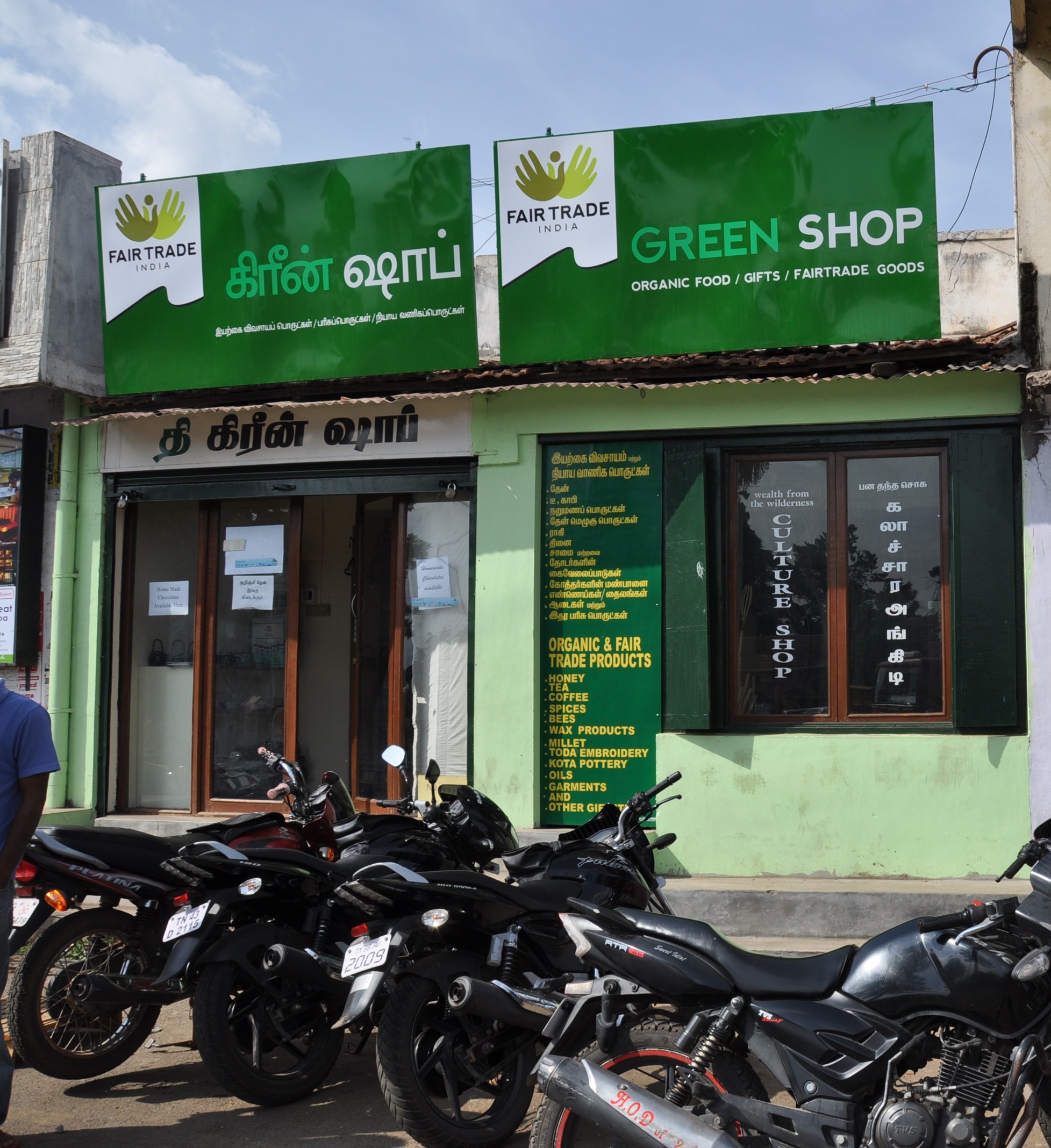 The much needed draconian, almost impossible to believe, Food Safety and Standards Act 2006 is upon us. The harbinger of the arrival of multi brand retail which will put an end to hot bajjis and vadas from roadside tea shops and you cannot cook for your weddings and festivals without a license! Amazing is the way we have licensed ourselves to cook, eat, drink and celebrate. After a brief hesitation, we went ahead and filed the applications for our three Green Shops and Jenarsh, our honey packing unit. Except Coonoor, the other three places have been inspected by Food Safety Officers who have left a few queries. Important one is, we should not use the word “organic” as we have to get the products tested! One lifetime spent on organic, the certification business and Participatory Guarantee Systems! Our core value of promoting organic is under threat now, as we cannot do business without a FSS license. We are working along, crossing the hurdles as they come and looking for ways to comply with the regulations. Wish us good luck.
Aug 1, 2012
Impact of FSSA on corporate groups: How to manage a canteen in a better way
By Ashwin Bhadri, Food Safety Expert, Equinox Labs
The year 2011 would be marked in gold in the history of India, as the government finally decides to give due importance to the cause of general health and hygiene by way of ensuring food safety. The Food Safety & Standards Act (FSSA), 2006 will be implemented as a law with effect from August 5, 2011. A one-year compliance period was given, which ends on August 4, 2012.
COMPANIES' WORRY
What does a BPO (business process outsourcing) in Malad West and a corporate business park in Andheri East have in common? A cafeteria for its employees. This facility provided to the employees can become a business risk pretty soon.
In most of the cases, the food served at these places are catered by private companies or food business operators (FBO). Ensuring food safety and hygiene becomes all the more difficult under this outsourced business model. Because of the highly discounted pricing structure of the caterers, they have to operate on very thin profit margins. Thus, they try to cut corners and costs to increase their profitability. It is often noticed that under the great urge of cutting costs, the catering business owners cut down activities that are extremely essential for food safety, viz. regular pest control, regular health check of the food handlers, regular hand washing and hand sanitising mechanism, etc. Though these are simple and inexpensive measures of hygiene, they are often ignored and neglected by FBOs.
Though it is not understood by many, the costs of such wrong practices are actually borne by the employees eating in the canteens and also their employers. As a result of negligence by FBOs, food poisoning still remains a common phenomenon in the canteens/cafeterias. The customers of these canteens, often the employees of the companies, fall ill because of the contaminated food being served by all the food vendors.
So where is the risk? FSSA allows the consumer to take the responsible party to the court. Not the normal courts, but appellate tribunals and special courts, which would ensure that the case comes to trial in less than 30 days. Any company found to have contracted a food vendor, without the FSSAI licence / registration would be prosecuted by FSSAI / FDA ( Food and Drug Administration). The responsible managers handling F&B / catering /canteen / cafeteria will also be held responsible. In the case of any unfortunate incident like food poisoning, outbreak of foodborne diseases, if proper documentation is not maintained, the authorities have the right to prosecute the person responsible with monetary penalties ranging between Rs 1,00,000 up to Rs 10,00,000 and/or imprisonment from six months up to lifetime, depending upon the severity of the case and the documentation maintained as safeguard.
Companies can safeguard themselves by doing the following: First, ensure registration/licensing of the food vendor's central kitchen: All the food vendors that have been contracted by a corporate house needs to be registered/licensed with the FSSAI / FDA. The corporate company needs to keep a copy of its vendor's central kitchen license.
Second, registration/licensing of the corporate canteen/cafeteria: If any food items is being cooked / stored / served in the corporate canteen, the vendor needs to take a registration / license for that location. The corporate company needs to keep a copy of this license with it.
Third, adoption of a Food Safety Management System Plan by the vendor: Under the new law it is mandatory for every FBO to prepare a food safety management system plan. This plan ensures quality monitoring of the food produced across the entire food manufacturing process. The corporate company should review this plan, and audit it regularly.
Fourth, potable water being used for cooking: All the food manufacturing bodies and food serving canteens need to get the water from a source which is tested for "potability." This would ensure that the water being used for cooking is drinkable and is safe for human consumption.
The year 2011 would be marked in gold in the history of India, as the government finally decides to give due importance to the cause of general health and hygiene by way of ensuring food safety. The Food Safety & Standards Act (FSSA), 2006 will be implemented as a law with effect from August 5, 2011. A one-year compliance period was given, which ends on August 4, 2012.
COMPANIES' WORRY
What does a BPO (business process outsourcing) in Malad West and a corporate business park in Andheri East have in common? A cafeteria for its employees. This facility provided to the employees can become a business risk pretty soon.
In most of the cases, the food served at these places are catered by private companies or food business operators (FBO). Ensuring food safety and hygiene becomes all the more difficult under this outsourced business model. Because of the highly discounted pricing structure of the caterers, they have to operate on very thin profit margins. Thus, they try to cut corners and costs to increase their profitability. It is often noticed that under the great urge of cutting costs, the catering business owners cut down activities that are extremely essential for food safety, viz. regular pest control, regular health check of the food handlers, regular hand washing and hand sanitising mechanism, etc. Though these are simple and inexpensive measures of hygiene, they are often ignored and neglected by FBOs.
Though it is not understood by many, the costs of such wrong practices are actually borne by the employees eating in the canteens and also their employers. As a result of negligence by FBOs, food poisoning still remains a common phenomenon in the canteens/cafeterias. The customers of these canteens, often the employees of the companies, fall ill because of the contaminated food being served by all the food vendors.
So where is the risk? FSSA allows the consumer to take the responsible party to the court. Not the normal courts, but appellate tribunals and special courts, which would ensure that the case comes to trial in less than 30 days. Any company found to have contracted a food vendor, without the FSSAI licence / registration would be prosecuted by FSSAI / FDA ( Food and Drug Administration). The responsible managers handling F&B / catering /canteen / cafeteria will also be held responsible. In the case of any unfortunate incident like food poisoning, outbreak of foodborne diseases, if proper documentation is not maintained, the authorities have the right to prosecute the person responsible with monetary penalties ranging between Rs 1,00,000 up to Rs 10,00,000 and/or imprisonment from six months up to lifetime, depending upon the severity of the case and the documentation maintained as safeguard.
Companies can safeguard themselves by doing the following: First, ensure registration/licensing of the food vendor's central kitchen: All the food vendors that have been contracted by a corporate house needs to be registered/licensed with the FSSAI / FDA. The corporate company needs to keep a copy of its vendor's central kitchen license.
Second, registration/licensing of the corporate canteen/cafeteria: If any food items is being cooked / stored / served in the corporate canteen, the vendor needs to take a registration / license for that location. The corporate company needs to keep a copy of this license with it.
Third, adoption of a Food Safety Management System Plan by the vendor: Under the new law it is mandatory for every FBO to prepare a food safety management system plan. This plan ensures quality monitoring of the food produced across the entire food manufacturing process. The corporate company should review this plan, and audit it regularly.
Fourth, potable water being used for cooking: All the food manufacturing bodies and food serving canteens need to get the water from a source which is tested for "potability." This would ensure that the water being used for cooking is drinkable and is safe for human consumption.
Steps to enforce Food Safety Act
Not only would the statistics on hotels and food establishments collected, each of the establishments would be graded into various categories. The Food Safety wing and the Health Department will also come out with detailed and separate guidelines on maintaining food safety and standards for food establishments in rural and urban areas.
This was decided at a high-level meeting of food safety and health officials called by Health Minister V.S. Sivakumar here on Tuesday.
Ensuring the safety of ethnic food products and maintaining fool-proof standards for food products in rural markets, enhancing the production of safe and pesticide-free food items through scientific farming methods and ensuring the safety of drinking water sources would be given priority when formulating the guidelines for food safety in the rural context.
Corporation determined to continue hotel raids
Even as confusion prevails on who could be termed the sole authority responsible to conduct raids on hotels, the Corporation will re-start raids on all hotels and other food stalls in and around the city on Wednesday. According to Corporation health standing chairman T K Ashraf, they will continue to raid hotels despite stiff opposition from the latter.
In an open forum on ‘Safety is Every Citizen’s Right’ conducted by the Corporation on Monday, the Hotel Association members locked horns with the Corporation. They stated that the authority to execute powers over the hotels and other food stalls were with the Food Safety officers. They also expressed their strong protest against the Corporation stating that the powers of the local bodies to conduct raids on hotels were long repealed once the Food Safety and Standards Act came into being since 2006.
The hotel owners also alleged that most of the hotels were being closed without prior notice.
However, speaking for the Corporation, Health Inspector Sasikumar pointed out that the local bodies have the rights to raid hotels as per the Kerala Municipality Act. “We are not shutting down any hotel on account of stale food. Only those that were found to be in the most pathetic of conditions were asked to be shut,” he said.
Food Craft Institute, Kalamassery Principle Sam Thomas viewed that lack of Malayalis taking up work at hotels was giving opportunities to migrants from other states, and this has been impacting the hygiene standards. “The cleanliness level among them is lower and this is a serious factor that should be considered,” he said..Food Safety Officer Abdul Jaleel, Vegetable and Food Promotion Council member Joji K Mathew, Advocate Jayashankar, EDRAACH president Ranagadasa Prabhu, Mayor Tony Chammany, Deputy Mayor B Bhadra and members of the Hotel Owners Association and the Bakery Owners Association were also present.
The hotel owners also alleged that most of the hotels were being closed without prior notice.
However, speaking for the Corporation, Health Inspector Sasikumar pointed out that the local bodies have the rights to raid hotels as per the Kerala Municipality Act. “We are not shutting down any hotel on account of stale food. Only those that were found to be in the most pathetic of conditions were asked to be shut,” he said.
Food Craft Institute, Kalamassery Principle Sam Thomas viewed that lack of Malayalis taking up work at hotels was giving opportunities to migrants from other states, and this has been impacting the hygiene standards. “The cleanliness level among them is lower and this is a serious factor that should be considered,” he said..Food Safety Officer Abdul Jaleel, Vegetable and Food Promotion Council member Joji K Mathew, Advocate Jayashankar, EDRAACH president Ranagadasa Prabhu, Mayor Tony Chammany, Deputy Mayor B Bhadra and members of the Hotel Owners Association and the Bakery Owners Association were also present.
Gutka makers get no interim stay, HC to hear govt first
The Bombay high court on Monday refused to grant interim stay on the ban on the sale of gutka in the state and issued a notice to the government asking for its reply on the petitions filed by gutka manufacturers challenging the ban.
A division bench of chief justice Mohit Shah and justice Nitin Jamdar asked the government to file a reply by August 7, while hearing the petitions filed by gutka manufacturers – Dhariwal Industries Ltd, Ghodawat Pan Masala Product, Rajnandini Foods, SDD Agencies and Hira Enterprises.
The court refused to grant interim stay on the ban saying no order could be passed without hearing the government.
Anticipating such petitions, the government had filed a caveat in the HC to ensure that no interim stay can be imposed on the ban without their knowledge. Once a caveat is filed, no order can be passed without hearing the party which has filed it.
Government pleader DN Nalavade informed the court that the state had not been given copies of the petitions.Nalavade also assured the HC that the government would not destroy gutka pouches.
Gutka and paan masala manufacturers had sought the quashing of the stat’s notification, dated July 19, and two regulations under the Food Safety and Standards Act (FSSA) 2006, under which the ban was brought into effect.
The petitioners contended that gutka, which contains 6% tobacco, has no nutritional value and hence, it cannot be brought under the purview of the FSSA that deals with “food”. They added that as gutka contains tobacco, it would be governed under the Cigarettes and other Tobacco Products Act, 2003, a Central government legislation.

A division bench of chief justice Mohit Shah and justice Nitin Jamdar asked the government to file a reply by August 7, while hearing the petitions filed by gutka manufacturers – Dhariwal Industries Ltd, Ghodawat Pan Masala Product, Rajnandini Foods, SDD Agencies and Hira Enterprises.
The court refused to grant interim stay on the ban saying no order could be passed without hearing the government.
Anticipating such petitions, the government had filed a caveat in the HC to ensure that no interim stay can be imposed on the ban without their knowledge. Once a caveat is filed, no order can be passed without hearing the party which has filed it.
Government pleader DN Nalavade informed the court that the state had not been given copies of the petitions.Nalavade also assured the HC that the government would not destroy gutka pouches.
Gutka and paan masala manufacturers had sought the quashing of the stat’s notification, dated July 19, and two regulations under the Food Safety and Standards Act (FSSA) 2006, under which the ban was brought into effect.
The petitioners contended that gutka, which contains 6% tobacco, has no nutritional value and hence, it cannot be brought under the purview of the FSSA that deals with “food”. They added that as gutka contains tobacco, it would be governed under the Cigarettes and other Tobacco Products Act, 2003, a Central government legislation.
Breather for dhaba, restaurant owners Govt extends deadline for licence renewal by six months
Jammu, July 31
Following threats of protest by dhaba and restaurant owners, the government has extended the time limit for conversion and renewal of existing licences by six months. The food handlers had to complete the process by July 31 but now, they can get the work done by February 2013.
The eatery-owners, including those in the capital cities Jammu and Srinagar, have been urging for deadline extension to their respective municipal corporations, saying it would be difficult to complete the process by July 31.
As per the Food Safety Commissioner, all the food business operators were directed to renew their existing licenses, registrations granted under the repealed Food Act/Order under the Food Safety & Standards Act, 2006 and Food Safety & Standards (Licensing & Regulation of Food Business ) Regulations, 2011.
“By virtue of this act some science based standards for the article of food were laid down. This act has enabled the central government to take under its control the food industry of the country”, said an official.
Under this food safety act every food business retailer or manufacturer have to register with the licensing or registering authority. The food safety & standards act says that even petty manufacturer shall follow the basic hygiene and safety requirements provided by these regulations.
The petty food business operators include small retailer, roadside food vendors, hawkers, stall holders, cottage industries relating to food business, meat/mutton/poultry business operators with the slaughtering capacity of two larger animals or 10 small animals or 50 poultry birds per day.
As per the government order, the people associated with the food industry can complete the process in the next six months, so that they are able to run their business.
“We welcome the step as the six-month extension will allow the traders to complete the process in a hassle-free manner,” said YV Sharma, president of the Chamber of Commerce and Industry, Jammu.
The Food Safety & Standard Act states that the food business manufactures have to ensure that his premises are free from the growth of mould, fungi and infection. “The workers for preparation of various food articles shall put clean aprons, hand gloves, head wears and keep their nails trimmed, clean and wash their hands with soap and detergent before commencing their work,” states the new food act.
Municipal Commissioner KL Khajuria said the the people associated with food business should adhere to these new rules. “Action will be taken against those who violate the rules,” said Khajuria., adding
“After the expiry of the new deadline, closure notices would be issued to defaulters.”
Following threats of protest by dhaba and restaurant owners, the government has extended the time limit for conversion and renewal of existing licences by six months. The food handlers had to complete the process by July 31 but now, they can get the work done by February 2013.
The eatery-owners, including those in the capital cities Jammu and Srinagar, have been urging for deadline extension to their respective municipal corporations, saying it would be difficult to complete the process by July 31.
As per the Food Safety Commissioner, all the food business operators were directed to renew their existing licenses, registrations granted under the repealed Food Act/Order under the Food Safety & Standards Act, 2006 and Food Safety & Standards (Licensing & Regulation of Food Business ) Regulations, 2011.
“By virtue of this act some science based standards for the article of food were laid down. This act has enabled the central government to take under its control the food industry of the country”, said an official.
Under this food safety act every food business retailer or manufacturer have to register with the licensing or registering authority. The food safety & standards act says that even petty manufacturer shall follow the basic hygiene and safety requirements provided by these regulations.
The petty food business operators include small retailer, roadside food vendors, hawkers, stall holders, cottage industries relating to food business, meat/mutton/poultry business operators with the slaughtering capacity of two larger animals or 10 small animals or 50 poultry birds per day.
As per the government order, the people associated with the food industry can complete the process in the next six months, so that they are able to run their business.
“We welcome the step as the six-month extension will allow the traders to complete the process in a hassle-free manner,” said YV Sharma, president of the Chamber of Commerce and Industry, Jammu.
The Food Safety & Standard Act states that the food business manufactures have to ensure that his premises are free from the growth of mould, fungi and infection. “The workers for preparation of various food articles shall put clean aprons, hand gloves, head wears and keep their nails trimmed, clean and wash their hands with soap and detergent before commencing their work,” states the new food act.
Municipal Commissioner KL Khajuria said the the people associated with food business should adhere to these new rules. “Action will be taken against those who violate the rules,” said Khajuria., adding
“After the expiry of the new deadline, closure notices would be issued to defaulters.”
Hotels lack freezers

File photo of a raid conducted in Kochi recently. —DC
Only a very few hotels stick to the stipulation that the freezer should be turned under –18 degree Celsius.
This fact was exposed during a debate on “Hygienic Food Right of The Citizen,” organised by the corporation, on Tuesday.
B. Sasi Kumar, health inspector of the corporation said that many hotels, irrespective of their class, lack proper waste disposal facilities.
“We found that only less than five per cent hotels have covered bins to collect waste, which is mandatory,” he said.
Refuting the claims of the representatives of Kerala Hotel and Restaurants Association (KHRA) that only the Commissionerate of Food Safety officials have the right to raid hotels, Sasi Kumar said:
“Under the Kerala Municipal Act, the D&O trade licence is issued to hotels by the local bodies and the relevant rules under it empower local bodies to conduct inspections in eateries”.
Rather than discussing the measures to be taken to ensure hygiene and quality food, the debate mainly centered on who the responsible authority to conduct the raids, was.
Earlier, inaugurating the debate at the Ernakulam Town Hall, district sessions judge P. Mohandas said that in food adulteration cases, the big manufacturers always go scot free while the small traders get trapped.
The corporation conducted the debate against the background of the recent raids on hotels and the reports on poor quality food being served.
“What’s needed to tackle the issue is a concerted effort, rather than a mere enforcement of law. All recommendations that come out of such healthy debates will help in streamlining the hotel industry,” said Mayor Tony Chammany.
T.K. Ashraf, health standing committee chairman introduced the topic. Advocate Jayasankar who led the debate remarked that a major factor contributing to the issue is the public’s lack of awareness about health issues and society’s changing food habits.
Jose Mohan of KHRA demanded that the raids be conducted in compliance with the FSS (Food Safety and Standards) Act and hotels should not be closed down without giving them a notice period to rectify their shortcomings.
Corporation secretary Ajith B.Patil moderated the debate. Deputy mayor B.Bhadra welcomed the gathering.
Jul 31, 2012
Many hotels yet to apply for licence
Punitive action has been postponed by six months
Even as the Food Safety and Standards Authority of India has postponed by six months punitive action against shops that have not renewed their licence under the Food Safety Act, 2006, only a section of hotels in the district have applied for the licence.
A July 25 order by the Enforcement Director of the authority extended the August 4 deadline beyond which action should have been taken.
District Food Safety Officer A. Mohammed Rafi told The Hindu here on Monday that 4,318 hotels in the district had applied for the licence as on Monday. The local bodies had been the licensing authorities before the Act came into effect.
With various pieces of legislation, such as the Prevention of Food Adulteration Act, 1954, and the Food Products Order, 1955, annulled, the entire responsibility of licensing has been assigned to the Commissioner for Food Safety. “The licensing work started in March. The number of hotels in the district is yet to be ascertained as the local bodies have not handed over the details related to the previous licensing regimes,” Mr. Rafi said.
Hotels with a turnover of over Rs. 12 lakh should apply for a licence and those with less than that needed registration. “Almost a month ago, I submitted an application for licence to the hotel owners’ association, who will apply on our behalf. But I am yet to hear from them,” Gireeshan A., a hotel owner at West Hill, said. The delinking of local bodies from activities related to food safety had reduced the number of personnel involved and added to the workload of the Food Safety Commissionerate, which is said to be understaffed. “There are only seven staff members to handle all the work related to food safety in Kozhikode district,” Mr. Rafi said.
Leading paan masalas have nicotine?
PATNA: If you thought leading brands of paan masala like Rajnigandha and Manikchand don't contain nicotine, as they claim, give a second thought to it. The state food safety commissioner cum health secretary, Sanjay Kumar, has issued an order to test them for nicotine content after Union health ministry submitted a Central Tobacco Research Institute report recently in the Supreme Court confirming presence of nicotine in them.
Kumar said on Monday he has asked all designated officers and food safety officers to collect samples of all leading paan brands. He said, "Ten samples of leading brands of paan masala would be retested for nicotine. If they are found to contain nicotine, they, too, would be prohibited to effectively impose the ban on tobacco products in the state."
As per the report of Andhra Pradesh-based research institute submitted to the apex court, gutka (Goa 1000), gutka RMD (Manikchand), paan masala (Rajnigandha) and khaini (Chaini Khaini) and khaini (Raja) contain 2.04%, 1.88%, 2.26%, 0.58% and 1.02% nicotine respectively.
The state government banned the sale, distribution and production of nicotine containing products from May this year, based on the Food Safety and Standards Authority of India regulation no 2.3.4 notified in August 2011.
Deepak Mishra, executive director of an NGO, SEEDS, said if these products are found containing nicotine, they must be banned with immediate effect. He added, "After the ban on gutka products, the sale of leading paan masala brands, which people think don't contain nicotine, has increased alarmingly."
Tobacco consumption is the causative factor in 40% cancer cases, the maximum by any factor. According to a survey, 53.5% people in Bihar use tobacco, highest in the country. According to experts, nicotine affects all organs of body from head to toe.
Noted surgeon Dr A A Hai on Monday said, "The most common cancers caused by tobacco are the ones of oral cavity and upper aerodigestive tract. Bronchitis is another common disease caused which causes problems in breathing. Apart from that, eyes, lungs, abdomen, blood, heart vessels and urinary tract are also affected." He added what added to the misery of the suffering families was the high cost of treatment. Pregnant women should avoid tobacco products, especially because that can affect foetus. The consumption of tobacco can also affect reproductive health of both males and females, he said.
Kumar said on Monday he has asked all designated officers and food safety officers to collect samples of all leading paan brands. He said, "Ten samples of leading brands of paan masala would be retested for nicotine. If they are found to contain nicotine, they, too, would be prohibited to effectively impose the ban on tobacco products in the state."
As per the report of Andhra Pradesh-based research institute submitted to the apex court, gutka (Goa 1000), gutka RMD (Manikchand), paan masala (Rajnigandha) and khaini (Chaini Khaini) and khaini (Raja) contain 2.04%, 1.88%, 2.26%, 0.58% and 1.02% nicotine respectively.
The state government banned the sale, distribution and production of nicotine containing products from May this year, based on the Food Safety and Standards Authority of India regulation no 2.3.4 notified in August 2011.
Deepak Mishra, executive director of an NGO, SEEDS, said if these products are found containing nicotine, they must be banned with immediate effect. He added, "After the ban on gutka products, the sale of leading paan masala brands, which people think don't contain nicotine, has increased alarmingly."
Tobacco consumption is the causative factor in 40% cancer cases, the maximum by any factor. According to a survey, 53.5% people in Bihar use tobacco, highest in the country. According to experts, nicotine affects all organs of body from head to toe.
Noted surgeon Dr A A Hai on Monday said, "The most common cancers caused by tobacco are the ones of oral cavity and upper aerodigestive tract. Bronchitis is another common disease caused which causes problems in breathing. Apart from that, eyes, lungs, abdomen, blood, heart vessels and urinary tract are also affected." He added what added to the misery of the suffering families was the high cost of treatment. Pregnant women should avoid tobacco products, especially because that can affect foetus. The consumption of tobacco can also affect reproductive health of both males and females, he said.
How does the wood in your bread, biscuit taste today?

A lot of the high-fibre fast-food packages sold by major food brands most likely contains “wood cellulose” that’s even used by the plastics industry. And the food safety authority is aware about it
Let's start with some first-hand experience, which is very often how curiosity is sparked and questions arise.
A few months ago, I was wading through an assignment at a factory in an industrial suburb outside Delhi, where a large number of unskilled and semi-skilled workers were employed. Minimum wages in this segment are not very high, and for this category of people, every paisa saved counts. That's what they've left the tough conditions in their rural homes for.
Most of us have absolutely no idea of how this segment lives and survives. Even though they come under the category of organised labour in many cases, protected by law with benefits like ESIC, EPFO and pension plans, what matters is what they get in hand every month and how much of it they are able to save to send home, or to try and buy that elusive plot of land to enable them to build a roof over their heads.
Everything else is nothing but promises, which they have learned not to trust, as it does not get them dinner in the here and now.
Expenses are, therefore, sought to be reduced to the bare minimum. Free meals of the sort provided on certain days at certain places are balanced against the cost of time and travel to get there. Cheap lodging in the vicinity of the factory is balanced against the option of a place to sleep in the factory environs free of cost, perhaps in exchange for some night duty responsibilities.
Education for family members is an aim for which no effort is spared. Likewise, some amount of effort and sacrifice is made towards further self-education, by sacrificing other expenses, and night schools—where they exist—are indeed popular. Free uniforms from the factory are a boon; the older ones are used to sleep in, reducing the necessity of buying clothes.
But what's really interesting is the way they spend on food. As some of them explained, at one time it was cheaper to bring grain, cereals, lentils and even some amount of ghee from the village, and use it during their stay in the city. Now, when they return from their villages, whatever they bring along gets a good price if they sell it, and then they survive on what they can find in the city, in and around the workplace.
The first thing that takes a toss in such conditions is the group-cooked hot meal in the morning. It just doesn't exist, and in lieu it is often a packet of cheap biscuits dipped in the first mug of free tea at work, eaten on the move. Lunch is often a perquisite of the job, huge helpings of roti-daal-subzi-pickle. Dinner is scrounged around. Most of these workers also double up for late evening work where a meal can be sourced.
So, to keep things going when hunger pangs overtake planning, there are the cheap-packed foods of the biscuit sort and the cheap fried foods of the samosa sort, dipped in a cup of 'tea' which is more often than not brewed with urea as a whitener instead of milk at the roadside stall.
The biscuits attracted my attention. Popular big brands selling handy small packs at a "price point" of two to five rupees for 6-12 biscuits, seldom found at the better stores you and I shop at. Taking a bite, dipped in tea, I found that they did not dissolve and break like biscuits used to in the past, and they filled me up admirably, giving me a feeling of fullness in very quick time. At first, I thought it could be excess corn glue binders or baking soda, till I researched the price of corn glue binders and baking soda and wrote that off. So, full of pride that I had discovered a cheaper alternative, I bought a few packets and brought them home, basic "glucose", "chocolate" and "cream". All major brands. So cheap?
Obviously, I was treated to a lecture, that these were simply not healthy. At this point, I thought it was snobbishness talking, but fact remains the biscuits remained untouched for a few days. Everybody prefers "local" bakery biscuits at our home, procured from a charity organisation at the nearby Lajpat Bhavan, or expensive imported ones presented now and then. So after a few days, I thought to myself, maybe the birds and the stray dogs will appreciate them more?
Next morning, along with the bird seed that we have sprinkled on a wall, I laid out some of the biscuits, neatly crumbled, but while the bird seed was gobbled up as usual by about 9am, the biscuits were untouched-even the squirrels who eat everything, left them alone. Same with the stray dogs, a sniff at the "orange cream" biscuit, a bit of a whine, and then left alone. In due course, the ants and the termites presumably finished off the biscuits, because the birds and dogs didn't touch them.
The maid, watching bemused, said that the animals don't eat it because the biscuits have "plastic" in them. Plastic? Where had she heard that from? Turns out that everybody in her village near Ranchi knew about this, because some people from there who worked in a processed factory had told them that the seths were now using an ingredient for bread and biscuits called "cellulose", in quantities from 15% to 25%. How did they know? Because similar packets from the same supplier were being used for the plastic to be used for the wrapping and packaging, as well as to line the insides of the biscuit packaging to prevent the biscuit from going soggy. To prove her point, she crumbled up the biscuits and stirred them into a mug of warm water. After a few minutes, much of what used to be the biscuit was still floating on top. After a few hours it was exactly the same.
Please try this yourself. It is like the "patty" inside the famous McDonalds burger, which does not deteriorate or go bad for days on end.
Around the same time, I had been filing RTI applications on the subject of artificial sweeteners used by the processed food industry, specifically called "aspartame". (Read, Did you check the neurotoxin in your 'soft' drink today?) In the course of the responses, which contained the usual evasive answers from the ministries, as well as the Food Safety and Standards Authority of India (FSSAI), I also managed to develop some sources within. People like you and me, but unwilling or unable to come on record, but right-thinking all the same.
I decided to approach a few of them to try and find out what was going on, and meanwhile, tried to place a total ban on packaged bread and biscuits at home, rewarding the maid with basic bakery lessons and going in for " chakki atta" ground at a store. (By the way, the one shop in our area which provides fresh ground atta of various sorts has so much business now that the owner is opening a second shop and provides an increasingly growing range of choices, with exotic grains of all sorts.)
This was when I received my next surprise. Yes, the FSSAI, at an informal level, were aware that there was something being added to processed foods, especially biscuits and bread, for the last few years, and that this new miracle ingredient going under the technological name of 'cellulose' was actually the same 'wood cellulose' used by, among others, the plastics industry, and by an amazing coincidence of nomenclature, was categorised as 'fibre' for all practical purposes, including the list of ingredients. As a matter of fact, within the industry there was growing awareness on the cost-saving benefits of adding more and more wood cellulose to everything, not just bread and biscuits, but also ice cream, cheese, meat . . . and upstream into desserts, pizzas and most other forms of 'fast food'.
So just how did 'wood cellulose' get into the lexicon of the Ministry of Food Processing (MoFP) and the FSSAI as 'fibre'? Well, in one way, it is the truth. Wood cellulose is fibre. The only thing is that unless you share your enzymes with termites, you and I can't digest it. Even woodpeckers can't digest wood cellulose or wood, and they are pecking away at it all the time. Nor could hundreds of thousands of people starving to death in famines from the Siege of Leningrad ,to closer in history in Darfur.
Within the food industry in the US, the FDA apparently permits limited use of wood cellulose under very specific conditions, and up to a maximum of between 1% and 3.5%. And there's no way the manufacturers there can get away by calling it 'fibre'.
Within the food industry in India, welcome to the reality, and check out how many new products on your shop or supermarket shelves carry the added nomenclature 'fibre'. And as per my source/sources in the FSSAI, this is growing at a very rapid pace. The cost of wood cellulose in India, meanwhile, is dropping, because the new miracle raw material for wood cellulose in India is, hold your breath, not just the tree or plant, but sawdust. Processed sawdust = fibre in your bread and biscuit?
At such a rapid pace and with such huge profits on the back of this new trend to put wood cellulose into everything, the processed food industry—riding on the back of these lower prices and huge profits—is making a strong bid once again to enter the mid-day meal space. With an attempt to replace the hot cooked meal with a "high fibre" pre-packaged meal. And as an added incentive, they plan to use the term "fortified and enhanced" with a variety of other ingredients like, for example, iron. This, incidentally, is co-terminus with a strong movement in the developed countries to move away from such processed foods and fast foods.
India, therefore, is the obvious next target. Just like it was with opium for China a few hundred years ago and tobacco in the recent past, it is now going to be wood cellulose masquerading as fibre in our packaged foods.
I wonder, will they use iron sweepings or filings, and will we be able to transport these modern high-fibre fortified with iron biscuits using magnets, soon?

Many waiters carry GERMS ON HANDS
Study Finds Food Handlers Carry E. Coli, Various Dangerous Bugs
The meal that the waiter has served you appears to be perfect. It looks good, smells great and has just the right quantities of protein, carbohydrates and vitamins. But zoom in at a microscopic level and you’d probably see that also contains the most vile-looking and dangerous germs and bacteria like Escherichia coli (E. coli) and amoebic cysts.Not having hair or grime on your plate does not mean that the food served at a restaurant or roadside eatery is safe. A study shows that the hands of many chefs and waiters in the city are infested with deadly micro-organisms.
The results of the study by Indian Public Health Association have come as a shocker to people who eat out as well as doctors and health department officials. Researchers found E. coli on the hands of nearly 11.2% of the people who handle food in five star hotels. In smaller restaurants, 47% of chefs and waiters had the bacterium, which can cause serious food poisoning, on their hands. The figure rises to 84.7% in roadside eateries.
Researchers found amoebic cysts on the hands of 11.2% of waiters in roadside eateries. These cysts can cause forms of amoebiasis, from dysentery to amoebic liver abscess, the third most common cause of death (after schistosomiasis and malaria) from parasitic infections.
What makes eating at roadside kiosks more dangerous is that these units do not follow hygienic practices and have unclean cooking practices. Eateries are often located near open drains or garbage bins. People in the city are also extremely vulnerable to food poisoning.
It is an extremely scary situation, said IPHA state president Dr S Elango, who led the study. “We did not know these dangers existed before the study,” he said. “Food inspectors often test food quality but rarely check health and hygiene of people who handle food.” The situation could be even worse, he said. “We don’t know if there are other, more serious health risks because our study covered a limited number of disease causing microorganisms,” he said.
Dr Elango’s team surveyed 250 restaurants and eateries over six months and checked the hands of 1,000 people who handled food. The subjects’ hands were dipped in distilled water that was then tested in labs. The tests showed that the water contained E. coli and several other dangerous micro-organisms.
Scientists in the UK and France are now finding that lack of food safety measures could lead to the growth of superbugs that are resistant to antibiotics. Across the globe, experts have called on health officials to step up monitoring and stop superbugs like salmonella and typhimurium from spreading globally.
City health officer B Kuganatham estimates that at least 65 lakh people in Chennai eat or drink in hotels or eateries at least once every day. The trade licences for hotels and eateries are issued by the State Food and Drug Safety Authority as per the provisions of the Food Safety Act.
The law mandates hygienic practices for food handlers — including regular washing of hands with soap, use of disposable gloves, hair covers and clean clothes. A senior member of city’s hotel owner’s association said many restaurants do not follow the prescribed norms.
“I work in a five star restaurant and we have very stringent rules,” a chef said. “But workers in our kitchens rarely wear gloves or follow other protocol.” Health officials said they often come across breaches of hygiene rules.
Senior surgical gastroenterologist Dr S M Chandramohan said more than twothirds of his patients with food poisoning or stomach infections had been regularly eating out. Symptoms of stomach infections show up within minutes in some cases and sometimes take days.
pushpa.narayan@timesgroup.com

FSSA ineffective in curbing food adulteration cases
The newly notified Food Safety & Standards Act, 2006, does not seem to be effective in curbing adulteration of food articles as is the case with previous Prevention of Food Adulteration Act, 1954.
This has become evident from statistics which show that the Government of Kerala has failed to take stringent action against the issue during the period 2004-2012. An RTI application filed by the Human Rights Defence Forum (HRDF), Kerala, has revealed the details.
D B Binu, general secretary, HRDF, Kerala, said, “Surprisingly, out of the 95,261 samples tested between 2004 and 2012, 2,190 food samples were found to be adulterated and authorities initiated action in only 1,912 cases.”
Binu explained that the information was revealed to the organisation based on the RTI filed by it and further probe in the case evolved based on the number of food adulteration cases being reported in Kerala by the media.
Binu added that it was a sad state of affairs that the court convicted only 660 persons responsible for adulteration, which included reputed hotels, in the state. Also those who were convicted were punished with only Rs 2,000 as fine.
While the remaining 757 persons were acquitted, it was revealed that the maximum number of food adulteration was being reported and detected in the Ernakulam district of Kerala followed by Thiruvananthapuram and Kozhikode.
Binu stressed that the new law, the FSSA enforced on August 5, 2011, had created a lot of confusion in terms of registration and licensing and also in the implementation of the Act across the nation.
He pointed out that since the new Act failed, several important tasks such as registration and licensing of food labs and prosecution in cases of food adulteration were left incomplete. Hence, he wanted the new law to be implemented properly at the earliest.
This has become evident from statistics which show that the Government of Kerala has failed to take stringent action against the issue during the period 2004-2012. An RTI application filed by the Human Rights Defence Forum (HRDF), Kerala, has revealed the details.
D B Binu, general secretary, HRDF, Kerala, said, “Surprisingly, out of the 95,261 samples tested between 2004 and 2012, 2,190 food samples were found to be adulterated and authorities initiated action in only 1,912 cases.”
Binu explained that the information was revealed to the organisation based on the RTI filed by it and further probe in the case evolved based on the number of food adulteration cases being reported in Kerala by the media.
Binu added that it was a sad state of affairs that the court convicted only 660 persons responsible for adulteration, which included reputed hotels, in the state. Also those who were convicted were punished with only Rs 2,000 as fine.
While the remaining 757 persons were acquitted, it was revealed that the maximum number of food adulteration was being reported and detected in the Ernakulam district of Kerala followed by Thiruvananthapuram and Kozhikode.
Binu stressed that the new law, the FSSA enforced on August 5, 2011, had created a lot of confusion in terms of registration and licensing and also in the implementation of the Act across the nation.
He pointed out that since the new Act failed, several important tasks such as registration and licensing of food labs and prosecution in cases of food adulteration were left incomplete. Hence, he wanted the new law to be implemented properly at the earliest.
The new lords of misrule
 Sunita NarainLast fortnight, we began discussing ‘authorities’, and asked: Is this variant of governance reform working? This time, let’s consider the Food Safety and Standards Authority (FSSA). It was created because of a recommendation of the Joint Parliamentary Committee which investigated our report on pesticide content in soft drinks and the lack of standards to regulate contamination in food.
The concern was the existing structure, based on a committee within the Union ministry of health and family welfare, was inadequate to the challenge of the modern food industry, which is taking over our kitchens. We needed a regulator that erred on the side of public health, to ensure the food on our table met strict standards for toxins, additives and chemicals and enable nutrition, not commerce, to drive the food industry.
Food science has changed, so has the business. In this scenario, regulation had to move away from adulteration-checking inspectors to knowledge-based decisions on the best standards for food. But sadly, the FSSA is increasingly compromised. From the few steps it has taken—its track-record is abysmal—it seems to be not a consumer-friendly but an industryfriendly food regulator.
A proof is the March 2009 draft regulation on food recall procedure, necessary for incidents like melamine in milk (China) or dioxin in beverages (Europe) or worms in chocolate (India). The draft regulation says it could maintain “confidentiality of commercially sensitive information and could delay public notification of food recall if it will cause panic among consumers”. This is for corporates, not public health. It was no surprise, then, to learn—as we did through media reports—the committees of the FSSA which take ‘scientific’ decisions are stacked high with food industry representatives, officials from beverage and fast-food giants like Pepsico, Coca Cola and Nestle. It is evident corporate regulatory capture is possible, indeed easy, in this form of institutional management. The reason’s not hard to find.
First, FSSA, and other authorities, are created to be independent. But little is done to make them accountable to this objective. The ‘authority’, in nine cases out of ten, is headed by retired, out-of-commission bureaucrats, for these individuals have regulatory experience. But in the new role they are not bound by the government’s established administrative, reporting and personnel systems. Instead, by law, they report to a faceless Parliament. No specific parliamentary sub-committee exists to manage and oversee the work of a newly created authority.
Regulatory capture becomes effortless for powerful interests in the petroleum, food or any sector. What happens, then, is decisions get murkier, undermining all credibility, making the ‘authority’ even less functional or effective. The experience of the Petroleum and Natural Gas Regulatory Board should teach us a lesson or two. Second, an ‘authority’ is created without fixing the underlying problems of sectoral expertise and the need for integration with existing institutional capacity. In other words, no attention is paid to the serious details of institutional reform.
In FSSA’s case, the expertise of standardsetting lies with the Bureau of Indian Standards, but that’s under a different ministry—Consumer Affairs. No real effort’s been made to re-engineer institutional capacity. No clear roles defined. Instead, one more agency’s joined the rigmarole of governance. The situation is the same with environmental impact assessment (EIA) authorities, created in each state to scrutinize and sanction industrial projects.
Till a few years ago, all projects came to the Centre for clearance, leading to delays and seemingly poor decision-making. It was believed decisions devolve to the state level, where environmental impacts are more evident. Assessment would be easier. But all this was done without thinking through the institutional design, and all it has ended up doing is to decentralize the ‘transaction cost’. EIA decisions are not being taken for the environment. Indeed, regulatory capacity is seriously missing in the area of environment. My colleagues recently evaluated the working of state pollution control boards and found, to their horror, nobody’s made the institutions functional. They lack funds, personnel and capacity to ensure enforcement and compliance. In most cases, they are toothless bodies, made dysfunctional via neglect. The challenge should be to build internal capacity. But internal reform is difficult. So the government’s taken the easy way: bypass, and just create new institutions.
For instance, the state EIA authorities have been set up as committees, headed by former bureaucrats or similarly experienced individuals, but without internal capacity to evaluate projects and no clarity on the interface with existing pollution regulators. These bodies meet, clear projects and go away. Somebody is ‘responsible’ for assessment and somebody else is ‘responsible’ for monitoring future impacts. So how can we have effective decision-making? The current institutional ‘design’ is not for public purpose. It needs review, fast. Could we have institutions that can tackle future challenges? ■
Registration under the Food Safety Act - Deadline for food joints extended by six months
Amritsar, July 30
The deadline for restaurants, eating outlets and grocery stores keeping food products to get registered under the Food Safety Act has been extended by another six months. Earlier deadline was August 4.
Amrit Lal Jain, vice-president, Bharatiya Udhyog Beopar Mandal, an all-India body of traders, said he has received a copy of the decision from the Food Safety and Standards Authority of India under the Ministry of Health and Family Welfare.
He said a delegation of the BUBM had met Union Health Minister Ghulam Nabi Azad in this regard in June.
Jain said the FSA was copied from the developed countries and implemented without keeping in view the domestic conditions. He said the country does not have adequate number of laboratories to test the quality of food. Claiming that the number of these labs was less than 100, Jain demanded that each district of the country must have at least one such lab.
Meanwhile, the Punjab Pradesh Beopar Mandal, the state unit under the BUBM, will hold agitation against the FSA on August 9 in the state, including Amritsar.
The deadline for restaurants, eating outlets and grocery stores keeping food products to get registered under the Food Safety Act has been extended by another six months. Earlier deadline was August 4.
Amrit Lal Jain, vice-president, Bharatiya Udhyog Beopar Mandal, an all-India body of traders, said he has received a copy of the decision from the Food Safety and Standards Authority of India under the Ministry of Health and Family Welfare.
He said a delegation of the BUBM had met Union Health Minister Ghulam Nabi Azad in this regard in June.
Jain said the FSA was copied from the developed countries and implemented without keeping in view the domestic conditions. He said the country does not have adequate number of laboratories to test the quality of food. Claiming that the number of these labs was less than 100, Jain demanded that each district of the country must have at least one such lab.
Meanwhile, the Punjab Pradesh Beopar Mandal, the state unit under the BUBM, will hold agitation against the FSA on August 9 in the state, including Amritsar.
 |
Subscribe to:
Posts (Atom)