
Sep 6, 2017

SC upholds Goa amendment banning gutka, tobacco


Although gutka, pan masala and other flavoured tobacco products were banned from January 2003 under the Prevention of Food Adulteration Act, the apex court had struck down this notification a year later saying such prohibition for an indefinite period did not fall within the domain of State food authorities.
After the Supreme Court decision, legislation was enacted under the Goa Public Health Act 1985 wherein all the prohibited food products were brought under the purview of injurious food.
Speaking to Herald, National Organisation for Tobacco Eradication (India), President, Dr Shekar Salkar said, “I am extremely happy at least that the case has taken a logical end which is in favour of the health of the people. SC has upheld the power of the state to enact a law which will be beneficial to the health of the people”
He added, “The second issue which was laid to rest by the SC is the petitioner’s claim that it was not eatable but chewable. After the government came up with the Goa Health Amendment Act, the same company had gone to the HC but it was upheld and later they again challenged the ban in the SC which today again upheld the amendment dismissing the petition filed by Ghodawat Pan Masala Products.”
Ghodawat Pan Masala Products, flavoured-tobacco majors in the State, wanted the notification and the two regulations under the Food Safety and Standards Act of 2006, based on which the state issued the ban, set aside as unconstitutional and contrary to a 2004 Supreme Court judgment which ruled against a similar ban.
The manufacturers also argued and wanted the court to order the State to stop raiding their vendors as an interim measure. “Areca nut growers depend on the gutka and paan masala industry and the ban will cause severe harm to farmers,” they had prayed.
Toxic fruit and veg given to millions of UK pupils by the government
Toxic chemicals have been found in fruit and veg given to millions of schoolchildren by the Government. Official tests revealed 84% of apples, bananas, carrots, pears, satsumas, tomatoes and raisins destined for four to six-year-olds contained residues of one or more pesticides.

Two million kids get free fruit every year as part of a £40million Government drive to encourage healthy eating. But experts discovered 66% of over 2,000 samples of fruit and veg analysed had traces of multiple chemicals.
Raisins were the worst performing with 100% of samples testing positive for residues of multiple pesticides.
A damning report by Pesticide Action Network UK, based on official Government figures, called on ministers “to do more to protect children from pesticides”.
The 16-page dossier warned: “Children in England are being exposed to a cocktail of pesticide residues in the fresh produce they receive through the Department of Health’s School Fruit and Vegetable Scheme (SFVS).
“These pesticides have documented potential to harm human health, especially the health of young children who are particularly vulnerable to their impacts.”
The free produce handed to youngsters was far more likely to contain pesticides than that in supermarkets, corner shops and markets.
The report added: “The produce being provided to children through the scheme generally contains more pesticide residues than their mainstream equivalents. For example, in 2015, 90% of SFVS apples given out in schools contained the residues of multiple pesticides, while for conventional apples found on the supermarket shelves this figure was just under 60%.”
Sep 5, 2017


FSSAI includes spring water standards in FSSR

Food Safety and Standards Authority of India (FSSAI) has now included standards for spring water in the Food Safety and Standards Regulations, 2011, categorized as mineral water. As per the draft, notification is drawn by the food regulators, standards have been covered in the clause titled ‘Description and Types of Mineral Water’.
The draft notification further describes spring water as a fluid which obtained from the natural resources and is derived from an underground formation.
“Spring water shall be collected only at the spring or through a borehole tapping the underground formation feeding the spring. There shall be a natural force causing the water to flow to the surface through an orifice,” it added.
According to the draft notification, “Spring water should conform to all the standards for mineral water, except the total dissolved solids (TDS) content, which shall not be more than 750mg/litre.”
Stating that it would be too premature to comment of the permissible TDS limit, Ashwin Bhadri, chief executive officer, Equinox Labs said, “The permissible limit of TDS in drinking water is 500 parts per million (ppm) as per the Bureau of Indian Standards (BIS), whose certification validates the source and quality of water.”
“However, here lies the cliche - in case there is no other source of water available, the highest permissible limit can be 2,000 ppm. Apart from this, the BIS document such side effects as the decrease in the palatability, which may cause gastrointestinal irritation,” he added.
“Thus, spring water can be an excellent replacement in case there is no other source of water, which is often the case in the interiors of the country,” Bhadri stated.
He added, “There is a provision for packaged natural mineral water, which was mandated on March 29, 2001, under the erstwhile Prevention of Food Adulteration Act (PFA), 1954. BIS certification is of extreme importance in case of using water.”
HRAWI gears up to align its system as per the guidelines of FSSAI

Hotel and Restaurant Association of Western India (HRAWI) has put its foot on the accelerator to align its system as per the guidelines of Food Safety and Standards Authority of India (FSSAI). In its recent move, HRAWI organized two separate training cum certification sessions in Mumbai. These sessions were conducted as per the Food Safety Training & Certification (FoSTaC) programme developed by FSSAI. The participants enrolled in for the session will be bestowed with a certificate of advanced level catering.
The Food Safety Supervisor Training in Advance Catering Programme was meant for big catering establishments where the systems are complex and the need for dedicated personnel for food safety and standards is imperative.
“HRAWI aims to proactively ready its members for becoming FSSAI compliant even before it becomes a mandate. It would be in the best interests of our members and the industry to be thorough and fully equipped to meet standards that are internationally accepted and followed. The training programme enables the business establishment to institute a supervisor who in turn can effectively cascade the communication to the grass root levels in the establishment in order to uniformly implement the processes as required by the FSSAI. This is a win-win situation for the business, the auditing body and most importantly the customer,” says Dilip Datwani, President, HRAWI.
The sessions organized at D Y Patil University School of Hospitality and Tourism Studies and Sheila Raheja Institute of Hotel Management were participated by a large number of hoteliers and restauranteurs. The Association has in the past organized similar programmes to familiarize hoteliers and restaurateurs with the finer nuances of food safety and hygiene. Food businesses across India, from roadside eateries to restaurants, will have to comply with a wide set of food safety rules, norms, and procedures and obtain Food Business Operator (FBO) licences.
“HRAWI applauds the initiative of the FSSAI under its Chairman, Pawan Aggarwal, for holding effective consultations with the industry and for partnering with the Association in the creation of master trainers and thus, a trained and technical workforce in aid of the Food Safety laws in the Country. FSSAI’s objective behind the Food Safety Training & Certification (FoSTaC) programme is to have at least one trained and certified Food Safety Supervisor in each and every Food Service Establishment including the catering industry. The trained supervisor will be responsible for ensuring hygiene and food safety implementation in their respective establishments. We think this is a great way to ensure that each establishment understands and maintains the standards without any ambiguity in implementation across the country,” says Pradeep Shetty, Honorary Secretary, HRAWI.
“Whether it is on matters of policy for hospitality and tourism or matters of compliance related to food safety and standards, HRAWI has always worked inclusively with the Government. We will continue to work with the vision of creating an atmosphere that is enterprising, and that leads the way for progress of the industry,” concludes Datwani
Moga: Health department raided juice shops
Moga - Food Team of District Health Department raided the food selling shops at various places including Amritsar Road, Ludhiana-Ferozepur Road, under the leadership of Additional Food Commissioner Madam Harpreet Kaur and District Food Safety Officer Abhinav Khosla. The team was raided on the streets and stalls of fruit Juice especially in the city, during which the fruit for serving to customer was get destroyed by the team on the spot.
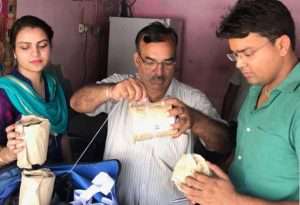
Meanwhile, the authorities instructed the vendors to use fresh and good quality fruits to prepare the juice. Mr. Khosla informed that they must registered immediate, who do not have the licence to sell. Apart from this, samples of food items like dal, bakery biscuits and a sample of other food, from various suspected shops were taken. They said that because of the Festival season, they will continue the process of inspection.
Sep 4, 2017


Make the rules for nutrition security

Even the recent shutting down of multiple outlets, in excess of 160, of a junk food corporate, although over alleged financial disputes, is a brilliant move in the arena of public health and nutrition regulation. Although late, these regulatory and policy endeavours may go a long way in improving India’s currently abysmal public health and nutrition scenario.
More than two decades old now, the national nutrition policy (1993) failed to provide any substantial leadership or results in tackling the multiple forms of malnutrition in the country. We only saw an almost stagnant undernutrition rate during this time, along with a rise in the obesity burden and pervasive, multiple micronutrient deficiencies.
Well-intended, evidence-based regulation and its effective implementation will lead to sustainable gains in public health by reducing the morbidity and mortality burden, empowering consumers to make informed choices, keeping the industry’s misleading conduct and dubious practices in check, and translating into economic benefits.
Consider smoking, for example. No one stopped when they were “told” that smoking may cause cancer. But taxing cigarettes, banning advertising, setting age limits for selling tobacco products and restricting smoking in public places made it both an imperative and easier for many people to stop, and also discouraged new ones from taking to the habit; obesity and chronic diseases have dropped after enforcement of strong policies (restrictions on trans-fats in Denmark; taxation of carbonated and sugar-sweetened beverages; mandatory front-of-pack labelling; workplace interventions, physical activity promotion, breastfeeding promotion).
Industry endorses self-regulation but spends billions of dollars on misleading advertising in the name of innovation and creative independence, which encourages us to overeat unhealthy foods. They portray government regulation as a feature of a nanny state that deprives people of the freedom to exercise their will.
We all know that the meal with free toy becomes the default choice of the kids and thus their parents’. Advertisements blatantly showcase that consumption of “cool” — read ultra-processed foods, high in sugar, salt and fats) foods and drinks will lead to better social acceptability. Is this not arm-twisting using marketing and advertising gimmicks? Is this not leading people to make unhealthy choices?
Economists say that just obesity and its related consequences can cost us $190 billion annually. Modelling estimates suggest that interventions as simple as mandatory food labelling may reduce obesity prevalence by 2.5-6.5%. About 15 million DALYs (disability-adjusted life year, a measure of overall disease burden, expressed as the number of years lost due to ill-health, disability or early death) per annum can be averted by simple policy interventions. Research also shows that several simple public health and nutrition (PHN) interventions can be clubbed for a cost-effective response.
Threats and possibilities
Some challenges that merit our attention when we think of PHN regulation: a) the regulation’s coverage, format, who will be excluded and why? b) Synching advertising guidelines with proposed regulation (for example, banning junk food advertisements and their sale near or in children’s spaces); c) how will we include or bring in restaurants, small joints, takeaways, unorganised sector as stakeholders? d) Collaborations (vendor/small manufacturers associations, civil society, licences); e) Implementation and surveillance.
Some strategies that may enhance the impact of regulation may include strengthening regulatory agencies like the Food Safety and Standards Authority of India; state-wise compulsory participation, empowering nutrition research institutions which may provide high quality evidence to influence what works and what doesn’t in local context, constituting independent unbiased group of experts and advisers to collate evidence and present to decision-makers, partnerships among stakeholders, reducing corruption, consumer awareness camps, short-term licensing and renewal based on compliance with set criteria or guidelines for food safety, transparency and accountability checks, time-based outcome analysis results, setting up robust and sustainable surveillance system.
Above all, efforts to make all involved bodies work in-sync with opportunities to constructively criticise and discuss issues. In fact, it will be good to invest in a baseline (pre-regulatory landscape) and then make periodic changes in key health outcomes. The states can standardise these measures and the Centre can collate these as a part of standardised surveillance system to monitor PHN.
We must collectively advance from mere feeding to nurturing. Let us broaden our focus to care about public health and nutrition security than mere food security. As the legendary German writer and statesman Johann Wolfgang von Goethe said, “Knowing is not enough, we must apply. Willing is not enough, we must do.”
Closure notice to eateries
The Food Safety wing’s special squads conducted inspections over the last 12 days at 5,413 food production and sales outlets across the State.
The licences of 36 outlets, which were found to be functioning in an unhygienic manner, were cancelled and closure notices were issued.
A compounded fine of Rs. 72,76,000 was collected from various outlets for blatant violation of FSS Act. Food safety special squads in all districts will collect complaints from the public on Onam holidays also.
70 people in hospitals after food poisoning at school in Kohima
Kohima, Sep 3 (UNI) Over 70 students and teachers of a reputed school in Kohima reportedly contracted food poisoning after eating food prepared
by students at a farewell event organised for its class XII students on Friday last.
According to sources, the students were hospitalised in different hospitals at the state capital with symptoms of vomiting, sweating, diarrhea and fever.
In a private nursing home informed that around 53 students were admitted on Friday, out of which 15 to17 students, whose symptoms were severe.
“All the beds in the hospital are occupied and more students continue to come in,” a source informed.
With the rush of the patients coming in with similar symptoms, a sort of emergency was reported at the hospital authority hastened to ensure
accommodations as well as treat the patients. The students and teachers were also in another two nursing homes.
It is suspected that the students and teachers included contracted food poisoning after consuming dessert made with milk and eggs, reportedly prepared
by the students. The farewell event for the class XII students of the school was hosted by class IX, X and XI students. Even some parents, who consumed
the food presumably the dessert, brought home by their children, were also admitted in the hospital, sources said.
Jaggery not so health after all
The report says that the main purpose behind using these additives is to remove impurities easily and give it the desired colour.
Report by Cooperation Department points to extensive use of chemicals and adulterants
The humble jaggery, increasingly regarded as a healthier alternative to white sugar, is not necessarily safe if you are buying it without a thought on what is going into it. A recent report by the Cooperation Department shows that a host of chemicals and adulterants go into it in several jaggery-making units.
Jaggery units in Karnataka, particularly in Mandya region, have been using different types of chemicals/additives, including calcium hydroxide, sodium hydrosulphite (hydrose), sodium formaldehyde sulfoxylate (safolite), ortho-phosphoric acid, seashells, baking soda, oil (castor/coconut), and orange-red powder (artificial food colouring), reveals the report submitted recently to the government.
The main purpose behind using these additives is to remove impurities easily and give it the desired colour. Sugar is also added as a thickening agent, reducing the processing time, says the report by Additional Secretary, Cooperation Department. It also notes that some manufacturing units, in contrast, have also been using lady’s finger stem and powder as safer alternative clarificants.
Karnataka ranks third in sugarcane cultivation that is concentrated in Belagavi, Bagalkot, Mandya, Bidar, Ballari and Vijayapura districts. Mandya district alone has 532 jaggery manufacturing units with an output of at least 10 lakh tonnes of jaggery a year. Jaggery samples were collected from Mandya, Yeshwantpur and Mahalingapur and tested at the Regional Agmark Laboratory, Guntur. The tests revealed that higher level of sulphur dioxide residue was found in light coloured jaggery samples from Mandya market than the samples collected from Yeshwantpur and Mahalingapur markets. This could be attributed to the excess use of chemicals such as hydrose and safolite, the report said.
The report said sodium hydrosulphite (commonly used as a reducing/bleaching agent in textiles, dyeing, leather, paper pulp and other industries) was used as bleaching agent in jaggery manufacturing. These sodium-based chemicals also lead to the reduced shelf life of jaggery, as sodium being highly hygroscopic in nature absorbs moisture from atmosphere that softens the jaggery and makes it mushy.
The sulphur-based chemicals (sulfoxylate) leads to increase in sulphurdi-oxide residue in jaggery. Ortho-phosphoric acid is also used as bleaching agent and when it exceeds the limits, it is harmful.
Use vegetable clarificants
CFTRI, Mysuru, has recommended the use of vegetable clarificants as alternative to chemicals.
Indiscriminate use of the chemicals is not only harmful for consumption but also reduces the shelf life of the product forcing the farmers to distress sales within a week from processing, irrespective of the prevailing price in the market, says the report.
The demand for jaggery was usually based on colour. Jaggery with light golden yellow colour and firm hardness fetched more price in comparison to other varieties. The next preferred colours were kesari and golden yellow. Dark brown coloured jaggery had the least demand, which the report says in the main reason for chemical additives. On an average, price difference of ₹100 to ₹500 per quintal was found between different varieties of jaggery based on variation in colour and shape.
India accounts for over 70% of the total global jaggery production. India exports jaggery to many countries, including Bangladesh, the U.K., Canada, Chile, Egypt, Fiji, Iraq, Kuwait, Malaysia, Nepal, and the U.S.
Sep 3, 2017
ஆத்தூரில் சமையல் ஆயில் ஆலைக்கு 'சீல்': 28 ஆயிரம் லிட்டர் கலப்பட எண்ணெய் பறிமுதல்
ஆத்தூர்: ஆத்தூரில், கலப்பட சமையல் எண்ணெய் தயாரித்த ஆலைக்கு, அதிகாரிகள், 'சீல்' வைத்தனர்.
சேலம் மாவட்டம், ஆத்தூர், முல்லைவாடியில் கலப்பட எண்ணெய் தயாரித்து விற்பதாக, கலெக்டர் ரோகிணிக்கு புகார் சென்றது. அவரது உத்தரவுப்படி, நேற்று, இரவு, 7:00 மணிக்கு, தாசில்தார் கேசவன், துணை தாசில்தார் ஜீவானந்தம், ஆர்.ஐ., கண்ணையன் உள்ளிட்ட அலுவலர்கள் ஆய்வு செய்தனர். அதில், 'திவ்யா டிரேடர்ஸ்' ஆயில் நிறுவனத்தில் ஆய்வு செய்தபோது, மூன்று டேங்கரில், 28 ஆயிரம் லிட்டர் கலப்பட எண்ணெய் பதுக்கியதும், அதன் உரிமையாளர் நடேசன், 55, என்பதும் தெரியவந்தது. சூரிய காந்தி, கடலை, எள் மூலம் தயார் செய்த எண்ணெய் என, கேன்களில் ஸ்டிக்கர் ஒட்டப்பட்டிருந்தது. மூன்று கோடி ரூபாய் மதிப்பிலான, 28 ஆயிரம் லிட்டர் கலப்பட எண்ணெய்யை, அதிகாரிகள் பறிமுதல் செய்தனர். அதே குடோனில், இருந்த தரமற்ற, 3,600 குளிர்பான பாட்டில்கள் பறிமுதல் செய்யப்பட்டன. தொடர்ந்து, ஆலைக்கு வருவாய்த்துறை அதிகாரிகள், 'சீல்' வைத்தனர். தாசில்தார் கேசவன் கூறுகையில், ''அனுமதி பெறாத இடத்தில், வாசனை, நிறம் இல்லாத கலப்பட ஆயில் பதுக்கி வைத்திருந்ததால், ஆலைக்கு சீல் வைத்தோம். உணவு பாதுகாப்பு அதிகாரிகள் ஆய்வு செய்து, மேல்நடவடிக்கை எடுக்க உத்தரவிடப்பட்டுள்ளது,'' என்றார்.

FSSAI silent on additives’ limit


Hyderabad: The Food and Safety Standard Authority of India (FSSAI) has not specified the permissible limit in the new list of additives, which are used as smoothening agents, preservatives, colours and taste enhancers.
Both natural and synthetic additives are used for preserving and taste-enhancing. They are also used for making the food appealing.
The FSSAI unveiled the new list of additives recently, which covered new set of additives used in ready-to-eat foods, cookies and confectionaries.
In 2016, the comprehensive list of additives was issued the central agency.
Mr Ashwin Bhadri, a food analyst, explained, “Each additive has different functions. There are various combinations of additives used in foods and most of us consume them daily. Some help maintain the texture, while others make the food smooth.”
Presentation and the storing nature of the food decide the amount of additives. Another food analyst, on condition of anonymity, said, “Presently, FSSAI is insisting on good manufacturing practices. The new list is silent on the permissible range.”
Hyderabad: Packaged foods flout salt norms
The study was conducted on products approved by the Food and Safety Standard Authority of India (FSSAI).

Quillaia extracts are used as foaming agent in puddings, soft drinks and also dairy products.
Hyderabad: Compliance of nutrient labelling in terms of salt on packaged food products is low, according to a study published in Nutrition and Health.
The study was conducted on products approved by the Food and Safety Standard Authority of India (FSSAI).
As per the guidelines of the FSSAI, the salt content was tabulated. However, the compliance level was low.
The study covered 11 large retail chains and was found that salt content was high in sauces, spreads and convenience foods.
Rehmat Fatima, a nutritionist, said, “Convenience foods have a higher salt content as they are stored. To maintain the nutrient value, texture and colour, salt content added to them is higher. Many studies have shown that salt content in them ranges from 800 mg to 1,355 mg per 100 gm.”
In sauces and spreads it ranges from 800 mg to 2,000 mg per 100 gm. The traditional food items like pickles, parathas and chutneys also contain a high amount of salt.
A senior FSSAI official pointed out, “The guidelines are being framed to cover foods which have a short shelf life. But controlling products with long shelf life is a task. We have to hold talks with food manufacturers and device a plan.”
As far as food producers are concerned, controlling the salt level is a major task. Sunil Aggarwal, a food producer in the city, said, “There is a need to bring about a change in the preparation of foods with long shelf life. They require different types of packaging materials which are not available. The compliance level will improve once different methods are introduced.”
Suneetha Premlatha, another nutritionist, noted, “Reading labels requires scientific knowledge about the making of foods. Many consumers check the salt and fat levels before picking up products. But they also need to check the serving size on the label as it will give an idea of the total calories and grams consumed per serving.”
The unorganised food production market constitutes a 70 per cent of the total segment. Since it does not come under the lens of the authorities, awareness is the only option left.
Your Protein Shake Could Be Harming Your Fitness
Fake supplements dominate the market.

When my father first started working out and weight training he did so at home. I used to sit on the couch and laugh (not something I'm proud of). He would then challenge me to do an exercise and I would be able to do it quite easily. I would then promptly go back to the couch. Then I went to college in Kochi, and while I was there, he continued to work out and even joined a gym.
One day, when I'd come back to Mumbai for my semester break, I decided to tag along when he went to the gym. I fully expected to easily match the weights he was capable of lifting. I have never been more wrong about anything! My almost 50-year-old father was easily thrice as strong as 22-year-old me! That was enough motivation (or humiliation, I'm not sure) for me to start working out and, like almost everyone else who works out, I also started taking protein and other dietary supplements.
According to an ASSOCHAM report, a whopping 60-70% of the dietary supplements sold in India are fake, counterfeit, unregistered and unapproved.
After starting foodnetindia, I wrote a lot of articles about trans-fat, sugar, and other food safety issues, but when I came across reports of widespread adulteration of dietary supplements, I realised that this is a pretty big food safety issue, especially since more and more people, especially teenagers and young adults, are working out and trying to get fit. According to a report by the Associated Chambers of Commerce & Industry of India (ASSOCHAM), about 78% of adolescents in urban India daily consume dietary supplements of some kind. This has led to a huge rise in the demand for these supplements. According to a report in the Economic Times, the whey protein industry will grow by 22% between 2014 and 2020. The ASSOCHAM report estimates that the supplement industry as a whole will double in size in the same period. Unfortunately, along with the rise in demand, comes a rise in adulteration and counterfeiting.
According to the ASSOCHAM report, a whopping 60-70% of the dietary supplements sold in India are fake, counterfeit, unregistered and unapproved. That means that if you buy 10 boxes of whey protein powder in a year, six or seven of them are fake!
In 2014, the Hindustan Times published a report about the supplement adulteration problem in Punjab. The report quoted a food safety officer who said that as the government has not fixed parameters for many food items, people take advantage of the loopholes. The report also noted that some of the counterfeit products so closely resemble the originals that it is almost impossible to distinguish between the two. I have come across some articles that give out some pointers on how to identify fake protein powders, but I can't vouch for their accuracy. One blog on Healthkart recommends tests such as checking the labels and manufacturing dates for errors, checking to see if the seal has been tampered with, checking the hologram sticker, etc. Unfortunately, none of these are foolproof ways to identify fake supplements.
Fake supplements are a serious food safety issue, not least because they affect adolescents and young adults the most.
Fake supplements are a serious food safety issue, not least because they affect adolescents and young adults the most. Given the fact that the supplement industry is relatively young in India, the long-term side effects of these products may not be known for a long time. The government and supplement manufacturers need to come up with a regulatory framework to deal with this problem. If they don't, a lot of young people may get very sick!
Barking up the wrong tree: Why the debate on eating dog meat in India (and globally) is hypocritical Why does the eating of dog meat arouse disgust and clauses of morality?
Discussions around the consumption of dog meat almost invariably revolve around issues of cruelty and barbarism. This is seen every year in the international outrage over the Yulin Dog Meat Festival in China. Consumption of dog meat in other countries like South Korea is also frowned upon and has often come under attack. In recent years, the consumption of dog meat in North East India has also caught the attention of animal rights activists.
The debate picked up again in August, when the police arrested two people from the North East living in Delhi’s Vasant Kunj area for allegedly killing a dog, “to eat its meat”.
The consumption of dog meat in Nagaland, where many consider it a delicacy, first came in the spotlight in 2016, when a legal notice was sent to the state government seeking a ban on the sale of the meat. The state reportedly did contemplate taking such a step, though it is yet to materialise.
Pictures of the super market in Dimapur city, where the meat is sold, started doing the rounds and tourists, journalists and activists began to frequent the market to highlight the alleged inhumane practices involved in the dog meat trade. Images of dog meat being sold in Nagaland and footage of dogs being slaughtered for consumption are used animal rights activists to portray consumers of dog meat as abusive, and inhumane. The message being sent is that those who ate dog meat are evil torturers and savages with no conscience.
Canine concerns
Another debate on canines in India centres on stray dogs. Defined as pests and looked at as a danger to society, stray dogs are a bane for citizens and municipal corporations in many cities. Besides introducing sterilisation, rescue, and rehabilitation programmes, many cities have chosen to deal with the growing stray dog population euthanizing in hundreds.
In 2015, a BBC report on the stray dog “menace” in urban India said that in Tamil Nadu alone, more than 100,000 cases of dog bites had been registered. In neighbouring Kerala, dog catchers had resorted to extreme measures, such as injecting stray dogs with potassium cyanide, to kill them the report said. A recent Times of India report, talking about stray dogs in Porvorim, said that residents of the Goa town had become “victims” of the canines and were being “harassed” by them.
As early as 1860, the Chennai Municipal Corporation took up initiatives to eliminate dogs. By the 1996, 136 dogs were killed daily by state authorities in Tamil Nadu, and the 2013 Chennai Municipal Corporation plan to send dogs to pound houses started another series of debates between animal rights activists and the authorities about human societies’ growing intolerance towards street dogs, and the cruel ways being taken to make these animals invisible from our lives.
Odd proposals
Given the resentment against stray dogs in urban India, law makers have proposed various methods to address the issue. In 2012, a solution was submitted by a member of the Punjab Assembly, Ajit Singh Mofar. The Congress politician proposed that all the stray dogs in Punjab should be sent to Nagaland, Mizoram, and to China for, “whatever they do to the dog,”. He further stated, “We cannot be really bothered what that is. We have to solve our problem first. Stray dogs are killing children, attacking the elderly”. As one might expect, this statement caused an uproar, but this would not be the last time such a proposal was made.
It has been reported that state human rights commissions and local bodies like the panchayats in Kerala have also suggested exporting dog meat to China, South Korea and other countries where it is consumed.
So, on the one hand, you have stray dogs who are looked at as dangerous, posing serious concerns, and even labelled as encroachers in urban India. Yet, on the other hand, conversations about dog meat as a delightful meal are unthinkable. The subject of dog meat merges disgust and a grey area of legality. Thinking of dog meat as part of a food system, or linking it to larger issues of food culture or taste, does not cross the minds of many Indians. That is the reason why, although stray dogs are defined as pests and killed by state authorities every day, it is morally incomprehensible to label them as a food choice.
This calls for a debate on dog meat consumption in India (as well as other countries). Why is it that certain culinary practices are seen as cruel and savage, while others are considered appropriate in human society? Why mobilise for the banning of dog meat in India, which, to borrow from Michaela DeSoucey’s argument in her book on the debate over Foie Gras consumption, “has little to no impact on the nation’s diet or commerce, and not for chicken, beef, pork… (or homelessness or crime, for that matter)”?
This is not to argue against the cruel treatment or painful slaughter of animals, allegations of which abound in the context of the Yulin festival as well as the meat markets in Nagaland. The focus, rather, is on why dog meat consumption is considered savage, barbaric and even inhuman, even as other animals are consumed in India and the world.
Dog meat is widely consumed in parts of North East India and there is no formal regulation that regulates the dog meat market. There are no laws about consuming feral animals such as street dogs, pigs, goats, rabbits, or monkeys.
In an article for Raiot, advocate Sira Kharay explains that there is no direct legal provision banning dog meat cosumption in the country. This why every time someone is arrested for eating dog meat in India, they are charged legal provisions of the Prevention of Cruelty to Animals Act and the Indian Penal Code. However, as Kharay argues, it is unclear how this can be qualified as an offence. What remains unclear, as advocate Sira Kharay explains in an article for Raiot, is the concept of cruelty:
“Killing of stray dogs for ‘human consumption’ is nowhere else defined as crime in the Indian Penal Code, 1860. What is prohibited under Sections 428 and 429 of the Act is “mischief” against animals. To attract the two penal provisions, first, the ‘act of killing’ must constitute a ‘mischief’ as defined under Section 425 of the Act and second, to constitute a ‘mischief’, the act must be done ‘with intention to cause wrongful loss/damage to the public/person’ and there has to be ‘actual cause of destruction/change/diminishing of utility of the property’...But killing of stray dogs ‘with intention’ to ‘consume as meat’ can by no stretch of imagination be considered as an act of ‘mischief’ ‘with intention to cause wrongful loss to any person/public’ as defined and more so because the economic idea of ‘loss’ can hardly be associated with the loss of life of a stray dog.
With regard to the Prevention of Cruelty to Animals Act, Kharay says: “The point is not to argue that ‘cruelty’ to animals must be glorified, but that every act of killing of animal does not amount to ‘cruelty’. What is material is the ‘purpose’ in determining what amounts to ‘cruelty’ in law and not in fact.”
Unless dog meat is seen as food and there are regulations pertaining to safety and hygiene, including clear guidelines for humane slaughter, the matter of putting this dish on the plate will remain a legally grey area.
Therefore, in 2016, after the Nagaland government was served a legal notice to ban the slaughter and consumption of dog meat, the state’s Municipal Affairs Department went on an overdrive. State officials requested that the Dimapur Municipal Council oversee the matter of banning dog meat in the city.
However, this order unravelled the urban development and governance system in Nagaland. Matters of regulating the dog meat market highlighted the challenges of managing a conflict city. There has been no municipal election in Nagaland since 2006. Therefore, officials overseeing the municipal functions in Dimapur with a population of 400,000 people are ad-hoc political appointees. They struggle to keep up with basic functions like garbage collection and maintenance of the sewage system and are barely able to manage the crumbling infrastructure such as water supply, drainage, and the increasing cases of land encroachments by land mafia, the municipality had little time and few resources to spend on animal welfare. Dimapur Municipal Council eventually dropped the matter and did not pursue it, but a vibrant conversation about banning and consuming dog meat took place across Northeast India and beyond.
Question of care
Even though a large number of animals in the food system are subjected to cruelty in India, the call to ban dog meat in 2016 was a strategic one. It touched upon the interests of social groups who increasingly see dogs as pets and a lifestyle choice in urban India. The Indian pet industry is expected to grow at a rate of 10-15% in the near future. The rise of accessories, dog saloons, and food was escalating as more urban residents were adopting dogs as pets across India. This leads us towards understanding relationships about human value, vulnerability, and connections with animals.
The connection between dog and human is considered to be a long-lasting and deeply social one. Humans have developed strong attachments to their pets, particularly dogs and cats, who are looked at as companions, friends, caregivers, and family members.
But the moral issues connected to the consumption of dog meat in India have far-reaching consequences. Besides routine arrests of people from Northeast India who are caught killing stray dogs for consumption in metropolitan cities across India, it labels a dietary choice as disgusting and repugnant. A Naga migrant who worked in a retail store in New Delhi told me that she ate her lunch alone after she had been regularly humiliated by her colleagues about the dog eating culture in Naga society. “One day I was so angry I told them yes, yes, we also eat human beings. We are cannibals!” Consumption becomes connected to the identity and culture of the consumer.
During a conversation in July 2016 about the proposal to ban the sale of dog meat, the president of the Society for the Prevention of Cruelty against Animals Dimapur District, Mr N Joseph Lemtur said, “It is not being taught from the school or church, it is cultural. We have become habituated to eat dogs; this is very unlucky. So at this juncture, animal activists like the SPCA are campaigning against it”.
It is important to recognise how the culture card is applied to legitimise certain practices, and that homogeneity is carelessly assumed among a cultural group. Acts of cruelty and torturing animals is not a cultural practice, neither is branding the eclectic eating habit of two million Nagas in Nagaland. The reality is that a large number of Naga households do not eat dog meat and many more refrain from eating wild animals, silkworms, water insects, ferns and mushrooms, all considered to be delicacies in Naga society. Nevertheless, the ongoing debate about the consumption of dog meat is framed by cultural practices and ideas about civilisation and cruelty.
Moral minefield
Dogs mean different things in Naga society: pets, companions, food, medicine, guards, spirit sensors, thief catchers and cat chasers. They also feature centrally in the most famous origin myth about the Naga script, which is connected to identity and language. According to legend, a dog ate the Naga script written down on animal skin, and from that day onwards, Naga tradition and knowledge has only been received and shared orally. The relationship between dogs and people in Naga society is an intimate one, and is integral part to everyday lives. Dog meat has been part of Naga cuisine for a long time, yet, before dishes started to appear on restaurant menus and before vendors starting selling the meat in the market place, there was no debate or national campaign to ban dog meat.
In contemporary India, the language of animal rights that triggered the dog meat debate is strongly rooted in a class and caste framework. Unlike the cow, which is regarded as holy and therefore banned as a food item in some parts of India, or the tiger and Amur falcon campaigns based on saving the animals from extinction, the dog meant debate rests on a framework of care and love.This is leaky politics. This debate about eating man’s “best friend” is a moral minefield where meanings of acceptable dietary practices are fluid and ambiguous and the logic of barbarism is juxtaposed with love and compassion.
Who is best capable of loving a dog? What are the dilemmas for dog eaters in India? The politics around which animals deserve protection has become an arena to discuss issues of ethics and justice between humans and animals in India. It is predominately an urban issue. Concern about stray animals, selling certain meats in public view, and animal welfare generally appear when an urban area is desperate to clean up its act; to be taken more seriously as a place for investment, tourism, and in the case of Dimapur, peace.
The exceptional attention dogs have received in urban India as vulnerable beings, in comparison to squirrels, pigs, or monkeys, tells us about the distinct language of value in metropolitan India. In this language, dog meat betrays a civilisational deficit. It reflects notions of a far off place where ethics, justice, and care are lacking. For authorities in Nagaland there is an aggressive drive to sanitise cities like Dimapur of pests like stray dogs as part of a general mindset of being more metropolitan; more like other cities in India.
And while passionate activists stand up for vulnerable dogs, extraordinary laws like the Armed Forces Special Powers Act give the armed forces with the right to kill and detain humans throughout Nagaland and other parts of the North East India on mere suspicion.
So, if dog meat consumption symbolises cruelty on the one hand but is also a part of local food habits on the other, what should be the way forward? Perhaps a useful way to think about it is to consider how the resistance towards the consumption of dog meat in India opens up the complex battle for configuring spaces of governance, ethics and authority between citizens and street dogs in India. It draws us towards the realm of engaging with contested issues of consumption, but more importantly, calls for legal regulations to be put in place that clearly lays out the guidelines for eating feral animals.
Sep 2, 2017


GMC doctor in FSSAI working group
JAMMU, Sept 1: Dr Rekha Harish, Professor and Head, Department of Paediatrics, Government Medical College (GMC), Jammu has been named one of the members of the working group on High Fat Sugar Salt foods by Food Safety and Standards Authority of India (FSSAI).
The group comprised of seven members selected across various parts of India and have been tasked to suggest threshold for a product/product category for the Country by examining the existing international nutrient profiling models and to look into the work taking expert opinion from WHO-SEARO, CHOICES, line ministers and other stakeholders as per the need.
The working group will define High Fat Sugar Salt (HFSS) foods and will develop and easy to understand and interpretive Front for Pack Labeling of HFSS foods.
Imported chocolates seized for violating labeling norms in Srinagar
Srinagar Sep 1 (UNI) The Legal Metrology department under the supervision of Deputy Controller (Enforcement) Kashmir booked a departmental store in Srinagar at Karan Nagar for selling imported chocolates and biscuits without the mandatory declaration of Maximum Retail Price (MRP) and trade name of the importer.
Under Legal Metrology laws, every packed product should carry the mandatory declarations including MRP and trade name of importer with consumer care details, an official spokesman said here this afternoon.
He said the erring store failed to produce the bills of importer and as a result, the retailer was held responsible for the offence and an amount of Rs 2,000 was slapped as fine on the erring store.
In another instance, a bakery shop was found indulging in short-weighing of packed biscuits. The net quantity declared on the label of biscuit packs was 1 kg whereas when the net contents were weighed, they were found short by 30 grams and the department penalised the bakery shop with Rs 2000 fine.
The department also conducted joint market checking with Drug and Food Organisation, SMC, Revenue, Police under the supervision of Additional Deputy Commissioner, Srinagar namely and booked a number of erring traders for violating different provisions of laws. Moreover, pavements occupied by vendors were cleared at many places by the officials of SMC.
Food Safety Officers also lifted some samples of food for analysis. The markets of Batamalloo, Karn Nagar, Kaka Sarai and Qamarwari were inspected. One team headed by Tehsildar Hazaratbal also conducted joint inspection with Legal Metrology department in the localities of Kanitar, Sadrebal, Hazrarbal, Habbak etc and booked 22 erring traders for which LMD collected a fine of Rs 15,200.
2,000 join online plea against caged hens
PUNE: As many as 2,000 consumers have taken to the social media to join Pune-based animal protection organisation, Animal Equality, demanding that McDonald's stop procuring eggs from caged hens. They want the multinational to opt for eggs from cage-free hens.
The consumers signed an Animal Equality petition for better treatment of hens. "Consumers also took selfies holding signs saying 'No more cages', urging McDonald's to ban cages. Their company leaders were sent emails requesting better treatment of the birds," Amruta Ubale, executive director of Animal Equality, said.
Ubale said hens in the factory farms are restricted in small wire cages. "They cannot spread their wings and are deprived of the freedom to express natural behaviour while the wire floor of the cage causes their feet to become sore, cracked, deformed, and bloody," she added.
In a response to an e-mail sent by TOI, 'a statement from McDonald's India - West & South said' said, " The transition to cage-free eggs requires the collaboration of industry bodies, governments, supply partners and local farms to establish a sustainable solution in India, one that achieves both local regulatory requirements and McDonald's high standards of food safety and animal health and welfare."
Sep 1, 2017


Poultry waste spreading drug-resistant bacteria: Study
Misuse of antibiotics in poultry farms is leading to multi-drug resistant bacteria which is spreading into the environment through unsafe disposal of poultry litter

The study found that antibiotics were being used in poultry farms and that the litter was used as manure in neighbouring agricultural lands.
New Delhi: Misuse of antibiotics in poultry farms is leading to multi-drug resistant bacteria which is spreading into the environment through unsafe disposal of poultry litter and waste in agricultural fields, with the potential to infect human beings, a new study by the Centre for Science and Environment (CSE) warns.
Urging the government to control the “rampant antibiotic misuse”, the thinktank urged the environment ministry and central and state pollution control boards to bring in laws and standards ensure monitoring and surveillance.
In 2014, another CSE study had said that there is a possibility that one in every two chicken consumed in India has a strong presence of antibiotics, which could be leading to growing antibiotic-resistance in humans.
For the present study, CSE collected samples of litter and soil from in and around 12 randomly selected poultry farms in four key poultry-producing states in north India—Uttar Pradesh, Haryana, Rajasthan and Punjab. The farms were spread out across 12 different clusters in nine districts.
“A total of 217 isolates of three types of bacteria – E. coli, Klebsiella pneumoniae and Staphylococcus lentus —were extracted and tested for resistance against 16 antibiotics. Ten of these antibiotics have been declared Critically Important (CI) for humans by the World Health Organization (WHO),” the study said.
The study found that antibiotics were being used in these poultry farms and that the litter was used as manure in neighbouring agricultural lands. The poultry sector is estimated to be worth Rs1 trillion in India, which is among the top five eggs and chicken producers in the world.
“Antibiotic misuse is common in the poultry sector. What makes the situation worse is the fact that the sector is also plagued with poor waste management. Therefore we first wanted to understand the extent of antibiotic resistance in the poultry environment, and then establish if the resistance bacteria is moving out of the poultry farms into the environment through waste disposal,” said Chandra Bhushan, CSE’s deputy director general while releasing the study on Thursday.
The study said if bacteria are resistant to antibiotics of at least three classes, they are considered multi-drug resistant, adding 100% of the E. coli, 92% of Klebsiella pneumoniae and 78% of Staphylococcus lentus isolated from the poultry environment were multi-drug resistant,
About 40% of E. coli and 30% of Klebsiella pneumoniae isolates were resistant to at least 10 out of 13 antibiotics against which these bacteria were tested for resistance, said the study.
“Both E. coli and Klebsiella pneumoniae had very high resistance to antibiotics of critical importance to humans such as penicillins, fluoroquinolones, third and fourth generation cephalosporins and carbapenems, which is a last resort antibiotic used in hospitals,” the study added.
Bhushan warned, “In humans, E. coli and Klebsiella pneumoniae cause infections which are becoming difficult to treat due to high resistance.”
“Disturbingly, we found very high resistance in E. coli and Klebsiella pneumoniae isolates from the poultry environment. In some of the isolates, all antibiotics that we tested were ineffective. If these bacteria infect a human, then hardly any medicine will work as cure,” he added.
The study also found strong similarity in the resistance pattern of E. coli from the litter and from agricultural soil in the surrounding areas where the litter was used as manure.
“This similarity was statistically established by the study,” it added.
“This indicates that the multi-drug resistant E. coli being created in the poultry farms is entering the environment through litter. From the agricultural fields, these bacteria can go anywhere – into groundwater and food – and can infect agricultural workers and animals, thereby becoming a public health threat,” said Amit Khurana, senior programme manager of CSE’s food safety and toxins team.
In April 2017, India’s health minister J.P. Nadda announced the finalization of India’s comprehensive and multi-sectoral National Action Plan (NAP) to combat Antimicrobial Resistance. The government had pledged to adopt a “holistic and collaborative approach towards prevention and containment of AMR in India”.
Bhushan said the NAP must be properly supported and funded by the Union government.
“We must eliminate the use of antibiotics as growth promoter in the poultry industry. Antibiotics should be used as a last resort to control the disease. This is the only way we can reduce the creation and spread of antibiotics resistance,” Bhushan said.
Kolkata Municipal Corporation to make food vendor's registration compulsory

With this aim in mind, the KMC will invite representatives of city's food hawkers' union to a workshop on food safety and standard to be held in the city on September 13. The workshop will train a vendor the essentials of doing away with adulteration in food. For example, the workshop will focus on the exact means of cooking Biryani without mixing unapproved colours to make the food attractive to the buyers.
Similarly, sweet sellers will be advised not to use chemicals to bring colours to the food item. In addition to the workshop which is being organized by the union health and family welfare ministry, the KMC will organize several training sessions for the food vendors across the city from September 15 to October 1. "We will teach them how to prepare and sell food items following the FSSAI guidelines.
After successful completion of the training session, a food vendor can apply for registration. In that case, our food safety officers will pay surprise visits to the stalls and submit their reports on the state of health and hygiene of food that an applicant is serving to the customers. If the report goes in favour of a particular food vendor, he will be eligible for our registration scheme," Atin Ghosh, the member, mayor-in-council overseeing the KMC health department said on Wednesday.
According to a KMC health department official, the civic body took such a plan after conducting anti-adulteration drives across the city. After examination of food samples such as Biryani, noodles, snacks or sweets in the KMC laboratories it was found that some of these food items were unfit for human consumption. "Side by side with the training sessions, we will conduct anti-adulteration drives during the puja days.
The drive will be conducted not only in the pavement food stalls but some major hotels and restaurants will also come under the drive," the civic official said.
Compulsory registration scheme mooted for Kolkata food vendors

KOLKATA: Kolkata Municipal Corporation plans to bring city's food vendors under a compulsory registration scheme. The idea behind such a plan is to ensure hygiene of the food being sold in the open as prescribed by Food Safety & Standards Authority of India (FSSAI). The KMC in association with FSSAI will train city's food vendors or hawkers on how to prepare food following basic health standard and sell the same following the hygiene norms.
With this aim in mind, the KMC will invite representatives of city's food hawkers' union to a workshop on food safety and standard to be held in the city on September 13. The workshop will train a vendor the essentials of doing away with adulteration in food. For example, the workshop will focus on the exact means of cooking Biryani without mixing unapproved colours to make the food attractive to the buyers. Similarly, sweet sellers will be advised not to use chemicals to bring colours to the food item. In addition to the workshop which is being organized by the union health and family welfare ministry, the KMC will organize several training sessions for the food vendors across the city from September 15 to October 1.
"We will teach them how to prepare and sell food items following the FSSAI guidelines. After successful completion of the training session, a food vendor can apply for registration. In that case, our food safety officers will pay surprise visits to the stalls and submit their reports on the state of health and hygiene of food that an applicant is serving to the customers. If the report goes in favour of a particular food vendor, he will be eligible for our registration scheme," Atin Ghosh, the member, mayor-in-council overseeing the KMC health department said on Wednesday.
According to a KMC health department official, the civic body took such a plan after conducting anti-adulteration drives across the city. After examination of food samples such as Biryani, noodles, snacks or sweets in the KMC laboratories it was found that some of these food items were unfit for human consumption. "Side by side with the training sessions, we will conduct anti-adulteration drives during the puja days. The drive will be conducted not only in the pavement food stalls but some major hotels and restaurants will also come under the drive," the civic official said.
Quick facts:
Number of city's food vendors: 1 lakh
The civic initiative for city's food vendors: Bringing them under a compulsory registration scheme
The aim: To make them responsible in serving quality food as prescribed by FSSAI.
The process: They will have to take part in several workshops to be organized by FSSAI and the KMC health department.
The KMC food safety officials will then pay surprise visits to the stalls before recommending for registration.
Food safety inspections at hotels
The health wing of the city Corporation inspected Buhari hotel at Attakulangara and Ariya Nivas at Aristo Junction on Thursday. Notice was issued to Buhari hotel to take steps to improve the hygiene there urgently. At Ariya Nivas, the health wing seized at least 200 kg of plastic carry bags used for packing food. The inspections were led by Corporation health officer Sasikumar, health supervisors Ushakaran and Rameshkumar, and health inspector N.V. Anilkumar. Inspections at hotels will continue in the days to come, a statement from the Corporation said.
Improvement notices served to city restaurants
Thiruvananthapuram: Use of monosodium glutamate (MSG), also known as 'ajinomoto', is rampant in restaurants serving Chinese food in the city.
As part of a raid conducted by the food safety department, improvement notices were served and fines imposed on restaurants which did not display notices stating that they are using MSG in food items. The raid was conducted in view of the Bakrid-Onam festival season.
As MSG is not banned by Food Safety and Standards Authority of India, the department cannot restrict its usage. However, in an order issued two years ago, the food safety department had made it mandatory for restaurants using MSG to display it so that pregnant women and children will be on alert. But none of the restaurants displayed the statement. Many restaurants in the city have displayed that they are not using this taste enhancing food additive, creating a positive feel among consumers.
The food safety officials informed that they have found rampant use of MSG, but the eateries violated norms by not informing the consumers.
"If you take packaged products, it will clearly state that MSG is included. That is applicable to restaurants too. Studies have proved that consumption of MSG is not good for children below one year of age and pregnant women," the officials said.
Apart from use of MSG, the common food safety violation noticed in eateries in the city was improper use of freezers.
"The freezers were not used properly. As per norms, freezer must be used at -18 degree celsius and fridge at 4 degree celsius. The temperature was not maintained.
Also cooked, half-cooked, vegetarian and non-vegetarian food items were kept together in plastic wraps. This would lead to contamination," an official said.
The food safety officials also found that most of the employees of restaurants lacked medical fitness certificates.
The department has formed three squads for the district. Of this, the squad formed for the city has conducted inspections in 139 eateries and slapped improvement notices on 51 institutions. A fine of Rs 2.15 lakh was slapped on various eateries.
Subscribe to:
Posts (Atom)