Aug 27, 2017

Is snacking and 'shack-ing' still viable?

With the closure of the restaurant at a popular beach shack in Anjuna having been ordered due to hygiene violations, Café looks at how things need course correction before it’s too late
One major factor that has drawn people from all corners of the globe to Goa has been its coastal attractions. Over the years, the pulling-power of the beaches seems to have diminished, and there can be no doubt that a lot of it comes down to the fact that there is often a very lacklustre approach to how best one can showcase seaside attractions in the state; shacks play a major role in this equation.
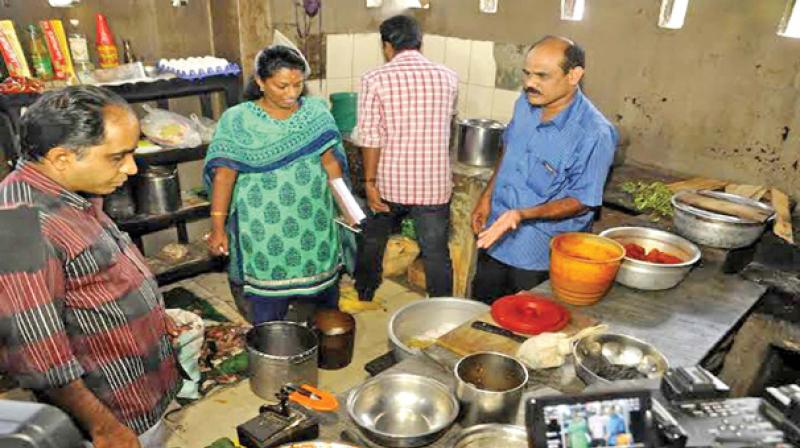
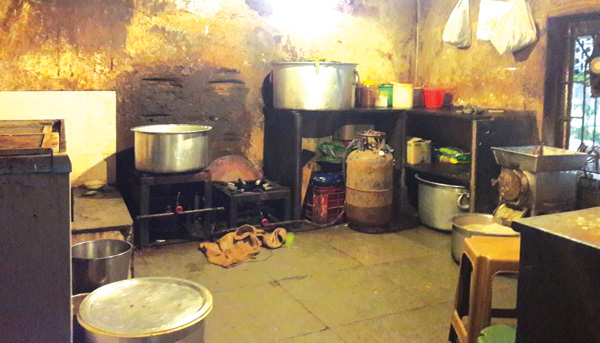
Only recently, the Food and Drugs Administration (FDA) ordered the closure of the restaurant at a popular beach shack in Anjuna, owing to the fact that its inspecting team found it to be running in an unhygienic condition. Approximately 30 deficiencies were noted by the FDA, with hygiene being a mitigating factor in the entire debacle. Food being cooked in the open, rusty fridges that weren’t operating at a required temperature, the kitchen having direct access to washrooms, and the use of food colouring agents, which are unsafe, were some of the charges in question. In addition to all of the above, the restaurant was also unable to produce the Food Safety and Standards Authority of India (FSSAI) license, it was claimed. With this case having come to light, one can only wonder what the conditions may be like at some of these establishments.
Popular chef and restaurateur Vasco Alvares has often worked with properties along the coastal belt, and recalls that on one given occasion, when called upon to work with a private party setting up a beach front affair, having to set-up a makeshift kitchen, owing to the establishment’s deplorable conditions. “The kitchen was in a poor state, and there were flies in many places. At the eleventh hour, we managed to put together a structure that would serve as a kitchen, just so that we could deliver hygienic food that I believe is the diner’s foremost right,” he shares, from experience.
But amidst the chaos and often, uncertainty of what lies beneath, there are some places that honestly stand out, in the best way possible. One such example that can quite literally be classified as ‘gold standard’ when it comes to shacks in Goa is ‘Zeebop by the Sea’, on Utorda beach in the southern reaches of the state. The proprietor of the establishment, Sergio Dias, has gone the whole hog, when it comes to ensuring a great experience all-round, for his clients. From impeccably clean washrooms, to the sand being combed at regular intervals to ensure an untouched feel, to exceedingly pleasant staff, ‘Zeebop’ has nailed their brief.
Reflecting on the endeavours that he has undertaken to meet the standards he sets for himself, Sergio says, “I’m honestly grateful of having an inborn sense of cleanliness. For me, even at a personal level, hygiene takes top priority. I’ve been fortunate to have had the opportunity to have travelled and gained exposure in the area of hospitality. My experiences in places like Brazil have been an eye-opener, where beaches are cleaned on a daily basis, in a mechanised method. If it can be done elsewhere, then we can do it here too. It is highly dependent on each one’s culture and mentality, and we all need to do our part.
James Elliott and his wife Barbara have been regular visitors to Goa for over three decades. Over a conversation held in Calangute, they revealed that they have decided to call time on their Indian expedition and move to pastures anew, given that they aren’t pleased with many of the changes that they’ve seen ‘develop’.
“My wife and I have been coming to Goa from England for over 32 years, and I do think that this will be our last trip here. There’s really nothing desirable about Goa anymore. The rates are constantly on the rise, especially when it comes to taxis and shacks. When it comes to eating out, most shacks offer sub-par food at inflated rates, and the local charm is lost, with many staff from other parts of the country being rude. That is a major change we’ve noticed. Even the Goans who worked in these areas appear calloused and jaded, and have lost the warmth that we as tourists associated with them. Hence there is nothing desirable about being by the Goan seaside anymore, and that was a major attraction. Now other parts of the world with that as their primary feature are cheaper and more inviting,” he shares.
Perhaps it’s time that the game was changed and the bar was raised. Perhaps it’s time that we demanded more from our own industry. Licensing bodies should be training shack owners before issuing licenses, to ensure there is compliance within the required norms for decent operation, else, we stand to lose a lot more, as we continue down this slippery slope that we seem to be on.

FDA raids sweet shop in Betim

Panaji: Officials from the directorate of food and drugs administration (FDA) stopped operations of Sunrise sweet manufacturing unit at Malim, Betim, on Thursday as most of the sweets were being prepared in unhygienic conditions. During the raid, FDA officials also found 15 bags of mava stored in unclean surroundings. The unit was later sealed by officials in the evening.
Officials told reporters that the raid was conducted as part of the Ganesh Chaturthi festival and added that FDA is targeting sweet manufacturing units as some of the mixtures used to prepare sweets are stored in unhygienic conditions. FDA officials also told reporters that the mava bags were misbranded. They also found packets of farsan without proper manufacturing and expiry dates which were being stored in unsanitary conditions.
The raiding team comprised of senior FDA officer, Richard Noronha, food safety officer Atul Dessai and others.

Orissa food safety dept may get a facelift

New Delhi, August 26: The Orissa food safety department, often marred with shortage of staff and infrastructure, is likely to get some assistance from the Central government which can help it work towards food safety.
The Food Safety and Standards Authority of India (FSSAI) plans to assist Orissa and other states by boosting their infrastructure and also help them in fulfilling their staff crunch issue.
According to the FSSAI plan, it is likely to infuse more junior food analyst and food analysts’ posts October to fill the gaps in the states which can help increase the food safety magnitude and quality in the state.
As per records, a number of food safety officers’ posts are reportedly lying vacant in the state which makes the work of food testing and action against the guilty a tough task. 
The state also suffers from shortage of food analysts who can check the food samples for safety of human consumption.

Moreover, the FSSAI has also planned to start ‘food safety on wheels’ in the state where they can act as multi-purpose vans for food testing, public awareness and other purposes which can help towards ensuring food safety in the state besides linking all the state labs with a Central system termed as Indian Food Laboratory Network.
Meanwhile, plans are also underway to strengthen 45 state food labs by providing state-of-the-art high-end food testing equipment, including microbiology labs.
As per the FSSAI records, Orissa is said to have recorded 61 cases of food safety violations in one single year in 2015-16 and 112 cases in 2014-15.

Aug 26, 2017

DINAKARAN NEWS


DINAKARAN NEWS


DINAKARAN NEWS


DINAKARAN NEWS


DINAKARAN NEWS


DINAKARAN NEWS


DINAMALAR NEWS


Food safety dept lodges cases against 17 outlets

DEHRADUN: The food safety department registered cases against 17 shops and restaurant owners in Dehradun for keeping substandard quality food products. Cases have been lodged in the Additional District Magistrate court in Dehradun against the 17 outlets samples from where had been collected in the last three months.
Recently, oil sample collected from a major supermarket in Rajpur Road was tagged as substandard as it didn’t meet the required iodine percentage as mentioned in the Food Safety and Standards Authority of India (FSSAI) guidelines.
Ganesh Kandwal, designated food safety officer in Dehradun, said, “Majority of samples that failed the guidelines were from smalltime shopkeepers, who generally do not maintain the cleanliness norm.” He added that the focus will remain on milk samples.
Said to be a significant drive of the department, collection and testing of samples are being affected due to the shoddy infrastructure. Unavailability of electricity, lack of staff at the Rudrapur-based food safety laboratory is causing a major hindrance to the drive.
A officer of the department said, “Even though we try to conduct raids and collect samples as per the set norms, the samples go stale after being kept in the laboratory for days together.”
Though the department has been provided with a special machine from Delhi for checking milk samples, there is still a need for a controlled environment and special arrangements for conducting the tests. Also, just one machine is not sufficient for the entire state.

Visakhapatnam: Hotels violate food safety norms

The food safety officials attribute the poor monitoring to the shortage of staff.
The food safety officials have raided seven hotels in the last two weeks based on the consumer complaints.
Visakhapatnam: The restaurants or canteens run at the government establishments violating the food safety and hygiene norms are facing the heat, not because of the food safety officials, but consumers who have become proactive in registering complaints. The food safety officials have raided seven hotels in the last two weeks based on the consumer complaints. 
A consumer moved Consumer Forum against a hotel at Jagadamba junction for serving chicken kabab fried with substandard oil. As per the direction of the forum, the food safety personnel raided the restaurant and sent the sample for testing. The hotel’s kitchen was also in unhygienic condition. Similarly, a fast food counter at Siripuram was imposed fine as a consumer raised a complaint as he found a fly in the soup served to him. Moreover, a canteen run at the KGH hospital was also raided as some patients complained of poor quality of food. Samples have been collected from four hotels in Gajuwaka for serving stale non-vegetarian food. 
“The restaurants we raided in the last two weeks are flouting the food safety norms such as serving stale meat and fish and not maintaining hygiene in their kitchens. We have sent the samples to food testing laboratory and will take action once the reports come in. Consumers can register their call or send email too. The awareness of consumers will help to check the bad practices of the restaurants,” said M. Srinivas, Food Controller at Food Safety department. 
“The Food Safety and Standards Authority of India has laid out mandatory guidelines for all restaurants and food establishments. Raw chicken should be kept inside the freezer while the cooked meat could be stored for one day. But, the restaurants have been keeping it for more than one day,” he said. “The restaurants should have storage rooms/deep freezer facilities and should be impervious to moisture, clean, free from pest infestation and well maintained. But, some restaurants are found storing the meat and meat products in a normal fridge,” he added. It is learnt that the popularity of ‘Take Away’ parcel food counters is also posing as health hazards for the consumers. Most of them are preparing the food else where and selling at roadside counters. The roadside non-vegetarian eateries are also seen keeping the fried chicken in polythene.

15 FBOs booked for sale of contraband tobacco

Port Blair, 25 Aug 2017
The team of Food Safety Officials led by the District Food Safety Officer, South Andaman, on Friday, raided several shops in the city on Friday at Haddo, Fisheries Jetty, Phoneix Bay, and Mohanpura market wherein a large quantities of contraband products were seized from 15 Food Business Operators (FBOs). The details of the FBOs who premises were inspected, closed and sealed are Hemawati, resident of Garacharma, Smti Hazara Bibi, resident of Phoenix Bay, Ali Baba, resident of Phoniex Bay, Velu, resident of Dignabad, Nathan, resident of Phoenix Bay Jetty, V. Naga Babu, resident of Haddo, Chinnamma, R/o Haddo, Mundrika Sahu, R/o Haddo, P. Venkata Laxmi, R/o Haddo and Uma Devi, resident of Aberdeen Bazaar. The contraband items were seized under the appropriate section of the Act and legal proceedings are being initiated against the offenders under Food Safety and Standards Act, 2006. Till now 15 premises have been sealed for the violation.
On Thursday, the team of Food Safety officials conducted surprise raids in Goalghar, Buniyadabad, Minnie Bay and Dollygunj on Thursday and seized huge quantities of contraband products from five Food Business Operators (FBOs). The FBOs whose premises were inspected, closed and sealed are Ramachandran, R/o Buniyadabad, S. Ramu, resident of Goalghar, Venugoal Pillai, resident of School Line, Paresh Karmakar, R/o Dolly Gunj and Smt S. Rabia, resident of Buniyadabad.
The Commissioner of Food Safety has warned the Food Business Operators not to store/stock/display or sale any contraband products in their premises and storage area and if the enforcement staff on their inspection if found any contraband tobacco products, stringent action will be initiated against the errant FBOs including sealing of premises and cancellation of licenses. The general public have been hereby requested to pass on contraventions found if any on food safety to the Commissioner of Food Safety, A&N Islands at No. 03192-231024/9434280018 or on District Control Room No. 1070 for strict actions against violators.

The good and bad kind of Oily in food


Know how to choose authentic Organic


Aug 25, 2017

DC NEWS


DINAMALAR NEWS


DINAMALAR NEWS


DINAMANI NEWS


New rules for beef, mutton trade on anvil


DINAMALAR NEWS


DINAKARAN NEWS


MAALAI MALAR NEWS


MAALAI MURASU NEWS


No FSSAI licence for Indira Canteen a grave lapse, says Ms Pramila Nesargi

A top BBMP official, who did not wish to be named, said “You have driving licence which is valid all over India.
File picture of the inauguration of Indira canteen at Jayanagar in Bengaluru
Bengaluru: BBMP, which should have been a role model for others to emulate, has set a wrong precedent with regard to state’s ambitious Indira Canteens. While the project is started with an intention to feed the poor, it was pushed in a tearing hurry and even without the much needed licences -one from Food Safety and Standards Authority of India (FSSAI) and trade licence from BBMP Health department.
Senior advocate Ms Pramila Nesargi told Deccan Chronicle, “This is a classic example of fence eating the crop. BBMP and state government officials have forgotten to take the needed licences. It clearly indicates the break neck hurry shown by the Congress led state government to get the project done for Independence Day and get it launched by party vice president Rahul Gandhi.”
Would the BBMP or the state government let a private operator run their business without the needed licences? She questioned. Running canteens and mega kitchens without licences is against the law and the guilty can be prosecuted, she added.
A top BBMP official, who did not wish to be named, said “You have driving licence which is valid all over India. Both the contractors- Mumbai-based Chef Talk and New Delhi NGO Rewards individually have FSSAI. But have to obtain it in Bangalore across all the kitchens.”
“Procedures have been initiated for FSSAI licences and for trade licences too. We shall get all of them by next week and display them at all canteens,” he added.

Karnataka: Tougher norms for sale of milk products

In a notification on August 4, FSSAI has laid down stringent quality standards for milk and milk products.

For ice creams, milk lollies and kulfis, norms include total solids minimum, weight minimum grams/litres, and milk protein
Bengaluru: In a major step that will keep milk producers on their toes, the Food Safety and Standards Authority of India (FSSAI) has introduced rigorous standards for milk and milk products to be commercially sold in the country.
In a notification on August 4, FSSAI has laid down stringent quality standards for milk and milk products. Strict quality norms have been prescribed for curds, khova, sweetened milk and ice cream.
Karnataka Milk Federation which markets the Nandini brand, as well as private producers such as Heritage, Dodla, Good Life etc will have to comply with these norms.
The standards cover a range of fresh definitions and standards including fat percentage, pasteurisation, boiling, milk products, additives, etc. The standards also apply to goat and camel milk.
For instance, the Minimum Milk Fat (MMF) content and minimum milk solids not-fat (SNF) content for buffalo milk in Karnataka is set at 5 per cent and 9 per cent respectively. For cow milk, the MMF is 3.2 percent SNF 8.3. Milk cannot be sold if the fat and SNF content is below the required percentage.
KMF sells mainly cow milk, although it markets buffalo milk in northern Karnataka.
In various types of milk marketed by KMF under its Nandini brand the fat content ranges from 1.5 percent in double toned milk, to 3.0 per cent in toned milk, 4.5 per cent in standardized milk, to 6 per cent in Full Cream Milk. 
This means that KMF will have to increase the MMF in its double toned and toned milk. The FSSAI’s new norms define ‘Milk’ as “…the normal mammary secretion derived from complete milking of healthy milch animal, without either addition thereto or extraction therefrom, unless otherwise provided in these regulations and it shall be free from colostrum.”
The quality standards apply to a host of milk products including cheese and processed cheese; chhana, skimmed milk Chhana and paneer; condensed milk sweetened and unsweetened; cream; curd, skimmed milk curd, dahi; ghee, butter oil; ice cream, infant milk food; khova; malai; milk derivatives such as whey proteins, casein, lactose; milk ices, milk lollies, kulfi; all kinds of skimmed milk powder, table butter and white butter; and yogurt.
As for ice creams, milk lollies and kulfis, the standards laid cover parameters such Total Solids Minimum, Weight minimum grams/litres, and milk protein.

“India Has A Rich Culinary Heritage”

In an exclusive interview with Restaurant India, Pawan Aggarwal, CEO, Food Safety and Standards Authority of India talks about the evolution of Indian cuisine.
What is the whole concept about?
The whole concept revolves around bringing back the goodness of Indian food culture. Indian food is extremely rich in itself that Indians need not to go anywhere. India has a rich culinary heritage that has evolved over centuries. Local food habits are primarily based on a holistic approach to nutrition as required by local people. FSSAI through this initiative is committed to strengthen the knowledge and wisdom of regional cuisines and culinary practices. FSSAI along with other Govt organizations, corporate, domain experts such chefs, bloggers, food authors and writers et cetra and other key organizations aims to co create a credible source of information to promote safe and wholesome food and connect people with our rich food culture. Our food has the potential to make Indian food recognised as a brand globally.
Why do you want to promote Indian cuisine when every International food hub wants to satiate Indian palate by their cuisine?
India has a rich food culture. It’s our culinary heritage that we are promoting. We want to revive that old tradition i.e., the way we used to cook. There is so much to learn from Indian cuisine then why to go anywhere else?
What do you think is necessary to expand Indian cuisine?
The unorganised sector is the foremost hurdle for FSSAI which needs to be solved. We have done a conceptual framework for food cast. Our focus is to recognise food cities/ streets and then organise food trails which is quite unpopular in India. Food trails are the food walks which provide an exposure of various regional cuisines. Also it would become easy to pick up the best elements from the variety to brand those cuisines. Then we could take the best food globally.
Does food cast consist all the categories of food?
Perhaps with the time but right now we are focusing on regions like Assam, Hyderabad, Lucknow, et cetra. They have that natural taste with their food plus they are healthy at the same time.
Are you introducing any app for that?
Yes, we are launching an app which would be enabled on all androids and iphones.
When food trails will be introduced in India?
It will surely happen soon. Experts are working on that and we have given them a sense of timeline which they will carry. Also we are fortunate that things are not happening as rapidly as other countries did. We believe that ‘slow and steady wins the race’.
How would you deal with the addiction of noodles, maggie and momoz? Don’t you think Indian food consist lots of oil and spices?
Obviously they are addictive and it is a huge challenge in itself but I think most of the people eat them in peer pressure. If everyone is having it doesn’t mean that you should also have it. We will run a campaign about the rich Indian cuisine to tackle this challenge as we are thinking of inviting Michelin Star Chefs to express Indian food. FSSAI thinks that food can also be a big source of tourism which in turn could promote the cuisine. People now days really want to eat healthy and Indian cuisine has that calibre. It is a myth that Indian food is unhealthy, it totally depends upon the consumer as they say, “consumed in moderation is consumed correctly”.

Fate of 80 camels of Rajasthan hangs in balance in Jharkhand

The fate of 80 camels brought from Rajasthan to Jharkhand for sacrifice hangs in balance after the police recovered them from the possession of a group of people and deployed a section of armed security personnel to protect them and maintain law and order.
The recovery took place on Wednesday after an animals rights' organisation lodged a complaint with the Dhanwar police station in Ghorthamba area of Giridih district,about 220 km from Ranchi,alleging that camel slaughter was illegal and animals should be rescued.
Alongside the Muslim group claimed that its members had brought these camels from Rajasthan to sacrifice them on the day of their festival Bakrid.After the police took the camels in its possession,these Muslims threatened to wear black badges during Eid Namaz on Bakrid if the police did not allow them to sacrifice these camels. 
*Securitymen guarding camels in a field falling under Dhanwar police station in Ghorthamba area of Giridih district,about 22 km from Ranchi.
They say that they have been sacrificing camels on the day of Bakrid since long."Why the police have started opposing their religious right to sacrifice these camels now",said Md Salim,a resident of Ghorathamba echoing the sentiments of a dozen others.
After registering the FIR,the police said the case is going to be decided by the court."Whatever verdict is passed by the court,we will abide by it",said police spokesperson RK Mallick.
The police said that the Food Safety and Standards Authority of India permits slaughter of only four categories of animals and since camel does not figure in any one of these categories,it can not hand them back to these people for slaughter.
"The camels are in our possession.We will do whatever the court decides in this case",Mallick is on record having said.
As a result,while these protesters were up in arms wanting to sacrifice these animals,each of these camels that were too soft and looked exhausted were kept on the ground with security men holding guns in their hand to protect these animals.

PIL seeking closure of 59 un-registered milk dairies within JMC limits

DB directs concerned to respond within four weeks
Jammu, Aug 23: Division Bench of the State High Court comprising Justice Alok Aradhe and Justice B.S. Walia took cognizance of a Public Interest Litigation (PIL) filed by SAVE (Save Animal Value Environment) an NGO working for welfare of animals through its Chairperson Devinder Kaur Madaan alias Rumpy Madaan seeking immediate closure of 59 number of un-registered dairies running within the limits of Jammu Municipal Corporation.
Division Bench headed by Justice Alok Aradhe issued notices to Commissioner/Secretary to Govt. Health and Medical Education Department, Commissioner/Secretary to Govt. Animal/ Sheep Husbandry Department, Commissioner/Secretary to Govt. Housing and Urban Development Department, Commissioner Jammu Municipal Corporation, Director Animal Husbandry Department Jammu, Chairman J&K State Pollution Control Board, Regional Director J&K State Pollution Control Board Jammu, Municipal Veterinary Officer Municipal Corporation Jammu, Chief Executive Officer, Food Safety and Standards Authority of India New Delhi returnable within four weeks.

Fraud, malpractices plague India's organic food products: Icrier study

The study points to a trust deficit with many dealers passing off inorganic products as organic
India remains one of the top 10 exporters of organic products globally, but some malpractices like the sale of inorganic products disguised as organic have done the domestic market grave damage, shows a recent study by the Delhi-based Indian Council for Research on International Economic Relations (Icrier).
In the absence of clear guidelines by the Food Safety and Standards Authority of India, the sector’s growth has been mired in fraudulence and malpractices, and the lack of a framework to penalise offences is making things worse, the Icrier report, titled ‘Organic Farming in India: Status, Issues and Way Forward’, points out.
"About 1.5 million hectares of land in India was certified organic, excluding wild and forest areas. In 2016-17, India exported Rs 2,478 crore worth of organic commodities like oilseeds, cereals and millets and processed foods," says a report published by Livemint.
Besides highlighting the need for a uniform standard for the domestic market, the report also bats for a single nodal agency and punishments to address the issues facing the sector. It also mentions that India’s organic food market could grow at 20 per cent in the next five years if the problems were addressed.
On the issues raised by the study, NITI Aayog Chief Executive Officer (CEO) Amitabh Kant suggested that standards set by the Agricultural and Processed Food Products Export Development Authority (Apeda), the export promotion body, should be followed to help India’s organic products push deeper into global as well as domestic markets.

Online food licence

IMPHAL | Aug 24
The State Food Safety commissioner, government of Manipur has notified that all the food business operators in eleven districts namely, Ukhrul, Tamenglong, Senapati, Kamjong, Noney, Kangpokpi, Chandel, Pherzwal, Kakching, Tengnoupal and Jiribam to avail the online services for food licence/registration and comply with the provisions of Food Safety Standards Act, 2006 and Rules and Regulations, 2011, said a release.
It said that manual applications will not be entertained by the State Licensing and Registering Authority for food license/registration for the eleven districts of the state in which online services have been launched.

Dy CM for effective enforcement of food safety rules

Srinagar, Aug 24 (UNI) Deputy Chief Minister Nirmal Singh today directed the officers concerned to put in place a vibrant and robust mechanism in order to check the food adulteration and ensure strict enforcement of food safety and standard rules. 
The Deputy Chief Minister was addressing officers during a meeting regarding delegation of powers to food safety officers of urban local bodies. 
Dr Singh asked the officers to ensure that the requisite parameters already enshrined in the rules should be strictly enforced so that the adulteration of food and other related items is checked. 
He also asked for putting in place the requisite mechanism so that regular checks are conducted and necessary feedback obtained from the consumers as well as the market. 
The Deputy Chief Minister also directed for utilising the services of trained human resource so that the desired results are obtained. 
He said that this would go a long way in improving the quality of food items and other related things to the consumers. 
Dr Singh said ensuring safe food is a priority of the government. 
He said it is the collective responsibility of all to work together for creating awareness among the people about safe and nutritious food. 
The Deputy Chief Minister said safe and nutritious food is essential to ensure public health as taking unsafe and spurious food can create critical problems and negative impact on the public health. 
He said we have to change our mentality to ensure environment-friendly safe food and added that an effective mechanism is vital in taking proper steps for overcoming different problems in food production, import, processing, preserving, supplying and marketing. 

Aug 23, 2017

DINAMALAR NEWS


DINAMALAR NEWS


அப்பள நிறுவனத்தில் சோதனை: 215 மூட்டை காலாவதி மைதா பறிமுதல்

சேலம்: சேலத்தில், 215 காலாவதி மைதா மூட்டைகளை, அதிகாரிகள் பறிமுதல் செய்தனர்.
சேலம், சிவதாபுரத்தில், குழல் அப்பளம் தயாரிக்கும் இரு நிறுவனங்களில், உணவு பாதுகாப்பு நியமன அலுவலர் மாரியப்பன் தலைமையில் அலுவலர்கள், நேற்று காலை, 11:00 மணிக்கு சோதனை மேற்கொண்டனர். அதில், ருத்ரா டிரேடர்ஸ் நிறுவனத்தில், காலாவதி மைதா இருப்பு வைத்தது கண்டுபிடித்து, 50 கிலோ எடை கொண்ட, 215 மூட்டைகள் என, 10 ஆயிரத்து, 750 கிலோ மைதா பறிமுதல் செய்யப்பட்டது. பெயர், முகவரி இல்லாத தரமற்ற உப்பு, 50 கிலோ எடை கொண்ட, 85 மூட்டை பறிமுதல் செய்யப்பட்டது. மற்றொரு நிறுவனத்தில், கலர் கலந்த போலி அப்பளம், 600 கிலோ பறிமுதல் செய்யப்பட்டது. அவை, மாதிரி எடுத்து, சோதனைக்கு அனுப்பப்பட்டுள்ளது. மாரியப்பன் கூறுகையில், ''பறிமுதல் மைதாவின் மதிப்பு, 2.23 லட்சத்து, 400 ரூபாய். போலி அப்பள மதிப்பு, 18 ஆயிரம் ரூபாய். பரிசோதனை முடிவுக்கு பின், சட்ட நடவடிக்கை எடுக்கப்படும்,'' என்றார்.

ரெய்டை காரணம் காட்டி கூடுதல் தொகைக்கு விற்பனை: தடை செய்யப்பட்ட குட்கா, ஹான்ஸ் விலை 3 மடங்கு அதிகரிப்பு

தமிழகத்தின் முக்கிய நகரங்களில், போலீசார், உணவு பாதுகாப்பு துறை அதிகாரிகளின் ரெய்டை காரணம் காட்டி, தடை செய்யப்பட்ட குட்கா, ஹான்ஸ் விலையை, மூன்று மடங்கு அதிகரித்து விற்பனை செய்கின்றனர்.
போலீஸ் உயரதிகாரிகள், குட்கா வியாபாரிகளுடன் கை கோர்த்ததாக எழுந்த புகாரையடுத்து, தமிழகம் முழுவதும் போலீசார், உணவு பாதுகாப்பு அதிகாரிகள் அதிரடி ரெய்டு நடத்தினர். ஒரு பக்கம் ரெய்டு, வழக்குப்பதிவு, கைது நடவடிக்கை தொடர்ந்த நிலையில், மறு பக்கம் அதிகாரிகளுக்கு மாமூல் கொடுத்து விட்டு, வழக்கமான விற்பனை நடந்து வருகிறது. தமிழகத்தின் முக்கிய நகரங்களுக்கு, குட்கா, ஹான்ஸ் உள்ளிட்ட பொருட்கள் சேலத்தில் இருந்து அனுப்பப்படுகிறது. போலீஸ் ரெய்டை காரணம் காட்டி, குட்காவின் அதிக பட்ச விற்பனை விலையை தயாரிப்பு நிறுவனம், மூன்று ரூபாய் என நிர்ணயித்து, மொத்த வியாபாரிகளுக்கு, 2.10 ரூபாய்க்கு வழங்குகின்றது. தற்போது அதன் விலையை மொத்த வியாபாரிகள், ஐந்து ரூபாயாகவும், சில்லரை வியாபாரிகள், ஏழு ரூபாயாகவும் உயர்த்தி உள்ளனர். ஹான்ஸ் அதிகபட்ச விலை, 10 ரூபாய் என நிர்ணயம் செய்யப்பட்டுள்ள நிலையில், 7.90 ரூபாய்க்கு வாங்கும் மொத்த வியாபாரிகள், 20 ரூபாய்க்கு விற்கின்றனர். சில்லரை வியாபாரிகள், 30 ரூபாய்க்கு விற்கின்றனர். இதேபோல், பான்பராக்கின் அளவை பொறுத்து விலை, ஐந்து ரூபாய் முதல், 10 ரூபாயாக உள்ள நிலையில், 30 ரூபாய்க்கு விற்பனை செய்கின்றனர். டிரைவிங் பணியில் ஈடுபடுபவர்கள் மற்றும் இரவு நேர பணியில் ஈடுபடுபவர்கள், அதில் கிடைக்கும் போதை, தூக்கம் வராமல் இருப்பதற்காக, அதிக விலை கொடுத்து வாங்கி பயன்படுத்துவது தொடர்வதால், தமிழகத்தில் திருட்டு விற்பனை கனஜோராக நடக்கிறது.
இது குறித்து வியாபாரிகள் கூறியதாவது: தமிழகத்தில் குட்கா, ஹான்ஸ் பொருட்களை உண்மையிலேயே போலீஸ் தடை செய்ய நினைத்தால், குடோன்களில் ஸ்டாக் வைத்துள்ள, பெரிய வியாபாரிகள் மீது நடவடிக்கை எடுத்தால் மட்டுமே, முழுமையாக தடை செய்ய முடியும். ஆனால், பெரிய வியாபாரிகள் பெரும்பாலும், வடமாநிலத்தை சேர்ந்தவர்களாக உள்ளதால், போலீஸ் உயரதிகாரிகளை வளைத்து போட்டு, தங்கு தடையின்றி விற்பனை செய்கின்றனர். கணக்கு காட்டுவதற்காக, சிறிய வியாபாரிகள் மீது, போலீசார் கைது நடவடிக்கை மேற்கொள்கின்றனர். இவ்வாறு அவர்கள் கூறினர்.

DINAKARAN NEWS


DINAKARAN NEWS


DINAKARAN NEWS


FSSAI plans food safety index to measure performance of States

Pawan Agarwal, CEO, FSSAI
Regulator proposes to deploy 62 mobile food lab units across the country
NEW DELHI, AUGUST 22: 
In a bid to encourage States to have a robust food safety ecosystem, the Food Safety and Standards Authority of India (FSSAI) will soon launch a food safety index to measure their performance on various parameters.
In addition, the food regulator has asked the Indian Railways, which had been earlier slammed by the Comptroller and Auditor General for serving poor quality food, to conduct an internal audit. This will be followed by a third party audit.
Pawan Agarwal, CEO, FSSAI, said here on Tuesday: “We are developing an index that will measure the performance of States on various parameters of food safety to promote positive competition among them. All the States are in agreement on this and we hope to launch this soon.” The various parameters will include status of food safety infrastructure, manpower, enforcement, training capacity and steps to address consumer grievances, among others.
Replying to a query on food safety issues concerning the Railways, he said: “We have asked them to conduct an internal audit first and then we will conduct a third party audit of food safety system in the Railways.”
Agarwal was speaking at an FSSAI event to launch key initiatives, including “Food Safety on Wheels”, to strengthen the country’s food testing infrastructure.Mobile food labs
Under the Food Safety on Wheels initiative, 62 mobile food lab units will be deployed across the country for food testing, public education and awareness and for conducting training and certification programmes. The mobile labs will help officials of various States and Union Territories to enhance their surveillance activities and outreach even in far-flung areas.
The multi-purpose vehicles will have a fully functional laboratory equipped with basic infrastructure for quick testing for detection of common adulterants in various food commodities, FSSAI said in a statement. Nine mobile units were flagged off on Tuesday. The regulator has also launched a digital solution to connect all the government and private food labs to a centralised lab management system called InFolNet (Indian Food Laboratory Network).High-end testing
The regulator is also working on further strengthening 45 State food labs by providing them high-end testing equipment. Other initiatives include conducting Junior Analyst Examination to attract young talent and plans to set up an international training centre in Mumbai in collaboration with the Export Inspection Council.
“We are making a holistic effort by using digital solutions, strengthening food safety infrastructure, enhancing testing and training capacities as well as growing the pool of trained food analysts to give a big push to country’s food testing system,” Agarwal added.

FSSAI flags off 9 mobile food testing labs, to offer 53 more

Delhi, Aug 22 (PTI) Regulator FSSAI today offered nine mobile testing labs to eight states and 53 more units are lined up for other states and UTs with an overall cost of Rs 19 crore to strengthen food testing infrastructure.
FSSAIs CEO Pawan Agarwal announced plans to launch a food safety index to judge all states and Union Territories on parameters like testing infrastructure, enforcement, surveillance and consumer grievance cell, among others.
The authoritys Chairperson, Ashish Bahuguna, today flagged off the mobile labs called Food Safety on Wheels here. These labs are multi-purpose vehicles for food testing, public education and awareness.
"FSSAI has completed 11 years of its operations. On this occasion, we are flagging off nine mobile food testing labs equipped with basic infrastructure for quick testing to detect common adulterants in various food commodities," Agarwal told reporters here.
The Food Safety and Standards Authority of India (FSSAI) will provide 62 such mobile units, each costing over Rs 30 lakh, to all the states and Union Territories, he said, adding that the next lot will be launched in November.
"We will provide at least one unit to each state and UT and more in respect of bigger states," Agarwal said.
The regulator is providing guidelines and operational manuals to the states on how to run these mobile units.
"Through these units, 24 tests can be conducted on milk, 9 on edible oil, 17 on spices and 11 on other foods," Agarwal said.
Asked about the FSSAIs programme to strengthen the existing labs, he said the regulator will modernise 45 labs across the country with a cost of about Rs 12 crore each.
"We have provided amount to 23 states. We have signed MoUs with 11 states. The process for tendering of equipment has started," Agarwal said.
On the food safety index, he said: "We will show states mirror on where they stand on food safety aspects. This will have positive competition among states."
The regulator, Agarwal further said, is launching Indian food laboratory network to connect all food labs in the country to a centralised lab management system.
This system will provide an end-to-end solution where samples collected by field units will be coded and tested in FSSAI-notified labs and the results will be available in a central database. This data will be available for enforcement and food import controls in a seamless manner.

Food safety: 17 establishments served closure notice

THIRUVANANTHAPURAM: In a raid conducted by department of food safety as part of Bakrid-Onam festival season, 17 establishments were served closure notices with had serious violation of food safety norms.
Food safety commissionrate has started raids in food business establishment in the state from Sunday. In the raids conducted in the past two days, the food safety department has slapped a total fine of Rs 17.82 lakhs and served notices on 510 establishments. It has conducted inspections in 1019 establishments.
In Thiruvananthapuram, a fine of Rs 1.7 lakh was slapped and notices were served to 21 establishments. In Kollam, Rs 1.5 lakh fine was slapped on various establishments. Notices were served to 46 establishments.
In Pathanamthitta and Alappuzha, 30 and 29 establishments were served improvement notices. Thirty five establishments were served notices in Kottayam. Closure notice was served to one establishment each in Idukki, Ernakulam and Pathanamthitta districts. Operations of five establishments were stopped in Kollam.
The raids will continue in the coming days. For the first time, food safety department has started 40 squads for raids.

MIRROR IMPACT: BBMP SCURRIES FOR FOOD LICENCE


Food safety and BBMP officials were on their toes on Tuesday after the Bangalore Mirror reported that the civic body was yet to apply and obtain mandatory food safety clearance for its 101 Indira canteens launched amid much fanfare last week. Food safety officials hurriedly convened a meeting with BBMP special commissioner Manoj Rajan to discuss the issue and the BBMP was asked to immediately apply for the mandatory registration and licence for its food outlets providing breakfast, lunch and dinner at affordable rates.
“We have already had a discussion with BBMP commissioner who is in New Delhi and instructions have been given to our four designated officers in-charge of Bengaluru to identify Indira canteens that fall under their limits and follow up and assist the civic body officials to complete the process,” said K Sreenivasa Gowda, Joint Commissioner, Food Safety.
Bangalore Mirror reported on Monday that the Indira Canteens had started operating in the city last week without obtaining Food Safety and Standards Authority of India (FSSAI) license mandatory for food business operators. The clearance from FSSAI was essential as it would empower the agency to inspect the quality of the food served at the canteens and also ensure minimum standards of hygiene was maintained on the premises. The state government has decided to open 198 Indira canteens, in all BBMP wards across Bengaluru.
“It is mandatory for all food operators to get themselves registered and also obtain license before they start serving food,”said a food safety department official.
The meeting was also attended by representatives of the two private caterers supplying food at canteens. According to officials, the civic agency is expected to start applying for the license in the coming days. Joint Director, food safety department Shivappa said that the BBMP officials have given assurance that the process will be completed at the earliest.

Organic exports face testing times from redundant norms

Daniel AckerJumping through hoops: The organic products are tested in multiple laboratories, which involves time and cost s,and is an example of why India has a low rank in the ease of doing business
Repeat testing by various bodies is driving up costs:ICRIER report
NEW DELHI, AUGUST 22: 
Exporters of organic products face a tough time getting their products tested in the country as the presence of multiple export control bodies has narrowed the choice of laboratories for them and also increased costs due to multiple-testing requirements, according to a recent study by a Delhi-based think tank.
While there are 112 laboratories accredited by the National Accreditation Board for Testing and Calibration Laboratories (NABL) that are also approved by the Food Safety and Standards Authority of India (FSSAI), less than one-fifth are approved by export control bodies such as the Agricultural and Processed Food Products Export Development Authority(APEDA), Export Inspection Council, BIS and Tea Board, a report by the Indian Council for Research on International Economic Relations (ICRIER) on organic farming in India pointed out. The report will be released on Wednesday.Hassles all the way
“Since all export control bodies want the testing laboratories to register with them, it is a hassle for the laboratories, which have to spend a lot of time and money getting multiple registrations done,” said Arpita Mukherjee from ICRIER.
APEDA, which regulates fruits and vegetables and has been implementing product traceability for products such as peanuts since last December, has just 14 laboratories listed as being competent to carry out sampling and testing of organic products against 112 laboratories accredited by NABL and FSSAI.
Of these, the Export Inspection Council (EIC) of India, the nodal agency for export control of food products such as pepper, milk and basmati rice, recognises just eight laboratories, while 13 laboratories are recognised by the BIS and seven laboratories are recognised by the Tea Board.
“If food items are accredited by both the NABL and the FSSAI, all aspects of testing and food safety are covered and there should be no need for further tests. Allowing export control bodies to insist on separate registrations is what is making life difficult for exporters and should be done away with,” Mukherjee said.No export testing
The report pointed out that it was ironic that while 98 laboratories approved by NABL and FSSAI were eligible to test for organic product imports or items sold in the domestic market, they cannot test products for export.Redundant testing
For exporters of certain items, including spices such as turmeric, the consignments have to be tested not just in an APEDA approved laboratory but also in a Spices Board of India-approved quality evaluation laboratory, despite the fact that organic is free from chemicals and/or additives, which should have come up in the APEDA approved laboratory test report itself.
“The product is being tested in multiple laboratories, which involves time, effort and cost and is an example demonstrating why India has a low rank in the ease of doing business,” the report stated.
In 2016-17, export of organic products from India was valued at $370 million, which was about 17.5 per cent higher than the previous year. In 2015-16, some of India’s top markets were the EU, the US, Canada, Korea and Australia.

Aug 22, 2017

DINAKARAN NEWS


DINAKARAN NEWS


DINAKARAN NEWS


BBMP forgets to take licence for Indira Canteens


THERE’S A SMALL CHANGE IN YOUR STAPLE CUPPA


For a city that has diversified from coffee-drinking to sipping tea and its many variants, here’s a small development – the Food Safety and Standard Authority of India (FSSAI) has banned the use of stapler pins in tea bags. Although manufacturers have been given time till year-end to phase out the stapled tea bags (including those being exported), corporate companies have already stepped up to meet the food safety regulation. In communications to their food court vendors, many tech companies have asked them to discontinue the use of stapled tea bags immediately.
Last month, FSSAI issued this order based on several cases of complaints and possible health hazards.
The order had said: “Food Safety and Standards Authority of India is mandated to ensure availability of sale and wholesome food for human consumption and for matters connected therewith. The Tea (Marketing) Control Order 2003 defines “tea bag” as packet containing tea in bags made of filter paper, nylon net or any other acceptable material conforming to international norms and standards, for brewing of tea liquor by direct immersion of such bag in hot or cold water, commercially known as tea bags. At present, there are two types of tea bags available -- stapled tea bags and knotted tea bags. Use of staple pins in tea bags poses potential hazard to consumers since any loose staple pin consumed inadvertently with tea may cause serious health hazard. Taking congnisance of the risk to public safety in using staple pin in tea bags by some companies, the Food Authority, hereby directs the concerned organisations to discontinue the manufacture, storage, distribution, sale and import of stapled tea bags by January 1, 2018.”
This order has been circulated to all the commissioners of Food Safety departments of respective states, Indian Tea Association, Tea Board of India and major operators in tea industry.
The industrial houses in Bengaluru which boasts of good number of tea drinking employees with well-laid canteens/food courts have already started acting on the order.
Infosys has communicated to its food vendors, against usage of stapled tea bags. “We got the communication, with this order attached, asking us to discontinue using stapled tea bags on the campus. The company does not want to wait till December end and those vendors who are supplying vending machines for coffee and tea will have to find alternatives,” said a hotelier who is a part of Infosys food court.
However, gourmet tea manufacturers have always been using knotted tea bags, packed in organic tea pouches. But almost all major tea manufacturing brands have their tea bags closed with staplers.

FSSAI disposes massive quantity of food products and tobacco items

In a move to raise the safety and food quality bar, Food Safety and Standards Authority of India (FSSAI) has disposed of a massive quantity of food products and tobacco items. According to the report, these items were imported from Myanmar and were seized from various parts of Manipur.
Officials of Food Safety Administration, Thoubal disposed the items worth Rs 51,441 at the garbage area of Thoubal Municipal Council, Thoubal Khunou . Speaking to the media, Chairperson of Thoubal Municipal Council Th Shyamo stated that several items were seized between May 25- June 24 by a team of Thoubal Municipal Council members and district police and was later handed to Food Safety, Thoubal.
The disposed of items also included expired eatables and tobacco items which were seized by different organisations and police including DESAM Thoubal District Committee, Yairipok police, Khongjom police and Thoubal police along with Food Safety, Thoubal.
He lauded the police teams and organisations for assisting in making the drive successful and sought cooperation and support from the people while conducting the food and tobacco drive.
Designated officer of Food Safety Administration, Thoubal N Debendro, Food Safety officers, Thoubal namely S Surendra, Md Altaff Hussain and A Brojendro, SDC, Thoubal Subinson Sapam, OC of Thoubal, Khongjom and Yairipok witnessed the disposal.

Health Department seals water-bottling plant

Amritsar, August 21 The Health Department sealed a water-bottling plant being run from a home in the Chehharta area here today. The plant selling bottled water under the brand name of G-Aqua did not have requite licences from the Food Safety and Standards Authority and the Bureau of Indian Standards, said the District Health Officer, Dr Lakhbir Singh Baghowalia. 
The DHO said that the plant was using the water supplied by the Municipal Corporation and did not even had any equipment to check the quality of water. The Health Department team also raided another plant, namely Silver Healthy Sip and collected samples. 
“The owners of the plant gave us in writing that they were shutting down the plant. But we have collected samples of water and if the quality is not proper, action will be taken against them,” said the DHO. The water samples from various other water bottling plants were also collected. 
The DHO said that they also inspected two plants which are selling cold water in water coolers to shopkeepers and other commercial establishments. These two units, namely Bharti Enterprises and Silver Bubbles also could not produce any licences. 
However, as the water was not sold in packings, the Health Department has asked the MC to take action. “Unpacked water does not come under our purview and so the MC has been asked to check the quality and take action,” said Dr Baghowalia.

FDA continues its food safety drive

10 food outlets in Calangute issued closure notices
MAPUSA: Food & Drug Administration continued its food safety drive where in the team along with Calangute Panchayat conducted joint inspection at Calangute Market area on Monday.
During this inspection, 16 food outlets were inspected of which around 10 joints were issued closure notices till the next FDA order. These 10 outlets were found operating in extremely unhygienic conditions with dirty utensils. FDA team also collected food samples for further testing.
The issue of unhygienic food joints in Calangute was raised during last gram sabha by Calangute Panchayat where the locals had complained about poor quality of food.
The FDA headed by Richard Noronha comprised of Abel Rodrigues, Amit Mandrekar, Madhav Kavlekar, Shruti Pilarnekar, Rohidas Gawas and Sainath Mandrekar.

Clay-based packaging to keep food fresh for longer

LONDON, AUGUST 21: 
Scientists have developed a new packaging film with clay nanotubes and antibacterial essential oils that can prevent microbial growth and over-ripening of fruits, keeping them fresh for longer.
People around the world have been trying to preserve fruits, vegetables and meats since ancient times. From the traditional methods of salting or fermenting to the more modern methods of canning, freezing or wrapping in plastic films, food preservation has always been important.
“Food packaging that is capable of interacting with food can contribute to safety and prevent economic losses from spoilage,” said Hayriye Unal, from Sabanci University in Turkey.
“Specialised films that can preserve a wide array of foods are highly sought after,” said Unal.
According to the US Department of Agriculture, about 30-40 per cent of the food that farmers produce in the country goes to waste, researchers said.
Over the past two decades, scientists have been developing alternative ways to preserve food, with an extensive focus on packaging.
Bacterial contamination and permeability to both oxygen and water vapour are major issues that scientists are addressing. Another challenge is to prevent too much ethylene from building up around foods.
Ethylene is a compound naturally released by fruits and vegetables that aids in the ripening process.

2 more spice units raided, 15,000kg of raw material seized

JAIPUR: On the third day of crackdown on spice units, health authorities on Sunday raided two more units and seized another 15,000 kg of raw material belonging to the Chandpole trader, who is accused of selling adulterated spices.
Officials recovered 54 bags containing 50kg of spices from one unit, and 250 bags from another unit situated in VKI area.
The officials have collected samples of spices from the two units and sent them for testing.
On Friday, health officials had sealed a factory producing spices using inedible colours. The unit was allegedly preparing adulterated spice powders— chilli, turmeric and coriander, by using wheat husk, rice, dried coriander stalks and inedible colours.
A team headed by chief medical health officer (Jaipur-I) Dr Narottam Sharmacomprising food safety officers Virendra Singh, Sushil Chotwani and Shashi Kumarare investigating the matter.
They have so far seized more than 62,000 kg of dried chilli, turmeric, rice, husk, coriander stalks and other material, which was allegedly used for preparing adulterated spices.
One Jai Prakash is the key accused involved in the trade, officials said.
On Saturday, officials had seized 40,000 kg of spices belonging to him, which were kept in three cold storages.
Officials said that Sunday's raids were in connection with the raids conducted on Friday and Saturday.

Aug 21, 2017

DINAKARAN NEWS


Adulterated oil seized

The officials of the Tamil Nadu Food Safety and Drug Administration Department conducted a surprise check in shops and stalls at the weekly shandy in Karumanthurai on Saturday and seized 1,021 litres of adulterated oil .
The team, led by S. Mariappan, district designated officer of the department, also seized and destroyed outdated eatables and other products worth about Rs. 10,000 on the occasion.
Meanwhile, the Food Safety Department registered cases against five concerns last month on the charges of marketing adulterated goods. The officials conducted surprise checks in shops and manufacturing concerns in Salem city and in the towns of Attur, Sankagiri, Mettur, Edappadi and found adulterated sago, oil, pepper in the market.
The department booked five firms for marketing adulterated products and legal action was initiated against them.

Food testing lab likely in Vijayawada

Collector says investigation into food adulteration cases will be speeded up
A food sample testing laboratory is likely to be established in Vijayawada to maintain better food standards as prescribed by the Food Safety and Standards Authority of India.
“We are now relying on the laboratory in Hyderabad for testing the food samples collected during the raids. We have recently proposed to the State government to set up the laboratory in Vijayawada,” District Collector B. Lakshmikantam told The Hindu . “The investigation into the food adulteration cases will be speeded up if the results are released early,” Mr. Lakshmikantam added.

PM Orders Crackdown On Egg Farms Ignoring Food Safety Rules Amid Pesticide Scare

South Korean Prime Minister Lee Nak-yon on Saturday said local authorities should deal strictly with egg producers who are not complying with the government’s food safety standards as he conducted on-site inspections to handle an insecticide-contaminated egg crisis in the country.
“I strongly think those who poorly manage food that is consumed by the majority of people should not be forgiven,” Lee said at the agriculture ministry’s office in Sejong. “There could be elements threatening food safety at every stage of production, so we must get rid of those problems this time.”
For his on-site inspections, Lee first headed to Cheongju, North Chungcheong Province, for the Ministry of Food and Drug Safety’s briefing on the distribution of the tainted eggs and its countermeasures. He then moved to the Ministry of Agriculture, Food and Rural Affairs’ office building in Sejong to check its reports. He also visited a large discount store to listen to people’s opinions.
As of Saturday, the agriculture ministry’s inspection results showed 49 farms had used illegal insecticides, and some 624.51 million eggs are produced and distributed annually from these farms, which accounted for 4.6 percent of the total eggs produced and distributed last year.
Lee ordered the ministries to learn from the current crisis. There has been a confusion over boundaries of work between the agriculture ministry and the Ministry of Food and Drug Safety, while the National Agriculture Products Quality Management Service was accused of poor handling of stamping environmentally friendly certifications for poultry producers.
“If people’s trust in the government’s administrative work, such as environmentally friendly certifications and the Hazard Analysis and Critical Control Points (HACCP), is damaged, this could be more painful than the current egg crisis,” he said. “It’s really sad that the government agencies related with food safety didn’t do a good job to earn people’s trust. We need to reorganize perfectly and fix the problems.”
President Moon Jae-in on Wednesday ordered Lee to comprehensively oversee the egg issue and thoroughly inform the public about the inspection results. Lee said he will give clear guidelines to each ministry’s job to solve the egg crisis.
“The president will talk at the Cabinet meeting Monday, but it’s going to be clear what each ministry should do,” he said. “I want to establish a system that can ensure food safety by creating a task force and other effective measures necessary.”
Lee said that ministries should apologize for their wrongdoings even if such actions were accepted in the previous administrations.
“We have to cut bad habits from the past, and it’s not right to think that this is the fault of the previous government,” he said. “Even if it was done in the past, we’re not free from it unless we apologize and fix the problems.”
Lee said follow-up measures for poultry producers should be executed to prevent further troubles even if all tainted eggs are removed from the market.
“Probably early next week, we will see (egg) consumption getting normalized,” he said.
Meanwhile, the agriculture ministry later in the day decided to conduct an additional probe into 420 farms for their possible use of illegal insecticides in producing eggs.
The decision, made at an emergency meeting attended by senior officials of major cities and provinces, came after it was found that the previous inspection into those farms didn’t check if they had used some of illegal insecticides specified by the health authorities.